Noncompressible torso hemorrhage (NCTH) is a unique kind of hemorrhage that is uncontrollable by means of extremity tourniquets or manual compression. Reference Holcomb, McMullin and Pearse1,Reference Kelly, Ritenour and McLaughlin2 Because parenchymal organs and axial vessels are involved, urgent hemostatic intervention should be applied immediately. Reference Alarhayem, Myers and Dent3 The concept of NCTH is mainly derived from modern wars such as Operation Enduring Freedom (OEF) and Operation Iraqi Freedom (OIF). A total of 5396 military personnel died during OEF and OIF, among whom 75.8% lost their lives before arriving at a medical facility. Reference Howard, Kotwal and Turner4 Notably, hemorrhage (91.0%) is the leading course of potentially preventable death (PPD) in the prehospital phase, and the torso (67.3%) has been demonstrated to be the most vulnerable anatomic region, Reference Eastridge, Mabry and Seguin5 with a mortality rate as high as 85.5%. Reference Morrison, Stannard and Rasmussen6
Similarly, the majority of traumatic deaths occur at the prehospital stage (71.0%) in peacetime, especially for people under the age of 65 years (82.5%). Reference Beck, Smith and Mercier7 Studies have revealed that 92.4% of PPD patients cannot receive definitive treatment, and exsanguination accounts for 39.2%-73.1% of PPD patients. Reference Teixeira, Inaba and Hadjizacharia8,Reference Kleber, Giesecke and Tsokos9 Thoracic and abdominal (67.2%) injuries are the most common among civilians. Reference Bège, Pauly and Orleans10 In addition, a 44.6% mortality of NCTH among US trauma patients has been detected. Reference Kisat, Morrison and Hashmi11
A previous survey discovered that health-care workers (HCWs) mainly depended on self-experience and intuition when dealing with trauma patients. Reference Newgard, Nelson and Kampp12 Errors such as delayed treatment (52.9%) and misdiagnosis are contributors to prehospital PPD. Reference Teixeira, Inaba and Hadjizacharia8,Reference Kleber, Giesecke and Tsokos9 Therefore, guideline-based education and training are essential for improving the success rate of trauma care. Reference Aboutanos, Rodas and Aboutanos13 The impressive decline in the extremity-related case fatality rate is mainly attributed to the implementation of limb tourniquets among troops with the help of tactical combat casualty care (TCCC). Reference Beekley, Sebesta and Blackbourne14,Reference Gurney, Stern and Kotwal15 The positive effect is then translated and accepted by civilian emergency medical services (EMS), Reference Goodwin, Moore and Pasley16 and apparent efficiency has also been achieved. However, guidelines or expert consensus focusing on NCTH is more suitable for tactical rescue during wartime, Reference Butler, Holcomb and Shackelford17 but little is known about medical knowledge during regular periods. In addition, China is a populous country with a relatively high trauma incidence. Reference Zhou, Li and Wang18 Thus, improving the success rate of treatment is a major challenge for HCWs. Besides, awareness level data are also important to adjust the training programs, given that the potential awareness gap may further exert negative influences upon emergency hemostatic treatment.
The knowledge, attitude, and practice (KAP) survey is a useful method to clarify behavior change processes, especially cognitive progression. Reference Valente, Paredes and Poppe19 Through KAP estimation, the knowledge and practice level can be evaluated, and the value of attitude in self-improvement can also be verified.
Therefore, this study aimed to evaluate the current status of KAP regarding NCTH among HCWs involved in trauma, emergency care, and disaster rescue in China. In addition, perceived underlying obstacles to updating pragmatic information were also pinpointed. The results are expected to provide insights to optimize and orient the training syllabus for different HCWs.
Methods
Study Design, Sampling, and Participants
A descriptive cross-sectional survey was conducted between December 10 and 11, 2020, among HCWs occupied in trauma, emergency care and disaster rescue in China. Eligible participants were doctors and nurses who had been licensed and registered. HCWs who declined to participate were excluded. An online calculator Raosoft was used to determine the sample size. A minimum sample of 377 participants was recommended at a 95% confidence level with a 5% margin of error in the context of a 50% response rate.
Survey Instrument, Distribution, and Data Collection
Questionnaire construction was mainly based on TCCC guidelines, research articles, reviews and case reports regarding NCTH. The structured questionnaire consisted of sociodemographics and KAP, and an added section of perceived barriers to NCTH-related information acquisition was also included. Sociodemographic data such as gender, age, working experience, and education level were recorded. The knowledge section included 13 items referring to NCTH definition, diagnosis, and treatment strategy; answer options consisted of correct (1 point), wrong (0 point), and not sure (0 point); the overall score ranged between 0 and 13, and 0-6 was considered poor knowledge; otherwise, 7-13 points was deemed good. The attitude section had 5 items and was evaluated by a 4-point Likert scale (3: strongly agree; 2: agree; 1: disagree; 0: strongly disagree); the overall score ranged between 0 and 15, and ≤7 was regarded as a negative attitude and vice versa. Eight questions were included in the practice section, and the first 7 items were calculated by 1 point (yes) or 0 (no); ≥4 was recorded as good, and the last qualitative question was only used to clarify the method of information access. Therefore, the total score of KAP ranged between 0 and 35, and ≤17 or ≥18 was the threshold of poor or good. In addition, 7 items were used to estimate the barriers to adequate awareness using the same Likert scale.
An expert panel composed of 11 experienced doctors, 5 nurses, and 3 scholars in the field of trauma, emergency medicine, and critical care estimated the clarity, accuracy, and importance of the contents once the questionnaire was drafted. Some revisions were made according to group discussions among the experts and researchers. A pilot study (N = 50) was then conducted to evaluate the reliability of the modified version, and Cronbach α = 0.724 was indicated. Notably, the formal analysis was independent of the above data.
Due to the coronavirus disease 2019 (COVID-19) pandemic, the study protocol was adjusted to an online survey. The questionnaire link was distributed to the final respondents by means of 11 WeChat groups consisting of specialists in trauma, emergency care, and disaster rescue throughout the country using the online survey software WenJuanXing (WJX, China, www.wjx.cn). A brief explanation of the study and informed consent were listed in the cover sheet. All of the information that would identify the individual was not included in the questionnaire. Afterward, innominate data were collected and coded in Excel (Microsoft, Redmond, WA, USA).
Ethics Approval and Consent to Participate
The survey procedure was approved by the Ethics Committee of Daping Hospital (Army Medical Center) (Reference Number: 2019092). The participants were assured of the confidentiality and anonymity of their collected information. Completion and submission of the questionnaire signified a consent form to participate due to the nature of the online survey. The whole process was in accordance with the Declaration of Helsinki.
Statistical Analysis
The data were analyzed by SPSS version 25.0 (SPSS, Chicago, IL, USA). Student t-test, 1-way analysis of variance and chi-squared test were used to compare differences in KAP. Possible influencing factors of KAP were estimated by binary logistic regression. Statistical significance was set at P value < 0.05.
Results
Sociodemographic Features
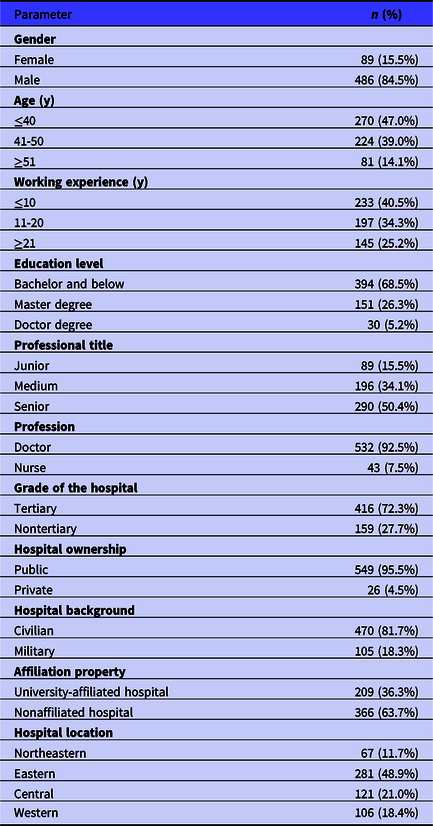
Five hundred and seventy-five questionnaires were received within the survey duration, with a 77.4% response rate. The surveyed population covered all 4 economic regions of China: 11.7% northeastern, 48.9% eastern, 21.0% central, and 18.4% western. Respondents were mainly from civilian (81.7%) and tertiary (72.3%) hospitals. The majority were males (84.5%) and doctors (92.5%) (Table 1).
Sociodemographics of respondents (n = 575)

KAP Estimation
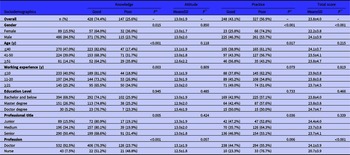
The total KAP score was 23.8 ± 4.0, and 542 (94.3%) respondents scored 18 or more points, which indicated a holistically good awareness of NCTH. Although the average score of 7.7 ± 2.0 represented a good command of relevant information, 147 (25.6%) HCWs still lacked specific knowledge within the scope of definition, diagnosis, and intervention (≤7 points). Surprisingly, the vast majority (99.7%) showed a positive attitude, with a mean score of 13.0 ± 1.9. Poor practice was detected among 327 (56.9%) questionnaires, with an average score of 3.1 ± 2.1 (Table 2).
Knowledge, attitude, and practice differences based on sociodemographic characteristics (N = 575)

* : Determined by chi-squared analysis.
** : Determined by Student t test or one-way analysis of variance.
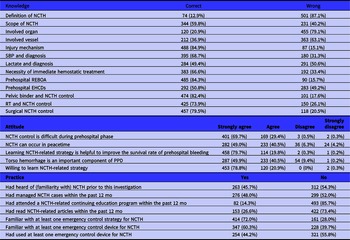
In detail, 87.1% of HCWs misunderstood the definition of NCTH because they considered that NCTH could not be controlled by any external compression measures. In fact, this term referred as invalid hemostasis by means of conventional compression such as limb tourniquets. Paradoxically, half of the population (50.8%) believed certain external hemorrhage control devices (EHCDs) were already available on the market. A total of 59.8% of respondents had a clear idea that NCTH was not only confined to the abdomen and pelvic cavity. However, the proportion of HCWs who would diagnose hollow viscera or minor vessel injury as NCTH was 79.1% and 63.1%, respectively. Most HCWs (84.9%) were aware that both blunt and penetrating injuries might lead to NCTH, and 66.6% deemed a narrow window for NCTH intervention. A total of 99.7% of individuals showed a positive attitude toward further study regarding NCTH. Almost all of the interviewees (99.1%) expressed concerns about the important role of NCTH in trauma and emergency care; 99.5% of HCWs accepted a potential positive correlation between awareness level and emergency response ability. Although 72.0% of HCWs thought they knew how to deal with NCTH, less than half acknowledged they had heard of (45.7%) or used (44.2%) relevant devices before the current survey. Meanwhile, the majority reported that they had not attended any relevant training (85.7%) or read NCTH-related articles (73.4%) (Table 3).
Knowledge, attitude, and practice regarding NCTH

Abbreviations: RT, resuscitative thoracotomy; SBP, systolic blood pressure.
NCTH-related training (χ2 = 105.399; P < 0.001) and literature studies (χ2 = 198.878; P < 0.001) were variables that produced better practice results. These 2 factors could also obtain better KAP scores (training: 27.0 ± 3.9 vs 23.3 ± 3.8; P < 0.001 and literature: 26.9 ± 3.2 vs 22.7 ± 3.7; P < 0.001, respectively). In addition, the latter was determinative of a more positive attitude (13.4 ± 1.9 vs 12.9 ± 1.9; P = 0.001).
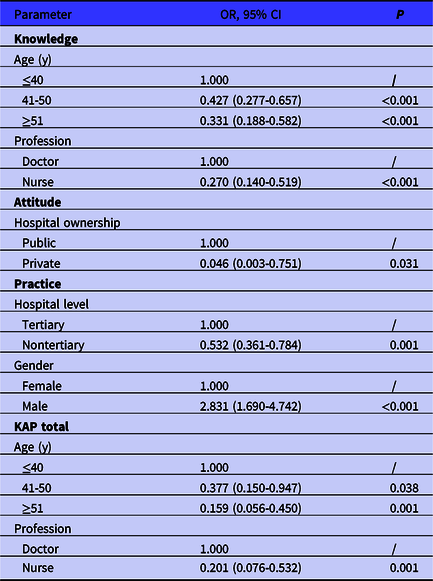
Some significant differences were discovered when stratified by sociodemographic characteristics (Table 2). HCWs from tertiary hospitals performed better than their counterparts in the practice section (χ2 = 6.534; P = 0.011) and KAP total evaluation (24.1 ± 4.0 vs 23.0 ± 3.8; P = 0.003). The military hospital staff was more familiar with relevant knowledge than people working in civilian settings (χ2 = 4.789; P = 0.029). Individuals subordinated to university-affiliated hospitals also received a higher rating regarding practice (χ2 = 8.709; P = 0.003). However, regional economic status and hospital ownership did not affect KAP estimation among HCWs. Factors associated with good knowledge, attitude, and practice were identified by logistic regression analysis (Table 4).
Logistic regression for factors associated with good knowledge, attitude, and practice regarding NCTH

Abbreviations: CI, confidence interval; OR, odds ratio.
Main Sources and Perceived Barriers of NCTH Information Acquisition
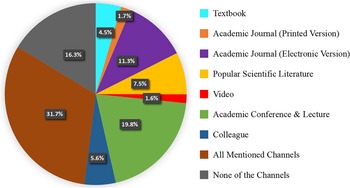
Among the questionnaires, 31.7% of HCWs had sufficient resources to update relevant information. However, 16.3% of individuals reported that no existing method was available for improving the corresponding quality upon NCTH diagnosis and intervention. For specific options, academic conferences and lectures (19.8%) were the most important way to obtain useful information, followed by electronic journals (11.3%) and popular scientific reading materials (7.5%) (Figure 1).
The main sources of NCTH information acquisition.

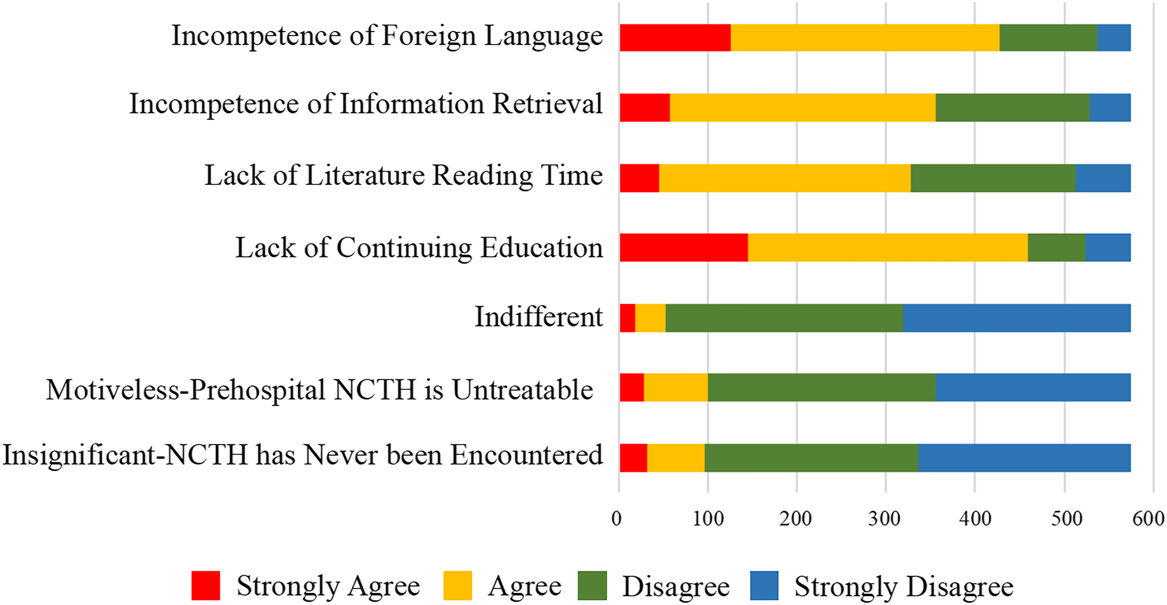
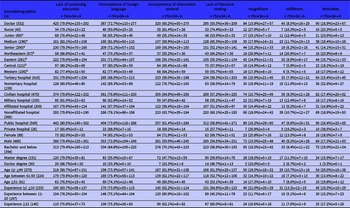
Correspondingly, 79.8% of HCWs regarded the scarcity of continuing education programs as the main barrier to gaining NCTH-relevant information. Insufficient literature due to various reasons (language ability: 74.3%; information retrieval capacity: 61.7%; and lack of reading time: 56.9%) was another dominant obstacle (Figure 2). When divided by HCWs’ sociodemographic features (Table 5), the abovementioned 4 factors also constituted the key barriers to improving NCTH-related medical knowledge.
Perceived barriers to NCTH information acquisition.

Perceived barriers based on different sociodemographic features

a Professional title.
b The 4 economic regions of China.
Abbreviations: A: agree; SA: strongly agree.
Discussion
Major Findings
Although nearly all of the respondents expressed a positive attitude toward NCTH and 7 of 10 HCWs were confident with their treatment strategy, only a minority could choose the correct answers highly related to the core and foundation for proper medical procedures such as the definition and involved organs. In addition, less than half of the respondents reported that they had once used devices for NCTH treatment. The above data and the apparent deficiency of further training and relevant article reading raised the alarm that NCTH-related medical knowledge should be reinforced, and the redesign of education programs is about to be placed on the agenda.
It is worth noting that, due to the low correct answer rate regarding the basic knowledge of NCTH and the lack of continuing education, HCWs may wrongly classify other bleeding cases as NCTH. Therefore, it partially accounts for why the number of respondents who had managed NCTH cases was higher than that of those who were familiar with the concept. In addition, a follow-up study is needed to determine the discrepancy between the actual incidence and diagnosis rate of NCTH to provide more evidence for further training and education design.
Talents are more willing to work in eastern China, and there is a potential siphon effect of other resources. Reference Hu, Liu and Zhang20 The interregional knowledge gap of HCWs is likely to widen in the future, even though no obvious differences were detected in the current study. Therefore, the accessibility of continuing education in less developed areas should be a priority.
Doctors under the age of 40 are mainly in their career ascending channel and are more studious; hence, it is easier for them to gain better knowledge than it is for the others. Additionally, given the advantages of medical resources, patients are prone to visit public-tertiary hospitals. Reference Eggleston, Lu and Li21 HCWs from these settings have more opportunities to accumulate relevant experiences. The obligatory teaching tasks in university-affiliated hospitals may provide more occasions to access relevant information; hence, better performance is logically achieved. Similarly, HCWs who work in military hospitals have more chances to learn NCTH by means of various drills to be more familiar with the relevant knowledge. However, the existing gaps between HCWs from military and civilian settings remind us of the need for a population-wide promotion program without any delay.
An important phenomenon was revealed during this survey: nurses and female respondents performed worse than their counterparts in the knowledge and practice sections. The logistic regression also showed similar tendencies. The investigators summarize 3 possible assumptions as follows. (1) The majority (93%) of nurses were female, who accounted for nearly half of the female respondents; therefore, nurses’ performance may affect the overall estimation for females. (2) One-third of doctors had a master’s or doctoral degree; correspondingly, the majority of nurses were graduates with a bachelor’s degree; hence, the information retrieval ability and literature learning capacity may partially influence the results. (3) The hemostasis procedures were mainly performed by doctors, which means doctors may have more opportunities to learn state-of-the-art strategies, and they are more motivated to master academic trends.
The KAP results differed with sociodemographic features, which highlights that diverse and differential education forms are needed to accommodate different HCWs to achieve a “1+1+1>3” effect: the overall improvement of NCTH treatment and the continuing self-improvement exerted by a positive attitude. Reference Valente, Paredes and Poppe19
Critical Role of NCTH
The primitive concept of NCTH can be traced back as early as 1862. Reference Blackbourne, Mabry and Sebesta22 However, great concerns have been raised within the past 2 decades. Even though body armor has been greatly upgraded, Reference Mabry, Holcomb and Baker23 improvised explosive devices can still cause serious damage to uncovered body sites. Reference Gordon, Talbot and Fleming24 As a military medical concept, the introduction of NCTH has offered a clearer vision to distinguish the hemorrhage subtype, which is more conducive to improving PPD. Reference Holcomb, McMullin and Pearse1 The external hemostasis strategy and NCTH-specified EHCDs, especially in the battlefield and evacuation phases, may not only reduce mortality, Reference Kheirabadi, Terrazas and Hanson25 but also provide more opportunities to prevent complications highly correlated with limb and visceral integrity. Reference Brännström, Rocksén and Hartman26,Reference Kheirabadi, Terrazas and Miranda27 Therefore, the misunderstanding of “noncompressible” as “bleeding which is uncontrollable by any external compression” not only reflects the unfamiliarity of its origin and overly literal interpretation of its meaning, Reference Holcomb, McMullin and Pearse1,Reference Kelly, Ritenour and McLaughlin2 but also contains potential medical risks due to subjective neglect of some feasible strategies. Reference Klotz, Leo and Andersen28,Reference Croushorn29
Civilian EMS also demonstrates that trauma death is highly correlated with NCTH, Reference Kisat, Morrison and Hashmi11 reminding us that potential errors may still exist in daily clinical processes. Under any circumstances, prevention and intervention are the keys to breaking the close relationship between NCTH and death. However, the concept and etiology of NCTH is the first thing that should be determined. Reference Morrison30 As Sun Tzu said in the Art of War, “Know the enemy and know yourself.”
Continuing Education and HCWs’ Performance
Due to the rapid development of medical technologies, HCWs are required to constantly update relevant information in case of professional incompetence. Studies have confirmed the beneficial effect of education on medical knowledge. A randomized control trial revealed that tailored education was more helpful than standard programs in the elevation of diagnosis and treatment. Reference Shirazi, Lonka and Parikh31 Furthermore, continuing professional development is correlated with patient outcomes. Reference Samuel, Cervero and Durning32 Motivation for self-competence and well-prepared lifelong learning skills are key factors to continuing progress. Reference Adhikari, Khatiwada and Shrestha33,Reference Khamis, Abdi and Basgut34 Therefore, in addition to determining what role continuing education plays in professional growth, how to carry it out should also be equally weighed.
Perceived Barriers and Implications to Future Continuing Education Regarding NCTH
According to this study, all 7 barriers lead to the lag of medical information renewal to some extent. However, the top 4 barriers (lack of continuing education, foreign language ability, incompetence of information retrieval, and insufficient reading time) are more eye-catching and ubiquitous among different respondents. Therefore, the redesign of future continuing education should focus on the above aspects. (1) Reducing the cost of attending academic conferences and lectures: traditional on-site meetings and lectures are preferred due to their immediacy and rituality. Due to the COVID-19 lockdown, online conferences have become thriving. This changed communication mode brings more people the opportunity to participate in academic activities, which is not limited by territory, time, and the number of applicants. (2) Filling the language gap: although this gap is narrowed due to enhanced foreign language education and international exchange, a pragmatic method to reduce the impact of language barriers on current HCWs is needed. Foreign-to-native translations of classic literature and expert interpretations are viable options. (3) Pushing core contents and using the fragmented time: heavy workload leads to fragmented personal time, which makes systematic reading luxurious. Streaming media such as TikTok and YouTube are alternatives to push the key points and brief comments on a certain problem of NCTH directly to the audience. In addition, interdependent studies in WeChat and WhatsApp groups as well as integrating academic lectures into interactive live broadcasting are also desirable. Because tailored and goal-directed education is effective in performance improvement, Reference Shirazi, Lonka and Parikh31,Reference Brzezinski, Kukreja and Mitchell35 a questionnaire before the lecture is advisable to specify the academic focus.
Strengths and Limitations
To our knowledge, this is the first cross-sectional survey assessing KAP on NCTH among HCWs. The validated questionnaire, high response rate, and sufficient sample size all help strengthen this study’s reliability. The disclosure of the perceived barriers and KAP results implies a target-directed solution. However, some limitations should be addressed. First, this is a respondent-administered online survey, disguised responses cannot be excluded if someone expects to be rated as knowledgeable and capable, and memories of past events may also influence the results; hence, reporting bias and recall bias should be considered. Second, due to the nature of the cross-sectional study, it is reasonable to generalize the results with caution. Finally, the effectiveness of multiple educational approaches requires further verification.
Conclusions
Apparent gaps exist in knowledge and practice regarding NCTH among Chinese HCWs, but a readiness-to-learn attitude is helpful to lower the threshold of continuing education. The ubiquitous barriers deserve great attention, and appropriate measures should be introduced into continuing education to effectively improve different HCWs’ medical abilities.
Supplementary material
To view supplementary material for this article, please visit https://doi.org/10.1017/dmp.2021.273
Data availability statement
All data included in this study are available upon request by contact with the corresponding author.
Acknowledgments
The authors thank the expert panel for their prudent attitude and rigorous revision of the questionnaire. Likewise, we acknowledge all the participants for their active participation.
Funding statement
This work was supported by the Clinical Technology Innovation and Cultivation Project of Army Medical University under Grant CX2019JS109.
Conflict(s) of interest
The authors report no conflict of interest.