Introduction
Many of the 5.8 million Americans with chronic heart failure experience depression, high symptom burden, and poor quality of life (Bekelman et al., Reference Bekelman, Havranek and Becker2007; Walke et al., Reference Walke, Gallo and Tinetti2004). Depression is prevalent in this patient population and contributes to poor quality of life (Rutledge et al., Reference Rutledge, Reis and Linke2006). Several psychotherapy efficacy studies in patients with serious cardiac illnesses (myocardial infarction, heart failure) demonstrate little to no effect in reducing depression or improving quality of life (Berkman et al., Reference Berkman, Blumenthal and Burg2003; Frasure-Smith et al., Reference Frasure-Smith, Lespérance and Prince1997; Lespérance et al., Reference Lespérance, Frasure-Smith and Koszycki2007), with an occasional exception (Freedland et al., Reference Freedland, Carney and Rich2015). When asked about unmet care needs, patients with heart failure and their informal (family) caregivers report needing help with adjusting to illness and alleviating symptoms (Bekelman et al., Reference Bekelman, Nowels and Retrum2011).
In response, the Collaborative Care to Adjust to Symptoms and Improve Quality of Life (CASA) intervention was developed to improve depression and symptoms in people with heart failure. The CASA (Bekelman et al., Reference Bekelman, Hooker and Nowels2014, Reference Bekelman, Allen and McBryde2018) intervention included several components: a structured interpersonal and behavior activation psychotherapy provided by a social worker, algorithm-guided symptom management provided by a nurse, and a collaborative care approach. The CASA intervention did not influence the primary outcome of heart failure-specific health status, yet fatigue and depressive symptoms improved (Bekelman et al., Reference Bekelman, Allen and McBryde2018).
Given several prior negative trials of psychotherapy in advanced cardiac illnesses, and that little is known about how to improve psychotherapies to best address patient needs in advanced cardiac illness, the implementation of psychotherapy in the CASA pilot study (Bekelman et al., Reference Bekelman, Hooker and Nowels2014) was monitored. During the psychotherapy in the pilot study, study participants occasionally presented psychosocial needs not directly addressed by the psychotherapy alone such as housing, healthcare navigation, and difficulty coping with chronic physical symptoms. These preliminary findings from the pilot study, combined with the reporting of several negative psychotherapy studies in cardiac illnesses, led the study team to evaluate the incidence of psychosocial needs not directly addressed by the psychotherapy intervention in the CASA multisite clinical trial. This study reports these findings to inform future changes to the psychotherapy and to provide knowledge about the psychosocial needs of this population.
Methods
CASA intervention
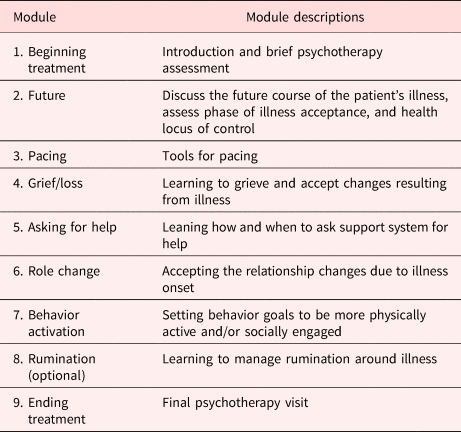
The psychotherapy component of the CASA intervention used the Combined Interpersonal Psychotherapy and Behavioral Activation for Coping with Impairment manual developed for the trial of the same name (Aburizik et al., Reference Aburizik, Dindo and Kaboli2013; Turvey & Klein, Reference Turvey and Klein2008), which combines aspects of interpersonal psychotherapy with behavior activation. There were nine modules covering specific topics to help each patient adjust to living with chronic illness (Table 1). Each of the modules were designed to be covered in the prescribed order, but was able to be flexibly reordered or combined when clinically indicated. Sessions were completed by a social worker both in person and/or by phone depending on patient preference. The “beginning treatment” session was typically conducted in person, whereas subsequent sessions were primarily delivered by phone. Each session began by a brief check-in and assessment, as well as follow-up related to the content of previous sessions before proceeding to the scheduled topic.
Core psychotherapy modules

Participants
A total of 314 patients participated in the CASA study, 157 of whom were randomized to the intervention arm. All study participants completed institutional review board-approved written informed consent. The CASA trial was a National Institutes of Health-funded, two-arm, randomized controlled trial that compared the CASA intervention with usual care in three (urban safety net, Veterans Affairs (VA), and academic-affiliated) health systems. The methods have been previously described (Bekelman et al., Reference Bekelman, Allen and Peterson2016). Inclusion criteria included: a prior diagnosis of heart failure; at least one of the following: previous hospitalization with a primary discharge diagnosis of heart failure, prescribed >20 mg furosemide (or equivalent) daily, brain natriuretic peptide >100 or NT-pro-brain natriuretic peptide >500, ejection fraction ≤40%; age 18 years or older, able to read and understand English, consistent access to a telephone, having a primary care provider who is willing to facilitate intervention recommendations, poor health status (Kansas City Cardiomyopathy Questionnaire- Short Form-12) score ≤70; and bothered by one of the study's target symptoms (fatigue, shortness of breath, low mood, and/or pain). Exclusion criteria included: a diagnosis of dementia, bipolar disorder, or schizophrenia; active substance abuse; comorbid metastatic cancer; nursing home/assisted living resident; or prior heart transplant and/or left ventricular assistive device placement.
Data collection
Based on the pilot study and interdisciplinary team consensus, we developed an a priori codebook inclusive of common patient needs to track during the psychotherapy intervention in the clinical trial (Table 3). The codes were different than the topics covered in the psychotherapy modules and were generated through an analysis of pilot study data gathered from the 23 participants in the CASA pilot study (Bekelman et al., Reference Bekelman, Hooker and Nowels2014). The codes were placed in the note template for each visit to allow efficient quantification of how frequently needs arose among study patients. Using the note template, codes were marked by the interventionist during or immediately after each session. Codes (i.e., needs) were marked only if they were not related to the substance of the psychotherapy module addressed in that session. They were marked once regardless of how many times they emerged during the session or how long the theme was discussed. Credibility and validity of this method was enhanced by using an a priori list of codes, a team agreed-upon definition of each of the codes, and reflection during team discussions about how to set aside clinical bias during data collection.
Analysis
To characterize the frequency of codes that arose during the sessions, we used a directed content analysis (Hsieh & Shannon, Reference Hsieh and Shannon2005). Each contact between the social worker and the study participant was defined as a session, and each session served as the unit of analysis. Codes were collapsed into parent themes for analysis by team consensus including a nurse, physician, and a social worker over several meetings. In addition to the codes, text from session notes were used to create and confirm themes. The frequency of each defined code and theme were summarized into a percentage of psychotherapy visits. To preserve the integrity of the a priori codes and prevent overcounting of similar needs that emerged during the same session, codes were only counted once per session regardless of how many subthemes had been addressed in that session.
Results
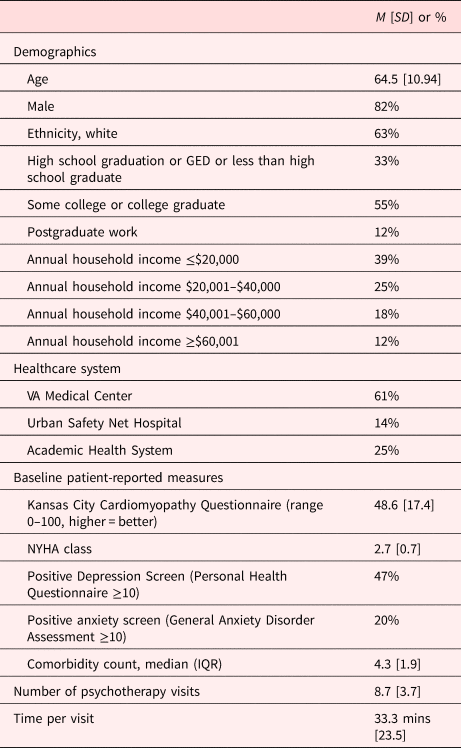
Of the 157 participants randomized to the intervention, 150 had one or more visits with the nurse and social worker and were included in this analysis. Study participants were largely male, identified as white, and received care through VA (Table 2). Although the majority of intervention study participants had either some college or were college graduates, a large proportion also had a high school diploma/GED or less. The majority of participants also had an income of $20,000 per year or less. Many participants were depressed, had poor functional status, and multiple comorbidities. The social worker conducted a mean of 10.1 sessions (SD = 4) per patient, and sessions lasted for 33.6 minutes (SD = 26).
Intervention patient characteristics (n = 157)
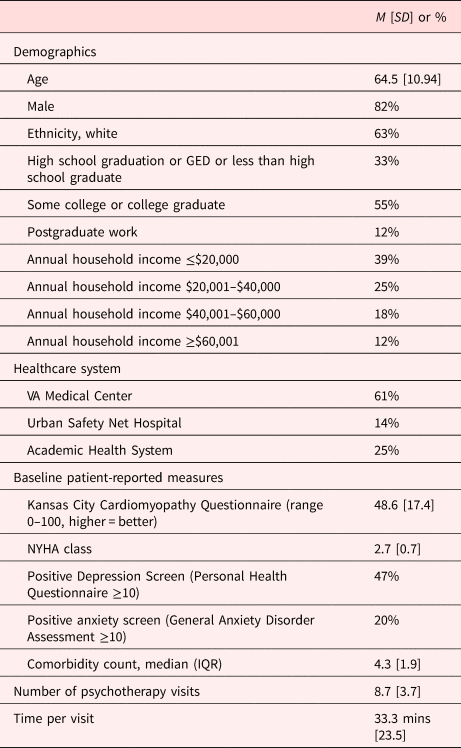
IQR, interquartile ratio; KCCQ, Kansas City Cardiomyopathy Questionnaire; NYHA, New York Heart Association; VA, Veterans Affairs.
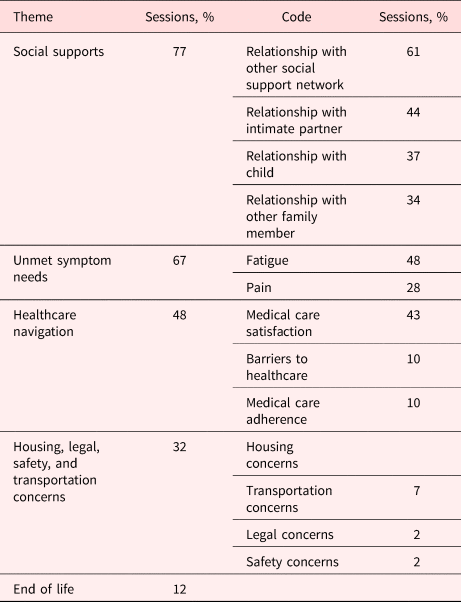
The most common codes revealed that difficulty coping with fatigue (48% of sessions) and pain (28%), as well as issues around satisfaction with medical care (43%) featured prominently in study sessions, despite not being a part of the psychotherapy core components. The following higher level themes emerged in sessions: patient “social support” (77% of sessions), “unmet symptom needs” (67%), “healthcare navigation” (48%), “housing, legal, safety, and transportation” (32%), and “end of life” (12%) (Table 3).
Themes and codes
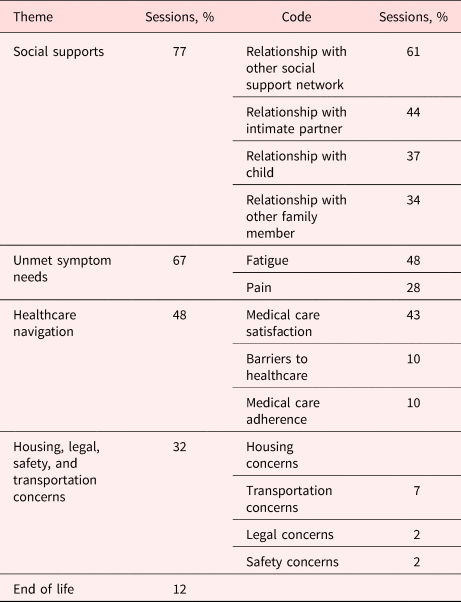
The social support theme (77% of sessions) included social relationships with intimate partners, children, other family members, and other support networks. For example, one patient discussed his relationship with his son, who was recently diagnosed with throat cancer. The session focused on his feelings around seeing his son before the patient died. Sessions in which this theme was tracked often addressed family conflicts that could or could not be related to changes associated with illness, the family's adjustment to the person's illness, and how to strengthen other types of informal support systems.
The unmet symptom needs theme (67% of sessions) included persistent symptoms of fatigue and pain. For many participants, coping with fatigue and pain was a major part of their daily experience. The social worker addressed strategies to manage physical symptoms as well as accepting the symptoms that couldn't be alleviated. Adjusting to living with these chronic symptoms was a common topic in psychotherapy sessions.
The healthcare navigation theme (48% of sessions) included concerns around medical care satisfaction, barriers to healthcare, and medical care adherence. This was frequently related to participants who felt they didn't understand their illness or their healthcare providers. Several study participants talked about how they felt the healthcare system didn't care about them or know them as a person, so they didn't feel that complying with their healthcare recommendations was in alignment with their healthcare goals. Some study participants talked about their confusion using the healthcare system and frustration with their providers. For example, many veterans who participated in the sessions talked about their difficulty navigating the VA healthcare system to schedule appointments with their providers.
The housing, legal, safety, and transportation theme (32% of sessions) included concerns around unstable housing, legal concerns, safety issues, and transportation difficulty. These needs could be related to navigating the legal system for a driving under the influence charge, not being able to obtain transportation to doctor's appointments, or physical safety. For example, one participant talked about her experience in an intimate partner violent relationship and was offered resources and support related to her experience.
Discussion
In this study of a psychotherapy intervention in patients with chronic heart failure and poor health status, a number of symptom and case management needs not directly addressed by the psychotherapy emerged during psychotherapy sessions. Although these needs may be unsurprising to some palliative care subdisciplines, to our knowledge this is the first study that has characterized them in the context of a psychotherapy intervention in seriously ill patients. Understanding this dynamic is critical because many seriously ill patients do not have access to a multidisciplinary team of palliative care specialists. For example, although social workers are often involved in hospital based multidisciplinary palliative care teams, they may be less involved in the outpatient care of people with serious illnesses.
Adjusting to living with chronic symptoms emerged as an important component of patient needs related to the psychotherapy as part of this study even though they were not directly addressed by this component of the intervention. Fatigue and pain (both common codes) are common among heart failure patients (Bekelman et al., Reference Bekelman, Havranek and Becker2007). Future psychotherapies aimed at seriously ill populations should consider explicitly targeting adjustment to chronic symptoms. Although end of life was not an explicit component of the psychotherapy, it emerged as a topic for a minority of patients and supports the importance of addressing end-of-life issues in some seriously ill patients at higher risk of dying.
Healthcare navigation (48% of sessions) and housing, legal, safety, and transportation (32% of sessions), neither of which was part of the psychotherapy, compose case management. Case management, defined as short-term interventions to establish support systems to increase social functioning (Berkman, Reference Berkman1996), is a core component of social work practice in healthcare settings. Combining case management with psychotherapy seems natural for seriously ill depressed patients with these types of complicated needs, yet to date has not received extensive rigorous study. For older adults, two studies determined that case management alone provided similar improvements in depression as did case management combined with psychotherapy (Areán et al., Reference Areán, Raue and McCulloch2015; Gum et al., Reference Gum, Areán and Bostrom2007). However, further research is needed to determine whether combining case management and psychotherapy improves other patient-centered outcomes such as symptom burden, patient-reported quality of life, and other social determinants of health. Further studies should explore and more clearly define the role of case management along with psychotherapy in addressing the needs of people with serious chronic illness.
It is also important to note that these unmet needs could also be indicative of a need for a more thorough assessment process. More thorough assessment in psychotherapy could include screening for case management needs. We speculate that if these unmet needs are addressed before beginning psychotherapy, the therapy could be more effective at addressing adjustment to illness. Future research studies could explore screening tools to determine case management and psychotherapy needs for people with chronic illness and appropriate treatment plans.
Strengths and limitations
A strength of this study was that it was designed and conducted by an interdisciplinary team of researchers with different clinical and research backgrounds. Other strengths include the relatively large sample of patients with heart failure, the a priori design of the analysis, and prospective data collection. The generalization of the findings in this study should be considered within the limitations of both the study itself and the methods used. The psychotherapy needs of patients served in other venues and from other demographic or clinical groups may differ. Another limitation of the study is that coding for presence of themes conducted by those study staff who also delivered the intervention may have influenced the findings. Although it can be a strength that interventionists with a clinical working knowledge of people with chronic illness are coding for the a priori themes, it is also important to note that the interventionist's clinical experience could also influence the coding process. Another potential limitation is that those who had negative experiences with the intervention may be underrepresented. If they chose not to participate in as many sessions with the social worker (potentially because of withdraw from the intervention or if they didn't receive optional additional sessions), their experience of needs would potentially be underrepresented in the results.
Conclusion
Diverse needs such as coping with chronic symptoms and case management issues arose in patients who participated in the CASA research study. These types of needs are not always addressed in traditional psychotherapy. Future psychotherapy interventions should consider including these types of services for people living with serious chronic illnesses such as heart failure. Supplementing psychotherapy interventions with case management and specifically addressing coping with chronic symptoms could improve quality of life, medical adherence, and social determinants of health, potentially better meeting the needs of patients with heart failure. Future investigations should examine the benefits of such an integrated approach for the millions of Americans living with heart failure and other serious illnesses.
Acknowledgments
This work was supported by the National Institute of Nursing Research [NIH R01-013422]; NIH/NCATS Colorado CTSA [UL1 TR001082]; and the VA HSR&D [CDA 08-022]. The views expressed in this article are those of the authors and do not necessarily reflect the position or policy of the National Institutes of Health, the Department of Veterans Affairs or the United States government. The authors would like to thank Kelley Burns, MA, Jamie Peterson, RN, MPH, and Alexandra Tillman, BS.
Conflicts of interest
None.