What Is Reserve?
Reserve is a hypothetical construct believed to explain individual differences in the relationship between neuropathology and cognitive performance (Satz, Cole, Hardy, & Rassovsky, Reference Satz, Cole, Hardy and Rassovsky2010; Stern, Reference Stern2009; Whalley, Deary, Appleton, & Starr, Reference Whalley, Deary, Appleton and Starr2004). The concept of reserve has been cited as a theoretical framework for explaining individual differences in risk for, and patterns of, cognitive impairment associated with neuropathological changes in dementing disorders (Satz, Reference Satz1993; Stern, Reference Stern2002, Reference Stern2003), brain injury (Fay et al., Reference Fay, Yeates, Taylor, Bangert, Dietrich, Nuss and Wright2010), or medical illness (Satz, Reference Satz1993). The vast majority of research on reserve concerns Alzheimer's disease (AD) or nonspecific cognitive impairment and decline. The reserve concept, which is applicable to a broad array of clinical disorders (Sachdev & Valenzuela, Reference Sachdev and Valenzuela2009), describes variability across persons in the relationship of pathologic changes with clinical expression of disease (Satz, Reference Satz1993; Studenski et al., Reference Studenski, Carlson, Fillit, Greenough, Kramer and Rebok2006). In his most recent review, Stern (Reference Stern2009) articulates two models of reserve pertaining to cognitive functioning: brain and cognitive. Brain reserve refers to structural aspects of the brain, and cognitive reserve relates to how cognitive tasks are initiated and coordinated, involving access to complex cognitive networks. Brain reserve is conceptualized as a passive process and evokes a threshold model (a critical level of brain capacity, or brain reserve capacity) for the adequate performance of cognitive tasks in the presence of pathology or depletion. Cognitive reserve is conceptualized as an active process by which pathology or depletion are met with greater efficiencies in pre-existing cognitive processes (neural reserve) or the enlistment of alternative processes (neural compensation) to successfully complete cognitive tasks (Stern, Reference Stern2009).
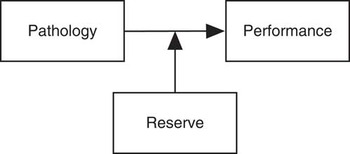
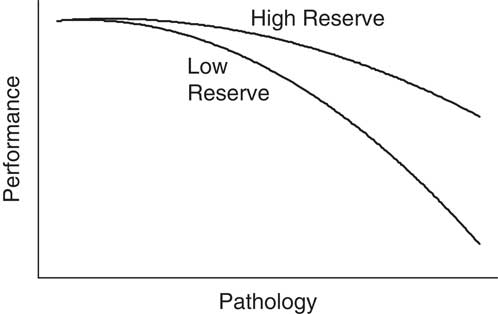
Notions of brain and cognitive reserve developed from observations that some individuals demonstrate less cognitive impairment than others with comparable brain injury or neuropathology (Blessed, Tomlinson, & Roth, Reference Blessed, Tomlinson and Roth1968; Katzman, Reference Katzman1993; Rothschild & Trainor, Reference Rothschild and Trainor1937; Satz, Reference Satz1993). Higher functioning individuals were postulated to possess a reserve factor that acted to delay or ameliorate the impairments of cognitive functioning accompanying neurodegeneration. Figure 1 shows an illustration of the basic notion of reserve using conventions of path diagram notation, where arrows represent regression relationships and boxes represent variables. An alternative but equivalent representation is shown in Figure 2, which shows a hypothetical line plot describing a different relationship between performance and pathology at different levels of reserve.Footnote 1
Reserve modifies the relationship between pathology and performance.

The relationship between pathology and performance is attenuated in high relative to low reserve.

The reserve model suggested in Figure 1 may be an over-simplification. There are omitted relationships, and a temporal orientation is not represented. For example, depending upon how reserve is operationalized, there may be direct and/or bidirectional relationships between pathology and reserve and performance and reserve. The point of Figure 1 is to illustrate a basic theoretical definition of the reserve concept, and the oversimplification suffices in this context.
The concept of reserve is common in medicine (Sachdev & Valenzuela, Reference Sachdev and Valenzuela2009). Particularly so in geriatric medicine, where it is encompassed by the concept of “homeostenosis,” a gradual decline in physiological reserve that begins in young adults across organ systems independently and is moderated by environmental, host, and genetic factors (Resnick & Marcantonio, Reference Resnick and Marcantonio1997). With regard to the brain, reserve is the capacity to withstand external stresses, revealed by individual differences in the functional and behavioral responses to neuronal disease or injury. Reserve theory (Stern, Reference Stern2009) is consistent with a general theory of Cognitive Plasticity of cognitive aging (Willis, Schaie, & Martin, Reference Willis, Schaie, Martin, Bengtson, Gans, Putney and Silverstein2009), which posits that continual adaption to the environment at the neuronal level (e.g., remodulation of neurons, synaptic connections, neurogenesis) and cognitive level (acquisition of new skills) represents normal brain functioning (Draganski & May, Reference Draganski and May2008; Mercado, Reference Mercado2008; Pascual-Leone, Amedi, Fregni, & Merabet, Reference Pascual-Leone, Amedi, Fregni and Merabet2005). Individual differences in plasticity can be influenced by psychosocial characteristics and manifest as cognitive or brain reserve (Willis et al., Reference Willis, Schaie, Martin, Bengtson, Gans, Putney and Silverstein2009).
The construct validity of the reserve concept was recently addressed in a review paper by Satz and his colleagues (Reference Satz, Cole, Hardy and Rassovsky2010). This review addresses, in greater detail than we provide here, a summary of different conceptualizations of reserve and their application in research. Satz et al. conclude that the concept of reserve is left “wanting as an explanatory construct” because a multitude of indicators (e.g., education, intracranial volume) are used as reserve indicators and there has been little theoretical work articulating an organizational structure for groups of such indicators. Our study echoes this theme and offers additional theoretical orientation for conceptualizing, developing, and ultimately testing latent variable models for reserve.
Operational Definitions Of Reserve In Observational Research
A critical first step in studying cognitive reserve is to identify indicators that accurately measure and quantify the key concepts: performance, pathology, and reserve. For the purposes of this study, we assume that the measurement of cognitive performance, such as with a neuropsychological assessment battery, is noncontroversial. If reserve is broadly defined as a discrepancy between observed and expected impairment associated with a given degree of neuropathology (c.f., Figure 1), then operationalizing reserve requires measures of both performance and neuropathology.
In vivo measures of neuropathology in Alzheimer's disease, such as amyloid imaging, have only recently been identified and are not widely available (Ikonomovic et al., Reference Ikonomovic, Klunk, Abrahamson, Mathis, Price, Tsopelas and DeKosky2008; Rentz et al., Reference Rentz, Locascio, Becker, Moran, Eng, Buckner and Johnson2010). Without a measure of neuropathology, the presence and severity of disease are approximated with age and/or time from clinical diagnosis and measures of function. Other measures of neuropathology include brain volume, white matter hyperintensity burden, fractional anisotropy from diffusion tensor imaging, cerebral blood flow patterns, and resting blood oxygen level dependent network activation patterns. Sumowski, Wylie, DeLuca and Chiaravalloti (Reference Sumowski, Wylie, DeLuca and Chiaravalloti2010) have presented innovative applications of such measures in the study of reserve in multiple sclerosis.
As a hypothetical construct, reserve is not measured directly. Proposed proxy indicators of cognitive reserve include educational attainment, occupational achievement, and intelligence (Stern, Reference Stern2002). In a recent pair of meta-analyses of reserve in dementia risk and cognitive decline, Valenzuela and Sachdev (Reference Valenzuela and Sachdev2006a, Reference Valenzuela and Sachdev2006b) identify the most frequently used proxy variables for cognitive reserve as educational attainment, occupation, mental activities, and premorbid IQ. Proposed indicators of brain reserve under a passive or threshold model include structural features such as intracranial volume, head circumference, and brain size, which are reflective of neuronal number and synapse density (Stern, Reference Stern2002).
Among the indicators of reserve, educational attainment may be the most widely studied, and it is not uncommon to find research where education alone stands in for the concept of cognitive reserve (Valenzuela & Sachdev, Reference Valenzuela and Sachdev2006a, Reference Valenzuela and Sachdev2006b). The theoretical rationale for using an indicator such as education as a proxy for reserve seems compelling: education may increase brain reserve by promoting synaptic growth (Katzman, Reference Katzman1993) and may foster cognitive reserve by generating new cognitive strategies (Manly, Byrd, Touradji, Sanchez, & Stern, Reference Manly, Byrd, Touradji, Sanchez and Stern2004; Stern, Reference Stern2002). The strong and robust association of educational attainment with risk for dementia has led some investigators to claim that education may be the most important risk factor for dementia (Mortimer & Graves, Reference Mortimer and Graves1993). To date, a handful of studies have confirmed that education modifies the association between a direct measure of neuropathology or neurodegeneration and neuropsychological test performance (Bennett et al., Reference Bennett, Wilson, Schneider, Evans, Mendes De Leon, Arnold and Bienias2003; Dufouil, Alperovitch, & Tzourio, Reference Dufouil, Alperovitch and Tzourio2003; Rentz et al., Reference Rentz, Locascio, Becker, Moran, Eng, Buckner and Johnson2010).
Other socioeconomic status (SES) indicators of reserve include occupational status. Valenzuela and Sachdev (Valenzuela & Sachdev, Reference Valenzuela and Sachdev2006b) found that “high” (contrasting unskilled, semi-skilled, trade, and clerical workers versus managerial, technical, and professional occupations) occupational status was associated with approximately a 50% reduction in the risk for dementia.
Critique Of Proxy Measures Of Cognitive Reserve
An important limitation of most measures of cognitive reserve is that they may be linked to neuropsychological test performance via many alternative paths, not only via the hypothesized “reserve” mechanisms. Distinguishing between these alternatives is crucial both to understand the etiology of cognitive aging, and to assess whether the pathways can be modified via public health interventions. We focus on the example of educational attainment as the operationalization of reserve. Education may predict neuropsychological test performance in elderly populations because it confers cognitive reserve, or due to confounding by age (i.e., age may affect both education and neuropsychological test performance); confounding by childhood IQ or cognitive skills that themselves influence educational attainment; direct pathways by which education influences the development of neuropathology or neurodegeneration; or non-linearities in the rate of cognitive decline.
Because of the tremendous increase in average educational attainment and quality of educational opportunities over the course of the twentieth century, there are large age cohort differences in the average level of educational attainment in US samples (Goldin, Reference Goldin1998; Schaie, Willis, & Pennak, Reference Schaie, Willis and Pennak2005). It is, therefore, possible that the association of education with cognitive impairment reflects, in whole or in part, a mis-specified model for the age–cognitive impairment relationship.
Historical and enduring differences across major population subgroups (especially gender and race) exist in the quality, access to, and social pressures for remaining in school (Jones, Reference Jones2003) as well as for opportunities for achievement of certain occupational categories. Such challenges can be addressed in design and analysis. For example Manly, Jacobs, Touradji, Small, and Stern (Reference Manly, Jacobs, Touradji, Small and Stern2002) used a literacy test as an indicator of educational quality, on the grounds that the ideal indicator of school quality is what the student learned from school. However, premorbid IQ is also likely to influence literacy level (Valenzuela & Sachdev, Reference Valenzuela and Sachdev2006a). The association between literacy and neuropsychological test performance may thus reflect either the effects of school quality on cognitive skills or the association between premorbid IQ and performance on any neuropsychological test. Even in highly disadvantaged populations, in which access to education is severely restricted, attained education is probably partially influenced by cognitive skills that enable a child to excel at school. We know that early life cognitive measures predict dementia in old age (Whalley et al., Reference Whalley, Starr, Athawes, Hunter, Pattie and Deary2000), and thus it is difficult to disentangle the influence of education from the influence of pre-school cognitive skills.
Cognitive reserve researchers must also recognize that educational attainment and occupation are principle facets of formal definitions of SES (Oakes & Rossi, Reference Oakes and Rossi2003). Socioeconomic status differences in health and disease noted in the nineteenth century have persisted into the twentieth century (Link & Phelan, Reference Link and Phelan1995). Link and Phelan have argued that SES is a fundamental cause of disease. That is to say, SES influences access to resources necessary to maintain good health, and affects multiple health outcomes through putatively different mechanisms (1995). Educational attainment is a main ingredient in socioeconomic status and may directly affect the progression of age-related neurodegeneration. For example, education may influence exposure to environmental hazards such as lead, promote engagement in leisure-time physical activity, or affect the ability to prevent or manage major chronic conditions that accelerate cognitive aging, such as diabetes and hypertension. Since educational attainment is a main component in summary variables intended to capture socioeconomic status, why education would be afforded a direct causal role in brain diseases and an indirect causal role in other somatic illnesses must be addressed. To this, Gottfredson takes the argument to the logical extreme, and argues that it is general intellectual ability (g), that explains the SES gradient and the appropriate fundamental cause of health outcomes in general (Gottfredson, Reference Gottfredson2004; Gottfredson & Deary, Reference Gottfredson and Deary2004).
It is this ambiguity—the possibility that any single measure of cognitive reserve may predict cognitive aging for reasons other than protection from expression of pathology—that has partially motivated the interest in multiple-indicator methods for measuring reserve. A multiple indicator model, in which the shared variance between several admittedly imperfect indicators of cognitive reserve is used to infer the latent variable “reserve,” may have several advantages. First, it may avoid some of the bias from non-reserve pathways, to the extent that those pathways are relevant for only one of the multiple indicators (e.g., education). Second, it may provide a more precise measure of reserve than could be obtained with any single indicator. Finally, it allows us to summarize the relationship between reserve and function with a single coefficient, instead of presenting several coefficients across different scales.
With this background, there is a danger that the ideas behind the reserve concept will degenerate into an insoluble struggle between social epidemiologists and cognitive reserve protagonists. To emerge from this, we return to Figure 1. The concept of reserve is not intrinsically tied to any proposed proxy measures of reserve, and indifferent to inadequate or even biased proxy measures of reserve. Reserve is recognized to be a hypothetical factor, meaning it is unseen, not directly measured: it is a latent construct (Stern, Reference Stern2006; Whalley et al., Reference Whalley, Deary, Appleton and Starr2004). Until a direct measure of reserve is identified, it is, therefore, appropriate to consider latent variable data analysis approaches that might help test theories regarding the putative role of cognitive reserve.
Critique Of Latent Variable Models Of Reserve
Composite and latent variable approaches to reserve have appeared in the scientific literature. One of the earliest of these is the work of Scarmeas and colleagues, who used a principal component of performance on two vocabulary tests and years of completed education to define a cognitive reserve variable (Scarmeas et al., Reference Scarmeas, Zarahn, Anderson, Honig, Park, Hilton and Stern2004). More recently Siedlecki and colleagues (Reference Siedlecki, Stern, Reuben, Sacco, Elkind and Wright2009) proposed a latent variable measurement model for cognitive reserve using data from the Northern Manhattan Study. The Siedlecki cognitive reserve model postulated a latent factor that was causally responsible for shared covariation among measures of educational attainment and performance on two vocabulary tests.
This work is significant for several reasons. The authors attempt to move the field of cognitive reserve beyond simple demographic proxies for reserve (Valenzuela & Sachdev, Reference Valenzuela and Sachdev2006a, Reference Valenzuela and Sachdev2006b). However, this work poses a theoretical and methodological challenge to cognitive reserve theory. This challenge hinges on the match between the underlying theory and the formulation of a latent variable measurement model. The idea behind using a latent variable measurement model to quantify cognitive reserve, i.e., using educational attainment and estimates of crystallized ability [the Wide Range Achievement Test (Wilkinson, Reference Wilkinson1993) and Peabody Picture Vocabulary Test (Dunn & Dunn, Reference Dunn and Dunn1965)] is that “each of these variables presumably reflects life experiences, above and beyond that of age, that have the potential to provide protection against clinical manifestation of disease in the brain and has been used in the literature as a proxy for cognitive reserve” (Siedlecki et al., Reference Siedlecki, Stern, Reuben, Sacco, Elkind and Wright2009, p. 560). This conceptualization is non-controversial, but the latent factor measurement model is incompatible with this theory, as discussed below.
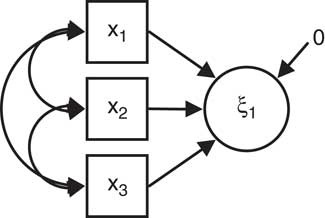
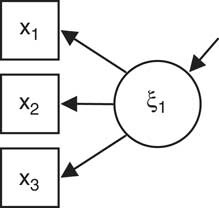
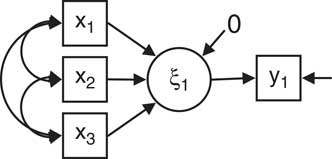
This critique requires an explanation of two different kinds of latent variable measurement models: formative and reflective. The distinction is highlighted in Figures 3 and 4 [see also Borsboom, Mellenbergh, & van Heerden (Reference Borsboom, Mellenbergh and van Heerden2003) and Diamantopoulos & Siguaw (Reference Diamantopoulos and Siguaw2006)]. In both Figures 3 and 4, we have illustrated a latent variable (drawn with circles labeled ξ) and manifest or observed variables (drawn with squares and labeled x1–x3). In psychosocial research typical latent variables include IQ and depression. Latent variables such as these are well measured by reflective indicators (Figure 4). For example, a reflective indicator of intelligence may be performance on a particular question presumed to measure innate intelligence, and a reflective indicator of depression might be a person's response to a question about their experience of sad mood or loss of interest in usual activities. The main idea of reflective measurement models is that the observed data (x1–x3) are caused by the unobserved variable. A high level of depression causes people to respond positively to questions regarding feeling sad or blue.
A formative measurement model.

A reflective measurement model.

Other types of latent variables are well measured by formative indicators (Figure 3). An example of a latent variable that fits a formative indicator model is SES. In formative measurement the latent variable are the consequent causes of their formative indicators. For example, people do not have a certain level of education because they have a high underlying level of socioeconomic status. Instead, a high level of education leads to a cascade of life events that raise SES. In fact, as the example of education indicates, many commonly used indicators of reserve may be partially consistent with both reflective and formative models. For example, there may be characteristics such as cognitive flexibility that influence an individual to pursue extensive education and also provide reserve to reduce the expression of neuropathological disease in old age. This problem is almost unavoidable because the reserve measures at any point in time reflect the accumulation of a lifetime of experiences.
Inattention to the formative vs. reflective nature of latent variables and their measures is an enduring problem in psychosocial research (see for example, Mueller & Parcel, Reference Mueller and Parcel1981). Since proxy indicators of cognitive reserve and socioeconomic status overlap to such a degree, researchers in reserve must give careful thought to the theoretical causal connection between their proxy measures and the underlying theoretical causal agent that is of primary research interest.
It seems reasonable to conclude that the appropriate causal ordering of cognitive reserve proxy variables such as education and vocabulary performance is at least partially characterized by a formative measurement model. Cognitive reserve does not cause high educational attainment and good performance on measures of crystallized ability. Instead, “each of these variables presumably reflects life experiences, above and beyond that of age, that have the potential to provide protection against clinical manifestation of disease in the brain” (Siedlecki et al., Reference Siedlecki, Stern, Reuben, Sacco, Elkind and Wright2009, p. 560). The causal ordering holds that more education and associated life experience creates a cognitive reserve in late life. A reflective measurement model interpretation of proxy measures of cognitive reserve (i.e., a hypothesis regarding an unobserved factor that causes observed covariation among education and vocabulary skills) requires that the latent factor be re-conceptualized as a factor antecedent to education and vocabulary development. Such a factor might be aspects of the genome or early life envirome that predispose to high educational achievement and vocabulary development. However, this interpretation of the latent variable underlying cognitive reserve is not the model that has been articulated among cognitive reserve researchers, but does appear in the fields of social epidemiology (Link & Phelan, Reference Link and Phelan1995).
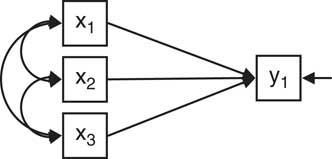
However, simply re-specifying latent variable measurement models using formative rather than reflective measurement relationships will not solve the challenges of cognitive reserve research using latent variable data analysis techniques. The reason is that formative measurement models are uninformative about latent variables (Borsboom, Reference Borsboom2005). This point is illustrated in Figures 5 and 6. Figure 5 is similar to Figure 3, but an observed outcome variable to the model (y1, e.g., cognitive decline). In Figure 6 a path diagram for a multiple regression relationship relating the observed variables is shown. Given conditions of model identification (Brown, Reference Brown2006) the models illustrated in Figure 5 and Figure 6 are statistically identical. This means that there can be no empirical basis for choosing one over the other, the identification of the correct model must be driven by substantive knowledge and theoretical orientation.
A formative measurement with an outcome.

A multiple regression model.

Since formative measurement models are statistically equivalent to multiple regression models, the specification and evaluation of models based exclusively on formative measurement provides no insight into the validity of the hypothesized latent variable. Thus theory development and testing regarding latent variables requires reflective measures of the latent variable. Latent variable theory is most productive when the underlying conceptual framework recognizes and tests the causal relationships suggested by the reflective measurement model (Borsboom, Reference Borsboom2005).
The same reflective vs. formative measurement model critique could be leveled against latent variable data analyses of the brain reserve concept. For example, Brickman and colleagues (Reference Brickman, Siedlecki, Muraskin, Manly, Luchsinger, Yeung and Stern2009) have proposed a latent variable measurement model for brain reserve using data from the Washington Heights/Hamilton Heights Inwood Columbia Aging Project. The latent variable pursued by Brickman and colleagues is one that captures “the brain's structural integrity” and those that “may be most important in providing reserve or may promote resistance against the development of brain pathology” (p 2/11). The observables that are used to measure this latent variable were “physical variables and incorporated anthropometric estimates of development that might directly reflect the quality of physical development” (p 3/11) operationalized with height, total cranial volume and cranial length. Here the articulated causal ordering is one where the observables are arguably antecedent to the latent construct.
It is reasonable to ask what practical consequence results from mis-specifying the causal ordering of observable and latent variables as outlined above. After all, as the eminent psychometrician Frederic Lord (Reference Lord1953) famously pointed out, empirical questions can be answered even if a data analysis approach violates statistical and measurement theory assumptions. The answer depends upon the view of the ontological status of the latent variables. The conceptual framework for latent variables offered by Borsboom (Reference Borsboom2005) is useful for organizing a response to this question. Borsboom describes two broad classes of theories about latent variables: realist and anti-realist. Anti-realist interpretations of latent variables include constructivist (the concept is a construction of the human mind, a socially agreed upon concept negotiated by scientists) and operationalist/instrumentalist (the concept is nothing more than a mathematical abstraction) stances. Anti-realist positions share an ontological perspective on latent variables: they have no independent existence apart from our measurements. The realist position starts from an assumption that the latent variables do exist independent of our measurements. Borsboom articulates a cogent argument concluding that the only position that results in a logically consistent philosophy of science is the realist. If our concern is construct validity, i.e., a concern with the fundamental existence of reserve or the validity of our measurements of reserve, then a realist ontological stance is suggested and the causal ordering of latent variables, their indicators, and their causes is of fundamental importance. An appropriately specified measurement model represents a formal test of the validity of the latent variable under consideration (e.g., reserve). On the other hand, perhaps our goal is to perform a statistical adjustment for multiple correlated factors in a regression model. With no concern as to whether the covariance of the multiple factors reflects the action of any characteristic of persons with existence apart from the individual measurements, an anti-realist approach is theoretically sufficient and statistically efficient. However, antirealist positions and models do not advance knowledge of the latent variable under study.
The formative/reflective distinction comes into play at various levels. As a practical example of the possible implications of mis-specifying the causal ordering of putative reserve markers, consider the example of cognitive training interventions. Cognitive training interventions have been shown to improve trained cognitive abilities (Ball et al., Reference Ball, Berch, Helmers, Jobe, Leveck, Marsiske and Willis2002), and some—but not all—interventions show transfer to non-trained cognitive abilities and functional outcomes (Valenzuela & Sachdev, Reference Valenzuela and Sachdev2009; Willis et al., Reference Willis, Tennstedt, Marsiske, Ball, Elias and Koepke2006). If cognitive activity is a reflective reserve indicator, then an intervention that improves cognitive performance through training and practice would not be expected to boost cognitive reserve. This is because cognitive activity is downstream of cognitive reserve. Analogously, we would not expect that lowering body temperature would treat an infection in an ill patient. If on the other hand cognitive activity is a formative indicator of reserve, then a cognitive training or mental exercise intervention that improves performance would be expected to boost reserve. Consequently, if a reflective measurement model is presumed then embarking upon a cognitive training intervention would be illogical. Thus the theory informs the kinds of questions that are suitable for being addressed with experimental studies. In the presence of results of intervention studies, regardless of the orientation of the generating theoretical framework, evidence for transfer effects can be informative of the reflective/formative distinction. In the ACTIVE cognitive intervention trial, only the logical reasoning intervention demonstrated transfer effects to functional outcomes (Willis et al., Reference Willis, Tennstedt, Marsiske, Ball, Elias and Koepke2006). This suggests that the activity indicator represented by random assignment to logical reasoning exercise may be formative with respect to reserve.
Reflective Measurement Models Are Needed For Testing Reserve Theories
Figure 1 clearly suggests a reflective measurement model for reserve. The reflective measures are the regressions of performance on pathology. While regression relationships are not typical reflective indicators of latent constructs, new data analysis techniques that permit generality and allow for both random effects and latent variables in a single analytic framework will make such model development and theory testing possible (Muthén & Muthén, Reference Muthén and Muthén1998–2010)—provided appropriate in vivo measures of neuropathology are available. Recent work toward this goal includes that of Reed and his colleagues (Reed et al., Reference Reed, Mungas, Farias, Harvey, Beckett, Widaman and DeCarli2010). This group has proposed the use of structural MRI to define cognitive reserve, that is, defining reserve as the residual of the regression using memory performance on normalized brain volume. They have shown that this formulation of reserve predicts cognitive decline and incident dementia (Reed et al., Reference Reed, Mungas, Farias, Harvey, Beckett, Widaman and DeCarli2010).
Conclusion
To advance the theory of cognitive reserve using latent variable models and observational research designs, good reflective measures of reserve are needed. In their recent review, Satz and colleagues offer distinct latent variable models for studying reserve, models that incorporate demographic characteristics such as age and education, anthropometric characteristics such as head circumference and total intracranial volume, neuropsychological measures including measures of processing resources (divided attention, processing speed, working memory) as well as measures of executive function and crystallized ability, and measures of cerebral activation and metabolism (Satz et al., Reference Satz, Cole, Hardy and Rassovsky2010). Our treatment has been more circumscribed. However, if Borsboom's (Reference Borsboom2005) challenge that construct validation requires a realist ontological position, measurement models provide information about latent variables when they include reflective indicators, and that the causal ordering of latent and observable variables is of fundamental importance, then each of three hypothesized models of Satz et al. requires some reformulation. We urge that investigators give careful thought and cogent justification for considering demographic measures such as age and anthropometric variables such as brain volume on equal ontological footing in measurement models of “brain reserve capacity”, and occupation and working memory on equal ontological footing in measurement models of “cognitive reserve.”
Given a general model of reserve as illustrated in Figure 1, in vivo measures of brain pathology that can be included in prospective observational research studies are essential and need to be bolstered by assessments of life course developmental pathways. Approaches such as natural (Glymour, Kawachi, Jenks, & Berkman, Reference Glymour, Kawachi, Jenks and Berkman2008) and designed (Jobe et al., Reference Jobe, Smith, Ball, Tennstedt, Marsiske, Willis and Kleinman2001) experiments are also promising approaches. Another approach might be to compare how a “random shock” that typically causes neurologic damage affects cognitive decline in people with high or low “reserve.” For example, a study might examine the change in performance pre–post myocardial infarction, stroke, head injury, bypass surgery, or as a consequence of an acute cognitive disorder such as delirium (Jones et al., Reference Jones, Fong, Metzger, Tulebaev, Yang, Alsop and Inouye2010, Reference Jones, Yang, Zhang, Kiely, Marcantonio and Inouye2006). Additionally, Sumowski and his colleagues use functional neuroimaging to characterize patterns of neural activation that provide insight into how reserve may operate to preserve cognitive performance in neurologic disease (2010). Findings from this research move beyond trying to define what reserve is to characterizing how reserve may operate (Stern, Reference Stern2009).
Given the challenges in operationalizing and measuring the construct of reserve, it may be worthwhile to consider the future utility of “reserve” as a construct in cognitive aging. It may be more informative and accurate to avoid reification and describe variables as they are measured. Such an approach has the added benefit of facilitating drawing more direct connections between the growing evidence base from animal models of enriched environments and brain structure, function, and aging in animals (Cracchiolo et al., Reference Cracchiolo, Mori, Nazian, Tan, Potter and Arendash2007; Hu et al., Reference Hu, Xu, Pigino, Brady, Larson and Lazarov2010) and analogous observational studies in humans (Valenzuela & Sachdev, Reference Valenzuela and Sachdev2006a, Reference Valenzuela and Sachdev2006b). Latent variables are often used as a tool for addressing collinearity among correlated predictor variables. Alternative methods of multivariate data analysis that do not rely upon postulated latent variables, such as path analysis or principle components analysis, may be better suited than methods of factor analysis for describing patterns of dependency and handling shared covariation (see for example Richards & Deary, Reference Richards and Deary2005, and Jefferson et al. in this issue). However, it may be premature to abandon the concept of reserve altogether. There are many examples in the history of science of postulated entities that were conceived of before the development of when precise measures were developed. Our main point, to recapitulate that of Satz and his colleagues (Reference Satz, Cole, Hardy and Rassovsky2010), is only that the measurement of reserve requires continual refinement and construct validation.
Finally, there is emerging evidence that reserve may be a potentially modifiable characteristic, for example through mental or physical exercise. To the extent that putative proxy measures of reserve are good measures, and if the true causal pathway is reasonably strong and in a supportive direction, reserve may be promoted at a societal level through compulsory education, physical education, and cultural norms. Valenzuela and Sachdev (Reference Valenzuela and Sachdev2006b), in their meta analysis found that participating in mentally stimulating activities was the most robust reserve measure (relative to education, occupation, and premorbid IQ). Scarmeas, Levy, Tang, Manly, and Stern (Reference Scarmeas, Levy, Tang, Manly and Stern2001) have found that incident dementia was related to intellectual, physical, and social activity participation. Experimental evidence in humans suggests that even older adults can benefit from training in basic cognitive abilities (Ball et al., Reference Ball, Berch, Helmers, Jobe, Leveck, Marsiske and Willis2002; Valenzuela & Sachdev, Reference Valenzuela and Sachdev2009; Willis et al., Reference Willis, Tennstedt, Marsiske, Ball, Elias and Koepke2006; Wolinsky, Unverzagt, Smith, Jones, Stoddard, et al., Reference Wolinsky, Unverzagt, Smith, Jones, Stoddard and Tennstedt2006; Wolinsky, Unverzagt, Smith, Jones, Wright, et al., Reference Wolinsky, Unverzagt, Smith, Jones, Wright and Tennstedt2006). Such evidence is exciting because it suggests that older people can modify their risk for cognitive decline and maintain independence through mental activity.
Acknowledgments
Collaborative work on this project by the co-authors was partially supported by a conference grant on Advanced Psychometric Methods in Cognitive Aging Research (R13AG030995). Dr. Jones was also supported by NIH/NIA grant P01AG031720. The authors have no conflict of interest.