


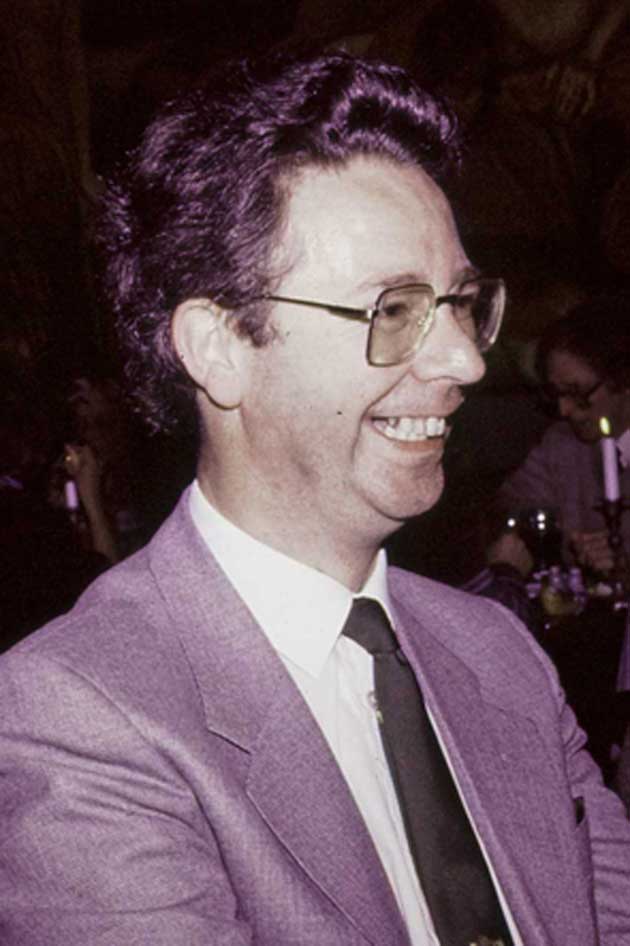
Born in Lincoln on 10 August 1938, Mark Richard David Seaward graduated from the University of Birmingham in 1959, from where he obtained a Diploma in Education the following year before taking up a position at the then Loughborough Training College (now University). While there he went on to obtain an MSc in ecology from the University of Nottingham in 1965, before moving further north to Trinity and All Saints Colleges, Horsforth, Leeds, in 1967. He obtained a PhD from the University of Bradford in 1972 for studies on urban lichen ecology, and then settled at the University of Bradford in 1974, where he was appointed to a personal chair as Professor of Environmental Biology in 1989 – a position he has continued in as an Honorary Research Professor since his retirement.
When the British Lichen Society decided to initiate a mapping scheme in 1963, to be launched the next year, it appealed “to interested persons” to contact the Secretary; Mark stepped up to the challenge, becoming its Mapping Recorder when the scheme was launched in 1964, and a role he continues with to this day along with being the Society’s Archivist. Starting the scheme was a truly Herculean task to contemplate at a time when the “current” national checklist had appeared in 1953, and the latest comprehensive keys dated from 1921! Some were sceptical of the venture, but Mark was determined, and through an evolving series of mapping cards, with a new checklist in 1965 and identification manual in 1970, enthusiasm was engendered, field meetings were targeted at little-studied areas, and records poured in exponentially. Converting the records to maps was laborious, involving preparing punched cards, either for a 10 km square or for individual species, being put through a tabulator at the Monk’s Wood Experimental Station, near Huntingdon in Cambridgeshire that had been used to produce the Atlas of the British Flora in 1962. The first maps produced by this system started to appear in papers in The Lichenologist from 1971, the first lichen atlas volume in 1982 (Seaward & Hitch Reference Seaward and Hitch1982), and then fascicles on different genera or families. The development and achievements of the first 25 years of the scheme are described elsewhere (Hawksworth & Seaward Reference Hawksworth and Seaward1991), and today, with the enormous advances made in computing and printing technologies, dot maps can be generated on demand. Indeed, these have become a regular feature in Dobson’s Lichens from the third edition (Dobson Reference Dobson1992).
Primarily an ecologist, Mark was keen to know how distributions had changed over time, which meant delving into records from the past, both in terms of specimens preserved in collections and literature reports. One result of this was an account of the history of lichenology in the British Isles which included a bibliography of 2,695 references cross-indexed by vice-county prepared using punched cards (Hawksworth & Seaward Reference Hawksworth and Seaward1977). In addition, Mark made a special effort to locate and document collections in provincial museums, a task which sometimes involved visiting “on spec” and enquiring if they had any lichen collections. Apart from documenting these hitherto neglected collections and extracting records, he often spent a considerable time meticulously curating the specimens, which were often in a sorry state, and by now would probably have been lost or discarded. He has continued to catalogue and publish notes on the lichens and bryophytes of his home county, Lincolnshire, since the first in 1961, and went on to carry out in-depth studies of the lichens of the West Yorkshire Conurbation where he had settled (Seaward, Reference Seaward1975), and a checklist of Yorkshire lichens in 1994, with an update issued in 2008.
Mark’s enthusiasm for recording could not be contained within Great Britain. Ireland was his first target in order to boost records from the area for the Mapping Scheme. This he did by making repeated visits by himself, with colleagues, and promoting Society field meetings. The first checklist for Ireland which he published in 1984 had 957 taxa, but by the third edition that number had swelled to 1,165 (Seaward, Reference Seaward2010), largely as a result of his personal dedication. This mission to document lichens extends far beyond the British Isles. He has and is always keen to help lichenologists around the world, and is an avid collector himself; his huge personal herbarium is to be permanently preserved in the Liverpool City Museums. A survey of his publications reveals that to date he has contributed to the lichen biota of some 28 countries, discovering several species of lichen-forming and lichenicolous fungi new to science. The Chagos Islands (Shepard & Seaward, Reference Sheppard and Seaward1999) and the Seychelles became particular passions. Always aware that he is not primarily a taxonomist, however, and being a stickler for accuracy, Mark can often be seen at lichen meetings passing bundles of neatly packeted specimens to colleagues for identification – and woe betide those who forget to deal with them in a timely manner!
As an environmental scientist, Mark is always keen to understand how lichens interact with the environment, and an early realization of his desire to advance lichen ecology was the now classic Lichen Ecology (Seaward, Reference Seaward1977) and the more wide-ranging Urban Ecology (Bornkamm et al., Reference Bornkamm, Lee and Seaward1982). His elegant work demonstrating the substrate-shift of Lecanora muralis at different SO2 levels is a classic (Seaward, Reference Seaward1976a). He has documented lichen recolonizations following falls in ambient SO2 levels in the UK and elsewhere in Europe, and investigated tolerance to heavy metals. He was also, with colleagues in Poland, able to track the caesium-137 fallout from the Chernobyl disaster of 1986 across Europe from examinations of Umbilicaria thalli. The title of his inaugural lecture as Professor of Environmental Biology, given on 3 March 1992, was “Lichens, silent witnesses of the Chernobyl disaster”. He went on to become a world leader in the investigation of the biodeterioration of stone surfaces, notably in monuments of archaeological and historical importance, taking advantage of sophisticated Fourier transform Raman spectroscopy facilities at the University to document the interactions in more detail than had previously been possible, and also synthesizing what is known (St. Clair & Seaward, Reference St. Clair and Seaward2004). This work caught the attention of the national press, being featured in The Independent of 2 December 1991 with the by-line “ancient treasures are suddenly being attacked by microscopic organisms” (with Mark apparently looking at the wall of his university building!).
Mark has always had a deep appreciation for history, including the archaeological (Seaward, Reference Seaward1976b), and the need to archive material for future generations – a role he continues to perform for the Society. He has documented the lives and writings of various botanists and lichenologists (e.g. Seaward & Fitzgerald, Reference Seaward and Fitzgerald1996), worked on the Turner-Borrer correspondence (Hawksworth & Seaward, Reference Hawksworth and Seaward1978), and co-edited a special volume to mark the 100th number of Bibliotheca Lichenologica (Thell et al., Reference Thell, Seaward and Feuerer2009). From 1987–2016, Mark also had key roles in editing the International Association for Lichenology’s Newsletter.
Mark has even more widespread interests, serving as editor of The Naturalist, the journal of the Yorkshire Naturalists Union, for 31 years, and as editor or co-editor of the Bronte Society Transactions from 1984–1995. Fascinated by the three Bronte sisters, he provided an introduction to a reprint of the 1846 compilation of their poems (Seaward, Reference Seaward1985). He also edited a wide-ranging Handbook for Naturalists (Seaward, Reference Seaward1981), and became involved in the Leeds Philosophical and Literary Society, becoming President for 2004–06. He was President of the British Lichen Society in 1982–83, and Vice-President of the Linnean Society of London for 2015-16. Amongst his numerous other honours and awards are the Acharius Medal of the International Association for Lichenology in 2006, Honorary Membership of the British Lichen Society in 1994 and the Ursula Duncan Award of that Society in 2003, the Polish Nummo Aureo (L’Ordre de’Or) in 1985, and an honorary DSc from Wrocław University the same year. There are 371 publications by Mark, alone or with others, currently listed in the Recent Literature on Lichens database (http://nhm2.uio.no/botanisk/lav/RLL/RLL.HTM), a stupendous record, but one that is incomplete and the real number must be over 400.
We feel privileged to have experienced Mark’s friendship and to have collaborated with such a special person for over 50 years, congratulate him on his achievements to date, and along with all members of the Society wish him a healthy, productive, and satisfying future – for we cannot imagine him slowing down . . . . .
The photograph included here was kindly provided by Hannes Hertel and was taken in Berlin in 1987 at the 14th International Botanical Congress.


