Introduction
Major depression is the second cause of incapacity worldwide (Mokdad et al., Reference Mokdad, Forouzanfar, Daoud, Mokdad, El Bcheraoui, Moradi-Lakeh and Murray2016). Antidepressant drug treatments are prescribed to 10% of the general population (Pratt, Brody, & Gu, Reference Pratt, Brody and Gu2011). However, their ability to achieve remission in major depressive episodes (MDE) in patients with major depressive disorder (MDD) is limited to a third of patients (Trivedi et al., Reference Trivedi, Rush, Wisniewski, Nierenberg, Warden, Ritz and Team2006).
Some clinical data suggest a potential association between major depression and olfaction impairment (Croy & Hummel, Reference Croy and Hummel2017; Kohli, Soler, Nguyen, Muus, & Schlosser, Reference Kohli, Soler, Nguyen, Muus and Schlosser2016). Phylogenetically, olfaction is the most ancient sense characterized by a unique intimacy with the emotion system. Olfaction enables to detect volatile molecules depending on their concentration, this detection threshold being named olfactory Threshold (T) (also called sensitivity) (Hummel, Sekinger, Wolf, Pauli, & Kobal, Reference Hummel, Sekinger, Wolf, Pauli and Kobal1997). Olfaction also enables to discriminate different odorants (Bushdid, Magnasco, Vosshall, & Keller, Reference Bushdid, Magnasco, Vosshall and Keller2014), called Discrimination (D) as well as the identification of odorant, called Identification (I) (Hummel et al., Reference Hummel, Sekinger, Wolf, Pauli and Kobal1997). Olfactory Pleasantness is the pleasure produced by an odorant molecule, described as pleasant (P), neutral (N) and unpleasant (U) (Croy & Hummel, Reference Croy and Hummel2017). Threshold reflects, to some degree, the peripheral aspects of olfactory function, Identification and Discrimination reflecting central nervous system cognitive functions (Croy et al., Reference Croy, Symmank, Schellong, Hummel, Gerber, Joraschky and Hummel2014; Hedner, Larsson, Arnold, Zucco, & Hummel, Reference Hedner, Larsson, Arnold, Zucco and Hummel2010; Horio, Murata, Yoshikawa, Yoshihara, & Touhara, Reference Horio, Murata, Yoshikawa, Yoshihara and Touhara2019; Lapid et al., Reference Lapid, Shushan, Plotkin, Voet, Roth, Hummel and Sobel2011). Pleasantness is already coded in the periphery (Lapid et al., Reference Lapid, Shushan, Plotkin, Voet, Roth, Hummel and Sobel2011) and at early stages in the central nervous system, e.g. at the level of the piriform cortex (Bensafi, Sobel, & Khan, Reference Bensafi, Sobel and Khan2007). Previously, our group showed that in a mouse model of depression based on chronic corticosterone administration (CORT model), olfactory Threshold score was decreased and restored after antidepressant drug treatment with fluoxetine (Siopi et al., Reference Siopi, Denizet, Gabellec, de Chaumont, Olivo-Marin, Guilloux and Lazarini2016), while Discrimination score remained unaltered in depressed mice compared to controls.
Previous clinical findings suggest that olfactory functions may be decreased in patients with a current MDE. Sixteen studies have compared olfactory functions between patients suffering from MDE and healthy controls (HCs) (online Supplementary Table S1) (Atanasova et al., Reference Atanasova, El-Hage, Chabanet, Gaillard, Belzung and Camus2010; Chen et al., Reference Chen, Klarmann, Israel, Ning, Colle and Hummel2019; Clepce, Gossler, Reich, Kornhuber, & Thuerauf, Reference Clepce, Gossler, Reich, Kornhuber and Thuerauf2010; Croy et al., Reference Croy, Symmank, Schellong, Hummel, Gerber, Joraschky and Hummel2014; Gross-Isseroff et al., Reference Gross-Isseroff, Luca-Haimovici, Sasson, Kindler, Kotler and Zohar1994; Kamath et al., Reference Kamath, Paksarian, Cui, Moberg, Turetsky and Merikangas2018; Kopala, Good, & Honer, Reference Kopala, Good and Honer1994; Lombion-Pouthier, Vandel, Nezelof, Haffen, & Millot, Reference Lombion-Pouthier, Vandel, Nezelof, Haffen and Millot2006; Naudin et al., Reference Naudin, El-Hage, Gomes, Gaillard, Belzung and Atanasova2012; Negoias et al., Reference Negoias, Croy, Gerber, Puschmann, Petrowski, Joraschky and Hummel2010; Pause, Miranda, Goder, Aldenhoff, & Ferstl, Reference Pause, Miranda, Goder, Aldenhoff and Ferstl2001; Pentzek, Grass-Kapanke, & Ihl, Reference Pentzek, Grass-Kapanke and Ihl2007; Rossi et al., Reference Rossi, Perez-Lloret, Millar Vernetti, Drucaroff, Costanzo, Ballesteros and Merello2015; Scinska et al., Reference Scinska, Wrobel, Korkosz, Zatorski, Sienkiewicz-Jarosz, Lojkowska and Kukwa2008; Serby, Larson, & Kalkstein, Reference Serby, Larson and Kalkstein1990; Warner, Peabody, & Csernansky, Reference Warner, Peabody and Csernansky1990; Zucco & Bollini, Reference Zucco and Bollini2011): four studies out of 12 reported a lower Threshold score, one study out of six reported lower Discrimination score in MDE patients and six studies out of 15 reported a lower Identification score in MDE patients. A meta-analysis including 13 of these studies (Kohli et al., Reference Kohli, Soler, Nguyen, Muus and Schlosser2016), found a lower Threshold score, a lower Discrimination score and a lower Identification score in MDE patients (Kohli et al., Reference Kohli, Soler, Nguyen, Muus and Schlosser2016). Furthermore, decreased Pleasantness score was observed in MDE patients in two studies out of six (Atanasova et al., Reference Atanasova, El-Hage, Chabanet, Gaillard, Belzung and Camus2010; Naudin et al., Reference Naudin, El-Hage, Gomes, Gaillard, Belzung and Atanasova2012) (online Supplementary Table S1). Pleasantness is of particular interest in MDE because anhedonia is a core symptom of major depression.
Preliminary studies suggest that olfactory functions could be improved after antidepressant treatment (Gross-Isseroff et al., Reference Gross-Isseroff, Luca-Haimovici, Sasson, Kindler, Kotler and Zohar1994). In a study including nine patients suffering from a current MDE and treated with maprotiline (n = 3), imipramine (n = 4) or fluoxetine (n = 2) during 6 weeks, an increased Threshold score was shown after treatment (Gross-Isseroff et al., Reference Gross-Isseroff, Luca-Haimovici, Sasson, Kindler, Kotler and Zohar1994). A study including 18 patients suffering from a current MDE, treated with escitalopram during 6 weeks, found an increase of the Pleasantness score after treatment (Naudin et al., Reference Naudin, El-Hage, Gomes, Gaillard, Belzung and Atanasova2012).
However, the vast majority of depressed patients included in the previous studies were not antidepressant-free at baseline. Thus, their previous antidepressant treatments may have modulated their olfactory abilities. Only five studies assessing Threshold and Identification scores focused on antidepressant-free patients: three with small MDE sample sizes (n = 9, n = 12 and n = 6) (Gross-Isseroff et al., Reference Gross-Isseroff, Luca-Haimovici, Sasson, Kindler, Kotler and Zohar1994; Serby et al., Reference Serby, Larson and Kalkstein1990; Warner et al., Reference Warner, Peabody and Csernansky1990), one with only elderly depressed patients (n = 25) (Scinska et al., Reference Scinska, Wrobel, Korkosz, Zatorski, Sienkiewicz-Jarosz, Lojkowska and Kukwa2008) and two without healthy controls (Scinska et al., Reference Scinska, Wrobel, Korkosz, Zatorski, Sienkiewicz-Jarosz, Lojkowska and Kukwa2008; Serby et al., Reference Serby, Larson and Kalkstein1990) (online Supplementary Table S1). These studies provided controversial findings (online Supplementary Table S1) and Pleasantness has never been assessed in antidepressant-free patients.
Olfactory deficits may be independent therapeutic targets, since they reflect underlying neurobiological abnormalities associated with major depression. Furthermore, identifying treatments able to restore olfactory deficits in depressed patients could impact positively the quality of life of depressed patients.
Thus, we aimed to assess, in drug-free depressed patients, if olfactory impairment could be restored after antidepressant drug treatment, taking into account depression severity.
Material and methods
Participants and design
DEP-ARREST-CLIN is a three-month prospective cohort (ClinicatTrials.gov NCT02051413), including MDE antidepressant-free (one month) patients and HCs matched for age and sex. A subgroup of patients was antidepressant drug naïve (never treated with antidepressant drugs). Patients and HCs provided written informed consent for study participation which was approved by the relevant ethics committee (CPP IDF VI) and the French National Agency for Medicines and Health Products Safety (ANSM). All participants were included between February 2014 and January 2017. They underwent a comprehensive physical and psychiatric assessment by senior physicians at Bicêtre Hospital.
Patients aged 18–65 years with a current MDE diagnosis (MINI interview, Sheehan et al., Reference Sheehan, Lecrubier, Sheehan, Amorim, Janavs, Weiller and Dunbar1998) and a minimum depression score of 18 on the Hamilton Depression Rating Scale-17 items (HDRS) (Hamilton, Reference Hamilton1960) in the context of MDD, as well as free of antidepressant drug use at least one month before the study beginning, were included. Patients suffering from bipolar disorder, psychotic disorder, eating disorder, and addictions, according to the DSM-5 criteria, or from nasal polyposis, chronic or acute sinusitis, chronic or acute rhinitis or pregnancy or breastfeeding, were not included. HCs were included based on the absence of current or past mental disorders or somatic conditions, particularly nasal polyposis and chronic or acute sinusitis or rhinitis and were matched for age and sex with 32 antidepressant drug-naïve patients with MDE.
Patients were treated prospectively with the antidepressant venlafaxine extended release, at flexible doses (dose range: 37.5–375 mg/day) using a naturalistic ecological design, in which the dosage was flexible and chosen by the treating psychiatrist. Other antidepressant treatments, antipsychotic drugs, or mood stabilizers were not allowed during the study. Benzodiazepines were allowed at the minimum effective dose and for the minimum duration.
Olfaction, memory and depression were assessed by independent investigators. They were assessed at baseline, and after 1 and 3 months of venlafaxine treatment for depressed patients. They were assessed once for HCs since olfaction scores are stable over 3 months in healthy subjects (Al Ain et al., Reference Al Ain, Poupon, Hetu, Mercier, Steffener and Frasnelli2019; Albrecht et al., Reference Albrecht, Anzinger, Kopietz, Schopf, Kleemann, Pollatos and Wiesmann2008; Doty, McKeown, Lee, & Shaman, Reference Doty, McKeown, Lee and Shaman1995; Hummel et al., Reference Hummel, Sekinger, Wolf, Pauli and Kobal1997; Sorokowska, Albrecht, Haehner, & Hummel, Reference Sorokowska, Albrecht, Haehner and Hummel2015).
Seven out of 69 patients dropped out before the end of the study because of: adverse effect (n = 2) (increased sweating and nausea), lost to follow-up (n = 2), consent withdrawal (n = 2), and mood switch (n = 1).
Olfactory assessment
The Sniffin’ Sticks test, which provides a total TDI score and T, D and I scores, is the most used test to assess olfactory performance (Hummel, Kobal, Gudziol, & Mackay-Sim, Reference Hummel, Kobal, Gudziol and Mackay-Sim2007). It provides a validated quantification of T score, D score, I score (Hummel et al., Reference Hummel, Kobal, Gudziol and Mackay-Sim2007). The total TDI score was the main outcome variable.
• The T score was assessed using 16 dilutions prepared from a 4% n-butanol solution (dilution ratio 1:2). Three pens (two containing the solvent and the third the odorant) were presented in a randomized order using a single staircase of increasing concentration [16 (lower concentration) to 1 (higher concentration)]. Subjects had to identify the odor-containing pen. Reversal of the staircase was triggered when the odorant was correctly identified in two successive trials. The T score was defined as the mean of the last four of seven staircase reversals, scores ranging from 1 to 16 (the higher, the better). Subjects were blindfolded during this test.
• To assess the D score, triplets of pens were presented in a randomized order (two containing the same and one a different odorant). Subjects had to determine which of three pens smelled differently, scores ranging from 1 to 16. Subjects were blindfolded during this test as well.
• The I score was assessed for 16 common odors (orange, leather, cinnamon, peppermint, banana, lemon, liquorice, turpentine, garlic, coffee, apple, cloves, pineapple, rose, anise and fish). Using a multiple choice task, the I index of individual odors was performed from lists of four descriptors each, scores ranging from 1 to 16.
Moreover, during the Sniffin’ Sticks I task, patients and HCs were asked for the Pleasantness of the 16 selected odors smelling, as it was previously published (Swiecicki et al., Reference Swiecicki, Zatorski, Bzinkowska, Sienkiewicz-Jarosz, Szyndler and Scinska2009). The number of odors rated as ‘pleasant’ (P), ‘unpleasant’ (U) or ‘neutral’ (N) corresponding to the P, U and N scores range from 0 to 16 and the sum of these scores was equal to 16.
Memory assessment
Since memory impairments are associated with MDE (Gorwood, Corruble, Falissard, & Goodwin, Reference Gorwood, Corruble, Falissard and Goodwin2008) and olfactory dysfunctions (Yahiaoui-Doktor et al., Reference Yahiaoui-Doktor, Luck, Riedel-Heller, Loeffler, Wirkner and Engel2019), the memory immediate recall task from the Wechsler Memory Scale – Revised (Wechsler, Reference Wechsler1987) was rated accordingly.
Depression intensity at baseline and improvement after antidepressant treatment
The Hamilton Depression Rating Scale 17 items (HDRS) (Hamilton, Reference Hamilton1960) (score range : 0–52) was rated by certified psychiatrists. Remission was assessed after 3 months of venlafaxine treatment. Remission was defined by a HDRS total score of 7 or less at follow-up after 3 months of treatment (Moller, Reference Moller2008; Rush et al., Reference Rush, Kraemer, Sackeim, Fava, Trivedi, Frank and Force2006).
The Snaith-Hamilton Pleasure Scale (SHAPS), a self-rated questionnaire comprising 14 items (score range: 0–14), was used to assess anhedonia severity (Snaith et al., Reference Snaith, Hamilton, Morley, Humayan, Hargreaves and Trigwell1995), anhedonia being a symptom of depression.
Statistical analysis
The statistical analyses were performed using R 3.4.2 and STATA v13 MP. Values were expressed in mean (s.d.).
Taking into account the non-normality distribution of olfactory variables and the small sample size, non-parametric tests were chosen.
Socio-demographical variables were compared between MDE patients and HCs. The variables to be explained were the TDI score (the main one) and Pleasantness. The explicative variables were the socio-demographical and clinical characteristics (age, sex, tobacco use, HDRS, SHAPS and memory task scores for depressed patients), the diagnosis group (MDE v. HCs). Wilcoxon rank-sum tests, χ2 tests and Spearman correlations were computed. Mixed-effects regressions were used to assess olfactory score changes after one and three months of antidepressant treatment in MDE patients, looking at a time effect. We fitted the mixed models with patients as a random intercept. No random slopes were considered. An independent covariance structure was used to allow a distinct variance for each random effect within a random-effects equation, assuming all covariances are zero. A likelihood ratio test was also used to test the hypothesis that our random intercept mixed model differed significantly from a fixed effect linear model. Post-hoc analyses were performed in case of significant time effects. Wilcoxon signed-rank tests and Wilcoxon rank-sum tests were used to compare olfactory scores of depressed patients 1 and 3 months after treatment with those of HCs. Linear regressions were performed to control the explicative effect of diagnosis (MDE v. HCs) for potential confounders among socio-demographical variables. Covariables of the multivariate models were selected on the basis of a significant association (p < 0.05) in bivariate analyses: they comprised age, sex and tobacco use. Furthermore, to exclude a possible confounding effect of tobacco use change during follow-up, repeated measures mixed-effects regressions for olfactory score changes after 1 and 3 months of antidepressant treatment were performed in the subgroup of non-smoker patients (Ajmani, Suh, Wroblewski, & Pinto, Reference Ajmani, Suh, Wroblewski and Pinto2017). Since corrections for multiple comparisons are controversial (Streiner & Norman, Reference Streiner and Norman2011), we used mixed models to take into account the multiple comparisons due to repeated measures and a significant level of p < 0.05.
Post-hoc analyses were computed to test whether baseline olfaction scores may predict changes in HDRS scores after 1 and 3 months of treatment and whether olfaction score changes after 1 month of treatment may predict remission after 3 months.
The mediation effects of depression improvement (HDRS score change) and anhedonia improvement (SHAPS score change) on olfactory score improvements were assessed with path analyses.
Results
Sixty-nine MDE patients and 32 HCs matched with antidepressant-naive patients were included in the current study. MDE patients matched with HCs did not differ regarding age, sex and tobacco use with those who were not matched with HCs. Matched MDE patients and HCs did not differ with respect to age, sex and tobacco use. Patients and HCs did not differ with respect to age [MDE years mean (s.d.): 34.1 (12.5) and HCs: 35.1 (12.9)] and sex [MDE n (%): 46 (66.7%) women and HCs: 21 (65.6%) women]. MDE patients were more frequently tobacco smokers than HCs [MDE n (%): 27 (39.1%) smokers v. HCs: 4 (12.5%) smokers, p < 0.01].
In MDE patients, the mean HDRS score at baseline was 26.4(5.3). 65 (94.2%) were inpatients at inclusion. The mean (s.d.) venlafaxine doses were 184.1(63.9) mg/day and 196.4 (85.2) mg/day after 1 and 3 months of treatment, respectively. Fifty-three (76.8%) patients received benzodiazepines at baseline, 48 (71.6%) after 1 month, and 25 (42.4%) after 3 months of treatment. After 3 months of venlafaxine treatment, 46 (74.2%) patients were remitters and 16 (25.8%) were non-remitters.
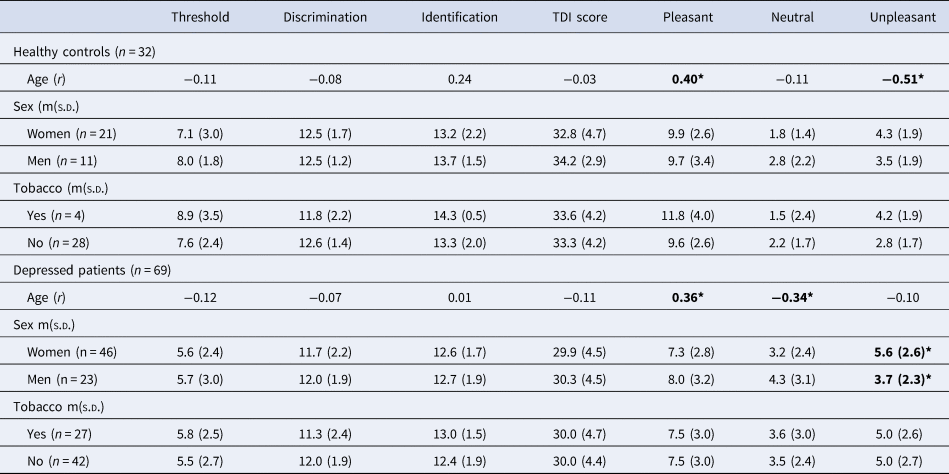
Table 1 summarizes associations between olfactory scores and demographic and clinical data in HCs and MDE patients. Among HCs, the p score was positively correlated with age (r = 0.40, p < 0.05) and the U score was negatively correlated with age (r = −0.51, p < 0.01). There was no other significant association between olfactory scores and age, gender, and tobacco use (Table 1).
Association of olfaction and baseline characteristics in controls and MDE patients
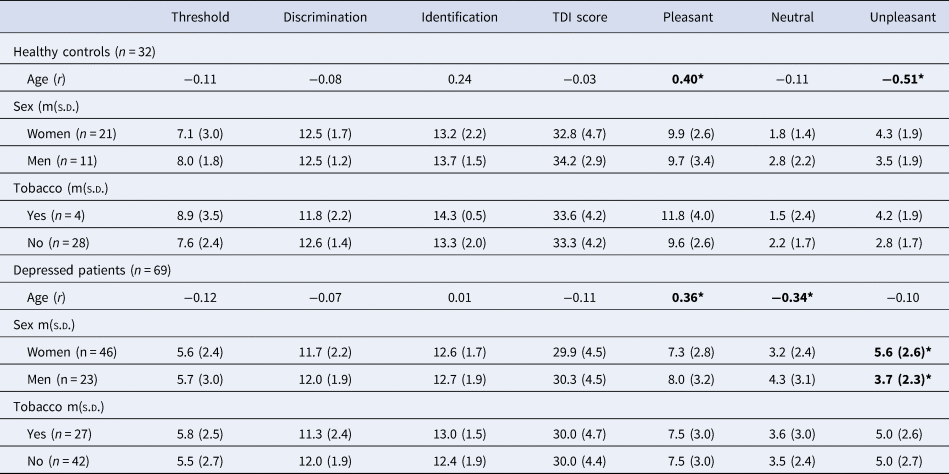
Means are presented with standard deviations; MDE, major depressive episode; in bold *: p < 0.05.
Among MDE patients, the p score was positively correlated with age (r = 0.36, p < 0.01) and the N score was negatively correlated with age (r = −0.34, p < 0.01). Women had higher U scores than men (p < 0.01) (Table 1). In MDE patients, except for the D score (r = −0.28, p = 0.019), olfactory scores were not significantly correlated with HDRS scores (TDI score: r = −0.19 p = 0.21) or with SHAPS scores (TDI score: r = 0.07, p = 0.59). In MDE patients, the memory task scores were not correlated with TDI (r = 0.01, p = 0.25) but were correlated with D (r = 0.38, p = 0.0038) and I (r = 0.28, p = 0.036) scores. Moreover, in HCs, olfactory scores were correlated neither with HDRS and SHAPS, nor with memory task scores.
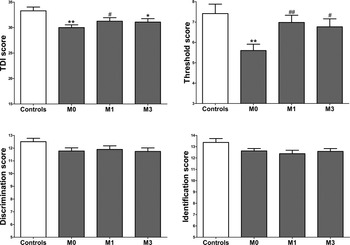
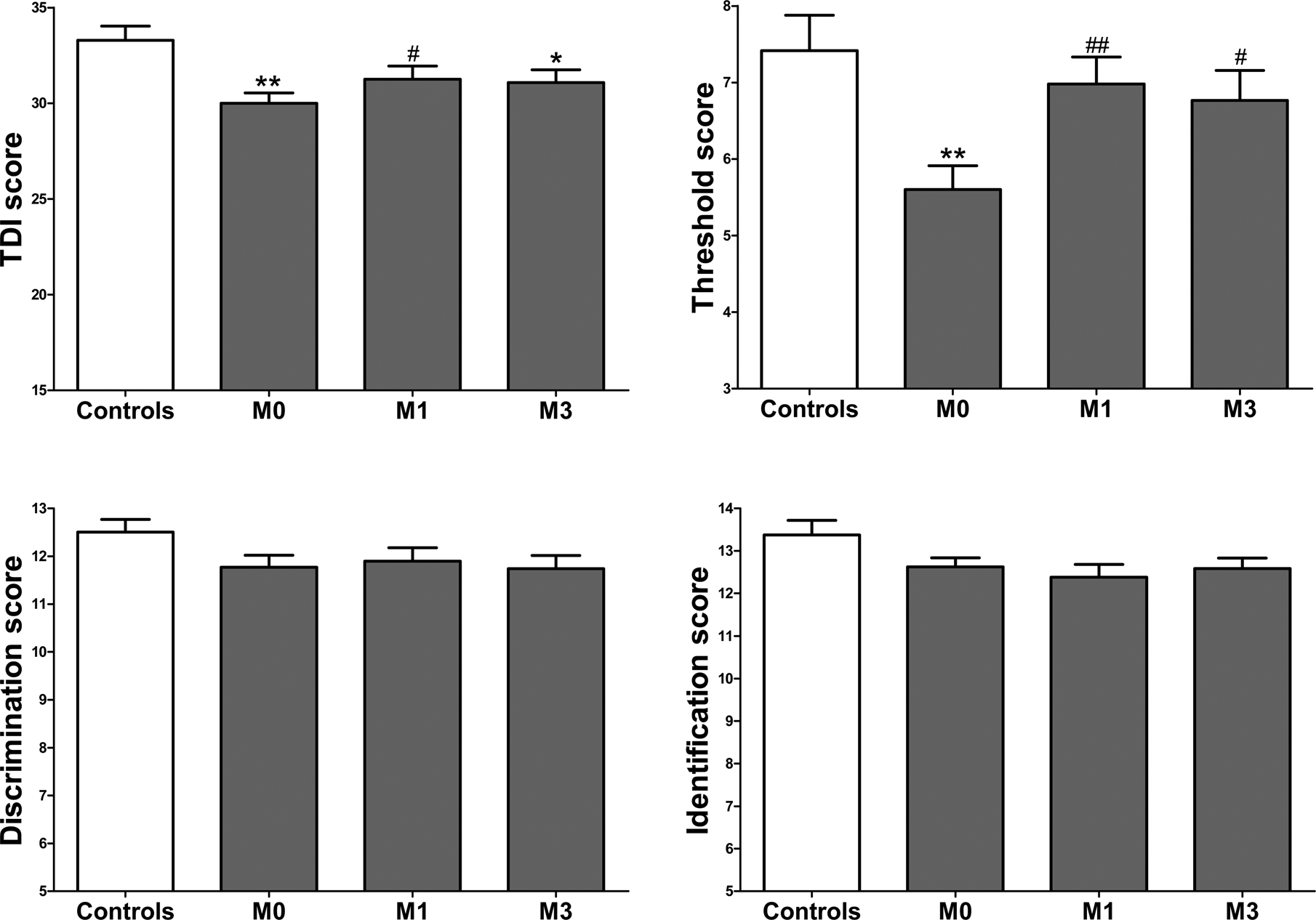
Figures 1 and 2 illustrate olfactory score changes after antidepressant treatment within the MDE group. As compared to pHCs, MDE patients had lower TDI scores [mean (s.d.): 30.0 (4.5) v. 33.3 (4.2), p < 0.001], lower olfactory T scores [mean (s.d.): 5.6 (2.6) v. 7.4 (2.6), p < 0.01]. Olfactory deficit was observed even after adjustment for age, sex and tobacco use [TDI score: estimate = −3.4, CI 95% (−5.3 to −1.4), p < 0.001, T score estimate = −1.9, CI 95% (−3.1 to −0.8)]. TDI total score did not change significantly after antidepressant treatment (Fig. 1). However, T scores increased significantly after antidepressant treatment [M0:5.6 (2.6), M1: 6.9(2.6), and M3: 6.7(2.9), β = 0.32, 95%CI (0.04–0.59), p < 0.05], with a return to normal scores (Fig. 1). In the subgroup of non-smoker patients (n = 42), this T score increase was almost significant [β = 0.34, 95%CI (−0.03 to 0.73), p = 0.08]. D and I scores did not change significantly (Fig. 1).
Threshold, Discrimination, Identification and TDI olfactory scores before and after venlafaxine treatment in MDE patients and controls. Means are presented with standard errors; TDI, total score = T (olfactory threshold score) + D (olfactory discrimination score) + I (olfactory identification scores); MDE, Patients with a current major depressive episode in a context of major depressive disorder (in gray); M0, patients before venlafaxine treatment; M1, patients one month after venlafaxine treatment; M3, patients three months after venlafaxine treatment; * p < 0.05 and **p < 0.01 for MDE (M0, M1 or M3) v. controls; # p < 0.05 and ## p < 0.01 for MDE (M1 or M3) v. MDE M0.
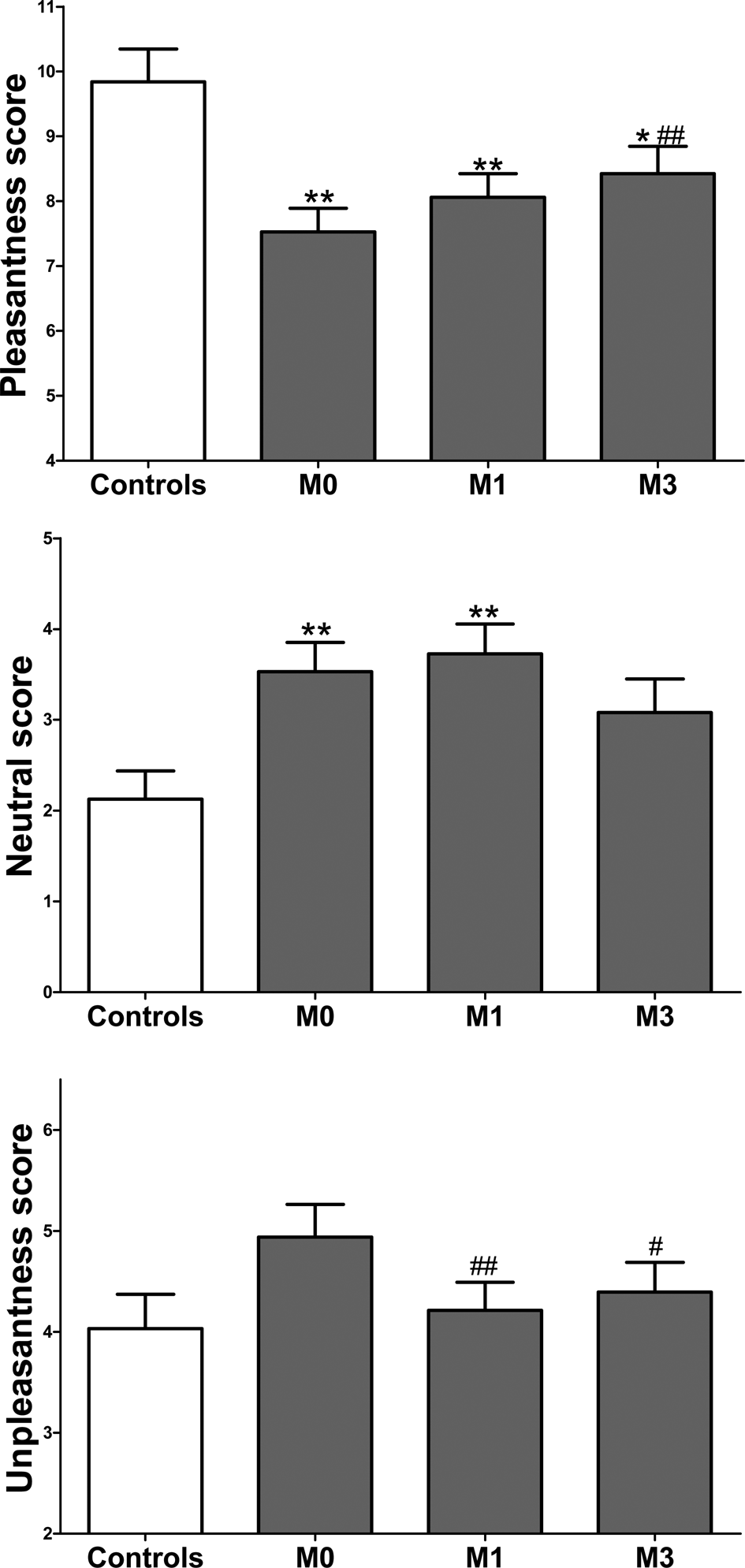
Pleasantness, Neutral and Unpleasantness olfactory scores before and after venlafaxine treatment in MDE patients and controls. Means are presented with standard errors; MDE, patients with a current major depressive episode in a context of major depressive disorder (in gray); M0, patients before venlafaxine treatment; M1, patients one month after venlafaxine treatment; M3, patients three months after venlafaxine treatment; * p < 0.05 and **p < 0.01 for MDE (M0, M1 or M3) v. controls; # p < 0.05 and ##p < 0.01 for MDE (M1 or M3) v. MDE patients M0
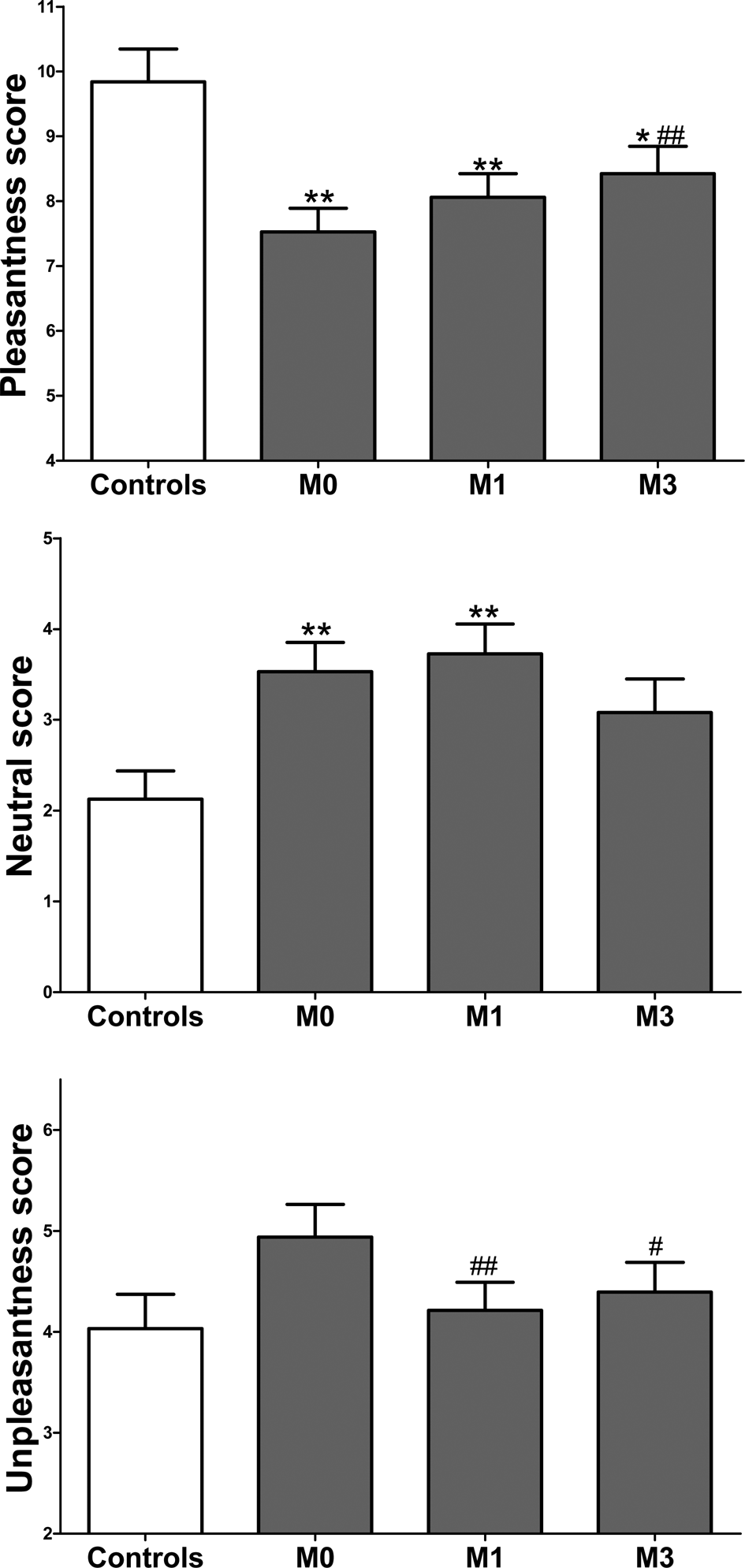
Regarding Pleasantness, MDE patients had lower p scores [mean (s.d.): 7.5(3.0) v. 9.8(2.8), p < 0.001] and higher N scores [mean (s.d.): 3.5(2.7) v. 2.1(1.8), p < 0.05] (Figs 1 and 2). This olfactory deficit was observed even after adjustment for age, sex and tobacco use [p score: estimate = −2.2, CI 95% (−3.5 to −1.0), p < 0.001; N score: estimate = 1.4, CI95% (0.3–2.4), p < 0.01]. p scores increased significantly after antidepressant treatment [M0: 7.5(3.0), M1: 8.1(3.0) and M3: 8.4(3.3), β = 0.39, 95%CI (0.16–0.62), p < 0.001] whereas N scores were unchanged (Fig. 2). In the subgroup of non-smoker patients (n = 42), these p scores increase [p score: β = 0.32, 95%CI (0.11–0.53), p < 0.01] remained significant.
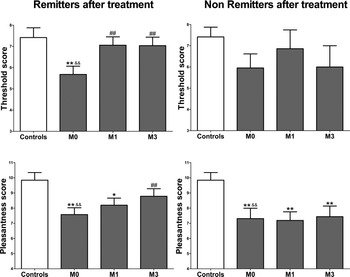
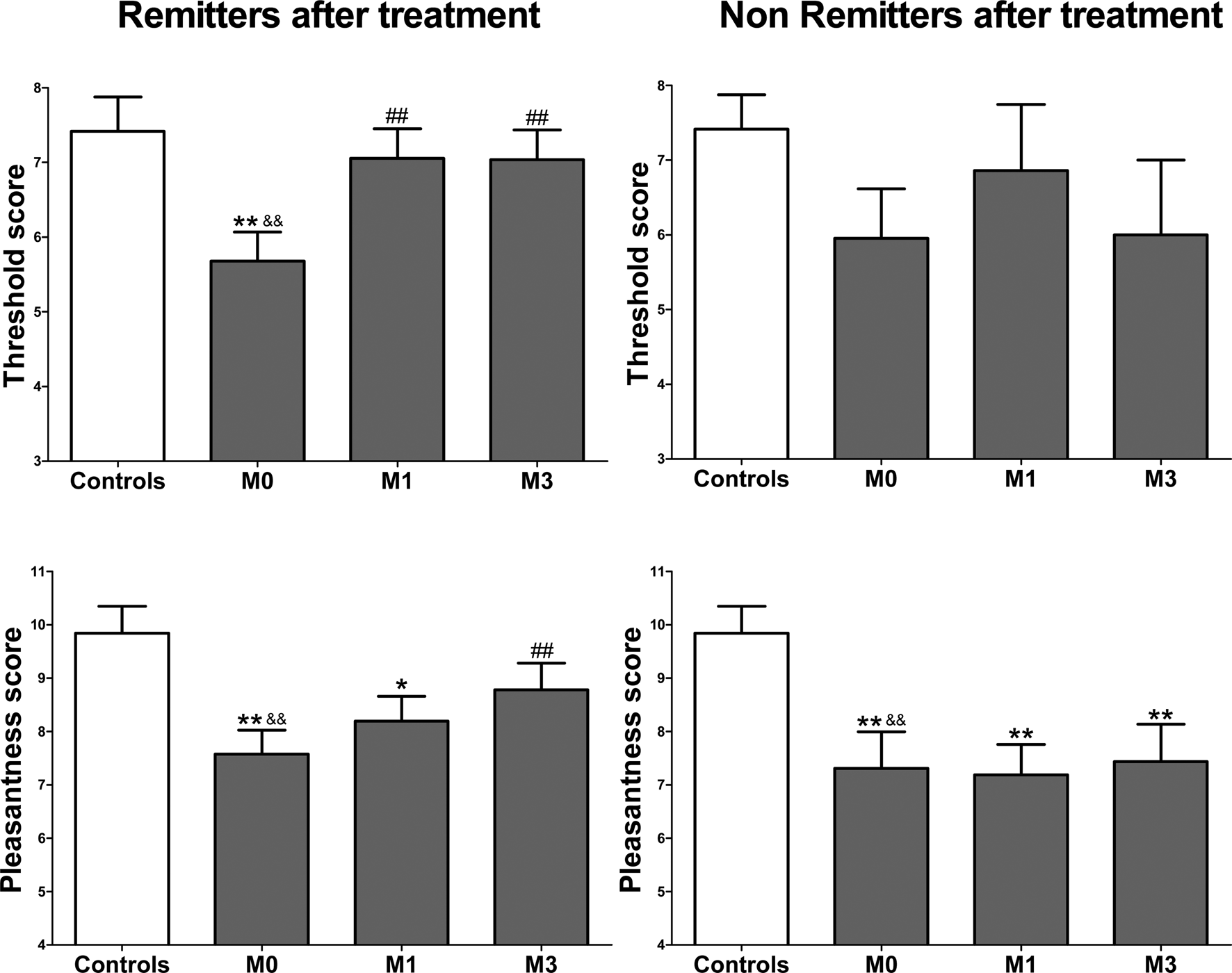
Data were analyzed by subgroups according to clinical remission status after 3 months of treatment (Fig. 3). T scores increased significantly after antidepressant treatment [β = 0.39, 95%CI (0.09–0.69), p < 0.05] with a return to normal scores in remitters (n = 46) but not in non-remitters (Fig. 3). p scores increased significantly after antidepressant treatment [β = 0.39, 95%CI (0.16–0.62), p < 0.001] in remitters but not in non-remitters (Fig. 3). No significant change of N scores was shown. In the subgroup of non-smoker remitters (n = 30), a significant increase of p scores [β = 0.34, 95%CI (0.11–0.57), p < 0.01] was confirmed.
Threshold and Pleasantness olfactory scores before and after venlafaxine treatment in remitters and non-remitter patients. Mean were presented with standard error; MDE, patients with current major depressive episode in a context of major depressive disorder (in gray); M0, patients before venlafaxine treatment; M1, patients one month after venlafaxine treatment; M3, patients three months after venlafaxine treatment; * p < 0.05 and **p < 0.01 for MDE (M0, M1 or M3) v. controls; # p < 0.05 and ## p < 0.01 for MDE (M1 or M3) v. MDE M0.; & p < 0.05 and && p < 0.01 for MDE (M0) v. controls after adjustment for age, sex and tobacco use.
Baseline olfactory scores were not associated with HDRS score changes after 1 and 3 months of venlafaxine treatment (data not shown).
T score changes after 1 month of treatment were not associated with 3-month remission [remitters = 1.3 (3.0) v. non-remitters = 0.9 (3.7), p = 0.86].
The estimated mediating effects of HDRS score change on the association between venlafaxine treatment and T and p score changes were 0.43 [95% CI (0.1–0.75)] and 0.32 [95% CI (0.01–0.64)] respectively (online Supplementary Fig. S1). The estimated mediating effects of HDRS score change on the association between venlafaxine treatment and T and p score changes were 0.43 [95% CI (0.1–0.75)] and 0.32 [95% CI (0.01–0.64)], respectively (online Supplementary Fig. S1). There was no mediation effect of anhedonia change on the association between venlafaxine treatment and T and p score changes (except for p score change), which was, as expected, mediated by anhedonia score change [estimated mediating effect = 0.15, (95% CI (0.04–0.28))] (online Supplementary Fig. S2).
Discussion
This study shows that antidepressant-free patients exhibit some olfactory deficits during a major depressive episode. These deficits are characterized by lower TDI, Threshold, Pleasantness and Neutral scores, and are independent from the severity of depression and anhedonia. Threshold and Pleasantness scores are restored after remission with venlafaxine treatment. Path analyses show that this recovery of olfaction (Threshold and Pleasantness) is mediated by depression improvement.
By showing lower olfactory TDI and Threshold scores in the largest cohort of antidepressant drug-free depressed patients, our study supports the results from a recent meta-analysis (Kohli et al., Reference Kohli, Soler, Nguyen, Muus and Schlosser2016), in which antidepressant drug status was not taken into account. The size effect disclosed in our study (24% lower in MDE than in HCs) is higher than the one observed in the meta-analysis (7% lower in MDE than in HCs), possibly because patients of our sample are antidepressant drug-free and more severely depressed (online Supplementary Table S1). It could be hypothesized that, in the meta-analysis, antidepressant drug treatment had positive effects on olfactory Threshold scores and minimized the difference between MDE patients and controls.
This study provides the largest antidepressant drug-free MDE patients sample assessed for olfactory Pleasantness. Lower Pleasantness scores and higher Neutral scores in depressed patients than in HCs are disclosed confirming results of two previous studies (Atanasova et al., Reference Atanasova, El-Hage, Chabanet, Gaillard, Belzung and Camus2010; Naudin et al., Reference Naudin, El-Hage, Gomes, Gaillard, Belzung and Atanasova2012). In contrast, four others did not, but these studies included smaller sample sizes which underpowered them (Pause et al., Reference Pause, Miranda, Goder, Aldenhoff and Ferstl2001; Swiecicki et al., Reference Swiecicki, Zatorski, Bzinkowska, Sienkiewicz-Jarosz, Szyndler and Scinska2009) and non-antidepressant drug-free patients, which may have biased the results (Clepce et al., Reference Clepce, Gossler, Reich, Kornhuber and Thuerauf2010; Lombion-Pouthier et al., Reference Lombion-Pouthier, Vandel, Nezelof, Haffen and Millot2006; Pause et al., Reference Pause, Miranda, Goder, Aldenhoff and Ferstl2001).
We report for the first time that the olfactory signature of MDE is restored after venlafaxine treatment and that this olfaction improvement is mediated by depression improvement.
After venlafaxine treatment, remitters returned to normal Threshold and Pleasantness scores. The olfactory changes after antidepressant treatment are also observed in the subgroup of non-smoker patients. This sub-analysis rules out the potential confounding effect of tobacco use decrease because of antidepressant treatment. Our results are in line with findings in a mouse model of depression, in which Threshold is increased after fluoxetine treatment (Siopi et al., Reference Siopi, Denizet, Gabellec, de Chaumont, Olivo-Marin, Guilloux and Lazarini2016). The olfactory Threshold score improvement after venlafaxine treatment, observed in this study, is in line with previous results in a small sample of patients treated with other antidepressant drugs [maprotiline (n = 3), imipramine (n = 4) or fluoxetine (n = 2)] (Gross-Isseroff et al., Reference Gross-Isseroff, Luca-Haimovici, Sasson, Kindler, Kotler and Zohar1994). The olfactory Pleasantness score increase shown in our sample is in accordance with the results from a small study with benzaldehyde (Naudin et al., Reference Naudin, El-Hage, Gomes, Gaillard, Belzung and Atanasova2012). But our results go beyond those of Naudin et al., since we show that recovery of olfactory Pleasantness is mediated by depression improvement and anhedonia (a symptom of depression) improvement. This result should be confirmed with other antidepressant drugs.
The mechanisms underlying olfactory Threshold and Pleasantness decreases in MDE patients are unknown. It is striking that only olfactory dimensions that rely more on early stages of olfactory information processing (i.e. Threshold and Pleasantness) are decreased whereas those from higher cognitive levels (Discrimination and Identification) remain unaltered (Croy et al., Reference Croy, Symmank, Schellong, Hummel, Gerber, Joraschky and Hummel2014; Horio et al., Reference Horio, Murata, Yoshikawa, Yoshihara and Touhara2019; Lapid et al., Reference Lapid, Shushan, Plotkin, Voet, Roth, Hummel and Sobel2011). Thus, the assessment of olfactory neuroepithelial cells from MDE patients could be a promising approach to further explore the mechanisms of olfactory impairment in MDE patients (Borgmann-Winter et al., Reference Borgmann-Winter, Rawson, Wang, Wang, Macdonald, Ozdener and Hahn2009). Of note, in rodent models of depression, decreased olfactory receptor turnover has been observed (Li et al., Reference Li, Yang, Wang, Liu, Feng, Li and Li2015) and olfactory bulb dysfunctions were reported (Cheng et al., Reference Cheng, Li, Yang, Yang, Rao, Zhang and Xie2016; Siopi et al., Reference Siopi, Denizet, Gabellec, de Chaumont, Olivo-Marin, Guilloux and Lazarini2016). Interestingly, lower olfactory bulb volumes were observed in MDE patients compared to HCs (Negoias et al., Reference Negoias, Croy, Gerber, Puschmann, Petrowski, Joraschky and Hummel2010; Rottstadt et al., Reference Rottstadt, Han, Weidner, Schellong, Wolff-Stephan, Strauss and Croy2018) with a possible association with severity. In a rodent model of depression, lower cellular plasticity and energy metabolism were observed in the olfactory bulb (Cheng et al., Reference Cheng, Li, Yang, Yang, Rao, Zhang and Xie2016; Siopi et al., Reference Siopi, Denizet, Gabellec, de Chaumont, Olivo-Marin, Guilloux and Lazarini2016). Since altered brain plasticity (Miller & Hen, Reference Miller and Hen2015) and energy metabolism are both involved in MDE (Miller & Hen, Reference Miller and Hen2015; Zuccoli, Saia-Cereda, Nascimento, & Martins-de-Souza, Reference Zuccoli, Saia-Cereda, Nascimento and Martins-de-Souza2017), antidepressant drug treatments could improve olfaction by acting on these two targets (Miller et al., 2015; Villa et al., Reference Villa, Ferrari, Bagini, Gorini, Brunello and Tascedda2017).
This study has several strengths. This is the first study with a prospective comprehensive assessment of olfaction in MDE patients, before and after venlafaxine treatment and in HCs. And it provides the largest sample of antidepressant drug-free MDE patients assessed for olfaction (including Pleasantness).
However, this study also has several limitations. First, olfactory tests are performed before and after 1 and 3 months of antidepressant treatment in MDE patients. A test−retest bias cannot be excluded even though no major difference between mean results were observed in seven consecutive measurements (during 4 months) with Sniffin’ Sticks in six subjects (Hummel et al., Reference Hummel, Sekinger, Wolf, Pauli and Kobal1997). Second, the remission rates after antidepressant treatment in this study are higher than the one reported from a previous cohort of MDE patients (Trivedi et al., Reference Trivedi, Rush, Wisniewski, Nierenberg, Warden, Ritz and Team2006). This may be explained by the fact that only antidepressant drug-free, mainly hospitalized patients, were included (Berlim & Turecki, Reference Berlim and Turecki2007) and that venlafaxine has a high efficacy especially at high dosages (Hennings et al., Reference Hennings, Owashi, Binder, Horstmann, Menke, Kloiber and Lucae2009; Kienke & Rosenbaum, Reference Kienke and Rosenbaum2000). Third, this study could be underpowered to detect some olfactory differences. Indeed, unlike Kohli et al. (Reference Kohli, Soler, Nguyen, Muus and Schlosser2016) and Kamath et al. (Reference Kamath, Paksarian, Cui, Moberg, Turetsky and Merikangas2018), olfactory Discrimination and Identification scores are not statistically different between MDE patients and HCs. Fourth, tobacco use was higher in MDE patients than in HCs. Taking into account the relevance of tobacco consumption in olfactory function, some studies showing an association between tobacco use and worse olfactory function (Ajmani et al., Reference Ajmani, Suh, Wroblewski and Pinto2017), this point has been considered carefully in our analyses. We have shown that there were no associations in our sample between olfactory variables and tobacco use, neither in MDE patients nor in HCs. Furthermore, to control for a potential confounding effect of tobacco use, we have added tobacco use as a covariable into multivariate models comparing olfactory variables between MDE patients and HCs. Moreover, regarding prospective olfactory assessment in MDE patients, we have provided analyses within the sub-group of non-tobacco users. Finally, even if Threshold score recovery is mediated by depression improvement, the non-significant result in Threshold score change in the non-remitter subgroup could be due to the small sample size (n = 16). Indeed, with this sample size, the statistical power to detect a significant increase of Threshold score was moderate (55% for an effect size similar to remitters).
Our results call for a special attention on the deficits of the sense of smell that may accompany MDE. These olfactory deficits might require special olfactory training to alleviate the patients' quality of life and depressive symptoms. Indeed, olfactory training improves olfactory functions (Sorokowska, Drechsler, Karwowski, & Hummel, Reference Sorokowska, Drechsler, Karwowski and Hummel2017) and also have been reported to improve depressive symptoms in older people with mild subclinical depression (Birte-Antina, Ilona, Antje, & Thomas, Reference Birte-Antina, Ilona, Antje and Thomas2018). Along these lines, aromatherapy has shown some beneficial effects on mild MDE patients (n = 5) (Okamoto et al., Reference Okamoto, Kuriyama, Watanabe, Aihara, Tadai, Imanishi and Fukui2005), this effect could be mediated by olfactory stimulation. Moreover, the impact of venlafaxine treatment on olfactory function should be assessed in patients with smell disorders and particularly those experiencing depressive symptoms (Kohli et al., Reference Kohli, Soler, Nguyen, Muus and Schlosser2016). This is of particular interest because there is no pharmacological treatment for olfactory dysfunction (Gaines, Reference Gaines2013; Harless & Liang, Reference Harless and Liang2016) and MDE are frequent in patients with olfactory dysfunctions (Kohli et al., Reference Kohli, Soler, Nguyen, Muus and Schlosser2016).
Conclusions
The olfactory signature of MDE is restored after venlafaxine treatment. This olfaction improvement is mediated by depression improvement. Altogether, our results suggest an alteration of the early stages of olfactory information processing in the olfactory system of MDE patients. The biological mechanisms underlying these results should be further investigated. New therapeutic strategies focusing on olfaction should be developed for MDE patients and antidepressants should be tested in patients with smell disorders.
Supplementary material
The supplementary material for this article can be found at https://doi.org/10.1017/S0033291720003918
Acknowledgements
None.
Financial support
Funding for the DEPARRESTCLIN cohort was provided by a national grant (ANR SAMENTA 2012) of the Agence Nationale de la Recherche (ANR) and sponsored by the Institut National de la Santé Et de la Recherche Médicale (INSERM) (C1325).
Conflict of interest
RC, KEA, CV, KEA, PML, ED, AEKAT, KC, FL, ED, SR, JFCL, FG, AMG, TH, EC, have no conflict of interest to disclose. BF has been consultant, expert or has given talks for E. Lilly, BMS, Servier, Sanofi, GlaxoSmithKline, HRA, Roche, Boeringer Ingelheim, Bayer, Almirall, Allergan, Stallergene, Genzyme, Pierre Fabre, Astra Zeneca, Novartis, Janssen, Astellas, Biotronik, Daiichi-Sankyo, Gilead, MSD, Lundbeck. DJD currently receives investigator-initiated research support from Lundbeck and served as a consultant in the areas of target identification and validation and new compound development to Lundbeck Inc., Roche and Servier. LB: investigator for Antisense Therapeutics, Alnylam Pharmaceuticals, Alexion, Actelion, Auris Medical, Gilead Sciences, Ionis Pharmaceuticals, MedDay Pharma, Novartis, PregLem SA, Ultragenix pharmaceutical. Received consulting fees from Sanofi-Aventis, Pfizer, Kyowa Kirin and Servier; lecture fees from Genzyme, GlaxoSmithKline, Bristol-Myers Squibb, Merck Sharp and Dohme; a close family member works at Sanofi France.