Introduction
The effects of the coronavirus disease 2019 (COVID-19) pandemic on various aspects of the health care systems of countries have been investigated. It seems that by implementing interventions to reduce the spread of the virus, including social distancing and “stay at home” protocols, specific patterns were created in the status of health care applicants in various communities. Reference Jahangiri and Sahebi1,Reference Allameh, Shateri Amiri and Zarei Jalalabadi2 In some countries, patients’ visits to emergency departments and the number of calls to Emergency Medical Service (EMS) centers have been decreased; however, the severity of the disease has been increased. Reference Hartnett, Kite-Powell and DeVies3–Reference Lazzerini, Barbi, Apicella, Marchetti, Cardinale and Trobia6 There is some evidence that patients have avoided calling the EMS or going to the hospital emergency room, even with serious complaints such as chest pain or shortness of breath. Reference Allameh, Shateri Amiri and Zarei Jalalabadi2,Reference De Rosa, Spaccarotella and Basso7 Studies show that as a result of such changes, as well as COVID-19’s nature, the EMS in several countries have encountered an increase in out-of-hospital cardiac arrest (OHCA) cases in areas which are most affected by COVID-19. Reference Lerner, Newgard and Mann8 Cases of OHCA are among the most challenging cases that EMS must reach out. Reference Saberian, Sadeghi, Hasani-Sharamin, Modabber and Baratloo9 Various mechanisms have been suggested for the association between COVID-19 and the incidence of OHCA; this disease can lead to cardiovascular damage and myocarditis through the development of acute respiratory syndrome and subsequent cytokine storm. Reference Fried, Ramasubbu and Bhatt10 In addition, some medications, such as Hydroxychloroquine or Azithromycin, may increase the risk of OHCA, especially in people with a history of heart disease like heart failure and arrhythmia. Reference Mercuro, Yen and Shim11 Also, the risk of thromboembolic events and acute coronary syndrome is higher in patients with COVID-19, which can increase the incidence of OHCA. Reference Fauvel, Weizman and Trimaille12 Altogether, checking the accuracy of the above-mentioned matters in different societies requires research and investigation. Therefore, the present study aimed to investigate and compare characteristics of Tehran EMS (Iran) missions in OHCA and death cases in the periods of before and after the COVID-19 pandemic.
Methods
Study Design
This cross-sectional study was performed in Tehran, Iran. The necessary permission to access the information and conduct the study was obtained from the Tehran EMS organization, as well as the ethics committee of the Tehran University of Medical Sciences (Tehran, Iran; IR.TUMS.MEDICINE.REC.1399.776). To comply with the principles of confidentiality, all required information was extracted, analyzed, and presented anonymously.
Study Population
Sampling was done by the census method and all conducted missions in the first six months of the three consecutive solar years of 1397-1399 (contemporaneous with March 21 until September 22 of 2018-2020) were assessed. Inclusion criteria were the missions in which an ambulance was sent for any complaint. The missions with incomplete information were excluded.
Data Gathering
The Tehran EMS center has a registry data bank, and all information of any patient, from the moment that a client calls the dispatch center until ending the related mission, whether transported to hospital or not, are recorded routinely. For conducting the current study, a researcher-made checklist was used to extract the data, which included the following variables from registered data in the data bank of the Tehran EMS center: patient’s demographics, patient’s medical history, technician’s diagnosis at the scene, mission outcome, and being a probable/confirmed COVID-19 case (for the missions of 2020). Based on the opinion of experts, the technician’s on-scene diagnoses were categorized into 14 groups including cardiovascular, respiratory, neurologic, abdominal pain, gynecology/obstetric, diabetes related, motor vehicle collisions (MVCs), trauma (other than MVCs), psychologic, infectious diseases, wounds and bleeding, poisoning, cardiopulmonary arrest, and others/unknown.
Statistical Analysis
The qualitative variables were described using frequency (percentage) and the quantitative variables were described using mean (standard deviation [SD]). The Chi-square test was used to compare the frequency of qualitative variables such as gender and types of diseases over three years and the Chi-square test was used to examine the trend of changes. The one-way analysis of variance (ANOVA) was used to compare quantitative variables over three years. The post-hoc Bonferroni was used for 2:2 comparisons for significantly meaningful variables. In analytical tests, the P value <.05 is considered statistically significant. All analyzes were performed using the Stata software version 14 (StataCorp; College Station, Texas USA).
Results
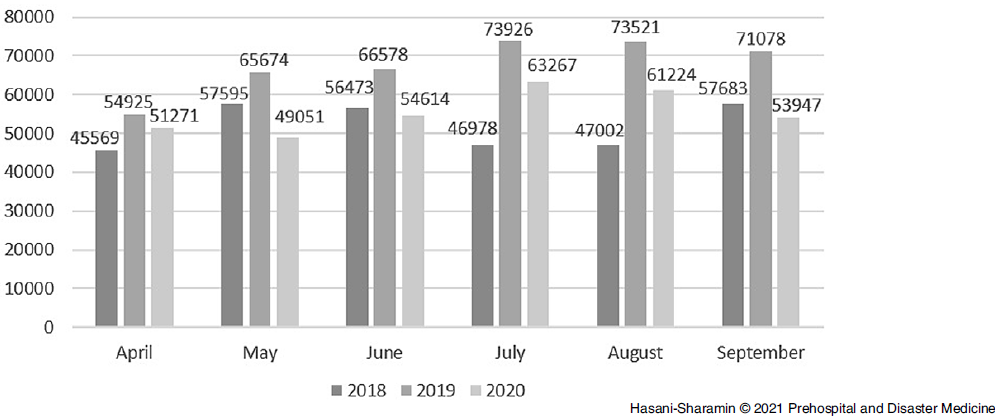
In this study, the data of 1,050,376 missions performed in three study periods were analyzed. The number of missions in all months of 2020 (the year of the COVID-19 epidemic) was decreased compared to that of 2019 (Figure 1). In general, the number of missions in 2020 was 72,328 cases (17.83%) fewer than that of 2019 (P <.001); however, the number of missions in 2019 was 94,402 cases (30.33%) more than that of 2018. It was found that 57.5%, 56.6%, and 57.1% of the missions in 2018, 2019, and 2020 were for men, respectively. The age range of the patients was 1-115 years, and the mean ages were 47.42 (SD = 21.56), 47.17 (SD = 21.44), and 48.23 years (SD =20.99) in 2018, 2019, and 2020, respectively.
Number of Tehran EMS Missions by Month in the Spring and Summer of 2018-2020.
Abbreviation: EMS, Emergency Medical Services.

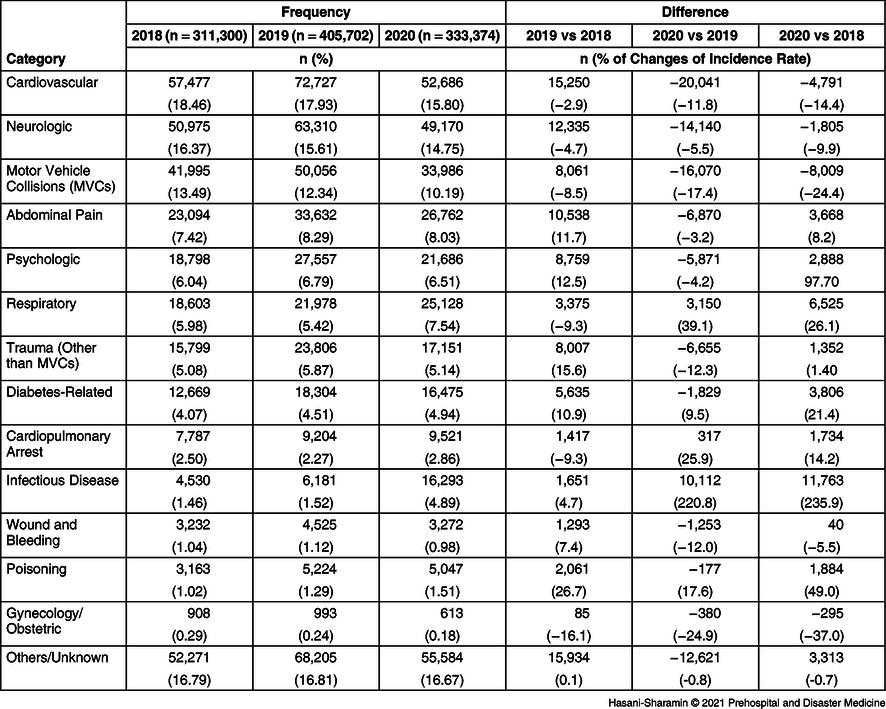
In all three study periods, most of the missions were related to cardiovascular complaints, neurological problems, and MVCs. However, the rate of these three categories in 2020 was fewer than that of the other two years. On the other hand, the missions of respiratory problems, cardiopulmonary arrest, infectious diseases, and poisoning were increased in 2020 compared to that of 2019 (Table 1).
Frequency of Various Patients’ Chief Complaints Approached by the Tehran Emergency Medical Technicians during the Three Periods of the Study

OHCA and Death Cases in All Missions
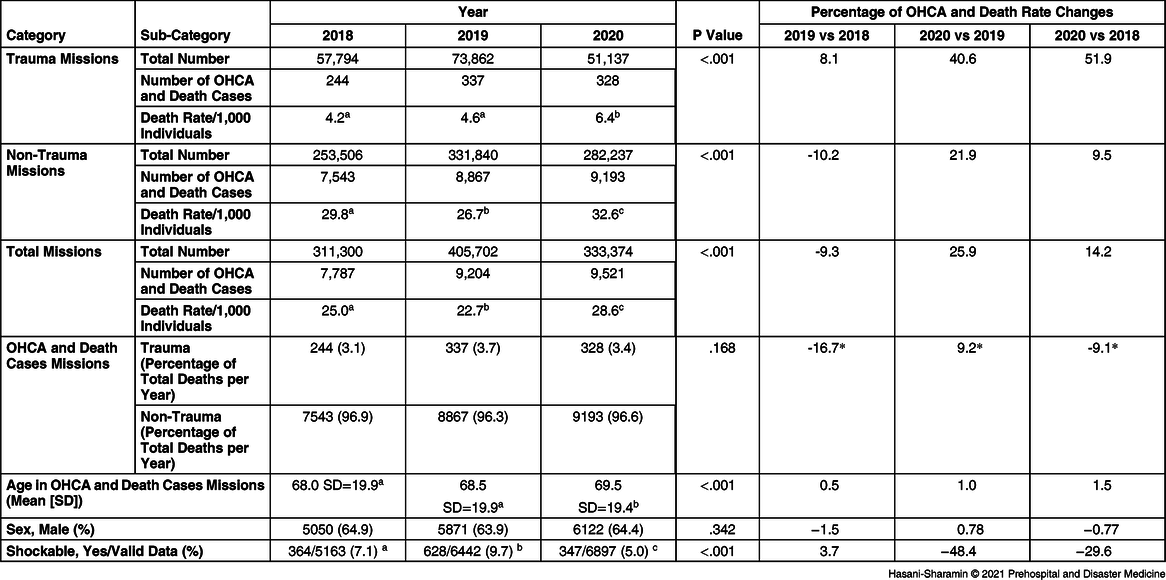
The raw number of OHCA and death cases approached by Tehran EMS in 2018, 2019, and 2020 were 7,787; 9,204; and 9,521, respectively, and there were 25.0, 22.7, and 28.6 cases per 1,000 missions, respectively. In general, the rate of OHCA and death in 2020 (COVID-19 epidemic year) compared to the previous year (2019) had a significant increase of 25.9%, and compared to two years before (2018) had a significant increase of 14.2% (P <.001). This was while this amount in 2019 compared to 2018 was decreased by 9.3% (Table 2).
Frequency Distribution and Death Rate in Trauma/Non-Trauma Missions and Total Missions in the Three Periods of the Study

Note: Each subscript letter denotes a subset of year categories whose column proportions do not differ significantly from each other based on the Bonferroni Post-hoc method.
Abbreviation: OHCA, out-of-hospital cardiac arrest.
* Percentage of changes in the ratio of non-traumatic to traumatic deaths.
The mean age of OHCA and death cases had risen from 68.0 years in 2018 to 69.5 years in 2020 (P <.001). In all three years of the study, approximately 65% of the assessed cases were men (P = .342). In total, the shockable status was known for 18,503 cases. The prevalence of shockable cases in 2020 with a decrease of 48.4% compared to that of 2019 had reached its lowest level in three years (0.5%; P <.001; Table 2).
Although the number of trauma missions in 2020 was decreased, the OHCA and death rate in trauma missions was increased from 4.2 per 1,000 trauma missions in 2018 to 6.4 per 1,000 trauma missions in 2020. The increase of OHCA and death rate of trauma missions in 2020 compared to that of 2019 and 2018 was 40.6% and 51.9%, respectively, which were significant. The OHCA and death rate of non-trauma missions in 2019 compared to that of 2018 was decreased by 10.2%; however, in 2020 compared to 2019 (the year before the COVID-19 epidemic), it was increased by 21.9%. Also, the percentage change in the ratio of non-traumatic OHCA and deaths to traumatic deaths in 2020 compared to that of the previous year (2019) was increased by 9.2% (Table 2).
OHCA and Death Cases in COVID-19 Missions
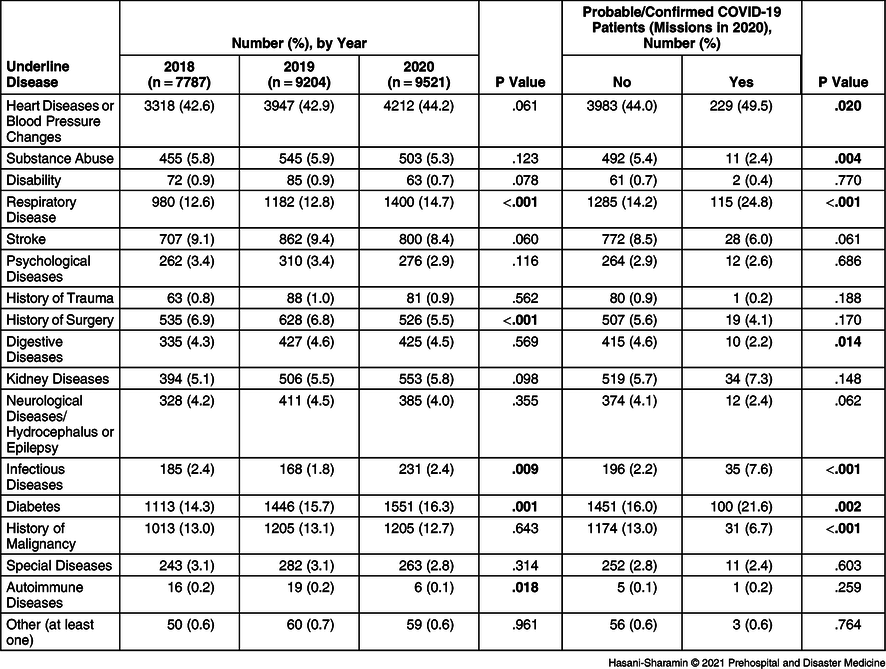
Of all patients who died in 2020 (n = 9,521), 463 (4.9%) were probable/confirmed COVID-19 cases. The mean age of probable/confirmed COVID-19 patients was significantly higher than that of the other patients in 2020 (71.5 [SD = 15.1] versus 69.3 [SD = 19.5]; P = .003). Of all OHCA and death cases, 72.4% had at least one medical history. This amount was 71.5% and 72.4% for probable/confirmed COVID-19 and the other patients, respectively (P = .662). In all three study periods, the history of any heart disease and then hypertension were the highest medical history in OHCA and death cases (P = .061). The history of heart disease and hypertension in patients in 2020 was 44.2%, which was more frequent than that of the other two years. Also, the history of diabetes and respiratory disease were among the most frequent medical histories in 2020, which were more than that of the previous years and had significant differences (Table 3).
Frequency Distribution of Medical History of OHCA and Death Cases in Six Months of Study within the Three Periods of the Study

Abbreviations: COVID-19, coronavirus disease 2019; OHCA, out-of-hospital cardiac arrest.
In 2020, probable/confirmed COVID-19 OHCA and death cases had more history of heart disease or hypertension compared to the other patients (49.5% versus 44.0%; P value = .020). Also, history of respiratory diseases (24.8% versus 14.2%; P <.001), infectious diseases (7.6% versus 2.2; P <.001), and diabetes (21.6% versus 16.0%; P <.001) in COVID-19 OHCA and death cases were significantly higher than that of the other OHCA and death cases that died in 2020. However, the history of substance abuse, stroke, gastrointestinal diseases, and malignancy were significantly lower in probable/confirmed COVID-19 OHCA and death cases than that of non-COVID-19 patients (P <.05; Table 3).
Discussion
In this study, it was found that the number of missions performed by the Tehran EMS in 2019 was increased compared to 2018, but in 2020 (the year that the COVID-19 epidemic appeared), it was decreased compared to that of 2019. In all three study periods, most missions were related to cardiovascular emergencies, neurological problems, and MVCs; their rate in 2020 (with the COVID-19 epidemic) was less than that of the two years before. The missions of respiratory problems, cardiopulmonary arrest, infectious diseases, and poisoning were increased in 2020 compared to that of 2019.
Studies in Germany, Finland, and Kentucky (USA) have shown a decrease in the number of missions, while in some countries, such as Italy, there has been an increase in the number of missions. Reference Hagebusch, Naujoks, Rouchi, Schindelin and Schweigkofler13–Reference Perlini, Canevari and Cortesi16 Opioid overdose EMS missions were increased significantly during COVID-19 period in Kentucky. Reference Lindner, Fitzek and Bräuninger17 Stella found a reduction in calls for chest pain without ST-segment elevation myocardial infarction (STEMI), OHCA, and major trauma and an increase in respiratory distresses. Reference Stella, Alexopoulos, Scquizzato and Zorzi18
The rate of OHCA and death cases in the EMS missions was significantly higher than that of the previous years. The results of the present study showed that in the period of the COVID-19 epidemic (2020), the rate of OHCA and death cases in the EMS missions was increased by approximately 26% compared to that of the previous year, while comparing 2019 to 2018, this rate was decreased by almost 10%.
An increase of OHCA and death cases in the EMS missions during the COVID-19 epidemic has also been shown in other studies. A study in the United States found that the number of missions between the weeks 10 to 16 after the epidemic onset was decreased by 26.1% compared to the similar time in previous years; however, the number of OHCA and death cases reported by the EMS had been almost doubled between the weeks 11 to 15 in 2020. Reference Lerner, Newgard and Mann8 Another study in London showed that during the first wave of the COVID-19 pandemic, there was a significant increase in the incidence of OHCA and death cases, along with a significant reduction in survival. Reference Fothergill, Smith, Wrigley and Perkins19 This conclusion is also confirmed by a Portuguese study that reported an increase in the number of deaths, all of which could not be explained by the reported losses of COVID-19. Reference Nogueira, de Araújo Nobre, Nicola, Furtado and Carneiro20
Some other studies have also shown that the pandemic period was significantly associated with a low survival, Reference Chan, Girotra, Tang, Al-Araji, Nallamothu and McNally21,Reference Marijon, Karam and Jost22 and the confirmed or suspected COVID-19 was responsible for approximately one-third of the increase in OHCA and death case occurrence during the pandemic, Reference Baldi, Sechi and Mare23 which was 4.9% in this study.
An increase of 1.5 years in the mean age of OHCA and death cases during the COVID-19 epidemic compared to that of the previous year was another finding of this study. In another study, 521 of OHCA and death cases during the pandemic (March 16 to April 26, 2020) were compared to the total average number of 3,052 cases during similar weeks in the non-pandemic period (weeks 12-17, 2012-2019). It showed that the maximum number of weekly incidences of OHCA and death cases was increased from 13.42 to 26.64 per million inhabitants, although the demographic information of patients like age (mean age: 69.7 versus 68.5 years old) was not significantly different in the pandemic versus the non-pandemic period. Reference Marijon, Karam and Jost22
The results of the present study showed that the rate of traumatic and non-traumatic OHCA and death cases in the COVID-19 epidemic year was increased by more than 40% and 20%, respectively, compared to that of the previous year (2019). In another study conducted in Italy, OHCA and death cases due to medical reasons were increased by 6.5% in 2020. Reference Baldi, Sechi and Mare23
The present study showed that the number of accidents during the COVID-19 epidemic has been decreased by more than 30% compared to that of the previous year. However, the number of OHCA and death cases of trauma missions has been increased by more than 40%. This finding could be due to a reduction in the number of mild trauma cases as a result of COVID-19-induced conditions. A study conducted in Turkey in 2020 surveyed the reduction in the number of car accidents, as well as OHCA and death cases, and injuries during the months of the COVID-19 epidemic when house staying protocols were carried out in Turkey and found that the accidents leading to death were decreased by 72% and the ones leading to injury were decreased by 19%. Reference Oguzoglu24 A United States study also found that declaring the national emergency condition of COVID-19, the traffic load was drastically reduced, but the number of OHCA and death cases and injuries from MVCs as well as violation of speed limits were increased; and even returning to the previous condition of traffic load, these rates were still as high as before. The number of OHCA and death cases from MVCs, measured as casualties per 100 million driving miles, was raised sharply comparing to that of 2019; it was increased from monthly 1.21 in March, 1.48 in April, 1.56 in May, and 1.63 in June. In addition, the percentage of injuries resulting from crashes in New York City (New York, USA) and driving offenses in New York City and Massachusetts (USA) were increased during the COVID-19 epidemic, which was consistent with the increase in the mortality rate of MVCs nation-wide. Reference Meyer25 In the current study, in line with the above study, it was shown that although the number of missions related to trauma was decreased in 2020, the number of OHCA and death cases was not decreased significantly; the mortality rate of trauma cases in 2020 was 6.4 cases per thousand trauma missions, which comparing to that of 2019 was increased by 40.6% and comparing to that of 2018 was increased by 51.9%.
The results of the present study showed that the number of shockable cases in the epidemic period had almost halved and was decreased from 7.1%-9.7% in the previous years to 5.0%. Another study in New York City found that the incidence of non-traumatic OHCA and death cases with EMS resuscitation from March 1 through April 25, 2020 was three-times higher than that of the same period one year earlier. Shockable rhythms were significantly lower, although the survival, return of spontaneous circulation, and bystander cardiopulmonary resuscitation (CPR) rates had not been changed comparing to that of the previous year, Reference Lai, Lancet and Weiden26 which were contrary to the findings of the Yuan Po study that the proportion of patients resuscitated by bystanders was 15.6% lower, and the incidence of OHCA and death among patients resuscitated by the EMS was 14.9% higher comparing to that of 2019. Reference Baldi, Sechi and Mare23 Another study in France found that the rate of shockable was lower than non-shockable rhythm)9.2% versus 19.1(%,22 which was consistent with the findings of the present study; however, the prevalence of shockable rhythm in the current study was slightly lower. In patients without COVID-19, OHCA and death are mainly due to ischemic heart disease, while in COVID-19 patients, additional factors such as hypoxia, myocarditis, pulmonary embolism, vascular thrombosis, and endothelial dysfunction are involved. Reference Lindner, Fitzek and Bräuninger17,Reference Renzi, Landoni, Zangrillo and Ciceri27,Reference Zhang, Yan and Fan28 Significant differences in the frequency of shockable rhythms between patients with and without COVID-19 confirm this fact. Reference Topol29,Reference Lorente-Ros, Ruiz and Rincón30 According to the meta-analysis findings conducted by Magdalena, decreased survival at hospital discharge of COVID-19 patients following OHCA and death appears to be more likely due to COVID-19 rather than the poor quality of CPR performed by a bystander or EMS technician. This meta-analysis showed that survival at hospital discharge amount was decreased in patients with suspected or confirmed COVID-19 after OHCA, which seems to be due to the low rate of shockable rhythms in COVID-19 patients rather than the reluctance of bystanders to perform CPR. Reference Borkowska, Jaguszewski and Koda31
According to the findings of the current study, it seems that residents of Tehran demanded less EMS services after the onset of the COVID-19 epidemic than before, and this may be due to the indirect impacts of the pandemic on lifestyle, like staying at home protocol, using fewer vehicles, reducing occupational accidents as a result of quarantine and off, and less presence in recreational places. The decline in demand may also be due to authorities’ notifications of limited medical resources, and people who do not have high-level medical care needs seek out other services, including online counseling and out-patient clinics, and use fewer EMS services; this is the positive effect of this phenomenon on the health system and the emergency system. On the other hand, part of this decline in demand and change in the way of getting a service may be related to the fear of COVID-19 transmission from EMS or hospital. The decrease in the number of missions and the increase in the mortality rate at the EMS mission scene indicate that people who have an emergency do not seek care on time, which may cause delays or inadequate use of health services and leads to serious consequences for people, especially those with underlying diseases, which is a risk factor to develop COVID-19 and according to the results of the present study, a high risk of OHCA and death occurrence. In order to address emerging threats in epidemics and other subsequent public health emergencies, it is important to strike a balance between the need of individuals to find and receive the care with the community’s requirements to run measures such as social distancing.
Limitations
One of the limitations of this study was the impossibility of assessing the survival rate of OHCA cases because of no record of information and lack of a comprehensive registry bank of information of all hospitals. Also, categorizing of diagnoses was based on the clinical findings of the technician at the scene, which was considered as the probable diagnosis. If it was possible to access the hospital data, it could have been determined the type of urgency with greater certainty. Another limitation of this study was the inability to accurately identify the relationship between suspected COVID-19 cases and OHCA and death cases because patients’ symptoms were not recorded before death, and considering the retrospective nature of the study, further investigation was not possible after death; only the relationship between cardiac arrest and confirmed/probable COVID-19 cases (according to the World Health Organization [WHO; Geneva, Switzerland]) was investigated.
Conclusion
This study showed that the number of missions in the Tehran EMS in 2020 were decreased compared to that of 2019 (17.83%); however, the number of missions in 2019 was more than that of 2018 (30.33%). The number of respiratory problems, infectious diseases, poisoning, death, and OHCA were increased compared to the previous two years. In all three study periods, most of the missions were related to cardiovascular complaints, neurological problems, and MVCs. However, the rate of these three categories in 2020 was fewer than that of the other two years. The mean age of OHCA and death cases had risen from 68.0 years in 2018 to 69.5 years in 2020 (P <.001). Of all OHCA and death cases, 72.4% had at least one medical history and history of heart disease, hypertension, diabetes, and respiratory disease in patients in 2020 was more frequent than that of the other two years.
Conflicts of interest/funding
The authors declare that there is no conflict of interest. This study was funded with a grant from Tehran EMS Center.
Authors’ Contributions
The conception and design of the work by PHS, PS, and AB; Data acquisition by PHS, MS, and SMM; Analysis and interpretation of data by PHS, PS, and AB; Drafting the work by PHS and AB; Revising it critically for important intellectual content by PS, MS, and SMM; All the authors approved the final version to be published; AND agreed to be accountable for all aspects of the work in ensuring that questions related to the accuracy or integrity of any part of the work.
Acknowledgments
The authors would like to express their obligations to the Prehospital and Hospital Emergency Research Center affiliated to Tehran University of Medical Sciences.