Introduction
Attitudes toward the global spread of English have been one of the major issues in research on the development of world Englishes. Because language attitudes construct an invisible language policy that influences the use of English in a local speech community (Curdt–Christiansen, Reference Curdt–Christiansen2009), many studies addressing the spread of English into non-English contexts have focused on the attitudes of diverse English users toward their local variety and other varieties of English (Ahn, Reference Ahn2014; He & Li, Reference He and Li2009; Wang & Gao, Reference Wang and Gao2015). However, among the core components of language attitudes, that is, the cognitive component (i.e., belief system), affective component (i.e., attitudinal system), and behavioural component (i.e., behavioural intention), little research attention has been paid to the behavioural component other than by Ahn (Reference Ahn2014), even though non-native speakers’ actual use of their local English is the process by which English spreads into non-English-speaking communities. Thus it is necessary to explore the factors influencing the speakers’ behaviours while using the local variety of English. In addition, previous research has not identified the mechanism by which the speakers’ beliefs and attitudes have influence their actual behavioural intentions in relation to their attitudes toward their own English. For example, Ahn (Reference Ahn2014) reported that whereas Korean English teachers expressed positive attitudes toward Korean English, they were hesitant in their behavioural intentions to use it as a teaching model. However, this study did not deeply address associations among beliefs, attitudes, and actual behaviours in relation to the use of Korean English. In response to this gap, the present study provides an integrated framework for investigating the spread of English into local speech communities by modelling diverse factors of individual speakers’ decision-making processes in adopting the local variety of English.
English nonce borrowings (ENBs), which are positioned between code-switching and loanwords on ‘the cline of nativisation’ representing the degree to which a linguistic item of a donor language is incorporated into the lexicon of a recipient language (Moody, Reference Moody2006: 212), constitute the unit of analysis in this study. Particularly in English as a foreign language contexts, a salient outcome of language change under the global spread of English is lexical borrowing because the recipient language enjoys a dominant status over English (Brutt–Griffler, Reference Brutt–Griffler2002; Moody, Reference Moody2006; Pan & Seargeant, Reference Pan and Seargeant2012). Therefore, research on ENBs helps linguists capture the moment when English is incorporated into a certain speech community. However, there is a paucity of research on ENBs, especially in the area of language attitudes. Using the theory of planned behaviour (TPB), a well established framework (Ajzen, Reference Ajzen1991), the present study is an exploration of the behavioural pathways by which South Korean university students form behavioural intentions to adopt ENBs for communication based on their beliefs and attitudes. The following research questions (RQs) guided the study:
RQ 1: What factors have a significant influence on Korean university students’ use of ENBs?
RQ 2: What are the relationships among the factors influencing Korean university students’ use of ENBs?
The spread of English and nonce borrowings
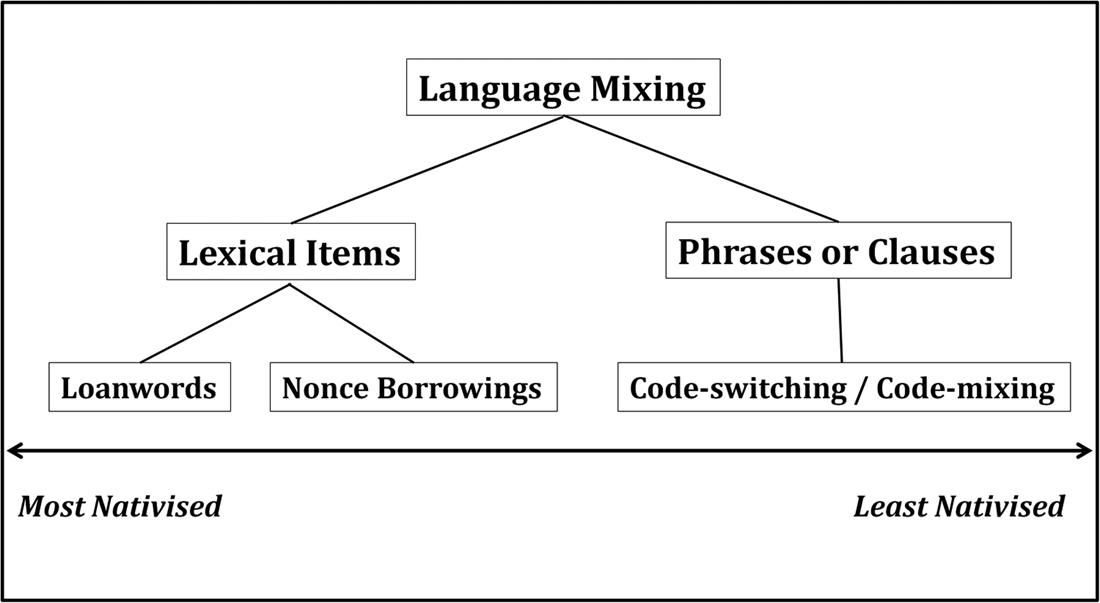
In discussions of the spread of English, language mixing, which refers to the use of two language forms in a single language, has been categorised into three types according to the cline of nativisation (see Figure 1): code switching, nonce borrowings, and loanwords (Moody, Reference Moody2006; Poplack & Dion, Reference Poplack and Dion2012). Among these three types of language mixing, nonce borrowings and loanwords are the language changes that occur most noticeably in the spread of English to foreign language contexts, namely the countries that make up the Expanding Circle (Brutt–Griffler, Reference Brutt–Griffler2002; Daulton, Reference Daulton2011; Kachru & Smith, Reference Kachru and Smith2008). Moody (Reference Moody2006: 212) describes nonce borrowings as words or phrases that are ‘either less nativised or less accepted within a monolingual’ recipient speech community, which gives the impression that they belong to English, not the local language. In contrast, loanwords are established and conventionalised lexical borrowings (Haspelmath, Reference Haspelmath, Haspelmath and Tadmor2009). The criteria for distinguishing between these two categories include whether or not the words are listed in a dictionary (Deuchar & Stammers, Reference Deuchar and Stammers2012) and how frequently they are used (Poplack & Dion, Reference Poplack and Dion2012).
Types of language mixing (Moody, Reference Moody2006: 212)

According to the language-mixing model illustrated in Figure 1, nonce borrowings signal the early stage of a donor language's entry into a recipient language. Examining the process by which Japanese words are adopted into English from an early to a later stage in terms of their phonetic dissemination, Jaggers (Reference Jaggers2015) reported that the phonetic features of nonce borrowings were positioned between those of the two languages, indicating that the incorporation process was underway. Moreover, Kim (Reference Kim2016: 53) argued that neologisms based on English indicate the landscape of the ‘dynamic sociocultural and sociolinguistic façade’ of a local society. To date, however, little research on attitudes toward the spread of English has examined nonce borrowings, even though they are recognised by local-language speakers as different from loanwords (Jaggers, Reference Jaggers2015). Therefore, this study focuses on the use of ENBs by South Korean university students.
Younger generations’ attitudes toward the spread of English
Previous studies have found that younger generations play a pivotal role in introducing English into a local speech community (Lee & Hsieh, Reference Lee and Hsieh2018; Tatsioka, Reference Tatsioka2008). Tatsioka (Reference Tatsioka2008) reported that younger members of a community regard English loanwords as a sign of modernisation and therefore have more positive attitudes toward them than do their elders. This may be the case because young adults in English as a foreign language contexts are extensively exposed to English in popular music, social media, and educational settings (Hilgendorf, Reference Hilgendorf2007; Lee & Hsieh, Reference Lee and Hsieh2018; Tatsioka, Reference Tatsioka2008). Therefore, this study selected Korean university students between 19 and 25 years of age based on the assumption that this age group is most likely to provide measurable effects in relation to the spread of ENBs into the Korean speech community.
Eagly and Chaiken (Reference Eagly and Chaiken1993) classified attitude into three components: cognitive, affective, and behavioural. The cognitive component of attitude, also called beliefs, is an evaluative response to attitude objects, whereas the affective component is associated with one's feelings toward stimuli. The behavioural component is related to the individual's behavioural intention based on those cognitive and affective attitudes. Reviewing empirical studies of attitude components, Ajzen (Reference Ajzen2011) found a partial association among belief, attitude, behavioural intention, and actual behaviour. To increase the predictive power of belief and attitude with respect to behaviour, he added two more constructs to the attitudinal domain: subjective norm (i.e., the confirmation of important referents) and perceived behavioural control (i.e., non-volitional control over the behaviour). A number of studies in diverse contexts have clearly demonstrated the importance of these three constructs in predicting behaviours (Cheon et al., Reference Cheon, Lee, Crooks and Song2012; Han et al., Reference Han, Yu, Koo and Kim2019; Pelling & White, Reference Pelling and White2009).
In previous research on speakers’ attitudes toward their local variety of English, the results for cognitive and behavioural components of attitude have been mixed. Lee and Hsieh (Reference Lee and Hsieh2018) reported that Taiwanese and Korean ELF university students exhibited positive attitudes toward their local varieties of English, arguing for the young adults’ perceived ownership of English. In research on Hong Kong university students’ use of English as a lingua franca, Sung (Reference Sung2016) found that the participants accepted the legitimacy of their local variety of English; however, they were hesitant to use it in communication with native speakers due to their perceptions of low self-efficacy in their Hong Kong accents. In a different context, Wang (Reference Wang2015) also found a discrepancy between the cognitive attitudes and behaviours of Chinese university students with respect to China English. Although the participants reported positive attitudes toward China English, they were not willing to use it in local communications for fear of disapproval by others in Chinese society.
The present study found two important gaps in the current literature of attitudes toward the local variety of English. First, while previous studies have identified similar incongruities among the three different components of attitude, little research has sought to explain the mechanism governing the extent to which speakers’ cognitive and affective attitudes are consistent with their behavioural attitudes. Second, more research is necessary to determine if factors other than belief and attitude may predict behaviour to adopt the local variety of English when previous research detects a loose connection between these three attitudinal components (Ahn, Reference Ahn2014; Lee & Hsieh, Reference Lee and Hsieh2018; Sung, Reference Sung2016). To fill these gaps, we used Ajzen's (Reference Ajzen1991, Reference Ajzen2011) TPB as a theoretical framework because it not only provides an integrative model for a sequential pathway from belief to attitude to actual behaviour but also suggests different factors of behavioural intention, such as attitude, subjective norm, and perceived behavioural control.
Research model and hypotheses
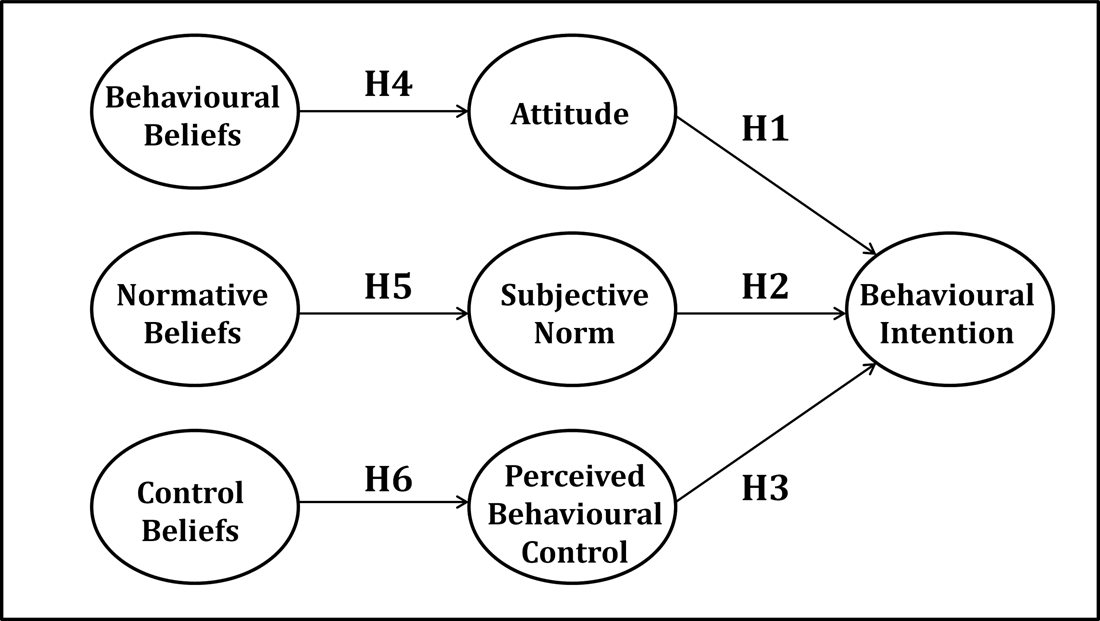
The TPB model explains how different factors, such as behavioural belief and attitude, serve as determinants of actual behaviour (Ajzen, Reference Ajzen1991, Reference Ajzen2011). This beliefs-attitude-behaviour model has been adopted in many studies of individual decision-making processes in diverse social contexts (Glasman & Albarracin, Reference Glasman and Albarracin2006; Rahimi & Yadollahi, Reference Rahimi and Yadollahi2011; Sheeran et al., Reference Sheeran, Maki, Montanaro, Bryan, Klein, Miles and Rothman2016). Those studies have used behavioural intention as a final independent variable, because, as Ajzen (Reference Ajzen1991: 184) posits, it ‘can be used directly to predict behavioural achievement.’ Figure 2 illustrates the three major pathways that, according to the TPB, lead to behavioural intention: behavioural beliefs to attitude; normative beliefs to subjective norm; and control beliefs to perceived behavioural control (Ajzen, Reference Ajzen1991).
Six hypotheses in the TPB model

According to Ajzen (Reference Ajzen1991), attitude is the degree to which a person has a positive or negative evaluation of a specific behaviour. Attitude is considered the function of behavioural beliefs, which reflect the perceived probability that an event or behaviour may produce an expected outcome. Subjective norm refers to the perceived social pressure relevant to a certain behaviour in a given social context. Normative beliefs, the antecedents of subjective norm, comprise the expectations that a person's important referents will approve certain behaviours. As the last determinant of behavioural intention, perceived behavioural control is one's perceived capability of performing a behaviour based on his/her personal resources such as knowledge and self-confidence. Control beliefs, the antecedents of perceived behavioural control, are concerned with the perceived presence or absence of resources and opportunities for the behaviour.
As shown in Figure 2, we developed six hypotheses regarding the use of ENBs in the South Korean speech community based on the TPB model. The measurement items were created on the basis of previous research on attitudes toward the spread of English, toward the local and other varieties of English, and toward English borrowings. Hypothesis 1, which relates attitude to behavioural intention, is based on Ahn's (Reference Ahn2015) study of Korean English teachers’ attitudes toward the use of Korean English. Hypothesis 2 addresses social expectations regarding the use of ENBs, as discussed in Tatsioka (Reference Tatsioka2008) and Wang (Reference Wang2015). Hypothesis 3 is based on Brutt–Griffler's (Reference Brutt–Griffler2002) concept of the shared subjective knowledge that provides a member of a speech community with perceived behavioural control in using ENBs. The measurement variables for Hypothesis 4 were derived from He and Li's (Reference He and Li2009) exploration of the perceptions of Chinese teachers and students regarding Chinese English. The measurement items for Hypothesis 5, which addresses normative beliefs regarding the use of English borrowings, were developed on the basis of Daulton (Reference Daulton2011). Hypothesis 6 was derived from Rodebaugh (Reference Rodebaugh2006), who linked self-efficacy as the construct of control beliefs with social behaviour. Overall, the following six hypotheses were formulated to examine the research model in this study:
H1: Participants’ attitudes toward ENBs have a positive influence on their intention to use ENBs.
H2: Participants’ subjective norms for ENBs have a positive influence on their intention to use ENBs.
H3: Participants’ perceived behavioural control over ENBs has a positive influence on their intention to use ENBs.
H4: Participants’ perceived usefulness of ENBs (behavioural attitude) has a positive influence on their attitudes toward ENBs.
H5: Participants’ perceived uses of ENBs (normative beliefs) have a positive influence on their subjective norms for ENBs.
H6: Participants’ perceived self-efficacy regarding ENBs (control beliefs) has a positive influence on their behavioural control over ENBs.
Method
Participants
The participants were 162 undergraduate students (78 males and 84 females) at three comprehensive universities in the Seoul and Gyeonggi metropolitan areas, which account for half of the total population of South Korea. Their ages ranged from 19 to 25 years (M: 21.64, SD: 1.80). All respondents were native Korean speakers and were learning English as a compulsory subject at their universities. After completing the survey, they were invited to participate in follow-up interviews. Twelve students (five males and seven females) voluntarily participated in the interviews.
Data collection and analysis
We used a mixed-research method for triangulation of the study results: a questionnaire survey as a primary measuring instrument and semi-structured interviews as a secondary data source (Dörnyei, Reference Dörnyei2007). The survey was designed to explore the participants’ beliefs, attitudes, and behavioural intentions with respect to ENBs and to identify the pathways among these variables. The interviews were conducted to probe the reasons for participants’ responses. Every question in the survey questionnaire was written in both English and Korean. We first provided the participants with 15 sample ENBs from three areas for their understanding (Tatsioka, Reference Tatsioka2008): technology (downgrade, machine learning, intranet, data packet, transmedia), fashion (grooming, look, retro, dandy, fit), and daily life (flagship, golden time, fact, burnout, daily). The sample ENBs were collected from two sources: the National Institute of Korean Language (NIKL, 2018) and the Korean Open Dictionary (KOD, 2018).
The survey questionnaire (see Appendix A) contained 21 items taken from previous research, as noted for each hypothesis. These measurement items were used to explore South Korean students’ perceptions regarding seven variables in the survey, that is, perceived usefulness, attitude, perceived use of ENBs, subjective norm, perceived self-efficacy, behavioural control, and behavioural intention, with a 7-point Likert scale ranging from strongly disagree (1) to strongly agree (7). In the follow-up interviews, we asked interviewees questions about the reasons for their responses, such as ‘What is your perception of using ENBs in your communication with others?’ ‘What factors do you think affect your perception and behaviour?’ and ‘Which factor do you think has the most significant impact on your perception and behaviour with respect to using ENBs?’
We used structural equation modelling (SEM) to test the TPB model. The usefulness of SEM lies in its ability to assess the reliability and validity of the constructs, the structural model fit with the data, and the path coefficients at the same time. For data analysis, SPSS and AMOS 20 were used to assess the measurement model and estimate the structural coefficients based on the maximum likelihood estimation method. First, after screening the data to check the assumptions of multivariate normality and the general linear model, we conducted a confirmatory factor analysis (CFA) to assess the composite reliability (CR), convergent validity, and discriminant validity of the measurement model. Then we explored the path coefficients of the structural model using SEM. For the interview data, we used thematic analysis to identify emerging themes and categories.
Results
Measurement model
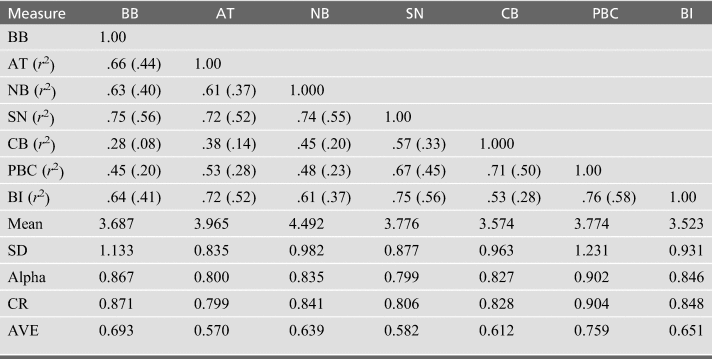
Table 1 presents a summary of the CFA results, which provide assessments of the reliability and validity of the measures based on Cronbach's α, average variance extracted (AVE), and CR. According to Table 1, the Cronbach's α values of all latent variables exceeded 0.7, the threshold recommended by Nunnally and Bernstein (Reference Nunnally and Bernstein1994), which showed the internal consistency of the measurement items with the latent variables. Table 1 also shows that the CR for all constructs exceeded 0.7, indicating good reliability (Nunnally & Bernstein, Reference Nunnally and Bernstein1994). Finally, to evaluate the construct validity of the measures, we tested convergent and discriminant validity. All AVE values exceeded 0.5, the threshold suggested by Fornell and Larcker (Reference Fornell and Larcker1981), which indicated suitable convergent validity. As shown in Table 1, the AVE value for each construct was larger than the squared correlation coefficients of all other constructs, indicating satisfactory discriminant validity for all constructs in the measurement model (Fornell & Larcker, Reference Fornell and Larcker1981).
CFA results - correlation and the measurement model

Structural model and hypothesis testing
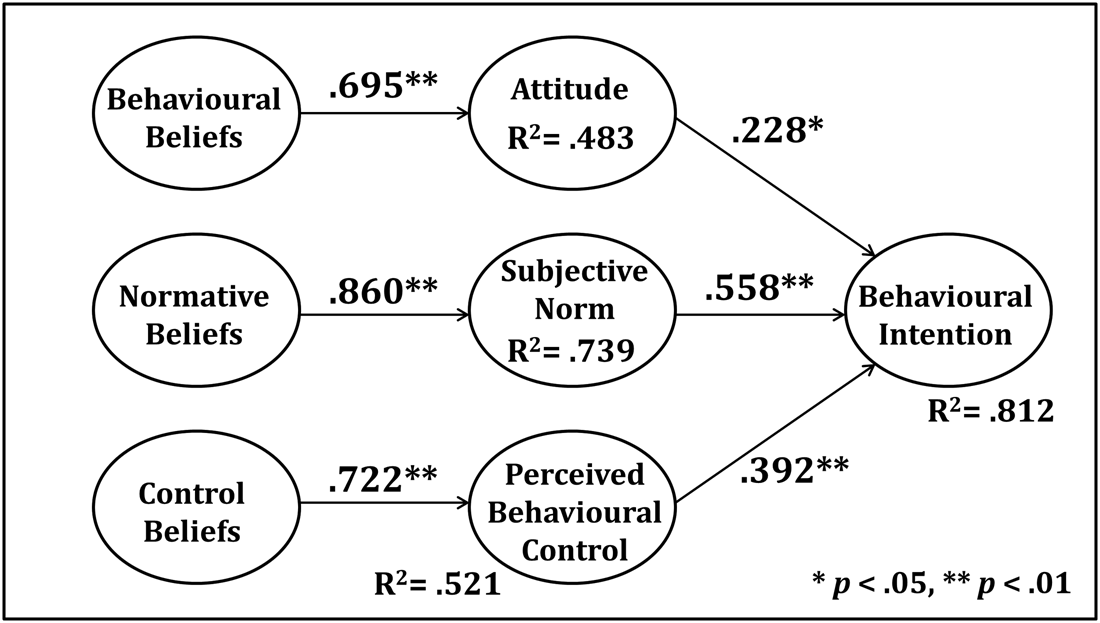
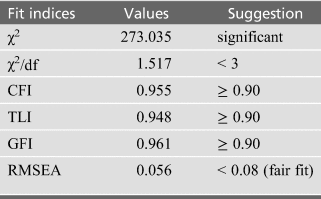
To assess the structural model fit with the data, we explored the following model fit indices: χ2/degree of freedom (df), the comparative fit index (CFI), the Tucker–Lewis index (TLI), the goodness-of-fit index (GFI), and the root mean squared error of approximation (RMSEA). Table 2 shows the results of the structural model estimation, in which the values of all the fit indices fell within the range of values suggested by Kline (Reference Kline2005) and Hu and Bentler (Reference Hu and Bentler1999) (χ2 = 273.035, df = 180, χ2/df = 1.517, CFI = 0.955, TLI = 0.948, GFI = 0.961, RMSEA = 0.056). Thus, the research model shown in Figure 2 has a good fit with the data in this study. In addition, Figure 3 shows that 81.2% of behavioural intention was explained by all antecedent variables (R2 = 0.812). Overall, the model assessment implied that the TPB accurately predicted Korean university students’ intentions to use ENBs. Concerning the first research question, this result indicated that Korean university students’ attitudes, subjective norms, and perceived behavioural control were significant factors of their use of ENBs.
TPB model results - path coefficients

Model fit indices

The results of path coefficients supported Hypotheses 1, 2, and 3 (Figure 3). That is, attitude (β = 0.228, p < .05), subjective norm (β = 0.558, p < .01), and perceived behavioural control (β = 0.392, p < .01) had a significant influence on behavioural intention to use ENBs. The regression paths from behavioural beliefs to attitude (β = 0.659, p < .01), normative beliefs to subjective norms (β = 0.860, p < .01), and control beliefs to perceived behavioural control (β = 0.722, p < .01) were significant, supporting Hypotheses 4, 5, and 6. Thus, in relation to the second research question, it is noteworthy that subjective norm was the most significant predictor of the participants’ intention to use ENBs, followed by their attitudes toward the use of ENBs.
Three themes emerged from analysis of the interviews as the factors related to the participants’ responses to the survey. Some participants mentioned subjective norm as a variable that had a great impact on their use of ENBs, despite considering them useful for effective communication. In addition, several students pointed out an increasing use of ENBs by the younger generation with the development of Internet media. Finally, as the comments below exemplify, a few respondents expressed negative attitudes toward the rampant use of ENBs, which they perceived could pollute the Korean language. However, they reported different attitudes toward the use of ENBs in different domains: they were willing to adopt ENBs in the field of technology and fashion, whereas they expressed hesitation to doing so in daily life.
I know using English words may help communicate my thoughts and feelings, but I am also worried about what other people might think of me. (Student #3)
If I use too many English words in a conversation, people around me seem to feel I am bragging like … they may think I am pretending to be a knowledgeable person. So, in that way I would be conscious of others. (Student #8)
Young people use more and more English words these days because of the Internet media. (Student #5)
I would use English words in technology and fashion areas because there are usually no substitute words in Korean. However, I think I should avoid it in everyday life because I think people pollute the Korean language when they use English words. (Student #11)
Discussion
In the present study, we used the TPB model to explore the factors affecting behavioural intention to use ENBs in the South Korean speech community. We found that 81.2% of the participants’ intention to use ENBs in their communications was explained by three significant factors: attitude, subjective norm, and perceived behavioural control. This result implies that researchers investigating language perceptions and attitudes need to consider these multiple variables as determinants of actual behaviour. The results also showed that the regression paths from beliefs to attitude to behavioural intention were significant, suggesting that people with more positive beliefs and attitudes toward ENBs were more likely to use them. Moreover, it was found that those who felt more social pressure to use ENBs and who had more subjective knowledge of them tended to be more engaged in ENB use.
Among all three latent variables, university students’ subjective norms were found to be the most significant determinant of their intention to use ENBs (β = 0.558, p < .01). In addition, the participants’ normative beliefs explained 73.9% of their subjective norms for using ENBs. This result, along with the interview data, indicates that Korean young adults perceived their important referents’ endorsement as the most crucial factor affecting their potential use ENBs. In other words, it can be argued that Korean speakers regarded social expectations and their membership in the South Korean speech community as constituting one of the most important variables in acceptance of English borrowings. Although previous researchers have pointed out that collectivism is one of the important values reflected in Korean English (Fayzrakhmanova, Reference Fayzrakhmanova2016; Park, Reference Park, Murata and Jenkins2009), little research has addressed the effects of social pressure on the use of Korean English. Thus, the present study suggests that local-language speakers’ normative beliefs and subjective norms should be included as an important measurement item in future research on language attitudes. Brutt–Griffler's (Reference Brutt–Griffler2002) concept of macroacquisition and Canagarajah's (Reference Canagarajah2007) understanding of the social acquisition of English can provide a conceptual framework for this perspective.
We found that the participants’ perceived behavioural control was the second most important variable affecting their intention to use ENBs (β = 0.392, p < .01). Self-efficacy was found to have a significant impact on their behavioural control (β = 0.722, p < .01). This result reveals that the more confident the participants were about the use of ENBs, the higher the level of control they felt they had in adopting ENBs in their communications. This finding corroborates Brutt–Griffler's (Reference Brutt–Griffler2002) and Lee's (Reference Lee2017) findings that people's shared subjective knowledge of English borrowings resulted in the spread of English into local speech communities. It is thus implied that members of non-English communities are not passive recipients of English as a dominant language but active agents who adopt it under their own control, which further leads to language change in two different ways: Englishisation of a local language and nativisation of English (Kachru & Smith, Reference Kachru and Smith2008).
Finally, it is notable that the path coefficient between attitude and behavioural intention was lower than the other two variables, despite their positive association (β = 0.228, p < .05). This result indicates that speakers’ attitudes were not the only predictors of ENB-use intention. In addition, the interview data suggested that English borrowings were regarded as polluting the Korean language. Previous research on loanwords has also found that the spread of English had provoked linguistic purism among the local-language speakers based on nationalism and conservatism (Hansen et al., Reference Hansen, Wypych, Bańko and Bilewicz2018; Koscielecki, Reference Koscielecki2006). Hansen et al. (Reference Hansen, Wypych, Bańko and Bilewicz2018) reported that the regression paths from national identification and conservative beliefs to purist linguistic attitudes to behavioural intentions to borrow foreign words were significant. Thus, a potential factor affecting the low path coefficient between attitude and behavioural intention with respect to the use of ENBs is the Korean young adults’ purist attitude as a mediating variable between an overall attitude and behavioural intention. On the other hand, the regression weight from perceived usefulness (behavioural beliefs) to attitude was found to be significant (β = 0.695, p < .01). This result indicates that the more useful the participants perceived ENBs to be, the more positive were their attitudes toward using ENBs. This result confirms the findings of Ahn (Reference Ahn2014) and He and Li (Reference He and Li2009) that Korean and Chinese English teachers’ positive perceptions of their local variety of English may have been linked to their intention to use it as a teaching model. The contribution of this study lies in its identification of a significant regression path between these two constructs.
Conclusion
In this study, we explored the factors affecting Korean university students’ decisions as to whether to accept and use new English borrowings that might undergo the process of nativisation into the Korean language. We found that the participants’ intention to use ENBs was explained directly or indirectly by the six main constructs of the TPB model. Among the three direct determinants, subjective norm was found to be the most positively associated with intention, whereas attitude was the least influential. The results suggest that future research on language attitudes should consider multiple variables as significant factors of actual behaviour. We also recommend the use of the well established TPB model to investigate the sequential paths from speakers’ beliefs and attitudes to their behavioural intentions. In addition, the TPB model may be extended by adding purist attitude as an independent determinant of behavioural intention (Han & Kim, Reference Han and Kim2010; Hansen et al., Reference Hansen, Wypych, Bańko and Bilewicz2018).
This study has several limitations. First, because this study was limited to young adults in South Korea, the findings may not represent all age groups. We suggest that future researchers include age as one of the moderating variables of the paths from attitude to behaviour. Second, as one of the interviewees mentioned, it is necessary to explore local language users’ attitudes and behavioural intentions in different domains, such as technology, fashion, and daily life. Thus, in future research, the path analysis of beliefs, attitudes, and behaviours regarding the use of English borrowings may compare these different areas in path coefficients of the TPB model (Romaine, Reference Romaine1995; Tatsioka, Reference Tatsioka2008).
The present study proposed a suitable research model with which to explore multiple factors affecting the behavioural intention to use the local variety of English. Further research is necessary to investigate whether this model is applicable to other contexts and if it can be extended by adding more constructs to increase the predictive power of language attitude and behaviour.
Acknowledgements
1. We would like to thank Dr. Younghoon Chang of Beijing Institute of Technology for providing inspiration for this research. We also thank two anonymous reviewers for their insightful feedback.
2. This work was supported by Hankuk University of Foreign Studies Research Fund.
 SEONGYONG LEE is an assistant professor in the English Language and Literature Studies at BNU-HKBU United International College in China. He obtained his PhD in foreign and second language education from the State University of New York at Buffalo. His research interests include world Englishes, English as a lingua franca (ELF) in academic settings, and L2 writing. He teaches various courses, such as Language and Culture, Language and Intercultural Communication, and Corpus Linguistics. Email: seongyonglee@uic.edu.hk
 HOHSUNG CHOE (corresponding author) is Professor and Chair of the School of English for Interpretation and Translation at Hankuk University of Foreign Studies (HUFS), South Korea. He teaches various courses in foreign and second language education from undergraduate to the doctoral level. He holds a BA in English Education and MA in English Linguistics from HUFS. He received both an MS and PhD in Language Education from Indiana University Bloomington. His research interests include language teacher and learner identity, multilingualism and multiculturalism, world Englishes, and narrative inquiry. Email: choe@hufs.ac.kr
Appendix A. Survey items
Behavioral Belief (BB): Perceived usefulness
BB1: I believe ENBs help me express my thought.
BB2: I believe ENBs would improve my communication with others.
BB3: I believe ENBs would be useful for effective communication with others.
Attitude (AT)
AT1: Using ENBs for communication is a wise choice.
AT2: Using ENBs for communication would be a pleasant experience to me.
AT3: Using ENBs for communication is desirable to me.
Normative Beliefs (NB): perceived use of ENBs
NB1: I think Korean people use more ENBs nowadays.
NB2: I think Korean people would be in favor of using ENBs.
NB3: I think Korean people would believe that ENBs is useful for better communication.
Subjective Norm (SN)
SN1: Most people who are important to me would be fine to use ENBs for communication with others.
SN2: Most people who are important to me would be willing to adopt ENBs for expressing their thought.
SN3: People whose opinion I value would be in favor of using ENBs for effective communication.
Control Beliefs (CB): Perceived self-efficacy
CB1: I am confident about using ENBs.
CB2: Using ENBs would not challenge me.
CB3: I would be comfortable to use ENBs.
Behavioral Control (BC)
BC1: I have a sufficient extent of knowledge to do communication with ENBs.
BC2: I have a sufficient extent of control to make a decision to do communication with ENBs.
BC3: I have a sufficient extent of self-confidence to make a decision to adopt ENBs for communication.
Behavioral Intention (BI)
BI1: I am willing to use ENBs for communication with others.
BI2: I plan to use ENBs in a conversation with other Koreans.
BI3: I intend to adopt ENBs to express my thought.