Informal caregivers provide assistance and support to people with disability and illness, outside of formal care settings and without remuneration (Deloitte Access Economics & Carers Australia, 2015). The value of this care is substantial. In Australia, there are an estimated 2.86 million informal caregivers, predominantly women aged 35–54, providing unpaid care (Deloitte Access Economics & Carers Australia, 2015). In 2015, this group was estimated to provide 1.9 billion hours of care, with an economic value of $60.3 billion (Deloitte Access Economics & Carers Australia, 2015). The significant contribution of informal caregivers to the care of people with illness and disability has also been identified in the United States (US) and the United Kingdom (UK), where there are an estimated 65.7 million (National Alliance for Caregiving in collaboration with AARP, 2009) and 5.4 million (Office for National Statistics, 2013) informal caregivers, respectively. The care provided by these individuals has an estimated economic value of $470 billion in the US (Reinhard, Feinberg, & Houser, Reference Reinhard, Feinberg and Houser2015) and £132 billion per year in the UK (Buckner & Yeandle, Reference Buckner and Yeandle2015). While informal caregivers make significant social and economic contributions to healthcare systems around the world, it is often at a cost to their own health and well-being.
Caregiver burden is a multi-factorial concept (Bastawrous, Reference Bastawrous2013) that encompasses physical, psychological, emotional, social and financial stressors that individuals experience as a result of providing care (George & Gwyther, Reference George and Gwyther1986). The sequelae of caring are well documented in the literature. Physical health impacts may arise from the effort required to assist others with activities of daily living; neglect of own self-care or engagement in negative behaviours related to the stress of caring, e.g., smoking and poor dietary choices (Cohen, Colantonio, & Vernich, Reference Cohen, Colantonio and Vernich2002). Emotional impacts may relate to grief, loss of independence, role changes or the demands of the care role (Daaleman & Helton, Reference Daaleman and Helton2018; McCurley et al., Reference McCurley, Funes, Zale, Lin, Jacobo, Jacobs and Vranceanu2018; Stenberg, Ruland, & Miaskowski, Reference Stenberg, Ruland and Miaskowski2010). Caregiver stress and burden may also result in negative outcomes for the care recipient (Kuzuya et al., Reference Kuzuya, Enoki, Hasegawa, Izawa, Hirakawa, Shimokata and Akihisa2011) and more broadly to society. For example, without the contribution of informal carers, many care recipients would require costly nursing home care or hospital admission (Deloitte Access Economics & Carers Australia., 2015). The impacts of caregiver burden are exacerbated when care is provided on an extended basis in response to a long-term or chronic health condition (Daaleman & Helton, Reference Daaleman and Helton2018; National Alliance for Caregiving in collaboration with AARP, 2009). Conditions such as dementia and stroke are associated with a higher burden of disability and often long-term care requirements (Australian Institute of Health and Welfare, 2016; World Health Organization, 2011). Caregivers of people with dementia are at risk of social isolation, anxiety and depressive disorders (Alfakhri et al., Reference Alfakhri, Alshudukhi, Alqahtani, Alhumaid, Alhathlol, Almojali and Alaqeel2018; Greenwood et al., Reference Greenwood, Mezey and Smith2018; Watson et al., Reference Watson, Tatangelo and McCabe2019); stressors which may also result in negative outcomes for the care recipient, including the need for long-term institutionalisation (Greenwood, Mackenzie, Cloud, & Wilson, Reference Greenwood, Mackenzie, Cloud and Wilson2008). Caregivers of stroke survivors also experience high burden, anxiety and depression (Denno et al., Reference Denno, Gillard, Graham, DiBonaventura, Goren, Varon and Zorowitz2013; Jaracz et al., Reference Jaracz, Grabowska-Fudala, Górna, Jaracz, Moczko and Kozubski2015; Kruithof et al., Reference Kruithof, Post, van Mierlo, van den Bos, de Man-van Ginkel and Visser-Meily2016; Wilz & Kalytta, Reference Wilz and Kalytta2008), and these negative outcomes are further exacerbated amongst caregivers of stroke survivors with aphasia (impaired language and communication) (Bakas, Kroenke, Plue, Perkins, & Williams, Reference Bakas, Kroenke, Plue, Perkins and Williams2006; White, Mayo, Hanley, & Wood-Dauphinee, Reference White, Mayo, Hanley and Wood-Dauphinee2003). While both the value and potential burden of informal caregiving is well established, carers report that they often feel unsupported in their role (Akosile, Banjo, Okoye, Ibikunle, & Odole, Reference Akosile, Banjo, Okoye, Ibikunle and Odole2018; Chambers, Ryan, & Connor, Reference Chambers, Ryan and Connor2001).
Interventions that connect caregivers in peer support may reduce the burden of caring. Dennis (Reference Dennis2003, p. 329) defines peer support within the healthcare context as, ‘…the provision of emotional, appraisal, and informational assistance by a created social network member who possesses experiential knowledge of a specific behaviour or stressor and similar characteristics as the target population, to address a health-related issue of a potentially or actually stressed focal person”. Peer-support interventions may be provided individually or in group modes, face-to-face or online, across multiple settings, with or without professional involvement, and with varying degrees of structure (Dennis, Reference Dennis2003). In over-burdened healthcare settings, peer support may provide a cost-effective alternative or adjunct to professional support. Providing this support online may also reduce barriers to access. Research examining the impact of online social or peer support on caregivers of both people with dementia and people with stroke have shown promising results. This model of service delivery has been particularly well explored with caregivers of people with dementia (Marziali & Donahue, Reference Marziali and Donahue2006). Online support forums for caregivers of people with dementia have been shown to be effective in improving the quality of the relationship with the person with dementia (McKechnie, Barker, & Stott, Reference McKechnie, Barker and Stott2014). Positive experiences and benefits have been reported from forum use including learning new information, which helped participants to become better caregivers; social similarity (talking to people in the same situation) which reduces isolation and loneliness; and unique benefits such as anonymity, and immediate access and response. Other studies investigating the effects of online interventions for caregivers of people with dementia have reported a decrease in depressive symptomatology (Núñez-Naveira et al., Reference Núñez-Naveira, Alonso-Búa, de Labra, Gregersen, Maibom, Mojs and Millán-Calenti2016). Furthermore, online interventions have been reported to improve the subjective well-being of caregivers by educating them about self-care strategies to cope with the stress of caregiving for patients with dementia (Beauchamp, Irvine, Seeley, & Johson, Reference Beauchamp, Irvine, Seeley and Johson2005; Gallagher-Thompson et al., Reference Gallagher-Thompson, Wang, Liu, Cheung, Peng, China and Thompson2010). Benefits from participation in online forums have also been found for both stroke survivors and carers. De Simoni and colleagues (Reference De Simoni, Shanks, Balasooriya-Smeekens and Mant2016) conducted a descriptive analysis of the characteristics of participants of an online stroke forum, their reasons for posting on the forum and whether responses addressed users’ needs. Both stroke survivors and their caregivers benefited from mutual emotional support (hope and inspiration), practical support, social participation, education and an introduction to available resources via online forums. Pierce and associates (Reference Pierce, Steiner, Khuder, Govoni and Horn2009) assessed the effects of an online stroke intervention, which delivered caregiver support via combined educational (i.e., information regarding stroke and caring, information specific to caregiver needs and an email forum to ask health professionals questions) and psychosocial components (i.e., non-structured email for discussion amongst caregivers). The authors examined the effects of the intervention on caregiver well-being and use of health services. The results revealed that the intervention assisted new caregivers in making informed decisions about the healthcare needs of stroke survivors, thus reducing healthcare service use, emergency department visits and hospital readmissions. The benefits of online peer support for caregivers of people with dementia are well established and there is growing evidence to support the positive impacts of peer-support interventions for caregivers of people with stroke. Recent research however suggests that caregivers of people with post-stroke aphasia (impaired language and communication) are underrepresented in studies evaluating the effectiveness of psychosocial stroke interventions (Wallace et al., Reference Wallace, Ryan, Wraye, Chis, Gunn, Jawanjal and Neumannin preparation). It is currently unknown whether caregivers of people with post-stroke aphasia are included in studies of online peer support or if they experience the same benefits reported by caregivers of other populations.
Therefore, we sought to explore the benefits of online peer-support for caregivers of people with chronic healthcare conditions that commonly feature communication disorders. The aim of this study was to systematically search, identify, critique and synthesise the evidence for online interventions that provide peer support to caregivers of people with stroke, dementia, traumatic brain injury (TBI), Parkinson’s disease or multiple sclerosis. The specific research questions this review sought to address were:
-
1. What evidence is available for online interventions that provide peer support to caregivers of people with stroke, dementia, TBI, Parkinson’s disease or multiple sclerosis?
-
2. Are online peer-support interventions effective in improving outcomes for caregivers?
-
3. Are caregivers of stroke survivors with aphasia included in online peer-support intervention studies?
Methods
This systematic review is reported in accordance with the Preferred Reporting Items for Systematic Reviews and Meta-Analyses (PRISMA) guidelines (Moher, Liberati, Tetzlaff, & Altman, Reference Moher, Liberati, Tetzlaff and Altman2009). Title and abstract screening and full-text review were conducted using Covidence systematic review software (Veritas Health Innovation, Melbourne, Australia. Available from www.covidence.org). Data extraction was managed within Microsoft Office Excel. There is no registered protocol for this review (available on request from the corresponding author).
Search strategy
A literature search was conducted using the following electronic databases: EMBASE, PubMed, CINAHL, Scopus and Web of Science. Literature searches were conducted on 10 September 2020, using the following search terms: (partner OR family OR families OR spouse OR significant other OR dyad OR friend OR carer OR caregiver OR informal carer) AND (therapy OR treatment OR intervention OR effective* OR training OR coaching OR in service OR education OR group) AND (stroke OR aphasia OR traumatic brain injury OR dementia OR Parkinson’s disease OR Multiple Sclerosis) AND (online OR forum OR Internet). No further limits (e.g., time) were applied to the search strategy.
Eligibility criteria
Studies were considered eligible for inclusion in this review if they met the following criteria: (1) Intervention study for adult caregivers of people with stroke, dementia and/or other chronic neurological conditions (for the purposes of this review, it is defined as TBI, Parkinson’s disease and multiple sclerosis); (2) Intervention was online and aimed to connect caregivers (or included a component relating to connecting caregivers) for peer support; (3) Experimental (i.e., randomised and non-randomised controlled group trials) or exploratory research designs (i.e., pre-test/post-test case series and mixed-methods studies including quantitative and qualitative data); (4) Study was reported in a full-text peer-reviewed journal article and (5) Study was reported in the English language.
Study selection
Two reviewers independently screened titles and abstracts and reviewed and selected full-text articles from the studies retrieved by the literature search. In case of a disagreement between the two reviewers, a third reviewer decided regarding the inclusion of the article. Figure 1 presents an overview of the study selection process.
PRISMA flow diagram.

Data extraction and quality assessment
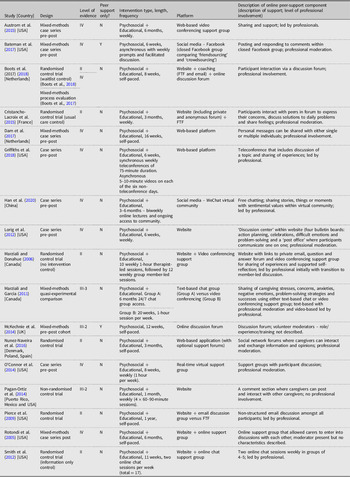
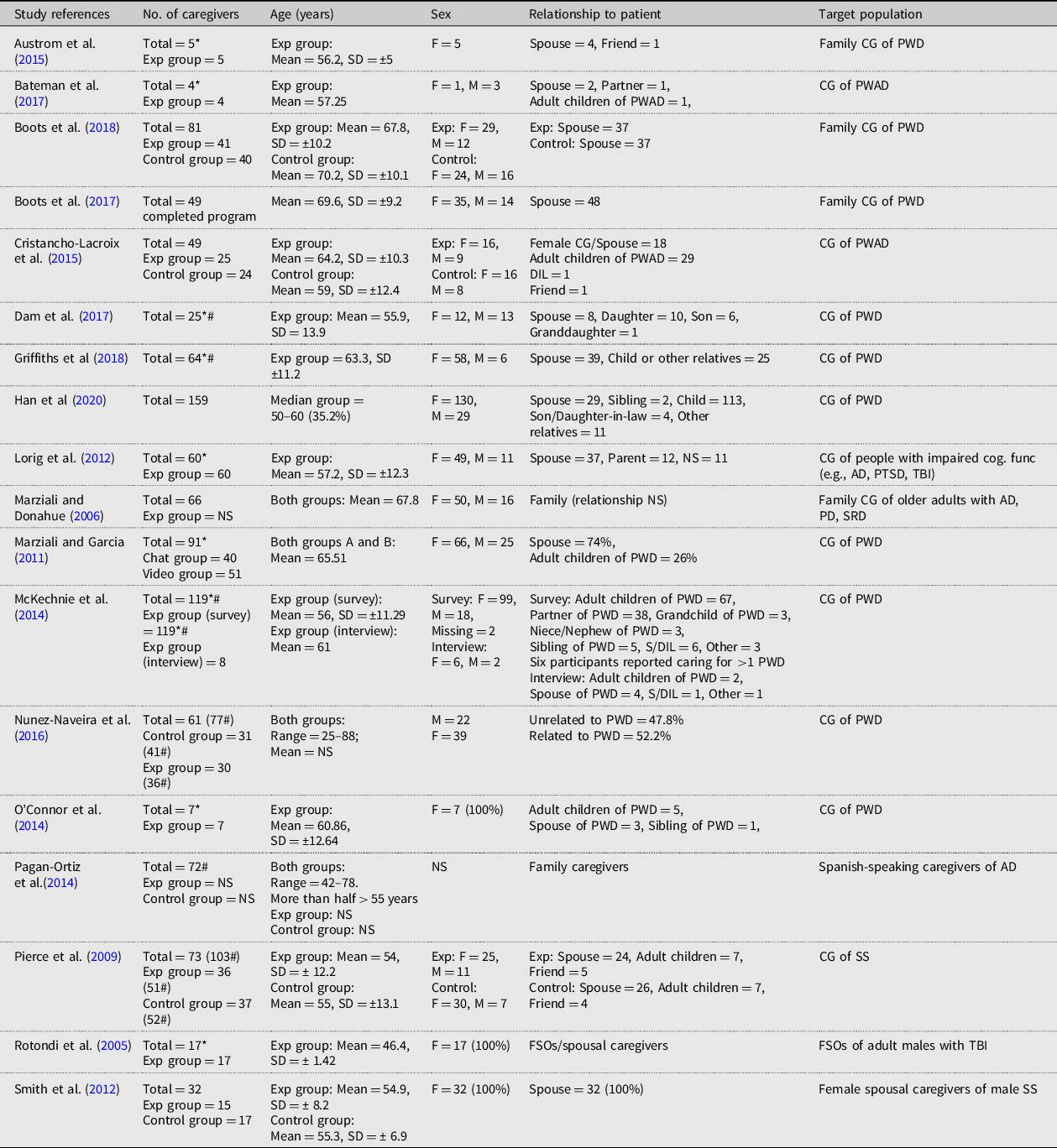
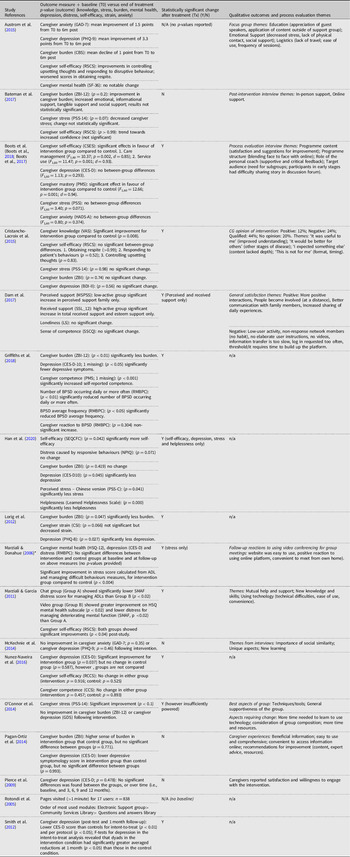
Two reviewers independently completed the data extraction process for all included studies. National Health and Medical Research Council (NHMRC) guidelines (National Health and Medical Research Council, 2009) were used to identify the research design of each study and to assign a grade level of evidence. For each study, the following information was extracted: study design; description of intervention; participant characteristics, outcome measures and study outcomes. A comprehensive summary of the data extracted from each eligible study can be found in Tables 1–3.
Study of design, level of evidence (NHMRC grading system), platform and intervention

H, Home; Exp, Experimental; FTF, face-to-face; Q&A, Question and answer; AD, Alzheimer’s disease; PD, Parkinson’s disease.
Caregiver characteristics

SD, Standard deviation; S/DIL, Son/Daughter-in-law; O, Other; CG, caregiver; Exp, Experimental; F, Female; M, Male; FSOs, Female significant others; NS, Not specified; PWAD, Person with Alzheimer’s Disease; *no Control group; PTSD, Post-traumatic stress disorder; TBI, Traumatic Brain Injury; SRD, Stroke-related dementia; SS, Stroke survivors; Cog, cognitive; Func, functioning; PWD, Person with dementia; (#) number initially recruited for study.
Summary of results

BDI-II, beck depression inventory; CCS, caregiver competence scale; CES-D, Center for Epidemiologic Studies Depression Scale; CSES, the caregiver self-efficacy scale; CSI, caregiver strain index; GAD-7, generalised anxiety disorder scale; GDS, geriatric depression scale; HSQ-12, health status questionnaire 12; LS, loneliness scale; MSPSS, multi-dimensional scale of perceived social support; NPIQ, neuropsychiatric inventory – questionnaire; PHQ, patient health questionnaire depression scale; PMS, Pearlin mastery scale; PSS, perceived stress scale; RCSS, revised caregiving satisfaction scale; RMBPC, revised memory and behaviour problems checklist; RSCS, revised scale for caregiving self-efficacy; SEQCFC, self-efficacy questionnaire for Chinese family caregivers; SMAF, functional autonomy measurement system; SSCQ, short sense of competence questionnaire; SF-36, short-form 36; SSL_12, social support list 12; VAS, visual analogue scale; ZBI, Zarit Burden interview.
The methodological quality of included studies was assessed independently by two reviewers. Any conflicting ratings were resolved through discussion amongst all authors until consensus was reached. The Physiotherapy Evidence Database (PEDro) scale was used to appraise randomised controlled trials (Verhagen et al., Reference Verhagen, de Vet, de Bie, Kessels, Boers, Bouter and Knipschild1998). The PEDro scale assesses randomised controlled trials across 11 criteria relating to the external and internal validity of the study, with a maximum potential score of 10 (Maher, Sherrington, Herbert, Moseley, & Elkins, Reference Maher, Sherrington, Herbert, Moseley and Elkins2003). The PEDro scale is recognised as a valid and reliable quality appraisal instrument (Maher et al., Reference Maher, Sherrington, Herbert, Moseley and Elkins2003) and is often used in systematic reviews (e.g., Lanyon, Rose, & Worrall, Reference Lanyon, Rose and Worrall2013). Non-randomised controlled trials, case series (pre-test/post-test) and mixed-method study designs were assessed using the Mixed-Methods Appraisal Tool (MMAT) (Pluye et al., Reference Pluye, Robert, Cargo, Bartlett, O’Cathain, Griffiths and Rousseau2011). The MMAT is a reliable quality assessment tool (Crowe & Sheppard, Reference Crowe and Sheppard2011; Simera, Moher, Hoey, Schulz, & Altman, Reference Simera, Moher, Hoey, Schulz and Altman2010) and includes scales for several different study designs, including mixed-method studies (Crowe & Sheppard, Reference Crowe and Sheppard2011). The scale for mixed-methods studies has a maximum possible score of 11, while the scales for quantitative non-randomised and descriptive study designs have a maximum possible score of four (Crowe & Sheppard, Reference Crowe and Sheppard2011).
Description and classification of interventions
The Template for Intervention Description and Replication (TIDieR) checklist and guide (Hoffmann et al., Reference Hoffmann, Glasziou, Boutron, Milne, Perera, Moher and Michie2014) was used as a framework for describing interventions. The TIDieR checklist sets out the minimum recommended items for describing interventions in sufficient detail to allow their replication (Hoffmann et al., Reference Hoffmann, Glasziou, Boutron, Milne, Perera, Moher and Michie2014). Following application of the TIDieR framework, interventions were classified as either psychosocial, educational or a combination of both. For this review, psychosocial interventions were defined as comprising of some form of emotional or social support, such as peer support or counselling. Educational interventions were largely informational in nature, such as training modules and links to additional websites for information. Peer-support components of interventions were further described with respect to mode/setting, individual versus group format and degree of professional involvement. For the purposes of this study, peer support was defined as per Dennis (Reference Dennis2003, p. 329).
Results
What evidence is available for online interventions that provide caregiver peer support?
A total of 3026 records were identified from electronic database searches. Following the removal of duplicates, 2092 records were screened by title and abstract. Full-text review was completed for 239 records and of these 221 were excluded with reasons provided in Fig. 1. Ultimately, 18 studies for 17 interventions were included in this review.
Methodological quality of studies
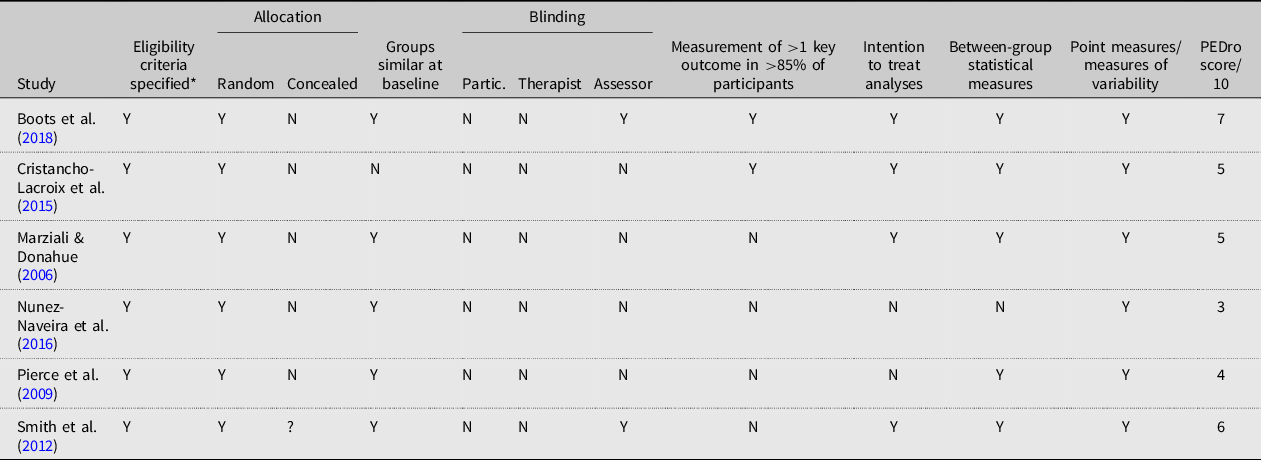
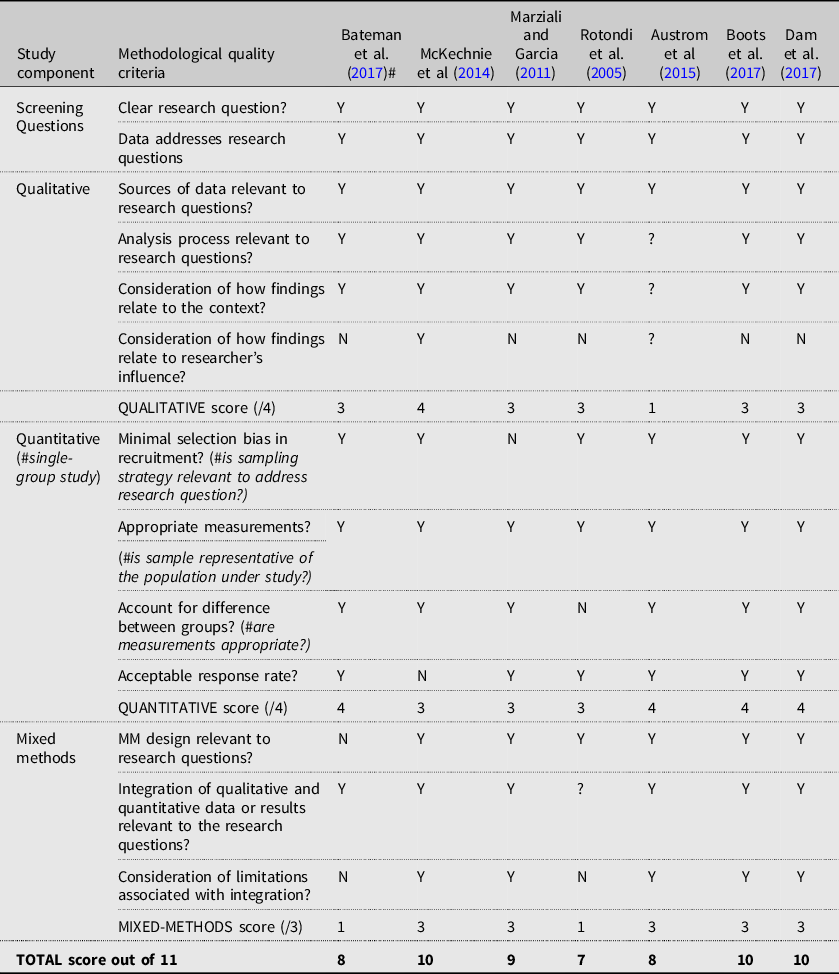
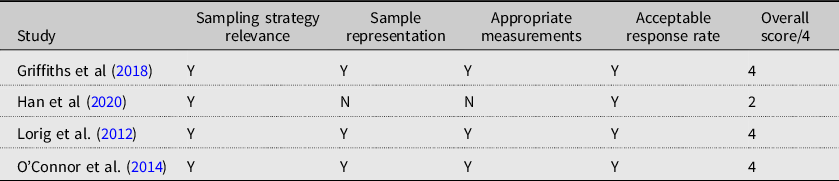
Of the 18 studies included, there were 6 RCTs (Boots, de Vugt, Kempen, & Verhey, Reference Boots, de Vugt, Kempen and Verhey2018; Cristancho-Lacroix et al., Reference Cristancho-Lacroix, Wrobel, Cantegreil-Kallen, Dub, Rouquette and Rigaud2015; Marziali & Donahue., Reference Marziali and Donahue2006; Núñez-Naveira et al., Reference Núñez-Naveira, Alonso-Búa, de Labra, Gregersen, Maibom, Mojs and Millán-Calenti2016; Pierce et al., Reference Pierce, Steiner, Khuder, Govoni and Horn2009; Smith, Egbert, Dellman-Jenkins, Nanna, & Palmieri, Reference Smith, Egbert, Dellman-Jenkins, Nanna and Palmieri2012), 1 non-randomised control trial (Pagán-Ortiz, Cortés, Rudloff, Weitzman, & Levkoff, Reference Pagán-Ortiz, Cortés, Rudloff, Weitzman and Levkoff2014), 7 mixed-methods studies (Austrom et al., Reference Austrom, Geros, Hemmerlein, McGuire, Gao, Brown and Clark2015; Bateman et al., Reference Bateman, Brady, Wilkerson, Yi, Karanam and Callahan2017; Boots, de Vugt, Smeets, Kempen, & Verhey, Reference Boots, de Vugt, Smeets, Kempen and Verhey2017; Dam, Van Boxtel, Rozendaal, Verhey, & De Vugt, Reference Dam, Van Boxtel, Rozendaal, Verhey and De Vugt2017; Marziali & Garcia, Reference Marziali and Garcia2011; McKechnie et al., Reference McKechnie, Barker and Stott2014; Rotondi, Sinkule, & Spring, Reference Rotondi, Sinkule and Spring2005) and 4 case series designs (Griffiths, Kovaleva, Higgins, Langston, & Hepburn, Reference Griffiths, Kovaleva, Higgins, Langston and Hepburn2018; Han, Guo & Hong, Reference Han, Guo and Hong2020; Lorig et al., Reference Lorig, Thompson-Gallagher, Traylor, Ritter, Laurent, Plant and Hahn2012; O’Connor et al., Reference O’Connor, Arizmendi and Kaszniak2014). Table 4 presents the quality of evidence markers for RCTs using ‘yes’ and ‘no’ ratings and the total score from the PEDro scale. Two (Boots et al., Reference Boots, de Vugt, Kempen and Verhey2018; Smith et al., Reference Smith, Egbert, Dellman-Jenkins, Nanna and Palmieri2012) out of the six RCT studies achieved a positive rating on more than half of the items (i.e., >50%), and therefore are considered high-quality studies (Cherney, Simmons-Mackie, Raymer, Armstrong, & Holland, Reference Cherney, Simmons-Mackie, Raymer, Armstrong and Holland2013). The mean score for RCTs was 5 (SD = 1.4) which indicates, on average, this group of studies failed to meet more than half of the methodological criteria to be considered high quality. All remaining studies (n = 12) were reviewed using the MMAT. The MMAT does not position non-randomised, case series or mixed-methods studies in a hierarchy of evidence (Pace et al., Reference Pace, Pluye, Bartlett, Macaulay, Salsberg, Jagosh and Seller2012), as there is no consensus that may be used to evaluate or assess the quality of such studies (Pluye, Gagnon, Griffiths, & Johnson-Lafleur, Reference Pluye, Gagnon, Griffiths and Johnson-Lafleur2009). Therefore, a rating of low, moderate or high quality cannot be determined for the purposes of this review. In Table 5, the non-RCT scored 1 out of a possible 4 due to selection bias and recruitment challenges. The ratings for the mixed-method designs (Austrom et al., Reference Austrom, Geros, Hemmerlein, McGuire, Gao, Brown and Clark2015; Bateman et al., Reference Bateman, Brady, Wilkerson, Yi, Karanam and Callahan2017; Boots et al., Reference Boots, de Vugt, Smeets, Kempen and Verhey2017; Dam et al., Reference Dam, Van Boxtel, Rozendaal, Verhey and De Vugt2017; Marziali & Garcia, Reference Marziali and Garcia2011; McKechnie et al., Reference McKechnie, Barker and Stott2014; Rotondi et al., Reference Rotondi, Sinkule and Spring2005) are displayed in Table 6 and show scores ranging from 7 to 10 out of the possible 11, with 5 studies not reporting how qualitative findings related to the researchers’ influence. The ratings for case series designs are displayed in Table 7 and show that three studies scored the highest possible score of 4 (Griffiths et al., Reference Griffiths, Kovaleva, Higgins, Langston and Hepburn2018; Lorig et al., Reference Lorig, Thompson-Gallagher, Traylor, Ritter, Laurent, Plant and Hahn2012; O’Connor et al., Reference O’Connor, Arizmendi and Kaszniak2014). One study (Han et al., Reference Han, Guo and Hong2020) scored 2 out of 4 as the authors did not describe how many potential participants were contacted by the research team (sample representation) nor provide a description of the measures used to determine participation and satisfaction (appropriate measurements).
Methodological quality criteria for randomised controlled trials (RCT) using the PEDro scale

*Excluded from total PEDro score; Y = yes (1 point), N = no (0 point), ? = unsure (0 point).
Method criteria for mixed methods and non-RCT

Y = yes (1 point), N = no (0 point), ? = unsure (0 point).
Methodological quality rating for mixed-methods (MM) studies using the Mixed-Methods Appraisal Tool (MMAT)

Y = yes (1 point), N = no (0 point), ? = unsure (0 point), # = single-group study.
Method criteria for case series pre–post (CS) using the MMAT

Y = yes (1 point), N = no (0 point), ? = unsure (0 point).
Reporting of Interventions
The TIDieR checklist items for the included studies are summarised in the supplementary materials (see Supplementary material 2). Only three studies (18% of those included) described 75% or more of the TIDieR elements (Boots et al., Reference Boots, de Vugt, Kempen and Verhey2018; Cristancho-Lacroix et al., Reference Cristancho-Lacroix, Wrobel, Cantegreil-Kallen, Dub, Rouquette and Rigaud2015; Smith et al., Reference Smith, Egbert, Dellman-Jenkins, Nanna and Palmieri2012). Descriptions of the following elements were missing from more than half of the studies: who provided the intervention (and in particular their qualifications and training), how the intervention was tailored or modified and whether intervention fidelity was planned or actually measured. In addition, the description of the peer-support element frequently lacked sufficient detail particularly for multi-component interventions, described further below.
All included studies incorporated an element of peer support as part of the intervention. The type of interventions reported was categorised as either psychosocial, educational or a combination of both (see Table 1). The vast majority of interventions (n = 15) combined psychosocial and educational elements. Two interventions were classified as psychosocial only (Bateman et al., Reference Bateman, Brady, Wilkerson, Yi, Karanam and Callahan2017; McKechnie et al., Reference McKechnie, Barker and Stott2014), these were also the only studies that measured the effectiveness of peer support alone. The remaining 15 interventions included peer support as part of a multi-component intervention framework. For example, in the study by Han and colleagues (Reference Han, Guo and Hong2020), the intervention consisted of six distinct elements: peer emotional support, lectures and consultation, technical support, literature, rules for maintaining a virtual environment and ‘huddle’ together for warmth. In the Pagan-Ortiz et al. (Reference Pagán-Ortiz, Cortés, Rudloff, Weitzman and Levkoff2014) intervention, access to a self-paced website included educational modules plus access to a comments section for carers to interact with and support each other.
Peer support took the form of either one-on-one or group support across five types of online delivery platforms (see Table 1). This included websites (e.g., with access to online support groups, forums, online bulletin boards or email discussions); videoconferencing; text-based chat groups; 3D virtual environments and social media forums (e.g., Facebook). Websites were the most frequently used platform (Boots et al., Reference Boots, de Vugt, Kempen and Verhey2018; Dam et al., Reference Dam, Van Boxtel, Rozendaal, Verhey and De Vugt2017; Griffiths et al., Reference Griffiths, Kovaleva, Higgins, Langston and Hepburn2018; Lorig et al., Reference Lorig, Thompson-Gallagher, Traylor, Ritter, Laurent, Plant and Hahn2012; McKechnie et al., Reference McKechnie, Barker and Stott2014; Pagán-Ortiz et al., Reference Pagán-Ortiz, Cortés, Rudloff, Weitzman and Levkoff2014; Rotondi et al., Reference Rotondi, Sinkule and Spring2005; Smith et al., Reference Smith, Egbert, Dellman-Jenkins, Nanna and Palmieri2012) and four interventions combined a website with another platform of delivery i.e., with face-to-face intervention (Cristancho-Lacroix et al., Reference Cristancho-Lacroix, Wrobel, Cantegreil-Kallen, Dub, Rouquette and Rigaud2015), videoconferencing support (Marziali & Donahue, Reference Marziali and Donahue2006), email discussions (Pierce et al., Reference Pierce, Steiner, Khuder, Govoni and Horn2009) or coaching (personalised support and intervention tailoring from a professional) (Boots et al., Reference Boots, de Vugt, Kempen and Verhey2018). The least represented platforms were 3D virtual environments (O’Connor et al., Reference O’Connor, Arizmendi and Kaszniak2014), social media (Bateman et al., Reference Bateman, Brady, Wilkerson, Yi, Karanam and Callahan2017; Han et al., Reference Han, Guo and Hong2020) and web-based applications (Nunez-Naveira et al., Reference Núñez-Naveira, Alonso-Búa, de Labra, Gregersen, Maibom, Mojs and Millán-Calenti2016).
In total, 9 of the 17 interventions reported the frequency of intervention as weekly (Austrom et al., Reference Austrom, Geros, Hemmerlein, McGuire, Gao, Brown and Clark2015; Bateman et al., Reference Bateman, Brady, Wilkerson, Yi, Karanam and Callahan2017; Cristancho-Lacroix et al., Reference Cristancho-Lacroix, Wrobel, Cantegreil-Kallen, Dub, Rouquette and Rigaud2015; Griffiths et al., Reference Griffiths, Kovaleva, Higgins, Langston and Hepburn2018; Lorig et al., Reference Lorig, Thompson-Gallagher, Traylor, Ritter, Laurent, Plant and Hahn2012; Marziali & Donahue, Reference Marziali and Donahue2006; O’Connor et al., Reference O’Connor, Arizmendi and Kaszniak2014; Pagán-Ortiz et al., Reference Pagán-Ortiz, Cortés, Rudloff, Weitzman and Levkoff2014; Smith et al., Reference Smith, Egbert, Dellman-Jenkins, Nanna and Palmieri2012). The remaining interventions used a self-paced approach. Peer-support components of interventions were reported as being facilitated or moderated by members of the research team in 12 of the 17 interventions (Austrom et al., Reference Austrom, Geros, Hemmerlein, McGuire, Gao, Brown and Clark2015; Bateman et al., Reference Bateman, Brady, Wilkerson, Yi, Karanam and Callahan2017; Cristancho-Lacroix et al., Reference Cristancho-Lacroix, Wrobel, Cantegreil-Kallen, Dub, Rouquette and Rigaud2015; Griffiths et al., Reference Griffiths, Kovaleva, Higgins, Langston and Hepburn2018; Han et al., Reference Han, Guo and Hong2020; Lorig et al., Reference Lorig, Thompson-Gallagher, Traylor, Ritter, Laurent, Plant and Hahn2012; Marziali & Donahue, Reference Marziali and Donahue2006; Marziali & Garcia, Reference Marziali and Garcia2011; Núñez-Naveira et al., Reference Núñez-Naveira, Alonso-Búa, de Labra, Gregersen, Maibom, Mojs and Millán-Calenti2016; O’Connor et al., Reference O’Connor, Arizmendi and Kaszniak2014; Pierce et al., Reference Pierce, Steiner, Khuder, Govoni and Horn2009; Smith et al., Reference Smith, Egbert, Dellman-Jenkins, Nanna and Palmieri2012).
Caregivers and patient populations
Caregivers were most often caring for people with dementia (n = 13). The remaining care recipient populations included stroke survivors (Pierce et al., Reference Pierce, Steiner, Khuder, Govoni and Horn2009; Smith et al., Reference Smith, Egbert, Dellman-Jenkins, Nanna and Palmieri2012), people with TBI (Rotondi et al., Reference Rotondi, Sinkule and Spring2005) and mixed patient populations: dementia, PTSD, TBI (Lorig et al., Reference Lorig, Thompson-Gallagher, Traylor, Ritter, Laurent, Plant and Hahn2012); Alzheimer’s disease, stroke-related dementia and Parkinson’s disease (Marziali & Donahue, Reference Marziali and Donahue2006). No study included participants with multiple sclerosis. Caregivers were most frequently spouses (n = 15 interventions), as shown in Table 2. Adult children represented the next largest caregiving population (n = 9 interventions). Parents of care recipients were represented in one study only. Caregivers were predominantly female.
Which interventions resulted in improvement? Characteristics of interventions that produced better outcomes
In total, 11 studies reported statistically significant changes in one or more of the following domains: caregiver knowledge (Cristancho-Lacroix et al., Reference Cristancho-Lacroix, Wrobel, Cantegreil-Kallen, Dub, Rouquette and Rigaud2015), mental health (Marziali & Garcia, Reference Marziali and Garcia2011), stress (Han et al., Reference Han, Guo and Hong2020; Marziali & Donahue, Reference Marziali and Donahue2006; O’Connor et al., Reference O’Connor, Arizmendi and Kaszniak2014), depression (Griffiths et al., Reference Griffiths, Kovaleva, Higgins, Langston and Hepburn2018; Han et al., Reference Han, Guo and Hong2020; Lorig et al., Reference Lorig, Thompson-Gallagher, Traylor, Ritter, Laurent, Plant and Hahn2012; Núñez-Naveira et al., Reference Núñez-Naveira, Alonso-Búa, de Labra, Gregersen, Maibom, Mojs and Millán-Calenti2016; Smith et al., Reference Smith, Egbert, Dellman-Jenkins, Nanna and Palmieri2012), distress (Marziali & Garcia, Reference Marziali and Garcia2011), burden (Griffiths et al., Reference Griffiths, Kovaleva, Higgins, Langston and Hepburn2018; Lorig et al., Reference Lorig, Thompson-Gallagher, Traylor, Ritter, Laurent, Plant and Hahn2012), self-efficacy (Boots et al., Reference Boots, de Vugt, Kempen and Verhey2018; Han et al., Reference Han, Guo and Hong2020; Marziali & Garcia, Reference Marziali and Garcia2011), mastery (Boots et al., Reference Boots, de Vugt, Kempen and Verhey2018), helplessness (Han et al., Reference Han, Guo and Hong2020) and perceived support (Dam et al., Reference Dam, Van Boxtel, Rozendaal, Verhey and De Vugt2017). One study (Austrom et al., Reference Austrom, Geros, Hemmerlein, McGuire, Gao, Brown and Clark2015) did not include statistical analysis due to a small sample size. O’Connor et al. (Reference O’Connor, Arizmendi and Kaszniak2014) identified significant changes in stress, however the study was insufficiently powered. A diverse range of outcome measures was employed (see Table 3). Notably, the two studies (Bateman et al., Reference Bateman, Brady, Wilkerson, Yi, Karanam and Callahan2017; McKechnie et al., Reference McKechnie, Barker and Stott2014) that provided peer support only (with no educational component to the intervention) did not show any significant changes in their outcome measures of caregiver burden, stress, self-efficacy, anxiety or depression following the intervention. The two other studies that showed no improvements (Pagan-Ortiz et al., Reference Pagán-Ortiz, Cortés, Rudloff, Weitzman and Levkoff2014; Pierce et al. Reference Pierce, Steiner, Khuder, Govoni and Horn2009) were amongst those that lacked sufficient description of the peer-support component.
Are caregivers of stroke survivors with aphasia included in online peer-support intervention studies?
Caregivers of stroke survivors were represented in 3 of the 17 interventions (Marziali & Donahue, Reference Marziali and Donahue2006; Pierce et al., Reference Pierce, Steiner, Khuder, Govoni and Horn2009; Smith et al., Reference Smith, Egbert, Dellman-Jenkins, Nanna and Palmieri2012). These interventions combined psychosocial support with educational materials. Educational materials included training modules and information links. In two studies (Pierce et al., Reference Pierce, Steiner, Khuder, Govoni and Horn2009; Smith et al., Reference Smith, Egbert, Dellman-Jenkins, Nanna and Palmieri2012), psychosocial support comprised email discussion and online text-based chat groups. Marziali and Donahue (Reference Marziali and Donahue2006) facilitated video conferencing support groups in addition to email forums. Marziali and Donahue (Reference Marziali and Donahue2006) reported a significant difference between baseline and 6-month follow-up in stress change scores between intervention and control groups (in favour of the intervention), while Smith et al. (Reference Smith, Egbert, Dellman-Jenkins, Nanna and Palmieri2012) noted a reduction in depression scores according to the Center for Epidemiologic Studies Depression scale (CES-D). Pierce et al. (Reference Pierce, Steiner, Khuder, Govoni and Horn2009) found no statistically significant differences between intervention and control groups, and no significant change over time. The inclusion of care recipients with stroke and aphasia was not specifically reported in any study. Smith and associates (2012) reported the inclusion of stroke survivors with 'language/cognitive impairment' however, further distinction was not made and outcomes were not reported separately for these caregivers.
Qualitative themes
Eleven studies measured qualitative outcomes using methods including focus groups and interviews (see Table 3). Overall participants responded positively to the psychosocial elements of the interventions (e.g., Austrom et al., Reference Austrom, Geros, Hemmerlein, McGuire, Gao, Brown and Clark2015; Dam et al., Reference Dam, Van Boxtel, Rozendaal, Verhey and De Vugt2017; McKechnie et al., Reference McKechnie, Barker and Stott2014; O’Connor et al., Reference O’Connor, Arizmendi and Kaszniak2014). Participants reported feeling less stressed (Austrom et al., Reference Austrom, Geros, Hemmerlein, McGuire, Gao, Brown and Clark2015) and noted that the social similarity encountered within the groups made them feel less alone and more supported (Austrom et al., Reference Austrom, Geros, Hemmerlein, McGuire, Gao, Brown and Clark2015; Bateman et al., Reference Bateman, Brady, Wilkerson, Yi, Karanam and Callahan2017; Marzali and Garcia, Reference Marziali and Garcia2011; McKechnie et al., Reference McKechnie, Barker and Stott2014). Contrastingly, some participants noted that they found reading other users’ posts distressing (McKechnie et al., Reference McKechnie, Barker and Stott2014) or felt that sharing their story with others was a betrayal to their family members (Boots et al., Reference Boots, de Vugt, Smeets, Kempen and Verhey2017). Participants noted that the online peer-support groups were a source of practical information and advice that assisted them in performing their caregiving roles (Austrom et al., Reference Austrom, Geros, Hemmerlein, McGuire, Gao, Brown and Clark2015; Cristancho-Lacroix et al., Reference Cristancho-Lacroix, Wrobel, Cantegreil-Kallen, Dub, Rouquette and Rigaud2015; Marziali & Garcia, Reference Marziali and Garcia2011; McKechnie et al., Reference McKechnie, Barker and Stott2014; O’Connor et al., Reference O’Connor, Arizmendi and Kaszniak2014). Some participants reported that the content required more depth or personalisation (Cristancho-Lacroix et al., Reference Cristancho-Lacroix, Wrobel, Cantegreil-Kallen, Dub, Rouquette and Rigaud2015; Pagán-Ortiz et al., Reference Pagán-Ortiz, Cortés, Rudloff, Weitzman and Levkoff2014). Several studies explored the acceptability of online platforms for peer support. Participants identified convenience as a major benefit of the online platform, noting that it reduced the need to travel, take time off work or leave vulnerable family members on their own (Austrom et al., Reference Austrom, Geros, Hemmerlein, McGuire, Gao, Brown and Clark2015; Marziali & Donahue, Reference Marziali and Donahue2006; Pagán-Ortiz et al., Reference Pagán-Ortiz, Cortés, Rudloff, Weitzman and Levkoff2014). Another factor influencing the acceptability of online platforms for peer support was anonymity. Anonymity was identified as both a benefit and disadvantage to the use of online platforms, on one hand, it facilitated easier discussion of difficult topics, and on the other hand, the lack of accountability had the potential to create a forum for inappropriate and judgemental comments (McKechnie et al., Reference McKechnie, Barker and Stott2014). Some participants also noted that the acceptability of connecting online was limited by the ability to provide physical support, such as hugs (Austrom et al., Reference Austrom, Geros, Hemmerlein, McGuire, Gao, Brown and Clark2015). In terms of usability, many caregivers reported finding the online platforms easy to use (e.g., Austrom et al., Reference Austrom, Geros, Hemmerlein, McGuire, Gao, Brown and Clark2015; Pagán-Ortiz et al., Reference Pagán-Ortiz, Cortés, Rudloff, Weitzman and Levkoff2014), however, dissatisfaction with usability was noted in relation to some specific features of individual platforms, e.g., number of email reminders (Dam et al., Reference Dam, Van Boxtel, Rozendaal, Verhey and De Vugt2017). More time to learn to use aspects of the technology was also requested by some participants (O’Connor et al., Reference O’Connor, Arizmendi and Kaszniak2014). It was noted that the usability of online platforms for connection with peers was reliant on the quality and quantity of peer participation. This was noted to be low in some some studies (e.g., Dam et al., Reference Dam, Van Boxtel, Rozendaal, Verhey and De Vugt2017) and lacking relevance in others (Marzali & Garcia, Reference Marziali and Garcia2011).
Discussion
The results of this review indicate that outcomes for caregivers may be improved through participation in online peer-support interventions, but the mechanisms by which this change occurs is not always clear. Overall, 18 studies were included, the majority (n = 13) reporting interventions for caregivers of people with dementia. Caregiver support was primarily delivered in a combination of psychosocial and educational intervention types and was most frequently delivered via web-based discussion forums and video conferencing groups. In three quarters of the included studies, statistically significant changes in caregiver outcomes were found including increased caregiver knowledge, improvement in mental health status, improved self-efficacy, lower stress response to coping with the care recipient’s impairment and decline in function, decreased depressive symptomatology, lower distress or decreased level of carer burden. However, in general, there was a limited description of how the peer-support aspects of the interventions were expected to improve outcomes, particularly for multi-component interventions. To understand how a complex intervention causes change, it is necessary to understand the link between the intervention elements and the underlying theory (Craig et al., Reference Craig, Dieppe, Macintyre, Michie, Nazareth, Petticrew and Guidance2008). However, while the underlying intervention theory/rationale was described in all included studies, explanation of the needs of caregivers and how the peer-support component was expected to meet these needs was often absent. Therefore, it is difficult to draw conclusions about how the peer-support aspects of the interventions improved outcomes. Furthermore, many of the studies were of low methodological quality, an issue that may be improved in the future through adherence to reporting standards.
Importantly, the two studies that provided peer support only (i.e., did not actively include aspects of education) did not show any significant improvements in caregiver burden, stress, self-efficacy, anxiety or depression (Bateman et al., Reference Bateman, Brady, Wilkerson, Yi, Karanam and Callahan2017; McKechnie et al., Reference McKechnie, Barker and Stott2014). This may indicate that peer support without additional education is not sufficient to improve caregiver outcomes. As the majority of studies included multi-component interventions, it may be useful to compare peer-support to multi-component interventions to explore the essential elements of the interventions.
In the current review, the most common type of platform for delivering peer support was via web-based discussion forum, either as a component of the main website or as an intervention platform on its own. While the use of online discussion forums was prevalent in this research, there is an increasing trend of both caregivers and care recipients using a variety of social media platforms (e.g., Twitter, YouTube) to share their health experiences (Greene, Choudhry, Kilabuk, & Shrank, Reference Greene, Choudhry, Kilabuk and Shrank2011; Hamm et al., Reference Hamm, Chisholm, Shulhan, Milne, Scott, Given and Hartling2013) and engage in health-related discussion (Chou, Prestin, & Kunath, Reference Chou, Prestin and Kunath2014; Tsuya, Sugawara, Tanaka, & Narimatsu, Reference Tsuya, Sugawara, Tanaka and Narimatsu2014). Only two studies in the current review used an online peer-support group delivered via social media. These platforms may provide ‘just-in-time’ (Bateman et al., Reference Bateman, Brady, Wilkerson, Yi, Karanam and Callahan2017, p. 2) personalised support from a large number of people who are online and available to answer questions.
Video conferencing was another commonly used platform in this review. Video conferencing has been used to replicate face-to-face psychotherapeutic support group interventions, integrating education, self-reflection and self-care strategies (Marziali & Garcia, Reference Marziali and Garcia2011). Participants may prefer live synchronous video for peer-support interactions, as the replication of face-to-face support groups is similar to human interaction (Diefenbeck, Klemm, & Hayes, Reference Diefenbeck, Klemm and Hayes2017). One study investigated the feasibility of a relatively new online group support platform, virtual reality support groups (O’Connor et al., Reference O’Connor, Arizmendi and Kaszniak2014). This was developed to simulate ‘real-time’ chat using avatars to represent caregivers. This new application allows for non-verbal communication, through facial expressions, embodied movement and dynamic group interactions, thereby providing a more emotional experience of support (Knapp, Hall, & Horgan, Reference Knapp, Hall and Horgan2014).
Irrespective of the platform, online delivery of interventions may facilitate access to care and support for caregivers of people with disabilities. As Rotondi et al. (Reference Rotondi, Sinkule and Spring2005) note, issues such as lack of transportation and home care obligations can make attendance at face-to-face appointments difficult for this population. More recently, the COVID-19 pandemic has further compounded these issues, with over-burdened health services, social distancing requirements and required or self-imposed confinement to reduce the risk of infection, further restricting access to much-needed support and care (Greenberg, Wallick, & Brown, Reference Greenberg, Wallick and Brown2020). Online access to support and care may help to combat the additional burden experienced by many caregivers during this time.
Peer-support interventions in 13 out of the 18 studies in this review were facilitated or moderated by professionals who guided and monitored discussion between caregivers. Professionally facilitated online support groups may restrict the number of participants, be offered for a limited amount of time, or result in waiting lists until new participant groups are formed (Kim et al., Reference Kim, Han, Moon, Shaw, Shah, Mctavish and Gustafson2012; Klemm, Reference Klemm2012; Nicholas et al., Reference Nicholas, Fellner, Frank, Small, Hetherington, Slater and Daneman2012; Weinberg, Uken, Schmale, & Adamek, Reference Weinberg, Uken, Schmale and Adamek1995; Winzelberg et al., Reference Winzelberg, Classen, Alpers, Roberts, Koopman, Adams and Taylor2003). Therefore, further research is required to compare professionally facilitated/moderated versus peer-led online support groups to inform researchers on the effectiveness of such interventions targeting caregivers of chronic neurological conditions, stroke and aphasia.
In this review, most studies included caregivers of people with dementia, with few investigating the outcomes of interventions with caregivers of people with stroke and chronic neurological diseases. Furthermore, no studies specifically reported the inclusion of caregivers of stroke survivors with aphasia. It has been estimated that 20%–40% (El Hachioui et al., Reference El Hachioui, Lingsma, Sandt-Koenderman, Dippel, Koudstaal and Visch-Brink2013; Pedersen, Vinter, & Olsen, Reference Pedersen, Vinter and Olsen2004) of stroke survivors will have aphasia, therefore representing a significant proportion of the stroke population. As such, the inclusion of this key demographic in studies investigating interventions of caregivers of persons with stroke is of clinical importance. Caregivers of those with post-stroke aphasia experience high levels of stress as a result of the communication difficulties present in people with aphasia (Christensen & Anderson, Reference Christensen and Anderson1989; Le Dorze & Brassard, Reference Le Dorze and Brassard1995; Michallet, Le Dorze, & Tétreault, Reference Michallet, Le Dorze and Tétreault2001; Ross & Morris, Reference Ross and Morris1988). The majority of studies investigating the impact of aphasia on caregivers have concluded that caregivers of those with post-stroke aphasia are more likely to also experience symptoms of depression, loneliness and various emotional problems as compared to caregivers of stroke survivors without aphasia (Draper et al., Reference Draper, Bowring, Thompson, Van Heyst, Conroy and Thompson2007). In light of the prevalence of aphasia in stroke survivors and the impact this has on caregivers, the necessity to include people with aphasia in studies evaluating interventions for caregivers of stroke survivors is evident. Furthermore, the inclusion of this population and providing a comprehensive description of people with aphasia in stroke samples is essential to avoid study bias of interventions targeting the stroke population exclusively (Baker et al., Reference Baker, Worrall, Rose, Hudson, Ryan and O’Byrne2018).
Limitations
A limitation of this review is the exclusion of studies reported in languages other than English. Accordingly, reported interventions may not provide a comprehensive overview of available online caregiver peer-support group outcomes. In addition, a diverse range of outcome measures was used across included studies. This lack of consistency hindered cross-study comparisons and meta-analyses. Recent work undertaken by Wallace et al. (Reference Wallace, Worrall, Rose, Le Dorze, Breitenstein, Hilari and Webster2019), highlights the benefits of the core outcome set development and use in maximising the comparability of outcomes cross research trials. Initiatives to establish consistency in outcome measurement should be considered in the future.
Conclusions
Studies investigating the effectiveness of online peer-support interventions for caregivers of dementia, stroke and chronic neurological diseases showed positive outcomes for caregiver knowledge, relationship with the care recipient, mental health, stress, depression and distress. However, these positive caregiver outcomes cannot be solely attributed to peer support, as the online interventions included multiple components. Future research comparing stand-alone online peer-support interventions with multi-component online interventions may help to elucidate the components of online peer support that produce the best outcomes for caregivers of people with chronic neurological disease. Studies examining the outcomes of online peer-support interventions for caregivers of stroke survivors should strive to seek to include caregivers of people with aphasia.
Supplementary material
To view supplementary material for this article, please visit https://doi.org/10.1017/BrImp.2021.5.
Financial support
Sarah Wallace is supported by the National Health and Medical Research Council (NHMRC) Emerging Leadership Investigator Grant (APP1175821).
Conflicts of interest
None.
Ethical standards
The authors assert that all procedures contributing to this work comply with the ethical standards of the relevant national and institutional committees on human experimentation and with the Helsinki Declaration of 1975, as revised in 2008.