Introduction
Rice (Oryza sativa L.) is one of the most important food crops in the world for more than half of the global population (Qian et al. Reference Qian, Guo, Smith and Li2016; Shekhawat et al. Reference Shekhawat, Rathore and Chauhan2020). Almost 90% of the world’s rice is produced and consumed in Asia (Priya et al. Reference Priya, Nelson, Ravichandran and Antony2019). The generally adopted method of rice planting in Asia is still manual transplanting; however, the main difficulties currently are the reduction of the rural labor force and increased wages for hired labor. Moreover, a significant irrigated rice area may suffer from a water shortage in Asia in the near future (Shivashenkaramurthy et al. Reference Shivashenkaramurthy, Agasimani, Roopa, Praveen and Neeralagi2020). Therefore, to deal with the increase in production costs and/or decrease in the availability of labor and water, there has been a shift from transplanting to direct-seeded rice (DSR) in recent years (Awan and Chauhan Reference Awan and Chauhan2016).
China is the main producer of rice, contributing more than 28% of total global rice production (Liu et al. Reference Liu, Hussain, Zheng, Peng, Huang, Cui and Nie2015). A change in the planting method from seedling-transplanted rice to DSR has occurred since the 1990s in China, with DSR mainly applied in the middle and lower reaches of the Yangtze River (Nie and Peng Reference Nie, Peng, Chauhan, Jabran and Mahajan2017). However, the application of DSR has unresolved problems. Weeds are a major constraint to DSR yield, as there is no standing water to suppress weed growth, and there is no seedling size advantage to suppress weeds during the rice establishment period (Chauhan and Johnson Reference Chauhan and Johnson2010a; Chauhan et al. Reference Chauhan, Singh and Mahajan2012b).
Echinochloa species are the main problematic weeds in DSR fields (Awan et al. Reference Awan, Cruz and Chauhan2021; Chauhan and Johnson Reference Chauhan and Johnson2011). Among Echinochloa species, alkali barnyardgrass [Echinochloa crus-galli var. zelayensis (Kunth) Hitchc.], a variety of barnyardgrass [Echinochloa crus-galli (L.) P. Beauv.], is widely distributed in rice fields in the middle-lower Yangtze Plain in China, significantly affecting rice production (Shi et al. Reference Shi, Li, Zhang and Qiang2021; Wang et al. Reference Wang, Qiao, Wei, Dong and Li2004). Junglerice [Echinochloa colona (L.) Link.], widespread in the tropics and subtropics between 30°N and 30°S, is another Echinochloa species that has emerged as a problematic weed in DSR fields in China in recent years. These two species can mimic rice at the seedling stage, and by the time farmers can easily distinguish the weeds, grain yield loss of rice may already be unavoidable (Holm et al. Reference Holm, Plucknett, Pancho and Herberger1991). Zhang et al. (Reference Zhang, Gu, Zhao, Yang, Peng, Li and Bai2017) reported that both E. crus-galli and E. colona at a density of 6 plants m−2 reduced rice yield by 22% to 55% and 2% to 12%, respectively, compared with the weed-free rice treatment. Prasad (Reference Prasad2012) also reported that losses in rice grain yield increased from 48% to 86% as the density of E. colona increased from 50 to 400 plants m−2. Ehsan et al. (Reference Ehsan, Safdar and Ali2020) reported a decrease in yield ranging from 10% to 70% in DSR, with an increased density of E. colona from 22 to 88 plants m−2. Chauhan and Johnson (Reference Chauhan and Johnson2010b) also mentioned a significant decrease (93%) in yield when a single rice plant was surrounded by eight E. colona plants.
The use of herbicides is regarded as the most economic and effective option for farmers to manage weeds (Mahajan and Chauhan Reference Mahajan and Chauhan2013), particularly in controlling high infestation of Echinochloa species in rice fields. However, herbicide resistance in E. crus-galli has evolved in China due to the intensive use of herbicides (Gao et al. Reference Gao, Xu, Qi, He, Li and Dong2021; Xu et al. Reference Xu, Lv, Wang, Li and Dong2013). Echinochloa colona, collected from rice fields in the middle-lower Yangtze Plain, also showed strong tolerance to metamifop and cyhalofop-butyl (Li et al. Reference Li, Zhang, Yang, Dong, Zhang and Han2015).
The biological characteristics of weed seeds, such as germination and emergence, can be used to develop effective management practices through strategies of increasing emergence so that seedlings can be killed or suppressed (Chauhan Reference Chauhan2012, Reference Chauhan2020). Different environmental factors, such as light, seed burial depth, and soil moisture, exert an effect on the germination and emergence of weed seeds (Chauhan and Johnson Reference Chauhan and Johnson2010b; Chauhan and Johnson Reference Chauhan and Johnson2011; Mahajan et al. Reference Mahajan, Prasad and Chauhan2021). For germination, light may be an important ecological factor; if seeds need light to germinate, it is implied that seeds only germinate at or near the surface of the soil. However, little information is available concerning the effect of light on the germination of E. crus-galli and E. colona seeds from fields in China. Likewise, knowledge about the effect of soil burial depth on seedling emergence could help determine the best use of tillage measures to inhibit the emergence and growth of weeds.
Wheat (Triticum aestivum L.) or rice straw mulching practices have subsequently developed in rice production, especially in the Yangtze River basin in China, where rice–wheat rotations are the main cropping system (Fan et al. Reference Fan, Liu, Jiang, Zhang, Lu, Zeng and Christie2005; Huang et al. Reference Huang, Zeng, Wu, Shi and Pan2013). In addition to improving soil fertility and contributing to higher rice grain yields, crop residues left on the soil surface might also interfere with weed seedling emergence in some systems (Mhlanga Reference Mhlanga2016; Nikolić et al. Reference Nikolić, Loddo and Masin2021), and thus could be potential components for weed management in rice. However, relatively little detailed research is available on the effect of mulching with wheat straw on the seedling emergence of E. crus-galli and E. colona from China.
Flooding has long been considered an effective measure for controlling weeds in rice fields. The extent of weed control is governed by the time and depth of flooding (Chauhan and Johnson Reference Chauhan and Johnson2008; Chauhan and Johnson Reference Chauhan and Johnson2009a, Reference Chauhan and Johnson2009b; Ghosh et al. Reference Ghosh, Rathore, Brahmachari, Singh and Kumar2017; Shekhawat et al. Reference Shekhawat, Rathore and Chauhan2020). Given that DSR cannot be irrigated immediately after sowing, irrigation is applied after crop emergence. Weeds may have already emerged when flooding occurs. Therefore, a better understanding of the effect of flooding time on weed growth could provide more effective ecological weed management decisions in DSR. We aimed to evaluate the effect of the abovementioned factors (i.e., light, soil burial depth, mulching with wheat straw, and time and depth of flooding) on the germination and emergence behavior of the two weed species; understanding these factors could play a crucial role in developing a better weed management strategy in China. Such information will help to formulate cost-effective control measures for E. crus-galli and E. colona as well as for other weeds with similar emergence requirements in DSR.
Materials and Methods
Experimental Material and Site Description
Experiments were conducted in the laboratory and screenhouse facilities from May to September 2019 at the Jiangsu Academy of Agricultural Sciences, Jiangsu Province, China (32.3°N, 118.87°E). Seeds of E. crus-galli and E. colona used in this study were collected from 40 to 50 randomly selected plants in naturally infested rice fields (approximately 30 ha) around Nanjing in 2018. The seeds used in this study were collected from freshly harvested plants. The specific method of seed collection was to put a plastic box (32-cm long by 25-cm wide by 8-cm high) under mature weed plants, and then gently pat the plants to allow the mature seeds to fall into the plastic box. For long-term storage, these seeds were sun-dried and then processed by air flotation to remove trash and poorly filled seeds. The seeds were stored in a seed cabinet (Huruiming Instrument, Guangzhou, China) maintained at 4 C with 40% relative humidity. The 1,000-seed weight was 1.7 g for E. crus-galli and 1.2 g for E. colona. Echinochloa crus-galli and E. colona seeds were taken out of the seed cabinet and sun-dried for several days to remove excess moisture and achieve uniform germination before the commencement of the experiments. The germination percentages of E. crus-galli and E. colona were 91% and 80%, respectively, indicating a high level of seed viability.
Seed Germination in Response to Light
Seed germination of E. crus-galli and E. colona was determined by placing 25 seeds of each species in a 9-cm-diameter petri dish (Devan Scientific, Wuxi, Jiangsu, China) with four replicates. Petri dishes contained two pieces of Whatman No.1 filter paper (Go On Chemical Co., Ltd., Shanghai, China) moistened with 5 ml of distilled water. To prevent any water loss, petri dishes were sealed with parafilm, and then incubated at 30/20 C (day/night) under 12/12-h and 0/24-h light/dark regimes per 24-h cycle. To create completely dark conditions, petri dishes were wrapped with two layers of aluminum foil. Seed germination was recorded until 14 d because no further germination occurred after that time. The emergence of radicles was defined as seed germination (ISTA 1996).
Seedling Emergence in Response to Different Burial Depths
Seedling emergence in this study, expressed as a percentage of the number of seeds planted, was considered to be the appearance of seedlings above the soil and wheat straw mulch for seeds planted on or below the soil surface. Twenty-five seeds each of E. crus-galli and E. colona were buried in 9-cm-diameter plastic pots at depths of 0, 0.5, 1, 2, 4, and 6 cm in a randomized complete block design with four replicates. The soil (pH = 6.1) was composed of 42% clay, 32% silt, and 26% sand with 12.4 g kg−1 organic matter, 115 mg kg−1 alkali hydrolysable N, 45 mg kg−1 Olsen-P, and 64.6 mg kg−1 exchangeable K. Pots were watered initially with an overhead sprinkler and later subirrigated. Each treatment was replicated four times. Seedlings were counted daily, and the experiment was terminated at 21 d after sowing, by which time emergence had ceased (Chauhan and Johnson Reference Chauhan and Johnson2011).
Emergence and Biomass in Response to Different Amounts of Wheat Straw Mulch
The emergence and biomass of E. crus-galli and E. colona were evaluated in a screenhouse by placing 50 seeds of the same species on the soil surface in one 18-cm-diameter plastic pot for each replicate. The wheat straw used in this experiment was manually harvested. To be consistent with the length of mechanically harvested wheat straw, it was chopped to a length of about 5 cm. The air-dried finely chopped wheat straw from ‘Yangmai 16’ (a cultivar widely used in local production) was applied as mulch on the soil surface at rates of 0, 5.1, 10.2, 15.3, 20.3, and 25.4 g pot−1, equivalent to 0, 2,000, 4,000, 6,000, 8,000, and 10,000 kg ha−1. Emerged seedlings were counted daily until 21 d after sowing. Finally, the emerged seedlings (at 21 d after sowing) were harvested. The aboveground biomass was determined after oven-drying for 4 d at 70 C. This experiment was conducted in a randomized complete block design, and each treatment was replicated four times for a total of 48 pots for the two weed species. The soil used in the experiment was the same as that used in the soil burial depth experiment.
Emergence and Growth in Response to Flooding
Twenty seeds each of E. crus-galli and E. colona were sown on the soil surface in plastic pots (15-cm diameter, 15-cm height). Soil moisture in the pots was maintained at the field capacity level before flooding. Seedlings were thinned to 10 pot−1 at 5 d after sowing. To flood seedlings at the same time, the sowing dates of the weeds were staggered. The plants were flooded at 5, 10, 15, and 20 d after sowing to 0- (saturated soil), 2-, 4-, and 6-cm water depths, respectively. On day 14 following the start of flooding, seedling survival was assessed by counting live plants, and plant heights were measured from the soil surface to the uppermost point of plant foliage, as described by Chauhan and Johnson (Reference Chauhan and Johnson2011). Shoots (i.e., stem and leaf) and roots of seedlings were then washed to remove the soil particles, bagged separately, and oven-dried for 4 d at 70 C for biomass measurement. In this experiment, we observed that once E. crus-galli and E. colona seedlings emerged, flooding did not control them effectively. Therefore, another experiment was conducted to evaluate the effect of early flooding on seedling emergence, plant height, and seedling biomass of both species. Twenty seeds each of E. crus-galli and E. colona were sown on the surface of the soil in plastic pots. Treatments included five flooding times (0, 1, 2, 3, and 4 d after sowing), with each having four flooding depths (0, 2, 4, and 6 cm). The experiment was conducted in a randomized complete block design with four replicates. Seedling emergence, plant height, and biomass were determined at 14 d after completion of the flooding treatments.
Statistical Analysis
All experiments were conducted twice during the period May to September 2019. Data were pooled over the experimental runs, as no significant experimental run by treatment interaction was observed. Data were subjected to ANOVA by species using IBM SPSS v. 25.0 (SPSS, Chicago, IL, USA). Data variance was inspected by plotting residuals to confirm the homogeneity of variance before statistical analysis. Nonlinear regression was used for analysis where appropriate; otherwise, means were separated using the LSD at the 5% level of significance. The emergence of E. crus-galli and E. colona in response to seed burial depths or straw residue amounts was described using a three-parameter sigmoid model. The model was:
 $E = {E_{\max }}/\{ 1 + \exp [ - (x - {T_{50}})/{E_{{\rm{rate}}}}]\} $
In the model, E, E max, T 50, and E rate represent the total seedling emergence (%) at time x, the maximum seedling emergence (%), the time to reach 50% of maximum seedling emergence, and the slope, respectively.
An exponential model described the relationship between seedling emergence (%) and burial depth. The model was:
 $E = {E_{{\rm{max}}}}{\rm{*exp}}\left( { - {E_{{\rm{rate}}}}*x} \right)$
In the model, E, E max, and E rate indicate emergence (%) at burial depth x, maximum emergence, and slope, respectively.
Results and Discussion
Seed Germination in Response to Light
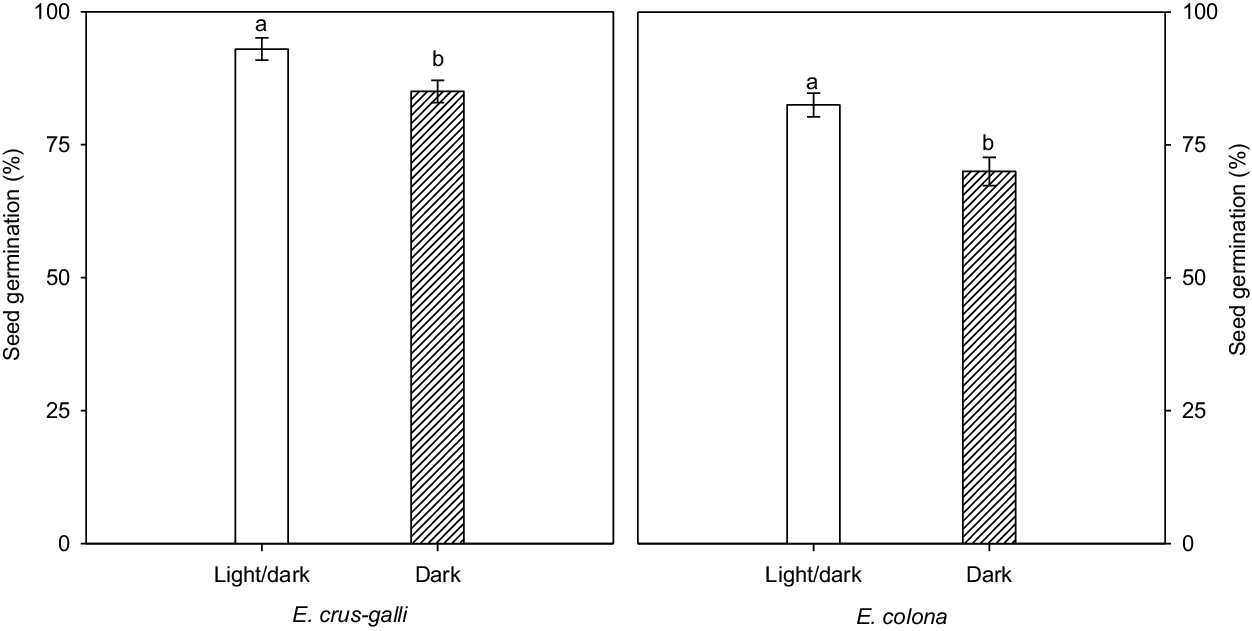
Light was not a requirement for seed germination of E. crus-galli and E. colona, but it increased the germination rate (Figure 1). Compared with dark conditions, the seed germination of E. crus-galli and E. colona exposed to the light/dark conditions was significantly increased by 9% and 18%, respectively. The seed germination of some weeds varies in response to light (Chauhan and Johnson Reference Chauhan and Johnson2010a). In our study, light was not a necessary factor for germination; however, it increased the germination of the two Echinochloa species compared with germination in complete darkness. Therefore, it is expected that a proportion of E. crus-galli and E. colona seeds will not germinate in the soil due to a lack of light to promote germination. However, a portion of seeds buried in the soil may be exposed to the soil surface by tillage, which may trigger seed germination (Milberg et al. Reference Milberg, Andersson and Noronha1996). Understanding that light stimulates the germination of E. crus-galli and E. colona could provide new strategies for weed control by using shade, such as straw mulching or burying seeds in the soil, which would likely affect emergence (Buhler et al. Reference Buhler, Hartzler and Forcella1997; Forcella Reference Forcella1997; Manpreet et al. Reference Manpreet, Bhullar and Chauhan2015).
Seed germination of Echinochloa crus-galli and Echinochloa colona in response to light (light/dark [12 h/12 h] and dark [24 h]). Seeds were incubated for 14 d. For each species, different letters indicate a significant difference at the 0.05 probability level. Error bars denote ± standard errors of the mean (n = 8).

Seedling Emergence in Response to Burial Depth
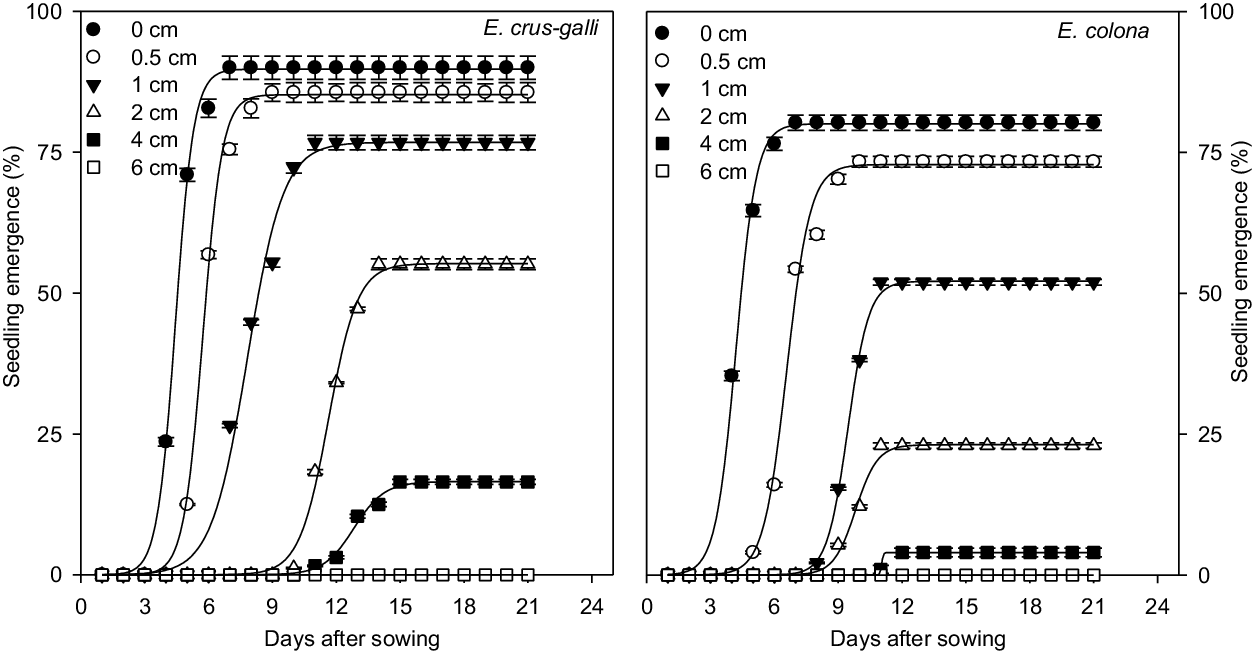
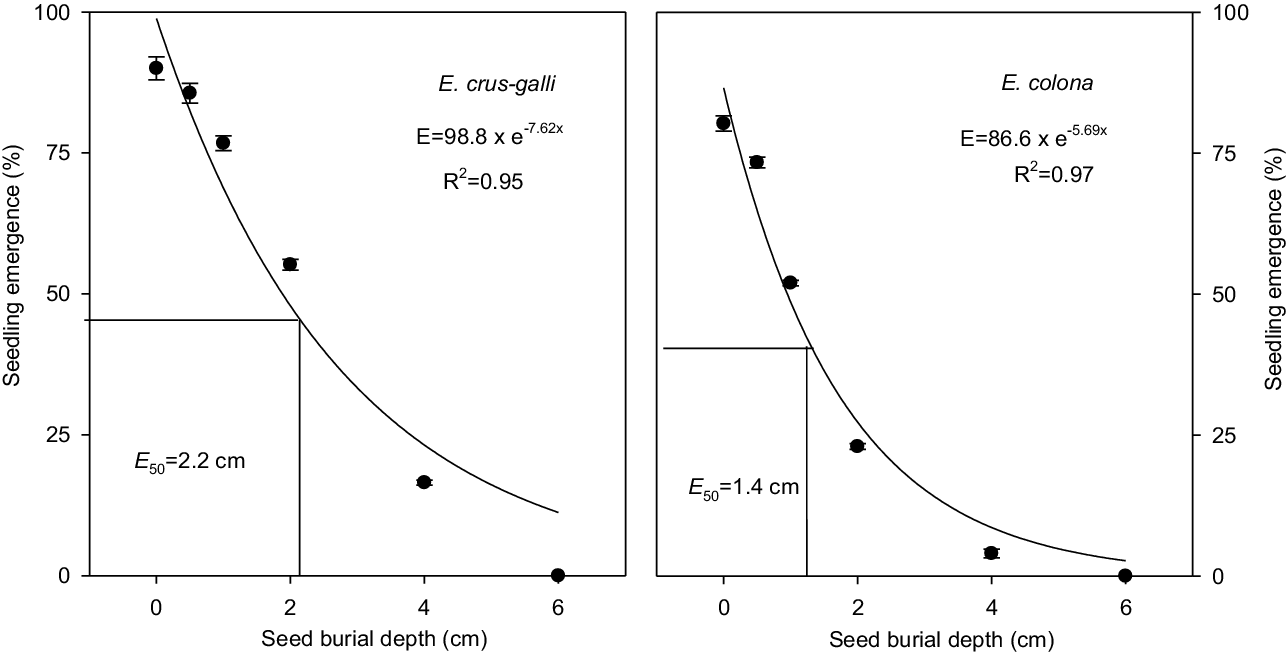
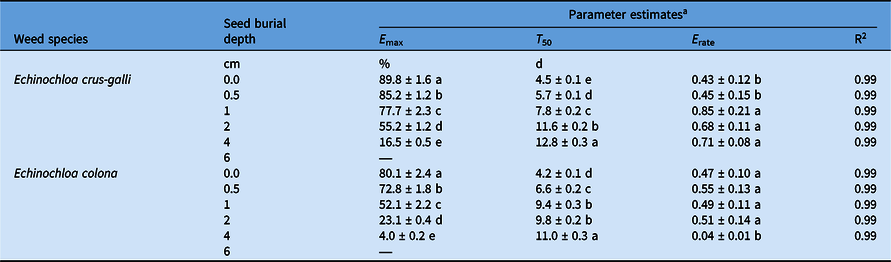
The emergence of both species was significantly affected when seeds were subjected to different burial depths. Seeds sown on the soil surface exhibited 90% emergence for E. crus-galli and 80% for E. colona (Figure 2). Seedling emergence decreased with increasing burial depth; 55% and 23% emergence rates were found at the 4-cm depth for E. crus-galli and E. colona, respectively. No seedling emergence was observed from 6 cm for either species, which may be due to failed germination resulting from the exhaustion of seed energy reserves (Benvenuti Reference Benvenuti2003). In addition, a depth-mediated secondary dormancy may be another reason for nongermination of these deeply buried seeds (Benvenuti and Pardossi Reference Benvenuti and Pardossi2017). According to the fitted model, the burial depth required for 50% inhibition of the maximum emergence was 2.2 cm for E. crus-galli and 1.4 cm for E. colona (Figure 3). When seeds were on the surface, the time for 50% seedling emergence (T 50) was 4.5 d for E. crus-galli and 4.2 d for E. colona, whereas increases in burial depth protracted emergence, causing the time for 50% emergence to increase (Table 1).
Emergence of Echinochloa crus-galli and Echinochloa colona seedlings in response to different burial depths (cm). Seedling emergence was assessed until 21 d after planting. Error bars denote ± standard errors of the mean (n = 8).

Effect of seed burial depth on seedling emergence of Echinochloa crus-galli and Echinochloa colona. The seed burial depth required to inhibit 50% of maximum emergence is 2.2 cm for E. crus-galli and 1.4 cm for E. colona. Vertical bars represent the standard errors of the mean (n = 8).

Parameter estimates of three-parameter sigmoid model (E = E max/{1 + exp[−(x −T 50)/E rate]}) fit to seedling emergence responses to seed burial depth (Figure 2).

a E max, maximum emergence; T 50, time to reach 50% of maximum emergence; and E rate , slope. A dash (—) indicates that no seedlings emerged when seeds were planted at 6-cm depth. Different letters in the same column indicate a statistical difference at P < 0.05 within the same weed species.
These two weed species produced the largest number of seedlings when their seeds were located on the soil surface, which is in line with the results illustrating that light stimulates seed germination (Chauhan and Johnson Reference Chauhan and Johnson2011). Light penetration limits germination of photosensitive seeds, because light can only be detected within the top few millimeters of the soil (Bablet et al. Reference Bablet, Vu, Jacquemoud, Viallefront, Fabre, Briottet, Sadeghi, Whiting, Baret and Tian2018). Apart from the need for light, previous studies have also shown that the partial removal of emergence inhibitors of buried seeds was facilitated by increased oxygen availability, suggesting that aeration of the surface soil facilitated seedling emergence (Benvenuti Reference Benvenuti2003; Benvenuti and Mazzoncini Reference Benvenuti and Mazzoncini2019). In addition, seed weight may also influence emergence, because larger seeds contain a greater amount of carbohydrate reserves than smaller seeds (Grundy et al. Reference Grundy, Mead and Burston2003). In this study, we also demonstrated that the heavier E. crus-galli seeds (1.7 mg seed−1) had higher emergence from deeper soil depths than the lighter seeds of E. colona (1.2 mg seed−1). In DSR production, if the seedbank of these weed species is observed building up the soil surface, strategic tillage could be a useful option for the management of these weeds (Mahajan et al. Reference Mahajan, Prasad and Chauhan2021).
Emergence and Seedling Biomass in Response to Different Wheat Straw Mulch Amounts
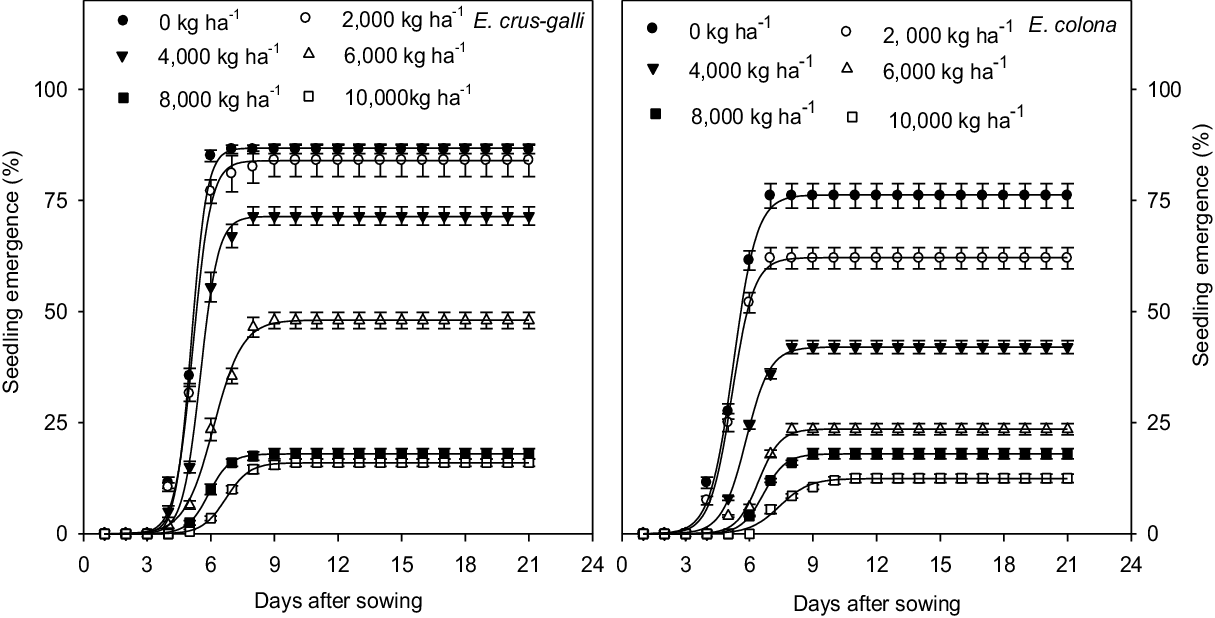
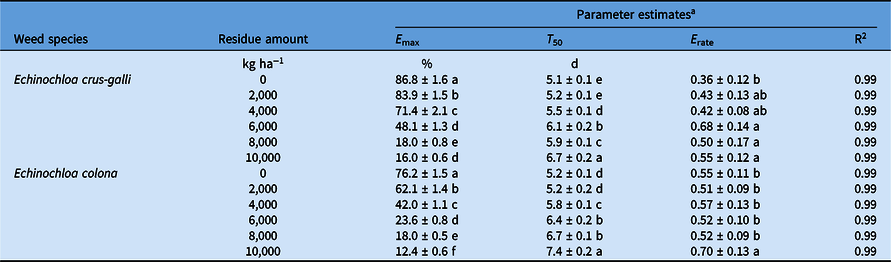
Crop residues used as mulch are beneficial materials if left on cultivated land. Previous studies have demonstrated that crop residues can act as an obstacle to light penetration and reduce soil temperatures by shading, which can cause a reduction or the complete absence of emergence of several weed species (Buhler et al. Reference Buhler, Mester and Kohler1996; Chauhan and Abugho Reference Chauhan and Abugho2014; Chauhan et al. Reference Chauhan, Mahajan, Sardana, Timsina and Jat2012a; Davis Reference Davis2007; Ranaivoson et al. Reference Ranaivoson, Naudin, Ripoche, Rabeharisoa and Corbeels2018). Our study showed that when no wheat straw was applied to the soil surface, seedling emergence of E. crus-galli and E. colona was 87% and 76%, respectively (Figure 4; Table 2). Compared with the control (no mulching with wheat residue cover), there was no influence on the emergence of E. crus-galli, but a greatly reduced emergence was observed for E. colona when wheat residue cover was 2,000 kg ha−1. Seedling emergence decreased from 72% to 16% for E. crus-galli and from 42% to 13% for E. colona when wheat residue cover increased from 4,000 to 10,000 kg ha−1.
Seedling emergence of Echinochloa crus-galli and Echinochloa colona in response to wheat straw mulch (kg ha−1) under screenhouse conditions for 21 d after sowing. Error bars denote ± standard errors of the mean (n = 8).

Parameter estimates of three-parameter sigmoid model (E = E max/{1 + exp[−(x −T 50)/E rate]}) fit to the seedling emergence responses to the quantity of wheat straw mulch (Figure 4).

a E max, maximum emergence; T 50, time to reach 50% of maximum emergence; and E rate , slope. Different letters in the same column indicate statistical difference at P < 0.05 within same weed species.
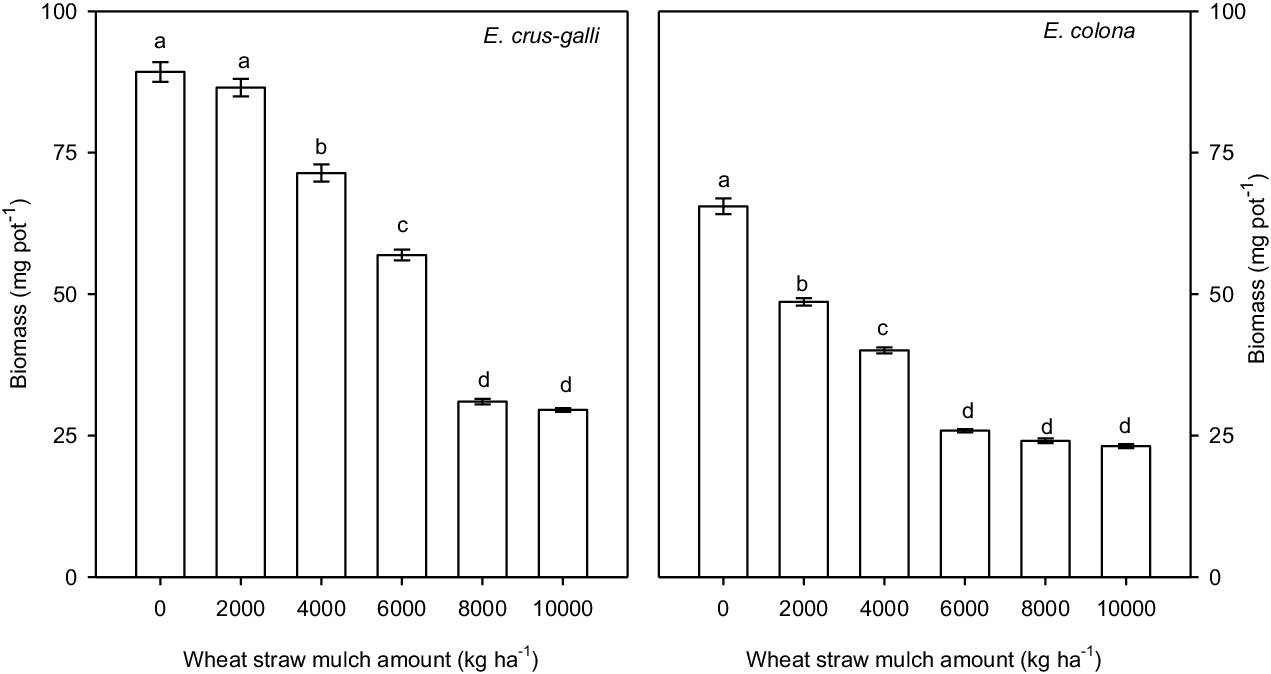
Compared with the control, the biomass of E. crus-galli was not affected when the amount of wheat residue cover was 2,000 kg ha−1, but it was significantly reduced when the addition of residues was up to 4,000 kg ha−1 or more (Figure 5). Echinochloa colona produced a lower biomass when the wheat residue was more than 2,000 kg ha−1. Seedling biomass was reduced by 19%, 43%, 68%, and 71% for E. crus-galli and 43%, 74%, 79%, and 84% for E. colona when the residue amount was 4,000, 6,000, 8,000, and 10,000 kg ha−1, respectively, compared with the control. Previous studies have shown that with increasing amounts of residue, seedling emergence varies among different weed species; some species have decreased emergence with an increase in residue amount, while the emergence of other weeds increases at low rates of residue and then decreases at higher rates (María et al. Reference María, Gabriel, Irene, Del and Quemada2018; Mohler and Teasdale Reference Mohler and Teasdale1993). In our study, both seedling emergence and seedling biomass of E. crus-galli exhibited no difference between no-residue and 2,000 kg ha−1 of residue treatments.
Seedling biomass (mg pot−1) of Echinochloa crus-galli and Echinochloa colona in response to wheat straw mulch (kg ha−1) at 21 d after sowing. Error bars denote ± standard errors of the mean (n = 8). Different letters indicate a significant difference at the 0.05 probability level.

Our findings are in line with an earlier study conducted in the Philippines, in which the seedling emergence and biomass of E. crus-galli decreased with an increase in the rice residue amount (Chauhan and Johnson Reference Chauhan and Johnson2011). With an increase in the straw residue amount, the decrease in light transmittance and residue cover as a physical barrier could explain the reduction in weed emergence and growth. In addition, the reduction in the emergence and biomass of the two Echinochloa species can also be due to a complex physiological phenomenon known as allelopathy observed in some species (Macías et al. Reference Macías, Oliveros-Bastidas, Marín, Chinchilla, Castellano and Molinillo2014; Sturm et al. Reference Sturm, Peteinatos and Gerhards2018). However, until now, no literature has suggested that Yangmai 16, used in our experiment, has allelopathic effects. Furthermore, it is unclear whether biochemical or physical factors of wheat straw mulching affected the seedling emergence and growth of E. crus-galli and E. colona.
Increased wheat residue mulching and deep burial depths not only suppressed but also retarded the emergence of E. crus-galli and E. colona. A delay in seedling emergence also has important significance for weed management. Seedlings that emerge later are usually less competitive with the crop for light, water, and nutrients, resulting in less biomass and seed production than early-emerging cohorts. Eventually, later-emerging seedlings may cause a lower loss of crop yield than early-emerging seedlings (Chauhan and Johnson Reference Chauhan and Johnson2010a). In addition, delayed-emerging seedlings can easily escape weed control because of the early application of postemergence herbicides. Although mulching with crop residue could effectively decrease weed seedling emergence and growth, a small number of weeds would still be present. Therefore, to successfully control weeds, additional control measures are still needed for DSR in China.
Growth in Response to Depth and Seedling Age at the Time of Flooding
The growth of several weed species can be inhibited by flooding; however, the extent of inhibition differs among species (Chauhan Reference Chauhan2021; Chauhan and Johnson Reference Chauhan and Johnson2008; Chauhan and Johnson Reference Chauhan and Johnson2009a, Reference Chauhan and Johnson2009b; Driver et al. Reference Driver, Al-Khatib and Godar2020). We observed that flooding did not kill E. crus-galli seedlings once they had emerged, but this was not the case for E. colona seedlings. Echinochloa colona seedlings could not survive a flooding depth of up to 6 cm at 10 d after sowing or more than 4 cm at 5 d after sowing, indicating that E. colona has poorer adaptability to flooding than E. crus-galli. This could be related to the growth environment of E. colona, which is mainly found in drylands in China (Chen et al. Reference Chen, Tang, Li, Lu and Dong2019).
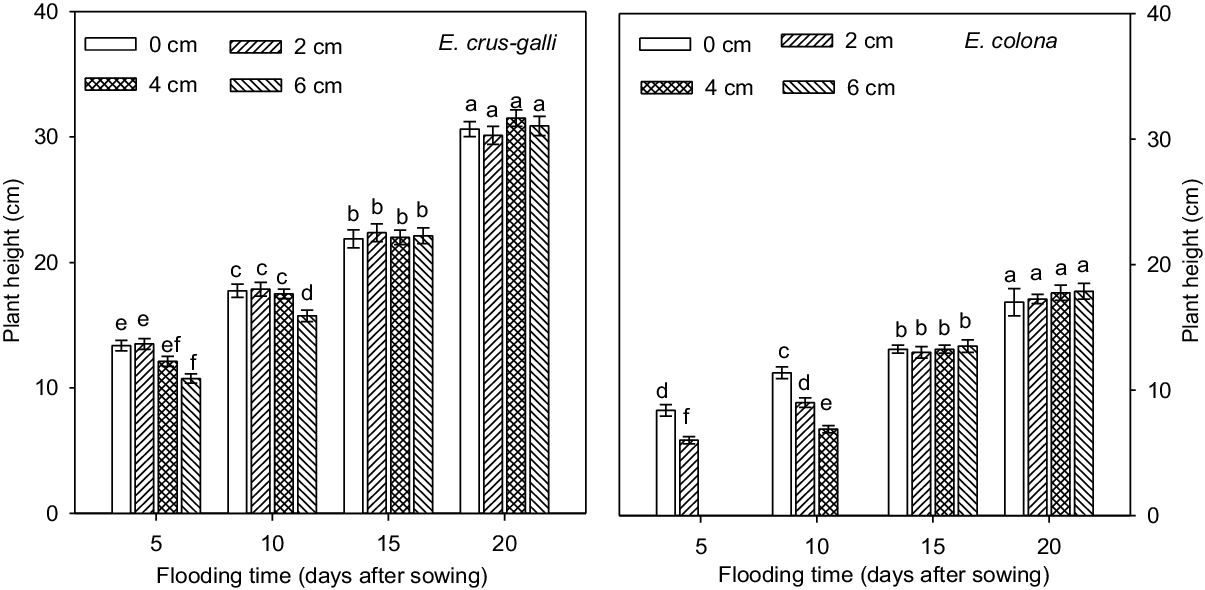
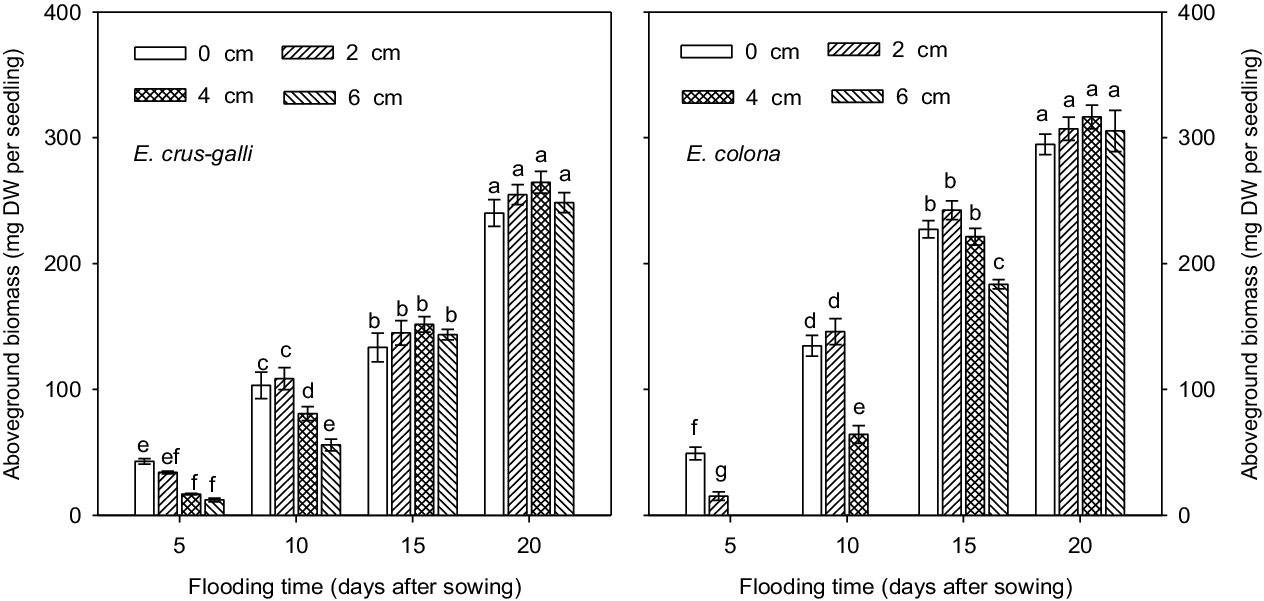
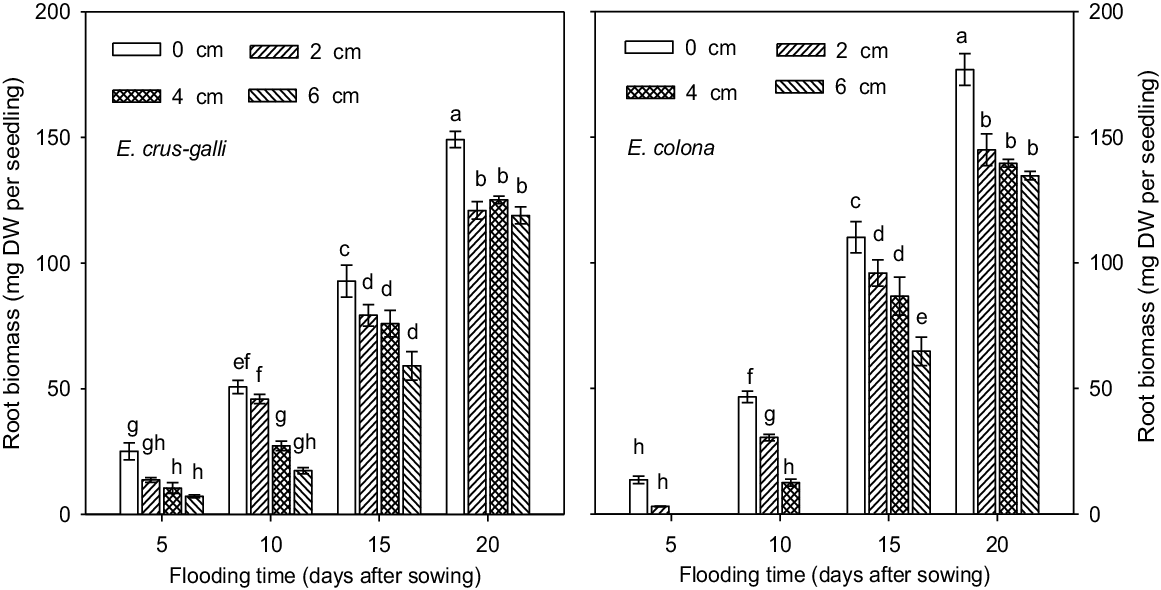
The plant height, shoot biomass, and root biomass of both species were influenced by the timing and depth of flooding (Figures 6−8). When flooding occurred at 15 d after sowing or later, there was no effect on plant height in either species. However, when flooding occurred at earlier stages, such as 10 d after sowing, plant height was reduced for E. crus-galli when the soil water was at the 6-cm depth only, but E. colona plant height decreased with all water depths compared with the 0-cm control (Figure 6). A similar response was also observed for shoot biomass (Figure 7). At 15 d after sowing or later, there was no difference in the aboveground biomass for E. crus-galli at the given flooding depth. However, aboveground biomass decreased with flooding depths of 4 and 6 cm at 10 d after sowing or earlier. For E. colona, aboveground biomass showed no difference at the given flooding depth at 20 d after sowing, but it was significantly reduced when the soil was flooded at 4- and 6-cm depths at 15 and 10 d after sowing and at 2-, 4-, and 6-cm depths at 5 d after sowing (Figure 7). Root biomass of both species was reduced by flooding, and biomass decreased with the increase in flooding depth for the same time after sowing. We also found that the effect of earlier flooding on root biomass was greater than that of delayed flooding at equivalent flooding depths (Figure 8).
Plant height of Echinochloa crus-galli and Echinochloa colona in response to flooding depth (cm) and time when grown under screenhouse conditions at 14 d after the start of flooding. Error bars denote ± standard errors of the mean (n = 8). Different letters indicate a significant difference at the 0.05 probability level.

Aboveground biomass of Echinochloa crus-galli and Echinochloa colona in response to flooding depth (cm) and time when grown under screenhouse conditions at 14 d after the start of flooding. Error bars denote ± standard errors of the mean (n = 8). Different letters indicate a significant difference at the 0.05 probability level. DW, dry weight.

Root biomass of Echinochloa crus-galli and Echinochloa colona in response to flooding depth (cm) and time when grown under screenhouse conditions at 14 d after the start of flooding. Error bars denote ± standard errors of the mean (n = 8). Different letters indicate a significant difference at the 0.05 probability level. DW, dry weight.

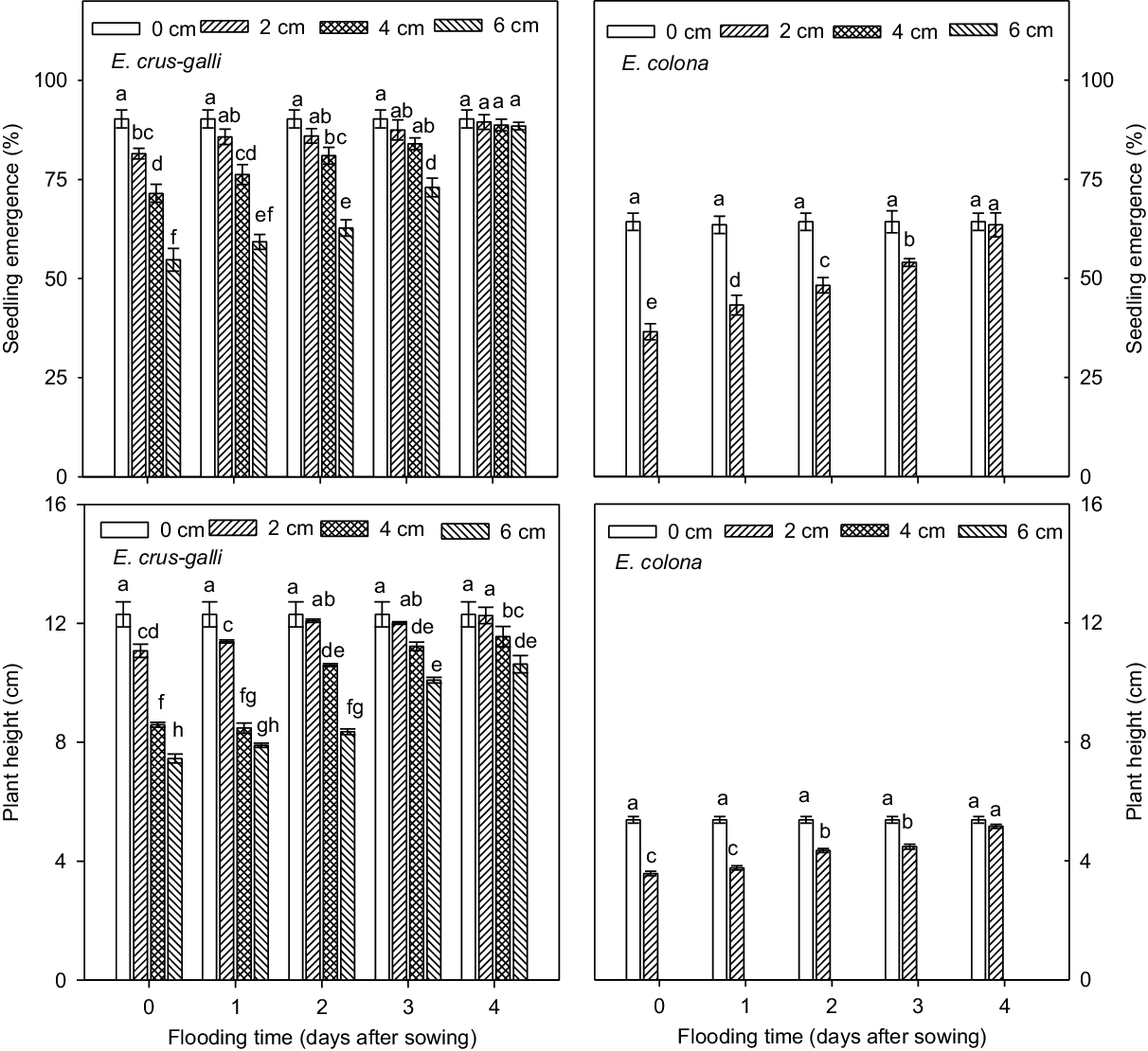
Rice cultivars capable of germinating under anaerobic conditions may be widely grown in the future (Miro and Ismail Reference Miro and Ismail2013). Therefore, we explored the seedling emergence, plant height, and biomass of E. crus-galli and E. colona from China by flooding within 5 d, which represents the preemergence period after rice sowing. The seedling emergence of both species increased with the increase in flooding time under the same water depth, while it decreased with the increase in the flooding depth at 4 d after sowing or earlier (Figure 9).
Seedling emergence and plant height of Echinochloa crus-galli and Echinochloa colona in response to flooding depth (cm) and time when grown under screenhouse conditions at 14 d after sowing. No seedlings of E. colona were observed at flooding depths of 4 and 6 cm. Error bars denote ± standard errors of the mean (n = 8). Different letters indicate a significant difference at the 0.05 probability level.

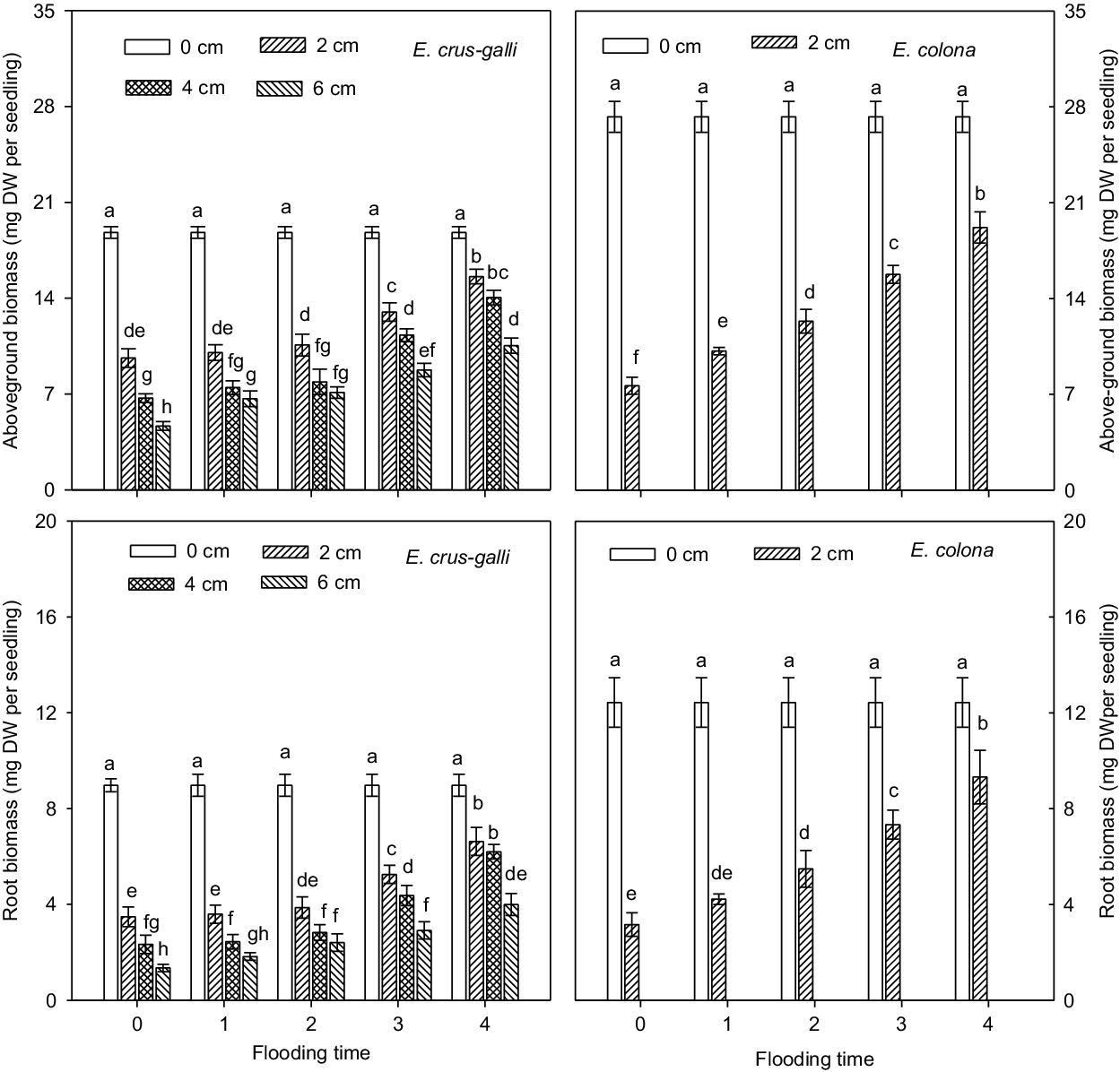
Weed plant height showed similar trends as emergence for the two weed species, except at 4 d after sowing, when a significant decrease in plant height of E. crus-galli occurred with 4 and 6 cm of flooding effects but no change in seedling emergence was observed (Figure 9). Aboveground and root biomass were more effectively suppressed by early flooding than by delayed flooding, and both types of biomass declined as flooding depth increased (Figure 10).
Effect of flooding depth (cm) and time on the biomass of Echinochloa crus-galli and Echinochloa colona when grown under screenhouse conditions at 14 d after sowing. Error bars denote ± standard errors of the mean (n = 8). Different letters indicate a significant difference at the 0.05 probability level. DW, dry weight.

Although flooding could considerably decrease the emergence and growth of the two Echinochloa species, water shortages may become an issue for many growers in China in the future (Yao et al. Reference Yao, Zhao, Li, Biswas, Feng, Liu and Pulatov2020), and this may impose a constraint on the continuous use of flooding as a weed control measure.
When water for flooding is scarce, earlier flooding will provide weed suppression while conserving water. In DSR, early flooding could be practicable by integrating its use with rapidly emerging rice varieties and/or the use of pre-germinated seeds.
Ecological Recommendations for Echinochloa Management Strategies
Overall, both E. crus-galli and E. colona seeds under light/dark conditions had greater germination than under completely dark conditions, suggesting that light clearly increased the germination of the two weed species. In crop production, most weed seeds fall on the soil surface when they reach maturity. Therefore, in DSR fields, the use of light-limiting strategies (deep tilling and crop residue mulching) would be beneficial in reducing the germination and emergence of these weed species. In this study, no emergence of E. crus-galli or E. colona was observed from seeds buried at 6 cm. Similar to burial depth, mulching with wheat straw also significantly reduced the emergence and biomass of E. crus-galli and E. colona, especially for E. colona, when maximum suppression occurred with ≥6,000 kg ha−1 of wheat straw mulch. In addition, early flooding could inhibit seedling emergence and growth (plant height and biomass) of the two weed species. Although these practices are highly effective, they also have some limitations. First, a proportion of weed seeds buried in the soil may be exposed to the soil surface by tillage, which triggers seed germination. Second, mulching with wheat straw cannot completely suppress seed germination and seedling emergence of E. crus-galli and E. colona, even with the maximum amount used (10,000 kg ha−1). Finally, growers may face water scarcity for DSR in the future. Therefore, in the DSR production system, physical and cultural management (deep plowing, mulching with wheat residue, and early flooding) combined with chemical herbicides may be highly effective for these two weed species. Information gathered from this study provides a better understanding of the effects of light, soil burial depth, mulch, and flooding on the germination and emergence of both E. crus-galli and E. colona, which will aid in developing integrated weed management strategies for DSR in China.
Acknowledgments
This research was funded by the National Natural Science Foundation of China (31871982; 32272563) and the China Scholarship Council (grant no. 20190832042).
No conflicts of interest have been declared. The authors thank Yuanlai Lou and Tao Gu for statistical analysis advice. The authors gratefully acknowledge helpful comments of associate editor Carlene A. Chase and two anonymous reviewers in the preparation of this article.