Switzerland is undergoing a period of change from the perspective of fighting the illegal traffic of cultural goods. Effective January 3, 2004, Switzerland has ratified the 1970 UNESCO Convention on the means of prohibiting and preventing the illicit import, export, and transfer of ownership of cultural property. Furthermore the convention has been put into effect in Switzerland by the adoption of the Federal Act on the International Transfer of Cultural Property (CPTA) and its related ordinance, both of which took effect on June 1, 2005.3
See Gabus, P., and Renold, M. A., “Commentaire LTBC–Loi fédérale sur le transfert international des biens culturels,” Genève, Zürich, Bâle, 2006; Weber, M., “New Swiss Law on Cultural Property.” IJCP 13, no. 1 (2006): 99.
The Swiss government has decided at this stage not to ratify the Unidroit (International Institute for the Unification of Private Law) Convention of 1995 on stolen or illegally exported cultural objects. It is, however, interesting to note that the Unidroit Convention has already been referred to in two important decisions of the Swiss Supreme Court relating to stolen or illegally exported cultural objects. The second decision, dated April 8, 2005, is the object of the present commentary.4
The first decision was taken on April 1, 1997, ATF 123 II 134. It is discussed infra; see note 12.
THE CASE
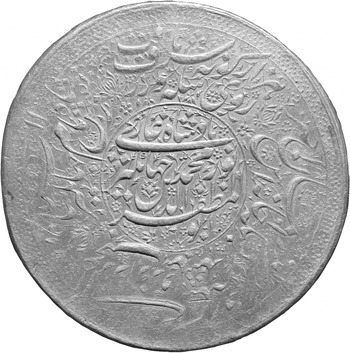
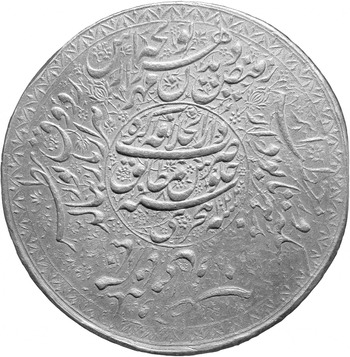
The case relates to the property of two giant gold coins, weighing respectively 12 and 1.1 kilograms and minted in 1630 and 1639, which belonged to the Nizam of the Indian principality of Hyderabad, India, Mir Osman Ali Khan. In 1988 Mir Osman Ali Khan's grandson, Mukarram Jah, transferred the coins to the Crédit Agricole Indosuez (Suisse) SA as a security for a loan of $25 million granted by the bank to companies controlled by Mukarram Jah. India considered itself the rightful owner of these two coins as of 1950 and thus contested the bank's right based on the pledge of the coins. India, therefore, claimed the coins before the Swiss Courts.

One Thousand Mohurs Gold Coin, obverse. Agra, 1613 (photo courtesy of Habsburg, Feldman S.A., Geneva).

One Thousand Mohurs Gold Coin, reverse. Agra, 1613 (photo courtesy of Habsburg, Feldman S.A., Geneva).
Until 1949 no distinction was made between the Nizam's private property and that of the state he ruled. In 1949 when the principality became part of India, it was decided that all the Nizam's property was to be considered state property, except those items that were specifically listed under particular agreements as being his private property.
Mention of the two gold coins as private property in the 1949 agreements could not be proven; however, it was established that the coins were at the time located in the palace of King Koti at Eden Garden, which was considered, including all its content, the Nizam's private property. It was arguable that, because he owned the coins, he was free to dispose of and transfer them by succession to his grandson Mukarram Jah.
The year preceding the signing of the pledge agreement, i.e. in 1987, India challenged Mukarram Jah's ownership on the coins. At the time they were put up for sale at auction in Geneva,5
Auction of November 9, 1987, by Habsburg, Feldman S. A., “Sale of Two Giant Gold Mohur Coins.”
The date of export of the coins from India was an important, but unresolved, element of the case. Certain witnesses stated that the coins were in Switzerland since 1973, whereas others assured they had been in Europe for more than 50 years.
In 1992, India filed a request for judicial assistance in criminal matters, asking that the coins be seized on the grounds that they had become national treasures of India when the principality of Hyderabad was united to India in 1949. In May 1997, India filed a civil claim against the bank based on articles 933 and following, as well as 641 paragraph 2 of the Swiss Civil Code (CCS), respectively a possessory and a proprietary claim. India pleaded that the gold coins were a national treasure that had been illegally exported from India.
THE SUPREME COURT'S DECISION6 More precisely, one should refer to the Supreme
Court decisions because the Supreme Court rendered two
decisions on the same day, one in civil matters discussed here and another
one in public matter, rejected on procedural grounds.
More precisely, one should refer to the Supreme Court decisions because the Supreme Court rendered two decisions on the same day, one in civil matters discussed here and another one in public matter, rejected on procedural grounds.
The Supreme Court's decision rejects India's claim. Based on detailed reasoning, the Supreme Court confirms the decision of the Geneva cantonal courts and, therefore, confirms the bank's right on the pledged coins. The possessory and proprietary claim of the Indian state is rejected, and the validity of the pledge is confirmed. Briefly summarized, the court had to answer three questions, which are described hereinafter.
Question One: The Bank's Good Faith
The first question the Supreme Court had to deal with was the question of the bank's good faith.7
ATF 131 III 421–423.
According to the decision, determining if the bank was appropriately attentive is a question of appreciation that must be made objectively. In the banking world a high degree of diligence is requested. Several conventions and regulations exist in this field, such as the bank's due diligence obligation as well as its role in the fight against money laundering. A bank abiding by such conventions and rules can claim that it has acted in good faith. However, if a situation appears doubtful, the bank may have to take certain measures, but only if these measures enable it to discover that the other party did not have a valid title on the pledged property.
The gold coins were for sale at a highly publicized auction in 1987. The auctioneer accepted these gold coins as a security for the payment of his fees. Moreover, the ownership of the coins had been established and was not contested: they had belonged to Mir Osman Ali Khan whose uncontested heir was Mukarram Jah. Finally, the bank itself had done research on the coins and had sent representatives to visit Mukarram Jah in Australia, where he lived at the time. Therefore, no doubt as to the identity of the owner of the coins would have justified additional inquiries by the bank. It had taken the appropriate measures and the information in its possession did not call for additional measures. There being no need to suspect Mukarram Jah, the bank did not have to effectuate any further research.
Question Two: The Effect of a Possible Illegal Export
The second question examined by the Supreme Court relates to the possible illegal export of the gold coins from India.8
ATF 131 III 423–425.
(1982) 3 All ER 432; (1983) 2 All ER 93.
Question Three: The Validity of the Pledge Agreement
The third and last question discussed in the decision is that of the validity of the pledge agreement signed in August 1988 between the bank and Mukarram Jah.10
ATF 131 III 425–430.
Certain witness statements asserted that the gold coins has been in Switzerland since the 1950s, long before the adoption of the 1972 Indian Act.
1. It does not contest the existence of an international public order in the field of cultural property, which it recognized in a prior decision in April 1, 1997.12
ATF 123 II 134; on this matter see P. Lalive, “Réflexions sur un ordre public culturel,” in L'extranéité ou le dépassement de l'ordre juridique étatique. Paris 1999, 155.
2. The international conventions and national statutes that could serve as the basis for such a universal public policy are not applicable in the present case because of the following:
[bull ] The Unidroit Convention of 1995, although it has been signed by Switzerland in June 26, 1996, has not been ratified by Switzerland; and it does not in any event have a retroactive effect (art. 10 Unidroit Convention).
[bull ] The 1970 UNESCO Convention is only effective in Switzerland as of January 3, 2004; and similarly, it does not have any retroactive effect (art. 7 UNESCO Convention), nor is it self-executing.
[bull ] The Swiss law giving effect to the 1970 UNESCO Convention, the Federal Act on the International Transfer of Cultural Property (the CPTA), entered into effect on June 1, 2005, and it does not have any retroactive effect either (art. 33 CPTA).
3. Be that as it may, the way the UNESCO Convention has been put in effect in Switzerland by the CPTA confirms that fighting against illegal exports, supposing there has been such an export in the present case, ought to be apprehended by public law mechanisms; art. 7 CPTA provides that international bilateral agreements should be entered into to enable foreign States to claim the restitution of illegally exported cultural objects (art. 9 CPTA). No such agreement has been entered into at the present stage. Thus, public law claims by foreign States will be recognized in Switzerland but at specific conditions that are not satisfied in the present case.
CRITICAL ANALYSIS
This decision is interesting for several reasons, starting with the factual background of the case. Legal issues relating to the international circulation of cultural goods are often centered on the international sale of such goods, but much less on using cultural property as a collateral for loans in business transaction. The present case shows that substantial amounts can be involved: the pledging of the two giant gold coins had enabled a loan of $25 million.
The interest of the Supreme Court decision also relies in its clear support for the nonretroactivity of the applicable rules, be it the 1970 UNESCO Convention, the 1995 Unidroit Convention, or the recent Swiss statute (the CPTA).
Regarding the application of Swiss substantive law and the principle of the good faith of the acquirer, or in the present case of the creditor, the in-depth analysis made by the Supreme Court does not raise any specific issue because it follows Swiss case law on the matter.13
Gabus. P., and Renold, M.-A., Commentaire LTBC (footnote 3), art. 32, no. 11 to 13.
Moreover, as is often the case when dealing with national cultural treasures, the factual background of this litigation is rich in historical facts, such as the origin of the coins that were minted during the seventeenth-century Mogul dynasty and belonging to the personal property of the head of the Hyderabad principality until the transfer of sovereignty to the newly independent State of India in 1949. A highly interesting historical question not discussed in this case is that of the state of provenance of the coins: As stated in the 1987 auction catalog, the larger coin was minted in Agra, which is today in India, whereas the other was minted in Lahore, which is today in Pakistan. It would have been a difficult issue to decide if the second gold coin belonged not to the Indian but to the Pakistani cultural heritage, which would have complicated the matter even further.
Regarding the legal reasoning followed by the Supreme Court, two points raise criticism: the Supreme Court's reflexion on the nonapplicability of foreign public law on the one hand and its use of comparative law on the other.
Regarding the question of the application of foreign public law, the Supreme Court unhesitantly states that Indian public law “cannot be applied outside the territory of India.”14
ATF 131 III 418, 424.
Message relating to the Swiss PIL-Act, November 10, 1982; Feuille fédérale 1983 I 255, 299–300.
In the specific field of cultural property, the Supreme Court bases its argument on the system of bilateral treaties set forth in article 7 CPTA, and it concludes that without such agreements there is no need to consider foreign rules prohibiting the export of cultural goods. This is, however, incompatible with the general goals of the UNESCO 1970 Convention as well as that of the CPTA, which states, “with this act the Confederation seeks to make a contribution to the protection of the cultural heritage of mankind and prevent theft, looting, and illicit export and import of cultural property” (art. 1 para. 2). Thus, the CPTA is not the exclusive means by which Switzerland wishes to fight against the illicit traffic of cultural property, and it seems the legislator did not intend to proscribe any other means to deal with it. For this result to be obtained through other means of private international law, such as taking into consideration foreign imperative rules as provided for under article 19 PIL-Act, would appear totally compatible with the Swiss legal order.
Comparative law should be used with great care. It is undoubtedly particularly useful in this type of case, where legal decisions are relatively scarce; but courts should base their analysis on a complete picture of the solutions adopted abroad. Thus, if it is undoubtedly appropriate that the Supreme Court to refer to the case Attorney General of New York v. Ortiz to justify the nonapplicability of foreign public law, it should also refer to a decision pointing into another direction, such as the equally well-known decision by the German Bundesgerichtshof regarding the Nigerian statuettes.16
Bundesgerichtshof, June 22, 1972, Allg. Vers. G.H. c/ E.K., BGHZ 59, 88 = International Law Reports 73 (1987): 226.
To conclude, the Swiss Supreme Court's decision on the giant antique gold coins is a rich decision, which is highly interesting from the point of view of the international protection of cultural property. If one may not agree with the reasoning followed by the Court, mainly because of its reluctance to accept the application of foreign public law, it is nevertheless interesting to note that Switzerland, although it has not ratified the 1995 Unidroit Convention, is one of the rare States to regularly mention it in its case law.