Introduction
Programs that provide specialist-level palliative care to homebound patients are slowly emerging in the United States and other countries, joining an array of home health programs that target the needs of the chronically ill. Patients referred to community-based palliative care usually have advanced illness and multiple sources of illness burden. Poorly controlled symptoms are common and pain is among the most prevalent and distressing (Blinderman et al., Reference Blinderman2008, Reference Blinderman2009; Dhingra et al., Reference Dhingra2014). Effective pain management often is a key element in the relief of illness burden for both the patient and family caregivers (Andrews, Reference Andrews2001).
Although numerous studies have characterized the pain experienced by populations with advanced illness in terms of common descriptors such as severity, few have measured pain-related distress (Chang et al., Reference Chang2004; Dhingra et al., Reference Dhingra2011; Vallerand et al., Reference Vallerand, Templin and Hasenau2016; Vowles et al., Reference Vowles2017). From the clinical perspective, the distress associated with chronic pain may influence the approach to assessment, the urgency of treatment, or the choice of first-line therapies. Studies of distress are warranted to explore the extent to which this descriptor may provide unique or actionable data. We evaluated pain-related distress in a large sample of patients who completed the pain item on a validated symptom measure at the time of enrollment into an urban, specialist-level, community-based palliative care program.
Methods
In a retrospective cross-sectional analysis, we evaluated electronic health record data from 506 adult patients who enrolled in a community-based palliative care program during 2010–2013. A patient was included in this analysis if he or she was able to complete the Condensed Memorial Symptom Assessment Scale at the start of care. This measure was administered by the physician or nurse conducting an initial comprehensive assessment, and scores were either entered directly by patients or elicited by interview and recorded by the clinician.
The study was exempted from a review by the New England Independent Review Board because of the aggregated and deidentified nature of the data. Patient consent was not required.
Variables
The Condensed Memorial Symptom Assessment Scale is a validated 14-item questionnaire used to evaluate the prevalence and distress associated with 11 physical and three psychological symptoms (Chang et al., Reference Chang2004). The timeframe of assessment is “during the past week.” If pain is experienced, pain-related distress is measured with the inquiry, “How much did the symptom bother or distress you in the past seven days?” The 5-point scale includes: 0 (no distress at all), 1 (a little bit), 2 (somewhat), 3 (quite a bit), and 4 (very much).
Other variables included sociodemographics, primary diagnosis, and performance status. To evaluate socioeconomic status, the ZIP code of patient residence was transformed into a poverty quintile (Q1–Q5) based on the percentage of individuals within that ZIP code living in poverty from estimates from the American Community Survey (US Census Bureau, 2012). ZIP codes with <10% of residents living below the federal poverty line were transformed to Q1; 10–19.9% to Q2; 20–29.9% to Q3; 30–39.9% to Q4; and ≥40% to Q5 (Riggs et al., Reference Riggs2017; US Census Bureau, 2012; Villanueva et al., Reference Villanueva and Aggarwal2013). Performance status was measured using the Karnofsky Performance Status (KPS) scale, which ranges between 0 and 100 and has anchor points 0 (death) and 100 (no complaints/no evidence of disease) (Schag et al., Reference Schag, Heinrich and Ganz1984).
Analysis
Statistical analysis was performed with SPSS, version 24 (IBM Corp., Armonk, NY) and SAS, version 9.3 (SAS Institute, Inc., Cary, NC). Pain-related distress was modeled as both a continuous and categorical variable that divided pain-related distress into low (0–2) versus high (3–4). KPS was categorized into scales of 10–40 (unable to care for self), 50–70 (unable to work), and 80–100 (able to carry on normal activity and to work) (Schag et al., Reference Schag, Heinrich and Ganz1984) for bivariate analyses, and dichotomized in the multivariate analysis into levels 10–40 versus 50–100 because of the small number of patients with KPS scores 80–100. Age was dichotomized at the mean (70 years) for some bivariate analysis. Bivariate analysis applied chi-square, Fisher's exact tests, t-tests, or analysis of variance as appropriate; logistic and linear regression with manual backwards elimination were used to determine predictors of pain-related distress.
Results
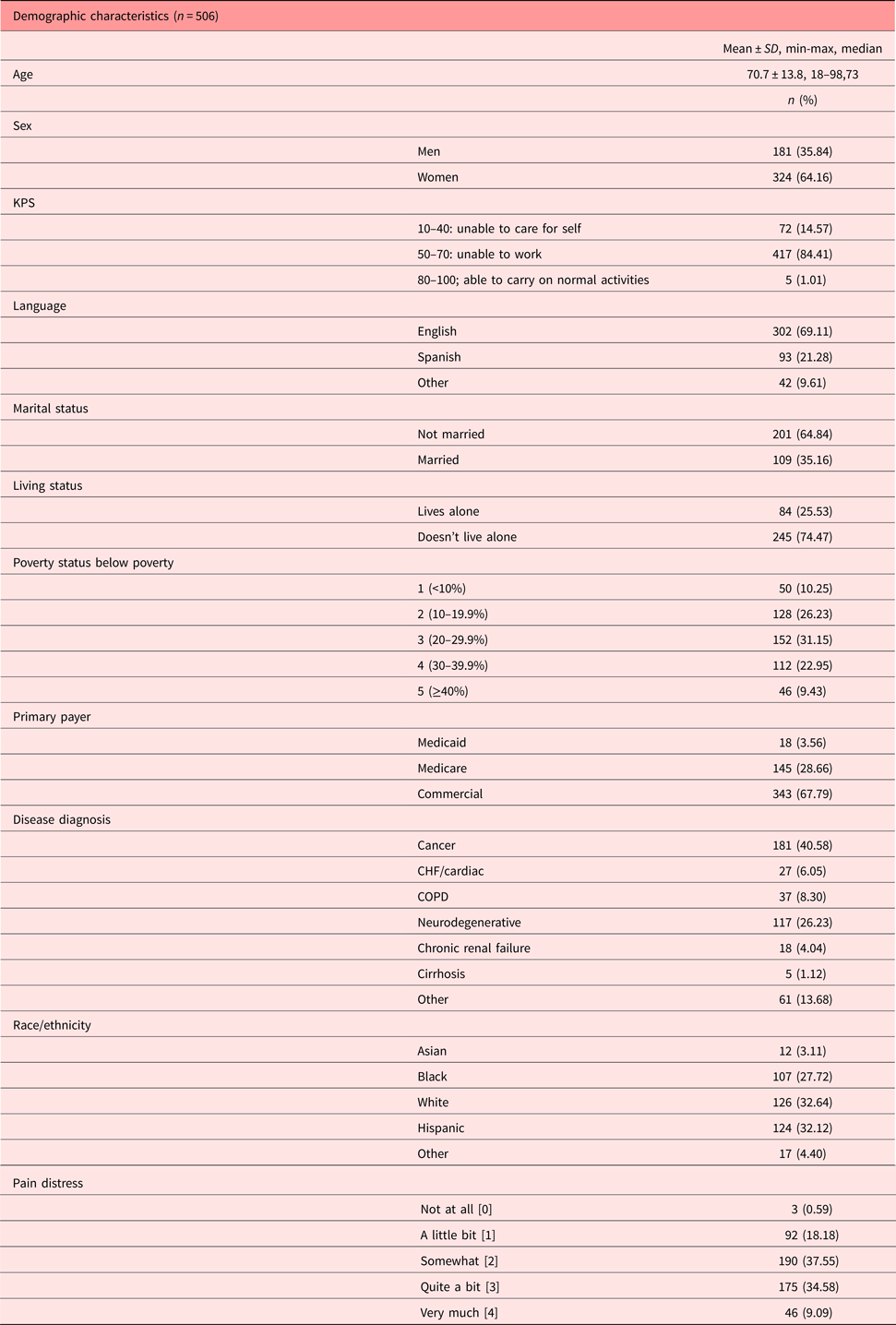
The 506 patients who provided pain scores had a mean (SD, range) age of 70.7 (13.8, 18–98) and 64.2% were women (Table 1). The sample was racially diverse, with 32.1% identifying as Hispanic, 32.6% as white, 27.7% as black, 3.1% as Asian, and 4.4% as other race/ethnicity. Sixty-nine percent of patients spoke English as their primary language, 21.3% spoke Spanish, and 9.6% spoke another language. Although more than one-half of the sample was not married (64.8%), 74.5% did not live alone. Most patients (80.3%) lived in a ZIP code in which 10.0–39.9% lived below the federal poverty line; only 10.3% lived in a ZIP code where <10.0% lived below the poverty level, and only 9.4% lived in a ZIP code with a rate of poverty >40.0%. Most patients had commercial insurance (67.8%) or Medicare (28.7%); 3.6% had Medicaid.
Demographic characteristics

CHF, congestive heart failure; COPD, chronic obstructive pulmonary disease; KPS, Karnofsky Performance Scale.
The most common primary diagnoses were cancer (40.6%), neurodegenerative diseases (26.2%), chronic obstructive pulmonary disorder (8.3%), or congestive heart failure and related diseases (6.1%). A total of 84.4% had a KPS score of 50–70, indicating an inability to work but being capable of caring for most personal needs with varying amount of assistance. About 14.6% of patients were more severely disabled (KPS 10–40) and were unable to care for self. Few patients (1.0%) had a KPS of 80–100.
Pain and pain-related distress
Of the 506 patients completing the pain item, 503 (99.4%) experienced some degree of pain-related distress: “a little bit,” 18.2%, “somewhat,” 37.5%, “quite a bit,” 34.6%, and “very much,” 9.1% (Table 1).
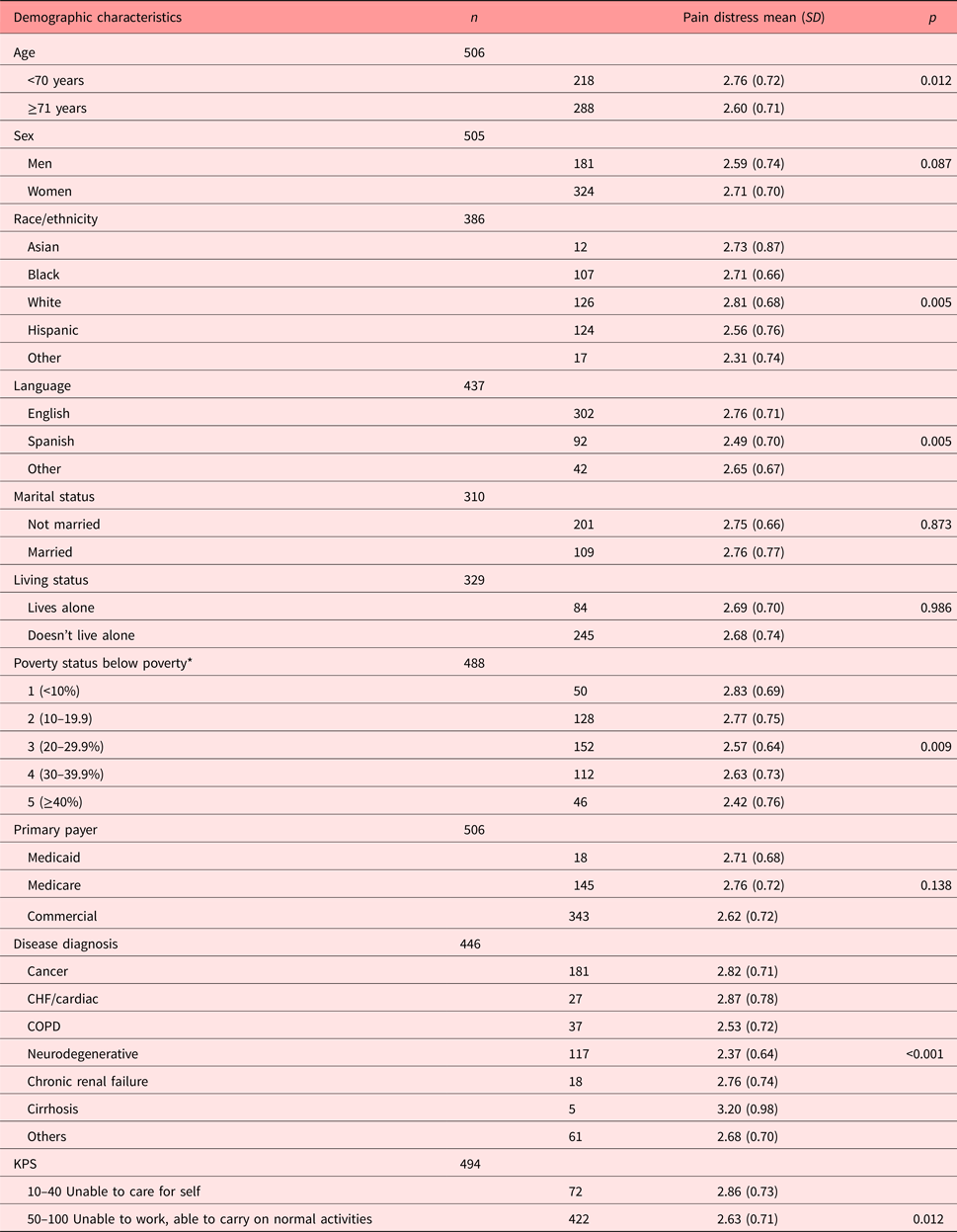
Mean pain-related distress was 2.67 ± .72 and bivariate analyses revealed significant differences in distress by age, race/ethnicity, primary language spoken, neighborhood poverty level, disease diagnosis, and KPS score (Table 2). Patients aged ≤70 years had higher pain-related distress compared with those who were >70 years (p < 0.05). Whites had the highest mean distress score compared with other race/ethnicities (p < 0.05) and those who spoke English had higher pain-related distress than those who spoke Spanish (p < 0.05). Those living in neighborhoods with the least amounts of poverty also had the highest pain-related distress (p < 0.01). Those with a diagnosis of cirrhosis, congestive heart failure/cardiac diseases and cancer had mean pain-related distress scores of 3.2, 2.9, and 2.8, respectively (p < 0.001). Those with lower KPS scores (unable to care for self) had a higher average distress score than those with higher KPS scores (2.86 and 2.63, respectively; p < 0.05).
Pain-related distress scores upon enrollment to the palliative care program

Comparison of mean pain distress at enrollment using one way analysis of variance.
CHF, congestive heart failure; COPD, chronic obstructive pulmonary disease.
*Poverty was treated as a categorical variable for purposes of this analysis.
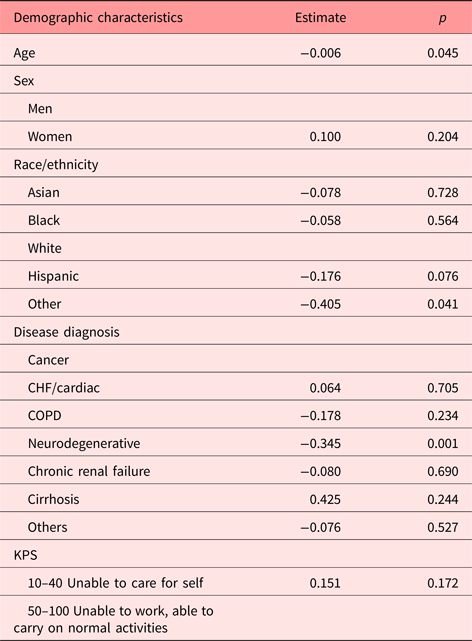
In a multivariate analysis that modeled pain-related distress as a continuous variable, higher distress was predicted by age, race/ethnicity, and primary diagnosis (Table 3). Patients aged ≤70 years were more likely to report higher distress (p < 0.05). Patients who were white were more likely to report higher distress than those who identified as other race/ethnicities (p < 0.05). Patients with cancer were more likely to report higher distress than those with neurodegenerative diseases (p < 0.05). Although KPS score was associated with pain distress in the bivariate analyses, it was not significant in the multivariable analysis.
Multivariate analysis of pain-related distress using linear regression

CHF, congestive heart failure; COPD, chronic obstructive pulmonary disease.
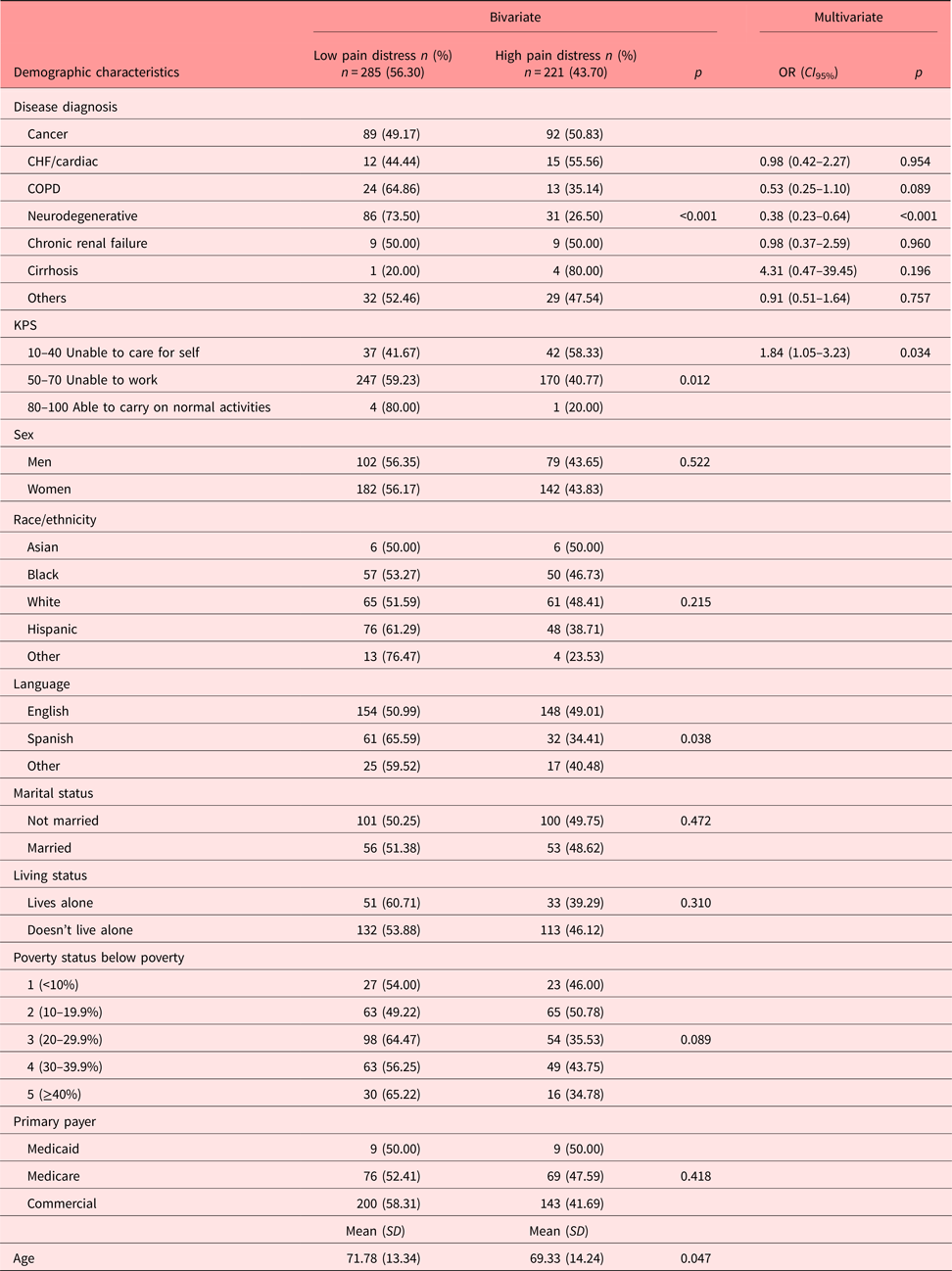
To further explore the associations with high pain-related distress, distress scores were dichotomized into low versus high. In bivariate analysis, higher odds of pain-related distress were associated with disease diagnosis, KPS score, language spoken, and age (Table 4). In multivariate analysis, higher odds of pain-related distress were predicted by disease and KPS score. Compared with patients with cancer diagnoses, those with neurodegenerative disease (p < 0.001) were less likely to have pain-related distress; patients with lower KPS (10–40) scores were more likely to have pain-related distress than those with higher KPS scores (p < 0.05).
Bivariate and multivariate analysis of characteristics associated with low versus high pain-related distress, using logistic regression

CHF, congestive heart failure; CI 95%, 95% confidence interval; COPD, chronic obstructive pulmonary disease.
Discussion
In a sample of 506 community-dwelling chronically ill patients who could provide scores on a validated symptom measure and experienced pain during the past week, pain-related distress was high: 99.4% reported pain-related distress of any level and 43.7% described distress as “quite a bit” or “very much.” Cancer patients and patients with poor performance status were more likely to report high pain-related distress.
The present study confirms an earlier one that used the same symptom scale to evaluate a group of patients with advanced illness and described the average pain-related distress as between “somewhat” and “quite a bit” (Kutner et al., Reference Kutner2007). The latter study included patients receiving hospice care or specialist-level palliative care; the sample was less diverse than our sample and included only 21% of patients who resided at home. Our study confirms that high pain-related distress is a common phenomenon among those with advanced illness and underscores the need for additional studies to explore the extent to which distress is experienced by the heterogeneous population referred to specialist palliative care in community settings.
Our multivariate analyses suggest that higher pain-related distress is more likely among those with cancer and those with lower performance status. The latter finding confirms earlier work showing that pain in medical illness tends to be worse when the disease is more advanced and function is more compromised (Portenoy & Lesage, Reference Portenoy and Lesage1999; Van den Beukrn-van Everdingen et al., Reference Van den Beuken-van Everdingen2007).
The interpretation of these findings should consider important study limitations. Data were collected by treating clinicians as part of routine care, potentially risking bias, and there was no ability to evaluate interrater reliability. Many variables of potential interest, such as pain intensity and pain treatments, could not be evaluated because they were not available in the electronic health record. Moreover, all data were obtained from one organization, which may also limit the generalizability of the results.
Notwithstanding these limitations, our data evaluate a characteristic of chronic pain, pain-related distress, that has received little attention in large literature describing the epidemiology and phenomenology of pain in the medically ill. Pain-related distress is likely to be high among those referred to palliative care programs. The level of pain-related distress may inform assessment, urgency of treatment, and treatment selection. Studies are needed to further describe the phenomenon and determine the extent to which it could guide an approach to the management of symptom burden.
Disclosures and acknowledgments
The authors thank Bill Luecken, Stuart Geller, and MJHS Corporate Information Systems staff for their assistance with data analysis and management. None of the authors are affiliated with industry in a manner that we believe represents a conflict of interest with the current manuscript.