The development of social skills and the formation of meaningful relationships with peers depend, in part, on socialization behaviors learned with primary caregivers (Laible & Thompson, Reference Laible, Thompson, Grusec and Hastings2007). A child's primary caregiver comprises the first and the most influential social context in early life, and the quality of early child–caregiver interactions has been linked to children's social behavior (Feldman & Klein, Reference Feldman and Klein2003). Sensitive responding by a caregiver is postulated to imbue children with self-efficacy as a social partner (Bornstein, Hendricks, Haynes, & Painter, Reference Bornstein, Hendricks, Haynes and Painter2007), and the quality of caregiving is linked to children's behavior with peers, including antisocial and aggressive behaviors (Shaw, Bell, & Gilliom, Reference Shaw, Bell and Gilliom2000). Institutional care (i.e., orphanage rearing) is an extreme form of psychosocial deprivation, in which caregiving experiences are species atypical (McLaughlin, Sheridan, & Nelson, Reference McLaughlin, Sheridan and Nelson2017; Tottenham, Reference Tottenham2012). Rotating staff, high child-to-caregiver ratios, and regimented care do not permit children's individual needs to be met beyond instrumental care (Smyke et al., Reference Smyke, Koga, Johnson, Fox, Marshall, Nelson and Zeanah2007). Although the quality of institutions vary (Zeanah, Smyke, & Settles, Reference Zeanah, Smyke, Settles, McCartney and Phillips2006), exposure to institutional care is associated with negative cognitive, emotional, and social outcomes (van IJzendoorn et al., Reference van IJzendoorn, Palacios, Sonuga-Barke, Gunnar, Vorria, McCall and Juffer2011). Approximately 8 million children worldwide reside in institutional care (Csáky, Reference Csáky2009), and current evidence promotes family-based placements early in life to mitigate the long-term impact of psychosocial deprivation (Zeanah, Humphreys, Fox, & Nelson, Reference Zeanah, Humphreys, Fox and Nelson2017). Following placements into families, although behavior in many domains exhibit rebound, risk in the socioemotional domain can remain elevated (Tottenham, Reference Tottenham2012).
Early institutional care exposure has been linked to poorer social functioning, including behavioral inhibition in social contexts, reduced social support, more “quarrelsome” and bullying behavior, and reduced prosocial behavior (Almas et al., Reference Almas, Degnan, Radulescu, Nelson, Zeanah and Fox2012, Reference Almas, Degnan, Walker, Radulescu, Nelson, Zeanah and Fox2015; Hodges & Tizard, Reference Hodges and Tizard1989; Humphreys et al., Reference Humphreys, Miron, McLaughlin, Sheridan, Nelson, Fox and Zeanah2018; Sonuga-Barke, Schlotz, & Kreppner, Reference Sonuga-Barke, Schlotz and Kreppner2010), though these may vary by age and sex (Julian & McCall, Reference Julian and McCall2016). In addition to specific social difficulties, several studies have linked institutional care history to higher total problems on standardized measures of social functioning, that is, the child behavior checklist (CBCL) social problems narrow-band subscale (Groza, Ryan, & Cash, Reference Groza, Ryan and Cash2003; Hawk & McCall, Reference Hawk and McCall2010; Kim, Shin, & Carey, Reference Kim, Shin and Carey1999; Merz & McCall, Reference Merz and McCall2010).
Other forms of psychopathology that are known to be associated with the absence of adequate caregiving, specifically reactive attachment disorder and disinhibited social engagement disorder (DSED; American Psychiatric Association, 2013), have been examined as potential correlates or predictors of social functioning in children with institutional care exposure (Guyon-Harris, Humphreys, Fox, Nelson, & Zeanah, Reference Guyon-Harris, Humphreys, Fox, Nelson and Zeanah2018b; Sonuga-Barke et al., Reference Sonuga-Barke, Schlotz and Kreppner2010). However, symptoms of these disorders are relatively rare in later childhood and early adolescence (Gleason et al., Reference Gleason, Fox, Drury, Smyke, Egger, Nelson and Zeanah2011; Guyon-Harris et al., Reference Guyon-Harris, Humphreys, Degnan, Fox, Nelson and Zeanah2018; Guyon-Harris, Humphreys, Fox, Nelson, & Zeanah, Reference Guyon-Harris, Humphreys, Fox, Nelson and Zeanah2018a). Other forms of psychopathology, for example, anxiety and attention-deficit/hyperactivity disorder (ADHD), are found at higher rates among previously institutionalized (PI) children (Ellis, Fisher, & Zaharie, Reference Ellis, Fisher and Zaharie2004; Humphreys, Gleason, et al., Reference Humphreys, Gleason, Drury, Miron, Nelson, Fox and Zeanah2015; Kreppner, O'Connor, & Rutter, Reference Kreppner, O'Connor and Rutter2001; Tottenham et al., Reference Tottenham, Hare, Quinn, McCarry, Nurse, Gilhooly and Casey2010; Wiik et al., Reference Wiik, Loman, Van Ryzin, Armstrong, Essex, Pollak and Gunnar2011), and may also be important in considering potential pathways from early institutional care exposure and social functioning difficulties.
Drawing from the larger clinical and developmental literatures, social difficulties have been associated with both anxiety (e.g., Erath, Flanagan, & Bierman, Reference Erath, Flanagan and Bierman2007; Strauss, Lease, Kazdin, Dulcan, & Last, Reference Strauss, Lease, Kazdin, Dulcan and Last1989) and ADHD symptoms (e.g., Bagwell, Molina, Pelham, & Hoza, Reference Bagwell, Molina, Pelham and Hoza2001; de Boo & Prins, Reference de Boo and Prins2007; Humphreys, Galán, Tottenham, & Lee, Reference Humphreys, Galán, Tottenham and Lee2016). However, the types of social functioning deficits differ based on domain of psychopathology; anxious children are shier and withdrawn (Strauss et al., Reference Strauss, Lease, Kazdin, Dulcan and Last1989), whereas children with ADHD are more likely to engage in inappropriate social behavior, such as excessive intrusiveness and aggression (Merrell & Boelter, Reference Merrell and Boelter2001), and exhibit difficulty learning from social cues (Humphreys et al., Reference Humphreys, Galán, Tottenham and Lee2016). As noted previously, both anxiety and ADHD are common phenotypes in PI children (Ellis et al., Reference Ellis, Fisher and Zaharie2004; Humphreys, Gleason, et al., Reference Humphreys, Gleason, Drury, Miron, Nelson, Fox and Zeanah2015; Kreppner et al., Reference Kreppner, O'Connor and Rutter2001; Tottenham et al., Reference Tottenham, Hare, Quinn, McCarry, Nurse, Gilhooly and Casey2010; Wiik et al., Reference Wiik, Loman, Van Ryzin, Armstrong, Essex, Pollak and Gunnar2011). Thus, both anxiety and ADHD symptoms are potential candidates for linking experiences of early institutional rearing and later social functioning. Furthermore, given that the types of social behavior problems may differ based on each form of psychopathology, potential mechanistic models are warranted that include both candidate domains as predictors in a framework facilitating the distillation of peer-directed behavior into its varied forms.
The goal of the present study was to examine social behaviors with peers among children with and without a history of institutional rearing. In order to do this, we created a measure of friendship behaviors, as well as administered a well-validated standardized measure of broad-based social problems (CBCL social problems narrow band subscale; Achenbach & Rescorla, Reference Achenbach and Rescorla2001), and a computerized laboratory assessment of social cue use. In order to explore the variation in PI children and to determine whether specific forms of psychopathology (i.e., anxiety and ADHD symptoms) may explain risk for social difficulties in this population, we included both forms of psychopathology in multiple mediation analyses of the association between PI status and social functioning. Longitudinal data from this sample allowed us to examine these associations cross-sectionally and longitudinally at follow-up assessments occurring approximately 2 and 4 years after the baseline assessment.
Methods
Participants
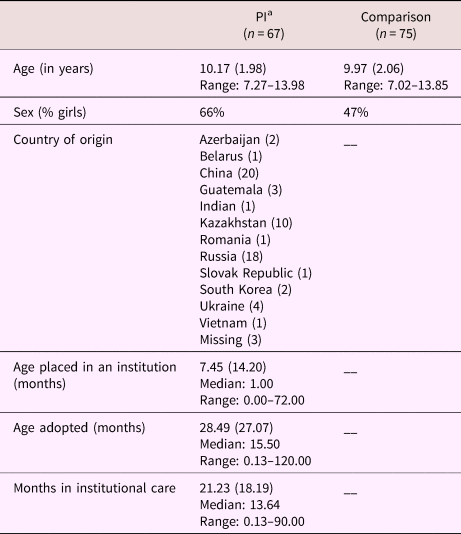
At Wave 1, a total of 142 individuals (67 PI and 75 healthy comparison, never-institutionalized), ages 7–13 years old (M = 10.06, SD = 2.02; 80 girls and 62 boys), residing in the United States, were included in the present study. The parent study (NIMH R01MH091864) included a wider age range, and, for the present study, only 7- to 13-year-olds were included to reduce the heterogeneity in friendship behaviors. While social behaviors with peers are likely to change across the school-age period, we excluded high-school age participants given that the specific social behaviors in this period may not be comparable with social behaviors in elementary- and middle-school age children. For both the PI and comparison children, families were recruited via formal interest organizations, adoption agencies, flyer advertisements within the surrounding community, friend referral, and from state birth records. PI children were adopted into families in the United States, whereas comparison children were selected to not differ from the PI group in terms of age. This volunteer, community sample of children was required to reside with their biological families and were included if they were psychiatrically healthy (i.e., non-clinical), which was confirmed via a parent report. However, no formal diagnostic assessment or definition of what did or did not constitute this label was provided. See Table 1 for more information about the sample. A subset of the sample provided CBCL data at Wave 2 (n = 66; M age = 12.31, SD = 2.17) and Wave 3 (n = 48; M age = 13.71, SD = 2.26). All data were from Wave 1 unless otherwise specified. The protocol was approved by the UCLA institutional review board. Participants’ parents provided informed consent, and children provided assent.
Participant demographics
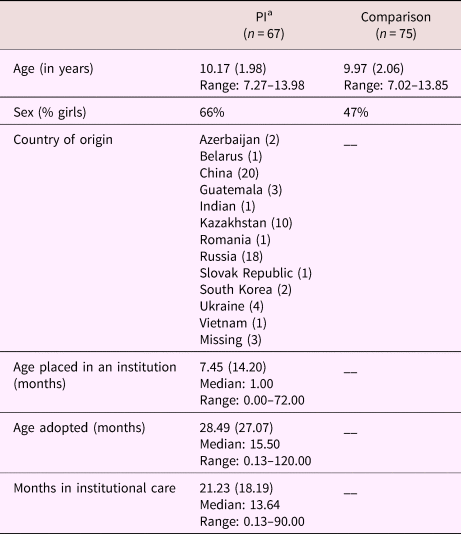
Notes: Means (SD). PI = previously institutionalized. a Adoption details available for subsample (N = 63).
Procedure
Children attended a 2- to 3-hour laboratory session with their parents in the UCLA Psychology Department, in which the parent completed questionnaires and the child completed a number of activities, including computerized assessments of the social cue use task (described later). Participants were invited to return to the laboratory for Wave 2 (mean years following baseline = 2.15, SD = 0.55) and Wave 3 (mean years following baseline = 3.51, SD = 0.87).
Measures
Institutional Care History
Parents of PI children were asked to provide their best estimates (if not known) regarding their child's institutional care history, including age at placement into institutional care and age at adoption (typically believed to be more accurate than age of placement information; Merz & McCall, Reference Merz and McCall2010). Ninety-six percent (n = 64) of PI children's parents provided this information.
Friendship Questionnaire (FQ)
The FQ was developed by NT and was designed to capture a parent report of child friendships and social behavior. This measure obtains details on friendships and social behaviors with peers not assessed on the CBCL social problems subscale, including specific types of behaviors that occur in the context of peer interactions, as well as information about the child's best friend and peer group. To obtain scales representing child behavior in social situations, we conducted a principal components analysis (PCA) on items assessing behavior (items 5–9; see the Appendix). These items were selected because they assess the child's overt, peer-directed behavior. All items with sufficient variability (i.e., at least five individuals providing a nondominant response) were standardized (i.e., Z-scored) and entered into a PCA in SPSS specifying orthogonal (varimax with Kaiser Normalization) rotation within the full sample. Factors with an eigenvalue over 1 were extracted and factor scales from the analysis were saved, per similar approaches in related research (e.g., Delis, Freeland, Kramer, & Kaplan, Reference Delis, Freeland, Kramer and Kaplan1988). Cross-loading of variations to different factors was allowed. Three scales were obtained, and the authors named each factor based on a review of items with factor loadings with an absolute value of .4: social approach, aggression/overarousal, and empathic concern.
Child Behavior Checklist 6-18 (CBCL; Achenbach & Rescorla, Reference Achenbach and Rescorla2001)
The 113-item rating scale was completed by the parent and provided measures of child psychopathology. Responses were scored on a 3-point scale, from 0 for “not true” to 2 for “very true or often true.” The CBCL was normed on a large sample of children ages 6–18 years and possesses excellent test–retest and interrater reliability, as well as adequate to excellent internal consistency (Achenbach & Rescorla, Reference Achenbach and Rescorla2001). The total score from the attention problems narrow-band subscale at Wave 1 was used as our measure of ADHD symptoms. Items assessing inattention, hyperactivity, and impulsivity are included in this scale, although these items do not map on perfectly to the symptoms of ADHD in the Diagnostic and Statistical Manual of Mental Disorders, 5th Edition (American Psychiatric Association, 2013). The CBCL Social Problems narrow-band scale was used at Waves 1, 2, and 3 to assess social problems, and includes items assessing behavior (e.g., dependence on parents) but also mood states (e.g., loneliness, jealousy) and how others treat the child (e.g., whether the child is teased). In addition, to identify social problems that meet the threshold for clinical concern, a cutoff based on a T score of 65 or greater was used to create a binary split (i.e., those below vs. at/above the clinical cutoff).
Screen for Child Anxiety-Related Emotional Disorders (SCARED; Birmaher et al., Reference Birmaher, Khetarpal, Brent, Cully, Balach, Kaufman and Neer1997)
This 41-item rating scale was completed by the parent to assess child-anxiety symptoms. Items are rated on a 3-point scale, with higher scores signifying more anxiety. This measure has been shown to have good internal consistency (α = .74 to .93; Birmaher et al., Reference Birmaher, Khetarpal, Brent, Cully, Balach, Kaufman and Neer1997). For the purpose of the present study, we used the total score from the SCARED as a global measure of child anxiety.
Computerized Social Cue Use Task
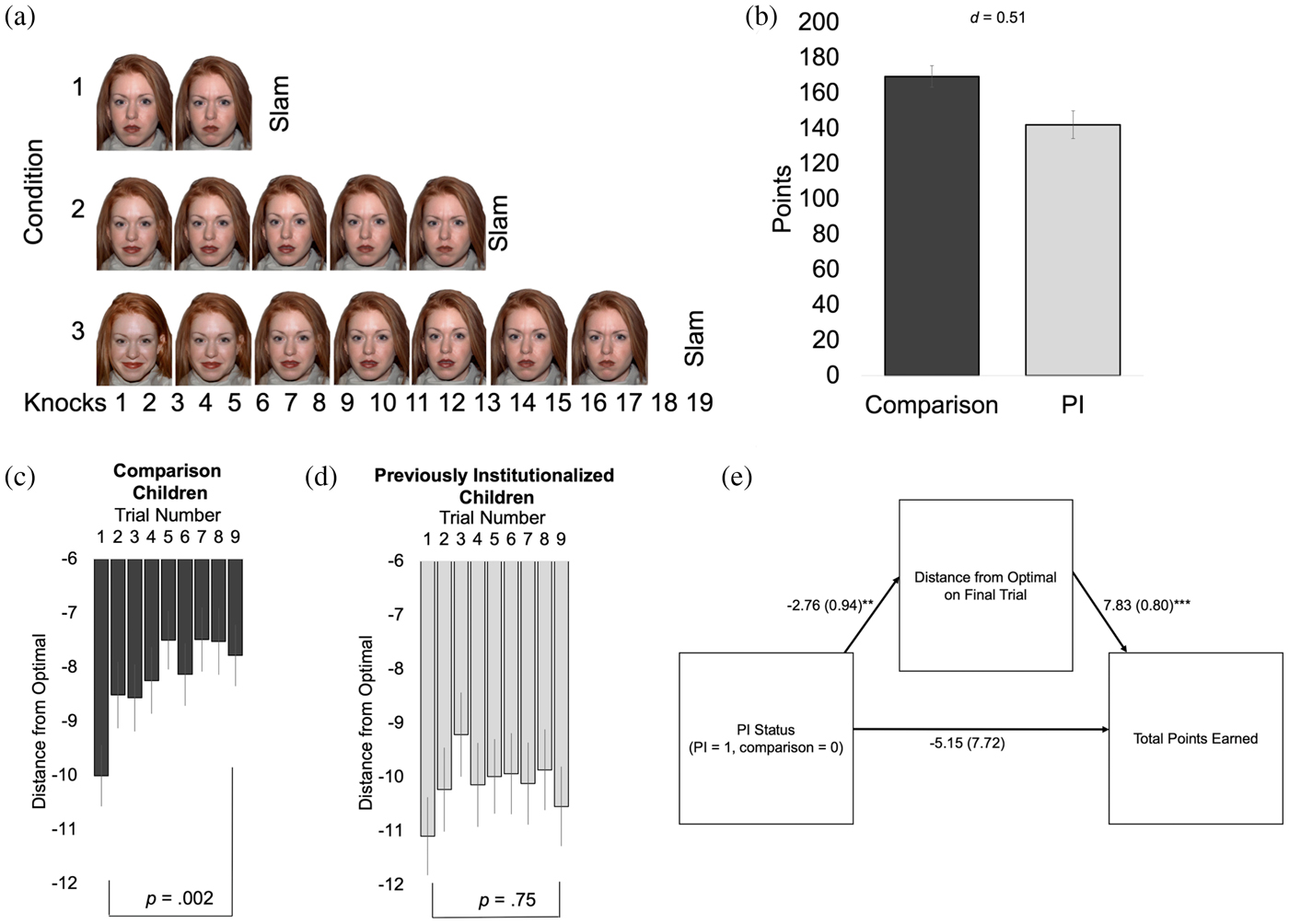
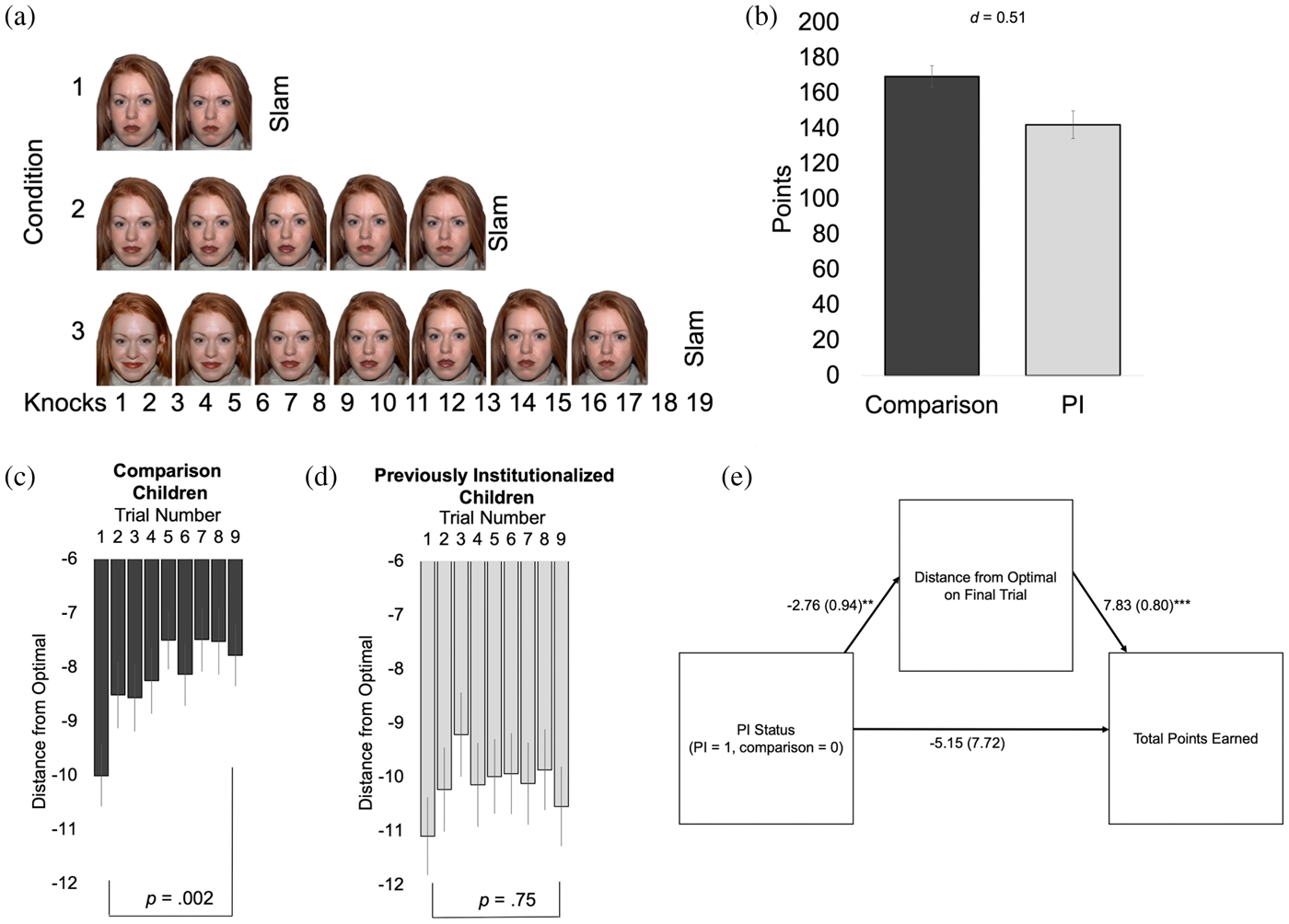
A social cue use task (previously referred to as a social decision-making task) was developed (Humphreys et al., Reference Humphreys, Galán, Tottenham and Lee2016) using faces from the NimStim set of facial expressions (Tottenham et al., Reference Tottenham, Tanaka, Leon, McCarry, Nurse, Hare and Nelson2009) and was added to the study protocol after the start of initial data collection and thus was only available in a subset of participants (n = 105; 65 comparison and 40 PI). The images were taken from a morphing face task in which separate images of one of three individuals’ faces morphed from “happy” to “angry” (Kirsh & Mounts, Reference Kirsh and Mounts2007; Li & Tottenham, Reference Li and Tottenham2013). There was a total of 27 trials composed of a series of facial images that became increasingly angry. See Figure 1a for a visual representation of the task. The task was embedded in a Halloween “trick or treat” candy acquisition game. Participants were told to press a button to “knock” on doors and earn “candy” (represented as points) for every knock they executed (i.e., more knocks earned more candy). At the beginning of each trial, a face appeared on the screen, and with each press the face changed toward a fixed angry expression point (Li & Tottenham, Reference Li and Tottenham2013), such that facial expressions grew increasingly angry with each successive knock. At a given angry expression point, an additional knock would result in the door slamming and the loss of the candy earned from that trial.
(Color online) (a) Illustration of the social cue use task. Condition 1 = quick condition (trial ends at 7 knocks). Condition 2 = intermediate condition (trial ends at 13 knocks). Condition 3 = slow condition (trial ends at 19 knocks). (b) Mean points earned on the task by institutional care history. (c) Distance from optimal behavior on the social cue use task on the slow-to-anger condition among comparison children and (d) previously institutionalized children, and (e) mediation model with distance from optimal performance on the final trial for the slow-to-anger condition mediating the association between caregiving group and total points earned, coefficient (standard error). Note. PI = previously institutionalized. Error bars = 1 standard error. **p < .001. ***p < .001.
Trials were presented in three conditions: (a) “slow-to-anger condition” allowed for 19 knocks before door slamming, (b) “intermediate condition” allowed for 13 knocks, and (c) “quick-to-anger condition” allowed for 7 knocks. Trial progression and face identity were randomized within task third (i.e., all presentations occurred within each third of the task in a random order). Each knock results in 1 point, with the exception of knocks on trials that end with a door slam, in which no points are awarded. The primary outcome of the social cue use task was points, which could be examined as a total score across the task and by examining scores within each of the three task conditions (i.e., quick-to-anger, intermediate, and slow-to-anger), with higher points earned indicating greater ability to use social cues to guide behavior. Lower scores may indicate either stopping knocking prior to the optimal end point or knocking past the final angry face. Previous work using this task indicated a negative association between points earned on this task and CBCL Social Problems (Humphreys et al., Reference Humphreys, Galán, Tottenham and Lee2016). A related but secondary outcome of the social cue use task was the distance of knocks from the optimal stopping point (“distance from optimal,” in which values closer to 0 represent more optimal performance). Similar to other tasks (e.g., Lejuez et al., Reference Lejuez, Aklin, Jones, Richards, Strong, Kahler and Read2003), trials in which the participant surpasses the optimal level were excluded because it is unclear how to weight trials that end after the optimal stopping point, as participants may have stopped knocking on the trial that resulted in the door slam or continued to an unknown point.
Data Analytic Procedures
Analysis of covariance (ANCOVA) was used to examine the association between PI status and each measure of social functioning (i.e., FQ factors, CBCL Social Problems scores, and social cue use on the computerized task), with sex and age at testing as covariates. With the exception of descriptive purposes, which examined the CBCL Social Problems clinical cutoff, the dimensional measure of CBCL Social Problems was used throughout. We also tested mediation, in which anxiety and ADHD symptoms were entered simultaneously as putative mediators of the association between PI status and the social functioning metrics listed previously, with sex and age at testing as covariates. These multiple mediation models were tested using a single-step mediation method with 1,000 samples with replacement using the SPSS PROCESS (Hayes, Reference Hayes2013), which provides 95% bias corrected and accelerated confidence intervals (CI) of the indirect effect. If the 95% CI does not include 0, the indirect effect is considered statistically significant, supporting mediation. For the longitudinal analysis of CBCL Social Problems, the later assessment scores were used in place of the cross-sectional score. Last, we used partial regression and ANCOVA to examine the association between institutional care history (i.e., age at adoption and months in institutional care) in relation to putative mediators and social functioning variables.
Results
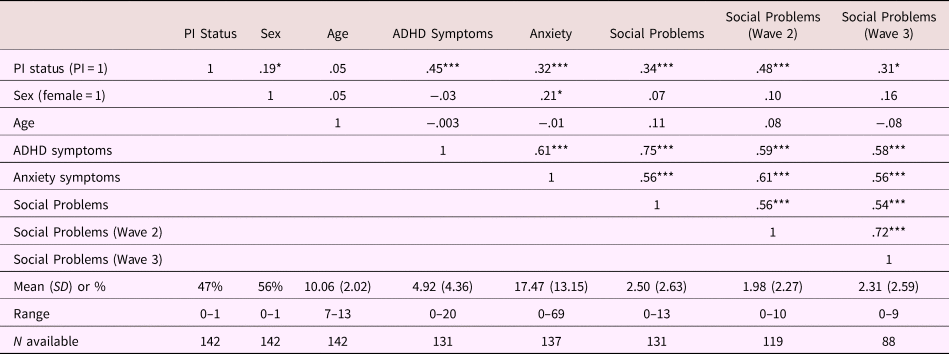
Descriptive statistics are presented along with bivariate correlations to examine the association between PI status, sex, age at testing, anxiety, ADHD symptoms, and CBCL Social Problems (Table 2). As anticipated (based on recruitment of a psychiatrically healthy comparison group), PI status was significantly associated with anxiety and ADHD symptoms at all three waves (these findings are similar when partialling out the effect of sex). Across the full sample, girls had higher levels of anxiety; however, because girls were overrepresented in the PI group, we examined whether the association between sex and anxiety remained when covarying for PI status and age at testing. There was a statistical trend for girls to have higher anxiety scores than boys: F (1, 133) = 3.41, p = .067, Cohen d = 0.31 (95% CI [−0.03, 0.65]), even after accounting for PI status. Importantly, proposed mediators (i.e., anxiety and ADHD symptoms) of the association between early institutional rearing and social functioning were positively correlated and both demonstrated bivariate associations with exposure to institutional rearing and higher levels of CBCL Social Problems.
Descriptive statistics and bivariate correlations on standardized measures
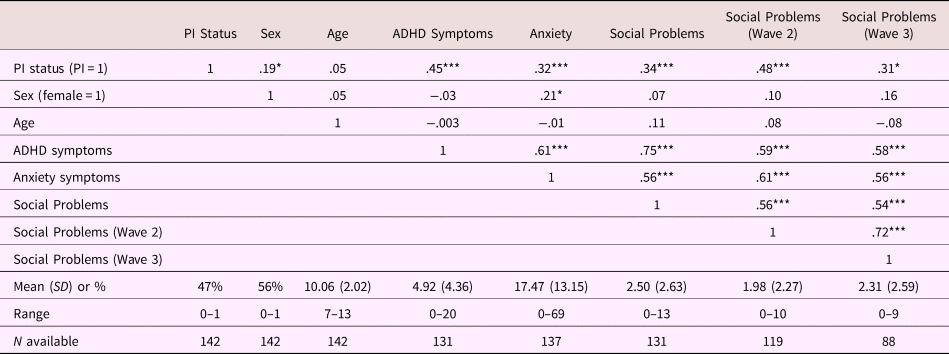
Notes: ADHD = attention-deficit/hyperactivity disorder; PI = previously institutionalized.
*p < .05; **p < .01; ***p < .001.
PI Status and Friendship Behavior
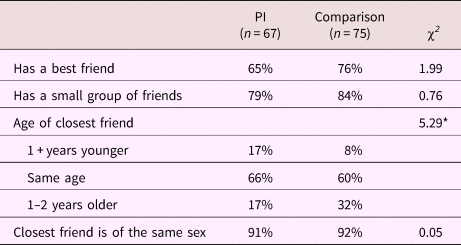
The FQ assessed a number of friendship-related behaviors, and those that met criteria for inclusion in the PCA can be found in the Appendix. Additionally, we obtained the following descriptive data regarding each child's closest friendships (see Table 3). The majority of PI and comparison youth were reported to have a best friend as well as a small group of friends. Parents reported on their child's closest friend's age and sex. Using ordinal generalized linear regression (with 2 = younger friend, 1 = same age friend, 0 = older friend), a significant effect of PI status was found, Wald χ2 (1) = 5.29, p = .021. Though the majority of children in both groups had a best friend who was their same age, the effect was driven by comparison children being more likely than PI children to have an older best friend. Comparison and PI youth both overwhelmingly identified their closest friend as belonging to the same sex.
Description of friendships
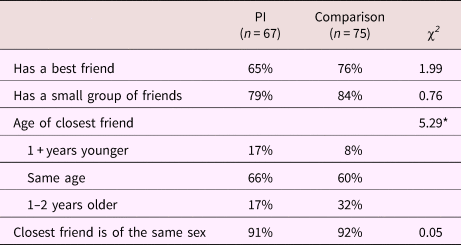
Note: PI = previously institutionalized; *p < .05.
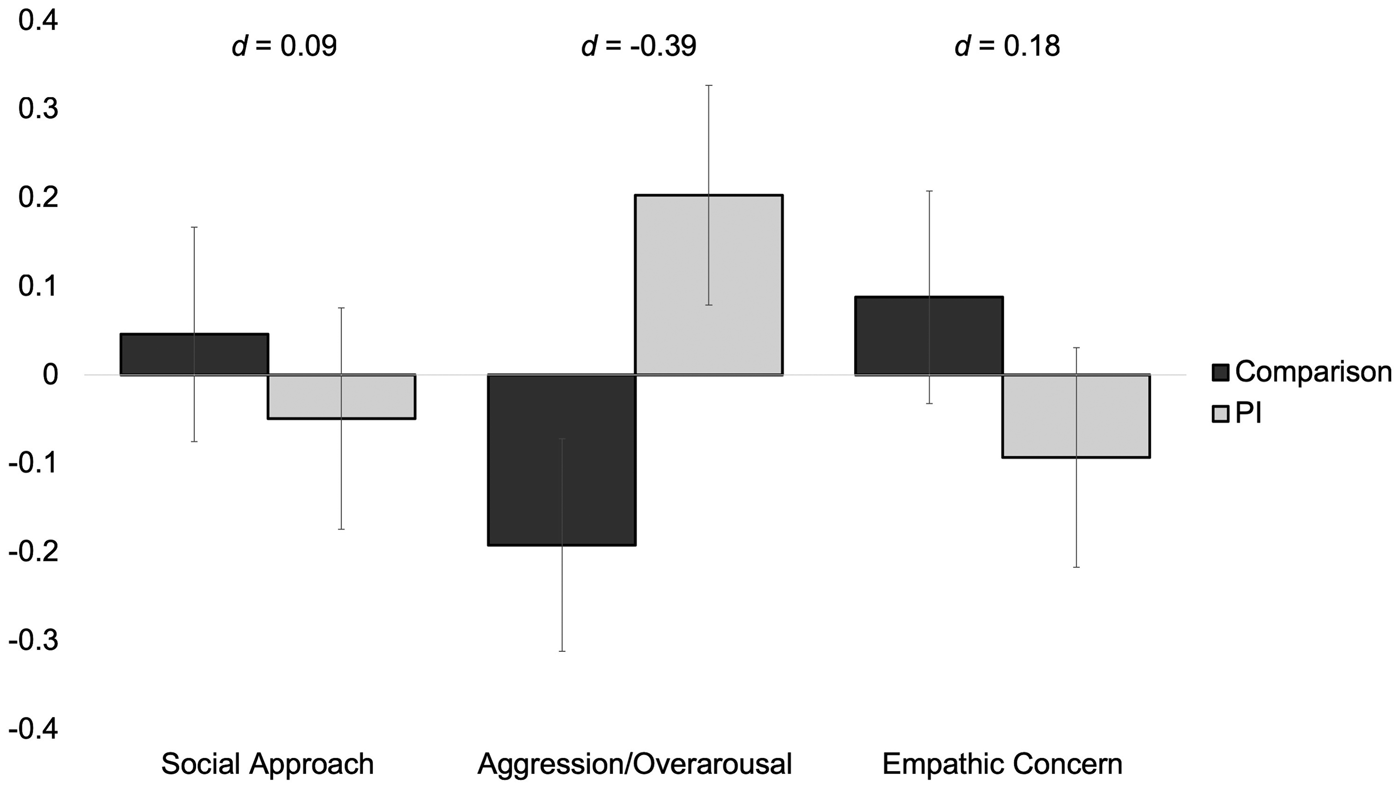
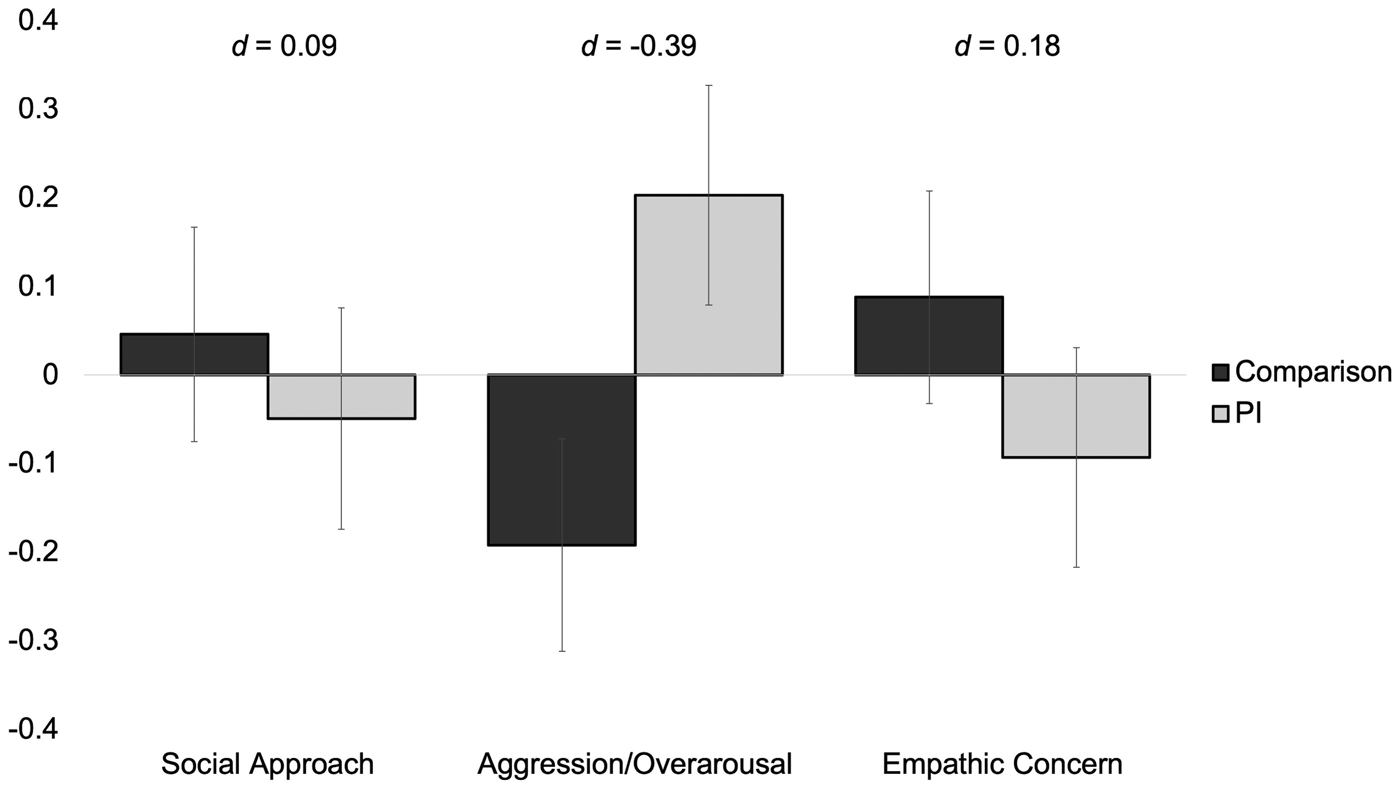
As noted previously, the PCA of the FQ resulted in the identification of three factors, which were termed social approach, aggression/overarousal, and empathic concern. After controlling for sex and age at testing, the CBCL Social Problems subscale was correlated with difficulties in social approach – r (122) = .35, p < .001 – and aggression/overarousal: r (122) = .34, p < .001. This measure was not significantly correlated with empathic concern: r (122) = −.048, p = .60. We conducted three separate ANCOVA, with each factor included as the outcome, with PI status as a predictor, and sex and age at testing as covariates. As can be seen in Figure 2, PI children did not significantly differ from comparison children on social approach: F (1, 130) = 0.29, p = .59, d = 0.09 (95% CI [−0.24, 0.43]); or empathic concern: F (1, 130) = 1.06, p = .30, d = 0.18 (95% CI [−0.16, 0.52]). In contrast, PI children had significantly higher scores on aggression/overarousal: F (1, 130) = 5.17, p = .025, d = −0.39 (95% CI [−0.73, −0.05]).
Group differences based on previous institutional care on factors from the Friendship Questionnaire. Note. PI = previously institutionalized. Error bars = 1 standard error.
PI Status and CBCL Social Problems
An identical approach to examining the association of PI status and social functioning used previously was repeated with the outcome of CBCL Social Problems (i.e., an ANCOVA with PI status as a predictor controlling for sex and age at testing). This analysis revealed that PI children had significantly higher CBCL Social Problems scores than comparison children: F (1, 127) = 15.45, p < .001, d = −0.70 (95% CI [−1.05, −0.34]). Sex and age at testing were not significantly associated with CBCL Social Problems (ps > .33). Using a binary split to identify those at clinical concern based on T scores, which allows comparison with age and sex matched norms, 27% of the PI individuals versus 8% of the comparison children had scores in this range (compared to the 5% that would be expected based on age and sex norms).
Computerized Social Cue Use Task
A laboratory measure of social cue use was collected in a subset of participants. The total number of points earned on this task ranged from 38–256 (M = 159.10, SD = 54.53). We used a repeated measures ANCOVA to examine the effect of PI status on points, with condition repeated by task condition (i.e., quick-to-anger, intermediate, and slow-to-anger), controlling for sex and age at testing. The between subjects analysis revealed that, overall, PI children earned fewer points than comparison children: F (1, 101) = 7.35, p = .01, d = 0.51 (95% CI [0.11, 0.91]); Figure 1b.
Performance over the course of the task differed by group and condition, which was confirmed by a significant three-way interaction – F (2, 100) = 4.34, p = .016 – from a repeated measures ANCOVA with distance from the optimal stopping point as the outcome of interest, first versus last trial, condition and PI status as predictors, and sex and age at testing as covariates. Changes in performance on the slow-to-anger condition were the most pronounced based on PI status. As can be seen in Figure 1c, comparison children improved their performance with greater trials, whereas PI children were relatively stable in their distance from optimal performance (Figure 1d). PI children had smaller gains from the first to last trials than comparison children: F (1, 97) = 8.64, p = .004, d = 0.59 (95% CI [0.18, 1.00]). Using two paired t-tests to compare the distance from optimal on the first and last trials, we found that PI children did not differ on the final and first trials: M difference = −0.22 (SE = 0.70), t (35) = −0.32, p = .75; whereas the comparison children scores were significantly more optimal on the final trial compared with the first: M difference = −2.42 (SE = 0.74), t (58) = −3.28, p = .002. Distance from optimal scores on this final trial ranged from 0 to −17 (M = −8.82, SD = 4.91), with higher (i.e., less negative) scores indicating a greater ability to use facial emotion cues to guide social behavior. Consistent with expectations, this distance from optimal performance was negatively associated with CBCL Social Problems, after controlling for sex and age at testing: r (87) = -.23, p = .029. Further, the distance from optimal performance significantly mediated the association between PI status and overall points earned on the task using a single-step mediation analysis, that is, indirect effect = −21.65, 95% CI ([−36.98, −7.79]), suggesting that the lower points earned in the PI group were associated with group differences in this marker of learning from social cues (Figure 1e).
Tests of Multiple Mediation
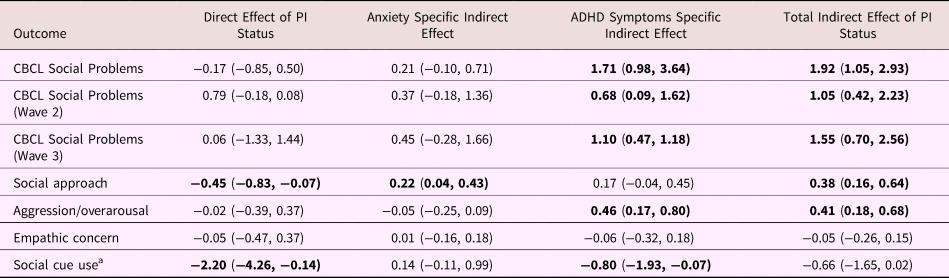
We examined whether psychopathology in children (i.e., anxiety and ADHD symptoms) had unique mediating effects on discrete aspects of social functioning, as measured via three waves of CBCL Social Problems, factors from the FQ, and social cue use. Multiple mediation allowed for simultaneous testing of both putative mediators, as well as the statistical control of specified covariates (i.e., sex and age at testing). The summary of mediation results can be found in Table 4. The direct effect of PI status on CBCL Social Problems and the FQ factors was not statistically significant when anxiety and ADHD symptoms were included in the model, with the exception of the social approach factor, such that PI status was associated with reduced difficulties in social approach in the full model. ADHD symptoms, but not anxiety, significantly mediated the association between PI status and CBCL Social Problems and aggression/overarousal. Anxiety symptoms, but not ADHD, mediated the association between PI status and increased difficulties in social approach. PI status was directly associated with suboptimal social cue use behavior, and there was a significant indirect effect of ADHD symptoms, but not anxiety.
Summary of single-step multiple mediation analyses
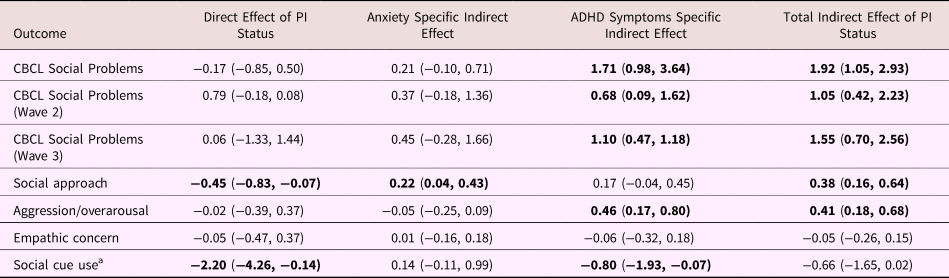
Note: Estimate (95% bias corrected bootstrap confidence intervals). Bolded values indicate that the 95% confidence intervals do not include zero; CBCL = child behavior checklist; PI = previously institutionalized; a Distance from optimal on the final trial of the social cue use task.
The longitudinal analyses of social problems from the CBCL were consistent with the cross-sectional data, indicating that ADHD symptoms significantly mediated the association between PI status and higher CBCL Social Problems scores at all three time points. Taken together, these mediation results show that higher ADHD symptoms prospectively mediated the association between PI status and social functioning difficulties.
Institutional Care History
The PI sample represents a heterogeneous group, as children varied in age at adoption and duration of time spent in institutional care. Given that severity of deprivation experiences is associated with longer term functioning (Julian, Reference Julian2013), as a secondary analysis, we examined age at adoption and months spent in institutional care (transformed using a square root transformation to correct for positive skew) in relation to CBCL Social Problems, FQ factors, as well as anxiety and ADHD symptoms among PI children with available data. Unfortunately, the small cell sizes found using a group-based approach (necessary for examining the possibility of stepwise approaches to age at adoption; see Merz & McCall, Reference Merz and McCall2010) precluded us from examining outcomes using this approach. Using partial correlation, controlling for sex and age at testing, the age at adoption was not significantly associated with any social functioning outcome or with anxiety (ps > .10). However, there was a positive association between age at adoption and ADHD symptoms: r (59) = .30, p = .020; indicating that those children adopted at later ages had higher levels of ADHD symptoms. For months spent in institutional care, there was a trend level finding for greater duration of institutional care and social problems: r (59) = .23, p = .072; and longer duration of institutional care exposure was associated with ADHD symptoms: r (59) = .30, p = .019.
Discussion
We examined social functioning using a multimodal longitudinal assessment approach in a sample of children with and without a history of early institutional rearing. Our findings build upon prior literature on PI children's social functioning in two important ways. First, we identified domains of social behavior with peers that are (and are not) associated with early institutional rearing. Specifically, using a validated measure of social problems, we found that PI children are more likely than age and sex norms to meet the clinical concern threshold. We found that, at the group level, parents of PI children were more likely than parents of healthy comparison children without a history of institutional care to endorse aggression/overarousal behaviors as reasons for friendship challenges. PI children were reported to be similar to comparison children in their mean levels of social approach and empathic concern. PI children were just as likely as comparison youth to establish close friendships, though comparison children were more likely to have an older best friend. In addition, using a laboratory-based assessment of social cue use, we observed that PI children, on average, had more difficulties in learning from social cues and adjusting behavior accordingly when compared with the never-institutionalized comparison children. Second, we explored potential mechanisms for impaired social functioning in this heterogeneous group of children who experienced early institutional rearing. Based on the clinical and developmental literatures, anxiety and ADHD symptoms were identified as potential correlates of social difficulties, and ADHD symptoms mediated the association between PI status and behavior characterized by aggression/overarousal, as well as CBCL Social Problems both cross-sectionally and longitudinally. Anxiety symptoms only mediated the association between PI status and decreased social approach behavior.
On average, PI children have more social difficulties than children without a history of institutional rearing, a finding that is supported by previous research (Groza et al., Reference Groza, Ryan and Cash2003; Hawk & McCall, Reference Hawk and McCall2010; Hodges & Tizard, Reference Hodges and Tizard1989; Julian & McCall, Reference Julian and McCall2016; Kim et al., Reference Kim, Shin and Carey1999; Merz & McCall, Reference Merz and McCall2010; Sonuga-Barke et al., Reference Sonuga-Barke, Schlotz and Kreppner2010). Observational data from social interactions from the Bucharest Early Intervention Project, which followed a group of children who experienced severe psychosocial deprivation in Romanian institutions, identified deficits in social competence following institutional rearing (Almas et al., Reference Almas, Degnan, Walker, Radulescu, Nelson, Zeanah and Fox2015). In the current study, we find evidence that early exposure to institutional care is associated with a greater likelihood of social problems. Early social experiences play a critical role in the development of neural pathways that control for appropriate social interactions (Callaghan & Tottenham, Reference Callaghan and Tottenham2015; Gabard-Durnam et al., Reference Gabard-Durnam, Flannery, Goff, Gee, Humphreys, Telzer and Tottenham2014; Tottenham, Reference Tottenham2012, Reference Tottenham2015). Accordingly, poor caregiving in early development can impede the ability to build appropriate social behaviors later in life (Landry, Smith, Miller-Loncar, & Swank, Reference Landry, Smith, Miller-Loncar and Swank1997; Tottenham et al., Reference Tottenham, Hare, Quinn, McCarry, Nurse, Gilhooly and Casey2010).
Difficulties establishing and maintaining friendships in school-age children are thought to involve multiple domains of competence. Friendship training programs for children with social difficulties include teaching how to initiate social contact (e.g., making eye contact and introducing oneself), seek permission before joining games or play activities, and respond to insults appropriately (Frankel, Reference Frankel2005; Frankel & Feinberg, Reference Frankel and Feinberg2002; Frankel, Myatt, Cantwell, & Feinberg, Reference Frankel, Myatt, Cantwell and Feinberg1997). Although we did not examine these specific behaviors, our findings along with previous work find that children with institutional rearing histories are at risk for poorer friendship quality (Hawk & McCall, Reference Hawk and McCall2010), lower levels of popularity (Hodges & Tizard, Reference Hodges and Tizard1989), and increased aggression/overarousal in social interactions with peers. The endorsement of aggressive and dysregulated behavior as reasons for any friendship difficulty in PI children is consistent with the finding that early institutional rearing enhances the risk of developing externalizing problems later in life (Humphreys, Gleason, et al., Reference Humphreys, Gleason, Drury, Miron, Nelson, Fox and Zeanah2015), and their association may be due, in part, to similar behaviors from the FQ aggression/overarousal factor and externalizing psychopathology, including hyperactivity and impulsivity.
Furthermore, PI children, on average, had greater difficulties learning from social cues. Despite the findings that emotional face processing may be a case of relative sparing following institutional rearing (Young, Luyster, Fox, Zeanah, & Nelson, Reference Young, Luyster, Fox, Zeanah and Nelson2017), and early institutional care is unrelated to emotional identification of angry faces (Bick, Luyster, Fox, Zeanah, & Nelson, Reference Bick, Luyster, Fox, Zeanah and Nelson2017; Fries & Pollak, Reference Fries and Pollak2004), here, when angry faces were used as social cues for decision-making, we found differences in behavioral responses to incrementally increasing angry emotional facial cues. The ability to understand and use facial expressions of emotion to guide and adjust behavior is an important task for navigating social interactions. In a separate line of work using the same social cue use task in clinically diagnosed children with and without ADHD, we found that that poorer learning on the task helped explain the association between ADHD symptoms and social problems from the CBCL (Humphreys et al., Reference Humphreys, Galán, Tottenham and Lee2016).
ADHD symptoms were a significant mediator for every social behavior outcome in which PI and the comparison children differed. ADHD symptoms are a long-lasting phenotype associated with early institutional rearing (Humphreys & Zeanah, Reference Humphreys and Zeanah2015; Stevens et al., Reference Stevens, Sonuga-Barke, Kreppner, Beckett, Castle, Colvert and Rutter2008), and there is mixed evidence regarding whether caregiving quality can alter the trajectory of higher ADHD symptoms over time among children with a history of institutional care (Humphreys, Gleason, et al., Reference Humphreys, Gleason, Drury, Miron, Nelson, Fox and Zeanah2015; Tibu, Humphreys, Fox, Nelson, & Zeanah, Reference Tibu, Humphreys, Fox, Nelson and Zeanah2014). However, additional time in institutional care appeared to be associated with ADHD symptoms in the present study, consistent with some prior work (Stevens et al., Reference Stevens, Sonuga-Barke, Kreppner, Beckett, Castle, Colvert and Rutter2008). In fact, the association between age at adoption and months spent in institutional care was specifically associated with greater ADHD symptoms and did not reach statistical significance in the prediction of social problems (in contrast with prior work linking older age at placement to social problems; Groza et al., Reference Groza, Ryan and Cash2003; Julian & McCall, Reference Julian and McCall2016; Sonuga-Barke et al., Reference Sonuga-Barke, Schlotz and Kreppner2010). Given the persistent indirect effects found for ADHD symptoms in mediating the association between PI status and social functioning outcomes when measured concurrently and at two subsequent follow-up assessments, further exploration into whether attentional deficits may be responsible for impairments in other domains associated with early institutional rearing is warranted. This link suggests that treatment of ADHD symptoms may have benefits for social functioning following institutional care, though this remains to be formally tested.
Anxiety symptoms were also elevated in these children with a history of early institutional rearing relative to the comparison group in this sample. Other samples of adolescents and young adults with a history of institutional care are mixed, though most find increased anxiety in this population (Ellis et al., Reference Ellis, Fisher and Zaharie2004; Erol, Simsek, & Münir, Reference Erol, Simsek and Münir2010; Humphreys, Gleason, et al., Reference Humphreys, Gleason, Drury, Miron, Nelson, Fox and Zeanah2015; Sonuga-Barke et al., Reference Sonuga-Barke, Kennedy, Kumsta, Knights, Golm, Rutter and Kreppner2017). It is possible that the subgroup of PI children with elevated anxiety symptoms may be different in important ways than those children with elevated DSED signs, though both may be associated with social difficulties. DSED has been linked to poorer inhibitory control (Bruce, Tarullo, & Gunnar, Reference Bruce, Tarullo and Gunnar2009), which could manifest in the type of behavior characterized here as aggression or overarousal. In contrast, social reticence has also been linked to institutional care history (Almas et al., Reference Almas, Degnan, Walker, Radulescu, Nelson, Zeanah and Fox2015), and may be a behavioral feature of the anxiety exhibited in some PI children. It follows that anxious children, despite a desire to engage with others socially, may miss out on social opportunities due to anxiety. This, in turn, may result in fewer opportunities to take part in social interactions required for acquisition of social skills, creating a cascade of additional anxiety and lack of social opportunities. Though there was no bivariate association between PI status and social approach, anxiety was found to significantly mediate the association between PI status and reduced social approach.
The findings from this study should be considered in the context of several important limitations. First, we selected anxiety and ADHD symptoms as a priori psychopathology domains of interest due to their increased prevalence in children with a history of institutional rearing. Other forms of psychopathology are relevant to social functioning and are found in elevated rates among children with early institutional care exposure, including autism-like behaviors, disinhibited social behavior, depression, oppositional behavior, and callous-unemotional traits (Goff & Tottenham, Reference Goff and Tottenham2015; Humphreys, McGoron, et al., Reference Humphreys, McGoron, Sheridan, McLaughlin, Fox, Nelson and Zeanah2015; Humphreys, Nelson, Fox, & Zeanah, Reference Humphreys, Nelson, Fox and Zeanah2017; Kumsta et al., Reference Kumsta, Kreppner, Rutter, Beckett, Castle, Stevens and Sonuga-Barke2010; Levin, Fox, Zeanah, & Nelson, Reference Levin, Fox, Zeanah and Nelson2015; Rutter, Colvert, et al., Reference Rutter, Colvert, Kreppner, Beckett, Castle, Groothues and Sonuga-Barke2007; VanTieghem et al., Reference VanTieghem, Gabard-Durnam, Goff, Flannery, Humphreys, Telzer and Tottenham2016) also merit study in the context of early caregiving quality. Previous work has linked deprivation-specific patterns from children who were cared for in Romanian orphanages, including cognitive impairment, disinhibited social behavior, “quasi-autism,” as well as inattention/overactivity behaviors with peer difficulties in PI children (Rutter, Colvert, et al., Reference Rutter, Colvert, Kreppner, Beckett, Castle, Groothues and Sonuga-Barke2007; Rutter, Kreppner, et al., Reference Rutter, Kreppner, Croft, Murin, Colvert, Beckett and Sonuga-Barke2007; Sonuga-Barke et al., Reference Sonuga-Barke, Schlotz and Kreppner2010). Second, our measurement of social functioning included the use of the FQ, which is the first ever use of this assessment and no test-retest information was available. Though there was convergence between the aggression/overarousal factor and CBCL Social Problems total score, the other factors were unrelated to this measure. As a related point, it is unclear whether empathic concern measured the same construct as is assessed in studies of callous-unemotional traits, as past research indicates that children with histories of institutional care, on average, are more likely to be callous-unemotional (Humphreys, McGoron, et al., Reference Humphreys, McGoron, Sheridan, McLaughlin, Fox, Nelson and Zeanah2015; Kumsta, Sonuga-Barke, & Rutter, Reference Kumsta, Sonuga-Barke and Rutter2012). Third, some of our measures were only available cross-sectionally (i.e., the social cue use task). Fourth, there are limitations in our approach to compare groups in our sample (e.g., more females in PI sample, healthy comparison sample selection).
There is no ideal control group for children who have experienced institutional care abroad followed by international adoption. Nonetheless, the inclusion of a never-institutionalized comparison group is helpful for providing a benchmark in which to compare PI children on measures and tasks that are not normed in a population representative sample, thereby allowing us to probe potential mechanisms underlying any social difficulties following this type of early caregiving neglect. In addition, the PI sample was heterogeneous in terms of months in institutional care, age at placement, country of origin, and experiences of institutional care quality. While duration of exposure to institutional care/age adopted appeared to be associated with some aspects of current functioning, the lack of accurate assessments of age at placement and adoption, as well as the lack of prenatal and preadoption histories for these children, make it difficult to disentangle various forms of risk that could be affecting observed behaviors. The English and Romanian Adoptees Study (Rutter, Sonuga-Barke, & Castle, Reference Rutter, Sonuga-Barke and Castle2010) and Bucharest Early Intervention Project (Zeanah et al., Reference Zeanah, Nelson, Fox, Smyke, Marshall, Parker and Koga2003) both indicate that age at adoption are important predictors of later functioning. However, the current sample is more diverse than those exemplars given the breadth of countries of origin in our sample, which may be associated with more variation in pre-adoption quality of care. Such non-assessed differences in children who experienced institutional care (e.g., quality of attachment relationships in early life) may be relevant to both ADHD symptoms and social functioning. Although this study has limitations regarding knowledge about the role of the preadoption environment and perfect accuracy about age at adoption, in some cases, this design allows for the assessment of the duration of exposure to neglect, which is not usually possible in most human studies that assess correlates and consequences of early adversity (i.e., because the majority of children in adverse environments remain in the same environment throughout childhood).
Conclusion
In conclusion, our study provides new insight into the mechanisms underlying the previously well-documented risk for social functioning difficulties among children with early institutional rearing. It is worth noting that the majority of PI children did not meet the threshold for clinical concern in social problems, and, when factors of social functioning were identified, PI and comparison children did not significantly differ in their social approach behaviors or in empathic concern. We found instead that parents were more likely to endorse increased aggression/overarousal as a reason for potential friendship difficulties in children with histories of institutional care, compared with never-institutionalized participants. For those PI children, when with peers, behaviors were more likely to be characterized by aggression/overarousal, difficulties in attention, hyperactivity, and impulsivity, as well as poorer social cue use (i.e., emotional expressions) to guide behavior may explain this association. This study provides insight into how social functioning may be impaired following early institutional care exposure. These findings show that, when PI children struggle with friendships, mechanisms involving attention and behavior regulation are likely contributors. Therefore, interventions targeting attention and behavior regulation may be beneficial for social difficulties as well.
Acknowledgments
The authors thank the participants for their role in this study.
Financial support
This research was supported by National Institute of Mental Health Grants F32-MH107129 (KLH) and R01-MH091864 (NT), the Dana Foundation (NT), the Brain and Behavior Research Foundation (formerly NARSAD) Young Investigator Award 23819 (KLH), a Klingenstein Third Generation Foundation Fellowship (KLH), and a Jacobs Foundation Early Career Research Fellowship (KLH).
Supplementary material
To view the supplementary material for this article, please visit https://doi.org/10.1017/S0954579418001050
Author ORCIDs
Kathryn L. Humphreys 0000-0002-5715-6597