Introduction
Escherichia coli is a normal inhabitant of birds’ lower gastrointestinal tract. It is also commonly present in the pharynx and trachea. Most of E. coli strains are benign, although some strains are virulent and able to induce diseases in birds (Guabiraba and Schouler, Reference GUABIRABA and SCHOULER2015). The latter are termed ‘APEC’, standing for avian pathogenic E. coli, with the intestine constituting their reservoir (Ewers et al., Reference EWERS, ANTÃO, DIEHL, PHILIPP and WIELER2009). Consequently, large numbers of E. coli are maintained in the poultry house environment through faecal contamination. In poultry, APEC strains cause a wide range of localised and systemic infections commonly called avian colibacillosis.
Nowadays, avian colibacillosis is one of the leading causes of mortality and morbidity associated with economic losses in the industry throughout the world (Zhuang et al., Reference ZHUANG, WANG, LI, LIU, LIU, JIANG and CHEN2014). Economic losses can be due to decreased hatching rates, decreased egg production, mortality, lowered production, carcass condemnation at slaughter and costs associated with treatment and prophylaxis. However, even if there is no doubt about the economic impact of avian colibacillosis, it is hard to find actual data on the economic cost of this disease for the poultry industry (Barns et al., Reference BARNS, NOLAN and VAILLANCOURT2008). APEC can infect all types of birds at all ages in any production system, causing localised and systemic types of colibacillosis, acting either as a primary or secondary agent (Guabiraba and Schouler, Reference GUABIRABA and SCHOULER2015). The most typical forms of localised infection due to APEC as a primary pathogen are infections of the reproductive tract, omphalitis and yolk sac infection. Infections of the reproductive tract include salpingitis /peritonitis/ salpingoperitonitis syndrome (SPS), which is very common in laying hens, and the E. coli peritonitis syndrome (EPS), which is more acute and septicaemic than SPS and affects laying hens from the start of lay to peak production.
Route of infection seems to originate from either respiratory and vaginal colonisation (Landman et al., Reference LANDMAN, HEUVELINK and VAN ECK2013). Omphalitis and yolk sac infection occurs by faecal contamination of eggs or in ovo during egg formation, when laying hens have suffered from SPS. Furthermore, as a secondary opportunistic bacterium, E. coli can play a role in some bone and joint infections affecting poultry flocks. However, the most studied syndrome is the systemic form of colibacillosis from a respiratory origin that induces colisepticemia. This occurs in stressed and immunocompromised birds due to (1) deteriorated environmental conditions of poultry houses such as high level of dust and ammonia, (2) mycoplasmal infection, avian metapneumovirus infections and (3) infectious bronchitis virus (IBV) and Newcastle disease virus infections, including vaccine strains (Umar et al., Reference UMAR, SHAH and MUNIR2015; Reference UMAR, SABIR, AHMED and SUBHAN2016; Reference UMAR, SUBHAN, AZAM, MUNIR and SHAH2017a; Reference UMAR, MUNIR, AHSAN, RAZA, CHOWDHURY, AHMED and SHAH2017b). These biotic and abiotic factors can lead to an impaired immune response and/or deciliation of the tracheal epithelial cells (Guabiraba and Schouler, Reference GUABIRABA and SCHOULER2015). This defect in epithelial mechanical defences favours colonisation of the upper and lower respiratory tract by APEC strains that are present in the environment, which will finally lead to respiratory infection (Figure 1A). APEC is thus assumed to cross the respiratory epithelia and penetrate deeply into the mucosa and submucosa to reach the blood stream, causing septicaemia. Birds surviving septicaemia can develop subacute fibrinopurulent airsacculitis, pericarditis and perihepatitis. Although airsacculitis is observed, it is unclear whether it results from primary respiratory exposure or from extension of polyserositis. Furthermore, sequelae of colisepticemia may cause arthritis, osteomyelitis, peritonitis and salpingitis (Dziva and Stevens, Reference DZIVA and STEVENS2008).
Figure 1 below shows the responses to APEC in the respiratory tract. Sequence of responses are denoted by letters: (A) upon inhalation of contaminated aerosol particles, APEC may interact with and infect epithelial cells in the trachea. Any previous viral infections, such as IBV, may damage the respiratory mucosa and facilitate APEC colonisation. (B) Resident cells, such as epithelial cells and macrophages in lungs and air sacs, are the first line of defence through recognition of bacterial PAMPs by TLRs or bacteria phagocytosis. (C) Responses result in proinflammatory cytokine and chemokine production that activates and/or recruits other leukocytes to the infected site. Inflammation contributes to tissue damage and impairment of lung function if bacterial colonisation persists. Heterophils are likely to be the first leukocyte population to be recruited from the bloodstream to the infected site by chemokines within few hours after the establishment of infection. Later in the inflammatory response to APEC, monocytes arrive in the second wave of leukocyte immigration into the lungs not only to optimise bacterial clearance but also to contribute to phagocytosis of dying heterophils and thus contribute to tissue repair. The kinetics of these cellular events and the mediators of inflammation that participate in the immigration and activation of heterophils or monocytes/macrophages in APEC-infected chicken lungs remain largely unexplored (Guabiraba and Schouler, Reference GUABIRABA and SCHOULER2015).
Schematics showing chicken's inflammatory response to APEC in the respiratory tract.

Prophylaxis of colibacillosis is based on strict control of breeding conditions, biosecurity practices and vaccination. However, commercially available vaccines are not always effective mainly because APEC strains are highly diverse. Vaccines containing killed or attenuated virulent bacteria protect against infection from the homologous strain but are less efficient against heterologous strains (Sadeyen et al., Reference SADEYEN, WU, DAVIES, VAN DIEMEN, MILICIC, LA RAGIONE, KAISER, STEVENS and DZIVA2015). Hence, until recently, vaccination for colibacillosis was not widely practiced due to a large variety of serogroups involved in field outbreaks. A common practice is the use of autogenous vaccines and bacterins that are specifically designed for each particular flock (Landman et al., Reference LANDMAN, BUTER, DIJKMAN and VAN ECK2014). Treatment of colibacillosis relies on antibiotherapy, but with the increasing occurrence of multidrug-resistant E. coli isolates, treatment may be unsuccessful.
Host immune response to APEC
Avian colibacillosis generally starts as a respiratory infection that evolves into a more generalised infection, resulting in fibrinopurulent lesions of internal organs. So far, the mechanisms of APEC virulence are still not well defined. Colonisation of the trachea and air sacs is considered the first step of a systemic infection by APEC, followed by the colonisation of the liver and the pericardium, with subsequent bacteraemia.
The understanding of the chicken genome has allowed major advances in chicken immunology (Wong et al., Reference WONG, LIU, WANG, ZHANG, YANG, ZHANG, MENG, ZHOU, LI and ZHANG2004). New technologies and reagents have improved the knowledge of chicken immune responses to important pathogens that impact animal health, such as APEC (Lowenthal et al., Reference LOWENTHAL, BEAN and KOGUT2013).To respond to an invading organism, host immune cells sense the type of pathogen encountered through moieties such as toll-like receptors (TLRs), which distinguish different classes of pathogen-associated molecular patterns (PAMPs) (Roy and Mocarski, Reference ROY and MOCARSKI2007). Microbial-induced activation of immune cells leads to the instigation of intracellular signalling pathways related to microbial killing mechanisms and the production of pro- and/or anti-inflammatory cytokines (Kogut et al., Reference KOGUT, CHIANG, SWAGGERTY, PEVZNER and ZHOU2015). Four main TLRs are involved in the recognition of bacterial motifs in chickens. TLR-2, which recognises peptidoglycan; TLR-4, which binds lipopolysaccharide (LPS); TLR-5, which recognises flagellin; and TLR-21, which recognises unmethylated CpG DNA commonly found in bacteria (Keestra et al., Reference KEESTRA, DE ZOETE, BOUWMAN and VAN PUTTEN2010). In the lungs, APEC strains are likely to be recognised through TLRs expressed in epithelial and resident phagocytic cells, which promotes the production of inflammatory mediators and stimulates phagocytosis (Figure 1B). No study has yet addressed the dynamics of TLR expression in birds in the pneumonic form of colibacillosis. Thus, the major avian TLR involved in recognition of APEC PAMPs and the consequences of APEC-TLR interactions in bird's respiratory tract remains largely unknown.
Inflammatory responses to bacterial infection within the respiratory tract efficiently elicit macrophages and heterophils to the respiratory surface (Figures 1B and C). However, there is limited knowledge on the interaction and adhesion mechanisms of APEC for these cells. Phagocytic cells are likely to play a key role on the initial host defence not only to APEC but also to other pathogens that might predispose the avian lung to bacterial adherence and invasion. Blood monocytes and tissue resident macrophages certainly play different roles in recognition and initiation of immune responses to APEC invasion. However, there is no study integrating phenotyping and activation status of circulating monocytes and resident macrophages in the course of APEC infection in chickens.
Heterophils, the most abundant granulocyte in most avian species, play an indispensable role in the avian immune response to pathogens by using a range of cytotoxic and prostimulatory molecules such as cytokines, chemokines and lipid mediators (Kogut et al., Reference KOGUT, GENOVESE and LOWRY2001). The fact that heterophils can serve as sources of cytokines suggests that these cells contribute to the generation of conditions necessary for the recruitment and activation of other innate immune cells, and for the expression of innate effector molecules that mediate the inflammatory response (Kogut et al., Reference KOGUT, ROTHWELL and KAISER2003). In the pulmonary APEC infection model, heterophils are the first line of defence and die at the infection site, as evidenced by purulent inflammation in the lungs concomitant with robust heterophilic infiltrate (Horn et al., Reference HORN, CORRÊA, BARBIERI, GLODDE, WEYRAUCH, KASPERS, DRIEMEIER, EWERS and WIELER2012). Heterophils would not only contribute to bacterial clearance but, where inflammation persists, they may cause tissue damage and worsen disease prognosis (Figure 1C).
NK cells have been functionally and morphologically defined in chickens (Jansen et al., Reference JANSEN, VAN DE HAAR, VAN HAARLEM, VAN KOOTEN, DE WIT, VAN EDEN, VIERTLBÖCK, GÖBEL and VERVELDE2010), and recent progress has been made on the role of diverse types of NK cell receptors (Straub et al., Reference STRAUB, NEULEN, SPERLING, WINDAU, ZECHMANN, JANSEN, VIERTLBOECK and GÖBEL2013). Genes related to NK cell-mediated toxicity were greatly upregulated in the PBL of chicken infected with an APECO1 strain, although the phenotype and function of this cell population has not yet been studied in the context of colibacillosis in vivo (Sandford et al., Reference SANDFORD, ORR, SHELBY, LI, ZHOU, JOHNSON, KARIYAWASAM, LIU, NOLAN and LAMONT2012). To date, the dynamic of leukocyte influx into chicken's lungs upon APEC infection is under debate. Although heterophils and macrophages are likely to be the most important cell populations to respond to invading bacteria in the lungs, it is not possible to exclude the role of NK cells and other innate lymphoid cells in early or later moments of the host immune response to infection, which can be better studied with new cell surface markers and flow cytometry strategies that have arisen in the last years (Sperling et al., Reference SPERLING, VIERTLBOECK and GÖBEL2015). Our current knowledge on the inflammatory response to respiratory colibacillosis in chicken's lungs and air sacs and the dynamics of cell populations involved in recognition and elimination of APEC is summarised in Figure 1.
Past attempts of immune intervention against APEC
Despite APEC being a common bacterial pathogen affecting poultry, only a limited number of its sero-groups are frequently implicated in field infections. Many attempts have been made to develop an effective vaccine against APEC. Initial efforts were focused on using bacterins, while later investigations of live and subunit vaccines became the common trend, with several reports of success under laboratory conditions (Dho-Moulin and Fairbrother, Reference DHO-MOULIN and FAIRBROTHER1999) as well as reports of ineffectiveness (Peighambari et al., Reference PEIGHAMBARI, HUNTER, SHEWEN and GYLES2002).
To develop an ideal APEC vaccine, several challenges have to be overcome. First, the vaccine has to be able to induce cross protection against various APEC sero-groups capable of causing disease. The second is that the vaccine should be deliverable via a mass immunisation method such as in drinking water or feed, in ovo or spray, in order to immunise thousands of broiler chickens housed in a single barn. Finally, the vaccine has to be administered at a young age so that the birds develop a protective immune response by the age of 21 days, when they are most vulnerable to APEC infection (Dho-Moulin and Fairbrother, Reference DHO-MOULIN and FAIRBROTHER1999).
Inactivated vaccines
One of the earliest attempts to control colibacillosis by vaccination was by Gross in 1957, where he used formalin-inactivated O2:K1 and O78:K80 serotypes of APEC (Gross, Reference GROSS1957). Broiler chickens immunised with the bacterins were later challenged with O2 or O78 APEC to assess the effectiveness of the vaccines against homologous and heterologous challenge. He observed that the O78 bacterin was more protective against the homologous challenge of E. coli (O78 APEC) than the heterologous challenge (O2 APEC). There was no protection provided by the O2 vaccine regardless of the serogroup of E. coli used to challenge the birds. An experiment carried out using a bacterin of APEC O2:K1 serotype revealed that the O2:K1 bacterin failed to provide protection against a homologous challenge of E. coli despite the high titres of O and K agglutinins induced by the vaccine compared to the APEC O78:K80 bacterins (Deb and Harry, Reference DEB and HARRY1978). This suggests that the antibody response against O and K antigens was not sufficient to determine the effectiveness of APEC vaccines. The investigators did not challenge the chickens with a heterologous strain of APEC, and therefore a conclusion could not be reached regarding the universality of protection.
Although inactivated bacterins generally provided protection against a homologous challenge of E. coli, the route of infection influenced the outcome of the experiment. For example, Arp immunised turkeys (intramuscular) at one and two weeks of age with either a heat-killed or formalin- killed vaccine of E. coli O78:K80:H9 (Arp, Reference ARP1980) did not give protection from a challenge with homologous E. coli administered intravenously 10 days post-vaccination, as evidenced by all the birds developing lesions consistent with APEC infection. Hence, the method of inactivating the bacteria to develop the bacterin may influence the outcome of immunisation.
Melamed et al. (Reference MELAMED, LEITNER and HELLER1991) prepared ultrasonically inactivated E. coli O2:K1 and O78:K80 vaccines in aluminium hydroxide adjuvant. These vaccines provided better protection than the bacterins made with heat, formaldehyde, or irradiation killed bacteria. The vaccines were administered to 10-day- old chickens by the subcutaneous route which were then challenged with homologous or heterologous E. coli 10 days post-vaccination subcutaneously. The E. coli O2:K1 vaccine provided protection against both homologous (O2:K1) and heterologous (O78:K80) challenges whereas the ultrasonicated O78:K80 vaccine failed to protect vaccinated birds against heterologous (O2:K1) challenge as determined by the number of dead birds and number of birds with lesions consistent with APEC infection (Melamed et al., Reference MELAMED, LEITNER and HELLER1991). The degree of protection provided by the vaccine was positively correlated with the antibody titre against E. coli at the time of challenge as measured by an enzyme-linked immunosorbent assay (ELISA). Overall, the inactivated vaccines provided protection against homologous challenge only. Several factors were shown to play a role in determining the efficacy of an inactivated APEC vaccine: the serogroup or serotype of the E. coli included in the vaccine, the type of adjuvant used, the method used to inactivate the bacteria, the route and frequency of administration, and the age of the bird at the time of vaccine administration. APEC bacterins investigated to date are summarised in Table 1
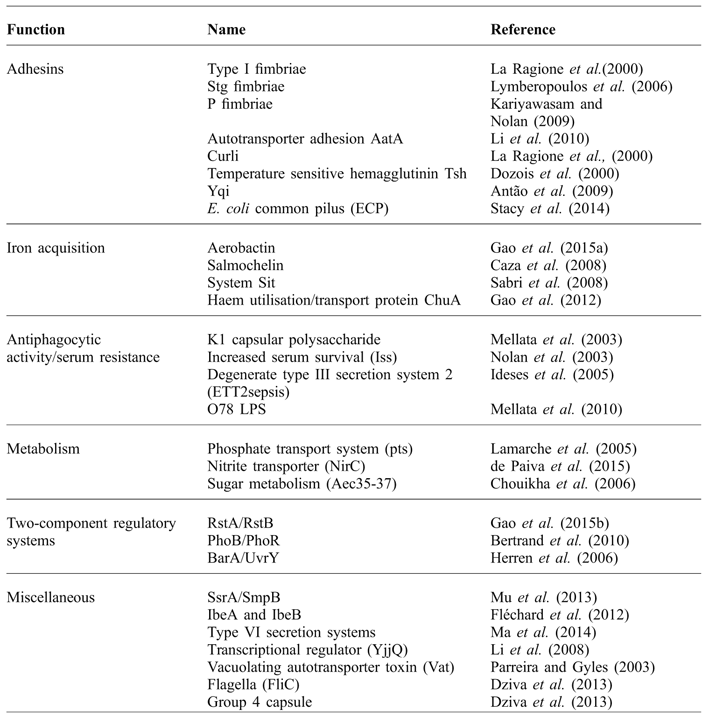
Validated virulence factors of APEC (adapted from Guabiraba and Schouler, Reference GUABIRABA and SCHOULER2015).

live attenuated vaccines
The earliest studies using live-attenuated were conducted using avirulent or diluted virulent strains (Arp, Reference ARP1980). A live vaccine that consisted of APEC O78:K1 serogroup was used to immunise turkeys at seven and 14 days of age via intramuscular or intratracheal routes. A challenge with homologous bacteria by the intravenous route using 108 CFU 10 days after the last vaccination resulted in an 88% decrease in mortality for the intratracheal vaccination and 77% for the intramuscular vaccination compared to unvaccinated controls. Although immunisation reduced mortalities, most of the birds surviving the challenge developed polysynovitis (Arp, Reference ARP1980). Despite initial success, delivering the same strain by spray vaccination did not induce significant protection. Vaccination resulted in effective bacterial clearance from the lungs and internal organs of the turkeys that were not exposed to ammonia but there was no significant difference compared to controls in the group pre-exposed to ammonia.
Another attempt to develop a chemically modified vaccine was made by Naveh and Ron (Reference NAVEH and RON1985). They used nitrous acid to generate a live rough mutant of E. coli K-12 strain defective in the biosynthesis of O-antigen polysaccharide but having the conserved core of LPS. Since the LPS core is common to many enteric pathogens, antibodies to core LPS were expected to provide broad-range protection. Researchers focused on precise genetic modifications to generate vaccine candidates as more sophisticated genetic tools became available and the importance of several genes for the survival and pathogenesis of E. coli was determined.
Roland et al. (Reference ROLAND, CURTISS III and SIZEMORE1999) used Salmonella typhimurium mutants with deletions in genes for adenylcyclase (cya) and cyclic adenosine 30,50-monophosphate (cAMP) receptor protein (crp). The DcyaDcrp derivative of an avian pathogenic S. typhimurium expressed both the homologous group B determinants (O1, 4, 5, 12) and the heterologous E. coli O78 LPS O antigen. A defined insertion/deletion mutation was created by inserting the E. coli rfb region, which encodes the genes required for O78 O-antigen repeat units, into the chromosomal cya gene of S. typhimurium, followed by deletion of the crp gene.
Vaccination of White Leghorn chicks on the day of hatch and at 14 days of age with the recombinant vaccine strain induced serum immune responses against both S. typhimurium and E. coli LPS and protected the birds against subsequent challenge with an O78 APEC strain (Roland et al., Reference ROLAND, CURTISS III and SIZEMORE1999). The introduction of a mutation in the rfc gene reduced expression of S. typhimurium LPS and enhanced anti-E.coli specific responses produced by the recombinant vaccine. Although this approach has been proven to be protective, no records on follow up studies or field trials are available.
Peighambari et al. (Reference PEIGHAMBARI, HUNTER, SHEWEN and GYLES2002) followed a similar approach when they used APEC O2 and O78 DcyaDcrp strains. The researchers immunised broiler chickens by spray to determine the safety, immunogenicity and efficacy of these derivatives in single- and double-dose treatments. The vaccine's safety and immunogenicity was examined by spraying broilers with 20 micron droplets containing the wild type parent E. coli, mutant organisms (DcyaDcrp mutants), or phosphate-buffered saline (PBS) at 14 days of age, and the birds were euthanised 21 days later (Peighambari et al., Reference PEIGHAMBARI, HUNTER, SHEWEN and GYLES2002). The vaccination did not cause death or macroscopic lesions in the chickens vaccinated with either O2 or O78 mutant. The levels of immunoglobulin G (IgG) in serum and IgA in air sac washings were significantly higher in chickens that received the mutant and wild type organisms compared to those that received PBS. Broiler chickens were immunised with the O2 or the O78 vaccine strain at day 14 and with the O2 vaccine strain at days 10 and 14, and challenged with the parent strain 10 days after the last vaccination. There was no significant difference in local IgA and IgG, and serum IgG responses between vaccinated and control groups. Chickens vaccinated with the O2 strain, but not the O78 strain, had significantly lower air sac lesion scores compared with those of the unvaccinated groups.
Kariyawasam et al. (Reference KARIYAWASAM, WILKIE and GYLES2004a) developed three attenuated mutants of an O78 APEC by creating defined deletion mutations in biosynthesis genes. The genes targeted were galE, which encodes uridine diphosphate-galactose epimerase that is required for LPS synthesis, purA which encodes adenylosuccinate synthetase which is required for purine biosynthesis, and aroA that encodes chorismic acid, an intermediate product of p-aminobenzoic acid, aromatic amino acids and folate biosynthesis. The three mutants were used to immunise chickens by coarse spray at one and 14 days of age. The mutants were shown to be safe, attenuated and capable of inducing protection against homologous challenge by aerosol delivered from a nebuliser (Kariyawasam et al., Reference KARIYAWASAM, WILKIE and GYLES2004a). The DpurA mutant was not as effective as the other two mutants. All mutants failed to induce protection against a heterologous challenge. Similar findings were obtained by Salehi et al. (Reference SALEHI, TABATABAEI, KARIMI, FASAEI, DERAKHSHANDEH and JAHROMI2012), who tested a DaroA mutant O78:K80 strain which failed to induce an antibody response when administered at one and 14 days of age. The mutant failed to protect against either a homologous or heterologous challenge and caused pathological changes in the airsac, liver, and pericardium of the tested birds (Salehi et al., Reference SALEHI, TABATABAEI, KARIMI, FASAEI, DERAKHSHANDEH and JAHROMI2012).
However, a vaccine containing a DaroA mutant of an O78:K80 E. coli has been claimed to protect birds from APEC-induced diseases, and is currently marketed by Zoetis (previously Pfizer Animal Health). The efficacy of this commercial vaccine under field conditions is still debatable, as no large-scale independent study has been conducted. The data available from the report of the Committee for Medicinal Products for Veterinary Use on the commercial product, named Poulvac, indicated that the pilot studies demonstrated protection at the recommended immunisation dose (CVMP, 2012). The only large scale study testing Poulvac was conducted by Zoetis to compare the growth rate, antimicrobial use, and the presence of characteristic colibacillosis lesions (CVMP, 2012). A total of 36 broiler houses distributed on 15 farms where divided into two halves, one that was immunised and the other was not. Mortality, lesion scores, and antimicrobial agents use were all significantly reduced and therefore the vaccine was considered protective by the regulatory body. Despite the fact that lesion scoring was greatly reduced (1.7% versus 3.5%), reduction in mortalities was limited (almost 1%) and no challenge was conducted on any farm.
A recent study demonstrated that vaccination confers protection through cell-mediated immunity rather than circulating antibodies (Filho et al., Reference FILHO, FÁVARO, INGBERMAN, BEIRÃO, INOUE, GOMES and CARON2013). However, administration of this vaccine significantly reduced the weight gain of the immunised broilers compared to controls (Filho et al., Reference FILHO, FÁVARO, INGBERMAN, BEIRÃO, INOUE, GOMES and CARON2013).
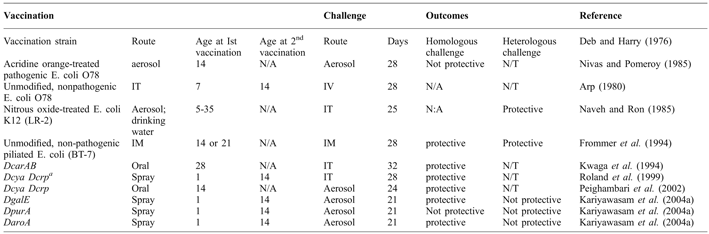
Overall, studies using live-attenuated bacteria as vaccine candidates (summarised in Table 2) have resulted in only one commercial product for which efficacy, in particular against heterologous E. coli, is required from investigation under field conditions. Live vaccines are generally available for mass administration which makes them more attractive and suitable to the broiler industry rather than vaccines that are available only for individual administration.
subunit vaccines
The type 1 and P fimbriae as well as the aerobactin iron acquisition system are generally conserved across various APEC strains (Ewers et al., Reference EWERS, JANßEN, KIEßLING, PHILIPP and WIELER2004). Emery et al. (Reference EMERY, STRAUB, HUISINGA and CARLSON2000) extracted four siderophore receptor proteins (SRPs) from an O78 isolate of E. coli grown under iron restricted conditions and used them to immunise turkeys. A 250 mg dose of SRPs as a water-in-oil adjuvant was used to immunise turkeys subcutaneously at 21 and 38 days of age. In order to investigate cross protection potential, the turkeys were challenged intravenously with Salmonella spp.. The turkeys resisted the challenge, and furthermore, hyperimmune serum raised against SRPs reacted with Gram-negative bacteria other than E. coli such as Salmonella, Pasteurella, Pseudomonas, and Klebsiella spp. as demonstrated by ELISA, serum agglutination, and Western blotting (Emery et al., Reference EMERY, STRAUB, HUISINGA and CARLSON2000). The vaccine was used to immunise turkeys raised on a farm with a history of colibacillosis by the subcutaneous route at three weeks of age. Vaccination resulted in a decrease in mortality and fewer condemnations at processing, in addition to increased body weight of the birds at slaughter, as shown by farm records (Emery et al., Reference EMERY, STRAUB, HUISINGA and CARLSON2000). The conclusions obtained from this study could have been more reliable if the authors used suitable controls as the severity of APEC infections in a given farm can change over time.
Kariyawasam et al. (Reference KARIYAWASAM, WILKIE, HUNTER and GYLES2002) evaluated the ability of antibodies raised against aerobactin outer membrane receptor IutA to provide protection against APEC-induced respiratory/septicemic disease in broiler chickens. In this study, breeder hens were vaccinated with the protein, and the chickens were injected intramuscularly at 11 days of age with the IgY purified from the eggs laid by vaccinated hens. Passively immunised chickens resisted both homologous (O78 E. coli used to prepare the vaccine) and heterologous (O1 and O2 serogroups) challenge of E. coli administered by the intra-air sac route three days post-immunisation (Kariyawasam et al., Reference KARIYAWASAM, WILKIE, HUNTER and GYLES2002). Despite the promising results, no follow up studies or patent applications by the authors have been reported.
Kariyawasam et al. (Reference KARIYAWASAM, WILKIE and GYLES2004b) injected 11-day-old broiler chickens intramuscularly with IgY purified from broiler chickens vaccinated with either PapG or FimHpilus adhesins. Three days later, the immunised chickens were challenged with homologous O78 E. coli that was used to purify the pilus proteins or heterologous E. coli (O1 and O2 serogroups) to assess the efficacy of passively-administered pilus adhesins. The chickens injected with the anti-PapGIgY were protected from both homologous and heterologous E. coli whereas chickens injected with anti-FimHIgY were not protected against either homologous or heterologous APEC administered via the intra-air sac route (Kariyawasam et al., Reference KARIYAWASAM, WILKIE and GYLES2004b). Using a recombinant PapGII allele, Vandemaele et al. (Reference VANDEMAELE, BLEYEN, ABUABOUD, VANDERMEER, JACOBS and GODDEERIS2006) were able to induce strong humoral IgY responses after a single intramuscular injection at 10 days of age. There was no significant difference in protection when the birds were challenged using intra air-sac or aerosolisation routes 24 days later using 2.7 x10¹⁰cfu per 10 ml of culture, compared to non-immunised controls. As there was no attempt to detect the presence of IgA at the respiratory mucosal surfaces it is difficult to conclude that PapG alleles are not protective, as an alternative method of delivery might have induced mucosal immunity.
Horne et al. (Reference HORNE, PFAFF-MCDONOUGH, GIDDINGS and NOLAN2000) cloned and sequenced the increased serum survival gene, Iss from a strain of APEC. This gene is present more often in APEC strains than in commensal E. coli isolated from the faeces of apparently healthy birds, suggesting an association with virulence (Rodriguez-Siek et al., Reference RODRIGUEZ-SIEK, GIDDINGS, DOETKOTT, JOHNSON and NOLAN2005). A recombinant Iss-based vaccine was tested for its ability to protect broiler chickens from the respiratory form of colibacillosis at 28 days of age (Lynne et al., Reference LYNNE, KARIYAWASAM, WANNEMUEHLER, JOHNSON, JOHNSON, SINHA, LYNNE, MOON, JORDAN and LOGUE2012). The protein was first administered subcutaneous as a water-in-oil emulsion vaccine, and the chickens were challenged with O2 or O78 E. coli by the intramuscular route (Lynne et al., Reference LYNNE, FOLEY and NOLAN2006). In a subsequent study, Iss was administered intramuscularly as a QuilA-adjuvanted vaccine and the chickens were challenged with O1, O2 or O78 E. coli via the intra-air sac route (Lynne et al., Reference LYNNE, KARIYAWASAM, WANNEMUEHLER, JOHNSON, JOHNSON, SINHA, LYNNE, MOON, JORDAN and LOGUE2012). In both experiments, vaccinated chickens had less mortalities and lower lesion scores as compared to the unvaccinated control groups. However, among the vaccinated groups, the chickens immunised with the highest dose of antigen (50 mg of Iss) showed the highest lesion scores, whereas the chickens vaccinated with the lowest dose of antigen (2 mg of Iss) demonstrated the lowest lesion scores (Lynne et al., Reference LYNNE, KARIYAWASAM, WANNEMUEHLER, JOHNSON, JOHNSON, SINHA, LYNNE, MOON, JORDAN and LOGUE2012). Overall, subunit vaccines demonstrated better success in inducing a protective immune response, especially against heterologous challenge than inactivated vaccines. The fact that follow up studies on these vaccines in a commercial setting were not carried out and/or published makes it impossible to draw any conclusions regarding potential field success. The addition of new APEC genome sequences added to public databases the discovery of new virulence factors will pave the way for development of more promising new subunit vaccines (Table 2).
Summary of studies in chickens and turkeys on live attenuated vaccines (adapted from Ghunaim et al., Reference GHUNAIM, ABU-MADI and KARIYAWASAM2014).

IV: Intravenous, IM: Intramuscular, SC: Subcutaneous, IP: Intraperitoneal, IT: Intratracheal, N/T: Not tested, N/A: Not applicable. a Salmonella typhimurium mutant expressing APEC antigens.
Bio-conjugated vaccines
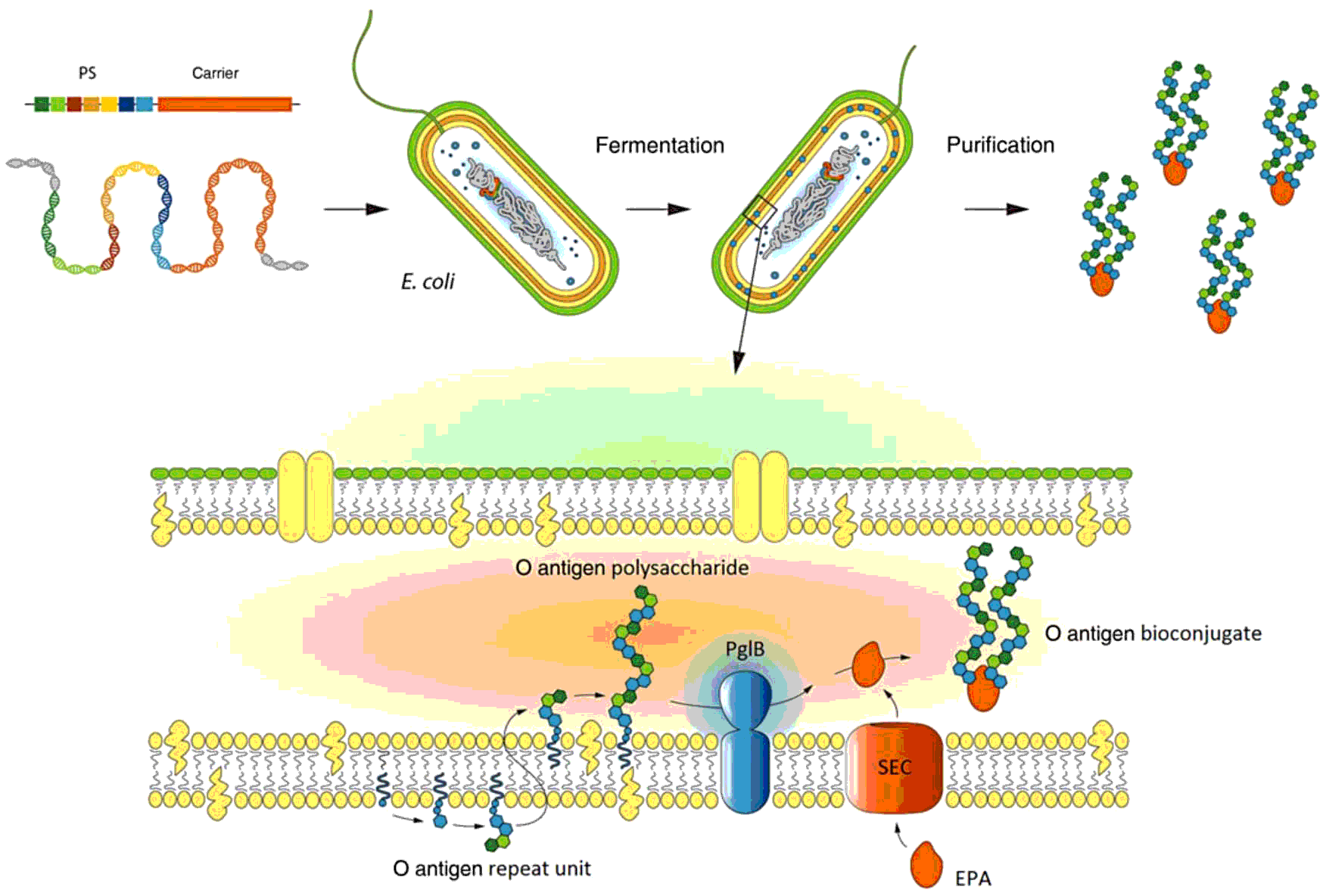
The technique of in vivo bioconjugation is an important advance with implications that may be as far reaching as that of the original development of conjugation technology. Bioconjugation refers to the biosynthesis of polysaccharide and carrier protein within E. coli cells and their subsequent in vivo coupling by use of the oligosaccharyl transferase PglB from the N-linked protein glycosylation system originally identified in Campylobacter jejuni and subsequently transferred to E. coli (Feldman et al., Reference FELDMAN, WACKER, HERNANDEZ, HITCHEN, MAROLDA, KOWARIK, MORRIS, DELL, VALVANO and AEBI2005). In the bioconjugation process, PglB transfers diverse O polysaccharides to a protein carrier (e.g. EPA) present in the periplasm, from which the resulting bioconjugate is harvested using a generic purification process (Figure 2). Thus, the bioconjugation process allows for in vivo conjugation of multiple specific O polysaccharides to specific sites of any protein carrier and removes the requirement for chemical detoxification of LPS. Polysaccharide-protein conjugate molecules developed by this process have a well-defined and homogenous structure and do not suffer from loss of epitopes, which may occur during chemical conjugation processes. The resulting bulk is high purity with low levels of free polysaccharide, and potential for large-scale production has been demonstrated (Poolman and Wacker, Reference POOLMAN and WACKER2015).
Process of in vivo bioconjugation, using recombinant Escherichia coli. Campylobacter oligosaccharyl transferase (PglB) transfers selected O polysaccharides (devoid of lipids) to the Pseudomonas aeruginosa exoprotein A (EPA) protein carrier present in the periplasm. SEC- secretory pathway (Poolman and Wacker, Reference POOLMAN and WACKER2015).

Conclusions
APEC is a global pathogen causing a spectrum of diseases that affect all ages. The increasing incidence and associated costs of disease caused by APEC means that an effective vaccine against APEC infection is urgently needed. The O antigen is a feasible vaccine target that has been shown to be immunogenic. The success of a vaccine is judged by its safety and the degree of protection it provides. The economic feasibility of the vaccines discussed above is another important point to consider when moving forward. This gap in knowledge warrants further investigations to develop effective APEC vaccines.
Although advances in genetic technologies have made the production of subunit vaccines relatively simple, the production of a live or killed vaccine is still less laborious and cheaper. However, these limitations can be over- come by administration of the selected antigen in the form of a vectored or chimera vaccine. Even if the genome sequence of some APEC strains has been determined, extensive comparative genomic analyses of various APEC strains from various serogroups are still necessary. New technologies and reagents will not only facilitate a better understanding of chicken immune responses to important pathogens such as APEC, but also enable improved vaccine design.