INTRODUCTION
In sub-Saharan Africa (SSA), smallholder agricultural productivity is increasing at a slower rate than human population growth, leading to challenges in providing sufficient food (Godfray et al. Reference Godfray, Beddington, Crute, Haddad, Lawrence, Muir, Pretty, Robinson, Thomas and Toulmin2010). Conventional tillage systems that most smallholder farmers rely on for food production have resulted in pressure being exerted on the land, leading to soil erosion and the loss of fertile top soil, and hence low crop yields (Baudron et al. Reference Baudron, Andersson, Corbeels and Giller2001). Low nitrogen (N) input and poor weed management strategies have contributed to low crop yields since most farmers cannot afford the highly priced mineral fertilizers and herbicides (Sommer et al. Reference Sommer, Bossio, Desta, Dimes, Kihara, Koala, Mango, Rodriguez, Thierfelder and Winowiecki2013). To manage N and weeds, resource-constrained farmers practising conservation agriculture (CA) can integrate green manure cover crops (GMCCs) such as velvet bean [Mucuna pruriens L. (DC.)] in their cropping systems (Mhlanga et al. Reference Mhlanga, Cheesman, Maasdorp, Mupangwa and Thierfelder2015). Depending on the area of farmers’ land and other hindering factors such as availability of markets for GMCC seed and/or biomass, farmers may not find it feasible to completely rotate food crops with the GMCCs (Thierfelder et al. Reference Thierfelder, Cheesman and Rusinamhodzi2013); however, they may find them attractive as ‘relay’ crops.
Relay cropping refers to farming systems where one or more additional crops are introduced at a certain growth stage into the main crop stand, aiming at avoiding competition between the main crop and the relay crop (Liebman & Dyck Reference Liebman and Dyck1993).
Relay crops may be planted in between the rows of the main crop or between plants within the main crop rows and the benefits of the relay crops depend on their physiological traits (Rusinamhodzi et al. Reference Rusinamhodzi, Corbeels, Nyamangara and Giller2012). Leguminous relay crops are capable of biological nitrogen fixation, which may also be accessed by the companion main crops leading to improved yields of the main crop (Giller et al. Reference Giller, Tittonell, Rufino, Van Wijk, Zingore, Mapfumo, Adjei-Nsiah, Herrero, Chikowo, Corbeels, Rowe, Baijukya, Mwijage, Smith, Yeboah, Van Der Burg, Sanogo, Misiko, De Ridder, Karanja, Kaizzi, K'ungu, Mwale, Nwaga, Pacini and Vanlauwe2011; Rusinamhodzi et al. Reference Rusinamhodzi, Corbeels, Nyamangara and Giller2012). Depending on their purpose, relay crops may be introduced into the system at any point in the season. In maize (Zea mays L.)-based systems of southern Africa, this could be a few weeks after planting the maize or when the maize is about to senesce (Lesoing et al. Reference Lesoing, Moomaw and Francis1991). If relay crops are introduced towards the senescence stage of the maize crop, they may be allowed to grow through the winter period and then killed off before replanting the maize; the benefits are usually noted in that succeeding crop (IIRR & ACT Reference Wagner2006). Relay crops may smother weeds during the main crop's growth period or during the off-season after the main crop harvest, leading to decreased weed seed banks over time (Olorunmaiye Reference Olorunmaiye2010). They may also act as trap crops for some pests, reducing their impact on the main crop (Ratnadass et al. Reference Ratnadass, Fernandes, Avelino and Habib2012). However, if not strategically planned, relay cropping may lead to competition for growth elements and soil moisture between the main crop and the relay crops, resulting in reduced yields of the main crop.
In some situations, relay crops may act as alternative hosts of pests and diseases, facilitating their carry-over into the next season and causing yield losses (Lithourgidis et al. Reference Lithourgidis, Dordas, Damalas and Vlachostergios2011). Relay cropping may be a challenge especially in areas where rainfall is limiting or seasonal, since this may limit the potential of the GMCCs (Lu et al. Reference Lu, Watkins, Teasdale and Abdul-Baki2000). An example is in the Zimuto communal area of Zimbabwe, where the establishment of relay crops was hindered by marginal soil conditions and low moisture (Kamanga et al. Reference Kamanga, Shamudzarira and Vaughan2003). However, in wetter but sandy regions of Zimbabwe (e.g. Madziwa district) smallholder farmers are already practicing relay cropping with cowpea as the main relay crop, due to its use as a grain crop and its ready markets (Cheesman et al. Reference Cheesman, Andersson and Frossard2016). According to Beuerlein (Reference Beuerlein2001), adequate time for the production of a second crop and adequate water to produce both crops are primary requirements for a profitable relay cropping system. This calls for the identification of suitable planting dates for the GMCCs that do not compromise the yields of either the main crop or the relay crop. A study conducted by Mhlanga et al. (Reference Mhlanga, Cheesman, Maasdorp, Mupangwa, Munyoro, Sithole and Thierfelder2016) investigated effects of introducing various GMCCs into a standing maize crop from 8 to 15 weeks after planting the maize and concluded that delays in planting the GMCCs compromised their productivity but within all the planting dates, the GMCCs had no significant effect on maize productivity.
The effects of maize–legume intercrops and fertilizer rates, and their interactions on crop yields, have been reported previously (Rusinamhodzi et al. Reference Rusinamhodzi, Corbeels, Nyamangara and Giller2012). However, inadequate research on their effects on maize yields, biomass production and weed dynamics in maize-based CA systems has been done in Zimbabwe. The present study therefore seeks to evaluate the effects of maize–legume intercrops, fertilizer rates and their interactions on weed flora dynamics, maize productivity and biomass production in a maize-based farming system. The results of the study will inform on intercrop and fertilizer rate combinations that can or cannot be used to improve maize yield, biomass yield and as possible weed control tools.
MATERIALS AND METHODS
Site description
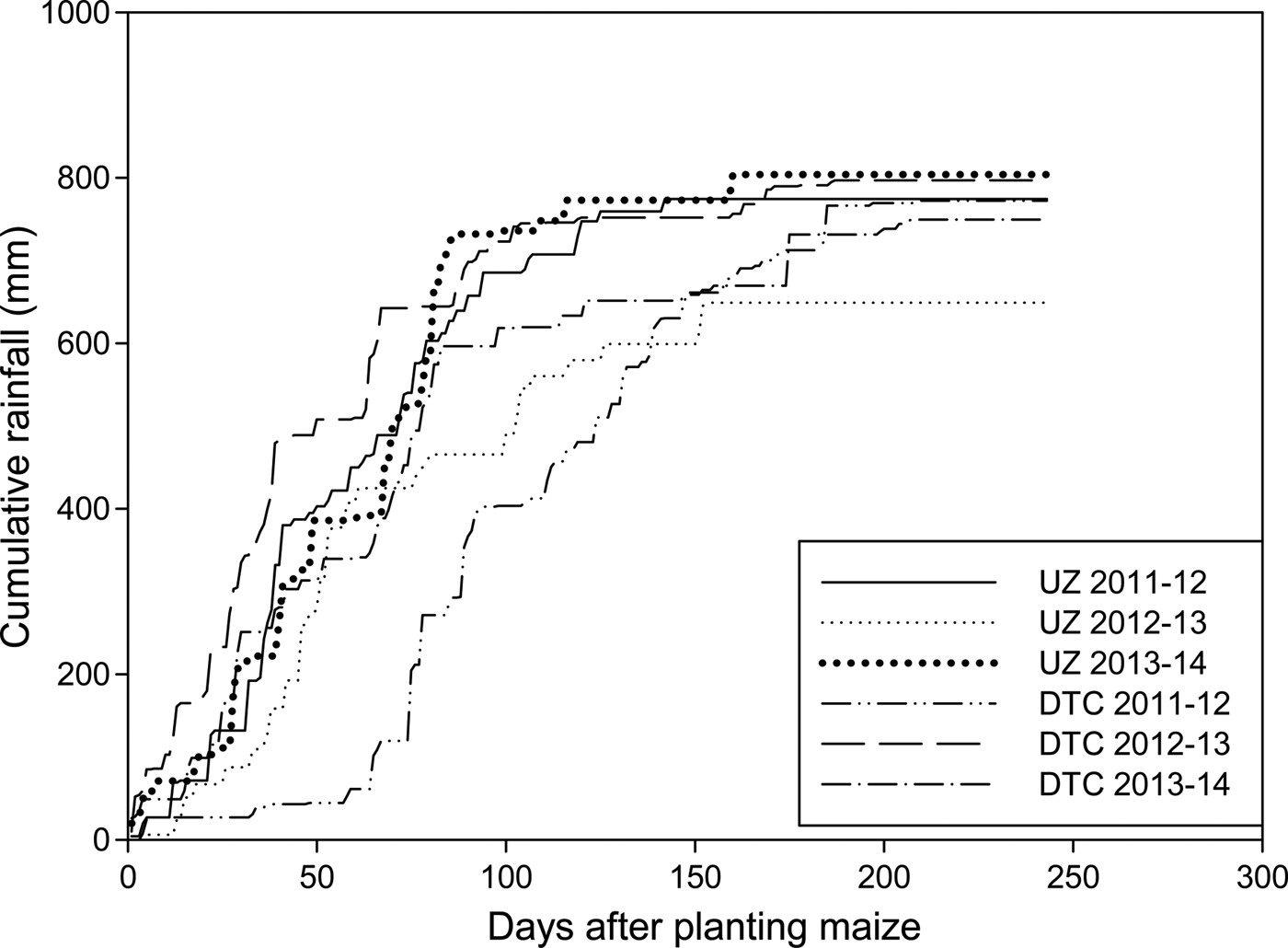
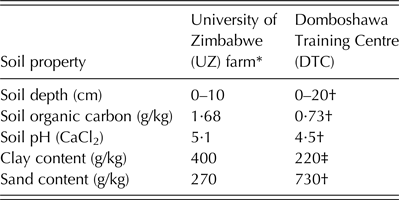
The study was conducted at two sites with contrasting soils: (a) the University of Zimbabwe farm (UZ) (17°43′S, 31°01′E, 1503 m asl) and (b) Domboshava Training Centre (DTC) (17°37′S, 31°10′E, 1560 m asl). The soil at UZ is classified as a Chromic Luvisol (Nyamapfene Reference Nyamapfene1991) with 400 g clay content per 1 kg of soil and the soil at DTC classified as a moderately deep Arenosol formed from granitic rocks according to FAO classification (Vogel Reference Vogel1994) with a clay content of about 22 g/kg soil (Table 1). Both sites experience daily maximum temperatures reaching 31 °C and lie in Zimbabwe agro-ecological region II (Vincent et al. Reference Vincent, Thomas and Staples1960) receiving rainfall in a unimodal pattern (Fig. 1). Table 1 shows the soil characteristics of both sites.
Cumulative rainfall (mm) in the 2011/12, 2012/13, and 2013/14 seasons at University of Zimbabwe (UZ) farm and Domboshawa Training Centre (DTC).

Soil properties at trial sites

* Nyamapfene (Reference Nyamapfene1991).
† Mapfumo et al. (Reference Mapfumo, Mtambanengwe and Vanlauwe2007).
‡ Laboratory analysis.
Description of experiment
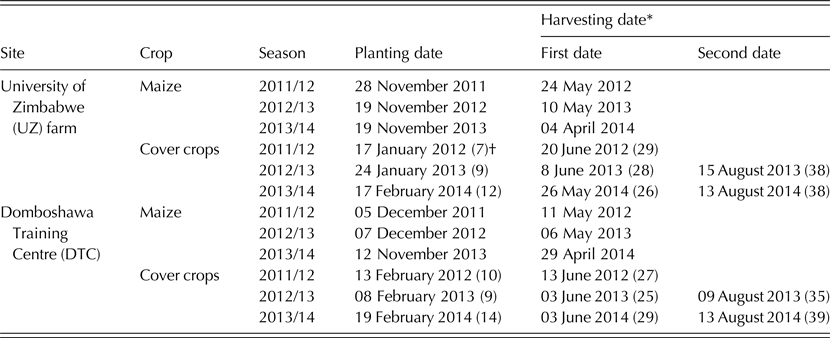
The experiment commenced in the summer growing season of 2011/12 and evaluated the effects of relay cropping different GMCCs into a standing maize crop on maize productivity at UZ and DTC sites. The GMCCs were planted into the standing maize crop, as a single row between maize rows, around 8 weeks after planting maize (WAPM) whenever sufficient rainfall (about 20 mm received within two consecutive days) was received to reduce competition and to avoid overgrowth of relay crops and hence competition before harvesting the maize crop (Table 2). However, in the 2013/14 season at both sites, seeding of the GMCCs was delayed due to a dry spell around 8 WAPM (Table 2). The experiment was first set as a randomized complete block design in the 2011/12 season with four replications and six treatments of cover crops planted into a standing maize crop. However, due to the failed establishment of the other cover crops the present study only focused on two treatments:
-
(1) Sole maize (Z. mays L.) (control) planted at 0·90 m between rows and 0·25 m between plants to achieve a plant population density of 44444 plants/ha (conventional spacing).
-
(2) Velvet bean [M. pruriens (L.) DC] planted in between maize rows at 0·25 m between plants to achieve a plant population density of 44444 plants/ha.
The plant population density of the velvet bean was kept at a minimal level to reduce competition between the maize and the velvet bean, and between the velvet bean plants themselves, as they were seeded in low moisture conditions. The maize and the relayed velvet bean were grown under rain-fed conditions with residues being retained in their respective plots and the residues were not incorporated into the soil but left on the surface. The crop combinations and fertilizer rates were maintained in their respective plots in every season in order to assess the cumulative effects of the cropping systems. Planting of maize was done by placing seed into rip lines created by a Magoye ripper (a ripper tine attached on an ox-drawn mouldboard plough) and with hand hoes at DTC and UZ, respectively.
Planting and harvesting dates for maize and the cover crops in each season

* Second harvesting dates relate to the second harvesting date of the cover crops in the 2012/13 and 2013/14 seasons.
† The figures in parentheses denote the number of weeks after planting maize.
Plot size measured 10·8 × 6 m2 in the 2011/12 season. Fertilizer was applied only to the maize crop at the rate of 11·6 kg/ha N, 10·1 kg/ha phosphorus (P) and 9·6 kg/ha potassium (K) at seeding and 69 kg/ha N split applied at 4 and 7 weeks after emergence in the 2011/12 season. In the 2012/13 and 2013/14 seasons, the plots were split into a split-plot design with major plots (10·8 × 6 m2) for cropping system split into two sub-plots (5·4 × 6 m2) for fertilizer rates to investigate the effects of different cropping systems and different fertilizer rates on weed composition, maize productivity and total plot biomass. The fertilizer rates applied to the maize in all treatments (sole maize and intercrops) were:
-
(a) 11·6 kg/ha N, 10·1 kg/ha P and 9·6 kg/ha K applied at seeding and 69 kg/ha N split applied at 4 and 7 weeks after maize emergence (WAME) (noted hereafter as ‘high’ fertilizer rate).
-
(b) 7·0 kg/ha N, 6·1 kg/ha P and 5·8 kg/ha K (UZ), 10·5 kg/ha N, 9·2 kg/ha P and 8·7 kg/ha K (DTC) and 12·5 kg/ha N split applied at 4 and 7 WAME (noted hereafter as ‘low’ fertilizer rate).
No basal fertilizer or top dressing was applied to the velvet bean in any season at either site. Maize varieties ZS 261 (2011/12) and Pristine 601 (2012/13 and 2013/14), both medium maturing commercial hybrids that take approximately 135 days (19 weeks after planting) to reach full maturity, were planted across all plots in any season at either site. The annual replacement of maize varieties is common amongst farmers in Zimbabwe, who have been exposed to hybrids for many years, making use of the genetic gains coming from breeding programmes (Kassie et al. Reference Kassie, Erenstein, Mwangi, La Rovere, Setimela and Langyintuo2012). In all seasons, glyphosate [N-(phosphono-methyl) glycine] was applied as an initial weed control measure at seeding of the maize crop at both sites at a rate of 2·5 l/ha (i.e. 1·025 l/ha active ingredient). This was followed by manual weeding whenever weeds were 10 cm tall or 10 cm in length for weeds with stoloniferous or rhizomatous growth habit (i.e. approximately three weedings per season). Maize was harvested at maturity and relayed velvet bean was harvested twice at approximately 16 (early harvest) and 26 weeks (late harvest) after planting in the 2012/13 and 2013/14 seasons (half of the plots at each harvesting). This was done to avoid total biomass loss due to leaf fall that had been noted in velvet bean in the 2011/12 season. Velvet bean was harvested mainly when it was towards podding stage, while the second harvest was after podding stage. However, the two harvests were added together.
Field measurements
Weed density and composition (diversity, evenness and richness)
Weed data were collected from the plots in the 2012/13 and 2013/14 seasons. Weed density was determined by counting weeds within 0·5 × 0·5 m2 quadrats randomly placed twice in each plot and then the density extrapolated to per m2 basis. All weeds within the quadrats were counted and recorded. Weed data was collected at approximately 30, 60 and 90 days after planting maize (DAPM), always prior to weeding, and these were summed to get the total weed density through the season. To explain the effects of intercropping and different fertilizer rates on weed composition, the Shannon–Weiner diversity & evenness indices and species richness were used. The Shannon–Weiner diversity index (H′) and evenness index (E′) were calculated using Eqns (1) and (2), respectively:
 $$H{\rm ^{\prime}} = (N{\rm ln}N - {\rm Sum} (n{\rm ln}n))/N$$
 $$E{\rm ^{\prime}} = H{\rm ^{\prime}}/{\rm ln}N$$
where H′ is the species diversity through proportional abundance of species, N is the total population density/m2 and n is the weed species population density of each weed species found within a location/m2. E′ is the relationship between the observed number of species and the total number of species (species richness), which is calculated by dividing H′ by the natural logarithm of the species richness (Magurran Reference Magurran1988). Species richness is the number of different weed species found at a particular location/m2. Higher values of H ′ indicate a greater diversity and greater values of E′ greater indicate uniformity between species abundances (Nolan & Callahan Reference Nolan, Callahan and O'Donnell2006).
Maize grain and stover yields
Maize grain and stover yields were recorded from a length of 5 m in four central rows (net plot) in each plot. The maize cobs were removed from the stalks and weighed, and the dry matter content and yield determined for the stover. Sub-samples of ten cobs were randomly selected from each plot and weighed, air-dried and shelled; moisture content was determined using a Dickey-john® mini GAC® moisture tester and then dry weight determined (at 0·1 g precision). Maize grain yield was calculated, converted to mass/ha at 125 g/kg moisture content.
Total plot biomass (maize stover plus cover crop biomass) yield
At both harvesting dates, velvet bean plant material was harvested from a net plot of 1·8 m (two rows) × 5 m. Due to its trailing nature, plants were cut along the net plot boarders, i.e. along the centre of the inter-row spaces, instead of including the whole plants. From mass weighed, sub-samples of approximately 1 kg of representative material was harvested, weighed, air-dried and weighed again. Where plant material was not enough, the whole net plot biomass was used as the sub-sample instead. Above-ground biomass yield was calculated and converted to mass/ha air-dry material. Total biomass was calculated by adding velvet bean biomass yield to maize stover yield.
Statistical analysis
Data was subjected to an analysis of variance (ANOVA) to compare the effects of cropping system, fertilizer rates and their interaction on weed density, weed species diversity, weed species evenness and weed species richness; grain and stover yields of maize; and total plot biomass yield using Statistix Version 9 statistical package (Statistix 2008). Where the treatment means were significantly different, separation was done using the least significant differences (LSD) test at P < 0·05. The interactions between sites, seasons, intercrop systems (main treatment) and fertilizer rates (sub-treatment) were assessed using a linear mixed model where sites, main treatments and sub-treatments were treated as fixed factors while seasons was treated as a random factor using GenStat 12th Edition statistical package (VSN International 2002). Where the F-statistic of the mean effect was significant, they were separated using the LSD test at P < 0·05.
RESULTS
Rainfall distribution
Rainfall was variable between seasons and sites. The greatest rainfall was received at UZ in the 2013/14 season (804 mm) and the lowest amount was received at UZ in the 2012/13 season (649 mm). At all sites, mid-season dry spells were experienced with the exception of DTC in the 2011/12 season where the distribution was fair (Fig. 1).
Effects of different cropping systems, fertilizer rates and their interactions on total weed density (total for all sampling dates) and weed composition
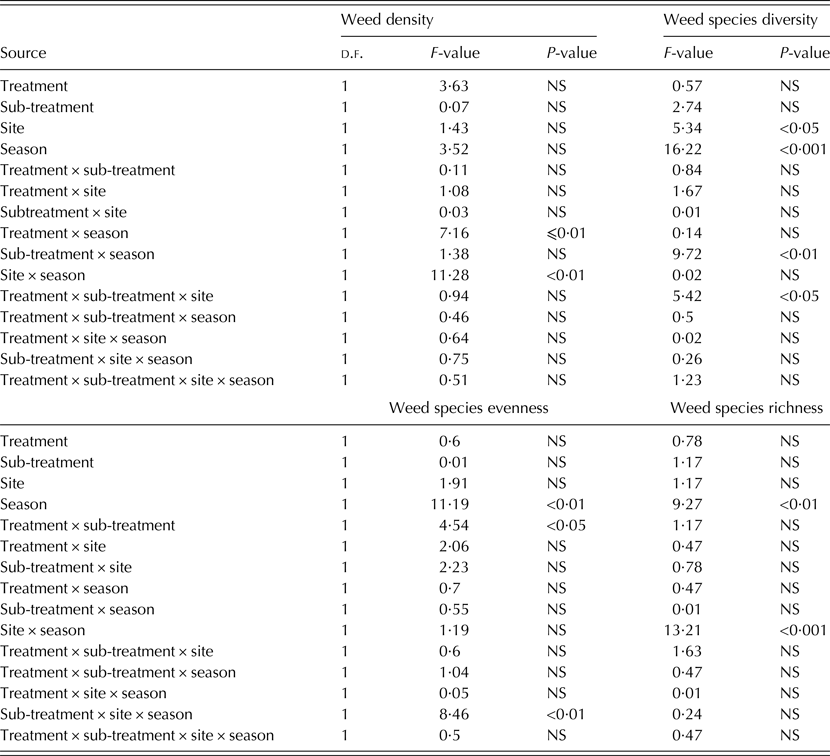
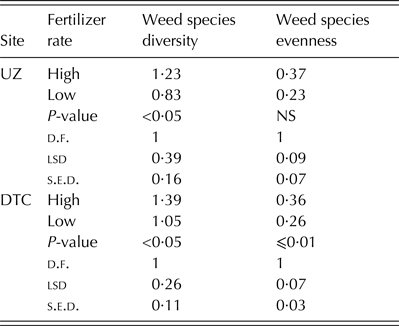
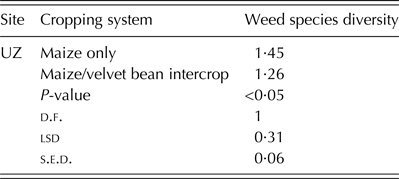
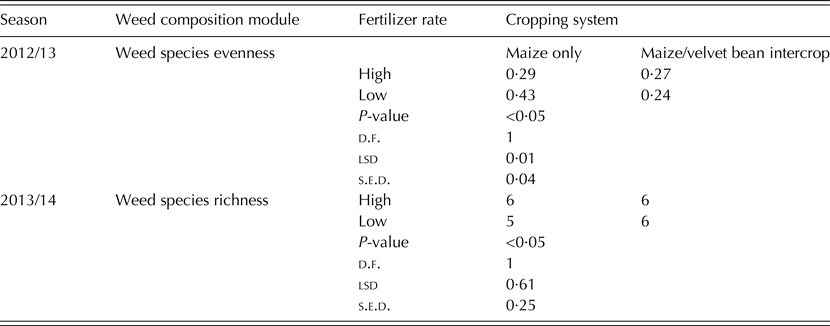
Site-by-season interaction significantly (P < 0·05) affected weed density and richness, as shown by the output of the linear mixed model (Table 3). Significant differences (P < 0·05) in the response of weed species diversity, weed species evenness and weed species richness were noted across seasons (Table 3). Weed species diversity was also significantly different (P < 0·05) across sites and was significantly (P < 0·05) affected by the interaction of fertilizer rates and different seasons, and also by the interaction of cropping system, fertilizer rates and sites (Table 3). The effects of the cropping systems, fertilizer rates, sites and seasons were noted on weed species evenness in the linear mixed model (Table 3). Different cropping systems, fertilizer rates and their interactions had no significant effect on total weed density at both UZ and DTC in the 2012/13 and 2013/14 seasons. In the 2012/13 season, different fertilizer rates significantly affected weed species diversity at UZ (P < 0·05) and DTC (P < 0·05), with the higher species diversity being noted in maize fertilized at the higher fertilizer rate, i.e. 1·23 and 1·39, respectively (Table 4). Weed species diversity also varied significantly (P < 0·05) between the cropping systems in the 2013/14 season at UZ, with higher diversity observed in the control, i.e. 1·45 compared with the maize/velvet bean intercrop with a diversity of 1·26 (Table 5). At DTC in the 2012/13 season, cropping systems and fertilizer rates interaction significantly affected weed species evenness (P < 0·05), while the eveness significantly differed under the two fertilizer rates (P ⩽ 0·01) (Table 6). The interaction of the control (maize only cropping system) and lower fertilizer rate had the greatest species eveness of 0·43 compared with the other interactions, while it had the lowest weed species richness (5 weed species/m2) in the 2013/14 season at DTC (Table 6). The other interactions all had 6 weed species/m2 (Table 6).
Linear mixed model (combined model) output explaining the effects of different maize-cover crop intercrops (treatment), fertilizer rate (sub-treatment), site and season on weed density, species diversity, species evenness and species richness at the University of Zimbabwe farm (UZ) and Domboshawa Training Centre (DTC), in the 2012/13 and 2013/14 seasons

Effects of different fertilizer rates (sub-treatment) on weed species diversity and weed species evenness at University of Zimbabwe farm (UZ) and Domboshawa Training Centre (DTC), in the 2012/13 season

Effects of different cropping systems (treatment) on weed species diversity at University of Zimbabwe farm (UZ) in the 2013/14 seasons

Effects of the interaction of different maize-cover crop intercrops and fertilizer rates on weed species evenness and weed species richness at Domboshawa Training Centre (DTC) in the 2012/13 and 2013/14 seasons

Effects of different cropping systems, fertilizer rates and their interactions on maize grain and biomass (stover) yields
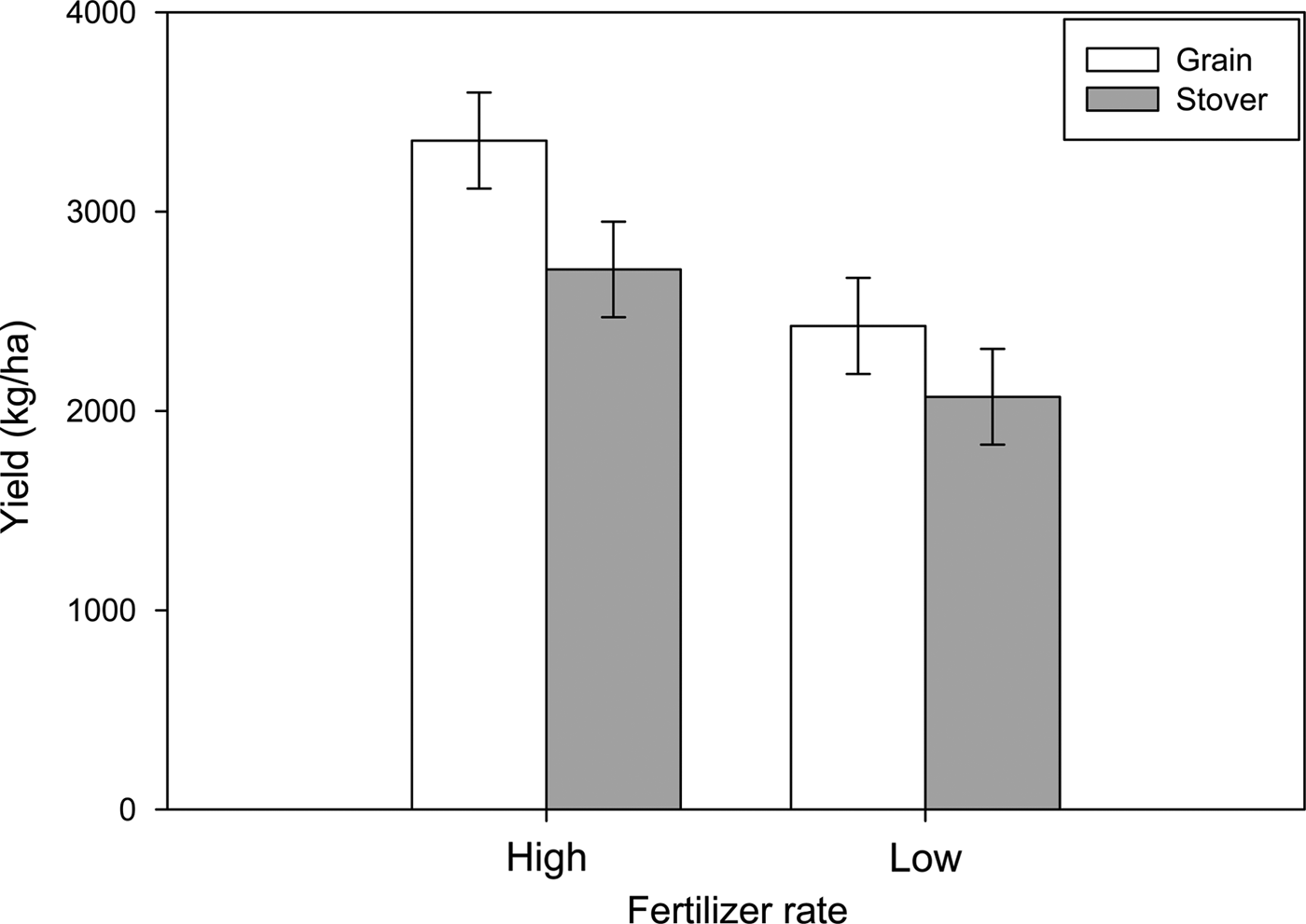
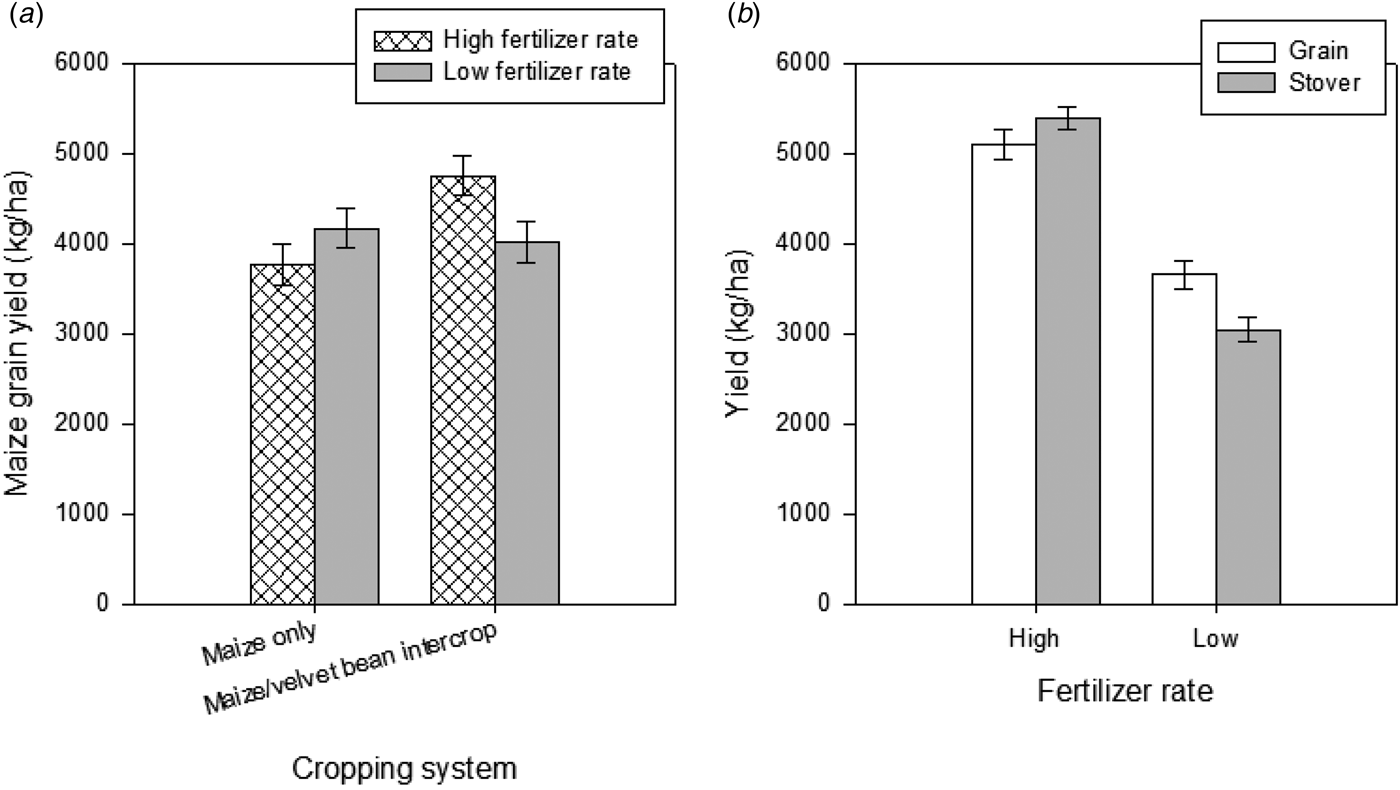
At both sites and in the 2011/12 at DTC season and in the 2012/13 season at UZ, cropping systems, fertilizer levels and their interactions had no significant effects on maize grain and stover yields. Only different fertilizer rates at DTC significantly affected maize grain and stover yields in the 2012/13 season (P ⩽ 0·01 and P < 0·05 respectively) (Fig. 2). Maize that received fertilizer at the higher rate at DTC attained the higher grain and stover yields in 2012/13, 3·4 and 2·7 t/ha, respectively (Fig. 2). The interaction of cropping systems and fertilizer rates had significant (P < 0·05) effects on maize grain yield, with the greatest grain yield being attained by maize intercropped with velvet bean under the higher fertilization rate (4·6 t/ha) (Fig. 3(a)). As noted at DTC in the 2012/13 season, different fertilizer rates also affected both grain (P < 0·001) and biomass (P < 0·05) yields in the 2013/14 season with higher grain and biomass yields of 5·1 and 5·3 t/ha being attained by maize that received higher fertilizer rates [Fig. 3(b)].
Effects of different fertilizer rates on maize grain and stover yields at Domboshawa Training Centre (DTC) in the 2012/13 season. Error bars represent the standard error of difference (s.e.d.).

(a) Maize grain yield as affected by cropping system and fertilizer rates interaction and (b) maize grain and biomass yield as affected by fertilizer rates at Domboshawa Training Centre (DTC) in the 2013/14 season. Error bars represent the standard error of difference (s.e.d.).

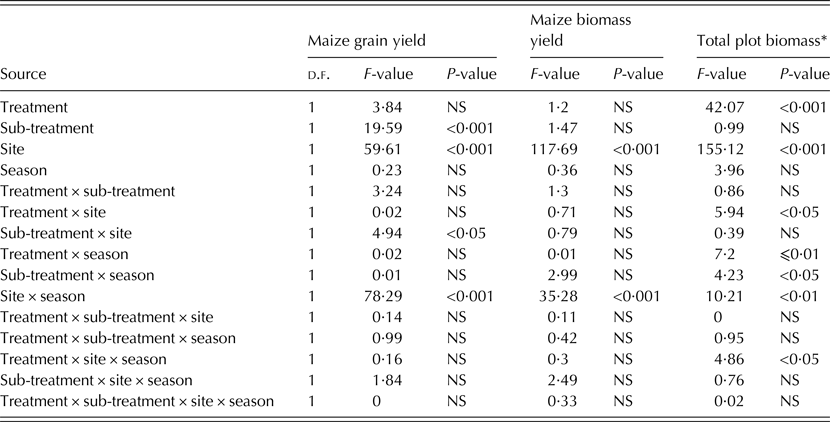
However, the linear mixed model showed that fertilizer rates, sites and their interaction, and the interaction of site and season affected maize grain yield significantly (P < 0·05, Table 7). On the other hand, sites and their interaction with seasons significantly (P < 0·05) affected maize biomass yield (Table 7).
Linear mixed model (combined model) output explaining the effects of different cropping systems (treatment), fertilizer rates (subtreatment), site and season on maize grain and biomass yields, and total plot biomass yield at University of Zimbabwe farm (UZ) and Domboshawa Training Centre (DTC), in the 2012/13 and 2013/14 seasons

* Total plot biomass = maize stover yield plus cover crop biomass yield within respective plots.
Velvet bean–maize intercrop, fertilizer rates and their interaction effects on total biomass yields
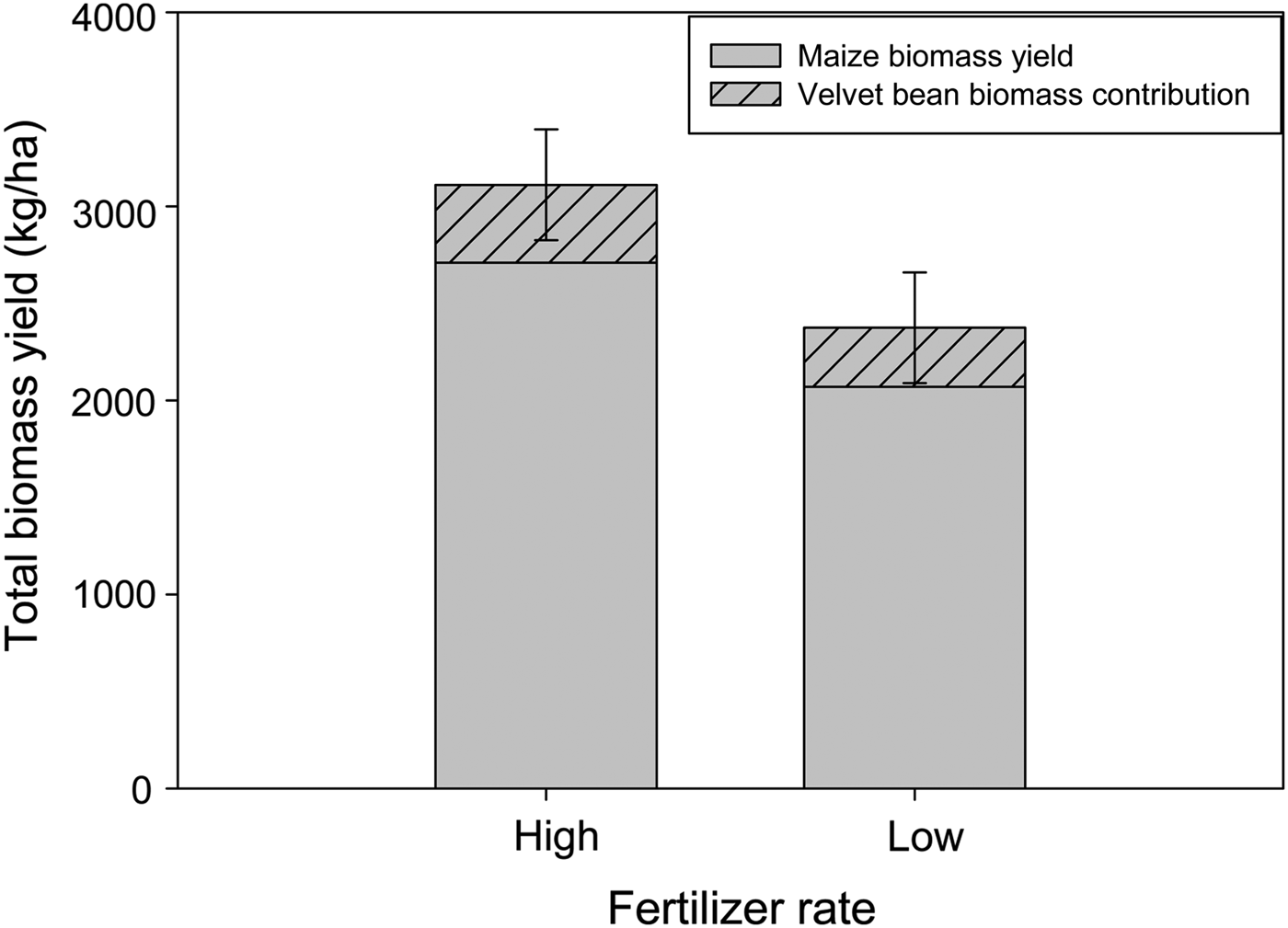
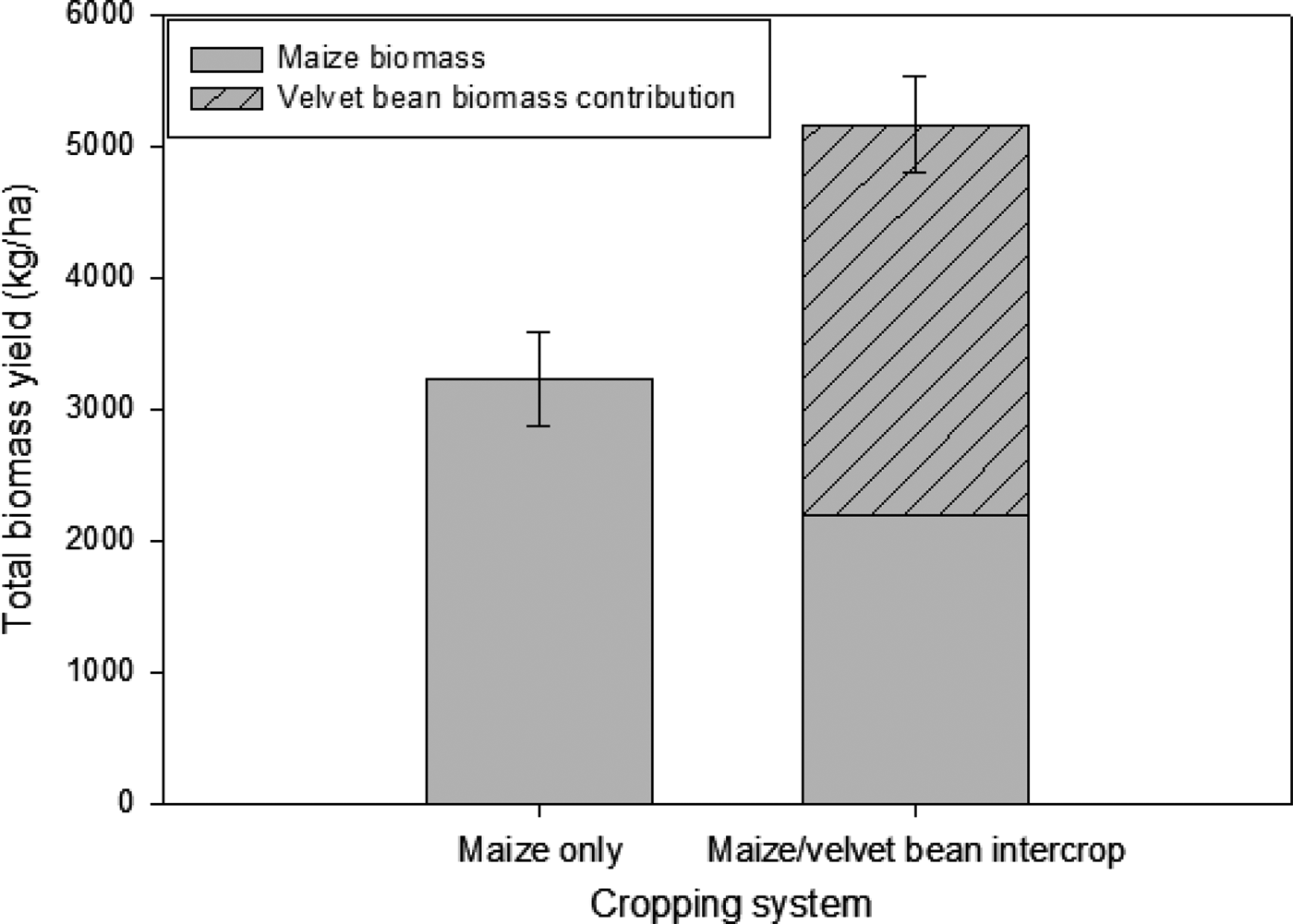
Cropping systems had no significant effects on total plot biomass in the 2011/12 and 2013/14 seasons at DTC and in the 2012/13 season at UZ. Total plot biomass was significantly (P < 0·05) affected by fertilizer rates at DTC in the 2012/13 season only while velvet bean maize intercrop system influenced total biomass yield in the final season (2013/14) at UZ. In the 2012/13 season at DTC, a greater total plot biomass of 3·1 t/ha was observed in the higher fertilizer rate as compared to 2·4 t/ha observed in the lower fertilizer rate (Fig. 4). In the 2013/14 season at UZ, significant differences in total plot biomass yield were noted (P ⩽ 0·01), with maize/velvet bean intercrop attaining greater biomass yield of 5·4 t/ha compared to the control with 3·0 t/ha (Fig. 5). Cropping systems, sites, and their interaction had a significant (P < 0·05) effect on total plot biomass yields as shown by the linear mixed model output (Table 7). Season and its interactions with cropping systems, sites, and fertilizer levels also had an influence on total plot biomass (Table 7).
Amount of total plot biomass harvested from maize and velvet bean in the 2012/13 season at Domboshawa Training Centre (DTC) as affected by fertilizer levels. Error bars represent the standard error of difference (s.e.d.).

Effects of cropping systems on total plot biomass in the 2013/14 season at University of Zimbabwe (UZ) farm. Error bars represent the standard error of difference (s.e.d.).

DISCUSSION
Effects of different cropping systems, fertilizer rates and their interactions on total weed density (total for all sampling dates) and weed composition
Different weed seedbanks were found at the two sites and this resulted in different weed diversity across the sites. As previously reported by Mhlanga et al. (Reference Mhlanga, Cheesman, Maasdorp, Mupangwa and Thierfelder2015), more weeds were found in the sandy soils of DTC with a richer weed seedbank. Since the performance of the relay crop depended on rainfall received and its distribution within a season, its performance, and therefore its suppressive effect on weeds, also differed across the seasons, hence the significant difference on cropping system and/or site and season interaction. Fewer weeds would be expected in seasons where more rainfall was received and well distributed within and/or across sites since the performance of velvet bean would be better in those seasons. Weeds were more diverse in some seasons and sites compared to others. This may be attributed to the amount of rainfall that was received in each season, which led to the emergence of more weed species (increased richness) or to the differences in seed bank richness, thus increasing the weed species diversity. Some weed species have seed dormancy that is broken by the presence of nitrates and these were promoted by the additional N and P from mineral fertilizers under higher fertilization (Stevenson et al. Reference Stevenson, Legere, Simard, Angers, Pageau and Lafond1997). This could be the reason why greater weed diversity was observed, caused by the emergence of more uncommon weeds. GMCCs smother some weed species more than others by shading them and by competing for nutrients and other growth elements, leading to reduced numbers of these weeds (Fisk et al. Reference Fisk, Hesterman, Shrestha, Kells, Harwood, Squire and Sheaffer2001). This explains why weed diversity was lowest in maize/velvet bean intercrops, as this would mean that some weed species were reduced in numbers to very low levels (Liebman & Dyck Reference Liebman and Dyck1993; Taylor Reference Taylor2012).
High evenness values observed in the interactions that involved velvet bean in some seasons may be explained by a reduction in numbers of weeds such as Galinsoga parviflora Cav. that were dominant but then decreased in number to population densities of other weeds, hence raising the diversity and the evenness (Whittaker Reference Whittaker1965; Mhlanga et al. Reference Mhlanga, Cheesman, Maasdorp, Mupangwa and Thierfelder2015). Since velvet bean is a legume, nitrates released from residue decomposition might have stimulated the emergence of some weeds species such as Ricardia scabra L., though in fewer numbers, leading to increased species richness. This same effect of these nitrates on weed emergence was also discussed earlier in this section, focussing on mineral fertilizers.
Effects of different cropping systems, fertilizer rates and their interactions on maize grain and stover yields
Benefits of relay crops to companion crops can be noted at different growth stages of the companion crops depending on the time they are introduced into the system (Lesoing et al. Reference Lesoing, Moomaw and Francis1991). In the present study, velvet bean was introduced at approximately the anthesis period. Due to this late introduction into the system, the benefits from the relay cropping were most likely to be noted in the succeeding season, since the velvet bean would grow into the dry season. Relayed velvet bean can give benefits such as weed suppression during the off-season period and supplementing N (Peachey et al. Reference Peachey, Luna, Dick and Sattell1999; Boddey et al. Reference Boddey, Alves, Urquiaga, Uphoff, Ball, Fernandes, Herren, Husson, Laing, Palm, Pretty, Sanchez, Sanginga and Thies2006). However, since the establishment of the investigated relay crops was compromised and poor biomass yields were attained in most seasons, the benefits of incorporating them into the maize system were not significant in terms of improving yields of the succeeding maize crop. No effects of cumulative organic matter, organic N or organic carbon were observable from the additional biomass produced by the GMCCs and retained in the field in the subsequent season. As also ascertained by Mhlanga et al. (Reference Mhlanga, Cheesman, Maasdorp, Mupangwa, Munyoro, Sithole and Thierfelder2016), introducing velvet bean into a standing maize crop did not compromise the yield of the maize.
The effects of the combination of fertilizer rates and velvet bean were only pronounced in the final season at UZ because the velvet bean established better in that season compared with the others. Due to this good establishment, velvet bean contributed to moisture conservation and weed suppression. Across the seasons and sites, the differences between the yields could be attributed mainly to rainfall differences, with higher yields being observed at sites with higher organic matter found in the clay soils.
Velvet bean–maize intercrop, fertilizer rates and their interaction effects on total plot biomass yields
Total plot biomass in the present study was a contribution from maize stover and velvet bean biomass. Biomass yields of the relayed velvet bean were relatively low at both sites compared to previously reported potential yields, e.g. yields as high as 3·2 t/ha when planted as a sole crop reported by Kaizzi et al. (Reference Kaizzi, Ssali and Vlek2004). As an intercrop, it did not perform due to poor establishment. The performance of velvet bean was compromised by late planting and this resulted in its development coinciding with falling early winter temperatures. The development of velvet bean depended much on the amount of rainfall received in each season, as reflected in the poor biomass yields.
However, due to the influence of fertilization rates that resulted in more maize biomass yields under higher fertilization, the contribution of maize biomass to the total plot biomass resulted in more total plot biomass being observed under higher fertilizer rates. On the other hand, in the 2013/14 season, UZ received more rainfall than DTC and this also resulted in greater biomass yields at this site. More velvet bean biomass yield was attained in this season compared to the 2012/13 season and this may be attributed to greater contribution from velvet bean biomass to the total plot biomass, thus resulting in greater total plot biomass being observed under maize/velvet bean intercrops.
Generally, the short rainy period and enhanced competition from maize due to late planting might have affected the growth of velvet bean, resulting in low yields. The yields were lower than those obtained in the study carried out by Maasdorp & Titterton (Reference Maasdorp and Titterton1997), in which velvet bean planted at the same time with maize constituted 300 g/kg of the dry matter yield of the intercrop system but compromised maize yield due to high competition. Other relay crops were planted but excluded from analysis in the present study, such as hairy vetch and blue lupin, that have previously been reported to thrive in winter conditions without being killed by frost (Heuzé et al. Reference Heuzé, Tran and Baumont2013). However, these yielded low biomass due to poor crop emergence, leading to low plant population densities.
CONCLUSION AND RECOMMENDATIONS
Results of the present study show that velvet bean can be relayed into a standing maize crop from 8 weeks after planting the maize onwards without compromising the maize yields. Velvet bean yielded less biomass than its potential, although it showed promise (easy establishment, best biomass production in the sub-optimal conditions, weed smothering) as a relay crop. Velvet bean has better emergence, hence is easier to grow, by cash-constrained smallholder farmers since there is no need for repeated planting, thereby reducing seed and labour needs. Velvet bean is also a good fodder crop, so if farmers intend to improve their soil fertility by using it there is bound to be competition between it being grazed by free-roaming cattle in the dry season and being used as a GMCC. If farmers opt to retain maize residues for ground cover, as in CA systems, and use cover crop biomass for fodder or vice versa, then according to the present study biomass yield from velvet bean is likely to be insufficient for either purpose if planted late. From the results of the present study, it can be concluded that in areas where rainfall is seasonal, delays in introducing velvet bean can progressively compromise its yield potential. Maize productivity and weed density are dependent on concentration of mineral fertilizer applied with higher maize yields and weed densities being obtained with higher rates of fertilization. If velvet bean is introduced too late in the season, it will fail to suppress the weeds promoted by higher fertilization rates. In conclusion, velvet bean may potentially be used in maize based cropping systems but there is a need to investigate the effects of higher seeding rates to evaluate their effects on the productivity of the system. There is also a need to identify other potential relay crops for areas in the present study besides velvet bean to increase the options for smallholder farmers. The N dynamics of intercropping systems are worth investigating to improve understanding of velvet bean's contribution as a relay crop to the maize-based systems.
The International Maize and Wheat Improvement Centre under the MAIZE CGIAR Research Programme funded the project. We thank personnel at University of Zimbabwe and Domboshawa Training Centre for their assistance in data collection.