




No CrossRef data available.
Article contents
Quality of life in children with pulmonary atresia and intact ventricular septum
Published online by Cambridge University Press: 21 January 2005
Abstract
Objective: To measure quality of life in children with pulmonary atresia and intact ventricular septum, and make comparisons with a healthy group of children from the general Swedish population. An additional aim was to compare quality of life in two subgroups, children undergoing biventricular and univentricular repair, the latter by establishment of the Fontan circulation. Methods: Quality of life was measured using a mailed questionnaire, taking into consideration the three spheres of personal, interpersonal, and external living conditions. In all, 52 children received the questionnaire, and the answers were compared with those of a random sample of 1856 healthy Swedish children. Results: We received responses from 42 children and parents. The overall differences between groups were small, and no difference was found when comparing the children undergoing univentricular as opposed to biventricular surgical repair. In terms of personal quality of life, we found a higher level of psychosomatic complaints, and lower satisfaction with their own and parent–child activities, in those with the congenital anomaly than in their normal peers. In terms of the interpersonal sphere, more time was available for those with malformed hearts, but the experience of support from the relatives was significantly lower. Conclusions: Overall, quality of life was equal between children with pulmonary atresia and intact ventricular septum and the children in the reference group. The personal psychological conditions were less favourable for children with pulmonary atresia and intact ventricular septum. The perceived lack of support from relatives was also higher in these families. No difference was found when comparing the children undergoing univentricular and biventricular surgical repair.
Information
- Type
- Original Article
- Information
- Copyright
- © 2004 Cambridge University Press
Pulmonary atresia and intact ventricular septum is an uncommon congenital cardiac malformation, with an incidence of 4.2 for each 100,000 live births.1 The anatomic substrate is atresia of the junction between the pulmonary trunk and the right ventricle. The lesion can vary anatomically depending on the degree of hypoplasia of the right ventricle, with those having the smallest ventricles also frequently presenting with fistulous communications between the right ventricle and the coronary arteries. Although the possibilities for treatment have developed rapidly during the last sixty years, the mortality rate for children treated surgically still remains high, with even the best survivals at 1 year being in the order of 75%.1 To survive, the children usually have to undergo repeated, and sometimes difficult, surgical procedures, both in the neonatal period and later in life. There are two major options for treatment. The first, and preferable option, is to open the pulmonary valve, and incorporate the right ventricle in a biventricular circulation. The alternative is to create a functionally univentricular arrangement, when the systemic venous blood is conducted directly to the pulmonary arteries without passing through the heart. The univentricular option is usually chosen when the right ventricle is diminutive. Children undergoing the functionally univentricular repair generally have a lower working capacity, and they are considered to be more limited in their daily life than children having biventricular circulations. To achieve optimal surgical results for the individual, the surgeon has to decide whether to plan for univentricular or biventricular repair in the neonatal period. Studying the quality of life in the different groups, therefore, is of interest. These children are also exposed to life-threatening situations, with enormous psychological as well as financial challenges to the family. Because of this, we have compared their situation with that of families with healthy children.
There are several models for measuring quality of life. Some of these models have evolved to consider and evaluate the entire life situation of the human being, including external, internal and personal conditions.2–7 These models have been validated in population-based studies.2–5 We have chosen a method that takes life as a whole into account, using both objective and subjective measures. This model has been developed for evaluating a population of children.2, 3 It has been successfully used to compare quality of life in children with congenital cardiac malformations with healthy children.8
Material and methods
Patients and reference groups
The study group consisted of children with pulmonary atresia and intact ventricular septum treated surgically. During the period 1980–1999, 84 such children were born in Sweden. Of these 84, 52 were alive in December 1999.1 They received a mailed questionnaire concerning quality of life in accordance with the model described. Of the families, 42 (80%) responded after one reminder. The respondents consisted of 42 children aged from 1 to 20 years, with a median age of 8.5 years, and comprised 19 boys and 23 girls. The questionnaire was answered by the child, mother and father in 11 cases, mother and father in 13 cases, mother alone in 15 cases, and the father alone in three cases.
Surgery had been performed from one to seven times, with a median of two times (Table 1). Of the children, 26 (62%) had undergone biventricular repair, and 16 (38%) treated with the aim of establishing a functionally univentricular circulation. In 15 children (36%), ventriculocoronary artery fistulas had been identified, and these were therefore considered to have a more serious type of cardiac malformation. Such fistulas were present in four of the children undergoing biventricular, and 11 of those having a functionally univentricular repair.
Table 1. Patient characteristics.

A total of 29 children were reported, according to their medical records, to live a normal life, in the first class of the system developed by the New York Heart Association, another six were reported to have reduced working capacity but to be living normal lives, in the second class identified by the New York Heart Association, and two were reported to have reduced working capacity influencing their daily life, the third class following the approach of the New York Heart Association. In five, it was not possible to grade the functional status.
The group of non-respondents consisted of 10 children, aged from 1 to 16 years of age, with a median of 5.5 years, and comprising nine boys and one girl. In both groups, the morphology of the cardiac defects, the choice of surgery, and the reported level of physical capacity were similar.
The reference group is part of a large population studied to establish the health and well-being of children in the five Nordic countries in 1996.2 Our group consisted of a random sample of children aged from 2 to 18 years drawn from the population register in Sweden in 1996. Questionnaires directed to children may require proxy respondents, especially when young children are included. In the present study, the parents served as proxies. The parent who was most familiar with the child's situation was instructed to fill in the mailed questionnaire, together with the child if possible. The total number of children responding in the reference group was 1856. The non-response rate was 31%. Parents with poor education, working class parents, and one-parent families were over-represented among non-responders.
Quality of life model and measures
The project was approved by the medical ethics committee and informed consent was obtained from each participant. Information on medical follow-up was obtained from a previous study.1 Quality of life was measured according to the model of Lindström, which has been validated in large population studies.2, 3, 6–8 Quality of life is defined as the essence of existence of the individual, which presupposes the necessary internal and external resources for a good life, taking into consideration the three spheres of external, interpersonal, and personal aspects.3–8 Objective conditions, factual measures, and perceived subjective satisfaction are included in all dimensions. Every child has a personal sphere, which is experienced in a context of social relationships and support. This in turn has a socio-economic context. Beyond this, at the macro level, there is the society. Since the family forms the contextual framework for the quality of life of the child, we included reports on both the family and the child. A combined set of variables was used to study the quality of life of children. Every variable had a defined base level, which was specified to meet the needs of children in Sweden. For the analysis, all variables were dichotomised with values of one and zero. The value of one reflects being above the base level, zero being below. The quality of life spheres, indicators, and base levels are presented in Table 2.
Table 2. Quality of life indicators and base levels.

The external sphere represented the socio-economic status of the family, and included the three dimensions of work, financial situation of the family, and housing. The interpersonal sphere represented the structure and function of the networks inhabited by the child, and included the three dimensions of family, intimate relationships, and social support. The personal sphere represented the psychological well-being of the child. This included the three dimensions of activities, self-esteem, and basic mood.
Statistical analysis
The statistical analyses were all performed using the SPSS/PC software package. Proportions based on simple variables exceeding base level and means of such proportions within a sphere are used in the analysis. In the comparison of proportions, we used the χ2-test, with a 5% level of significance.
Results
The external sphere (see Table 3)
Table 3. The external sphere of quality of life in children with the cardiac malformation compared with a healthy group of children in the general Swedish population, and a comparison between children subjected to functionally univentricular as opposed to biventricular repair. Values are percentage of families exceeding base level.

There was a trend towards lower educational level among parents in the group of children with pulmonary atresia and intact ventricular septum than in the reference group, but there were no significant differences in the occupations of the parents or in the satisfaction with working conditions, between the groups. The level of income, and the satisfaction with the financial situation, was slightly higher in families including children with pulmonary atresia and intact ventricular septum than in the other group. Housing did not differ significantly between the groups. There were no differences in the total external quality of life between the groups.
Interpersonal quality of life (see Table 4)
Table 4. The interpersonal sphere of quality of life in children with the cardiac malformation compared with a healthy group of children in the general Swedish population, and a comparison between children subjected to functionally univentricular and biventricular repair. Values are percentage of families exceeding base level.

The children with pulmonary atresia and intact ventricular septum had more siblings than those making up the reference group. Parents of the children with pulmonary atresia and intact ventricular spent more time with their children than did parents in the reference group. Major negative life events, such as separation, divorce, or death, were as frequent in the group of families including children with pulmonary atresia and intact ventricular septum as in the reference group. The families of those with the congenital cardiac anomalies indicated that they received less support from their extended families than did families in the reference group (p < 0.05). They were also less satisfied with their family life and social contacts in general. The total outcome regarding the interpersonal quality of life was very similar for the two groups.
Personal quality of life (see Table 5)
Table 5. The personal sphere of quality of life in children with the cardiac malformation compared with a healthy group of children in the general Swedish population, and a comparison between children subjected to functionally univentricular and biventricular repair. Values are percentage of families exceeding base level.

The activity level included both the activities of the children, and the combined activities of parent and child. The children with pulmonary atresia and intact ventricular septum had a trend towards a higher independent level of activity, and also a trend towards more activities with their parents, than did the reference group. Satisfaction with activities, however, was lowest among the families of the children with pulmonary atresia and intact ventricular septum (p < 0.05). Self-esteem was very similar between the children with pulmonary atresia and intact ventricular septum, and children in the reference group. There were more psychosomatic complaints in the group of children with pulmonary atresia and intact ventricular septum than in the reference group. Peer acceptance was the same between the groups. The total outcome regarding personal quality of life was the same for the groups.
Overall quality of life (see Table 6)
Table 6. Overall quality of life in children with the cardiac malformation compared with a healthy group of children in the general Swedish population, and a comparison between children subjected to functionally univentricular and biventricular repair. Values are percentage of families exceeding base level.

The children with pulmonary atresia and intact ventricular septum rated well regarding the external and interpersonal spheres, but there was a trend toward lower rating regarding the personal sphere. The objective conditions, and the subjective perceptions of them, were on the same level in the group of children with pulmonary atresia and intact ventricular septum and the reference groups. The overall quality of life did not differ between healthy children and children with pulmonary atresia and intact ventricular septum, or between children undergoing biventricular as opposed to univentricular repair.
Discussion
There are few reports on quality of life in children with congenital cardiac malformations that explore the perception of life by the child in relation to objective parameters such as housing, education of the parents, and financial situation.9 Some previous studies have focused on children with similar physical impairments, after surgical palliation, showing behavioural differences compared to healthy children.10–12
Our main finding is that there are very few differences between children with pulmonary atresia and intact ventricular septum and healthy children. This is in agreement with the findings of other studies, although most of these studies concerned children with all kinds of congenital cardiac anomalies.8, 9, 13 The children in our study all had the same malformation, and the majority of these children did not experience limitations in their daily life.
As surgery for children with functionally univentricular hearts has increased dramatically in recent decades, measures of quality of life in these children are of great concern. In follow-up studies of adults with such hearts after construction of the Fontan circulation, the majority of the patients are in the first or second classes of the system devised by the New York Heart Association, and are living normal lives.14, 15 In a report on the neurodevelopmental outcome of school-aged and adolescent children with the functionally univentricular circulation due to hypoplasia of the left heart, almost nine-tenths judged their health as excellent or good, and more than four-fifths judged their school performance as average or above average.16 The results of our study did not reveal any difference in quality of life when comparing children with pulmonary atresia and intact ventricular septum having a univentricular as opposed to a biventricular repair, although the small number of children makes such comparisons difficult. To our knowledge, this sort of comparison of children with the same kinds of congenital cardiac lesion has not previously been made. In a follow-up of 40 patients with pulmonary atresia and intact ventricular septum and a functionally univentricular circulation, 33 of 34 survivors considered themselves to be in the first or second functional classes according to the New York Heart Association, and were doing full time studies or working full time.17 The anatomy of pulmonary atresia and intact ventricular septum may be favourable for the functionally univentricular circulation, since there is usually a well-functioning left ventricle as the systemic pumping chamber, a left-sided competent atrioventricular valve, and usually no pulmonary arterial distortion.18
The most significant difference in our study comparing healthy children and children with congenital cardiac anomalies was found at the personal level, regarding the degree of psychosomatic complaints and the satisfaction with activities as reported by others. This is in line with some other findings,8 but the results from studies of psychosomatic complaints in children with congenital cardiac lesions are contradictory. In a Brazilian study, nine-tenths of children aged from 12 to 19 who had undergone cardiac surgery in childhood judged their lives to be good because they were symptom-free and living well without physical restrictions.13 But the wellbeing of the child must be seen in the context of the family and overall family well-being.3, 19 The experience of disability, the demands made on the parents for caring, plus their levels of stress and abilities to cope with the disability, all differ from child to child.19 Many investigations show that disabled children have more psychosomatic complaints, and lower self-esteem, than healthy children.20, 21 Long-term follow-up with questionnaires in adults treated for congenital heart defects show that this group of people tend to be successful in society, but to have significantly more psychological problems, including anxiety and depression.22–24 This anxiety is not always in proportion to the severity of the cardiac defect, and even some adults with completely cured defects may have more psychological problems than the normal population. Our overall impression is that the children and their families do very well, but experience stress and worry. More knowledge about the cardiac anomaly, the surgery, the expected clinical course, and the ability of the individual, would probably reduce this anxiety. It is a challenge to cardiologists to explore the ability of their patients, and to inform the child and the family in a comprehensive manner.
The families of children with surgically treated complex cardiac disease experience more stress than do the families of healthy children.12 In our study, satisfaction with the support from relatives was lowest in the families of children with pulmonary atresia and intact ventricular septum. Studies of children with chronic diseases show that the psychological wellbeing of the family is related to the psychological adjustment of the child.19 These families need a great deal of support from relatives and extended networks. These families were also less satisfied with their networks in general. The increased need for support may be a result of the complexity of the cardiac anomaly, requiring repeated surgery and extensive medical attention.
We found no difference in support from society when families of children with pulmonary atresia and intact ventricular septum were compared with families with healthy children, in contrast to the findings of other studies of children with congenital cardiac anomalies.8 The financial level of the families of children with pulmonary atresia and intact ventricular septum in our study was slightly higher than that of the normal population. This may to some extent reflect a higher total income, explained by special family allowances in Sweden.
Methodological considerations
There are few other quality of life instruments for children that have been tested and validated in large population-based studies.2, 3, 5, 20 The advantage of the measure used in our study is that it captures most relevant aspects of the life of the child, including physical, social, and mental components. The instrument used here is a generic one, which refers to a general approach available to anyone regardless of condition or situation. The non-respondents differed from the group as a whole in being younger, with boys overrepresented. In the group of those who failed to respond, the morphology of the cardiac defect, and degree of physical impairment according to New York Heart Association, were the same as for the respondents.
Our work has certain limitations, such as consisting of a relatively small group of children with pulmonary atresia and intact ventricular septum, and being heterogeneous concerning the degree of cardiac malformation and surgical results. The parents, and among them the mothers, answered most of the questions, which may influence the results, as shown in other studies, where gender differences were found in physical, psychological, social and spiritual dimensions.25 In future studies, information should be collected using separate questionnaires for children and parents.
The data in the present study are dichotomised, which requires a defined level of quality of life. The level is influenced by the culture in the Nordic countries, the social climate and the definition of what constitutes good quality of life for any given subject. A quality of life instrument scored on a continuous scale are more rigorous and allows a more detailed analysis as shown by Culbert et al.9 when exploring quality of life of children after repair of transposition.
Conclusions
The study results show that children with pulmonary atresia and intact ventricular septum have, and perceive that they have, good material and socio-economic conditions. Examination of interpersonal relationships shows that the perception of lack of support from relatives and from society was greater in these families than in the reference group. Personal psychological conditions were found to be less favourable for the children with pulmonary atresia and intact ventricular septum than the reference children.
Acknowledgements
The study was supported by grants from the Swedish Heart Children's Foundation.
References
Ekman-Joelsson BM, Sunnegårdh J, Hanséus K, et al. The outcome of children born with pulmonary atresia and intact ventricular septum in Sweden from 1980 to 1999. Scand Cardiovasc J 2001; 35: 192–198.Google Scholar
Berntsson L, Köhler L. Quality of life among children aged 2–17 years in the five Nordic countries. Comparison between 1984 and 1996. Eur J Public Health 2001; 11: 437–445.Google Scholar
Lindström B, Eriksson B. Quality of life among children in the Nordic countries. Quality of Life Research 1993; 2: 23–32.Google Scholar
Pal DK. Quality of life assessment in children: a review of conceptual and methodological issues in multidimensional health status measures. J Epidemiol Community Health 1996; 50: 391–396.Google Scholar
Raphael D. Determinants of health of North American adolescents: evolving definitions, recent findings, and proposed research agenda. J Adolesc Health 1996; 19: 6–16.Google Scholar
Bredow TS, Peterson SJ. Health-related quality of life. In: Peterson SJ, Bredow TS (eds). Middle Range Theories: Application to Nursing Research. Lippincott Williams and Wilkins, Philadelphia, PA, 2004, pp 274–287.
Ferrans CE. Development of a conceptual model of quality of life. In: Ferrans CD (ed.). Clarifying Concepts in Nursing Research. Springer Publishing Company, New York, 1997, pp 110–121.
Möyen Laane K. Quality of life in children with congenital heart defects. Master of Science in Public Health. NHV-report 2000: 1. Nordic School of Public Health, Göteborg.
Culbert EL, Ashburn DA, Cullen-Dean G, et al. Congenital Heart Surgeons Society. Quality of life of children after repair of transposition of the great arteries. Circulation 2003; 108: 857–862.Google Scholar
Casey FA, Craig BG, Mulholland HC. Quality of life in surgically palliated complex congenital heart disease. Arch Dis Child 1994; 70: 382–386.Google Scholar
Dunbar-Masterson C, Wypij D, Bellinger DC, et al. General health status of children with D-transposition of the great arteries after the arterial switch operation. Circulation 2001; 104 (12 Suppl 1): 1138–1142.Google Scholar
Casey FA, Sykes DH, Craig BG, Powe R, Mulholland HC. Behavioral adjustment of children with surgically palliated complex congenital heart disease. J Pediatr Psychol 1996; 21: 335–352.Google Scholar
Favarato ME, Romano BW. Heart surgery in childhood. Impact on the quality of life of adolescents. Arq Bras Cardiol 1994; 62: 171–174.Google Scholar
Mair DD, Puga FJ, Danielsson GK. The Fontan procedure for tricuspid atresia: early and late results of a 25-year experience with 216 patients. J Am Coll Cardiol 2001; 37: 933–939.Google Scholar
Gentles TL, Gauvreau K, Mayer J, et al. Functional outcome after Fontan operation: factors influencing late morbidity. J Thorac Cardiovasc Surg 1997; 114: 392–403.Google Scholar
Mahle WT, Clancy RR, Moss EM, Gerdes M, Jobe, Wernovsky G. Neurodevelopmental outcome and lifestyle assessment in school-aged and adolescent children with hypoplastic left heart syndrome. Pediatrics 2000; 105: 1082–1090.Google Scholar
Mair DD, Julsrud PR, Puga FJ, Danielsson GK. The Fontan procedure for pulmonary atresia with intact ventricular septum: operative and late results. J Am Coll Cardiol 1997; 29: 1359–1364.Google Scholar
Gentles TL, Mayer JE, Gauvreau K, et al. Fontan operation in five hundred consecutive patients: factors influencing early and late outcome. J Thorac Cardiovasc Surg 1997; 114: 376–391.Google Scholar
Wallander J, Varni J, Babani L, Banis, H, Wilcox, K. Family resources as resistance for psychological maladjustment in chronically ill and handicapped children. J Pediatr Psychol 1989; 14: 157–173.Google Scholar
Köhler L. Children with and without disabilities in the Nordic countries. A Nordic project. Scand J Soc Med 1993; 21: 146–149.Google Scholar
Berntson LT, Gustafsson J-E. Determinants of psychosomatic complaints in Swedish schoolchildren aged seven to twelve years. Scand J Public Health 2000; 28: 283–293.Google Scholar
Saliba Z, Bustera G, Bonnet D, et al. Quality of life and perceived health status in surviving adults with univentricular hearts. Heart 2001; 86: 69–73.Google Scholar
Ternestedt BM, Wall K, Oddsson H, Reisenfeld T, Groth I, Schollin J. Quality of life 20 and 30 years after surgery in patients operated on for tetralogy of Fallot and for atrial septal defect. Pediatr Cardiol 2001; 22: 128–132.Google Scholar
Bromberg JI, Beasly PJ, D'angelo EJ, Landzberg M, Demaso BR. Depression and anxiety in adults with congenital heart disease. A pilot study. Heart Lung 2003; 32: 105–110.Google Scholar
The WHOQOL Group, 1994. Quality of Life Assessment. What Quality of Life? In: World Health Forum. WHO, Geneva, 1996.
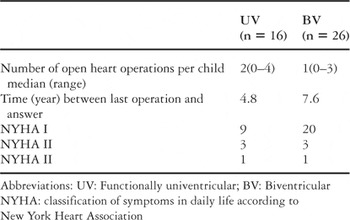
Table 1.
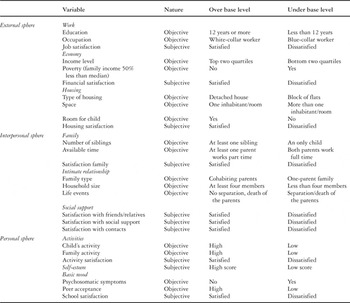
Table 2.
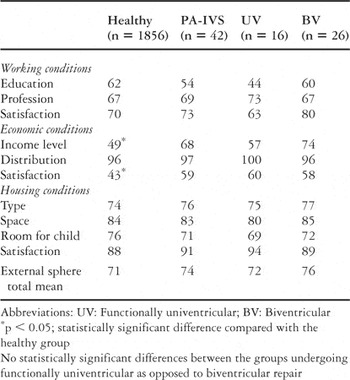
Table 3.
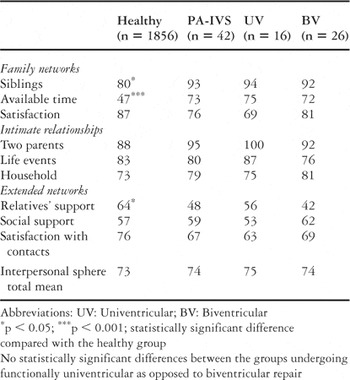
Table 4.
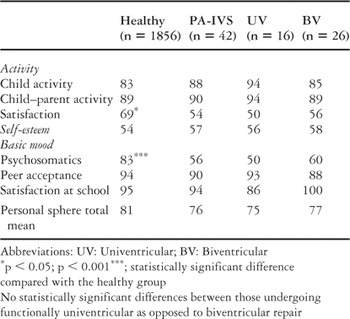
Table 5.
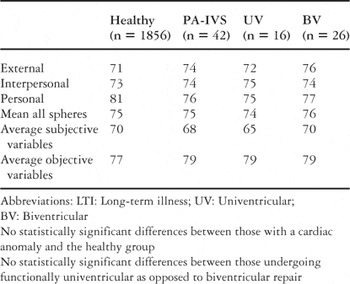
Table 6.
 You have
Access
- 26
- Cited by