Experiences, particularly those occurring during sensitive periods of development, are well recognized for their ability to canalize neurobiological trajectories and yield significant consequences for lifelong health and mental well-being. For some time now, it has also been recognized that proper brain development and lifelong function rely on the coordination of an extraordinarily complex set of neurodevelopmental events that involve genetic and environmental interactions. The past decade of behavioral epigenetics research has begun to shed light on mechanisms through which our experiences can interact with and become linked with our biology, providing a new framework to understand the brain's ability to change as a result of experience (i.e., plasticity) and thus how behavior can arise.
Although epigenetic modifications were originally thought to only program patterns of gene expression during cellular development and differentiation, a growing body of research has forced us to realize that such modifications can occur in response to a range of environmental signals occurring not only in infancy but also throughout the life span, and that these modifications have significance in regard to changes in gene regulation, neural plasticity, and behavior. To better understand the consequences of early and later-life stress on epigenetic mechanisms in this capacity, this has required the utilization of experimental rodent models in which the timing and duration of exposure to stress could be manipulated and carefully controlled and the subsequent neurobiological outcomes assessed. Such experimental endeavors also revealed that acquired epigenetic information is capable of being passed to other generations in some cases, and hence epigenetic alterations have emerged as a candidate biological pathway linking gene–environment interactions to multigenerational trajectories in behavioral development.
In this review, we will highlight the literature concerning these discoveries, paying particular attention to studies with implications for tenets central to the study of developmental psychopathology, particularly the examination of biological factors that facilitate behavioral change, mechanisms through which risk or protective factors operate to yield consequences for a phenotype, and objective measures of how we might define normal and abnormal development (Cicchetti, Reference Cicchetti1993, Reference Cicchetti, Cicchetti and Cohen2006; Sroufe & Rutter, Reference Sroufe and Rutter1984). We first discuss work linking epigenetics to learning and memory, the susceptibility to stress-related disorders, and cognitive impairment. We will then discuss rodent studies that have empirically demonstrated that epigenetic alterations occur in response to stress/trauma during and outside of sensitive periods of development to facilitate behavioral change. We also discuss studies in which the translation of these findings has been made to humans, and the idea that DNA methylation is a valuable biomarker indicative of norms or aberrations present at the molecular level. Finally, we end with suggestions of future directions we think are necessary to advance our understanding of epigenetics in plasticity.
Epigenetics Overview
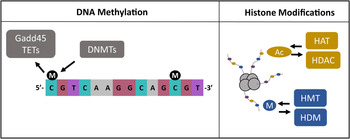
DNA methylation is an epigenetic modification that mainly occurs at cytosine residues of cytosine–guanine (CG) dinucleotides (Figure 1), though several studies have recently revealed that 5-methylcytosine (5mC) is also abundant at non-CG sites within the genome (Lister et al., Reference Lister, Mukamel, Nery, Urich, Puddifoot and Johnson2013; Shirane et al., Reference Shirane, Toh, Kobayashi, Miura, Chiba and Ito2013). Once considered a static epigenetic modification responsible for programming patterns of gene expression during cellular development and differentiation, DNA methylation is now recognized for its capacity to be dynamically regulated throughout the life span. The predominant view in the literature is that methylation of DNA is associated with the suppression of gene transcription. The precise molecular processes through which DNA methylation can suppress gene transcription are complex, but in general methylated cytosines (cytosines are methylated via enzymes called DNA methyltransferases) can bind repressor proteins, including the methyl-binding domain protein MeCP2 and histone deacetylases (HDACs; Moore, Le, & Fan, Reference Moore, Le and Fan2013). In line with this interpretation, most studies have been conducted under the framework that environmentally driven increases in DNA methylation will correlate with sustained decreases in basal levels of gene expression.
(Color online) Most commonly studied epigenetic mechanisms in plasticity and behavioral development. (Left) A schematic of DNA methylation occurring at cytosine–guanine dinucleotides, in which methyl groups (designated M) are added by DNA methyltransferase enzymes. Gadd45b and ten-eleven translocation proteins have been recently identified to actively demethylate the genome in response to environmental stimuli. (Right) Epigenetic marking of histone tails, including the processes of acetylation and methylation. Acetylation occurs when there is the addition of an acetyl group via an enzyme called histone acetyltransferase. Deacetylation occurs when the acetyl group is removed by enzymes called histone deacetylases. In a similar fashion, methyl groups can be added via histone methyltransferases or removed by histone demethylases.

It is important to note that while most evidence indicates that DNA methylation is associated with reduced gene activity, a handful of studies have indicated that DNA methylation can also be associated with transcriptional activation (Chahrour et al., Reference Chahrour, Jung, Shaw, Zhou, Wong and Qin2008; Uchida et al., Reference Uchida, Hara, Kobayashi, Otsuki, Yamagata and Hobara2011). The complexity between the relation between DNA methylation and gene transcription is further realized when one considers that DNA methylation changes do not always result in basal changes in gene expression, but can instead prime transcriptional responses to subsequent stimuli and neural activation (Baker-Andresen, Ratnu, & Bredy, Reference Baker-Andresen, Ratnu and Bredy2013). Members of the growth arrest and DNA damage (Gadd45; Ma, Guo, Ming, & Song, Reference Ma, Guo, Ming and Song2009; Niehrs & Schäfer, Reference Niehrs and Schäfer2012) and ten-eleven translocation (TET; Guo, Su, Zhong, Ming, & Song, Reference Guo, Su, Zhong, Ming and Song2011; Williams, Christensen, & Helin, Reference Williams, Christensen and Helin2012) protein families are recently identified enhancers of active DNA demethylation, and the newly discovered 5-hydroxymethylcytosine (5-hmC) intermediary (between a methylated and demethylated cytosine) is now commonly considered a sixth base within the genome (Münzel, Globisch, & Carell, Reference Münzel, Globisch and Carell2011; Song & He, Reference Song and He2011). It should be noted that the conventional methods used for mapping 5-mC, such as bisulfite sequencing and methylation-sensitive restriction enzyme-based approaches, do not differentiate it from 5-hmC. As such, although we use the term DNA methylation in this review to be consistent with the majority of primary publications to date, the term DNA modification may be a more accurate descriptor.
The histone proteins have amino acid tails that protrude beyond the DNA (Figure 1), and these amino acid residues are prone to chemical modifications (Berger, Reference Berger2007). We mention acetylation and methylation here, because these have been the most studied in terms of plasticity and behavior changes. The addition of an acetyl group (via enzymes called histone acetyltransferases) neutralizes the positive charge on histones, thereby decreasing the interaction with the negatively charged phosphates of DNA. Histone acetylation is rapid and reversible in an experience-dependent manner, but it too can be long lived. HDACs are enzymes that remove the acetyl groups, and because HDACs have much structural diversity, they are recognized plausible targets of therapeutic interventions to affect gene activity. Histone methylation too is a crucial regulator of behavioral change, and this modification can either suppress or activate gene transcription depending upon which amino acid residue of the histone is targeted and the degree of methylation that occurs. Histone methylation is catalyzed by enzymes called histone methyltransferases, while enzymes called histone demethylases catalyze demethylation. Together, histone modifications help regulate gene activity by integrating numerous responses to signal biochemical cascades and repelling/recruiting chromatin remodeling and transcription factors making gene loci either more or less available to transcriptional modulation (Berger, Reference Berger2007; Kouzarides, Reference Kouzarides2007).
Increasing evidence is showing that genes, neural plasticity, and behavior can also be epigenetically regulated by noncoding RNAs, or RNA transcripts that have no apparent protein product. For example, microRNAs (miRNAs) are small, single-stranded RNAs with around 22 nucleotides that can silence gene expression through messenger RNA (mRNA) degradation, inhibition of translation, and destabilization (Bartel, Reference Bartel2009). Small noncoding RNAs, such as Piwi-interacting RNAs (piRNAs) that are slightly larger, around 26–32 nucleotides, have recently been shown to be expressed in neurons and methylate gene targets (Landry, Kandel, & Rajasethupathy, Reference Landry, Kandel and Rajasethupathy2013).
Epigenetics modifications associated with plasticity and behavioral change outside of sensitive periods of development
There is a growing consensus that epigenetic regulation of gene transcription is an important component of adulthood cognitive processes. We begin here by summarizing studies with rodents consistent with the notion that environmentally driven epigenetic tags are able to affect gene activity, creating functional changes in neurons and circuits that facilitate memory formation and prime the genome to respond to stimuli. Next, additional rodent studies are highlighted to illustrate that DNA methylation is also recognized as an epigenetic mediator of the stress response, associated with stress-related changes in behavior. Finally, in this section, we discuss observations in humans and rodents that are consistent with the hypothesis that dysregulation of epigenetic mechanisms provides an explanation for symptoms associated with aging and psychiatric disorder.
Neural plasticity and memory
Work with the marine mollusk Aplysia californica provided some of the first insight that epigenetics play a role in synaptic plasticity (Alberini, Ghirardl, Metz, & Kandel, Reference Alberini, Ghirardl, Metz and Kandel1994; Guan et al., Reference Guan, Giustetto, Lomvardas, Kim, Miniaci and Schwartz2002). Later experiments using neuronal cultures (Martinowich et al., Reference Martinowich, Hattori, Wu, Fouse, He and Hu2003), brain slices (Levenson et al., Reference Levenson, Roth, Lubin, Miller, Huang and Desai2006), or rodents in a Pavlovian fear conditioning paradigm (Bredy et al., Reference Bredy, Wu, Crego, Zellhoefer, Sun and Barad2007; Lubin, Roth, & Sweatt, Reference Lubin, Roth and Sweatt2008; Miller et al., Reference Miller, Gavin, White, Parrish, Honasoge and Yancey2010; Mizuno, Dempster, Mill, & Giese, Reference Mizuno, Dempster, Mill and Giese2012) significantly extended these observations by showing a host of rapid changes in methylation states of memory-linked genes and associated histone changes in the central nervous system (CNS). For example, candidate gene approaches in this fashion have revealed concomitant changes in hippocampal brain-derived neurotrophic factor (Bdnf) DNA methylation and gene expression that facilitate plasticity and memory formation (Lubin et al., Reference Lubin, Roth and Sweatt2008; Mizuno et al., Reference Mizuno, Dempster, Mill and Giese2012).
With the growing interest in mechanisms supporting active demethylation of the neuronal genome, several labs have now made the connection between TET proteins and cognition. For example, though able to form a normal associative fear memory, TET methylcytosine dioxygenase 1 (Tet1) knockout mice are impaired in their ability to extinguish the memory (Rudenko et al., Reference Rudenko, Dawlaty, Seo, Cheng, Meng and Le2013). Overexpression of Tet1 (via a viral-mediated approach) leads to increased 5-hmC in hippocampal tissue that impairs hippocampal-dependent fear memory formation (Kaas et al., Reference Kaas, Zhong, Eason, Ross, Vachhani and Ming2013). Additional work in rodents has corroborated the role of changes in DNA methylation in neural processes and epicenters supporting other forms of learning and memory, including novel object recognition (Munoz, Aspe, Contreras, & Palacios, Reference Munoz, Aspe, Contreras and Palacios2010), successful navigation of the Morris water maze (Sultan, Wang, Tront, Liebermann, & Sweatt, Reference Sultan, Wang, Tront, Liebermann and Sweatt2012), and associative reward learning (Day et al., Reference Day, Childs, Guzman-Karlsson, Kibe, Moulden and Song2013).
Noncoding RNAs are incredibly responsive to environmental input and have been associated with processes underlying neural plasticity and behavioral change. One of the first such reports found an activity-dependent increase in expression of miR-128b in the infralimbic prefrontal cortex of mice in response to fear extinction training, which is proposed to facilitate extinction by negatively regulating genes associated with retrieval of the original fear memory (Lin et al., Reference Lin, Wei, Coelho, Li, Baker-Andresen and Dudley2011). Additional work has shown experience-driven miRNAs in the hippocampus (Kye et al., Reference Kye, Neveu, Lee, Zhou, Steen and Sahin2011) and amygdala (Griggs, Young, Rumbaugh, & Miller, Reference Griggs, Young, Rumbaugh and Miller2013) that work to facilitate fear memory formation. A recent and growing body of work on the small noncoding piRNAs has begun to illustrate their role in epigenetic control of memory formation. While miRNAs appear to target facilitators of neural plasticity, piRNAs instead methylate repressors (Landry et al., Reference Landry, Kandel and Rajasethupathy2013; Rajasethupathy et al., Reference Rajasethupathy, Antonov, Sheridan, Frey, Sander and Tuschl2012).
Stress
Consistent with human physiological and neuroimaging studies, exposing rats to significant stress can produce alterations in stress physiology and modifications in the structure and sensitivity of several brain regions. Changes in hippocampal DNA methylation and histone acetylation have been observed in validated animal models of posttraumatic stress disorder (PTSD; Chertkow-Deutsher, Cohen, Klein, & Ben-Shachar, Reference Chertkow-Deutsher, Cohen, Klein and Ben-Shachar2010; Hunter, McCarthy, Milne, Pfaff, & McEwen, Reference Hunter, McCarthy, Milne, Pfaff and McEwen2009; Roth, Zoladz, Sweatt, & Diamond, Reference Roth, Zoladz, Sweatt and Diamond2011; Takei et al., Reference Takei, Morinobu, Yamamoto, Fuchikami, Matsumoto and Yamawaki2011), with mounting evidence indicating not only that epigenetic changes at Bdnf loci facilitate fear memory produced by standard Pavlovian conditioning paradigms but also that epigenetic regulation of Bdnf may too be associated with the long-lasting memory of traumas associated with PTSD (Roth et al., Reference Roth, Zoladz, Sweatt and Diamond2011; Takei et al., Reference Takei, Morinobu, Yamamoto, Fuchikami, Matsumoto and Yamawaki2011).
An experimental paradigm commonly used to study the genetic and epigenetic precursors of stress-related psychiatric disorders, particularly depression, is chronic social defeat. In this paradigm, rodents are subjected to repeated aggressive encounters with another individual. The outcome of such a procedure is that this produces avoidance of subsequent social contact in some animals (deemed stress vulnerable) but not in others (resilient animals). Epigenetic regulation of hippocampal Bdnf is likewise altered by defeat stress, with increased repressive histone methylation modifications and concomitant decreases in particular Bdnf transcripts (Tsankova et al., Reference Tsankova, Berton, Renthal, Kumar, Neve and Nestler2006). Regulation of hippocampal Bdnf may also contribute to individual differences in vulnerability to social defeat stress, with epigenetic changes including increased histone acetylation and activation of Bdnf VI protecting against defeat-induced avoidance (Duclot & Kabbaj, Reference Duclot and Kabbaj2013). Histone acetylation and the expression of histone-modifying enzymes in the hippocampus, medial prefrontal cortex, and dorsal raphe nucleus have also been found to correlate with behavioral outcomes associated with chronic social defeat stress (Kenworthy et al., Reference Kenworthy, Sengupta, Luz, Ver Hoeve, Meda and Bhatnagar2013). Of course this form of stress can also have long-term effects on regulation of the hypothalamic–pituitary–adrenal (HPA) axis, and other groups have provided evidence that additional genes associated with HPA regulation are epigenetically modified by stress. Susceptible mice, or mice that spend less time in a social interaction zone after social defeat, have been found to display long-lived demethylation of hypothalamic corticotropin-releasing factor gene, which produces an overactive HPA axis and social avoidance behaviors (Elliott, Ezra-Nevo, Regev, Neufeld-Cohen, & Chen, Reference Elliott, Ezra-Nevo, Regev, Neufeld-Cohen and Chen2010). Resilient mice instead spend more time in the social interaction zone after defeat and do not display the same epigenetic changes.
Recent experimental work in laboratory settings has begun to illustrate the ability of mildly stressful experiences to evoke rapid epigenetic changes in the human genome. Participants following the Trier Social Stress Test (TSST) have been reported to show a short-lived increase in methylation of the oxytocin receptor gene (Unternaehrer et al., Reference Unternaehrer, Luers, Mill, Dempster, Meyer and Staehli2012). Consistent with the fact that the response to the TSST is known to differ for male and females, another study has reported greater methylation of the Nr3c1 gene after the TSST in females compared to males, which coincided with a decrease in salivary cortisol released during the TSST (Edelman et al., Reference Edelman, Shalev, Uzefovsky, Israel, Knafo and Kremer2012). Other reports helping to experimentally establish a link between epigenetic patterns and human brain function include one demonstrating that greater stress and lower methylation of the catechol-O-methyltransferase Val158 allele are correlated with more inefficient prefrontal activity (Ursini et al., Reference Ursini, Bollati, Fazio, Porcelli, Iacovelli and Catalani2011), and another showing that DNA methylation of the gene encoding the oxytocin receptor is associated with individual variability in neural responses within brain regions supporting social perception (Jack, Connelly, & Morris, Reference Jack, Connelly and Morris2012).
Finally, we highlight a growing body of literature demonstrating the ability of parental traumatic exposure (as adults) to be inherited transgenerationally. Paternal transmission of stress-related behaviors induced by social defeat has been demonstrated (Dietz et al., Reference Dietz, LaPlant, Watts, Hodes, Russo and Feng2011). Specifically, adult male mice that were exposed to chronic social defeat stress as well as control mice were bred with female mice that had never experienced any type of stress. Offspring were then assessed for anxiety- and depressive-like behaviors. Not only did chronic exposure to social defeat produce social avoidance behavior in fathers, both also their male and female offspring showed greater amounts of social avoidance behavior. Offspring of defeated fathers also showed reduced preference for sucrose and decreased latencies in immobility in the forced swim test, suggestive of depressive-like behavior. Remarkably, some of the transgenerational effects could even be replicated with in vitro fertilization experiments utilizing the father's sperm.
Disruptions in social hierarchy in adolescence mice (modeled through repeatedly changing a rodent's cage mate) has been shown to increase anxiety-like behaviors in both mothers and first-generation females (F1; Saavedra-Rodríguez & Feig, Reference Saavedra-Rodríguez and Feig2013). Fathers from this paradigm also appear able to transmit the anxiety and defective social interaction phenotypes to second-generation (F2) and third-generation (F3) daughters (Saavedra-Rodríguez & Feig, Reference Saavedra-Rodríguez and Feig2013). Exposure of adolescent female mice to an enriched environment, however, consisting of novel objects, exercise, and increased capacity for social interaction, is known to have a beneficial effect on long-term potentiation induction and learning ability in her offspring (Arai, Li, Hartley, & Feig, Reference Arai, Li, Hartley and Feig2009). The final study that we highlight here to demonstrate that environmental information experienced later in life can be inherited is one demonstrating that subjecting mice to fear conditioning with a novel odor before conception can alter behavioral sensitivity to that same odor (but not other odors) in F1 and F2 offspring (Dias & Ressler, Reference Dias and Ressler2014). Demonstrating an epigenetic influence independent of social transmission, the authors found differences in methylation of DNA associated with a specific olfactory receptor gene (Olfr151) that was present in both the fathers and the offspring.
Cognitive dysfunction and psychiatric disorder
Over the last several years, the cognitive symptoms associated with aging and psychiatric disorders have begun to receive an epigenetic explanation. In regard to the cognitive decline associated with aging and Alzheimer disease, some very early work provided the first glimpses that there are age-dependent changes in methylation, particularly methylation associated with the amyloid precursor protein gene (Tohgi et al., Reference Tohgi, Utsugisawa, Nagane, Yoshimura, Ukitsu and Genda1999; West, Lee, & Maroun, Reference West, Lee and Maroun1995). Empirical studies have continued to provide support linking aging, epigenetic dysregulation, and learning and memory deficits. For example, one study utilized a mouse model of Alzheimer disease and showed that increased histone acetylation achieved through HDAC inhibition increased dendrite sprouting and synapse formation, and enhanced Morris water maze performance (Fischer, Sananbenesi, Wang, Dobbin, & Tsai, Reference Fischer, Sananbenesi, Wang, Dobbin and Tsai2007). In a second exemplary study, activity-regulated cytoskeletal-associated protein (Arc, a synaptic plasticity and memory-linked gene) transcripts were found downregulated in the hippocampus of aged rats (24–32 months) in comparison to adult rats (9–12 months), an effect attributed to aberrant DNA methylation of the Arc gene (Penner et al., Reference Penner, Roth, Chawla, Hoang, Roth and Lubin2011). Increased DNA methylation has been reported for several plasticity-related genes whose expression correlates with spatial behavior and decreases with age (Haberman, Quigley, & Gallagher, Reference Haberman, Quigley and Gallagher2012). Additional work with humans shows a dramatic change in the epigenetic landscape of the CNS with age (Lister et al., Reference Lister, Mukamel, Nery, Urich, Puddifoot and Johnson2013; Numata et al., Reference Numata, Ye, Hyde, Guitart-Navarro, Tao and Wininger2012). Together data are consistent with the notion that the aged brain is characterized by accumulating epigenetic modifications, which can alter the expression or responsiveness of plasticity-related and memory-linked genes, with implications for brain and behavioral plasticity.
Nature versus nurture questions have long plagued scientists in understanding mechanisms responsible for behavioral development and the etiology of psychiatric disorders. Although it has been difficult to link any one specific gene with their pathophysiology, numerous studies have provided compelling evidence for the contribution of gene–environment interactions. With the revolution of behavioral epigenetics, investigators then turned to epigenetic mechanisms as a plausible route for facilitating this interaction and whether these mechanisms may play a role in processes that contribution to the pathophysiology of psychiatric disorders.
An early hypothesis that emerged regarding schizophrenia was that epigenetic regulation of developmental and plasticity-related genes was a significant contributing factor in the development of this disorder. Early postmortem and animal model work focused on understanding the neurobiological underpinnings of schizophrenia had long suggested that deficiencies in the extracellular matrix protein reelin and GABA synthesis enzyme GAD67 play a significant role in the etiology of this disorder. When investigators began examining whether there was a link between epigenetic mechanisms and these events, they found that deficits in reelin and GAD67 protein levels paralleled significant methylation alterations within the promoter regions of these genes (Abdolmaleky et al., Reference Abdolmaleky, Cheng, Russo, Smith, Faraone and Wilcox2005; Connor & Akbarian, Reference Connor and Akbarian2008; Grayson et al., Reference Grayson, Jia, Chen, Sharma, Mitchell and Guidotti2005; Huang & Akbarian, Reference Huang and Akbarian2007). Genome-wide epigenetic approaches since have suggested there are hundreds of gene loci with altered DNA methylation in schizophrenia, including other gene families related to GABAergic and neurotrophic function (Connor & Akbarian, Reference Connor and Akbarian2008; Mill et al., Reference Mill, Tang, Kaminsky, Khare, Yazdanpanah and Bouchard2008).
Epigenetic phenomena have similarly been associated with suicide and depression. DNA methyltransferase (Dnmt) mRNA alterations (Poulter et al., Reference Poulter, Du, Weaver, Palkovits, Faludi and Merali2008), increased Bdnf DNA methylation (Keller et al., Reference Keller, Sarchiapone, Zarrilli, Videtic, Ferraro and Carli2010), and altered methylation patterns of numerous genes that play a role in neuronal growth, development, and plasticity (Sabunciyan et al., Reference Sabunciyan, Aryee, Irizarry, Rongione, Webster and Kaufman2012) have been found in the brains (within the frontal cortex, amygdala, and paraventricular nucleus) of individuals who committed suicide and/or had been diagnosed with major depression. Altered levels of Dnmt mRNA (Higuchi et al., Reference Higuchi, Uchida, Yamagata, Otsuki, Hobara and Abe2011) and Bdnf DNA methylation have likewise been found in peripheral measures in patients with major depression (Fuchikami et al., Reference Fuchikami, Morinobu, Segawa, Okamoto, Yamawaki and Ozaki2011; Kang et al., Reference Kang, Kim, Lee, Kim, Bae and Kim2013). Other findings in depressed patients include aberrant methylation of genes involved in cardiovascular health and regulation of the immune system (Uddin et al., Reference Uddin, Koenen, Aiello, Wildman, de los Santos and Galea2011; Zill et al., Reference Zill, Baghai, Schüle, Born, Früstück and Büttner2012).
Because PTSD, by definition, requires exposure to a traumatic event, and because genes within the CNS are exquisitely sensitive to stress, epigenetic alterations have received attention as possible contributors to the etiology and maintenance of PTSD. Some of the earliest work utilizing peripheral measures of methylation revealed strong associations among child abuse, total life stress, methylation of DNA associated with genes related to serotonin function (Koenen et al., Reference Koenen, Uddin, Chang, Aiello, Wildman and Goldmann2011), immune regulation and plasticity (Smith et al., Reference Smith, Conneely, Kilaru, Mercer, Weiss and Bradley2011; Uddin et al., Reference Uddin, Aiello, Wildman, Koenen, Pawelec and de los Santos2010), and the diagnosis of PTSD. Additional studies since have revealed an interaction between trauma and methylation status of other gene loci, including genomic repetitive elements (Rusiecki et al., Reference Rusiecki, Chen, Srikantan, Zhang, Yan and Polin2012, Reference Rusiecki, Byrne, Galdzicki, Srikantan, Chen and Poulin2013), and genes involved in regulation of the HPA axis (Klengel et al., Reference Klengel, Mehta, Anacker, Rex-Haffner, Pruessner and Pariante2013; Yehuda et al., Reference Yehuda, Daskalakis, Desarnaud, Makotkine, Lehrner and Koch2013) and dopamine regulation and fear inhibition (Norrholm et al., Reference Norrholm, Jovanovic, Smith, Binder, Klengel and Conneely2013).
Compelling evidence is emerging that having a so-called risk allele and aberrant DNA methylation may be a better predictor of PTSD. For example, nine-repeat allele carriers of the gene encoding the dopamine transporter show an increased risk of lifetime PTSD when in conjunction with high methylation present in the genes promoter (Chang et al., Reference Chang, Koenen, Galea, Aiello, Soliven and Wildman2012). Methylation of single nucleotide polymorphism variants of genes within the pituitary adenylate cyclase-activating polypeptide system, a system responsive to cellular stress and implicated in neurotrophic function (Ressler et al., Reference Ressler, Mercer, Bradley, Jovanovic, Mahan and Kerley2011) or the dopamine regulator catechol-O-methyltransferase (Norrholm et al., Reference Norrholm, Jovanovic, Smith, Binder, Klengel and Conneely2013), also appears to predict PTSD diagnosis or symptomatology. Finally, the risk of suffering from PTSD is significantly increased by exposure to early trauma in FK506 binding protein 5 (FKBP5, a gene whose product is important in modulating the stress response) risk allele carriers with concomitant demethylation of cytosines within the FKBP5 gene (Klengel et al., Reference Klengel, Mehta, Anacker, Rex-Haffner, Pruessner and Pariante2013). Together, observations have been consistent with the hypothesis that epigenetic marking of genes could underlie aspects of neuropsychiatric disorders that can be associated with environmental factors and abnormal brain function. Our current understanding is that epigenetic processes, acting either separately or in conjunction with genetic polymorphisms, serve as risk or protective factors responsible for long-term and even multigenerational trajectories in the development of psychiatric disorders.
Epigenetics modifications associated with sensitive periods of development
The maternal environment exerts a profound mediating role between environmental exposures and the neurodevelopmental plasticity that shapes behavioral outcomes. In mammals, this mediation can occur via alterations of the placenta at the maternal–fetal interface, alterations in maternal physiology pre- and postnatally affecting, for example, nutrition or circulating hormones, and changes in mother–offspring interactions during early postnatal life. A prominent and well-studied feature of maternal effects on neurodevelopment in offspring is its influence on the HPA axis, a major regulator of the endocrine response to environmental challenges. The regulation of circulating glucocorticoids maintains homeostatic energy balance across the circadian cycle (Landys, Ramenofsky, & Wingfield, Reference Landys, Ramenofsky and Wingfield2006) and mediates physiological and behavioral responses to stress (Breuner, Patterson, & Hahn, Reference Breuner, Patterson and Hahn2008). Output from the stress axis begins with sensory input from environmental variation that initiates a cascade of endocrine responses from the hypothalamus, culminating with the release of glucocorticoids in the form of cortisol or corticosterone that feedback on a variety of neural circuitry (Love, McGowan, & Sheriff, Reference Love, McGowan and Sheriff2012; McEwen, Reference McEwen2012).
Ecologists have long recognized that chronic stressors play key organizing roles in ecosystems via their actions on HPA activity. The function of the HPA axis is highly conserved across vertebrate taxa, underscoring the biological importance of optimal glucocorticoid regulation (Breuner et al., Reference Breuner, Patterson and Hahn2008). A diverse array of stressors can induce relatively permanent changes in the HPA axis of offspring via exposure to maternal stress during pre- and postnatal development, for example, predation threat, the quality of the rearing environment, and the unpredictability of the social environment (Love et al., Reference Love, McGowan and Sheriff2012). The relative permanence of such changes in an ecological (natural world) context suggests that the effects of stress on HPA are adaptive responses that prepare offspring for environments where similar stressors are likely to be encountered (Clinchy et al., Reference Clinchy, Schulkin, Zanette, Sheriff, McGowan and Boonstra2010; Love et al., Reference Love, McGowan and Sheriff2012).
The focus of ecologists on adaptive responses related to maternal stress (and perhaps a more obvious relationship to measures of fitness) is somewhat distinct from that of many human and laboratory animal studies that have focused on the role of early stress in psychopathology. More is known about the pathways altered by adversity than other forms of early social experience. Large numbers of human epidemiological studies have indicated that early life experiences have enduring consequences for health in middle and later adulthood, including physical and mental health, as a consequence of establishing long-term health trajectories (Hertzman & Boyce, Reference Hertzman and Boyce2010; Sperry & Widom, Reference Sperry and Widom2013; Widom, Czaja, Bentley, & Johnson, Reference Widom, Czaja, Bentley and Johnson2012). For example, early adverse experiences such as physical abuse or neglect are well-known risk factors for mental health problems later in life (Sperry & Widom, Reference Sperry and Widom2013; Turecki, Ernst, Jollant, Labonte, & Mechawar, Reference Turecki, Ernst, Jollant, Labonte and Mechawar2012). Childhood physical and sexual abuse impair intellectual function and increase the risk of affective disorders and suicide (Gould et al., Reference Gould, Clarke, Heim, Harvey, Majer and Nemeroff2012; Mann & Currier, Reference Mann and Currier2010; Nemeroff, Reference Nemeroff2004; Nikulina & Widom, Reference Nikulina and Widom2013). It has been proposed that adverse environmental experiences such as these during early life exert an enhanced impact on health trajectories in part because early postnatal development is a time of enhanced plasticity (Hanson, Godfrey, Lillycrop, Burdge, & Gluckman, Reference Hanson, Godfrey, Lillycrop, Burdge and Gluckman2010).
Elucidating the biological mechanisms underlying effects of stress and adverse experiences during development on later mental health is challenging in humans for reasons that include limited access to relevant biological material known to be affected by alterations in HPA function. However, studies in animal models have suggested that early-life stress directly impairs neuroplasticity in brain regions such as the hippocampus and has a lasting impact on endocrine systems underlying the response to psychosocial stress (McEwen, Reference McEwen2012; Meaney, Reference Meaney2001). In this section, we will focus on plasticity associated with the HPA axis and highlight several studies of laboratory animals and humans that indicate a profound effect of parental care early in life on the epigenetic programming of genes sensitive to the effects of early care and stress-associated behaviors. In these studies, laboratory rodent models have been particularly useful in identifying mechanisms of epigenetic regulation in the brain that have then been used to generate hypotheses in humans.
Several decades of research in animal models has established that variations in maternal care induce long-term changes in gene expression in the brain of offspring. A variety of paradigms have been used to examine these effects, including experimenter-induced separation of pups and dams for varying lengths of time and monitoring the natural variation in maternal care exhibited by dams toward their offspring (Meaney, Reference Meaney2001). This research has found that early postnatal life, during approximately the first week of life in the rat, is a period sensitive to the effects of stress on long-term stress-related behavior and HPA function. The offspring of dams who naturally exhibit high levels of care show elevated levels of glucocorticoid receptors (GR) in the hippocampus, enhanced negative feedback sensitivity, and a more modest response to stressors in adulthood (Liu et al., Reference Liu, Diorio, Tannenbaum, Caldji, Francis and Freedman1997). Cross-fostering studies showed that this phenotype is directly attributable to maternal behavior rather than factors related to the prenatal environment, because offspring phenotype typically matches that of an adoptive dam rather than that of the biological dam (Francis, Diorio, Liu, & Meaney, Reference Francis, Diorio, Liu and Meaney1999).
A series of landmark studies was initiated to examine putative epigenetic mechanisms involved in this long-term programming of gene expression. These studies indicated that the accompanying change in GR expression was regulated by DNA methylation of the GR1 7 splice variant in the hippocampus (Weaver et al., Reference Weaver, Cervoni, Champagne, D'Alessio, Sharma and Seckl2004; Weaver, Meaney, & Szyf, Reference Weaver, Meaney and Szyf2006). In vitro studies showed that site-specific DNA methylation inhibited the binding of nerve growth factor-induced protein A (NGFI-A), a transcription factor that drives GR expression, to its canonical recognition site (Weaver et al., Reference Weaver, D'Alessio, Brown, Hellstrom, Dymov and Sharma2007). GR1 7 is one of at least 11 untranslated first exons of the GR gene. Although GR is expressed in virtually all cell types, GR exon 1 splice variants regulate levels of expression in a tissue-specific manner (this is also true for the human GR exon 1 splice variants, as will be discussed later; McCormick et al., Reference McCormick, Lyons, Jacobson, Noble, Diorio and Nyirenda2000; Turner & Muller, Reference Turner and Muller2005). In the hippocampus, GR1 7 was previously shown to vary in expression as a function of the average level of maternal care provided to a litter during early postnatal life (McCormick et al., Reference McCormick, Lyons, Jacobson, Noble, Diorio and Nyirenda2000). Of interest, offspring of dams providing relatively high levels of maternal care showed demethylation of this promoter during the first week of life, while relatively high levels of DNA methylation persisted among the offspring of low maternal care dams, coinciding with emergence of differences in maternal care between the two litter types. The results implied that DNA demethylation leads to an increased number of GRs and an attenuated response to stress; however, the molecular mechanisms regulating site-specific DNA demethylation of the GR promoter remain unknown. DNA methylation differences were stable throughout adulthood in these animals, but were reversible by intracerebral infusion of trichostatin A, a histone deacetylase inhibitor, which was also associated with increased gene expression in hundreds of other genes (Weaver et al., Reference Weaver, Meaney and Szyf2006). In this study, the epigenomic response to trichostatin A infusion was not examined. However, additional experiments indicated that the enzymes responsible for DNA methylation may be poised to act in the adult brain in response to methyl donor availability, because higher levels of DNA methylation of the GR1 7 promoter were observed among the offspring of high maternal care mothers given central infusions of the methyl donor l-methionine (Weaver et al., Reference Weaver, Meaney and Szyf2006).
In a recent study, stress leading to altered NGFI-A levels was found not to alter DNA methylation of the NGFI-A response element in GR1 7, although other CG sites within the promoter were found differentially methylated (Witzmann, Turner, Meriaux, Meijer, & Muller, Reference Witzmann, Turner, Meriaux, Meijer and Muller2012). These data indicate that other factors in addition to NGFI-A may play a role in targeting DNA methylation/demethylation to the GR1 7 NGFI-A response element. It is likely that DNA methylation of GR1 7 gene expression involves the binding of additional transcription factors and/or is context and brain region specific. It is also likely that the GR1 7 is itself part of a response mechanism that involves additional splice variants of GR and other transcription factors.
We examined DNA methylation, H3K9 acetylation, and gene expression in a 7 million base pair region containing the GR gene in the rat hippocampus (McGowan et al., Reference McGowan, Suderman, Sasaki, Huang, Hallett and Meaney2011). Epigenetic differences in adulthood that were associated with early maternal care occurred in statistically related clusters of up to 100 KB but were nonetheless exquisitely patterned, whereby increased transcription was associated with hyperacetylated and hypermethylated exons, and hypomethylated promoters. We found epigenetic differences in association with altered transcription as a function of maternal care across several GR1 splice variants. Large epigenetic differences were noted in proximity to the transcription start site of GR, within the first coding exon (exon 2) and within GR introns, suggesting there may be additional regions of GR regulation via yet to be identified noncoding RNAs within the GR locus. These data were the first to link epigenetic changes across both coding and noncoding regions in the mammalian brain, and implicate a nonrandom “epigenetic programming” across large-scale loci in response to differences in early care. Accumulating evidence indicates that additional genes in the neural pathway mediating the stress response are epigenetically regulated by DNA methylation of gene regulatory elements in association with early life stress, for example, arginine vasopressin in the hypothalamus (Murgatroyd et al., Reference Murgatroyd, Patchev, Wu, Micale, Bockmuhl and Fischer2009), Bdnf in the hippocampus (Roth, Lubin, Funk, & Sweatt, Reference Roth, Lubin, Funk and Sweatt2009), and GAD67 in the prefrontal cortex (Zhang et al., Reference Zhang, Hellstrom, Bagot, Wen, Diorio and Meaney2010).
These postnatal programming effects appear to derive from environmentally induced alterations of maternal–neonatal interactions, involving systems that determine the methylation patterns of GR gene promoter sequences and additional loci. It will be important to understand the precise nature of the maternal–neonatal interactions that mediate these changes. For example, there is evidence that artificial stimulation of pups with a paintbrush as a substitute for maternal licking can alter DNA methylation of a promoter region of the estrogen receptor alpha gene in the preoptic area of the hypothalamus (Kurian, Olesen, & Auger, Reference Kurian, Olesen and Auger2010). These data have important implications for studies of transgenerational epigenetic effects of maternal care, via the behavioral mechanism of inheritance rather than gametic inheritance, because maternal behavior is associated with levels of maternal care provided by offspring to their progeny (Champagne, Francis, Mar, & Meaney, Reference Champagne, Francis, Mar and Meaney2003). Such transgenerational effects may be associated with adaptive functions of epigenetic programming, and may therefore be highly important source of transgenerational programming of behavioral and neural plasticity (Daxinger & Whitelaw, Reference Daxinger and Whitelaw2012). Collaborations among ecologists and neurobiologists will be important in addressing these questions in future studies. Nevertheless, there is mounting evidence that epigenetic mechanisms coordinate widespread changes in gene expression in response to differences in early maternal care or adversity.
Human studies of epigenetic programming of the HPA and its consequences for plasticity and psychopathology rely on obtaining relevant tissue susceptible to epigenetic variation as a function of HPA dysregulation. There is evidence that some peripheral tissues may be informative in this regard. For example, recent research has identified DNA methylation of the GR1F promoter, the human equivalent of the GR1 7 variant in rodents, in lymphocytes as a predictor of treatment outcome in PTSD patients (Yehuda et al., Reference Yehuda, Daskalakis, Desarnaud, Makotkine, Lehrner and Koch2013). These data suggest that GR promoter methylation in lymphocytes is under epigenetic control as a function of factors that alter HPA function.
We examined postmortem brain tissue from adults with well-characterized life histories to investigate the influence of early life adversity on GR DNA methylation in adults with a history of trauma. Our focus was on individuals with a history of severe physical or sexual abuse or neglect during childhood, which is common among suicide victims, and is an important risk factor for suicide (Turecki et al., Reference Turecki, Ernst, Jollant, Labonte and Mechawar2012). We examined the GR1F promoter in the hippocampus of human suicide victims and controls (McGowan et al., Reference McGowan, Sasaki, D'Alessio, Dymov, Labonte and Szyf2009). Family dysfunction and childhood adversity are linked to altered HPA stress responses and an increased risk for suicide. The promoter region we examined is upstream of one of several untranslated exon 1 splice variants that are known to regulate tissue-specific expression of GR, akin to the function that the GR exon 1 splice variants serve in the rodent (Turner & Muller, Reference Turner and Muller2005). The study included three condition groups: (a) suicide completers with a history of childhood abuse or severe neglect, (b) suicide completers without a history of childhood abuse or neglect, and (c) individuals who have neither committed suicide nor had a history of childhood abuse or neglect. A fourth group of nonsuicide victims with a history of abuse or neglect was not available, partly because tissues from such a “control” group are exceedingly rare, and were unavailable for our study. In this study, we found that the GR gene was differentially methylated among suicide victims with a history of abuse in childhood, but not among suicide victims with a negative history of childhood abuse, compared to control individuals without a history of suicide.
The data suggest that epigenetic processes might mediate the effects of the social environment during childhood on hippocampal gene expression and that stable epigenetic marks such as DNA methylation might then persist into adulthood and influence vulnerability for psychopathology through effects on intermediate levels of function such as activity of the HPA axis that regulates the stress response. However, it is still unclear whether the epigenetic aberrations were present in the germ line, whether they were introduced during embryogenesis, or whether they were truly changes occurring during early childhood. We also do not yet know the extent to which parental factors per se play a role in this phenotype. Despite these important caveats, these data were the first to link the early life environment to changes in the GR gene in humans. The data parallel that in the rodent study mentioned above, though in a very different context.
We have applied high-throughput approaches to examining DNA methylation, chromatin modifications, and mRNA expression in gene regulatory, coding, intragenic, and intergenic regions in humans in a study that paralleled that described above in rats. We analyzed the GR gene locus by interrogating a 7 MB region containing the GR gene in hippocampi of adult suicide victims who were abused early in life compared to controls using high-throughput DNA microarray (Suderman et al., Reference Suderman, McGowan, Sasaki, Huang, Hallett and Meaney2012). The GR gene locus shows substantial conservation with the same locus in rodents, with an almost identical order or orthologous genes across the locus. Like the study described above in the rat (McGowan et al., Reference McGowan, Suderman, Sasaki, Huang, Hallett and Meaney2011), methylation levels were nonrandomly distributed across the locus, indicating that stochastic processes are unlikely to account for the range of variation that we observed in this study. Proximal to the GR gene itself, we found a large region hypermethylated in suicide completers relative to controls within the first coding exon of the GR gene and its proximal promoters, extending previous observations of hypermethylation of the GR1F promoter among suicide victims with a history of abuse (McGowan et al., Reference McGowan, Sasaki, D'Alessio, Dymov, Labonte and Szyf2009). This analysis also revealed differences in DNA methylation in intragenic regions of the GR gene.
At this time, we can only speculate that unrecognized noncoding RNAs may reside within this region and affect GR expression. Other differences were discovered within coding regions and the 3′ UTR of the GR gene. These data suggest that GR is epigenetically plastic in response to the early life social environment in both rodents and humans, though the specific alterations that we observed are not identical in both species (Suderman et al., Reference Suderman, McGowan, Sasaki, Huang, Hallett and Meaney2012). Nevertheless, the data indicate that the animal model of parental care may have broad applicability for translational studies aimed at understanding the consequences of epigenetic modification of GR in humans.
Future Directions for the Study of Epigenetics in Plasticity
Studies in a range of organisms have linked early life events to changes in neuroplasticity that have a lasting impact of endocrine systems mediating the response to stress (McEwen, Reference McEwen2012). However, significant challenges remain in linking studies of epigenetic mechanisms in laboratory animal models to translational human studies and to ecological studies examining ultimate explanations of epigenetic plasticity in the life history of the species. In this section, we will highlight several issues for future research relevant for this explanatory interplay.
First, mechanistic studies in animal models are hampered by a limited ability to target epigenetic modifications to select loci, although there has been progress in this regard (de Groote, Verschure, & Rots, Reference de Groote, Verschure and Rots2012). In addition, knowledge about how specific environmental factors target select gene sequences remains poor, though we have discussed one such example in the effects of maternal care on the regulation of the GR1 7 promoter obtained from studies of the effects of maternal care in rodents. Enzymes that participate in DNA methylation and demethylation are nonspecific, and must be directed to particular regions of the genome. Precisely how this occurs remains a significant challenge for the field. Transcriptional enhancers and repressors are known to recruit nonspecific histone modifying enzymes to specific genomic loci and target specific genes (Jenuwein & Allis, Reference Jenuwein and Allis2001). For example, DNMT3a is known to interact with histone–lysine N-methyltransferase (EZH2), which targets the DNA methylation–histone modification multiprotein complexes to specific sequences in DNA (Vire et al., Reference Vire, Brenner, Deplus, Blanchon, Fraga and Didelot2005). These factors recognize specific cis-acting sequences in genes, bind to these sequences, and attract specific chromatin modifying enzymes to genes through protein–protein interactions. Specific transacting factors are responsive to cellular signaling pathways that are activated by cell-surface receptors, and could thus serve as conduits for epigenetic change linking an environmental or physiological trigger at cell surface receptors with gene-specific chromatin alterations and the reprogramming of gene activity. Likewise, factors that interfere with the signaling pathway may result in chromatin alterations.
Second, a challenge in translating mechanistic results from animal studies to humans concerns access to relevant tissues. Tissue types are known to be sensitive to differences in constituent cell numbers, which could bias results (Lam et al., Reference Lam, Emberly, Fraser, Neumann, Chen and Miller2013; Suderman et al., Reference Suderman, Borghol, Pappas, McArdle, Racine and Hallett2013). Analysis of whole blood (Borghol et al., Reference Borghol, Suderman, McArdle, Racine, Hallett and Pembrey2012; Naumova et al., Reference Naumova, Lee, Koposov, Szyf, Dozier and Grigorenko2012) and lymphocyte (Beach et al., Reference Beach, Brody, Lei, Gibbons, Gerrard and Simons2013; Vijayendran, Beach, Plume, Brody, & Philibert, Reference Vijayendran, Beach, Plume, Brody and Philibert2012) samples from individuals exposed to various forms of early-life adversity have consistently revealed aberrant methylation patterns that are present on a genomewide scale. Peripheral cells such as lymphocytes do offer an avenue to examine the HPA, because lymphocytes are sensitive to endocrine modulation of HPA (e.g., de Kloet et al., Reference de Kloet, Vermetten, Geuze, Kavelaars, Heijnen and Westenberg2006). However, the most commonly available tissue for human epigenetic studies is buccal cells from mouth swabs or saliva. There is evidence that this tissue is responsive to early-life adversity (Essex et al., Reference Essex, Boyce, Hertzman, Lam, Armstrong and Neumann2013; Yang et al., Reference Yang, Zhang, Ge, Weder, Douglas-Palumberi and Perepletchikova2013). Buccal cells complement studies of adversity in neurons in the sense that they do represent cells with a common embryonic origin. Studies across tissue types in humans and animal models will provide a valuable means of identifying epigenetically plastic regions of the genome across cell types in response to environmental factors.
Third, identifying the effects of specific environmental conditions on the range of epigenetic plasticity and neurobehavioral outcomes may shed light on the reasons for which particular regions of the genome respond to the environment in early life. For example, Barker's hypothesis (Hales & Barker, Reference Hales and Barker1992), the proposal that pathological outcomes resulted from reduced fetal growth, stimulated research on a variety of health-related conditions arising from early environmental exposures (Low, Gluckman, & Hanson, Reference Low, Gluckman and Hanson2011). This research revealed that nutrition and parental care can alter health trajectories in a manner consistent with that of an adaptive response, because both early undernutrition and overnutrition can lead to the same pathological outcomes (i.e., metabolic syndrome and cardiovascular disorders; Low et al., Reference Low, Gluckman and Hanson2011). Thus, the range of responses to early adversity suggests instead that pathology may arise as a function of “mismatch” between the early-life environment and the later-life environment rather than as a consequence of early-life dysfunction. This distinction is potentially important, because it implies that for animal and human studies, specific postnatal environmental conditions may exist in which pathological responses may instead confer an apparently adaptive advantage (see Champagne et al., Reference Champagne, Bagot, van Hasselt, Ramakers, Meaney and de Kloet2008). Studies in wild animals existing in the context in which they have evolved will be particularly useful in understanding the ultimate causes of epigenetic plasticity (Clinchy et al., Reference Clinchy, Schulkin, Zanette, Sheriff, McGowan and Boonstra2010; Love et al., Reference Love, McGowan and Sheriff2012).
Fourth, we point our here that we have only discussed epigenetic modifications throughout this review in the context of the nuclear genome. There is increasing evidence, however, that CNS mitochondrial DNA is also subject to methylation and hydroxymethylation (Chen, Dzitoyeva, & Manev, Reference Chen, Dzitoyeva and Manev2012; Dzitoyeva, Chen, & Manev, Reference Dzitoyeva, Chen and Manev2012; Iacobazzi, Castegna, Infantino, & Andria, Reference Iacobazzi, Castegna, Infantino and Andria2013; Shock, Thakkar, Peterson, Moran, & Taylor, Reference Shock, Thakkar, Peterson, Moran and Taylor2011). Though little attention has been given to these phenomena to date, the recent discovery of DNA methylation regulatory enzymes and proteins inside mitochondria (Chestnut et al., Reference Chestnut, Chang, Price, Lesuisse, Wong and Martin2011; Dzitoyeva et al., Reference Dzitoyeva, Chen and Manev2012; Shock et al., Reference Shock, Thakkar, Peterson, Moran and Taylor2011) has now led investigators to question whether mitochondrial DNA methylation changes are present under a variety of conditions (for example in aging, see Dzitoyeva et al., Reference Dzitoyeva, Chen and Manev2012) or in response to valproic acid (Chen et al., Reference Chen, Dzitoyeva and Manev2012). This has led to the emergence of a new field of mitochondrial epigenetics, and further research is warranted to explore whether environmentally induced changes in mitochondrial DNA methylation play a role in the relationship between early-life adversity and psychopathology.
Conclusions
Since the birth of behavioral epigenetics research, we have gained fascinating insight into the link between regulation of chromatin structure and plasticity. Studies have revealed that environmental adversity, for example, in the form of social stress or traumatic experiences, can become encoded within epigenetic factors that control gene activity. Together, it has become clear that epigenetic mechanisms are poised to facilitate gene–environment communication throughout our life span. Epigenetic effects may also have implications for the stress susceptibility and well-being of future generations, providing a molecular mechanism to explain the transgenerational continuity of the effects of, for example, abuse and trauma. We certainly still lack a complete understanding of the cause and effect role of epigenetic mechanisms in brain development, function, and plasticity. However, continued exploration of the regulatory role of epigenetic processes in aspects of normal and abnormal brain and behavior development will continue to be an informative approach for understanding the biology of risk and resilience for cognitive dysfunction and psychiatric disorders.