Introduction
The high discontinuation rate of reversible contraceptive methods in the past decade has become an important issue for the Indian Family Planning Programme. About a third of women who started using reversible methods in the last five years discontinued their use within a year. This high level of discontinuation and its substantial contribution to current unmet need for contraception, raises policy concerns about the quality of care in family planning in India.
The Method Information Index (MII) captures the information received by respondents on three aspects of contraceptive method use: information about the side-effects of the method, what to do if users experience any complication from using the method and information received on other methods of contraception. The index has been included among the core indicators by the FP2020 – a global partnership to monitor progress towards achieving the goal set for 2020 by the Family Planning Summit held in London in 2012. An earlier analysis by Jain (Reference Jain2017) used data from NFHS-3 for 2005–06 and presented results for MII at the national level and by important background characteristics of women. This analysis showed that the value of MII was universally low in all sub-groups and states of India, with a few exceptions, indicating a generally low level of information being received by contraceptive users. Comparable data from NFHS-4 for 2015–16 have now become available. The purpose of this study was to document changes in the information received by contraceptive users in India over the last decade.
Over the years, the family planning programme in India has shown significant achievements. The Total Fertility Rate (TFR) in India has declined from about 6.0 births per woman in the 1960s to 2.2 births per woman in 2015–16 (ORGI, 2015; IIPS & ICF, 2017). A major contributor to this fertility decline has been the high uptake of female sterilization, which is also reflected in the method-mix (method-specific percentage distribution of contraceptive users) of the country, which has remained skewed towards female sterilization. For example, 51% of women were sterilized among those who initiated their contraception within the five years prior to NFHS-4 (2015–16), followed by condoms (24%), pills (17%), IUDs (7%) and injectables (0.8%). A similar method-mix was also observed in NFHS-3 (2005–2006) among users who initiated the use of a method in the last five years, with female sterilization being the highest accepted method (57%), followed by condoms (21%), pills (13%), IUDs (7%) and injectables (0.4%). This skewed method-mix has also been attributed to the limited availability of method choices in the country (Srinivasan, Reference Srinivasan2017).
The change in method-mix also indicates that the use of reversible contraceptive methods has increased slightly over the last decade, which is encouraging. At the same time, reversible contraceptive methods are associated with high discontinuation. About a quarter (27%) of those who had an unmet need for family planning in 2005–06 had used a method in the past. The persistence of high discontinuation rates, i.e. past users, will account for one-tenth (10%) of unmet need in the future (Jain et al., Reference Jain, Obare, RamaRao and Askew2013). Therefore, it is important to focus on improving the continuity of contraceptive use, irrespective of the method used. A focus on improving quality of care is one way to ensure that the users of reversible methods do not fall back into the unmet-need category.
Information exchanged between the service provider and contraceptive user is one of the six elements of the quality of care framework in family planning (Jain, Reference Jain1989; Bruce, Reference Bruce1990). Previous studies have suggested that good quality of care and better information exchanged between providers and clients at the first interaction (actual or perceived) improve subsequent contraceptive use and thereby reduce unwanted childbearing (Koenig et al., Reference Koenig, Hossain and Whittaker1997; RamaRao et al., Reference RamaRao, Lacuesta, Costello, Pangolibay and Jones2003; Sanogo et al., Reference Sanogo, RamaRao, Jones, N’diaye, M’bow and Diop2003; Jain et al., Reference Jain, RamaRao, Kim and Costello2012). However, based on an analysis of NFHS-3 data, Jain (Reference Jain2017) observed that, with a few exceptions, the information received by users on three items – side-effects, how to manage side-effects and other contraceptive methods – was poor across the different socioeconomic groups and states of India in 2005–06.
This study aimed to document the change in the magnitude and patterns of the information received by contraceptive users in India over the last decade by calculating the changes in the MII between 2005–06 and 2015–16; to identify the socioeconomic, demographic and regional correlates of the information received; and to assess the relative contributions of the independent factors to the change in information received by users.
Methods
Data and sample selection
Data were taken from the third and fourth rounds of the NFHS of India conducted in 2005–06 and 2015–16, respectively (IIPS & Macro International, 2007; IIPS & ICF, 2017). The NFHS-3 interviewed 124,385 women of reproductive age (15–49 years) from 109,041 households across 28 states and one union territory of India. Of the 87,925 currently married women, about 49% (43,299) were currently using any modern method of contraception at the time of the survey. Of these, the present study included 12,624 (weighted n=13,254) women who were using one of four methods of contraception at the time of survey (pills, IUDs, injectables and sterilization) and who had initiated the method during the five years (0–59 months) prior to the survey. The NFHS-4 interviewed 699,686 women aged 15–49 years from 601,509 households of 29 states and seven union territories of India. Of the 499,627 currently married women, around 44% (221,297) were using a modern method of contraception at the time of interview. This study included 60,662 (weighted n=63,849) women who were using one of the four contraceptive methods at the time of the survey and who had initiated the contraceptive method during the five years prior to the survey. For the analysis of information about the permanency of sterilization, only 8436 (weighted n=9961) and 38,841 (weighted n=44,052) women for NFHS-3 and NFHS-4, respectively, who were sterilized within five years prior to the survey were selected. These sterilized women were also asked whether they were informed about the permanency of sterilization at the time of initiation of this method.
The Method Information Index (MII)
The MII was created by compiling the responses of contraceptive users to three questions on the information they received at the time of initiation of the contraceptive method currently being used, and which they started using within the five years prior to the survey: ‘side-effects of the method’, ‘how to manage the side-effects’ and ‘told about other methods’ (FP2020, 2015; Jain, Reference Jain2017). All three items were coded as binary variables (yes=1, otherwise=0) and summed to create a variable Sum that could vary from 0 to 3. A value of 3 indicated that users received information on all three items, 0 indicated that they did not receive any information, and 1 or 2 indicated that they received partial information. The Sum variable was then coded as a binary variable (3=1; otherwise=0) and transformed into a percentage MII. The MII then represents the percentage of current users who reported ‘yes’ to all three questions, i.e. reported receiving complete information. As more than a third of currently married women were sterilized, a separate analysis for sterilized women was carried out about whether they were told that the method was permanent (hereafter termed ‘the permanency of sterilization’). All the estimates were calculated by setting the survey design (svyset) and using national women’s weight.
Correlates of information received by users
A number of socioeconomic and demographic characteristics of women were considered as correlates of the MII: types of contraceptive methods (pills, IUDs, injectables and female sterilization), sources of methods (public, private and other), place of residence (rural and urban), household wealth quintiles, women’s level of education (no education, primary, secondary and higher) and five-year age groups. The duration between initiation of current contraceptive method and the date of interview (in years) was controlled in the multivariate analysis for recall bias. As the analysis for permanency of sterilization was restricted to sterilized women, the types of methods were excluded from this analysis of sterilized women.
Statistical analyses
Two outcome variables were included: MII and permanency of sterilization. For each, two logistic regression analyses were applied for two surveys (NFHS-3 and NFHS-4). A number of the socioeconomic and demographic characteristics mentioned above were included as correlates, including state of residence. A state that had an equal or nearest percentage to the national average was identified as the reference category for each model of the specific outcome variables in respective survey periods. However, only results from the large states and union territories are presented in the tables, and states whose sample sizes were small (<50) in NFHS-3 were excluded. Andhra Pradesh and Telangana were merged for NFHS-4 to compare with the estimates for NFHS-3. The adjusted odds ratios, adjusted values of MII and the adjusted percentage of women receiving information about the permanency of sterilization for NFHS-3 and NFHS-4 were estimated by background characteristics and states. The adjusted percentage was estimated by using the probability predicted from the logistic regression models and multiplying it by a hundred. The changes in MII and information about the permanency of sterilization between the two survey periods were estimated, and the significance levels of the changes at 95% confidence level were calculated from their changes in confidence interval between the periods (Altman & Bland, Reference Altman and Bland2011). To estimate the contributions of the socioeconomic and demographic factors to the change in MII and information about the permanency of sterilization, Blinder–Oaxaca decomposition models were employed (Blinder, Reference Blinder1973; Oaxaca, Reference Oaxaca1973). The logit function was applied to the decomposition model because the outcome variables were dichotomous. All the independent variables were categorized into binary forms, particularly for advantageous and disadvantageous groups, for the decomposition analyses.
Results
Information received by users at the national level
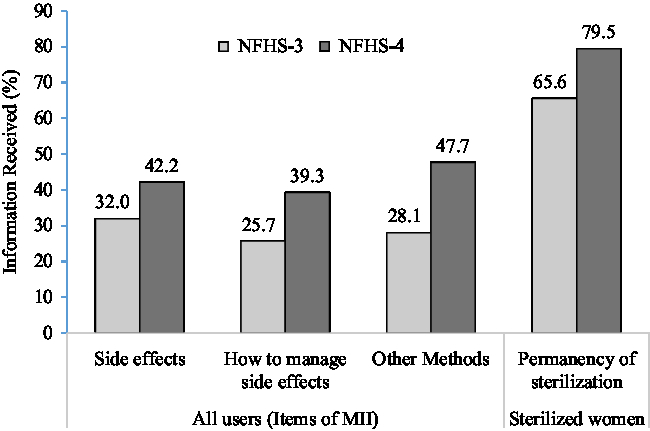
Figure 1 presents the percentage of users who were informed about each item of the MII separately for 2005–06 and 2015–16. There was a significant improvement in each of the MII-related items over the decade, as well as in information about the permanency of sterilization. However, the increase in the percentage of users receiving information on other methods was much higher than the increase in other items about side-effects.
Percentage of contraceptive users receiving information about three items of the MII and permanency of sterilization in India, 2005–06 and 2015–16. The permanency of sterilization was only asked of those women who were currently sterilized.
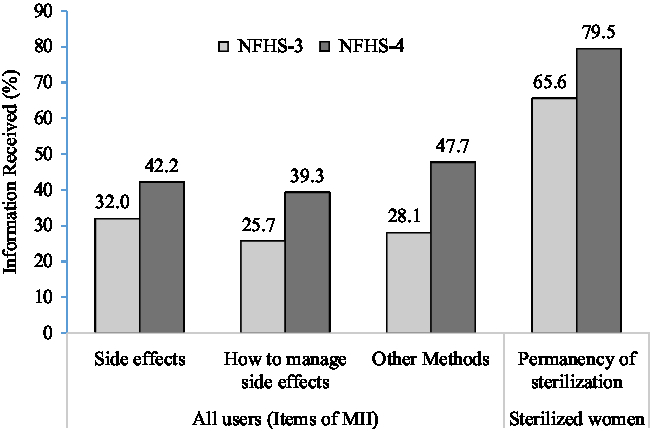
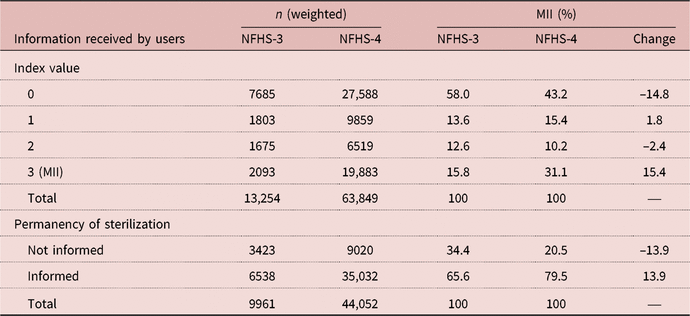
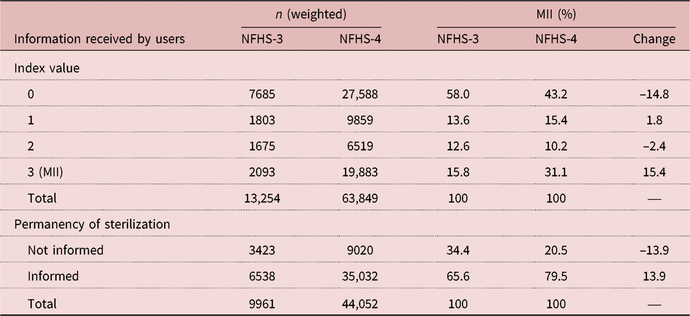
Table 1 shows the adjusted percentage of users who received information, as determined by the answers to three survey questions (MII %) for all users and on the permanency of sterilization for sterilized women at the national level. About 31% of all users received the information from all three questions in 2015–16, while almost half of this percentage (16%) did so in 2005–06. Among the sterilized women, almost 80% were informed about the permanency of sterilization in 2015–16, whereas only about 66% did so in 2005–06. Over the last decade, the percentage of contraceptive users receiving no information has declined by about 15 percentage points – from 58% in 2005–06 to 43% in 2015–16.
Percentage of users receiving information about contraceptives and the permanency of sterilization, India, 2005–06 and 2015–16
All estimates weighted with national women weight.
MII values are the percentage of current users who reported ‘yes’ to all three questions (weighted average). All changes between NFHS-3 and NFHS-4 significant at 99% confidence level.
Correlates of MII
MII by user characteristics
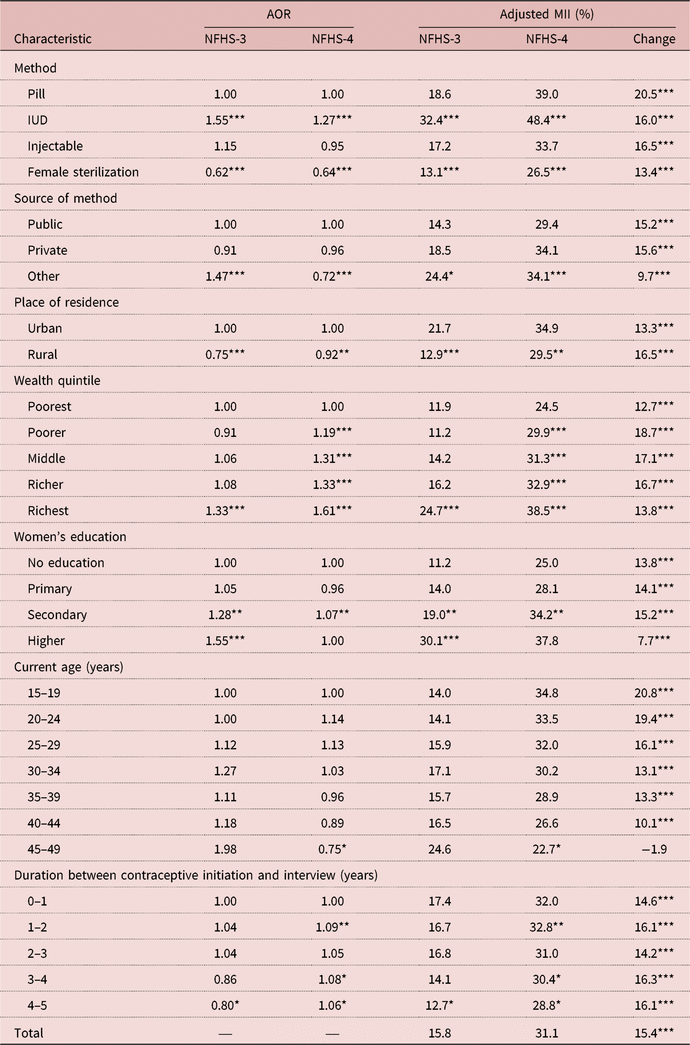
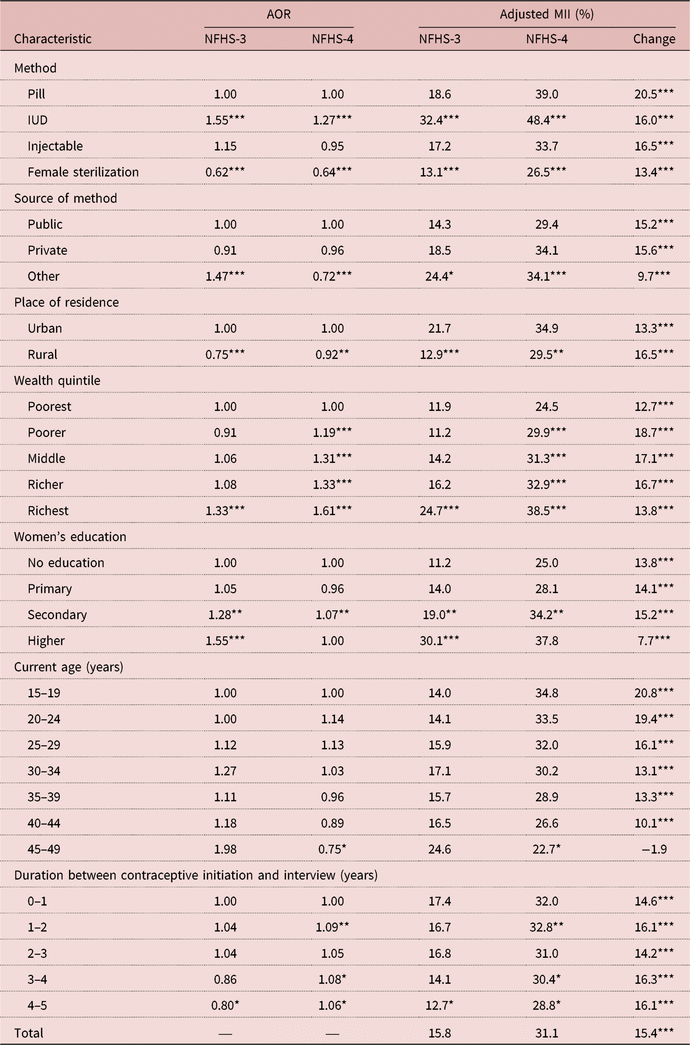
Table 2 shows the adjusted odds ratios (AORs), adjusted values of MII for the survey periods 2005–06 and 2015–16 and the magnitude of change in MII between the two survey periods by background characteristics. The patterns of the relationships shown by AORs and adjusted MIIs are the same, and are also the same for the two surveys. The value of the adjusted MII increased between the two surveys for almost all sub-groups of the population.
Adjusted odds ratios (AORs) and adjusted Method Information Index (MII) for all contraceptive users by background characteristics, India, 2005–06 and 2015–16
All estimates weighted with national women weight.
Adjusted values were adjusted for all background characteristics and states and union territories listed in Table 3.
The first categories of background characteristics were the reference categories in the adjusted models.
***p<0.001; **p<0.01; *p<0.05; significance levels of change estimated from the differences in confidence intervals between the two survey periods.
In 2015–16, the value of MII was highest for IUD users followed by pill, injectables and female sterilization users (see columns 4 and 5). In comparison to pill users, IUD users were 27% more likely to receive full information (AOR=1.27), and women who were sterilized were 36% less likely to receive full information (AOR=0.64). The difference between pill users and injectable users was not significant statistically. The users who received methods from private sources were more likely to receive information than those who obtained them from public sources for both survey periods; however, the difference between the two was not significant statistically. Women living in rural areas were 8% less likely to receive full information in comparison to urban users (AOR=0.92). The gap between rural and urban users narrowed between the two surveys. The likelihood of receiving information increased with improving economic status of households in 2015–16. The economic differentials in MII increased between the two surveys. The percentage receiving full information increases with level of education. However, the education differentials in MII decreased between the two surveys. There was no significant difference in the adjusted values of MII by age groups and the pattern was not clear for the duration between initiation of contraception and the date of interview.
Over the last decade, overall, a significant increase in MII (15%) was registered in India; the increase varied from 8 to 20 percentage points across almost all user background characteristics (see column 6 of Table 2). The progress in receiving information was higher among those who were using reversible methods (such as the pill, IUD and injectables) and those living in rural areas compared with those who were currently sterilized and living in urban areas, respectively. The change in MII was also substantially higher among younger women (15–24 years) than the older women.
State-level patterns and changes in MII
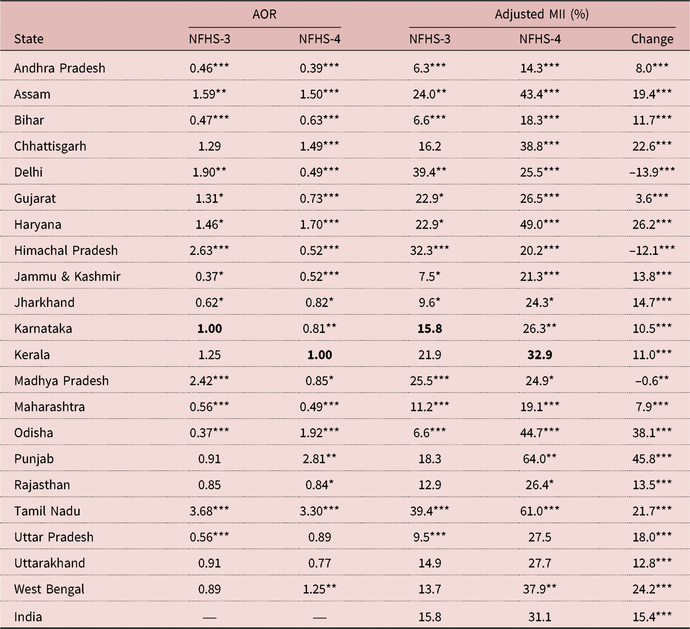
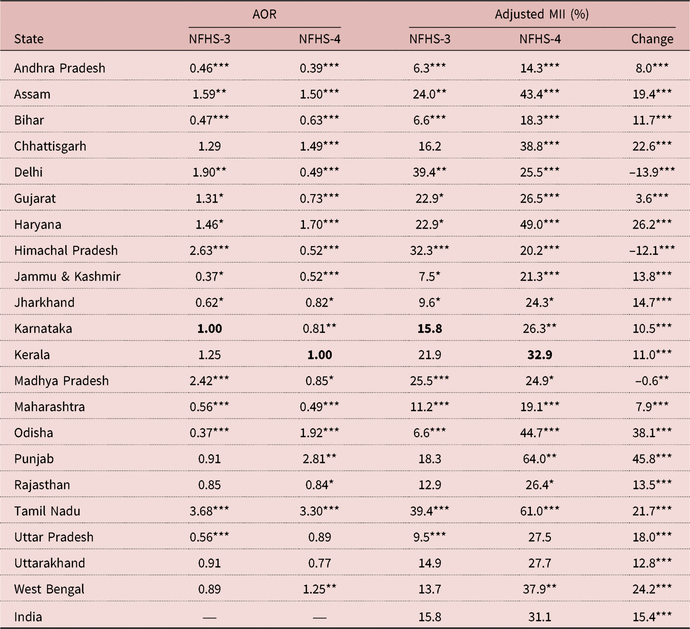
Table 3 shows the adjusted odds ratios (AORs) and adjusted values of MII by major states and union territories of India for the periods 2005–06 and 2015–16 and changes in the adjusted values of MII over the last ten years. Overall, about 31% of users received information about all three method-related items, ranging from 18% in Bihar to 64% in Punjab in 2015–16 (see column 5). The MII was considerably higher than the national average in Tamil Nadu (61%), Punjab (64%), Haryana (49%), Odisha (45%), Assam (43%), West Bengal (38%) and Chhattisgarh (39%). Also, these states had made significant progress in the MII (from 19% to 46%) over the last decade (see column 6). On the other hand, Andhra Pradesh (14%), Maharashtra (19%), Delhi (26%), Jammu & Kashmir (21%), Himachal Pradesh (20%), Jharkhand (24%), Gujarat (27%), Madhya Pradesh (25%) and Rajasthan (26%) performed poorly in 2015–16 and progressed slowly in the last decade as well. A few states and union territories (Delhi, Himachal Pradesh and Madhya Pradesh) even experienced negative to insignificant progress over the same period. The lower performing states in 2005–06 considerably improved their MII (mainly in Uttar Pradesh and Odisha), while Andhra Pradesh, Bihar, Himachal Pradesh, Maharashtra and Jammu & Kashmir had slower improvement than the national average. These findings reiterate the need to look at the quality of care and information provided to contraceptive users closely, given that the states of Andhra Pradesh, Himachal Pradesh, Jammu & Kashmir and Gujarat were amongst those that consistently displayed favourable demographic indicators in relation to several other states in the country.
Adjusted odds ratios (AORs) and adjusted Method Information Index (MII) for all contraceptive users by states of residence, India, 2005–06 and 2015–16
All estimates weighted with national women weight.
Adjusted values were adjusted for all background characteristics and all states and union territories; Karnataka and Kerala are the reference categories for NFHS-3 and -4 respectively.
***p<0.001, **p<0.01, *p<0.05; significance levels of change estimated from differences in the confidence intervals between the two survey periods.
Correlates of receiving information about the permanency of sterilization
Permanency of sterilization by user background characteristics
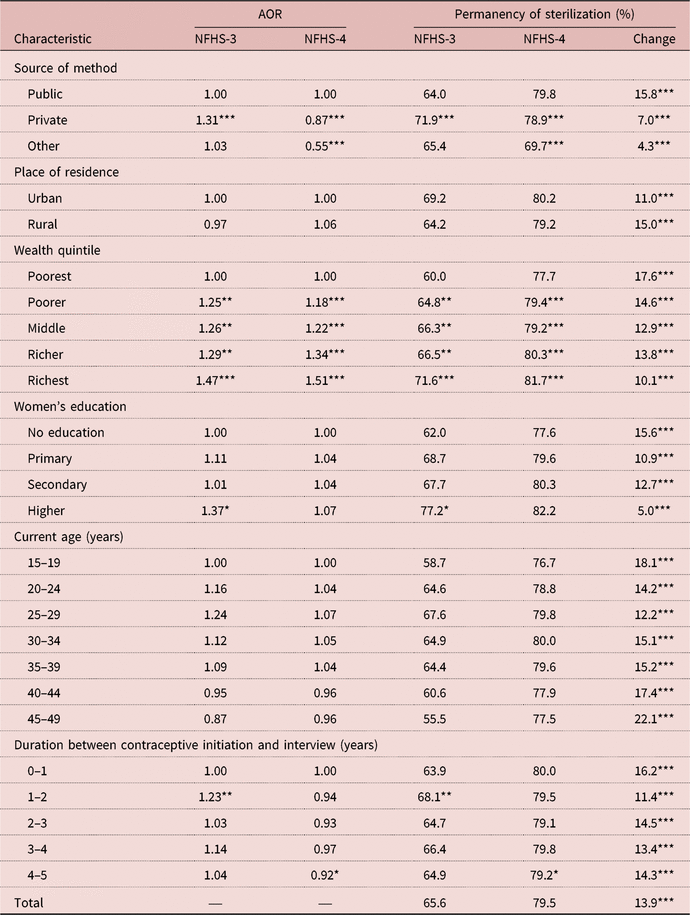
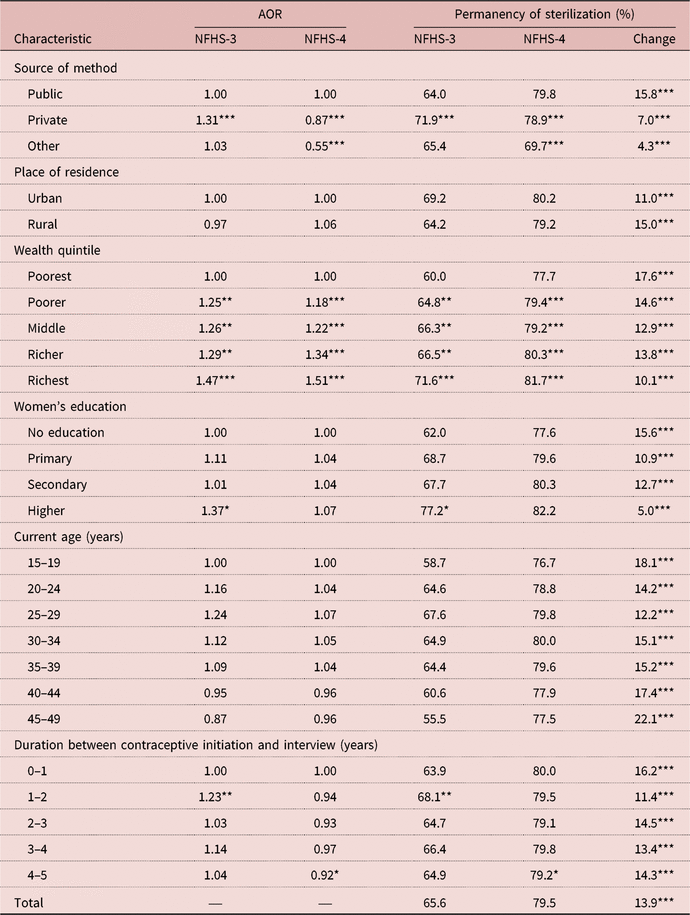
Table 4 presents the adjusted odds ratios (AORs) and adjusted percentage of sterilized women receiving information about the permanency of sterilization and the changes in the percentage between 2005–06 and 2015–16 by women’s background characteristics. The adjusted percentages of users who received information on the permanency of sterilization were higher among those whose source of methods was the private sector and among those living in wealthier households compared with those who obtained methods from the public sector and those in the poorest households for both survey periods, respectively (see columns 4 and 5). The adjusted percentage of women receiving this information was about 80% in 2015–16, ranging from 78% for women with no education to 83% for the 15–19 age group. In 2005–06, this percentage was 67%, varying from 59% in the 45–49 age group and 77% in the higher level of education group.
Adjusted odds ratios (AORs) and adjusted percentages of sterilized women who received information about the permanency of sterilization by background characteristics, India, 2005–06 and 2015–16
All estimates weighted with national women weight.
Adjusted values were adjusted for all background characteristics and states and union territories listed in Table 5.
The first categories of the background characteristics were reference categories in the adjusted models.
***p<0.001; **p<0.01; *p<0.05; significance levels of change estimated from differences in confidence intervals between the two survey periods.
Interestingly, the differentials across socioeconomic groups have narrowed considerably over the study period. Significant progress in information received about permanency of sterilization (14%) was observed, ranging from 5% for women with a higher level of education to 18% for the 15–19 age group (see column 6 of Table 4). Progress in receiving information about the permanency of sterilization was higher among those who were less educated, received method from public sources, living in rural areas and those in poor households than in their counterparts. These findings suggest that socioeconomically disadvantaged sterilized women are making greater progress in receiving information about the permanency of sterilization compared with their counterparts.
State-level patterns and changes in permanency of sterilization
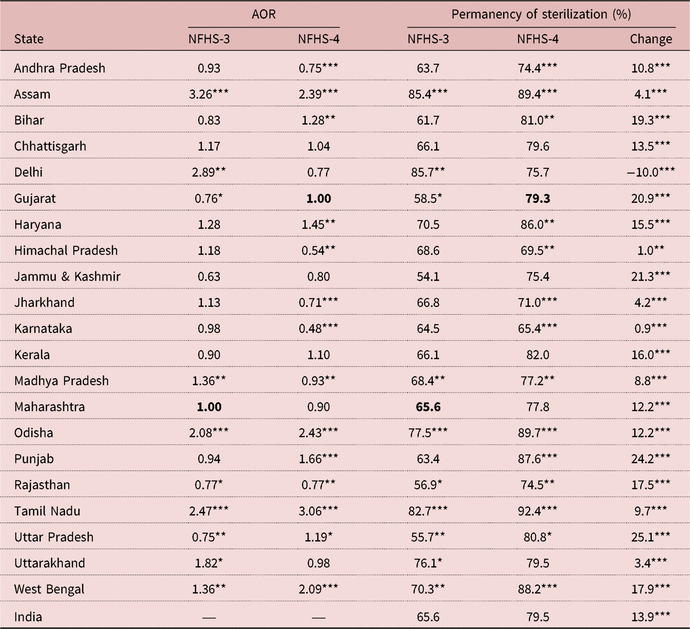
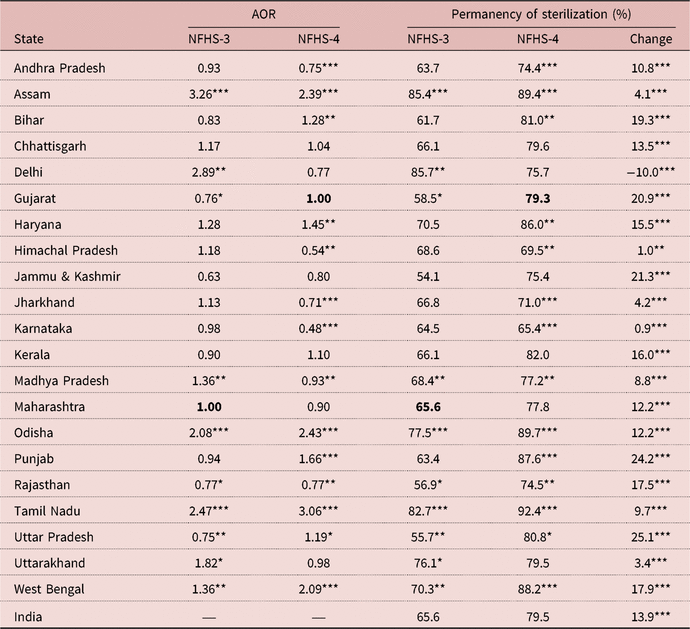
Table 5 presents the adjusted odds ratios (AORs) and adjusted percentages of sterilized women who received information about the permanency of sterilization in 2005–06 and 2015–16, and the changes between the two periods. In 2015–16, overall 80% of sterilized women were informed about the permanency of sterilization, varying from 65% in Karnataka to 93% in Tamil Nadu (see column 5). In addition to Tamil Nadu, Odisha (90%), Assam (89%), West Bengal (88%), Punjab (88%) and Haryana (86%) recorded higher levels of receiving information than the national average. On the other hand, in addition to Karnataka, Himachal Pradesh (69%), Jharkhand (71%), Andhra Pradesh (75%) and Rajasthan (75%) had substantially lower percentages than the national average. Over the last decade, Uttar Pradesh (25%), Punjab (24%), Jammu & Kashmir (21%), Bihar (19%), West Bengal (18%), Rajasthan (18%) and Kerala (16%) have made considerable progress in receiving information on the permanency of sterilization (see column 6). A significant negative or lower change was observed in Delhi (–10%), Karnataka (1%), Himachal Pradesh (1%), Uttarakhand (3%), Jharkhand (4%) and Assam (4%). Of the low-performing states in 2005–06, Punjab, Jammu & Kashmir, Uttar Pradesh, Bihar and Gujarat made relatively greater progress in receiving method information. These findings emphasize the importance of informed choice in the states where the percentage of female sterilization in the method-mix is considerably higher than that in many other states of India.
Adjusted odds ratios (AORs) and adjusted percentages of sterilized women who received information about the permanency of sterilization by states, India, 2005–06 and 2015–16
All estimates weighted with national women weight.
***p<0.001; **p<0.01; *p<0.05; significance levels of change estimated from differences in confidence intervals between the two survey periods.
Adjusted values were adjusted for all background characteristics along with all states and union territories; Maharashtra and Gujarat were the reference categories for NFHS-3 and -4 respectively.
Decomposition analysis
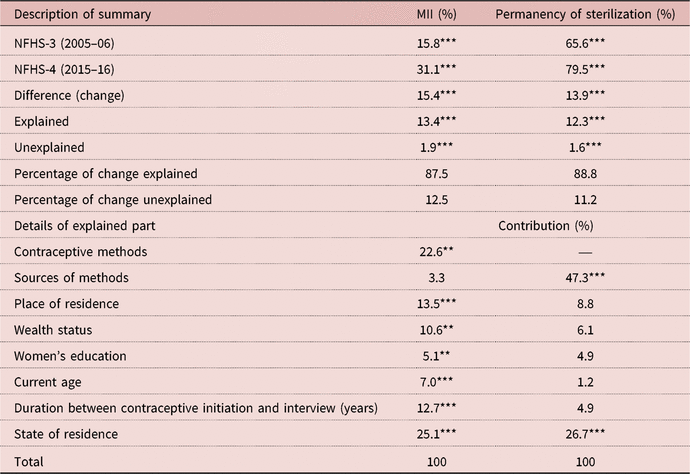
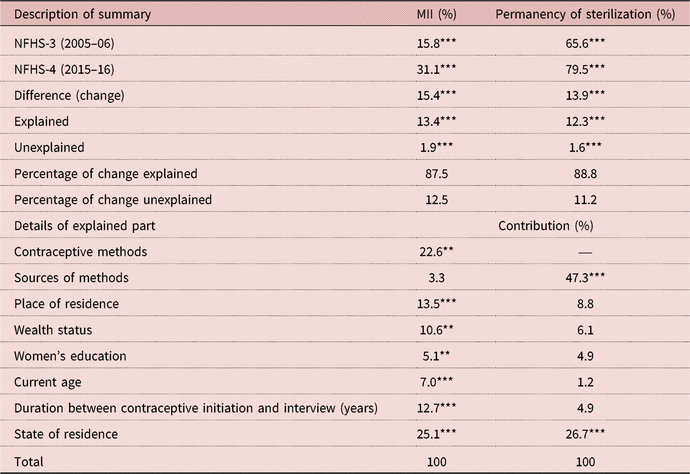
Table 6 presents the results of the Blinder–Oaxaca decomposition models to assess the relative contributions of socioeconomic and demographic variables to the change in MII and information about the permanency of sterilization between 2005–06 and 2015–16. The change in MII was decomposed into ‘explained’ and ‘unexplained’ parts. The explained part is the coefficient effect of the model, which specifies the change in MII between the survey periods due to differentials in the effects of the determining factors. The unexplained part comprises the endowment and interaction effects. The endowment effect indicates the change in MII between the survey periods because of differences in the distribution of determining factors. The interaction effect is the reciprocity between the endowment effect and coefficient effect.
Relative contributions of selected indicators to changes in MII and information about the permanency of sterilization between 2005–06 and 2015–16: results of Blinder-Oaxaca decomposition model
Note: All the estimates are weighted with national women weight; ***p<0.001, **p<0.01, *p<0.05
The results show that the studied socioeconomic and demographic factors had contributed about 88% and 89% of the change in MII and information about the permanency of sterilization, respectively, over the last decade (coefficient effect). The findings imply that the considerable positive change in method information received was due to differences in the effects of the background characteristics. The relative contribution to the explained change of MII was largely shared by state of residence (25%), type of contraceptive method (23%), place of residence (14%), duration between contraceptive initiation and date of survey (13%), wealth status (11%), current age (7%) and women’s education (5%). Over the same period, the comparative contribution to the explained change of information about the permanency of sterilization was mainly shared by source of method (47%) and state of residence (27%).
Discussion
This study asessed the changes and patterns of information received by contraceptive users in India between 2005–06 and 2015–16. One in every three users received complete information in 2015–16, compared with only one in six in 2005–06. Four in every five sterilized women were told that sterilization was permanent in 2015–16, and this was about two in every three in 2005–06. Over the last decade, though the information received by contraceptive users has shown significant improvement, India is still lagging behind many of the developing countries that were included in the analysis of Jain (Reference Jain2016). Moreover, there remains enormous scope to improve the information provided to contraceptive users about various contraceptive methods.
In 2015–16, the MII remained low across all user background characteristics, indicating a low level of information being received by users. With the exception of those who were using an IUD, with higher education or in the richest wealth quintiles, the MII was less than 33% for all other users. India’s family planning programme has largely been driven by female sterilization, but sterilized women were receiving very little information in 2015–16: only a quarter had received information on all three items of the MII, i.e. had received complete method information, and a fifth were not even informed about the permanency of sterilization. Even though the national family planning programme emphasizes the promotion of a basket of contraceptive choices for potential users, the information provided to users of female sterilization remains inadequate. From the quality of care perspective, it is critical that the level of information provided to sterilization users improves rapidly. Also, this study suggests that receipt of contraceptive method information is lower among those who received their method from a public source, particularly for information about the permanency of sterilization. In India, about four out of every five female sterilizations take place in the public health sector (IIPS & ICF, 2017). Thus there needs to be an emphasis on providing good quality services in public health facilities.
Sterilization-dominated south Indian states had lower MII values, with the exception of Tamil Nadu. Contraceptive users in Kerala received relatively better method information than the national average, as well as the south Indian states. Among the north Indian states, users in Punjab received the highest level of method information. As the method-mix is skewed towards female sterilization, which is mostly done in the public health sector, better method information in the selected states may reflect a well-performing public health care system (MoHFW et al., 2018). The findings from the decomposition analysis also suggest that state of residence was the major factor contributing to the change in method information being received. From a programmatic perspective, this implies that more attention should be given to improving state-level health care systems.
A separate analysis of MII by different socioeconomic and demographic groups and states of residence was carried out for sterilized women because the differentials in MII by a characteristic may be due to the method-mix, other socioeconomic factors and the states of residence. Sterilized women were the least informed of all users. In some states, female sterilization was the dominant method, and the use of reversible methods was negligible, while in other states the use of reversible methods was significant. Also, the use of sterilization may be higher among the less educated and more economically deprived users. The users in these sub-groups may receive less method information compared with their counterparts. However, this is unlikely to be the case because the logistic analysis results presented for each sub-group were adjusted for the differences in other characteristics, including method used and state of residence. Nevertheless, when the analysis was repeated for sterilized women only, it was found that the patterns and changes in MII across socioeconomic groups and states of residence among sterilized women were very similar to the findings for the sample of all method users.
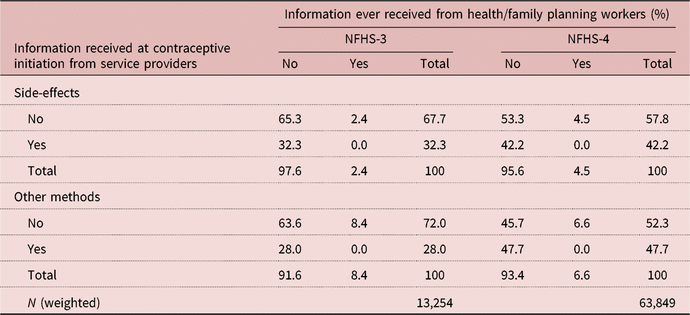
In addition to receiving method information at contraceptive initiation, contraceptive users may also receive method information from health and family planning workers at other times. To check for this possibility, information ever received from health/family planning workers was analysed for two items: side-effects and being told about other methods (Table 7). In 2015–16, about 42% and 48% of current users who initiated their methods in the preceding five years were informed about side-effects and other methods at the time of contraceptive initiation, respectively. The remaining 58% and 52% were not given this information at contraceptive initiation. These percentages include 4.5% and 6.6% who were told about side-effects and other methods by other health or family planning workers. These workers made a very small contribution to the information received by contraceptive users. These findings suggest the need to strengthen the function of health or family planning workers to inform non-users about various contraceptive options and their benefits as well as potential side-effects. This will help to ensure informed choice by women (users and non-users), thereby ensuring adequate quality of care to vulnerable groups who are the major beneficiaries of the public health system.
Information received at contraceptive initiation from service providers and information ever received from health or family planning workers, India, 2005–06 and 2015–16
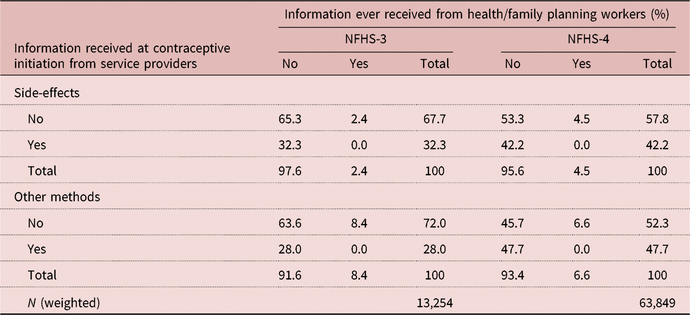
Cell percentages are presented using the national women weight.
The 2012 London Summit on Family Planning strengthened the worldwide commitment to family planning and quality of services and it set a goal of adding 120 million modern contraceptive users by 2020 (Brown et al., Reference Brown, Druce, Bunting, Radloff, Koroma and Gupta2014). The summit was a critical milestone in the global discourse around family planning programmes in developing countries. Emphasis on promoting a voluntary approach to family planning and ensuring a high quality of care as opposed to a target driven-approach was a key outcome of the summit. The global FP2020 initiative included the MII as its core indicator of progress towards the goal of ensuring users received adequate information (FP2020, 2015). The Ministry of Health and Family Welfare (MoHFW) of the Government of India has promised to deliver contraceptive methods to an additional 48 million women in India whilst ensuring their reproductive rights and quality of care – as documented in India’s Vision FP 2020 (Government of India, 2014). Also, the newly launched Mission Parivar Vikas entails several provisional and promotional schemes and focuses on 145 districts in the Empowered Action Group states (Uttar Pradesh, Bihar, Odisha, Chhattisgarh, Jharkhand, Rajasthan and Uttarakhand) and Assam (Government of India, 2016) that still have a TRF >3. Though the programme guidelines included improved quality of care processes such as follow-up check-ups for spacing reversible contraceptive methods like IUDs, the guidelines/protocols still lack focus on providing specific method-related information.
The present study has a few limitations. First, the study used retrospective information about the current contraceptive methods received at the time of initiation in the five years preceding the date of interview. The responses of users may have been affected by recall bias. Second, information about reversible methods other than the four studied methods could have provided a better overall estimation.
In 2015–16, after a decade of socioeconomic transformation and the implementation of FP2020 policy goals, India has made promising progress in method information provision to contractive users, but it still has far to go before adequate levels are achieved. Users require information about all contraception methods, especially clinical methods such as sterilization and IUD. As female sterilization is the dominant method in India, and its users receive the lowest levels of information, the information received by sterilized women deserves specific recognition. Also states that have been identified as lagging behind need special attention. In addition, information exchange between health/family planning workers and contraceptive users could be a useful way of achieving universal access to method information by contraceptive users. Frontline health workers in India such as ASHA, ANM and Anganwadi workers have the potential to exchange this information with the users. Thus, the findings of this study could assist the MoHFW of Government of India achieve the Vision FP 2020 and related SDGs by addressing the issues of information provision in programme interventions.
Author ORCIDs
Md Juel Rana 0000-0001-8830-492X
Acknowledgments
The contents of this paper are the sole responsibility of the authors and do not necessarily reflect the views of USAID, the United States Government or the Population Council. The authors wish to acknowledge Dr Niranjan Saggurti, Dr Faujdar Ram, Dr Rajib Acharya, Dr Arupendra Mozumdar, Govind Singh and the anonymous reviewers for their insightful comments on earlier versions of the manuscript. The second author was a consultant to the Population Council when this study was conducted.
Funding
This paper was prepared as part of a mentorship program under the RASTA initiative of the Evidence Project of the Population Council. The Evidence Project is made possible by the generous support of the American people through the United States Agency for International Development (USAID) under the terms of cooperative agreement number AID-OAA-A-13-00087.
Conflicts of interest
The authors have no conflict of interest to declare.
Ethical Approval
The study was based on publicly available data and did not use any individual identifiers. Thus the work complies with the ethical standards of the relevant national and institutional committees on human experimentation and with the Helsinki Declaration of 1975, as revised in 2008.