Introduction
In comparison to urban areas, rural regions in China exhibit a higher degree and quicker pace of population ageing (Chen et al. Reference Chen, Li and Huang2022). Concurrently, the challenges of elderly care in rural areas, which have been further aggravated by the ageing process, are attracting increasing attention (Li et al. Reference Li, Li and Huang2022). Compared to their urban counterparts, rural elderly persons face significant limitations in accessing care resources, primarily owing to weakened family support networks and scarce medical facilities in rural areas. This has rendered them less capable of coping with shocks and risks, thereby exacerbating their vulnerability to elderly care challenges.
Vulnerability in elderly care is defined by the susceptibility of older persons to suffer welfare losses or enter into dilemmas of care owing to individual, familial and system security characteristics, particularly under internal or external risk shocks (Schröder-Butterfill and Marianti Reference Schröder-Butterfill and Marianti2006). Existing research on elderly care vulnerability can be broadly categorized into two main classes. The first class investigates the underlying causes of rural elderly vulnerability from a macro-structural perspective, integrating both individual-level attributes and national-level systemic factors, while proposing strategies for risk mitigation and management (Tan et al. Reference Tan, Gao, Tan, Zhu, Liu, Lei, Yan, Yan and Lei2024; Zhang et al. Reference Zhang, Li and Wu2020). The second class adopts a micro-individual approach, focusing specifically on the care vulnerability of socially marginalized groups – such as childless elderly individuals and those with chronic illnesses – and examined the key influencing factors (de Sousa et al. Reference De Sousa, Coutinho, Neto, Barbosa, Marques and Diniz2021; Fu et al. Reference Fu, Guo, Chen, Han, Ahmed, Shahid and Zhang2021). While the academic community has made substantial theoretical contributions and empirical advancements in studying elderly care vulnerability, several research gaps remain to be addressed. First, existing research has paid insufficient attention to the impact of ageing itself on elderly care vulnerability. Yet, as China’s ageing population continues to deepen, the ageing factor must be prioritized in assessments of care vulnerability. The vulnerability of rural elderly populations, which is intricately intertwined with the ageing process, defines the fundamental state of rural seniors and shapes the overall landscape of rural elderly care. Therefore, examining how the ageing trend influences care vulnerability among rural elderly is of critical importance.
Second, from a methodological standpoint, elderly care vulnerability is characterized as a multidimensional deficit or deprivation (Schröder-Butterfill and Marianti Reference Schröder-Butterfill and Marianti2006), which facilitates its measurement and analysis through multidimensional deprivation approaches. Existing studies have primarily utilized composite index methods to assess the frailty status of elderly care at specific temporal points (Fried et al. Reference Fried, Tangen, Walston, Newman, Hirsch, Gottdiener, Seeman, Tracy, Kop, Burke and McBurnie2001; Kong and Yang Reference Kong and Yang2019; Li et al. Reference Li, Wang and Li2023). However, this approach struggles to capture dynamic changes or cyclical fluctuations in elderly care frailty. Moreover, it remains challenging to fully explore the specific factors driving these changes – especially when multiple dimensions shift simultaneously, complicating efforts to analyse which dimension exerts a more profound influence on overall change. The Alkire-Foster (AF) method is a multidimensional measurement tool designed to assess poverty and vulnerability by capturing deprivations across multiple dimensions (e.g. health, education, living standards; Alkire and Foster Reference Alkire and Foster2011). It extends traditional income-based poverty analysis by recognizing that wellbeing is shaped by intersecting social, economic and environmental factors. Therefore, applying the AF method to investigate the dynamic characteristics of deprivation across different dimensions over various time periods is essential.
Third, from a research perspective, the elderly phase is often conceptualized by scholars as a period of dependency and disability within the lifecycle (Kolle et al. Reference Kolle, Lewis, Lalonde and Backman2023). Correspondingly, elderly vulnerability has frequently been associated with negative attributes such as illness, dependency and passivity (Langmann Reference Langmann2023). In contrast, the active ageing paradigm posits that older adults can proactively enhance their resilience and take ownership of their own wellbeing and health (Yu et al. Reference Yu, Huang and Kahana2022). Currently, China has enshrined the national strategic concept of active ageing as a cornerstone approach to addressing the challenges of elderly care in the context of an evolving ageing society context. Among its components, social participation, a key tenet of active ageing, has emerged as a crucial mechanism for improving the welfare of the elderly and alleviating the care-related challenges faced by rural seniors (Aw et al. Reference Aw, Koh, Oh, Wong, Vrijhoef, Harding, Geronimo, Lai and Hildon2017). Thus, integrating elderly care vulnerability research with individual social participation within the national active ageing strategy framework provides novel theoretical insights and practical approaches for addressing the elderly care challenges confronting rural senior populations.
This study aims to: (1) employ the AF method (Alkire and Foster Reference Alkire and Foster2011) to measure and analyse the vulnerability of rural elderly care, utilizing data from the Chinese General Social Survey (CGSS) waves in 2013, 2018 and 2021; (2) examine the impact of ageing on the vulnerability of rural elderly care by integrating static and dynamic decomposition techniques; and (3) elucidate how social participation among rural seniors mitigates their care-related vulnerability. These objectives are crucial for comprehensively assessing rural elderly care vulnerability and understanding the role of ageing in shaping its dynamics.
Literature review
Ageing and the vulnerability of rural elderly care
The ageing process has led to an increasing proportion of older elderly persons in the population structure. Compared with their younger counterparts, these individuals exhibit greater vulnerability in economic, health and social support domains, which may contribute to the overall escalation of rural elderly care vulnerability (Chen et al. Reference Chen, Wang, Wen, Fang and Song2016; Hu et al. Reference Hu, Gu, Zhen, Sun, Gu and Dong2021). Although existing studies have not directly examined the impact of ageing on elderly care vulnerability, the effects of ageing on poverty vulnerability, social vulnerability and financial vulnerability have been validated. For instance, one study exploring the impact of ageing on the poverty vulnerability of rural elderly persons found that population ageing partially offset the decline in multidimensional poverty among elderly individuals, exerting a negative effect on overall rural elderly care vulnerability (Zhang and Yang Reference Zhang and Yang2020). Another study, using panel data from 142 countries between 1960 and 2014, revealed that population ageing has only a negative impact on economic growth when the proportion of the elderly population reaches a high threshold, with its adverse effects intensifying as ageing deepens (Lee and Shin Reference Lee and Shin2019). While these studies do not directly address the relationship between ageing and elderly care vulnerability, they have shown how the ageing trend affects the welfare and quality of life of the elderly through various channels and mechanisms. Building on this foundation, this research aims to further explore the negative impact of ageing on the overall vulnerability of rural elderly care.
Social participation and the vulnerability of rural elderly care
Research on the factors influencing elderly care vulnerability has been extensive across disciplines including medicine, biology, sociology and psychology. Existing studies indicate that such vulnerability is shaped by individual factors (e.g. genetics, health status) as well as social and family dynamics (Sanchini et al. Reference Sanchini, Sala and Gastmans2022). Among individual attributes, social participation stands as a core component and one of the three pillars of the active ageing framework. Elderly individuals engaged in social activities tend to foster a denser social network, which – built through social participation – provides emotional and practical support to buffer against ageing-related risks (Nordin et al. Reference Nordin, Lundgren and Nilsson2023). Additionally, social participation can effectively alleviate loneliness, boosting positive psychological markers like self-esteem, belonging and life purpose to counter mental health-related care risks (Goodarzi et al. Reference Goodarzi, Jiang, Head and Lu2023; Yang et al. Reference Yang, Chen and Guo2024). Social participation behaviours may also impact the social security aspect of care vulnerability: economic engagement among older adults not only raises personal income but also enhances insurance participation, strengthening retirement security (Liu Reference Liu2023).
Synthesising the literature on ageing, rural elderly care vulnerability and social support, this study posits to the following hypotheses:
Hypothesis 1: Population ageing exacerbates the overall vulnerability of rural elderly care.
Hypothesis 2: Social participation plays a significant negative effect on rural elderly care vulnerability.
Data and methods
Sample
This study employs data from the CGSS for the years 2013, 2018 and 2021. As an ongoing cross-sectional survey, the CGSS systematically targets the same villages/neighbourhood committees each year, with samples redrawn annually from established communities. The survey covers various aspects including demographic characteristics, housing, health status, migration, lifestyle, social attitudes and social security. Relevant indicators from CGSS were preprocessed in accordance with the table instructions, involving the removal of missing values and invalid observations. Following this preprocessing, the effective sample sizes for 2013, 2018 and 2021 were 1,602, 2,259 and 1,171, respectively. As demonstrated in Table 1, the proportion of rural older adults (aged 70 and above) exhibited a consistent upward trend throughout the observation period, underscoring the accelerating pace of rural ageing.
Changes in the demographic structure of the rural elderly population

Instruments
Rural elderly care vulnerability assessment system
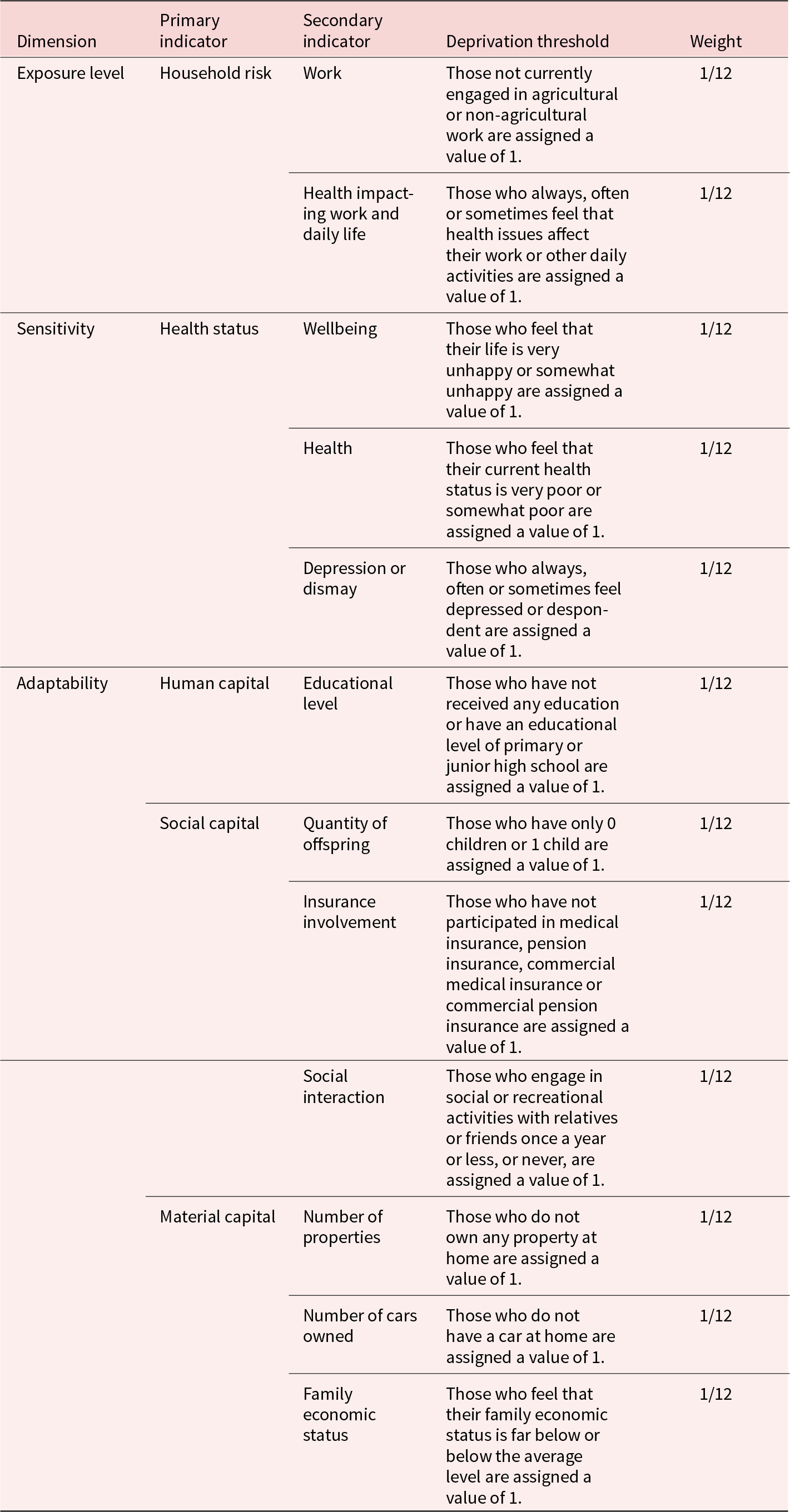
Vulnerability assessment entails analysing a system’s structure and functions, predicting and evaluating the impact of external factors on the system and assessing the system’s resilience and recovery capacity against external stressors, with the ultimate goal of risk mitigation. This study focuses on the vulnerability of rural elderly care, adopting the Intergovernmental Panel on Climate Change’s (IPCC) ‘Exposure-Sensitivity-Adaptive Capacity’ analytical framework (Griggs and Noguer Reference Griggs and Noguer2002). By integrating the conceptual connotations of vulnerability, this research constructed an indicator system for assessing the vulnerability of rural elderly populations. The evaluation framework for rural elderly care vulnerability was established from three dimensions: the likelihood of risk exposure among elderly persons, the sensitivity of their health status and their adaptive capacity to address these risks (see Table 2).
Rural elderly care vulnerability assessment system

Social participation assessment system
This study adopted an expansive definition of social participation, whereby older adults in societal roles, interpersonal interactions and processes of resource exchange that yield positive or negative personal experiences are all subsumed under the concept (Mendes de Leon et al. Reference Mendes de Leon, Glass and Berkman2003). Building on this foundation, this study classified elderly social participation into four distinct categories: political participation, economic participation, religious participation and participation in social activities (see Table 3).
Social participation assessment system

Alkire-Foster method
Step 1: Constructing an elderly care vulnerability index for rural elderly
This study employed the AF method to construct an elderly care vulnerability index. The approach utilizes an n×m state matrix  $X = \left[ {{x_{ij}}} \right]$ (i = 1 … n; j = 1 … m), where each element reflects the state values of n individuals across m dimensions. Specifically, the row vector
 ${\text{ }}{X_{i{\text{ }}}}$represents the comprehensive state of individual i across all n dimensions, while the column vector denotes the state distribution of all individuals within dimension j. Let
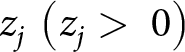 ${\text{ }}{z_{j{\text{ }}}}\left( {{z_j} \gt {\text{ }}0} \right)$ denote the deprivation threshold for the j-th dimension, and Z represent the row vector of critical values (i.e. the elderly vulnerability line). Elderly individuals with care vulnerability were identified through the following ‘dual-threshold’ method.
First, determine whether an individual is deprived in dimension j through the deprivation threshold ${\text{ }}{z_{j{\text{ }}}}$. Define a deprivation matrix
 ${g^0} = \left[ {g_{ij}^0} \right]$, where the value of the elements
 ${\text{ }}g_{ij}^0{\text{ }}$ is:
 \begin{equation}g_{ij}^0 = \{ \begin{array}{*{20}{c}}
{1,{\text{ }}if{\text{ }}{x_{ij}} \lt {z_j}} \\
{0,{\text{ }}otherwise}
\end{array}\end{equation}
Second, determine the vulnerability of an individual through the elderly vulnerability counting function and the elderly vulnerability dimension threshold values. Each dimension of the deprivation matrix is multiplied by its corresponding weight  ${w_j}$, assigning a deprivation score
 ${\text{ }}{c_i} = \mathop \sum \limits_{j = 1}^m {w_j}g_{ij}^0{\text{ }}$ to individual i in each dimension, where
 ${\text{ }}{w_j}{\text{ }}$ is the weight for dimension j, the sum of weights across dimensions equals 1 and the value ranges from 0 to 1. Assuming that the elderly vulnerability dimension threshold value is k, the value of the individual’s vulnerability identification function
 ${\text{ }}{\rho _k}\left( {{X_i},Z} \right){\text{ }}$ can be defined as:
 ${\rho _k}\left( {{X_i},Z} \right) = 1$, if
 ${\text{ }}{c_i} \geqslant k$, meaning that individual i is in a frail state; otherwise,
 ${\rho _k}\left( {{X_i},Z} \right) = 0$, meaning that individual i is in a non-frail state. Sum the identified elderly frail population (denoted as q), which reflects the scale of the population in a state of elderly vulnerability, and which can be used to calculate the incidence rate of elderly vulnerability
 $H:{\text{ }}H = q/n$.
Then, prune the deprivation matrix using the elderly vulnerability identification function. This pruning involves setting elements in the deprivation matrix ${\text{ }}g_{ij}^0\left( k \right) = g_{ij}^0 \times {\text{ }}{\rho _k}\left( {{X_i},Z} \right)$ corresponding to non-elderly frail individuals to 0, while leaving elements for elderly frail individuals unchanged. Based on
 ${\text{ }}g_{ij}^0\left( k \right)$,
 ${\text{ }}{c_i}\left( k \right) = \mathop \sum\nolimits_{j = 1}^m g_{ij}^0\left( k \right){\text{ }}$ is calculated, defining the average deprivation share A of the frail population as follows:
 \begin{equation}A = \mathop \sum \limits_{i = 1}^q {c_i}\left( k \right)/q = \mathop \sum \limits_{i = 1}^q {\text{ }}\mathop \sum \limits_{j = 1}^m g_{ij}^0\left( k \right)/q\end{equation}
The average deprivation share A reflects the intensity of elderly vulnerability, meaning the proportion of the average number of dimensions in which the frail elderly population is deprived out of the total number of dimensions. According to Equation (2), the elderly care vulnerability index ${\text{ }}{M_0}$ constructed by the AF method is:
 ${\text{ }}{M_0} = H \times A$. Furthermore, the elderly care vulnerability index can be synthesized as follows:
 \begin{equation}{\text{ }}{M_0} = P\left( {0,{\text{ }}X,{\text{ }}Z} \right) = \frac{1}{n}\mathop \sum \limits_{i = 1}^n {\text{ }}\mathop \sum \limits_{j = 1}^m g_{ij}^0 \times {\text{ }}{\rho _k}\left( {{X_i},Z} \right){\text{ }}\end{equation}
Step 2: Decomposing the elderly care vulnerability index among rural elderly
The vulnerability index developed herein is tailored for evaluating the care status of rural elderly populations. For detailed analysis in each dimension, decomposition is required. The index must meet specific axiomatic standards, with the AF-constructed index having dimensional decomposability. This property enables both dimensional and subgroup decompositions, facilitating further exploration of static and dynamic analytical frameworks.
Dimensional decomposition
The deprivation of the elderly in each dimension can be measured by adopting the unidimensional FGT index as a reference (Foster et al. Reference Foster, Greer and Thorbecke1984). Let  ${\text{ }}{M_{0j}}$ denote the elderly care vulnerability index under dimension j. According to Equation (3), the vulnerability index for this dimension can be obtained thus:
 \begin{equation}{\text{ }}{M_{0j}} = P\left( {0,{\text{ }}X,{\text{ }}{z_j}} \right) = \frac{1}{n}\mathop \sum \limits_{i = 1}^n {\text{ }}g_{ij}^0 \times {\rho _k}\left( {{X_i},Z} \right)\end{equation}
By combining Equations (3) and (4), it is established that the elderly care vulnerability index represents the summation of dimension-specific vulnerability indices. Consequently, the integration of theses equations enables calculation of each dimension’s contribution rate to the overall elderly care vulnerability index, as follows:
 \begin{equation}{P_{0j}} = {M_{0j}}/{M_0} = P\left( {0,{\text{ }}X,{\text{ }}{z_j}} \right)/P\left( {0,{\text{ }}X,{\text{ }}Z} \right)\end{equation}
By integrating Equations (3) and (5), it is demonstrated that the summation of contribution rates across all dimensions equals 1. From a dynamic perspective, the change in the overall elderly care vulnerability index can be decomposed into changes in deprivation across dimensions. Specifically, leveraging the relationship between overall elderly vulnerability and dimension-specific indices, the inter-temporal vulnerability change can be decomposed as follows:
 \begin{equation}\Delta {M_{0,t}} = {M_{0,t2}} - {M_{0,t1}}\mathop \sum \limits_{j = 1}^m {M_{0j,t2}} - \mathop \sum \limits_{j = 1}^m {M_{0j,t1}} = \mathop \sum \limits_{j = 1}^m \left( {{M_{0j,t2}} - {M_{0j,t1}}} \right)\end{equation}
Equation (6) demonstrates that the summation of changes in deprivation across all dimensions equals the variation in the overall elderly care vulnerability index. Consequently, based on Equation (6), the contribution rate of each dimension’s changes in deprivation to the overall vulnerability variation can be derived as follows:
 \begin{equation}{P_{0j,t}} = \left( {{M_{0j,t2}} - {M_{0j,t1}}} \right)/{\Delta}{{\text{M}}_{0,{\text{t}}}}\end{equation}
In summary, the static decomposition of Equation (5) reveals the relative importance of welfare deprivation across dimensions for rural elderly care vulnerability, whereas the dynamic decomposition of Equation (6) illuminates the significance of inter-dimensional changes in deprivation in driving temporal vairations in rural elderly vulnerability.
Subgroup decomposition
In addition to dimensional decomposition, the vulnerability index of the rural elderly population can also be decomposed into subgroups. Specifically, the rural elderly population can be divided into older and younger subgroups, with the population proportion of subgroup s denoted as  ${\theta _s}$, leading to
 ${\theta _1} + {\theta _2} = 1$. Therefore, the AF vulnerability index for the rural elderly population P(0,X,Z) is the weighted average of the vulnerability indices P(0,
 ${X_s}$,Z) for each subgroup based on population weights:
 \begin{equation}P\left( {0,X,Z} \right) = \mathop \sum \limits_{s = 1}^2 {\theta _s}P\left( {0,{X_s},Z} \right)\end{equation}
Building on Equation (8), it is possible to determine the contribution rate of each subgroup’s vulnerability index to the overall vulnerability index of the rural elderly population (akin to Equation (5)), as follows:
 \begin{equation}{P_{0s}} = {\theta _s}P\left( {0,{X_s},Z} \right)/P\left( {0,X,Z} \right)\end{equation}
Moreover, from a dynamic perspective, the vulnerability index for the rural elderly population can be decomposed into the sum of changes in the vulnerability index for each subgroup. It is also possible to calculate the contribution rate of changes in each subgroup’s vulnerability to the overall change in vulnerability among rural elderly persons, namely:
 \begin{align}
\Delta {M_{0,t}} & = {M_{0,t2}} - {M_{0,t1}} = \mathop \sum \limits_{s = 1}^2 {\theta _{s,t2}}{P_{s,t2}}\left( {0,{X_s},Z} \right) - \mathop \sum \limits_{s = 1}^2 {\theta _{s,t1}}{P_{s,t1}}\left( {0,{X_s},Z} \right) \nonumber\\ & = \mathop \sum \limits_{s = 1}^2 \left( {{\theta _{s,t2}}{P_{s,t2}}\left( {0,{X_s},Z} \right) - {\theta _{s,t1}}{P_{s,t1}}\left( {0,{X_s},Z} \right)} \right)\nonumber\\
{P_{0s,t}} &= \left( {{\theta _{s,t2}}{P_{s,t2}}\left( {0,{X_s},Z} \right) - {\theta _{s,t1}}{P_{s,t1}}\left( {0,{X_s},Z} \right)} \right)/\Delta {M_{0,t}}\end{align}
Step 3: OLS regression and Logit regression
This paper used the vulnerability index for elderly living alone as the dependent variable, constructing the following OLS model:
 \begin{equation*}{V_i} = {\beta _0} + {\beta _1}se{s_i} + \gamma {X_i} + \varepsilon, \end{equation*}
where  ${V_i}$ is the vulnerability index for rural elderly persons,
 $se{s_i}$ is the social participation of rural elderly,
 ${X_i}$ is control variables and
 $\varepsilon $ is the random error term. To further verify the impact of the socio-economic status of elderly persons living alone on vulnerability, a binary Logit model is employed for testing.
Results
The condition of vulnerability among rural elderly
Assessing vulnerability in rural elderly populations
We constructed a multidimensional vulnerability index by adopting the approach released by the United Nations Development Programme (UNDP), where each dimension is assigned equal weight, and weights are evenly distributed among the indicators within each dimension. This approach reflects the equal importance of each dimension in the assessment system. When measuring vulnerability in old age, the vulnerability threshold (k) plays a crucial role. The UNDP’s multidimensional vulnerability index sets the vulnerability threshold at k = 0.33, a practice adopted by some scholars (Wang and Wang Reference Wang and Wang2016). However, others have refrained from using this fixed threshold owing to its subjective nature (Zhang and Yang Reference Zhang and Yang2020). To enhance the objectivity of our measurements, we employ a variable vulnerability threshold to depict the vulnerability conditions of rural elderly individuals under different scenarios. Specifically, by setting various values for the vulnerability thresholds k, we use the AF method and the previously constructed vulnerability assessment system to measure the vulnerability of the rural elderly population. Table 4 reports the measurement results of the vulnerability incidence rate (H), the average deprivation share (A) and the vulnerability index M 0.
Measurement results of vulnerability among rural elderly (2013–2021)

Note: The data in the table are derived from the organized results of measurements based on preprocessed CGSS data. Additionally, according to Equation (2), when the number of rural elderly individuals with vulnerability is 0, calculating the average deprivation share A becomes meaningless, hence it is represented as ‘—’; simultaneously, vulnerability incidence rate H and vulnerability are also denoted as ‘—’.
The measurement results presented in the table can be analysed from three aspects. First, as the vulnerability threshold k increases, the vulnerability index (H and M0) of the rural elderly population exhibits a decreasing trend. This phenomenon is attributed to the fact that an elevated k value raises the bar for vulnerability identification. Consequently, fewer individuals meet the stringent vulnerability criteria, which directly translates into a decline in the calculated vulnerability indices. Notably, considering that this study’s vulnerability measurement system encompasses 12 dimensions, the vulnerability incidence rate H reveals that more than 50 per cent of elderly population experience deprivation in at least four dimensions (i.e. k = 0.3). Even when the threshold is set at k = 0.8, indicating deprivation in more than ten dimensions, 8.5 per cent of rural elderly individuals in 2021 still fall within the vulnerable category, underscoring the severity of vulnerability among this demographic. When k reaches its maximum value of 1, signifying deprivation across all 12 dimensions, the vulnerability incidence rate drops to 0, suggesting that comprehensive deprivation across every dimension is extremely rare.
Second, as the vulnerability threshold k increases, the average deprivation share A for the rural elderly population increases. Since the average deprivation share A quantifies the severity of vulnerability among this demographic, an increase in k means that vulnerable individuals experience deprivation across more dimensions. This expanded scope of deprivation directly contributes to a higher intensity of vulnerability, thus driving up the value of A.
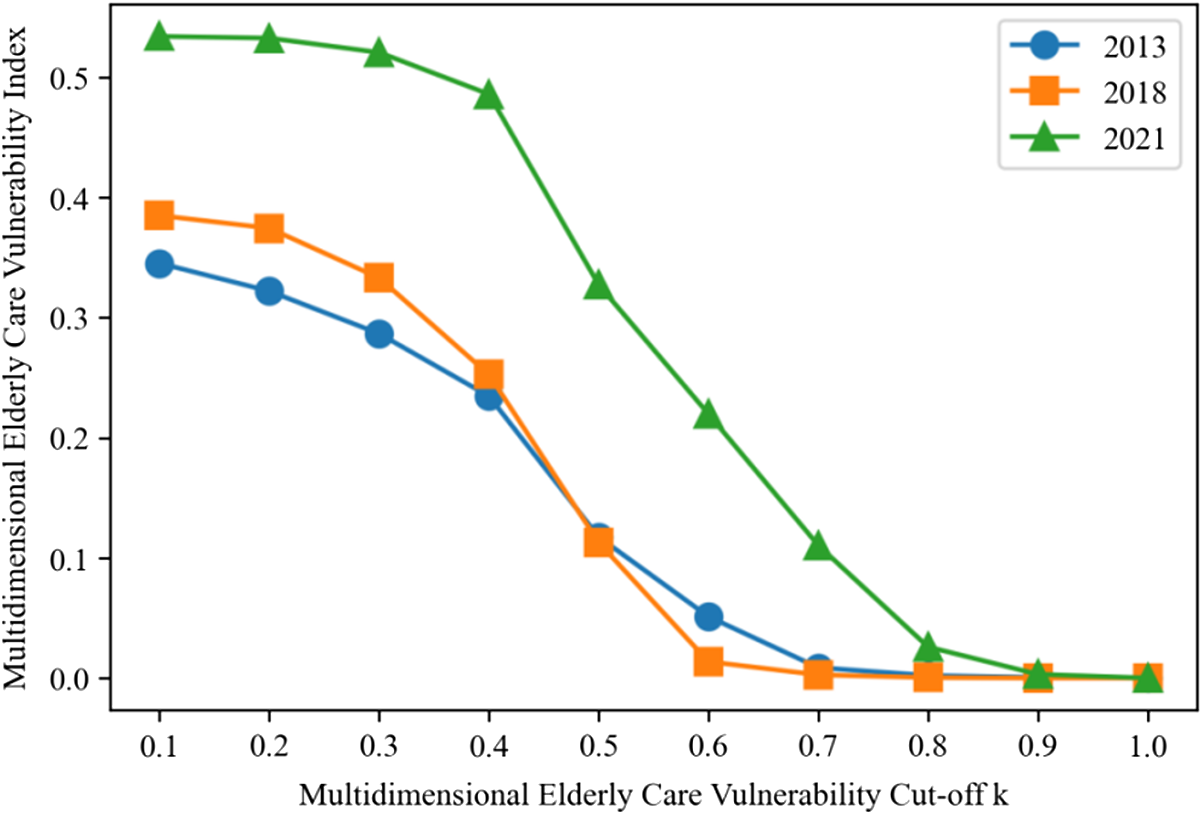
Third, from a cross-temporal perspective, the overall vulnerability among the elderly population has increased over the study period. Figure 1 illustrates the changes in the vulnerability index among the rural elderly population across the survey years (2013, 2018, 2021). A clear upward trajectory in the vulnerability index of this demographic is evident as the survey years progress. While the growth from 2013 to 2018 was relatively modest, a significant surge in elderly vulnerability occurred between 2018 and 2021.For instance, when the vulnerability threshold k is set at 0.6 (where elderly individuals facing deprivation in at least eight dimensions are classified as frail), both the vulnerability incidence rate H and the vulnerability index M0 exhibit discernible increases of varying magnitudes.
Changes in vulnerability index among rural elderly.

Comparative analysis of vulnerability among rural elderly
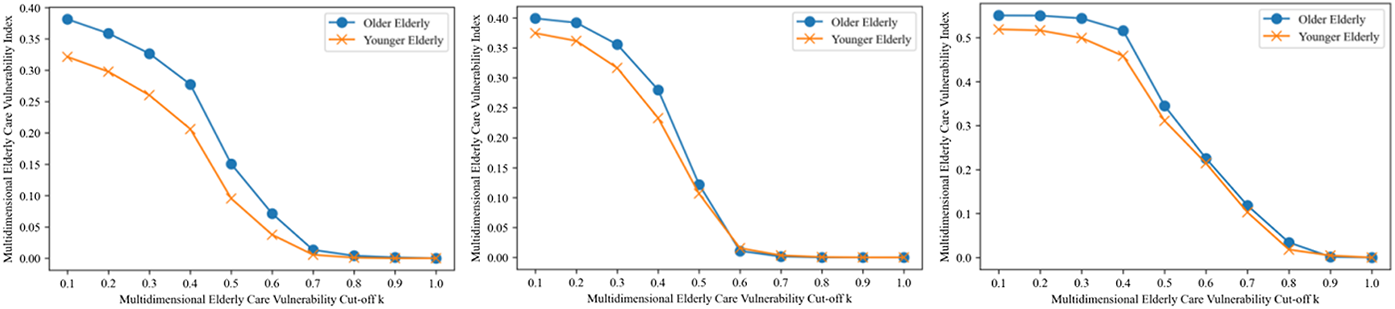
To further explore the differences in vulnerability among rural elderly populations, we calculated the vulnerability levels of rural elderly individuals across three survey years (2013, 2018, 2021) separately. Figure 3 reflects the age-specific vulnerability measurements for rural elderly groups. It is evident that across nearly all vulnerability thresholds (k), the vulnerability index of the older rural elderly persons is higher than that of their younger counterparts. This consistent dominance relationship between the two groups indicates that the older rural elderly persons exhibit a higher degree of vulnerability. Since the vulnerability index M 0 represents a corrected vulnerability incidence rate, it also reflects, to some extent, the probability of rural elderly individuals falling into a vulnerable state. Consequently, the findings in Figure 2 suggest that older rural elderly individuals face a greater likelihood of becoming vulnerable compared to younger rural elderly individuals.
Comparison of vulnerability between older and younger rural elderly (2013, 2018, 2021).

Further analysis: Decomposition of vulnerability among rural elderly
Dimensional static decomposition: impact of deprivation in each dimension on vulnerability among rural elderly
When decomposing elderly care vulnerability, it is necessary to set a clear threshold value k for elderly care vulnerability. For this purpose, we follow the method proposed by Alkire et al. (Reference Alkire, Foster and Seth2015), and set k = 0.33. With respect to the dimensional decomposition results presented in Table 5, the contribution rates of deprivation in most dimensions to rural elderly care vulnerability remain relatively stable. Deprivation in education shows a consistent downward trend, whereas work-related and health-related factors – including health status, health impacting work and daily life, and depression – exhibit a consistent upward trend.
Dimensional static decomposition (k = 0.33)

Dimensional dynamic decomposition: the impact of changes in deprivation in each dimension on the vulnerability of the rural elderly
Further, building on the static dimensional decomposition results presented in Table 5, we decomposed the changes in rural elderly care vulnerability into shifts in deprivation levels across each dimension using Equations (6) and (7). The findings of this dynamic dimensional decomposition are reported in Table 6. First, deprivation in the education dimension exhibited a significant downward trend over the observation period. Second, between 2013 and 2018, the increase in rural elderly care vulnerability was primarily driven by heightened deprivation in three areas: employment status, number of children and extent of property ownership. Third, from 2018 to 2021 the rise in rural elderly care vulnerability stemmed mainly from increased deprivation in two aspects: insurance participation and social interaction.
Dimensional dynamic decomposition (k = 0.33)

Subgroup decomposition: the status of elderly care vulnerability among the older elderly within the vulnerability of rural elderly care
Subgroup static decomposition
To further explore the status of elderly care vulnerability among the older population within the overall elderly care vulnerability of rural elderly populations, we divided the rural elderly population into two sub-samples: the younger elderly (ages 60–69) and the older elderly (ages 70 and above). We then applied Equation (8) for subgroup static decomposition, breaking down the elderly care vulnerability index into the weighted sum of all subgroups’ vulnerability indexes based on population weights. Table 7 reports the corresponding subgroup static decomposition results when k = 0.33. As shown in Table 7, throughout the observation period, the elderly care vulnerability index of the older elderly remained higher than that of the younger elderly. In terms of the contribution rates of each subgroup’s vulnerability, the contribution rate of the older elderly care vulnerability to the overall elderly care vulnerability index of rural elderly has been increasing year by year. This indicates that against the backdrop of population ageing, the elderly care vulnerability of older elderly is increasingly becoming a key component of overall rural elderly care vulnerability.
Subgroup static decomposition(k = 0.33)

Subgroup dynamic decomposition
Furthermore, we use Equation (9) to decompose the change in the overall elderly care vulnerability index of the rural elderly population into the sum of changes in the elderly care vulnerability index for each subgroup. This is aimed at examining the significance of changes in the vulnerability of older rural elderly individuals to the increase in the overall elderly care vulnerability index of rural elderly persons. Table 8 presents the results of the subgroup dynamic decomposition when k = 0.33.
Subgroup dynamic decomposition

First, in terms of the absolute increase in elderly care vulnerability, the older elderly population saw a greater increase in vulnerability than the younger elderly group between 2018 and 2021. Second, regarding the contribution rate of changes in elderly care vulnerability index of each subgroup, the contribution rate of the increase in vulnerability among the older elderly persons to the overall rise in elderly care vulnerability of rural elderly persons has also been increasing year by year. A key reason for this high contribution rate is the accelerating ageing trend in rural areas, coupled with a faster pace of population ageing towards higher ages; many of the newly added older elderly individuals are experiencing elderly care vulnerability.
Shapley decomposition: the impact of population ageing on the overall rural elderly care vulnerability
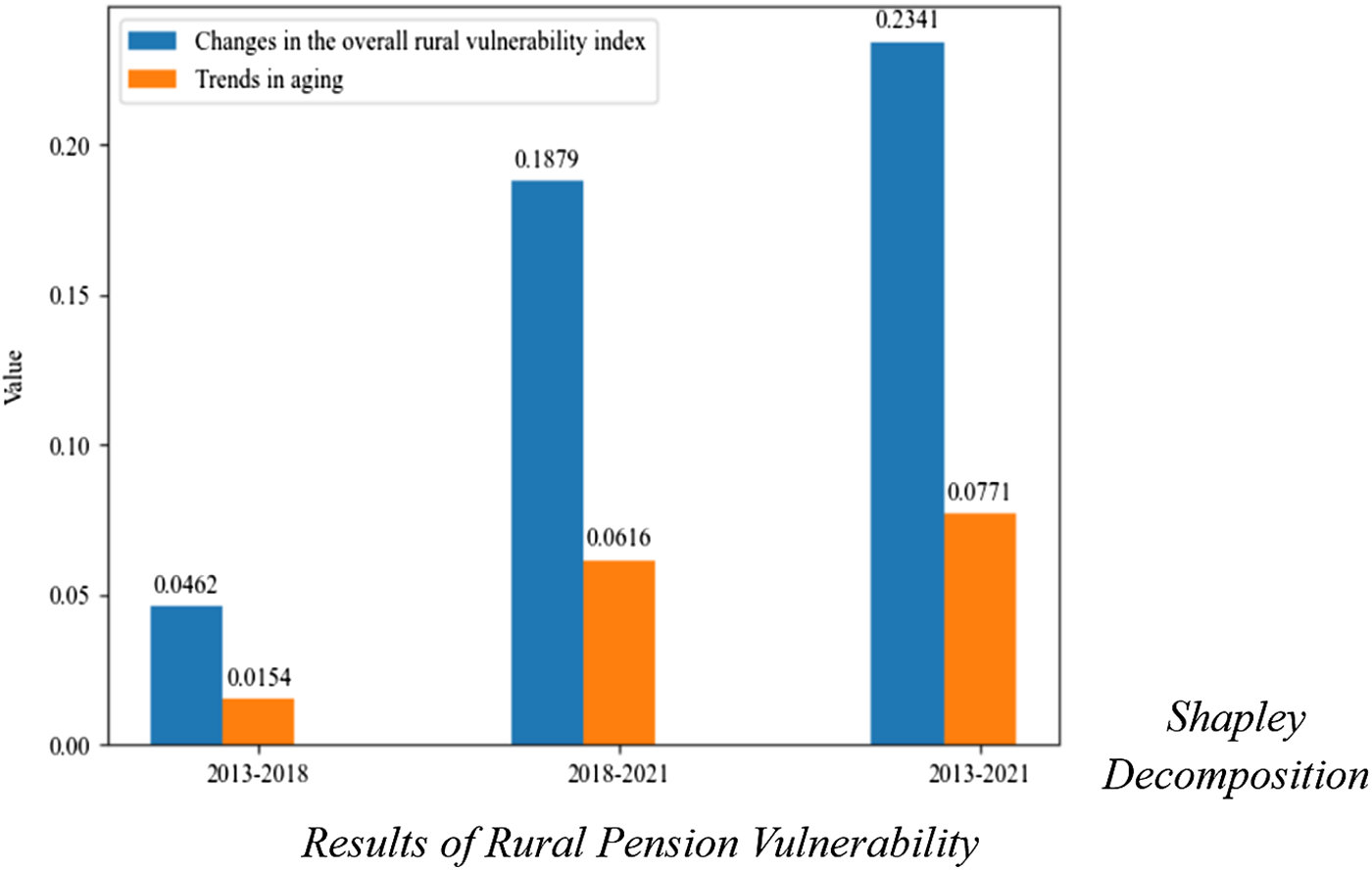
The ageing of the rural population structure has hindered the mitigation of overall elderly care vulnerability in rural areas (as shown in Figure 3). The subgroup decomposition results indicate that the ageing trend may have offset the decline in elderly care vulnerability. Using the Shapley decomposition method (Equation (10)), we decompose the changes in overall rural elderly care vulnerability into the contributions of two subgroups – the older and younger elderly populations – and the effect of population ageing.
Shapley decomposition results of rural pension vulnerability.

As illustrated in the Figure 3, overall rural elderly care vulnerability has increased, while the degree of population ageing has also deepened. This suggests that the rise in overall elderly care vulnerability is influenced by the intensifying ageing trend. Therefore, Hypothesis 1 is supported. Specifically, the negative impact of population ageing during the 2013–2021 period was primarily concentrated in the 2018–2021 phase, whereas its effect was relatively weaker in the 2013–2018 phase. This discrepancy may be attributed to the sequential implementation of China’s fertility policies, such as the ‘Selective Two-Child Policy’ in 2013 and the ‘Universal Two-Child Policy’ implemented in 2016.
The impact of social participation on rural elderly care vulnerability
Regression analysis
The impact of social participation on rural elderly care vulnerability could be of two types: one is the absolute impact of how rural elderly care vulnerability changes with social participation; the other is how social participation can predict the likelihood of elderly care vulnerability being high or low. To test the two effects, we use Model 1, which adopts OLS regression, with the elderly care vulnerability index as a continuous dependent variable, and Model 2, which applies a binary logistic regression. Model 2 defines high elderly care vulnerability using a threshold of k = 0.33: a rural older adult is assigned a value of 1 if their index exceeds this threshold and 0 otherwise. The OLS regression results reveal that political participation, economic participation and religious participation all exert a significant negative effect on rural elderly care vulnerability (see Table 9).
The impact of social participation on elderly care vulnerability

Significance levels:
*** p < 0.001.
The logistic regression analysis results indicate that political participation has a negative effect on rural elderly care vulnerability (OR = 0.818) (see Table 9). For each unit increase in political participation, the odds of experiencing elderly care vulnerability decrease by 18.2 per cent ( $1 - 0.818 = 0.182$). Economic participation also shows a negative effect (OR = 0.348), with each unit increase in economic participation associated with a 65.2 per cent reduction in the odds of vulnerability (
 $1 - 0.348 = 0.652$). Similarly, religious participation negatively affects elderly care vulnerability (OR = 0.980), where each unit increase corresponds to a 2.0 per cent decrease in the odds (
 $1 - 0.980 = 0.02$). Therefore, Hypothesis 2 is supported.
Heterogeneity analysis
Table 10 presents the heterogeneity in the impact of social participation on rural elderly care vulnerability, categorized by gender, educational attainment and economic status. After controlling for a set of variables, the mitigating effect of social participation on elderly care vulnerability is found to be more pronounced among males than among females. For elderly individuals with household economic status below the average level, social participation exerts a stronger mitigating effect on vulnerability compared to those with above-average economic status. Additionally, social participation significantly reduces elderly care vulnerability among those with education at or below the junior high school level, whereas the effect is not statistically significant among those with education above the junior high school.
Heterogeneity analysis

Significance levels:
* p < 0.05, **p < 0.01, ***p < 0.001.
Discussion
This study makes contributions in the following aspects. First, it investigates the changes in rural elderly care vulnerability in China against the backdrop of population ageing. Second, it innovatively adopts a multidimensional deprivation approach to explore the dynamic changes in elderly care vulnerability and the underlying factors. Third, it reveals the mechanisms through which social participation alleviates rural elderly care vulnerability.
First, during the observation period, there was a significant increase in elderly care vulnerability among rural seniors. A comparative analysis shows that the elderly care vulnerability index fluctuated slightly from 2013 to 2018 but exhibited a marked upward trend by 2021. From a longitudinal perspective, the level of educational deprivation decreased year by year during the observation period, which can be attributed to the education popularization policies implemented in China since the early 1980s. However, the factors driving the increase in elderly care vulnerability among rural seniors varied across different observation periods. Between 2013 and 2018, the main factors contributing to the increase in elderly care vulnerability were the rising deprivation in the number of children and the quantity of property owned. The reduction in the number of children primarily stemmed from the one-child policy implemented in 1980, which led to a decline in the birth rate among rural childbearing-age population (Yi et al. Reference Yi, Wang, Jiang and Gu2008). The increase in deprivation of property ownership was mainly owing to the gradual reduction of construction land in rural China, increased difficulty in applying for homesteads and the decrease in property ownership following generational divisions, all of which resulted in a reduction in property owned by rural elderly persons. Between 2018 and 2021, the main reasons for the increase in elderly care vulnerability were deprivation in insurance participation and social interaction capabilities. Pandemic control measures restricted daily social activities and reduced social interactions (Perez-Brumer et al. Reference Perez-Brumer, Balasa, Doshi, Brogdon, Doan and Oldenburg2022), while the decline in insurance participation may be related to factors such as decreased income and increased insurance costs among rural elderly persons (Xu Reference Xu2022).
Second, the ageing population structure in rural areas has had an adverse impact on the overall increase in elderly care vulnerability. During the observation period, the elderly care vulnerability index of older rural seniors was not only higher than that of younger seniors but also increased year by year. This disparity in vulnerability can be attributed to the combined effects of chronic health conditions, limited access to healthcare and reduced social support networks, which are more prevalent among older seniors (Maresova et al. Reference Maresova, Javanmardi, Barakovic, Barakovic Husic, Tomsone, Krejcar and Kuca2019; Schwarz et al. Reference Schwarz, Schmidt, Bobek and Ladurner2022). Coupled with the impact of the ageing trend, population-level elderly care vulnerability is bound to increase. This implies that as the ageing trend intensifies, the elderly care vulnerability of older seniors will gradually become a significant component of overall vulnerability in rural areas.
Third, political participation, economic involvement, religious engagement and social activity participation have all exerted a positive effect on alleviating elderly care vulnerability among rural seniors. Political participation among the elderly population not only is a crucial means of realizing their civic rights but also enhances their sense of self-identity, self-esteem and life satisfaction (Moza et al. Reference Moza, Lawrie, Maricutoiu, Gavreliuc and Kim2020). Enhancing the economic participation of the elderly is a vital aspect of increasing elderly care capital, which can reduce the economic vulnerability of the elderly and enhance their resilience in care (Cai Reference Cai2022; Ma et al. Reference Ma, Piao and Oshio2020). The impact of participation in social activities on the welfare of the elderly has also been confirmed by numerous studies. However, these studies often focus solely on the impact of social participation on a single dimension of elderly care vulnerability, lacking a comprehensive perspective to fully understand the overall impact of social participation on elderly care vulnerability. Therefore, building on previous research, this study further demonstrates that various aspects of social participation can have a positive effect on reducing elderly care vulnerability among rural seniors.
Limitations
The findings of this study should be interpreted with caution. First, owing to differences in cultural contexts and social institutions, the conclusions derived from data based on rural China may not be readily generalizable to other emerging economies. Future research should therefore conduct cross-national and cross-cultural comparative studies within broader socio-cultural settings. Second, this study relies on cross-sectional data, which restricts the ability to determine the direction of causal relationships. Future studies should consider using panel data or rigorously designed experiments to more precisely examine the causal mechanisms through which social participation alleviates elderly care vulnerability.
Recommendations
Based on the conclusions of this article, the following policy recommendations are proposed to address the dual pressures of population ageing and elderly care vulnerability in rural China.
First, given that the factors influencing elderly care vulnerability vary over time, government departments should implement targeted governance measures. This study reveals that employment status, family economic conditions and health status have particularly significant impacts on elderly care vulnerability in rural areas. Consequently, the government should accelerate the establishment of a comprehensive support system covering the needs of the elderly population, including providing employment support and training tailored to elderly individuals, and strengthening the social security system to enhance their economic security. Simultaneously, it is necessary to improve medical and health service in rural areas, develop community-based support and build an elderly care service network to elevate the health level of elderly persons. Furthermore, this study also found a significant decline in insurance participation among rural elderly from 2018 to 2021; thus, the government should refrain from increasing insurance fees and provide more financial support to the rural elderly care insurance system to alleviate the economic burden on rural elderly individuals.
Second, addressing the elderly care needs of rural seniors requires not only improving their intrinsic health conditions through health education and disease prevention but also focusing on encouraging and supporting their mobility and social functioning. This study has found that the educational level of the elderly population is gradually increasing, which suggests that the proportion of elderly people participating in society may also rise in the future. Organizing and conducting economic and social activities suitable for the elderly, and providing them with more participation opportunities, offers a new perspective for solving the current elderly care issues in rural areas. Therefore, in addressing rural elderly care, it is essential to not only provide short-term economic and social security support but also alleviate the situation by creating more employment opportunities and social activities for the elderly population.
Finally, as the population born during China’s baby boom between the 1950s and the 1970s gradually enters old age and later life stages, older seniors will increasingly become a significant segment of the vulnerable group in rural elderly care, further exacerbating the pressure on rural elderly care systems. They should thus be a key focus in addressing elderly care issues. Therefore, the government should promote the establishment of a multi-level elderly care service system integrating home-based care, community care and institutional care. This would not only provide rural elderly individuals with diverse elderly care options but also ensure that they receive appropriate support and care at different stages of their older lives.
Acknowledgements
Data analysed in this study were collected by the research project Chinese General Social Survey (CGSS), sponsored by Renmin University of China. The CGSS research project was conducted by the Institute of Gerontology and National Survey Research Center of Renmin University. The authors acknowledge assistance in providing the data from the institutes and individuals aforementioned. The views expressed in this article are the authors’ own.
Financial support
This work was supported by the Scientific Research Project of the Jilin Provincial Department of Education (JJKH20250541SK) and Subject of the 14th Five-Year Plan for Educational Science of Jilin Province (ZD22092).
Competing interests
The authors declare no competing interests.
Ethical standards
Ethical approval was not required as the analysis for this article used secondary data collected by the nationally representative dataset Chinese General Social Survey (CGSS).