

1. Introduction
Previous work has established the link between linguistic features, identity, and personae (Eckert Reference Eckert2000, Podesva Reference Podesva2011, Drager Reference Drager2015). One factor that may complicate whether and how speakers produce linguistic variants is the presence of stigma (see Preston and Niedzielski Reference Preston and Niedzielski2010). To this end, this article probes the extent to which dialectal stigma, and changes thereof, impact the use of linguistic variant use in personae formation and lead to changes in linguistic norms. Specifically, I examine variation in French-language music by Québécois singers. In music, singers often put on personae (Fairchild and Marshall Reference Fairchild and Marshall2019), and genres are shown to have distinct norms (Gibson Reference Gibson2024). Music provides a unique context in which to study these interactions, because singing is a type of performed language, meaning that it is preplanned and therefore is a spoken-written hybrid (Werner Reference Werner2021b).Footnote 1 By examining French in Québec, we can test the effects of stigma on linguistic variant use because the dialect has undergone destigmatization in Québec (see section 2.1), but remains stigmatized in France (Owens et al. Reference Owens, Nesbitt and Lamontagne2023).
Singers have access to a range of linguistic variables that are indexed in speech when creating their performance personae. Consequently, singers form personae by using linguistic variants that index the identities in speech with which they wish to be associated, often based on their genre. This has repeatedly been shown, for instance, for folk (Watts and Morrissey Reference Watts and Morrissey2019), pop (Lyon Reference Lyon2019, Lin and Chan Reference Lin and Chan2021), indie rock (Jansen and Gerfer Reference Jansen, Gerfer, Schubert and Werner2023), hip-hop (Eberhardt and Freeman Reference Eberhardt and Freeman2015, Gibson Reference Gibson2024), country (Coupland Reference Coupland2011, Werner and Ledermann Reference Werner and Ledermann2024), and flamenco/Latin (Powell Reference Powell2024).Footnote 2 There is likely an overlap between the use of dialectal features and genre affiliation, because genres and identity are closely intertwined (Holt Reference Holt2007). Most studies on sociophonetic variation in music tend to be case studies (cf. Gibson Reference Gibson2024).Footnote 3 Additionally, they tend to be on English (cf. Yaeger-Dror Reference Yaeger-Dror1991, Lin and Chan Reference Lin and Chan2021, Owens Reference Owens2023, Powell Reference Powell2024). The present study contributes to previous work on sociophonetic variation in music by testing the extent to which genre norms are generalizable across singers in the French-language music industry in Québec.
It is difficult to fully separate identity from personae (cf. D’Onofrio Reference D’Onofrio2020). We see references to identity in definitions of personae such as Johnstone’s (Reference Johnstone, Montgomery and Moore2017: 285): “a way of being and acting associated not just with a social identity in an abstract sense, but with its embodiment in a character, imagined or actually performed”. We can think of identities and personae as being in a hierarchical relationship with one another (Draeger Reference Drager2015, D’Onofrio Reference D’Onofrio2020). Personae are lower-level and are created using a culmination of linguistic features that index identities at a higher level. While personae are created by the individual, they draw from identities that are accessible to all individuals by selecting the appropriately indexed variants. Singers of some genres use variants that are culturally authentic because they index working-class or local identities (e.g., in country: Coupland Reference Coupland2011, Werner and Ledermann Reference Werner and Ledermann2024) while others may tend to avoid variants that index such identities (e.g., in pop: Zwaan and ter Bogt Reference Zwaan and ter Bogt2009, Gibson Reference Gibson2024). We can therefore expect that the effects of changes in dialectal stigmatization on personae formation and the indexing of identity can be observed by exploring genre differences in linguistic variant use.
For this study, I target the linguistic variable of high vowel laxing (e.g., /panik/ [panɪk] panique ‘panic’), because it is characteristic of Laurentian French (Côté Reference Côté, Gess, Lyche and Meisenburg2012) and categorical in speech (Poliquin Reference Poliquin2006). Because Laurentian French speakers who use tense variants may be regarded as “snobbish” by other speakers of Laurentian French (Paradis and Dolbec Reference Paradis and Dolbec1998), I postulate that tense variants are socially indexed as being European, international, or upper-class. Because Québécois singers often release albums and play shows in France, where the music market is larger than in Québec (Grenier Reference Grenier1993), I predict that singers will be influenced by Hexagonal French variants (cf. /panik/ [panik] panique ‘panic’), hypothesizing that this may be due to singers’ desire to avoid stigma directed towards them from French listeners (cf. Schafroth Reference Schafroth2009, Owens et al. Reference Owens, Nesbitt and Lamontagne2023).
This study tests three research questions:
(1) To what extent are laxing rates predictable according to a singer’s musical genre? Given that some genres often index working-class identities (e.g., country: Coupland Reference Coupland2011), and others do not (e.g., pop: Zwaan and ter Bogt Reference Zwaan and ter Bogt2009), I hypothesize that singers of genres that index marked identities will lax more frequently than those that do not.
(2) To what extent do singers of different genres change their laxing rates across time? Because Laurentian French has been steadily undergoing destigmatization (see section 2.1), it can be expected that singers who began their careers recently will lax at higher rates than those who began their careers earlier.
(3) To what extent do singers of different genres change their laxing rates across their careers? I hypothesize that singers are most likely to adhere to genre norms at the start of their careers, because at that stage, they are less susceptible to external pressures such as stigma from foreign audiences. Consequently, their laxing rates will decrease throughout their career. While this third research question appears to resemble the second, they are, in fact, distinct considerations. To illustrate, a given year, such as 2012, may include data from singers who released their first album as well as those who released their third or sixth album. As a result, I distinguish between community change (i.e., year of album release) and individual change (i.e., stage of career).
The article begins by presenting the relevant background information on dialectal features, personae, and identity in music, followed by an explanation of the role of genre in the Québec music industry, the (de)stigmatization of Laurentian French in both Québec and France, and a description of the target variable: high vowel laxing (section 2). Next, I detail the creation of the corpus from which the study’s data is drawn, the extraction and coding protocols, and the statistical model (section 3). The results presented in section 4 demonstrate that genre, album release year, and album order all predict laxing rates. I then discuss the extent to which some of these results are attributable to audience design (cf. Bell Reference Bell1984), before delving into music genres’ distinct linguistic norms and highlighting the role of identity on linguistic variant use (section 5). The conclusion (section 6) summarizes the study’s contributions and suggests directions for future work.
2. Background literature
This section presents a survey of the background literature regarding dialectal accommodation, identity, and persona formation in music and in speech (section 2.1) before describing the current landscape of the Québec music industry, with specific emphasis on the pop genre (section 2.2). Next, I describe how stigma directed towards Laurentian French by speakers from Canada and France has changed; linguistic variant use in music may reflect these sociolinguistic developments (section 2.3). Lastly, I describe the target phonological process, high vowel laxing (section 2.4), before returning to the study goals (section 2.5).
2.1. Accommodation, dialectal features, identity, and personae
Much of the work on dialectal accommodation in music has focused on songs in English. Case studies show that British singers (e.g., the Beatles and the Rolling Stones) often feature traits of American English in their singing (Trudgill Reference Trudgill, Coupland and Jaworski1997, Simpson Reference Simpson1999). For example, British singers often produce /t/ intervocalically as a tap or a flap (e.g., [bɛɾɚ] better), characteristic of American English, in place of [t] or a glottal stop (cf., [bɛʔə]), characteristic of British English (Simpson Reference Simpson1999). Although traits of American English may often be featured early on in British singers’ careers, the use of such traits may also diminish over the course of their careers (e.g., the Beatles and the Rolling Stones: Trudgill Reference Trudgill, Coupland and Jaworski1997). For other artists, however, the use of local dialectal traits may increase across their careers, and they may rarely feature American English traits (e.g., the Arctic Monkeys: Jansen and Gerfer Reference Jansen, Gerfer, Schubert and Werner2023). That is, the patterning of dialectal trait use may vary from singer to singer based on their goals and the course of their career.
The featuring of American dialectal features, however, is not unique to British singers: Gibson’s (Reference Gibson2024) study of 154 singers shows a similar pattern for New Zealand singers, focusing specifically on /æ/ and non-prevocalic /r/. Gibson finds that pop singers from New Zealand tend to produce Americanized variants ([dæns] dance and [niːðɚ] neither, respectively) of the target variables more frequently than New Zealand English variants (cf. [dɑːns] dance and [niːðə] neither) in comparison to hip-hop artists. Based on the genre differences observed between pop and hip-hop artists, Gibson proposes that pop is characterized by a supralocal norm based on American English. One might therefore expect pop singers of minority dialects to be most sensitive to international norms, something that is indeed shown in previous work (Owens Reference Owens2023, Owens and Lamontagne Reference Owens and Lamontagne2023) on a subsection of the corpus used in the present study. Both studies found that across genres, pop singers produce an unmarked dialectal feature the least often. Owens (Reference Owens2023) additionally shows country singers are most likely to produce a stigmatized dialectal feature.
In addition to Gibson’s (Reference Gibson2024) corpus study and the work in Owens (Reference Owens2023) and Owens and Lamontagne (Reference Owens and Lamontagne2023), case studies show that dialectal variants are often predictable based on a singer’s genre and the overall artistic effect that they wish to convey. For example, in Coupland’s (Reference Coupland2011) study, he examines multiple English linguistic variables in three genres (rock and roll, folk/country, and punk rock) by selecting one song from one singer per genre for analysis. Overall, he finds that the linguistic variants used by these singers often include dialectal variants that index the identities associated with the audiences targeted by these singers, and that these identities are often further evoked in the content of the lyrics themselves. For example, indie singers show a propensity to include dialectal features that are clearly marked for a region, rather than a socioeconomic class, to show their personal affiliation with local identities over generic ones (e.g., the Arctic Monkeys: Beal Reference Beal2009). In the case of country singers, they tend to include dialectal features which are indicative of the working-class population so as to index blue-collar, “everyday person” identities (e.g., James Taylor: Coupland Reference Coupland2011).
Notably, persona formation may lead artists to index identities that are authentic to a genre, but not to themselves as a person (for discussion of cultural authenticity in pop culture, see Werner and Ledermann Reference Werner and Ledermann2024). For example, Eberhardt and Freeman (Reference Eberhardt and Freeman2015) show that Iggy Azalea, a white woman from Australia, frequently features traits of African American English in her music. Specifically, the authors argue that Iggy Azalea indexes Blackness as part of her hip-hop persona, despite the fact that she does not identify with this culture outside of her persona. A second instance of personal inauthenticity is shown in Lyon’s (Reference Lyon2019) study of Taylor Swift. Although Taylor Swift is from Pennsylvania, she frequently featured traits of Southern American English during her era as a country singer. The choice to value cultural authenticity over personal authenticity is a choice that is made by individual artists.
Zwicky (Reference Zwicky, Livia and Hall1997) proposes two mechanisms by which personae are created in speech. The first mechanism is identification, meaning individuals mimic linguistic features of groups or identities to which they believe themselves to belong or to which they want to belong (i.e., styling: Eckert Reference Eckert2000). Podesva (Reference Podesva2011) illustrates this by showing that a California gay man uses advanced variants of the California Vowel Shift to craft a gay partier persona. The second mechanism is avoidance, meaning speakers reject the use of specific linguistic features as a means of distancing themselves from an identity. For example, English linguistic features such as the word like in some contexts (Drager Reference Drager2015) and phonological shifts (Eckert Reference Eckert2000) are used by groups of students to avoid indexing mainstream identities or those that are not socially desirable. We can therefore expect that the features singers choose to produce or to avoid may change as identities that are associated with linguistic features change. Similarly, we can expect the usage rates of given linguistic features to change as they become (de)stigmatized.
While individuals often select variants that index culturally authentic identities, and personally inauthentic identities may be indexed to align with genre norms (i.e., to be culturally authentic), in neither case do previous studies speak to the effect that dialectal or variant stigma may have on personae formation and norm evolution. Selecting francophone music for this study makes it possible to explore the role of dialectal stigma in the formation of personae. In particular, I focus on the Québec music industry, where genre affiliation has the largest influence on the music that singers release in comparison to any other sociodemographic factor (Grenier Reference Grenier1993). I postulate that Québécois singers index identities associated with their genre when recording. In the following section, I elaborate on the role of genre affiliation in the Québec music industry.
2.2. Genre in the Québec music industry
During the 1970s and 1980s, the music industries in the United States and Canada (including Québec) encountered a decrease in sales to international markets (ADISQ 1989), resulting in mass layoffs of music industry employees (Grenier Reference Grenier1993). In order to recuperate lost profits, record labels considerably reduced the number of albums being produced. In North America, the francophone music market was the sector hardest hit by this economic crisis. Given that the population that buys francophone music is much smaller than that which buys anglophone music, cuts to this sector were deemed the most logical. As Grenier (Reference Grenier1993) summarizes, between 1978 and 1983, the number of francophone albums released in Canada decreased by 54%; even more strikingly, in 1979 there were a total of 180 new francophone albums released by Québécois singers, but in 1987 there were only 38.
While the music industry in North America was in the midst of an economic crisis, Québécois audiences were growing increasingly disenchanted with Québec nationalist music (see Grenier Reference Grenier1993).Footnote 4 This music constituted a significant portion of la chanson, a genre of music that was often in competition with pop(-rock). La chanson is distinct from pop(-rock) in that the former is a mainstream music genre that targets Québec audiences, and the latter is a mainstream genre that appeals to international markets (Grenier Reference Grenier1993). Grenier (Reference Grenier1993) establishes a divide between these two musical genres before the music industry’s economic crisis and highlights that genre is the most important factor that distinguishes the social identities of Québécois singers: “This founding opposition was based on a conflation of politics, musical genre and performing styles which made other sites of differentiation (with the possible exception of language) such as age, gender, ethnicity and region appear secondary, if not completely irrelevant” (Grenier Reference Grenier1993: 220). For this reason, the current study concerns itself particularly with musical genre, as opposed to other sociodemographic traits of singers such as gender and age.Footnote 5
According to Grenier (Reference Grenier1993), the end of the music industry’s crisis brought about the unification of la chanson and pop(-rock), which together form the pop genre in Québec that we have today. The distinction that can be drawn between these two genres is therefore often nominal, but some artists may elect to write certain songs more in line with one tradition than the other (see Ransom Reference Ransom2011). Grenier proposes that Québécois pop singers who began their careers after the economic crisis (i.e. after the unification of the two genres) view the concept of genres more fluidly than do singers who began before or during the crisis.Footnote 6
As a result of the upheaval that occurred in the Québec music industry in the 1980s, this study includes only artists who began releasing albums well after the end of the economic crisis.
2.3. The role of dialectal stigma
Given that successful singers garner both domestic and international followings, it is important to consider the linguistic attitudes towards Laurentian French, both in Québec and abroad, so as to better situate the possibility of accommodation by the Québécois singers in our corpus. The stigma associated with Laurentian French, the primary variety of French spoken in Québec and throughout western Canada (see Côté Reference Côté, Gess, Lyche and Meisenburg2012), is well documented in Canada (Lambert et al. Reference Lambert, Hodgson, Gardner and Fillenbaum1960, Bourhis et al. Reference Bourhis, Giles and Lambert1975, Kircher Reference Kircher2012). In Québec, dialectal stigma remains for linguistic traits associated with the working class (Lappin Reference Lappin1982, Côté Reference Côté, Gess, Lyche and Meisenburg2012), yet formal Laurentian French has been undergoing destigmatization (see Kircher Reference Kircher2012). In France, however, all varieties of Laurentian French, whether formal or informal, are subject to stigma (e.g., Szlezák Reference Szlezák2015).Footnote 7
This gradual destigmatization of Laurentian French in Québec is demonstrated by the findings of three fundamental studies on the attitudes of Laurentian French speakers towards their own dialect as well as towards Hexagonal French (i.e., French spoken in France): Lambert et al. (Reference Lambert, Hodgson, Gardner and Fillenbaum1960), Genesee and Holobow (Reference Genesee and Holobow1989), and Kircher (Reference Kircher2012). A more recent study (Owens et al. Reference Owens, Nesbitt and Lamontagne2023) is the first, to my knowledge, to empirically test the attitudes of Hexagonal French speakers towards Laurentian French.
Lambert et al.’s (Reference Lambert, Hodgson, Gardner and Fillenbaum1960) work serves as a baseline for assessing the destigmatization of Laurentian French in Québec, having tested the attitudes of anglophones and francophones in Montreal towards Laurentian French. Their study shows that both groups had negative attitudes towards Laurentian French in comparison to their views on Canadian English. Additionally, participants often gave more positive ratings for a speaker who mainly spoke with features of Hexagonal French in comparison to other Laurentian French speakers, suggesting that Hexagonal French was less stigmatized than Laurentian French by both anglophones and francophones in Montreal at the time of the study’s data collection.
Building on Lambert et al.’s (Reference Lambert, Hodgson, Gardner and Fillenbaum1960) study, Genesee and Holobow (Reference Genesee and Holobow1989) sought to quantify the effects that the province of Québec’s Official Language Act (Loi sur la langue officielle), passed in 1974, and Charter of the French Language (Charte de la langue française), passed in 1977, had on the attitudes of Laurentian French speakers towards their own dialect. They compared participant attitudes towards Laurentian French, Hexagonal French, and English, and demonstrated that francophones evaluated speakers equally in terms of likeability and kindness regardless of the language or dialect of the speakers in the recordings. Furthermore, Laurentian French and Hexagonal French were both viewed as more favourable in terms of status in comparison to English. These results highlight that both Hexagonal French and Laurentian French were viewed more positively than English in Montreal at that time, in contrast to the 1960s. However, this study also shows that speakers of Laurentian French were still viewed as less intelligent and less educated than speakers of Hexagonal French in the 1980s in Montreal.
Kircher’s (Reference Kircher2012) study serves as an update to the previous two in that it directly tests the differences in attitudes between Laurentian French and Hexagonal French. Her findings reveal that a change in attitudes towards varieties of French had taken place in Montreal between Genesee and Holobow’s (Reference Genesee and Holobow1989) study and her own: all participant groups evaluated speakers of Laurentian French more positively in terms of likeability and kindness than speakers of Hexagonal French. However, ratings for intelligence tended to be asymmetrical: participants perceived the speakers of their own dialect as being more intelligent than those speaking the other. Despite the gradual destigmatization of Laurentian French, linguistic insecurity while speaking French is still predominant in Québec (OCOL 2021). Because linguistic insecurity can affect the variants that speakers use (see Labov Reference Labov2006), we can expect to observe continued effects of prior stigmatization on linguistic variant use even after the mid-2000s.
Finally, the findings in Owens et al. (Reference Owens, Nesbitt and Lamontagne2023) update our understanding of the stigma associated with Laurentian French and Hexagonal French in both France and Canada. The results of that study demonstrate that for respondents from France, Laurentian French is associated with lower likeability and kindness ratings in comparison to Hexagonal French. However, listeners from France do not rate Laurentian French talkers as being less intelligent or educated than Hexagonal French talkers. Laurentian French listeners, on the other hand, do not rate Hexagonal French and Laurentian French talkers differently from one another for any dimension.
In summary, previous works suggest that Laurentian French is, as of recently, destigmatized for speakers of Laurentian French, but that speakers of Hexagonal French rate their own dialect more favourably in terms of solidarity metrics. The present study presupposes that Québec singers are sensitive to dialectal stigma and therefore likely to adhere to prescriptive linguistic norms, based on an international variety or Hexagonal French. Furthermore, singers of genres that tend to be consumed more often by international audiences, such as pop, may be more willing to accommodate to international norms (cf. Gibson Reference Gibson2024) and more cognizant of dialectal stigma than those who do not target international audiences.
2.4. High vowel laxing in Laurentian French
Non-lengthened high vowel laxing in closed final syllables (e.g., /panik/ [panɪk] panique ‘panic’) is a linguistic trait, characteristic of Laurentian French, that is categorical in speech (e.g., Dumas Reference Dumas1983, Poliquin Reference Poliquin2006, Côté Reference Côté, Gess, Lyche and Meisenburg2012), but generally absent in other dialects (Côté and Remysen Reference Côté and Remysen2017).Footnote 8 It is not stigmatized by speakers of Laurentian French (Lappin Reference Lappin1982, Reinke et al. Reference Reinke and Ostiguy2006); in fact, production of tense variants by speakers of Laurentian French where laxing normally applies leads interlocutors of the same dialect to regard them as arrogant (Paradis and Dolbec Reference Paradis and Dolbec1998). In this way, laxing is of particular interest for our study on the use of already-indexed traits, in that tense variants index European or international identities, or perhaps those of the upper class.
Given that Laurentian French remains stigmatized in France (see section 2.3), I hypothesize that the production of lax variants may trigger negative judgments from some French listeners. We can therefore expect that singers who wish to avoid indexing a local identity, or wish to appeal to international audiences, will produce tense variants frequently even though it is stigmatized to do so within their own dialect. Additionally, we can expect that singers who appeal mainly to domestic audiences will produce lax variants frequently.
3. Methodology
This section describes the methodology used to test this study’s research questions on the use of linguistic variables in music. First, I detail the creation of a corpus of albums by Québécois singers (section 3.1). I then explain the procedures used to extract and code high vowels in final closed syllables for tenseness (section 3.2), and finally describe the mixed-effects logistic regression model used to predict laxing rates (section 3.3).
3.1. Genre classification and corpus creation
I created the corpus used in this analysis to study sociolinguistic variation in francophone music from Québec. Given that singers’ songs and albums are heavily influenced by their genre affiliation, music offers the opportunity to study the selection of linguistic variables for persona formation in a way not allowed by everyday speech. As singer genre is a key component of this study, one would hope for a straightforward definition and set of criteria for genre categorization. However, while a significant amount of ink has been spilled on the topic, no consensus has been reached (Moore Reference Moore2001, Ramírez and Flores Reference Ramírez and Flores2020). Musicologists and scholars of popular music have quibbled over the potential differences between genre and style, generally agreeing that genre is an inherent quality of the music, while style is the performed expression of genre (see Moore Reference Moore2001); this, however, leaves open the question of how to define genre as an intrinsic trait in a way that allows for clear differentiation between genres. Some studies suggest that genre is related to audience scope and reach (Silver et al. Reference Silver, Lee and Childress2016), while others have argued that genre is related to the narrative message of a song or album (Rabinowitz Reference Rabinowitz, Ryan, Ruppert and Bernet2004). Still others say that genre cannot be exclusively identified by either of the two previously mentioned components and must be based on additional features of a song or album (Holt Reference Holt2003).
The question of how to distinguish genres from one another has gained particular interest in the age of electronic music distribution, because streaming platforms and vendors (e.g., Pandora, Amazon, etc.) want to label singers, albums, and songs to better market to the consumer. A study by Pachet and Cazaly (Reference Pachet and Cazaly2000) of three internet sites that classify songs by genre found that there was no consensus either on how to define each genre or on the number of possible labels. Indeed, terms like pop and rock were not consistently used, and, more often than not, songs that were present on multiple sites did not have the same genre label across sites. In recent years, scholars have turned to machine learning models in an attempt to better and more accurately classify music genres (Silver et al. Reference Silver, Lee and Childress2016, Ramírez and Flores Reference Ramírez and Flores2020). In the music information retrieval subfield of the domain of informatics alone, approximately 500 publications had already been published by 2012 in an attempt to devise a way to better and more accurately categorize music genres (Sturm Reference Sturm, Nürnberger, Stober, Larsen and Detyniecki2014). Despite this critical mass of studies on the subject, as Ramírez and Flores (Reference Ramírez and Flores2020: 492) put it, “the main problem is the lack of a formal definition for music genre”.
Despite the fact that the lack of formal definition means no taxonomy is able to perfectly classify genre, a study such as this nonetheless requires grouping singers in this way, because it is through such classifications that singers often market their albums and that listeners search for new music. In building the corpus, I started by trying to include artists who are classified as one of four genres: alternative, country, indie, or pop. In classifying genre, I examined each singer’s genre classification across multiple sites and streaming platforms such as Amazon, Pandora, Spotify, Discogs, and Last.FM in an attempt to find a label that was routinely listed first in a string of possible genre labels. For example, artists like Ludovick Bourgeois and Cœur de Pirate were routinely classified with pop as the first genre label.
In other cases, there is far more variation in genre labels for singers. For example, Safia Nolin is often categorized under rock, indie, or folk, with neither term being listed first in more instances than not. In cases such as these, where genre labels are far less consistent, I turned to lists generated by the same sites intended to help consumers find new artists with a similar sound to an artist to whom they already listen. For example, Hubert Lenoir (a singer who is routinely labelled as indie) is often recommended for listeners of Safian Nolin. Ultimately, however, there proved to be a high enough degree of overlap between artists labelled alternative and indie that it was difficult to distinguish between who should be classified as alternative but not indie and vice versa. The canonical means of separating indie singers from alternative ones is not based on the style of music that the two groups produce, as both groups produce similar styles; it is based on whether an artist is associated with a larger record label (alternative) or an independent group (indie) that is not part of a larger corporation (Hesmondhalgh and Meier Reference Hesmondhalgh, Meier, Bennett and Strange2014). Given the amount of overlap between these two genres in terms of style, I elected to put alternative and indie singers under the single category alternative.Footnote 9
The classifications of folk and rock proved particularly problematic because these labels are sometimes used alone to describe singers’ music, but they are also used as secondary terms (e.g., pop rock and folk pop). For this reason, I did not use either term as a genre label. However, I included singers who are nearly exclusively labelled under folk or folk rock under the label country, due to the similarity in narrative themes present in the songs and albums across these genres (e.g., working-class hardship), as well as the labelling of artists who are recommended due to their similarity to these singers. Cases of this in the corpus include Émile Bilodeau and Alexandre Poulin, both recommended alongside country singers and groups such as Sara Dufour and Mes Aïeux. Although this system is by no means a perfect genre classification system, based on the literature outlined earlier in this subsection, I contend that no genre classification system would be. Since the boundaries between genres are murky and fluid at best, I take this murkiness into account when discussing my interpretation of the results (see section 5).
With genre and its operationalization in the corpus defined, I established four criteria to which singers must adhere to be included in the corpus: (1) The singer must have been born and raised in Québec; (2) the singer must speak French natively and speak a variety of Laurentian French, as determined by media interviews and other recorded content; (3) the singer must have released the majority of their albums predominantly in French; and (4) the singer must have released their first full-length album after 2002, and they must have released at least two albums between 2002 and 2022. I selected this time period because it begins well after la chanson and pop(-rock) merged into the single pop genre we know today. Furthermore, by limiting singers included in the corpus to those who have released multiple albums, it is possible to track how singers change their linguistic variant use with each new album.
Although these criteria were developed to ensure the comparability between artists, I also used platforms such as Spotify and Apple Music to survey each singer’s number of monthly listeners before determining whether to include them in the corpus. This was to avoid selecting singers who met the criteria for inclusion but only had a following of, say, 1,000 listeners, as this would limit the ability to conjecture that singers’ behaviour might be attributable to trying to maintain or increase their number of listeners. The resulting bias meant that the time depth for alternative singers in the corpus is only half that of country and pop singers. This temporal imbalance is adjusted for when preparing the data for statistical analysis (section 3.2) and is considered in the discussion of the results (section 5).
Table 1 shows the 34 Québécois singers included in the corpus and the three genres their work spans: pop (n=15), alternative (n=13), and country (n=6). I have added an additional 14 artists (4 pop, 6 alternative, and 4 country) to the corpus since the analysis presented in Owens & Lamontagne (2023), which examined the patterning of pop singers (n=11) relative to singers of all other genres (n=9). The corpus contains a total of 132 albums (1,417 songs; 301,667 words). While the majority of the data in the corpus come from pop singers, this is adjusted for in the statistical model (see section 3.3) by the inclusion of a random intercept for singer and word.
Singers included in the corpus

1 Long description
Columns list Genre, Singer, Gender, Albums, and Album release years for singers grouped under Alternative, Country, and Pop. Alternative includes 13 singers with 2 to 5 albums: Philemon Cimon has 5, Antoine Corriveau, Louis Jean Cormier, and Salome Leclerc have 4, and several have 2 or 3; release years run from 10 to 22. Country includes 6 singers with 2 to 5 albums: Alexandre Poulin has 5, Andree Watters, Bernard Adamus, and David Jalbert have 4, Emile Bilodeau has 3, and Sara Dufour has 2; release years run from 03 to 19. Pop includes 16 singers with 2 to 8 albums: Marc Dupre and Pierre Lapointe have 8, Ariane Moffatt has 7, Etienne Drapeau and Marie Mai have 6, Annie Villeneuve and Coeur de Pirate have 5, several have 4 or 3, and Claude Begin, Ludovick Bourgeois, and Roxane Bruneau have 2; release years run from 02 to 21. Gender is listed as Male or Female for each singer within each genre. Album release years are shown as two digit years preceded by an apostrophe, and one Pop entry for Pierre Lapointe lists 13 twice.
3.2. Data extraction and coding
Given that this study focuses on high vowel laxing in closed-final syllables, I first identified all tokens in the corpus containing vowels that categorically lax in Laurentian French (i.e., high vowels in closed-final syllables that are not lengthened by /v z ʒ ʁ vʁ/ in coda). To identify the tokens, I automatically extracted the phonemic representations of words contained in the transcriptions by using a script in R (R Core Team 2024) alongside the Lexique 3.81 lexicon (New et al. Reference New, Pallier, Brysbaert and Ferrand2004). After having extracted all phonemic representations, I manually verified the transcriptions for accuracy and then excluded borrowings and proper nouns to avoid the risk of the target phoneme not undergoing the process. I further excluded tokens in which a schwa is pronounced at the end of the word. For example, tokens such as /abit/ habite ‘reside’ that are realized as [abɪtə] (or [abitə]) are excluded to avoid the possibility of resyllabification and therefore non-application of the target process.
In total, I extracted 8,533 high vowels for analysis in 1,452 lexical items. Because tenseness cannot be categorized reliably using only one or two acoustic cues (see e.g. Sigouin Reference Sigouin2013) and formant measurements risk being obscured by background music, I coded all tokens perceptually.Footnote 10 To test reliability, Cohen’s kappa was computed for a subset of 99 tokens that were coded by two external judges as well as by myself.Footnote 11 There was substantial degree of agreement between the main coder and Judge 1 (k=0.62) and certain substantial agreement between the main coder and Judge 2 (k=0.75).Footnote 12
Each token was coded for vowel identity, as different laxing rates have been observed for high vowels in variable laxing contexts (e.g., Lamontagne et al. Reference Lamontagne, Owens, Rosychuk and Villeneuve2023) and laxing in singing may be variable. Turning to non-linguistic factors, I coded each token for singer, album, music genre, year of album release, and album number (e.g., first, second, third, etc.) in singers’ careers.Footnote 13 Although the year of album release and album number factors may at first glance appear to be two ways of operationalizing the same variable, they in fact test different effects. Year of album release allows us to test how the community norm changed across time. It is for this variable that we are more likely to see the effects of destigmatization of Laurentian French or other changes in the music industry. Album number, on the other hand, allows us to observe singers’ laxing rates at various stages in their careers, regardless of the year in which they began or ended their career. This variable therefore allows us to test the direct effects of career longevity on singers’ laxing rates, as it is assumed that singers are likely to change their linguistic variant use across their careers in order to appeal to their target audience and/or increase their numbers of listeners.
Some singers in the corpus have much longer careers (e.g., Marc Dupré, eight albums over 16 years) than others (e.g., Ludovick Bourgeois, two albums over three years), and some began releasing albums much earlier (e.g., Ariane Moffatt, 2002) than others (e.g., Roxane Bruneau, 2017). To adjust for the fact that singers have careers of varying lengths and released albums across varying ranges of time, I centred and rescaled the album number variable and the album year variable from 0 to 1.Footnote 14
This rescaling of the predictor capturing album number sets the first album a singer releases at 0, and the last album released by that singer at 1. Remaining albums are then spaced equidistantly from one another between 0 and 1. For example, a singer who has released two albums has points at 0 and 1, while a singer who has released five albums has points at 0, 0.25, 0.5, 0.75, and 1. This method preserves the linearity of the rate of change from first to last album in singers’ careers while allowing for comparability across singers with differing career lengths (for non-rescaled analysis, cf. Owens and Lamontagne Reference Owens and Lamontagne2023).
In rescaling the year of album release, all first albums are set at 0 and all last albums are set at 1, with the remaining points being plotted along the range according to their proximity to the first album. While the year of album release variable is identical to the album number variable in singers with only two albums, this is typically not the case for singers with multiple albums, since most singers do not release albums at equal time intervals. If we take Antoine Corriveau as an example, he released albums in 2011, 2014, 2016, and 2020. The range between the first and last album is calculated (e.g., 9) and the remaining points are plotted based on where they fall on the range relative to the first album. In this example, 2011 is plotted at 0, 2014 at 0.33, 2016 at 0.56, and 2020 at 1. As with album number, this method preserves the linearity of the rate of change across singers’ careers while adjusting for the fact that some singers may have taken more time off between albums in the middle of their careers than others.Footnote 15
3.3. Statistical analysis
To analyze the data, I ran a mixed-effects logistic regression to predict tenseness using R (R Core Team 2024). This model includes four main factors along with four interactions and two random effects. The first main factor, the redistributed year of album release, is included to test whether any changes in how albums are released over the course of time affected laxing rates. For a second main factor, I included the redistributed album number variable to test whether laxing rates change over the course of a singer’s career. Genre is included as the third main factor to predict whether singers of different genres have distinct laxing rates. Phoneme identity is additionally included as a main factor to test whether laxing rates are driven by a single phoneme, such as /i/, which has a propensity to lax more readily than the other vowels in variable contexts in speech (see Burness et al. Reference Burness, MacLeod, Tahtadjian and Ahn2022, Lamontagne et al. Reference Lamontagne, Owens, Rosychuk and Villeneuve2023).
The first interaction in this model is between the redistributed year of album release variable and musical genre. This interaction permits us to test whether some musical genres are more sensitive to changes which occurred over time compared to other genres. The second interaction, between the redistributed album number variable and musical genre, tests whether singers of different genres differ in how they change their laxing rates across their careers. I include the third interaction between the redistributed album number and the redistributed year of album release variables to test whether singers who began releasing albums more recently have different laxing rates across their careers in comparison to those who began releasing albums early on. The fourth interaction is between the redistributed year of album release, the redistributed album number, and musical genre. This interaction permits us to test whether singers (by genre) who began releasing albums more recently have different overall laxing rates than those who began releasing albums earlier.
This model additionally includes two random intercepts. The first random intercept, singer, adjusts for the fact that each singer will have their own laxing rates. The other random intercept, lexical item, adjusts for the fact that tokens have different lexical frequencies and different rates of occurrence in our corpus. Additionally, Lamontagne (Reference Lamontagne2020) finds that variable high-vowel laxing in non-final syllables is partly predictable by lexical effects, which may be relevant in singing given that it is also a variable context.Footnote 16 This random effect ensures that the results are not driven by individual lexical items but are rather the general trends across words.
4. Results
I begin the presentation of the results with those on the influence of phoneme on laxing rate (section 4.1). In section 4.2, I outline the results for the first research question, regarding laxing rates according to genre. Subsequently, I address the results for the second research question (on the trajectory of laxing rates across time, section 4.3). Next, section 4.4 presents the data pertaining to the third research question, on the impact of album number on laxing rates. I conclude in section 4.5 with a summary of the results. Effect sizes from the statistical model are reported as coefficients (abbreviated as β) and p-values.Footnote 17
4.1. Laxing rates by phoneme
Of the 8,533 tokens analyzed in the dataset, 5,858 are realized as lax vowels (68.65%) and 2,675 are realized as tense vowels (31.35%). However, laxing is not quasi-categorical in the data as it is in speech (cf. Côté Reference Côté, Gess, Lyche and Meisenburg2012); I discuss this further in section 5.1.
Considering laxing rates based on phoneme, Figure 1 shows that singers, regardless of genre, produce lax /u/ less than they produce lax /i/. However, this result is not statistically significant, only reaching a marginal level of significance (β=-0.3894; p=0.0514). Additionally, while /y/ appears to lax less than /i/ in Figure 1, our statistical model (Table 2) cannot confirm the result, given the marginal level of significance that is attained (β=0.3482; p=0.0946). This discrepancy between what is shown in Figure 1 and the statistical model is likely due to the fact that a rather large portion of /i/ tokens are the words il ‘he’ and ils ‘they’ (1137/4557, 25%), which are laxed categorically by the majority of the singers included in our corpus. Only two singers (Cœur de Pirate and Pierre Lapointe) do not categorically lax il and ils. Therefore, the inclusion of the random intercept for lexical item directly adjusts for those which may (a) not behave like other lexical items and (b) be disproportionately present in the data and therefore impact laxing rates.Footnote 18
Laxing rate according to phoneme.

Output of mixed-effects regression model

Table 2 Long description
Mixed effects regression results are listed with columns for Estimate, Std. Error, z value, and p value. The intercept estimate is 0.1440 with p value 0.8069. Year increasing has estimate minus 3.7794, standard error 1.2915, z value minus 2.926, and p value 0.0034, with two asterisks shown. Album number increasing has estimate 1.1999 and p value 0.2274. Alternative versus Pop has estimate 1.9575 and p value 0.0226 with one asterisk, and Country versus Pop has estimate 3.2248 and p value 0.0034 with two asterisks. Vowel terms show u versus i with estimate minus 0.3894 and p value 0.0514 with a dot, and y versus i with estimate 0.3482 and p value 0.0946 with a dot. Interaction terms list Year by Alternative with estimate 5.8351 and p value 0.0021 with two asterisks, Year by Country with estimate 11.3604 and p value 0.0007 with three asterisks, and Year by Album number with estimate 1.4476 and p value 0.0210 with one asterisk. Album number by Alternative has estimate minus 5.0144 and p value 0.0011 with two asterisks, and Album number by Country has estimate minus 8.6847 and p value 0.0073 with two asterisks. Three way interactions list Year by Album number by Alternative with estimate 0.5996 and p value 0.5255, and Year by Album number by Country with estimate minus 1.6093 and p value 0.1297.
Because the results for /u/ and /y/ were only marginally significant, I caution against a strong interpretation of these results. To offer a few possibilities for why these visual trends emerge, I hypothesize that the tendency for /u/ to lax less often than /i/ reflects the fact that, in variable contexts in speech, /u/ is sensitive to style while both /i/ and /y/ are not shown to be; tense /u/ may reflect a more formal style while lax /u/ does not (cf. Lamontagne et al. Reference Lamontagne, Owens, Rosychuk and Villeneuve2023).Footnote 19 This perhaps points to the fact that singing is a more formal context than everyday speech (cf. Werner Reference Werner2021b). In Lamontagne et al.’s (Reference Lamontagne, Owens, Rosychuk and Villeneuve2023) study on variable contexts in formal speech, /y/ tokens were removed following the initial interpretation of the results due to the low number of tokens once tokens of une ‘one’ were removed. Any trends observed from those tokens could not therefore be generalized. This same issue is found in the current dataset: tokens of une do not appear to lax any more or less often than other phonemes, but few lexical items (and few tokens of those lexical items) remain once une tokens are excluded. I therefore leave the testing and interpretation of /y/ laxing in both music and variable contexts in speech to future work.
4.2. Laxing rates by genre
The first research question asked to what extent laxing rates are predictable according to a singer’s musical genre. Preliminary analysis of the data shows that there is considerable within-group variation for some genres (Figure 2; see supplementary materials for genre-specific plots). Pop singers show the largest degree of within-group variation; whereas some singers lax at high rates, others lax hardly at all. Furthermore, some pop singers increase laxing rates across their career while others decrease laxing rates. Although the present study is concerned with the tendencies at the group level of genres, it must be acknowledged that there is variation within these groups; however, I leave an in-depth analysis of the patterning of individual singers to future work.
Laxing rate of singers according to year of album release and genre. Each line represents an individual singer’s career.

Figure 2 Long description
Alternative or Indie, Country, Pop. All three plots share the same axes. The x-axis label is, Year of album release, with tick labels 2005, 2010, 2015 and 2020. The y-axis label is, Laxing rate, with tick labels 0 percent, 25 percent, 50 percent, 75 percent and 100 percent. Each plot contains many thin lines with small points, with each line connecting multiple points across years. Alternative or Indie: Lines and points appear across much of the y-axis range from 0 percent to 100 percent. Many trajectories cross. Several lines include points near 75 percent to 100 percent around the years labeled 2010 to 2020 and several lines include points near 0 percent to 25 percent in the same year range. Country: Most points and line segments appear near the upper part of the y-axis, commonly between 75 percent and 100 percent across the years labeled 2005 to 2020. Some lines extend downward toward 0 percent to 50 percent. Multiple trajectories cross. Pop: Points and lines span from near 0 percent up to near 100 percent across the years labeled 2005 to 2020. Many trajectories cross. Several lines include points near 75 percent to 100 percent and several include points near 0 percent to 25 percent, with both high and low values appearing across the time range.
Considering the influence of genre, Figure 3 illustrates that pop singers lax in about 50% of tokens, while alternative and country singers lax in more than 75% of tokens. The model in Table 2 confirms that country singers (β=3.2248; p=0.0034) and alternative singers (β=1.9575; p=0.0226) lax more often than pop singers; pop singers are shown to pattern in a way that is distinct from those of other singers, possibly reflecting a greater adherence to international norms, a possibility I discuss in detail in section 5.1. Further examination of the coefficients for both country and alternative singers shows overlap between the two genres once the standard error values are added and subtracted from these values. We therefore cannot conclude that country and alternative singers have norms that are distinct from one another. Possible explanations for this are discussed in sections 5.2 and 5.3. Overall, the results presented in this section demonstrate that singer genre predicts laxing rates in music.
Laxing rate according to singer genre.

4.3. Laxing rates by year of album release
The second research question considered the impact of album release year on laxing rates. Laxing rates appear to increase from 2002 to 2022 (Figure 4). However, the statistical model (see Table 2 in section 4.1) demonstrates the reverse effect: laxing rates decrease across time (β=-3.7794; p=0.0034). The visual effect could be due to the patterning of individual singers and lexical items (such as il and ils) that cannot be generalized across the whole corpus; the random intercepts in the statistical model directly adjust for these two factors.
Laxing rate of all singers according to year of album release.

Considering now the interaction of year of album release with genre, Figure 5 illustrates laxing rates according to the rescaled year of album release variable and singers’ genre. Pop singers’ laxing rates decrease across time, while alternative and country singers appear to have stable laxing rates across time. The results of the statistical model (see Table 2 in section 4.1) confirm that pop singers lax less often across time in comparison to country (β=11.3604; p=0.0007) and alternative (β=5.8351; p=0.0021) singers. As shown in Figure 5, there is no overlap in the standard error bars at any point in time for country and alternative singers, suggesting that at any point in time alternative singers lax less than country singers. Examining the standard error and coefficient values from the model (see Table 2) confirms that the laxing rates across time of alternative singers are distinct from those of country singers, whose laxing rates increase at a higher rate across time. Furthermore, the interaction between year of album release and genre reveals that the model’s main effect for year of album release (β=-3.7794; p=0.0034) reflects that the laxing rates of pop singers decrease in more recent albums. I discuss the effects found for individual genres in sections 5.2 and 5.3.
Laxing rate according to rescaled year of album release and singer genre.

Figure 5 Long description
The title reads, Laxing rate according to rescaled year of album release and singer genre. The x-axis label reads, Year of album release, with tick labels 0.00, 0.25, 0.50, 0.75 and 1.00. The y-axis label reads, Laxing rate, with tick labels 40 percent and 80 percent. A legend on the right is labeled, Genre, listing Alternative, Country and Pop. Three lines run across the plot. One line slopes downward from left to right, starting near the mid range between 40 percent and 80 percent at x equals 0.00 and ending closer to 40 percent at x equals 1.00. Two other lines are nearly horizontal and lie close to the 80 percent level across the full x range. A shaded band surrounds each line. Many short vertical tick marks appear along the top and bottom edges of the plotting area at various x positions.
At this juncture, it is unclear whether change in laxing rates according to year of album release is the result of (a) singers entering the industry, (b) singers changing laxing rates from album to album, or (c) the changing of genre norms. I address these possibilities in the following section.
4.4. Laxing rates by album number
The third and final research question addressed the influence of album number on laxing rates. Singers, regardless of genre, appear to lax less as they continue releasing albums across their careers (Figure 6).
Laxing rate of all singers according to rescaled album number.

However, the statistical model (see Table 2 in section 4.1) cannot confirm that there is change across singers’ careers (β=1.1999; p=0.2274). As shown in Figure 7, pop singers tend to have lower laxing rates as they continue releasing albums, while alternative and country singers appear to lax at consistent rates across their careers. The model confirms that both country (β=-8.6847; p=0.0073) and alternative (β=-5.0144; p=0.0011) singers decrease laxing rates across their careers as compared to pop singers.
Laxing rate according to rescaled album number and singer genre.

Figure 7 Long description
The multi-line graph shows laxing rates on the vertical axis, ranging from 0 percent to 80 percent, against album number on the horizontal axis, ranging from 0.00 to 1.00. Three lines represent different genres: Alternative/Indie, Country and Pop. The Pop line remains stable around 60 percent, while Alternative/Indie and Country show a decrease from approximately 70 percent to 50 percent as album numbers increase. The Alternative/Indie line is dashed, the Country line is solid and the Pop line is dotted. The legend on the right identifies these genres. Pop maintains the highest laxing rate across the range, with Alternative/Indie and Country showing similar downward trends. The graph highlights differences in laxing rates across genres as album numbers increase.
Although visually, there appears to be no overlap in the career laxing trajectories of country and alternative singers (Figure 7), examination of the coefficients and the standard error values (Table 2) indicates that these two genres are not distinct from one another. I return to this result along with a discussion of the role of identity on genre norms at length in section 5.2.
Turning to how laxing rates throughout singers’ careers are influenced by the time in which they begin releasing albums, I plotted the first albums of each singer and the year in which their first album was released, separating by genre (Figure 8). Although Figure 8 does not directly reflect the statistical model, in that the model does not only include first albums, it allows us to visually conceptualize the interaction between year of album release and album number. From the figure, we see that pop singers appear to have first-album laxing rates that increase across time, while country singers appear to have slightly decreased laxing rates across time. Additionally. alternative singers appear to show no change across time.
Laxing rate of first albums according to year of album release and singer genre.

Figure 8 Long description
The scatter plot displays laxing rates of first albums from 2000 to 2020, categorized by genre: Alternative/Indie, Country and Pop. The x-axis is labeled ′Year of first album′ ranging from 2000 to 2020. The y-axis is labeled ′Laxing rate′ ranging from 0 percent to 80 percent. Data points are color-coded by genre: Alternative/Indie in red, Country in green and Pop in blue. Trend lines indicate a decrease in laxing rates for Alternative/Indie and Country, while Pop shows an increase over time.
As reflected by the interaction between year of album release and album number, the statistical model confirms that pop singers who began releasing albums later have higher laxing rates than those who began releasing albums earlier (β=1.4476, p=0.0210). There is no effect for alternative (β=0.5996; p=0.5255) and country (β=-1.6093; p=0.1297) singers. I hypothesize that pop singers may be sensitive to changes in the music industry that others are not; I will return to this at greater length in section 5.2.
4.5. Summary
Overall, these results show that laxing rates in singing are lower than those found in speech, because laxing is not categorical. Additionally, they show that singers’ genre affects laxing rates, in that pop singers have lower laxing rates than singers of other genres (see section 4.2). However, pop singers who began releasing albums more recently have higher laxing rates than those who did so earlier (see section 4.4). They also demonstrate that, in comparison to pop singers, country and alternative singers lax more often in albums that were released more recently (see section 4.3), yet lax less often with each subsequent album they release over the course of their careers, again in comparison to pop singers (see section 4.4).
5. Discussion
This study investigates the extent to which socially indexed phonetic features are used in the creation of linguistic norms and personae by examining linguistic variation in music. Section 5.1 explains how linguistic variation in music can be viewed as a result of audience design. Because we find that singer genre predicts laxing rates across time and careers, I propose in section 5.2 that genres have their own linguistic norms. Finally, in section 5.3 I discuss how the intersection between music genres and identities adds to our understanding of linguistic features which are already socially marked in the formation of norms and personae.
5.1. Variation in music as a result of audience design
The results of this study demonstrate that laxing rates do not resemble those in speech, as laxing is non-categorical in music, yet categorical in speech (cf. Côté Reference Côté, Gess, Lyche and Meisenburg2012). However, categorical laxing in speech is determined based on conversations between speakers of the same dialect or on speech in lab settings; perhaps, to avoid stigma, laxing is variable in mixed-dialectal groups, given that Laurentian French is stigmatized by those in France (cf. Owens et al. Reference Owens, Nesbitt and Lamontagne2023).Footnote 20 It could be that linguistic norms in music result from linguistic accommodation. In particular, Québécois singers may accommodate to Hexagonal French because Québécois singers, particularly pop singers, are known to market their albums and play shows in France (cf. Grenier Reference Grenier1993).
If non-categorical laxing were attributable solely to linguistic accommodation, we would expect singers who have released albums and played shows in France to have lower laxing rates than those who have not. I therefore searched online and on social media to determine which of the singers in the corpus had released albums and played shows in France. I was able to confirm that 23 of the 34 singers (10/13 alternative, 4/6 country, and 9/15 pop) have released at least one album or played at least one show in France.Footnote 21 I then examined whether those who have done so have lower laxing rates than those who have not. Overall, there is no correlation between engagement with audiences in France and laxing rates, suggesting that linguistic accommodation alone cannot explain the difference in laxing rates.
Despite the results not pointing to any effect of linguistic accommodation on laxing rates, it could still be that mixed-dialect audiences have an impact. Within his framework of audience design, Bell (Reference Bell1984) distinguishes between different degrees of speaker association, such that the addressee has the greatest influence, while others have increasingly less influence (i.e. auditor < overhearer < eavesdropper). In the context of this study, the speaker would be the singer, and although there may be variation, the targeted audience (i.e., French speakers in Québec) would be the addressee or auditor. French speakers in France are considered overhearers for our purposes because these individuals are not necessarily the intended audience. Singers, however, are aware that this group may listen to their music. In this way, the targeted audience would have a greater effect on singers than audiences which are not directly targeted. The results reflect these roles, as singers lax more often than not in the data. However, the fact that laxing is not quasi-categorical shows that the non-targeted audience still has some degree of effect.
If variation in music is attributable to audience design, we should see differences in linguistic variant use whenever the intended audience or awareness of the potential audience differs between groups of individuals. In the context of popular music, I hypothesize that the audiences targeted by each genre are not the same, although they are not necessarily mutually exclusive. In this way, one would expect that singers of one genre will have different laxing rates than those of another. This is reflected in the results corresponding to the first question (the effect of genre on laxing rates): country and alternative singers lax more often than pop singers.
Similarly, we should see changes in linguistic variant use whenever group practices or ideologies change. For example, group practices changed when the music industry recently switched to releasing songs and albums as well as promotional content on platforms like Facebook and YouTube. Thus, there is an abundance of content available in a way unseen before the widespread use of the internet and smartphones; singers are likely to style themselves in such a way as to stand out on these platforms. One potential way of doing so is by having an accent or singing style that differs from that of the mainstream or norm, regardless of the intended audience. There is also evidence of group ideology change in that Laurentian French has been incrementally undergoing destigmatization since the 1960s (see section 2.3). Therefore, singers may be more likely to use Laurentian French features in more recent albums than in older ones, since the risk of being subject to linguistic stigma has decreased across time.
The results presented here show that both possibilities explain the results that we find for pop singers: pop singers who began their careers recently have higher laxing rates than those who began their careers earlier. It may be that only pop singers are impacted by changing album release practices and dialectal destigmatization because alternative singers have tended to be part of niche, underground music scenes, while country singers appeal to working-class individuals (cf. Coupland Reference Coupland2011) and have always avoided using linguistic forms that are associated with snobbishness (e.g., tense high vowels in closed final syllables) or other formal variants. Furthermore, laxing is perhaps a “safe” variant for pop singers to use at higher frequencies when attempting to stand out linguistically in their music, given its neutral evaluation in Québec (e.g., Lappin Reference Lappin1982). Additionally, it could be a ceiling effect, whereby there is “less room” for singers of other genres to increase laxing rates because their baseline rates are already quite high. We can contextualize the increase in laxing rates for pop singers across time by comparing the results here to those in Owens (Reference Owens2023) for a stigmatized feature in Québec, diphthongization (see section 2.3): these show that Québécois pop singers diphthongize to lesser degrees than singers of other genres and show no signs of diphthongizing to a greater degree across time. Overall, pop singers in Québec seem to be the most sensitive to linguistic stigma, likely due to their orientation to more global audiences.
Although audience design can explain some of the variation found in the corpus, as well as a portion of the results based on genre, it breaks down when trying to explain others. Those for the change in laxing rates according to year of album release by genre do not lend themselves well to an audience-design-based analysis, because country and alternative singers increase laxing rates in more recent albums despite there being no difference between singers who started their careers more recently and those who started them earlier (see section 4.3). Instead, in the following section I propose that differences between genres can be most easily explained by genres having distinct linguistic norms.
5.2. Music genres as distinct linguistic norms
Although the differences in laxing rates across genres can be attributed to audience design, it could also be that singers are expected to conform to linguistic expectations dictated by their genre. For example, a country singer who used tense variants might not fit in with genre norms because tense variants are viewed as “snobbish” (cf. Paradis and Dolbec Reference Paradis and Dolbec1998), which is inimical to the rural and working-class identities that country singers tend to index (e.g., Coupland Reference Coupland2011, Werner and Ledermann Reference Werner and Ledermann2024). Pop singers are perhaps most likely to conform to the linguistic features heard in Québécois pop music when they were growing up; their idea of how a pop singer sings in terms of linguistic variant use could be based on singers such as Céline Dion.Footnote 22
The patterning of pop singers, however, is the most difficult to reconcile with a norm-based analysis, because they show the greatest degree of in-group variation. Some pop singers have high laxing rates and others low ones, and some increase laxing rates across their careers while those of others decrease. The results to the second research question (testing the effect of album release year on laxing rates) show that pop singers have decreasing laxing rates across time. However, the results of the third research question (testing the effect of album number on laxing rates) show no change across careers. As a result of the variation found for individual pop singers and the seemingly contradictory results found in this analysis, I hypothesize that Québécois pop singers are part not of a single pop genre, but of two distinct ones. In this scenario, one genre is “Québec pop” and the other “European pop”, meaning that singers with high laxing rates (e.g., Roxane Bruneau) follow a norm for pop music that features linguistic traits of Laurentian French, while those with low laxing rates (e.g., Cœur de Pirate) follow a norm that predominantly features linguistic traits of Hexagonal French varieties. This split in the pop genre perhaps points to the fuzziness and fluidity of genre boundaries, drawing into question the extent to which genres are useful as a means of categorizing individual singers. Other factors may more readily predict the linguistic variants used by singers, such as their desire to emulate earlier singers who rose to fame (e.g., Céline Dion, Jean Leloup, among others), the inspiration for their music, or how they got started in the industry (e.g., TV shows such as Star Académie, local gigs, open auditions, etc.). Depending on how these factors combine, singers may be more likely to adhere either to local norms or to more international/industry norms.
Interpreting Québécois pop as having two norms overlaps with the audience design model to the extent that singers who follow European pop norms are plausibly also targeting audiences in France directly, while Québec pop singers are not. However, a closer examination of the pop singers included in the corpus shows that this is not necessarily the case. On the one hand, it is true that some singers who can be characterized as following European pop norms are shown to target audiences in France to high degrees. Cœur de Pirate, for instance, has given television interviews and played shows in France ever since her first album was released in 2008. On the other hand, some singers who would also be categorized as following European pop norms, such as Ludovick Bourgeois, have never released albums or played shows in France. This closer examination therefore suggests that audience design can explain the heightened use of Hexagonal French variants by some singers, while for others a norm-based approach provides a better explanation for their linguistic variant use. Additionally, separating pop singers into two groups further highlights the fluidity of genres and the linguistic forms with which they are associated, because, despite having two distinct linguistic norms, the two groups fall under the same umbrella: pop.
Turning to country and alternative singers, the results show that they do not have distinct linguistic norms when it comes to overall laxing rates. However, we see that the two groups have diverging norms across time: country singers lax at higher rates than alternative singers, and both groups lax at higher rates across time than pop singers. I hypothesize that the increase in the laxing rates across times of singers of both genres could be a reaction to the fact that pop singers who have entered the music industry more recently are laxing at higher rates than had been previously associated with pop singers. The lingering question, then, is why alternative singers increase their laxing rates across time at a lower rate than country singers do. One potential explanation is that country singers are more concerned with representing the vernacular of the working class in their music (Coupland Reference Coupland2011), while alternative singers are mainly concerned with sounding non-“mainstream” (i.e., not pop – see e.g. Bennett Reference Bennett2000). Secondly, it could be that genre boundaries are more rigid for country singers than they are for alternative singers. That is to say, country singers could be expected to feature traits as similar to their speech as possible, while alternative singers are allowed a greater degree of leeway for personal stylization. A third explanation could be the fact that country singers and pop singers have a longer (almost double) time-depth than that of the alternative genre in our corpus, and we therefore do not have a complete picture on the evolution of the alternative linguistic norm.
While both country and alternative singers have higher laxing rates in more recent albums, these rates decrease across careers. I hypothesize that country and alternative singers decrease laxing rates to reach larger audiences because singers rely on popularity and economic success in order to continue their music careers (cf. Zwaan and ter Bogt Reference Zwaan and ter Bogt2009). It could also be that country and alternative singers converge towards pop norms throughout their careers, or they may simply reduce their adherence to their own genre norms once they establish themselves and their careers. However, this trend is the reverse of what Trudgill (Reference Trudgill, Coupland and Jaworski1997) finds for the Beatles and the Rolling Stones, finding that their use of native dialectal features increases across their careers. The difference between this study’s results and those of Trudgill (Reference Trudgill, Coupland and Jaworski1997) could be because none of the country or alternative singers have reached the level of fame that those two groups achieved over the course of their careers. Alternately, it could be due to the fact that British English is not stigmatized by Americans (e.g., Boberg Reference Boberg1999) while Laurentian French is stigmatized by the French (Owens et al. Reference Owens, Nesbitt and Lamontagne2023). The results showing that alternative and country singers decrease laxing rates across their careers align with Jansen and Gerfer’s (Reference Jansen, Gerfer, Schubert and Werner2023) work on the Arctic Monkeys, which shows a dialectal shift across the band’s career towards a mid-Atlantic dialect. However, the authors point out that there are other stylized aspects of the performance that have been incorporated, potentially to “offset” this shift towards less local dialect features. Therefore, it could be that alternative singers are simultaneously increasing their use of more marked linguistic features and their laxing rates. My work in Owens (Reference Owens2023) on a subset of the singers included in the present study shows just that: alternative and indie singers increase their rates of diphthongization across time. As the present study only analyzes one dialectal feature, future work will need to include more linguistic variables in order to fully explore the evolution and emergence of genre norms.
As I have highlighted, the results in this study appear to be the result of an evolution of genre norms that may be attributable to the overall trend of destigmatization of Laurentian French in Québec, as well as to the industry’s overall shift to online streaming platforms. However, genre norms do not explain all of the trends we observe. For example, section 5.1 illustrated the extent to which audience design can account for some of the patterning that we find. Additionally, I have mentioned at various points the relevance of identity on the patterning that we see across genres. I discuss the potential impact of identity on genre norms in the following section.
5.3. Identity and personae
Due to space limitations, I cannot fully address the variation that we see for every individual in the corpus, but future work might look to case studies to analyze individual motivations for the linguistic variation that can be observed. Previous work on music genres and identity has argued that genres embody distinct identities and cultures (Holt Reference Holt2007); singers will select linguistic traits to use while singing that index the identities and cultures dictated by their genre while remaining culturally authentic. In the case of laxing for Québécois singers, laxed variants are unmarked while tense variants are marked as being European or international, since these variants index a notion of “snobbishness” (cf. Paradis and Dolbec Reference Paradis and Dolbec1998). In this way, I hypothesize that high laxing rates for country singers reflect that these singers often index working-class identities (Coupland Reference Coupland2011). We see evidence of working-class themes in these singers’ songs. For example, in Sarah Dufour’s Gun à patate ‘Potato gun’, she sings about building a potato gun and launching potatoes across a lake. Due to the themes associated with country music, I predict that a country singer using variants indexing upper-class culture would be jarring to listeners.
Turning to alternative singers, they often index local identities rather than ones which are supralocal (see Beal Reference Beal2009). We see this reflected in songs such as Limoilou by Safia Nolin, which is both about and refers to specific places in the Québec City neighbourhood of the same name. High laxing rates are thus expected from these singers because they are categorically used and unmarked in Laurentian French. If alternative singers were to use tense variants, they would potentially come across as being European- or international-leaning. Similarly, alternative singers are often affiliated with counter-culture movements (cf. Bennett Reference Bennett2000). Frequent use of tense variants would therefore be in conflict with the non-mainstream identities privileged by alternative singers.
Lastly, let us consider the ways in which identity influences pop singers’ laxing rates. In the case of singers labelled here as Québec pop, two singers in particular highlight the ways in which identity may intersect with this genre: Patrice Michaud and Roxane Bruneau. Patrice Michaud frequently makes references to Canada in both the lyrics of his songs and their titles (e.g., Klondike, Cahier Canada ‘Canada notebook’). These allusions to Canada and local experiences and places could result in an increased use of Laurentian French traits. For Roxane Bruneau, the themes of her songs are often more personal than those of other pop singers. For example, she sings about her sexuality (Les p’tits bouts de toi ‘Little bits of you’) and domestic violence (Le secret ‘The secret’). Therefore, her frequent use of dialectal traits may result from her desire to appear more personable and “down to earth”. Singers labelled as European pop, on the other hand, often reference places in France, despite being from Québec. For example, Cœur de Pirate sings about a location in Paris in her song Place de la République. In the same vein, Pierre Lapointe makes specific reference to the Parisian address “17, rue Beautreillis” in his song Alphabet.Footnote 23 I hypothesize that European pop singers select tense variants to relate to international audiences.
Overall, exploration of individuals’ lyrics and song themes helps shed light on the extent to which singers align themselves with the identities often associated with their genre. However, such an analysis also points to the freedom that individuals have to style themselves within the confines of their genre boundaries and the fluidity thereof.
6. Conclusion
This article adds to existing work that examines how norms and personae are created using variants that are already indexed (e.g., Coupland Reference Coupland2011, Eberhardt and Freeman Reference Eberhardt and Freeman2015, Werner and Ledermann Reference Werner and Ledermann2024) by examining variation in music via a quantitative analysis of high vowel laxing in the albums of Québécois singers. In short, I propose that the variation in genre norms that we observe can be attributed to the effects of audience design, ongoing destigmatization of Laurentian French in Québec, and the identities indexed by singers. Despite a considerable number of case studies (see section 1) on sociophonetic variation in music, further corpus work (e.g., Gibson Reference Gibson2024) is necessary to fully understand the impacts of sociological and industry changes on the language of music. Future studies may also wish to compare the patterning of morphosyntactic features analyzed in lyric studies to those of sociophonetic ones, as well as to other types of performed language.
Although this study adds to existing work, it does so using only one phonological variable; future work should incorporate multiple linguistic variables from both Laurentian French and Hexagonal French. This would allow us to distinguish singers who neutralize the most salient features of Laurentian French from those who go as far as to adopt features of Hexagonal French. Additionally, the role of stigma could be analyzed in further detail. The variable selected here, laxing, is present in Laurentian French but not Hexagonal French (see section 2.4). Future work could benefit from including a variable that is both present and not stigmatized in France (e.g., affrication) in order to compare the extent to which singers react to expected stigma or simply accommodate to their audiences. In the same vein, future work should consider variables that are notably stigmatized in Laurentian French (e.g., diphthongization: Côté Reference Côté, Gess, Lyche and Meisenburg2012) in order to determine the extent to which singers select local traits to index locality versus those that index more nuanced local identities. Additionally, it was often difficult to find alternative and country singers whose complete discography was accessible for analysis, limiting the number of singers in our corpus. Future work should expand the number of singers for these two genres.
Despite the limitations of this study, our corpus and analysis offer a valuable perspective on the use of linguistic variants and their sociolinguistically conditioned variation. This article (a) highlights the potential impacts of stigma on the process of norm and personae evolution and (b) incorporates elements of audience design and identity into its analysis.
Supplementary material
The supplementary material for this article can be found at https://doi.org/10.1017/cnj.2026.10045.

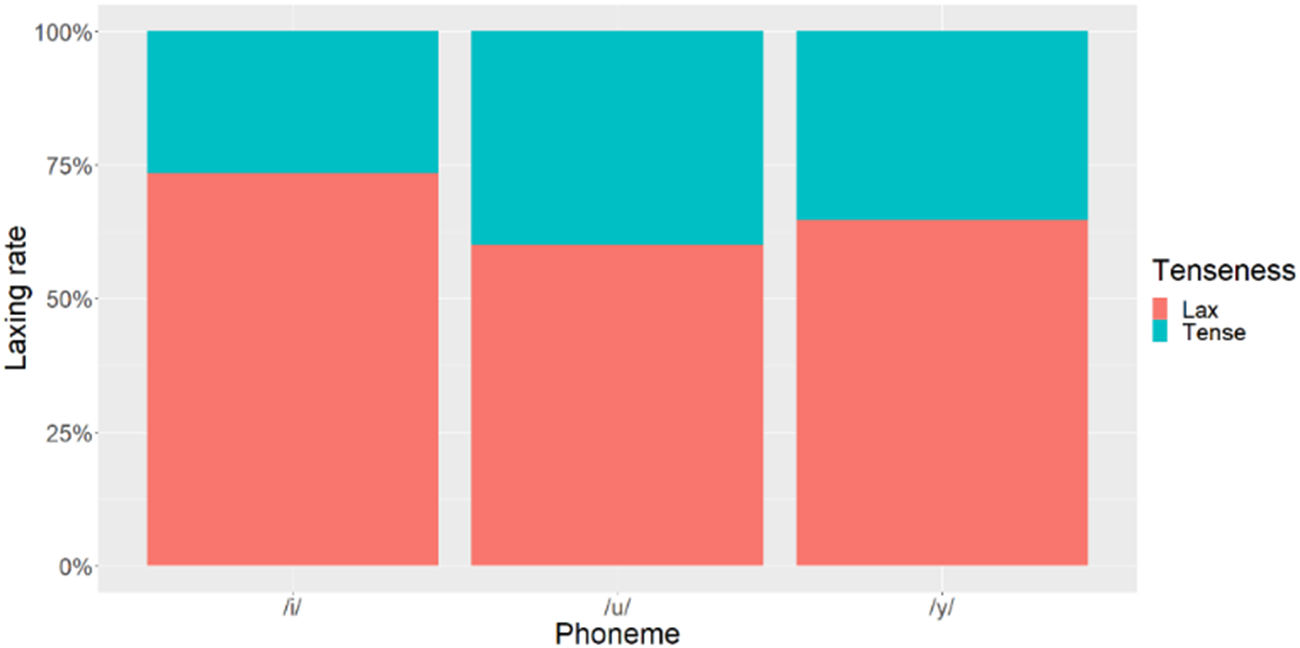


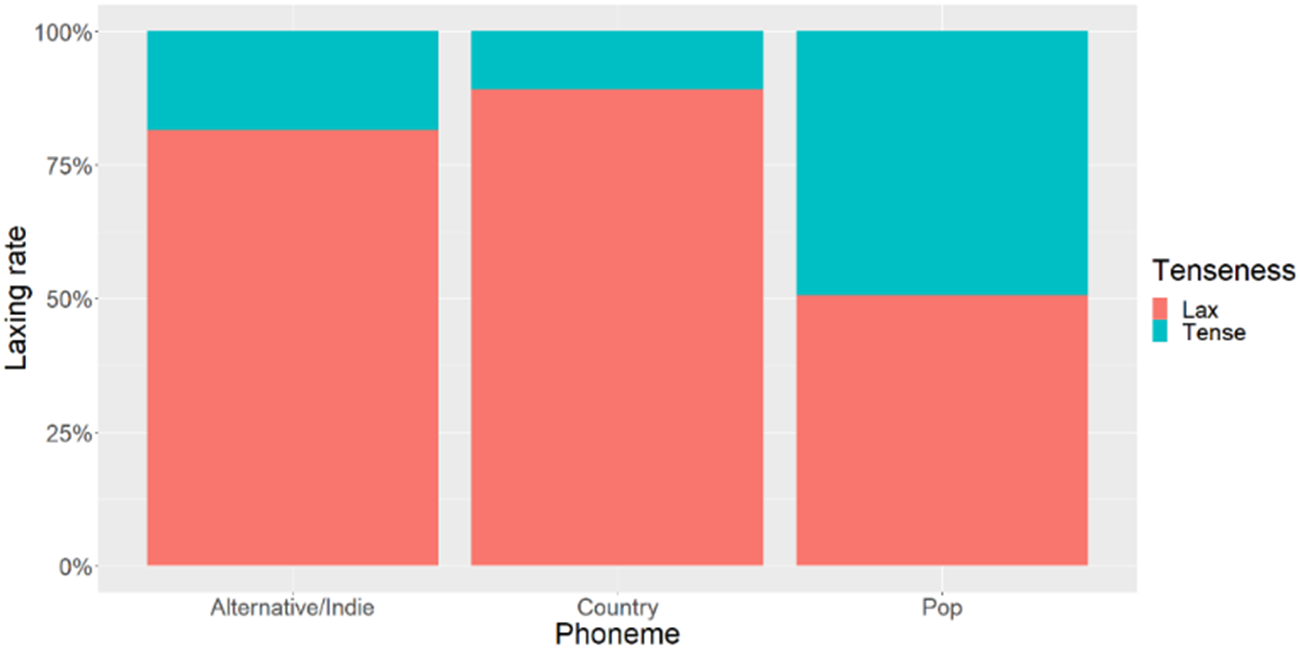


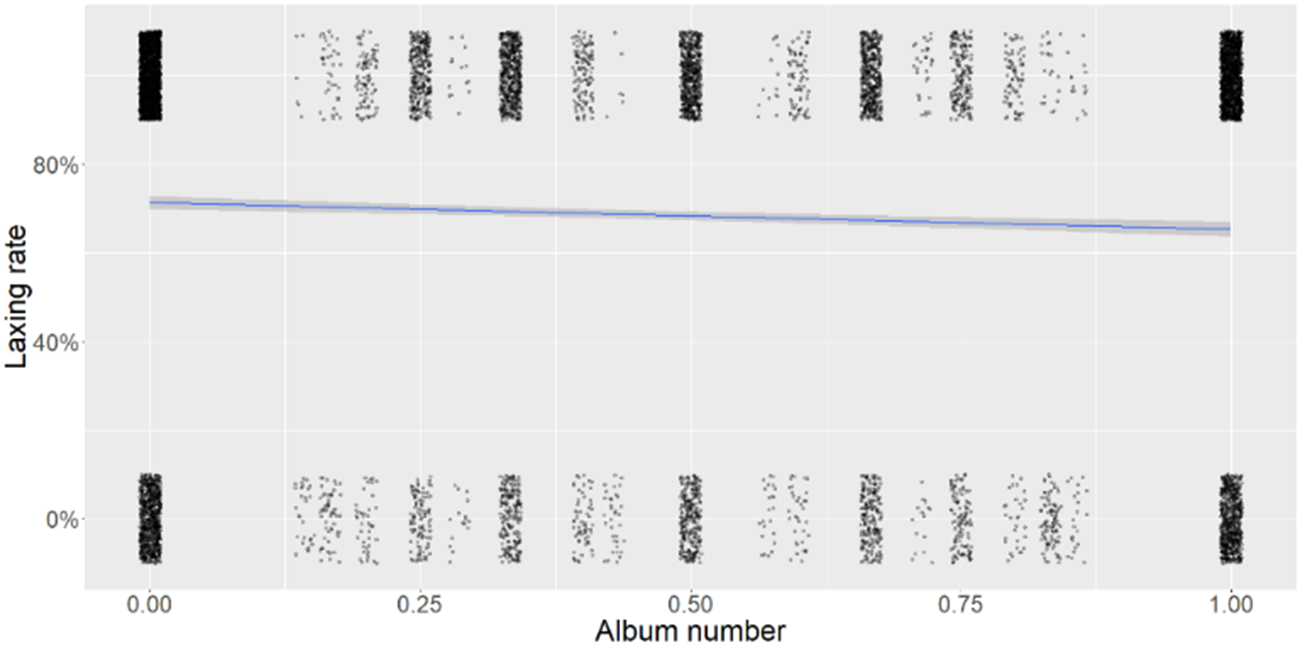


 Open access

