Introduction
Attention deficit/hyperactivity disorder (ADHD) is a neurodevelopmental disorder characterized by developmentally inappropriate and impairing levels of inattention and ⁄or hyperactivity and impulsivity (Biederman & Faraone, Reference Biederman and Faraone2005; Feldman & Reiff, Reference Feldman and Reiff2014). ADHD is a common childhood mental disorder, affecting approximately 5% of school-aged children worldwide (Biederman & Faraone, Reference Biederman and Faraone2005; Polanczyk et al. Reference Polanczyk, de Lima, Horta, Biederman and Rohde2007). However, important variability in reported prevalence has been seen between studies from different settings, probably due to methodological characteristics of studies such as differences in outcome ascertainment (Erskine et al. Reference Erskine, Ferrari, Nelson, Polanczyk, Flaxman, Vos, Whiteford and Scott2013; Perou et al. Reference Perou, Bitsko, Blumberg, Pastor, Ghandour, Gfroerer, Hedden, Crosby, Visser, Schieve, Parks, Hall, Brody, Simile, Thompson, Baio, Avenevoli, Kogan and Huang2013; Giacobini et al. Reference Giacobini, Medin, Ahnemark, Russo and Carlqvist2014), diagnostic and reporting bias (Polanczyk et al. Reference Polanczyk, de Lima, Horta, Biederman and Rohde2007; Spencer et al. Reference Spencer, Biederman and Mick2007; Perou et al. Reference Perou, Bitsko, Blumberg, Pastor, Ghandour, Gfroerer, Hedden, Crosby, Visser, Schieve, Parks, Hall, Brody, Simile, Thompson, Baio, Avenevoli, Kogan and Huang2013), as well as differences in clinical praxis and care givers’ adherence to diagnostic and clinical guidelines between countries. In Sweden, it has been estimated that around 3% to 5% of school-aged children have a clinical diagnosis of ADHD (National Board of Health & Welfare, 2002; Giacobini et al. Reference Giacobini, Medin, Ahnemark, Russo and Carlqvist2014). Furthermore, an estimated 30–50% of children with ADHD meet diagnostic criteria for the disorder in adulthood (Lara et al. Reference Lara, Fayyad, de Graaf, Kessler, Aguilar-Gaxiola, Angermeyer, Demytteneare, de Girolamo, Haro, Jin, Karam, Lepine, Mora, Ormel, Posada-Villa and Sampson2009; Barbaresi et al. Reference Barbaresi, Weaver, Voigt, Killian and Katusic2015),while the proportion is higher for subthreshold symptoms (Faraone et al. Reference Faraone, Biederman and Mick2006).
There is considerable evidence that genetic factors are important in the etiology of ADHD (Biederman & Faraone, Reference Biederman and Faraone2005). In addition, findings have recorded environmental factors such as childhood adversity (CA) as predisposing risk factors for ADHD (Biederman et al. Reference Biederman, Faraone and Monuteaux2002; Biederman & Faraone, Reference Biederman and Faraone2005; Lara et al. Reference Lara, Fayyad, de Graaf, Kessler, Aguilar-Gaxiola, Angermeyer, Demytteneare, de Girolamo, Haro, Jin, Karam, Lepine, Mora, Ormel, Posada-Villa and Sampson2009; Hjern et al. Reference Hjern, Ringbäck-Weitoft and Lindblad2010; Sagiv et al. Reference Sagiv, Epstein, Bellinger and Korrick2013; Larsson et al. Reference Larsson, Sariaslan, Långström, D'Onofrio and Lichtenstein2014; van Dyk et al. Reference van Dyk, Springer, Kidd, Steyn, Solomons and van Toorn2015; Wallach-Kildemoes et al. Reference Wallach-Kildemoes, Skovgaard, Thielen, Pottegard and Mortensen2015; Björkenstam et al. Reference Björkenstam, Burström, Vinnerljung and Kosidou2016; Roy et al. Reference Roy, Hechtman, Eugene Arnold, Sibley, Molina, Swanson and Howard2016). Childhood adversities that have been linked to the development of ADHD include low family socioeconomic status, large family size, parental marital distress, single parenthood, parental criminality, and parental psychiatric disorder (Biederman et al. Reference Biederman, Faraone and Monuteaux2002; Hjern et al. Reference Hjern, Ringbäck-Weitoft and Lindblad2010; Sagiv et al. Reference Sagiv, Epstein, Bellinger and Korrick2013; Larsson et al. Reference Larsson, Sariaslan, Långström, D'Onofrio and Lichtenstein2014; Russell et al. Reference Russell, Ford, Rosenberg and Kelly2014; van Dyk et al. Reference van Dyk, Springer, Kidd, Steyn, Solomons and van Toorn2015; Wallach-Kildemoes et al. Reference Wallach-Kildemoes, Skovgaard, Thielen, Pottegard and Mortensen2015; Björkenstam et al. Reference Björkenstam, Burström, Vinnerljung and Kosidou2016; Jablonska et al. Reference Jablonska, Kosidou, Ponce de Leon, Wettermark, Magnusson, Dal and Dalman2016; Roy et al. Reference Roy, Hechtman, Eugene Arnold, Sibley, Molina, Swanson and Howard2016). However, most studies investigating associations between CAs and ADHD have typically focused on single or separate adversities, and studies examining the effect of cumulative CA on ADHD are scarce (Lara et al. Reference Lara, Fayyad, de Graaf, Kessler, Aguilar-Gaxiola, Angermeyer, Demytteneare, de Girolamo, Haro, Jin, Karam, Lepine, Mora, Ormel, Posada-Villa and Sampson2009; Wallach-Kildemoes et al. Reference Wallach-Kildemoes, Skovgaard, Thielen, Pottegard and Mortensen2015; Björkenstam et al. Reference Björkenstam, Burström, Vinnerljung and Kosidou2016). Furthermore, most previous studies have used retrospectively self-reported adversities (Biederman et al. Reference Biederman, Faraone and Monuteaux2002; Lara et al. Reference Lara, Fayyad, de Graaf, Kessler, Aguilar-Gaxiola, Angermeyer, Demytteneare, de Girolamo, Haro, Jin, Karam, Lepine, Mora, Ormel, Posada-Villa and Sampson2009; van Dyk et al. Reference van Dyk, Springer, Kidd, Steyn, Solomons and van Toorn2015; Brown et al. Reference Brown, Brown, Briggs, Germ, Belamarich and Oyeku2016; Roy et al. Reference Roy, Hechtman, Eugene Arnold, Sibley, Molina, Swanson and Howard2016) and may thus be limited by recall bias.
Although the co-occurrence of multiple CAs is common (Dong et al. Reference Dong, Anda, Felitti, Dube, Williamson, Thompson, Loo and Giles2004), to the best of our knowledge, no prior study has examined if certain clusters of CAs can be identified as more closely related to ADHD.
In the current study, we capitalized on Sweden's extensive and high quality nationwide registers, by using a large cohort of all individuals born between 1987 and 1991. Swedish national registers offer good prerequisites for studies of family-associated risk factors without selective attrition, which often complicates the interpretation of studies in this field. Our aims were to:
-
• investigate the differential associations between single CAs and the risk of later treated ADHD;
-
• examine the effects of cumulative CAs on later treated ADHD;
-
• examine which clusters of CAs that are more closely related to the risk of treated ADHD.
Methods
Study population
The study cohort was defined as all individuals born in Sweden between 1987 and 1991 (n = 571 797), recorded in the Medical Birth Register. These were followed for treated ADHD from year 2006 until the end of follow-up, i.e. 2011. We applied certain exclusion criteria: Those who died during the study period were excluded (n = 5875). Owing to a high proportion of missing data on important variables those who emigrated were excluded (n = 18 164). We also excluded adopted children (n = 265), as these children are a highly selected group with higher morbidity in general (Keyes et al. Reference Keyes, Sharma, Elkins, Iacono and McGue2008; Lindblad et al. Reference Lindblad, Weitoft and Hjern2010). As much as possible in order to keep the temporal direction of the associations between CAs and ADHD, we excluded those who were diagnosed and/or treated for ADHD prior to the start of follow-up in 2006 (n = 3843). The final analytical cohort comprised 543 650 individuals. The unique Swedish personal identity number (Ludvigsson et al. Reference Ludvigsson, Otterblad-Olausson, Pettersson and Ekbom2009) was used to link this cohort to multiple health care and administrative registers:
The Causes of Death Register comprises information on all deaths of Swedish residents since 1952. The National Patient Register (NPR) includes all individuals admitted to psychiatric or general hospitals, with complete coverage for inpatient care since 1987 and specialized outpatient care since 2001. The Total Enumeration Income Survey contains data on the income of and governmental benefits provided to all Swedish residents. The Total Population Register includes information on age, sex, place of residence, and other relevant demographic characteristics. The Longitudinal Integration Database for Health Insurance and Labor Market Studies (LISA) integrates existing data from the labor market, and from the educational and social sectors. The Register of Court Convictions contains information on all court convictions in Sweden for persons 15 years of age or older. Families were linked together through the Multi-Generation register, which contains all known relationships between children and parents (born in 1932 or later) since 1961. Finally, the Prescribed Drug Register (PDR) contains patient identities for all dispensed prescribed drugs to the entire Swedish population since July 2005 (Wettermark et al. Reference Wettermark, Hammar, Fored, Leimanis, Otterblad Olausson, Bergman, Persson, Sundstrom, Westerholm and Rosen2007). Pharmaceuticals in PDR are grouped according to the Anatomical Therapeutic Chemical Classification System (ATC).
Measures
Childhood adversity
We included seven adversities occurring between birth and age 14 years. These adversities were selected based upon prior research demonstrating them to be separately associated with the risk of ADHD (Vinnerljung et al. Reference Vinnerljung, Hjern, Ringbäck-Weitoft, Franzén and Estrada2007; Siegenthaler et al. Reference Siegenthaler, Munder and Egger2012).
Familial death: Death of a parent or a sibling.
Substantial parental substance abuse: At least one parent hospitalized with a main diagnosis of alcohol and/or substance abuse (International Classification of Disease (ICD-9) codes: 291–292, 303–3050, 3570, 4255, 5353, 5710, 5711–5713, 6483, 6555, 9650, 9696–9697; ICD-10: E244, F10–F16, F18–F19, G312, G621, G721, I426, K292, K70, K852, K86, O354–355, P044, T40, T436, T51, Z502–503, Z714, Z721–Z722) and/or received an alcohol or drug-related conviction.
Substantial parental psychiatric disorder alcohol- and (substance abuse related diagnoses excluded): At least one parent hospitalized with a main diagnosis of psychiatric disorder (ICD-9: 290–319; ICD10: F00-F99).
Substantial parental criminality: At least one parent sentenced to prison, probation, or forensic psychiatric care.
Parental separation: Parental marital status was measured when the child was between the ages of 3 and 14. This indicator was coded as 1 if the parent's marital status changed from married to divorced/separated between 2 years.
Household living on public assistance: This indicator, used as a proxy for relative poverty, was defined as at least one parent having received public assistance that constituted more than 50% of the yearly income during 1 year or more (when the child was between 3 and 14 years of age). In Sweden, public assistance is a form of cash income allowance from the local social authorities after a thorough individual means test, designed to guarantee people a minimum standard of living (Hessle & Vinnerljung, Reference Hessle and Vinnerljung2000).
Residential instability: Three or more changes in place of residency.
ADHD case ascertainment
We used a previously validated two-step approach for identifying cases of treated ADHD (Skoglund et al. Reference Skoglund, Chen, Franck, Lichtenstein and Larsson2015). First, ADHD case status was defined as a recorded diagnosis of ICD-10: F90 in the NPR between 1 January 2006 and 31 December 2011. Second, from the PDR we obtained information on the following prescribed drugs: methylphenidate (ATC: N06BA04), atomoxetin (ATC: N06BA09), amphetamine (ATC: N06BA01), or dexamphetamine (ATC: N06BA02). An individual was considered to have received drug treatment if at least one prescription was dispensed between 1 January 2006 and 31 December 2011. Medication is a useful proxy for an ADHD diagnosis, as Swedish medical guidelines mandate that ADHD medications should only be prescribed by a psychiatric specialist and after other (non-pharmacological) interventions have failed (Skoglund et al. Reference Skoglund, Chen, Franck, Lichtenstein and Larsson2015).
Covariates
All analyses were adjusted for sex and birth year. Highest parental educational attainment when the child was 15 years old was classified as compulsory school or less (9 years maximum), secondary school (10–12 years), and university/college (13+ years). Due to known associations between immigrant status (including second generation) and mental health, including utilization of ADHD medication (Kosidou et al. Reference Kosidou, Hellner-Gumpert, Fredlund, Dalman, Hallqvist, Isacsson and Magnusson2012; Jablonska et al. Reference Jablonska, Kosidou, Ponce de Leon, Wettermark, Magnusson, Dal and Dalman2016), adjustments were also made as to whether or not the child's mother was born in Sweden. In addition, we created a variable ‘place of residence’ to adjust for potential confounding by population density. This variable was classified into three categories: small (rural municipalities), intermediate (>90 000 inhabitants), and big city area (the three large city areas), and captured at time of first dispensing for those who utilized ADHD medication or first ADHD diagnosis, and in December 2005 for those who did not.
Statistical analysis
Statistical analyses were conducted using SAS v.9.4. We used binary logistic regression analyses to statistically evaluate the association between CA and treated ADHD, presented as odds ratios (OR) with 95% confidence intervals (CI). Each adversity was analyzed separately. We also analyzed cumulative effects of the studied adversities, in which the total number of adversities was summed. Three regression models were analyzed: Model I adjusted for sex and birth year. In Model II, additional adjustments were made for mother's country of birth, highest parental educational attainment, and place of residence. In the third model, all CAs were included simultaneously.
Parental psychiatric disorder is a crude proxy for genetic liability for psychiatric disorder in offspring, and may increase the risk of experiencing other childhood adversities as well as the risk for ADHD (Biederman & Faraone, Reference Biederman and Faraone2005; Siegenthaler et al. Reference Siegenthaler, Munder and Egger2012). Thus, in secondary analyses, parental psychiatric disorder was excluded from the adversities and instead considered a confounder.
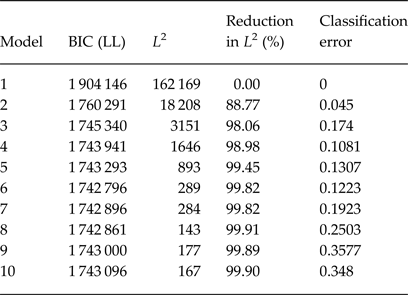
In order to investigate whether classes or clusters of childhood adversities could be identified, we conducted Latent Class Analysis (LCA), using Latent Gold 4.5 (Statistical Innovations Inc., Belmont, MA). The goal of LCA is to identify the smallest number of latent classes that adequately describes the association among the observed indicators (Magidson & Vermunt, Reference Magidson, Vermunt and Kaplan2004). We started with the most parsimonious 1-class model and fitted successive models with increasing number of classes. There are several strategies available to determine the number of classes (Magidson & Vermunt, Reference Magidson and Vermunt2001; Tein et al. Reference Tein, Coxe and Cham2013). Since the sample size was large (N > 500 000), which makes p value-based significance testing less informative (Rothman, Reference Rothman2012), we used the Bayesian information criterion (BIC) as our primary tool for determining the optimal number of classes. In addition, we also examined the reduction in L 2, and the classification error in order to determine the best-fitting model (Magidson & Vermunt, Reference Magidson and Vermunt2001, Reference Magidson, Vermunt and Kaplan2004). We first fitted a one-class solution followed by a 2-class solution, and so on, until we reached the best solution. We finally ended up with a 6-class model, based on the values of BIC, reduction in L 2 and the classification error (Tein et al. Reference Tein, Coxe and Cham2013) (Table 1).
Model fit statistics for latent class analysis, measured by Bayesian information criterion (BIC) for the different number of groups

The next step was to determine whether there were significant differences in ORs across the LCA classes. The modal assignment rule was used to assign cases to classes (Magidson & Vermunt, Reference Magidson, Vermunt and Kaplan2004). In these analyses, Models I and II were repeated.
Results
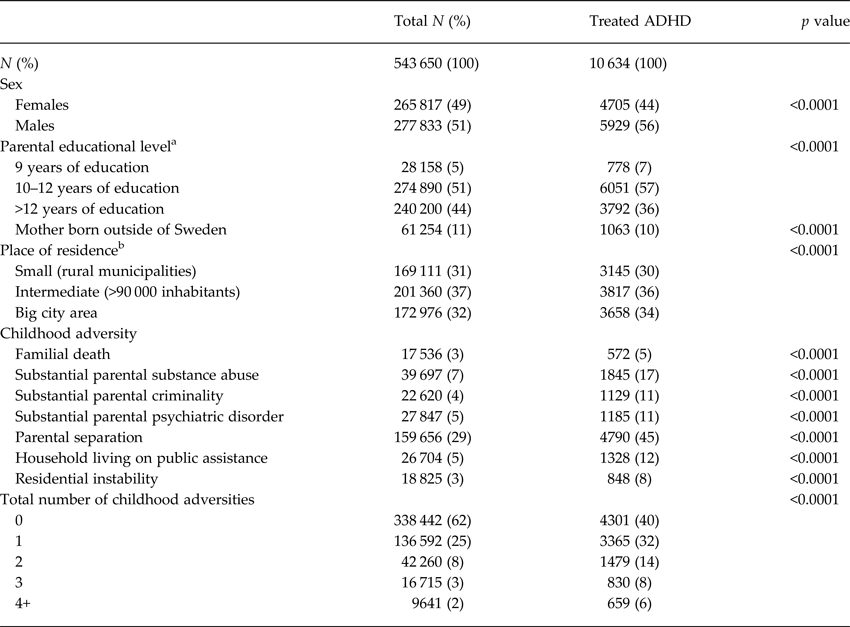
Of the 543 650 (49% women) cohort members, 2% (44% women and 56% men) received a diagnosis of ADHD and/or utilized ADHD medication during follow up (Table 2). Young women and men with ADHD were more likely to have parents with less years of education (p value <0.0001), and to live in a big city (p value <0.0001).
Distribution of background variables, childhood adversity, and relation to treated attention deficit/hyperactivity disorder (ADHD). Absolute number and column percent

a When the child was 15 years old.
b At the time of first prescription, or, in December 2005 for those with no ADHD diagnosis/medication.
Statistical significance evaluated by χ2 tests.
The studied CAs were highly inter-correlated, especially substantial parental substance abuse and parental criminality (see online Supplementary Table S1). All CAs were more common among individuals with ADHD (Table 2). Forty-five percent among them had experienced parental separation, as compared with 29% in the whole cohort. The second most common adversity among cohort participants was substantial parental substance abuse, 17% of those with ADHD and 7% of all individuals, were exposed, respectively.
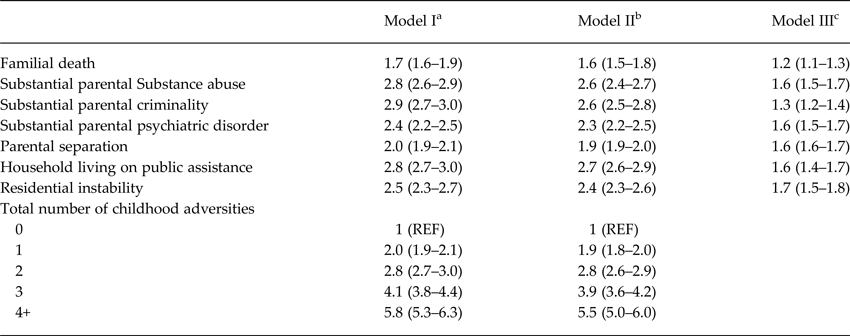
Table 3 shows associations between CAs and ADHD, presented as ORs with 95% CI. All single CAs entailed greater risk for ADHD. The crude OR (Model I) displayed highest OR for substantial parental criminality (OR 2.9, 95% CI 2.7–3.0), household public assistance (OR 2.8, 95% CI 2.7–3.0) and substantial parental substance abuse (OR 2.8, 95% CI 2.6–2.9). In Model II, the ORs were slightly attenuated. The ORs decreased markedly when all CAs were included in the same model (Model III). However, all single CAs remained significantly associated with ADHD.
Associations between childhood adversity and treated attention deficit/hyperactivity disorder (ADHD)

Results from Logistic Regression Analyses, presented as odds ratios (OR) with 95% confidence intervals (CI).
a Model I:Adjusted for birth year and sex.
b Model II with additional adjustments for: mother's country of birth, highest parental educational attainment, and place of residence.
c Model II with additional adjustments for all CAs simultaneously.
Reference group: No CAs.
There was a dose-response relationship between number of CAs and risk for ADHD (Table 3). This relationship remained in the multi-adjusted model with OR of 1.9 (95% CI 1.8–2.0) for exposure to one CA; OR of 2.8 (95% CI 2.6–2.9) for two CAs; OR of 3.9 (95% CI 3.6–4.2) for three CAs, and finally, OR of 5.5 (95% CI 5.0–6.0) for exposure to four or more adversities.
Latent class analysis
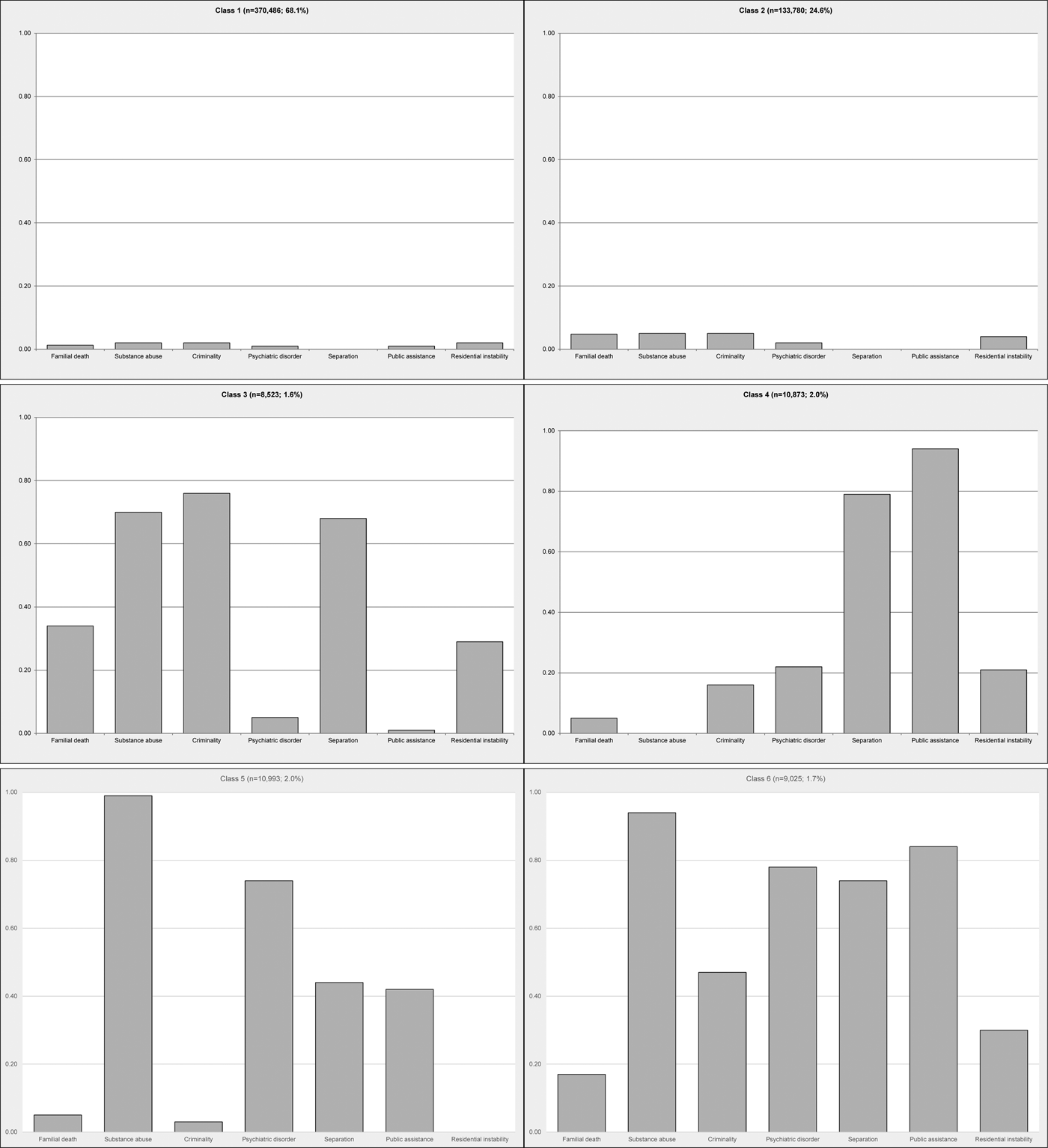
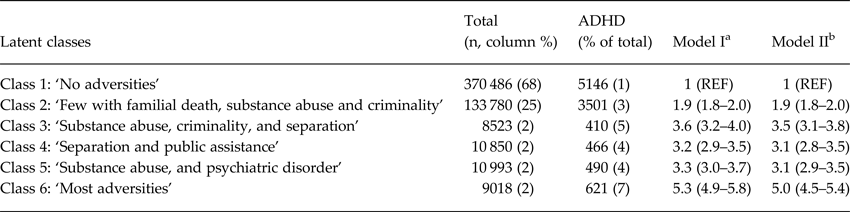
Figure 1 depicts the identified classes of CAs along with the conditional probabilities for each of the exposure variables. The classes were labeled according to the levels of the conditional probabilities, and cases were assigned to classes using the modal assignment rule (Magidson & Vermunt, Reference Magidson and Vermunt2001, Reference Magidson, Vermunt and Kaplan2004). Around 68% (n = 370 486) of the cohort were assigned to class 1. This class together with class 2 is mainly characterized by individuals with no CA, and therefore, the conditional probabilities for the exposure variables are more or less zero for all adversities. Class 3 is characterized by people who were mainly exposed to substantial parental substance abuse, criminality and separation (nearly 2%, n = 8523). Class 4 represents individuals mainly exposed to parental separation, and public assistance (approximately 2%, n = 10 850). Class 5 is characterized by individuals with a history of substantial parental substance abuse, and parental psychiatric disorder (2%, n = 10 993). Finally, class 6 represents individuals (2%, n = 9018) exposed to a majority of the CAs.
Conditional probabilities for latent classes.

ADHD was most common in class 6 (Table 4). Individuals in this class had a five-fold risk of treated ADHD compared with class 1 (adjusted OR 5.0, 95% CI 4.5–5.4). Experience of substantial parental substance abuse in combination with parental criminality and separation (class 3) entailed second highest OR for treated ADHD (adjusted OR 3.5, 95% CI 3.1–3.8).
Associations between latent classes of childhood adversity and treated attention deficit/hyperactivity disorder (ADHD)

Results from Logistic Regression Analyses, presented as odds ratios (OR) with 95% confidence intervals (CI).
a Model I: Adjusted for birth year and sex.
b Model II: with additional adjustments for: mother's country of birth, highest parental educational attainment, and place of residence.
In secondary analyses, we excluded parental psychiatric disorder from the CAs and instead considered it a confounder. In these analyses, the association between CA and ADHD was somewhat attenuated but remained significant (see online Supplementary Table S2).
Discussion
Key findings
Our study of nearly 550 000 young adults provides evidence of an elevated risk for treated ADHD among young adults who have experienced CAs. Furthermore, we found that the risk grew higher in a dose-response manner as the number of experienced adversities increased. By means of LCA, we identified six subgroups of young adults with distinct patterns of exposure to CAs. We found that the class most closely related with the risk for ADHD included individuals who had grown up with substantial parental substance abuse, public assistance, parental psychiatric disorder and parental separation. Cumulative exposure to these CAs entailed an over five times higher risk for ADHD compared with the class without CA. Though exposure to a multitude of CAs entailed a markedly high risk for being diagnosed with ADHD, such exposure was less common among children in our study. However, exposure to single or few adversities was identified as a common distinct class that was associated with increased risk for ADHD, compared with individuals without CAs. These findings are important since nearly 40% of participants in our study were exposed to at least one CA, and 13% to two or more CAs.
To date, few studies have examined the relationship between cumulative exposure to CA and ADHD, and previous studies have typically been based on small samples with retrospective self-reported data. With a large cohort, our longitudinal study clearly identified an association between a range of CAs and later risk for treated ADHD. These associations are similar to those found in prior studies on single CAs and ADHD (Biederman et al. Reference Biederman, Faraone and Monuteaux2002; Lara et al. Reference Lara, Fayyad, de Graaf, Kessler, Aguilar-Gaxiola, Angermeyer, Demytteneare, de Girolamo, Haro, Jin, Karam, Lepine, Mora, Ormel, Posada-Villa and Sampson2009; Hjern et al. Reference Hjern, Ringbäck-Weitoft and Lindblad2010; Roy et al. Reference Roy, Hechtman, Eugene Arnold, Sibley, Molina, Swanson and Howard2016). The high prevalence of CA in individuals with ADHD in our study was striking (60% v. 38% among non-cases) and in accordance with a previous study (Lara et al. Reference Lara, Fayyad, de Graaf, Kessler, Aguilar-Gaxiola, Angermeyer, Demytteneare, de Girolamo, Haro, Jin, Karam, Lepine, Mora, Ormel, Posada-Villa and Sampson2009). CAs were common also among individuals without ADHD, which is in line with previous reports of high general population levels of exposure to CAs (Kessler et al. Reference Kessler, McLaughlin, Green, Gruber, Sampson, Zaslavsky, Aguilar-Gaxiola, Alhamzawi, Alonso, Angermeyer, Benjet, Bromet, Chatterji, de Girolamo, Demyttenaere, Fayyad, Florescu, Gal, Gureje, Haro, Hu, Karam, Kawakami, Lee, Lepine, Ormel, Posada-Villa, Sagar, Tsang, Ustun, Vassilev, Viana and Williams2010; Gauffin et al. Reference Gauffin, Hjern, Vinnerljung and Björkenstam2016). The most common CAs among individuals with ADHD were substantial parental substance abuse and parental separation, which corroborates findings in previous studies (Biederman & Faraone, Reference Biederman and Faraone2005; Knopik et al. Reference Knopik, Heath, Jacob, Slutske, Bucholz, Madden, Waldron and Martin2006; Kendler et al. Reference Kendler, Ohlsson, Sundquist and Sundquist2016). Exposure to household public assistance was the CA that entailed highest OR for ADHD in our study. This is in line with a recent Swedish study, which found that low family income in childhood was associated with increased likelihood of ADHD (Larsson et al. Reference Larsson, Sariaslan, Långström, D'Onofrio and Lichtenstein2014).
Furthermore, we found that the impact of CA on ADHD was cumulative. A similar dose-response relationship was reported in a study examining retrospectively reported childhood adversities and adult ADHD based on cross-sectional data from the World Health Organization's World Mental Health Surveys (Lara et al. Reference Lara, Fayyad, de Graaf, Kessler, Aguilar-Gaxiola, Angermeyer, Demytteneare, de Girolamo, Haro, Jin, Karam, Lepine, Mora, Ormel, Posada-Villa and Sampson2009).
Our findings extend earlier work on CA and ADHD by also examining which clusters of CA that are more closely related with the risk of ADHD. With an LCA approach, we identified six classes with distinct patterns of coexisting adversities. These classes were all associated with increased risk for ADHD, compared with the most common class represented by individuals not exposed to CA. Lastly, we identified a class (1.7% of study participants) with particularly increased risk for ADHD. People in this class, individuals who had grown up exposed to most of the CAs, had five times higher risk for ADHD compared with those with no CA. These results indicate that it is possible to identify groups of children with markedly high risks for ADHD, for example children exposed to multiple adverse parental factors, which facilitates early detection and prevention.
There are different possible mechanisms for the current findings. Exposure to CA is often associated with intrauterine adversity such as fetal distress or exposure to neurotoxicants (e.g. alcohol) that may disrupt brain development or brain processes and thus contribute to the risk for ADHD (de Zeeuw et al. Reference de Zeeuw, Zwart, Schrama, van Engeland and Durston2012; Grizenko et al. Reference Grizenko, Fortier, Zadorozny, Thakur, Schmitz, Duval and Joober2012; Yolton et al. Reference Yolton, Cornelius, Ornoy, McGough, Makris and Schantz2014). Other evidence implies that many of the effects of CA on children are influenced by social challenges that expose children to cumulative or chronic stress. For example, studies suggest that CA increases the risk of parental stress, poorer parenting skills, e.g. greater use of aggressive or punitive discipline methods and less responsive parenting (Reising et al. Reference Reising, Watson, Hardcastle, Merchant, Roberts, Forehand and Compas2013). These circumstances may impair the quality of parent–child relationships and significantly influence the appearance of ADHD symptoms and the prognosis of the disorder (Ellis & Nigg, Reference Ellis and Nigg2009; Gau & Chang, Reference Gau and Chang2013). Although the specific mechanisms through which chronic stress may compromise children's health are not well-known yet, there is growing evidence that epigenetic changes in gene expression may be involved (Essex et al. Reference Essex, Boyce, Hertzman, Lam, Armstrong, Neumann and Kobor2013). Additionally, stressed parents are likely to have difficulties to regulate their own behavior when facing with challenges, and may thus constitute poor role models regarding self-regulation skills, which are particularly impaired in ADHD children.
Furthermore, the effect of CA on risk of ADHD may not only operate at the individual or family level, but also at the other levels of social context. Children experiencing CA more often live in disadvantaged neighborhoods, an environmental characteristic that has been shown to increase the risk of ADHD, over and above the effect of individual socioeconomic background (Sundquist et al. Reference Sundquist, Li, Ohlsson, Rastam, Winkleby, Sundquist, Kendler and Crump2015; Jablonska et al. Reference Jablonska, Kosidou, Ponce de Leon, Wettermark, Magnusson, Dal and Dalman2016).
Still the link between CAs and risk for ADHD may not be causal. The studied CAs reflect social disadvantage in childhood, but they may also capture a degree of genetic susceptibility to ADHD since parental mental disorder increases the likelihood of exposure to CAs and is also a predictor for offspring psychiatric disorder, including ADHD (Biederman & Faraone, Reference Biederman and Faraone2005; Siegenthaler et al. Reference Siegenthaler, Munder and Egger2012). In an attempt to take genetic factors into account, we conducted a sensitivity analysis excluding parental psychiatric disorder from the CAs and adjusting the associations between remaining CAs and ADHD for this variable. The associations remained strong also in these analyses. However, we did not have more detailed information on parent's psychopathology as we only capture those with diagnosed disorder.
Lastly, the differences in risk for ADHD between children exposed to CAs and those unexposed may be partly due to our operationalization of the outcome that excludes those children who have not sought medical help. It is plausible that CAs are detrimental to the development of self-regulation skills and other behavioral components that are impaired in ADHD and, thus, might exacerbate ADHD symptoms and increase the need for treatment. It is also likely that children exposed to CAs lack supportive mechanisms in their environment that could buffer the effects of ADHD symptoms on their level of functioning and, therefore, increase functional impairment and the need for treatment.
Notwithstanding the uncertainty regarding the causality of the CA and ADHD relationship, our results indicate increased awareness for early detection of ADHD among children exposed to adversities and a consideration of the socioeconomic disadvantage in tailoring interventions aiming to alleviate the burden of ADHD. The strong associations between CAs and ADHD provide ways of identifying risk groups for ADHD and indicate a need to develop supportive and, thus, hopefully preventive, methods that buffer the plausible detrimental effects of socioeconomic disadvantage on ADHD symptomatology, symptom severity and associated functional impairment.
Strengths and limitations
The strengths of this population-based study include the large sample size and the use of register data with high completeness and validity. Prior studies on CA and ADHD have commonly used self-reported information, entailing risk for recall bias (Hardt & Rutter, Reference Hardt and Rutter2004). Despite these strengths, our findings should be interpreted in the context of the following limitations. First, case ascertainment was based on registered diagnoses and drug treatment for ADHD and may reflect more severe cases. Since not all individuals with ADHD choose to seek care, we are likely to have misclassified undiagnosed and/or untreated cases as non-cases. Further, the NPR does not cover information from primary care, leading to potential misclassification of cases diagnosed within primary care. The misclassification of cases as non-cases could lead to an underestimation of the studied associations. Second, we used information from biological parents when creating parental factors. However, we did not have information on whether or not children were living with their biological parents. Third, the range of childhood adversities is far from exhaustive and we do not assess the severity, duration or sequencing of any of these adversities. Fourth, this is an observational study with obvious limitations regarding causality issues. Finally, we do not know if and how far our results can be generalized to national contexts outside the Scandinavian welfare states.
Conclusion
In conclusion, this study provides important evidence that CA is associated with the risk for ADHD in late adolescence and early adulthood, particularly when accumulated. Given that experience of CA is common, early and efficient support of disadvantaged children is of importance for improving their long-term mental health outcomes. Sufficient evidence is already available for governments to prioritize and invest in interventions aiming to alleviate the mental health burden among children exposed to an adverse environment.
Supplementary material
The supplementary material for this article can be found at https://doi.org/10.1017/S0033291717001933
Acknowledgements
This study was supported by a grant from the Swedish Society for Medical Research (Dr C. Björkenstam), Swedish Council for Working Life and Social Research (grant number 2013-2729, Dr E. Björkenstam) and Stockholm County Council (Drs Kosidou and Jablonska). The funders had no role in the analyses interpretation of results or the writing of this manuscript.
Ethical Considerations
This study is approved by the ethical committee in Stockholm, Sweden (dnrs: 2010/1185-31/1 and 2013/1118-32).