Introduction
Mental disorders (including all conditions listed in Chapter V of the ICD (World Health Organization, 1992) or DSM (American Psychological Association, 2000, 2013) often have an early onset (Kessler et al., Reference Kessler, Amminger, Aguilar-Gaxiola, Alonso, Lee and Ustün2007; De Girolamo et al., Reference De Girolamo, Dagani, Purcell, Cocchi and McGorry2012), with some conditions typically emerging in childhood (e.g., behavioural disorders or specific anxiety disorders) and others during adolescence and early adulthood (mood, anxiety, substance use, and psychotic disorders) (De Girolamo et al., Reference De Girolamo, Dagani, Purcell, Cocchi and McGorry2012). These disorders account for a large proportion of the burden of disease in youth (Costello et al., Reference Costello, Egger and Angold2005; Patel et al., Reference Patel, Flisher, Hetrick and McGorry2007; Gore et al., Reference Gore, Bloem, Patton, Ferguson, Joseph, Coffey, Sawyer and Mathers2011).
Parents occupy an important role in caring for a mentally-ill child and in fulfilling tasks that parents of children without such conditions are not confronted with, such as initiating and supporting the child's professional help-seeking (Logan and King, Reference Logan and King2001; Sayal, Reference Sayal2006) or providing elevated and continuous levels of informal care (Chan, Reference Chan2011). Furthermore, parents might experience negative emotions, such as worries and anxiety about whether someone else will assume the caregiving role for their child if they were no longer capable or around to do so (Corcoran et al., Reference Corcoran, Berry and Hill2015; Klages et al., Reference Klages, Usher and Jackson2016).
Quality of life (QOL) is defined as ‘individuals’ perception of their position in life in the context of the culture and value systems in which they live and in relation to their goals, expectations, standards and concerns.’ (WHOQOL Group, 1995) and can be used to assess the situation of parents of mentally-ill children. This is particularly important, since a compromised parental QOL does not only concern caregivers, but can also negatively impact the child (Lange et al., Reference Lange, Sheerin, Carr, Dooley, Barton, Marshall, Mulligan, Lawlor, Belton and Doyle2005). So far, the impact of a care receiver's mental disorder on a caregiver has often been captured via concepts such as caregiver burden, parenting/psychological (di)stress or as frequencies of mental health problems (Steele et al., Reference Steele, Dewa and Lee2007; van der Voort et al., Reference van der Voort, Goossens and van der Bijl2007; Zabala et al., Reference Zabala, Macdonald and Treasure2009; Theule et al., Reference Theule, Wiener, Tannock and Jenkins2010). The advantages of using the QOL instead of the above-mentioned concepts are in large due to QOL's broadness and multidimensionality.
To the best of our knowledge, only one systematic review specifically focused on the QOL of parents of mentally-ill children (Vasilopoulou and Nisbet, Reference Vasilopoulou and Nisbet2016). Among other things, these authors aimed to describe the QOL of parents of children (<18 years) with autism spectrum disorder (ASD) relative to the QOL of parents of typically developing children or norms. The present systematic review (first part of this paper) pursues similar aims. However, we do not focus on a specific mental disorder but include all conditions listed in Chapter V of the ICD (World Health Organization, 1992) or DSM (American Psychological Association, 2000, 2013). In doing so, we aim to outline the landscape of this field of research (e.g., illustrate which mental disorders have been considered or neglected so far). Furthermore, the current review differs from the one described above in so far as parents of children of any age are considered. This is important as the current paper does not only focus on mental disorders with an early onset (such as ASD), but also on conditions that might develop later in life (e.g., schizophrenia). In the second part, a meta-analysis regarding the comparison of parents of mentally-ill children v. parents of healthy controls or norms (including norm values reported in manuals of QOL-measures as well as QOL-data from the general population) is carried out. Based on existing publications in this and related fields, it is hypothesized that parents of children with a mental disorder report lower QOL relative to parents of healthy children/norms.
Methods of systematic review
Data sources and search strategy
A literature search was conducted (up to March 2017) to identify studies that (1) compare the QOL of parents of children with a mental disorder (any age) v. the QOL of healthy controls/norm values or (2) would allow such a comparison. The following databases were searched: the Cochrane database of systematic reviews, CINAHL, Embase, PsycInfo, and Pubmed. Searches were conducted in English, using the following keywords and Boolean operators: (‘quality of life’ OR QOL OR ‘health-related quality of life’ OR HRQOL) AND (parent* OR mother* OR maternal OR father* OR paternal) AND (child* OR daughter* OR son(s) OR offspring OR adolescent* OR ‘youth’) AND ((mental* OR psychiatric OR psychological OR behavio(u)ral OR emotional OR developmental) AND (diagnosis OR diagnoses OR disorder* OR difficult* OR disabilit* OR disease* OR disturb* OR health OR ‘health problem*’ OR problem* OR illness* OR ill OR morbidit*)). Additionally, keywords were used to search for specific mental disorders listed in the ICD/DSM.
Study selection
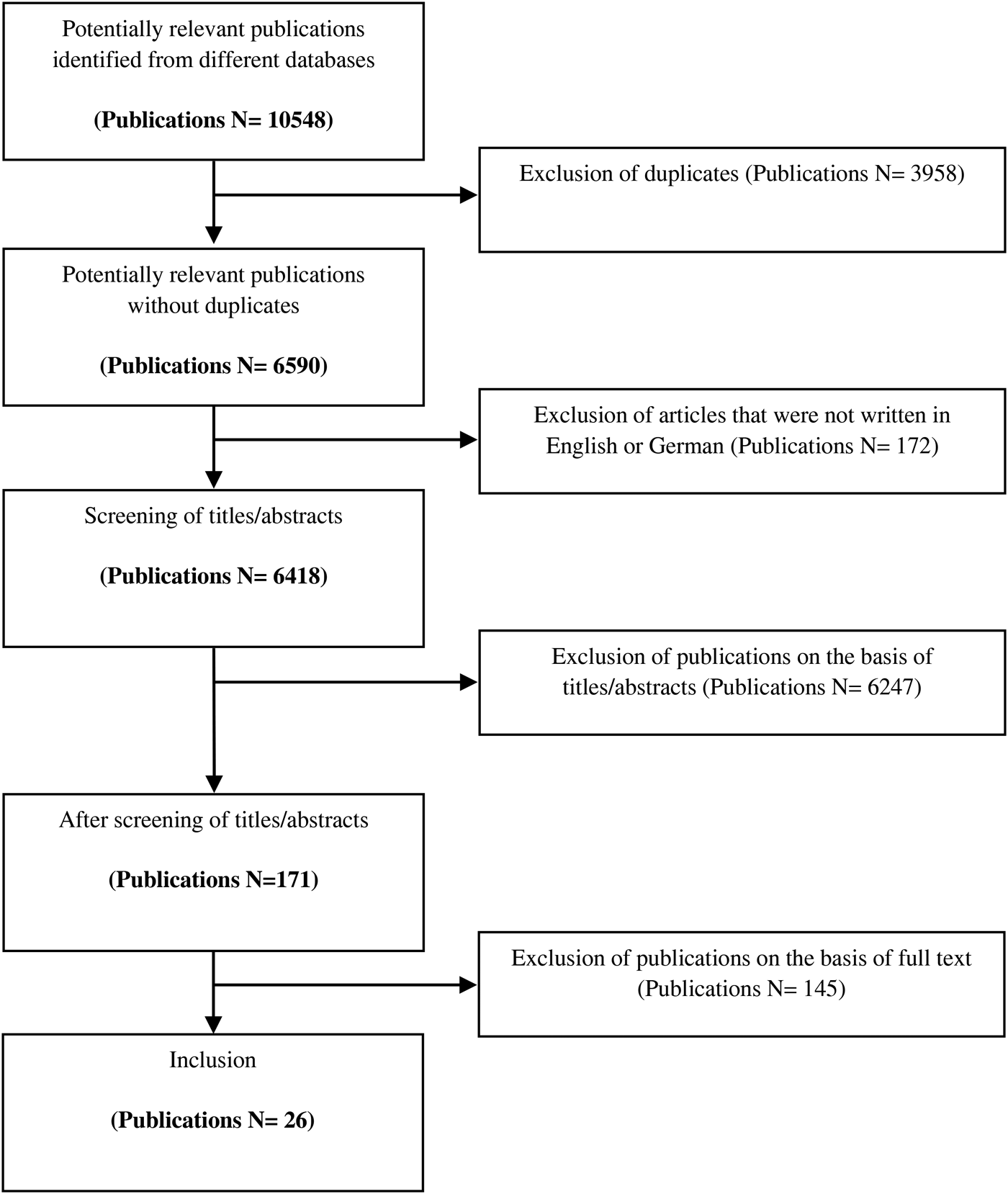
The process of study selection is outlined in Fig. 1. The search revealed 10 548 articles. After eliminating all duplicates (3958) and those articles not written in English or German (172), 6418 articles remained. Titles and abstracts of these entities were screened for eligibility by M.D. Altogether, 6247 articles were excluded during this stage. The remaining 171 articles were reviewed by two authors (M.D.; M.P.S.). Studies were excluded if at least one of the following pre-defined criteria was met:
(1) Only published as an abstract (of an oral presentation), poster or thesis
(2) No empirical data
(3) Studies with no quantitative data/single-case studies
(4) Intervention studies with no baseline data
(5) Data already published in another included article
(6) No mental disorder from Chapter V of the ICD or DSM
(7) Mental disorder diagnosis not confirmed (not verified by a health professional or not assessed through a diagnostic instrument that has been designing to obtain a DSM- or ICD-diagnosis)
(8) Very heterogeneous mental disorders (e.g., ‘any mental disorder’)
(9) Mental disorder with an underlying physical disorder
(10) No generic/multidimensional QOL-measure targeting parents
(11) No standardised QOL-measure
(12) Less than 80% of participants are parents (criteria does not apply if results are presented separately for parents)
(13) No comparison between parents of children with mental disorders v. parents of healthy children/norm values are presented/provided
(14) No basic descriptive data (means, s.d., group sizes) available or provided regarding the QOL of parents of mentally-ill children and for parents of healthy controls/norm values
Study selection.

The criteria were applied hierarchically. If necessary information was not reported in the publications (e.g., means and s.d. of the QOL-domains; no comparison with a control/norm group), authors were contacted and asked to provide the required data (if available). Furthermore, authors were contacted to clarify any ambiguities. Inclusion criteria were defined as complementary to the exclusion criteria. Disagreements in the appraisal of the articles between M.D. and M.P.S. were resolved through discussion. Ultimately, 26 publications were included while 145 were excluded.
Data extraction
Two independent reviewers (M.D.; S.H.) extracted data from the 26 included studies. Norms were defined as norm values reported in manuals of QOL-measures and QOL-data from the general population (i.e. not only parents) that has been collected and published by other authors or by the authors of the included studies.
Results of systematic review
Excluding entities
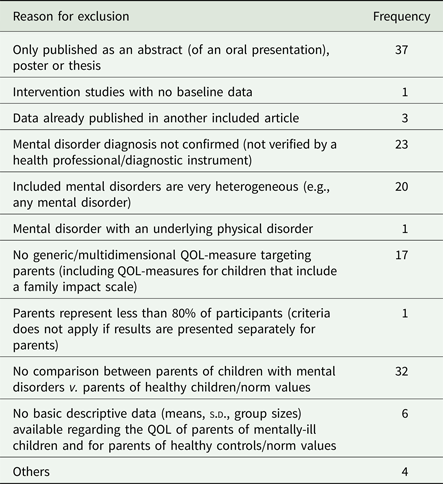
Reasons for excluding entities based on full-text analyses are listed in Table 1. Since the exclusion criteria were applied hierarchically, one exclusion criterion per entity is reported.
Reasons for exclusion of entities with full-text analyses (organised according to the hierarchy that was applied during the exclusion process)

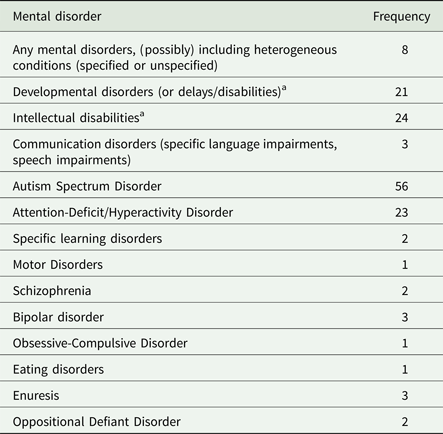
Table 2 lists the conditions that the excluded articles targeted. The numbers do not add up to 145 since some articles targeted several groups of children with mental disorders. Furthermore, it must be considered that some authors published several articles that were based on the same data set. ASD was most frequently studied (n = 56). Furthermore, ADHD was studied in a considerable number of articles (n = 23).
Mental disorders targeted in the excluded articles (organised according to the DSM)
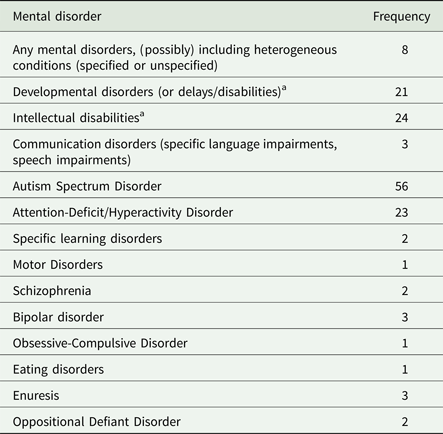
a This term was not applied uniformly in the different studies and did often not correspond to particular ICD/DSM categories (i.e., some studies included a variety of very heterogeneous conditions).
Included studies
Considered mental disorders
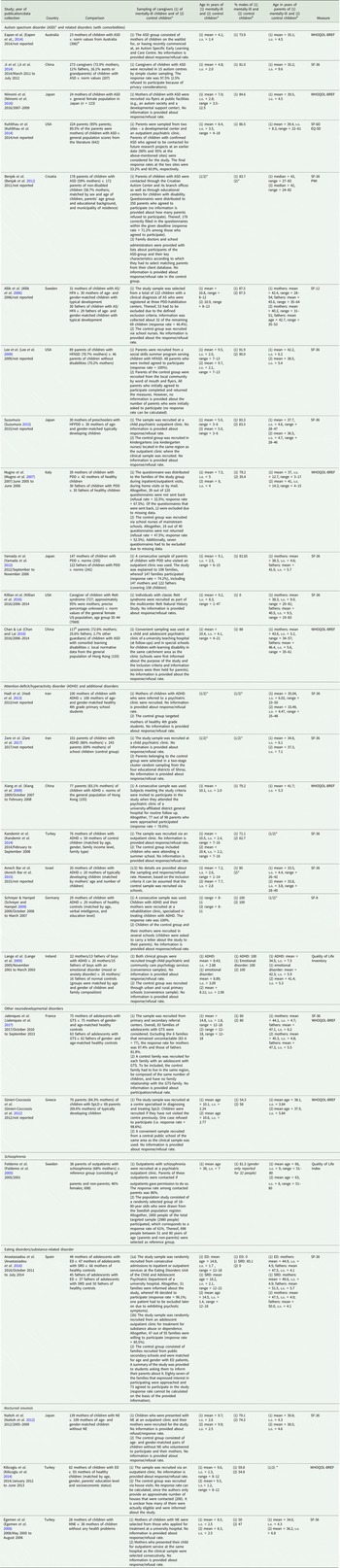
As shown in Table 3, the largest proportion of included studies focused on ASD and related disorders (n = 12; Allik et al., Reference Allik, Larsson and Smedje2006; Mugno et al., Reference Mugno, Ruta, D'Arrigo and Mazzone2007; Lee et al., Reference Lee, Lopata, Volker, Thomeer, Nida, Toomey, Chow and Smerbeck2009; Benjak et al., Reference Benjak, Mavrinac, Šimetin and Kolarić2011; Yamada et al., Reference Yamada, Kato, Suzuki, Suzuki, Watanabe, Akechi, Furukawa, Wingate, Mulvihill, Kirby, Pettygrove, Cunniff, Meaney, Schulz, Miller, Robinson, Quintana, Konstantareas, Homatidis, Konstantareas, Homatidis, Moes, Koegel, Schreibman, Loos, Dumas, Wolf, Fisman, Culligan, Freeman, Perry, Factor, Holroyd, Wolf, Noh, Fisman, Speechley, Hastings, Hastings, Kovshoff, Ward, Espinosa, Brown, Remington, Bristol, Gallagher, Schopler, Olsson, Hwang, Gray, Yamada, Suzuki, Kato, Suzuki, Tanaka, Shindo, Taketani, Akechi, Furukawa, Mugno, Ruta, D'Arrigo, Mazzone, Allik, Larsson, Smedje, Benjak, Mavrinac, Simetin, Koegel, Schreibman, Loos, Dirlich-Wilhelm, Dunlap, Robbins, Plienis, Doo, Wing, Montes, Halterman, Weiss, Siman-Tov, Kaniel, Dunn, Burbine, Bowers, Tantleff-Dunn, Gill, Harris, Factor, Perry, Freeman, Pakenham, Samios, Sofronoff, Ekas, Lickenbrock, Whitman, Weiss, Cappe, Wolff and Bobet2012; Eapen et al., Reference Eapen, Črnčec, Walter and Tay2014; Ji et al., Reference Ji, Zhao, Turner, Sun, Yi and Tang2014; Kuhlthau et al., Reference Kuhlthau, Payakachat, Delahaye, Hurson, Pyne, Kovacs and Tilford2014; Suzumura Reference Suzumura2015; Chan and Lai Reference Chan and Lai2016; Killian et al., Reference Killian, Lane, Lee, Pelham, Skinner, Kaufmann, Glaze, Neul and Percy2016; Niinomi et al., Reference Niinomi, Asano, Kadoma, Yoshida, Ohashi, Furuzawa, Yamamoto, Yamakita and Mori2016), followed by ADHD (n = 7; Lange et al., Reference Lange, Sheerin, Carr, Dooley, Barton, Marshall, Mulligan, Lawlor, Belton and Doyle2005; Schreyer and Hampel Reference Schreyer and Hampel2009; Xiang et al., Reference Xiang, Luk and Lai2009; Hadi et al., Reference Hadi, Saghebi, Ghanizadeh and Montazeri2013; Kandemir et al., Reference Kandemir, Kiliç, Ekinci and Yüce2014; Avrech Bar et al., Reference Avrech Bar, Jlole Majadla and Bart2015; Zare et al., Reference Zare, Jafari and Ghanizadeh2017).
Quality of life in parents of (adult) children with mental disorders v. parents of healthy controls/norm values (in 26 studies that met final inclusion criteria)
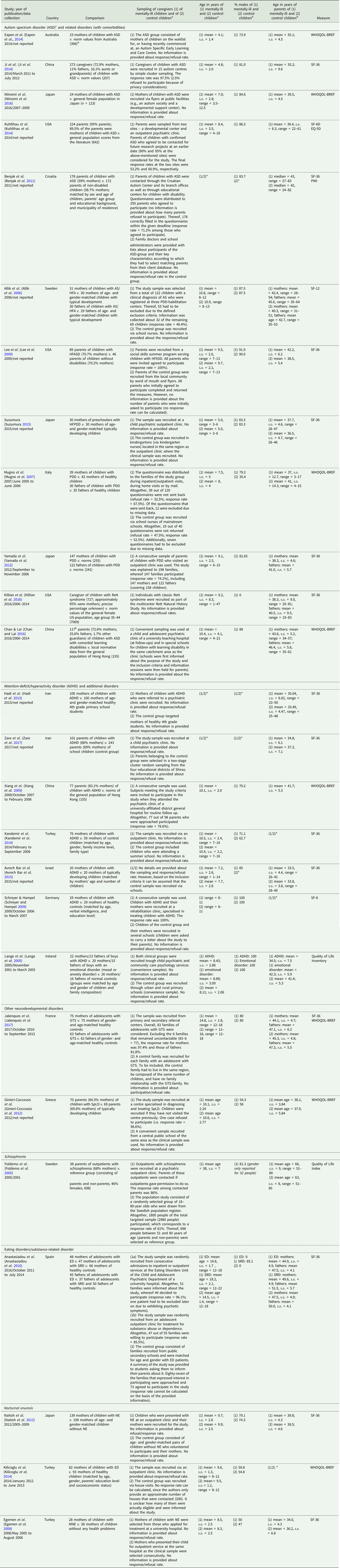
ADHD, attention-deficit hyperactivity disorder; AS, Asperger syndrome; ASD, autism spectrum disorder; ED, eating disorder; GTS, Gilles de la Tourette Syndrome; HFA, high-functioning autism; HFASD, high-functioning autism spectrum disorder; HFPDD, high functioning pervasive developmental disorders; MNE, monosymptomatic enuresis nocturna; NE, noctural enuresis; PDD, pervasive developmental disorders; SpLD, specific learning disabilities; SRD, substance-related disorders; QOL, quality of life; PWI, Personal Wellbeing Index; SF-8, −12, −36, −6D, 8-Item/12-Item/36-Item/ Short Form Survey or Short Form Six Dimension; WHOQOL-BREF, World Health Organization Quality of Life-BREF.
a No description/information is provided if norm values were used for the comparison. * not reported/not available.
b The publication speaks about 116 caregivers. However, the authors provided additional data and confirmed that the correct number of participants is 117.
c Disorders with the DSM-code 299.00 as well as those listed under F84 in the ICD are considered.
d This study included a control group. However, the WHOQOL-BREF was only filled out in the clinical group. Hence, existing norm values of the WHOQOL-BREF were used for the current paper.
Preformed comparisons as well as recruitment and response/refusal rates of studied groups
Nine comparisons were based on norm values (Foldemo et al., Reference Foldemo, Gullberg, Ek and Bogren2005; Xiang et al., Reference Xiang, Luk and Lai2009; Yamada et al., Reference Yamada, Kato, Suzuki, Suzuki, Watanabe, Akechi, Furukawa, Wingate, Mulvihill, Kirby, Pettygrove, Cunniff, Meaney, Schulz, Miller, Robinson, Quintana, Konstantareas, Homatidis, Konstantareas, Homatidis, Moes, Koegel, Schreibman, Loos, Dumas, Wolf, Fisman, Culligan, Freeman, Perry, Factor, Holroyd, Wolf, Noh, Fisman, Speechley, Hastings, Hastings, Kovshoff, Ward, Espinosa, Brown, Remington, Bristol, Gallagher, Schopler, Olsson, Hwang, Gray, Yamada, Suzuki, Kato, Suzuki, Tanaka, Shindo, Taketani, Akechi, Furukawa, Mugno, Ruta, D'Arrigo, Mazzone, Allik, Larsson, Smedje, Benjak, Mavrinac, Simetin, Koegel, Schreibman, Loos, Dirlich-Wilhelm, Dunlap, Robbins, Plienis, Doo, Wing, Montes, Halterman, Weiss, Siman-Tov, Kaniel, Dunn, Burbine, Bowers, Tantleff-Dunn, Gill, Harris, Factor, Perry, Freeman, Pakenham, Samios, Sofronoff, Ekas, Lickenbrock, Whitman, Weiss, Cappe, Wolff and Bobet2012; Eapen et al., Reference Eapen, Črnčec, Walter and Tay2014; Ji et al., Reference Ji, Zhao, Turner, Sun, Yi and Tang2014; Kuhlthau et al., Reference Kuhlthau, Payakachat, Delahaye, Hurson, Pyne, Kovacs and Tilford2014; Chan and Lai, Reference Chan and Lai2016; Killian et al., Reference Killian, Lane, Lee, Pelham, Skinner, Kaufmann, Glaze, Neul and Percy2016; Niinomi et al., Reference Niinomi, Asano, Kadoma, Yoshida, Ohashi, Furuzawa, Yamamoto, Yamakita and Mori2016). All other studies (n = 17) assessed a control group. Among the former, five (i.e. 55.6%) provide information about response/refusal rate in regard to caregivers of mentally-ill children (Foldemo et al., Reference Foldemo, Gullberg, Ek and Bogren2005; Xiang et al., Reference Xiang, Luk and Lai2009; Yamada et al., Reference Yamada, Kato, Suzuki, Suzuki, Watanabe, Akechi, Furukawa, Wingate, Mulvihill, Kirby, Pettygrove, Cunniff, Meaney, Schulz, Miller, Robinson, Quintana, Konstantareas, Homatidis, Konstantareas, Homatidis, Moes, Koegel, Schreibman, Loos, Dumas, Wolf, Fisman, Culligan, Freeman, Perry, Factor, Holroyd, Wolf, Noh, Fisman, Speechley, Hastings, Hastings, Kovshoff, Ward, Espinosa, Brown, Remington, Bristol, Gallagher, Schopler, Olsson, Hwang, Gray, Yamada, Suzuki, Kato, Suzuki, Tanaka, Shindo, Taketani, Akechi, Furukawa, Mugno, Ruta, D'Arrigo, Mazzone, Allik, Larsson, Smedje, Benjak, Mavrinac, Simetin, Koegel, Schreibman, Loos, Dirlich-Wilhelm, Dunlap, Robbins, Plienis, Doo, Wing, Montes, Halterman, Weiss, Siman-Tov, Kaniel, Dunn, Burbine, Bowers, Tantleff-Dunn, Gill, Harris, Factor, Perry, Freeman, Pakenham, Samios, Sofronoff, Ekas, Lickenbrock, Whitman, Weiss, Cappe, Wolff and Bobet2012; Ji et al., Reference Ji, Zhao, Turner, Sun, Yi and Tang2014; Kuhlthau et al., Reference Kuhlthau, Payakachat, Delahaye, Hurson, Pyne, Kovacs and Tilford2014). Among studies that assessed a control group, one provided information about response/refusal rate for both groups (Mugno et al., Reference Mugno, Ruta, D'Arrigo and Mazzone2007), seven only for caregivers of mentally-ill children (Allik et al., Reference Allik, Larsson and Smedje2006; Lee et al., Reference Lee, Lopata, Volker, Thomeer, Nida, Toomey, Chow and Smerbeck2009; Schreyer and Hampel, Reference Schreyer and Hampel2009; Benjak et al., Reference Benjak, Mavrinac, Šimetin and Kolarić2011; Ginieri-Coccossis et al., Reference Ginieri-Coccossis, Rotsika, Skevington, Papaevangelou, Malliori, Tomaras and Kokkevi2012; Anastasiadou et al., Reference Anastasiadou, Sepulveda, Sánchez, Parks, Álvarez and Graell2016; Jalenques et al., Reference Jalenques, Auclair, Morand, Legrand, Marcheix, Ramanoel and Hartmann2017) and nine for neither group (Lange et al., Reference Lange, Sheerin, Carr, Dooley, Barton, Marshall, Mulligan, Lawlor, Belton and Doyle2005; Egemen et al., Reference Egemen, Akil, Canda, Ozyurt and Eser2008; Naitoh et al., Reference Naitoh, Kawauchi, Soh, Kamoi and Miki2012; Hadi et al., Reference Hadi, Saghebi, Ghanizadeh and Montazeri2013; Kandemir et al., Reference Kandemir, Kiliç, Ekinci and Yüce2014; Kilicoglu et al., Reference Kilicoglu, Mutlu, Bahali, Adaletli, Gunes, Metin Duman, Toz and Uneri2014; Avrech Bar et al., Reference Avrech Bar, Jlole Majadla and Bart2015; Suzumura, Reference Suzumura2015; Zare et al., Reference Zare, Jafari and Ghanizadeh2017). Caregivers of mentally-ill children were mostly recruited via (psychiatric) outpatient clinics or other centers specialised on the child's diagnosis.
Caregivers of mentally-ill children
Altogether, ten studies only include mothers of mentally-ill children (Egemen et al., Reference Egemen, Akil, Canda, Ozyurt and Eser2008; Schreyer and Hampel, Reference Schreyer and Hampel2009; Naitoh et al., Reference Naitoh, Kawauchi, Soh, Kamoi and Miki2012; Hadi et al., Reference Hadi, Saghebi, Ghanizadeh and Montazeri2013; Eapen et al., Reference Eapen, Črnčec, Walter and Tay2014; Kandemir et al., Reference Kandemir, Kiliç, Ekinci and Yüce2014; Kilicoglu et al., Reference Kilicoglu, Mutlu, Bahali, Adaletli, Gunes, Metin Duman, Toz and Uneri2014; Avrech Bar et al., Reference Avrech Bar, Jlole Majadla and Bart2015; Suzumura, Reference Suzumura2015; Niinomi et al., Reference Niinomi, Asano, Kadoma, Yoshida, Ohashi, Furuzawa, Yamamoto, Yamakita and Mori2016). Six studies included both mothers and fathers and examined these groups separately (Lange et al., Reference Lange, Sheerin, Carr, Dooley, Barton, Marshall, Mulligan, Lawlor, Belton and Doyle2005; Allik et al., Reference Allik, Larsson and Smedje2006; Mugno et al., Reference Mugno, Ruta, D'Arrigo and Mazzone2007; Yamada et al., Reference Yamada, Kato, Suzuki, Suzuki, Watanabe, Akechi, Furukawa, Wingate, Mulvihill, Kirby, Pettygrove, Cunniff, Meaney, Schulz, Miller, Robinson, Quintana, Konstantareas, Homatidis, Konstantareas, Homatidis, Moes, Koegel, Schreibman, Loos, Dumas, Wolf, Fisman, Culligan, Freeman, Perry, Factor, Holroyd, Wolf, Noh, Fisman, Speechley, Hastings, Hastings, Kovshoff, Ward, Espinosa, Brown, Remington, Bristol, Gallagher, Schopler, Olsson, Hwang, Gray, Yamada, Suzuki, Kato, Suzuki, Tanaka, Shindo, Taketani, Akechi, Furukawa, Mugno, Ruta, D'Arrigo, Mazzone, Allik, Larsson, Smedje, Benjak, Mavrinac, Simetin, Koegel, Schreibman, Loos, Dirlich-Wilhelm, Dunlap, Robbins, Plienis, Doo, Wing, Montes, Halterman, Weiss, Siman-Tov, Kaniel, Dunn, Burbine, Bowers, Tantleff-Dunn, Gill, Harris, Factor, Perry, Freeman, Pakenham, Samios, Sofronoff, Ekas, Lickenbrock, Whitman, Weiss, Cappe, Wolff and Bobet2012; Anastasiadou et al., Reference Anastasiadou, Sepulveda, Sánchez, Parks, Álvarez and Graell2016; Jalenques et al., Reference Jalenques, Auclair, Morand, Legrand, Marcheix, Ramanoel and Hartmann2017). The remaining ten studies also included both fathers and mothers, but did not differentiate between the groups (Foldemo et al., Reference Foldemo, Gullberg, Ek and Bogren2005; Lee et al., Reference Lee, Lopata, Volker, Thomeer, Nida, Toomey, Chow and Smerbeck2009; Xiang et al., Reference Xiang, Luk and Lai2009; Benjak et al., Reference Benjak, Mavrinac, Šimetin and Kolarić2011; Ginieri-Coccossis et al., Reference Ginieri-Coccossis, Rotsika, Skevington, Papaevangelou, Malliori, Tomaras and Kokkevi2012; Ji et al., Reference Ji, Zhao, Turner, Sun, Yi and Tang2014; Kuhlthau et al., Reference Kuhlthau, Payakachat, Delahaye, Hurson, Pyne, Kovacs and Tilford2014; Chan and Lai, Reference Chan and Lai2016; Killian et al., Reference Killian, Lane, Lee, Pelham, Skinner, Kaufmann, Glaze, Neul and Percy2016; Zare et al., Reference Zare, Jafari and Ghanizadeh2017). The percentage of mothers was larger than the percentage of fathers in all of these studies.
Socio-demographic characteristics of children
The mean age of children was mostly below 10 years (14 studies; Lange et al., Reference Lange, Sheerin, Carr, Dooley, Barton, Marshall, Mulligan, Lawlor, Belton and Doyle2005; Mugno et al., Reference Mugno, Ruta, D'Arrigo and Mazzone2007; Egemen et al., Reference Egemen, Akil, Canda, Ozyurt and Eser2008; Lee et al., Reference Lee, Lopata, Volker, Thomeer, Nida, Toomey, Chow and Smerbeck2009; Naitoh et al., Reference Naitoh, Kawauchi, Soh, Kamoi and Miki2012; Yamada et al., Reference Yamada, Kato, Suzuki, Suzuki, Watanabe, Akechi, Furukawa, Wingate, Mulvihill, Kirby, Pettygrove, Cunniff, Meaney, Schulz, Miller, Robinson, Quintana, Konstantareas, Homatidis, Konstantareas, Homatidis, Moes, Koegel, Schreibman, Loos, Dumas, Wolf, Fisman, Culligan, Freeman, Perry, Factor, Holroyd, Wolf, Noh, Fisman, Speechley, Hastings, Hastings, Kovshoff, Ward, Espinosa, Brown, Remington, Bristol, Gallagher, Schopler, Olsson, Hwang, Gray, Yamada, Suzuki, Kato, Suzuki, Tanaka, Shindo, Taketani, Akechi, Furukawa, Mugno, Ruta, D'Arrigo, Mazzone, Allik, Larsson, Smedje, Benjak, Mavrinac, Simetin, Koegel, Schreibman, Loos, Dirlich-Wilhelm, Dunlap, Robbins, Plienis, Doo, Wing, Montes, Halterman, Weiss, Siman-Tov, Kaniel, Dunn, Burbine, Bowers, Tantleff-Dunn, Gill, Harris, Factor, Perry, Freeman, Pakenham, Samios, Sofronoff, Ekas, Lickenbrock, Whitman, Weiss, Cappe, Wolff and Bobet2012; Eapen et al., Reference Eapen, Črnčec, Walter and Tay2014; Ji et al., Reference Ji, Zhao, Turner, Sun, Yi and Tang2014; Kilicoglu et al., Reference Kilicoglu, Mutlu, Bahali, Adaletli, Gunes, Metin Duman, Toz and Uneri2014; Kuhlthau et al., Reference Kuhlthau, Payakachat, Delahaye, Hurson, Pyne, Kovacs and Tilford2014; Avrech Bar et al., Reference Avrech Bar, Jlole Majadla and Bart2015; Suzumura Reference Suzumura2015; Killian et al., Reference Killian, Lane, Lee, Pelham, Skinner, Kaufmann, Glaze, Neul and Percy2016; Niinomi et al., Reference Niinomi, Asano, Kadoma, Yoshida, Ohashi, Furuzawa, Yamamoto, Yamakita and Mori2016). And the percentage of males was mostly over 70% (in 19 studies; Foldemo et al., Reference Foldemo, Gullberg, Ek and Bogren2005; Lange et al., Reference Lange, Sheerin, Carr, Dooley, Barton, Marshall, Mulligan, Lawlor, Belton and Doyle2005; Allik et al., Reference Allik, Larsson and Smedje2006; Mugno et al., Reference Mugno, Ruta, D'Arrigo and Mazzone2007; Lee et al., Reference Lee, Lopata, Volker, Thomeer, Nida, Toomey, Chow and Smerbeck2009; Schreyer and Hampel Reference Schreyer and Hampel2009; Xiang et al., Reference Xiang, Luk and Lai2009; Benjak et al., Reference Benjak, Mavrinac, Šimetin and Kolarić2011; Naitoh et al., Reference Naitoh, Kawauchi, Soh, Kamoi and Miki2012; Yamada et al., Reference Yamada, Kato, Suzuki, Suzuki, Watanabe, Akechi, Furukawa, Wingate, Mulvihill, Kirby, Pettygrove, Cunniff, Meaney, Schulz, Miller, Robinson, Quintana, Konstantareas, Homatidis, Konstantareas, Homatidis, Moes, Koegel, Schreibman, Loos, Dumas, Wolf, Fisman, Culligan, Freeman, Perry, Factor, Holroyd, Wolf, Noh, Fisman, Speechley, Hastings, Hastings, Kovshoff, Ward, Espinosa, Brown, Remington, Bristol, Gallagher, Schopler, Olsson, Hwang, Gray, Yamada, Suzuki, Kato, Suzuki, Tanaka, Shindo, Taketani, Akechi, Furukawa, Mugno, Ruta, D'Arrigo, Mazzone, Allik, Larsson, Smedje, Benjak, Mavrinac, Simetin, Koegel, Schreibman, Loos, Dirlich-Wilhelm, Dunlap, Robbins, Plienis, Doo, Wing, Montes, Halterman, Weiss, Siman-Tov, Kaniel, Dunn, Burbine, Bowers, Tantleff-Dunn, Gill, Harris, Factor, Perry, Freeman, Pakenham, Samios, Sofronoff, Ekas, Lickenbrock, Whitman, Weiss, Cappe, Wolff and Bobet2012; Eapen et al., Reference Eapen, Črnčec, Walter and Tay2014; Ji et al., Reference Ji, Zhao, Turner, Sun, Yi and Tang2014; Kandemir et al., Reference Kandemir, Kiliç, Ekinci and Yüce2014; Kuhlthau et al., Reference Kuhlthau, Payakachat, Delahaye, Hurson, Pyne, Kovacs and Tilford2014; Avrech Bar et al., Reference Avrech Bar, Jlole Majadla and Bart2015; Suzumura Reference Suzumura2015; Chan and Lai Reference Chan and Lai2016; Niinomi et al., Reference Niinomi, Asano, Kadoma, Yoshida, Ohashi, Furuzawa, Yamamoto, Yamakita and Mori2016; Jalenques et al., Reference Jalenques, Auclair, Morand, Legrand, Marcheix, Ramanoel and Hartmann2017).
Methods of meta-analysis
Effects were extracted for the QOL-measures mentioned in Table 3 (SF-6D/8/12/36, WHOQOL-BREF, EQ-5D, QOL Index, QOL Inventory, and PWI). The N of the studied groups was sometimes slightly lower in these analyses relative to the N reported in Table 3 (only cases without missing QOL-data were considered).
The following measures were taken to reduce interdependences of effects: Firstly, only effects for mothers were considered in studies that reported effects for mothers and fathers of the same child separately (Lange et al., Reference Lange, Sheerin, Carr, Dooley, Barton, Marshall, Mulligan, Lawlor, Belton and Doyle2005; Allik et al., Reference Allik, Larsson and Smedje2006; Mugno et al., Reference Mugno, Ruta, D'Arrigo and Mazzone2007; Yamada et al., Reference Yamada, Kato, Suzuki, Suzuki, Watanabe, Akechi, Furukawa, Wingate, Mulvihill, Kirby, Pettygrove, Cunniff, Meaney, Schulz, Miller, Robinson, Quintana, Konstantareas, Homatidis, Konstantareas, Homatidis, Moes, Koegel, Schreibman, Loos, Dumas, Wolf, Fisman, Culligan, Freeman, Perry, Factor, Holroyd, Wolf, Noh, Fisman, Speechley, Hastings, Hastings, Kovshoff, Ward, Espinosa, Brown, Remington, Bristol, Gallagher, Schopler, Olsson, Hwang, Gray, Yamada, Suzuki, Kato, Suzuki, Tanaka, Shindo, Taketani, Akechi, Furukawa, Mugno, Ruta, D'Arrigo, Mazzone, Allik, Larsson, Smedje, Benjak, Mavrinac, Simetin, Koegel, Schreibman, Loos, Dirlich-Wilhelm, Dunlap, Robbins, Plienis, Doo, Wing, Montes, Halterman, Weiss, Siman-Tov, Kaniel, Dunn, Burbine, Bowers, Tantleff-Dunn, Gill, Harris, Factor, Perry, Freeman, Pakenham, Samios, Sofronoff, Ekas, Lickenbrock, Whitman, Weiss, Cappe, Wolff and Bobet2012; Anastasiadou et al., Reference Anastasiadou, Sepulveda, Sánchez, Parks, Álvarez and Graell2016; Jalenques et al., Reference Jalenques, Auclair, Morand, Legrand, Marcheix, Ramanoel and Hartmann2017). Since most included studies targeted samples that (mainly) consisted of mothers, the described decision allowed to reduce possible heterogeneity. Secondly, only one comparison was considered from publications that compared the QOL of caregivers of two different groups of mentally-ill children to just one control group. In one study (Anastasiadou et al., Reference Anastasiadou, Sepulveda, Sánchez, Parks, Álvarez and Graell2016), caregivers of children with substance-related disorders (SRD) were included (excluded: caregivers of children with eating disorders, ED) as the proportion of boys was higher in this clinical group and thus more comparable with the other included studies. In another study (Lange et al., Reference Lange, Sheerin, Carr, Dooley, Barton, Marshall, Mulligan, Lawlor, Belton and Doyle2005), the ADHD sample was given preference over the ED sample, since ADHD was the second most commonly considered disorder in the included studies. Thirdly, only one QOL-measure was considered per study. In one study (Jalenques et al., Reference Jalenques, Auclair, Morand, Legrand, Marcheix, Ramanoel and Hartmann2017), the more prevalent measure (SF-36) was used for the meta-analysis (excluded: WHOQOL-BREF). Another study (Benjak et al., Reference Benjak, Mavrinac, Šimetin and Kolarić2011) used two QOL-measures (PWI and SF-36), but the means and s.d. were only available for the PWI, which was subsequently considered for the meta-analysis. One study (Killian et al., Reference Killian, Lane, Lee, Pelham, Skinner, Kaufmann, Glaze, Neul and Percy2016) could not be considered for the meta-analysis since the effects had a variance of zero. In the end, a total of k = 26 effects were included in the analysis.
Effect sizes (ES) according to Cohen were calculated in a first step to evaluate the magnitude of the differences between the QOL of parents of mentally-ill children and the QOL of parents of healthy controls or norm values. For studies reporting effects for QOL-subdomains and for a total QOL-score, only the effects for QOL-subdomains were used. ES from different QOL-subdomains were aggregated to a total QOL-score using the procedure described by Borenstein et al. (Reference Borenstein, Hedges, Higgins and Rothstein2009), which outperformed other common procedures in a large simulation study (Hoyt and Del Re Reference Hoyt and Del Re2015). For aggregating the ES, a correlation of r = 0.5 was assumed, as a conservative and common used value (Del Re and Flückiger, Reference Del Re and Flückiger2016). As a last step, Cohen's d was converted to Hedges’ g to correct for upwards biased ES in studies with small sample sizes (n < 50) (Del Re and Flückiger, Reference Del Re and Flückiger2016). Hedges’ g was interpreted identical to ES as small (0.2), medium (0.5), or large (0.8) (Cohen, Reference Cohen1988). Furthermore, ES ⩾ 0.5 were – based on a recommendation for QOL research (Norman et al., Reference Norman, Sloan and Wyrwich2003) – considered clinically meaningful.
The ES were examined for possible outliers. An outlier was defined as an ES exceeding three standard deviations from the composite ES (Lipsey and Wilson, Reference Lipsey and Wilson2001). Based on this criteria, only one study was identified as an outlier (Anastasiadou et al., Reference Anastasiadou, Sepulveda, Sánchez, Parks, Álvarez and Graell2016). Given that the outlier effect was in the same direction as the mean effect and since no reasons for the variation were found, the effect was retained.
Separate meta-regressions were used to account for the two comparisons: (1) QOL of parents of mentally-ill children v. QOL of parents of healthy children and (2) QOL of parents of mentally-ill children v. QOL norm values. Random effect models were used for all meta-analyses, given the wide range of different disorders included in this study. In addition, homogeneity analyses were conducted using the Q statistic (Del Re and Flückiger, Reference Del Re and Flückiger2016). Given that the analyses indicated high heterogeneity, the following moderating variables were examined: publication year, QOL-measure, child's gender, age, and disorder. As recommended by Del Re and Flückiger (Reference Del Re and Flückiger2016), publication bias was further examined visually by means of a funnel plot. Where possible, the Egger's test (Sterne et al., Reference Sterne, Egger and Smith2001) was applied to test for publication bias. The test requires a minimum of ten studies per comparison.
The alpha level in all analyses was set to p < 0.01 to reduce the probability of Type I error. All analyses were conducted with the packages MAd (Del Re and Hoyt, Reference Del Re and Hoyt2010), compute.es (Del Re Reference Del Re2010) and metafor (Viechtbauer, Reference Viechtbauer2010) in R (version 3.3.0; R Core Team 2013).
Results of meta-analysis
QOL ES
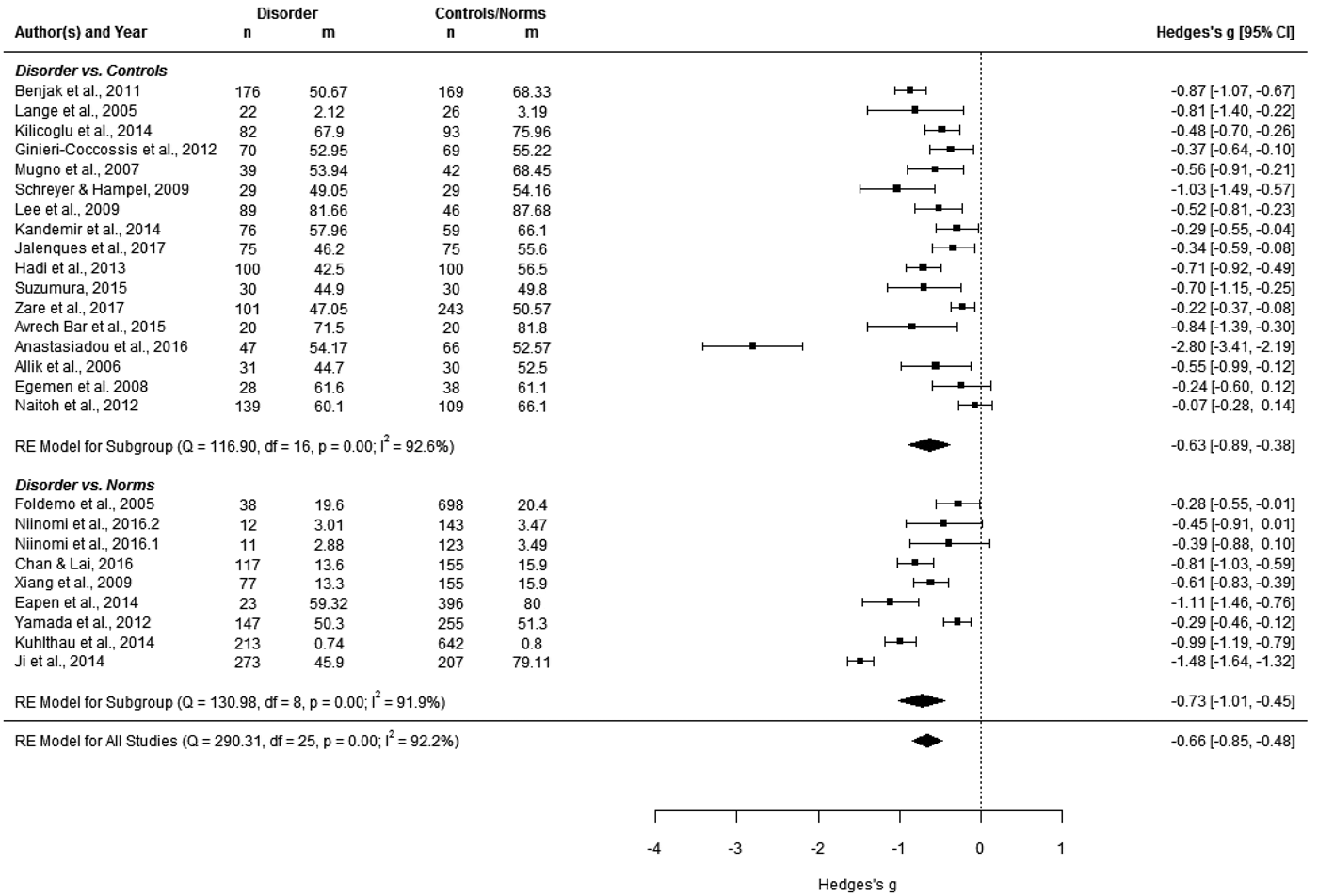
Parents of mentally-ill children reported significantly lower QOL compared with parents of healthy children (g = −0.63) and compared with norm values (g = −0.73; Fig. 2). The effect is larger for the comparison with norm values. Both effects are clinically meaningful (Norman et al., Reference Norman, Sloan and Wyrwich2003). Heterogeneity between studies was significant in all meta-regressions, but most pronounced for the comparison of parents of mentally-ill children with norm values (Q (8) = 130.98, p < 0.001).
Forest plot of comparisons (1) parents of children with a disorder v. norm values and (2) parents of children with a disorder v. parents of healthy children (controls).

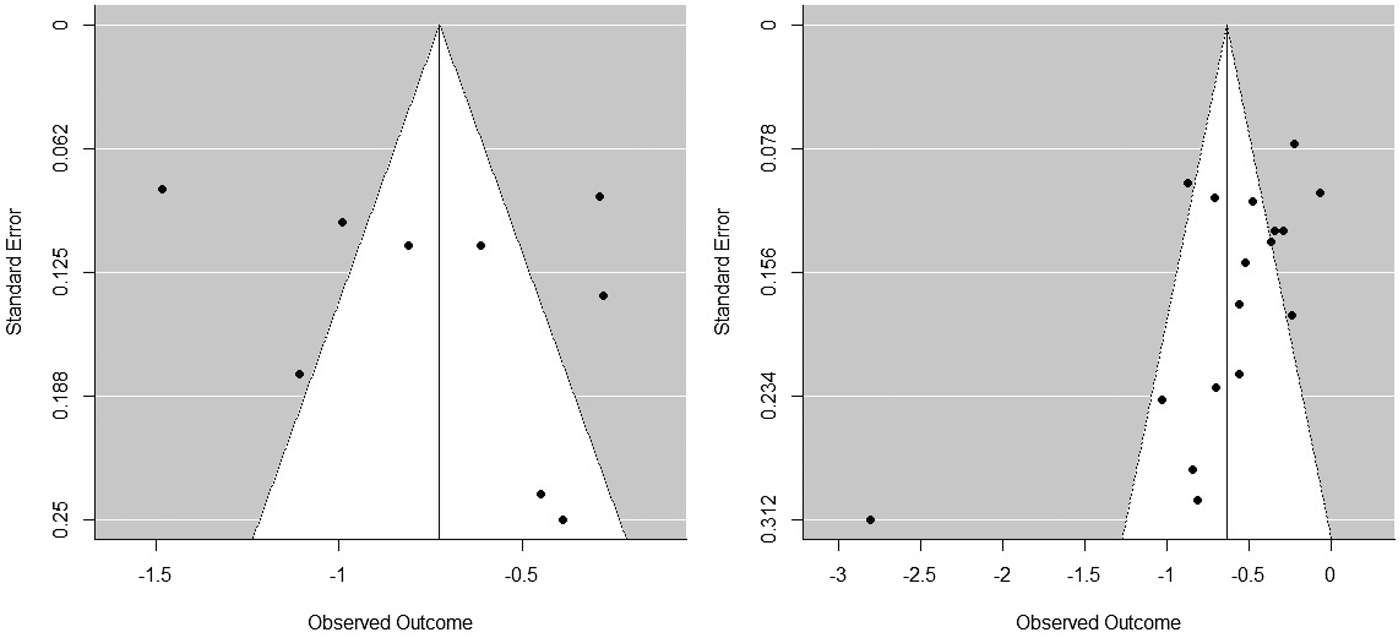
The two funnel plots suggest that publication bias existed (Fig. 3). For the comparison of parents of mentally-ill children with norm values, the funnel plot was symmetrical: smaller studies had a higher likelihood of being published if they yielded either large or small to almost no effects. For the comparison of parents of mentally-ill children with control parents, the funnel plot revealed asymmetrical publication bias: smaller studies had a higher likelihood of being published if they reported small to almost no effects. The Egger's test for the last comparison was applied (requirement: k > 10), and its result was significant (z = −3.39, p < 0.001).
Funnel plots of comparisons (1) parents of children with a disorder v. norm values (left) and (2) parents of children with a disorder v. healthy children (right).

Moderator analyses
Relevant moderators were tested to explain heterogeneous effects for the total sample and the two subsamples of comparisons. Neither publication year, publication type nor QOL-measurement were significant moderators.
Of the sample characteristics, child's disorder, and age significantly influenced the effects. Compared with parents of children with ASD, parents of children with the following disorders reported higher QOL than controls and norms: Enuresis nocturna (k = 3, β = 0.682, p = 0.002), pervasive developmental disorders (PDD) (k = 2, β = 0.534, p = 0.036), and schizophrenia (k = 1, β = 0.663, p = 0.049). Only parents of children with a SRD reported significant lower QOL than parents of children with ASD (k = 1, β = −1.857, p = 0.036) compared with controls and norms. These findings are based on few studies only and must be interpreted with caution.
Child's age was a significant moderator for the comparisons between parents of mentally-ill children and control parents. Parents of older mentally-ill children showed lower QOL than parents of younger mentally-ill children compared with control parents (k = 14, β = −0.102, p = 0.036).
Discussion
Confirming our hypothesis, the meta-analysis showed that parents of mentally-ill children are experiencing a compromised QOL relative to the norms and relative to parents of healthy children. This finding is in line with research showing heightened caregiver burden, parenting or psychological distress and rates of mental health problems in parents of mentally-ill children (Steele et al., Reference Steele, Dewa and Lee2007; van der Voort et al., Reference van der Voort, Goossens and van der Bijl2007; Zabala et al., Reference Zabala, Macdonald and Treasure2009; Theule et al., Reference Theule, Wiener, Tannock and Jenkins2010). The ES were large for the comparison between parents of children with mental disorders and norm values, but lower for the comparison with a control group of parents of healthy children. The ES might have been underestimated in the latter comparison due to publication bias (smaller studies with a control group were more likely to be published if they reported small to almost no effects). However, the smaller ES for the comparison with controls might also be attributable to higher levels of stress and strains among parents of healthy children relative to the general population (e.g., lack of time to follow personal interests). Despite the different ES of the two comparisons, the identified QOL-reduction experienced by parents of children with a mental disorder was clinically relevant in both comparisons. Hence, it is important to address parental needs.
Moderation analyses yielded that parents of older mentally-ill children have a lower QOL than parents of younger mentally-ill children compared with controls. This is in contrast to the findings of the meta-analysis of Theule et al. (Reference Theule, Wiener, Tannock and Jenkins2010) that did not identify the child's age as a significant moderator of parenting stress. This discrepancy might not only be due to the different concepts assessed (QOL v. parenting stress), but also due to differences in the scopes of the analysis: Theule et al. focused on ADHD, whereas the present meta-analysis included different mental disorders. Hence, it is possible that age was confounded with the type of condition in the present analysis. Nevertheless, it is also possible that caregivers of older children become more distressed when symptoms of the child's condition persist and further problems develop.
The systematic review revealed several gaps in the here-studied field of research. The majority of both included and excluded studies focused on ADHD or ASD, whereas other mental disorders received less attention. One reason for this predominance might be attributable to the fact that ADHD and ASD emerge early in life (Baxter et al., Reference Baxter, Brugha, Erskine, Scheurer, Vos and Scott2015; Thapar and Cooper, Reference Thapar and Cooper2016), i.e. at a stage when children are still strongly dependent on their parents. The relative high prevalence of ADHD might have also contributed to the interest in this condition. Furthermore, most included studies looked at the QOL of parents of young children (<10) and boys. Again, this might be explained by the early onset of the predominantly considered mental disorders (e.g., ADHD, ASD) as well as a higher prevalence of such disorders in males (Baxter et al., Reference Baxter, Brugha, Erskine, Scheurer, Vos and Scott2015; Thapar and Cooper, Reference Thapar and Cooper2016). Additionally, it must be emphasised that research to date mainly included mothers, presumably because they are often more involved in the caregiving process than fathers (e.g. Niinomi et al., Reference Niinomi, Asano, Kadoma, Yoshida, Ohashi, Furuzawa, Yamamoto, Yamakita and Mori2016). Non-response might have biased the results of some studies. However, the extent of this bias is often difficult to estimate because many publications did not report response/refusal rates for the clinical and/or control group(s). As well, most included studies recruited caregivers of mentally-ill children via (psychiatric) outpatient clinics or other clinical institutions. These samples might differ from parents of mentally-ill children that are not (yet) or no longer treated professionally. Lastly, it must be considered that a significant number of studies was excluded because no comparison was made between the parents of children with mental disorders and parents of healthy children/norms.
Future research should not only focus on ADHD and ASD, but also on other disorders. Furthermore, the QOL of male caregivers should be elaborated, as fathers and mothers have been shown to differ in (some domains of) their QOL (e.g. Allik et al., Reference Allik, Larsson and Smedje2006; Mugno et al., Reference Mugno, Ruta, D'Arrigo and Mazzone2007). Using population-based rather than clinical samples might further deepen our understanding in this field. However, it would still be important to verify the clinical diagnosis of the child's condition through a clinical evaluation of a health professional and/or a diagnostic test. The reporting might be improved in subsequent research by providing important details, such as information on refusal/response rates. Whenever possible, QOL of parents of mentally-ill children should be compared with the QOL of parents of healthy children, since they might also experience a slight reduction in their QOL relative to the general population. However, in case that no control group can be assessed, researchers should consider comparisons on the OOL-data of parents of mentally-ill children with norm values, keeping in mind that the effect for this comparison might be slightly overestimated. Lastly, the association between age of the child and QOL of parents should be studied in more detail to clarify the question whether the QOL depends on the age of onset of the child's condition and if it increases with the duration of the disorder.
The limitations of the systematic review include that only articles published in English or German were considered and that all included studies were based on cross-sectional data, which limits causal inferences. With regard to the meta-analysis, heterogeneity was considerably high due to the broad scope of the literature review. Therefore, the ES only have a guiding value. Secondly, the described publication biases, as well as the limited number of studies targeting particular mental disorders, must be considered when interpreting the results.
Despite these limitations, the results of the meta-analysis indicate that parents of mentally-ill children are experiencing a clinically relevant reduction in their QOL relative to the general population and relative to parents of healthy children. This compromised QOL needs to be addressed by health professionals who are in contact with the parents of mentally-ill children (see, for instance, literature from Da Paz and Wallander Reference Da Paz and Wallander2017 who conducted a narrative review on interventions aiming to improve the mental health of parents whose children have ASD). Furthermore, the impact that a child's mental disorder can have on parents should be further examined and elaborated. The results of the systematic review and meta-analysis can be used to plan subsequent studies that aim to fill the important research gaps.
Acknowledgements
We are grateful to all authors who provided additional data we needed to complete the evaluation of papers and the data extraction. Furthermore, we would like to thank Jenny Yi-Chen Lee for the English editing.
Financial support
This research received no specific grant from any funding agency, commercial or not-for-profit sectors.
Conflicts of interest
None.
Ethical standards
Not applicable.
Availability of data and materials
Data used for the systematic review/meta-analysis will be provided on request.