During the countdown to the Beijing Olympic Games in the summer of 2008, the Chinese government payed extraordinary attention to maintaining social stability throughout the country. On 28 June 2008, a massive protest broke out in Weng'an 瓮安 county in Guizhou, an underdeveloped province in south-west China. Stirred up by rumours about the rape and murder of a teenage girl (who was later proved to have committed suicide), hundreds of residents took to the streets to confront the county authorities. Within a few hours, the initially peaceful march had escalated into a violent riot that involved about twenty thousand participants and bystanders, and ended in dozens of citizens and police officers being injured, over one hundred government offices smashed and torched, and the Chinese Communist Party's county headquarters being razed to the ground.Footnote 1 Owing to the rapid spread of photos and videos of the riot scenes via cell phones and the internet, this “June 28th Incident” caught the attention of those both inside China and abroad, and seriously alarmed not only the Guizhou authorities, but also those in Beijing.
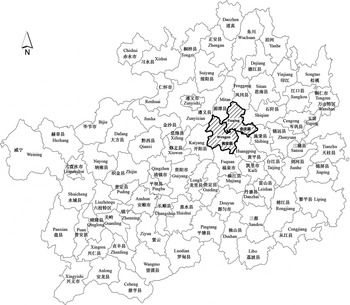
On 3 July 2008, a similar incident broke out in neighbouring Yuqing 余庆county, also in Guizhou (see Map). In this case, a pregnant woman accidentally killed herself by falling off a building when trying to evade some birth control officials. This accident instantly triggered angry protests and rumours about the death among the local population, and Yuqing seemed on the verge of a mass protest. However, unlike in Weng'an, this incident was settled rather quickly and peacefully by local officials before it attracted any media attention. As a result, Yuqing was praised by the higher authorities for its successful prevention of a collective incident (quntixing shijian 群体性事件).Footnote 2
Counties of Guizhou Province

The comparison of these two incidents raises an intriguing question: why did the two incidents lead to different outcomes? Why did the girl's suicide in Weng'an, for which the government was not at fault, incite thousands of residents to protest on the streets and violently attack the authorities, while the pregnant woman's unfortunate death in Yuqing, for which local officials were partially responsible, was settled peacefully?
Scholarly and journalistic analyses of the Weng'an incident have highlighted the important role played by rumours in instigating and escalating the mass protest.Footnote 3 Weng'an officials were also blamed for their initial inaction and mishandling of the situation.Footnote 4 In contrast, Yuqing officials responded very quickly and tactfully to the pregnant woman's death by publicizing the technical details of the accident to clear any official of responsibility and by offering compensation to her family to prevent the case from being pursued further.Footnote 5 The timing of the Yuqing incident – only five days after the Weng'an riot – may have also put Yuqing officials on heightened alert to maintain stability.
However, a closer look at Weng'an and Yuqing suggests a systemic difference in their general patterns of state–society relations and social stability: whereas Weng'an has suffered widespread popular discontent and frequent mass protests against the local government in recent years,Footnote 6 Yuqing has been a model county in maintaining social stability, and has won multiple national and provincial awards in this regard.Footnote 7 Given the structural differences, it is unsurprising that the two incidents followed such divergent trajectories. The question to ask then is why do the two counties experience such different levels of social instability?
Multiple factors shape the occurrence, process and outcome of social conflicts. The existence of popular grievances against the state,Footnote 8 the political opportunities for tensions to erupt, and the mobilizing structure and framing process for collective action to materializeFootnote 9 are all crucial to social movements. While acknowledging the importance of these factors, this study highlights another factor – the mode of local development and governance based on resource endowment – to account for the two counties' different levels of social instability. By comparing the two counties, which share many similarities in economic, political and demographic conditions, but which differ in resource endowment, this study finds that the endowment of natural resources has a significant influence on local economic development strategy and the strength of local political institutions, both of which together shape the likelihood of social unrest. Specifically, Weng'an's heavy reliance on its rich mineral resources for economic growth allowed the local government to ignore the interests of its rural residents and weaken its control over this section of its population. As the government was unable, or unwilling, to address the popular discontent arising from its resource-based economic development, Weng'an suffered frequent social conflicts and mass protests. On the other hand, Yuqing, a resource-poor county, adopted an agriculture-oriented development strategy that drove the local government to pay more attention to the rural sector and strengthen its control over the rural population, which largely pre-empted the occurrence of social unrest. In a sense, there appears to be a resource curse in China at the local government level where the abundance of mineral resources contributes to social instability through multiple causal mechanisms circumscribed by China's peculiar political system and cadre incentive structure.
The rest of this article is organized as follows. The next section compares the geographical, demographic, economic and political conditions of Weng'an and Yuqing and points out their major differences in resource endowment. This is followed by a review of the theories from comparative studies on how natural resources could affect social conflict, and the controversies around them. Returning to the empirics, the article then discusses how differential resource endowment led to the two counties' divergent development strategies and modes of governance. This is followed by an analysis of how the combination of popular grievance and political institutions contributed to different levels of social instability in Weng'an and Yuqing, before concluding.
A Comparison of Two Counties
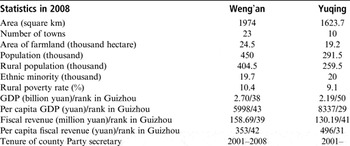
A comparative study entails the control for possible explanatory variables. As Weng'an and Yuqing are neighbouring counties in Guizhou, the poorest province in China, they share many similarities, as shown by the basic facts and statistics presented in Table 1.
Comparison of Weng'an and Yuqing

Source:
Data are extracted or compiled from Guizhou nianjian 2001–2009 (Guizhou Yearbook 2001–2009), Guizhou tongji nianjian 2001–2009 (Guizhou Statistical Yearbook 2001–2009), and the 2008 Yuqing Government Report.
Geographically, Weng'an covers slightly more landmass than Yuqing. As neighbours, the two counties share the same climate, similar vegetation types, ecological characteristics and geological conditions. Owing to the mountainous, karst terrains prevalent in Guizhou, both counties suffer from a limited supply of arable land and inadequate transportation systems that hamper economic development.
Both are medium-sized counties in terms of population according to the provincial and national standards, although Weng'an is more densely populated than Yuqing. Peasants comprise the vast majority of the population in both counties, and around 10 per cent of the rural population were below the official poverty line in 2008. While Guizhou is famous for its large number of ethnic minorities, both counties are dominated by the Han Chinese population, which largely rules out conflicts along ethnic lines.
Economically, both Weng'an and Yuqing, like most localities in south-west China, are underdeveloped according to the national standard, and their economic and fiscal capacities both rated at mid-level among the 88 county-level units in Guizhou (see Table 1). In the provincial rating of per capita GDP between 1996 and 2008, Yuqing ranked at upper mid-level (around the 29th); Weng'an was once higher on the list (the 21st in 1996), but gradually slipped down to the median level (the 43rd in 2008).Footnote 10 As mediocre performers in the economic competition, both counties are under considerable pressure to boost local economic and fiscal growth and push up their rankings. Meanwhile, they are strongly motivated to identify their unique characteristics (tese 特色) in order to stand out from the other counties and attract attention from higher authorities.
Politically, the fact that the two counties share the same regime type, political structure, and policies at national and provincial levels controls for the effects of macro-level political institutions on social conflict. Given the extremely important roles that local leaders play in grassroots politics, it is necessary to compare the leadership of Weng'an and Yuqing. The Party secretaries of both counties in 2008 were non-locals, but Guizhou natives, and with extensive work experience in Guizhou. They both started working in the two respective counties as head of the government in 2001 and were promoted to the position of Party secretary in 2006 as their predecessors were promoted to prefecture-level positions. The similar backgrounds and relatively long tenures of the two counties' leaders rule out a lack of work experience, local knowledge, or promotional prospects in local governance as the causes of mismanagement and social conflicts.
In terms of the leadership quality, there is no clear evidence of either good or bad performances in either county. Local officials from either county have rarely made provincial or national news headlines, either for positive contributions or for corruption (as is often the case). In Weng'an particularly, although its principal cadres were publicly criticized and seriously punished after the June 28th Incident, the Guizhou Party secretary still openly acknowledged their performance in successfully promoting local development.Footnote 11 In fact, the Party secretary of Weng'an was reportedly hardworking and clean, and was highly regarded among local cadres and citizens. He was even awarded a provincial first prize for his outstanding performance in dealing with the disastrous snow storm in early 2008.Footnote 12 If not for the June 28th Incident, the leaders in Weng'an might have followed the same career trajectory as their counterparts in Yuqing, just as their predecessors did.
Although they share many similarities, the two counties have one major difference: Weng'an is endowed with a wide range of rich deposits of high-quality, easily extractable mineral resources. Resources with confirmed reserves include phosphorus, coal, iron, pyrites, bauxite, and gypsum, among which phosphorus and coal are the largest with exploitable reserves of 410 million tons and 370 million tons, respectively. Weng'an is one of the three largest phosphorus producers in Guizhou.Footnote 13 By contrast, Yuqing contains only scant mineral resources. The largest confirmed reserve is 4 million tons of pottery clay.Footnote 14 Although there are dozens of coal, phosphorus and other mines, most operate only occasionally.Footnote 15
The Curse of Natural Resources
Comparative studies suggest that the abundance of natural resources, such as minerals, gemstones and oil, is often associated with social conflicts and even civil wars.Footnote 16 This phenomenon is generally referred to as the curse of natural resources.Footnote 17 However, controversies exist regarding whether and how natural resources lead to conflicts. For example, some argue that the resource curse is confined to oil,Footnote 18 but others maintain that non-fuel minerals, diamonds, illegal resources such as drugs, and lootable resources in general, are causally linked to conflict,Footnote 19 and some even suggest that primary commodities in a broad sense could drive conflict.Footnote 20
Existing studies point to three mechanisms through which resources could trigger social conflict. First, the most publicized hypothesis is that resource rents provide incentives for rebellion as well as start-up funds for rebel groups.Footnote 21 Rebel greed is believed to have driven armed conflicts over the control of resources. However, while some empirical studies on African states lend support to this rebel greed mechanism,Footnote 22 others question the validity of this argument.Footnote 23
Secondly, studies and journalistic reports suggest there is a grievance mechanism. Resource dependence can create grievances among the local population because of the unequal distribution of wealth; income instability owing to price shocks; or negative externalities during extraction such as land expropriation and environmental hazards, which in turn lead to social conflict and civil war.Footnote 24 However, empirical evidence is mixed as to whether such a grievance mechanism exists.Footnote 25
Thirdly, a causal mechanism from the statist perspective maintains that natural resource dependence can lead to bad governance and weak political institutions based on patronage rather than on electoral competition, scrutiny and civil rights.Footnote 26 Feeding on resource rents, resource-dependent countries have less need to build socially intrusive and elaborate bureaucracies to raise revenue,Footnote 27 and therefore have less capacity to resolve social conflicts.Footnote 28 These countries also tend to suffer poor state–society relations. As the government relies on resource rents rather than taxes from citizens, citizens have less bargaining power over the government, a weaker incentive to monitor government behaviour, and less information about government activity. Thus, the government may have little compulsion to respond to the demands of its citizens.Footnote 29 However, other scholars point out that resource abundance does not necessarily lead to weak institutions; it is more likely that weak institutions are a result of political elites' endogenous choices.Footnote 30 When resource-rich states invest their windfall revenues in building state institutions and political organizations, a natural resource, and oil in particular, actually increases regime durability and lowers the likelihood of civil war and anti-state protests.Footnote 31 Alternatively, the same effect can be achieved by the regimes' investment in repressive apparatuses in order to retain power.Footnote 32
Overall, internationally there is some evidence that links social conflicts with natural resources such as fuel, gemstones, and non-fuel minerals. However, it is highly controversial whether the curse of natural resources exists as a law of human society. Moreover, even among those who accept the existence of a resource curse, there are wide disagreements on the causal mechanisms. Although certain causal mechanisms have been identified in some empirical cases, they are conditional upon many other economic, social and political factors. So, does the resource curse exist in China? The following sections will attempt to answer this question by comparing Weng'an and Yuqing.
Resource Endowment, Development Strategy and Local Governance
Grassroots governments in China are known to be working under tremendous pressure and intense competition.Footnote 33 Local officials have to tackle a multitude of tasks assigned by their superiors, such as promoting economic development, maintaining social stability and keeping the birth rate under control. Pressured by the cadre evaluation system and constrained by limited resources, local cadres often prioritize their tasks and selectively implement only politically or economically beneficial policies.Footnote 34 Among the multiple targets, economic growth is one of the most important yardsticks for measuring the performance of local officials.Footnote 35 Especially in underdeveloped areas, local cadres invest their energies in boosting the local economy. Guizhou province, as a typical example, ranks its 88 county-level units every year on such indicators as per capita GDP, agricultural and industrial outputs and fiscal revenue as a way to push for better performance. Each locality strives to identify its comparative advantage and unique characteristics to not only boost the economy but also to give it an edge over the other counties and therefore attract attention from higher authorities. Ranked at the mid-level in Guizhou, cadres in both Weng'an and Yuqing have to work hard to impress their superiors so as to advance their political careers. However, they adopted different strategies in the early 2000s to meet these same goals.
Development strategies: mineral resources versus agriculture
Like Yuqing, Weng'an had been a largely agrarian county for much of its history. However, in 2000, as the price of fuel and non-fuel mineral resources started to soar, the Weng'an government realized the value of its mineral assets and decided to follow a resource-based development strategy. It encouraged the start-up of mining and processing companies, especially large-scale ones, by establishing industrial parks and mining zones and providing favourable financial policies.Footnote 36 As investments flowed in from Guangdong and Fujian, as well as from some wealthy local citizens and officials, the mining sector boomed.Footnote 37
There was a particular sense of urgency in extracting the resources in Weng'an. Owing to the construction of a major dam on a river running through Weng'an (as well as Yuqing), a mineral-rich area was scheduled to be submerged in 2009. In 2002, Weng'an was authorized by higher authorities to expedite the extraction of these resources. Having received the green light, Weng'an and its townships lowered mining authorization requirements and allowed mining companies to operate even without a permit. As a result, mines proliferated. In one town alone, an area of two square kilometres hosted 14 phosphorus mines.Footnote 38
The burgeoning mining sector led to the continuous growth of Weng'an's GDP, which increased from 1,144.25 million yuan in 2000 to 2,695.68 million yuan in 2008, with an average annual growth rate of 11.3 per cent.Footnote 39 It also changed Weng'an's economic structure by boosting the industry and service sectors (through transportation and other mining-related services) in comparison to agriculture. In 2000, industry and services accounted for 33.5 per cent and 24.9 per cent of Weng'an's GDP, respectively, but they rose to 37.1 per cent and 33.0 per cent in 2008. Although there is no accurate data on what percentage of the GDP is attributable to the mining sector, it is reported that mining has been the mainstay of Weng'an's economy since 2003.Footnote 40 The mining sector also greatly contributed to Weng'an's fiscal coffers. The total fiscal revenue (including both national and local taxes) from Weng'an jumped from 66.82 million yuan in 2000 to 325.41 million yuan in 2008,Footnote 41 around 70 per cent of which came from the mining sector.Footnote 42 Besides profits, the mining industry also brought honour to Weng'an. In 2007, its largest phosphorus mining company was praised by the Central Department of Publicity and the State Council as a model state-owned enterprise for its impressive contribution to the national economy.Footnote 43
Yuqing, however, embarked on a divergent path to promoting local development. Lacking the natural resources enjoyed by Weng'an and being located in a remote mountainous area with a poor transportation system, the county officials realized that they could rely on neither mining nor manufacturing to develop the local economy, and decided instead to focus on agriculture as their specialty. After some extensive research in 2001, the county government launched a campaign called Four at the Peasant's Home (si zai nong jia 四在农家) (FAPH), which aimed to bring prosperity (fu 富), learning (xue 学), joy (le乐) and beauty (mei 美) to the homes of peasants. Its goal was to construct a modernized and harmonious countryside by increasing peasants' incomes, raising their living standards, and increasing their educational and aesthetic levels. Fortuitously for the county leaders, this campaign coincided with the national campaigns of Harmonious Society (hexie shehui 和谐社会) and the Socialist New Countryside Construction (shehuizhuyi xin nongcun jianshe 社会主义新农村建设) launched by the Chinese Communist Party in 2004 and 2005, respectively. Since then, Yuqing leaders have branded their campaign as a model for new countryside construction and have tried to promote it nationwide.
The key element of the FAPH campaign was to promote local economic growth through agricultural development. Yuqing focused on products with high market values, such as organic fruits and vegetables, tea and Chinese medicine, and promoted their export to other provinces and overseas. Instead of setting farmland aside for industrial parks, as seen in many Chinese localities, the Yuqing government encouraged the set-up of agricultural bases by offering subsidies or low-interest loans. It is worth noting that the new projects did not come at the expense of existing agricultural production. Compared to Weng'an, whose farmland shrank by 10 per cent from 2000 to 2008, the area of farmland in Yuqing remained unchanged, and grain output continuously rose, making Yuqing the top grain producer (per capita) among the 88 county-level units in Guizhou from 2001 to 2008. At the same time, the Yuqing government also encouraged the surplus labour from agricultural production to relocate to urban townships and engage in agriculture-related business and tourism, thus leading to a rapidly expanded service sector. In 2008, services surpassed agriculture for the first time to become the largest sector, accounting for 41.6 per cent of Yuqing's GDP, while agriculture and industry accounted for 33.3 per cent and 25.1 per cent, respectively. Overall, Yuqing's GDP grew at an average annual growth rate of 13.4 per cent between 2000 and 2008.Footnote 44
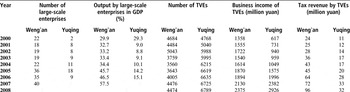
The development strategies of Weng'an and Yuqing should both be regarded as successful. Both achieved double-digit annual growth rates in terms of per capita GDP and fiscal revenue between 2000 and 2008, with Yuqing's growth a bit more impressive. However, Weng'an's economy and fiscal revenue were more narrowly based on the mining sector and large-scale mining enterprises in particular. Table 2 shows that Weng'an had more large-scale enterprises and that their industrial output contributed significantly to total GDP, suggesting that Weng'an's heavy reliance on large mining enterprises was behind local economic growth. In contrast, large-scale enterprises only counted for a small percentage of Yuqing's economy, meaning that the Yuqing government had more diversified sources of economic growth.
Local Economic and Tax Bases

Note:
The incomes and revenues are at current prices.
Source:
Data compiled based on Guizhou tongji nianjian 2001–2009 and Zhongguo xian(shi) shehui jingji tongji nianjian 2000–2008 (China County (City) Social and Economic Statistical Yearbook 2000–2008).
In terms of revenue extraction from enterprises, Weng'an was much more aggressive than Yuqing. Although the total number of township and village enterprises (TVEs) and business income were both lower in Weng'an, TVEs there remitted much higher tax revenue than those in Yuqing (see Table 2). The fact that the mining sector contributed to around 70 per cent of Weng'an's revenue indicates that its revenue extraction was more cost effective in the sense that the government could rely on a few enterprises for revenue collection rather than chase minor revenue sources. By contrast, Yuqing had to generate revenue from a much wider economic base, which necessitated the overall development of all economic sectors and businesses.
Local governance: state building and public services
Economic development strategy has consequences on local governance. As comparative studies suggest, states feeding on resource rents do not need to extract revenue from the general public, so they have little incentive to build up intrusive and elaborate bureaucracies to raise revenue or to answer the needs of citizens.Footnote 45 Although the political structure and incentives in rural China differ considerably from the countries on which these arguments are based, the logic nevertheless shows up in the comparison of Weng'an and Yuqing. Although the local governance of the two counties had traditionally followed more or less the same pattern, since the different development strategies were adopted in the early 2000s, the two counties have seen increasingly divergent modes of governance in terms of the strength of political institutions and provision of public goods.
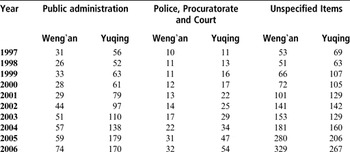
Compared with Yuqing, Weng'an paid notably less attention to building its ruling capacity in several aspects. First of all, public expenditure on government administration and coercive apparatus is an important way to build the muscle of a state and a necessary condition (though not sufficient condition) to maintain its rule both in peacetime and in conflict. As Table 3 shows, Yuqing has traditionally spent more on government administration than Weng'an. Into the early 2000s, the administrative expenditure in Yuqing grew at an even faster pace. Prior to 2000, the two counties spent similar amounts on the police, procuratorate and courts, but afterwards this expenditure grew more noticeably in Yuqing.Footnote 46 Interestingly, Weng'an spent more on miscellaneous unspecified items, a murky category in the account book that many localities use to hide problematic or unjustifiable expenses, although before 2000, it was Yuqing who took the lead in this respect.
Per Capita Public Expenditure (Unit: Yuan)

Note:
The expenditures are at current prices.
Source:
Data compiled from Quanguo di shi xian caizheng tongji ziliao 1998–2007 (National Prefecture, City, and County Fiscal Statistics 1998–2007).
The lack of funding in Weng'an seriously reduced the capacity of grassroots Party branches and government organs. The Communist Party there faced an aging membership and had great difficulty in recruiting new blood. Of the county's 6,390 rural Party members, only 17.5 per cent were below the age of 35 while 30.7 per cent were above 60. As many of the younger Party members moved elsewhere for better job opportunities, the older members who stayed behind were often physically weak and poorly educated and were unable to carry out much Party work or exert ideological influence on fellow villagers. The lack of candidates made it difficult to fill even the Party secretary position in some villages.Footnote 47 Meanwhile, many of the township-level administrative organs crucial for the rural economy, such as national and local tax bureaus, credit unions, and supply and marketing cooperatives, were either nonexistent or on the verge of collapse because of the lack of funding. At village level, the extremely low salary (around 2,700 yuan per year) was not much of an incentive for village cadres to fulfil their official duties.Footnote 48 Although some wealthy cadres could invest in or extract rents from the mining sector, the majority of local cadres, especially in the towns without many mines, worked under considerable fiscal stress and with low morale.
On the other hand, Yuqing's development and its cadres' political careers were all built upon the agrarian economy, which necessitated the control of rural society. The Yuqing government tried to strengthen its ruling capacity through several means. Financially, it guaranteed cadres' salaries. Even village cadres were paid 600–650 yuan/month with upward adjustments.Footnote 49 The county made particular efforts to guarantee the expenditure on the coercive apparatus. They spent generously on the office buildings and facilities of the police, procuratorate and courts, and allocated special budgets for public security, stability maintenance, anti-drug work and legal education. They also provided bonuses to police officers stationed in remote townships (50 yuan/month) and villages (80 yuan/month) as an additional incentive for the police force at grassroots level.Footnote 50
To strengthen its connection with and control of its rural population, Yuqing installed a cadre visiting (xiafang 下访) system that requested each county-level official to visit his/her assigned towns and villages for no less than five days per month; each township cadre to visit his/her villages for at least ten days per month; and each village cadre to be stationed in his/her village for at least 25 days per month.Footnote 51 In this way, the county made sure that its officials at all levels were informed of local situations and accountable for problems in their assigned territories. Moreover, in rural communities where interpersonal ties are highly valued, the frequent visits helped the officials to establish and maintain close relationships with the residents, which could facilitate the implementation of policies, especially those unpopular ones. Cadres often found their interpersonal connections a handy tool for gaining villagers' support, or at least for dissolving major resistance and preventing massive protests or petitions.
Yuqing sought to strengthen its conflict-preventing/resolving capacity. In addition to the formal judiciary system, it established People's Mediation Committees (renmin tiaojie weiyuanhui 人民调解委员会) in all of its ten towns and 69 villages/districts and hired hundreds of mediators, most of whom were Party members, to resolve social conflicts among local residents. Such mediation committees operated in a similar fashion to courts, but villagers were allowed to attend the meetings freely, and the committees would periodically publicize their work.Footnote 52 Yuqing also mobilized social forces to monitor social security and maintain stability. For instance, cab drivers and street cleaners were hired as informants to collect security information at night, and retired officials were organized to patrol residential areas.Footnote 53 Informants were hired from among sensitive population groups, such as those forced to move owing to the construction of a major dam (the same dam that prompted Weng'an to expedite its resource extraction).Footnote 54 In these ways, the Yuqing government consolidated its control over its population and effectively prevented social conflicts from escalating into collective actions.
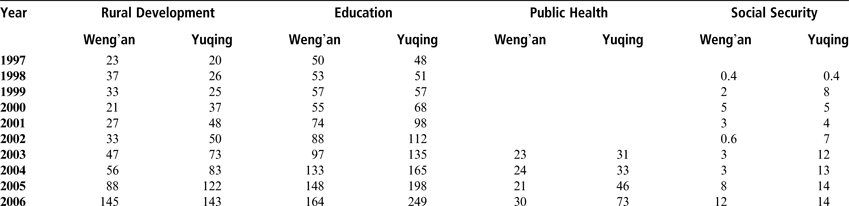
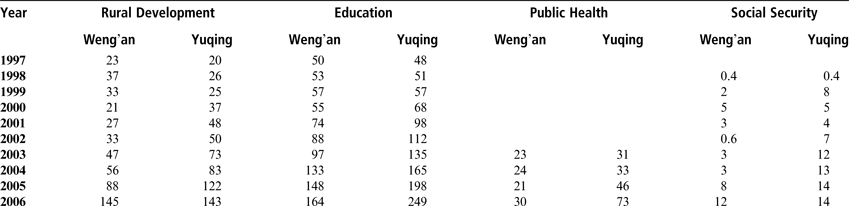
Besides the efforts to strengthen administrative and coercive capacity, the two counties also differed notably in their provision of public goods. Before 2000, both counties spent similar amounts on public services, and Weng'an in particular spent more on promoting rural development. But into the 2000s, Weng'an spent significantly less on rural development, education, public health and social security than Yuqing (see Table 4). The difference in infrastructural construction is particularly telling. Although in recent years Weng'an invested over six million yuan in infrastructure such as roads and urban construction and maintenance,Footnote 55 the county did not impress visitors. Even the richest towns displayed little evidence of prosperity with dilapidated buildings and narrow, disorganized roads.Footnote 56 In comparison, as part of the FAPH campaign, Yuqing heavily emphasized the construction of infrastructure including roads, irrigation systems, and energy supplies. The county provided subsidies, interest-free loans, and free blueprints for peasants to revamp their homes with uniformly designed façades and modern kitchens and toilets. Besides individual households, public facilities including libraries, playgrounds and bulletin boards were also set up in the villages.Footnote 57
Per Capita Expenditure on Public Services (Unit: Yuan)
Note:
The expenditures are at current prices.
Source:
Data compiled from Quanguo di shi xian caizheng tongji ziliao 1998–2007.
Grievance, Governance and Instability
The two counties' modes of development and governance generated a palpable impact on local residents, especially peasants, who make up around 90 per cent of the population. Whereas Weng'an's resource-based development alienated its rural population and created widespread grievance, Yuqing's FAPH campaign largely placated its rural residents.
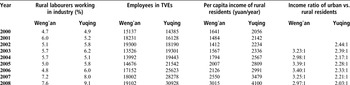
Economically, Weng'an's mining industry did not create many employment opportunities for local residents because of the increasing mechanization in the mines and processing factories. In comparison, Yuqing's farms and agriculture-related businesses offered more jobs to local residents. Although Weng'an had a much larger industrial sector, because of structural differences, the percentage of rural labourers working in industry there was no higher than in Yuqing, and in fact, the TVEs in Yuqing provided more employment opportunities than those in Weng'an (see Table 5). The lack of economic opportunities contributed to the low income of peasants. The per capita income of rural residents in Weng'an fell well below that of Yuqing. Nevertheless, the urban residents in Weng'an benefited from an impressive increase in income in recent years. As a result, Weng'an's urban–rural income gap was considerably larger than Yuqing's, which led to a strong sense of deprivation and resentment among Weng'an's rural population. In addition, the unfair and often treacherous expropriation of land from undercompensated peasants to make way for mines and related industries contributed to widespread discontent and protests against the Weng'an government.Footnote 58
Employment Opportunities and Income Inequality

Note:
The incomes are at current prices.
Source:
Data compiled based on Guizhou tongji nianjian 2001–2009 and Guizhou nianjian 2003–2009.
Organized crime became a major social problem in Weng'an as the mining sector prospered. First, the huge profits and the lack of government control over mining rights attracted gangs to the mining industry. Using guanxi to network with local officials, gangs gained political protection and were able to take over mines and monopolize the transportation and sales of minerals, which provided the gangs with the financial resources to grow. Secondly, the lack of employment opportunities drove some local youths to join the gangs for a better income and even a higher social status. Thirdly, the fierce competition for the control of mines and the growing resentment towards the rich fuelled violent clashes. However, as the police force and courts failed to provide security or justice, it was the gangs who protected the mines and the people under attack.Footnote 59 Moreover, even the local government sometimes had to turn to the gangsters for help when they had trouble implementing certain policies.Footnote 60 In a sense, the gangs became an alternative source of coercive power and coexisted with the local state.
Rampant organized crime seriously undermined public security in Weng'an. In the years leading up to the June 28th Incident, there were between 600 and 800 criminal cases each year, but only about 50 per cent of them were solved.Footnote 61 In 2008 alone, there were 966 criminal cases and only 326 cases were cracked.Footnote 62 In Yuqing, by contrast, the yearly number of criminal cases between 2001 and 2005 ranged between 96 and 202, and the crime-solving rate ranged between 72 and 86.5 per cent.Footnote 63
Besides the social problems, the environmental degradation caused by the mining industry became another source of popular discontent in Weng'an. The mines seriously polluted the air of surrounding areas, cut the water supply to peasants and their farms, and led to the ground sinking underneath many peasants' homes, for which the victims received little or no compensation. As the villagers protested, the Weng'an government, instead of addressing the villagers' complaints, sentenced their representatives to jail.Footnote 64
The accumulated economic, social and environmental problems in Weng'an bred widespread discontent among the local population. However, fearful of disrupting the mining operations and hurting its resource-based economy, the Weng'an government chose to ally itself with the mining companies instead of the peasants. On the rare occasions when it did respond to the peasants' requests, its reduced administrative capacity meant that any action it did take had little effect. For instance, it invested over 700,000 yuan to provide an alternative water source for those affected by the mines, but just over a year after construction the project failed to provide any water.Footnote 65 More often, the government used its police force and even employed the gangs to stifle popular protests, and indeed, this kind of repression worked when the scale of protest was small. However, when the grievance accumulated to such a level that it incited tens of thousands of people to take to the streets, albeit triggered by rumours, the eruption of tensions in the June 28th Incident became inevitable.
By contrast, the FAPH campaign in Yuqing, by creating job opportunities, raising living standards and providing public goods, averted social unrest to a large degree.Footnote 66 More importantly, the strong political institutions allowed Yuqing to prevent and resolve conflicts pre-emptively through its information collection system and mediation mechanisms. Instead of letting dissatisfaction accumulate into collective actions, local cadres were sent out to search for potential conflicts and resolve them at the initial stage. By the end of 2008, Yuqing claimed to have identified 3,316 disputes and successfully mediated 98.5 per cent of them.Footnote 67 Although it is unlikely that all the cases were addressed to the satisfaction of the complainants – and there were indeed persistent petitions by some local residents – the county did prevent the breakout of collective incidents.
Therefore, Weng'an and Yuqing differed in at least two dimensions that can account for their levels of social stability: the strength of local political institutions and the intensity of popular grievance. As Table 6 dichotomizes, with strong political institutions, a locality can resolve or stifle social conflicts to achieve stability either pre-emptively or by using repressive means (Categories I and II). A locality with weak political institutions may enjoy passive stability if the level of popular grievance is low (Category III). But when weak political institutions encounter strong popular grievance, tensions can easily erupt into social instability (Category IV). Yuqing and Weng'an fall into Categories I and IV, respectively.
Political Institutions, Popular Grievance and Social Stability

Conclusion
This comparative study of two counties suggests that natural resources, by influencing the mode of local development and governance, can contribute to social instability in China. China's political system and cadre evaluation system mean that heavy pressure is placed upon local officials to promote economic development. In resource-rich regions, especially underdeveloped ones, the incentive is for local governments to exploit natural resources, such as minerals, to boost GDP, and to ignore the negative externalities on the local population. And because the resource-based development does not rely on the prosperity of all economic sectors and the welfare of the general public, the government has less motivation to invest in its ruling capacity and to satisfy its ordinary citizens. In this sense, a resource-dependent regional economy tends to suffer from more intense popular grievances and from weaker political institutions, which together increase the likelihood of social instability.
If this phenomenon is taken as a form of resource curse, the resource curse in China takes effect through several causal mechanisms, some similar to, but others different from, international experiences. First, one well-publicized hypothesis is that the greed for resource rents contributes to conflicts in resource-rich countries by motivating rebel groups to seek control over resources by force. However, this causal mechanism did not show up in this study. Although greed motivated criminal organizations to seek control over the mines in Weng'an, they did not rise up against the state, but rather chose to collude with local officials and make money collectively in a peaceful way. The peaceful coexistence of the state and extralegal coercive power on the one hand testifies to the failure of the local state to uphold social justice and maintain public security, and on the other hand suggests the success of the Chinese state at large in preventing uprisings through cooptation. Nevertheless, such collusion upset the local populace, who took the issue up with the local state and became the main force of resistance. Thus, the greed for resource control did not lead to social conflict directly, but rather worked through the grievance mechanism.
The grievance among local residents, especially peasants, against the local state was particularly strong in Weng'an and was a major cause of social conflicts and popular protests. Although the resource-dependent economy generated impressive economic and fiscal growth, it did not bring commensurate benefits to peasants, but rather created negative externalities such as inequality, environmental degradation, and injustice and insecurity owing to the organized crime.Footnote 68 All of these problems made the local state the target of popular grievance and laid the foundations for mass protests and, eventually, the violent showdown of the June 28th Incident. Thus, grievance proves to be a non-negligible channel through which resources trigger social unrest.
Last but not least, political institutions turn out to be a crucial causal link between resources and social instability. The two counties' choices of development strategy based on resource endowment largely determined their mode of governance in terms of state capacity building and public goods provision. The narrow economic base allowed Weng'an government to focus on the mining sector and ignore the development of other sectors and the welfare of the majority of its residents. The continuous, strong growth of GDP through the mining industry allowed local officials to survive and advance their political career without constructing effective political institutions either to provide public goods or build up administrative and coercive capacity. In this sense, Weng'an officials followed an easy but tricky path: they were betting on the single most promising horse, resource-based growth, to win the political game, but were underprepared for the negative externalities of such growth. When popular grievance accumulated to the point of eruption, the county's administrative and coercive apparatuses were found to be powerless.
In comparison, poor resource endowment forced Yuqing to rely on a much wider base – peasants and agriculture – for its development. Such a strategy, as embodied by the FAPH campaign, was built upon the rural economy and population, and necessitated the control of the rural society. Although the strategy was not as cost-effective as Weng'an's, it was safer in the sense that it achieved not only economic growth, but also social stability. Moreover, as the FAPH campaign coincided with the national campaigns of Harmonious Society and Socialist New Countryside Construction under the Hu–Wen administration, it might bring extra payoff to the local cadres' political careers if they could successfully attract the attention from the higher authorities, which is what they have been striving for.
Overall, China's cadre incentive structure, by narrowly focusing on a few indicators for cadres' evaluation, plays a significant role in accentuating the resource curse in local China. The heavy pressure on local officials to boost economic performance forces them to exploit natural resources in a hasty and brutal way that generates grievances among the citizens and ignores the building of political institutions. When strong tension encounters weak institutions, social unrest becomes an almost inevitable outcome.