Introduction
Long-lasting insecticide treated nets (LLINs or nets thereafter) have been shown to reduce malaria morbidity and mortality in endemic areas (Lengeler, Reference Lengeler2004; Eisele et al., Reference Eisele, Larsen and Steketee2010) and are now accepted as an important tool in programmes to control Plasmodium transmission (World Health Organization, 2016). Initially, pregnant women and children <5 of age were targeted to receive LLINs (World Health Organization, 2014). Since 2007, the World Health Organization (WHO) has recommended that programmes provide one LLIN for every two people sleeping in a single structure. This recommendation is part of guidelines for achieving ‘universal coverage’ to prevent malaria, assuming that even those in low-risk groups contribute to community-wide transmission (Fegan et al., Reference Fegan, Noor, Akhwale, Cousens and Snow2007; World Health Organization, 2007).
Despite the WHO recommendation of two people per net and intense mass distribution campaigns which have increased overall net possession (World Health Organization, 2016), a sizeable proportion of households have only one net and thus are forced to share them (Ngondi et al., Reference Ngondi, Graves, Gebre, Mosher, Shargie, Emerson and Richards2011; Zhou et al., Reference Zhou, Li, Ototo, Atieli, Githeko and Yan2014). Shortfalls in LLIN coverage result from several factors including problems of insufficient LLIN procurement (Kilian et al., Reference Kilian, Boulay, Koenker and Lynch2010). Even when LLINs are sufficient to cover all family members, circumstances may require a member to share a net with two or more persons. As children age, they sleep on the floor or move to a smaller structure (Alaii et al., Reference Alaii, Van Den Borne, Kachur, Shelley, Mwenesi, Vulule, Hawley, Nahlen and Phillips-Howard2003; Baume et al., Reference Baume, Reithinger and Woldehanna2009; Noor et al., Reference Noor, Kirui, Brooker and Snow2009; Galvin et al., Reference Galvin, Petford, Ajose and Davies2011). Thus, the mean number of people per net often exceeds the recommended number (Larson et al., Reference Larson, Minakawa, Dida, Njenga, Ionides and Wilson2014; Zhou et al., Reference Zhou, Li, Ototo, Atieli, Githeko and Yan2014; Msellemu et al., Reference Msellemu, Shemdoe, Makungu, Mlacha, Kannady, Dongus, Killeen and Dillip2017). Risk of infection may increase because of limited space. Children may touch the sides, extremities might extend outside and children may roll outside, particularly when sleeping on the floor. In fact, a past study reported that children sleeping on the floor were more likely to be parasitemic (Minakawa et al., Reference Minakawa, Kongere, Dida, Ikeda, Hu, Minagawa, Futami, Kawada, Njenga and Larson2015).
Though groups regularly follow the WHO guideline of ‘one net for every two people’ to achieve universal coverage, the recommendation lacks empirical support. Specifically, it is unclear whether increasing numbers of people sharing a net impact risk for Plasmodium infection and, if so, to what extent. Few studies have been done to show (1) if two people per net is optimal to prevent infection and (2) if there exists a maximum number of people that might share a net, and still preserve the protective effect of the LLIN in a holoendemic context. This research aims to answer these questions regarding risk for Plasmodium falciparum infection among children in an area of high endemicity along Lake Victoria in Kenya.
Materials and methods
Study area and target population
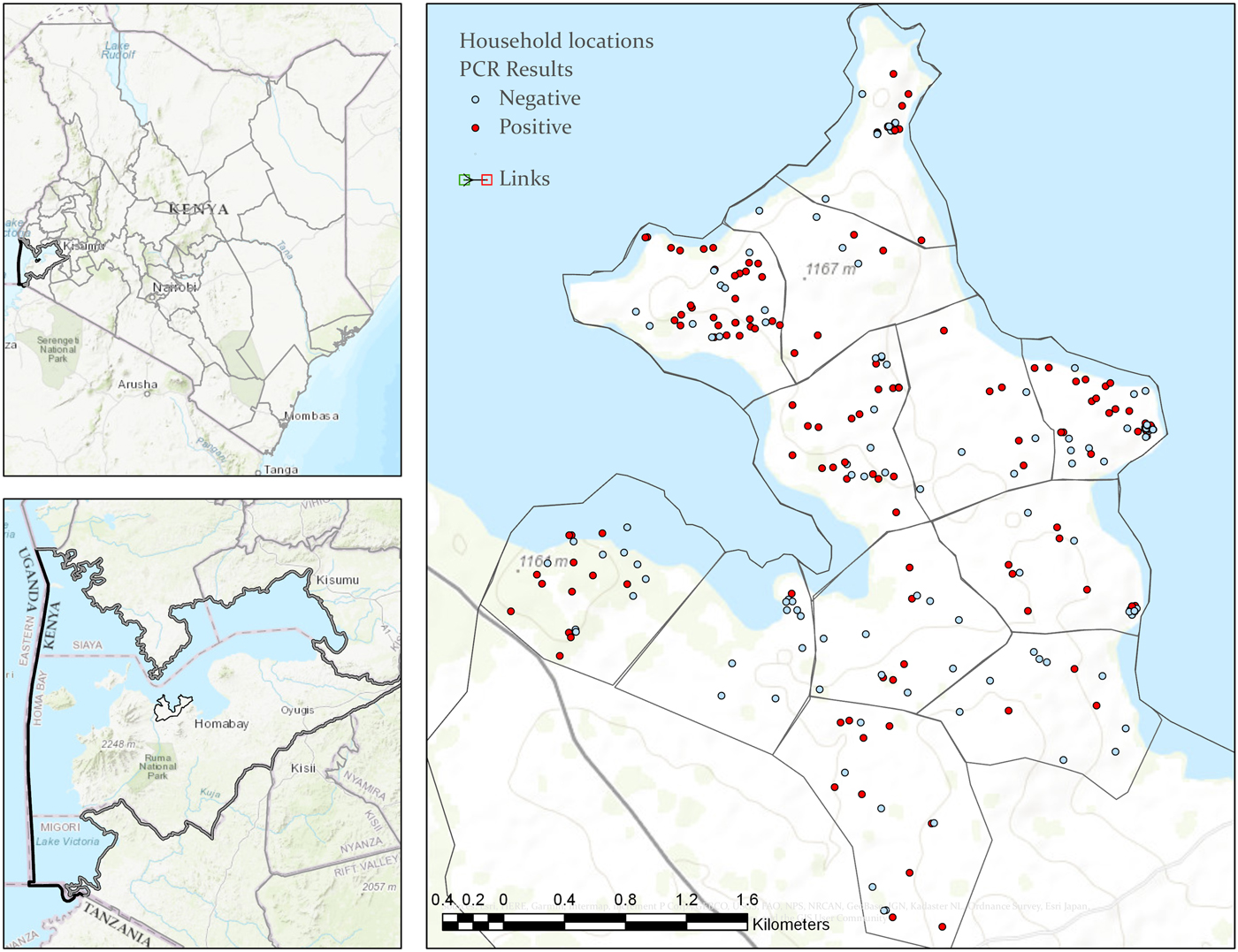
The study area was in the Gembe East Sub-location in Homa Bay County, Kenya (12 km2; 0°28′24.06″S, 34°19′16.82″E) (Fig. 1). Principal economic activities include fishing and farming (Iwashita et al., Reference Iwashita, Dida, Futami, Sonye, Kaneko, Horio, Kawada, Maekawa, Aoki and Minakawa2010; Larson et al., Reference Larson, Minakawa, Dida, Njenga, Ionides and Wilson2014; Minakawa et al., Reference Minakawa, Kongere, Dida, Ikeda, Hu, Minagawa, Futami, Kawada, Njenga and Larson2015). A typical household compound consists of families living in multiple mud house structures often with corrugated iron roofs that have open eaves (Iwashita et al., Reference Iwashita, Dida, Futami, Sonye, Kaneko, Horio, Kawada, Maekawa, Aoki and Minakawa2010; Minakawa et al., Reference Minakawa, Kongere, Dida, Ikeda, Hu, Minagawa, Futami, Kawada, Njenga and Larson2015).
Location of study area, surveyed households and spatial distribution of Plasmodium infection status by PCR.

Plasmodium infection data among children in this area were available from an ongoing field evaluation study for the development of a rapid diagnostic test (RDT) (Yatsushiro et al., Reference Yatsushiro, Yamamoto, Yamamura, Abe, Obana, Nogami, Hayashi, Sesei, Oka, Okello-Onen, Odongo-Aginya, Alai, Olia, Anywar, Sakurai, Palacpac, Mita, Horii, Baba and Kataoka2016). The area was divided into 12 community sub-areas (Fig. 1). Most LLINs in the area were distributed in September to October of 2014. For the RDT study, a census of the area was performed. In August 2016, there were 3,792 people living in the study area. All children ⩽5 were considered for inclusion, of which there were 727 at the time of the census.
The present study was designed as cross-sectional survey, and we conducted the field survey twice performed in September 2016 and April 2017. In August 2016, survey workers visited each household known to have at least one eligible child. During visits, staff informed household heads about the survey, and the locations and dates of blood sample collection, which was to be done at local schools and community areas. Workers explained the goals, risks and benefits of the study and obtained written consent. If no one was present, survey workers returned to the household daily until an adult was found. In September 2016, the parasitaemia survey was performed. A follow-up survey was performed between October and December 2016, when survey workers collected information on LLIN use and other relevant data. The parasitaemia and follow-up surveys were repeated in March 2017.
Measurement of P. falciparum infection
During both screening rounds, axillary temperature was measured and a finger prick blood sample was taken for all children. Initial testing for parasitaemia was performed in the field using an RDT (Paracheck® Pf-Rapid Test for P. falciparum, ver.3, Orchid Biomedical Systems, Verna, Goa, India). Artemether–lumefantrine was given to children following a diagnosis by a clinician under WHO guidelines (World Health Organization, 2015). Blood samples were examined to detect P. falciparum using polymerase chain reaction (PCR).
Background information
Caretakers were asked to report whether the child slept under a bed net the previous night, in a manner consistent with other surveys (Baume et al., Reference Baume, Reithinger and Woldehanna2009; Noor et al., Reference Noor, Kirui, Brooker and Snow2009; Iwashita et al., Reference Iwashita, Dida, Futami, Sonye, Kaneko, Horio, Kawada, Maekawa, Aoki and Minakawa2010; Eisele et al., Reference Eisele, Miller, Moonga, Hamainza, Hutchinson and Keating2011; Minakawa et al., Reference Minakawa, Kongere, Dida, Ikeda, Hu, Minagawa, Futami, Kawada, Njenga and Larson2015). A follow-up survey was administered at the household to obtain contextual information on LLIN usage, sleeping location and household construction. Caretakers were asked to report the number of people sleeping under the same net with the sampled child the previous night as well as the age, gender and sleeping location of the child. Anything used for sleeping other than a framed bed was considered ‘non-bed’, defined as sleeping on the floor, on a sofa or on a mattress without a bed frame. Staff also obtained information on the numbers of household members and rooms. Workers directly observed the number of LLINs in each household. Geographical coordinates of house structures were recorded using a handheld global positioning system (GPS) (Garmin, Olathe, KS, USA). Distance to the nearest water body was calculated using GPS coordinates of the house and polygon shapefiles for water bodies.
Socioeconomic status (SES) for each household was measured using a composite household material wealth index based on possession of various consumer goods, household construction, toilet/water access and livestock (Filmer and Pritchett, Reference Filmer and Pritchett2001; Traissac and Martin-Prevel, Reference Traissac and Martin-Prevel2012). These data were collected through a health demographic surveillance system from February to April 2017 (Wanyua et al., Reference Wanyua, Ndemwa, Goto, Tanaka, K'OPIYO, Okumu, Diela, Kaneko, Karama, Ichinose and Shimada2013). Presence or absence of each item was recorded, and a numerical score was assigned to each using multiple correspondence analysis. The continuous measure was then divided into tertiles to obtain a rough proxy of socioeconomic ‘classes’ (Traissac and Martin-Prevel, Reference Traissac and Martin-Prevel2012).
In January 2017, indoor resting female mosquitoes were also collected in rooms where children slept, using the pyrethrum spray catch method (Silver and Springerlink, Reference Silver2008). Room area was measured used a tape measure. Mosquitoes were grouped by genus under a dissecting microscope. Among anopheline species, Anopheles arabiensis and An. funestus are most common in this area (Iwashita et al., Reference Iwashita, Dida, Futami, Sonye, Kaneko, Horio, Kawada, Maekawa, Aoki and Minakawa2010; Minakawa et al., Reference Minakawa, Dida, Sonye, Futami and Njenga2012; Futami et al., Reference Futami, Dida, Sonye, Lutiali, Mwania, Wagalla, Lumumba, Kongere, Njenga and Minakawa2014).
Data were collected on paper forms. Data entry was performed by two people and independently verified. When discrepancies or missing data were found, staff were sent back to households to confirm or recollect data.
Statistical methods/data analysis
Data collected included age, mosquito density, gender, net availability, number of rooms, SES, sleeping location and month of sample collection (September or March). Mosquito density was calculated as the number of mosquitoes divided by the area of sleeping room. Both anopheline and culicine mosquitoes were considered in the analysis of LLIN use because people do not distinguish between mosquito genera when using nets. Only anophelines were considered in models of parasitaemia. Net availability was calculated as the number of bed nets divided by the number of household members. Longitude and latitude were included to consider spatial variability in infection.
Descriptive statistics were produced for all relevant variables in the dataset. Logistic regression was used to test associations of LLIN use (yes/no) by the child with potentially predictive variables. Next, the dataset was restricted to only those children who slept under a LLIN. Using this subset, associations were tested between the variables and the number of people the sampled child shared the net with using multinomial logistic regression.
Logistic regression was used to test infection risk and the number of people (ordinal) sharing a LLIN and other variables. To determine whether the relationship between the number of people sharing the net and the other variables held, a multivariate logistic regression model was created using a backward selection procedure using Akaike's Information Criterion (AIC). While every effort was made to insure data completeness in the field, missing data in the variables other than parasitaemia and the number of people sharing the net were imputed using a multiple imputation method. Checks were made to ensure that the imputation process did not compromise the integrity of the results. The study design presented the potential for clustering at several levels. Since some of children were tested in both September 2016 and March 2017, individuals were considered as a potential random effect along with household and sub-area. All data were analysed using R (version 3.4.3) (Team, Reference Team2006).
Results
Target population
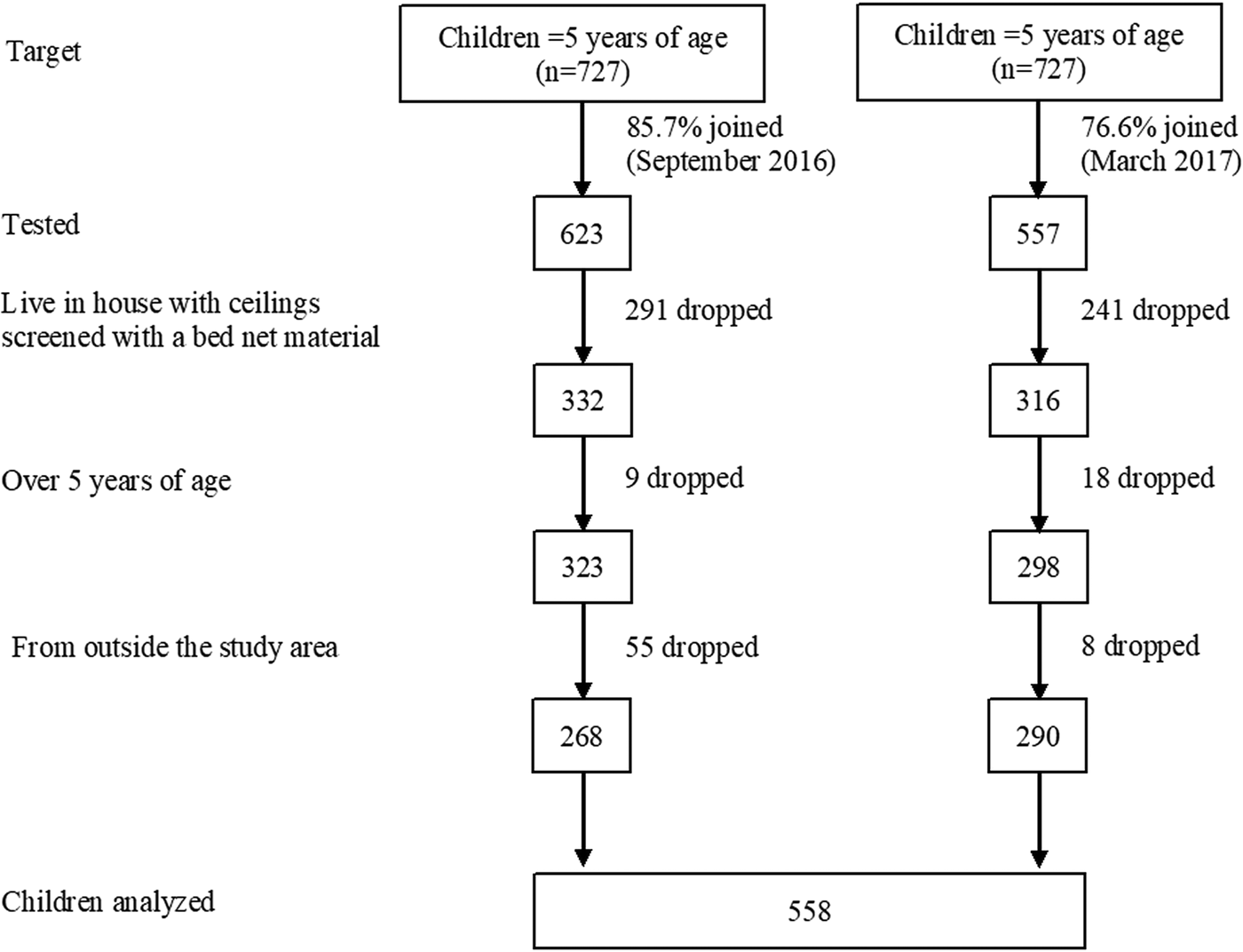
In September 2016, 623 children were tested for P. falciparum parasite infection, and the data from 268 children were used in the analyses. Of the 355 children excluded, 291 children slept in the houses that had ceilings screened with a LLIN material, which was thought to compromise analysis of relationships of LLIN use and malaria risk (Kawada et al., Reference Kawada, Dida, Ohashi, Sonye, Njenga, Mwandawiro, Minakawa and Takagi2012). Sixty-four children were excluded because they were >5 years of age, moved during follow-up or lived outside the study area. In March 2017, 557 children were tested and the data from 290 children were used. Of the 267 children excluded, 241 children slept in homes that had a ceiling-net, 26 children were >5 or from outside the study area. In total, 558 children from 250 households were included in the analyses (Fig. 2).
Flowchart of parasitaemia sampling and inclusion in the final sample. Note: the field survey was performed twice in September 2016 and April 2017 for the same target.

Power calculation
According to previous study in this region, the prevalence of malaria infection among children <5 who slept under a net was 62.8%, while that of children who did not was 74.3% (Minakawa et al., Reference Minakawa, Kongere, Dida, Ikeda, Hu, Minagawa, Futami, Kawada, Njenga and Larson2015). Assuming a type I error rate of 5% and a sample size of 558, the power to detect a difference in parasitaemia among net users and non-users was 0.99.
LLIN use and possession
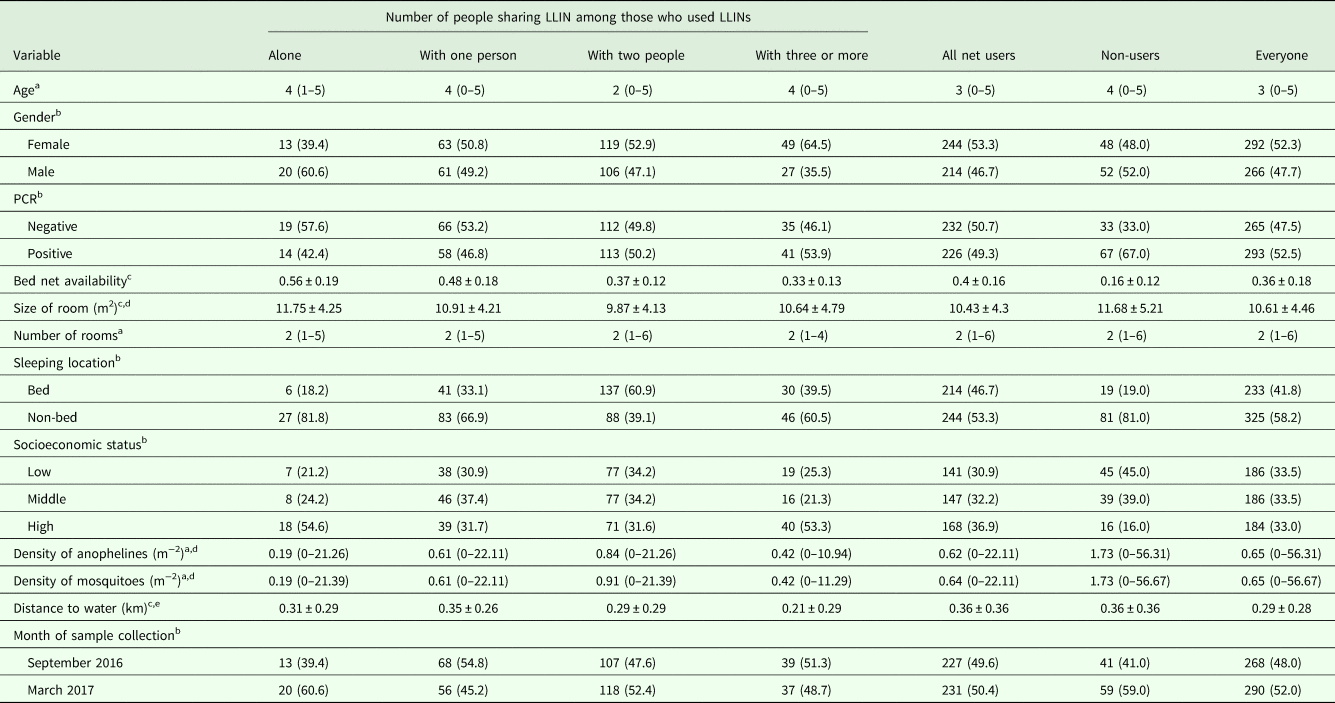
Of 558 children, 458 (82.1%) reported sleeping under a LLIN the night before the survey. LLINs were present in the households of 78 of the 100 (78%) children who were reported to not have used a LLIN (Table 1). Of 458 children who slept under a net, 33 (7.2%) slept alone. The remaining children (92.8%) shared a net with at least one person (median: 2, range: 1–5, n = 425). The median number of nets per household was 2 (range: 0–10), and the median number of people per household was 5 (range: 2–15). The mean number of persons per net was 3.12 (s.e. = 0.10) among the 237 households that had at least one net.
Profiles of bed net users and non-users

a Median (range).
b %.
c Mean ± standard error.
d N = 376.
e N = 555.
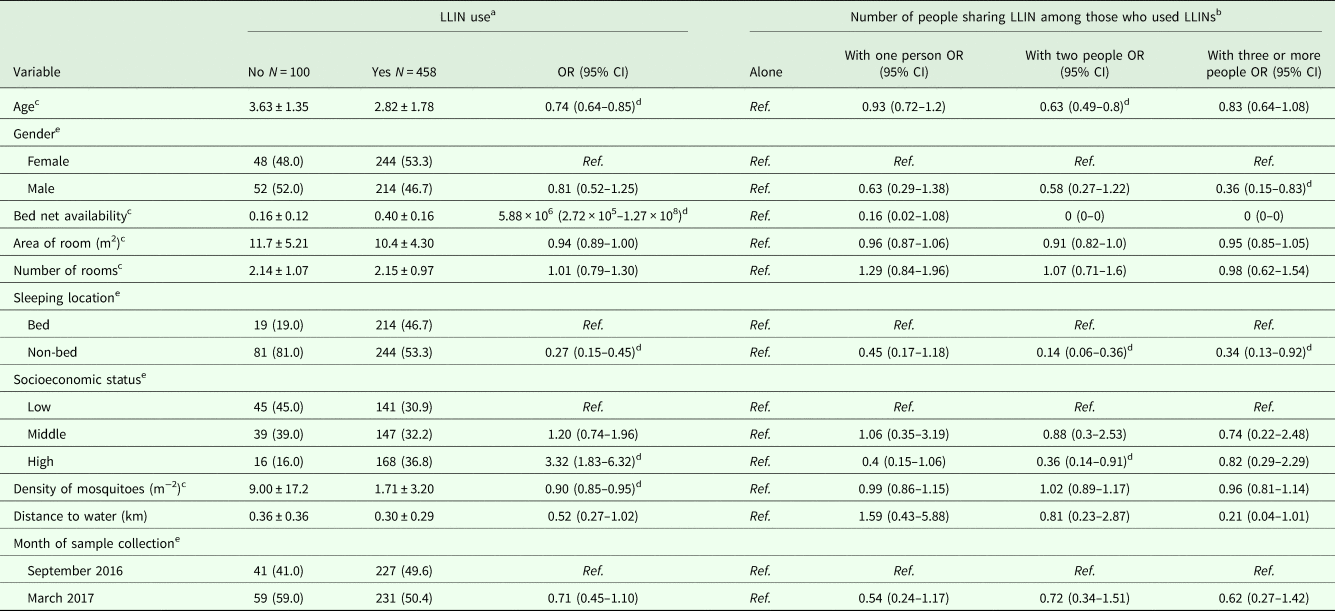
The number of children sharing a net with four or more persons was only 15 and one, respectively. These children were grouped with those sharing with three other persons. Excluding non-net users from the dataset, the multinomial regression analyses revealed several variables that were significantly associated with the number of people sharing a net with the sampled child (Table 2). Children sharing a net with two other persons had the lowest mean age, and the mean was significantly lower than those of children sleeping alone and children sharing a net with one other person. Male children shared a net with fewer persons, and children who slept in a bed shared a net with more people (see Table 2 for full results).
Association of each explanatory variable with bed net use and the number of people sharing a bed net with a child

a Results are based on binary logistic regression analysis.
b Results are multinomial logistic regression analysis.
c Mean ± standard error.
d Statistically significant.
e %.
Plasmodium falciparum infection and LLIN use
Among 558 children, 293 (52.5%) tested positive for parasitaemia by PCR. The PCR-positive prevalence of net users and non-users was 49.3 and 67.0%, respectively (Table 1), and the odds of testing positive was significantly lower for net users compared with non-users (OR = 0.48, 95% CI 0.30–0.75).
For the regression analyses of parasitaemia and LLIN use, we explored several models. First, given that GPS locations of households were known (Fig. 1), we tested for spatial autocorrelation of parasitaemia status through Moran's I. We also examined caterpillar plots of random intercepts for sub-area, household and individuals, under the assumption that parasitaemia status of individuals would be influence by that parasitaemia status of the surrounding environment, community and household members. We found that there was evidence for spatial autocorrelation in the dataset (Moran's I: 0.17, P < 0.0001) for cases in the study area. When exploring different options to account for spatial autocorrelation, it was found that spatial clustering disappeared when including a random effect for household (Moran's I: −0.13, P = 1). Attempts at modelling spatial autocorrelation were unsuccessful. So we settled on using mixed models for the bivariate and multivariate models including a random effect for household.
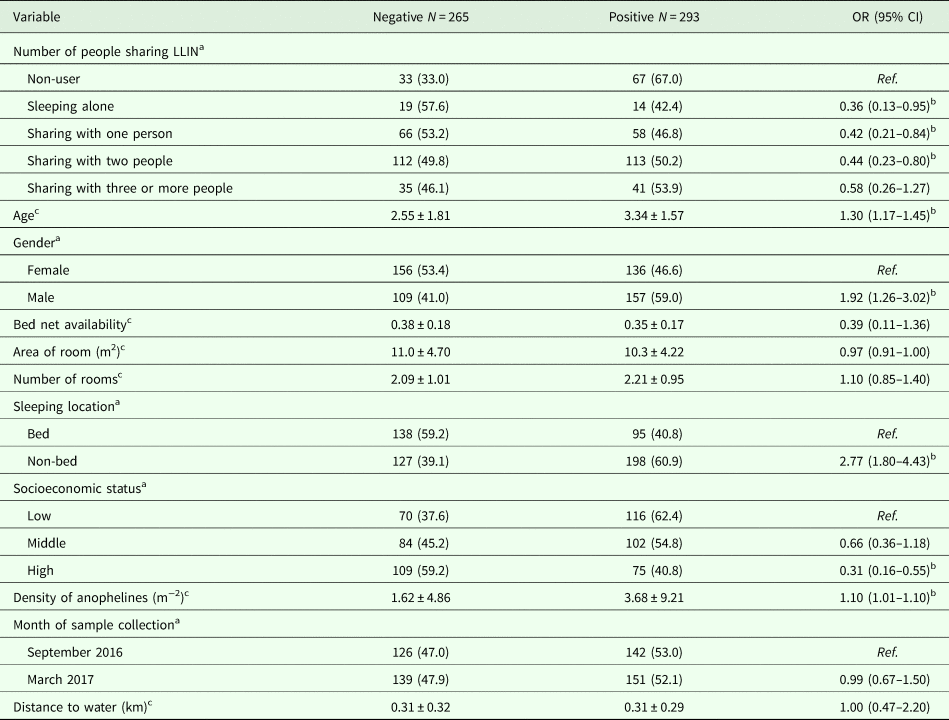
Bivariate logistic regression analyses including a random effect for household revealed that the risk increased as the number of people sharing a net increased although the odds of testing positive was not significantly different for children sharing a net with three and more other persons than not sleeping under a LLIN at all. Other factors that were associated with parasitaemia included age, gender, sleeping location, density of anophelines, high SES and house location (see Table 3).
Results from bivariate logistic regression analyses that measured the impact of the number of persons sharing a net and other explanatory variables on PCR-positive prevalence (N = 558)

A random effect for household was included in the bivariate analyses.
a %.
b Statistically significant.
c Mean ± standard error.
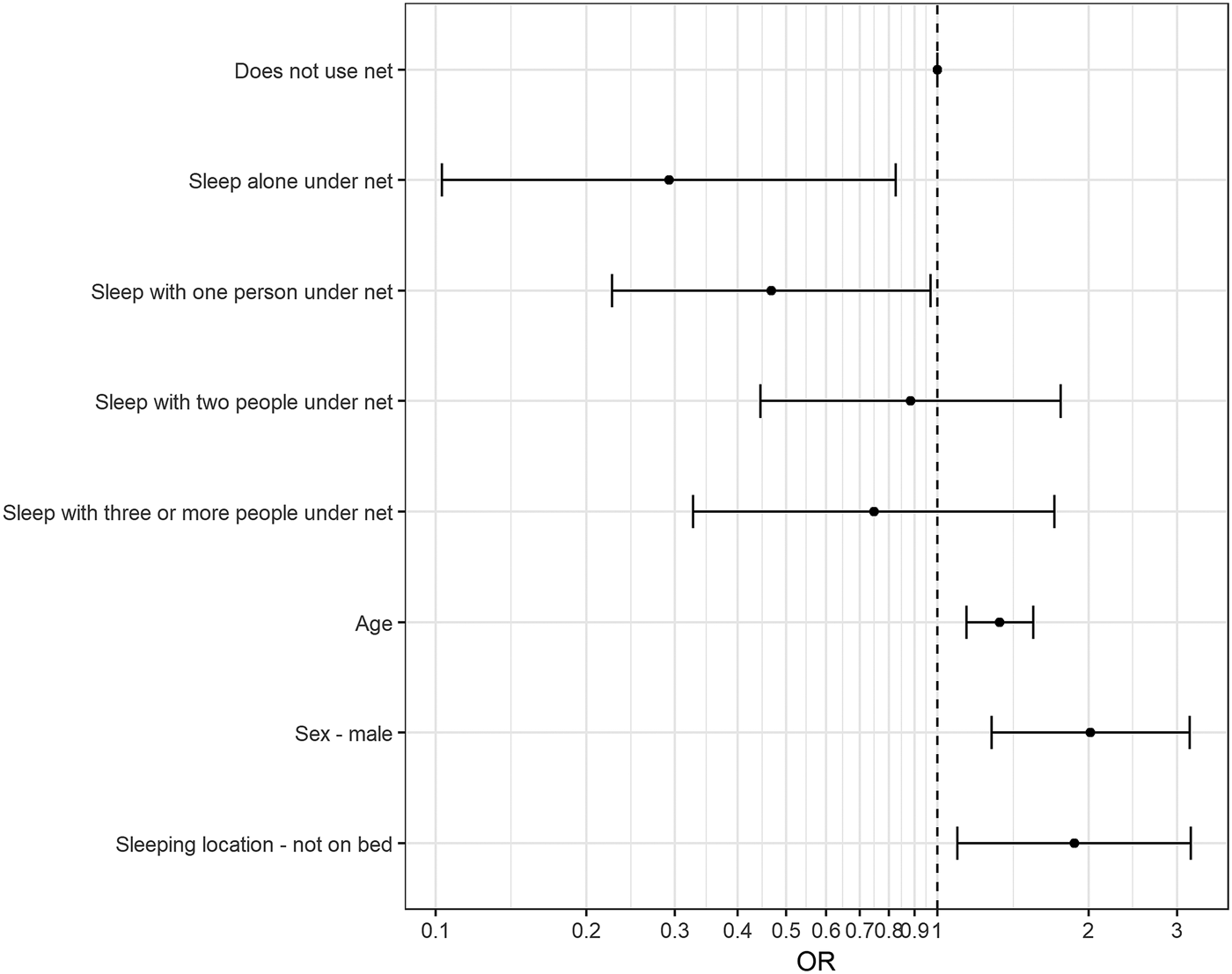
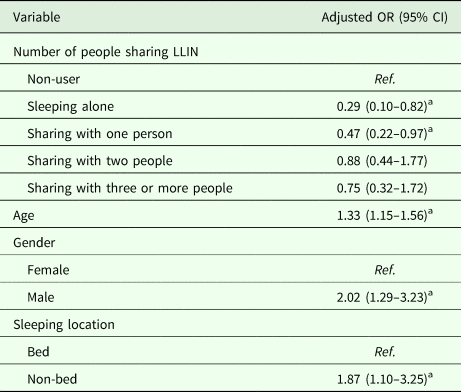
The multivariate logistic regression model of parasitaemia created using model selection included covariates for the number of people sharing a net with the sampled child and three other factors: age, gender and sleeping on a bed vs not (Table 4). Increasing age, male sex and not sleeping on a bed were associated with increased infection risk. For the number of people sharing a LLIN, risk for parasitaemia was only lower than sleeping without a net for those who slept under a net alone or shared it with one other person. The odds of testing positive for parasitaemia for those sharing the net with two or more persons was not different than not sleeping under a LLIN (Fig. 3).
Odds ratios and confidence intervals for parasitaemia given the number of people sharing a LLIN and confounding variables. Parameters were estimated after model selection.

Results from multiple logistic regression analysis that compared the impact of the number of persons sharing a bed net on PCR-positive prevalence with non-bed net users

Parameters were estimated after model selection.
A random effect for household was included in the model, to account for within-household clustering of cases. Missing values in some variables were imputed using a multiple imputation method to allow for the creation of a multiple regression model using all subjects at hand (N = 588).
a Statistically significant.
Discussion
PCR-positive prevalence among children ⩽5 years of age was positively associated with the number of people sharing a net. Most troubling, the risk of parasitaemia in children who slept under a net with two or more people was not significantly different from the risk of not sleeping under a net at all. Although several field studies have confirmed the benefit of bed nets in reducing Plasmodium infection (Lindblade et al., Reference Lindblade, Eisele, Gimnig, Alaii, Odhiambo, Ter Kuile, Hawley, Wannemuehler, Phillips-Howard, Rosen, Nahlen, Terlouw, Adazu, Vulule and Slutsker2004; Noor et al., Reference Noor, Moloney, Borle, Fegan, Shewchuk and Snow2008; Atieli et al., Reference Atieli, Zhou, Afrane, Lee, Mwanzo, Githeko and Yan2011; Minakawa et al., Reference Minakawa, Kongere, Dida, Ikeda, Hu, Minagawa, Futami, Kawada, Njenga and Larson2015), the present study showed that the protective effect of LLINs might be compromised when too many people share them.
Even in the presence of other factors known to increase risk for parasitaemia such as sleeping on the floor (Minakawa et al., Reference Minakawa, Kongere, Dida, Ikeda, Hu, Minagawa, Futami, Kawada, Njenga and Larson2015), age, gender and spatial location, the protective effect of LLINs was cancelled for those children who shared a net with more than two people. This indicates that the compromised effectiveness of LLINs for increased numbers of people sharing them might not be simply a factor of housing conditions, poverty or environmental risk. While further studies should be conducted to uncover the exact reasons for this result, we speculate that this could be due to crowded conditions where limbs sometimes extend outside the nets allowing opportunities for anophelines to bite. It is also possible that with more people sleeping under the nets, more people enter and exit the LLIN during the night, allowing opportunities for anophelines to enter, thus providing extra opportunities to bite and transmit.
These results suggest that the effectiveness is maximized when a child uses a net alone but still protected when sharing the net with one other person so that malaria control programmes which centre on LLINs will be most effective if the WHO recommendation of ‘one net for every two people’ is followed (World Health Organization, 2007; Allen et al., Reference Allen, Muhwezi, Henriksson and Mbonye2017). Of course, this recommendation will not be practical if both parents sleep with an infant or if sleeping spaces in the household are constrained. Placing the child between parents’ bodies may be the solution for reducing the risk for the child, or a larger net may be recommended for families who wish to sleep under the same net (Kawada et al., Reference Kawada, Dida, Ohashi, Sonye, Njenga, Mwandawiro, Minakawa and Takagi2012). Regardless, groups distributing LLINs should take care to make people aware of the increased risks of too many people sharing a net.
If a household possesses few nets, more people will be required to share them. In our study area, even when considering the case of parents sleeping with infants, the ratio of people to nets (3.12 person per net) was far more than the recommendation despite proactive distribution efforts through the local health ministry to ensure universal coverage. While spatial constraints and practical factors will limit the ability of households to allow everyone to sleep under a net, public health groups might consider a smaller target when planning mass distributions of LLINs. For example, public health planners might use a target of 1.8 persons per net as has been proposed in another study, to account for spatial limitation and heterogeneous numbers of family members in households (Kilian et al., Reference Kilian, Boulay, Koenker and Lynch2010). Gender differences and variability in home sizes might suggest that an even smaller target be considered, such as 1.6 persons per net. More work needs to be done to determine an optimal target considering contextual differences in lifestyles and endemicity.
There were several limitations to this study. First, the limited area of the study and the close proximity to the lake might have compromised the generalizability of our results to other contexts, particularly households that are located in inland or highland locations. Second, the parasitaemia status of other people sharing the net with the children in this study was unknown. Third, though we are confident in the validity of our results in this particular context, a larger sample size might have elucidated more precise results of numbers of people sharing nets and parasitaemia risk. Future studies should look at this topic over a number of different transmission contexts and should look at effects of the parasitaemia status of the people sharing nets from all age groups.
This research demonstrated that the risk of P. falciparum infection among children increases with an increase in the number of people sharing a net with them and that the protective effect of a LLIN disappears when more than two people sleep with a child. This evidence suggests that the WHO recommendation of ‘one net for every two people’ is adequate, and that public health groups who plan distributions should take exceptional care to follow it to maximize protection. Public health professionals should also take care to advice recipients of LLINs on the risks of too many people sharing LLINs. However, further studies should be done to account for other factors to optimize this number for holoendemic areas.
Acknowledgements
We thank all the children participated, their parents, local communities and schools for understanding our study; Prof Mark L. Wilson and Dr Toshihiko Sunahara for their critical comments; Ms Junko Sakemoto, Prof Yoshio Ichinose, Ms Yukie Saito, Ms Shizuko Yagi for administrative support; Ms Naomi Sano for PCR analysis; Mr Peter A. Lutiali for mosquito identification; Mr Charles O. Gunga, Ms Lucy Oketch, Mr Fredrick O. Sonye and all the local staff members for their dedication of the fieldwork; Mr Morris Ndemwa of the NUITM – KEMRI Health Demographic Surveillance System for his help in obtaining household and contextual data. This study was conducted at the Kenya Research Center, Institute of Tropical Medicine, Nagasaki University, Japan. This paper is published with the permission of the Director of Kenya Medical Research Institute.
Financial support
This study was partially supported by Global Health Innovative Technology Fund and conducted at the Joint Usage/Research Center for Tropical Disease, Institute of Tropical Medicine, Nagasaki University, Japan.
Conflict of interest
None.
Ethical standards
This study was approved by the Ethics Committees of the Kenya Medical Research Institute (SSC No.3168) and the Ethics Review Committee of Graduate School of Tropical Medicine and Global Health, Nagasaki University (No.12).