Introduction
Some of the most ancient ceramics in the Americas were made in Amazonia. Starting c. 7000 cal BP, different ceramic complexes are found associated with shell mounds, rock shelters and open-air sites in areas such as the Lower Amazon, Guiana and the Atlantic Coast (Roosevelt et al Reference Roosevelt1991; Williams Reference Williams2003; all dates presented here were calibrated in OxCal v.4.4 (Bronk Ramsey Reference Bronk Ramsey2009) using a mixed IntCal and SHCal calibration curve (Marsh et al. Reference Marsh2018) at 95.4% probability). In subsequent millennia, local technologies remain identifiable but, starting c. 5000 cal BP, similar ceramics start to appear in different contexts across Amazonia. Known as the Pocó Tradition (Lima Reference Lima2022), this distinctive pottery displays polychrome painting on highly polished surfaces, modelled appliqués and carinated bodies.
The identification of Pocó ceramics revived earlier debate about the origins of the Saladoid Series of the Orinoco River (Neves et al. Reference Neves and Rostain2014; Barreto et al. Reference Barreto2016). Since the 1970s (Lathrap Reference Lathrap1970; Rouse Reference Rouse1985, Reference Rouse1992), scholars have attempted to correlate the chronology and the stylistic diversity of Amazonian ceramics with patterns in the Orinoco Basin and Caribbean islands. Based on morpho-stylistic features, Amazonian ceramic sequences were classified in regard to those of the Orinoco (Lathrap Reference Lathrap1970), the Saladoid and Barrancoid Series (Cruxent & Rouse Reference Cruxent and Rouse1958; Rouse & Cruxent Reference Rouse and Cruxent1963), to establish potential connections. This led some scholars to treat these complexes as part of a ‘Saladoid-Barrancoid tradition’, however the existence of which was never fully debated in the literature. In South American archaeology, ‘series’ (Cruxent & Rouse Reference Cruxent and Rouse1958) and ‘tradition’ (Lathrap Reference Lathrap1970) are concepts used to indicate ceramic assemblages with formal similarities in style or shares attributes that may indicate a historical relationship.
Lathrap (Reference Lathrap1970) identified similarities among ceramics found across Lowland South America: attributes shared by the Early Tutishcainyo complex from the Ucayali River in the Upper Amazon, dating to c. 4000 cal BP, and the Saladoid and Barrancoid Series (as described by Cruxent & Rouse Reference Cruxent and Rouse1958; Rouse & Cruxent Reference Rouse and Cruxent1963), in the Middle and Lower Orinoco River (Venezuela), include carinated bowls, zoned-incised hatching and punctuation alongside red and white painting. This hypothesis suggested that the wide distribution of sites with similar ceramics represented an archaeological correlate for the expansion of Arawak-speaking populations from the Amazon to the Orinoco Basin (Lathrap Reference Lathrap1970; see Heckenberger Reference Heckenberger2005). However, conflicting archaeological approaches (e.g. Meggers & Evans Reference Meggers, Evans and Jennings1983) and distinct national academic traditions prevented a systematic comparison and synthesis of Amazonian ceramics.
This article uses new data from excavations and the analysis of ceramics stored at North American (Yale Peabody Museum) and Brazilian institutions (Emílio Goeldi Museum; Museum of Archaeology and Ethnology, University of São Paulo; and Mamirauá Institute) to reframe the connection between Pocó and Saladoid ceramics. Such an understanding provides vital information about the movement of people, pottery variability and technological transmission, contributing to a growing awareness of the long-term indigenous history of the Amazon and Caribbean. Through a re-evaluation of evidence using techno-morphological and stylistic ceramic analyses, we propose that the Pocó-Saladoid connection should be understood as a broad, inter-related process with continental dimensions that created regional spheres and long-distance networks.
La Gruta and the Saladoid origins
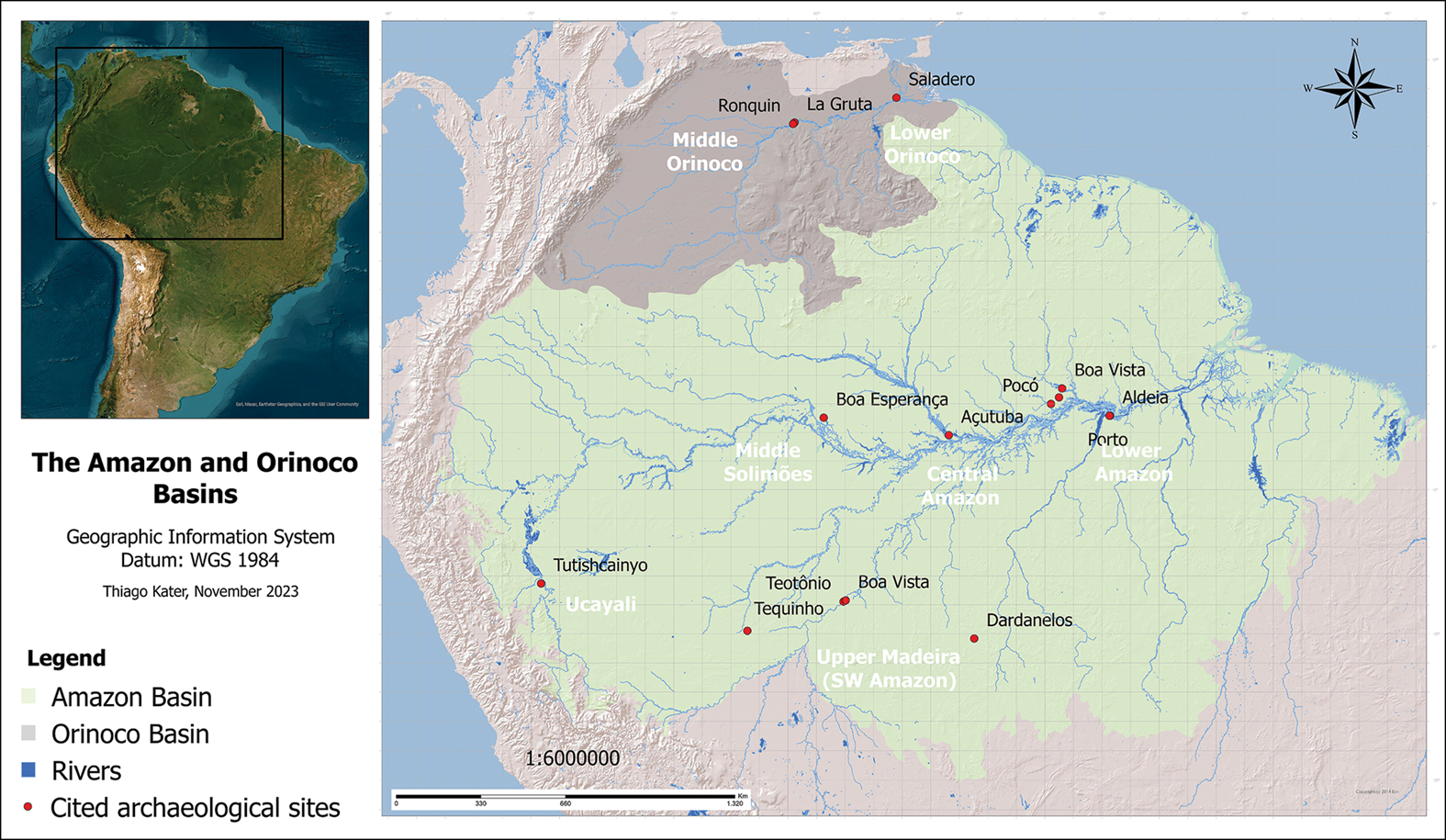
From an Orinoco/Caribbean perspective, Rouse (Reference Rouse1992) acknowledged Lathrap’s hypothesis but argued that there was not enough evidence to understand potential connections between places so far from each other. Although he included the Amazon Basin in his model of the Arawak-speakers’ migration, Rouse (Reference Rouse1992) restricted the connection to the Saladoid Series in northern South America and the Caribbean (Figure 1). A closer integration with Amazonian archaeology was prevented due to conflicting chronologies and ceramic sequence for the Orinoco. ‘Long’ and ‘short’ chronologies developed from concerns about the reliability of radiometric (e.g. radiocarbon, thermoluminescence) dates given the potential for charcoal contamination, technological ceramic variability and stratigraphic disturbance.
The Amazon and Orinoco basins with referenced archaeological sites and regions (figure by T. Kater).

Figure 1 Long description
A map of the Amazon and Orinoco basins highlighting archaeological sites and regions. The map shows the geographic information system of the Amazon and Orinoco basins, with the Amazon Basin in light green and the Orinoco Basin in light brown. Rivers are marked in blue. Cited archaeological sites are indicated with red dots. Key locations include Saladero, La Gruta, Ronquin, Boa Esperanca, Pocó, Boa Vista, Aldea, Porto, Acutuba, Central-Amazon, Middle Solimoes, Upper Madeira, Dardanelos, Teotonio, Boa Vista, Tutishcainyo, and Ucayali. The map also includes an inset of South America highlighting the area covered by the main map.
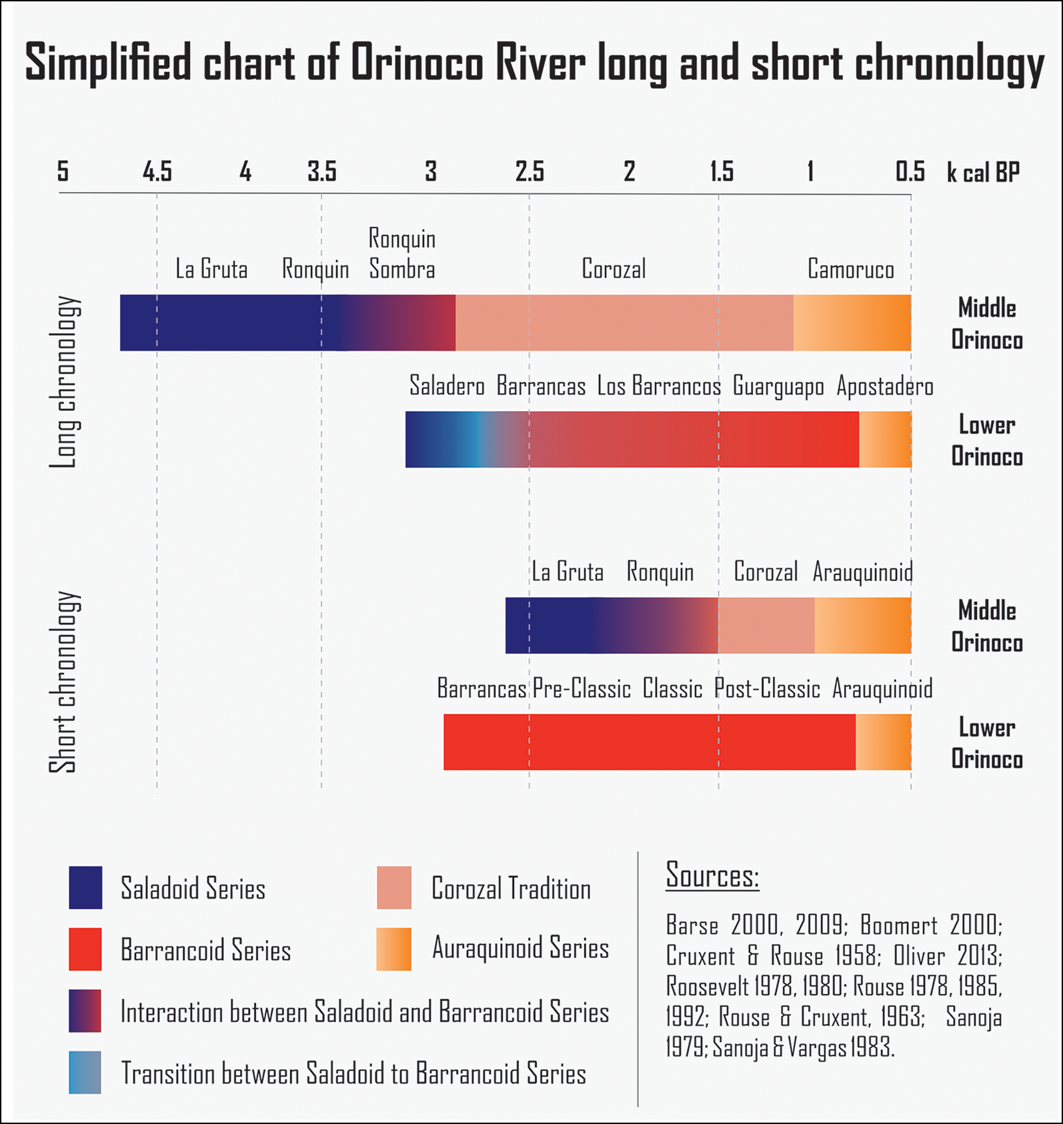
The long chronology (Rouse & Cruxent Reference Rouse and Cruxent1963; Roosevelt Reference Roosevelt, Wagner and Zucchi1978, Reference Roosevelt1980; Rouse Reference Rouse1985) claims a deep antiquity for the emergence of sedentary life in the Middle Orinoco, associated with the La Gruta ceramic complex (Roosevelt Reference Roosevelt, Wagner and Zucchi1978). For this model, the La Gruta ceramics date back to 4090±105 BP (I-8970: 4845–4292 cal BP) and represent an ancestral lineage for both the Saladoid and Barrancoid Series.
For Rouse and Cruxent (Reference Rouse and Cruxent1963) and Roosevelt (Reference Roosevelt, Wagner and Zucchi1978), these Middle Orinoco ceramists migrated downriver to the Lower Orinoco c. 3000 cal BP and established new occupations associated with the Saladero complex—a component of the Saladoid Series, which expanded east along the Guianas coast before reaching the Antilles (Rouse Reference Rouse1985). The further development of the Saladero complex would then generate the Barrancoid Series of the Lower Orinoco (Rouse Reference Rouse, Wagner and Zucchi1978). Meanwhile, the Middle Orinoco remained occupied by Saladoid ceramic producers of the Ronquín and Ronquín-Sombra complexes, which were eventually influenced by the Barrancoid Series (Roosevelt Reference Roosevelt1980).
Alternatively, the time depth of the Saladoid Series in the Middle Orinoco may have been overestimated (Sanoja Reference Sanoja1979; Sanoja & Vargas Reference Sanoja and Vargas1983; Barse Reference Barse2000, Reference Barse2009). Although La Gruta is still considered the earliest ceramic complex of the Middle Orinoco chronology, excavations at the eponymous site revealed a much later chronology, starting around 2500 BP (Sanoja & Vargas Reference Sanoja and Vargas1983; no details of calibration provided). Dates obtained from carbonised organic material from Ronquín phase ceramics fell at 1720±60 BP (Beta-69592: 1725–1422 cal BP; Barse Reference Barse2000), notably later than would be expected in the long chronology model.
These recent dates for the Middle Orinoco would imply a complete revision of the Orinoco River cultural sequence and an independent initial cultural history for the Middle and Lower Orinoco (Sanoja & Vargas Reference Sanoja and Vargas1983; Barse Reference Barse2000, Reference Barse2009). The Saladero complex would appear later, an intrusive ware deposited into strata of the Barrancas/Preclassic-Barrancas, the oldest occupation at the Saladero site (Barse Reference Barse2009) (Figure 2). This would mean that the Saladoid and Barrancoid Series did not have a common origin in La Gruta, and that the Barrancoid Series could have originated elsewhere in northern South America during the adoption of agriculture and was subsequently brought to the Orinoco delta (Sanoja Reference Sanoja1979).
Models for the pre-Columbian Orinoco chronology (figure by authors).

Besides chronological disputes, La Gruta ceramics may lack certain morphologies—open bowls with flanges, annular bases, complex modelling-incisions (Sanoja Reference Sanoja1979; Sanoja & Vargas Reference Sanoja and Vargas1983; Barse Reference Barse2000)—that define the Barrancoid style (Cruxent & Rouse Reference Cruxent and Rouse1958). Pottery in the Middle and Lower Orinoco potentially also differ in both execution and conception, despite sharing decorative techniques (such as wide and fine incisions and polychrome painting) (Sanoja Reference Sanoja1979).
Boomert (Reference Boomert2000: 110–25), who otherwise agrees with the long chronology, discards the notion that the Barrancoid Series derives from the Saladoid Series. Oliver (Reference Oliver and Rostain2013), who revisited the collection and Rouse’s fieldwork notes, produced new radiocarbon dates that support occupation of the Saladero site since 3080±25 BP (OxA-28166: 3358–3182 cal BP), and suggests that Saladero is not an intrusive ware related to the Barrancoid period but a Saladoid style (Oliver Reference Oliver and Rostain2013).
Hence, the Orinoco chronology is far from a consensus. While we cannot assume either chronology is correct, we consider the La Gruta complex a pertinent case study as it is a well-accepted ancient Saladoid component, regardless of when its production begins and whether it later gave rise to the Barrancoid Series. Furthermore, scholars advocating for both chronologies agree that La Gruta settlements were villages established along riverbanks, reliant on horticulture, fishing and hunting (Roosevelt Reference Roosevelt, Wagner and Zucchi1978; Sanoja & Vargas Reference Sanoja and Vargas1983).
The Pocó Tradition
Moving into the Amazon Basin, earlier painted ceramics were found for the first time along the Trombetas and Nhamundá rivers, at Pocó and Boa Vista sites in the Lower Amazon (Hilbert & Hilbert Reference Hilbert and Hilbert1980). The Pocó phase was initially dated between 3280±45 BP (Hannover 7452: 3573–3381 cal BP) and 1835±115 BP (Hannover 8028: 2001–1425 cal BP), although the oldest dates were considered too early and discarded (Hilbert & Hilbert Reference Hilbert and Hilbert1980). The predominance of bowls and carinated vessels were taken to indicate some affinity with the Barrancoid Series, despite the presence of paintings that do not fit with the techno-stylistic patterns of the Orinocan assemblage (Hilbert & Hilbert Reference Hilbert and Hilbert1980: 8). No attempt to correlate the Pocó phase with the Saladoid Series was made.
Later, excavations at other sites, such as Cipoal do Araticum, in the Lower Amazon, obtained a Pocó chronology ranging from 4180±70 BP (Beta-232413: 4850–4450 cal BP) to 1700±40 BP (Beta-231419: 1701–1428 cal BP), leading to the reconsideration and acceptance of the early dates for the Pocó phase (Guapindaia & Fonseca Reference Guapindaia and Fonseca2013). More recent dates, such as 2090±30 BP (No lab code provided: 2150–2000 cal BP), have also been obtained in the Lower Amazon (Panachuk Reference Panachuk2016). Research at the confluence of the Negro and Solimões rivers (Central Amazonia) further identified similarities between the local Açutuba phase and Pocó ceramics, presenting a chronology starting around 2310±120 BP (Beta-143597: 2706–2009 cal BP) and lasting up to 1580±40 BP (Beta-242441: 1469–1297 cal BP) (Lima Reference Lima2008). Comparative efforts have suggested then a widespread process of ceramic adoption throughout the Amazon Basin, with chronological and technological similarities suggesting a Pocó-Açutuba (Neves et al. Reference Neves and Rostain2014) or Pocó Tradition (Lima Reference Lima2022).
Further research at the confluence of the Amazon and Tapajós rivers, identified Pocó pottery at the Aldeia and Porto sites, dating between 3260±30 BP (Beta-322223: 3560–3440 cal BP) and 1800±40 BP (Beta-283903: 2070–2280 cal BP) (Gomes Reference Gomes2011; Alves Reference Alves2012). Towards the Middle Solimões River, local Pocó pottery dates between 2690±30 BP (Beta-321192: 2848–2744 cal BP) and 2180±30 BP (Beta-599215: 2307–2015) at Boa Esperança site (Costa Reference Costa2012).
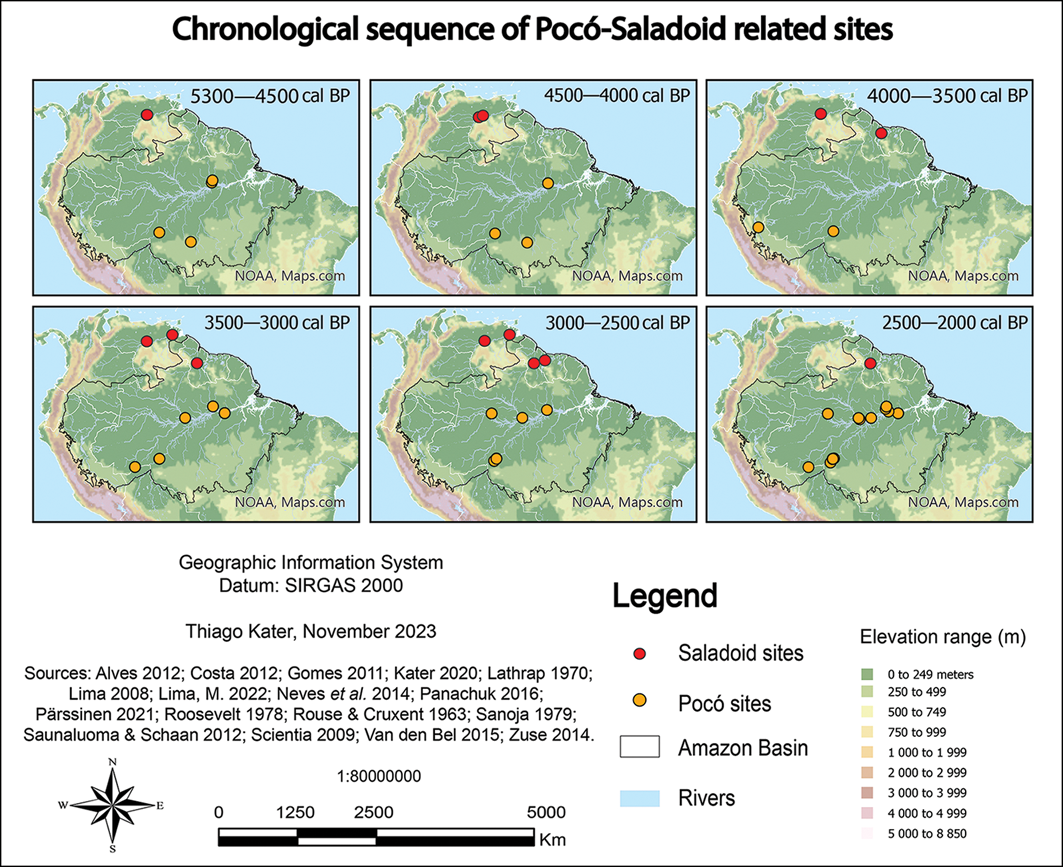
In the south-western Amazon, polychrome and carinated-body ceramics excavated from geometric earthworks, such as at Tequinho, potentially date from c. 3000 cal BP, and are also likely associated with the Pocó Tradition (Saunaluoma & Schaan Reference Saunaluoma and Schaan2012; Pärssinen Reference Pärssinen2021; Pessoa et al. Reference Pessoa2024). In the Upper Madeira River, ceramics with Pocó characteristics at the Boa Vista and Teotônio sites push the chronology back to between 4470±40 BP (Beta-294080: 5300–4960 cal BP) and 1811±34 BP (OxA-32968: 1816–1605 cal BP) (Zuse Reference Zuse2014; Bentley et al. Reference Bentley2025). Finally, dates from 4370±60 BP (Beta- 244672: 5275–4828 cal BP) were obtained from material potentially associated with the Pocó Tradition at Dardanelos, on the Aripuanã River (Scientia 2009) (Figure 3).
Chronological sequence of Pocó-Saladoid related sites (figure by T. Kater).

Figure 3 Long description
A map showing the chronological sequence of Poc-Saladoid related sites in the Amazon Basin over different time periods. The map is divided into six panels, each representing a different time period: 5300-4500 cal BP, 4500-4000 cal BP, 4000-3500 cal BP, 3500-3000 cal BP, 3000-2500 cal BP, and 2500-2000 cal BP. Each panel shows the locations of Saladoid sites marked with red circles and Poco sites marked with orange circles. The map also includes a legend indicating the elevation range in meters, with different colors representing different elevation ranges. The Amazon Basin is outlined in white, and rivers are shown in light blue. The map is based on a Geographic Information System with the datum SIRGAS 2000 and includes sources from various studies.
Although we do not discard the earliest Pocó evidence (c. 5000–3500 cal BP), we propose caution; more radiocarbon dates from more secure contexts are needed to confirm this antiquity. Further efforts are also necessary to clarify regional techno-stylistic variability and potential regional interactions. Although polychrome painting and a diversity of decorations are frequent across the Pocó assemblage, as is the generalised presence of small carinated bowls and complex vessel shapes, some characteristics differ greatly between contexts. Biomorphic modelled ornaments, for example, are frequent in the Central Amazon (Lima Reference Lima2008; Neves et al. Reference Neves and Rostain2014: 147) and almost absent in the Upper Madeira River (Kater Reference Kater2020; Zuse et al. Reference Zuse2020). Pocó sites also share settlement patterns, characterised by sedentary riverine villages and the dissemination of soil- and residue-management technology that produced Anthropogenic Dark Earths (ADEs: anthropogenic dark-coloured sediments that are very fertile and contain large volumes of charcoal) (Neves et al. Reference Neves and Rostain2014). Many of these sites are also associated with landmarks such as waterfalls, river confluences and lakes (Kater Reference Kater2020; Lima Reference Lima2022).
Similar technological pattern for Pocó and La Gruta ceramics
Shared technological features between the earliest Saladoid-related style and the Pocó assemblages across the Amazon suggest social and historical connections among indigenous pot-making societies. We analysed the La Gruta/Saladoid collections stored at the Yale Peabody Museum (YPM) (New Haven, USA) and Pocó collections stored in Brazil at the Museum of Archaeology and Ethnology of the University of São Paulo, Emilio Goeldi Museum (Belém) and the Mamirauá Institute for Sustainable Development (Tefé). Published data pertaining to these ceramics were also considered.
Our analysis, and the comparison between assemblages, uses methods of pottery production and the identified archaeological sequences as proxies for shared histories of learning (communities of practice) and the formation of stable technological lineages (Gosselain Reference Gosselain2000; Roux Reference Roux2019). The reconstruction of pottery chaîne opératoires is challenging and needs to be combined with more conventional approach to shape and design in regions of the world, like Amazonia, where archaeological studies are relatively sparse. As Gosselain (Reference Gosselain2017) argues, pottery traditions are aggregates of many layers of social learning and different scales of knowledge transmission. In this way, all attributes related to manufacture—such as selection, preparation, fashioning and finishing (Roux Reference Roux2019)—and visual style are fundamental resources for unveiling complex and multi-scale historical processes.
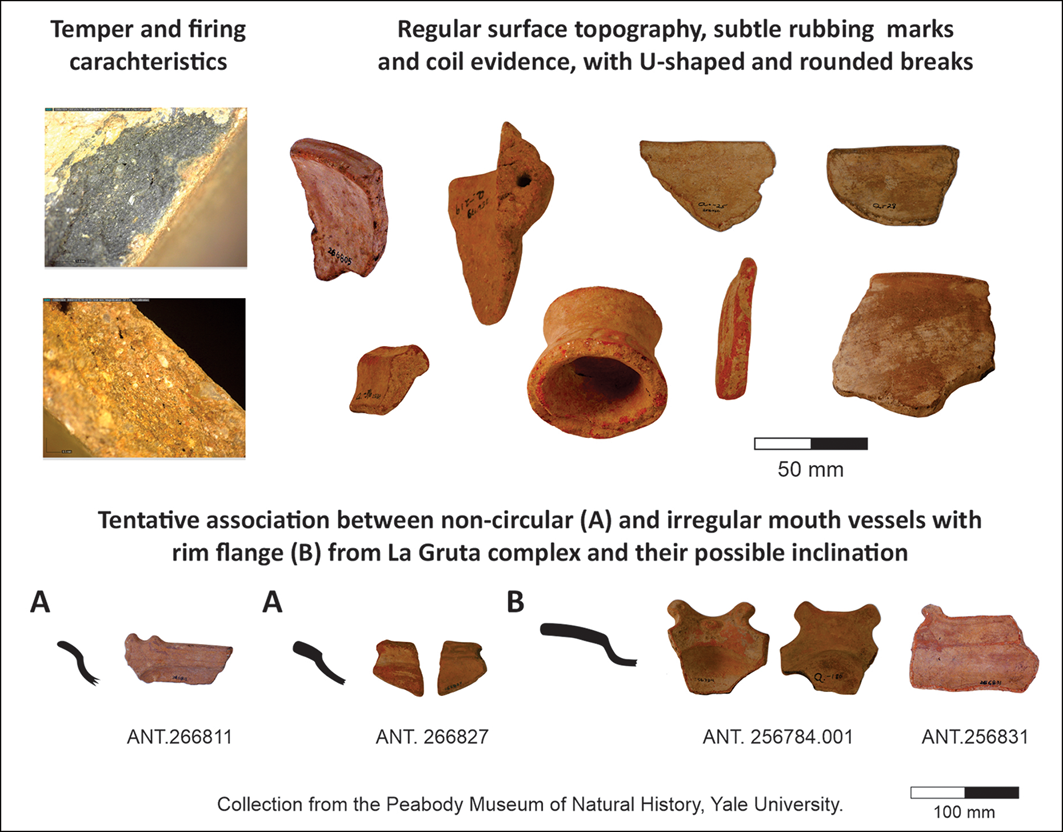
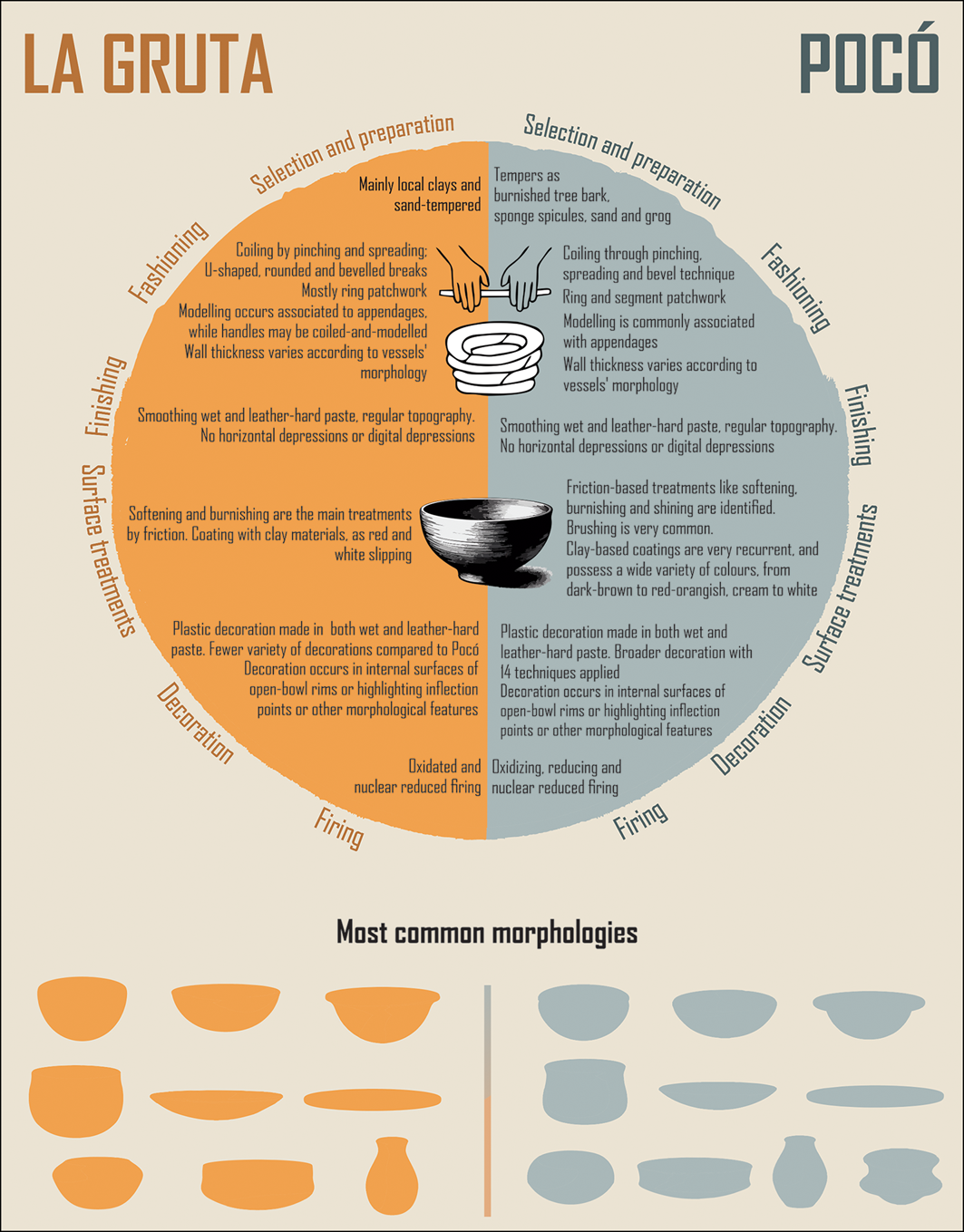
The analysed La Gruta complex material derives from Rouse’s excavations at the eponymous site in 1974. According to files in the YPM Anthropology Division, Rouse selected a type-collection for the material himself, applying the most diagnostic elements as selection criteria. La Gruta ceramics are sand tempered, with small amounts of fibre and grog temper. Elemental data, derived from portable x-ray fluorescence analysis conducted at the YPM using an Olympus Vanta VMR instrument (x-ray beam diameter approximately 8mm (50mm2), voltage 40kV), following the protocols of Frahm (Reference Frahm2018), suggest nearby raw-material sources, with few outliers in the sample (see online supplementary material (OSM) for data). Coiling by pinching and spreading is the main fashioning technique, visible in the predominant rounded breaks, although the presence of bevelled technique can be inferred in some cases. Coil-forming procedures are related to ring patchwork. Modelling occurs in association with appliqués, while handles may be coiled-and-modelled. A very regular topography in both surfaces indicates that coil joints were performed on wet paste.
Identified finishing techniques involved the smoothing of wet and leather-hard paste, achieved by applying pressure in a smoothing motion with the hand or tools like scrapers. Almost no horizontal or digital depressions were identified. Wall thickness varies according to the morphological feature: typically, thin for the body and thicker at the base and for the rims of certain vessel types. It is possible to observe surface treatments involving either rubbing or coating. Softening and burnishing by friction are the most common treatment, while coating with clay materials, such as red and white slip, was also used. The pots are well fired, mostly in oxidated atmospheres, despite the presence of incomplete oxidation. No kilns were reported during the archaeological survey of La Gruta.
Linear and curvilinear incisions made with sharp and round-tipped tools and incised-dots are the most common forms of plastic decoration, made in both wet and leather-hard paste. These techniques may be applied individually or in the creation of bands. Combination of repeated techniques also occurs as motifs, which are mostly, but not always, geometric. White, red and white-on-red painting occurs, sometimes in association with the incisions (Roosevelt Reference Roosevelt, Wagner and Zucchi1978, Rouse Reference Rouse, Wagner and Zucchi1978).
Decoration occurs preferentially on internal surfaces of open-bowl rims or on non-circular/irregular vessel mouths, external rim edges and necks, highlighting inflection points or other morphological features. Modelled vertical strap handles and zoomorphic modelled appliqués, including the heads of tapirs, rodents, bats and monkeys, are usual, occurring on the exterior of bowls. Individual or paired spherical appendices display deeply incised dot applications. Use-alteration evidence associated with cooking, such as soot, is rare (Figure 4).
Collection Ceramic sherds from La Gruta complex stored at the Peabody Museum of Natural History, Yale University (figure by T. Kater).

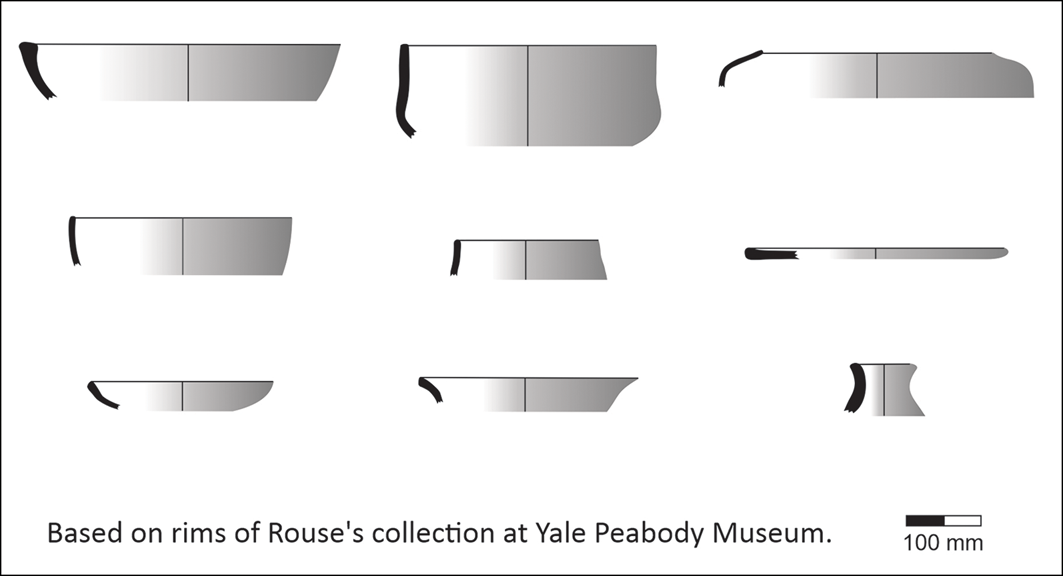
It was possible to reconstruct eight form types involving both simple and complex shapes. Open bowls are the most common form; these can be deep or shallow and occur in a diverse size range. Rim shapes are variable, including flat-topped, triangular and rounded types, and are generally thicker than the walls. Vertical rims produced bowls with nuanced curvatures, achieving large diameters and variable volumes. Another bowl shape has a straight rim with a prominent angle in the direction of the base; it is also commonly associated with handles, lugs and biomorphic appliqués. Large and medium-sized short-necked jars with restricted mouths, as well neckless restricted pots, are also represented in the collection. An entire bottleneck was identified. Fragments of griddles—flat-surfaced plates that can reach over 1m in diameter used for preparing and cooking foods like tapioca—are also present. In general, these reported features match earlier descriptions of La Gruta assemblage (Roosevelt Reference Roosevelt, Wagner and Zucchi1978; Rouse Reference Rouse, Wagner and Zucchi1978; Sanoja Reference Sanoja1979) (Figure 5).
La Gruta complex morphological reconstructions (drawings prepared by T. Kater at Peabody Museum of Natural History, Yale University, from La Gruta collections).

Rouse (Reference Rouse, Wagner and Zucchi1978), Roosevelt (Reference Roosevelt, Wagner and Zucchi1978) and Sanoja (Reference Sanoja1979) argued about the absence of rim flanges or ‘bell-shaped’ vases in the collection. We argue that two rims in the YPM collection could tentatively be associated with this form (labelled A in Figure 6). Some of the irregular-mouth vessels and some appendices could also relate to a kind of rim flange, although occasionally this does not extend throughout the entire vessel circumference (labelled B in Figure 6). Successful production of the angled contours associated with these rims must have included multiple technical steps. Drying stages are necessary to strengthen not only the vessel’s structure but also the coil from which the flange was fashioned, preventing it from succumbing to its own weight. Most likely, once dried to leather hardness, the edge of the upper body coil was incised and coated with either a clay slurry or a thin slab of drier material to support the new flange/appendix component. These technological skills are absent in earlier ceramic assemblages from the South American Lowlands, indicating a remarkable change during the Pocó-Saladoid period.
La Gruta complex technological characteristics (figure by T. Kater).

Figure 6 Long description
Panel A: Several pottery shards with different shapes and sizes, labeled with identifiers such as ANT.266811 and ANT.266827. The shards exhibit various temper and firing characteristics, with visible marks and breaks. Panel B: Additional pottery shards, labeled with identifiers such as ANT.256784.001 and ANT.256831, showing irregular mouth vessels with rim flange. The shards are arranged to illustrate their possible inclination and association with non-circular vessels.
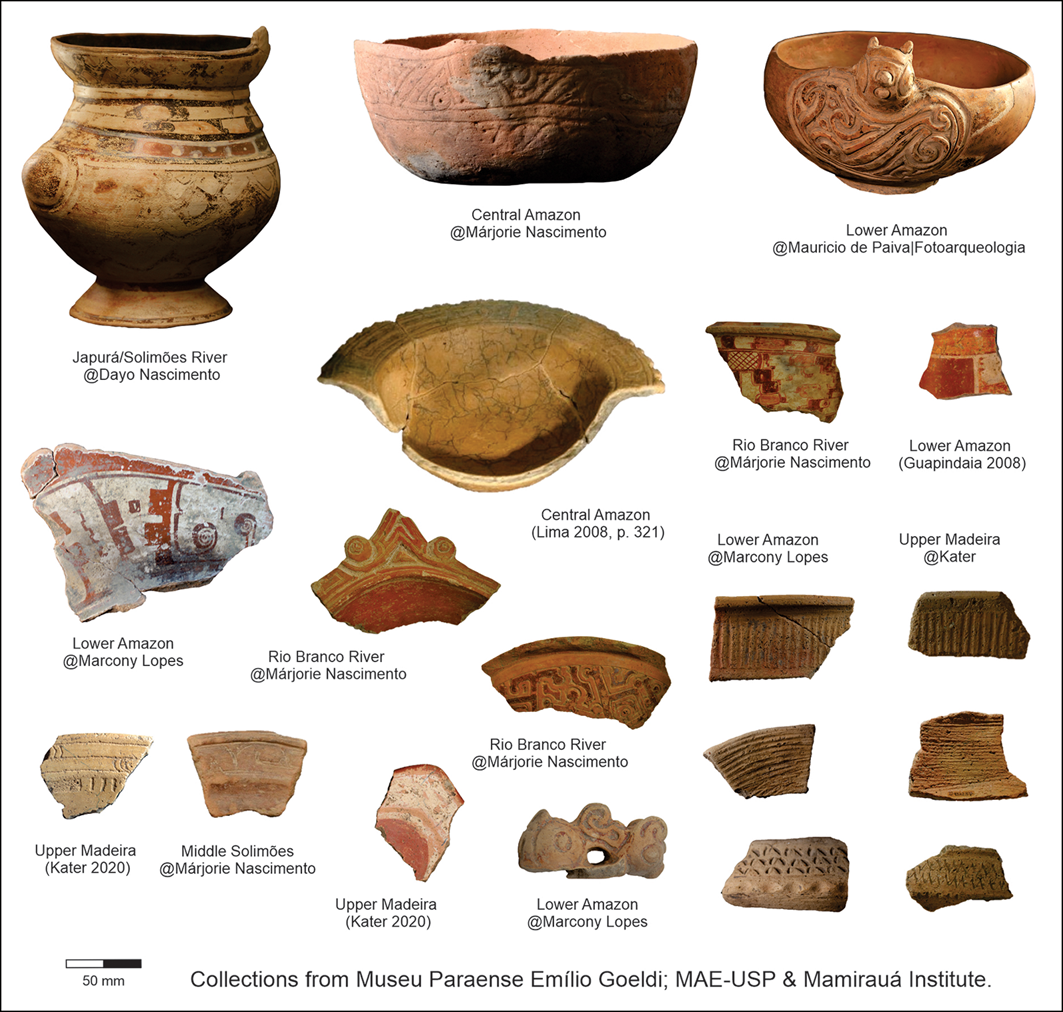
As the wide dispersion of Pocó ceramics was only recently acknowledged (Neves et al. Reference Neves and Rostain2014), there is, as yet, no systematic comparison of the assemblage’s variation (although see Lima Reference Lima2022), though ceramics from some regions bear more similarities than others. The fabrics are mainly characterised by the inclusion of tree-bark ash (caraipé), sponge spicules (cauixi), sand and grog. The roughing-out method combines a modelled disc for the base and coiling through pinching, spreading and bevelling for the walls, as indicated by the predominant rounded fractures, as well as bevelled fractures. Flatted coils/thin slabs were added to certain sections of the vessels as flanges. The coil-forming procedures are probably related to ring and segment patchwork. Modelling is commonly associated with appliqués. Preforming techniques are related to pressure and involve scraping and shaping with the continuous application of pressure, both by the hands and by tools such as scrapers, to both wet and leather-hard paste.
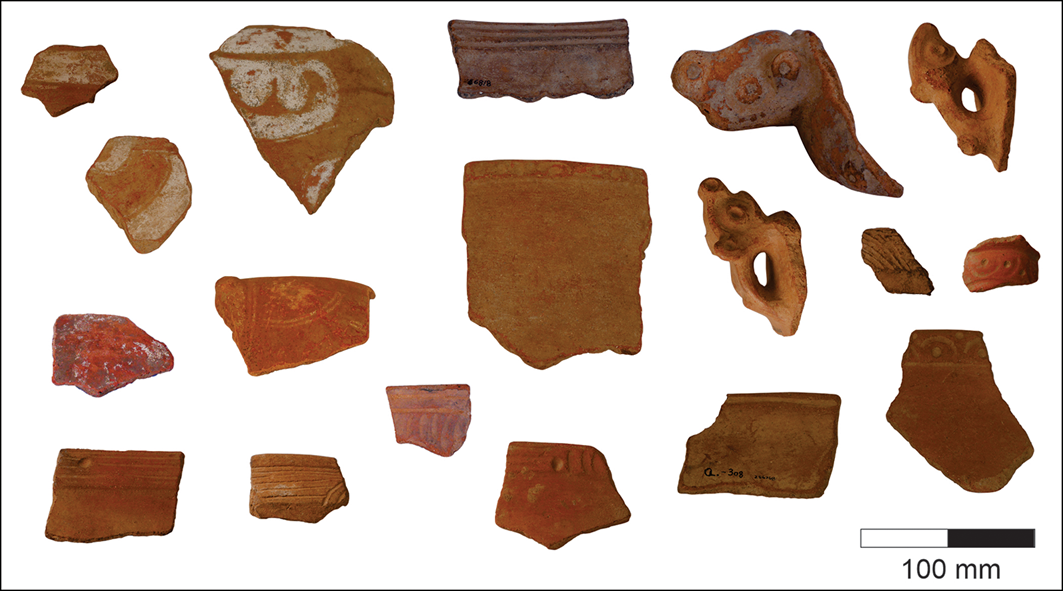
Finishing techniques include smoothing the wet and leather-hard clay. Horizontal or digital depressions are rarely observed. Brushing is common, either as irregularly brushed wet to leather-hard paste or horizontally regular brushed wet paste. The tools applied in each case vary. Wall thickness varies based on morphological features; typically, thinner in the body walls and thicker at the bases or rims of specific vessel types. Surface treatments include rubbing and coating. Friction-based treatments like softening, burnishing and shining are identified. Clay-based coatings are recurrent, and possess a wide variety of colours, from dark brown to red-orange, cream to white (Figure 7).
Examples of Pocó ceramics (figure by authors).

The vessels are generally fired in both oxidising and reducing atmospheres. In many Pocó assemblages, firing core sections with thin sharp margins indicate firing in a reduced atmosphere followed by the rapid removal of vessels from this setting and their cooling in the open air (see Rye Reference Rye1981: 116).
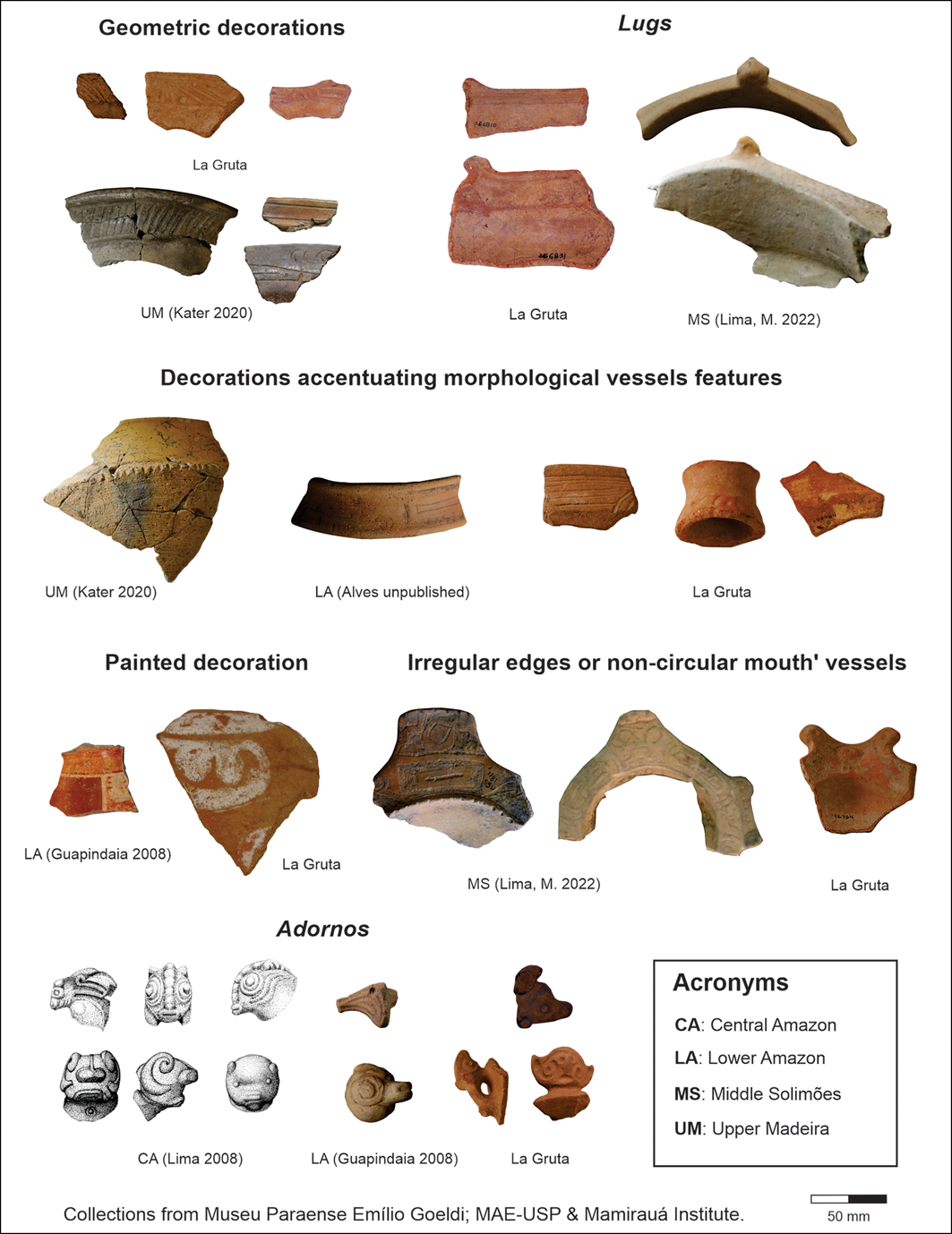
Pocó ceramics have more varied decoration techniques when compared to La Gruta ceramics. Shared motifs and techniques include incisions made with sharp and round-tipped tools and incised dots. Excision, corrugation, ungulation, brushing and scraping are identified only in the Pocó assemblage. Painting in red, black and white associated with plastic and painted decoration are commonly shared features as well.
Most decorations are found above the inflections and close to the rims and on internal surfaces of open-bowl rim vessels in both La Gruta and Pocó ceramics. Pocó motifs are generally geometric and include parallel, circular, volute and hatched-zoned lines, commonly found in areas delimited by incisions; while modelled zoomorphic appliqués are frequent and placed at the rims (Figure 8).
Summary comparison of Pocó and La Gruta ceramics (figure by authors).

Figure 8 Long description
Panel A: Geometric decorations including pieces with parallel, circular, volute, and hatched-zoned lines. Panel B: Lugs with various shapes and sizes. Panel C: Decorations accentuating morphological vessels features, including pieces with incisions and modelled appliqués. Panel D: Painted decoration on ceramic pieces. Panel E: Irregular edges or non-circular mouth vessels with unique shapes. Panel F: Adornos, which are small ceramic figurines and appliqués.
Soot is also rare in Pocó ceramics, while internal erosion caused by fermented beverages is identified. Open bowls are frequent, many with flanged rims—such ‘bell-shaped’ vases are a diagnostic component of Pocó ceramics. Vessels with non-regular mouths are present. In the Upper Madeira River, despite poor preservation of the earliest Pocó ceramics (tentatively c. 5000 cal BP), rim flanges were already present at the Boa Vista site (Zuse Reference Zuse2014). The same is seen in the Lower Amazon River (Guapindaia Reference Guapindaia2008). Small and medium-sized bowls are also typical in these occupations, normally associated with prominent inflections, as in the La Gruta complex.
Neckless, restricted pots and short-necked jars with restricted mouths occur at a low frequency in several contexts related to the Pocó occupations. Griddles are recurrent, as are flanges and carinated-body vessels, another shared Pocó-Saladoid trait. Necked jars are also identified in most Pocó contexts. Although there are numerous morphological similarities in these vessel types observed in both La Gruta and Pocó contexts, some differences are also apparent. For example, some of the carinated-body vessels in some Pocó contexts have a constricted mouth, while in others these angles are accentuated by the addition of mesial flanges—traits that were not present in La Gruta vessels (Figure 9).
Pocó and La Gruta technological comparison (figure by authors).

In both Pocó and La Gruta ceramics, vessel morphology suggests functions for individual or collective consumption. Most open bowls have small capacities (less than five litres), with few examples of large cooking pots and storage vessels. Griddles are the exception here, representing some of the earliest examples of this type of artefact in Amazonia.
Discussion
The earliest pottery complexes in South America, preceding Pocó and Saladoid traditions, seem to have been unrelated to one another (Roosevelt et al. Reference Roosevelt1991; Williams Reference Williams2003). Pocó and La Gruta ceramics, however, seem to constitute a relatively homogeneous technological and morpho-stylistic tradition emerging at least around 3500 BP in the Amazon and Orinoco basins. We argue that this widespread emergence and dispersion of the polychrome pottery technology is due to a common origin.
Chronology is a challenge as virtually contemporaneous dates for geographically distant sites prevent the identification of an initial centre for Pocó-Saladoid ceramic production or even the general orientation of these networks. Possible alternative interpretations of these ceramics involving parallel innovation or functional convergence do not appear convincing in face of the evidence. Even considering the ‘short’ chronology for the Orinoco and discarding the oldest Pocó dates, the degree of similarity in ceramic technology shared among cited contexts from c. 3500 cal BP is remarkable for contemporaneous and early ceramic assemblages. To explain this large geographic distribution, we suggest two main mechanisms: migration and interaction networks.
Material culture can offer different perspectives on how these shared techno-styles emerged at both the macro and micro levels (e.g. Mol Reference Mol, Hofman and Duijvenbode2011). The socially valuable exchange for prestige-based competition or specialised materials could result in higher similarity of specific goods, as observed for jade jewellery and personal ornaments (Waldron Reference Waldron2018). However, this does not necessarily indicate that economic factors were the primary force behind interaction spheres, as exchange could also be influenced by religious, social or political elements, or a blend of these, particularly when symbols and rituals hold greater significance (Burger Reference Burger, Silverman and Isbell2008). Even considering migration cases, similarity in material culture is not guaranteed, as this depends on the migrants having the necessary skills and access to the same raw materials to craft similar homeland products (Rouse Reference Rouse1992). The persistence of similar technological patterns depends on their maintenance and a degree of interaction with the homeland region over time, although a common origin may generate strong similarities initially (Bellwood Reference Bellwood1996)—as we propose to explain the Pocó and La Gruta singular phenomenon.
Rouse (Reference Rouse1992) proposed that Saladoid ceramics were produced by Arawak-speaking groups that moved from the Orinoco towards the Caribbean and the coast of Venezuela and Guianas, c. 2800 cal BP, where local groups displayed completely different ways of life, a hypothesis recently supported by ancient DNA (Nägele et al. Reference Nägele2020). Similarly, Lathrap (Reference Lathrap1970) and Heckenberger (Reference Heckenberger2005) argued that early polychrome ceramics were part of the dispersion of the Arawak language family throughout northern South America. Although proposed connections between observed distributions of archaeological material and models of linguistic dispersions should always be treated with caution, it now seems probable that at least part of the Saladoid spread resulted from population movement. Hence, the spread of Pocó and Saladoid knowledge and practices could be understood to partially correlate with the expansion of Arawak-speaking peoples over an area encompassing the Amazon and Orinoco basins and, later, the Caribbean islands (Rouse Reference Rouse1992).
Material recovered from the Upper Madeira River (Kater Reference Kater2020; Zuse et al. Reference Zuse2020) shares techniques from the fashioning, finishing, firing and decorating production stages with the Pocó ceramics excavated in the Lower Amazon (Alves personal communication). The observable ceramic standardisation, with the shared technical tradition (sensu Roux Reference Roux2019), could therefore be a result of population movement, even intermarriage between communities, encompassing a social group in which producers, or their specific knowledge, are connected by learning and transmission processes that transform as they adapt to the demands of everyday life.
In other cases, direct contact or migration between sites is not likely due to disparate chronologies and the lack of evidence in ceramic distribution beyond certain areas. Hence, the dispersion of the Pocó-Saladoid cannot be understood as driven exclusively by Arawakan migration. For this reason, we also propose that the widespread distribution of these ceramic styles with restricted morphologies and highly decorated motifs may result from the establishment and intensification of regional and long-distance trade networks operating at multiple scales (e.g. Mol Reference Mol, Hofman and Duijvenbode2011), involving other prestige goods and cultural practices (sensu Heckenberger Reference Heckenberger, Franchetto and Heckenberger2001; Hornborg Reference Hornborg2005; Eriksen Reference Eriksen2011). Ultimately, this process would be associated with a transformation that marked Amazonian history.
This scenario fits into the competitive feasting model (Hayden Reference Hayden1998; Rice Reference Rice1999), where the adoption of a new ceramic style may be associated with a distinctive subsistence strategy, in this case the rise of more sedentary communities. Thus, technologies or styles, particularly when perceived as prestigious, may have been emulated by other groups. Fluvial or terrestrial trade routes might have integrated seasonal movements and gift-giving circuits, allowing goods to be obtained through intermediaries and not directly from their producers. In such cases, the ceramics produced over an extended period and over an extended geographic area may follow some morpho-stylistic features, but probably not all of the technological stages: networks fosters wider emulation of some features but without direct contact with the original producers the technological stages are not transmitted and can only be approximated (Roux Reference Roux2019); as has been seen by other studies on Pocó ceramics (Neves et al. Reference Neves and Rostain2014; Lima Reference Lima2022).
Beyond the movement of people, ceramics and ideas, the Pocó-Saladoid connection indicates an apparent adoption and/or dispersion of a new way of life. Sites are often located in ecologically significant places, near rapids or water confluences, which may have played a role in cosmographic mapping and sustaining long-distance connections across Amazonia (Hill Reference Hill1993; Eriksen Reference Eriksen2011). These strategic settlements combined cultivated and managed plants with niche-construction strategies that involved anthropogenic soils and landscape modification (Watling et al. Reference Watling2020). Pocó assemblages reflect long-term occupation and environmental transformation linked to the creation of ADEs. Although anthropogenic soils have not yet been identified at Saladoid sites, and these sites are not typically located near rapids or river junctions, the eponymous La Gruta site is situated in a highly productive zone of the Orinoco channel, bordered by gallery forest and a lagoon system (Roosevelt Reference Roosevelt, Wagner and Zucchi1978).
Two issues remain to be addressed in clarifying whether our proposal of a Pocó-Saladoid connection is correct. Firstly, the oldest dates from the Amazon and Orinoco basins need revisiting; if these dates are accurate, the persistence of this tradition is remarkable, as is the lack of historical relations with the oldest South American ceramics. Secondly, the variation of Pocó material through time and space needs to be documented systematically. With a better understanding of the stylistic and chronological variation of ceramics in the Amazon it will be possible to build stronger comparisons, which could improve or transform our knowledge about the Pocó-Saladoid dispersion process.
Concluding remarks
By systematically comparing Pocó ceramics and contexts to material from the La Gruta complex of the Saladoid Series we argue that there is enough evidence to propose a common origin for these ceramic styles, one linked to broader developments in the Amazon and Orinoco basins, c. 3500 cal BP. The regional consequences and later developments of the Pocó-Saladoid phenomenon remain to be understood in detail, but it is reasonable to assume that there were lasting impacts for the long-term history of the tropical South American Lowlands.
Understanding of Lowland South American archaeology has improved over the past few decades, and this article reinforces the concept of a widely interconnected and heterogeneous precolonial Amazonia. There is a clear need for more focused research to establish regional ceramic’s sequences; a challenge given that studies on Pocó ceramics are just beginning and that the Amazon occupies an area larger than Europe (Neves et al. Reference Neves and Rostain2014). Despite this, our findings may contribute to other studies, globally, on the movement or migration of people and/or ideas associated with pottery variability and technological transmission. They highlight the importance of techno-morphological analysis and the value of combining ceramic data with other parameters.
Acknowledgements
We thank the anonymous reviewers for their valuable comments. We are also grateful to the YPM curators and staff for their welcome and assistance: Roger Colten, Maureen White, Charmaine Wong, Becky DeAngelo and Jessie Cohen. In addition, we thank Anne Underhill for her support during the analysis; Helena Lima, Leonardo Lopes and all the Museu Paraense Emílio Goeldi staff for their research support; and José Oliver for his advice on Orinoco archaeology.
Funding statement
This research was funded by the São Paulo State Research Foundation-Brazil (FAPESP Processes 2018/24509-3 and 2021/13754-0) and the joint Arts and Humanities Research Council-FAPESP ‘Human-environment relationships in pre-Columbian Amazonia’ project (AH/S001662/1; FAPESP 2019/07794-9).
Online supplementary material (OSM)
To view supplementary material for this article, please visit https://doi.org/10.15184/aqy.2026.10354 and select the supplementary materials tab.
Author contributions: CRediT categories
Thiago Kater: Conceptualization-Lead, Data curation-Lead, Formal analysis-Lead, Funding acquisition-Supporting, Investigation-Lead, Methodology-Lead, Writing - original draft-Lead, Writing - review & editing-Lead. Fernando Ozorio de Almeida: Conceptualization-Equal, Data curation-Supporting, Formal analysis-Equal, Methodology-Lead, Validation-Equal, Writing - original draft-Equal, Writing - review & editing-Equal. Márjorie do Nascimento Lima: Conceptualization-Supporting, Data curation-Supporting, Formal analysis-Equal, Methodology-Lead, Validation-Supporting, Writing - original draft-Equal, Writing - review & editing-Equal. Marcony Lopes Alves: Conceptualization-Supporting, Data curation-Supporting, Formal analysis-Equal, Methodology-Lead, Validation-Equal, Writing - original draft-Equal, Writing - review & editing-Equal. Jennifer Watling: Conceptualization-Supporting, Supervision-Supporting, Validation-Equal, Writing - original draft-Equal, Writing - review & editing-Supporting. Eduardo Kazuo Tamanaha: Conceptualization-Supporting, Data curation-Equal, Investigation-Supporting, Validation-Supporting, Writing - original draft-Supporting. Ellery Frahm: Formal analysis-Supporting, Investigation-Supporting, Methodology-Equal, Validation-Equal, Writing - review & editing-Supporting. Richard L. Burger: Investigation-Supporting, Project administration-Supporting, Supervision-Equal, Writing - original draft-Supporting, Writing - review & editing-Supporting. Eduardo G. Neves: Conceptualization-Supporting, Funding acquisition-Lead, Methodology-Supporting, Project administration-Lead, Supervision-Lead, Writing - original draft-Supporting, Writing - review & editing-Supporting.