Introduction
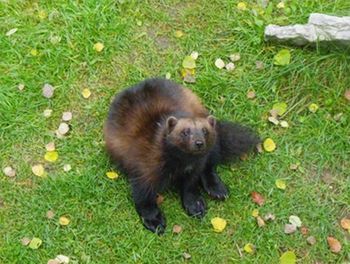
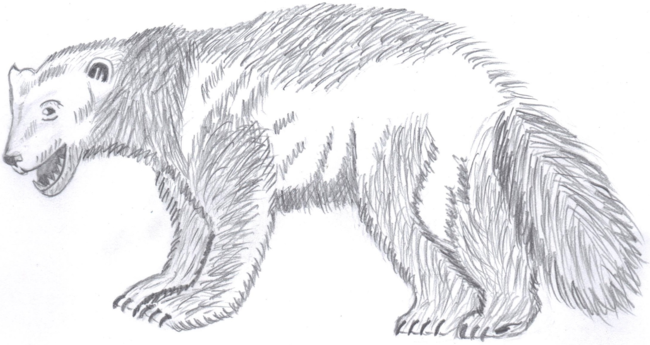
The wolverine (Gulo gulo) is a member of the Mustelidae family found throughout the circumpolar region (Banci, Reference Banci, Ruggiero, Leonard, Aubry, Buskirk, Lyon and Zielinski1994; Kvam, Overskaug, & Sørensen, Reference Kvam, Overskaug and Sørensen1988; Ruggiero et al., Reference Ruggiero, McKelvey, Aubry, Copeland, Pletscher and Hornocker2007; Slough, Reference Slough2007). Resembling a large fisher (Fig. 1), their fur is dark brown/black with a lighter coloured stripe along each flank that can range from yellow to white. Often considered to be a cultural keystone species, this carnivore is important to many Indigenous peoples (Garibaldi & Turner, Reference Garibaldi and Turner2004) and plays a central role in many Indigenous societies as a spiritual animal frequently portrayed as a trickster hero and as a creator of the world (Moore & Wheelock, Reference Moore and Wheelock1990; Peastitute, Reference Peastitute2013; Savard, Reference Savard1971).
Photograph of a wolverine (Morgane Bonamy, zoo of St Félicien, 2016).

However, the perpetuation of colonial policies and practices in many Indigenous Nations has greatly reduced the transmission of intergenerational knowledge about such species through traditional means such as storytelling (Bates, Reference Bates, Bates and Chiba2009). Some nations, like the Naskapi Nation, have launched initiatives to maintain or restore the tradition of storytelling through a variety of community-level programmes (i.e. regular radio programmes focussed on storytelling, public discussions about the cultural and spiritual role of animals, and publishing books that accumulate stories on specific subjects such as Peastitute (Reference Peastitute2013)). Such activities may be particularly important for less common or threatened species, such as the wolverine, whose distribution has shifted and with whom personal encounters have become rare or non-existent. As a result of such initiatives, younger generations may still learn about wolverines through stories passed down from their Elders.
Unlike western and northern Canada, where wolverines are still physically present in much of their historic home ranges and encounters near inhabited areas occasionally occur (e.g. Brock, Reference Brock2016); wolverines have become extirpated from Quebec and the rest of eastern Canada (COSEWIC, 2014; Slough, Reference Slough2007). However, the disappearance of these eastern wolverine populations over 40 years ago has not been accompanied by a disappearance of wolverines from the minds of the public. Each year there are unconfirmed reports of tracks and sightings throughout eastern Canada (Environment Canada, 2016). In Quebec, the social emotions associated with wolverines and the collective memory and social representations of this species have permitted a multitude of stories to persist to this day (Peastitute, Reference Peastitute2013), while new stories continue to develop.
Wolverine populations in western Canada are far from stable, however, and abundances have begun to diminish due to impacts of socio-environmental and climate change (Gallant, Gauvin, Berteaux, & Lecomte, Reference Gallant, Gauvin, Berteaux and Lecomte2016; Kukka & Jung, Reference Kukka and Jung2016; Slough, Reference Slough2007). Currently, there are believed to be only 3,000–6,000 wolverines still present in the Northwest Territories (NWT) – with some regions experiencing declines by as much as 66% between 2004 and 2011 (Species at Risk Committee, 2014). At present, the uncertainty about the extent to which these populations have decreased has prevented the development of conservation programmes for wolverines. In the event that conservation programmes are developed in the near future, knowledge of how people in the north perceive this species would greatly help wildlife managers, as public opinion is strongly correlated to the success of conservation programmes (Dayer, Stinchfield, & Manfredo, Reference Dayer, Stinchfield and Manfredo2007; Decker, Lauber, & William, Reference Decker, Lauber and William2002; Herrmann et al., Reference Herrmann, Schüttler, Benavides, Galvez, Sohn and Palomo2013; Kellert & Westervelt, Reference Kellert and Westervelt1984; Nyhus, Reference Nyhus2016).
The attitudes that ultimately govern public opinion in these cases often form early in life and are typically maintained through adolescence and into adulthood (Ballantyne et al., Reference Ballantyne, Hughes, Lee, Packer and Sneddon2018; Bjerke et al., Reference Bjerke, Ødegårdstuen and Kaltenborn1998; Eagles & Muffit, Reference Eagles and Muffit1990; Jacobs et al., Reference Jacobs, Vaske, Teel and Manfredo2018). Hence, it is important to understand how young people discern species of conservation concern (e.g. the wolverine). It will, after all, be the younger generation that will support future wildlife conservation programmes. Research indicates that the most effective way to modify public opinion or dissipate fears associated with carnivores is through education and habituation during childhood (Bonamy, Harbicht, Herrmann, & Gagnon, Reference Bonamy, Harbicht, Herrmann and Gagnon2019; Mannelqvist, Reference Mannelqvist2010; Münchhausen & Herrmann, Reference Münchhausen and Herrmann2008). However, to maximise the effectiveness of such initiatives they must target the appropriate groups and use tailored educational programmes. This requires, at a minimum, an understanding of how different groups of children perceive the species of interest, and what gaps, if any, exist in the relevant knowledge base. This information can help managers develop educational programmes that encourage support for the species of interest. The importance of this initial step is underscored by the correlation between public support for conservation programmes and public awareness about the species in question (Bonamy et al., Reference Bonamy, Harbicht, Herrmann and Gagnon2019a).
One approach to understanding young people’s perceptions of a species is through the analysis of drawings. Analysing drawings is a child-friendly method (Stokas, Strezou, Malandrakis, & Papadopoulou, Reference Stokas, Strezou, Malandrakis and Papadopoulou2016) that has been shown to be an effective means of collecting information about children’s perceptions towards species and their environment (Boya-Busquet, Reference Boya-Busquet2008; Dai, Reference Dai and Katz2017; Ehrlén, Reference Ehrlén2008; Villarroel, Antón, Zuazagoitia, & Nuño, Reference Villarroel, Antón, Zuazagoitia and Nuño2018). This method allows researchers to obtain information and opinions (Wallon, Reference Wallon2001) directly from a child in a way that most children find agreeable (Barraza, Reference Barraza1999; Eloranta & Yli-panula, Reference Eloranta and Yli-panula2005; King, Reference King1995). Drawings also allow children to express themselves with a wide variety of media (e.g. felt pen, colour pencil, paint, or markers) and are a visual representation of what children think, feel, or perceive (Reference KatzKatz, 2017). The interpretation of drawings can also be used to compare groups of children from different backgrounds (schools, communities, or nationalities) as it circumvents linguistic barriers (Chambers, Reference Chambers1983; Eloranta & Yli-panula, Reference Eloranta and Yli-panula2005). According to Thomas and Silk (in Barraza, Reference Barraza1999, p.50), “Children’s drawings provide a ‘window’ into their thoughts and feelings, mainly because they reflect an image of his/her own mind”. Grieve and Hughes (Reference Grieve, Hughes, Grieve and Hughes1990) note that “the art of young children everywhere is identical” (cited in Barraza, Reference Barraza1999, p.51), therefore drawings are a useful tool for gathering information about the mental representations of children while providing a glimpse of their cultural and societal values towards a species and its environment (Hsieh & Tsai, Reference Hsieh and Tsai2017; Thomas & Silk, Reference Thomas and Silk1990).
In the present study, we analysed drawings of wolverines by Indigenous and non-Indigenous children in the NWT and Quebec and compliment these data with interviews of adult Indigenous peoples to gain a better understanding of how young people perceive the wolverine, a little known mammal to many (L’Hérault, 2018; Woodford, Reference Woodford2014). To our knowledge, no previous studies have analysed the representation of this species in such a way. Improving our understanding of the social representations of wolverines under differing cultural and ecological situations can provide valuable information where conservation efforts are required, as is the case with western and eastern Canada (i.e. the NWT and Quebec). With the development of new wolverine conservation programmes in some parts of Canada (e.g. Ontario), and new programmes proposed for others (western Quebec), furthering our understanding of how children who live within occupied wolverine habitat, and those who have only heard stories about wolverines, represent this species and its environment can be of use to conservation programme managers. In this study, we address the following questions:
-
How is the wolverine portrayed in drawings by children in northern Canada?
-
What kind of habitat do children think wolverines prefer?
-
Are there any striking differences among the drawings of Indigenous children from areas of Canada with and without wolverines?
-
To what extent are the differences in the perceptions of wolverines by adult Indigenous peoples reflected in the drawings of children?
By answering these questions, we aim to improve our understanding about children’s representations of wolverines and identify the scope of their current knowledge.
Methods
Study areas
The drawings analysed in this study were collected as part of a larger research project on the perceptions of wolverines by the general public and Indigenous groups in several areas throughout northern Canada. This project consisted of surveying and interviewing members of the public to assess knowledge of wolverines and other northern species as well as the values they associate with wolverines (Bonamy, Herrmann, & Harbicht, Reference Bonamy, Herrmann and Harbicht2019; Bonamy, Harbicht, & Herrmann, Reference Bonamy, Herrmann and Harbicht2019). Children who participated in this study were either elementary school students or participants in a summer youth camp.
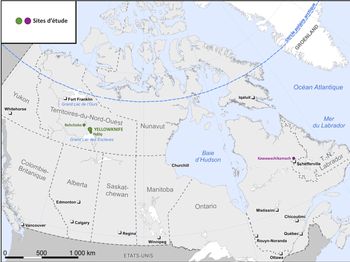
In the NWT, a total of seven elementary schools within the capital city of Yellowknife agreed to participate: Mildred Hall, Allain St Cyr, N.J. Macpherson, J.H. Sissons, and Weledeh. In addition, two elementary schools in rural Dene First Nation communities near Yellowknife also participated: K’alemi Dene School in Ndilǫ̀ and Elizabeth Mackenzie School in Behchokǫ̀ (Fig. 2). Schools were visited between April and June 2014, and in each case one or two classes from grades three, four, or five (ages 8–12) participated.
Location of study sites: Yellowknife, Ndilǫ̀, Behchokǫ̀, and Kawawachikamach (source: Marc Girard and Morgane Bonamy, Geography department, Université de Montréal, 2019).
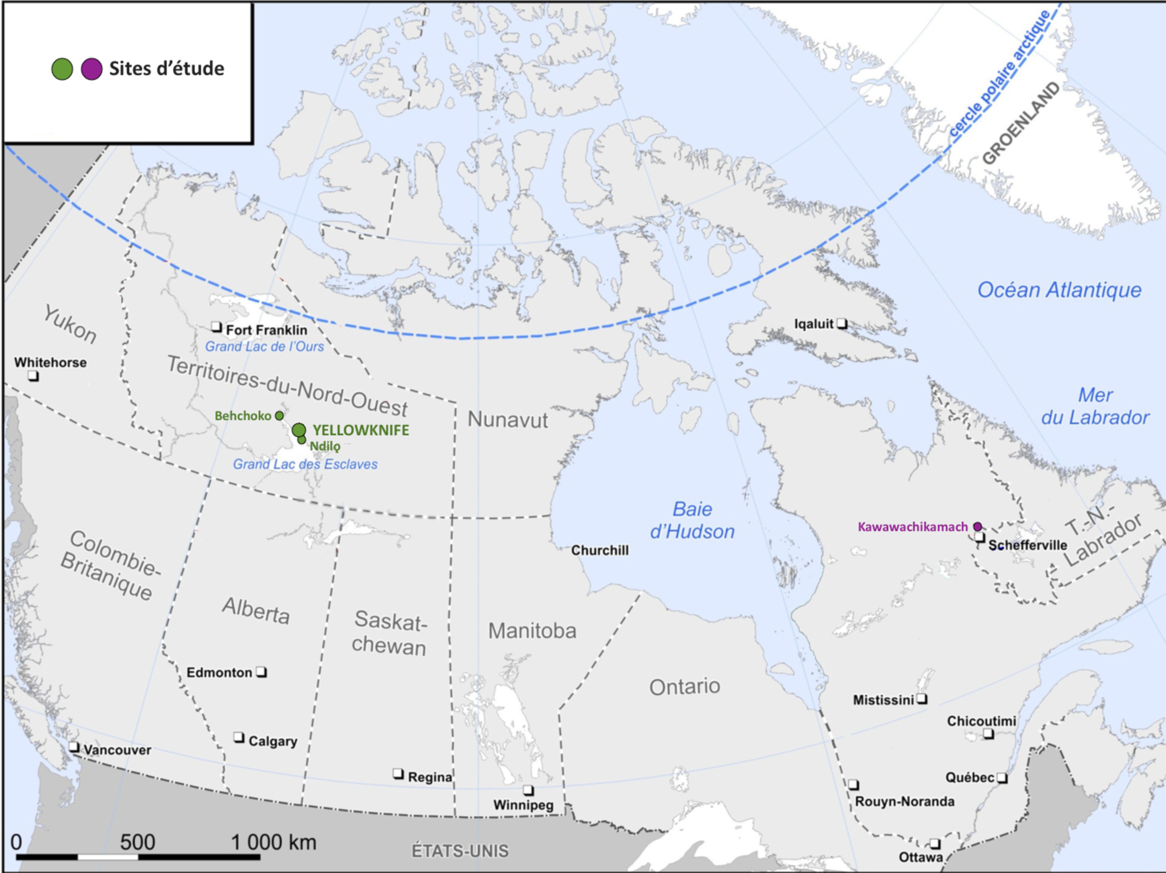
In Quebec, participants were children attending a summer day camp in Kawawachikamach (Fig. 2), an isolated Naskapi community located 15 km from Schefferville. The location of the last confirmed sighting of a wolverine in the province of Quebec occurred in Schefferville in 1978 (Fortin et al., Reference Fortin, Banci, Brazil, Crête, Huot, Michel and Vandal2005). Children aged 8−12 years old participated in the study in July 2016 and the procedure followed was identical to that used previously in the NWT.
All methods employed in this study received approval from the Ethics Committee for Arts and Science Research of the University of Montréal (ethics certificate: CERFAS-2013-14-201-D) and Aurora College in Yellowknife (permit number: 15861). As per the requirements of the ethic certificate, authorisation was obtained from the directors and teachers of the participating schools and classes, respectively, as well as from participating First Nation communities and the director of the Naskapi summer day camp prior to commencing. Similarly, all children were informed that participation was strictly voluntary.
Drawings, data collection, and analysis
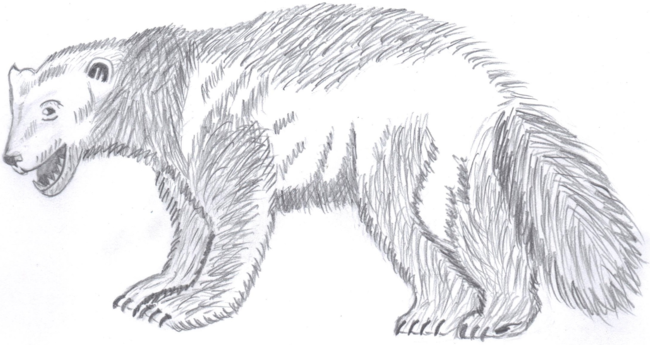
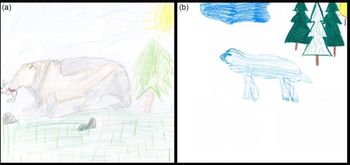
Following established methods (Barraza, Reference Barraza1999; Brown, Henderson & Armstrong, Reference Brown, Henderson and Armstrong1987; Myers, Saunders, Garett, & Erik, Reference Myers, Saunders, Garett and Erik2003), children who participated in the study were invited to draw a wolverine (e.g. Fig. 3) in any situation they wished using any kind of colour pen, felt pen, or colour pencil. In each case, children were provided with drawing materials and 30–45 min to complete their drawing. Location and self-identification (Dene, Naskapi, or other) were recorded for each participant along with a description of the drawing provided by participants as they handed their drawings in. Descriptions were used to ensure drawings were correctly interpreted.
Drawing of a wolverine (Christine Bonamy, 2014).
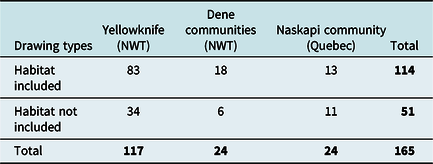
Once collected, drawings were classified as depicting only a wolverine or a wolverine together with elements of its habitat (Table 1). Drawings were then codified according to the presence of specific elements within the drawings or their descriptions (Marquis, Reference Marquis2001). These elements included: wolverine habitat types (e.g. mountains, rocks, and grassy hills), vegetation types (e.g. trees, shrubs, and flowers), the presence of a burrow, and other biotic elements (e.g. other animals, human, or prey). Next, the actions portrayed by wolverines were classified (e.g. hunting or searching for food, fighting, eating, and climbing). All activities depicted or mentioned at least once were included in the list of activities. Incidentally, this includes “doing nothing special”. Finally, wolverines were classified as a predator if they were portrayed with at least one of three characteristics: blood, sharp teeth, or sharp claws.
Drawings of wolverines with and without their habitat by children in northern Canada.

Both drawings with and without the wolverine’s habitat were used to assess the social representations of the wolverine by children in northern Canada (Question 1). To assess how children perceive the wolverine’s environment (Question 2), only drawings (or descriptions) which included features of the wolverine’s habitat were used. To assess for differences in the depictions of wolverines by First Nation children in areas with and without wolverines (Question 3), drawings from Naskapi children were compared to a subset of the drawings collected in the NWT: those collected from children within the two Dene communities (Behchokǫ̀ and Ndilǫ̀, Table 1) who identified themselves as Dene. This same subset of drawings was used when contrasting the differences among drawings by Indigenous children to differences in the social perceptions of this species by adults in the same areas (Question 4).
Interviews
As part of the larger study on perceptions of wolverines, interviews were collected among Indigenous adults in the NWT and Quebec communities mentioned above. These interviews were used to provide context and to help explain the drawings that were provided by Indigenous children in more detail (supplementary material). No such interviews were collected from non-Indigenous adults. For a more detailed description of the interview process consult Bonamy et al. (Reference Bonamy, Herrmann and Harbicht2019b). Briefly, interviews were semi-structured, face-to-face, and open-ended. Interviewees could respond in their language of choice and, when necessary, an interpreter was provided. In each case, verbal or written consent was also acquired as per our ethical permits. Interviews were recorded and transcribed.
The subject matter covered in the interviews included a range of themes and for this reason only the subject matter that overlapped among the participants in both localities (the NWT and Quebec) were considered (supplementary material). These themes included: knowledge and attitudes associated with wolverines; hunting and trapping practices; conflicts and threats to wolverine’s survival; and stories directly related to wolverines. Interview transcriptions were manually coded and the frequency at which different themes occurred within each interview was quantified as per Bonamy et al. (Reference Bonamy, Herrmann and Harbicht2019b). Using the same techniques as Bonamy et al. (Reference Bonamy, Herrmann and Harbicht2019b), we used semantic analyses to highline words used to describe the wolverine. We then used these keywords to represent and compared (with a word cloud) the social emotions of Dene and Naskapi First Nation Peoples.
Results
In total, 33 drawings were removed due to incompleteness or an inability to be interpreted in any meaningful way. The remaining 165 drawings assessed in our study (Table 1) were collected from children in the NWT (n = 141) and Quebec (n = 24). Among these drawings, 114 contained a wolverine along with features of its preferred habitat, according to the children. The remaining 51 drawings were depictions of a wolverine on a blank background.
The portrayal of wolverines in children’s drawings
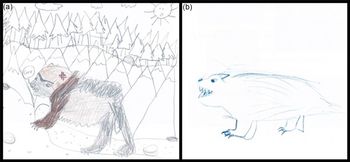
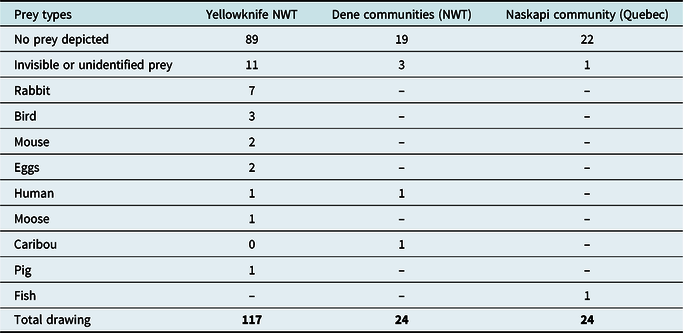
More than half of the drawings collected from children throughout northern Canada did not feature characteristics commonly associated with predatory species (sharp claws, sharp teeth, or blood). In the NWT, slightly under half of the children (46%) included these features. Among those, sharp teeth (32%) and sharp claws (27%) were the most commonly portrayed features. Some children chose to include both (e.g. Fig. 4(a)). Overall, few children in the NWT chose to represent blood in their drawings and those that did (6%) also included a prey species. In Quebec, roughly one-quarter of the children who provided a drawing included predatory features with their wolverine (e.g. Fig. 4(b)). As with the NWT drawings, sharp teeth were the most common feature (36%) followed by sharp claws (18%). Blood was not represented in any of the drawings collected in Quebec and prey items were similarly uncommon (Table 2). Of the two drawings from Quebec that depicted a prey item, one represented a (poisoned) fish while the other was an unidentified animal, mentioned in the drawing’s description. In contrast, 23% (Table 2) of the drawings collected in the NWT included a prey species (Fig. 4(a)). These prey items varied considerably with the most common choice being an unidentifiable dead animal. Caribou – the wolverine’s primary food source in the NWT (Mulders, Reference Mulders2001) – were uncommon among the prey items.
Drawings of a wolverine including predatory features in its habitat by children in northern Canada. (a) NWT, 10 years old, Dene: “The wolverine sees a little rabbit and goes after it”; (b) Quebec, 9 years old, Naskapi: “The wolverine is defending himself against wolves”.

The type of prey represented in children’s drawings or mentioned in the accompanying description.

Note: Drawings were collected from elementary school children (NWT) or participants in a youth summer camp (Quebec).
In terms of their social structure, wolverines were most often represented in drawings as solitary animals. Only 3% of the drawings collected included a wolverine with its family (cubs or partner) and none of the drawings from Quebec included more than one wolverine. The solitary nature of wolverines was also represented by the absence of humans in most of the drawings. Only three drawings included a human with the wolverine and all these were collected in the NWT. In two of the three cases, the human was described as the prey item and was being attacked by a wolverine or fighting the wolverine (Table 2) while in the third drawing, the human was a passive observer: “Me, in the woods with a wolverine. I was walking in the woods and I saw the wolverine. So I went over to it and he was nice” (girl, 10 years old, non-Indigenous).
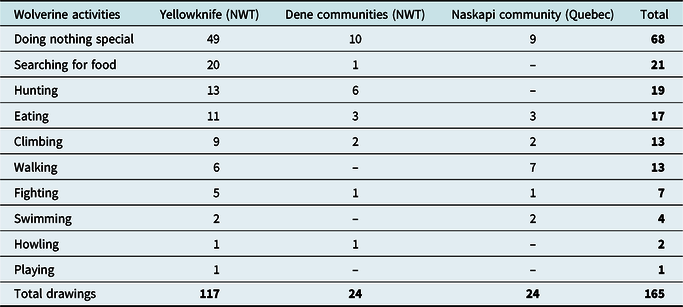
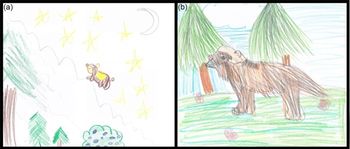
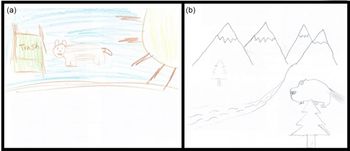
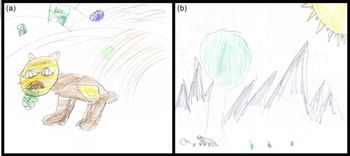
Overall, a wide range of activities was portrayed in the drawings of wolverines in their environment (Table 3). In both the NWT and Quebec, the most common activity for wolverines was “doing nothing special” (e.g. Fig. 5(b)) which was depicted in nearly half of the drawings collected in the NWT (42%) and over one-third of the drawings collected in Quebec (38%, Table 3). The next most common activities differed between the two study areas. In the NWT, the second-, third-, and fourth-ranked activities were all food-related: searching for food, hunting, and eating, respectively (Table 3 and Fig. 6(a)), followed by a movement-related activity in fifth place (climbing, Fig. 5(a)). Conversely, this trend was reversed in Quebec with a movement-related activity (walking) ranking second (Fig. 6(a)) followed by eating in the third-ranked position (Table 3). The remaining activities, for example howling, playing, and fighting, were all rather uncommon and were each depicted in fewer than 5% of the drawings in both the NWT and Quebec.
Activities represented in children’s drawings of wolverines in their natural habitat collected at several sites throughout northern Canada.

Drawings of wolverines in their habitat by children in northern Canada. (a) NWT, 10 years old, Indigenous: “a wolverine in the mountain with tree”; (b) NWT, 10 years old, non-Indigenous: “a wolverine walking around in the sun”.

Activity of a wolverine drawn by children in northern Canada. (a) NWT, 11 years old, non-Indigenous, “A wolverine who has caught a rabbit”; (b) Quebec, 10 years old, Indigenous, “A wolverine is walking in the forest”.

Portrayal of the wolverine’s habitat in children’s drawings
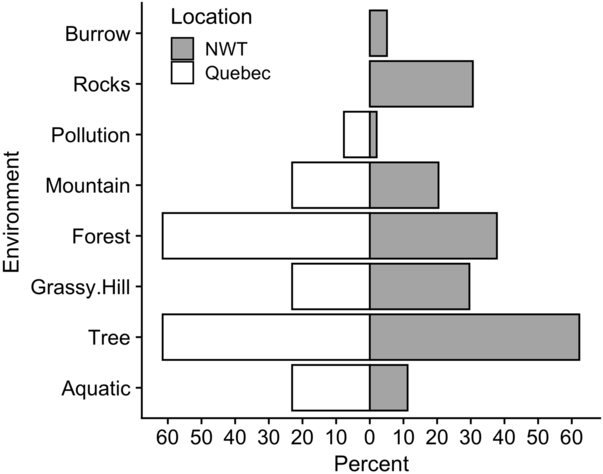
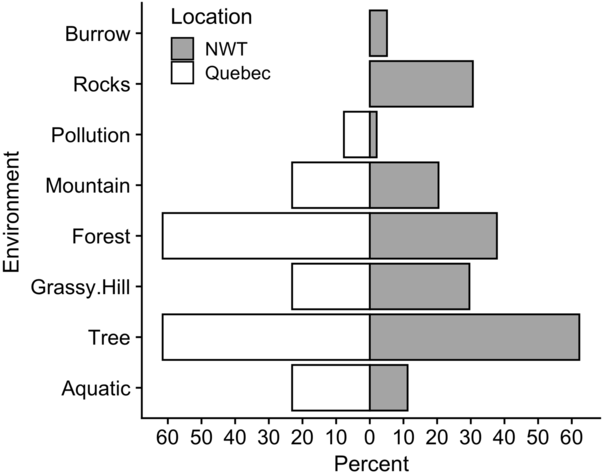
Generally, the majority (69%) of children who produced drawings also included components of the wolverine’s habitat in their creations. Habitat features were more common among the drawings collected in the NWT (72%) than in Quebec (54%, Table 1); however, the prominent features were similar among the two study areas. In both areas, trees and shrubs (e.g. Figs. 5(a), 6(a) and 7) or forest habitat when more than one tree was depicted (e.g. Figs. 5(b), 6(b) and 7) were the most common features. Indeed, in Quebec none of the drawings contained only a single tree. In the NWT, rocks and grassy hills were the next most common features, followed by mountains (Fig. 7). Few children in the NWT drew aquatic environments like lakes or rivers (e.g. Fig. 7) despite such habitat being common in the region surrounding the study sites. In Quebec, far fewer children drew the wolverine in the mountains (Figs. 7 and 8(b)) or included grassy or hilly habitat features (Fig. 7). Aquatic habitat features were similarly uncommon, as were rocks and burrows.
Type of habitats represented in drawings by children in northern Canada.
Activity of wolverines in different habitat drawn by children in northern Canada. (a) Quebec, 12 years old, Naskapi: “it is a wolverine looking for food”, (b) Quebec, 8 years old, Naskapi: “the wolverine is climbing a tree”.

In nearly every drawing where the wolverine’s habitat was represented, children chose to draw a pristine, natural environment, free from anthropogenic disturbances (Fig. 5(a) and (b)). In two instances, children even described their wolverines as being in a safe place or safe environment. Anthropogenic disturbances were only represented in a total of three drawings (Figs. 7, 8(a), 9(a) and (b)) and took the form of garbage, litter, pollution, and deforestation.
Anthropogenic alterations of wolverine’s habitat drawn by children in northern Canada. (a) NWT, 9 years old, non-Indigenous: “It is the future: if we don’t help wolverine. Wolverine is sick and dying”, (b) NWT, 10 years old, non-Indigenous: “the wolverine chases a mouse in a plastic bag”.

Dene and Naskapi interpretations of wolverines
Both Dene and Naskapi children represented the wolverine’s habitat similarly in their drawings with both groups preferring to represent the wolverine in a boreal forest type habitat. There were few differences, however, in the way wolverines themselves were represented with one notable exception, Dene children were more likely to represent the wolverine as a predator in their drawings, including the predatory features described above. This perception of the wolverine as a predator was also apparent in the activities they attributed to their wolverines. Among Dene children, the most common activity was hunting, an activity which was completely absent among the drawings by Naskapi children (Table 3).
Interviews
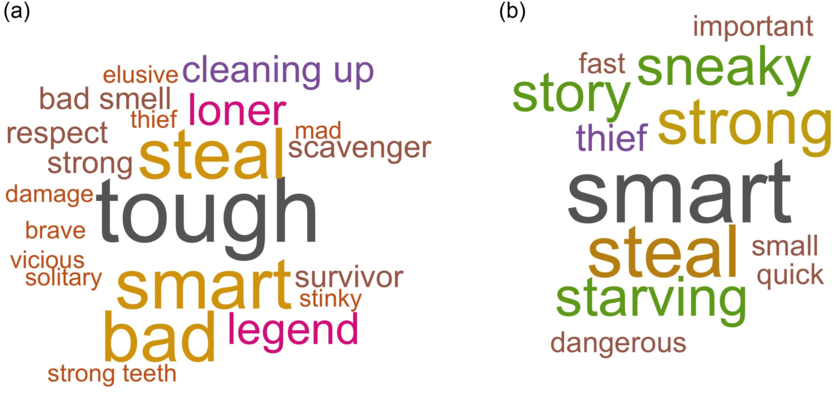
In total, 8 interviews with members of the Dene Nation were conducted within the NWT (see Bonamy et al., Reference Bonamy, Herrmann and Harbicht2019b) while an additional 14 interviews were conducted with members of the Naskapi Nation in Quebec. Across both groups, there was strong evidence of respect for this species. “Smart” was among the terms most often used to describe the wolverine (Fig. 10) and nearly all interviewees stated that wolverines were an important animal in the north (n = 19). Not everything people had to say about the wolverine was praise, however. Among the Dene interviewees, the most frequent keywords used throughout interviews, along with “smart”, were “tough”, “bad”, and “steal” (Fig. 10). Among Naskapi interviewees, “steal”, “strong”, and “starving” also appeared among the most frequently used terms (Fig. 10).
Word clouds of the keywords used by Dene and Naskapi adults in the interviews. (a) Dene participants in the NWT and (b) Naskapi participants in Quebec. The size represents the frequency of use and words must have been mentioned at least twice to be included in the figure.

In addition to the perception that interviewees expressed regarding wolverines being strong and tough, most Dene participants (n = 7) commented on the wolverine’s role as a scavenger and an important component of the food chain. Conversely, Naskapi participants tended to highlight the idea that wolverines steal food from food caches or people directly. Only one Naskapi participant mentioned the wolverine’s role as a pest control agent.
When we asked interviewees if they had ever encountered a wolverine, all of the Dene participants recounted a first- or second-hand story about encountering a wolverine in the wild. Often, these stories involved wolverines searching for food at peoples hunting cabins. Similarly, though none of the Naskapi admitted to having ever seen a live wolverine, all were able to recount at least one story about a wolverine stealing food. When asked about legends involving wolverines, all of the Dene participants could recount at least one legend about this character, while only half (n = 7) of the Naskapi participants knew of a legend or story about wolverines. Most of those that did know of a story mentioned a recently published book on Naskapi stories about the wolverine (Reference PeastitutePeastitute, 2013).
One key difference between these two groups in terms of the responses they provided during their interviews was that Dene participants demonstrated a fairly good understanding and knowledge about this species (Bonamy et al., Reference Bonamy, Herrmann and Harbicht2019b), while Naskapi participants were more likely to claim a limited knowledge of this species. In several instances (n = 3, 21%), Naskapi participants even proclaimed to being completely naive when it came to wolverines: “I don’t know much about wolverines” (Naskapi Elder, participant 12); “I never saw one, so it is difficult for me to say” (Naskapi Elder, participant 4); “I never heard about wolverine being around here” (Naskapi, participant 9). These two groups also differed in their perceptions about the wolverine’s tendency to steal. Among the Naskapi, participants pointed to the idea that wolverines steal food from people, resulting in starvation during bad hunting years. In contrast to this, Dene participants tended to discuss such theft in terms of lost revenue on a trapline, rather than with reference to lost food reserves.
Discussion
In this study, we analysed 165 children’s drawings and 22 interviews with Indigenous adults from two different regions of Canada, one region where wolverines are still present and another where wolverines have been extirpated since the 1980s. We found no differences among the habitat components of the drawings by Dene and Naskapi children. In both regions, children likely have a similarly accurate perception of wolverine habitats, which closely approximates the children’s local environment. Other authors have also described children as preferring to portray their local environment when depicting nature (Barraza, Reference Barraza1999; Grieve & Hughes, Reference Grieve, Hughes, Grieve and Hughes1990). The most common habitat features included in the drawings were boreal forests with trees and shrubs. Additionally, representations of anthropogenically altered habitats were uncommon among all drawings we collected. Few differences were apparent among the two Indigenous groups that participated in this study. Interestingly, neither the Dene children in the NWT nor the Naskapi children in Quebec portrayed wolverines as searching for food in homes or cabins despite stories of such activities being common in these two cultures (Reference PeastitutePeastitute, 2013) and among those adults we interviewed. While most children from both eastern and western Canada choose not to include predator features such as sharp teeth, blood, sharp claws, or prey, Dene children represented the wolverine as a predator and actively hunting far more often than Naskapi children did.
In general, drawings such as those we analysed in this study reflect or symbolise daily life for their creators (Barraza, Reference Barraza1999). It is not surprising, therefore, that the children who participated in our study recreated things they know or see in everyday life, like trees in a boreal forest, or hills and rocks. With regard to the wolverine’s environment, all children tended to draw wolsverine’s habitats similarly, regardless of their cultural backgrounds. This was somewhat unexpected given the different levels of exposure to wolverines among these two localities (the NWT and Quebec) and may have resulted from children choosing to represent the wolverine in an environment similar to the children’s own habitat. Despite our two localities being nearly 3,000 km apart, both groups inhabit the same ecozone, the taiga shield. The similarities in their depictions of wolverine habitat, therefore, likely resulted from similarities among the children’s own environments and of both groups drawing what is most familiar to them. One result which is inconsistent with this idea, however is that a minority of children in the NWT also included mountains in their drawings, a feature which is uncommon near our two research areas. One possible explanation for this may be that children in the NWT are aware that wolverine habitat ranges extend south and west from their location to include much of the Rocky Mountains and the mountain ranges west of the Mackenzie River.
A telling and positive result of our analysis was that the children from both localities associated the wolverine with unaltered environments. None of the children represented the wolverine in an urban setting; despite some of the Dene we interviewed commenting on how wolverines are coming closer to cities and communities: “they are slowly moving into the city. Before you had to go further out to trap them. Now you don’t. They come right into your backyard” (Dene Elder, participant 10). Despite these observations, the majority of interviewees acknowledged that wolverines are still primarily found only out in the wilderness: “They’ll go to the forest or get up the hill like that” (Dene Elder, participant 8). Wolverines rely on unaltered landscapes (Copeland, Reference Copeland1996; Heinemeyer et al., Reference Heinemeyer, Squires, Hebblewhite, O’Keefe, Holbrook and Copeland2019; Scrafford, Avgar, Heeres, & Boyce, Reference Scrafford, Avgar, Heeres and Boyce2018; Weaver, Paquet, & Ruggiero, Reference Weaver, Paquet and Ruggiero1996) and the children who participated in our study may recognise this fact and may have chosen to represent it in their drawings.
Regarding the physical appearance of wolverines, in most of the drawings we collected, children drew wolverines that resembled other more common carnivores like a fox, a wolf, or a bear. This result suggests that children in northern Canada may not have a firm grasp of the morphology of wolverines. Instead, they may have a general understanding of this species’ ecological role, and likely assume they resemble other more common species with a similar role (i.e. carnivores). This is, perhaps, not unexpected since wolverines are generally elusive and many of the children who participated in the study stated that they had never directly seen a wolverine. Furthermore, this seems unlikely to change any time soon as many of the adults we interviewed in the NWT thought that wolverine abundances were decreasing: “So there are less and less of the animals [wolverines] that we see now. Because when we go look for them, we have to go quite far away sometimes” (Dene Elder, participant 9). A counter-argument to the idea that children assume wolverines are like any other predators, and is the general lack of predator features among their drawings. To address this discrepancy, it may be necessary to conduct further studies to fully understand precisely what is known among the younger generation about wolverine’s physical appearance. In either case, it appears as though this is one area in which knowledge is lacking among children. Fortunately, this is also easily incorporated into any potential educational programme by including information about the wolverine’s physical appearance and their role in the food chain. It will likewise be important for any formal or informal environmental education programme to highlight the important role all carnivores play in their respective habitats.
In the NWT, wolverines were described as actively hunting and were portrayed with predator features more often than in Quebec. This is consistent with the increased frequency of stories of wolverines actively hunting that we gathered from interviews with members of the Dene community relative to the Naskapi community. Examples of such stories were: “The wolverine can go up on the tree, and he’ll sit there and the caribou will go by, he’ll pick one with no horns, and he’ll jump on it; right on the back, one bite and he’ll stay there for a long time […] until the caribou falls down” (Dene Elder, participant 8); “They would eat [hunt] moose, and caribou. Whatever they think they can get” (Dene Elder, participant 10). The general lack of caribou among the prey items depicted by the children was unexpected, however, as caribou are the wolverine’s primary food source in the NWT (Mulders, Reference Mulders2001) and many of the Dene we interviewed were aware of this fact: “they will kill caribou too” (Dene Elder, participant 10) and “they need to follow the caribou” (Dene Elder, participant 11). This result suggests that knowledge about the wolverine diet may be lacking among children in the north. This may be particularly true in Quebec where children preferred to depict the wolverine as simply walking through the wilderness rather than hunting. As with the lack of predatory features in depictions, this result suggests their ecological role as a hunter/scavenger may not be well understood by children, particularly in areas such as this where wolverines are no longer present. As with the physical features of a predator, this lack of knowledge can be remedied by ensuring that any wolverine conservation or reintroduction programmes inform the public of the ecological role of wolverines as a predator/scavenger along with their primary food sources.
Concerning the behaviour of wolverines, adult members of the communities we visited commonly referred to a specific behavioural characteristic which were noticeably absent from the drawings we collected, namely, that wolverines are gluttons and are always looking to steal food. In many of the interviews we held with community members, Elders recalled stories where wolverines would target traplines, stealing from traps or taking the bait, or taking meat from cabins and camps: “Wolverines do that [steal], if you are not around. They will go in your chimney; they can even chew their way in. We don’t use plywood to build houses because the wolverines can chew through that. Before we used to use ordinary glass in the windows but the wolverines would break it, so now we use plexiglass. It’s thick plastic and they don’t break that” (Dene Elder, participant 8); “They [wolverine] follow your trail all the time” (Dene Elder, participant 9). The absence of thieving wolverines among the drawings we collected was unexpected given the number of stories that we heard referring to the wolverine’ behaviour as a thief: “If you got caribous in your sled, they will go to your camp that night, and he will try to get some of that” (Dene Elder, participant 8); “if they are really hungry, they may do that [break into your cabin]” (Dene Elder, participant 9). Such stories were even told to us by some of the children: “a wolverine broke in my grandpa’s cabin and ate all my Easter chocolate” (Dene child, participant 46). It is unclear why none of the children chose to represent the wolverine stealing food or meat. Further studies into this issue will be required to reach a conclusion, but our results seem to suggest that while children in northern Canada are aware of the reputations of wolverines, they may be sceptical or uncomfortable with this notion, choosing instead to portray activities which seem more likely or preferable to them. Despite this stealing behaviour being absent from among the children’s drawings, it was an important and common theme discussed in our interviews and any wolverine management plan would be remiss to omit addressing this concern among the general public of all ages.
Even though wolverines have not been seen in the Schefferville area for over 40 years, the collective memory of this carnivore is still present. A book published by the Naskapi Nation in 2013 contains a compilation of stories about wolverines collected by Elder John Peastitute. Most of the stories related to the wolverine, both in this book and elsewhere, mention their stealing behaviour and depict this animal as a “trickster” (Reference PeastitutePeastitute, 2013, Reference SavardSavard, 1976). Some of the Naskapi children who participated in our study had also heard stories of first-hand encounters from friends and family that were consistent with this notion: “A long time ago, my ancestors would hide their food from the wolverine, but the wolverine would find the food and piss on it” (Naskapi child, participant 172); and “the wolverine stole all their food” (Naskapi child, participant 181). Similarly, Naskapi adults with whom we spoke also confirmed that they had learned about wolverines from the radio, books, and the stories told by Elders: “Sometimes, they play stories about wolverines on the radio. The wolverine likes to trick other animals […] He is a trickster” (Naskapi, 31–45 years old, participant 1); “He was a thief! My father told me that” (Naskapi, 46–59 years old, participant 6). In general, what we have heard supports the idea that memories of wolverines are still present among the Naskapi, despite the absence of this species in the area: “I have never seen a wolverine, but I always heard about wolverines” (Naskapi Elder, participant 10), or “I never saw one. Even my father never saw one. We only know the stories. All that’s left are the legends and stories” (Naskapi, 31–45 years old, participant 13). The presence of such collective memories, despite the absence of their subject, has also been found in studies in other parts of the world (Skogen, Mauz, & Krange, Reference Skogen, Mauz and Krange2008; Lescureux et al., Reference Lescureux, Linnelle, Mustafa, Melovski, Stojanov, Ivanov and Breitenmoser2011) and suggest that even after a species disappears from an area, the memories, myths, local anecdotes, and emotions associated with that species may remain. Because such stories tend to focus on what is arguably the more interesting behavioural characteristics of a species (in this case: intelligence, tenacity, toughness, and thievery), it is important for education programmes to compliment such knowledge with biological and behavioral information about such threatened species, as a potential means of explaining the qualities described in stories and to provide a balanced interpretation (Bonamy et al., Reference Bonamy, Harbicht, Herrmann and Gagnon2019a; Devitt and Schacter, Reference Devitt and Schacter2016). Stories and anecdotes are a good way to keep a species “alive” while making an animal interesting for adults and children alike who may never encounter that species in real life.
In the present case, the reputation of wolverines in Quebec, supported by statements from multiple community members, seems to be primarily that of a thief. While theft from traplines does occur elsewhere in the wolverine’s home ranges in western Canada (Bonamy et al., Reference Bonamy, Herrmann and Harbicht2019b), it does not seem to figure as strongly into their reputation as it does in regions where wolverines are no longer present. This supports the idea that the collective memory of people in Quebec is primarily shaped by incidents where wolverines caused the loss of food and/or income. Such negatives perceptions of wildlife are typical of communities where species (usually a predator) threaten livestock and therefore people’s livelihood (Gusset et al., Reference Gusset, Swarner, Mponwane, Keletile and McNutt2009; Herrmann et al., Reference Herrmann, Schüttler, Benavides, Galvez, Sohn and Palomo2013; Lucherini and Merino, Reference Lucherini and Merino2008; Woodroffe et al., Reference Woodroffe, Thirgood and Rabinowitz2005). It would appear in this case that the wolverine is apparently continuing to maintain such a reputation even after its extirpation from eastern Canada.
Kansky and Knight (Reference Kansky and Knight2014, p.102) observed a similar phenomenon when they noted: “stronger experiences are more likely to be retained in memory”. Indeed, the loss of food, particularly if times are hard, can certainly have a strong influence on one’s outlook towards the cause of such hardships. “He is a thief. He goes everywhere where he is not wanted. Always a thief” (Naskapi Elder, participant 14); or “Wolverine used to steal food all the time” (Naskapi, 46–59 years old, participant 9), and “The wolverine can break inside your house. He can eat everything inside, people starved. The wolverine, he eats and eats everything” (Naskapi, 46–59 years old, participant 12). Even if people are no longer experiencing direct conflicts with wolverines, the memories and strong negative emotions associated with this species are still present today:
“He stole their livelihood, their food. The elders stored their food for Christmas. When they came to see it, everything was gone. And it was the wolverine […]. He took everything from the people. Even when they hide the food in a cache, he came to break in. People don’t really like him. Every story I heard about wolverine, they [people] don’t like him” (Naskapi, 46–59 years old, participant 5).
It is likely, however, that over time, the strongest feelings towards such species will increase in relative abundance, if not important, within the community as they tend to be the themes favoured for transmission to the younger generations through stories. This results in a potential for misperceptions to develop over time (Herrmann et al., Reference Herrmann, Schüttler, Benavides, Galvez, Sohn and Palomo2013). On a positive note, this appears to be a gradual process as, despite never having seen a wolverine in the wild and having heard mostly stories of the mischief that wolverines can cause, Naskapi children who participated in this study chose not to portray their wolverine causing damage or stealing food. Results such as these provide us with an understanding of how children feel about this misunderstood and threatened species and how important it is for stories to continue to be passed on to future generations. Care should be taken, however, to also mention positive aspects of a species and to provide basic information about wolverines in educational programmes in addition to the storytelling. The knowledge gained from the present study can be used to plan environmental educational programmes and conservation campaigns in the future. Based on our results, youth in northern Canada do not consider the wolverine to pose a great threat to their personal safety. Some of the children recognised that wolverines are at risk, even going as far as to show the wolverine being poisoned by elements of its environment (n = 3) or inhabiting a degraded environment (n = 1), though the majority did not provide any indications of a threat to wolverine persistence. For this reason, we would recommend complimenting educational programmes with information about the effects of socio-environmental changes (e.g. human activities such as global warming, infrastructure development, tourism, etc.) and the resulting threats these forces pose to wolverines and their habitat. Teaching children how to minimise their environmental footprint and why this is important should also be developed and linked to the wellbeing of local species like the wolverine to help create a balance between the peaceful coexistence of carnivores and humans.
Conclusion
Drawings were used in this study as a method to assess the perception of wolverines and its environment by children in regions of Canada where wolverines are extirpated and where they persist. Our results indicate that in areas where species, like the wolverine, have disappeared, basic knowledge and understanding can persist among the younger generations through stories and the collective memories of the communities.
Furthermore, our results highlight the importance for educators and environmental managers targeting their efforts on knowledge about wolverine learnt by children, specifically by emphasising the importance of the ecological role of carnivores, like the wolverine. Finally, it is important not to forget the role that adults play in the development of a child and that stories, as well as educational programmes, can be significant sources of information for a curious child. Future work on this subject should consider expanding the investigations to include larger cities such as Calgary, Edmonton, or Vancouver that are surrounded by differing ecozones to see how this is reflected in the representation of wolverine in its habitat. It would be particularly beneficial to address the lack of interviews with non-Indigenous people in order to identify what knowledge is being passed on in cultures where storytelling plays a reduced role in a child’s education. Doing so may help managers identify the needs of educational programmes and to build a knowledge base about wolverines, thereby improving this species’ appeal and supporting its conservation.
Supplementary material
To view supplementary material for this article, please visit https://doi.org/10.1017/S0032247420000327.