




No CrossRef data available.
Article contents
- Extract
- Acknowledgements
- Policy Feedback, Sequencing, and Mass Publics
- Empirical Matters: Reconsidering the Racial Inclusivity of the G.I. Bill
- Policy Feedback Effects Among Black Veterans
- Race and Experiences of Military Service
- Dynamics Underlying Usage
- The Implementation Experience
- Socioeconomic Effects of Program Usage
- Veterans' Civic and Political Involvement
- Feedback Effects and Sequencing
- Conclusion
- Appendix A: Survey Techniques
- Appendix B: Representitiveness of the African-American Sample
“The Only Good Thing Was the G.I. Bill”: Effects of the Education and Training Provisions on African-American Veterans' Political Participation
Published online by Cambridge University Press: 17 August 2005
Article contents
- Extract
- Acknowledgements
- Policy Feedback, Sequencing, and Mass Publics
- Empirical Matters: Reconsidering the Racial Inclusivity of the G.I. Bill
- Policy Feedback Effects Among Black Veterans
- Race and Experiences of Military Service
- Dynamics Underlying Usage
- The Implementation Experience
- Socioeconomic Effects of Program Usage
- Veterans' Civic and Political Involvement
- Feedback Effects and Sequencing
- Conclusion
- Appendix A: Survey Techniques
- Appendix B: Representitiveness of the African-American Sample
Extract
The education and training benefits of the G.I. Bill of Rights are renowned for their redistributive effects among nonblack veterans, but their consequences for black veterans remain in question. Among non-blacks, the provisions are known to have expanded access to education across class lines, and to have generated positive socioeconomic consequences. They also fostered greater postwar involvement in civic associations and political activities, particularly among less advantaged beneficiaries. Given the widely perceived view that the G.I. Bill represents a landmark social program, it is imperative to investigate whether access to its social and economic benefits transcended the rigid color line of the postwar era. As well, consideration of how the education and training benefits affected African-American veterans' political participation may deepen our understanding of the relationship between governance and civic engagement.
Information
- Type
- Research Article
- Information
- Copyright
- © 2005 Cambridge University Press
Acknowledgements
For comments on earlier drafts, I am indebted to Michael Dawson, Wayne Grove, Philip Klinkner, three anonymous reviewers, and participants in the Seminar on Politics of Public Policy, Institution for Social and Policy Studies, Yale University. Assistance from the Campbell Institute of Public Affairs and an Appleby-Mosher grant from the Maxwell School at Syracuse University enabled me to carry out this research. The larger project was supported by the National Academy of Education, the Spencer Foundation, and the Center for Policy Research in the Maxwell School. Andrew Milstein provided invaluable research assistance.
The education and training benefits of the G.I. Bill of Rights are renowned for their redistributive effects among nonblack veterans, but their consequences for black veterans remain in question. Among non-blacks, the provisions are known to have expanded access to education across class lines, and to have generated positive socioeconomic consequences.1
e.g., John Bound and Sarah Turner, “Going to War and Going to College: Did World War II and the G.I. Bill Increase Educational Attainment for Returning Veterans?” Journal of Labor Economics 20 (2002): 784–815; Jere Behrman, Robert Pollack, and Paul Taubman, “Family Resources, Family Size, and Access to Financing for College Education,” Journal of Political Economy 97 (1989): 389–419.
Suzanne Mettler, “Bringing the State Back in to Civic Engagement: Policy Feedback Effects of the G.I. Bill for World War II Veterans,” American Political Science Review 96 (2002): 351–65.
e.g., American Council on Education, “The G.I. Bill's Lasting Legacy,” Educational Record 75, (1994); Edwin Kiester, Jr. “The G.I. Bill May Be the Best Deal Ever Made by Uncle Sam,” Smithsonian 25 (1994): 129–39.
Throughout this article, I use the terms “blacks” and “African Americans” interchangeably, and the terms “nonblacks” or “nonwhites” when referring to specific studies that requested responses to such categories. The important point to underscore is that such terms about race have no intrinsic political or scientific meaning; rather, they are used here in order to illuminate an historical context in which they were assigned substantial significance. See Robert Lieberman, “Social Construction,” American Political Science Review 89 (1995): 437–41.
The G.I. Bill, otherwise known as the Servicemen's Readjustment Act of 1944, offered a wide array of benefits to returning veterans of World War II. The education and training benefits constituted by far the most popular program, utilized by 51 percent of all returning veterans, or 7.8 million individuals.5
Fourteen percent of all veterans used the full year's worth of generous unemployment benefits offered by the program, and 29 percent used low-interest guaranteed mortgages for the purchase of homes, farms, or businesses.
The program granted one year of schooling at government expense to any veteran who had served for at least 90 days and had an “other than dishonorable” discharge; an additional month of education or training was granted for each additional month of service up to a maximum of 48 months. U.S. President's Commission on Veteran's Pensions, Veteran's Benefits in the United States (Washington, DC: Government Printing Office, 1956), 275, 287, 300–304.
U.S. Congress, Senate, Committee on Veterans' Affairs, “Final Report on Educational Assistance to Veterans: A Comparative Study of Three G.I. Bills,” 93rd Cong. 1st sess., Senate Committee Print No. 18 (Washington, DC: Government Printing Office, 1973), 20.
In evaluating the significance of the G.I. Bill's education and training benefits for African Americans, scholars dispute the nature of its first-order effects, meaning the inclusivity of its provisions and their social and economic consequences in recipients' lives. Some accounts laud the program for expanding access to education among African Americans, and thus fostering the development of a black middle class.8
Reginald Wilson, “G.I. Bill Expands Access for African Americans,” Educational Record 75 (1994): 32–39; Ronald Roach, “From Combat to Campus,” Black Issues in Higher Education 14 (1997): 26–28.
David H. Onkst, “First a Negro . . . Incidentally a Veteran”: Black World War II Veterans and the G.I. Bill of Rights in the Deep South, 1944–1948,” Journal of Social History (1998): 517–43; Hilary Herbold, “Never a Level Playing Field: Blacks and the GI Bill,” Journal of Blacks in Higher Education 6 (1994–1995): 104–8; Karen Brodkin, How Jews Became White Folks and What That Says about Race in America (New Brunswick, NJ: Rutgers University Press, 1998), 39–44; Lizabeth Cohen, A Consumers' Republic: The Politics of Mass Consumption in Postwar America (New York: Knopf, 2003), 167–70; Ira Katznelson, “Public Policy and the Middle-class Racial Divide After the Second World War,” in Social Contracts Under Stress: The Middle Classes of America, Europe and Japan at the Turn of the Century, ed. Olivier Zunz, Leonard Schoppa, and Nobuhiro Hiwateri (New York: Russell Sage, 2002), 157–77.
Public policies also generate significant second-order effects on the degree, form, and target of beneficiaries' political participation. This may occur as they bestow resources that, in turn, boost beneficiaries' civic capacity and thus facilitate their involvement, or as they convey messages to them about their role and place in the polity, thus affecting their inclination to become involved or their understanding of their interests.10
Suzanne Mettler and Joe Soss, “The Consequences of Public Policy for Democratic Citizenship: Bridging Policy Studies and Mass Publics,” Perspectives on Politics 2 (2004): 55–73.
One new groundbreaking study goes furthest to illuminate underlying mechanisms. See Christopher Parker, “Explaining the Political Consciousness of Black Veterans,” chapter from book manuscript, “Fighting for Democracy: Race, Service to the State, and Insurgency Under Jim Crow,” draft in author's possession. Also see John Modell, Marc Goulden, and Sigurdur Magnussen, “World War II in the Lives of Black Americans: Some Findings and an Interpretation,” Journal of American History (1989): 838–48; Charles M. Payne, I've Got the Light of Freedom: The Organizing Tradition and the Mississippi Freedom Struggle (Berkeley: University of California Press, 1995), 24, 30, 66, 404; Neil R. McMillen, “Fighting for What We Didn't Have: How Mississippi's Black Veterans Remember World War II,” in Remaking Dixie: The Impact of World War II on the American South, ed. Neil R. McMillen (Jackson, MS: University Press of Mississippi, 1997), 93–110; On the broader effects of military service on some forms of political activity among black veterans, see Christopher G. Ellison, “Military Background, Racial Orientations, and Political Participation among Black Adult Males,” Social Science Quarterly 73 (1992): 360–78.
This article assesses the impact of the G.I. Bill's education and training benefits on the lives of black veterans. Like my book-length study of the G.I. Bill's effects among veterans generally, it draws on previously untapped historical data and recently collected survey and interview data in order to evaluate the inclusivity of the program and the dynamics shaping beneficiaries' subsequent involvement in civic and political activities.12
Suzanne Mettler, Soldiers to Citizens: The G.I. Bill and the Making of the Greatest Generation (New York: Oxford University Press, forthcoming).
Paul Pierson, Politics in Time: History, Institutions, and Social Analysis (Princeton, NJ: Princeton University Press, 2004), chap. 2.
Policy Feedback, Sequencing, and Mass Publics
As we shall see, among black veterans of the 92nd Infantry Division, those who used the G.I. Bill for education or training proceeded, during the postwar era, to participate at very high levels in civic and political life. Following program usage, they became intensely involved in protest activity in the civil rights movement, greatly surpassing the participation rates of those black veterans who did not use the benefits. Then, once political rights were achieved, they took part in a wide array of political activities, at rates that surpassed those of white veterans, both G.I. Bill users and nonusers. Our task is to explain why black G.I. Bill beneficiaries participated in politics at such high rates, and particularly in regime-challenging activities. Investigation of this question about policy feedback requires us to combine historical, institutional analysis with the study of individual political behavior.
To date, scholars of American political development have given considerable attention to policy feedback effects among public officials or interest groups, but relatively little to how policies might affect mass publics – whether groups, movements or individual citizens – by reshaping their political capacity, degree of involvement, or demands.14
This point is made by Paul Pierson, “When Effect Becomes Cause: Policy Feedback and Political Change,” World Politics 45 (1993): 594–628. Examples of work exploring feedback dynamics include: Theda Skocpol, Protecting Soldiers and Mothers: The Political Origins of Social Policy in the United States (Cambridge, MA: Harvard University Press, 1992); Jacob S. Hacker, “The Historical Logic of National Health Insurance: Structure and Sequence in the Development of British, Canadian, and U.S. Medical Policy,” Studies in American Political Development 12 (1998): 57–130.
Anne Larason Schneider and Helen Ingram, Policy Design for Democracy (Lawrence: University Press of Kansas, 1997).
Joe Soss, “Lessons of Welfare: Policy Design, Political Learning, and Political Action,” American Political Science Review 93 (1999) 363–80; Andrea Louise Campbell, How Policies Make Citizens: Senior Political Activism and the American Welfare State (Princeton, NJ: Princeton University Press, 2003); Lawrence R. Jacobs, Fay Lomax Cook, Dukhong Kim, “Trusting What You Know: Information, Knowledge, and Confidence in Social Security,” paper presented at Annual Conference of American Political Science Association, Boston, MA, August 30, 2002.
Mettler, “Bringing the State Back in to Civic Engagement.”
The analysis of how policies affect citizenship must be historical and state-centered, focusing on how patterns of governance intersect with stages in the life course of individuals, social groups, or generations. Although political behavior scholarship has gone far to identify underlying mechanisms, it derives primarily from cross-sectional data – mostly collected at some point in recent decades – that are typically examined without attention to historical context or temporal processes.18
This criticism is developed in Virginia Sapiro, “Toward A History of Political Action in the United States,” unpublished paper, available at http://www.polisci.wisc.edu/users/sapiro/ research.htm; and in Virginia Sapiro, “Political Socialization During Adulthood: Clarifying the Political Time of Our Lives,” Research in Micropolitics 4 (1994): 197–223.
For example, see Neal E. Cutler, “Political Socialization Research as Generational Analysis,” in Handbook of Political Socialization: Theory and Research, ed. S. A. Renshon (New York: Free Press, 1977); David L. Featherman, “Life-Span Perspectives in Social Science Research,” in Life Span Development and Behavior, ed. P. B. Baltes and O. Brim Jr. (New York: Academic, 1983); Richard G. Braungart and Margaret M. Braungart, “Life-Course and Generational Politics,” Annual Review of Sociology 12 (1986): 205–31.
Suzanne Mettler and Eric Welch, “Civic Generation: Policy Feedback Effects of the GI Bill on Political Involvement over the Life Course,” British Journal of Political Science (2004): 497–518. Several prior approaches wed attention to history with individual analysis; see M. Kent Jennings and Richard G. Niemi, Generations and Politics (Princeton, NJ: Princeton University Press, 1981), chap. 8; Glen H. Elder, Jr., Cynthia Gimbel, and Rachel Ivie, “Turning Points in Life: The Case of Military Service and War” in Military Psychology 3 (1991); Glen H. Elder, Jr., “Military Times and Turning Points in Men's Lives,” Developmental Psychology, 22 (1986): 233–45; Glen H. Elder, “History and the Life Course,” Biography and Society: The Life History Approach in the Social Sciences (Beverly Hills: Sage, 1981), 77–115.
My goal here is to illustrate how the sequencing of citizens' experience of a given public policy relative to their other experiences of government might affect their political involvement. Attention to sequencing means observing how an event might gain significance not only through its own intrinsic characteristics, but also in light of the order of events that precede it and follow it, fostering what Pierson calls “dynamic down-stream characteristics.”21
Pierson, Politics in Time, chap. 2.
Martin Shefter, Political Parties and the State: The American Historical Experience (Princeton, NJ: Princeton University Press, 1994), chap. 2; Hacker, “Historical Logic of National Health Insurance.”
e.g., Andrew Abbott, “Sequence Analysis: New Methods for Old Ideas,” Annual Review of Sociology 21 (1995): 93–113; Katherine Stovel, “Local Sequential Patterns: The Structure of Lynching in the Deep South, 1882–1930,” Social Forces 79 (2001): 843–80.
Empirical Matters: Reconsidering the Racial Inclusivity of the G.I. Bill
Examinations of the inclusivity of the G.I. Bill's education and training provisions among black veterans have been hindered by both analytical problems and data limitations. In evaluating the program, scholars have tended to conflate its effects with those attributable to other coexisting government policies, particularly legalized segregation of both the U.S. military and southern schools.24
For instance, see Onkst, “First a Negro”; Cohen, A Consumers' Republic, 167–70.
Despite formal prohibitions on racial discrimination in the Selective Service Act, males of African descent were underrepresented; they comprised 9.5 percent of all men ages 18 to 40 in the general population, but only 8.5 percent of those in the armed forces. In the early stages of recruitment, 41 percent were disqualified because they failed to pass the physical or literacy requirements, compared to 28 percent of whites – evidence of socioeconomic disparities. Marcus S. Goldstein, “Physical Status of Men Examined through Selective Service in World War II,” Public Health Reports 66 (1951): 594, 600; Lawrence M. Hepple, “Selective Service Rejectees in Rural Missouri, 1940–1943,” Rural Health Series no. 5, Columbia, Missouri, University of Missouri, College of Agriculture, Agricultural Experiment Station, Research Bulletin 439, April 1949, 6, 18; U.S. Selective Service System, Selective Service and Victory: The 4th Report of the Director of Selective Service (Washington, DC: Government Printing Office, 1948), 187–96; Ulysses Lee, U.S. Army in World War II, Special Studies: The Employment of Negro Troops, (Washington, D.C.: Government Printing Office, 1966).
Unfortunately, most research in these areas is limited by the fact that scholars have lacked access to comprehensive data. Because of this, most analyses tend to rely on a few data points, each from a single locality, a particular moment in time, or the experience of lone individuals. For instance, although David H. Onkst's research represented until recently the most thorough study, the statistics he uses for rates of black program usage each come from a single year or spans of a few months, especially from moments within the first year or two after benefits became available.26
See sources cited in n. 9, esp. Onkst, “First a Negro . . . Incidentally a Veteran,” 523–32. Many of these draw on earlier studies that share the same limitations, e.g., Neil A. Wynn, The Afro-American and the Second World War (New York: Holmes & Meier Publishers, 1975), 115–16; Charles G. Bolte and Louis Harris, Our Negro Veterans, Public Affairs Pamphlet no. 128 (New York: Public Affairs Committee, 1947). There are several reasons to doubt the representative nature of such data points: veterans could use the benefits at any point across a ten-year period, from 1945 to 1955; use of the benefits for college peaked in 1948 and for vocational training programs, in 1950; and beneficiaries who were less likely to have obtained further education without the G.I. Bill benefits are more likely to have used them at a later date than those who simply used the government assistance to carry out their long-term personal plans (U.S. President's Commission on Veterans' Pensions, Veterans' Benefits in the United States, 288).
One newer study stands apart as the most systematic and nuanced analysis to date of the effects of the G.I. Bill on black Americans. Sarah E. Turner and John Bound used the 1970 Decennial Census to examine how the G.I. Bill affected “collegiate outcomes” among blacks and whites, considering both veterans and nonveterans. They find that outside of the South, the program had a “substantial and positive impact” on raising rates of college attendance among both blacks and whites. For black men in the South, however, the G.I. Bill had little such effect. As a result, Turner and Bound conclude that the program exacerbated educational inequality between southern white and black men.27
Sarah E. Turner and John Bound, “Closing the Gap or Widening the Divide: The Effects of the G.I. Bill and World War II on the Educational Outcomes of Black Americans,” National Bureau of Economic Research, Working Paper W9044, http://www. nber.org/papers/w9044 (2002).
Even Turner and Bound's research, however, is limited by an assumption that contemporary scholars often apply to evaluations of the G.I. Bill: They proceed as if the program's success should be measured by the extent to which it enabled recipients to attend college, and as if the degree of its racial inclusivity is best indicated by the extent to which black veterans, relative to whites, used it to attend college.28
For example, see Cohen, A Consumers' Republic, 156–57, 169–70.
Peter Gottschalk, “Inequality, Income Growth, and Mobility: The Basic Facts,” Journal of Economic Perspectives 11 (1997): 29–31.
Claudia Goldin and Lawrence F. Katz, “The Returns to Skill in the United States across the Twentieth Century,” NBER Working Paper Series, Working Paper 7126 (1999); Claudia Goldin, “Egalitarianism and the Returns to Education during the Great Transformation of American Education,” Journal of Political Economy 107 (1999): S65–S92; Claudia Goldin and Robert A. Margo, “The Great Compression: The Wage Structure in the United States at Mid-Century,” The Quarterly Journal of Economics 107 (1992): 1–34.
Paula S. Fass, Outside In: Minorities and the Transformation of American Education (New York: Oxford University Press, 1989), 141.
Importantly, assessment of G.I. Bill usage rates by race is possible through data collected nationwide by the Research Division of the Veterans Administration in 1950, which have received surprisingly little scholarly attention to date.32
I am indebted to Michael K. Brown for sharing with me the complete report of these data, which he located in his extensive archival research in the records of the Bureau on Budget. See Figure 1 and n. 34.
Nationwide, 75 percent of nonwhites and 73 percent of whites used some form of G.I. Bill benefits (whether education or training, loans, unemployment benefits, etc.); though usage ratios varied slightly by region, from 74 to 80 percent among nonwhites compared to 73 to 74 percent among whites, everywhere nonwhite usage surpassed that of whites. U.S. Veterans Administration, Research Division, Coordination Services, “Benefits and Services Received by World War II Veterans Under the Major Veterans Administration Programs,” 13, RG 51, ser. 39.20a, box 9, National Archives. These data are based on a survey of approximately 15,000 World War II veterans, selected through a random-sampling technique.
U.S. Congress, Committee on Veterans' Affairs, “Readjustment Benefits: General Survey and Appraisal: A Report on Veterans' Benefits in the United States by the President's Commission on Veterans' Pensions,” Staff Report IX, pt. A (Washington, DC: Government Printing Office, 1956), 72; Veterans Administration, “Benefits and Services Received by World War II Veterans under the Major Veterans Administration Programs,” 13, 20, 27; Michael K. Brown, Race, Money and the American Welfare State (Ithaca, NY: Cornell University Press, 1999), 189–90 and Table 11. Another glimpse of G.I. Bill usage by race appeared in a 1953 study of veterans who had served in the Special Training Units, comprised of poorly educated soldiers who had been offered literacy training while in the Army. The Veterans Administration provided the authors, Eli Ginzberg and Douglas W. Bray, with data on the percentage of claimants for G.I. Bill educational benefits from such units. Southern blacks emerged as those most likely to use the benefits, with 68 percent making a claim, twice the rate of northern whites, among whom only 35 percent did so. They were more likely than whites in the region to use institutional training of some type, whereas whites were more likely to use farm training provisions. See Eli Ginsberg and Douglas W. Bray, The Uneducated (New York: Columbia University Press, 1953), 126.
Veterans Administration, “Benefits and Services Received by World War II Veterans under the Major Veterans Administration Programs,” 27. These rates are high despite the fact the blacks were more likely to receive “dishonorable discharges,” which meant that they were ineligible for the benefits; or “undesirable discharges” or “blue discharges,” which were sometimes used by administrators – contrary to the wishes of elected officials – to deny them benefits. See Allan Berube, Coming out under Fire: The History of Gay Men and Women in World War II (New York: Free Press, 1990), 230–35; Margot Canaday, “Building a Straight State: Sexuality and Social Citizenship under the 1944 G.I. Bill,” Journal of American History 90 (2003): 935–57. Presumably blacks might have used the provisions at even higher rates without such discrimination.

Fig. 1. Percentage of veterans using G.I. Bill education and training benefits as of 1950, by region and race.
Source: Research Division, Coordination Services, Veterans Administration, “Benefits and Services Received by World War II Veterans under the Major Veterans Administration Programs,” 27, RG 51, ser. 39.20a, box 9, NARA. Data shows total usage rates from start of program through August 1950, when the survey was conducted.
Given that African American veterans had less education than whites prior to military service, they were – not surprisingly – less likely to use the G.I. Bill to attend college; they were more likely than whites, however, to take advantage of the vocational train- ing benefits. Other data corroborate these findings. For example, a 1979 Veterans Administration study showed that, among veterans of World War II and the Korean and Vietnam conflicts, black veterans were less likely than whites to attend college on the G.I. Bill, but they were more likely than whites to use the sub-college programs, seeking especially to complete high school or to acquire vocational training.36
Veterans Administration, National Survey of Veterans, (Washington, DC: Government Printing Office, 1980). Although it remains outside the focus of their research, Bound and Turner offer a breakdown of these same data that illuminates the high rates of program usage in the World War II cohort group. See Bound and Turner, “Closing the Gap,” Table 2, 32. Among those born between 1923 and 1928, black veterans from most birth years were at least as likely, and often more likely, to take advantage of some kind of G.I. Bill education or training benefits, despite having substantially less prior education than white veterans. Only 12 percent of black G.I. Bill users compared to 28 percent of whites used the benefits for higher education (Bound and Turner, “Closing the Gap,” 5, n. 4).
Policy Feedback Effects Among Black Veterans
The question of how black G.I. Bill users would participate in civic life after program usage is intriguing given that among African Americans generally, the 1950s marked the real beginnings of the civil rights movement.37
Aldon D. Morris, The Origins of the Civil Rights Movement: Black Communities Organizing for Change (New York: Free Press, MacMillan, Inc., 1984); Doug McAdam, Political Process and the Development of Black Insurgency, 1930–1970 (Chicago: University of Chicago Press, 1982).
Nationwide, some organizations besides veterans' organizations engaged in anticommunist activities on their own. Scholars have yet to specify the extent to which such measures – typically promoted by national leadership – actually occurred at the grassroots level. See Jeffrey A. Charles, Service Clubs in American Society: Rotary, Kiwanis, and Lions (Urbana: University of Illinois Press, 1993), 141–46; Christopher J. Kauffman, Faith and Fraternalism: The History of the Knights of Columbus, 1882–1982 (New York: Harper and Row, 1982); Geoffrey Perrett, A Dream of Greatness: The American People, 1945–1963 (New York: Coward, McCann & Geoghegan, 1979), 180; Becky M. Nicolaides, My Blue Heaven: Life and Politics in Working-Class Suburbs of Los Angeles, 1920–1965 (Chicago: University of Chicago Press, 2002), 225.
In order to probe the dynamics underlying policy feedback, we now turn to analysis of newly collected survey and interview data, particularly from the 92nd Infantry Division, a division of all-black enlisted personnel that served in combat in Italy during World War II. (For a description of data collection processes and matters of representativeness, see Appendices A and B.) The strength of these data is that they contain numerous variables that do not exist elsewhere, and, thus, permit greater exploration of usage of the G.I. Bill education and training benefits and their effects among African-American veterans than has been possible previously. By comparing these data to those collected from four nonblack units,39
Among the 716 respondents to the survey from these four units, none were African American. Fourteen individuals who claimed identities besides or in addition to “white” – namely Asian or Pacific Islander, Hispanic, or American Indian/Native American – have been excluded from this analysis, their numbers being too small to permit meaningful group analysis. As a result, the comparisons here are between 104 black veterans and 702 white veterans.
Other primary sources include in-depth personal interviews with two Tuskegee airmen, and shorter phone interviews with twelve members of the 92nd Infantry Division.
The World War II veterans survey data on black veterans does have limitations that restrict the kinds of analysis one can conduct. The sample is relatively small, and it was collected in 2000 and 2001, when the average life expectancy of African-American males of the World War II generation had already passed. Given that mortality rates are biased by socioeconomic factors, those individuals who survived beyond average life expectancy do not represent the general population of black veterans, but tend to include especially those who became more highly educated. (See Appendix B for a full discussion of these issues.) Remarkably, every black veteran in the survey sample who attained higher education used the G.I. Bill to do so, such that we are left without a control group of highly educated nonbeneficiaries. These data will not, therefore, be used to offer precise estimates of program effects; rather, they will be used primarily for illustrative purposes. The point is to consider, primarily through the experiences of the members of one military unit, the causes, nature, and consequences of black veterans' usage of the G.I. Bill's education and training provisions. It is worth noting, incidentally, that the black and white samples of G.I. Bill users and nonusers resemble each other quite closely in terms of their educational attainment.41
The black G.I. Bill users' mean level of educational attainment, on a 7-point scale, was 5.31, with a standard deviation of 2.53; the white users' was 5.49, standard deviation of 2.24. Black non-users had a mean level of 3.09, standard deviation of 1.34; white nonusers, mean level of 3.26, standard deviation of 1.57.
A few guidelines and disclaimers are in order. All references to G.I. Bill usage, unless otherwise noted, refer explicitly to usage of the education and training provisions, not to other provisions of the law. All comparisons made are between veterans, those who used the G.I. Bill and those who did not; nonveterans are not included in the analysis. Our purpose is not to consider the effects of program usage among the entire population or cohort group, but rather, to consider its impact for veteran users versus nonusers. Lastly, the purpose of this article is not to explain the impetus for the civil rights movement, but rather, more narrowly, to consider how the G.I. Bill influenced political participation in the lives of black and white G.I. Bill veterans.42
Unfortunately, the one dataset that is, in other regards, the most useful for studying the political socialization of African American veterans of the World War II generation (southerners in particular), does not include a G.I. Bill variable. It is The Negro Political Participation Study, principal investigators Donald R. Matthews and James W. Prothro (Ann Arbor, MI: Inter-University Consortium for Political Research, Mar.–June 1961, Jan.–Mar. 1962).
Race and Experiences of Military Service
We begin by considering veterans' experience of military service in World War II, given that it was the basis on which they qualified for the G.I. Bill. In the U.S. military, African Americans had strikingly different experiences than whites, ones that conveyed deeply negative messages to them about their role and place in the polity. Relegated to segregated troops, they were formally marginalized in a manner that was overt, pervasive, and a blatant contradiction to the United States' posture in the battle against Nazism and fascism.43
Thomas Borstelmann, The Cold War and the Color Line: American Race Relations in the Global Arena (Cambridge, MA: Harvard University Press, 2001), 27–37; Gary Gerstle, American Crucible: Race and Nation in the Twentieth Century (Princeton, NJ: Princeton University Press, 2001), chap. 5; Philip A. Klinkner with Rogers M. Smith, The Unsteady March: The Rise and Decline of Racial Equality in America (Chicago: University of Chicago Press, 1999), chap. 6; Daniel Kryder, Divided Arsenal: Race and the American State during World War II (New York: Cambridge University Press, 2000); Maggi M. Morehouse, Fighting in the Jim Crow Army: Black Men and Women Remember World War II (Lanham, MD: Rowman & Littlefield, 2001).
David R. Segal, Recruiting for Uncle Sam: Citizenship and Military Manpower Policy (Lawrence: University Press of Kansas, 1989), 9; Kryder, Divided Arsenal.
The circumstances of African Americans in the military did not change fundamentally until 1950, when President Harry S. Truman issued the executive order to desegregate the armed forces. Kryder, Divided Arsenal; Richard M. Dalfiume, Desegregation of the U.S. Armed Forces: Fighting on Two Fronts, 1939–1953 (Columbia, MO: University of Missouri Press, 1969).
This theme, which emerged in interviews with black veterans, is discussed in McMillen, “Fighting for What We Didn't Have,” and Morehouse, Fighting in the Jim Crow Army.
The 92nd Infantry Division had been reactivated in 1942. Both blacks and whites served as officer personnel, but all senior officers were white. Fort Hua-chuca, Arizona, where the division trained, had separate clubs for black and white officers and two hospitals, one staffed by blacks for blacks and the other staffed by whites for whites.47
Bernard C. Nulty, Strength for the Fight: A History of Black Americans in the Military (New York: Free Press, 1986).
The experiences of African Americans from the 92nd Infantry are compared, here, to those of white veterans from four nonblack units: the 379th Bomb Group and 783rd Bomb Squadron of the U.S. Army Air Force and the 87th and 89th Infantry Divisions of the U.S. Army. Like the 92nd Infantry Division, all four served in the European theatre, the first two entering the air war in the spring of 1943 and 1944, respectively. The 87th joined the Allied campaign in France during the autumn of 1944, proceeding to participate in the Battle of the Bulge and advancing into Germany; the 89th came shortly thereafter, crossing the Rhine to join the Central Europe campaign as the American unit farthest to the east.
Unquestionably, soldiers in the 92nd Infantry Division were treated differently than those in the nonblack divisions. They often felt that their officers lacked confidence in them and failed to give decisive orders.48
Ulysses Lee, Employment of Negro Troops, 548–52; Nulty, Strength for the Fight, 172.
Hondon B. Hargrove, Black Soldiers in Italy: Black Americans in World War II (Jefferson, NC: McFarland & Col, Inc., 1985); Nalty, Strength for the Fight, 172–74. Some medals have been awarded only recently. In 2000, the Medal of Honor was bestowed posthumously on Lt. John Fox, who died in action after giving a command that put his own life at risk in Sommacolonia on December 26, 1944. Rod Norland, “‘As Good as Anybody Else’: Honoring the Courage of WWII's ‘Buffalo Soldiers’,” Newsweek July 24, 2000, 48.
Whereas interviews with white veterans revealed that they typically considered their military service to have functioned mostly as a positive influence on their lives, black veterans derived largely negative lessons. Certainly, white veterans recalled deeply disturbing aspects of military service, including some misuses of authority by superiors, and, most of all, the brutal nature of combat and the losses of friends and comrades. For the most part, however, they found the demands of military to operate fairly. They felt that they gained from learning to get along with a diverse group of men from a wide array of socioeconomic and ethnic backgrounds, and that the responsibilities they assumed helped them to mature. They perceived the nation's support for them and felt appreciated.50
Mettler, Soldiers to Citizens, chap. 3.
Dynamics Underlying Usage
“Every black we knew used the G.I. Bill,” said Celeste Torian, whose husband served in the 92nd Infantry Division and later used the G.I. Bill to finance his college education.51
Author's telephone conversation with Celeste Torian, April 9, 2002.
What factors determined which veterans utilized the G.I. Bill's education and training provisions? To examine this question, we compare experiences of members of the 92nd Infantry Division to those of whites from other units. Logistic regression analysis is used, not to offer specific estimates but rather to consider the relative significance of different variables in affecting program usage among each group.52
Logistic regression analysis was used to examine a model in which the dependent variable is a dummy variable denoting usage of the G.I. Bill for education or training versus nonusage. The independent variables include parents' level of education (measured on a scale from no formal schooling to graduate or professional degree, 1–7), standard of living in childhood (from low to high, 1–5), extent to which education encouraged while growing up (from strongly discouraged to strongly encouraged, 1–5), actual year of birth, and level of education prior to military service (elementary school only to advanced graduate work, 1–9).
White veterans' G.I. Bill usage was qualified by a different and wider array of personal factors. Younger white veterans were especially inclined to use the G.I. Bill to further their education; older ones more often felt that the window of opportunity for advanced education had passed them by, and that they needed to focus their energies instead on supporting a family. By contrast, African-American veterans, regardless of their age, seized the opportunity to acquire more education. White veterans' G.I. Bill usage also depended on how much prior education they had: They were significantly more likely to use the benefits if they had more education prior to military service, whereas this factor did not register as a determinant of black veterans' usage. Furthermore, white veterans who had been socialized as children to pursue more education were also significantly more likely to use the benefits. While this factor was insignificant among black members of the 92nd Infantry Division, it is worth noting that they were more likely than white survey respondents to report that they had been encouraged, during childhood, to pursue an education. The majority, 55 percent, reported that while they were growing up, family members strongly encouraged them to pursue an education, compared to 31 percent of white veterans. As one black veteran commented, during the mid-century, “Education [was] the number one project in the South in the black community. I mean if you [had] any possibility of going to college, you [were] going to take it.”
By offering generous tuition support, the G.I. Bill should have functioned as a redistributive program that allowed all veterans – regardless of class background – to attend the best educational institutions that admitted them. Black respondents were more likely than whites to have grown up poor: They were twice as likely to report that their family had a low standard of living while they were growing up (31 percent compared to 16 percent). Interestingly, standard of living in childhood did not act as a significant determinant of G.I. Bill usage among either the black or white sample. This underscores the program's availability to veterans regardless of their socioeconomic background.
Overall, usage of the G.I. Bill's education and training benefits appears to have been as accessible to veterans of the 92nd Infantry Division as it was to white veterans. The survey data analyzed here suggest that African-American veterans were deeply committed to acquiring more education, and that the G.I. Bill made it possible for them to do so. In the process, they ignored the kinds of personal obstacles that discouraged many white veterans from seeking further education. Black veterans were typically less well positioned than white veterans to pursue higher education, but those who could do so seized the opportunity. Others turned to the sub-college programs, using them at rates that surpassed those of white veterans.
Thus, in sharp contrast to their prior encounters with government, black veterans who used the G.I. Bill's education and training provisions experienced fair and generous treatment at the hands of government.53
These effects might have been less than they could have been given a racial bias in dishonorable discharges and blue discharges. This has yet to be documented carefully, but useful analysis appears in studies that focus on servicemembers accused of “homosexual acts or tendencies,” in n. 35.
The Implementation Experience
Veterans' experience of the implementation of the G.I. Bill's education and training benefits depended not only on the policy's own rules for eligibility, however, but also on the availability of institutions and programs in which to use such benefits and the way in which beneficiaries were treated within them. White veterans tended to have mostly positive experiences of implementation: Those who attended universities raved about how well they were treated, while those who used sub-college programs offered only mild complaints about the occasional bureaucratic obstacle. Given the long-standing exclusivity in admissions, whether by custom, institutional rules, or law, black veterans' experience of implementation would depend largely on how universities, colleges, and vocational schools dealt with the program. Quota systems that limited the number of students of particular ethnicities and religious backgrounds – African-American as well as Jewish students – were well entrenched at elite institutions of higher education in the North.54
Marcia G. Synnott, “The Admission and Assimilation of Minority Students at Harvard, Yale, and Princeton, 1900–1970,” The Social History of American Education (Urbana: University of Illinois Press, 1998), 311–32; U.S. President's Commission on Higher Education, Higher Education for Democracy, vol. 1 (Washington, DC: Government Printing Office, 1947).
Lawrence A. Cremin, American Education: The Metropolitan Experience, 1876–1980 (New York: Harper and Row, 1988), 257.
The G.I. Bill was implemented amidst growing pressure on government and educational institutions to remove these barriers to equal educational opportunity. Immediately following the enactment of the legislation, Walter White, executive secretary of the National Association for the Advancement of Colored People (NAACP), informed President Roosevelt that
one of the most important instrumentalities toward assurance of equality of opportunity without regard to race, creed, color or national origin will be the Veterans Bureau and the implementation by the Bureau of the . . . G.I. Bill of Rights Act.56
Letter, Walter White, National Association for the Advancement of Colored People, to President Franklin D. Roosevelt, October 5, 1944, file “Colored Matters (Negroes), Oct.–Dec. 1944,” Box #6, OF 93, Franklin D. Roosevelt Library, Hyde Park, N.Y.
Later, leaders of the National Education Association (NEA) and related groups pressed Roosevelt to eliminate “quotas and other forms of racial and religious discrimination in the nation's colleges, especially in relation to returning service men seeking education under the G.I. Bill of Rights.”57 While the Roosevelt administration responded to su
Telegram, Dr. Alonzo Myers, Donald DuShane, and Ralph McDonald to President Franklin F.D. Roosevelt, February 8, 1945, file “Education 1945,” Box 5, OF 107, Roosevelt Library.
Commission on Higher Education, Higher Education For Democracy, esp. 1:29–39.
A series of court decisions signaled the first cracks in the wall of segregation in higher education.59
On the decisions discussed below and the extent to which they can be attributed to international conflict, see Mary L. Dudziak, Cold War, Civil Rights: Race and the Image of American Democracy (Princeton, NJ: Princeton University Press, 2000), 90–103.
Sipuel v. Board of Regents, 332 U.S. 631 (1948): 585–86.
Sweatt v. Painter, 339 U.S. 629 (1950).
Jean L. Preer, Lawyers v. Educators: Black Colleges and Desegregation in Public Higher Education (Westport, CT: Greenwood Press, 1982), 103.
McLaurin v. Oklahoma, 339 U.S. 637 (1950); Alfred H. Kelly, Winfred A. Harbison, and Herman Belz, The American Constitution: Its Origins and Development, 2 vols., 7th ed. (New York: W.W. Norton & Co., 1991), 2:585–87.
Brown v. Board of Education, 347 U.S. 483 (1954); Synnott, “Admission and Assimilation of Minority Students,” Brodkin, How Jews Became White Folks, 31–44.
Whatever the reason, as the G.I. Bill was implemented, many institutions of higher education in the North and West dismantled their most overt discriminatory barriers. The program itself fostered a climate in which these institutions, inundated with applications, gained an incentive to adopt more competitive admissions policies rather than adhere to the traditional norms of exclusivity with respect to religious and ethnic background.65
Christopher Jencks and David Riesman, The Academic Revolution (Chicago: University of Chicago Press, 1977), 280–81.
Synnott, “Admission and Assimilation of Minority Students,” 311–32.
As educational institutions in the North and West eradicated prior obstacles to admission, millions of African Americans continued their gradual migration to those regions. In fact, though the “Great Migration” is best characterized as a long-term transformation, still the postwar years marked the culmination of the relocation of blacks from sharecropping and rural and small-town life in the South to urban centers elsewhere.67
Nicholas Lemann, The Promised Land: The Great Black Migration and How it Changed America (New York: Vintage, 1992).
Bolte and Harris, “Our Negro Veterans,” 4–5.
The confluence of black migration and the demise of quotas produced results that stunned educational professionals. Indeed, analysts in the late 1940s observed that “an almost unbelievable increase has taken place” in the enrollment of blacks at universities in the North and West, “probably totaling some four or five thousand students as contrasted with two or two and a half thousand formerly.”69
Chas. H. Thompson, “The Critical Situation in Negro Higher and Professional Education,” Journal of Negro Education 25 (1946): 579.
Wilson, “G.I. Bill Expands Access for African Americans,” 37.
I possibly would have continued [my education] but it would have been at a local [junior] college . . . [where] the tuition was $60 a semester. . . . So there's a possibility I would have [gone to college] but it would have taken much longer. But the assistance of the G.I. program, it helped a lot of people.
Given the availability of G.I. Bill funds, combined with nondiscriminatory admissions procedures at Northwestern, he – like thousands of other African- American veterans – was able to obtain his education at a well-established, highly regarded, and increasingly integrated institution.
Still, nearly two-thirds of all black veterans continued to live in the South, where most institutions of higher education – with the exception of historically black institutions – remained formally closed to them.71
Bolte and Harris, “Our Negro Veterans,” 4.
A complete listing appears in “Historically Black College and Universities Program,” Dept. of the Treasury, IRS, Publication 1493, 21–25.
Roach, “From Combat to Campus,” 2.
throughout the entire southern region Negroes are now attending public colleges and universities organized primarily for white persons in only two states (Maryland and West Virginia) and private institutions in only 2 states (Maryland and Missouri) and the District of Columbia. Outside the District of Columbia there are probably not more than fifty Negro students altogether attending these institutions in the southern states.74
Martin D. Jenkins, “The Availability of Higher Education for Negroes in the Southern States,” Journal of Negro Education 26 (1947): 460.
Therefore, the value of the higher education provisions of the G.I. Bill in the South was contingent on the ability of historically black colleges and universities to accommodate black veterans.
Although black higher education institutions had improved immensely over the preceding decades, severely inadequate budgets and an undersupply of instructors hindered their quality.75
During the 1943–1944 academic year, public and private black institutions in the South spent one dollar for every nine dollars in the budgets of the region's white institutions (ibid., 468).
George N. Redd, “Present Status of Negro Higher and Professional Education: A Critical Summary,” Journal of Negro Education 27 (1948): 401–2. Between 1946 and 1947, the peak enrollment period, while enrollment at universities and colleges generally increased by 13 percent, black institutions expanded by 26 percent, growing from 29,000 in 1940 to 58,000 in 1946 and 73,174 in 1947. Accumulated deficiencies resulted in severe space shortages in black institutions. This was the case despite the fact that veterans composed smaller percentages of the student body at black institutions than at white – typically 41 percent, compared to 52 percent in 1947, presumably due to disparities in military service rates and premilitary educational levels. James A. Atkins, “Negro Educational Institutions and the Veterans' Educational Facilities Program,” Journal of Negro Education 27 (1948): 144–46; Martin D. Jenkins, “Current Trends and Events of National Importance in Negro Education,” Journal of Negro Education 25 (1946): 239.
Officers of the Commissioner on Education estimated new floor-space needs of 80 square feet per veteran at the black southern institutions, more than double the needs they assessed for white institutions in the region (Atkins, “Negro Educational Institutions,” 146).
Keith W. Olson, The G.I. Bill, the Veterans, and the Colleges (Louisville: University Press of Kentucky, 1974), 74–75.
Chas. H. Thompson, “Editorial Comment: The Critical Situation in Negro Higher and Professional Education,” Journal of Negro Education 15 (1946): 581.
Veterans who used sub-college programs in the South encountered similar problems. Although vocational and on-the-job training programs tended to be new and unprecedented in most localities, state authorities insisted – contrary to the aims of federal administrators – on establishing segregated programs.80
Federal disapproval of such practices is evident in U.S. Cong., Committee on Labor and Public Welfare, “Report on Education and Training under the Servicemen's Readjustment Act, As Amended from the Administrator Of Veterans' Affairs,” (Washington, DC: Government Printing Office, 1950), app. E.
Onkst, “First a Negro,” 523–29; Bolte and Harris, “Our Negro Veterans,” 13–15.
Fass, Outside In, 148-49; Bolte and Harris, “Our Negro Veterans,” 14–15; William Caudill, “Negro Veterans Return.”
In sum, whereas white veterans often encountered magnanimous treatment in the implementation of the education and training programs, black veterans' experiences varied. Those who lived in the North or West, including recent migrants, had the opportunity to attend the same institutions and programs as white beneficiaries. By contrast, black veterans who remained in the South had to use their benefits in a segregated institutional context that subjected them to separate programs with inferior conditions. This experience, by contrast to access to G.I. Bill benefits, likely conveyed negative messages, producing an interpretive effect at odds with that of program usage itself. Once veterans completed their programs of study, what difference would their new skills and degrees make in their lives?
Socioeconomic Effects of Program Usage
Social scientists have long known that World War II marked a critical turning point in the lives of many veterans, meaning that it was an event or experience that shaped their course of life in significant ways; the World War II survey data suggest that G.I. Bill usage ranked similarly.83
Elder, Gimbel, and Ivie, “Turning Points in Life,” 215–31.
Asked to rank their turning point choices, users of either program type gave the G.I. Bill a mean ranking of third in a list of seven options that included one factor they named themselves.
In explaining why they regarded G.I. Bill usage as a life turning point, African-American beneficiaries from the 92nd Infantry offered some reasons that resembled those offered frequently by white veterans, emphasizing social and economic effects. Black users of the sub-college programs noted, for instance, that the G.I. Bill “made it possible to attend business school” or “enabled me to support my family;” one remarked, “after time I spent on G.I. Bill in school, [I] got [a] job with [the] civil service from which I retired.” Those who used the higher education provisions said that the G.I. Bill, “ensured my achieving a college education,” “paid for a better education,” “enabled me to achieve my career goal,” and “made possible young marriage.”
Often, however, African-American veterans responded in distinct ways, emphasizing the prevalence of discrimination in many facets of life and how the G.I. Bill thwarted those patterns. As one man who used the G.I. Bill for automotive training noted, “It opened the doors to jobs that society had to give me because of my time in the military.” Veterans who used the G.I. Bill for higher education mentioned that it “prepared me for [a] position I never dreamed possible” and “enabled me to attend [the] college of my choice” – striking comments coming from men whose options for education would have been much restricted without the program. One beneficiary explained that, “despite [the] racism of [the] country [I] was able to gain job opportunities because of college education.”
In terms of income, black veterans with higher levels of education – attained primarily through the G.I. Bill – did earn larger paychecks in the postwar era than those with less formal education, but the difference was less pronounced than among white veterans. During the postwar era, the wage differential between individuals with one to three years of college and high school graduates was only $300 annually among nonwhites, compared to $1,300 among whites. Although earnings for both whites and non-whites were lower in the South than elsewhere, the ratio was similar in all regions.85
Miller, Income Distribution in the United States, 145–46.
Although many African-American veterans found that outside of the South, the education and training provisions of the G.I. Bill were administered in a nondiscriminatory fashion, still the job market to which they returned, degrees in hand, remained highly segmented. Often, they encountered the same barriers to advancement that they had faced previously. Henry Hervey explained,
when I finished [my degree at] Northwestern, I went looking for a job. But I went to every bank in downtown Chicago and presented my credentials, and I got the same job offer I would have gotten if I had not gone to college or had not gone in the Army: it was either a janitor or a mailroom clerk.
William Perry had the same experience after completing his fine arts degree at Ohio State: Only a U.S. Postal Service job – one that used none of his training – offered him any opportunity for advancement, until he found a job in his field some years later. Gentry Torian used the G.I. Bill to attend college, yet, for many years, he was unable to obtain a job in his chosen profession, teaching. His wife, Celeste Torian, explained that African Americans who served in World War II experienced pervasive discrimination both in the military and when they returned home. Remembering that time period, she remarked, “The only good thing was the G.I. Bill,” referring explicitly to the education and training provisions. One survey respondent noted of the G.I. Bill, “It changed my outlook on how to live, but I couldn't change my color.” Indeed, another took it upon himself to write in “equal employment laws” as a significant “turning point” in his life. The G.I. Bill may have done much to prepare African Americans for higher-status jobs, but racial discrimination in labor markets continued to thwart their chances for social mobility.86
Once the Civil Rights Act of 1964 was enacted, black family incomes did rise in relation to white family income during the later 1960s and early 1970s. See Michael C. Dawson, Behind the Mule: Race and Class in African-American Politics (Princeton, NJ: Princeton University Press, 1994), 19; John J. Donohue and James Heckman, “Continuous Versus Episodic Change: The Impact of Civil Rights Policy on the Economic Status of Blacks,” Journal of Economic Literature 29 (1990): 1603–43; James J. Heckman and Brook S. Payner, “Determining the Impact of Federal Antidiscrimination Policy on the Economic Status of Blacks: A Study of South Carolina,” American Economic Review 79 (1989): 138–77.


Occupational data from the World War II Veterans Survey permit us to explore the extent to which occupational status changed between fathers and sons, blacks and nonblacks. Grouping veterans by G.I. Bill usage, I have evaluated individuals' occupational status in 1960 compared to their fathers' status during their childhood.87
To do this analysis, I used the Hollingshead Two Factor Index of Social Position, which bases scores on a combination of the skill and power associated with each occupational role and the amount of education necessary for it. The scale includes seven levels, from lowest to highest: unskilled employees; machine operators and semi-skilled employees; skilled manual employees; clerical and sales workers, technicians, and owners of little businesses; administrative personnel, small independent business owners, and minor professionals; business managers, proprietors of medium-size businesses, and lesser professionals; higher executives, proprietors of large concerns, and major professionals (August B. Hollingshead, “Two Factor Index of Social Position,” (New Haven, CT, 1957), paper in author's possession. I am indebted to Richard Braungart for advising me on use of occupational scales.
Analysis of nonblack veterans' occupational status appears in Mettler, Soldiers to Citizens, chap. 5.
The data highlight occupational transformations between one generation and the next, and, at the same time, the persistent contours of institutionalized racism in employment. Most black veterans' fathers worked as semiskilled or unskilled laborers – janitors, masons, bricklayers, dry cleaners, stevedores, factory workers, coal miners, and railroad workers – with only a few in highly skilled professions such as law, medicine, or education. Their sons' occupations varied with the level of education they obtained, much of it through the G.I. Bill. Some black non-G.I. Bill users, after military service, gained positions with greater leadership responsibility than their fathers, for instance as foremen in industry or as master sergeants in the U.S. Army, but G.I. Bill users typically achieved a higher occupational status. Those who used the vocational training programs, such as the examples shown in Table 2, frequently continued military service or gained civil service jobs as policemen, mail carriers, and clerks. They do not, however, appear to have gained the highly technical industrial jobs that their white peers were granted. The black higher education beneficiaries, represented by examples in Table 3, typically attained employment in the public sector as teachers or civil servants or in the military. They did not gain the highest status jobs in the private sector attained by some white higher education users, namely as higher executives, proprietors of large concerns, and major professionals.89
This is generally consistent with findings about the postwar era in James A. Geschwender, “Social Structure and the Negro Revolt: An Examination of Some Hypotheses,” Social Forces 43 (1964): 251–53, though that analysis does not account for G.I. Bill usage.
Klinkner with Smith, The Unsteady March, 191–92.

In sum, the socioeconomic effects of the G.I. Bill's education and training provisions for African Americans appear to have been mixed. Beneficiaries remain quite convinced that the provisions marked a turning point in their lives, and thus they seem to have generated interpretive effects. In terms of resource effects, however, though G.I. Bill users enjoyed greater social mobility than nonusers, they did so within much narrower parameters than white beneficiaries. To be sure, the era harkened a moderating of the occupational status of black men relative to white men.91
David L. Featherman and Robert M. Hauser, Opportunity and Change (New York: Academic Press, 1978), 481.
Veterans' Civic and Political Involvement
Now we arrive at the crux of this inquiry: Once veterans benefited from the education and training benefits of the G.I. Bill, how would they participate in civic life? I will now explore the relationship between benefit receipt and first, memberships in civic and political organizations, and second, involvement in a wider range of political activities.92
Two obstacles prevent us from evaluating these questions through regression analysis. First, the number of African-American veterans among World War II Veterans Survey respondents is too small to permit analysis involving the relatively large number of independent variables necessary to explain civic engagement. Second, distinct from white veterans, nearly all of the African Americans in the sample who have a high degree of education used the G.I. Bill to attain it, meaning that the control group of highly educated non-G.I. Bill users is almost nonexistent. For analytical purposes, this absence of a “control group” means that we cannot, with any precision, separate the effect of the policy itself from that of the education or training it offered.
Civic organizations thrived in the American past, particularly in the wake of major wars.93
Theda Skocpol, Ziad Munson, Andrew Karch, and Bayliss Camp, “Patriotic Partnerships: Why Great Wars Nourished American Civic Voluntarism,” in Shaped By War and Trade, ed. Ira Katznelson and Martin Shefter (Princeton, NJ: Princeton University Press, 2002), 134–80.
Robert D. Putnam, Bowling Alone: The Collapse and Revival of American Community (New York: Simon and Schuster, 2000); Theda Skocpol, Diminished Democracy: From Membership to Management in American Civic Life (Norman: University of Oklahoma Press, 2003), 128–33.
Skocpol, Diminished Democracy, 179–80; Jason Kaufmann, For the Common Good? American Civic Life and the Golden Age of Fraternity (New York: Oxford University Press, 2002), 18–19, 27.
Black veterans' involvement in such organizations is likely to have served as an important catalyst for their political participation. Scholars of political participation have found, generally, that memberships in civic organizations foster subsequent involvement in politics.96
Frank R. Baumgartner and Jack L. Walker, “Survey Research and Membership in Voluntary Associations,” American Journal of Political Science 32 (1988): 908–28; John M. Strate, Charles J. Parrish, and Charles D. Elder, and Coit Ford III, “Life Span Civic Development and Voting Participation,” American Political Science Review 83 (1989): 443–64; Steven A. Peterson, “Church Participation and Political Participation: The Spillover Effect,” American Politics Quarterly 20 (1992): 123–39.
Verba, Schlozman, and Brady, Voice and Equality; Steven J. Rosenstone and John Mark Hansen, Mobilization, Participation, and Democracy in America (New York: Macmillan, 1993).
Aldon D. Morris, The Origins of the Civil Rights Movement: Black Communities Organizing for Change (New York: Free Press, 1984); McAdam, Political Process and the Development of Black Insurgency, 125–42; J. Craig Jenkins and David Jacobs, “Political Opportunities and African American Protest, 1948–1997,” American Journal of Sociology 109 (2003): 277–303; Payne, I've Got the Light of Freedom; Matthews and Prothro, Negroes and the New Southern Politics, 234–35; Donald R. Matthews and James W. Prothro, “Political Factors and Negro Voter Registration in the South,” American Political Science Review 57 (1963): 363–64; David T. Beito, From Mutual Aid to the Welfare State: Fraternal Societies and Social Services, 1890–1967 (Chapel Hill: University of North Carolina Press, 2000), 189–91.

In the World War II Veterans Survey data, G.I. Bill users – among both blacks and whites – consistently exhibited higher rates of civic memberships than nonusers, as shown in Table 4. The first two rows show the mean numbers of memberships (1950–1964 and 1965–1979) in any of four types of civic organizations: fraternal groups, neighborhood or homeowners groups, parent-teacher or school support groups, and other civic organizations. African American survey respondents from the 92nd Infantry Division were considerably more active in such organizations than whites, whether or not they had used the G.I. Bill, though the ratio of G.I. Bill users' membership rates to those of nonusers' was nearly identical between African-American and white veterans. Among all four groups, rates of involvement grew from the first period to the second, consistent with typical life course patterns: organizational involvement tends to peak in middle-age.99
Putnam, Bowling Alone, 248–49.
African-American veterans also participated in different types of organizations than white veterans, and were more likely to belong to those that made social change a central objective. They were slightly less likely than whites to belong to fraternal organizations, and much more likely to belong to ethnic or nationality organizations and to groups in the category classified as “other.”100
Suzanne Mettler and Theda Skocpol, “What Made the Civic Generation So Civic? What World War II Veteran Data Can Tell Us,” paper presented at Annual Meeting, Social Science History Association, October 19-22, St. Louis, MO.
Lawrence Otis Graham, Our Kind of People: Inside America's Black Upper Class (New York: HarperCollins, 1999), 86; Omega Psi Phi Fraternity Official Website, http://www.oppf.org/about/history.asp; phone interview with A. William Perry, February 10, 2003.
G.I. Bill users were also more likely than nonusers to belong to political organizations, as shown in the third and fourth rows of Table 4. Both black and white G.I. Bill users demonstrated identical mean rates of involvement in political clubs and party committees between 1950 and 1964 period; however, black users' rates of affiliation surpassed that of whites after the Voting Rights Act was passed in 1965. Notably, the types of political organizations in which African-Americans G.I. Bill users were most active, especially the NAACP and Urban League, were those that stood at the forefront of the civil rights movement.
Next, we examine how black G.I. Bill users from the 92nd Infantry Division compared to white veterans in their involvement in a wide array of political activities. Table 5 presents descriptive statistics regarding the percentage of G.I. Bill users and nonusers, black and white, who were involved in several political activities, during each of the two time periods.

Comparing the amount of participation by G.I. Bill users and nonusers, it is evident that program beneficiaries participated at higher rates in every aspect of political involvement. Among both blacks and whites, users' average participation rates greatly surpassed those of nonusers. With the exception of protest, the ratio of involvement between users and nonusers is nearly identical among black and whites, about two to one in each case.
In terms of type of involvement, black G.I. Bill users participated at especially high levels in confrontational political activity, challenging politics as usual. Their involvement surpassed that of black nonusers most dramatically in protests, marches, and demonstrations. During the height of the civil rights era, 1950 to 1964, 35 percent of black users participated in such activities, compared to 8 percent of black non-users; between 1965 and 1979, they sustained similar rates of involvement. Open-ended survey data confirm that civil rights were the main purpose of such activism. Some respondents offered specifics, noting “civil rights sit ins,” “against Jim Crow,” “1963 March on Washington,” “anti-discrimination march with NAACP,” “desegregation,” “open housing,” “petitioning for right to vote, which had been denied to us,” “better schools/fair employment,” and “job rights/opportunities.” These data suggest that among African-American veterans, G.I. Bill usage may have figured as an important determinant of system-challenging political participation during the postwar era.
Comparing African-American veterans' involvement between the first and second time periods, the data suggest a two-stage process of political incorporation. Protest activity peaked in the first period, while involvement in a wide array of formal political activities reached its height in the second period. African-American G.I. Bill users helped lead the way toward political change in the 1950 to 1964 period, in a struggle that led to the achievement of the Civil Rights Act of 1964, the Voting Rights Act of 1965, and numerous other policies. Then, in the years following, they participated at even higher levels in formal politics: They became increasingly active in working on campaigns; serving on local government boards or councils that dealt with community problems and issues; and contributing money to a political candidate, party, or group. Strikingly, between 1965 and 1979, 31 percent of black G.I. Bill users in this sample participated in local government, and 30 percent worked on political campaigns – in both cases, dwarfing involvement among white beneficiaries and black nonbeneficiaries. These high levels of involvement, relative to whites, are particularly impressive given, as noted early on, that the mean educational level of black beneficiaries is similar to but slightly less than that of white beneficiaries.
In sum, among black 92nd Infantry Division veterans, those who used the G.I. Bill for education or training became especially active in the organizational and political struggles for civil rights, and then they exercised their newly won political rights at remarkably high levels. The point is not that the G.I. Bill alone explains the larger mobilization for civil rights; certainly, most who took to the streets were not veterans, and a wide range of organizational, social, economic, and political factors coalesced to prompt the broader mobilization. Rather, the same program that prompted white veterans to become especially active in civic fraternal organizations and mainstream political activities appears to have helped encourage, enable, or provoke black veterans to mobilize against existing political structures, demonstrating and marching for change. African-American G.I. Bill beneficiaries mobilized at high levels in contentious politics, facilitating social and political change, even as white veterans joined in mainstream political activities.
Feedback Effects and Sequencing
Now, we can analyze how G.I. Bill usage and its relationship to the experiences that preceded and succeeded it affected the postwar civic involvement of black and white veterans. To some extent, black G.I. Bill beneficiaries' high rates of political involvement likely emanated from the same resource and interpretive dynamics that had positive effects among non-black veterans. As scholars of political behavior know, education – the most immediate resource offered through the program – greatly enhances individuals' capacity and inclination to take part in politics.102
Verba, Schlozman, and Brady, Voice and Equality.
Cathy J. Cohen and Michael C. Dawson, “Neighborhood Poverty and African American Politics,” American Political Science Review 87 (1993): 286–304.
Norman H. Nie, Jane Junn, and Kenneth Stehlik-Barry, Education and Democratic Citizenship in America (Chicago: University of Chicago Press, 1996).
Katherine Tate, From Protest to Politics: The New Black Voters in American Elections (New York: Russell Sage, 1993), 27–28; Dawson, Behind the Mule, 81–82; Paul Sniderman and Thomas Piazza, Black Pride and Black Prejudice (Princeton, NJ: Princeton University Press, 2002), 42–44.
William G. Bowen and Derek Bok, The Shape of the River: Long-term Consequences of Considering Race in College and University Admissions (Princeton, NJ: Princeton University Press, 1998), chap. 6.
Yet, while such dynamics help explain high rates of civic participation by both black and white program beneficiaries, understanding the different forms their activism assumed requires attention to the sequencing of black veterans' experiences of government compared to that known to white veterans. Table 6 compares the tenor of the interpretive messages – positive or negative – conveyed to each group through each of several sequential events, including: other experiences with government and military service; access to the G.I. Bill; the experience of program implementation; and finally, socioeconomic effects of usage.
White veterans typically had positive prior experiences of government. In interviews, they often mentioned New Deal programs that had been helpful to their families in the midst of the Great Depression. Regarding their military service, they generally felt they had been treated fairly in the processes of the draft, enlistment, and while on active duty. Next, they tended to have positive experiences of the G.I. Bill, finding it to be readily accessible, generally well-administered, and the source of beneficial socioeconomic effects on their lives. Given their repeated, positive experiences of government as it existed, it is not surprising that when these veterans became involved in politics, they did so in a conventional manner, affirming and supporting existing institutional norms and arrangements.107
Mettler, Soldiers to Citizens.

Conversely, for black veterans, access to the G.I. Bill qualified as a positive experience of American government, one that stood in stark contrast to their other interactions with political power up until that time. First, prior to military service, African-American veterans and their families had experienced exclusion from or marginalization within most government programs, whether at the state or federal level. In southern states, Jim Crow laws sanctioned their segregation in schools, public transportation, and other public and private facilities. Primary and secondary educational institutions had long been character- ized by a two-tiered system that denied blacks the opportunities enjoyed by whites.108
Ira Katznelson and Margaret Weir, Schooling for All: Class, Race and the Decline of the Democratic Ideal (Berkeley: University of California Press, 1985), 179–206.
Robert C. Lieberman, Shifting the Color Line: Race and the American Welfare State (Cambridge, MA: Harvard University Press, 1998); for an argument that African Americans nonetheless found the New Deal inclusive relative to other instances of governance, see Nancy. J. Weiss, Farewell to the Party of Lincoln: Black Politics in the Age of FDR (Princeton, NJ: Princeton University Press, 1983), chap. 10.
Military service, too, proved stigmatizing, as African Americans were relegated to segregated units, often forbidden the “privilege” of engaging in combat, and denied many of the honors and forms of recognition typically bestowed on their white comrades. Later, federal mortgage loan assistance programs – including the G.I. Bill's mortgage provisions – required beneficiaries to find a local bank or lending institution willing to lend to them, at which point African Americans typically were excluded, due to “red-lining” procedures.110
Onkst, “First a Negro,” 522–23; Kenneth T. Jackson, Crabgrass Frontier: The Suburbanization of the United States (New York: Oxford University Press, 1985), 197–215.
Given such precedents, black veterans were likely to regard the G.I. Bill's education and training benefits as by far the most inclusive and valuable provisions available to them up until that point in their lives. Certainly, among southerners, the program's positive interpretive effects may have been diffused by the persistence of formal educational segregation that restricted veterans' options in the South and by overcrowding at black institutions. Veterans in other regions encountered instances of informal discrimination, as well. Nonetheless, even survey respondents who used the G.I. Bill to attend historically black institutions in the South tended to consider it a turning point in their lives, just as did those who attended integrated institutions elsewhere. Evidently, veterans appreciated the program considerably and separated its value from Jim Crow laws that mandated separate schools.
Following program usage, however, African American G.I. Bill users' returned to a job market that continued to be as hostile and discriminatory as ever. When they sought employment, with their college degrees or training certificates in hand, they found, routinely, that they were granted the same low-level positions that they could have attained even without additional schooling. At this point, they knew from their G.I. Bill experience that they had the right to be treated on equal terms to other Americans. Thus, their encounter with discrimination at this juncture provoked their political mobilization, as the fundamental unfairness of such treatment became all the more evident and intolerable following experiences that differed so sharply.111
Christopher Parker offers a complementary explanation of why black veterans became especially interested and active in politics: He argues that black veterans' treatment as citizens stimulated their militancy; other aspects of service solidified their group identity; and enhanced education and status attainment boosted civic capacity. G.I. Bill usage per se does not figure into his analysis as it was not included in the Mathews-Prothro dataset he uses. See Parker, “Explaining the Political Consciousness of Black Veterans.”
Sidney Verba, Kay Lehman Schlozman and Henry Brady, Voice and Equality: Civic Voluntarism in American Politics (Cambridge, MA: Harvard University Press, 1995), 433–37.
In sum, in the experiences of members of the 92nd Infantry Division, the education and training benefits of the G.I. Bill appear to have influenced both the rate and form of their civic involvement. The advanced education offered by the program likely yielded particularly strong resource and interpretive effects among them that boosted their degree of involvement. As one survey respondent noted, the G.I. Bill marked a life turning point because it gave him the “educational background to give leadership,” stimulating his later involvement in the civil rights movement.113
Matthews and Prothro underscored the relationship between advanced education, an extraordinarily rare community in rural Southern black communities in the postwar era, and leadership. Matthews and Prothro, Negroes and the New Southern Politics, 184–85; Donald R. Matthews and James W. Prothro, “Social and Economic Factors and Negro Voter Registration in the South,” American Political Science Review 57 (1963): 32–33.
Conclusion
American policy history is replete with examples of government programs that excluded or marginalized African Americans, often explicitly and sometimes implicitly, treating them time and again as second-class citizens. Indeed, the extensive legacy of policy failure presents challenges to citizens and policymakers who seek alternatives, social programs that can lessen inequality and expand democracy. The findings here suggests that the education and training provisions of the G.I. Bill offer an example of a public program that was relatively inclusive in terms of its reach among African-American veterans.
Although they had less prior education than whites, black veterans seized the opportunity to attend college on the G.I. Bill if at all possible, and otherwise, they pursued sub-college training, surpassing whites in their rates of program usage. Certainly, the effects of the education and training provisions were limited by their implementation in the context of segregated educational institutions throughout the South, and the persistence of racism in the labor markets that veterans reentered after program usage. Nonetheless, the program itself succeeded in granting African Americans more access to advanced education than they had known, boosting their educational attainment especially in the North, and treating them more equitably than any U.S. social program in their own generation's memory.
Subsequently, in the experience of black veterans in the 92nd Infantry Division, the G.I. Bill's education and training benefits appear to have facilitated involvement in democratic citizenship. Given their placement in a sequence of black veterans' other experiences of government, they likely helped foster beneficiaries' high rates of participation in the civil rights movement and in the active claiming of political rights that followed. Thus, the same program that prompted white veterans to be more active in civic fraternal organizations and in mainstream political activities facilitated black beneficiaries' capacity to mobilize against existing political structures, demonstrating and marching for change. Policymakers renewed and extended the G .I. Bill in similar form for Korean War veterans, and it likely generated similar dynamics among African Americans. Indeed, among the most well-known black political leaders from the “civic generation” are several who benefited from the G.I. Bill's education and training provisions: civil rights leaders Medgar Evers, Aaron Henry, W. W. Law, and Hosea Williams; Chicago Mayor Harold Washington and all World War II veterans; U.S. Representatives John Conyers, Ronald Dellums, and Charles Rangel; and Virginia Governor Douglas Wilder and all Korean War veterans.114
Dernoral Davis, “Medgar Wiley Evers and the Origin of the Civil Rights Movement in Mississippi,” Mississippi History Now http://mshistory.k12.ms.us/features/feature45/medgar_evers.htm; “Aaron Henry was an Unsung Hero,” African American Registry, http://www.aaregistry.com/african_american_history/978/Aaron_Henry_was_an_unsong_hero; “W.W. Law (1923–2002)”, New Georgia Encyclopedia http://www.georgiaencyclopedia.org/nge/Article.jsp?id=h-2553; “Hosea Williams: 1926–2000,” part of “The Rise and Fall of Jim Crow,” Public Broadcasting Service Web site, http://www.pbs.org/wnet/jimcrow/stories_people_will.html; Internet obituary, “Hosea Williams, 1926–2000,” http://obits.com/ williamshosea.html. “Well-Known Users of the G.I. Bill,” Washington Times June 22, 1944, 10+; Florence Hamlish Levinsohn, Harold Washington: A Political Biography (Chicago: University of Chicago Press, 1983), 39–72; Donald P. Baker, Wilder: Hold Fast to Dreams (Washington, DC: Seven Locks Press, 1989), 52.
Scholars of American political development should turn their attention to other instances of how state action has, historically, affected the well-being and character of social and participatory citizenship. This analysis suggests that the feedback effects of a program may be contingent not only on policy design and institutional context, but also on the historical sequencing of program receipt in relation to other experiences of government in beneficiaries' lives.115
Consider, for example, that Civil War veterans, incorporated through generous benefits, became especially active in convention activities – veterans' organizations, and party politics – while veterans of World War I, who were denied generous benefits, mobilized in a more contentious manner, as manifest in the Bonus Army. See Suzanne Mettler, “Policy Feedback Effects for Collective Action: Lessons from Veterans' Programs,” in Social Movements, Public Policy, and Democracy in America, ed. Helen Ingram, Valerie Jenness, and David Meyer (University of Minnesota Press, forthcoming).
Appendix A: Survey Techniques
Most quantitative studies of political participation are based on large data sets that include numerous variables regarding demographic characteristics and attitudes but little about government programs. Such data, however, lack indicators about G.I. Bill participation. Conversely, though a few surveys of veterans conducted shortly after World War II permit analysis of the characteristics of G.I. Bill beneficiaries and the socioeconomic effects of the program, they failed to ask about participation in civic and political life.116
The relevant studies of African-American veterans which epitomize these mutually exclusive aspects of existing data are the Matthew and Prothro, The Negro Political Participation Study, and Veterans Administration, “Benefits and Services Received by World War II Veterans.”
Because no ready means of access to a national, random sample of all World War II veterans was available, it was necessary to find an alternative means of reaching veterans. Many survivors from World War II military units have formed their own veterans' organizations, groups that typically have mailing lists, generate newsletters, and hold reunions. It is important to note that military units drew their members from the nation as a whole, as do the veterans' organizations based on them. Several such organizations were contacted in an attempt to locate a few sufficiently different from each other and large enough to include veterans with a wide range of personal backgrounds, military ranks, and wartime experiences. Lists from five military units were used, including three from the U.S. Army (87th Infantry Division, 89th Infantry Division, 92nd Infantry Division) and two from the U.S. Army Air Force (379th Bomb Group; 783rd Bomb Squadron, 465th Bomb Group). These units included only men. The 92nd Infantry Division was comprised of African Americans; no African Americans were included in other units.
A mail survey explored veterans' socioeconomic status in childhood and later life, military and educational experience, G.I. Bill usage, and civic and political participation. Although many questions had been used in prior surveys, they had never been combined in a single survey in a manner that would permit structurally valid statistical analysis.117
Questions were drawn from surveys such as the U.S. Census, World Values Survey, General Social Survey, the 1990 Citizen Participation Study conducted by the National Opinion Research Center, and various surveys conducted by the U.S. Veterans Administration.
Various measures were taken to handle or limit potential sources of bias. The fact that several decades have elapsed since the G.I. Bill was administered necessitated careful attention to constraints upon subjects' memory and recall. These concerns are alleviated to some degree by scholars' understanding that salience matters; that is, people recall events or activities that were important to them, otherwise known as “landmark events.”118
Thomas W. Mangione, Mail Surveys: Improving the Quality (Thousand Oaks, CA: Sage, 1995), 34–36; Roger Tourangeau, Lance J. Rips, and Kenneth Rasinski, The Psychology of Survey Response (Cambridge, UK: Cambridge University Press, 2000), 67–69.
Before designing the survey, several open-ended interviews were conducted with veterans. This pro-cess, as well as the pretest of the survey and the focus group meeting that followed, helped guide the survey design process, limiting questions to those that veterans answered readily and with confidence. Participation in the war and the pursuit of education thereafter constitute landmark events in the autobiographical knowledge of most veterans, and as such, are memorable.119
Touranguau, Rips and Rasinski, 67–83.
Ibid., 94; Floyd Fowler, Jr., Survey Research Methods (Beverly Hills, CA: Sage Publications, 1984), 92–93.
Appendix B: Representitiveness of the African-American Sample
Elsewhere, matters are discussed pertaining to the representativeness of the nonblack sample used in this article.121
Suzanne Mettler, “Bringing the State Back in to Civic Engagement,” App. B, 363–64.
When World War II veterans were surveyed in 1998, the average veteran – born in 1923 – would have been 75 years old, then 77 in 2000 and 78 in 2001. Currently, the average life expectancy for African-American males is 68, and 75 for white males. The central problem with surveying veterans so late in life is that death rates are biased. In the United States, advanced age is positively correlated with being better educated. Demographers report a recent increase in longevity among American males that some consider attributable to the effects of the G.I. Bill. Accordingly, G.I. Bill users are likely to have experienced more favorable socioeconomic circumstances than non-users and may thus have greater longevity; a similar disparity may exist between those who used the G.I. Bill for higher education and those who used it for programs below the college level. To the extent that a mortality bias exists, it is likely to have been more pronounced among African-American men, who were not surveyed until a full decade after their average life expectancy had passed. In sum, while white respondents may be slightly more privileged than whites in the original veteran population, black respondents are likely to differ more sharply from the original universe of black veterans.
Archival data presented by Paula Fass allows for comparison of veteran survey respondents' premilitary level of education to that of black and white soldiers in the World War II military.122
Fass, Outside In, 141.
Bolte and Harris, “Our Negro Veterans,” 4–5.

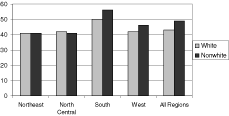
Fig. 1. Percentage of veterans using G.I. Bill education and training benefits as of 1950, by region and race.Source: Research Division, Coordination Services, Veterans Administration, “Benefits and Services Received by World War II Veterans under the Major Veterans Administration Programs,” 27, RG 51, ser. 39.20a, box 9, NARA. Data shows total usage rates from start of program through August 1950, when the survey was conducted.
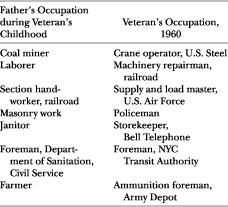
Table 1. Nonusers of G.I. Bill Education and Training Benefits, Black Males, World War II Veterans Survey
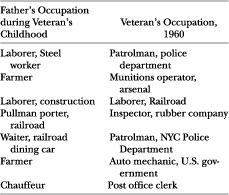
Table 2. Vocational Education Users of G.I. Bill, Black Males, World War II Veterans Survey
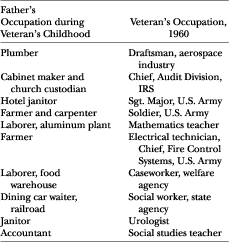
Table 3. Higher Education Users of G.I. Bill, Black Males, World War II Veterans Survey
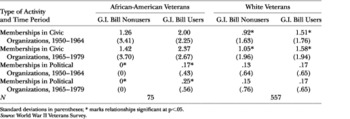
Table 4. Mean Level of Involvement in Selected Organizations, Users versus Nonusers of G.I. Bill Education and Training Benefits, African American and White Veterans
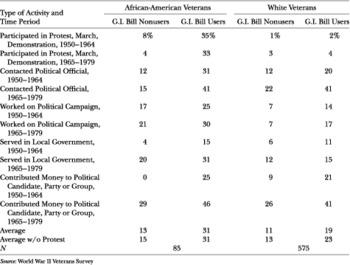
Table 5. Political Involvement of Users versus Nonusers of G.I. Bill Education and Training Benefits, African-American and White World War II Veterans
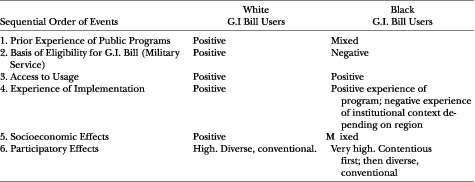
Table 6. Sequencing Matters: From G.I. Bill Education and Training Usage to Participatory Effects
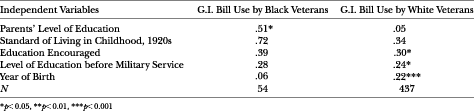
Appendix C. Determinants of Use of G.I. Bill for Education or Training: Results of Logistic Regression (Coefficient/Significance)
 You have
Access
- 24
- Cited by