In chronic cyanosis, hypoxaemia and increased intravascular haemoglobin contribute to deranged vascular function. Furthermore, compensatory erythrocytosis leads to a marked, chronic elevation in whole blood viscosity that has important effects on blood vessels resulting in altered haemodynamics, structure and vascular function. As a consequence, tissue perfusion may be reduced potentially impeding oxygen delivery to the tissues. Ultimately these changes lead to impaired cardiopulmonary performance and important causes of morbidity and mortality such as stroke and pulmonary thromboemboli.
Cyanosis impacts particularly on the inner lining cell layer of the vasculature, the endothelium. The vascular endothelium is far more than simply a barrier between the blood and the tissues. It is increasingly recognised as a complex regulatory structure that mediates (inter alia) vascular tone, angiogenesis, and haemostasis. Endothelium-derived nitric oxide plays a key role in regulating relaxation of vascular smooth muscle cells and hence blood flow. Dysfunction of the endothelium is central to the pathogenesis of many conditions. The most well characterised of these include atherosclerosis, hypertension and cardiac failure. Recent work has suggested that the endothelium may also be altered in various congenital heart disease syndromes including cyanosis.
In this article, we discuss the effects of chronic cyanosis and the concomitant alterations in hemorheology on the vasculature with particular focus on the endothelium and the important implications this presents for patients with cyanotic congenital heart disease.
Clinical significance of vascular disease in cyanotic congenital heart disease
A large body of literature exists showing the association between endothelial dysfunction and increased incidence of vascular events in adults,Reference Lerman and Zeiher1 as well as impaired exercise capacity, morbidity, and mortality in patients with chronic heart failure.Reference Fischer, Rossa and Landmesser2 This may be of particular relevance for young adults with cyanotic congenital heart disease, the most functionally impaired of the entire congenital heart disease group.Reference Engelfriet, Boersma and Oechslin3 Up to 14% of patients with cyanotic congenital heart disease have had a cerebrovascular eventReference Engelfriet, Boersma and Oechslin3–Reference Daliento, Somerville and Presbitero5 and this has been shown to impact profoundly on quality of life.Reference Daliento, Somerville and Presbitero5 Furthermore, radiologic investigation has shown that moderate-to-massive proximal pulmonary artery thrombosis occurs in almost a third of Eisenmenger patients, compared with zero in primary pulmonary hypertension.Reference Perloff, Hart, Greaves, Miner and Child6 The incidence of pulmonary artery thrombosis, not surprisingly, correlates with worsening hypoxaemia.Reference Silversides, Granton, Konen, Hart, Webb and Therrien7 It is possible that altered endothelial function has an important role in provoking these vascular events despite complex alterations in the coagulation pathway that incur a haemorrhagic tendency in the setting of cyanotic congenital heart disease.
The Euro Heart Survey on adult congenital heart diseaseReference Engelfriet, Boersma and Oechslin3 showed that cyanosed patients have a 5-year mortality of 12.6%, the highest of all adults with congenital heart disease. In adults with Eisenmenger syndrome, sudden death accounts for between a quarter and two-thirds of deaths. Autopsy series have shown that large artery rupture – most commonly pulmonary – is one of the most frequent causes of sudden death.Reference Engelfriet, Boersma and Oechslin3, Reference Niwa, Perloff, Kaplan, Child and Miner8, Reference Oechslin, Harrison, Connelly, Webb and Siu9 Although not well understood, the vascular remodelling that occurs in the arteries of these patients predisposes to aneurysmal dilatation and probably rupture.
The vascular effects of erythrocytosis and hyperviscosity
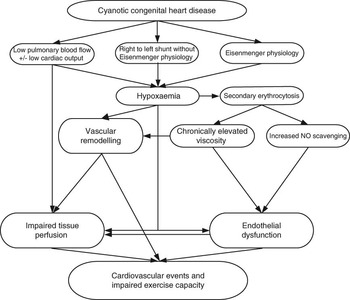
Cyanosis and consequent erythrocytosis profoundly influence blood viscosity. As factors affecting the rheological properties of blood impact directly on blood vessel function and on the propensity to thrombosis and embolism, this area is of major significance in chronic cyanosis (Fig 1).
Pathophysiology of cyanosis-related vascular dysfunction in the setting of congenital cardiac disease.

Erythrocytosis results in increased whole blood viscosity and wall shear stress
A fluid’s resistance to flow is defined as viscosity. As a fluid flows, parallel layers within it shift at different velocities depending on its characteristics. The velocity gradient between layers is defined as the shear rate and the force required to produce this gradient is called shear stress. Viscosity equals the ratio of wall shear stress to shear rate. Conversely, shear stress is a function of flow and viscous drag exerted on the vessel wall. In simple Newtonian fluids like water, viscosity remains constant. Blood is a much more complex fluid. Whole blood viscosity is largely determined by haematocrit; in large vessels a linear relationship exists between the logarithm of haematocrit and viscosity.Reference Pirofsky10 Therefore, in chronic cyanosis compensatory erythrocytosis leads to a marked elevation in whole blood viscosity.
The consequences of hyperviscosity depend on flow rates and on the size of the vessels through which flow is occurring. When shear rates are low, for example in the venous system, viscosity rises exponentially due to red blood cell aggregation and rouleaux formation, whereas at high shear rates like those exhibited in the arterial bed, blood viscosity remains fairly constant.Reference Stuart and Kenny11 Moreover, the viscous properties of blood in the microcirculation are vastly different from that of the large vessels. In the microcirculation, blood viscosity progressively decreases due to the Fahraeus–Lindqvist effect.Reference House and Lipowsky12, Reference Lipowsky and Firrell13
Blood viscosity decreases in the microcirculation
In 1929, Fahraeus described the phenomenon of decreasing blood viscosity in the microcirculation: “The explanation of these experimental results is undoubtedly the fact that blood, streaming in narrow tubes, is relatively much richer in plasma and poorer in corpuscles than it is when streaming in larger tubes”.Reference Fahraeus14 LipowskyReference Lipowsky, Usami and Chien15 also observed a steady decline in the haematocrit as blood coursed down the circulatory levels. As a consequence, blood viscosity also falls in small vessels up until a diameter of approximately 10 micrometres.Reference Lipowsky, Usami and Chien15–Reference Pries, Neuhaus and Gaehtgens17 These fluid biomechanics are also important because although overall one may have more red blood cells in an attempt to deliver more oxygen to the tissues, blood has less haemoglobin at the level of capillaries because it is relatively plasma rich. This is further compounded by an effect known as plasma skimming, whereby red blood cells are selectively excluded from smaller vessels.Reference Stuart and Kenny11
As capillaries get progressively narrower, red blood cells start to line up in single file, limited by the cross section of the vessel. This single file flow occurs earlier at lower haematocrit. Once the cells travel through single file, cell–cell interaction is reduced and viscosity becomes more dependent on the suspending medium, that is, plasma, and less on haematocrit.Reference Pries and Secomb18 In vivo studies have shown that once the diameter of the vessel approaches that of an undeformed red blood cell, approximately 2.7 micrometres, viscosity becomes heavily dependent on the deformability of the red blood cell that is required to squeeze through a limited surface area and less so on haematocrit or plasma viscosity.Reference Lipowsky, Usami and Chien15–Reference Pries, Neuhaus and Gaehtgens17
These complicated alterations in the characteristics of blood at different levels of the vascular bed result in important differences in the amount of shear stress exerted at the vessel wall. It is therefore likely that the impact of erythrocytosis differs markedly in large vessels compared with the microvasculature. It may be that while large vessels are exposed to chronically elevated shear stress due to compensatory erythrocytosis in cyanosis, the microvasculature is relatively less affected however this area has not been well investigated.
The effects of iron deficiency on red cell deformability and whole blood viscosity are controversial
Red blood cell deformability may be impaired in iron deficiency, a common association with cyanosis and compensatory erythrocytosis, particularly after therapeutic venesections. For over four decades there has been considerable debate in the literature regarding the relationship between whole blood viscosity and iron deficiency-related alterations in red blood cell morphology. Linderkamp et alReference Linderkamp, Klose and Betke19 studied cyanosed children and found that small reductions in mean cell volume significantly impaired the deformability of red blood cells, increased aggregation and increased viscosity. Others also showed that smaller mean cell volume or mean cell haemoglobin was associated with an exponential increase in whole blood viscosity.Reference Linderkamp, Klose and Betke19–Reference Milligan, MacNamee, Roberts and Davies21 One possible methodological flaw in studies that showed a negative correlation between red blood cell size and viscosity is that blood was corrected to a fixed haematocrit or packed cell volume before performing viscosity analysis. Since microcytic cells have less volume and haemoglobin, those samples would have had more cells than normocytic samples, which could have confounded results. Other groups that accounted for that factor found no such relationship between mean cell volume or mean cell haemoglobin and whole blood viscosity.Reference Pearson, Grimes, Slater and Wetherley-Mein22, Reference Van de Pette, Guthrie and Pearson23
Recent work by Broberg et alReference Broberg, Bax and Okonko24 also cast doubt on the widely held theory that iron deficiency results in increased blood viscosity in the setting of erythrocytosis. They compared 14 iron deficient individuals with cyanotic congenital heart disease over 16 years of age with 25 iron-replete individuals. All but two had Eisenmenger syndrome. Iron-deficient patients had a lower resting oxygen saturation, lower haemoglobin, higher red blood cell counts, and lower mean cell volume, but haematocrit was similar to the iron replete group. Whole blood viscosity was measured with a rotational viscometer, using a standardised technique at eight shear rates. Haematocrit was then adjusted to 45% by the addition of autologous plasma and viscosity was remeasured. They did not find a difference in blood viscosity between the two groups at any shear rate; iron studies and mean cell volume were unrelated to blood viscosity. Plasma viscosity was also similar between the two groups. Haematocrit was the sole predictor of whole blood viscosity at high and low shear rates. Interestingly higher haematocrit, above 65%, and haemoglobin correlated with improved exercise capacity, despite higher viscosity. Of note, although the iron-deficient group had depleted iron stores, less than or equal to 15 micrograms per litre, many of those subjects were not actually microcytic, as the average mean cell volume was 81 femtolitres. In addition, a major limitation of all research in this area is that in vitro data may not apply for in vivo conditions. Notwithstanding, the authors suggested that iron deficiency should be avoided in these patients as it results in lower haemoglobin and less oxygen carrying capacity for a given haematocrit.
Probably the major reason this controversy has sparked so much interest is the association of iron deficiency with increased risk of cerebrovascular events in patients with cyanotic congenital heart disease.Reference Ammash and Warnes4, Reference Iolster25, Reference Martelle and Linde26 A widely held view was, and perhaps still is, that iron deficiency reduces red cell deformability, increasing viscosity, and the risk of thrombosis, predisposing to stroke. Although the literature regarding iron deficiency and viscosity in this group is somewhat contradictory, iron depletion has also been linked to stroke in healthy children.Reference Maguire, deVeber and Parkin27 Thus, the mechanism for the increased risk of cerebrovascular events in iron-deficient people with cyanotic congenital heart disease remains unclear; however, iron deficiency probably does have negative consequences in cyanotic congenital heart disease. Although iron replacement for the prevention of ischaemic events is unproven, judicious supplementation may be justified in iron-deficient patients.
The effects of erythrocytosis on endothelial function
It has long been known that increased blood flow increases blood vessel diameter. This phenomenon is known as flow-mediated dilatation. Theoretical analysis has shown that blood viscosity is crucial in this process by its effects on blood shear rate and shear stress effects on the endothelium.
An acute increase in wall shear stress leads to vasodilation
In 1993, Koller et alReference Koller, Sun and Kaley28 showed in the rat cremaster muscle that dilatation occurred in response to an increase in shear rate, only if the endothelium was intact. Elegant work by Tsai et alReference Tsai, Friesenecker, McCarthy, Sakai and Intaglietta29 showed that arteriolar and venular flow increased more with a high viscosity transfusion fluid than with a low viscosity substitution, suggesting that the difference in wall shear stress, by an increase in viscosity, led to vasodilatation and improved perfusion in tissues.Reference Hudak, Jones, Popel, Koehler, Traystman and Zeger30 Other research has supported these findings.Reference Tsai, Friesenecker, McCarthy, Sakai and Intaglietta29, Reference Cabrales and Tsai31 It is now well established that wall shear stress is an important trigger for endothelial nitric oxide release and elevated endothelial nitric oxide synthase expressionReference Tsai, Acero and Nance32 leading to endothelium-dependent vasodilatation in large conduit arteries.Reference Cooke, Stamler, Andon, Davies, McKinley and Loscalzo33–Reference Celermajer, Sorensen and Gooch35
Vascular relaxation triggered by alterations in wall shear stress is a nitric oxide-mediated response
De Wit et alReference de Wit, Schafer, von Bismarck, Bolz and Pohl36 showed that dilatation in the arteriolar tree can be blocked using l-N Gmonomethyl arginine, an endothelial nitric oxide synthase inhibitor. Furthermore, their research suggested that it may be the change in wall shear stress rather than the overall value that elicits the vasodilatory nitric oxide-mediated response. This is of particular significance in patients with chronically elevated whole blood viscosity, as observed in cyanotic congenital heart disease. They calculated that the increase in wall shear stress was linearly related to the degree of arteriolar dilatation after administration of high molecular weight dextran, but wall shear stress eventually returned to control values, likely via compensatory mechanisms.
Wilcox et alReference Wilcox, Deng, Doll, Snellen and Welch37 showed in rats that prolonged administration of erythropoietin resulted in erythrocytosis and caused an increase in renal blood flow. With the administration of l-N Gmonomethyl arginine, there was an exaggerated rise in blood pressure and fall in renal blood flow suggesting that nitric oxide mediated the vasodilation observed. It is unlikely that the results were related to erythropoietin itself as its administration on cultured endothelial cells does not cause an elevation in endothelial nitric oxide synthase levels.Reference Lopez Ongil, Saura, Lamas, Rodriguez Puyol and Rodriguez Puyol38 In vitro studies have suggested that in fact erythropoietin reduces nitric oxide production and downregulates endothelial nitric oxide synthase expression.Reference Wang and Vaziri39 Of note, in most patients with chronic cyanosis, erythropoietin levels rise only transiently in response to hypoxia, initiating an appropriate rise in haemoglobin. Erythropoietin levels only remain elevated in the face of very severe chronic cyanosis or an attenuated rise in haemoglobin, for example, in the case of iron deficiency.Reference Gidding and Stockman40, Reference Tyndall, Teitel, Lutin, Clemons and Dallman41 This interesting relationship may provide insight into the link between iron deficiency and stroke.
Acute and chronic alterations in shear stress have differing effects on the vasculature
While an acute increase in blood viscosity may cause an increase in basal nitric oxide release, vasodilation, and increased perfusion, a chronic elevation, such as that seen in compensatory erythrocytosis, may have a more complex effect resulting in vascular remodelling with increased vessel diameter to normalise shear stress on the vessel wallReference Ogunshola, Djonov, Staudt, Vogel and Gassmann42 and possibly a blunted response to mechanical stimuli, despite at least normal baseline nitric oxide release.Reference Belhassen, Pelle and Sediame43 Another important consideration in the setting of raised haematocrit is the possibility that haemoglobin, both free and intracellular, are effective at scavenging nitric oxide.Reference Gillespie and Sheng44–Reference Rich, Roos, Anderson, Urich, Daugherty and Johns46 It is therefore possible that in secondary erythrocytosis, although shear stress is higher, vascular resistance is elevated through haemoglobin-related inactivation of endothelium-derived nitric oxide.
Haematocrit may affect blood vessel function through nitric oxide scavenging
A considerable amount of research has investigated the effects of haematocrit on endothelium-dependent vasodilation. Madsen and co-authorsReference Madsen, Scheuermann Freestone, Neubauer, Channon and Clarke47 found that, in normal subjects, flow-mediated vasodilation correlated inversely with haemoglobin concentration, independent of resting blood flow and vessel diameter. Flow-mediated vasodilation in subjects with a haemoglobin less than 14.1 grams per decilitre was more than twice that of subjects with higher haemoglobin. In patients with type 2 diabetes and concomitant baseline endothelial dysfunction, this relationship was not observed. Since the findings of this work are the reverse of what would be expected from a reduction in shear stress due to lowered haemoglobin levels, the authors concluded that another mechanism must exist, such as reduced nitric oxide scavenging in the setting of lower haemoglobin concentration, even within the normal range.
Other research in patients with chronic anaemia has suggested that enhanced basal nitric oxide release may occur, contributing to low systemic vascular resistance. This is attenuated after blood transfusion, despite a concomitant increase in shear stress.Reference Anand, Chandrashekhar, Wander and Chawla48 Defouilloy et alReference Defouilloy, Teiger and Sediame49 showed that the vasodilator activity of acetylcholine varies inversely with the level of circulating haemoglobin. Vascular acetylcholine response is mediated by endothelium-derived nitric oxide. Its effects were shown to be less marked in hypoxic polycythemic patients compared with hypoxic normocythemic patients. Patients with erythrocytosis subjected to isovolemic haemodilution became more responsive to acetylcholine after the intervention. In direct contradiction, Giannattasio et alReference Giannattasio, Piperno, Failla, Vergani and Mancia50 measured flow-mediated vasodilation in people with haemochromatosis before and after isovolemic hemodilution. They showed a marked fall in vasodilatation after the intervention that they hypothesised was due to reduced shear stress from lowered haematocrit. The true effects of haematocrit on endothelial function therefore remain unclear.
Oldershaw and SuttonReference Oldershaw and Sutton51 and Rosenthal et alReference Rosenthal, Nathan, Marty, Button, Miettinen and Nadas52 showed that, in people with cyanotic congenital heart disease and severe erythrocytosis – haematocrit 66% or 73.5% respectively – isovolemic red cell reduction resulted in reduced total peripheral resistance and increased cardiac output, stroke volume, systemic blood flow, and oxygen delivery. The former study also showed an increase in cardiac output with exercise after the intervention. This research suggests that high haematocrit in cyanosis has a negative effect on blood vessels causing vasoconstriction, supporting the theory of nitric oxide scavenging with raised haemoglobin. This is difficult to reconcile with the findings of Broberg et alReference Broberg, Bax and Okonko24 (discussed above) who found in their study that haematocrit greater than 65% was associated with improved exercise performance. Although it seems logical that greater erythrocytosis would result in improved oxygen delivery and wall shear stress leading to improved perfusion, at some point this compensatory mechanism may become an encumbrance to flow.
The ability of haemoglobin to inhibit the effects of a previously unidentified endothelium-derived relaxing factor aided in the discovery that this molecule was actually nitric oxide. In more recent times the role of haemoglobin in the elimination of nitric oxide and its physiological mechanisms have been hotly debated in the literature.Reference Gladwin, Lancaster, Freeman and Schechter53, Reference Gross and Lane54 The major way in which nitric oxide is inactivated in the vascular system is via oxidation; nitric oxide reacts with oxygenated haemoglobin to produce methemoglobin. The kinetics of this reaction in vitro using free haemoglobin are so rapid that nitric oxide could not possibly have time to exert any significant effect on the smooth muscle cells of blood vessels. However, it appears that several characteristics of blood slow the reaction in vivo. It is likely that some aspect of encapsulation of haemoglobin in the red blood cell stabilises nitric oxide in whole blood; the cell membrane itselfReference Han, Pelling, Jeon, Gimzewski and Liao55, an unstirred layer around the red blood cellReference Liu, Samouilov, Lancaster and Zweier56 and laminar flow redirecting red blood cells away from the endotheliumReference Liao, Hein, Vaughn, Huang and Kuo57 are possible explanations. Nitric oxide may also be stored somehow within the red blood cell and delivered to areas with low oxygen content. Proposed storage compounds include nitrite and S-nitrosohemoglobin. This is currently an area of active research and controversy.Reference Kim-Shapiro, Schechter and Gladwin58
Endothelial function and cyanotic congenital heart disease
Endothelial dysfunction describes impairment of the endothelium-dependent vasodilatation caused by a loss of nitric oxide bioactivity. During vascular testing this is manifested as impaired flow-mediated dilatation,Reference Celermajer, Sorensen and Gooch35 but preserved nitroglycerin-induced vasodilatation in large vessels and altered small vessel function that can be assessed with endothelium-dependent pulse amplitude testing.Reference Bonetti, Pumper, Higano, Holmes, Kuvin and Lerman59
Endothelial dysfunction has been shown to predict poor outcome and performance status in cardiac failure patientsReference Andreassen, Kvernebo, Jorgensen, Simonsen, Kjekshus and Gullestad60, Reference Katz, Hryniewicz and Hriljac61, but its role in cyanotic congenital heart disease is yet to be elucidated. During exercise, blood flow to working muscles must increase to maintain metabolic demand. Endothelium-dependent vasodilation probably plays a key role in blood distribution during physical activity.Reference Pohl, Holtz, Busse and Bassenge62, Reference Ramsey, Goodfellow, Jones, Luddington, Lewis and Henderson63 It has been suggested that the increased acidosis and widened arteriovenous oxygen gradient observed in the exercising skeletal muscles of patients with chronic cardiac failure are the result of reduced blood flow that could be related to endothelial dysfunction.Reference Maiorana, O’Driscoll and Dembo64, Reference Hambrecht, Hilbrich and Erbs65 Altered skeletal muscle bioenergetics have also been shown in cyanotic congenital heart diseaseReference Adatia, Kemp, Taylor, Radda, Rajagopalan and Haworth66, Reference Miall-Allen, Kemp, Rajagopalan, Taylor, Radda and Haworth67; however the contribution of altered blood flow to these observations is unexplored.
Oechslin et alReference Oechslin, Kiowski, Schindler, Bernheim, Julius and Brunner-La Rocca68 assessed endothelial function in 11 patients with cyanotic congenital heart disease. They measured responses to acetylcholine, nitroprusside, and l-N Gmonomethyl arginine. Resting forearm blood flow was lower in the patient group compared with controls. Although there was a similar response to nitroprusside that works via a nitric oxide independent pathway, there was a markedly reduced response to acetylcholine. Furthermore, blocking endothelial nitric oxide synthase with l-N Gmonomethyl arginine produced less change in the patient group. The degree of hypoxaemia correlated with the degree of endothelial dysfunction reflecting reduced basal bioavailability of nitric oxide either through reduced endothelial nitric oxide synthase expression despite a chronic elevation in shear stress or increased consumption of nitric oxide. Reduced endothelial nitric oxide synthase expression has been shown in the cardiac tissue of patients with cyanotic congenital heart diseaseReference Ferreiro, Chagas and Carvalho69 and in the aortic endothelium of hypoxic rats.Reference Toporsian, Govindaraju, Nagi, Eidelman, Thibault and Ward70
Apart from shear stress, it is well established that oxygen is an important local regulator for vascular tone. Nitric oxide is the major mediator of vasodilatation in response to acute hypoxiaReference Armstead71, Reference Nase, Tuttle and Bohlen72; however, chronic severely reduced oxygen levels lead to vasoconstriction and this also appears to be via an endothelium-dependent mechanism.Reference Pape, Beuchard, Guillo, Allain and Bellissant73 The compensatory factors that should theoretically cause vasodilatation via an increase in endothelial nitric oxide production are outweighed by other mechanisms, that may include nitric oxide scavenging and adaptation to chronicity.
Idiopathic pulmonary arterial hypertension is known to be associated with peripheral endothelial dysfunctionReference Wolff, Lodziewski, Bollmann, Opitz and Ewert74 and this may also be relevant in Eisenmenger syndrome, where pulmonary arterial hypertension is secondary to congenital heart disease. It is unknown to what extent the impairment is related to hypoxia, secondary erythrocytosis, reduced cardiac output, or other as yet unidentified factors. Although it sounds enticing to further characterise this issue by comparing cyanosed patients to those with polycythaemia rubra vera, patients with this myeloproliferative disorder have intrinsic endothelial dysfunction even after cytoreduction.Reference Karakantza, Giannakoulas and Zikos75–Reference Neunteufl, Heher, Stefenelli, Pabinger and Gisslinger77 Other interesting comparisons might include people with high affinity haemoglobin or between patients with Eisenmenger syndrome and those with low pulmonary blood flow; however, such studies have not been performed.
Hypoxia initiates other alterations in endothelial function inducing a pro-thrombotic, pro-coagulant state.Reference Michiels, Arnould and Remacle78 A detailed discussion of the molecular mechanisms that accompany these processes is outside the scope of this article but have been reviewed elsewhere.Reference Ten and Pinsky79 It has been shown that the antithrombotic thrombomodulin/protein C/protein S pathway is downregulated in cyanotic congenital heart disease, probably through increased wall shear stress,Reference Malek, Jackman, Rosenberg and Izumo80, Reference Horigome, Murakami, Isobe, Nagasawa and Matsui81 yet another eventual consequence of chronic cyanosis on the endothelium. Conversely, abnormal haemostasis, a well-recognised and significant clinical problem in patients with cyanotic congenital heart disease, probably follows through mechanisms that may include consumption of clotting factors and large von Willebrand factor multimers.Reference Territo, Perloff, Rosove, Moake and Runge82, Reference de PS, Maeda, Bydlowski and Lopes83 Hypoxia also stimulates angiogenic factors such as vascular endothelial growth factor and basic fibroblast growth factor. Elevated levels of these substances probably play a crucial role in the development of vascular malformations frequently seen in cyanotic congenital heart disease.Reference Starnes, Duncan and Kneebone84
Vascular remodelling
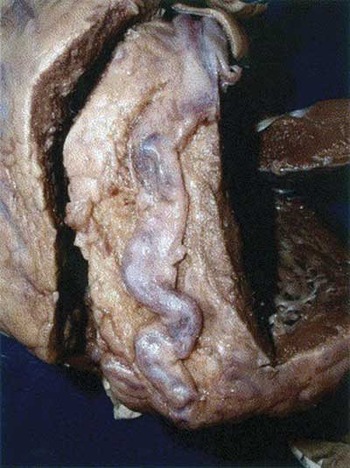
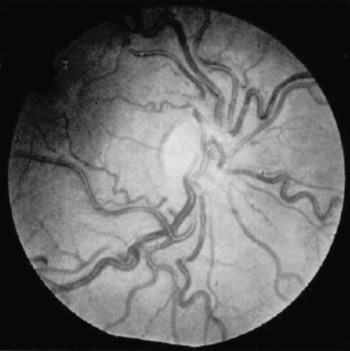
Dilated, tortuous, and even aneurysmal vessels are observed in cyanotic congenital heart disease and have been described in the vascular beds of the pulmonaryReference Daliento, Somerville and Presbitero5, Reference Niwa, Perloff and Bhuta85, coronaryReference Dedkov, Perloff, Tomanek, Fishbein and Gutterman86–Reference Perloff88 (Fig 2), and retinalReference Mansour, Bitar and Traboulsi89, Reference Petersen and Rosenthal90 (Fig 3) circulations. The changes are far in excess of that possible with endothelium-dependent vasodilatation and are the result of vascular remodelling that may be a response to hypoxaemia and chronically elevated shear stress. Necropsy studies have demonstrated that the coronary arteries of patients with cyanotic congenital heart disease show a loss of medial smooth muscle cells, increased medial collagen and extracellular matrix, disrupted internal elastic lamina, and intimal fibromuscular dysplasia.Reference Chugh, Perloff, Fishbein and Child91 Furthermore, in the microcirculation, coronary arterioles are also dilated resulting in increased basal coronary flow in an attempt to maintain adequate cardiac oxygenation. Interestingly these patients are relatively protected from the development of atherosclerosis.Reference Dedkov, Perloff, Tomanek, Fishbein and Gutterman86, Reference Chugh, Perloff, Fishbein and Child91
Striking gross appearance of an ectatic, tortuous left anterior descending coronary artery in a 45-year-old woman with an Eisenmenger ventricular septal defect. Reproduced from, PerloffReference Perloff88, Page 84, copyright 2004, with permission from Elsevier.

A retinal photograph from a patient with cyanotic congenital heart disease. The vessels are tortuous and the veins appear dilated. Reproduced from, Petersen and RosenthalReference Petersen and Rosenthal90, Page 245, copyright 1972, with permission from the American Academy of Pediatrics.

While vascular remodelling appears to be an adaptive response, vascular rupture often has catastrophic consequences and is an important cause of mortality in the cyanotic congenital heart disease group (discussed above).Reference Daliento, Somerville and Presbitero5, Reference Niwa, Perloff, Kaplan, Child and Miner8, Reference Oechslin, Harrison, Connelly, Webb and Siu9
Cyanosis and the retinal circulation
Papilloedema, retinal vessel dilation, and tortuosity are observed in patients with cyanotic congenital heart disease (Fig 3).Reference Mansour, Bitar and Traboulsi89, Reference Petersen and Rosenthal90, Reference Crowe, Kohner, Owen and Robinson92–Reference Harino, Motokura, Nishikawa, Fukuda, Sasaoka and Grunwald94 It is unclear whether these changes are the result of secondary erythrocytosis, venous stasis, or hypoxaemia. Blood vessels that supply oxygen to the brain and retina arise from the internal carotid artery and similar auto-regulatory processes probably exist in those branches.Reference Eperon, Johnson and David95 Assessing the retinal circulation therefore may provide some insight into the workings of the cerebral circulation.
The retina is one of the most metabolically active tissues in the body. It requires more oxygen per gram of tissue than even the brain.Reference Ames96 It stands to reason that in disease conditions resulting in chronic severe hypoxia, the retina could be one of the most significantly affected tissues.
The retinal circulation is comprised of choroidal vessels that supply the fairly avascular outer retina, largely photoreceptors, and retinal vessels that perfuse the inner retina. The choroidal circulation in contrast to the retinal circulation has low oxygen extraction and an extremely high flow rate that is much less sensitive to changes in the partial pressure of oxygen in arterial blood. Studies in animals have indicated that the inner retina has the remarkable ability to dilate sufficiently to facilitate a fairly constant oxygen delivery, as long as the partial pressure of oxygen in arterial blood is greater than 35 millimetres of mercury.Reference Eperon, Johnson and David95 In the outer retina, hypoxia results in a steep reduction in choroidal partial pressure of oxygen because of the failure of choroidal blood flow to increase during hypoxia.Reference Ahmed, Pulfer and Linsenmeier97 More recent work in mountain climbers has shown that the choroidal vessels only dilate once a climber reaches extreme altitude.Reference Bosch, Merz and Barthelmes98 The most energy-requiring process that occurs in the photoreceptors is the maintenance of vision in the dark.Reference Wangsa-Wirawan and Linsenmeier99 Even during normoxic conditions, vision during darkness is limited by oxygen delivery as the partial pressure of oxygen around photoreceptors approaches zero.Reference Linsenmeier and Braun100
Retinal changes in relation to several conditions that result in reduced arterial oxygen saturation have been described. Chronic severe hypobaric hypoxia at high altitude causes retinal arterial and venous vessels to dilate. This effect reverses rapidly on descent.Reference Bosch, Merz and Barthelmes98 In a high-altitude environment, arterial oxygen saturations drop dramatically due to reduced partial pressure of oxygen in the atmosphere. High-altitude retinopathy is a condition characterised by engorgement of the retinal veins with occasional papilloedema and vitreous haemorrhages.Reference Bosch, Barthelmes and Merz101–Reference Shults and Swan104 This condition is most commonly seen in tourists unaccustomed to high altitude, although acclimatised local people develop changes identical to that of high-altitude retinopathy if exposed to extremely high altitude.Reference Droma, Hanaoka and Basnyat105, Reference Clarke and Duff106 The papilloedema observed in altitude sickness is thought to be related to cerebral oedema that may be the result of increased perfusion in response to hypoxia along with cytotoxic oedema.Reference Wilson, Newman and Imray107
Retinopathy associated with pulmonary hypertension has also been reported and some have suggested that the underlying aetiology is venous hypertension.Reference Hammond, Chauhan and Stanford108, Reference Van Camp, Renard, Verougstraete and Bernard109 Advanced hypercapnoeic respiratory failure has long been associated with raised intracerebral pressure and secondary papilloedema. Elevated carbon dioxide levels cause greater cerebral vasodilatation that hypoxiaReference Kety and Schmidt110, Reference Lennox and Gibbs111; however, it is uncertain whether hypoxia, secondary erythrocytosis, and venous stasis are also important contributors in this condition.
In 1925, de Schweinitz and WoodsReference De Schweinitz and Woods112 described the retinal changes of polycythaemia rubra vera. Regarding the venular dilatation they astutely proposed, “it is possible that such changes in the erythrocytes and blood serum, or some unknown toxic substance liberated by the hyperplasia of the erythroblastic bone marrow, may have a direct action on the vessel wall, or may have a depressor effect on the vasomotor autonomics and so be responsible for the dilatation of the veins”. The retina in polycythaemia rubra vera and other hyperviscosity syndromes such as Waldenstrom’s macroglobulinaemia can have a similar appearance to that observed in high-altitude retinopathy and cyanotic congenital heart disease.Reference Feman and Stein113–Reference Morley and Heier115
In 1972, Petersen and RosenthalReference Petersen and Rosenthal90 described a group of 83 patients with cyanotic congenital heart disease; 52 patients exhibited some form of retinopathy and 12 had evidence of papilledema. Severe retinopathy or optic disc swelling was only present in patients with oxygen saturation less than 86% and haematocrit greater than 49%. Lumbar puncture was performed in five patients with severe retinopathy, three of them with papilloedema. Central spinous fluid pressure was at the upper limit of normal in three and normal in the others. Brain examination at necropsy was unremarkable in two patients who died during the study. There did not appear to be a relationship between retinal disease and partial pressure of carbon dioxide in the arterial blood, central venous pressure, the type of malformation or the patient’s age. Harino et alReference Harino, Motokura, Nishikawa, Fukuda, Sasaoka and Grunwald94 studied the retina of two patients with Eisenmenger syndrome with fundoscopy and angiography. Microaneurysms and multiple small blot haemorrhages in the temporal periphery were observed. Fluorescein angiography revealed capillary and venous dilatation, tortuosity and microaneurysms. Other groups have reported similar changes.Reference Crowe, Kohner, Owen and Robinson92, Reference Tsutsumi116 Mansour et alReference Mansour, Bitar and Traboulsi89 described the ocular pathology of 240 patients with congenital heart disease; 87 of these were cyanotic. They found that retinal vascular tortuosity was related to oxygen saturation. A smaller study found that the most severe retinal abnormalities were seen with the highest haematocrit and that retinopathy resolved with reparative surgery.Reference Kohner, Allen, Saunders, Emery and Pallis93
The eye and endothelial assessment
The retinal vessels may provide useful information about endothelial functionReference Michelson, Welzenbach, Pal and Harazny117, Reference Michelson, Patzelt and Harazny118 and this is of particular significance given their close relationship with the cerebral circulation. Retinal vascular calibre, in particular larger venular calibre, has been associated with obesity, diabetes mellitus, cigarette smoking, dyslipidaemia as well as systemic markers of inflammation – Il-6, hsCRP, plasma fibrinogen – and markers of endothelial dysfunction – sICAM-1, PAI-1.Reference Wong, Islam and Klein119–Reference Ikram, de Jong and Vingerling121
In an elderly population, Wong et alReference Wong, Kamineni and Klein122 also showed that larger retinal venular calibre is associated with a higher risk of ischaemic cardiac disease and stroke after adjustment for other traditional risk factors. The Atherosclerosis Risk in Communities studyReference Wong, Klein and Sharrett123, Reference Wong, Klein and Couper124 of middle-aged people also indicated that a smaller arteriolar or larger venular diameter was associated with stroke and coronary artery disease. Furthermore, in the Beaver eye Dam studyReference Wang, Liew and Wong125 and Blue Mountains eye studyReference Wong, Klein and Nieto126 smaller arteriolar–venular calibre ratio was associated with cardiovascular mortality in younger people.
Kawagishi et alReference Kawagishi, Matsuyoshi and Emoto127 showed that not only brachial artery, but also renal and retinal endothelium-dependent vascular responses (assessed with Doppler ultrasound) to intravenous infusion of l-arginine are impaired in type 2 diabetes. Retinal blood flow increases with flickering light; this is due to a nitric oxide-dependent pathway.Reference Michelson, Patzelt and Harazny118 Delles et alReference Delles, Michelson, Harazny, Oehmer, Hilgers and Schmieder128 found that in normotensive subjects l-N Gmonomethyl arginine reduced retinal capillary flow but had no effect in hypertensive patients. Furthermore, in the control group flickering light increased blood flow velocity but had no effect in the hypertensive group indicating impaired bioavailability of endothelial nitric oxide. Interestingly, candersartan, an angiotensin receptor blocker, enhanced retinal vessel responses in hypertensive patients.
Therapeutic improvement of endothelial function
Substances that improve endothelial function could interfere with, or slow the process of vascular injury in chronic cyanosis. In fact, as alluded to above, some drugs have already been shown to improve endothelial function in other disease states. Angiotensin-converting enzyme inhibitors have been shown to reduce proteinuria in patients with cyanotic congenital heart diseaseReference Hida, Wada and Yamasaki129, Reference Fujimoto, Matsushima and Tsuzuki130 and in experimental models, this class of drugs seems to ameliorate hypoxia-induced apoptosis and upregulate endothelial nitric oxide production.Reference Fujita, Manabe and Yoshida131 The beneficial role of nitric oxide is apparent from experiments in rats, where treatment with l-N Gmonomethyl arginine, a selective inhibitor of endothelial nitric oxide sythase, reduces levels of nitric oxide and leads to larger infarct size after a cerebrovascular insult. Angiotensins, by contrast, are damaging; angiotensin-1 receptor-deficient animal models show a smaller infarct size after similar injury.Reference Walther, Olah and Harms132 In humans, angiotensin receptor blockers and angiotensin-converting enzyme inhibitors can improve endothelial function in patients with hypertension, diabetes and cardiac failure, among others.Reference Creager and Roddy133, Reference O’Driscoll, Green, Maiorana, Stanton, Colreavy and Taylor134
Recent data have suggested that rosuvastatin reduces the risk of symptomatic venous thromboembolism in healthy people (with high C-reactive protein levels). It is possible that this effect is mediated via an improvement in endothelial function.Reference Glynn, Danielson and Fonseca135 Venous thrombosis is of particular concern in the cyanotic congenital heart disease group as cerebral venous sinus thrombosis is a major cause of stroke in infants and childrenReference Phornphutkul, Rosenthal, Nadas and Berenberg136 and many patients have right to left shunts that facilitate paradoxical emboli.
Conclusions
Cyanotic congenital heart disease is associated with stroke and impaired muscle performance. Furthermore thrombosis and vascular rupture are also potentially devastating consequences. It appears that a complex interplay exists in patients with chronic cyanosis between the effects of compensatory erythrocytosis and hypoxaemia on vessel function and structure. Excessively high haematocrit reduces cardiac output and tissue perfusion but on the other at least moderate erythrocytosis is beneficial, conferring superior exercise capacity and oxygenation. Chronically elevated wall shear stress combined, inter alia, with hypoxaemia and raised intravascular haemoglobin lead to endothelial dysfunction and vascular remodelling in patients with chronic cyanosis. Further research is warranted in this area and would be particularly significant for patients with cyanotic congenital heart disease as understanding the mechanisms by which endothelial dysfunction occurs may eventually lead to therapeutic advances that could reduce the risk of stroke and vascular thromboemboli, as well as improve cardiopulmonary performance and longevity.