Introduction
Noonan syndrome, with a prevalence of 1 in 1000–2500 live births, is a genetic multi-system disorder. Characteristic findings include typical craniofacial features, CHD (pulmonary valve defect, hypertrophic cardiomyopathy, and atrial septal defect), postnatal growth retardation, variable cognitive delay, cryptorchidism, skeletal, and other anomalies. Reference Sun, Xie, Wang and Zhang1–3 Multiple genes have been found to cause Noonan syndrome.4 Leucine zipperlike transcription regulator 1 was first associated with the aetiology of Noonan syndrome in 2014.5
So far, few specific reports are available in the literature regarding the spectrum of ventricular arrhythmias in leucine zipperlike transcription regulator 1 mutations. Here we present a family with Noonan syndrome caused by a heterozygous variant in leucine zipperlike transcription regulator 1, and hypothesise that mutations in leucine zipperlike transcription regulator 1 could contribute to the development of ventricular arrhythmias.
Case presentation
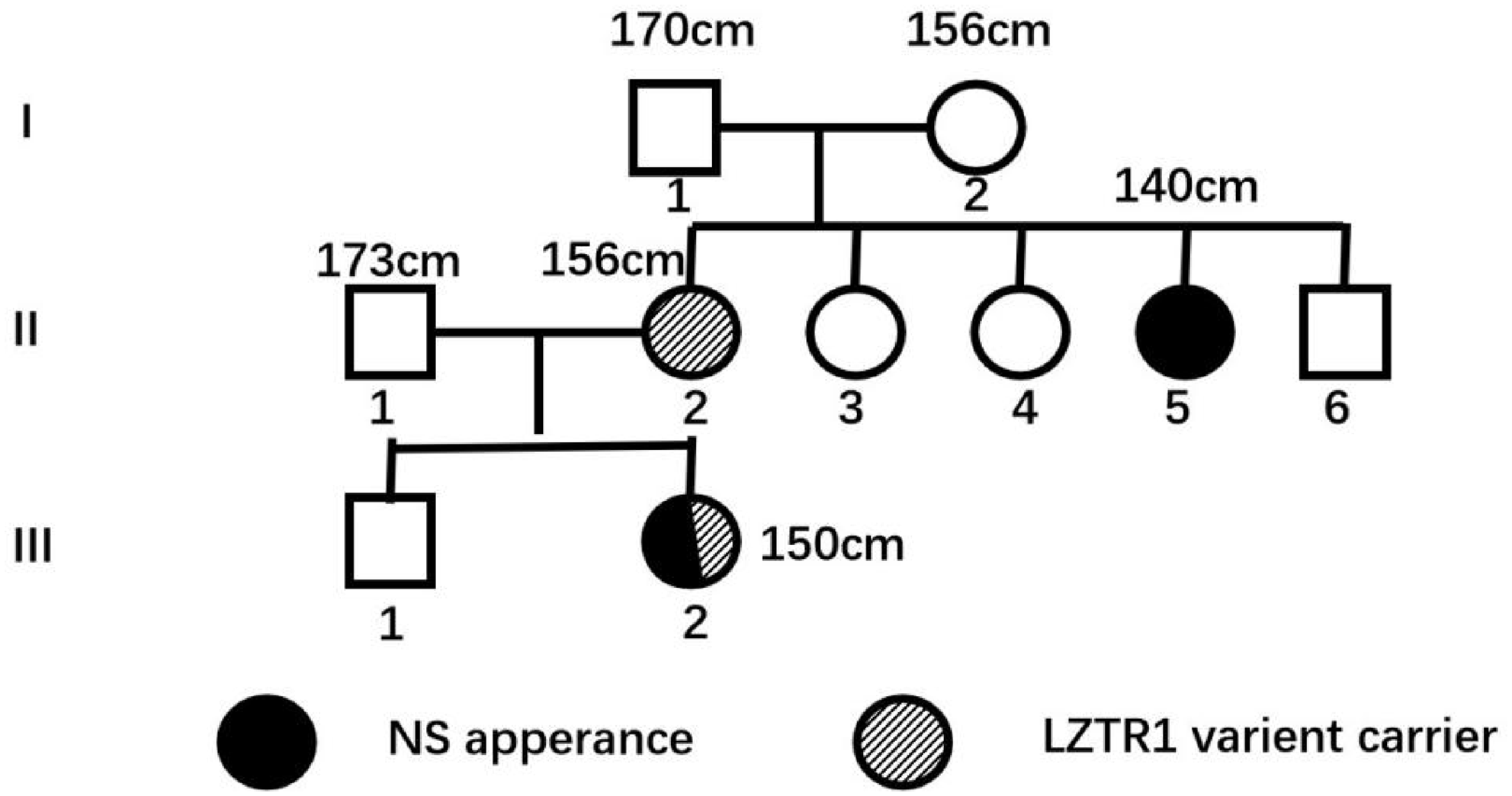
Patient 1: The proband (Figure 1, III-2), a 15-year-old girl, was admitted to our hospital because of CHD. As the first child of non-consanguineous parents, she was born at 38 weeks of gestation via caesarean. The birth weight was 3800g. No prenatal or birth complications were noted. She was found to have pectus excavatum, facial features (large eyes, low-set cupped ears) and CHDs (left ventricular hypertrophy with left ventricular outflow tract obstruction) at 4 months old. She showed feeding difficulty and mild growth retardation since then, and now her height, weight, and body mass index were 150 cm (− 2SD), 39 kg (− 2SD), and 17.3 kg/m2, according to the standard reference values.12 She started to experience chest tightness and fatigue at the age of 14.
Electrocardiography.

Physical examination
She showed the following typical features of Noonan syndrome: low-set, oval-shaped, posteriorly rotated ears, a short neck, scoliosis, myopia, and hearing loss.
Auxiliary examination: NT-proBNP: 1844pg/mL (reference interval: 0–300pg/mL). The IGF-1 level was 156 ng/mL (reference interval: 191–496ng/mL). The electrocardiogram test showed left ventricular hypertrophy with left ventricular outflow tract obstruction (EF68%, LA37 mm, LV30 mm, IVS17 mm, LVPW9 mm). Cardiac MRI: interventricular septal hypertrophy, left and right ventricular outflow tract stenosis, no fibrosis detected. X-rays showed scoliosis and her bone age was 15 years old. In addition, the tumour markers, hormone levels of the adrenal gland, thyroid gland, and gonad were normal. The electrocardiogram showed complicated ventricular arrhythmia (ventricular premature beat, ventricular tachyarrhythmia, and accelerated idioventricular rhythm, Figure 2) and bundle branch block. The 24-hour Holter monitoring (baseline) documented a total of 5257 PVCs. Premature Ventricular Contractions (PVCs) occurred in bigeminy (736) and trigeminy (2), with 443 episodes of non-sustained Ventricular tachycardia (VT) (3–29 beats, rate 57–170 bpm) triggered by PVCs. No sustained VT or ventricular fibrillation was detected. No abnormalities were found during the ultrasound examination of liver, kidneys, uterus, or ovaries. The exome sequencing revealed a mutation in leucine zipperlike transcription regulator 1. She was diagnosed with Noonan syndrome according to the clinical manifestation and laboratory tests.
The pedigree of the proband and her family. Patient 1: the proband (III-2), typical features of NS: low-set, oval-shaped, posteriorly rotated ears, a short neck, scoliosis, myopia and hearing loss, pectus excavatum, facial features (large eyes, low-set cupped ears), congenital heart defects (left ventricular (LV) hypertrophy with left ventricular outflow tract obstruction), feeding difficulty and mild growth retardation. The exome sequencing revealed a mutation in LZTR1. Patient 2 (II-5) was the aunt of patient 1. She died suddenly at the age of 38, showing growth retardation, typical phenotype of NS: downslanting palpebral fissures, low-set, oval-shaped, posteriorly rotated ears, a short broad nose with a depressed root and full tip, a deeply grooved and long philtrum, a short neck, scoliosis, and mild hypertrichosis. Suspected patient 3 (II-2) was the mother of the proband and the old sister of patient 2. She had mild phenotype of NS: a short neck. The exome sequencing revealed a mutation in LZTR1.

The patient’s therapeutic plan was designed to address three interconnected targets and the rationale for each agent was as follows: (1) Bisoprolol: reduce myocardial contractility, slow heart rate, and suppress ectopy—key for lowering arrhythmia burden and alleviating dynamic outflow tract obstruction. (2) Spironolactone: As an aldosterone antagonist, it reduces myocardial fibrosis (detected via late gadolinium enhancement [LGE] on cardiac MRI) and prevents maladaptive remodelling, with proven benefits in Hypertrophic Cardiomyopathy (HCM) and heart failure with preserved ejection fraction. (3) Empagliflozin: SGLT2 inhibitors like empagliflozin reduce cardiovascular events in heart failure with preserved ejection fraction by improving ventricular compliance, reducing preload, and enhancing diuresis—relevant here given the patient’s elevated NT-proBNP and exercise intolerance. (4) Tolasemide: Reduces preload, alleviating left ventricular outflow tract obstruction, and symptoms of congestion. (5) Potassium chloride: electrolyte balance. Prescribed to prevent hypokalaemia (a known arrhythmia trigger) secondary to tolasemide-induced diuresis. Baseline serum potassium normalised with supplementation, reducing proarrhythmic risk. One month after treatment, the patient has no more chest tightness or fatigue. The NT-proBNP decreased from 1844 to 235 pg/ml (reference interval: 0–300pg/mL), and 6-minute walk test increased from 450m (little chest tightness after activity) to 500m (without fatigue).
Patient 2 (Figure 1, II-5) was the aunt of patient 1. She died suddenly at the age of 38. She was born at 38 weeks of gestation via vaginal delivery. No prenatal or birth complications were noted. She showed significant growth retardation since the newborn stage. When she was 38 years old, her height and weight were 140 cm and 31.8 kg. She showed a typical phenotype of Noonan syndrome: downslanting palpebral fissures, low-set, oval-shaped, posteriorly rotated ears, a short broad nose with a depressed root and full tip, a deeply grooved and long philtrum, a short neck, scoliosis, and mild hypertrichosis. Unfortunately, she had no auxiliary examination. The patient was also diagnosed with Noonan syndrome clinically.
Suspected patient 3 (Figure 1, II-2) was the mother of the proband and the old sister of patient 2. Her height was 156 cm. She showed the mild phenotype of Noonan syndrome: a short neck. She didn’t show mental retardation, nor did she have any diseases of the heart, genitourinary system, and skeletal system. The exome sequencing revealed a mutation in leucine zipperlike transcription regulator 1.
Methods
Case selection
The 15-year-old proband was identified at Fuwai Hospital Chinese Academy of Medical Sciences, where she was admitted because of CHD. Inclusion criteria for this case report were: (1) clinical diagnosis of Noonan syndrome based on established phenotypic criteria; (2) identification of a novel leucine zipperlike transcription regulator 1 variant via genetic testing; (3) presence of ventricular arrhythmia confirmed by electrocardiography and 24-hour Holter monitoring; and (4) availability of comprehensive clinical, imaging (echocardiography and cardiac MRI), and genetic data.
Literature search strategy
To contextualise the novel leucine zipperlike transcription regulator 1 variant (c.313delT) and the association between leucine zipperlike transcription regulator 1 mutations, Noonan syndrome, and ventricular arrhythmia, we conducted a systematic literature search in PubMed, Embase, and Google Scholar up to January 2025. Search terms included combinations of “Noonan syndrome,” “LZTR1,” “mutation,” “ventricular arrhythmia,” “hypertrophic cardiomyopathy,” and “RASopathy.” Reference lists of retrieved articles were also hand-searched for additional relevant studies. Inclusion criteria for literature synthesis were: (1) peer-reviewed studies reporting leucine zipperlike transcription regulator 1-related Noonan syndrome cases; (2) studies describing cardiac phenotypes (including arrhythmias and structural heart disease) in leucine zipperlike transcription regulator 1-mutant patients; and (3) studies addressing the molecular mechanisms of leucine zipperlike transcription regulator 1 in Ras-mitogen-activated protein kinase pathway regulation. Exclusion criteria included non-peer-reviewed reports, studies focusing on other RASopathies without leucine zipperlike transcription regulator 1 involvement, and articles not published in English.
Discussion and conclusion
In this study, we identified a novel heterozygous variant c.313delT, under accession number NM_006767.4 in the leucine zipperlike transcription regulator 1 gene. No other variants were detected in the leucine zipperlike transcription regulator 1 gene or in the other RASopathy genes in the proband. The splicing variant was ranked as “likely pathogenic” according to the 2015-ACMG Standards and Guidelines [17]. Sanger sequencing showed that the variant of the proband was inherited from the proband’s mother, but her father without Noonan syndrome didn’t carry the variant. Unfortunately, patients II-5 had already passed away, and patients II-3, II-4, II-6, and III-1 rejected the genetic analysis. It is a novel leucine zipperlike transcription regulator 1 mutation, which is not included in the HGMD and gnomAD databases. Based on variant c.313delT in the leucine zipperlike transcription regulator 1 gene segregating with Noonan syndrome-related phenotype in multiple affected family members, we speculated that the pedigree presented as dominant inheritance. Leucine zipperlike transcription regulator 1 is a highly conserved gene and encodes a protein characterised by six tandemly arranged Kelch motifs at the N-terminus and two broad complex, tramtrack and bric-a-brac/Pox virus, and zinc finger domains at the C-terminus. Leucine zipperlike transcription regulator 1 is an important regulator of the normal cell cycle and a conserved regulator of renin-angiotensin system (RAS) ubiquitination and signalling.6
Noonan syndrome is characterised by typical facial features, short stature, CHDs, and other comorbidities.7 The diagnosis of Noonan syndrome mainly depends on its typical clinical manifestations. However, about 25% of patients cannot get a clear genetic diagnosis, so it is important to correctly understand and analyse its clinical manifestations. The typical features of Noonan syndrome in cardiovascular system include pulmonary valve defect, hypertrophic cardiomyopathy, and atrial septal defect. But apart from structural disease, some patients with Noonan syndrome have other manifestations like arrhythmia.
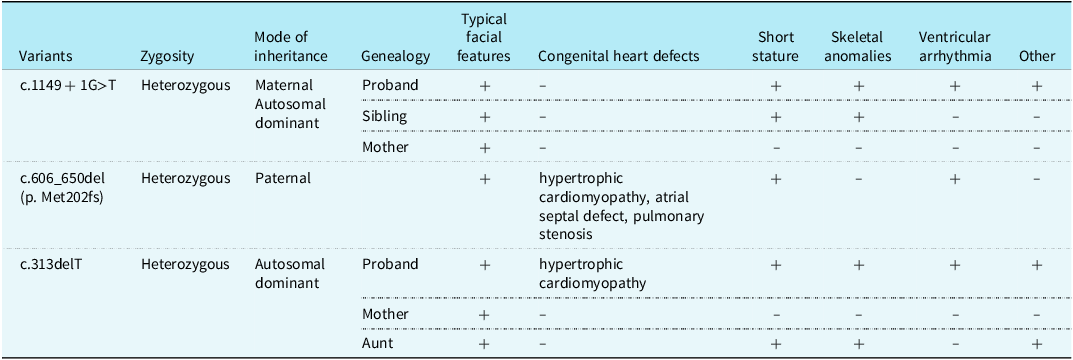
The phenotype of leucine zipperlike transcription regulator 1 mutations is generally severe, with short stature, mental retardation, and heart defects.8 Cardiac involvement is present in up to 82% of affected individuals, including pulmonary stenosis, hypertrophic cardiomyopathy, atrial septal defect, ventricle septal defect, mitral valve insufficiency, transposition of the great vessels, broad QRS complexes, left axis deviation, striking negative pattern in the left precordial leads, right bundle branch block, and ventricular arrhythmia (Table 1).9 The article about leucine zipperlike transcription regulator 1 mutation and ventricular arrhythmia is rare. We report a 15-year-old girl with Noonan syndrome due to a leucine zipperlike transcription regulator 1 mutation and ventricular arrhythmia and review all reported cases of Noonan syndrome to identify similar patients with ventricular arrhythmia. A total of 61 reported cases of Noonan syndrome with leucine zipperlike transcription regulator 1 mutations were identified in the literature (Table 1). Including the present report, from a total of 49 cases of Noonan syndrome with leucine zipperlike transcription regulator 1 mutations, three patients had Noonan syndrome and ventricular arrhythmia (Table 2).
Previous published reports of LZTR1-mutation Noonan syndrome

Ventricular arrhythmia and Noonan syndrome with LZTR1 mutations

The association of leucine zipperlike transcription regulator 1 mutations and ventricular arrhythmia is supported by the Ras-mitogen-activated protein kinase pathway’s involvement in the presence of cardiac electrophysiological abnormalities. Leucine zipperlike transcription regulator 1’s molecular function as a regulator of RAS ubiquitination is well established. Biochemical and genetic studies demonstrate that leucine zipperlike transcription regulator 1 acts as an adaptor protein for the CUL3-RING E3 ubiquitin ligase complex, facilitating the ubiquitination of RAS GTPases (e.g., KRAS [Kirsten-RAS], NRAS [Neuroblastoma-RAS], HRAS [Harvey-RAS]). Ubiquitination of RAS promotes its degradation or sequestration, thereby limiting RAS activity, and downstream signalling through the Ras-mitogen-activated protein kinase pathway—a key driver of cell proliferation, differentiation, and survival. 10–12 The risk of cardiac arrhythmias in patients with RASo-pathies (Costello syndrome, Noonan syndrome, and Noonan syndrome with multiple lentigines) is well known due to the presence of cardiac electrophysiological abnormalities. Their presence can predict poor prognosis and a high mortality risk. Ventricular arrhythmia is common in Ras-mitogen-activated protein kinase-associated arrhythmia. Postoperative episodes of ventricular arrhythmia were likely due to the existence of a highly arrhythmogenic substrate, with disruption of calcium release from the endoplasmic reticulum on account of the genetic mutation. Also,hypertrophic cardiomyopathy-induced arrhythmia due to myocardial fibrosis and left atrial enlargement can cause ventricular arrhythmia. As the downstream targets of the Ras-mitogen-activated protein kinase pathway, high levels of phosphorylation of mitogen-induced extracellular kinase and extracellular signal-regulated kinase regulate cellular proliferation, apoptosis, differentiation, and migration of cardiomyocytes, which lead to cardiac hypertrophy and arrhythmia in Noonan syndrome.13,14 The types of arrhythmia in our patient were complicated with ventricular arrhythmia, which is common in Ras-mitogen-activated protein kinase-associated arrhythmia due to the aforementioned mechanisms and as well as hypertrophic cardiomyopathy-induced arrhythmia due to myocardial fibrosis and left atrial enlargement. Therefore, it is difficult to determine whether the arrhythmia is associated with hypertrophic cardiomyopathy, Noonan syndrome-related, or both.
Variable expressivity—wherein individuals with the same pathogenic variant exhibit differing severity or spectrum of phenotypes—and incomplete penetrance (the absence of a phenotype in some carriers) are well-documented features of RASopathies, including Noonan syndrome. This variability is particularly prominent in leucine zipperlike transcription regulator 1-associated Noonan syndrome. In our case, the proband’s mother carries the identical leucine zipperlike transcription regulator 1 c.313delT variant but exhibits only mild Noonan syndrome features (e.g., facial dysmorphism, mild pulmonic valve thickening) without ventricular arrhythmia, left ventricular hypertrophy, or obstruction. This discrepancy aligns with the well-described phenotypic variability in leucine zipperlike transcription regulator 1-related Noonan syndrome, where even within families, individuals harbouring the same variant can present with strikingly divergent cardiac (and extracardiac) phenotypes. Such variability is thought to arise from a combination of factors, including modifier genes, epigenetic influences, environmental triggers, and stochastic biological processes—all of which modulate the expressivity of Ras-mitogen-activated protein kinase pathway dysregulation in RASopathies.
In summary, we have described a novel condition of Noonan syndrome, caused by a heterozygous variant in leucine zipperlike transcription regulator 1, manifested normal Noonan syndrome performance, and complicated ventricular arrhythmia. These findings improve our understanding of Noonan syndrome and help us to enrich the clinical spectrum of Noonan syndrome.
Availability of data and materials
The data supporting the conclusions of this article is included within the article.
Acknowledgements
We would like to express our gratitude to the proband and his family members who agreed to participate in this study.
Author contributions
Zhuyuan Liu: Formal analysis: Lead; Writing – original draft: Lead Huang Yan: Investigation: Lead Jinxi Wang: Formal analysis: Lead Jiayi Tong: Writing – review & editing: Lead.
Competing interests
The authors declare that they have no competing interests.
Ethical standard
This patients’ guardian provided oral and signed written informed consent to use his clinical materials in this study. The author/s confirm that written consent for sub-mission and publication of this case report, including image(s) and associated text, has been obtained from the patient in line with Committee on Publication Ethics (COPE) guidance. This study was approved by the Ethics Committee of Zhongda Hospital Southeast University (2024ZDSYLL122-Y01).