Introduction
Ensuring that rural communities living in proximity to protected areas (PAs) comply with conservation laws is a major challenge; increasing spikes in illegal activities within PAs are often attributed to non-compliance behaviours by rural people resulting from ineffective enforcement of wildlife laws (Jachmann Reference Jachmann2008, Keane et al. Reference Keane, Jones, Edwards-Jones and Milner-Gulland2008, Arias Reference Arias2015, Bergseth et al. Reference Bergseth, Gurney, Barnes, Arias and Cinner2018). There is ample evidence that conservation law enforcement is essential to curbing the growing threats of human-related activities on protected species and landscapes (Hilborn et al. Reference Hilborn, Arcese, Borner, Hando, Hopcraft and Loibooki2006, Jachmann Reference Jachmann2008, Rizzolo et al. Reference Rizzolo, Gore, Ratsimbazafy and Rajaonson2017). Yet, exactly how social behaviour could mediate compliance with wildlife regulations has received little attention (Arias Reference Arias2015, Fairbrass et al. Reference Fairbrass, Nuno, Bunnefeld and Milner-Gulland2016, Shirley Reference Shirley2018). Government agencies entrusted with executing wildlife protection laws often rely on enforcement officers such as rangers to detect and arrest offenders and the criminal justice system to prosecute arrested offenders. Nonetheless, the effectiveness and efficiency of this approach is reliant on a variety of factors, including financial resources, equipment, staff training and cooperation with local communities (Struhsaker et al. Reference Struhsaker, Struhsaker and Siex2005, Hilborn et al. Reference Hilborn, Arcese, Borner, Hando, Hopcraft and Loibooki2006), which are poorly developed in many countries, where most policies governing wildlife protection have been based on the protection being in opposition to the interests of local people (Agrawal & Gibson Reference Agrawal and Gibson1999). The assumption is that local communities depend on these resources for their sustenance and are likely to exploit them with little or no restraint. Hence, the support of local communities in protecting wildlife is rarely emphasized, while enforcement is often idealized as the only viable alternative (Bennett & Dearden Reference Bennett and Dearden2014). Evidence-based conservation efforts suggest that law enforcement efforts, presumably initiated by governmental authorities and also supported by community-level engagement, are more effective at preventing and combating illegal behaviours targeting protected species (Waylen et al. Reference Waylen, Fischer, McGowan, Thirgood and Milner-Gulland2010, Brooks et al. Reference Brooks, Waylen and Mulder2012, Nilsson et al. Reference Nilsson, Baxter, Butler and McAlpine2016). For example, based on reports from a network of local informants, rangers’ detection of snare traps set for tigers at the Kerinci Seblat National Park in Indonesia increased by more than 40% (Linkie et al. Reference Linkie, Martyr, Harihar, Risdianto, Nugraha, Leader-Williams and Wong2015).
Positive outcomes from wildlife law enforcement might mostly come from approaches that are centred on compliance emanating from behavioural changes (Ezebilo Reference Ezebilo2013, John et al. Reference John, Mai and Pei2015, Cetas & Yasué Reference Cetas and Yasué2017, Castilho et al. Reference Castilho, De Vleeschouwer, Milner-Gulland and Schiavetti2018). The fear of arrest and prosecution does not always uncover the factors or potential drivers of compliance behaviours. This has raised questions about what factors may reasonably engineer compliance behaviours beyond the risk of sanction and whether these factors can be addressed to reduce the likelihood of non-compliance behaviours (i.e., collection of wildlife resources in violation of existing wildlife protection laws; Kahler & Gore Reference Kahler and Gore2012). Besides the implications of potential punitive measures induced by law enforcement officers, fostering social and behavioural norms embedded within the local community structures can exert a positive influence on the shaping of the local orientation towards compliance behaviours (Berkes et al. Reference Berkes, Colding and Folke2000, Keane et al. Reference Keane, Ramarolahy, Jones and Milner-Gulland2011, Kahler & Gore Reference Kahler and Gore2015).
In several African communities, social norms, defined here as behavioural standards that are based on widely shared beliefs on how group members ought to act in a given situation, play important roles in human behaviours (see full explanation below) and can be a dependable tool in understanding and preventing criminal activities (Fehr & Fischbacher 2004, Ayuk & Owan Reference Ayuk and Owan2013). Since communities are organized in patterns of families and kinship, it is feasible to inculcate social norms and identify irrational behaviours that deviate from these norms. Influence over community members’ behaviours by family leaders, social peer groups or local authorities can be powerful, democratic and effective in maintaining social norms (e.g., John et al. Reference John, Mai and Pei2015, Fairbrass et al. Reference Fairbrass, Nuno, Bunnefeld and Milner-Gulland2016). Wildlife managers could employ similar strategies by promoting pro-compliance cultural values that target changes in attitudes and behaviours within local communities using community-based education and outreach tools.
The social psychology theory of planned behaviour (TPB) is a model addressing the attitude–behaviour relationship (Ajzen Reference Ajzen1985, Reference Ajzen1991) and has been widely successful in explaining or predicting a variety of human behaviours (e.g., Conner & Sparks Reference Conner, Sparks, Conner and Norman1996, Godin & Kok Reference Godin and Kok1996). The TPB argues that attitudes towards a behaviour, subjective norms regarding the behaviour and an individual’s perceived control over performing the behaviour are all important in predicting whether or when an individual will act in a specific way (Ajzen Reference Ajzen1991). While there may be more factors in play, these three variables are empirically tested antecedents of human intention, which is viewed as the best known predictor of behaviour, particularly when the behaviour is narrowly defined and the individual has volitional control over the behavioural engagement (Ajzen & Madden Reference Ajzen and Madden1986, Ajzen Reference Ajzen1991). In particular, social norms are essentially a form of subjective norm regarding behaviour. Social norms are categorized as injunctive and descriptive norms (Cialdini et al. Reference Cialdini, Kallgren and Reno1991, Schultz et al. Reference Schultz, Nolan, Cialdini, Goldstein and Griskevicius2007), which are pivotal in understanding the drivers of compliance behaviour. Injunctive norms are broadly defined as perceptions or beliefs about what is generally approved or disapproved of within a social group, community or culture. Descriptive norms describe perceptions of what others within the social group, community or culture would normally do in a given context. While not being mutually exclusive, the injunctive norms hypothesis suggests that human behaviours are influenced by prevailing standards of tolerable behaviour at the community level, whereas the descriptive norms hypothesis holds that an individual is likely to continue with a behavioural pattern if that individual believes that others will do the same given similar circumstances. When it comes to conservation, it is possible that the more likely an individual views non-compliance behaviour as inappropriate, unacceptable or simply a deviation from accepted norms, the more likely the individual is to support conservation regulations (John et al. Reference John, Mai and Pei2015). In addition to providing relevant information for detecting and apprehending defaulters (e.g., developing informant networks through effective communication and collaboration with local communities; Linkie et al. Reference Linkie, Martyr, Harihar, Risdianto, Nugraha, Leader-Williams and Wong2015), locally empowered groups could be more effective at detecting locally embedded lawbreakers than rangers (Lewis et al. Reference Lewis, Mwenya and Kaweche1990). This approach could be strengthened if rangers work in collaboration with local communities to implement enforcement. Indeed, an integrated approach to enforcement that incorporates local knowledge and culture (via village chiefs or local community leaders) with relevant governmental and non-governmental agencies could be valuable in forming biodiversity conservation values, as well as empowering local people to protect these values (Milner-Gulland et al. Reference Milner-Gulland, Fairbrass, Bunnefeld and Nuno2016, Gore Reference Gore2017, Moreto & Gau Reference Moreto and Gau2017, Rizzolo et al. Reference Rizzolo, Gore, Ratsimbazafy and Rajaonson2017). Such collaborations could be imperative in cultivating a sense of ownership and responsibility for natural resources among local communities and in creating avenues for easy conflict resolution. This approach, more than the fear of apprehension, may be effective in fostering the compliance that is relevant for achieving global conservation goals.
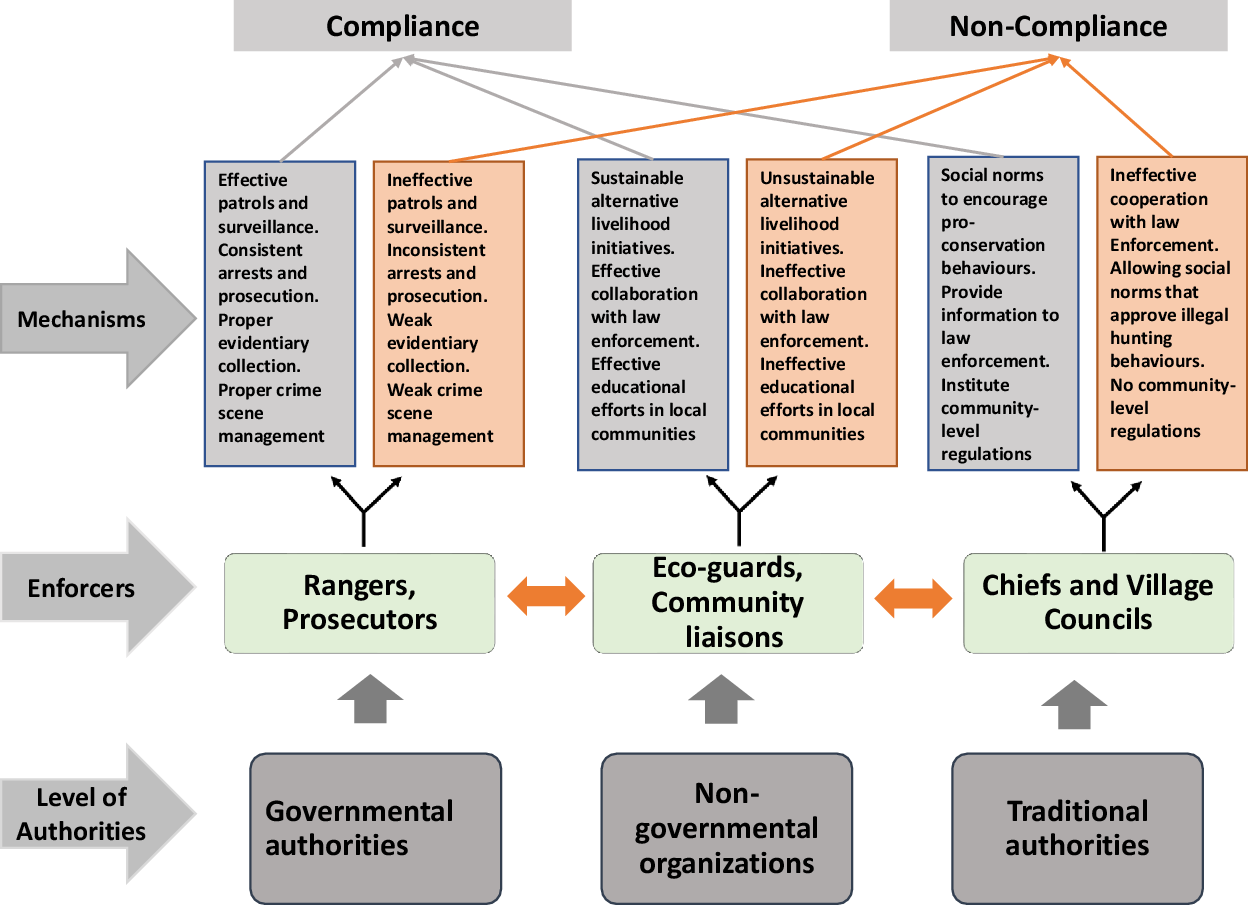
In this study, we investigated the current and potential influence of law enforcement, social norms, community-level regulations and livelihood incentives on compliance behaviours among indigenous people living in proximity to four major PAs in south-east Nigeria. We evaluated the prevailing social norms and assessed how likely it would be for individuals to comply with regulations that prohibit illegal collection of resources from PAs. Our goal was to identify the strategies that could be most effective in reducing non-compliance and potentially improving the protection of four PAs in south-east Nigeria. We assessed the potential likelihood of compliance by indigenous people living in communities that share boundaries with PAs and assessed whether the willingness to comply with wildlife regulations was related to the institution enforcing the law (i.e., government organizations versus local authorities). We considered both social norms and law enforcement practices as potential drivers of compliance and evaluated their independent roles in achieving compliance behaviour in a developing country. We develop a conceptual framework for understanding the indigenous perceptions of wildlife laws and factors that foster compliance (Fig. 1).
A conceptual framework for individual perceptions of wildlife laws and factors that results in compliance or non-compliance with wildlife laws in south-eastern Nigeria. Government authorities, non-governmental organizations and traditional authorities each could independently have direct oversight of three groups of enforcers. However, cordial interactions among enforcers is required to attain optimum protection of natural resources.

Methods
Study site
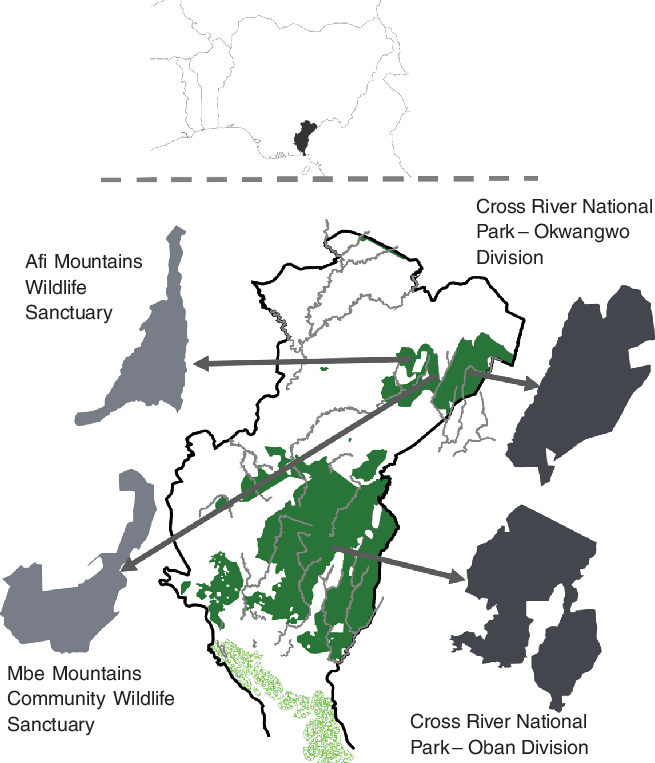
Our study focused on 28 communities living in proximity to PAs in the Cross River region of south-eastern Nigeria (Fig. 2). The forests of the Cross River area lie to the west of the Central African equatorial tropical rainforest zone (5°14′–6°22′N and 8°37′–9°20′E), between the rivers Cross and Sanaga, and they include the continental shelf island of Bioko and the associated Cameroon Highlands (Oates et al. Reference Oates, Bergl and Linder2004, Bergl et al. Reference Bergl, Oates and Fotso2007). Forest vegetation combines montane and lowland rainforests and forms part of the hygrophilous coastal evergreen rainforest along the Gulf of Guinea. The forest blocks are contiguous with those of south-western Cameroon and represent the western extension of the Cameroon Highlands into south-eastern Nigeria. The area thus supports what is possibly the largest relatively contiguous forest in West Africa (Oates et al. Reference Oates, Bergl and Linder2004). There are three major PAs in the region: Cross River National Park (CRNP), Afi Mountain Wildlife Sanctuary (hereafter referred to as ‘Afi’) and the Mbe Mountain Community Wildlife Sanctuary (hereafter referred to as ‘Mbe’). The CRNP (c. 4000 km2) is the largest PA in south-eastern Nigeria, with two divisions (Okwangwo and Oban) that are separated by c. 60 km of disturbed forests, farmlands, villages and towns. For the purposes of our study, we treated the two divisions of the CRNP as separate PAs. Afi (c. 100 km2) and Mbe (c. 85 km2) lie to the west of the Okwangwo Division of CRNP and are important sites for endemic and threatened species, including drill (Mandrillus leucophaeus), Cross River gorilla (Gorilla gorilla diehli), Nigeria–Cameroon chimpanzee (Pan troglodytes ellioti) and grey-necked rockfowl (Picathartes oreas; Morgan et al. Reference Morgan, Adeleke, Bassey, Bergl, Dunn and Fotso2011, Bergl et al. Reference Bergl, Warren, Nicholas, Dunn, Imong, Sunderland-Groves and Oates2012, Atuo et al. Reference Atuo, Ivande, Wala and O’Connell2014, Dunn et al. Reference Dunn, Bergl, Byler, Eben-Ebai, Etiendem and Fotso2014, Onojeghuo et al. Reference Onojeghuo, Blackburn, Okeke and Onojeghuo2015, Agaldo et al. Reference Agaldo, Gwom and Apeverga2016). Villages around these PAs generally consist of small homesteads that rely substantially on forest resources for their daily substance. The economy of the people is largely agricultural, complemented by hunting, trapping and gathering of non-timber forest products (NTFPs; Ezebilo & Mattsson Reference Ezebilo and Mattsson2010, Atuo et al. Reference Atuo, Abanyam and O’Connell2015). Agricultural practices in the area vary from small-scale subsistence mixed farms to medium-scale plantations (mainly banana Musa spp., oil palm Elaeis guineensis and cocoa Theobroma cacao). A small percentage of residents (<1%) engage in formal employment, mainly teaching and nursing, but supplement their household income with farming. Poaching, logging and collection of NTFPs are prohibited in all four PAs (Atuo et al. Reference Atuo, Abanyam and O’Connell2015). The forest blocks play a major role in the rural economy through the provision of NTFPs, medicinal herbs and fuelwood, which accounts for over 70% of domestic energy in the region. The forest is also a major source of animal protein and provides protection to the region’s watersheds. However, these services are threatened by deforestation originating from illegal logging and conversion of forestlands to farmlands (Bergl et al. Reference Bergl, Warren, Nicholas, Dunn, Imong, Sunderland-Groves and Oates2012). This has resulted in c. 1.5% (34 620 ha) loss of the forest cover between 2000 and 2014 alone and a projection of 16% loss by 2028 if the current rate of loss is not checked (Onojeghuo et al. Reference Onojeghuo, Blackburn, Okeke and Onojeghuo2015).
Map of Cross River State showing the major protected areas selected for study.

Data collection
We developed semi-structured questionnaires (Supplementary Appendix S1, available online) based on our knowledge of the prevailing conservation issues, cultures and customs of the people in the study area (Atuo et al. Reference Atuo, Abanyam and O’Connell2015). The questionnaires were drafted in English and administered in Pidgin English (a form of English and creole language spoken across Nigeria) to ensure that respondents fully understood the questions they were responding to. We conducted questionnaire surveys in 28 communities that share boundaries with the PAs of Afi, Mbe, Okwangwo and Oban. Surveyed communities were selected a priori by first assigning each to its nearest PA (some communities shared borders with two PAs) and then randomly drawing without replacement from a pool of all villages surrounding each PA to reduce possible biases associated with non-random sample selection. In all, we surveyed six villages around Afi, six around Mbe, seven around Oban and nine around Okwangwo. We divided each village into 3–5 survey grids containing 15–20 households depending on the size of the village. Within each grid, we interviewed one adult each in at least three randomly selected households (Atuo et al. Reference Atuo, Abanyam and O’Connell2015). We focused on identifying and interviewing the heads of households, with other adult members being considered in their absence. Prior to this study, we piloted surveys in four villages representing at least one village per PA. The questionnaires were administered through face-to-face interviews at the homes of residents between April 2016 and January 2017. Two interviewers familiar with the indigenous customs and traditions in the study areas independently interviewed at least 12 people in each village. Overall, we interviewed 334 people within 28 villages around and within the major PAs in the Cross River region. Since our questionnaire included sensitive information, we ensured anonymity by not collecting identity-related information (e.g., name and house address) that could link any interviewee to the information provided.
We divided our questionnaires into three sections. The first section focused on identifying the socioeconomic factors that might enhance or discourage compliance with wildlife regulations. Respondents were queried regarding their age, family size (number of wives, children and other dependents), main occupation and income. We also asked interviewees to list any factors that could potentially motivate them to illegally hunt wildlife, harvest timber or collect NTFPs from the PAs. These were open-ended questions and respondents were at liberty to discuss any socioeconomic factors that might motivate them to comply with regulations. In the second section, we asked respondents about their involvement in the killing of wildlife and/or collection of timber and NTFPs from the PAs during the previous 3 years; this time period provided enough window for the behaviours to occur but was not too long for respondents to remember. In order to assess the role of social norms in compliance, we asked respondents to answer ‘yes’ or ‘no’ if they had friends or family members who approved or disapproved of them collecting resources from the PAs (‘injunctive norms’). Respondents were also asked to answer ‘yes’ or ‘no’ if they knew other people outside of their circle (family and friends) that collected resources from the PAs (‘descriptive norms’). The third section of our questionnaire focused on fear of apprehension and the possible role of incentives as a booster for compliance with wildlife regulations. In order to evaluate the role of fear of apprehension as a possible impetus for compliance, we asked respondents to answer ‘yes’ or ‘no’ if they or people they knew had entered the forest without permission in the last 3 years. Specifically, they were asked to respond to questions including: Have you ever been confronted by rangers in the forest? Have you ever been arrested in a PA? If yes, what was the offense? Have you ever sighted rangers in the forest? Have you ever encountered rangers in a PA but were not arrested? Have you ever hidden from rangers while in a PA? Are you scared of being arrested when you are in a PA? Respondents described their experiences if they had ever encountered or been arrested by law enforcement in the forest. Furthermore, respondents were asked to explain whether or not they would want local authorities (village chiefs and elders) to be involved in policing illegal activities within PAs. We also asked respondents if they or people they knew would be more likely to desist from entering the PAs if there were community regulations that prohibited such behaviour. Finally, we assessed the role of incentives in encouraging compliance. We asked respondents if they had ever received incentives as a motivation to stay out of the PAs. If not, they were asked whether or not any incentives could keep them or people they knew out of the forest.
Data analysis
We summarized the variables related to non-compliance using standard descriptive statistics and completed our statistical analysis in three steps. First, we assessed the degree of resource exploitation across the four PAs using a one-way analysis of variance (ANOVA). For simplicity, we grouped all exploited resources recorded during our survey into three categories based on the activity involved in their collection: ‘poaching’ included the illegal collection of all wildlife and wildlife products; ‘logging’ included the illegal collection of timber products; and ‘non-timber forest product collection’ included the collection of a broad range of forest products (e.g., fuelwood, afang (Gnetum africanum), bush mango (Irvingia gabonensis), Carpolobia, mushrooms). This analysis provided an indication of the resources that were most targeted by community members. Next, we evaluated the prevalence of non-compliance relative to compliance by comparing the number of respondents that acknowledged illegal exploitation of resources from a PA to respondents that did not using an independent samples t-test.
Given that the degree of compliance may differ across communities, we estimated both compliance and non-compliance behaviours across the four PAs using a one-way ANOVA. We collapsed the number of respondents by village and calculated mean differences in the number of respondents that indicated non-compliance in order to assess the comparative risk of illegal activities for each PA.
We used generalized linear mixed models (GLMMs) with a binomial error structure to investigate the influence of six predictor variables (average monthly income, number of dependents, having a complicit friend or family member, age, perceived fear of community-level sanction and perceived fear of apprehension by rangers) on compliance behaviour. We coded as ‘1’ if a respondent indicated non-compliance and ‘0’ if they indicated compliance. Three variables (having a complicit friend or family member, perceived fear of community-level sanction and perceived fear of apprehension by rangers) were presented in the analysis as categorical variables each with two levels. We collapsed average monthly income into five levels to produce five categorical variables: lower class (<US$15), lower-middle class (<US$30), middle class (<US$60), upper-middle class (<US$100) and upper class (>US$100). In addition, we grouped age into five categorical variables of <25 = 1, 25–35 = 2, >35–45 = 3, >45–55 = 4 and >55 = 5. We introduced PA and village as random errors to account for any differences in sample size. We ranked a set of 10 a priori models based on different combinations of the six variables listed above according to their Akaike information criterion (AIC) values adjusted for small sample size (Burnham & Anderson Reference Burnham and Anderson2002) using the R package MuMIn (Bartoń Reference Bartoń2019). We considered a model to be competitive for explaining non-compliance if ΔAIC < 2 (see Table S1), providing its parameters were not simply variants of those in the best model plus one or more uninformative parameters (Arnold Reference Arnold2010). We avoided averaging model parameter estimates in order to reduce uncertainties that might arise from correlations among independent variables, as suggested by Cade (Reference Cade2015). An increasing number of studies have demonstrated that independent variables are often correlated in compositional analyses, such that the behaviour of one variable may be dependent on other variables present in a model, biasing parameter interpretations (Cade Reference Cade2015, Banner & Higgs Reference Banner and Higgs2017). We evaluated the influence of individual predictors within the best-supported models by examining predictor effect sizes (Burnham & Anderson Reference Burnham and Anderson2002, Arnold Reference Arnold2010). Here, effect sizes were computed in the form of odds ratios, and they represented the magnitude of non-compliance. We considered a predictor variable as having a strong effect if its 95% confidence interval (CI) did not overlap with 0.
We performed all statistical analyses using the R statistical software version 3.4.1 (R Core Team, 2014). Prior to modelling, we standardized continuous predictor variables to a mean of 0 and a standard deviation of 1 to improve data interpretations.
Results
The majority (76%) of respondents were hunters and crop farmers, with cocoa, cassava, yam, banana and oil palm as the main farming crops. Others were traders (12%), government workers (8%) and students (4%). Respondents were between the ages of 18 and 65 years, with 32% of the respondents being 31–40 years old. Of the 334 interviewees, 84% (n = 214) attested to having collected resources from at least one of the PAs in the last 3 years, 24% (n = 81) indicated they had not and 12% (n = 39) declined to respond to the question.
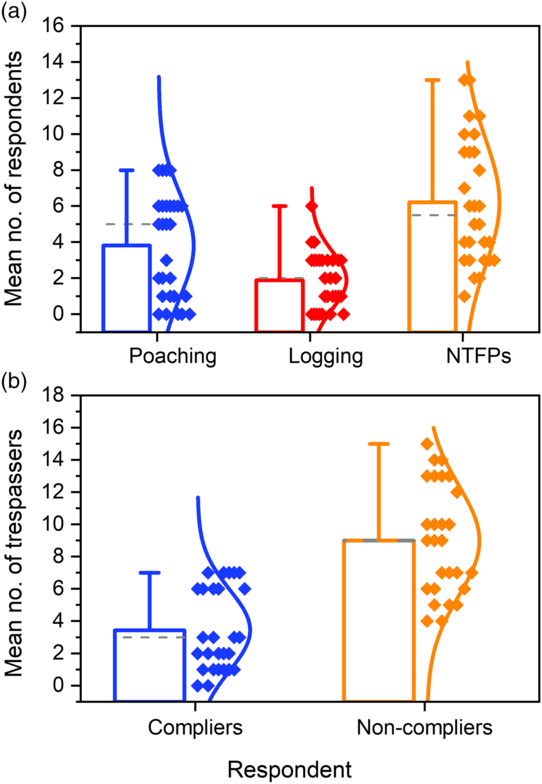
Forest resources collected by respondents were grouped into the categories of animal, timber and NTFPs, and the average numbers of respondents associated with each category indicated that NTFPs were most exploited, followed by animal and timber products, respectively (Fig. 3(a)). When pooled across all surveyed communities, the average number of respondents that exhibited non-compliance behaviour was significantly greater than that for those who acknowledged compliance (Fig. 3(b)). Non-compliance appeared to be higher in the CRNP (Okwangwo and Oban divisions), but did not differ significantly from the other PAs (Fig. S1). Except for villages around Mbe, the numbers of respondents that admitted to non-compliance differed significantly from those that indicated compliance.
(a) Mean numbers of respondents that admitted to having illegally harvested resources from at least one protected area in the last 3 years and (b) mean numbers of forest products collected from protected areas by respondents with confirmed presence in a protected area during the last 3 years. NTFP = non-timber forest product.

Influence of law enforcement on compliance
The number of respondents that engaged in illegal activities in the PAs within the last 3 years was greater (t = –6.78, df = 52, p < 0.01) than those who said they had not entered a PA to carry out any of the prohibited activities (Fig. 4). Knowledge of PA boundaries and the illegality of hunting or collecting timber and non-timber products was pervasive. Over 92% of all respondents were aware that it is illegal to hunt and to collect timber and NTFPs in PAs; nonetheless, only 23% were aware of any penalties associated with such actions. Of the respondents that admitted to non-compliance, only 11% had ever encountered rangers while in the PAs. Of this number, only 2% (n = 4) had received any form of sanction. Although almost all respondents (98%) believed that other villagers collect resources without permission from PAs, only 16% (n = 53) could remember anyone that had been arrested or sanctioned by law enforcement in the last 3 years. The fear of being arrested and/or penalized by law enforcement ranked low among active trespassers; 79% of trespassers indicated a >80% confidence in their ability to evade detection and capture by rangers.
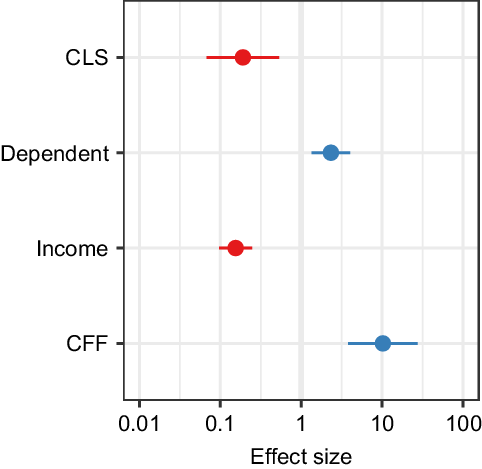
Effect sizes plus 95% confidence intervals for the top predictors of non-compliance with wildlife regulations in south-east Nigeria. CFF = complicit family members or friends; CLS = fear of community-level sanctions.

Drivers of non-compliance
We modelled the correlates of social norms (injunctive and descriptive), risk of apprehension or sanctions, socioeconomic status (average monthly income and number of dependents) and the role of incentives on non-compliance with wildlife regulations. Following an exploratory approach, we ranked all possible model combinations in order to understand the importance of each variable in influencing compliance. We identified four variables – fear of community-level sanctions, average monthly income, number of dependents and having a complicit family member or friend – as the most important variables informing compliance (Table S1). The perceived probability of sanction from community leadership was negatively associated with non-compliance (β = –1.66, 95% CI: –2.75 to –0.67), as most respondents indicated 0.29 odds that they would break community regulations (Fig. 4). Average monthly income was also negatively related to non-compliance (β = –1.87, 95% CI: –2.83 to –1.44). The odds ratio for average monthly income was 0.16, suggesting that respondents with higher income were less likely to exhibit non-compliance behaviour (Fig. 4). Monthly income did not differ across villages and averaged c. US$31. The likelihood of non-compliance increased significantly with injunctive norms (i.e., having friends and family members who approved of non-compliance behaviour: β = 2.33, 95% CI: 1.39–3.38). The odds of non-compliance were 10.72 times greater for respondents with approving family members or friends compared to respondents with disapproving family members or friends (Fig. 4). Furthermore, respondents who admitted to the injunctive norms were 22% more likely to collect resources from PAs compared to those with disapproving family members and/or friends. The probability of non-compliance increased significantly with respondents’ numbers of dependents (β = 0.85, 95% CI: 0.32–1.43). Respondents with more dependents were 2.13 times more likely to be involved in illegal forest activities compared to those with fewer dependents (Fig. 4). Surprisingly, fear of law enforcement did not show any significant relationship with non-compliance, even though it indicated a negative correlation (β = –0.15, 95% CI: –0.62 to 0.31). Based on our direct question approach, 83% of respondents indicated that they would stay out of PAs if they received some form of livelihood incentive, 13% said incentives would not stop them from collecting resources from PAs and 2% were unsure. Only 3% of respondents (n = 8) acknowledged that they had received some form of incentives to stay out of PAs. Nonetheless, further examination of the respondents that reported having received incentives in recent years revealed that only 25% of these eight respondents had completely stayed out of the PAs in the last 3 years.
Discussion
Our study provides an important contribution to evidence-based conservation actions for managing wildlife and indigenous people living in proximity to PAs in Nigeria. Indeed, reducing illegal activities (e.g., poaching, logging, farming, fishing, etc.) within PAs is a top priority for biodiversity conservation in this region. However, several challenges to the traditional enforcement of wildlife regulations (Rowcliffe et al. Reference Rowcliffe, de Merode and Cowlishaw2004, Keane et al. Reference Keane, Jones, Edwards-Jones and Milner-Gulland2008, Moreto & Gau Reference Moreto and Gau2017) have limited the attainment of this goal. Our study demonstrates that effective protection of species and endangered habitats here would likely require approaches that transcend traditional government policing to local collaborations encouraging compliance behaviour. This suggests an integrated approach that includes traditional institutions working in collaboration with constituted authorities to provide maximum policing of illegal activities as well as creating programmes that motivate positive attitudes towards conservation by indigenous people. For example, the fear of community-level sanction was a greater driver of compliance compared to the fear of apprehension by rangers in our study region. For centuries, traditional law enforcement approaches have relied on the arrest and prosecution of violators by state institutions to deter offenders and stem illegal activities within PAs (Challender & MacMillan Reference Challender and MacMillan2014, Critchlow et al. Reference Critchlow, Plumptre, Alidria, Nsubuga, Driciru and Rwetsiba2017). While these approaches are indeed noble when effectively implemented, several factors that limit their efficacy (e.g., lack of funds, work overload, inadequate field equipment, no life insurance for rangers, inadequate training, corruption) remain ubiquitous, especially in developing countries (Leader-Williams & Milner-Gulland Reference Leader-Williams and Milner-Gulland1993, Rowcliffe et al. Reference Rowcliffe, de Merode and Cowlishaw2004, Bennett Reference Bennett2011, Wellsmith Reference Wellsmith2011). In our study, perceived fear of community-level regulations, improved economic status, small family sizes and behavioural changes within friend and family circles were more likely to improve compliance behaviours than perceived fear of arrest; these could play valuable roles in improving natural resource conservation.
Indeed, there are indications that traditional institutions are effective at ensuring law and order in rural communities (Onyeozili Reference Onyeozili2005, Oraegbunam Reference Oraegbunam2010, Ayuk & Owan Reference Ayuk and Owan2013, Rizzolo et al. Reference Rizzolo, Gore, Ratsimbazafy and Rajaonson2017), such as those in south-east Nigeria. In many rural communities, the prevention and control of criminal behaviour is rooted in kinship and in the extended family system. Whereas family leaders (usually the eldest male person) provide the model of conduct, authority at the community level is subordinated to chiefs and elders who are not merely models of conduct, but also are armed with the power of sanctions against offenders (Clifford Reference Clifford1974, Ayuk & Owan Reference Ayuk and Owan2013). Most rural communities in this region are small (c. 500–1000 people), and inhabitants live in small kindred groups where every member is related to and knows every other person in the community. When community regulations are set, every villager becomes a custodian of the law and reports offenders to local authorities for appropriate sanctions. These structures thus allow for easy identification of criminals, while ensuring that local prosecution is swift, fair and effective. On the other hand, the structure appears to insulate criminals from government agencies, especially for non-capital offences. Hence, it is easy for offenders such as poachers to avoid government law enforcement officers as community members consider it a betrayal to hand over a ‘brother’ to outsiders for prosecution. Our results suggest that a greater proportion of respondents will comply with wildlife regulations if such regulations were instituted and enforced by local authorities. Moreover, most rangers in our study area were from villages surrounding PAs (i.e., the same villages as poachers) and are likely to exhibit nepotism towards kinsmen regarding government prosecution. After all, they are obligated by communal ties to cover up the activities of their kinsmen, and they will rarely arrest them even if they are encountered in the field. In addition, in these small communities, information about rangers’ activities spreads quickly; villagers are not only aware of rangers’ patrol schedules, but can also predict at any time which section of forest is under ranger surveillance, and so can easily avoid any encounter by hunting elsewhere.
Our GLMM analysis indicates that social approval might be a vital tool in understanding non-compliance behaviour and in ensuring compliance with wildlife regulations. Respondents with family and friends that approved of their behaviours were more likely to admit to non-compliance behaviour compared to those with disapproving family and friends. Similarly, respondents that believed other community members were engaged in the illegal extraction of resources from PAs were also more likely to admit to illegal activities themselves, although this difference was not statistically significant. This suggests that, in addition to social approval, individuals’ perceptions of what other villagers are or are not doing might have strongly influenced their own abilities to comply with wildlife regulations. These outcomes are consistent with previous studies (Solomon et al. Reference Solomon, Gavin and Gore2015, Bragagnolo et al. Reference Bragagnolo, Correia, Malhado, De Marins and Ladle2017) that have demonstrated the importance of injunctive and descriptive norms on potential compliance behaviour with regards to wildlife regulations. For example, in their assessment of deterrents of illegal conservation behaviours in north-western Taiwan, John et al. (Reference John, Mai and Pei2015) reported that both social approval and respondents’ perceptions of the behaviours of other people significantly influenced the willingness to kill protected species. Respondents with limited knowledge of the people involved in the illegal killing of protected species as well as respondents with disapproving friends and family were more likely to comply with wildlife regulation.
Socioeconomic status, including monthly income, number of dependents and age, all had some effects on compliance behaviour. Individuals of low economic status (i.e., low monthly income, higher number of dependents and younger in age) were more likely to exhibit non-compliance behaviour. These individuals often need to supplement their income and are more likely to collect resources from PAs if the regulations that govern resource collection are ineffective. The average monthly income of respondents at the time of our study was c. US$31, consistent with previous studies in the region (Atuo et al. Reference Atuo, Abanyam and O’Connell2015) and lower than the United Nations standard for extreme poverty (US$1 per day). Agriculture and hunting are the main sources of income for villagers in this area (Ezebilo & Mattsson Reference Ezebilo and Mattsson2010). Many individuals rely on NTFPs such as afang, bush mango, fuelwood and cattle stick (Carpolobia lutea) to supplement their income. With increasing human population, these resources are already stressed outside of PAs, and villagers are turning to PAs where these resources are still relatively easy to find. Carefully planned alternative livelihood options are likely to improve the economy of local people and reduce their reliance on resources from PAs; >80% of respondents indicated that illegal activities in PAs would stop if villagers were provided with some form of alternative livelihood option. However, we observed that not all forms of livelihood incentives might reduce or stop illegal activities in PAs. For example, our interviews of the eight respondents that had received incentives in the past revealed that at least six continued to extract resources from PAs. Alternative livelihood options might do little to enhance compliance with wildlife regulations among local people in developing countries (McShane & Wells Reference McShane and Wells2004, Bennett & Dearden Reference Bennett and Dearden2014) if not carefully planned. There are growing concerns that alternative livelihood options have achieved too little impact (and in most cases no impact at all) in terms of conserving biodiversity in developing countries (Wright et al. Reference Wright, Hill, Roe, Rowcliffe, Kümpel and Day2016). These failures are often tied to flawed assumptions about the needs of local people, their aspirations and the factors that influence livelihood choice (Wright et al. Reference Wright, Hill, Roe, Rowcliffe, Kümpel and Day2016). For example, some of the incentive receivers in our study region had received support to start a snail farm; they complained of a lack of a market for snails in the area, generally demonstrated a lack of training and passion for farming snails and only one respondent still had his farm running, but with only 11 snails. Rather than initiating such unsustainable incentives that have limited market appeal and are poorly adapted to the needs of local people, our results suggest that it may be important to identify alternatives that not only align with the needs and aspirations of the people concerned, but also fulfil some range of functions similar to the original activity (Wright et al. Reference Wright, Hill, Roe, Rowcliffe, Kümpel and Day2016). Such activities will likely be more easily embraced by people and be sustainable with limited or no supervision.
The challenges associated with traditional government policing approaches to protecting wildlife and wildlife habitats in developing countries have necessitated the need for complementary approaches, such as community-based conservation (Rowcliffe et al. Reference Rowcliffe, de Merode and Cowlishaw2004, Keane et al. Reference Keane, Jones, Edwards-Jones and Milner-Gulland2008). The importance of traditional knowledge, social norms and traditional authorities in complementing enforcement cannot be overemphasized (Holmern et al. Reference Holmern, Muya and Røskaft2007). An enforcement strategy that integrates community collaboration with the current ranger patrol approach will, in addition to building trust between authorities and local communities, protect rangers from community aggression, facilitate information sharing and ensure that sanctions are fair and swift (Moreto et al. Reference Moreto, Brunson and Braga2016). There was relatively higher compliance in Mbe, where enforcement is achieved via some level of collaboration between a government agency (Cross River State Forestry Commission), the Wildlife Conservation Society and local authorities. As custodians of local laws, village chiefs and elders can serve as conduits to enforcing wildlife regulations within their communities by complementing existing enforcement structures with local regulations that promote compliance. Furthermore, a greater role beyond complementing existing law enforcement strategies is that of local authorities serving as drivers of social norms pertinent to pro-conservation behaviours. Such changes that are rooted in cultural norms will be more effective in ensuring compliance than government-driven punitive measures.
Acknowledgements
We are grateful to all respondents who provided information during interviews and to the chiefs and elders of all of the surveyed villages for their hospitality during the fieldwork. We appreciate the assistance of Edward Agida and several field assistants during data collection. Special thanks are given to the handling editor and two anonymous reviewers for providing valuable inputs that substantially improved an earlier version of this article.
Financial support
Financial support for our study was provided by the Rufford Small Grants (grant reference number: 19177-2) and Mohamed bin Zayed Species Conservation Fund (grant reference number: 170515478).
Conflict of interest
None.
Ethical standards
None.
Supplementary material
To view supplementary material for this article, please visit https://doi.org/10.1017/S0376892920000107