The 2017 hurricane season was one of the most active on record, with 10 consecutive named hurricanes in as many weeks, the first time that had occurredReference Erdman 1 since 1893. Two category 5 storms hit the US Virgin Islands (USVI) within 13 days of each other: Irma on September 6, 2017, followed by Maria on September 19, 2017. Both storms led to major presidential disaster declarations within 24 hours of landfall. 2
Hurricane Irma devastated the islands of St Thomas and St John, uprooted trees, obliterated homes, and left a path of destruction in its wake including an almost complete loss of power and devastation of critical infrastructure such as the hospitals and airports.Reference Dwyer 3 , 4 While St Croix was spared from Irma’s direct impact, the island endured over 5 hours of hurricane-force winds from Maria, which caused widespread destruction to homes, businesses, and health care infrastructure, leaving the island without power and potable water for months. 5 The loss of power; poor living conditions (eg, homes with no roofs); continued rain and standing water; and infrastructure damage to critical areas such as transportation, potable water, and health care led to major potential public health concerns among island residents. To assist with ongoing response efforts, the USVI Department of Health (DoH) conducted 2 Community Assessments for Public Health Emergency Response (CASPERs) in November 2017 to assess the experience and health of residents before, during, and after the hurricanes. CASPER is an epidemiologic technique designed to provide household-based information about a community’s needs in a timely, inexpensive, and representative manner. The information generated can be used to initiate public health action; facilitate disaster planning, response, and recovery activities; and assess new or changing needs during the disaster recovery period.Reference Malilay, Flanders and Brogan 6 As a result of the hurricane response CASPERs, USVI DoH, in coordination with the Virgin Island Territorial Emergency Management Agency and other partners, developed a long-term hurricane recovery plan. As part of the plan, and to help monitor the ongoing recovery efforts related to the storms, the USVI DoH conducted a follow-up recovery CASPER in February 2018.
METHODS
USVI DoH conducted 2 initial response CASPERs approximately 7 weeks after the second storm: (1) St Croix during November 7 and 8, 2017, and (2) St Thomas and St John during November 13 to 14, 2017. We conducted the follow-up recovery CASPER on all 3 islands approximately 3 months later during February 26 to March 1, 2018. As there were no major differences among the islands in the response CASPERs, to aid in conserving resources and increase the ability to successfully complete a CASPER, we conducted 1 CASPER for the territory as a whole for recovery. Therefore, for comparison purposes in this report, we combined the results from the response CASPERs and defined the sampling frame for both response and recovery as all occupied households (n=43 214) within the USVI according to the 2010 US Census.
We applied standard CASPER methodology, which includes 2-stage cluster sampling to select a representative sample of households to be interviewed. 7 In the first stage, 30 clusters (census blocks) were selected with a probability proportional to the number of households within the clusters, and in the second stage, interview teams used systematic random sampling to select 7 households from each of the selected clusters. Teams made 3 attempts to contact each selected household before substitution. Eligible respondents were 18 years of age or older and resided in the selected household; employees and volunteers deployed on the island for the response and recovery efforts were not included. Teams were instructed to interview the adult with the next birthday. Teams also provided public health informational materials to all potential respondents and interested persons (eg, community members who approached interview teams to ask questions) and completed confidential referral forms when requested for urgent physical or behavioral health needs.
We used a similar 2-page questionnaire for the response (November 2017) and recovery (February 2018) CASPERs that included questions on demographics; household experiences since the hurricanes, including communications; vector concerns; physical and behavioral health status; and household needs. We conducted weighted analysis to report the projected number and percent of households with a particular response in the sampling frame. The weight was calculated to account for the probability that the responding household was selected.
To assess mental health, we asked individual respondents a quality-of-life question from the US Center for Disease Control’s national Behavioral Risk Factor Surveillance System (BRFSS), the depressive symptom questions from the Patient Health Questionnaire-2 (PHQ-2), and the anxiety questions from the Generalized Anxiety Disorder-2 (GAD-2). Responses for both the PHQ-2 and GAD-2 are scored from 0 (not at all) to 3 (nearly every day), and a combined score is calculated by use of the 2 questions within each module. PHQ-2 scores of ≥3 have a sensitivity of 83% and a specificity of 92% for major depressionReference Arroll, Goodyear-Smith and Crengle 8 ; GAD-2 scores of ≥3 have a sensitivity of 92% and a specificity of 76% for generalized anxiety disorder and a sensitivity of 65% and a specificity of 88% for any anxiety disorder.Reference Kroenke, Spitzer and Williams 9 For these questions, we calculated an individual weight to account for the probability that the individual was selected within the household.
We compared results from the recovery CASPER to the response CASPERs when possible. Significance was determined based on 95% confidence intervals. All results presented in this report are the weighted percentages from the recovery CASPER unless otherwise noted.
RESULTS
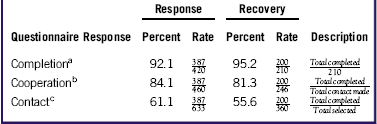
Interview teams conducted 195 interviews during the response CASPER on St Croix (completion rate of 92.9%), 192 interviews for the response CASPER on St Thomas / St John (completion rate of 91.4%), and 200 interviews during the recovery CASPER (completion rate of 95.2%). Of the households with an eligible participant answering the door (ie, the cooperation rate), 84.1% completed an interview in November 2017 (response) and 81.3% completed an interview in February 2018 (recovery) (Table 1).
Questionnaire Response Rates—Hurricanes Irma and Maria, US Virgin Islands, 2017-2018

a Percent of surveys completed compared to the goal of 210.
b Percent of surveys completed compared to the total number of contacted households that were eligible and willing to participate.
c Percent of surveys completed compared to all randomly selected households.
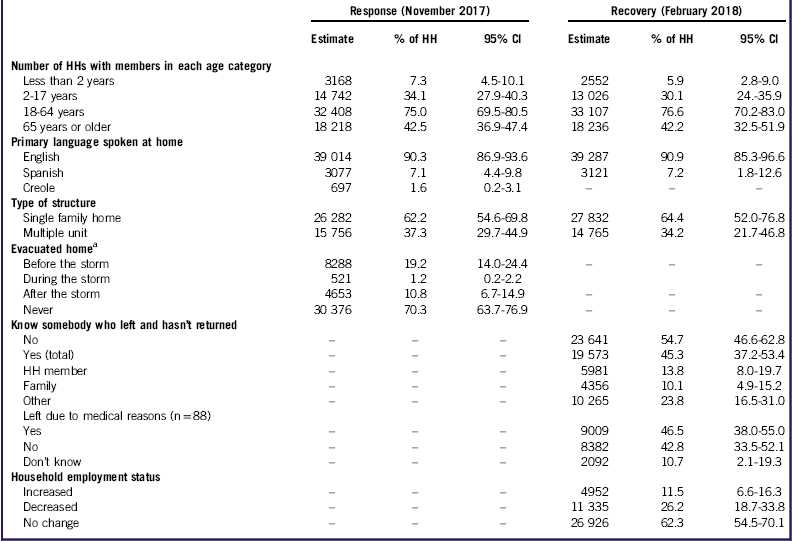
Roughly 40% of households had 1 or more members aged 65 years or older (Table 2). The mean number of household members was 2.9 (response) and 2.7 (recovery); these results are comparable to the census average 10 for USVI of 3.1. No significant differences were found between the CASPERs for any demographic or other control variables. Approximately one-third of households (29.7%) reported during the response CASPERs that they evacuated their home at some point before, during, or after the hurricanes, usually to a friend or family member’s house on the islands. And, more than 5 months after impact, almost half (45.3%) of households knew somebody who left the island due to the storms and had yet to return; roughly half of these cases (46.5%) were due to medical reasons. When asked during the recovery CASPER how the storms affected household employment, 11.5% said it had increased, 26.2% said decreased, and 62.3% saw no change.
CASPER Results for Household (HH) Demographics—Hurricanes Irma and Maria, US Virgin Islands

-- indicates weighted calculation not able to be made (i.e., question not asked or sample cell size less than 5).
a Households could choose more than one 1 response.
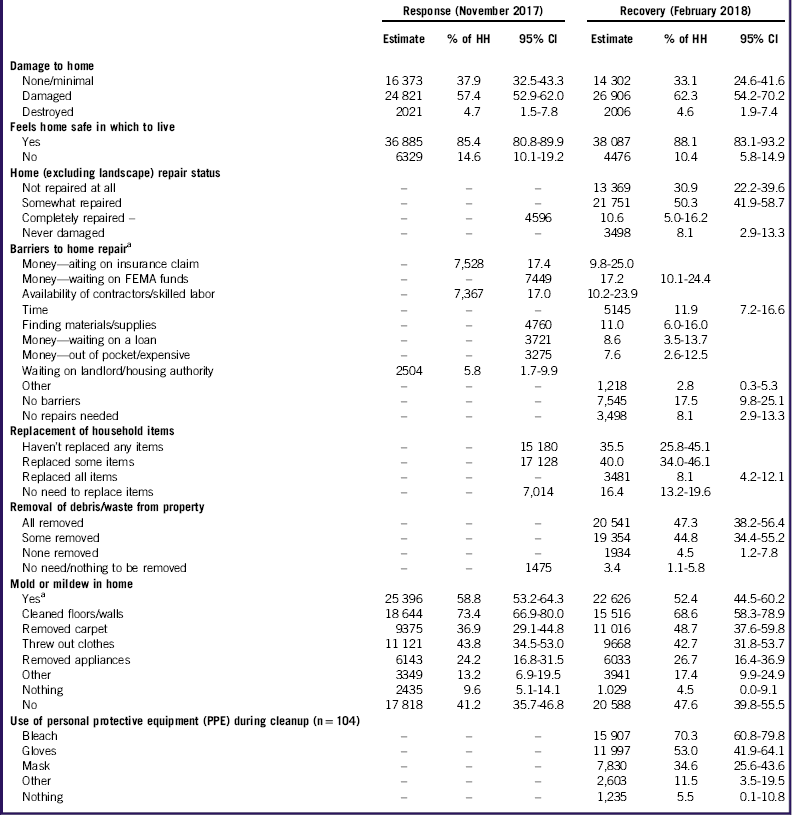
Table 3 describes household repair and recovery status. Almost 70% reported that their homes were either damaged or destroyed as a result of the hurricanes, and 10.4% felt their home was unsafe in which to live. At over 5 months since the second storm, roughly 80% of households stated that their homes were either not repaired at all or only somewhat repaired. Money was the top barrier to home repair (42.8%), and many households were waiting on insurance claims, Federal Emergency Management Agency funds, and loans. Similarly, few households (8.1%) have replaced all household items such as furniture, clothing, and toys. However, the majority of households had begun cleaning outside their home and over 90% have had some or all debris or waste removed.
CASPER Results for Household (HH) Repair and Recovery Status – —Hurricanes Irma and Maria, US Virgin Islands

-- indicates weighted calculation not able to be made (i.e., question not asked or sample cell size less than 5).
a Households could choose more than one 1 response.
Over half of households (52.4%) were experiencing mold or mildew within their homes more than 5 months after the storms. While this is slightly lower than the number reported in November 2017 (58.8%), the difference is not significant. Of those with mold or mildew, households were taking action by cleaning the floors and walls (68.6%), removing carpet and upholstery (48.7%), throwing out clothes and toys (42.7%), and removing appliances (26.7%). When cleaning, 70.3% of households used bleach, 53.3% used gloves, and 34.6% used a mask.
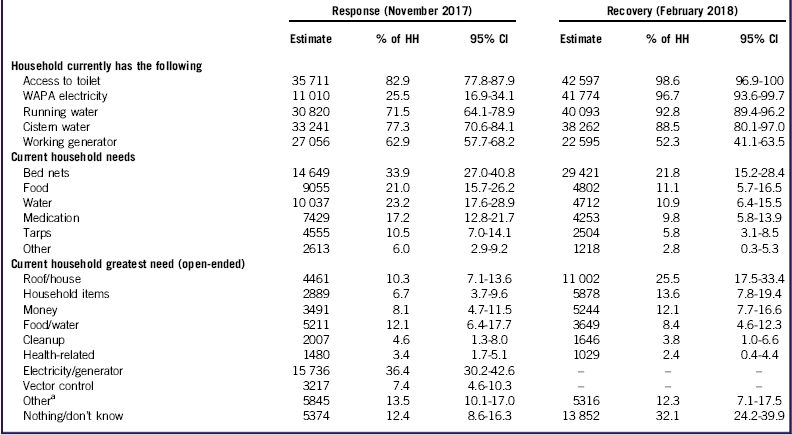
Table 4 reviews current household needs. Significantly more households (96.7% vs 25.5%) had Water and Power Authority electricity, access to a functioning toilet (98.6% vs 82.9%), and running water (92.8% vs 71.5%) at the time of the recovery CASPER than did 7 weeks after the second storm. Bed nets remained a top current household need, with 21.8% of respondents indicating the desire for bed nets. Eleven percent (11.1%) of households indicated a need for food, 10.9% reported a need for water, 9.8% required medication, and 5.8% asked for tarps. These all represent decreases from November 2017; however, only the need for water decreased significantly. When asked to identify their current greatest household need(s), roof and/or house repair was the top response (25.5%). In November 2017, electricity was the greatest need.
CASPER results for household (HH) needs—Hurricanes Irma and Maria, US Virgin Islands

Abbreviation: WAPA, Water and Power Authority.
aInternet, TV, phone service, construction materials, etc.
-- indicates weighted calculation not able to be made (ie, question not asked or sample cell size less than 5).
Interview teams submitted 31 referrals during the response CASPER and 21 referrals during the recovery CASPER directly to USVI DoH for immediate additional needs or services; these referrals were separate from the questionnaire and contained identifiable information for follow-up. The most common referrals during the response were related to vector control (27%); health-related needs, including medications and mental health counseling (25%); and home repair, mold, and/or garbage cleanup assistance (18%). For recovery, the most common referrals were for health-related needs, including medications and mental health counseling (35%); vector control (23%); and home repair, mold, and/or garbage cleanup assistance (16%). USVI DoH followed up with those who requested medical care immediately by conducting home visits and followed up vector control needs by offering bed nets and other services. All other referrals were directed to the appropriate response or recovery agency.
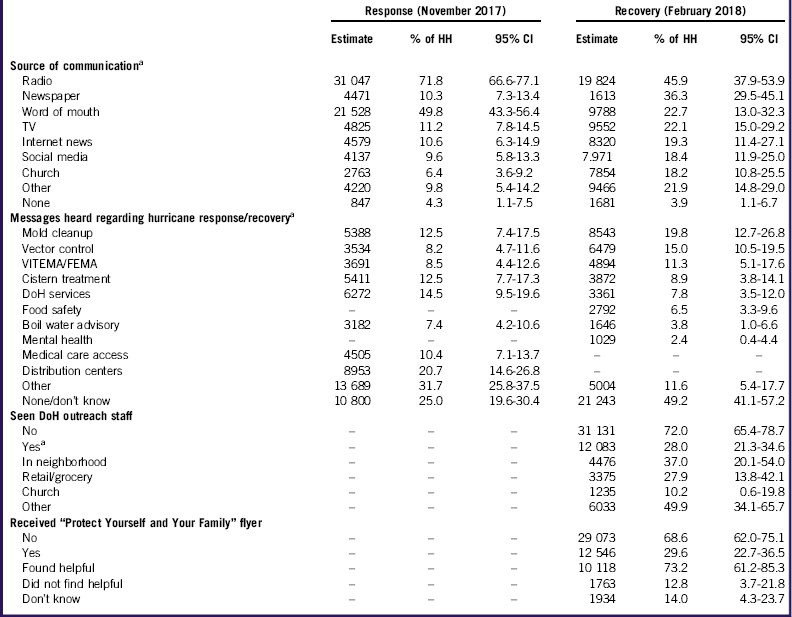
Household communication preferences and messages received are described in Table 5. Radio was the most commonly preferred source of communication (45.9%), followed by newspaper (36.3%); family, friends, or other word of mouth mechanisms (22.1%); and television (22.1%). This represents a significant shift in sources of communications away from predominately radio and word of mouth (49.8%) during the response. Health messages heard regarding hurricane-related recovery activities varied, and 49.2% of households said they heard no messages or did not know. Of the 28% of households who had seen DoH outreach staff since the storms, 37.0% saw them in the neighborhood; 27.9% at a retail, grocery, or hardware store; and 10.2% at a church or other place of worship. Roughly 30% of households received the “Protect Yourself and Your Family” flyer that was sent to every household in USVI in the months following the hurricanes. Of those who remembered seeing the flyer, 73.2% found it helpful.
CASPER Results for Household (HH) Communication and Messaging—Hurricanes Irma and Maria, US Virgin Islands

Abbreviations: FEMA, US Federal Emergency Management Agency; VITEMA, Virgin Island Territorial Emergency Management Agency.
-- indicates weighted calculation not able to be made (ie, question not asked or sample cell size less than 5).
a Households could identify more than 1.
During the recovery CASPER, 39.3% of households reported that they noticed an increase in rats or mice since the hurricanes. And in the 4 weeks prior to the CASPER, 39.8% of households noticed an increase in mosquito biting; this was significantly less than was reported in the weeks following the storms (87.0%). Households reported in both response and recovery that they were either very concerned (43.8% and 38.8%, respectively) or somewhat concerned (26.2% and 28.5%, respectively) about contracting mosquito-borne diseases. The majority of households (90.7%) indicated their support for spraying for mosquitoes, most commonly by truck (63.4%) or by hand (61.9%).
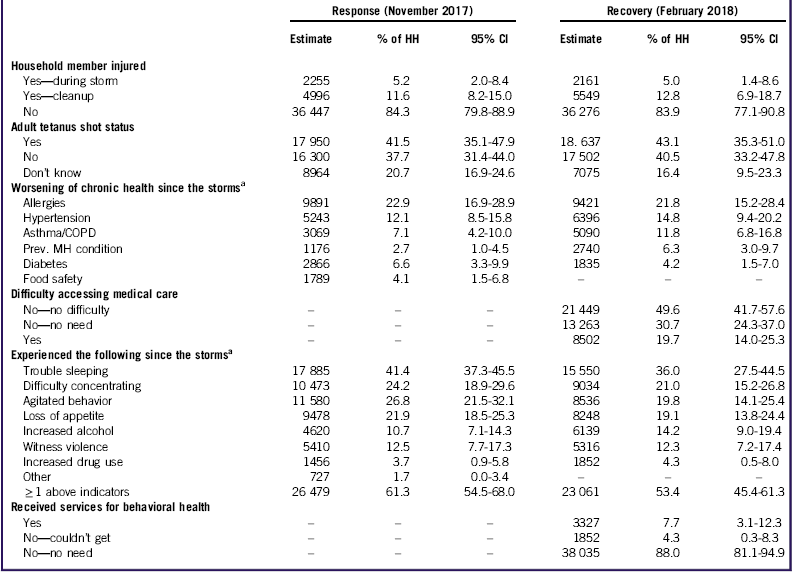
Roughly 18% of households reported that 1 or more members were injured during the storm (5.0%) or cleanup (12.8%) (Table 6). With regard to chronic disease, 21.8% of households reported a worsening of allergies for 1 or more members since the storms. Some households also reported a worsening of hypertension (14.8%), asthma or chronic obstructive pulmonary disease (11.8%), previous mental health conditions (6.3%), or diabetes (4.2%) for 1 or more household members. These results are comparable to those from November 2017. Of the 19.7% of households that reported difficulty accessing medical care, the top reasons included that their usual clinic was closed (39.1%), no transportation (24.6%), cost (19.8%), and insurance problems (16.9%). Ongoing efforts to restore health services may improve availability of health care and reduce access difficulties.
CASPER Results for Household (HH) Injury and Health Status—Hurricanes Irma and Maria, US Virgin Islands

Abbreviations: COPD, chronic obstructive pulmonary disease; Prev. MH condition, previous mental health condition.
-- indicates weighted calculation not able to be made (i.e., question not asked or sample cell size less than 5)
a Households could choose more than one 1 response.
Since the storms, 36.0% of households reported that at least 1 member had experienced trouble sleeping or nightmares. Other reported behavioral health indicators included difficulty concentrating (21.0%), agitated behavior (19.8%), loss of appetite (19.1%), increased alcohol consumption (14.2%), witnessing firsthand violence or threats of violence (12.3%), and increased drug use (4.3%). While showing a slight decrease in all but increased alcohol use, these results are all comparable to those from November 2017. When asked if any member of the household received services for behavioral health from sources such as counselor, pastor, therapist, social worker, or the Substance Abuse and Mental Health Services Administration (SAMHSA) hotline, 88.0% stated that there was no need for any services, 7.7% said they received services, and 4.3% reported they could not get the services they needed.
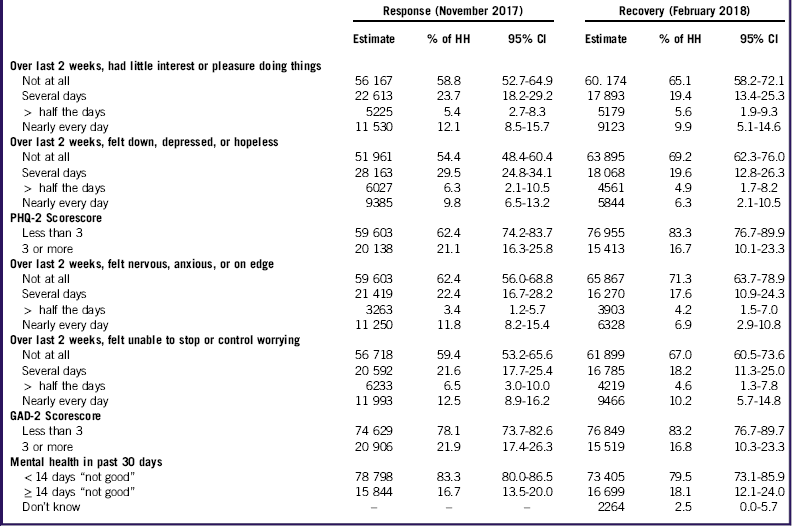
The final 5 questions were asked at the individual, not household, level. Seventeen (16.7%) of the respondents had a score of 3 or more on the PHQ-2 depression scale, and 16.8% had a score of 3 or more on the GAD-2 anxiety scale (Table 7). While these scores show a slight decrease from November 2017 (21.1% and 21.9%, respectively), the difference was not significant. In addition, when asked the BRFSS quality-of-life question, 18.1% of respondents indicated that their mental health, which includes stress, depression, and problems with emotions, was “not good” for 14 or more days in the past month.
CASPER Results for Individual Behavioral Health Status—Hurricanes Irma and Maria, US Virgin Islands

-- indicates weighted calculation not able to be made (i.e., question not asked or sample cell size less than 5).
DISCUSSION
We found that almost half of households knew somebody who had left the islands due to the storms and had yet to return, roughly 14% of whom were household members. This type of family disruption may lead to negative effects on health, social, or economic well-being such as increased stress on family members, social isolation, and instability. The storms have also had an effect on employment for some households, with 11.5% noting an increase in employment and 26.2% saying their household employment has decreased. This information can be used to approximate economic-associated sequelae.
At over 5 months after the second storm, the majority of homes still needed repair (81.2%), and roughly 10% of households still did not feel safe within their homes. Therefore, while there seems to be improvement on the surface with almost all households (95.5%) having removed some or all debris or not having debris or waste to remove outside their homes, there remains a vast need for cleanup and repair to the household structures and interiors. This information is important to note because a visual assessment of improvements alone would not necessarily tell a complete story of community recovery.
Over half of the households reported having mold and/or mildew in their home. While many households are taking action to attempt to remove the mold, cleanup activities are varied and inconsistent and some households indicated they had not taken any actions as they did not know what to do or believed that no actions would work. Among those that did take action, personal protective equipment and bleach were inconsistently used. This is a public health concern as there are many potential health issues associated with the presence of mold and mildew, and roughly a quarter of households reported having a household member who experienced a worsening of allergies since the storms or red/itchy eyes in the past month. In addition, with the climate remaining humid, drying the home remains difficult. These results are comparable to those from November 2017, which indicates a need to improve strategies for sharing proper cleanup messaging.
Not surprisingly, household needs have evolved between November 2017 (7 weeks after the second storm) and February 2018 (23 weeks after the second storm). While the need for basic essentials such as electricity, running water, and access to a functioning toilet has significantly decreased, other needs, such as the need to fix the roof or housing structure, have significantly increased. Although some needs remain (eg, bed nets), many of the initial needs are being addressed, which leads to a general shift in greatest need as the recovery process continues and households aim to return to normal. This is important to note, as current programs addressing community needs will need to be nimble and evolve as the recovery process continues. This also indicates the continued need to reassess every few months to ensure that programs are matching the current needs of the community as they continue to progress with time.
With regard to messaging, while radio remained a top form of communication, it was significantly lower than it was in November 2017, when there were limited communication options after the storms. Newspaper, word of mouth options such as friends and family, and television were all indicated as additional top communication sources. This is important for the continued recovery effort as effective communication is an important aspect in managing a response. As fewer than 20% of households recalled hearing hurricane recovery messages, there remains a need for ongoing and evolving communication strategies. Less than one-third of households had seen any outreach staff in the community and, of those who did, they were inconsistent in the location. Additionally, less than one-third of households reported receiving the “Protect Yourself and Your Family” flyer that was sent to every household in USVI. However, when received, the information was viewed as helpful by many. This information can be used to improve and modify current communication and outreach plans to meet the evolving community information needs. These data suggest the need to encourage messaging via multiple sources, including word of mouth, to get information to the community. Social media is also a popular communication route and is effective as it shares similar attributes with word of mouth messaging—information comes from trusted friends, family members, and peers. USVI can use this information to target delivery of continued recovery messages and to help with future messaging for emergencies.
When it comes to vector control and prevention, 40% of households noticed an increase in rats or mice since the storm. This could be a public health concern, as rodents can spread disease, trigger asthma attacks or allergic reactions in some people, contaminate food, and destroy property. 11 Significantly fewer households noticed an increase in mosquito biting in the past 4 weeks compared to the weeks after the storm. This could be due to the elimination of standing water around the home with debris and waste removal, as well as the natural cycle of mosquitos on the islands. However, almost 40% of households still noticed an increase in mosquito biting and, with two-thirds of those households changing their behaviors because of the mosquitoes, vector control still remains an important issue in the community that should be addressed. This is evident with two-thirds of households being either somewhat or very concerned about contracting mosquito-borne diseases such as Zika, dengue, chikungunya, and malaria, and some households still reporting a need for bed nets. Consistent with previous results, the majority of households support spraying for mosquitoes, especially if considered safe by the Environmental Protection Agency, and this should be considered as a viable response for vector control.
One-third of households reported that 1 or members have trouble sleeping or nightmares, and roughly 20% of households also reported that 1 or more members have difficulty concentrating, agitated behavior, and loss of appetite; thus, the continued need for mental health services in USVI is evident. However, when asked if members of the household received services for behavioral health from sources such as counselor, pastor, therapist, social worker, or the SAMHSA hotline, few households said yes. This may suggest some behavioral health resiliency within the community, poor awareness of the benefits of behavioral health resources, or a potential stigma associated with receiving behavioral health services. Therefore, promotion of the benefits of receiving behavioral health services would be valuable as well as the development of unique or creative ways to address mental health in a culturally acceptable format such as through churches are other places of worship. In addition, promoting available resources is essential to ensure that those who desire services may find them.
We asked the individual respondents both the PHQ-2 and GAD-2 screening questions. Both tools are “first step” screening approaches rather than a diagnosis or monitoring tool for depression or anxiety. Approximately 17% of respondents had a score of 3 or more on the PHQ-2 depression scale, which indicates a positive predictive value of 75.0 for any depressive disorder and, additionally, roughly 17% of respondents had a score of 3 or more on the GAD-2 anxiety scale, which indicates a 5.1 likelihood ratio of generalized anxiety disorder.Reference Arroll, Goodyear-Smith and Crengle 8 , Reference Kroenke, Spitzer and Williams 9 These show a slight, but insignificant, decrease as compared to November 2017. In addition, approximately 18% of respondents indicated that their mental health was “not good” for 14 or more days in the past month. This is comparable to November 2017 results and remains a significant increase from the 3% of respondents in the 2016 BRFSS data in USVI. Again, these results indicate the continued need for mental health services, and their promotion, on the islands.
The data generated by the CASPER represent a snapshot in time, which should be considered when interpreting the results of ongoing recovery efforts. The age distribution of the sample population may be skewed, with a greater proportion of individuals aged 65 years and older represented in the CASPER than reported by the US Census (33.3%). Census estimates revised since the disaster are not available, although evacuations and recent emigration may have caused a demographic shift. Therefore, survey responses may not be representative of USVI as a whole. The CASPER results, however, are all comparable to each other, which suggests that households participating in CASPERs may be more likely to have older, retired residents likely to be home during daylight hours when the CASPER was conducted.
CONCLUSION
The hurricane CASPERs in USVI helped characterize the status and needs of residents after the devastating 2017 hurricanes. The findings illustrate the evolving needs of the community and progression of the recovery process. We shared CASPER findings with recovery partners to promote data-driven recovery efforts, improve the efficiency of the current response and recovery efforts, and strengthen the emergency preparedness capacity of USVI. As we developed the CASPER measures in conjunction with response partners, these data served to inform coordinated, interagency recovery efforts. As hurricane recovery in USVI is expected to be a long-term process, continual assessments will provide useful information to planners for both gauging progress and realigning resources with evolving needs. This will allow the USVI DoH and other recovery partners to continue to gain critical information of the continuing needs among residents during the ongoing recovery period.