Over the past two decades, Kenya has emerged as one of the leading countries in sub-Saharan Africa in terms of the diffusion of mobile phones, with adoption levels reaching 139.7 per cent of the population in 2024–25 (Communications Authority of Kenya 2025). This trend is largely the result of a series of regulatory reforms and the introduction of a highly successful mobile payment system, which, towards the end of the 2000s, began to transform the country’s communications landscape (Nyabola Reference Nyabola2018). The 2007 launch of M-Pesa – a mobile-based money transfer service introduced by Safaricom, Kenya’s main telecom provider – significantly accelerated the rollout of telephone networks and infrastructure, even in the country’s most remote areas (Sanya Reference Sanya2013). In 2007–08, the Communications Commission of Kenya liberalized the telecommunications market by allocating frequencies and granting operational licences to new players in the field of information and communication technologies (ICTs). The impact was immediate: the number of mobile subscribers rose by 55.8 per cent in 2007–08 and by 41.9 per cent in 2008–09. As new operators entered the market in the years that followed, competition increased and the price of calls and SMS fell dramatically, further fuelling the uptake of mobile services (Waema et al. Reference Waema, Adeya and Ndung’u2010).
The spread of ICTs in Kenya during the past fifteen years is also inseparable from political processes closely tied to the broader transformation of the state system. The 2010 constitution guaranteed genuine media freedom for the first time and opened the door for local and international donors to invest in the development of ICTs (Kilonzo et al. Reference Kilonzo, Magak and Omwalo2015: 528). Additionally, in rural areas with limited network coverage, promises to build mobile phone towers have become a staple of campaign discourse among candidates running for positions in county government.
These regulatory, technological and socio-economic reconfigurations facilitated the diffusion of mobile phones in the early 2010s, even in the arid northern regions inhabited by nomadic pastoral populations, who recognized them as particularly well suited to the demands of mobility-based livelihoods and the herding economy. Samburu County – named after Samburu pastoralists who form its largest community – is the central focus of this analysis. Here, in 2019, a noteworthy 27.2 per cent of residents, corresponding almost to the entire population aged fifteen to fifty, reported owning a mobile phone (KNBS 2019a; 2019b). These devices have become essential tools of communication, deeply embedded in various facets of Samburu life, from coordinating initiation ceremonies and organizing cattle raids, to recording ceremonial events and musical performances, to the sharing of multimedia content (Marmone Reference Marmone2021a). Humorous videos, entire low-resolution films, amateur footage of everyday scenes and raid songs circulate through Bluetooth, SD cards and, increasingly, WhatsApp. This content flows from one mobile phone to another, cutting across generational lines. The rise of digital networks and the spread of media-based entertainment among pastoralists have generated ‘new ways of being and relating’ (Archambault Reference Archambault2017: 9), opening up creative possibilities while also providing new tools for building power and authority in the electoral arena.
In this article, I examine how the proliferation of mobile phones in rural northern Kenya has transformed political communication practices targeting pastoral communities during local and national election campaigns. By examining the content, form and digital circulation of electoral songs from the 2022 gubernatorial race in Samburu County, I argue that the phones’ dissemination and use in rural areas contributed significantly to the ‘pastoralization’ of candidates’ identities, a crucial step in garnering support from the nomadic electorate. Analysing the ‘linguistic ideology’ (Irvine Reference Irvine1989; Bourdieu Reference Bourdieu1991; Ciucci Reference Ciucci2022) underpinning these musical repertoires sheds light on the discursive and performative tools candidates use to project their embeddedness in pastoral society and political models, thereby contributing to an emerging form of rural populism. This intersection of digital technology, electoral communication and music shows how Kenyan democracy (both in its advancements and dysfunctions) has become increasingly entangled with digital infrastructures, from Nairobi’s elite neighbourhoods to pastoralists’ semi-arid rangelands.Footnote 1
Samburu pop: the musical origins of pastoral digital networks
The Samburu people are predominantly mobile herders who practise transhumant or semi-nomadic rearing of zebu cattle, small ruminants and dromedaries in north-central Kenya. While transitions towards wage labour, migration to urban centres, and pursuits of educational careers extending to university level are becoming increasingly common within the community, the pastoral economy remains dominant. According to the 2019 Kenya Population and Housing Census, a substantial 56.2 per cent of the Samburu reported having received primarily a pastoral education, without attending schools (KNBS 2019b). When accounting for those who left school to engage in mobile herding, the proportion of pastoralists (whether they are full time or not) is estimated by the current governor of Samburu County, Lati Lelelit, to reach up to 70 per cent.Footnote 2
The persistence of pastoralism and its associated ethos (Wasamba Reference Wasamba2009) among northern Kenyan communities such as the Samburu, Turkana and Rendille peoples ensures the ongoing reproduction and social importance of their age class systems, along with the ceremonial complex that guarantees their cyclical renewal. The valorization of pastoral activities, such as cattle rustling by lmurran (young circumcised menFootnote 3) and junior elders, is grounded in the centrality of mobile livestock rearing as an economic and social foundation in the arid and semi-arid regions of northern Kenya (Schlee and Shongolo Reference Schlee and Shongolo2012). This is particularly evident in the domain of poetic and musical expression. Cattle raiding continues to serve as a primary source of inspiration for sung poems created by young circumcised men and unmarried girls. The lmurran compose or improvise lyrics recounting their journeys to ‘enemy’ settlements, detailing the mountains they had to climb, the rivers they had to cross, and the weaponry used in their raids (Marmone Reference Marmone2021b). Conversely, unmarried girls focus on the return of the men from the raid, highlighting the types of cattle stolen (identified by their colours) and praising those who distinguished themselves during the theft (Spencer Reference Spencer2004 [Reference Spencer1965]; Marmone Reference Marmone2020; Straight Reference Straight2020). These generational sung poems, led in turn by multiple soloists, often unfold as sequences of brief narrative images evoking different events, or as extended tales without a refrain. The following example, from the lkulosi repertoire,Footnote 4 features two soloists, each performing two octosyllabic linesFootnote 5 in alternation:

Until the early 2010s, these compositions were largely ephemeral, only occasionally fixed on audiocassette (Marmone Reference Marmone2022), and their enjoyment was confined to the moment of the soloists’ performance. Occasionally, some sung poems found their way gradually through the community, becoming part of the collective memory of a generational cohort (age setFootnote 13). This occurred when stories were transmitted from one group of young circumcised men to another during their encounters in transhumance camps. In other, more common cases, a sung poem and the melody on which it is developed, composed by a certain group of young circumcised men, may act as an inspiration to a group of peers from a relatively close area of Samburu County, thus being limited to circumscribed dissemination. Especially at the opening of a new age set, the newly initiated young circumcised men actively seek external influences, new timbral, melodic, textual and thematic innovations from other areas of Samburu County or even from other pastoral communities, such as the Ariaal and Rendille. This quest for renewal aims to establish a distinctiveness from older age sets by infusing the repertoire with an aura of novelty and, at times, exoticism – a direct outcome of the age class system, within which the generational identity of each age set takes shape through the creation of aesthetic ruptures that allow the members of a cohort to differentiate themselves from their predecessors (Straight Reference Straight, James and Mills2005).
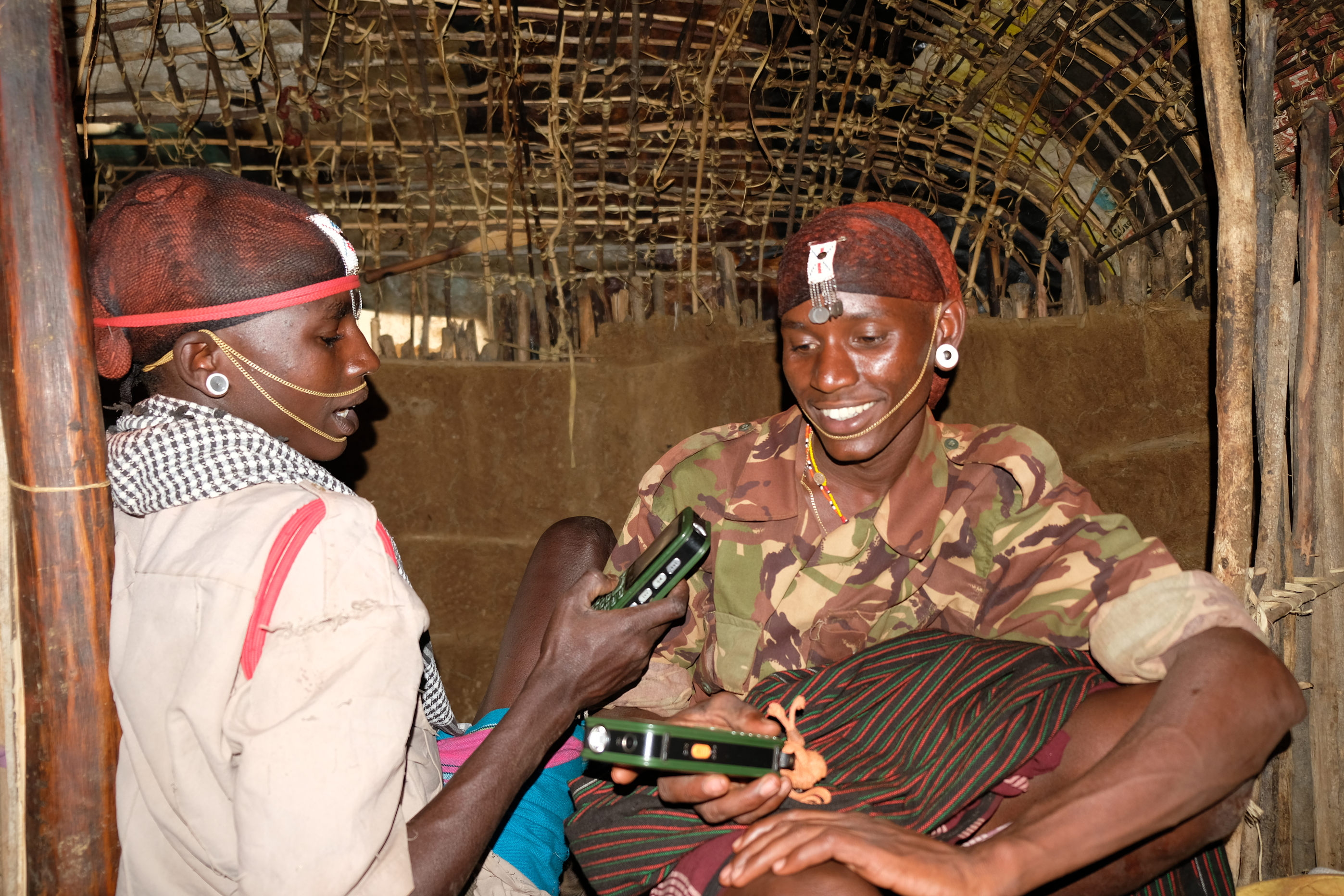
The recording and sharing of sung poems about cattle rustling through mobile phonesFootnote 14 have given these songs a markedly different kind of agency (Figure 1). Today, generational raid songs are recorded and fixed in the form of files, circulating both within and beyond the Samburu community (Marmone Reference Marmone2022). However, the development of technical skills and material and digital practices (such as using built-in cameras; downloading, renaming and sharing files; creating folders on mobile phones for storing and categorizing music, videos and photographs; purchasing SD cards with specific features), as well as the vocabulary associated with recording and exchanging music in audio and video formats, is rooted in habits and needs that pre-date the widespread adoption of mobile telephony. Indeed, the digital circulation of music, including generational raid songs, builds on and amplifies pre-existing sharing dynamics embedded in local musical practices, the pastoral economy and the age class system. At the same time, it undoubtedly introduces significant changes. The speed of dissemination and the potential for virality allow certain songs to exert an unprecedented influence on the creative and performative practices of young circumcised men and unmarried girls, who store and share the songs as digital files. Some of these songs become local ‘hits’, valued for the vocal and compositional skills of the soloists, the stories they tell, and the appeal of their accompanying vocal melody. Often, the soloists remain completely unknown to the listeners who possess recordings of their performances. Yet the ability to replay their voices, lyrics and the chanting group choral responses at will gives certain performances an aesthetic, emotional and compositional impact that music shared through direct contact cannot replicate.
Two young circumcised men share a music file via Bluetooth. Photograph by the author. Mount Nyiro, 2025.

The adoption of mobile phones among the Samburu was also a decisive factor in the appearance of a new musical genre that emerged in the 2010s. Notably, this music did not originate in the pastoral sectors of the community but from the creative initiatives of school-educated young Samburu men and women. The genre, referred to as ‘modern traditional music’ (MTM) by singer Dennis Lelenguiya,Footnote 15 takes inspiration from traditional Samburu repertoires and Kenyan rap as well as from African, Caribbean and Western popular music styles. Among its multiple influences are gospel songs composed in Swahili and Samburu. Beginning in the 2010s, a wave of digital recording (particularly on CDs) was driven by the efforts of the Consolata and Yarumal Catholic congregations, who contributed financially to the travel of their church choirs to recording studios in Maralal or Nairobi and to the production of music videos. These early experiences marked a turning point, sparking the development of new skills and practices among both urban and rural Samburu youth in music production, distribution and consumption (Marmone Reference Marmone2025). The music scene that was partly shaped by this Christian repertoire now includes numerous performers, some of whom have achieved local celebrity status and regularly perform at festivals, concerts and ceremonies (especially weddings).
The spread of mobile phones, along with the development of material and digital practices for storing, listening to and exchanging music files, was crucial to the emergence of the MTM scene. Patterns of engagement shaped by the earlier circulation – via Bluetooth and SD cards – of generational raid songs laid the groundwork for this new repertoire. The establishment of customs related to the preservation and exchange of these songs not only provided a model but also created the digital networks that MTM artists would later rely on to launch their careers, promote their work and expand their audiences. The circulation of pastoral music has also redefined listening as a form of media entertainment, giving rise to new forms of social interaction. It is now common to observe groups of young circumcised men gathered around a mobile phone, listening to the voice of a soloist (often from an unknown part of Samburu County) and commenting on his narration of cattle raids and other exploits involving lmurran from his area. By normalizing these modes of media consumption, the widespread use of mobile phones in northern Kenya helped pave the way for MTM’s popularity.
Modern traditional Samburu music is now ubiquitous even in the remotest rural areas, resonating from the mobile phone speakers of men and women in their moments of leisure or during activities related to the pastoral economy. The artists active in this musical genre have gradually distanced themselves from the religious components of the repertoire, transitioning from songs like ‘With Jesus no fear’ – a 2011 track by Samburu singer Mr Twice – to an attempt to align closely with the canons of pastoral music. Presently, compositions feature lyrics in an increasingly refined Samburu, mirroring the poetic idiom of generational raid songs, and are preferred over songs in English or Kiswahili, the official languages of Kenya. Earlier themes such as Christian conversion, education and the rejection of traditional practices have given way to less polarizing subjects – love, respect for nature and wildlife, and the often fraught relationship with national and regional government – that resonate across both school-educated and pastoral segments of the community. MTM singer Lemarti,Footnote 16 a pioneering figure in this musical scene, has composed songs that reframe practices often stigmatized in Christian repertoires and national moral discourses, in one case narrating cattle theft and armed conflict in the first-person plural, as though he himself had taken part in them (Figure 2):

Singer Lemarti. Photograph from the Lemarti Music Band official Facebook page.

MTM artists primarily use WhatsApp to access pastoral digital networks. They create large chat groups, often with hundreds of members, where they upload their studio-recorded tracks. Within these groups, participants are encouraged to share the songs as widely as possible throughout their communities and to set them as caller ring-back tones. As a result, the circulation of MTM begins in urban settings before rapidly reaching rural areas.
In the past decade, the themes addressed, vocal styles employed and song structures of MTM have increasingly converged with those found in ceremonial and generational repertoires. The backing tracks, however, are produced in studios using digital audio workstations, occasionally incorporating instruments such as guitars and keyboards. Nevertheless, these features have not hindered the spread of this repertoire among mobile pastoralists, drawn to its captivating themes, sophisticated use of the Samburu language, the innovative timbre and the musical elements it introduces. On the contrary, according to MTM artists I interviewed, their compositions and performances bring Samburu society together and foster a shared musical experience that bridges the gap between mobile pastoralists and school-educated community members.Footnote 24 Nookisho and Lentir (Figure 3), two of the most well known and celebrated singers within this music scene,Footnote 25 described this phenomenon in a conversation with me in 2022:
Nookisho: [Our music] is bringing [school-educated and pastoral Samburu] together because, at the end of the day, they dance together. When they dance, [pastoral Samburu] don’t say ‘Look at this lkirdai.’Footnote 26
Lentir: They can’t even know who is a lkirdai here and who is [not].
Nookisho: So, [through our music] they mingle together.
Lentir: For us now, the gap between educated and non-educated is becoming very narrow.
The duo Nookisho and Lentir of the Multisystem art collective. Photograph from the Lentir and Nookisho official YouTube page.

According to Lentir and Nookisho (but this view is widely held among MTM artists), the success of their music has played a significant role in enhancing the status of the arrda (plural of lkirdai), school-educated Samburu. Until the recent past, arrda were confined to the fringes of rural Samburu society due to their limited experience in the pastoral economy, non-specialized knowledge of the land, and their lack of command of the local language. Moreover, as demonstrated by Carolyn Lesorogol (Reference Lesorogol2008), the distance and the explicit rejection displayed by school-educated Samburu towards local musical practices were essential in constructing and exhibiting an urban, non-pastoral identity. The success of MTM among the pastoral majority has narrowed this social and cultural divide, contributing to an accelerated process of integration (or reintegration) of school-educated Samburu into shared practices linked to the ceremonial sphere, musical activity, and media sharing and consumption via mobile phones. MTM and the circulation of music files have thus played a significant role in fostering closer ties between different components of Samburu society. As we will see in the next section, the consequences of this musico-social phenomenon extend far beyond the domain of entertainment and artistic performance. The growing influence of digital music sharing in reducing the marginalization of school-educated Samburu vis-à-vis the pastoral majority is now reverberating within local politics, shaping new patterns of voter mobilization, candidate legitimacy and public visibility.
Being a candidate in Samburu County local elections: instructions for crafting a pastoral identity
Between December 2007 and February 2008, Kenya experienced one of the most severe crises in its postcolonial history. The result of the national elections, which crowned outgoing president Mwai Kibaki and certified the defeat of opposition leader Raila Odinga, led to violent protests erupting in the streets of the nation’s major cities. The toll was grim, with a reported 1,500 fatalities and at least 660,000 people displaced (Lynch Reference Lynch2009). Subsequent investigations by international observers revealed substantial electoral fraud benefiting both Kibaki and his primary rival Odinga (Lafargue and Katumanga Reference Lafargue and Katumanga2008). The aftermath of the crisis placed immense strain on Kenya’s institutional resilience and social cohesion. In response, the nation’s recovery strategy centred on an ambitious programme of reform. The adoption of a new constitution in 2010 represented a major reconfiguration of the administrative relationship between central government and local communities. This realignment of state authority conferred unprecedented autonomy on the former districts, now designated as counties and equipped with legislative powers and their own assemblies composed of locally elected representatives (Hope Reference Hope2014). The first elections for governors and members of the county assembly (MCAs), held in 2013 across all forty-seven counties, marked a fundamental step in the structural overhaul of both national and subnational governance. Before 2013, districts were administered by district commissioners and councillors, who were limited to supervising service provision tasks such as local road maintenance, primary education and waste management (Hope Reference Hope2014). They had no legislative prerogatives, were not headed by a governor and depended directly on the ministry of local authorities (Moss Reference Moss2016). In contrast, county governments, as the most notable outcome of decentralization under the 2010 constitution (Waddilove Reference Waddilove2023), control their own budgets and, critically, enjoy autonomous legislative powers.Footnote 27
The direct election of governors and MCAs has given mobile pastoralists unprecedented influence, not only in selecting their local governing class, but also in shaping county policies – a power that was less significant when districts did not have the authority to legislate. Candidates vying for administrative positions in the county assembly cannot afford to overlook the votes of pastoralists, who constitute the majority of the electorate in the northern regions of Kenya. Consequently, aspiring MCAs and governors must adapt their campaign and communication strategies to resonate with a predominantly rural electorate that prioritizes issues such as mobility, pastoral economy, conflict resolution and access to natural resources and land. These candidates, however, often face considerable challenges in legitimizing their positions, despite their pastoral origins. The majority of them followed a school curriculum and hold jobs in urban areas. Many, particularly those running for governorship, National Assembly or Senate seats, have pursued prestigious educational and professional paths. They have attended renowned universities within the country or abroad and frequently hold high-ranking positions in public administration or the private sector, primarily in Nairobi or other major Kenyan cities. In addition, many candidates still support anti-nomadic political programmes geared towards the sedentarization of mobile pastoralists, a legacy directly inherited from colonial times and presently endorsed by the national government (Hassan et al. Reference Hassan, Kanyinga and Nathan2023). As a result, many Samburu perceive them as disconnected from the needs of rural communities. Like all school-educated urban individuals, they run the risk of being viewed as arrda, Westernized men and women with little understanding of the specificities of mobile herding (Lesorogol et al. Reference Lesorogol, Chowa and Ansong2011).
The new administrative and electoral system of the counties, together with increased national and international mobility among candidates from younger generations, makes it essential for candidates to develop communication techniques intended to diminish the perception of their otherness from traditional power structures and economic models of livestock rearing to garner the support of pastoralists. Among their objectives is thus the construction of an identity that is as pastoral as possible to legitimize their candidacy in rural areas. While, as discussed earlier, following Lesorogol (Reference Lesorogol2008), school-educated Samburu once sought to affirm their status as ‘modern’ individuals embedded in the capitalist economic system by distancing themselves from local cultural practices, many are now moving in the opposite direction. Music and ornaments have become crucial tools to ‘pastoralize’ the urban identities of school-educated candidates. This valorization of customary aesthetics, knowledge and forms of public self-presentation in the political arena is closely intertwined, in this case, with the democratization of Kenyan society and the decentralization of its administrative systems, but it also resonates with broader dynamics of belonging and autochthony that have accompanied transformations in representation and institutions across Africa, as noted by Peter Geschiere:
While in the time of nation-building ambitious politicians had to learn … [the utility of] keeping careful distance from the village and launching uncertain forays into the higher levels of the politico-administrative hierarchies so as to attract the favors of a fickle and suspicious party leadership, they now have to do the opposite: they must ensure their belonging by showing themselves to be ‘men of the people’ with carefully chosen ostentation. (Geschiere Reference Geschiere2009: 203)
According to Geschiere, drawing on the reflections of Michel Foucault, this ostentatious display of a previously rejected local identity by candidates in rural areas is grounded in a ‘styling of the self’, employing ‘techniques of the self, mostly centred on the body’ (Geschiere Reference Geschiere2009: 34). In pastoral Kenya, the proliferation of communication technologies over the past decade has gradually integrated these techniques of the self into ‘digital spaces of interaction’ (Nyabola Reference Nyabola2018), primarily shaped by mobile phone use. Candidates in local and national elections in Samburu County undoubtedly utilize their physical presence, speeches at rallies and programmes to embody and uphold their pastoral identity. However, the pastoralization of their public image, and the rural electorate’s perception of them, increasingly depends on the skills and expertise through which they narrate themselves in digital networks. If candidates’ bodily and oral expression can sometimes represent a vulnerability in their electoral trajectory, digital technologies allow for the construction and dissemination of a mediated identity that selectively incorporates elements of corporality and orality tailored to campaign needs. As a result, the circulation of audio, video and image files – produced by candidates and their teams, as well as their supporters – has become increasingly central to building consensus in pastoral lands.
The diffusion and influence of MTM among mobile pastoralists have offered Samburu candidates both a model and practical know-how to draw upon when crafting communication strategies aimed at rural communities. In an interview he granted me in 2021, singer Dennis Lelenguiya, also known as Samburu Warrior, reflected on the social impact of his success and the spread of his music in rural areas, highlighting the role of his endeavours in the reintegration of school-educated Samburu individuals into pastoral society. Importantly, he posits that this transformative process not only concerns MTM artists but encompasses all school-educated Samburu whom, in some capacity, these artists represent: ‘Now [thanks to MTM, rural Samburu] have realized the importance of the educated people back to the [pastoral] society’ (Marmone Reference Marmone2025). This is made possible, as we have seen, through the choice of themes rooted in the pastoral socio-economic landscape, but also through the skilled and nuanced use, in MTM songs, of what English-speaking members of the community refer to as ‘deep Samburu’: a rich, complex linguistic register marked by an elevated or old-fashioned vocabulary and figurative language, including metaphors, similes, references to the ceremonial system and proverbs, which is at times almost incomprehensible to urban Samburu speakers.
Interest in the use of ‘deep Samburu’ has intensified, especially among politicians from the age sets positioned in the first two echelons of the elders’ age gradeFootnote 28 – those belonging to cohorts with more cosmopolitan life trajectories now facing greater pressure than their senior counterparts to reaffirm their embeddedness in pastoral society. MP candidate Eli Letipila, who studied at a university in India, for instance, during a campaign rally held in northern Samburu County in August 2022, appealed several times to ‘deep Samburu’ formulations, notably declaring: ‘Nirrapu sae nanyore nijo “aishoo Nkai layyeni.” Naa teyan lino ara,’ which translates as ‘You took the green bead and said, “I thank Nkai [divinity] for this son.” Because I am your firstborn son.’ Here, Letipila referred to the green beads that constitute children’s necklaces among the rural Samburu. By invoking the green bead, he endeavoured to establish a filial bond with the community members he was addressing, even though he was not born in the area. In the same rally, Letipila called for generational change in political leadership, posing the question ‘Amaa taata, le ŋae lwatan?’ – ‘To whom does the lwatan belong now?’ (implicitly suggesting that it belongs to him and his age set now). The lwatan, the foreleg of cattle slaughtered and eaten during ceremonies, is traditionally offered to the elders of the age set who hold the highest responsibility in the age class system. By drawing on this ceremonial metaphor, Letipila emphasized the need for older candidates to step aside and make space for members of his own age set to assume leadership roles, both in parliament and within customary institutions.
The creation and digital circulation of electoral songs during the 2022 campaign in Samburu County served a similar purpose as the use of deep Samburu during rallies: both responded to the need for politicians to highlight and legitimize their engagement with pastoral linguistic, institutional and aesthetic codes. This mode of electoral communication was likely inspired, at least in part, by the experience of MTM artists, who used WhatsApp, YouTube, Facebook and TikTok to tap into existing rural digital networks and circulate musical and video content, mobilizing songs, language and mobile phones to cultivate affection and support among the community’s pastoral majority. Particularly in 2022, election committees enlisted MTM singers or pastoralists from rural areas to record songs supporting candidates, utilizing stylistic elements reminiscent of both raid songs and MTM. Silapia Lenamatiyo, opposition MCA (Woman Representative) in the Samburu County assembly, described to me in 2023 the role of songs in candidates’ electoral strategies:
In rural areas, you know, some parts of Samburu County have no network. But when you go to the rural areas, [you] see people composing songs. You just get some mamas [married women], bring them to the studio, we compose a song that will tell the whole community … your manifesto … Those who are educated and those who are not educated will get the information. People who are educated, they can look at the website and see the projects which are there … Our people, they are not educated, most of them, but these songs give them a message … In rural areas, we use songs, so that they can get the message.
The theme of the ‘message’ recurs almost identically in the reflections of both the MTM artists and the candidates I interviewed. The chances that these messages capture the attention of pastoralist audiences depend on the ability of artists and politicians (or, in the latter case, those who speak and sing on their behalf) to formulate narratives that spark collective reflection by engaging with local debates and expressing political positions in an elevated linguistic register, reminiscent of the eloquence of orators in elders’ assemblies or soloists in the poetic and musical domain (Marmone Reference Marmone2020). While MTM artists personally perform their compositions, politicians and candidates entrust their ‘message’ to the voice of singers, who act as intermediaries, enabling them to embody their belonging to the pastoral world. Indeed, as shown by Alessandra Ciucci, ‘mediated performances … can cultivate the rural’, and rurality itself ‘can travel through people’s voices’, notably via the circulation of recorded music (Ciucci Reference Ciucci2022: 121). These practices of musical composition, performance and file sharing can be understood as techniques of the self, deployed to construct a situated digital identity for candidates rooted in the political expectations and symbolic registers of their rural constituencies.
Electoral songs and digital consensus building in Samburu County: a case study
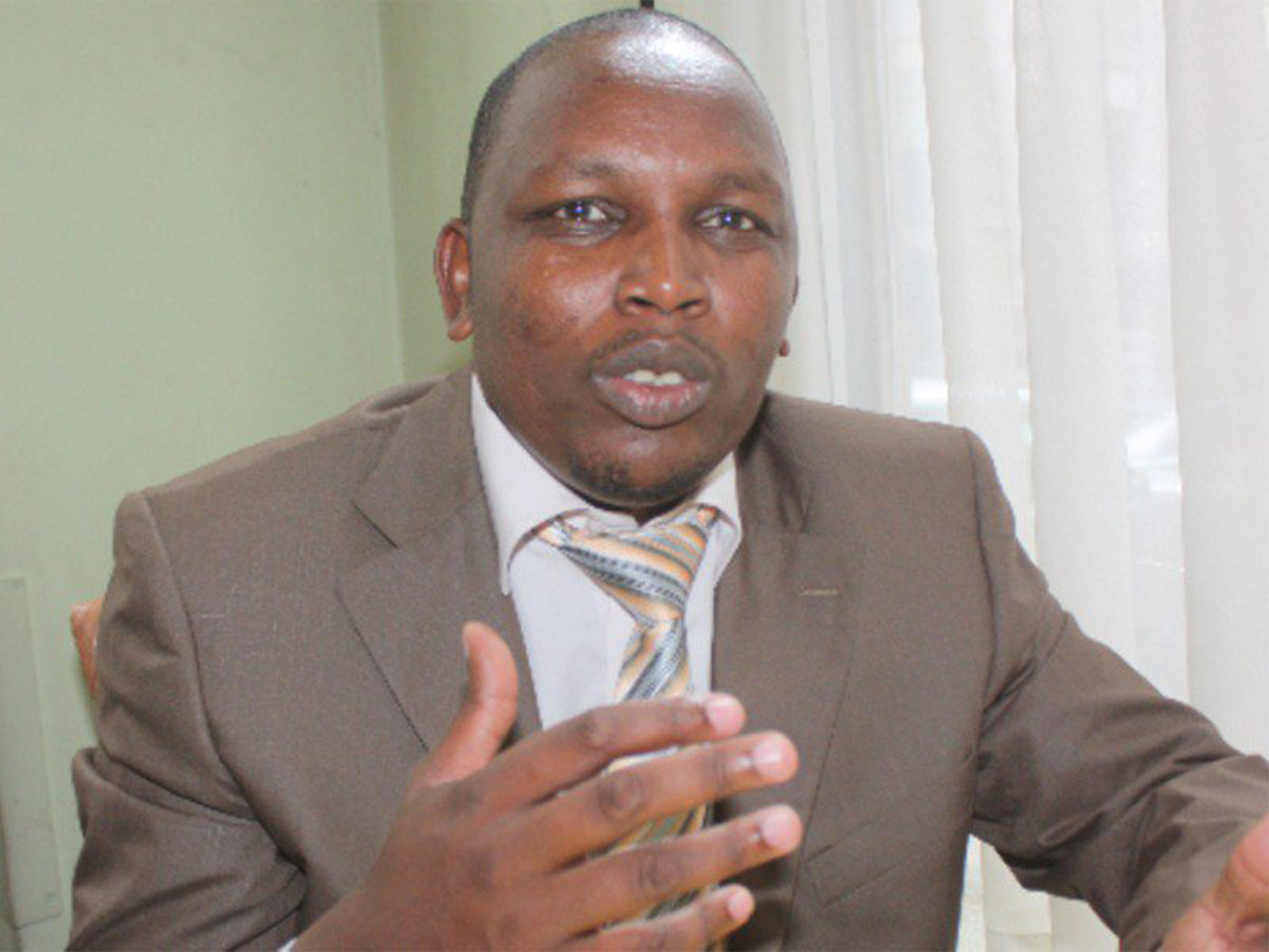
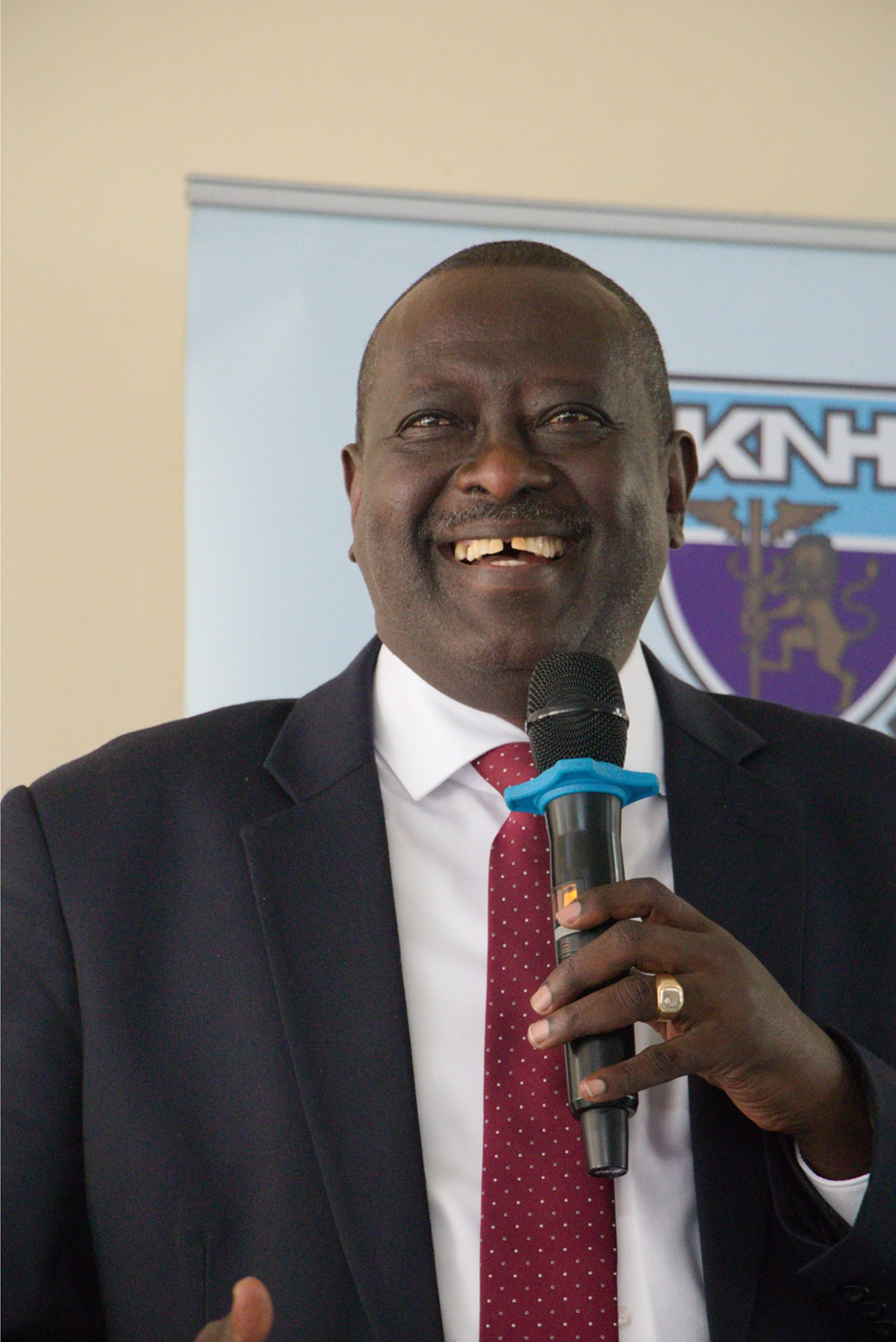
The 2022 race for governor of Samburu County saw Lati Lelelit (Figure 4) emerge victorious with 58.04 per cent of the vote, while the runner-up, Richard Lesiyampe (Figure 5), garnered 38.23 per cent.Footnote 29 Both candidates boast prestigious professional backgrounds, having worked in the highest echelons of public institutions in Nairobi. Richard Lesiyampe belongs to the small lnyaparrai clan. Orphaned at a young age, he relocated to the territory of his maternal family, dominated by the lmasula clan, the largest in the Samburu community, comprising approximately 40,000 members out of a general population of around 300,000 people. After working as a schoolteacher, he entered provincial administration. During the 2022 campaign, he held the prestigious position of chief executive at Kenyatta National Hospital, the largest referral hospital in East and Central Africa.Footnote 30
Lati Lelelit.

Richard Lesiyampe.

On the other hand, Lati Lelelit’s professional journey in Kenya unfolded entirely within national public administration.Footnote 31 A member of the lpisikishu clan, he has an academically distinguished background, earning a Master of Arts and a Bachelor of Science in Mathematics and Economics from St Lawrence University in the state of New York. Additionally, he holds a Master of Business Administration from Brandeis University in Boston. Lelelit was elected as a member of parliament in 2013 with the United Republic Party of the current president of Kenya, William Ruto, and served until 2017. Between 2018 and 2021, he was chairman of the Kenya Industrial Research and Development Institute. In 2022, he was elected as the governor of Samburu County with the United Democratic Alliance (UDA), still under the wing of William Ruto.Footnote 32
Their high-level professional and academic trajectories, however, were not the main component of the narrative that they and their electoral committees created for the pastoral majority of Samburu County. The communication strategies of both candidates aimed at mitigating the issues relating to their public image as men of the Kenyan elite. According to my interlocutors in Maralal and at the Samburu County assembly, Richard Lesiyampe had a significant vulnerability: he lived extensively (too much in the eyes of some pastoralists) in Nairobi, and his knowledge of rural areas and the Samburu language was considered insufficient. Lati Lelelit, on the other hand, faced the challenge of downplaying his proximity to central and regional governments, as he had been elected an MP in the coalition led by former president Uhuru Kenyatta and William Ruto – the same coalition that had supported the election, and the controversial administration, of his predecessor as governor of Samburu County, Moses Lenolkulal.Footnote 33
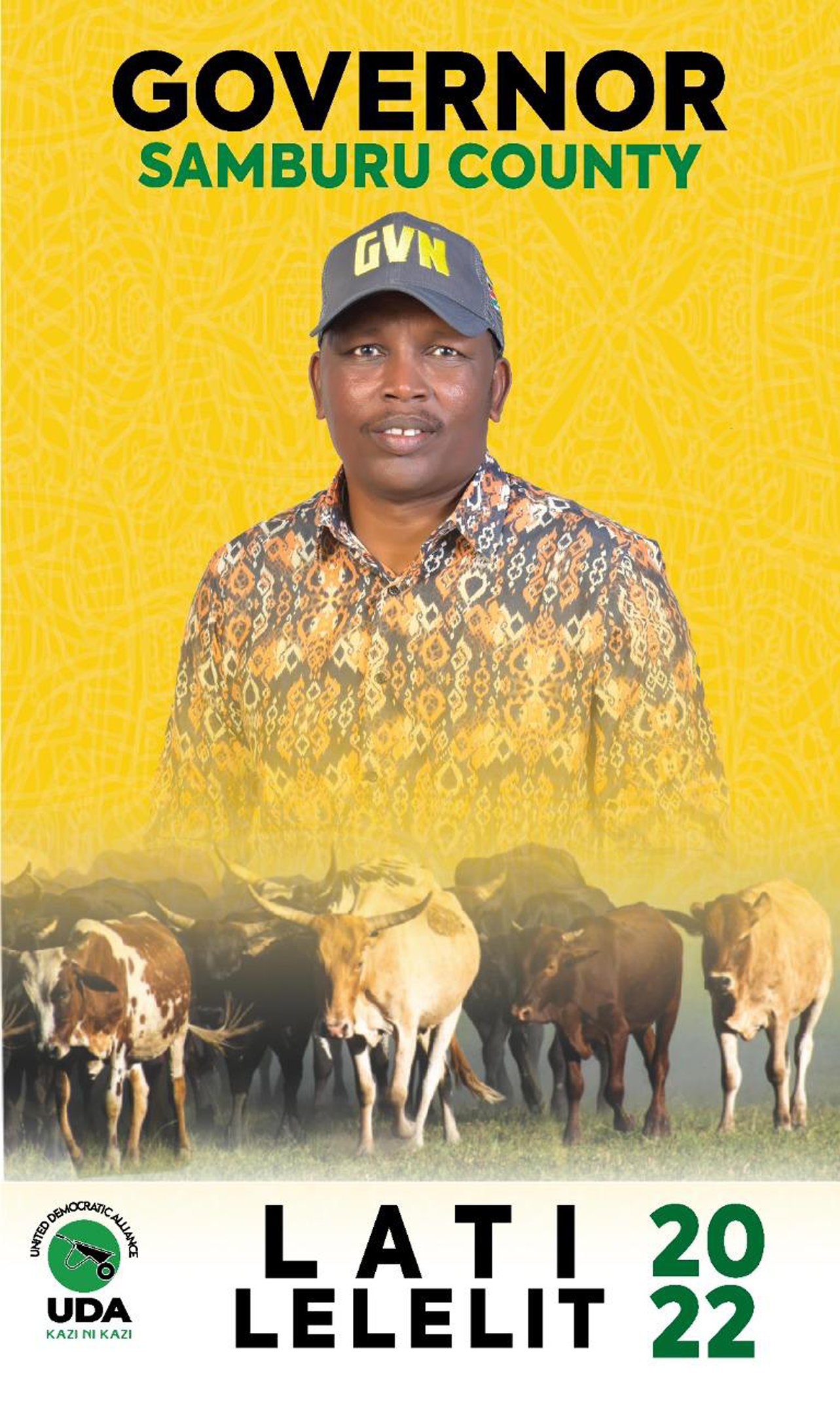
The deployment of images, songs and the Samburu language by the two candidates sought to redefine their identities in the rural context, highlighting their connections to the largest and most influential clans (invaluable reservoirs of votes), emphasizing – and almost romanticizing – their involvement in traditional mobile livestock activities and reinforcing codes of pastoral masculinity central to local political legitimacy. Showing me on his mobile phone an image of his 2022 main campaign poster – which depicted his face towering above a herd of cattle (Figure 6) – Lati Lelelit stressed, when I met him for an interview in Nairobi in July 2025:
This is my campaign poster. You see the cows? This was a winner. Everybody pointed at these cows. It seems I’m herding cows here. Some people voted for me saying ‘Give [the vote] to that guy who is herding the cows.’ They even forgot my name.
The two candidates’ electoral songs conveyed a similar message, stressing close ties to pastoral society, while in Lati Lelelit’s case also underscoring his distance from the previous local administration:

These two songs take stylistic, structural and poetic inspiration from two primary sources: the recent MTM repertoire, which incorporates elements of generational raid songs, and raid songs themselves. The voices of the female soloists, heavily processed with autotune,Footnote 45 echo the style of unmarried girls’ sung poems composed to praise (arrep) men returning from a raid, while the backing tracks, produced with a digital audio workstation, follow the style of MTM. Rhythmically, these electoral songs are built on a regular pulsation that mimics the clapping of hands, enabling them to be danced to by the audience on the sidelines of rallies, employing ceremonial choreographic patterns. They therefore primarily target a rural audience, seeking to capitalize on the success that MTM has gained among pastoralists in recent years.
Richard Lesiyampe’s electoral song, in particular, deliberately echoes the poetic style of generational raid songs. Upon comparison with the first text transcribed in this article, performed by a group of young circumcised men, striking similarities emerge: both compositions centre around the theme of cattle rustling, weaving a narrative from the experience of the journey. The protagonists, whether raiders or Lesiyampe himself, are portrayed (in the first- and third-person singular) crossing the savannah, referencing the names of places traversed as they either attack enemies (in the case of the young circumcised men) or recover stolen cows (in Lesiyampe’s song). Moreover, both songs evoke the challenges of thirst and the scarcity of water, recurring motifs in raid songs that resonate deeply with those familiar with the realities of cattle theft. Richard Lesiyampe is presented as a man rooted in rural life, intimately acquainted with the struggles of thirst and the defence of livestock. The poetic register also includes formulas typically sung by soloists of different genders, even though the song itself is performed by a single female voice – an effective strategy for addressing the full spectrum of the electorate. For instance, the phrase ‘Ikuntoŋie lgiyoi oiroshi lememit nkuliupo’ (We shed heavy tears that the ground cannot absorb) recurs in women’s songs, while ‘Toniŋo neikunari lwampa’ (Listen to what the group of warriors did) is commonly used by male soloists to introduce sung accounts of their raids. As Silapia Lenamatiyo, elected to the ranks of the coalition that supported Richard Lesiyampe’s candidacy, explained to me, the woman who performed Lesiyampe’s electoral song ‘praised him as a warrior. What she means is that, if we give Lesiyampe this position he can be a warrior going to face [the government] the same way he can face [raiders] and can put us in a better position.’ The narrative at the heart of this song thus also carries an anti-establishment allusive meaning: Richard Lesiyampe will battle against central government to secure funds allocated to rural areas, just as he fought to recover his clan’s livestock.
In contrast, Lati Lelelit’s electoral song adopts a more restrained and less emphatic poetic style. The soloist portrays him as a candidate untethered to the actions of previous administrations, standing apart from national and regional power structures: Lelelit is the leader of the rural people and of the herders. Nevertheless, the song is not devoid of symbolic references to traditional culture, which serve to underscore Lelelit’s closeness to pastoral society. The expression ‘nkearai e ntito’ (the child of the girl) refers to his connection to the lmasula clan through his maternal lineage. After all, despite being a member of an important clan such as lpisikishu, Lelelit could not expect to win elections without the support of the largest clan in his community. However, nkearai e ntito also invokes a higher level of interpretation that refers to the dimension of divination and, therefore, to the deeper and less accessible meanderings of the Samburu community’s knowledge. As Samia Leneŋwesi, the prospective deputy governor, suggested during a rally in the Mount Nyiro area in July 2022, Lati Lelelit seemed to be the man whose arrival was foretold decades ago by the diviner Lokulumié Lesepen: the son of a woman from the lmasula clan, residing at the base of a mountain with a red bull (a symbol of the lpisikishu clan). This man will be the one who will ‘stop the cows’ (aduŋo nkishu) and ‘stop the land’ (aduŋo nkuliupo),Footnote 46 meaning that he will curb Turkana livestock theft and territorial encroachments against the Samburu, perpetrated by both rival pastoralist groups and government authorities.Footnote 47
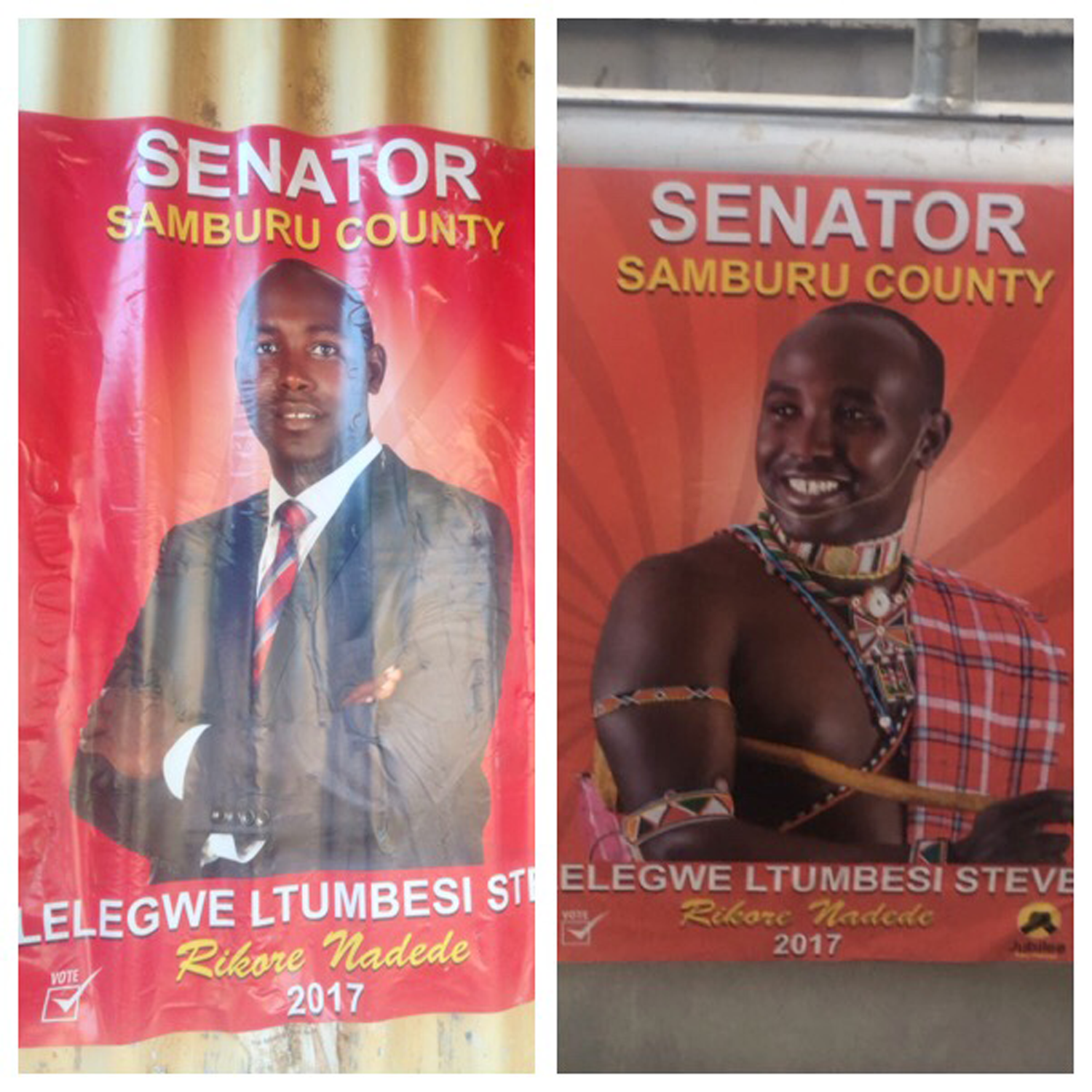
As Hannah Waddilove (Reference Waddilove2023) has shown, candidates for the position of governor in the rural counties of northern Kenya (Marsabit, in her case study) rely heavily on the backing of national government representatives to gain votes in the more urbanized areas of their constituencies and to safeguard potential career paths in the event of electoral defeat. This support from the highest levels of the national administration is often displayed through the participation of the president, vice president or senior ministers in the local candidate’s campaign rallies. Yet, such widespread electoral practices appear contradictory to the message simultaneously conveyed to the pastoral residents of the county through songs in ‘deep Samburu’. In urban contexts, candidates present themselves as allies of central government, addressing national leaders in English and Swahili. Simultaneously, some of them portray themselves as being in near belligerent opposition to that same government through songs in the languages of their communities, circulated via pastoral digital networks (Figure 7). National elites are unlikely to grasp the content of these repertoires anyway, just as elders often fail to decode the poetic and metaphorical language used in the songs of the lmurran.
Lati Lelelit’s main campaign poster (2022).

Two campaign posters for Ltumbesi Steven Lelegwe, Samburu County’s candidate in the 2017 national elections for a senatorial seat. In the poster on the left, he is dressed in a suit, while in the one on the right, he wears the ornaments of his age set. He thus appeals to his entire potential electorate by emphasizing his dual urban and pastoral identity, as well as his familiarity with both state and customary institutions. Photographs by the author.

As discussed earlier, these forms of media engagement would not have emerged without the material and digital know-how developed around the recording and circulation of generational raid songs, which began to take shape in rural areas in the early 2010s. Candidates, their election committees and their supporters mobilized, on the one hand, pre-existing networks for disseminating pastoral repertoires and MTM. On the other, they capitalized on pastoralists’ skills and practices of preserving, consuming and exchanging audiovisual material via mobile phones. The consolidation of new habits of digital entertainment, strengthened by the popularity of Samburu-language MTM, further reinforced this process. However, it is crucial to note that the operative logics behind this transformation also lie in the actions and connections that unfold around communication technologies, rather than solely within digital spaces. In contemporary pastoral Kenya, mobile phones are ubiquitous, yet internet access is often limited by economic constraints and the absence of reliable network coverage. Thus, the dissemination of electoral songs – much like that of raid songs – continues to depend on face-to-face interactions, as individuals gather in person to share listening experiences. Samburu politicians and aspirant politicians, I argue, employed their campaign songs as digital artefacts to foster analogue connections (see Nyabola Reference Nyabola2018), encouraging tangible acts of sharing and directing discussions around their candidacy.
Conclusion: exploring the rise of pastoral populism
Among rural Samburu, mobile phones are predominantly utilized for media consumption. Their proliferation in pastoral contexts in Kenya is closely intertwined with the circulation of music files, which both men and women can store, listen to and view in audio and video format at their convenience. Sharing these files through Bluetooth and SD cards has become integral to socialization practices, particularly among younger generations, becoming as significant as the consumption of digital content itself. Political communication techniques aimed at rural areas of Samburu County increasingly rely on the dissemination of images, videos and songs through digital pastoral networks that began forming well before the 2022 elections.
With the onset of decentralization and the expansion of regional elective offices following the enactment of the 2010 constitution, local politicians vying for seats in the county assembly found themselves increasingly reliant on the perspectives of pastoralists. The imperative to mobilize pastoral votes for a class of school-educated administrators whose careers have taken them far from their regions of origin necessitated the development of new modes of political expression designed to construct identities rooted in proximity to pastoral institutions, economy and knowledge, as well as proficiency in the Samburu language. As one MCA (who wished to remain anonymous) said in an interview with me about the Samburu County governor elected in 2022: ‘Lati [Lelelit] was in America. He just came the other day; I think fifteen years ago. So, he just wants to tell people by talking in parablesFootnote 48 … “Although I was in America, I’m not lost. I still have my culture.”’
The electoral songs created for the 2022 campaign sought to ‘convey rurality’ – to borrow Alessandra Ciucci’s expression – serving as a ‘medium to differentiate the rural and the often nonliterate population from the urban lettered elites’ (Ciucci Reference Ciucci2022: 11) from whom the candidates wanted to distance themselves when campaigning in pastoral areas (while, at the same time, some of them performed on a second stage by speaking English and Swahili with national leaders and urban audiences). The decision to anchor their media communications among pastoralists by employing refined, sometimes poetic Samburu language, inspired by the expressive and compositional techniques of soloists in generational raid songs, highlights the ‘language ideology’Footnote 49 (Irvine Reference Irvine1989) underpinning these efforts to build consensus. The endeavour to utilize language and music to connect with rural constituents by projecting deep immersion in the practices and challenges of mobile herding embraces a core tenet of contemporary global populism: the mobilization of the dichotomy between ‘the people’ and ‘the elite’ (De la Torre Reference De la Torre and De la Torre2019), adapted to the pastoral context through the opposition between, on one side, the rural people and the cattle herders (raia o lkiramat le nkiteŋ) and, on the other, the national government (serikali). Lati Lelelit illustrated this vividly in our interview:
Just like Trump, who was born in downtown New York and pretends to be a rural American worker … in politics not everything is real. You try to connect to people whether you are a part of them initially or not. What you have to do is to connect to their lives. Sometimes you are not really like them. You can run and win an election in Samburu [County]. But you are not projecting yourself as a musungu. Footnote 50 You project yourself as a Samburu warrior!Footnote 51
The way in which candidates construct pastoral identities, however, diverges significantly from what Lynda Dematteo terms ‘obscene power’ – the deployment of transgressive behaviour and vulgar rhetoric that defines certain prominent populist leaders in the USA and Europe, who seek to portray themselves as representatives of the ‘ordinary man’ (Dematteo Reference Dematteo2023: 40–1). Electoral songs in the Samburu language act as masks (see Dematteo Reference Dematteo2007; Newell Reference Newell2012), crafted and disseminated in digital format to assert the candidates’ identity as authentic herders, warriors or individuals foretold by ancient prophecies. This form of pastoral populism reverses the canons of global populism prevalent today in the West, in Latin America and in Africa (Cheeseman Reference Cheeseman and De la Torre2019; Resnick Reference Resnick and De la Torre2019). Political messaging operates, in this case, through refined oratory rather than crude provocation. Among pastoralists, speaking in a simplistic and coarse manner is not viewed as a sign of belonging to the rural community. On the contrary, it suggests an association with the school-educated elite, proficient in English and Swahili but lacking fluency and finesse in Maa. To establish themselves as part of ‘the people’, candidates must demonstrate mastery of the intricate nuances of the spoken (and even poetic) Samburu language, adopting storytelling techniques inherent to the practices of mobile pastoralism. In campaign songs, they entrust their message to heavily auto-tuned voices, thus inscribing the idioms of local governance into global modes of expression – precisely what pastoralists expect from their elected officials in order to make their claims audible at the national and international levels. Music files carry these mediated identities, playing a pivotal role in reshaping power relations in northern Kenya and in articulating new modes of accessing authority and generating consensus across the digital and analogue spaces where the pastoral electorate and its political representatives converge.
Giordano Marmone is an Associate Professor of Anthropology at the University of Strasbourg, Institut d’Ethnologie. His recent research examines, among other topics, how mobile phones and social networks are transforming political and aesthetic practices, conceptions of citizenship, and engagements with the state among pastoral communities in northern Kenya. He has published in journals such as the Journal of the Royal Anthropological Institute, Ethnomusicology and L’Homme.