




No CrossRef data available.
Article contents
Costs and effects of ultrasonography in the evaluation of palpable breast masses
Published online by Cambridge University Press: 01 November 2004
Abstract
Objective: To study the costs and effects of incorporating ultrasonography in the triple assessment of palpable breast masses.
Methods: A decision analytic model was designed to compare a conventional strategy of performing fine-needle aspiration cytology after clinical examination and mammography, with three different experimental strategies of preceding ultrasonography. Empirical data were used from a prospective study in 522 breasts in 492 patients with a palpable mass, including 93 malignancies. In strategy 1, cases with probably benign, suspect malignant, and malignant ultrasonography results were referred for fine-needle aspiration cytology; in strategy 2, benign cases were also referred for fine-needle aspiration cytology; and in strategy 3, ultrasonography was only performed in patients with benign results on clinical examination and mammography, whereas immediate fine-needle aspiration cytology was performed in patients with suspicious lesions. Outcome variables included the total costs and the expected number of life years. Sensitivity analysis was performed on all parameters in the model.
Results: All strategies reported a similar life expectancy of 31.0 years. Cost-minimization demonstrated that experimental strategy 3 was the least expensive strategy (€ 3,013). Experimental strategy 2 was the most costly one (€ 3,512). Compared with the conventional strategy of immediate fine-needle aspiration cytology (€ 3,087), both ultrasonography strategies 1 and −3 were preferred.
Conclusions: Incorporating ultrasonography in the triple assessment of palpable breast masses can result in a reduction of the total costs for the diagnosis and treatment of breast cancer.
Information
- Type
- GENERAL ESSAYS
- Information
- International Journal of Technology Assessment in Health Care , Volume 20 , Issue 4 , November 2004 , pp. 440 - 448
- Copyright
- © 2004 Cambridge University Press
Breast cancer is a common disease in women in the Western world, and the diagnosis and treatment are a financial burden to health-care services. Patients with a palpable breast mass are generally referred by their general practitioner to dedicated breast clinics, where they are evaluated by clinical examination, radiological imaging, and fine-needle aspiration cytology (FNAC) to establish a diagnosis and treatment plan on the same day of the clinic visit (9;10;13). Several studies have shown that this “triple assessment” gives an accurate diagnosis when all three components are concordant (all indicating a benign condition or all indicating a malignant condition) (15;26).
Radiological imaging includes mammography that may be complemented with ultrasonography (US). Several prospective studies have demonstrated the diagnostic value of US as an adjunct to mammography in patients with palpable masses and report sensitivities and specificities of 93–99 percent and 67–97 percent, respectively (1;17;1;21;28). A large prospective study of our group showed that systematic application of additional US in patients with palpable breast masses significantly improved the diagnostic value (11).
The usefulness of US lies in the differentiation between solid and cystic masses (18), whereby the suspicion for breast cancer can be reduced and patients are saved from additional pathologic examinations, including FNAC. Furthermore, US may detect abnormalities that are palpable but mammographically occult such as in radiologically dense breast tissue.
These effects indicate that US could systematically be incorporated in the triple assessment of palpable breast masses. However, the suitability of its application in daily clinical practice will also depend on the costs.
Therefore, the aim of this study was to assess the costs and effects of incorporating US in the triple assessment of palpable breast masses. Three different scenarios were studied, and to compare the associated costs and effects with the routine conventional triple assessment, a decision analytic model was designed.
PATIENTS AND METHODS
Data Sources
In a large prospective study, bilateral clinical examination, mammography, and ultrasonography were performed in 3,835 breasts of 2,020 consecutive patients referred for diagnostic breast imaging (methodology described elsewhere) (11). From this study, all patients with palpable masses were selected and formed the basis of this decision analysis. There were 522 palpable masses in 492 patients with a mean age of 49 years (range, 17–90 years) and a breast cancer prevalence of 19 percent (93 malignancies).
The diagnosis from US was integrated with results of mammography and clinical examination and scored on a five-point grading scale of increasing suspicion for malignancy, as 1=normal, 2=benign, 3=probably benign, 4=suspect malignant, 5=malignant, which was based on the BIRADS lexicon for mammography and under development for US (1;18). For the definition of positive and negative cases, a cut-off point was used between benign (score of 2) and probably benign (score of 3) results. A combined diagnosis from mammography and clinical examination together and results from core needle biopsy were scored on a similar grading scale. FNAC was recorded on a four-point grading scale, as 1=normal, 2=benign, 3=suspect malignant/atypia, 4=malignant, 0=indeterminate. The presence of malignancy as a result of surgery was registered as a dichotomous variable.
Most probabilities required for the strategies in the decision model were retrieved from our clinical study. Furthermore, data were adapted from these empirical data or composed hypothetically by consulting an expert panel and by using clinical guidelines (Table 1). Additionally, for all phases of the model, relevant literature was reviewed.

Diagnostic Strategies and Assumptions
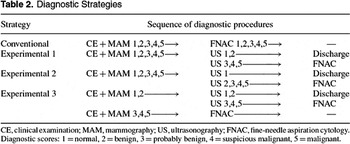
Four different diagnostic strategies after the performance of mammography and clinical examination in patients with palpable breast masses were compared, as is shown in Table 2.
- The conventional strategy consisted of routine FNAC after mammography and clinical examination in all patients.
- In experimental strategy 1, US was performed in all patients, and a cut-off point between benign and probably benign imaging diagnosis was used for further referral for additional FNAC. Patients were discharged when no abnormality was found; palpable cysts were aspirated under US guidance; solid benign structures, such as fibroadenoma, were removed by simple surgical excision; and all suspicious findings on US were excised surgically.
- In experimental strategy 2, the effect of shifting the cut-off point for referral for FNAC to normal and benign imaging diagnosis was studied. Assumptions were similar to those in experimental strategy 1.
- In experimental strategy 3, US was only performed in patients with normal or benign results on mammography and clinical examination, whereas immediate FNAC was performed in patients with suspicious lesions.

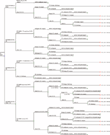
A decision analytic model was constructed using the computer program Decision Analysis by TreeAge (DATA3.5; TreeAge software, Williamstown, MA). A short version of the decision tree comparing the strategies is shown in Figure 1. The model included diagnostic procedures such as US, FNAC, and core needle biopsy; primary therapeutic events such as surgical excision, radiotherapy, chemotherapy, and hormonal therapy; and treatment of local recurrences, distant recurrences, and palliative care at the terminal stage of the disease. A distinction was made between excision of a benign lesion (excision biopsy) and of a malignant lesion (curative, malignant surgery).

Decision tree for diagnostic strategies. Diagnosis ultrasonography (US): 1, normal; 2, benign; 3, probably benign; 4, suspect malignant; 5, malignant. Diagnosis fine-needle aspiration cytology (FNAC): 1, normal; 2, benign; 3, suspect malignant; 4, malignant; 0, indeterminate. Diagnosis (core needle) biopsy: 1, normal; 2, benign; 3, probably benign; 4, suspect malignant; 5, malignant; 0, indeterminate. Diagnosis surgery: malignant, benign. TP, true-positive result, malignant; TN, true-negative result, benign or normal; FP, false-positive result, benign or normal; FN, false-negative result, malignant.
The pathways after FNAC were the same for all strategies; either surgery of a malignant lesion, excision of a benign lesion, or core needle biopsy of a lesion of uncertain nature was performed.
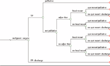
In Figure 2, the subtree for surgical treatment of malignant breast lesions is shown. Surgery of a mass that was radiologically diagnosed as malignant resulted in true-positive or false-positive results. Further distinction was made between cases with a poor prognosis leading directly to palliative care, surgery with and without adjuvant chemotherapy and hormonal therapy, and occurrence of a local or systemic recurrence.

Subtree for surgery of malignant breast lesions. TP, true-positive result, malignant; FP, false-positive result, benign or normal.
It was assumed that all malignancies detected by US in the experimental strategies were detected by FNAC in the conventional strategy. Consequently, the prevalence of malignancy and the discharge-rate were equal in all strategies.
The outcome of each clinical pathway of the model reflected either the total costs, adding up the costs of all diagnostic and therapeutic events, and the average expected number of life years, which was retrieved from the Dutch institute for health statistics, based on the mean age of the population and adapted for advanced death by disease.
Cost Data
Results of cost calculation studies in our hospital formed the basis of the costs used in the model, complemented with data from the Dutch Health Care Insurance Board (20) and the Dutch pharmacotherapeutic guidelines (3). The costs used are integral and include costs for personnel, material, capacity, and departmental overhead. In Table 3, an overview is given of the different cost components of each cost item in the model in Euros (€). The mean costs for US were € 117, which was based on the integral cost price (€ 80) complemented with the costs of US guided aspiration of palpable cysts (€ 116) in 166 cases. Costs for FNAC included € 101, which consisted of the aspiration procedure and the evaluation of the aspirated fluid by a pathologist. More details on the calculation of costs are available from the authors on request.

Palliative care was defined as medical care during the terminal phase of the disease, lasting from the diagnosis of distant, systemic recurrences to the time of death. Data on all medical events during this period were adapted from de Koning et al. (7;8). All initial patient files from this study were reviewed, and the probabilities and costs used were updated for the year 2000 according to recent guidelines and experts' opinion.
Due to the health-care perspective chosen for this study, direct costs to patients, costs of home care, out of pocket expenses resulting from visits to health-care institutions, community-care costs, the costs of lost productivity, and the impact on the quality of life were not included in this study.
Cost-Effectiveness Analysis and Sensitivity Analysis
Baseline cost-effectiveness analysis calculated the total costs and average life expectancy for each strategy. Univariate one-way sensitivity analysis was performed for all parameters in the model, over a range of values according to the 90 percent confidence interval for empirical data of the clinical study or from 50 to 150 percent of the deterministic variables in the model (Table 1). The effect on the costs and life expectancy was studied, and threshold analysis was performed to identify the values at which the preferred strategy would alter.
RESULTS
Cost-Effectiveness Analysis
The results of cost-effectiveness analysis are presented in Table 4. In the conventional strategy, all patients referred for palpable masses underwent FNAC examination (n=522). The average costs for this strategy were € 3,087.

In experimental strategy 1, 182 (35 percent) US examinations resulted in a suspicion for malignancy (diagnostic score 3, 4, or 5) and led to subsequent FNAC examination. The average total costs of this strategy were € 3,047 per patient, of which costs for diagnosis and treatment included € 165 and € 1,449, respectively.
In experimental strategy 2, all cases with diagnostic scores 2, 3, 4, and 5 were referred for additional FNAC and resulted in 215 extra examinations or € 21,715. It was assumed that no extra malignant FNAC results were generated and that most extra cases were diagnosed as benign through surgical excision and core needle biopsies. As a consequence, the costs for diagnosis and treatment in this strategy increased to € 294 and € 1,785, respectively.
Finally, in experimental strategy 3, US was performed only in cases with diagnostic score 1 and 2 on mammographic and clinical examination, which resulted in 129 (25 percent) US examinations followed by FNAC in 10 cases. In the remaining 393 cases, immediate FNAC was performed (75 percent). This strategy resulted in lower costs for diagnostic tests (€ 122) and represented the cheapest experimental strategy (€ 3,002). In each strategy, the costs for the follow-up care of 93 breast cancers was € 1,433. The average life expectancy of the different strategies was 31.0 years, reflecting the low number of expected life years in 93 patients with breast cancer and a higher average life expectancy in the 429 cases without the disease.
Cost-effectiveness analysis reported that experimental US strategies 1 and 3 were preferred because they were less expensive than the conventional FNAC strategy (€ 3,047 and € 3,013 versus € 3,087, respectively). The conventional FNAC strategy was preferred to experimental US strategy 2 (€ 3,512 versus € 3,089).
Sensitivity Analysis
One-way sensitivity analysis was performed for all parameters in the model. Most important influential variables included the proportion of suspicious and benign FNAC results and the proportion of false-negative US results (results not shown, available from the authors on request). These variables mainly influenced the cost outcome of the model, whereas no impact was demonstrated on the life expectancy.
Furthermore, threshold analysis showed that only in experimental strategy 1, increasing the costs of US to € 163 would make the conventional strategy the preferred one. For all other cost items, the cost rankings for the different strategies remained stable over a range of costs from 50 to 150 percent of base-case estimates. Furthermore, sensitivity analysis of life expectancy outcome variables showed no impact on the strategy being preferred.
DISCUSSION
This study showed an overall reduction in costs of diagnosis and treatment in patients presenting with a palpable breast mass, by performing US in addition to mammography and clinical examination. The use of US in the triple assessment was cost-saving when only patients with suspicious imaging results were subsequently referred for FNAC (strategy 1). Experimental strategy 3 further reduced costs by € 34 by restricting US to cases without suspicious mammographic and clinical examinations. This finding suggests that there is a limited role of US in the diagnosis of suspicious lesions already found by mammography and clinical examination. It should be noted, however, that in these cases, US might still be useful in finding multicentric or multifocal disease.
Experimental strategies 1 and 2 illustrated the economic consequences of referring all lesions classified as benign by US, mammography, and clinical examination for additional FNAC. The results suggest that routine cytological examination of all breast fluids should not be recommended (6), as this would raise the costs for diagnosis and treatment unnecessarily.
The average number of expected life years was similar in the different strategies (31.0 years). This finding is explained by the equal proportion of ill patients in all strategies and the relative short time period between diagnostic imaging and surgical excision leading to the definitive diagnosis. False-negative US results could lead to a delay of diagnosis but will be detected shortly after excision biopsy of an assumed benign lesion. As a consequence, this study focuses on cost-minimization rather than on cost-effectiveness.
The most important role for US in the evaluation of palpable breast masses is in the differentiation between solid and cyst masses. However, in this decision model, all solid benign masses such as fibroadenoma were surgically excised after the imaging examinations, which might lead to an underestimation of the apparent economic benefit of US in the triple-assessment approach. Furthermore, it was assumed that all palpable cysts were aspirated under US guidance, which might further overestimate the costs of the experimental US strategies. However, we believe such rigid assumptions cannot be prevented, when designing a solid decision analytic model.
It was assumed that all malignancies, which were detected by US in the experimental strategies, were detected by FNAC in the conventional strategy. However, as FNAC has limitations through inadequate sampling rates (5), this assumption will possibly overestimate the diagnostic performance of FNAC and underestimate the benefit of US.
Image-guided core needle biopsy is being increasingly used as a substitute for FNAC to diagnose palpable breast lesions (5). However, in most dedicated breast clinics, FNAC is still used as a diagnostic modality in the triple assessment, as it is faster, does not require anesthesia, and is able to provide an immediate diagnosis. We, therefore, included FNAC in our decision analytical model as third test in the triple assessment and included core needle biopsies as a confirmatory test of indeterminate imaging and FNAC results.
Various sources were used for the costs of diagnostic and therapeutic actions in our model. A Canadian study from Will et al. (27) reported the costs for diagnosis and treatment of breast cancer to be 9,333 Canadian $ (1995). Adjusting these data to the distribution of breast cancer stages in our prospective study (22 percent stage I, 40 percent stage II, 38 percent stage III, 0 percent stage IV) results in € 6,813. This amount is comparable to the average costs of curative surgery with and without adjuvant chemotherapy and hormonal therapy found in our analysis, being € 6,405, especially when considered that we excluded the costs of diagnosis and staging from these calculations. Furthermore, the calculated costs by Will et al. of treating a local recurrence was 6,405 Canadian $, or € 4,676, and comparable to the estimated amount of € 4,381 in the present study.
The costs of palliative care were adapted from the study of de Koning et al. in 1990 (7) and were raised by 29 percent according to clinical guidelines and practice in 2000 (from € 15,281 to € 19,739). Other studies in different settings have also calculated these costs, reporting € 15,385 (27), € 8,659 (22), and € 7,049 (16). The comparison of data between different countries is difficult because of different methodologies regarding length of time for initial and terminal care, different comparator years, as well as different health-care systems and currencies. Furthermore, a variation of costs results from differences in treatment approaches, the nature of health-care systems, and the patient populations used in the analysis.
In the present study, no discount rates were applied to the costs or life expectancy. The life expectancy and the number of malignancies and, thus, the costs of follow-up care, were equal in all strategies. Furthermore, most actions were performed within 1 year, so it was believed that the use of discount rates would not influence our findings. Furthermore, nonmedical costs were assumed to be similar for all strategies and, thus, were excluded from the model. Also, they are difficult to obtain, and their use is controversial (27). The validity of our cost data was further shown by the results of the sensitivity analysis, which reported little influence on the results.
Variables that did influence the results of the model included the proportion of suspicious and benign FNAC results and the proportion of false-negative US results. Most of these variables were identified from experimental strategy 1 and as these are based on empirical data from a large prospective study, the results are mainly applicable to this particular study population.
A decision analytic model as discussed in this study may be a valuable tool to guide health policy-makers in decisions related to strategies to improve the efficiency of the health-care system and to make care delivery more efficient and less costly (27).
It should be emphasized that, in this decision analysis, the economic benefit for US was relatively small. On a national or international level, the difference in costs between the strategies analyzed seem negligible. This finding would suggest there is no relevant economic benefit for US as compared with FNAC in these patients. However, as US is being used increasingly in the evaluation of breast masses, this should happen efficiently and appropriately. Furthermore, patients' preference for noninvasive testing indicates a social argument in favor of US. Therefore, we believe that, on the level of local radiology departments, the diagnostic strategies analyzed here illustrate a feasible and desirable gain in efficiency of diagnostic breast imaging. Scheduling additional US in patients with a palpable mass would be done most efficiently early in the diagnostic work-up, for example, at the stage of referral to the radiology department. Therefore, the performance of US in all patients with palpable breast masses, as examined in strategy 1, would be more practical in clinical practice than the selection of patients after performance of clinical examination and mammography, as examined in strategy 3. The relatively small differences in costs (€ 45) between these strategies further emphasizes this benefit.
In conclusion, the results of this study indicate that incorporating US in the triple assessment for the evaluation of palpable breast masses can result in a reduction of the total costs for the diagnosis and treatment of breast cancer. The least expensive strategy consisted of US of lesions without suspicion of breast cancer based on mammography and clinical examination, and immediate FNAC of suspicious lesions. Although the cost saving of this selective application of US is limited, logistic and emotional arguments plead for the performance of US in the diagnostic work-up of all patients with palpable breast masses.
The authors thank the consulted experts for their useful comments and contributions to the design of the decision analytic model: P. Hupperets, MD, PhD, (oncologist Maastricht University Hospital); J. Borger, MD, PhD, and J. Jager, MD (radiotherapists, radiotherapeutic institute Limburg); and L. Klaasse (managing director radiotherapeutic institute Limburg). This study was financially supported by the Dutch Health Care Insurance Board, Amstelveen, the Netherlands.
References
American College of Radiology.
1995.
Assessment categories: Illustrated breast imaging reporting and data system (Illustrated BI-RADS).
Reston, VA:
American College of Radiology;
2000:
Behandelingsrichtlijnen radiotherapie van het operabele mammacarcinoom na mamma-amputatie en okselkliertoilet in Nederland.
Landelijk Platform voor Radiotherapie en Mammacarcinoom (LPRM) en NABON;
1–
13.
2000.
Farmacotherapeutisch Kompas 2000/2001: medisch farmaceutische voorlichting.
Amstelveen:
College voor Zorgverzekeringen;
1999:
Richtlijn diagnostiek en behandeling van primair mammacarcinoom.
Maastricht:
Integraal Kankercentrum Limburg;
1–
66.
Agarwal T,
Patel B,
Rajan P, et al.
2003
Core biopsy versus FNAC for palpable breast cancers. Is image guidance necessary?
Eur J Cancer.
39:
52–
56.Google Scholar
Ciatto S,
Cariaggi P,
Bulgaresi P.
1987
The value of routine cytologic examination of breast cyst fluids.
Acta Cytol.
31:
301–
304.Google Scholar
de Koning HJ,
van Ineveld BM,
de Haes JC, et al.
1992
Advanced breast cancer and its prevention by screening.
Br J Cancer.
65:
950–
955.Google Scholar
de Koning HJ,
van Ineveld BM,
van Ootmarssen GJ, et al.
1990:
De kosten en effecten van bevolkingsonderzoek naar borstkanker. Eindrapport Kosten-effectiviteits Analyse.
Rotterdam:
Instituut Maatschappelijke Gezondheidszorg, Erasmus Universiteit Rotterdam;
1–
194.
Dey P,
Bundred N,
Gibbs A, et al.
2002
Costs and benefits of a one stop clinic compared with a dedicated breast clinic: Randomised controlled trial.
BMJ.
324:
507.Google Scholar
Eltahir A,
Jibril JA,
Squair J, et al.
1999
The accuracy of “one-stop” diagnosis for 1,110 patients presenting to a symptomatic breast clinic.
J R Coll Surg Edinb.
44:
226–
230.Google Scholar
Flobbe K,
Bosch AM,
Kessels AG, et al.
2003
The additional diagnostic value of ultrasonography in the diagnosis of breast cancer.
Arch Intern Med.
163:
1194–
1199.Google Scholar
Freedman GM,
Fowble BL.
2000
Local recurrence after mastectomy or breast-conserving surgery and radiation.
Oncology (Huntingt).
14:
1561–
1581;
discussion 1581–1582, 1582–1584.Google Scholar
Gui GP,
Allum WH,
Perry NM, et al.
1995
One-stop diagnosis for symptomatic breast disease.
Ann R Coll Surg Engl.
77:
24–
27.Google Scholar
Hardy JR,
Powles TJ,
Judson I, et al.
1990
How many tests are required in the diagnosis of palpable breast abnormalities?
Clin Oncol (R Coll Radiol).
2:
148–
152.Google Scholar
Hermansen C,
Skovgaard Poulsen H,
Jensen J, et al.
1987
Diagnostic reliability of combined physical examination, mammography, and fine-needle puncture (“triple-test”) in breast tumors. A prospective study.
Cancer.
60:
1866–
1871.Google Scholar
Hurley SF,
Huggins RM,
Snyder RD,
Bishop JF.
1992
The cost of breast cancer recurrences.
Br J Cancer.
65:
449–
455.Google Scholar
Lister D,
Evans AJ,
Burrell HC, et al.
1998
The accuracy of breast ultrasound in the evaluation of clinically benign, symptomatic breast lumps.
Clin Radiol.
53:
490–
492.Google Scholar
Mendelson EB,
Berg WA,
Merritt CR.
2001
Toward a standardized breast ultrasound lexicon, BI-RADS: Ultrasound.
Semin Roentgenol.
36:
217–
225.Google Scholar
van Oord JC,
van der Vliet AM,
Thyn CJ,
Mak B,
Hoogeboom GJ.
1991
The value of ultrasound mammography in palpable breast masses.
Rofo Fortschr Geb Rontgenstr Neuen Bildgeb Verfahr.
155:
63–
66.Google Scholar
Oostenbrink JB,
Koopmanschap MA,
Rutten FFH.
2000.
Handleiding voor kostenonderzoek, methoden en richtlijnen voor economische evaluaties in de gezondheidszorg.
Amstelveen:
College voor Zorgverzekeringen;
Perre CI,
de Hooge P,
Hustinx PA,
Muller JW.
1993
[Ultrasonographic study of the palpable breast tumor is very useful].
Ned Tijdschr Geneeskd.
137:
2374–
2377.Google Scholar
Richards MA,
Braysher S,
Gregory WM,
Rubens RD.
1993
Advanced breast cancer: Use of resources and cost implications.
Br J Cancer.
67:
856–
860.Google Scholar
Sakorafas GH,
Tsiotou AG.
2000
Selection criteria for breast conservation in breast cancer.
Eur J Surg.
166:
835–
846.Google Scholar
Slotman BJ,
Levendag PC,
Botke G,
Leer JWH.
2000
Producttypering in de radiotherapie.
Medisch Contact.
55:
1198–
1201.Google Scholar
van Tienhoven G,
Voogd AC,
Peterse JL, et al.
1999
Prognosis after treatment for loco-regional recurrence after mastectomy or breast conserving therapy in two randomised trials (EORTC 10801 and DBCG-82TM). EORTC Breast Cancer Cooperative Group and the Danish Breast Cancer Cooperative Group.
Eur J Cancer.
35:
32–
38.Google Scholar
Vetto J,
Pommier R,
Schmidt W, et al.
1995
Use of the “triple test” for palpable breast lesions yields high diagnostic accuracy and cost savings.
Am J Surg.
169:
519–
522.Google Scholar
Will BP,
Berthelot JM,
Le Petit C, et al.
2000
Estimates of the lifetime costs of breast cancer treatment in Canada.
Eur J Cancer.
36:
724–
735.Google Scholar
Yang WTY,
Mok CO,
King W,
Tang A,
Metreweli C.
1996
Role of high frequency ultrasonography in the evaluation of palpable breast masses in Chinese women.
J Ultrasound Med.
15:
637–
644.Google Scholar

Model Parameters and Range of Sensitivity Analysis
Diagnostic Strategies
Decision tree for diagnostic strategies. Diagnosis ultrasonography (US): 1, normal; 2, benign; 3, probably benign; 4, suspect malignant; 5, malignant. Diagnosis fine-needle aspiration cytology (FNAC): 1, normal; 2, benign; 3, suspect malignant; 4, malignant; 0, indeterminate. Diagnosis (core needle) biopsy: 1, normal; 2, benign; 3, probably benign; 4, suspect malignant; 5, malignant; 0, indeterminate. Diagnosis surgery: malignant, benign. TP, true-positive result, malignant; TN, true-negative result, benign or normal; FP, false-positive result, benign or normal; FN, false-negative result, malignant.
Subtree for surgery of malignant breast lesions. TP, true-positive result, malignant; FP, false-positive result, benign or normal.

Total Costs in Euro (€) per Item in the Model

Results of Cost-Effectiveness Analysis
 You have
Access
- 6
- Cited by