

Introduction
Large diversified business groups (DBGs) have long been considered to be a dominating force in Latin American business and politics.Footnote 1 The widespread economic reforms that strengthened the global and regional integration of Latin American economies exposed DBGs to increased competition from specialised multinational corporations (MNCs), but despite this, some DBGs in the larger Latin American economies were able to expand abroad and evolve into what have been called multilatinas. Footnote 2 DBGs from the smaller, weaker economies were often predicted to become subordinate to MNCs, but comprehensive studies of the strategies of DBGs in the smaller Latin American economies are almost entirely lacking.
This article attempts to contribute towards filling this gap by presenting a study of the strategies adopted by the most important Salvadorean DBGs when confronted with increased international integration. Since the 1980s the Salvadorean economy has been profoundly transformed from a traditional agro-export model to a service-based economy, highly dependent on remittances from Salvadoreans abroad and deeply penetrated by MNCs. This transformation has occurred in an economy that was dominated historically by a small group of families. Their wealth originated from the agro-export sectors that became dominant in the nineteenth century (principally coffee and sugar). With import substitution policies and the integration of the Central American Common Market (CACM) in the 1950s and 1960s, multi-sectoral business groups emerged, partly due to the diversification strategies of the old agro-export elite.
This article analyses the strategies that these business groups have applied in order to confront the increasing transnationalisation of the economy, and highlights three main tendencies. First, DBGs have moved out of agro-exports, industry and high-profit services and into non-tradables (commerce, construction and selected services). Second, DBGs have expanded regionally in Central America, but not as consistently as previous studies predicted that they would.Footnote 3 Only a very few groups have a regional vision and coordinated regional management. The majority of the DBGs have regionalised where opportunities have appeared, often as a springboard for selling the enterprises to MNCs. Third, there is a deep integration between local DBGs and MNCs, but this has not always led to subordination. Indeed, Salvadorean DBGs have regionalised successfully principally in the sectors where they have been able to form alliances with MNCs which allow them to retain control over strategic decisions. In sum, DBGs have adapted to the new realities through a combination of sector shifts, internationalisation and the formation of alliances with MNCs.
These findings are analysed within a framework that builds on contributions from the literature on business groups, transnational capitalism and varieties of capitalism. It is argued that the investment decisions of Salvadorean DBGs depend heavily on family and other elite networks that are national as well as regional. Being embedded in these networks gives DBGs particular comparative advantages when faced with MNCs as domestic and regional investors, and offers an attractive asset to MNCs, into which they can tap. In turn, since a significant share of the economy is controlled by DBGs in different kinds of relationships with MNCs, the kind of capitalism that is emerging in El Salvador depends on the coordination taking place within and between DBGs and MNCs.
In order to study the development of the DBGs, this paper traces their mergers, acquisitions, new establishments, sales and bankruptcies from the end of the civil war (1992) until today, but with a particular focus on the period after 2005. Since most of the companies that comprise Central American DBGs are not public, acquiring trustworthy information about them is a significant challenge. Few of these companies publish financial reports, and they are, except for the financial companies, under no obligation to do so. Moreover, they are generally very reluctant to provide detailed information. This article is therefore based on a variety of sources, four of which have been most important. First, we have made extensive use of the data available through the commercial registry of El Salvador's Centro Nacional de Registros (National Centre for Registers, CNR), which contains information about the establishment and closure of companies, ownership and board composition.Footnote 4 This information is very valuable, particularly in order to establish cross-ownership and other linkages among companies in different groups. Studying ownership and board composition also gives a good indication of the degree of family ownership and networks between different groups. Second, we have conducted a systematic review of business magazines and newspapers in the region. The most important are Estrategia & Negocios and Summanews, but we have also used newspapers such as El Periódico and El Diario de Hoy (mainly the internet version, at Elsalvador.com). These represent an important source of information for mergers and acquisitions and other kinds of investments. Third, we have used company websites, where they exist. Finally, we have conducted approximately 25 interviews, six of which were representatives of the owners or top management of the business groups.Footnote 5 When no other sources are mentioned, the data are from the CNR, cross-checked with newspaper articles and/or interviews and websites.
Business Groups and Transnational Capitalism
A diversified business group is commonly defined as ‘a collection of firms bound together in some formal and/or informal ways’.Footnote 6 The linkages between the firms may consist of cross-ownership, close market ties (such as inter-firm transactions) and/or social relations (family, kinship or personal friendship ties), through which they coordinate to achieve mutual objectives.Footnote 7 Groups may be vertically controlled, based on authority structures, or horizontal, based on a combination of a set of social norms and economic self-interest among conceptually equivalent units.Footnote 8
In the case of Central America, the family-owned groups are clearly dominant. Indeed, without using the family criterion it is difficult to identify a business group, since many do not formally call themselves groups, many entities that do call themselves groups are actually single firms, and families that own something formally called a group frequently also own a number of other companies that are coordinated, financially and in other ways, with the companies of the group. Thus, for the purpose of this paper we adopt the following definition: a diversified business group is a collection of firms operating in different sectors, subject to centralised ownership and financial control by a single family or family network. When we talk about the strategies of a business group, we actually mean the strategies of the business group's owners. In fact, forming a business group or dissolving it can in itself be considered to be a strategy. The main agent is thus the family or family network that controls the business groups.
While the argument that diversification into many unrelated sectors is ‘bad for shareholder value’ is often heard, much of the literature on DBGs aims to explain why diversification under certain circumstances can be a competitive corporate strategy. One set of arguments builds on the classic works of Nathaniel Leff.Footnote 9 This interprets business groups as an intra-firm mechanism to deal with deficiencies in the markets for input factors, finance, or a general lack of the mutual trust required to make regular market transactions work.Footnote 10 A related argument is that, rather than a response to market failure, DBGs are a response to a governmental failure to provide the infrastructure, services and institutions necessary to facilitate regular intra-firm transactions.Footnote 11
Seen from a broader societal perspective, Ben Ross Schneider has argued that DBGs constitute a key element in a specific variety of capitalism that dominates in Latin America. He labels this a ‘hierarchical market economy’ model, characterised by being coordinated by a combination of market and hierarchical relations.Footnote 12 The DBGs reinforce the dominant form of hierarchical coordination, since each large group maintains direct control over dozens of separate firms; small numbers of huge groups account for large shares of economic activity; and they are mostly owned and managed by families, often for several generations. They dominate the economy jointly with MNCs, and their domination is supported and complemented by the existence of atomistic employee and labour relations, and low levels of education and vocational skills.Footnote 13
Views about why business groups are formed are also important for our understanding of how and why they decide to internationalise their business, understood here as investing abroad or entering into alliances with foreign companies. Schneider argues, for example, that the expansion strategies of DBGs in Latin America derive in large measure from the longer-term evolution of business groups in this region.Footnote 14 We can distinguish three types of business groups: organic groups that diversify according to the logics of scope and vertical integration; portfolio groups that diversify to manage risk and are more likely to buy firms than to build them from the ground up; and policy-induced groups that diversify in response to government incentives or directives.Footnote 15 Latin American groups are mainly portfolio or policy-induced groups, and their internationalisation strategies are motivated mainly by the need to gain access to new markets and reduce risk. This conclusion accords with the increasing literature on multilatinas (multinational firms based in Latin America), which shows that while many US or European companies view internationalisation as a risky process, in Latin America it is often motivated by the desire to access more stable markets and thus to reduce risk.Footnote 16 However, whereas a risky home environment is viewed as a factor that motivates international expansion, it is also the case that the evolution of multilatinas has depended on market reforms that first gave them a stronger foothold in the national economy.Footnote 17
This occurred even though one significant consequence of the market reforms was the increased presence of MNCs in Latin American domestic markets as suppliers of goods (whether imported or produced locally) and services. With their higher degree of specialisation, economies of scale and access to capital, MNCs present a challenge to most local DBGs. As early as the 1970s it was hypothesised that integration into the global capitalist system would cause the Latin American ‘national bourgeoisie’, mostly organised as DBGs, eventually to disappear, giving way to groups incorporated into global capitalist structures.Footnote 18 This hypothesis is currently reformulated in theories of globalisation that suggest that over the long term domestic capital will be subsumed under the circuits of accumulation of transnational capital, while in the process there will be a division between domestically and transnationally oriented groups.Footnote 19
The subordination argument was contested on empirical grounds in Peter Evans' classic 1979 study of Brazil, which showed that, rather than disappearing, domestic groups differentiated themselves from multinationals by moving into sectors or segments that required lower levels of technology and investments, or those where multinational companies were less dominant, including finance, commerce and construction.Footnote 20 This ‘differentiation hypothesis’ was confirmed by Schneider 30 years later. Attempting to explain the surprising persistence of Latin American DBGs faced with economic openness and increased competition from multinationals, he found that the DBGs had moved into sectors that are protected or where they have a particular competitive advantage.Footnote 21
Another argument against the subordination hypothesis is that entering into a relationship with an MNC does not necessarily mean being subordinated. There are many kinds of alliances that local groups may form with multinationals. One may distinguish between being a distributor, a subcontractor, a franchise-holder, a joint-venture partner or a partner in a strategic alliance. These involve different degrees of subordination: whereas the distributor essentially works for the MNC and the subcontractor depends heavily on the decisions made by the MNC headquarters, in a joint venture or a strategic alliance the partners are more equal. There are also significant differences within these categories: holding a franchise to produce clothing for a particular brand may, for example, involve a higher degree of subordination than operating a franchised hotel chain where the local partner owns the assets and may change the franchise agreement without major problems.Footnote 22 In short, it is necessary to analyse the different DBG–MNC relationships in further detail in order to decide whether they amount to subordination or not.
The types of relationships into which MNCs enter with local groups reflect the need that they have for these groups. While strategic alliances between large MNCs are often formed to share technology, local groups may hold a kind of knowledge and skills that move beyond sector-specific technology and involve a combination of ‘know-who’, intimate knowledge of the formal bureaucratic context, and familiarity with the kinds of social norms guiding business behaviour in a particular country.Footnote 23 Such skills make up for the relative lack of sector-specific technology that is required for expansion in specialised sectors, but they may also be a premise for the entry of MNCs into the DBGs' local markets.
The usefulness of ‘know-who’ also makes elite networks important for investment decisions. Studies of elite families and family groups in Central America have emphasised that they can fruitfully be analysed as family networks linked through marriage, business, membership in political parties or organisations, geographical proximity, socio-racial factors and the formation of their own ‘organic intellectuals’.Footnote 24 These factors have been shown to be of central importance to the evolution of DBGs in El Salvador, and it is important to explore how they continue to prevail.
In sum, the literature is inconclusive as to whether the transnationalisation of the economy will lead DBGs to specialise, differentiate into sectors with low MNC presence, become subordinate to MNCs or grow with the MNCs. In the remainder of this paper we shall explore the hypothesis that the internationalisation efforts of Salvadorean DBGs can best be understood as a strategy of risk reduction and market-seeking in alliances with MNCs, wherein the DBGs' embeddedness in dense elite networks is among their main competitive advantages. Such a strategy allows them to survive in a transnational economy. However, what this means for the development of the Salvadorean economy is an open question. Schneider argues that the complementarities between the different elements in ‘hierarchical market economies’ have been largely negative in terms of economic upgrading: the presence and dominance of MNCs mean that domestic groups have little incentive to invest in innovation, and those that have done so have often been acquired by MNCs. The MNCs, for their part, mostly keep their research and development departments at their headquarters.Footnote 25 Consequently, in line with what has been argued about other Central American economies, the Salvadorean economy may be stuck in a sub-optimal equilibrium that reinforces the historical pattern of a low degree of innovation, low productivity and a low-skilled labour force.Footnote 26 We will return to this question in the final section.
The Origin and Development of Salvadorean Business Groups
The origins of the fortunes of the economic elite in El Salvador can be traced back to the production of indigo during colonial times, and to the expansion of coffee cultivation for export from the mid-nineteenth century. In the first thorough study of the elite families of El Salvador (from around 1920), 47 of the 66 elite families were producers of coffee; another 15 were, in addition or instead, producers of sugar and hemp.Footnote 27 The period between 1880 and the 1930s is often viewed as the ‘golden age’ of the coffee elite, in which this group also held the presidency of the country and dominated the national legislature.Footnote 28
The status of the elite in El Salvador was never exclusively based on landholding, however. Already in colonial times, Salvadorean traders were competing for local political power with the Guatemala-based colonial elite which owned the land used for indigo production. Later, groups specialising in services related to exports and banking also entered the elite. Herbert de Sola, from whom Grupo de Sola (Homarca) originates, is an example of a businessman who started with manufacturing and commerce. Only when he was already the owner of a group of trading and manufacturing companies did he move into coffee processing and purchase a coffee estate.Footnote 29
Herbert de Sola illustrated a key characteristic of many of the businessmen who had interests beyond traditional agro-exports: namely, that they were recent immigrants from Europe or the Middle East. They brought new skills and technology as well as international contacts valuable for conducting business overseas. The newcomers linked with the existing elite through intermarriages and joint investments.
The rise in coffee prices between 1945 and 1954 enabled landholders to diversify into industry, a process that later flourished under the generous protection of the import substitution scheme of the CACM. From the late 1950s to the early 1970s a number of industrial enterprises were established based on the surplus from agro-exports, circulated through national banks owned by the same agro-export elite. Most could be characterised as light industry – food and beverages, pharmaceutical products, and shoes and textiles – the exceptions being agricultural machinery and cement. Many firms thrived due to generous and often exclusive contracts with the state, in addition to being protected by high tariff barriers.
The surge of industry gave rise to talk of a Salvadorean ‘industrial bourgeoisie’; however, a study of the boards of directors of the main industrial enterprises in the country, undertaken in the mid-1970s, lists 51 significant names, most of which are also found in the 1920 overview of the dominant coffee elite.Footnote 30 Thus economic diversification generally did not create more heterogeneous elites, since it was mostly the old coffee growers and exporters that moved into new sectors.Footnote 31
Enrique Baloyra argues that the exception was the commercial sector, which was dominated by families of Arab origin and somewhat set apart.Footnote 32 Over time, Arab families such as the Simáns, the Sacas and the Safies linked up with the old elites through intermarriages and joint investments. Yet they did so to a lesser extent than other recent immigrants from southern Europe and the United States, such as the Krietes and the Pomas, whose families are currently among the most powerful Salvadorean business groups.
The dominance of the diversified agro-export groups started to change in the 1980s. Often termed the ‘lost decade’ in Latin America, in El Salvador this had a particular significance since it was the decade of the civil war. However, the deep rupture of the existing economic model in El Salvador started with the reforms enacted by the military governments installed after the 1979 coup. Their efforts to halt left-wing insurgency included not only direct involvement in or implicit consent of extreme political violence and human rights violations, but also the introduction of structural reforms aimed at ending economic and political domination by the oligarchy. These reforms, which were initially supported by USAID, included a land reform in three phases (of which only the first, the expropriation of farmland exceeding 500 hectares per holding, was successfully implemented), the nationalisation of coffee exports, and the nationalisation of banks and financial institutions.
The land reform caused many members of the old coffee elite to lose large parts of their land, and forced them to look for other investment opportunities.Footnote 33 The most noticeable impact was the declining importance of traditional agro-exports. The significance of the traditional agricultural sectors (coffee, sugar and cotton) for the gross national product of El Salvador declined from an average of 20.6 per cent in the 1975–9 period to 2.4 per cent in 1999. As a percentage of exports the share of these products fell from 64 per cent to 11.7 per cent in the same period.Footnote 34
Faced with extensive capital flight, the escalating war and declining production, the Christian Democrat government of José Napoleon Duarte (1984–9) launched a structural market model as part of what was known as the ‘road to peace’ programme. The central concern was the functioning of the market, which was to be guaranteed and oriented by the state. Measures to reduce the fiscal deficit and stabilise the currency were accompanied by increased public sector activities financed by taxes and foreign aid. Thus, although the private sector initially approved the programme, business interests later came to consider the measures implemented as too restrictive, interventionist, burdensome and lacking in production incentives, and they forced the government to retreat on some measures.Footnote 35
Initially, it was non-traditional exports, mainly from the maquila industry, that were intended to be the principal new source of income. However, while these experienced an upsurge in the 1990s, heavily encouraged by US support, they never acquired sufficient dynamism to make up for the loss of income from traditional agro-exports.Footnote 36 Instead, this was done by remittances from Salvadorean migrants in the United States. These grew from virtually nothing in 1980 to US$ 3.5 billion annually in 2006, representing 55 per cent of income generated from abroad.Footnote 37
While the traditional coffee-based elite initially had little faith in remittances as a ‘development model’, the old coffee elite reoriented itself in the period following the signing of the Chapultepec Peace Accords in 1992 in order to accommodate its interests to new economic realities.Footnote 38 This was facilitated by the ascent of Alfredo Cristiani, heir to one of the major coffee-processing fortunes of El Salvador, to the presidency between 1989 and 1994. Representing the agro-industrialists within the right-wing Alianza Republicana Nacionalista (National Republican Alliance, ARENA) party, Cristiani's government prepared the ground for the transformation of the old elite families into increasingly transnational business groups.
The Deepening of Salvadorean Neoliberalism and the Transformation of the Family Groups
The term ‘the 14 families’ is a journalistic invention to describe the Salvadorean elites which has evolved into a common myth. Whatever the original empirical support for this idea, studies from the late 1990s showed that the elite families had regrouped, in different ways, into a more coherent and intertwined structure. Their joint investments in industry and coffee exports, and, after the 1992 banking privatisation, their joint ownership in banks, provide a key to understanding their connections.
The process of bank privatisation in El Salvador was promoted as a means of market-orienting the financial institutions. This was a part of the Cristiani government's policy to reactivate the economy through neoliberal reforms, which included reduction of trade barriers and later the privatisation of pensions, telecommunications and energy, among other sectors.Footnote 39 It was conducted through a process in which the buyers of shares in the banks were given a credit by the same institution, a procedure that allowed the local business elite to gain control over the banks without major investments of their own.Footnote 40 The four major banks in El Salvador – Banco Cuscatlán, Banco Agrícola Comercial, Banco del Comercio and Banco Salvadoreño – as well as several smaller ones were transferred to sets of shareholders belonging to the main family groups. Thus, rather than being subject to market control, they came under the control of the main families, which thus strengthened and extended their business groups.
The major banks soon evolved into large financial conglomerates controlling banks, financial companies, stock-trading companies and private pension funds. These were all controlled by representatives of the elite families, and companies that these families owned or established often had significant cross-shareholdings with companies of other families within the same financial group. Thus, in a study from 2002, Carlos Paniagua organises the dense family networks emerging in the 1990s according to their joint ownership interests in seven banks, including, in addition to the four mentioned above, Banco de Desarrollo, Banco Ahorromet and Banco de Construcción y Ahorro.Footnote 41 Paniagua maintains that within each group there were ‘core family groups’ that were still distinguishable within the larger financial groups, and also that the larger groups were connected through joint ownership of a number of companies in other sectors. The most prominent of these were the cement company, Cemento de El Salvador (CESSA); the largest coffee export company, Unión de Exportadores (UNEX); a flour mill, Molinos de El Salvador (MOLSA); a warehouse company, Bodegas Generales de Depósito; and a pension fund, AFP Confía.
Writing in 2005, Alfonso Goitia goes further in exchanging the traditional family group denominations for the denominations of four financial conglomerates, each of which grouped several of the families.Footnote 42 He argues that, following a number of mergers among the major banks, Grupo Cuscatlán, Grupo Banagrícola, Grupo Salvadoreño/Banistmo and Grupo Banco de Comercio/Scotiabank, along with four major family groups (Grupo AGRISAL, Grupo Poma, Grupo de Sola and Grupo Hill/Llach Hill), made up the eight ‘economic power groups’ that dominated El Salvador.
The best treatment of the groups' process of regionalisation comes from Alexander Segovia.Footnote 43 Writing in the early 2000s, Segovia points out that among the 35 Central American business groups he lists which operated at a regional level, a majority had major interests in the financial sector. He argues, furthermore, that regional expansion had contributed to differentiation among the old elite groups, pointing to the emergence of a new elite consisting of a handful of groups operating at a regional level. At the same time, he shows how these groups had all entered into alliances with MNCs, leading him to conclude that sooner or later the Central American DBGs would become subordinated to the interests of transnational capital.Footnote 44
This analysis reveals a certain confusion regarding the use of the term ‘group’, which Segovia makes no attempt to define. Some are named after the family controlling them, whereas others are named after the main company, while also including sectors owned separately by the family. This is the case, for example, with Grupo Taca, which has never formally included liquor companies, although Ricardo Kriete Avila, the brother of the chairman of TACA Airlines, Roberto Kriete Avila, owned major Salvadorean liquor firms. In order to avoid this confusion, later in this article the groups are named according to the family that controls them. This minor issue notwithstanding, Segovia's work still serves as a starting point for my analysis of the development of the groups after around 2005.
In order to understand what occurred in this period we must bear in mind three pivotal decisions for the evolution of the Salvadorean economy, all of which the DBGs advocated strongly. The first was the 2001 dollarisation of the economy, which increased the integration between the Salvadorean and the US economies. The second was the signing of the free trade agreement between the Central American countries, the United States and the Dominican Republic (DR-CAFTA), which entered into effect on 1 January 2006. For El Salvador, which already had a very open market-oriented economy, a main objective of DR-CAFTA was to strengthen the vision of Central America as an integrated market in order to attract new foreign investments by MNCs. It has been argued that there were clear winners and losers from DR-CAFTA among Central American businesses: the losers were traditional agriculturalists, industrialists, and small and medium-sized enterprises, while the large, regional DBGs, exporters, financial institutions and tourism enterprises were among the winners.Footnote 45 However, in many cases the distinction between winners and losers is not so clear, as many DBGs included both winning and losing sectors and moved gradually from agriculture and industry into commerce, services and tourism, benefiting generously from the increasing flow of remittances to consumers in El Salvador.
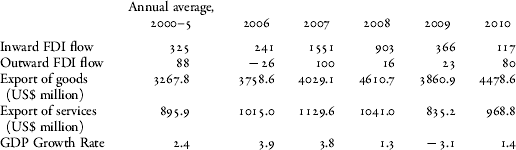
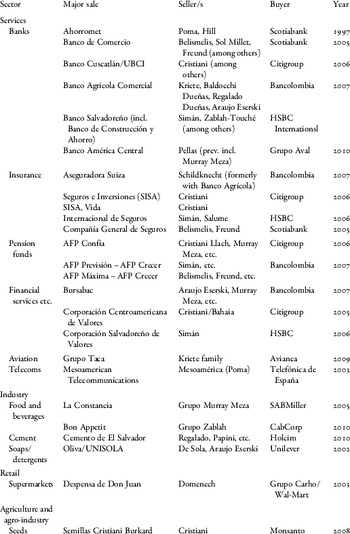
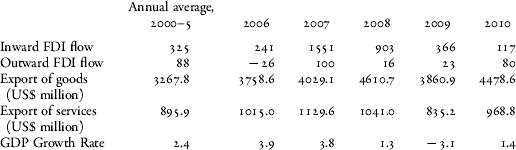
The third significant decision was the sale of all the major Salvadorean banks to MNCs between 1997 and 2006. This started in 1997 when Scotiabank acquired a 53 percent shareholding in Ahorromet, in which the Poma family previously held the majority of shares. However, it was only after the transformation of the banks into regional conglomerates that the process took on speed. In 2005 Scotiabank acquired Banco de Comercio de El Salvador from the Sol Millet and Freund families (for US$ 176 million). In 2006, the Panamanian Grupo Banistmo bought Banco Salvadoreño, which was owned by the Simáns and several related Arab families. Banco Salvadoreño was sold to HSBC International later the same year for US$ 1.77 billion. UBCI, the Central American holding company of Grupo Cuscatlán, which was dominated by the Cristianis (with the Bahaias), was sold to Citigroup in December 2006 for US$ 1.51 billion, while Banco Agrícola, owned by the Kriete and the Baldocchi Dueñas families, with a number of other elite families as minority shareholders, was sold to Bancolombia in 2007 for US$ 879 million.Footnote 46 At about the same time, 75 per cent of the shares of Banco América Central (BAC) were sold to General Electric (increased later to 99 per cent), which later sold the bank to the Colombian Grupo Aval. BAC had been owned by Grupo Pellas from Nicaragua, but in partnership with Roberto Murray Meza, president of the Salvadorean Grupo Agrisal. Grupo Pellas also controlled Credomatic. These transactions had a major impact on the inward flow of foreign direct investment (FDI), which spiked in 2007 (see Table 1).
Export/Import, Investment Flows, Poverty and GDP Growth, 2000–10
Source: CEPAL, La inversión extranjera directa en América Latina y el Caribe 2011 (Santiago: CEPAL, 2011), and Anuario Estadístico de América Latina y el Caribe (Santiago: CEPAL, 2010).
The result was that, with the exception of a few minor establishments, by the end of 2007 the banking sector in El Salvador was entirely in foreign hands. This made El Salvador even more vulnerable to shifts in global financial markets, and it was hit hard by the 2008 financial crisis, leading to a worsening of its already comparatively weak economic performance (see Table 1). However, the immediate effect of the sales was the pouring of liquidity into the hands of a small number of business groups. This came on top of earlier gains from the sale of industries and services. Thus the sale of the banks is an example of both a strategy that the business groups employed when faced with transnationalisation – namely, selling out (see Table 2 for an overview) – and a process that facilitated other strategies, particularly regional expansion.
Major Sales of Salvadorean Companies to MNCs

Source: author's elaboration based on information from Paniagua, ‘El bloque empresarial hegemónico salvadoreño’, Centro Nacional de Registros, company websites and various issues of Estrategia & Negocios.
The Strategies of the Major Salvadorean Business Groups Confronting Transnationalisation
Salvadorean groups may be divided into two general categories based on their principal strategies: those that have emphasised expanding abroad, and those that have focused on facing competition at home.
Regional expansion
In this section of the analysis we shall look particularly at regionalisation at the Central American level, which has been the dominant internationalisation trend among the Salvadorean groups.Footnote 47 In accordance with Richard Aitkenhead, one may speak of three levels of regionalisation of the companies.Footnote 48 The first involves the distribution and sale of goods in regional markets, a process which, in this case, started during the period of import substitution industrialisation (ISI) of the CACM. The second occurs when companies seek to achieve a higher level of efficiency by centralising production in one single plant operating at a regional level. The third comes when the company is administered according to a single vision and coordinated hierarchically at the regional level.
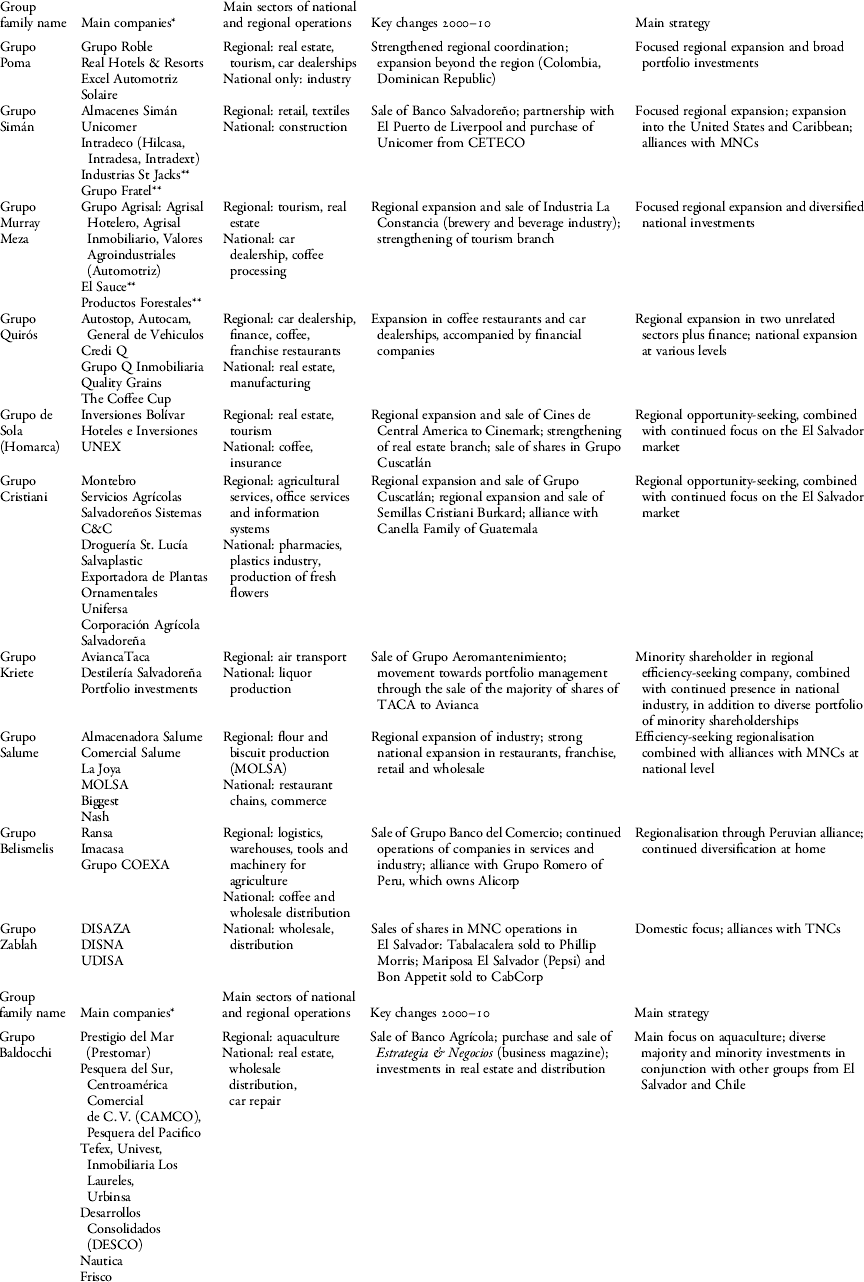
The groups appearing in Table 3 are DBGs that can be identified according to this definition. We do not have access to figures on profit, turnover or number of employees which could help us arrive at an accurate figure regarding size. Instead, the groups are ranked based on a subjective evaluation of their size and extension. Whereas Segovia listed nine regional Salvadorean business groups in 2002, our findings suggest that currently only four of these can be called regional groups with an integrated regional management and a regional vision. There is another group which is not listed by Segovia, namely Grupo Simán. Grupo Poma and Grupo Simán are the clearest examples of regional groups, but Grupo Q and Grupo Agrisal also have more than one sector operating regionally and have reached a significant level of regional coordination.
Pattern of Transnational Integration of Salvadorean Diversified Business Groups, 2011

* Most of the groups mentioned here control a number of additional companies.
** These companies are owned by family members but are not formally included in the group.
Sources: Centro Nacional de Registros, company websites and interviews.
Grupo Poma operates in four major sectors. The automotive division was the original base for the Pomas, who established the first auto dealership in El Salvador in 1919. In the 1990s this division expanded to the other Central American countries, and in 2005 all the different regional companies were united under the same name, Excel Automotriz.Footnote 49 The real estate division, Grupo Roble, has one subdivision that focuses on housing, operating mainly in El Salvador, but also in Panama and the United States; the other focuses on the construction of commercial centres and is completely regional, with 15 large centres throughout Central America and in Colombia. The hotel division, Real Hotels & Resorts, is also clearly regional. This operates three franchises for international brands: Marriott International, InterContinental Hotels Group and Choice Hotels International. It now runs 17 hotels in different segments of the market in Central America, Colombia, the Dominican Republic, Mexico and the United States, often constructed in conjunction with Multiplazas or Metrocentros, two of the main types of commercial centres operated by the Pomas. Grupo Poma also includes an industrial division, the main company in which is Solaire, producing materials for the construction sector. Thus, the strategy of Grupo Poma has been to focus on sectors which offer significant synergies and to expand regionally in them.Footnote 50 In terms of linkages to MNCs, Grupo Poma is a distributor of MNC brands (in Excel Autmotriz) and an operator of hotel franchises, but it has retained operational control of its enterprises.
Grupo Simán has also expanded both regionally and beyond in selected sectors. The group is more difficult to define than Grupo Poma, since there are many Simán families and some of their companies are coordinated in the Simán group, whereas others are not. The group originates from an Arab immigrant, Juan José Simán, who had 11 children, many of whom married into what would become new Arab elite families and in turn established their own businesses. The group's origins lie in a retail store, established in 1921, which was later turned into Almacenes Simán. This firm, led by Ricardo Felix Simán Dabdoub, is currently a major chain of department stores found across the region and, jointly with two apparel stores (Prisma Moda and the franchise for Zara) and La Parfumerie, it made up what used to be called Grupo Simán.Footnote 51 However, it is coordinated in terms of procurement systems, training and computer systems with Grupo Unicomer, led by Mario Simán Dabdoub, Ricardo's brother.Footnote 52 Unicomer was acquired from a Dutch group, CETECO, in 2000, and is now jointly owned by Grupo Simán and the largest department store chain in Mexico, El Puerto de Liverpool. It owns ten different retail chains specialising in furniture and home appliances, operating 700 shops in 19 different countries.Footnote 53 These chains hold a number of different franchises for US companies such as Lucky Dollar and Radio Shack, but also operate their own brands. In 1982 Grupo Simán established an office in Florida in order to ensure supplies of textiles for its department stores and make payments for them. This evolved into an integrated textile company with production plants in El Salvador and the United States (Intradeco Apparel, including Intradesa and Hilcasa). The president of Intradeco Apparel is José Simán Dabdoub, brother of Mario and Ricardo. There are also other major Simán establishments in textiles and wholesale, but these are less integrated into the group than those mentioned above. Thus Grupo Simán has followed much of the same logic as Grupo Poma: expanding regionally in market-seeking operations in sectors which offer certain synergies. These groups have also done so by operating franchises in fast food, retail and textiles, in addition to producing and operating their own brands.
Grupo Quirós is less diversified than Poma or Simán, but it has positioned itself strongly in the regional market in auto trading and has a chain of coffee shops; both of these ventures are owned by Samuel Quirós and his family. The original company is Grupo Q, a motor dealership that has expanded into most of Central America.Footnote 54 In 2000 Quality Grains was established to promote Salvadorean coffee in a chain of coffee shops operated through local franchise contracts. It expanded to the United States in 2010, following its entry into most Central American markets.
Grupo Agrisal (Murray Meza) has followed a similar strategy to Grupo Poma by building and operating commercial centres which include hotels. Its original company was the national brewery La Constancia, founded in 1906 by a Guatemalan immigrant, Rafael Meza Ayau, the grandfather of today's group leader, Roberto Murray Meza. It diversified into coffee processing and other industries, and in 1980 established Valores Agroindustriales, a leasing and car rental firm which lent its name to Grupo Agrisal, encompassing three of Murray Meza's companies. Industrias La Constancia, which included the original brewing firm, a juice factory and a bottling company, was eventually sold to the multinational brewing company SABMiller in 2005, after it had bought Cervecería Hondureña in Honduras and formed a joint venture with South African Breweries in 2001 (SAB in turn merged its global interests with SABMiller in 2002). The capital acquired by the withdrawal from alcohol and beverages was used to reinforce the real estate and tourism branches of Grupo Agrisal. It is mainly the tourism branch which is truly regional, now accounting for close to half of Grupo Agrisal's income.Footnote 55 Grupo Agrisal entered into alliances with Radisson in the 1990s, but shifted later to franchises for Crowne Plaza and Holiday Inn (both brands of InterContinental Hotels Group) and Plaza Hotels & Resorts. It operates hotels in El Salvador, Costa Rica, Panama, Nicaragua, Guatemala and Honduras, and is in the process of expanding into Colombia through its Holiday Inn brand.Footnote 56 However, Murray Meza is also involved in more local businesses, including the coffee exporter El Sauce, the industrial company Rensica, the car-dealing company Star Motors, and a real estate branch.
The groups mentioned above have regionalised key sectors with the aim of acquiring a permanent position in the regional market, with extensions also to surrounding countries including Colombia, the United States and the Dominican Republic. They have also been fairly focused in terms of sectors, especially tourism, commerce and construction. This does not mean that they do not also have portfolio investments elsewhere: as noted already, all were shareholders in the financial sector. Through the Bain Capital Fund, Grupo Poma has also become a major investor in an investment fund, Mesoamérica, in which it now owns 49 per cent. This was founded in 1996, and focused on telecommunications, electricity and other service investments in Central America.Footnote 57 However, the main tendency for these groups is long-term regional expansion in selected non-tradable sectors. They have extensive relationships with MNCs, both through franchises and through their role as distributors of international brands.
This is a different strategy of expansion from those undertaken by Grupo de Sola and Grupo Cristiani, for example.Footnote 58 Both of these groups originate from coffee exporters that have diversified into industry and services. They have expanded regionally, but in unrelated sectors, and they have often used regional expansion as a springboard for selling to an MNC. The major company sold by the Cristianis was Semillas Cristiani Burkard. This was an agricultural distribution firm, established in 1966, which had become the dominant regional distributor of seeds before being sold to Monsanto in 2008.Footnote 59 Similarly, Grupo de Sola expanded regionally into movie theatres through a company, Cines de Centroamérica, established in 1997. It entered into a joint venture in Central America with the third-largest US movie theatre chain, Cinemark, and subsequently sold its shares to that company.Footnote 60 Both groups still include companies that have moved into neighbouring countries: in the case of the Cristianis principally in agricultural services (Montebrou and Servicios Agrícolas Salvadoreños) and office services and computation (Sistemas C&C), and in the case of de Sola, in tourism and real estate. However, they are not integrated at the regional level to the same extent as those mentioned above, and they are still also involved in local industry and services. Grupo de Sola still includes a coffee processor and exporter, UNEX, which has shareholders from many other family groups. In addition, it has real estate (Inversiones Bolívar) and tourism (Hoteles e Inversiones) divisions. Grupo Cristiani is still significantly involved in national industry and commerce, and it has not sold its original company, Droguería Santa Lucía. It is now involved in the plastics industry through the ownership of Salvaplastic (Plásticos Salvadoreños), and produces flowers for export through Exportadora de Plantas Ornamentales. Cristiani also owns the Unión de Importadores de Fertilizantes (Union of Fertiliser Importers, UNIFERSA) and an agricultural company, Corporación Agrícola Salvadoreña.
Grupo Belismelis is in the same category. It originates from an old coffee-producing family that diversified into industry and services. After the sale of Grupo Banco del Comercio, in which it was closely involved both as an investor and in management, it has continued to operate its industrial companies and services. It has expanded regionally, mainly in the logistics and warehousing sector, through Ransa and Imacasa. Empresas Ransa is the result of a joint venture with the Peruvian Grupo Romero, an alliance that was originally formed through marriage. Ransa is the Central American branch of the Peruvian Alicorp, owned by Grupo Romero.Footnote 61 Imacasa is an outlet for tools and machinery for agriculture. It also owns a number of national enterprises, including the diversified coffee export company Grupo Coexa, the hospital supply firm OXGASA, the construction materials producer Corinca, and a number of smaller companies.
All these groups may be said to have expanded regionally, mainly to seek new markets for their products and services. Some have pursued efficiency-seeking regional investments. Interestingly, however, the main efficiency-seeking regional investors have moved away from being DBGs, though they continue in industry. The main examples are Grupo ADOC and Sigma Q, owned by the Palomo Meza and Yarhi families respectively. Producing footwear and packaging products respectively, these groups have expanded regionally on a long-term basis in order to make their operations more efficient and competitive, but they can no longer be considered to be DBGs since they are highly specialised.
Confronting competition in home markets
A second dimension of strategies used to confront the new economic situation involves strengthening a group's ability to compete in the domestic market in selected sectors. Nationally most groups have also moved out of industrial production and focused on retail, wholesale and other services. Three groups stand out as being particularly successful here – Grupo Zablah, Grupo Salume and Grupo Calleja – and the main comparative advantage that they seem to have exploited lies in different forms of non-transferable skills, including local market knowledge and knowledge of the system required to set up businesses. These skills have been exploited in their relationships with transnational companies, with whom most have alliances.
Grupo Zablah originates from a retail and warehouse company established by Jorge Antonio Zablah, who migrated from Palestine to El Salvador in 1898. It has gone from commerce into industry, and back to wholesale distribution. In 1981 Zablah established Bon Appetit, producing non-traditional agricultural products. In the 1990s, the company changed its main focus and became a producer of non-alcoholic beverages under licence from MNCs including Quaker Oats (Gatorade), Del Monte and Heinz (fruit juices), and the Salvadorean Del Campo (which was later sold to a group of Panamanian businessmen). In 1998 Bon Appetit obtained the exclusive right to produce Cadbury Schweppes' brand, Clamato, in Central America, and in 2007 it formed a strategic alliance with Guatemalan CabCorp, to which it later sold the majority of its stocks.Footnote 62 Another company, Mariposa, which was jointly owned by the Zablahs and the Simáns and produced Pepsi Cola under licence from the mother company, was sold to CabCorp. The Zablahs' tobacco-producing company, Tabacalera de El Salvador, was sold gradually to Phillip Morris in the early 1980s, although Jorge Zablah-Touché continued to act as president of the firm and the representative of Phillip Morris in El Salvador. The main activity of the Zablah group, therefore, is currently wholesale and distribution of various types of goods. This is done through various closely coordinated companies, of which Distribuidora Zablah is the main one. The group is mostly focused on El Salvador.Footnote 63
Grupo Salume has significant similarities with Grupo Zablah. It was established by two brothers, Adolfo and Nicolás Salume Barake, sons of a Palestine immigrant who established the first Supermarket Salume in 1952. Today the main leaders of the group are their sons, Adolfo Salume Artiñano and Nicolás Salume Babun. The supermarket chain expanded with a wholesale chain – Comercial Salume, which distributes imported goods – and established malls under the name of La Joya Marketplace. In the 1980s it established the fast food chains Biggest and Nash, and it subsequently acquired franchises for other fast food and snacks outlets, including Mr Donuts and the Costa Rican ice-cream chain POPS. It has continued to extend these chains through new establishments across the country.Footnote 64
There are also largely national groups which have confronted competition from MNCs by focusing strongly on developing one sector and thus moving away from being DBGs. For example, Grupo Calleja, owner of the supermarket chains Superselectos, Selectos Market and Dollar Market, controls a significant part of the local grocery market, competing with Wal-Mart. In 2008 it formed an association with a number of other Central American-owned supermarket chains operating in neighbouring countries in order to compete with the transnational chains.Footnote 65 This alliance consists of sharing best practices, as well as procurement and purchases.Footnote 66
Dissolution, Subordination, Differentiation and Expansion
As shown above, the practice of entering into different kinds of relationships with MNCs is widespread, both among groups that have remained largely local and those that have expanded abroad. Above I discussed different hypotheses about how the increasing presence of multinational corporations has an impact on the local diversified business groups. These ideas may be summarised as predicting (a) dissolution, (b) subordination to MNCs, (c) differentiation from MNCs, and (d) specialisation.
In El Salvador we find examples of all these processes. First, although the hierarchically integrated group with majority investments and operational control over a number of companies still dominates, there is a tendency towards increased emphasis on portfolio investments. Most of the families own a number of investment companies with dispersed interests in addition to the companies they control, and for some groups portfolio investments are now the principal activity. The changes at Grupo Kriete provide one example. Grupo Kriete used to be almost synonymous with Grupo Taca, the holding company that includes TACA Airlines, which expanded in the region in the 1990s by acquiring controlling shares in all the national Central American airlines. In 2000 it entered the Peruvian market with TacaPeru. The maintenance unit of TACA, TACA Aeromantenimiento, was sold in 2006. The Krietes later reduced the stocks in TACA that the family controlled, and the company finally merged with the Colombian firm Avianca in 2009. This process left Avianca with a majority, but Ricardo Kriete remained chairman of the board, which also included his nephew, Marco Baldocchi Kriete. Ricardo's brother, Roberto Kriete, has also had positions in Grupo Taca, although his main position is as president of the Salvadorean liquor company Destillería Salvadoreña, and as legal representative of Liquores de Centroamérica, where his cousin Gerardo Balzaretti Kriete is president. Today the relationships between these establishments and what is called Grupo Kriete are difficult to judge. Grupo Kriete is defined principally as an administrator of local and international investments in different sectors such as aviation, real estate, agro-industry and hotels, having associations with some 13 investment and real estate companies.Footnote 67
Some groups have gone even further than Grupo Kriete, and one may argue that they are moving towards dissolution, in the sense that they no longer fulfil the criteria for defining a DBG. For example, the Hills were one of the leading families of the old coffee elite, having originated in a company formed by an English immigrant, James Hill (J. Hill y Compañía). The Hill and Llach Hill families became the principal investors in Banco Ahorromet/Scotiabank, but in the aftermath of the sale of the bank, the Hills' investments have become so dispersed that it is currently difficult to speak of a coordinated Grupo Hill. That does not mean that the Hills are necessarily less important players in the Salvadorean economy, but it does mean that they contribute to a networked kind of economy rather than a hierarchically coordinated one.
Some have also moved towards specialisation. For example, it would have been possible to refer to the different investments of Tomás Regalado Dueñas and his family as a ‘group’ some years ago. Regalado Dueñas is a member of one of the leading traditional coffee-growing families in El Salvador. He founded Banco del Comercio and was a principal investor in CESSA, the national cement company established in 1959 and owned jointly with a number of Salvadorean elite families, among them the Hills. In 1998 a Swiss multinational, Holderbank (later Holcim), acquired a minority share in CESSA, and after a process of regional expansion Holderbank gradually increased its control over the shares before taking the company over.Footnote 68 The principal interests of the Regalados currently lie in sugar. Tomás Regalado Dueñas' father, Tomás Regalado Gonzáles, established the Compañia Azucarera Salvadoreña (CASSA), the Salvadorean sugar refinery company, in 1964. Currently Grupo CASSA is a family enterprise that also includes ownership of land and plantations, uniting various branches of the Regalado family. Since the sugar sector has expanded, due to increased quotas under DR-CAFTA among other factors, this has remained the main focus of the family's business. Each family member has additional investments in a variety of additional companies and sectors.Footnote 69 However, it is difficult to judge whether these enterprises are coordinated with CASSA.
Regarding the family groups' relationships with MNCs, entering into different kinds of cooperation agreements is widespread, but it is much less clear whether this leads to subordination. Few of the DBGs operate as subcontractors to the MNCs. The most common forms of cooperation are operating franchises, entering into joint ventures, and forming strategic alliances, while in the retail and wholesale sectors many are also distributors of goods for MNCs. In the industrial sector we see examples of groups moving from being owners of companies to being representatives of MNCs (Grupo Zablah for Phillip Morris, for example). However, in general, most of the relationships they have established with the MNCs have allowed them to continue as quite independent groups.
Our interviews indicate that part of the reason why the DBGs persist is precisely the importance of networks. Investment decisions are made based not only on risk management and the prospects of returns, but also on personal trust and networks. Investment opportunities are often presented through the numerous contacts that the families build, nationally, within and outside the region.Footnote 70 Moreover, like the other Central American countries, El Salvador does not have strong rules protecting minority shareholders, and the trust developed among elites is important to minimise uncertainties about the economic and legal environment.Footnote 71 There are various examples of the importance of tapping into this local knowledge and networks for MNCs, as well as for companies from neighbouring countries, in order to establish a foothold in the region. For example, when the Guatemalan Banco Industrial established itself in El Salvador in 2010, it was Grupo Zablah that set up the bank and José Luis Zablah-Tocuhé who initially took on the role of president. However, this was simply a transition process, and the Zablahs moved out as soon as the bank was established.
The importance of family networks within and between DBGs, therefore, does not appear to have diminished. There are numerous examples of DBGs connected by marriage. As mentioned already, Ricardo Poma married a sister of Ricardo and Roberto Kriete, while Archie Baldocchi Dueñas married another. The latter is, in turn, Tomas Regalado Dueñas' cousin. The groups of Arab origin are linked through a number of kinship ties and, as mentioned in the case of the Belismelis, ties with foreign groups are also often formed through marriages. Furthermore, we find members of family groups appearing in the management of other groups: for example, Roberto Simán is vice-president of Grupo Agrisal. To include members of other family groups on the board is the rule rather than the exception, and many enter into joint ventures.
The evolution of Grupo Baldocchi may serve to illustrate the importance of family linkages and how new generations build on the same networks while changing the profile of the groups. Currently it is led by Marco Baldocchi Kriete, nephew of Ricardo Poma and Roberto and Ricardo Kriete, and son of Archie Baldocchi Dueñas, owner and director of Banco Agricola and several other companies. After the latter died in 2003, Baldocchi Kriete became the owner of a number of companies in widely different sectors such as real estate, agriculture, aquaculture, wholesale distribution and investment, and his can be considered to be one of the ascending groups in El Salvador with close links to similar new-generation groups in neighbouring countries.
What we observe is that the business groups show a tendency to differentiate themselves from MNCs in terms of their sector focus and in some cases sector specialisation. The DBGs have collectively moved out of the banking sector and reduced their presence significantly in industry. They have focused instead on commerce, real estate and selected services, including tourism. These are sectors in which the MNCs have been less interested, and which have expanded significantly due to the increase in remittances. Here DBGs can exploit their particular combination of skills. While still functioning as DBGs, some of the most expansionary regional groups, in particular, focus on sectors among which there are significant synergies, and they are thus less diversified than groups found in other contexts.
Conclusion: The Continuing Importance of Family Networks for the DBGs and the Salvadorean Economy
This analysis illustrates a variety of strategies applied by the Salvadorean DBGs in the face of a changing economic context. There is an emerging category that consists of a small number of groups which have a clear regional vision and increasingly regional management, and can be called multilatinas. The majority of the Salvadorean DBGs, however, are characterised by their application of a strategy of networked risk reduction and market-seeking, and thus grasping opportunities when they arise, nationally and regionally, without a clear vision for their process of internationalisation. In the national context, most have opted for a strategy of differentiation from MNCs by focusing mainly on non-tradables, while a few have also stayed in sectors competing directly with MNCs.
Irrespective of their strategy of international expansion or local competition, the DBGs' main competitive advantage appears to lie in their local and regional knowledge and their embeddedness in dense family and other elite networks that are exploited through multiple entries into a variety of different sectors, both at home and within the Central American region.Footnote 72 This confirms the pattern also observed among multilatinas from other countries, which normally started their expansion in neighbouring countries.Footnote 73 However, with their small size and high dependence on networks, it may seem less likely that the Salvadorean groups will evolve into real global multilatinas.
The question remains as to what the strategies of the DBGs mean for the evolution of the Salvadorean economy and the kind of capitalism that is emerging as a result of the shifting economic model and the accompanying transformation of the DBGs and their relationship with the MNCs. The DBGs are constantly evolving, and to use an analysis of their activities at one point in time in order to draw wider conclusions about Salvadorean capitalism runs the risk of being too static an approach. Nevertheless, this study suggests that the current strategies of DBGs affect the Salvadorean economy in at least three ways.
First, since the DBGs have moved largely into low-technology sectors, with a relatively short-term horizon in their investments, they have little incentive to invest in major technological upgrading, bearing out one hypothesis in the varieties of capitalism literature cited early in this paper.
Second, while this aspect accords with a significant challenge for countries dominated by what Schneider calls a ‘hierarchical market economy model’, in fact the hierarchical coordination of the Salvadorean economy is weaker than this model suggests, as even the hierarchically coordinated groups are embedded in dense family and elite networks that are of key importance to the coordination of the economies, and internally some groups also show less hierarchical features. While this might be a perfectly rational way of operating in the current Salvadorean economy, since these networks are both the main competitive advantage of the DBGs and their primary asset when faced with MNCs, they have little incentive to push for reforms that would provide more transparency, better shareholder protection or other changes generally believed to improve the investment climate.
Third, although we lack accurate figures for investments made by the DBGs, it seems that it is the groups expanding regionally that are also the most dynamic in terms of new investments. However, these groups invest mostly outside El Salvador. Considering also the low levels of FDI inflows in the period after 2008 (see Table 1), the lack of investments amounts to a significant challenge for the development of the Salvadorean economy. Since it is not necessarily a significant challenge for the Salvadorean DBGs, and they still have significant influence on Salvadorean economic policy, it has turned out to be a difficult obstacle to overcome.
It can safely be concluded that neither DR-CAFTA nor dollarisation had the expected positive effect on inwards FDI in El Salvador. While there are many reasons for that, the structural impediments to change resulting from a business environment dominated by family networks focused on non-tradables, and the negative complementarities with low-skilled labour and low investments in innovation, leading to low productivity, are worthy of further exploration.