Since its introduction in 1975, the arterial switch operation has become the first-choice therapy for neonates with dextrotransposition of the great arteries.Reference Jatene, Fontes and Spouza 1 In 1981 a modification was introduced by Lecompte et al,Reference Lecompte, Neveux and Leca 2 reducing the need for prosthetic material. Although perioperative mortality during an arterial switch operation was initially high, current studies show a drop to around 2–3%.Reference Fricke, d’Udekem and Richardson 3 – Reference Jacobs, Mavroudis and Quintessenza 6 As early mortality has become of less concern, focus has shifted to late outcomes.
Experience has shown that patients present with several problems in the long term after an arterial switch operation. Late mortality is low (1.6%), but late morbidity is substantial; the risk for re-intervention is as high as 40% depending on the duration of follow-up.Reference Khairy, Clair and Fernandes 4 , Reference Haas, Wottke, Poppert and Meisner 7 – Reference Villafañe, Lantin-Hermoso and Bhatt 9 Main pulmonary artery stenosis, pulmonary branch stenosis, aortic root dilation, and aortic valve insufficiency are the most common complications. Recent studies also suggest that exercise capacity and left ventricular function – two important predictors of long-term morbidity and mortality – may be reduced in patients after the arterial switch operation.Reference Pettersen, Fredriksen and Urheim 10 – Reference Baggen, Driessen and Meijboom 14 Data on both outcomes are conflicting, however, making their true significance in the long term after the arterial switch operation unclear.
This article systematically reviews the available literature on the long-term exercise capacity and left ventricular function of patients after an arterial switch operation for transposition of the great arteries and explores any relation between the two.
Methods
A review protocol and search strategy were framed by a paediatric cardiologist, an adult CHD cardiologist, and an exercise physiologist.
As per the inclusion criterion, patients with long-term follow-up data (⩾6 years) on d-transposition of the great arteries after an arterial switch operation, with the outcomes of interest, were eligible for inclusion in this study. A follow-up period of ⩾6 years was chosen to ensure adequate cooperation during cardio-pulmonary exercise testing.Reference LeMura, Von Duvillard and Cohen 15 Studies required either echocardiography or MRI as the imaging modality for left ventricular ejection fraction, and a cycle or treadmill ergometry with respiratory gas-exchange measurements to determine the exercise capacity.
The outcome measures were left ventricular ejection fraction (in %), peak oxygen uptake (in ml/min/kg and percentage of predicted), peak workload (in W/kg and in percentage of predicted), and/or peak heart rate (in beats/min and percentage of predicted). Left ventricular ejection fraction was considered normal when between 50 and 70%. Peak oxygen uptake, peak workload, and peak heart rate were all regarded normal when above 80% of predicted.
Articles covering only the Mustard, Senning, or Rastelli procedures for transposition of the great arteries were excluded, as were articles on congenitally corrected transposition of the great arteries and those describing surgical procedures. Case reports and reviews were excluded, as were articles published in languages other than English, Dutch, German, or French. A final exclusion criterion was met if the outcome was reported for a sub-selection of patients only, or for patients selected for tests because of clinically manifest symptoms only.
A search was conducted using the following terms in the MEDLINE, Embase, and Cochrane databases ranging from January, 1975 to January, 2016:
(“Transposition of the great arteries” OR transposition of the great arteries OR dtga OR “d tga” OR “ventriculo-arterial discordance”) AND (“arterial switch operation” OR “arterial switch” OR the arterial switch operation OR Jatene OR Lecompte) AND ((“Left ventricle” OR “Left ventricular” OR left ventricular ejection fraction) OR (exercise OR ergometry OR CPET OR oxygen OR O2 OR VO2max OR peak oxygen uptake OR Wmax OR “peak power” OR “aerobic capacity” OR “physical fitness” OR “work load” OR “endurance time” OR treadmill)).
Two independent researchers (S.W.v.W. and M.M.D.) conducted a systematic search. The selection process was performed as follows:
∙ Screened all hits on article type and language
o Excluded articles meeting exclusion criteria
∙ Screened all abstracts on relevance
o Excluded articles beyond the scope of this research
∙ Screened full text on relevance
o Included all articles reporting required outcome measures with adequate follow-up
∙ Screened resulting articles for double publication of study population
o Included results with longest follow-up
The articles remaining after the selection process were compared by the researchers and a consensus was reached if there was a discrepancy between them.
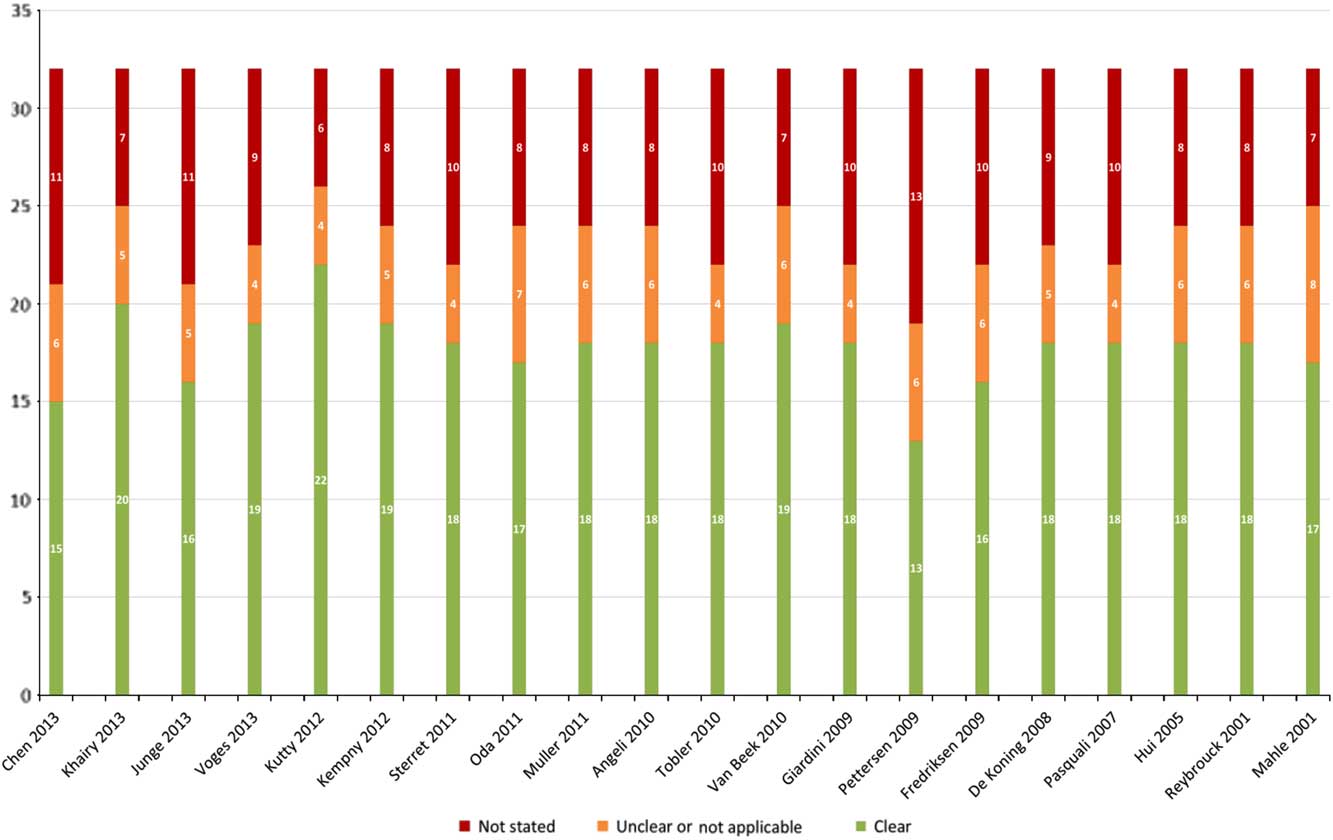
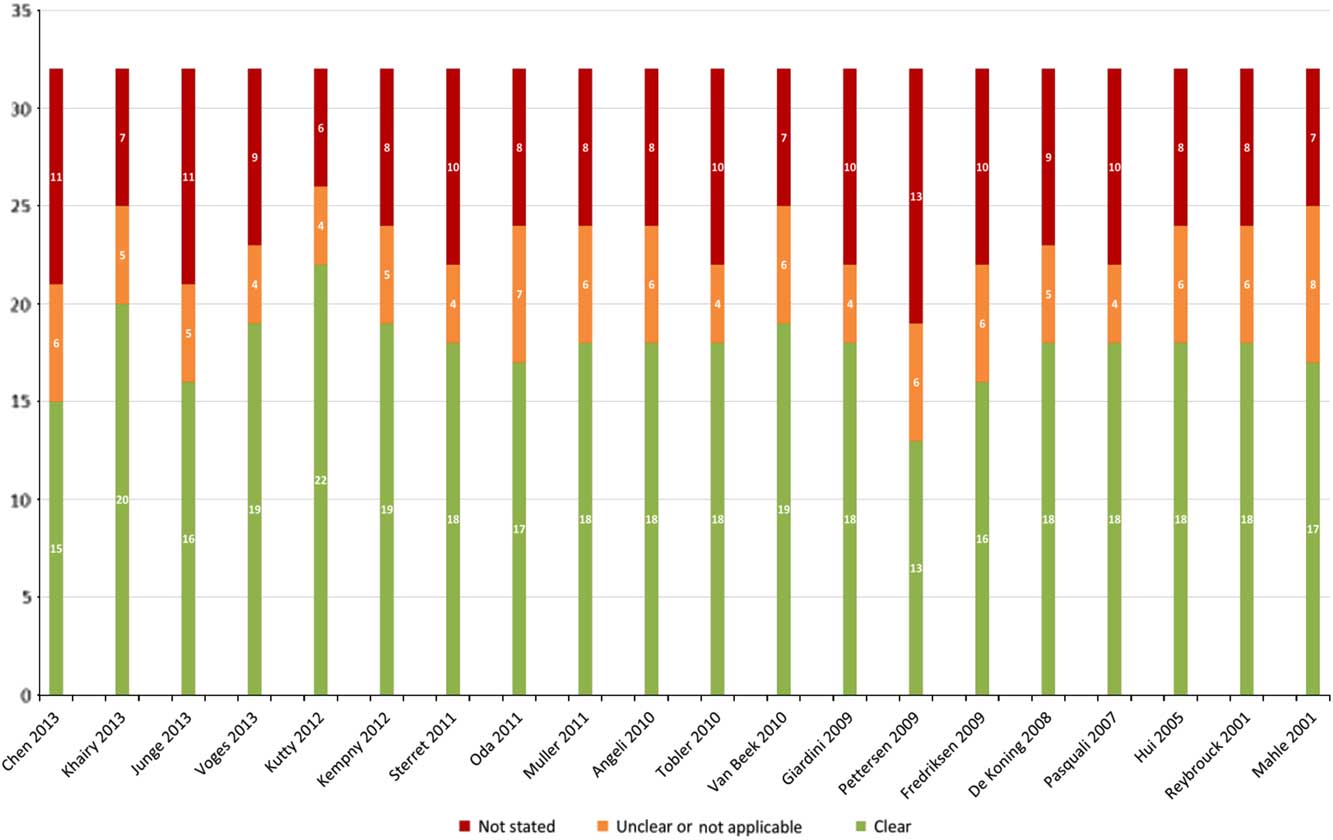
Each article was scored for methodological suitability to answer the research question of this review in a critical appraisal. All articles were included independent of score. All articles included were also scored for reporting quality using the STrengthening the Reporting of OBservational studies in Epidemiology (STROBE) statement checklist as a guideline.Reference von Elm, Altman, Egger, Pocock, Gøtzsche and Vandenbroucke 16 A maximum score of 32 could be obtained by checking all items on the list. Each of the 32 items was scored as clear, unclear (open to interpretation), not applicable, or not stated. The STROBE statement is strictly a reporting guideline rather than a scoring instrument. However, to our knowledge, a widely validated better alternative is not available at this time.Reference da Costa, Cevallos, Altman, Rutjes and Egger 17 , Reference Sanderson, Tatt and Higgins 18
All data were processed with Cochrane Review Manager, version 5.3. Outcomes were checked for I2 values and computed using a fixed- or random-effects model, as appropriate, with the cut-off value of 30% for I2.
Results
Search results
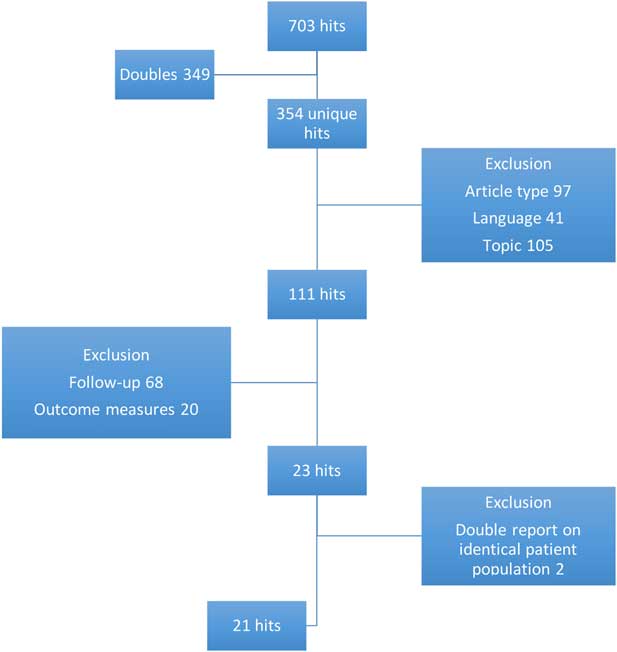
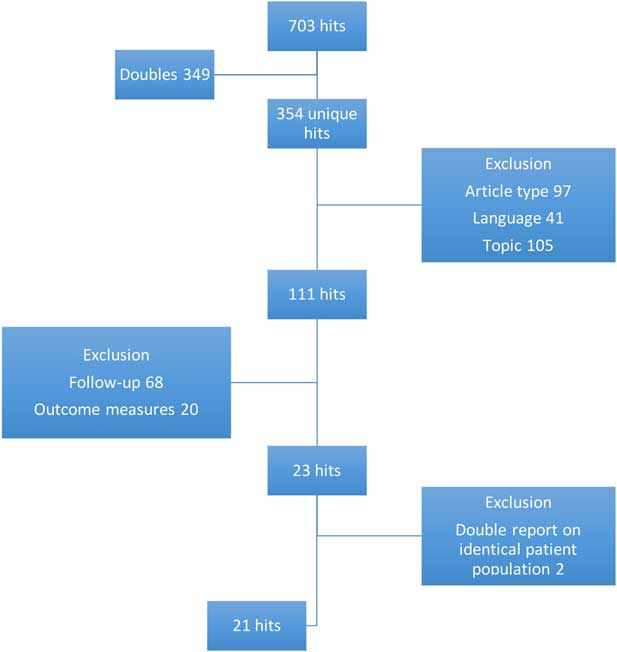
The systematic search resulted in 703 potentially eligible studies, combining the different databases up to 07 January, 2016. A total of 23 articles met all inclusion criteria. After excluding duplicate publications, 21 articles remained for analysis (Fig 1).Reference Khairy, Clair and Fernandes 4 , Reference Oda, Nakano, Sugiura, Fusazaki, Ishikawa and Kado 5 , Reference Pettersen, Fredriksen and Urheim 10 , Reference Fredriksen, Pettersen and Thaulow 11 , Reference Giardini, Khambadkone and Rizzo 13 , Reference Junge, Westhoff-bleck and Schoof 19 – Reference Voges, Jerosch-Herold and Hedderich 32 No differences in included articles were found between reviewers.
Methodological suitability
All studies included are retrospective cohort studies on standard clinical follow-up or cross-sectional prospective cohort studies, or a combination of the two (Fig 2). In all, 10 studies included only patients with simple transposition of the great arteries – transposition of the great arteries with an intact interventricular septum – and 11 included all patients receiving the arterial switch operation for transposition of the great arteries; of these, four included double-outlet right ventricle patients and concomitant lesions such as aortic coarctation, aortic interruption, multiple ventricular septal defect, or dextrocardia. Three studies stratified their patients according to coronary anatomy. In five studies, outcomes were compared with healthy controls. Supplementary table S1 shows a complete overview of methodological comparability.
The mean age at follow-up ranged from 9.2 to 24.7 years. Overall, five articles reported follow-up during the years after the arterial switch operation rather than age.
Quality of reporting
In general, bias was rarely assessed in the selected reports. Completeness of data sets or follow-up was not necessarily given in the retrospective studies. In prospective cross-sectional studies, the protocol for inclusion of patients was frequently reported incompletely and the number of patients denying study participation was unclear. STROBE guidelines also require stating the boundaries of the given data, rather than just averaged values with a confidence interval. This recommendation was rarely followed.
Exercise capacity
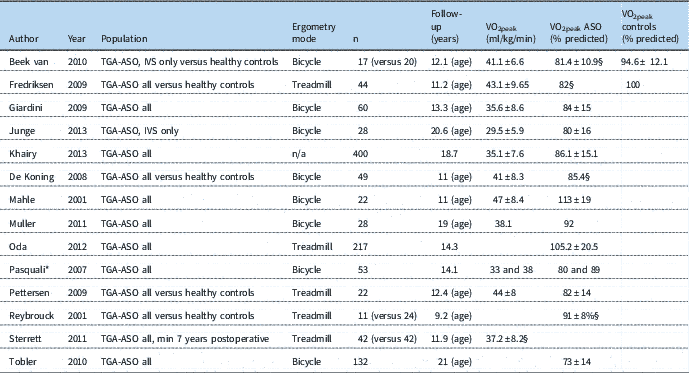
Of the 14 articles (total 1125 patients) reporting peak oxygen uptake, four studies compared exercise capacity with the performance of healthy controls, who were tested for the same study (Table 1).Reference de Koning, van Osch-Gevers and Ten Harkel 20 , Reference Sterrett, Schamberger, Ebenroth, Siddiqui and Hurwitz 23 , Reference Reybrouck, Eyskens, Mertens, Defoor, Daenen and Gewillig 25 , Reference van Beek, Binkhorst and de Hoog 27 These direct comparisons all found an impaired exercise capacity after the arterial switch operation with a mean difference of up to 25.4% (p=0.006) as reported by Sterrett et al. Of the remaining ten studies, five compared exercise capacity with data previously acquired at their centre, one compared it with data from the 2003 international statement on cardio-pulmonary exercise testing, and four did not mention reference values.
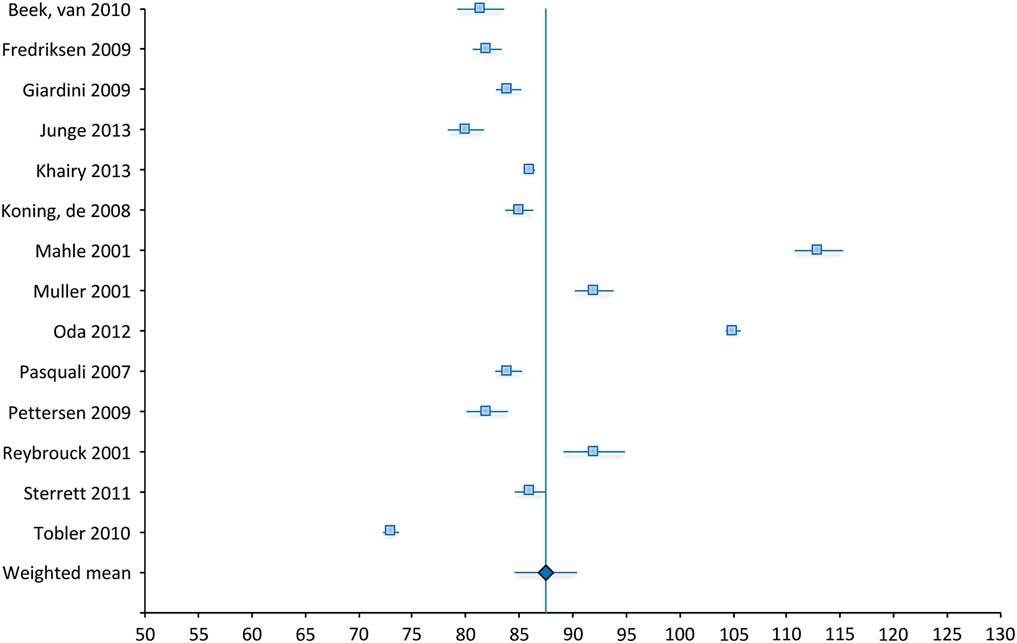
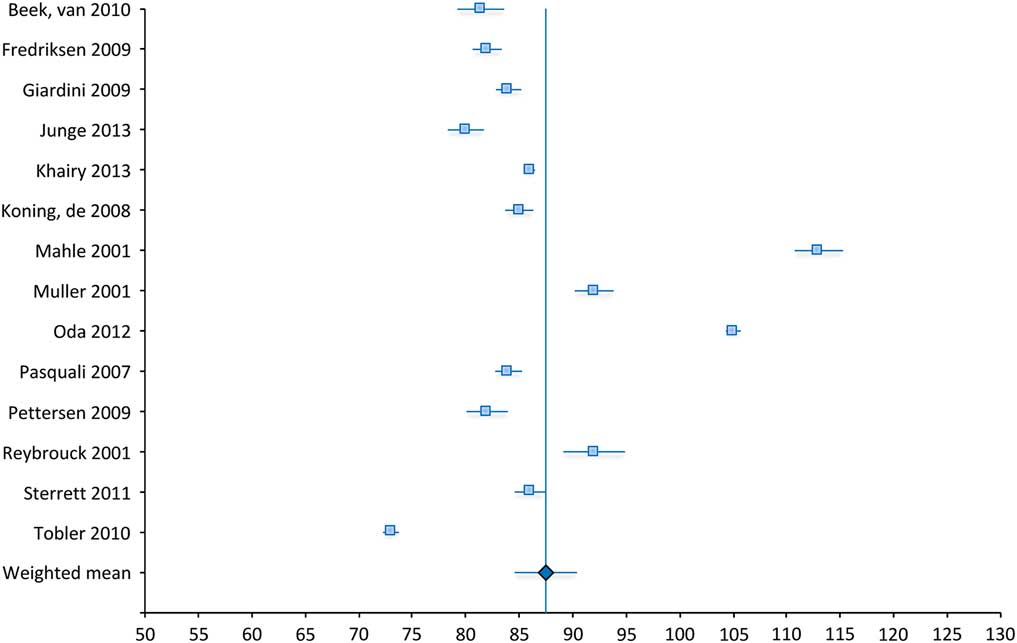
When expressed as a percentage of predicted peak oxygen uptake, mean values ranging from 73% (Tobler et al) to 113% (Mahle et al) were reported in 12 articles. Out of these, eight (75%) reported a reduced average peak oxygen uptake. A meta-analysis is shown below, using an I2 of 98.9 in a random-effects model. The pooled average peak oxygen uptake was 87.5±2.9% of predicted (Fig 3). Arranging these outcomes by average age revealed no trend implying progressive decrease in peak VO2 values.
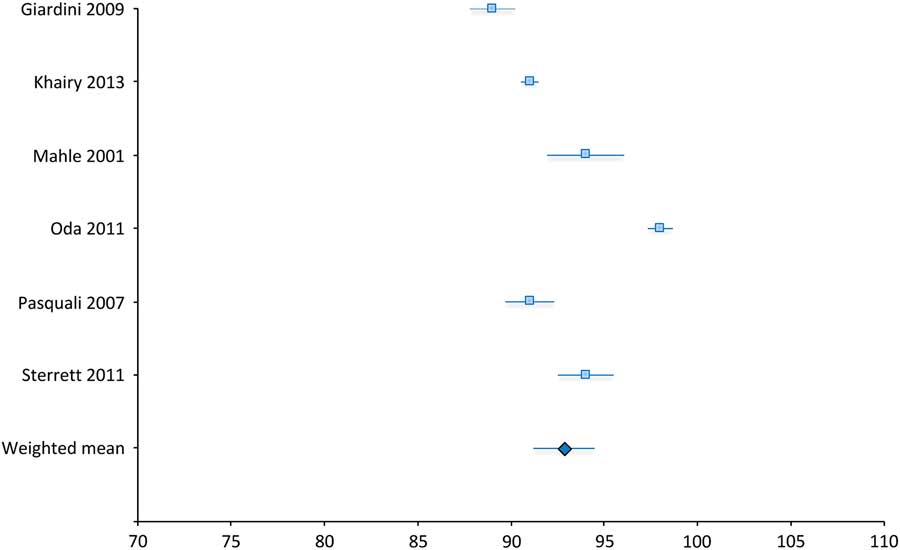
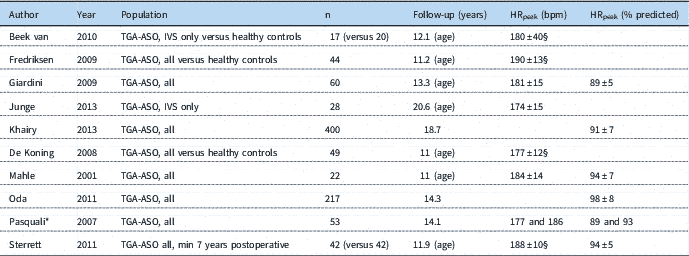
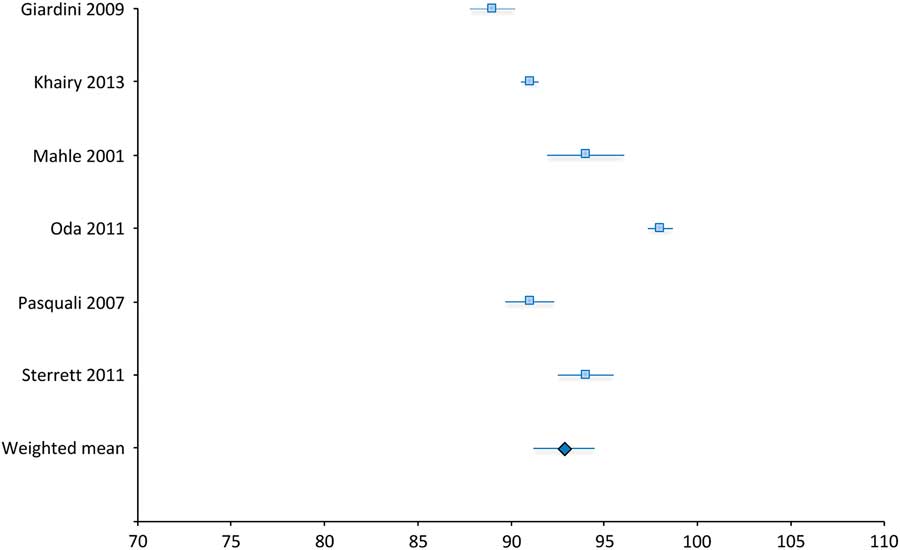
In all, four articles compared peak heart rate with that in healthy controls, all showing a statistically significant reduction (Table 2). A total of five articles reported peak heart rate as a percentage of predicted and showed a trend towards a reduced maximum heart rate, with reported values ranging from a mean 147 beats/min (Kutty et al) to 190 beats/min (Fredriksen et al) or from 89 to 94% of the predicted peak heart rate. Serious impairment of maximum heart rate (<80% of predicted) was reported in 5% of patients by Khairy et al and in 30% by Mahle et al. Pasquali et al showed a correlation between unusual coronary artery anatomy and a lower maximum heart rate.
A meta-analysis of maximum heart rate data gives an I2 of 94.2. The average peak heart rate pooled with the random-effects model is 92±2% of predicted (Fig 4).
Maximum workload compared with that of healthy controls was reported in two articles (Van Beek et al and De Koning et al). Both studies found a statistically significant reduction in maximum workload (16.2% reduction with p=0.005 and 15.0% reduction with 0.02). Mahle et al found no significant reduction compared with reference values, and Pasquali et al reported a significant difference in maximum workload again when grouping patients by coronary anatomy – normal versus variant.
Left ventricular function
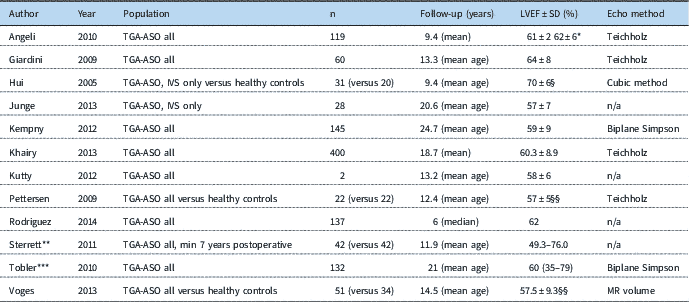
Left ventricular ejection fraction was reported n 12 articles, which included a total of 1169 arterial switch operation patients (Table 3). Only one study by Voges et al measured the left ventricular parameters using MRI; other studies used echocardiography. Among them, four described the method of determining left ventricular ejection fraction, varying between the M-mode-derived Teichholz and the biplane Simpson method. In all, three studies presented the values in comparison with a control group. Hui et al reported left ventricular ejection fraction as strictly normal, but significantly decreased compared with that in healthy controls. Pettersen et al and Voges et al only showed a trend towards lower left ventricular ejection fraction in post-arterial switch operation patients, which was not statistically significant (p-values not given and 0.18, respectively). Other studies reported mean left ventricular ejection fractions ranging from 57 to 64%. Several studies reported a number of patients with diminished left ventricular ejection fraction. For instance, Kempny et al found 14 out of 145 patients with diminished ejection fractions, three of which were under 30%. In the majority of these patients, the reduced function is attributed to perioperative ischaemia.
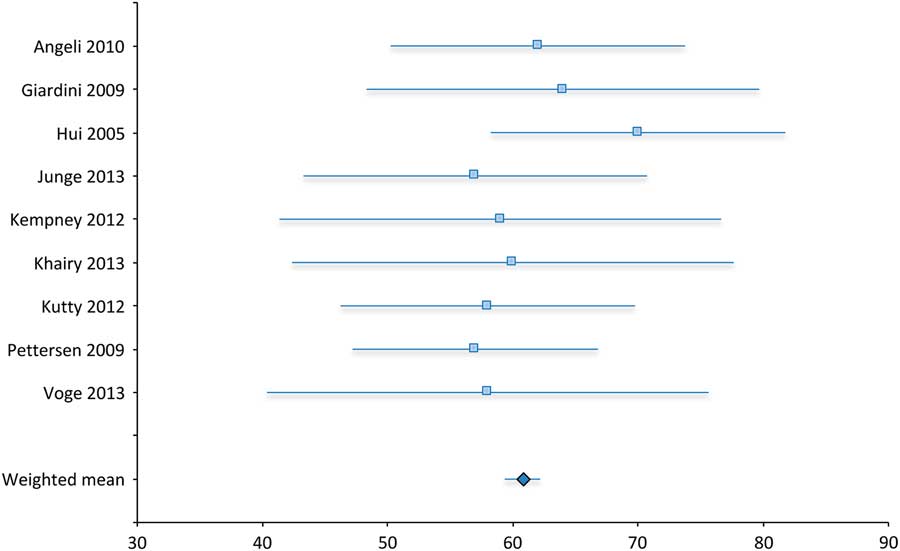
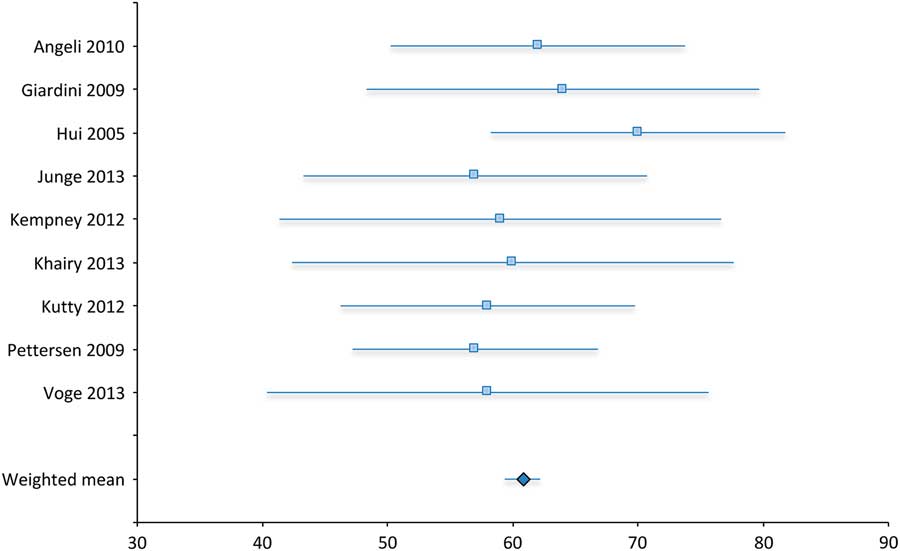
A meta-analysis of all left ventricular ejection fraction data with standard error is provided below in Figure 5. With an I2 of 75.0, a random-effect model was used to pool data. The pooled average revealed a normal left ventricular ejection fraction of 60.7±7.2%.
Only one study analysed the relation between left ventricular ejection fraction (among other factors) and peak oxygen uptake in a univariate and multivariate analysis and found that lower left ventricular ejection fraction does not significantly add to decreased peak oxygen uptake.Reference Giardini, Khambadkone and Rizzo 13
Discussion
This article systematically reviewed the available studies on long-term left ventricular function and exercise capacity of patients after an arterial switch operation for transposition of the great arteries. Left ventricular function is generally in the normal range for patients after an arterial switch operation. There were no clear differences in study quality between studies showing diminished ventricular function and those showing normal ventricular function. Also, studies including only simple transposition of the great arteries did not yield different results compared with studies including all arterial switch operation patients.
The methods for obtaining the left ventricular ejection fraction consisted mostly of Teichholz and biplane echocardiographic measurements, with only Voges et al using MRI. The study by Hui et al was the only one reporting a significantly lower left ventricular ejection fraction compared with healthy controls. This study used the less reliable cubic method, and although the left ventricular ejection fraction in the arterial switch operation patients was 70%, this was significantly lower than that in healthy controls. Uniplane measurements are less reliable than multi-plane measurements.Reference Danias, Chuang and Parker 33 Only 328 out of a total 1169 patients were tested using biplane or MR methods. Considering these aspects, reliable long-term data on left ventricular ejection fraction in patients after an arterial switch operation are still very limited.
A pooled meta-analysis of the percentage predicted peak oxygen uptake values showed that patients undergoing an arterial switch operation for transposition of the great arteries achieve a significantly lower value compared with healthy controls (87.5±2.9% of predicted, p<0.001). All studies comparing values directly with healthy controls show a statistically significant decrease in peak oxygen uptake, peak heart rate, and peak workload. Of those studies comparing exercise parameters with reference values, seven showed lower and two showed higher peak oxygen uptake than predicted; however, whether the reference values were applicable for each population – that is, similar age and demographics – remains to be debated. Five articles do not mention the reference values used, and of the five articles that do use reference values obtained at the study centre one study used a series from 30 years earlier. Because studies comparing directly with healthy controls consistently reported reduced exercise capacity in patients, there is high-quality evidence of a reduced exercise capacity in this patient group.
Methods for performing the cardio-pulmonary exercise testing were comparable between centres. The majority of studies used cycle ergometry; a minority of three out of 13 studies used treadmill ergometers. Reybrouck et al used a cut-off value of a 170 beats/min minimum to define a maximal effort during the test. All others used visible exhaustion or a plateau in VO2. In a recent large meta-analysis among 2129 adult CHD patients, Kempny et al showed that the results of exercise testing are not centre-specific.Reference Kempny, Dimopoulos and Uebing 34 This shows the generalisability of cardio-pulmonary exercise testing results.
The effect of left ventricular ejection fraction on exercise capacity has not been studied extensively. Giardini et alReference Giardini, Khambadkone and Rizzo 13 found no correlation between decreased exercise capacity and left ventricular ejection fraction. Two studies investigating cardiac function during exercise did not find global left ventricular dysfunction. Pettersen et al found no relationship between cardiac strain and peak oxygen uptake. A global or regional primary incompetence of the cardiac muscular tissue is therefore not a very likely prime candidate for diminished exercise capacity considering these findings.
A more common explanation lies in chronotropic incompetence due to sympathetic denervation. All studies found a clinically significantly reduced maximum heart rate in comparison with healthy subjects. However, this was not associated with diminished exercise capacity in the studies by Giardini et al and Van Beek et al. The latter group did not find a significant difference in general physical activity between arterial switch operation patients and healthy peers either. This would invalidate the explanation for the limited exercise capacity in the arterial switch operation patients postulated by Massin et al, assuming a reduction in physical activity causes diminished exercise capacity in patients after arterial switch operation.
Abnormal coronary anatomy is a third possible factor contributing to these findings. The re-implanted coronary arteries have been found to show a decrease in flow reserve, which could – together with more frank anatomical abnormalities and obstructions – result in limitations in maximal functioning. Signs of ischaemia – that is, electrocardiographic or regional wall motion abnormalities – would be expected during exercise following this theorem on pathophysiology. Only Mahle et al and Pasquali et al reported two out of 22 and three of 53 patients with ST-segment abnormalities on exercise testing, respectively. Bengel et al and Hauser et al, who demonstrated a decrease in coronary flow reserve, did not find signs of ischaemia.Reference Bengel, Hauser and Duvernoy 35 – Reference Kuehn, Vogt, Schwaiger, Ewert and Hauser 37 It therefore seems unlikely that ischaemia is the cause of impaired exercise tolerance.
A fourth available explanation lies in stenosis of the pulmonary trunk and branches. During the surgical procedure, the Lecompte manoeuvre places the pulmonary trunk and branches completely in front of the aorta, causing obstruction and traction on the pulmonary trunk and branches. Several clinical studies have shown a correlation between right ventricular outflow tract or branch obstruction and exercise capacity. Both Giardini et al and Pasquali et al found abnormal pulmonary blood flow to be an independent determinant of exercise capacity. Baggen et al reported the main pulmonary artery area rather than branch stenosis as the main determinant of exercise capacity. All three studies investigated the relationship between surgical era and exercise capacity with conflicting results; only Pasquali et al found a relation between the two. Baggen et al, however, did show a decrease in main pulmonary artery area – independently related to exercise capacity – in patients of an earlier surgical era.
Of course, a combination of the explanations above is as likely a candidate as each individual one. Considering the currently available data, however, pulmonary stenosis is likely the main culprit in causing limitations in exercise capacity.
Strengths and limitations
This review was performed and reported after adhering to the Preferred Reporting Items for Systematic Reviews and Meta- Analyses guidelines as closely as possible. Two individual researchers performed the search and assessments of validity and relevance. A meta-analysis was performed for further insight into the presented data.
However, we included study populations ranging from a group of arterial switch operation patients strictly operated upon for a simple transposition of the great arteries in a one-stage procedure to groups including arterial switch operation patients for complex CHD like Taussig–Bing anomalies and transposition of the great arteries in combination with aortic-arch anomalies, repaired in either one or two stages. This could have a confounding effect on the presented results.
Most studies were performed retrospectively, which has inherent vulnerability for bias due to selection of population or specific loss to follow-up.
Conclusion
Analysed eligible studies showed a reduced exercise capacity and a preserved left ventricular ejection fraction in the long term after an arterial switch operation for transposition of the great arteries.
Future research with increasing follow-up times, preferably with biplane echocardiography to determine left ventricular ejection fraction, is warranted to clarify long-term cardiac function, and ultimately life expectancy, in this population .
Flow chart of article selection process.
STROBE scores.
Meta-analysis of peak oxygen uptake (% of predicted).
Meta-analysis of peak heart rate (% of predicted).
Meta-analysis of left ventricular ejection fraction (%).
Peak oxygen uptake outcomes.

IVS=intact ventricular septum; TGA-ASO=transposition of the great arteries corrected with arterial switch operation.
* Results grouped by normal and variant coronary artery group, respectively.
§Result showed statistically significantly lower exercise capacity in TGA-ASO patients compared with healthy controls.
Peak heart rate outcomes.
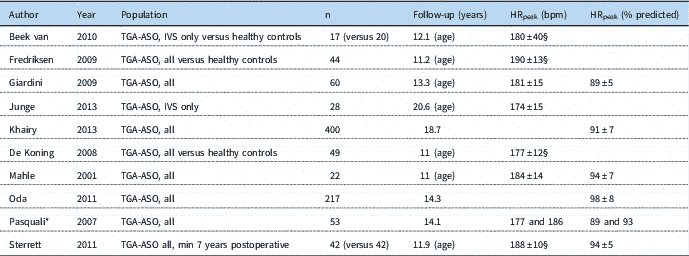
bpm=beats per minute; IVS=intact ventricular septum; TGA-ASO=transposition of the great arteries corrected with arterial switch operation.
* Results grouped by normal and variant coronary artery group, respectively.
§Result showed statistically significantly lower heart rate in TGA-ASO patients compared with healthy controls.
Left ventricular ejection fraction outcomes.
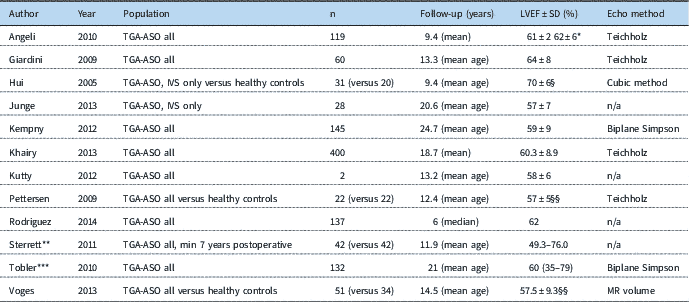
IVS=intact ventricular septum; n/a=not available; TGA-ASO=transposition of the great arteries corrected with arterial switch operation.
* Results grouped by normal and variant coronary artery group, respectively.
** Reporting range only.
*** Reporting range instead of SD.
§Result showed statistically significantly lower ejection fraction in TGA-ASO patients compared with healthy controls.
§§Result showed no statistically significant difference in exercise capacity between TGA-ASO patients and healthy controls.
Acknowledgements
None.
Financial Support
This research received no specific grant from any funding agency, commercial or not-for-profit sectors.
Conflicts of Interest
None.
Supplementary material
To view supplementary material for this article, please visit https://doi.org/10.1017/S1047951117001032