Introduction
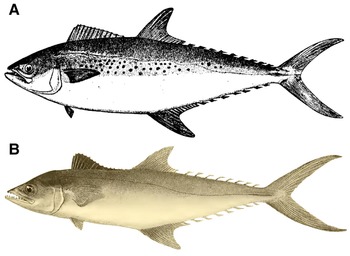
The Korean seerfish Scomberomorus koreanus was originally described by Kishinouye (Reference Kishinouye1915) as Cybium koreanum based on a single specimen collected from the west coast of Korea by Yojiro Wakiya in 1913. In a later publication, Kishinouye (Reference Kishinouye1923) provided a detailed description of the species from Japan with a good line drawing (see Figure 1A) and indicated that its distribution is restricted to the west and south coasts of Chosen, Korea. Mori (Reference Mori1928) reported the fish from Fusan, Korea in Checklist of Korean Fishes. Soldatov & Lindberg (Reference Soldatov and Lindberg1930) described it in the name of Sawara koreanum while studying fishes of the Far East Seas, while Nakamura (Reference Nakamura1939) recorded them from Taiwanese waters. Munro (Reference Munro1943) placed the species under the subgenus Pseudosawara while studying the Australian species of Scomberomorus. When synonymizing C. koreanum with S. semifaciatus, Fraser-Brunner (Reference Fraser-Brunner1950) opined that C. koreanum was a Japanese form of S. semifaciatus, which differed from it only by round blotches on the body instead of 12–20 wide dark grey bands. Mori (Reference Mori1952) listed it as Sawara koreana from Fusan and Chinnampo, Korea. Jones & Silas (Reference Jones and Silas1961) studied the Spanish mackerels from the Indian coast and recognized only three valid species of Scomberomorus (S. guttatus, S. lineolatus and S. commerson) without any comments on S. koreanus. Silas (Reference Silas1964) disagreed with Fraser-Brunner in synonymizing C. koreanum with S. semifaciatus and he considered it identical to S. guttatus and placed in the subspecies as Scomberomorus guttatus koreanus. In the same year, Jones & Silas (Reference Jones and Silas1964) conducted a systematic review of the scombroid fishes of India, where they also considered C. koreanum to be synonymous with S. guttatus. Kamohara (Reference Kamohara1967) also described this species with illustration in his book Fishes of Japan in Color. Devaraj (Reference Devaraj1976) discovered S. koreanus in Palk Bay and confirmed its first record from India as well as in the Indian Ocean. Further, he revealed that Day's (Reference Day1878) Cybium kuhlii is not identical to Cuvier's C. kuhlii as already expressed by de Beaufort & Chapman (Reference de Beaufort and Chapman1951), but a misidentification of S. koreanus (see Figure 1B). His study revealed that S. koreanus is distinct from S. guttatus and not a sub-species or synonym of the latter as considered by Silas (Reference Silas1964) and Jones & Silas (Reference Jones and Silas1964), respectively. In a further publication, Devaraj (Reference Devaraj1975) also confirmed the identity of the species based on a detailed osteological examination of Spanish mackerels and seerfishes from the Indian seas. Collette & Russo (Reference Collette, Russo, Nakamura and Bullis1979) provided the diagnostic characters and summary of the distribution range of S. koreanus. Nakamura & Nakamura (Reference Nakamura and Nakamura1982) confirmed the new record of S. koreanus in Japanese waters based on the three fresh specimens from Wakasa Bay, Sea of Japan. Kyushin et al. (Reference Kyushin, Amaoka, Nakaya, Ida, Tanino and Senta1982) provided the description and colour photograph of S. koreanus from the South China Sea. Lee & Yang (Reference Lee and Yang1983) reconfirmed from Taiwanese waters based on a single specimen from Kaohsiung. Collette & Nauen (Reference Collette and Nauen1983) did the review of Scombrids of the World and provided the detailed description and range distribution of S. koreanus. Collette & Russo (Reference Collette and Russo1984) while studying the morphology, systematics and biology of Spanish mackerels (Scomberomorus, Scombridae), listed 18 valid species in the genus and provided a cladistic analysis of 58 characters which shows six monophyletic species-groups in Scomberomorus. In this, S. koreanus comes in the ‘guttatus species-group’ which contains S. guttatus, S. multiradiatus and S. koreanus which are defined by a high supraoccipital crest. Collette (Reference Collette2003) prepared an Annotated Checklists of Fishes – Family Scombridae Rafinesque 1815 and acknowledged the valid species status of S. koreanus (Kishinouye, Reference Kishinouye1915). A recent study by the authors (Jeena et al., Reference Jeena, Rahuman, Roul, Abdul Azeez, Vinothkumar, Manas, Nesnas, Margaret Muthu Rathinam, Surya, Rohit, Abdussamad and Gopalakrishnan2022) suggested the presence of a few more cryptic and valid species in the genus Scomberomorus.
(A) Cybium koreanum Kishinouye, Reference Kishinouye1915 from Kishinouye (Reference Kishinouye1923, Figures 3 & 5). (B) C. kuhlii Cuvier in Cuvier & Valenciennes, Reference Cuvier and Valenciennes1832 from Day (1878, Figure 2).

Scomberomorus koreanus and S. guttatus are the only members of the genus Scomberomorus that have many small fine auxiliary branches from the anterior part of the lateral line, both dorsally and ventrally (Collette & Nauen, Reference Collette and Nauen1983). Scomberomorus koreanus differs from its most similar congener S. guttatus in having dorsal spine 14–17, usually 15 or fewer (vs 15–18, usually 16 or more); greater body depth, 24.4–26.7% of FL (vs lesser body depth, 22.8–25.2% FL), shorter head, 19.7–20.4% of FL (vs longer head, 20.2–21.5% of FL); total vertebrae 46 or 47, usually 46 (vs 47–52, usually 48 or more); intestine with 4 loops and 5 limbs (vs 2 loops and 3 limbs) (Collette & Nauen, Reference Collette and Nauen1983; Collette & Russo, Reference Collette and Russo1984). Even though the species is distributed in the Indo-western Pacific region (Collette & Russo, Reference Collette and Russo1984) and forms a commercially important fishery in part of its distributional ranges (Devaraj, Reference Devaraj1976 and current study), very limited taxonomic studies have been carried out in detail. In addition, no molecular data were available in the sequence repositories, with the exception of one gene, titin-like protein (Tmo-4c4; GenBank account no. DQ388094) deposited by Orrell et al. (Reference Orrell, Collette and Johnson2006). Recently, the authors (Jeena et al., Reference Jeena, Rahuman, Roul, Abdul Azeez, Vinothkumar, Manas, Nesnas, Margaret Muthu Rathinam, Surya, Rohit, Abdussamad and Gopalakrishnan2022) added clear molecular information about the genus, including S. koreanus from the Indian Ocean. The present study adds information on the exact taxonomic details of the Korean seerfish S. koreanus from the coastal waters of the Bay of Bengal and its comparison with the congeneric species S. guttatus which will help in their field and lab level identification. We employed detailed morphological examination of fresh materials and colour photographs collected over the period 2019–2021, and further confirmed their genetic identity using the DNA barcoding approach.
Materials and methods
Taxon sampling
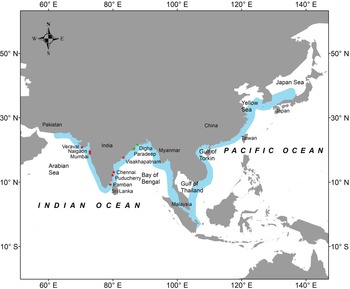
Fresh specimens were collected between 2019 and 2021 either directly from the fishing boats or from landing sites in the Bay of Bengal and a distribution map of S. koreanus was prepared based on the previous and present records (Figure 2). The specimens were preserved in crushed ice and shipped to ICAR-CMFRI's Fish Biology Laboratory for detailed taxonomic study.
Map showing the records of Scomberomorus koreanus from Indian waters (red stars indicate previous records and green stars indicate present records) and global distribution of S. koreanus (shaded area).

Morphological analysis
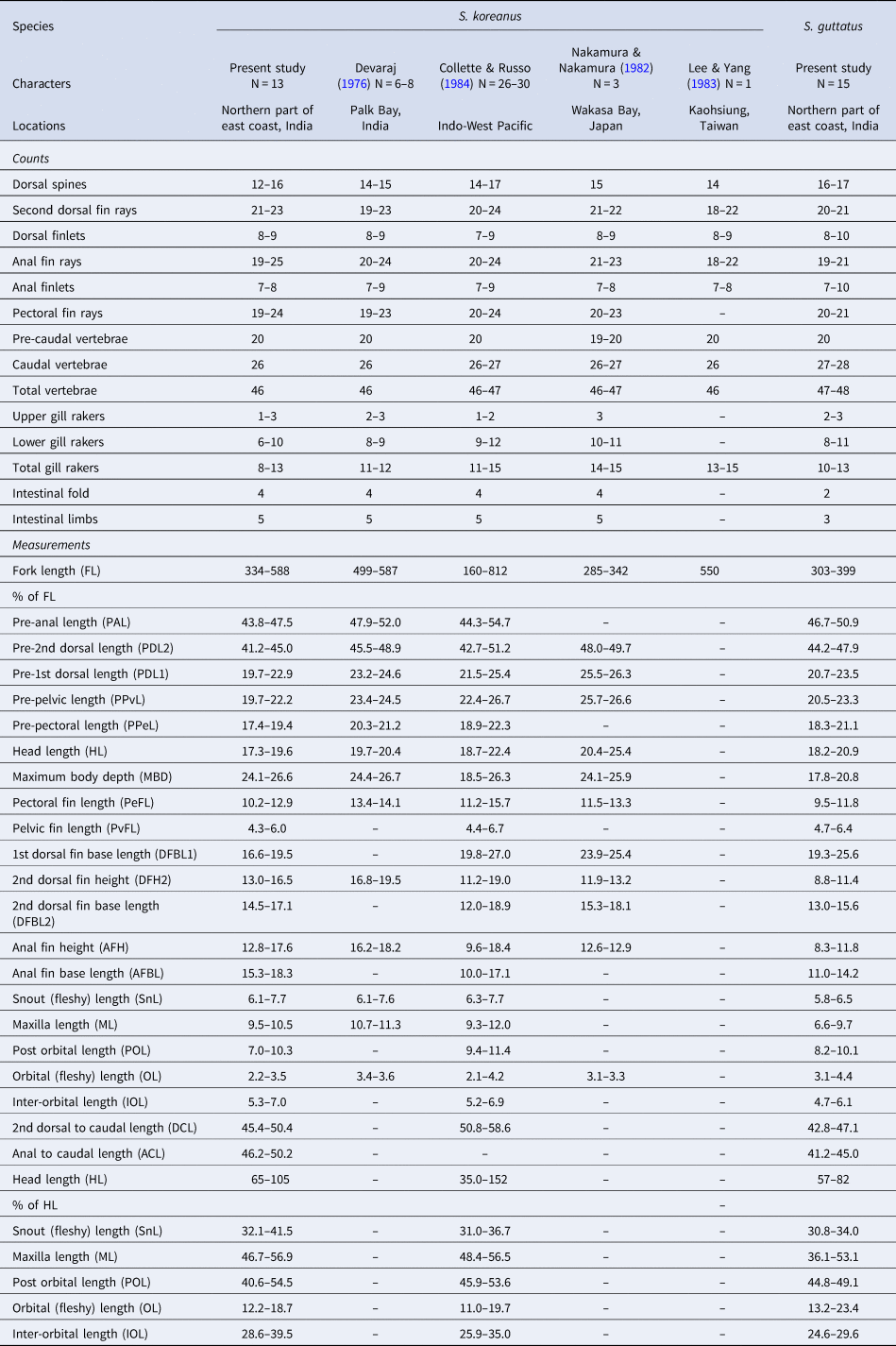
Fishes were photographed fresh to retain the original colour and spotting pattern, and identified based on the descriptions provided by the previous authors (Kishinouye, Reference Kishinouye1915, Reference Kishinouye1923; Devaraj, Reference Devaraj1976; Collette & Nauen, Reference Collette and Nauen1983; Collette & Russo, Reference Collette and Russo1984). The methods of counting, measuring and dissecting were followed according to Gibbs & Collette (Reference Gibbs and Collette1967), Collette & Chao (Reference Collette and Chao1975), Collette et al. (Reference Collette, Russo and Zavala-Camin1978), Collette & Russo (Reference Collette and Russo1980) and Collette & Russo (Reference Collette and Russo1984). Vertebrae counts were made from both X-radiographs and by manual counting after preparing a dry vertebrae column (James, Reference James2008). Specimens were boiled at 110°C to loosen flesh from bones and separate the meat from the skeleton and brushed under running water to remove any remaining meat. Intestinal loops and limbs were counted by dissecting each specimen according to Collette & Russo (Reference Collette and Russo1984). The morphometric characters were measured using a digital Vernier calliper, with 0.1 mm accuracy. Selected morphometric characters are given as percentage of fork length, FL (calculated by the formula %FL = selected morphometric characters/FL × 100) and head length, HL (calculated by the formula %HL = selected morphometric characters/HL × 100) in Table 1 for easier comparison with published data (Devaraj, Reference Devaraj1976; Nakamura & Nakamura, Reference Nakamura and Nakamura1982; Lee & Yang, Reference Lee and Yang1983; Collette & Russo, Reference Collette and Russo1984). Two preserved specimens of S. koreanus collected from Digha Mohana (West Bengal) was deposited in the Marine Biodiversity Museum of Digha Regional Station of ICAR-Central Marine Fisheries Research Institute (CMFRI), Ramnagar, West Bengal, India with accession number DRS SK1 and DRS SK2 for future reference.
Morphometric and meristic data of Scomberomorus koreanus and S. guttatus

Standard length is expressed in millimetres; measurements are expressed as percentage of standard length and head length.
Molecular characterization
Genomic DNA was isolated from the muscle tissue of five specimens each of S. koreanus, and the congeneric species S. guttatus preserved in 95% ethanol using the standard phenol/chloroform method (Russell & Sambrook, Reference Russell and Sambrook2001). A 650 bp region of the COI gene was amplified using the universal primer pair FishF2/FishR2 (Ward et al., Reference Ward, Zemlak, Innes, Last and Hebert2005) under optimized thermal regime. PCR amplifications were performed in a volume of 25 μl containing 12.5μl of TaKaRa EmeraldAmp GT PCR Master Mix, 0.5 μl of each primer (10 mM) and 1 μl of 50 ng μl−1 DNA template. The PCR conditions consisted of initial denaturation at 95°C for 5 min; followed by 30 cycles of denaturation at 95°C for 30 s, annealing at 53°C for 30 s, extension at 72°C for 45 s; a final extension step at 72°C for 10 min, and then hold at 4°C. The PCR products were visualized in 1.5% agarose gel, purified, bi-directionally sequenced and aligned in MEGA X (Kumar et al., Reference Kumar, Stecher, Li, Knyaz and Tamura2018). Sequences in this study were submitted to the NCBI database (accession nos. ON261362–ON261368). A similarity search was performed using the BLAST server. Identical sequences were retrieved from GenBank. Genetic divergence between S. koreanus and S. guttatus used for comparison in this study (uncorrected p-distance under uniform rates) was calculated using MEGA X (Kumar et al., Reference Kumar, Stecher, Li, Knyaz and Tamura2018) with COI data of ~650 bp in length. The compiled data including representative sequences from GenBank were aligned with S. commerson as outgroup and a phylogenetic tree was generated using maximum likelihood (ML) phylogenetic analysis in MEGA X.
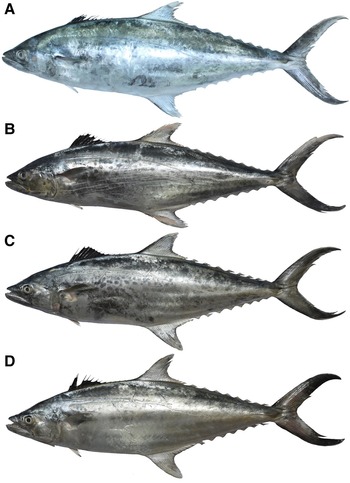
Scomberomorus koreanus (Kishinouye, Reference Kishinouye1915): (A) 51.5 cm FL, fresh, Paradeep, Odisha, India; (B) 51.8 cm FL, fresh, Digha Mohana, West Bengal, India; (C) 52.3 cm FL, Digha Mohana, West Bengal, India; (D) 33.4 cm FL, fresh, Digha Mohana, West Bengal, India.

Results and discussion
Scomberomorus koreanus (Kishinouye, Reference Kishinouye1915)
Korean seerfish (Table 1; Figure 3)
Cybium koreanum Kishinouye, Reference Kishinouye1915: 11, P1. 1 (Figure 6) (Yojiro Wakiya, w. coast of Korea). Holotype (unique): whereabouts unknown.
Materials examined (N = 13)
2 ex., 465–495 mm FL, Paradeep fishing harbour (20°17.345′N 086°42.422′E), Jagatsingpur, Odisha, India, trawl, 40–70 m, sandy silt, 31 September 2019; 4 ex., 485–550 mm SL, Paradeep fishing harbour (20°17.345′N 086°42.422′E), Jagatsingpur, Odisha, India, trawl, 40–70 m, sandy silt, 29 October 2020; 4 ex., 334–528 mm FL, Digha Mohana (21°36′58.3272″N 87°29′56.8644″E), West Bengal, trawl, 30–45 m, sandy silt, 18 September 2021; 3 ex., 520–588 mm FL, Digha Mohana (21°36′58.3272″N 87°29′56.8644″E), West Bengal, trawl, 30–45 m, sandy silt, 15 December 2021.
Description
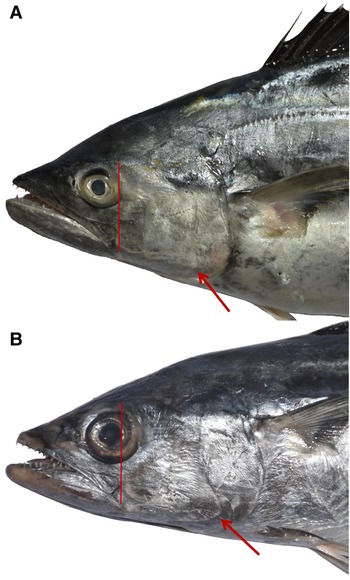
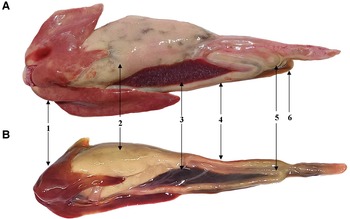
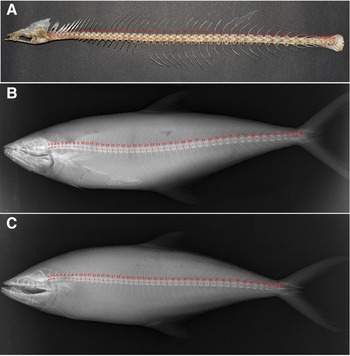
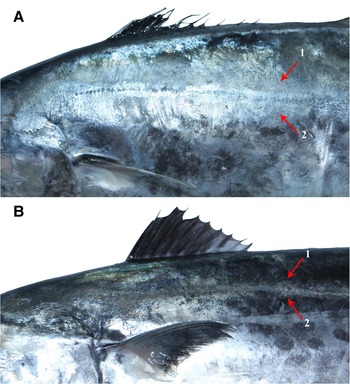
Body deep, maximum body depth 24.1–26.6% FL and always greater than the head length (see Figure 3); dorsal and ventral profile of body equally convex; head small, 17.3–19.6% FL; maxilla long reaching or crossing the hind border of the eye (see Figure 4A), 9.5–10.5% of FL; eye small (2.2–3.5% of FL); second dorsal and anal height larger, 13.0–16.5% and 12.8–17.6% in FL, respectively; pre-second dorsal and pre-anal length distance shorter, 41.2–45.0% and 43.8–47.5% in FL, respectively; post-second dorsal length and post-anal length longer, 45.4–50.4% and 46.2–50.2% in FL, respectively. Middle lobe of liver short and wide (see Figure 5A); lower limb of pre-opercle as long as or slightly longer than the upper limb (see Figure 4A); posterior caudal vertebrae with wide mid lateral grooves on the centra (see Figure 6); lateral line with many fine auxiliary branches extending dorsally and ventrally in anterior third, gradually curving down towards caudal peduncle (see Figure 7). First dorsal fin spine 12–16, usually 15 or 16; second dorsal fin rays 21–23, usually 21 or 22; dorsal finlets 8–9, usually 8; anal fin rays 19–25, usually 22 or 23; anal finlets 7–8, usually 8; pectoral fin rays 19–24, usually 21 or 22; pre-caudal vertebrae 20; caudal vertebrae 26; total vertebrae 46 (see Figure 6); gill rakers on first arch (1–3) + (6–10) = 8–13, usually 2 + 10 = 12; intestine with 4 folds and 5 limbs (see Figure 5A). The morphometric measurements and meristic counts of S. koreanus and S. guttatus in the present study and published data by the previous authors (Devaraj, Reference Devaraj1976; Nakamura & Nakamura, Reference Nakamura and Nakamura1982; Lee & Yang, Reference Lee and Yang1983; Collette & Russo, Reference Collette and Russo1984) from different parts of the world are summarized in Table 1.
Head of (A) Scomberomorus koreanus and (B) S. guttatus showing maxilla extension and shape of lower limb of pre-opercle.

Viscera in ventral view of (A) Scomberomorus koreanus (52.3 cm FL) and (B) S. guttatus (37.3 cm FL). 1, liver; 2, caecal mass; 3, spleen; 4, intestinal limb; 5, intestinal loop; 6, gall bladder.

Scomberomorus koreanus (Kishinouye, Reference Kishinouye1915): (A) Vertebral column, 56.9 cm FL; (B) X-radiograph, 38.4 cm FL; X-radiograph, 33.4 cm FL.

Lateral line with many small fine auxiliary branches from the anterior part: (A) Scomberomorus koreanus (51.5 cm FL) and (B) S. guttatus (50 cm FL) (1, upper arrows indicate dorsal branches and 2, lower arrows indicate ventral branches).

Colour of fresh specimens
Body greyish blue dorsally, silvery white laterally and ventrally; several longitudinal rows of small, rounded brownish spots (smaller than eye diameter) rather sparsely scattered along lateral median line; first dorsal fin membrane black; pectoral, second dorsal and caudal fins dark grey; pelvic and anal fins silvery white (see Figure 3).
Taxonomic appraisal using DNA barcodes
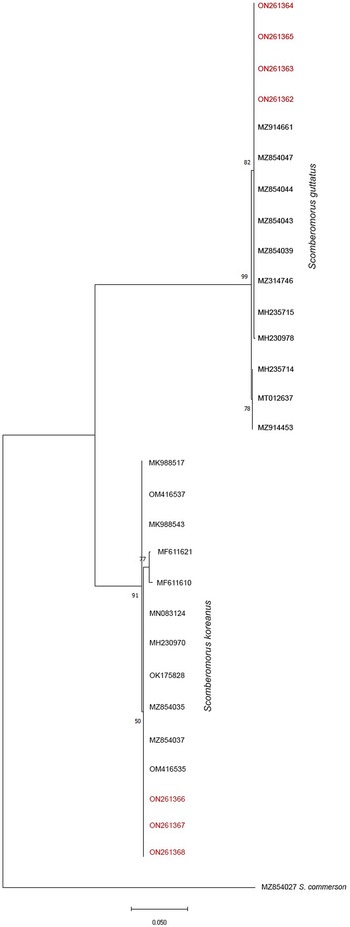
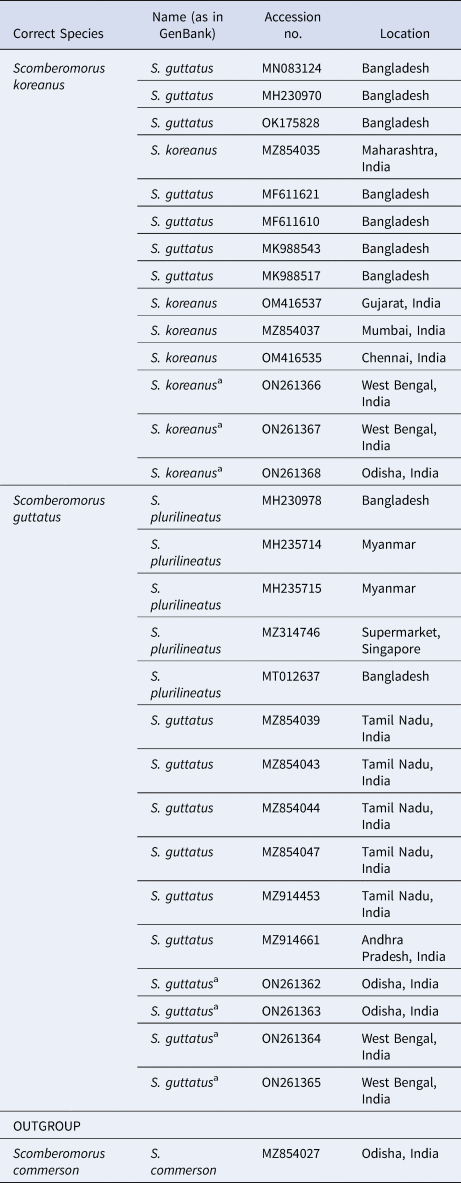
DNA-based characterization is increasingly used to monitor biodiversity in the current ecosystem degradation scenario (Leray et al., Reference Leray, Knowlton, Ho, Nguyen and Machida2019). The BLAST results showed 100% similarity with COI barcodes of S. koreanus from our previous study (Jeena et al., Reference Jeena, Rahuman, Roul, Abdul Azeez, Vinothkumar, Manas, Nesnas, Margaret Muthu Rathinam, Surya, Rohit, Abdussamad and Gopalakrishnan2022). The search results also revealed a number of putative mislabelled sequences from its ranges, such as Bangladesh, that have generally been misidentified with S. guttatus (see Table 2). The genetic distance between S. koreanus and S. guttatus is 9.13% which lies well above the divergence threshold in fishes (Ward et al., Reference Ward, Hanner and Hebert2009). The cladogram also supported their distinct taxonomic status (see Figure 8). The accurate morphological species identification from the present study coupled with the barcodes will aid further research into the genus.
Maximum likelihood phylogenetic tree of the COI region (632 bp) generated in MEGA X using the best-fitting K2 + G model. Sequences generated in this study are highlighted in red.

COI sequences used for molecular analysis

a Indicates sequences generated in this study.
Habitat
Inhabits in coastal waters, mostly caught in trawls (cod end mesh size 40 mm) operating in the water depth ranges from 30–70 m and gillnets (mesh size 90–95 mm) operating in the water depth ranges from 15–50 m.
Fishery
Spanish mackerel form an important multispecies inshore pelagic fishery along most parts of the Indian coast. Scomberomorus koreanus, along with S. guttatus, forms an important part of the driftnet fishery in Palk Bay, south-east coast of India (Devaraj, Reference Devaraj1976). The present study also confirmed that S. koreanus forms a commercially important inshore fishery along with S. guttatus in both the trawls and gillnets along the Indian coast.
Utilization
Highly esteemed food fish, which fetches a higher price, especially in southern India and Maharashtra; known locally under several names, e.g. Mackerel and Guda (Bengali), Champa, Gura and Binjaram (Oriya), Wingeram (Telugu) for both S. guttatus and S. koreanus; mostly marketed fresh along with S. guttatus at ₹130–300 kg−1 (small size) and ₹360–580 kg−1 (large size) to consumers due to their similar appearance and sent by road to these distant markets in iced condition for fresh consumption. A smaller part of the catches, mostly the young ones or the poor quality fishes are also dry salted.
Geographic distribution
The species is distributed in the continental Indo-Western Pacific (see Figure 2): reported from Japan, Korea, Taiwan and China south to Singapore and Sumatra (Collette & Russo, Reference Collette and Russo1984); Myanmar (Psomadakis et al., Reference Psomadakis, Thein, Russell and Tun2019), entire east coast of India (Devaraj, Reference Devaraj1976; Collette & Russo, Reference Collette and Russo1984; Jeena et al., Reference Jeena, Rahuman, Roul, Abdul Azeez, Vinothkumar, Manas, Nesnas, Margaret Muthu Rathinam, Surya, Rohit, Abdussamad and Gopalakrishnan2022; this study); north to Maharashtra and Gujarat along the west coast of India (Collette & Russo, Reference Collette and Russo1984; Jeena et al., Reference Jeena, Rahuman, Roul, Abdul Azeez, Vinothkumar, Manas, Nesnas, Margaret Muthu Rathinam, Surya, Rohit, Abdussamad and Gopalakrishnan2022) and Pakistan (Psomadakis et al., Reference Psomadakis, Osmany and Moazzam2015).
Remarks
Scomberomorus koreanus is a commercially important seerfish species in the Indo-Western Pacific, considered either as synonym or subspecies of S. guttatus until Devaraj (Reference Devaraj1976). The meristic counts provided in the original description of S. koreanus were as follows: dorsal fin rays D XIV, 18–21 + IX; anal fin rays A 18–21 + VIII; gill rakers GR 3 + 10 = 13; total vertebrae 20 + 26 = 46 (Kishinouye, Reference Kishinouye1915). Most of the body proportions and meristic counts of S. koreanus recorded in this study are comparable with those reported by earlier authors with some variations (see Table 1), which may be due to the different geographic area and sample size covered. Scomberomorus koreanus is most similar to its congener S. guttatus described by Bloch & Schneider (Reference Bloch and Schneider1801) from Tranquebar (presently Tharangambadi), India. The present study identified and distinguished S. koreanus correctly from S. guttatus in having dorsal spine 12–16, usually 15 or 16 (vs 16–17, usually 16); deep bodied, maximum body depth 24.1–26.6% of FL (vs slender body, maximum body depth 17.8–20.8% FL, see Figures 3, 6 and 9); shorter head, 17.3–19.6% of FL (vs longer head, 18.2–20.9% of FL, see Figure 4); dorsal and ventral profile of body equally convex (vs almost straight, see Figures 3, 6 and 9); maximum body depth always greater than the head length (vs either equal or shorter, see Figures 3, 6 and 9); smaller eye, 2.2–3.5% FL (vs large, 3.1–4.4% FL, see Figure 4); second dorsal (13.0–16.5% FL) and anal height (12.8–17.6% FL) larger (vs smaller, 8.8–11.4% FL and 8.3–11.8% FL, see Figures 3 and 9); pre-second dorsal (41.2–45.0% FL) and pre-anal length distance (43.8–47.5% FL) shorter (vs longer, 44.2–47.9% FL and 46.7–50.9% FL); post-second dorsal length (45.4–50.4% FL) and post-anal length (46.2–50.2% FL) longer (vs shorter 42.8–47.1% FL and 41.2–45.0% FL); middle lobe of liver short and wide (vs long and narrower, see Figure 5); maxilla long reaching or crossing the hind border of the eye (vs short never crossing hind border of eye, see Figure 4); lower limb of pre-opercle as long as or slightly longer than the upper limb (vs longer than upper limb, see Figure 4); total vertebrae 46 (vs 47–48, usually 48, see Figures 6 & 9); intestine with 4 loops and 5 limbs (vs 2 loops and 3 limbs, see Figure 5); posterior caudal vertebrae with wide mid lateral grooves on the centra (vs narrower mid lateral grooves, see Figures 6 and 9); lateral line auxiliary branches densely distributed (vs sparsely distributed, see Figure 7). Historically, vertebrae counts have been used as one of the important taxonomic characters to identify the species of Scomberomorus. For example, the specimens with vertebrae count 20 + 26 = 46 considered as S. guttatus by Munro (Reference Munro1943) and Delsman (Reference Delsman1931) and 20 + 25 = 45 considered as S. kuhlii by Delsman (Reference Delsman1931) are actually S. koreanus as indicated by Devaraj (Reference Devaraj1976). The absence of spots was observed in some specimens of both S. koreanus (see Figure 3D) and S. guttatus (personal observation), particularly in the case of young specimens in this study, as previously recorded by Devaraj (Reference Devaraj1976) may be due to the post-harvest handling which led to this enigma. In the absence of spots, Day probably considered C. kuhlii as a valid species from Indian waters, while Devaraj (Reference Devaraj1976) considered it as a specimen of S. koreanus based on pre-opercle shape. In the Indian coast, S. koreanus was previously reported from Bombay (ANSP 88360), Pondicherry (USNM 216698) and Palk Bay (Devaraj, Reference Devaraj1976; Collette & Russo, Reference Collette, Russo, Nakamura and Bullis1979; Collette & Nauen, Reference Collette and Nauen1983; Collette & Russo, Reference Collette and Russo1984). The present study from the northern part of the east coast of India and the previous study by the authors (Jeena et al., 2022) confirmed its distribution throughout the east coast of India (western Bay of Bengal) and the north-west coast of India (north-eastern Arabian Sea) based on molecular data and morphological examination of fresh specimens. The Korean seerfish fishery was started in Daidoko, Korea, in 1917 by Japanese fishermen using driftnets and pound-nets mainly in summer and autumn (Kishinouye, Reference Kishinouye1923). Although the species is a commercial catch in trawls and gillnets, it has gone unnoticed in most of its range along the Indian coast and has been misreported along with other Scomberomorus species. The present study is probably the first integrated taxonomic study of S. koreanus with detailed analysis of morphological, anatomical and molecular data.
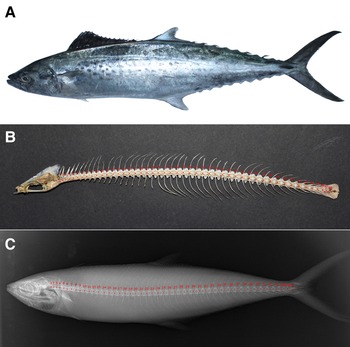
Scomberomorus guttatus: (A) 51.1 cm FL, fresh, Digha Mohana, West Bengal, India; (B) Vertebral column, 37.8 cm FL; (C) X-radiograph, 34.0 cm FL.

Conclusion
Scomberomorus koreanus was until Devaraj (Reference Devaraj1976), considered either a synonym or a subspecies of S. guttatus, unrecognized or misidentified due to the lack of discrete morphological characters. The species belongs to the guttatus species group, distinguished from its closest congener, S. guttatus, on the basis of external morphological features (e.g. the maximum body depth) and the anatomical features (e.g. vertebrae, and intestinal folds and limbs). The former feature is difficult to assess in specimens with mature gonads, full stomach contents or juvenile specimens, and the latter cannot be used for field-related differentiation. In such cases an integrative approach combining both molecular methods and traditional taxonomy is the more accurate and robust tool to correctly identify the species in the closely related Scomberomorus spp. Accurate species identification forms the cornerstone of most aspects of biology, population baseline studies and sustainable fisheries management and this study will contribute to effective fisheries management via exact species identification.
Comparative material
Scomberomorus guttatus (N = 15): 5 ex., 317–399 mm FL, Paradeep fishing harbour (20°17.345′N 086°42.422′E), Jagatsingpur, Odisha, India, trawl, 40–70 m, sandy silt, 31 September 2019; 10 ex., 303–390 mm FL, Digha Mohana (21°36′58.3272″N 87°29′56.8644″E), West Bengal, trawl, 30–45 m, sandy silt, 18 September 2021.
Data
All gene sequences generated in this study are deposited in the NCBI under the accession numbers ON261366, ON261367, ON261368, ON261362, ON261363, ON261364, ON261365, and are accessible at https://www.ncbi.nlm.nih.gov/nuccore.
Acknowledgements
We thank Dr A Gopalakrishnan, Director of ICAR-CMFRI for providing all necessary facilities and support during the study period. We also thank Dr Abdul Azeez for creating the distribution map. Our sincere thanks to the staff at Puri Field Center and Digha Regional Station of ICAR-CMFRI for their assistance in both the field and laboratory.
Author contributions
S.K.R. collected and analysed the morphomeristic data and drafted the manuscript. J.N.S. analysed molecular data. P.R. and J.N.S. critically reviewed and corrected the manuscript. All authors reviewed the draft and approved the final version of the manuscript.
Financial support
This research received no specific grant from any funding agency, commercial or not-for-profit sectors.
Conflict of interest
None.
Ethical standards
This work does not contain any experimental studies with live animals. Dead fish samples were collected directly from the fishing harbours/landing centres and used for the genetic and morphological/anatomical investigations.