Introduction
The United Nations’ adoption of Universal Health Coverage (UHC) as a central platform of the Sustainable Development Goals (SDG) has reaffirmed the utilization of maternal health care services as a global priority in the coming decades (United Nations, 2015b). Key targets are to reduce complications during and following pregnancy and to achieve ambitious new development targets of reducing maternal (to fewer than 70 per 100,000 live births) and newborn deaths (to fewer than 12 per 1000 live births) by 2030 (United Nations, 2015b). This requires significant reductions from the current rates of maternal (358,000) and under-five (6 million) deaths in low- and middle-income countries (LMICs), where almost all (99%) worldwide incidences occur (WHO, 2018b, c). The Millennium Development Goals (MDGs), which applied to 2000–2015, resulted in little progress towards such reductions in LMICs. For instance, only nine and thirteen of the 95 low- and lower-middle-income countries (subset of total 135 LMICs) achieved the MDG’s target reductions in maternal and under-five mortality rates, respectively, though noticeable progress was reported in other countries (United Nations, 2015a; Alkema et al., Reference Alkema, Chou, Hogan, Zhang, Moller and Gemmill2016). Importantly, the majority of these maternal (75%) and under-five (80%) deaths occur because of complications during and immediately after delivery, which could be prevented by ensuring high-impact health care service utilization (Goldenberg et al., Reference Goldenberg, McClure and Saleem2018). However, particular emphasis is needed on skilled birth attendance during delivery, good hygiene and recognizing and treating infections in a timely manner (United Nations, 2015b). For this, it is important to make noticeable progress in raising the number of skilled personnel assisted deliveries, which is modest in LMICs (71%) (Joseph et al., Reference Joseph, Da Silva, Wehrmeister, Barros and Victora2016). Rates are even lower among Southern Asian and sub-Saharan African countries (52%), including Bangladesh (42%) (Joseph et al., Reference Joseph, Da Silva, Wehrmeister, Barros and Victora2016; NIPORT et al., 2016). Researchers have found higher rurality, a lower rate of education, poor socioeconomic status, lower female autonomy and poor knowledge of the importance of skilled personnel assisted delivery all contribute to lower skilled birth attendance in LMICs (Fotso et al., Reference Fotso, Ezeh and Essendi2009; Muchabaiwa et al., Reference Muchabaiwa, Mazambani, Chigusiwa, Bindu and Mudavanhu2012; Kibria et al., Reference Kibria, Ghosh, Hossen, Barsha, Sharmeen and Uddin2017; Fagbamigbe et al., Reference Fagbamigbe, Hurricane-Ike, Yusuf and Idemudia2017; Nyongesa et al., Reference Nyongesa, Xu, Hall, Macharia, Yego and Hall2018).
Around 43% (around 88 million) of all pregnancies that occur each year in LMICs are unintended and 55% of these end in abortion, contributing to around 13% of global maternal deaths (Bearak et al., Reference Bearak, Popinchalk, Alkema and Sedgh2018). Complications during and after delivery (e.g severe bleeding, infections, birth asphyxia) are also common among women with a continued unintended pregnancy (Gipson et al., Reference Gipson, Koenig and Hindin2008). Studies have found these complications are major contributors to the annual occurrence of 358,000 maternal deaths (WHO, 2018b), 2.5 million newborn deaths (UNIGME et al., 2016) and 2.6 million stillbirths (Blencowe et al., Reference Blencowe, Cousens, Jassir, Say, Chou and Mathers2016) in LMICs. The majority of these complications and deaths are avoidable through the presence of a skilled birth attendant during delivery.
While it is critical to make an accurate assessment of skilled birth attendance among women with an unintended pregnancy, findings to date have been equivocal. For instance, of the six studies conducted in Ethiopia, three found around 160% to 220% higher use of skilled birth attendants among women with intended pregnancies than women with unintended pregnancies (Dutamo et al., Reference Dutamo, Assefa and Egata2015; Bitew et al., Reference Bitew, Hanlon, Kebede, Honikman, Onah and Fekadu2017; Kidanu et al., Reference Kidanu, Degu and Tiruye2017), while the remaining studies found no statistically significant evidence of association (Abebe et al., Reference Abebe, Berhane and Girma2012; Tarekegn et al., Reference Tarekegn, Lieberman and Giedraitis2014; Zegeye et al., Reference Zegeye, Gebeyehu and Melese2014). Dissimilarities have also been reported in other countries. Researchers in Zimbabwe and Kenya found a significant effect of unintended pregnancy on accessing a skilled birth attendant (Fotso et al., Reference Fotso, Ezeh and Essendi2009; Muchabaiwa et al., Reference Muchabaiwa, Mazambani, Chigusiwa, Bindu and Mudavanhu2012), while no evidence of association was found in Nigeria (Dahiru & Oche, Reference Dahiru and Oche2015). In Southern Asian countries, two notable studies have been conducted in Bangladesh. One found no evidence of association (Kibria et al., Reference Kibria, Ghosh, Hossen, Barsha, Sharmeen and Uddin2017) and the other found a 30% lower likelihood of accessing a skilled birth attendant among women with an unintended pregnancy than women with an intended pregnancy (Rahman et al., Reference Rahman, Rahman, Tareque, Ferdos and Jesmin2016). These inconsistencies in results are at least in part due to countries’ different prevalences of unintended pregnancy, and different perceptions of pregnancy and births, health care policies and coverage, norms and traditions and methods used across studies (Muchabaiwa et al., Reference Muchabaiwa, Mazambani, Chigusiwa, Bindu and Mudavanhu2012; Zegeye et al., Reference Zegeye, Gebeyehu and Melese2014; Dahiru & Oche, Reference Dahiru and Oche2015; Bitew et al., Reference Bitew, Hanlon, Kebede, Honikman, Onah and Fekadu2017; Kidanu et al., Reference Kidanu, Degu and Tiruye2017).
Different individual-, household- or community-level factors that are associated with unintended pregnancy (e.g. lower education, lower socioeconomic status, residing in rural areas) are also predictors of not accessing a skilled birth attendant (Dahiru & Oche, Reference Dahiru and Oche2015; Rahman et al., Reference Rahman, Rahman, Tareque, Ferdos and Jesmin2016; Kidanu et al., Reference Kidanu, Degu and Tiruye2017). In Bangladesh, accessing a skilled birth attendant is associated with a financial burden due to a lack of health insurance and very low coverage from governmental health care facilities, particularly in rural areas. Together these findings suggest that women experiencing an unintended pregnancy may struggle to access skilled delivery care. However, published studies have mainly used single-level analysis techniques with limited confounders. Appropriate statistical adjustment of these multifaceted characteristics through multilevel modelling allows for the calculation of an accurate estimate of accessing a skilled birth attendant among women with an unintended pregnancy, but no studies in Bangladesh to date have applied such techniques.
The current study therefore aimed to assess the association between unintended pregnancy and skilled birth attendance and health care facility delivery through multilevel logistic regression models while adjusting for individual-, household- and community-level factors.
Methods
Study overview
This study used the country-level 2014 Bangladesh Demographic and Health Survey (BDHS) – a cross-sectional survey that collected data every 3 years from women aged 15–49 years in selected households. Households were selected through two-stage stratified random sampling. A total of 600 clusters were selected in the first stage from the sampling frame of the Bangladesh population census conducted in 2011 through probability proportional to the unit size. Systematic random sampling was applied in the second stage to select 30 households from each selected cluster. The National Institute of Population Research and Training (NIPORT) conducted this survey, with ICF International and United States Agency for International Development (USAID) providing technical and financial support. The survey sampling procedure and data collection are described in detail elsewhere (NIPORT et al., 2016; Khan et al., Reference Khan, Harris and Loxton2019a).
Sample
Of the 17,893 women included in the 2014 BDHS, 4493 met the study inclusion criteria. Criteria for inclusion were: i) had at least one live birth within 3 years of the survey date, ii) provided data on pregnancy intention, and iii) reported who provided delivery care (e.g. none, qualified medical doctor, trained birth attendant) and where the delivery occurred (e.g. home, government health care facility, non-governmental health care facility).
Outcome variables
The primary outcomes of interest were ‘live births involving skilled personnel at home’ and ‘delivery in a health care facility through skilled providers’. Two dichotomous variables were generated following World Health Organization guidelines: skilled birth attendance (yes and no) and delivery in a health care facility through skilled providers (yes and no) (WHO, 2018a). A skilled birth attendant was a qualified doctor, nurse, midwife, paramedic, family welfare visitor or community skilled birth attendant. Health care facilities included public, private or non-governmental facilities (WHO, 2018a).
Exposure variables
The main exposure variable was the intendedness of the woman’s most recent pregnancy, categorized as wanted (where the pregnancy had been planned and desired), mistimed (where the pregnancy had been wanted but occurred earlier than desired) and unwanted (where the pregnancy occurred when no children had been desired). The BDHS recorded these responses based on women’s feelings about the most recent pregnancy resulting in a live birth at the time conception occurred.
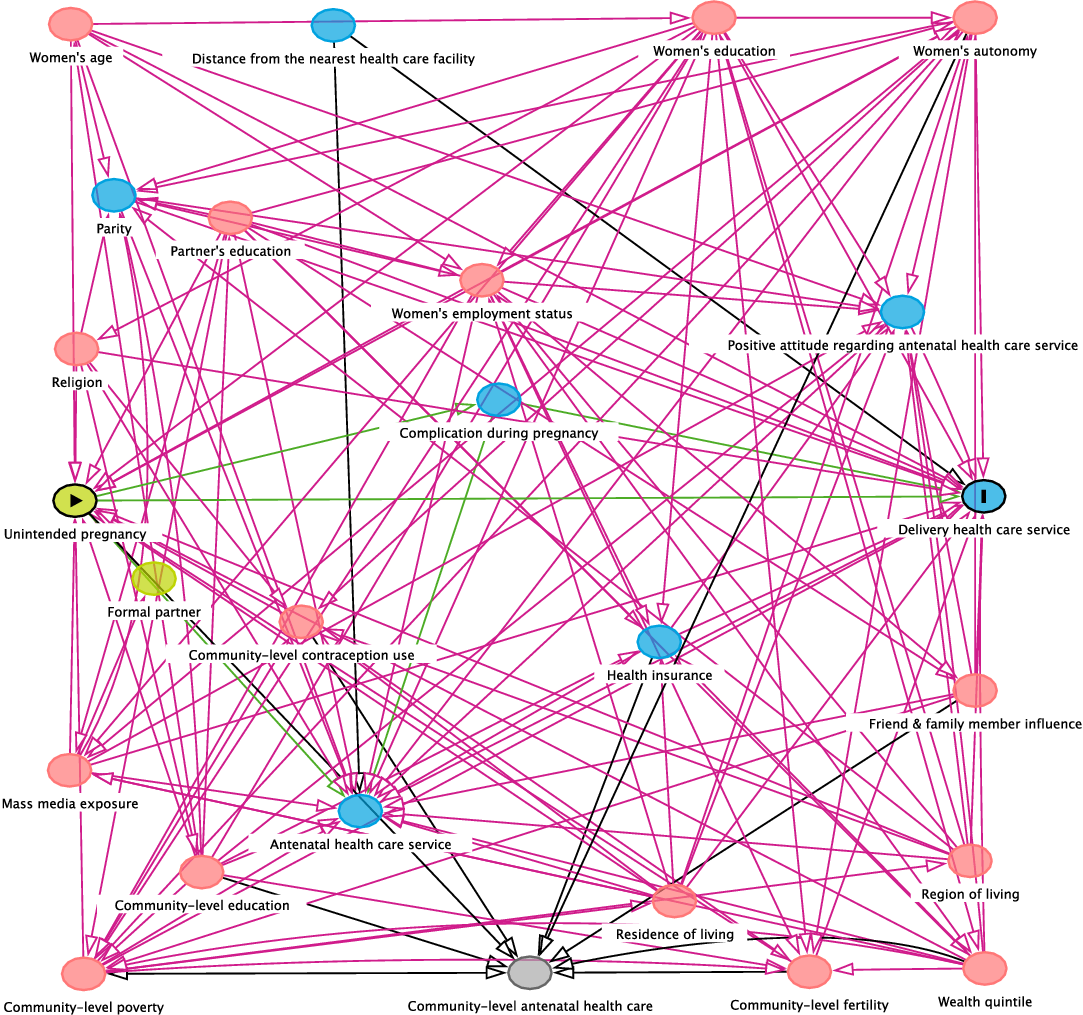
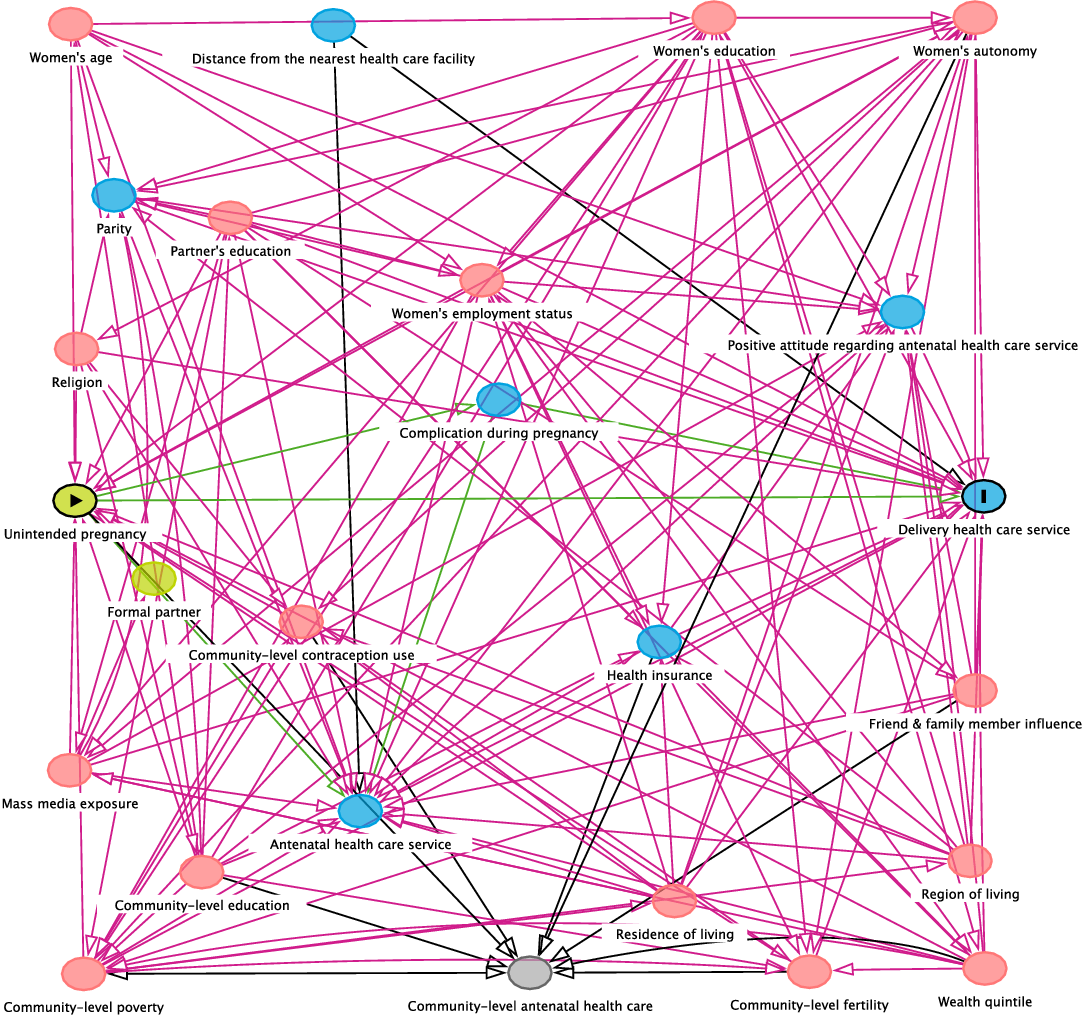
A broad literature search focusing on factors that influence pregnancy intention and access to a skilled birth attendant in LMICs was conducted. The minimal sufficient adjustment sets in this study were then selected by using a directed acyclic graph (DAG; Figure 1), where skilled birth attendance was considered as the main outcome and pregnancy intention was considered as the main exposure variable. The factors selected were then categorized as individual-, household- and community-level factors, as per the ecological model of health (UNICEF, 2013). Individual-level factors included women’s age at the birth of last child (treated as a continuous variable), women’s education (no education, primary, secondary and higher), women’s working status (yes and no), having at least one antenatal care visit (ANC, yes and no), children ever born (≤2 and >2) and preceding birth interval (≤2 years, 2–4 years and >4 years; the entire sample included in the analysis were of women who had at least two or more child at the time of survey completion). Women’s autonomy index (treated as a continuous variable) was also included as an individual-level factor. This was generated by using multiple classification analysis based on women’s responses to questions related to decision-making on own health care, household purchases, child health care and visits to relative’s houses.
Directed acyclic graph to select study confounders.
Household-level factors included partner’s education (no education, primary, secondary and higher) and partner’s occupation (agricultural worker, service worker and non-agricultural labourer, businessman and other), exposure to mass media (not exposed, moderately exposed and highly exposed) and wealth quintile (poorest, poorer, middle, richer and richest).
Place of residence (urban and rural) and region of residence (Barishal, Chattogram, Dhaka, Khulna, Rajshahi and Sylhet) were included as major community-level factors. Other community-level factors were aggregate values of community-level education, poverty, fertility and ANC use. Cluster-level proportion was used to generate these aggregate variables. Community-level illiteracy was calculated from the cluster-level proportion of uneducated women. Women’s responses to the number of children ever born were used to calculate community-level fertility, which classified a community as having high fertility if the cluster-level proportion was more than the total fertility rate in Bangladesh (2.10 in 2014) (NIPORT et al., 2016). Community-level poverty and ANC use variables were generated from cluster-level proportion of poor (poorer and poorest) and having at least one ANC use.
Statistical analysis
Descriptive statistics were used to characterize the demographic profile of women included in the study. Differences in the two outcome variables ‘skilled birth attendance’ and ‘delivery in health care facility through skilled providers’ across socio-demographic characteristics of interest were explored with frequencies and percentages. Associations of unintended pregnancy with the outcome variables were examined using a series of multilevel logistic regression models, adjusting for selected potential confounders. The reason for using multilevel logistic regression models was the nested structure of the BDHS data (e.g. individuals nested within households and households nested within clusters), where previous research found a multilevel logistic regression model was deemed the most appropriate approach (Bowen, Reference Bowen2007). Four different multilevel logistic regression models were run separately for the two outcomes. Model 1 was a null model, estimating intra-class correlation (ICC), which measured overall variation in the variables. Model 2 incorporated individual- and household-level factors, while Model 3 incorporated only community-level factors to present the different effects of individual-, household- and community-level factors on the outcome variables. Model 4 was the final model including individual-, household- and community-level factors. Results are reported as Odds Ratios (OR) with 95% Confidence Intervals (95% CI). The Akaike Information Criteria (AIC) and Bayesian Information Criteria (BIC), and ICC values for each model, are also reported. All statistical analyses were conducted using Stata software version 15.1 (Stata Corp, College Station, TX, USA).
Results
Descriptive statistics
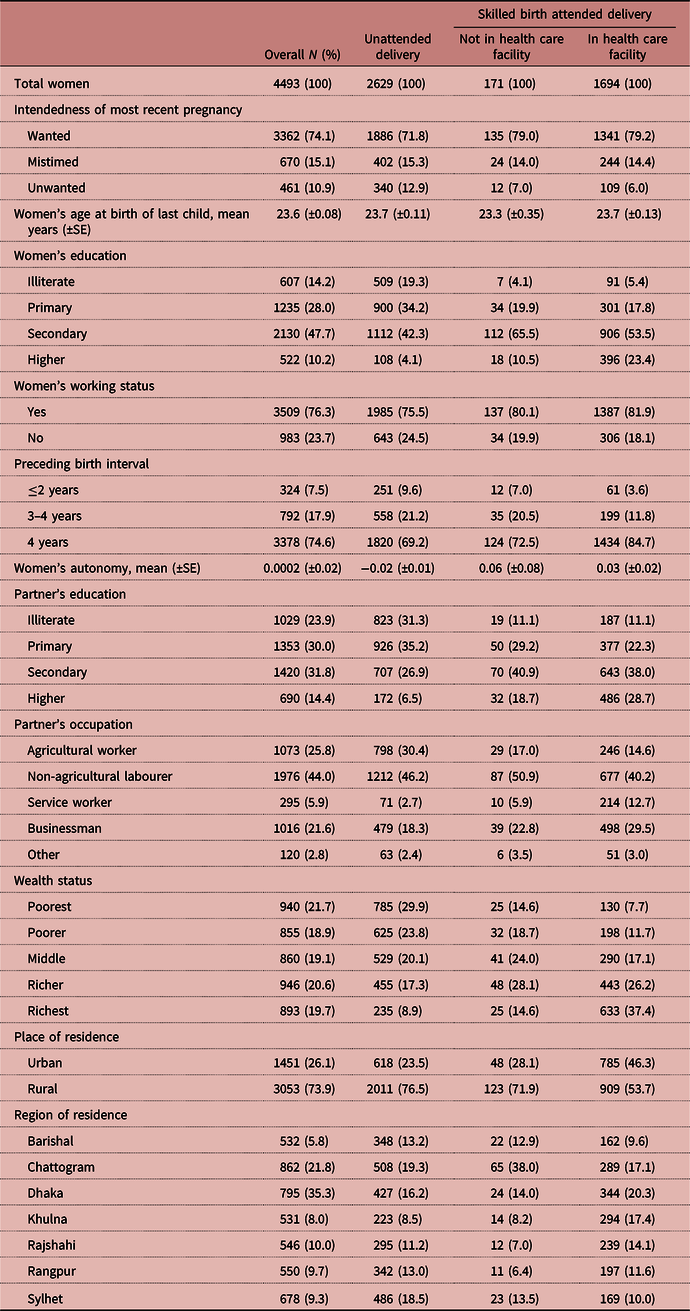
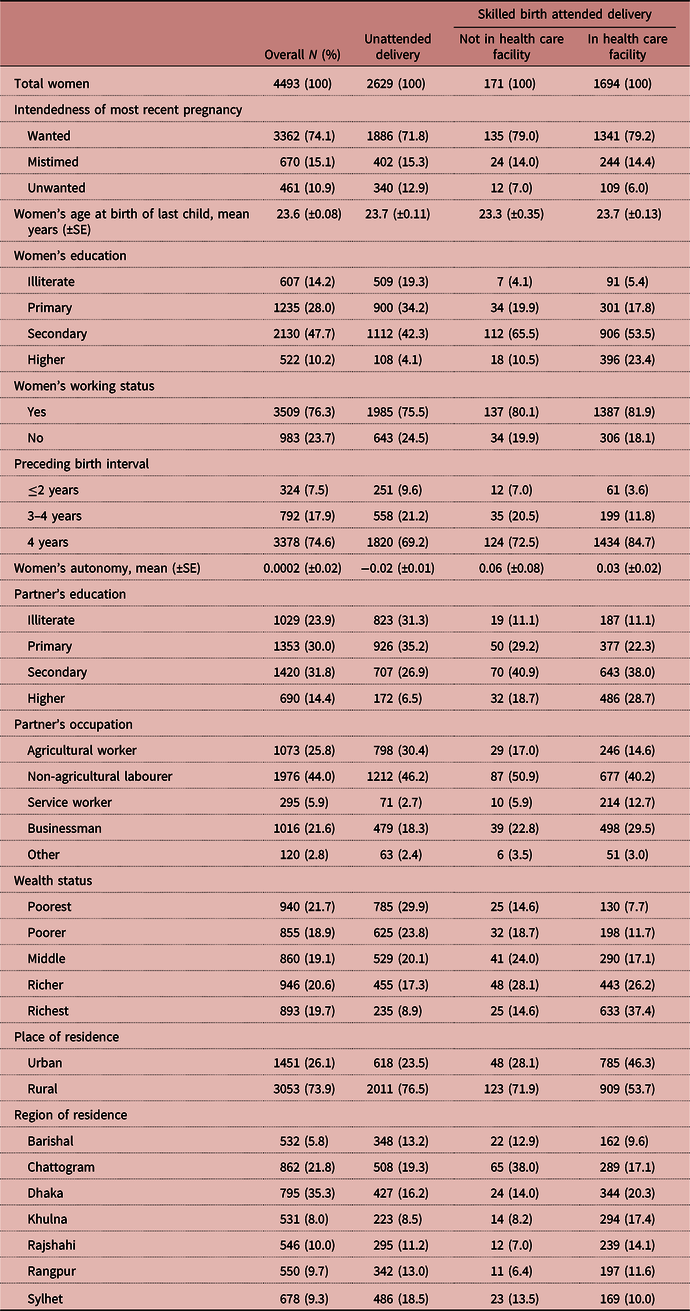
The demographic characteristics of the women according to use of a skilled birth attendant and delivery in a health care facility through skilled providers are presented in Table 1. Around 26% of total live births were unintended at the time of conception, including 15.1% mistimed and 10.9% unwanted births. The average age at the most recent birth was 23.6 (±0.08) years. The majority of women possessed secondary education (47.7%) and were not engaged in any formal employment (76.3%). Around 75% of the total sample resided in rural areas.
Demographic characteristics of women who had a live birth up to 3 years prior to the survey by skilled birth attendant status, BDHS 2014
Use of delivery health care services by socio-demographic characteristics
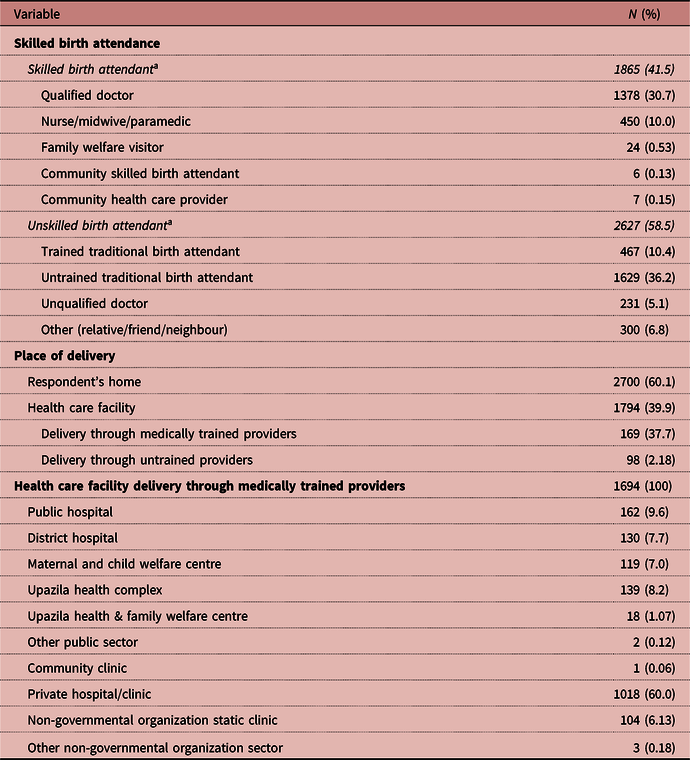
The distribution of type of birth attendance and place of delivery is presented in Table 2. Around 42% of births occurred using a skilled birth attendant, of which 90% were in health care facilities. The majority were assisted by qualified doctors (30.7%), followed by a nurse/midwive/paramedic (10.0%). Around 38% of births occurred in health care facilities through skilled health care. Of these, 60% occurred in private hospitals/clinics, followed by 33% in governmental health care facilities. The proportions of both skilled birth attendance and delivery in health care facility through skilled providers were found to be higher among women reporting a wanted pregnancy, secondary or higher education, engagement in formal employment and a 4-year or greater interval between the last two births. Women residing in urban areas and Khulna and Dhaka divisions also reported a higher percentage of skilled birth attendance and delivery in health care facility through skilled providers.
Distribution of birth attendance and place of delivery among women with live birth up to 3 years prior to survey (N = 4493), BDHS 2014
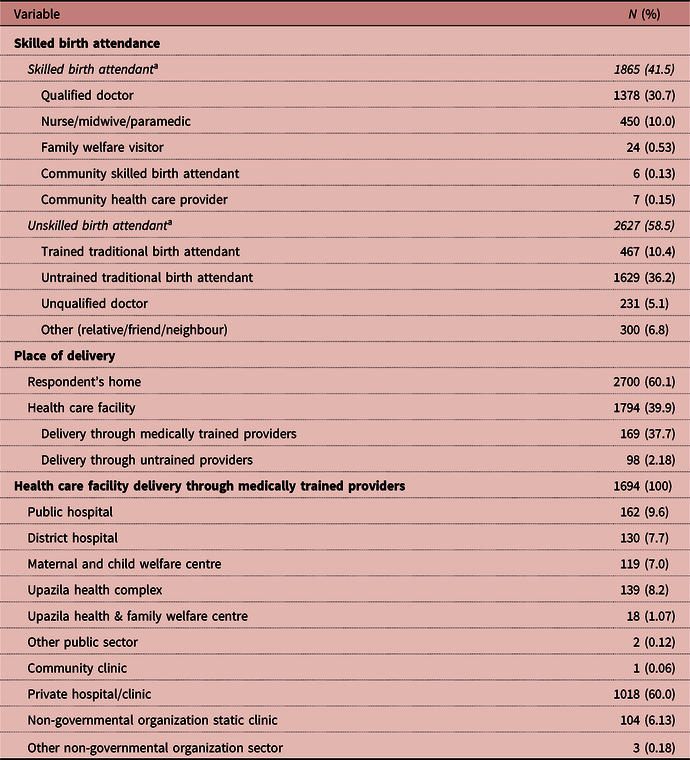
a Skilled and unskilled health personnel categorized using WHO guidelines.
Model selection
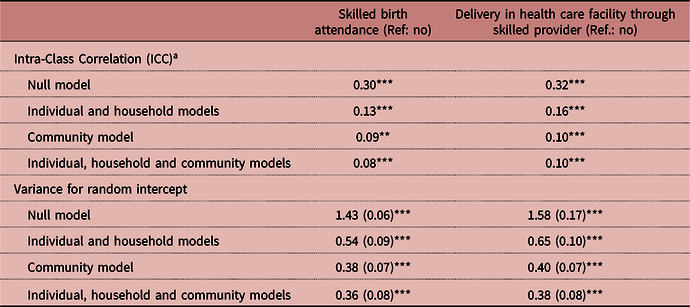
The effects of unintended pregnancy on the outcome variables were assessed through multilevel logistic regression models adjusting for potential confounders. Of the four different models run separately for the two variables, the AIC, BIC and ICC values were compared to select the best model. The preferred model was the one that had the smallest AIC, BIC and ICC (Table 3). According to these markers, Model 4 (including individual-, household- and community-level factors) fitted the data better for each of the outcomes. The ICC values for the null models (Model 1) suggested around 30% and 32% of the differences in using a skilled birth attendant and delivery in a health care facility through skilled providers, respectively, across clusters included in this study. However, these values were reduced to 8% and 10% once individual-, household- and community-level factors were adjusted in the final models (Model 4).
Intra-Class Correlation (ICC) and variances for random intercepts for skilled birth attendance and delivery in health care facility through skilled providers, Bangladesh, 2014
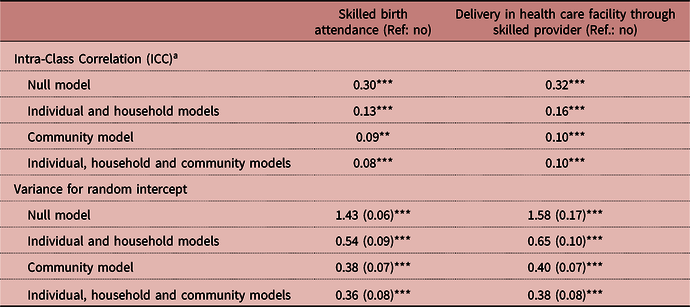
a The ICC is the ratio of the cluster-level variance to the total variance.
***p<0.01; **p<0.05; *p<0.1.
Factors associated with skilled birth attendance and delivery in health care facilities
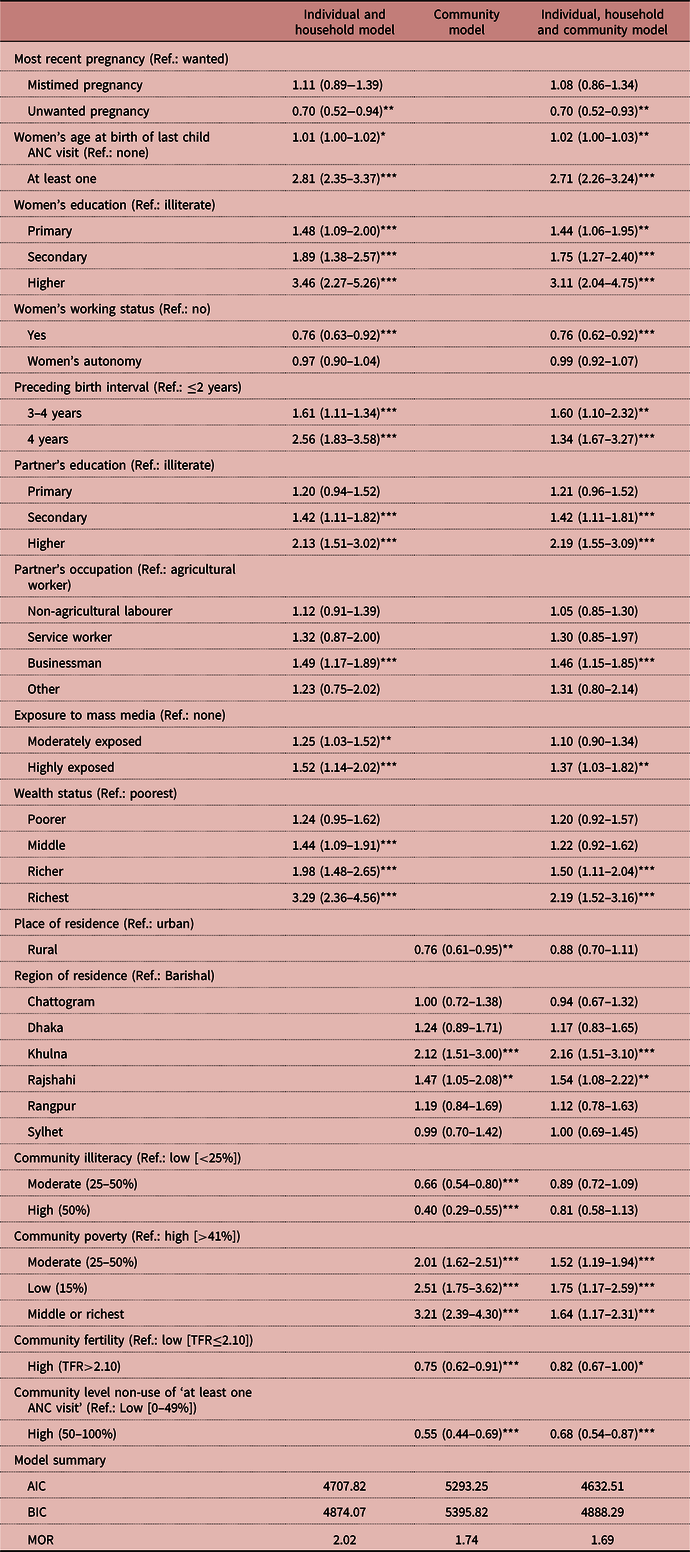
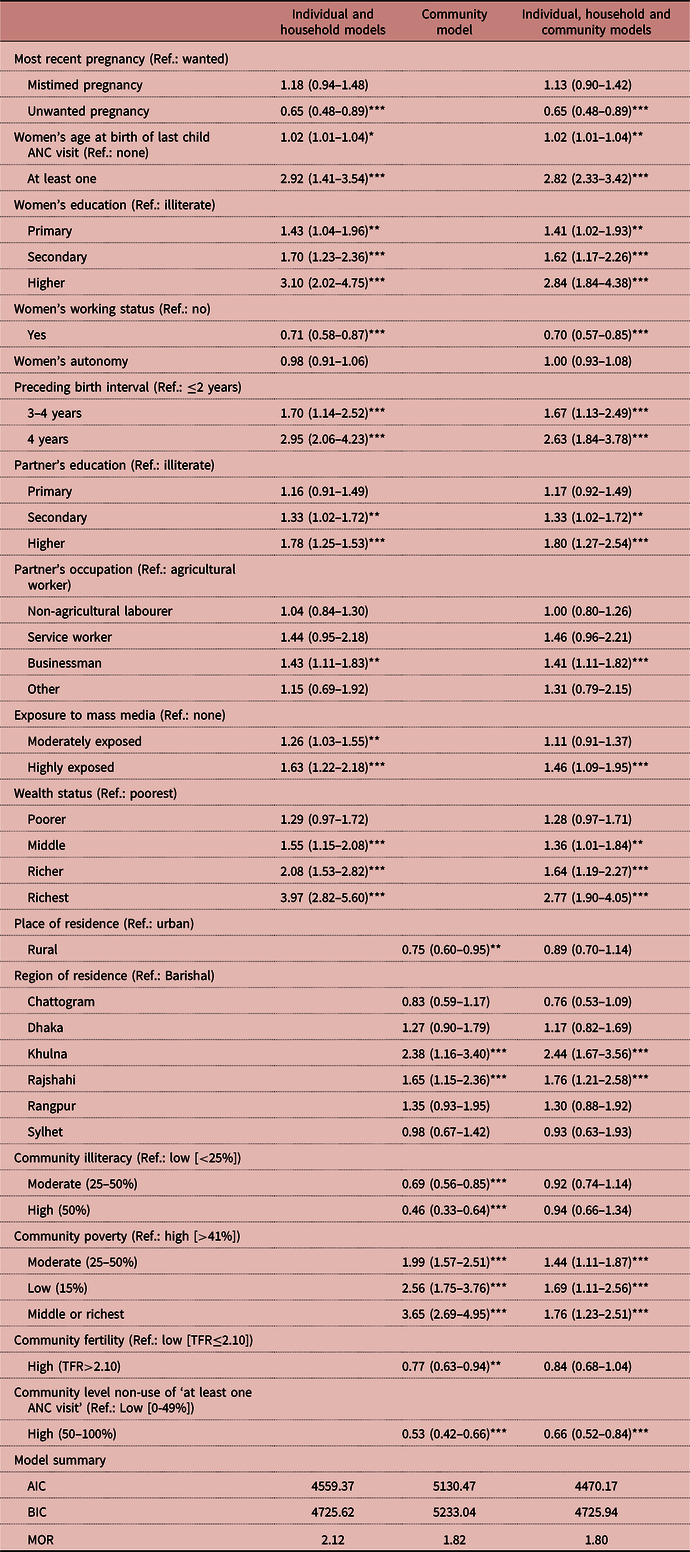
The odds ratios of skilled birth attendance and delivery in health care facilities are presented in Tables 4 and 5, respectively. Following adjustment for individual-, household- and community-level factors, relative to a wanted pregnancy, an unwanted pregnancy decreased skilled birth attendance by 30% (OR, 0.70, 95% CI, 0.52–0.93) and delivery in health care facility through skilled providers by 35% (0.65, 95% CI, 0.48–0.89). However, a mistimed pregnancy had no association with skilled birth attendance or delivery in health care facility through skilled providers. These associations of the outcome variables with the intendedness of the most recent pregnancy were similar to those presented in the second model, which included individual- and household-level factors.
Multilevel modelling of skilled birth attendance with individual-, household- and community-level covariates
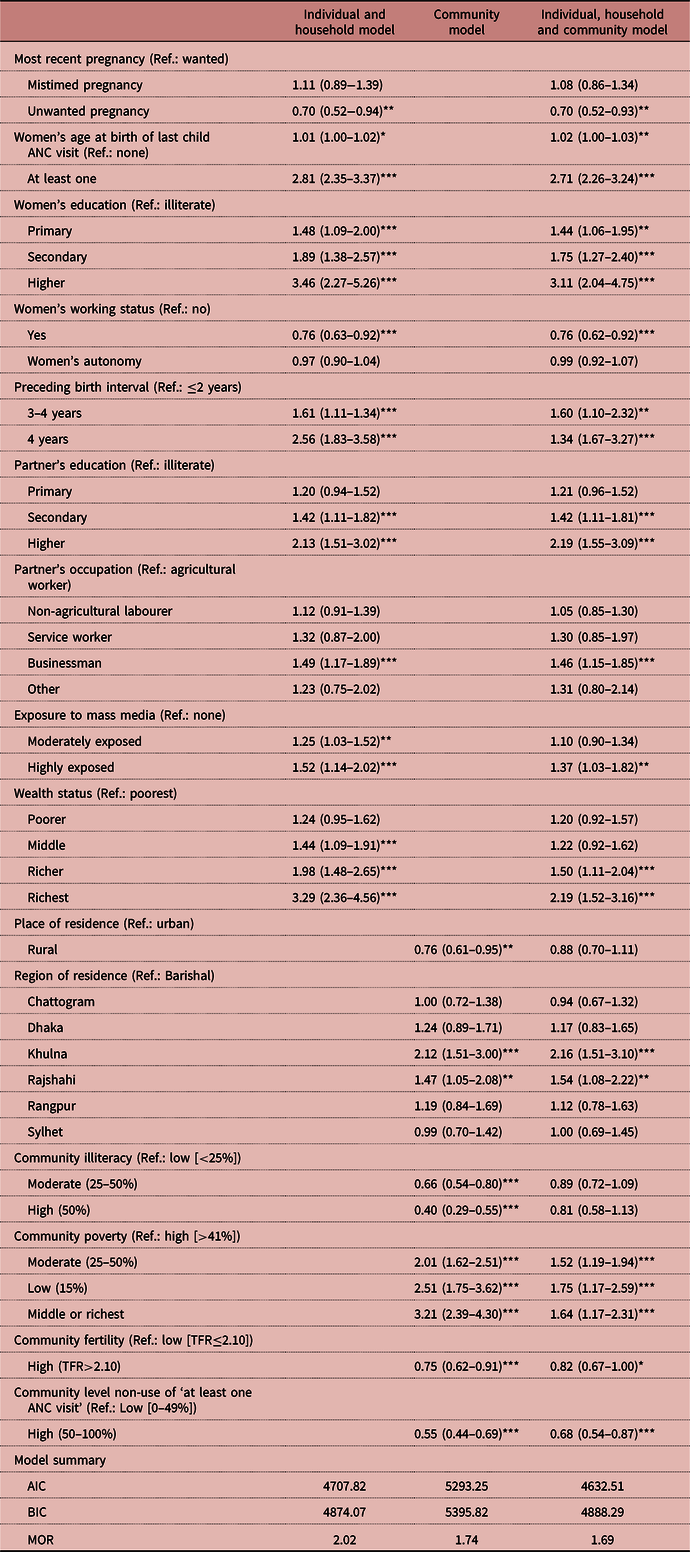
For null model, AIC = 5654.79; BIC = 5667.61; ICC = 0.30 (p < 0.01); and random intercept variance = 1.43 (0.06, p < 0.01). AIC = Akaike Information Criterion; BIC = Bayesian Information Criterion; ICC = Intra-class correlation. Ref = reference group. For ICC value for each model, see Table 3.
***p<0.01; **p<0.05; *p<0.1.
Multilevel modelling of delivery in health care facility through skilled providers with individual-, household- and community-level covariates
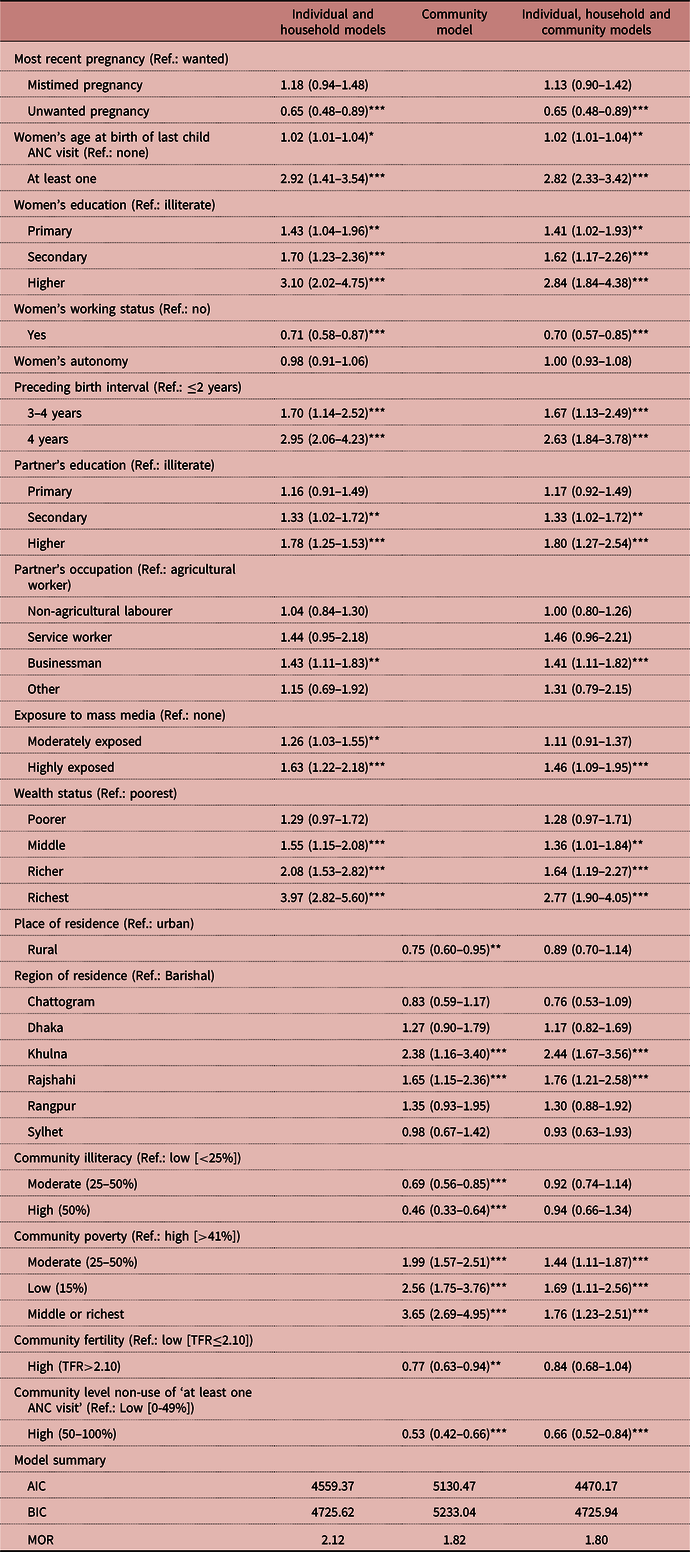
For null model, AIC = 5491.18; BIC = 5504.00; ICC = 0.32 (p < 0.01); and random intercept variance = 1.58 (0.17, p < 0.01). AIC = Akaike Information Criterion; BIC = Bayesian Information Criterion; ICC = Intra-Class Correlation. Ref = reference group. For ICC value for each model, see Table 3.
***p<0.01; **p<0.05; *p<0.1.
The likelihoods of skilled birth attendance (OR, 2.71, 95% CI, 2.26–3.24) and delivery in a health care facility through skilled providers (OR, 2.82, 95% CI, 2.33–3.42) were found to be higher among women who received at least one ANC visit than among those who received no ANC. Higher education and no formal employment were also found to be significantly related to the increased use of skilled birth attendance and delivery in a health care facility through skilled providers compared with illiterate and formally employed women, respectively. Compared with women of poorest household wealth, an increased likelihood of skilled birth attendance and delivery in a health care facility through skilled providers was found for women with increased household wealth (middle, richer and richest).
Women who resided in Khulna and Rajshahi divisions reported higher odds of skilled birth attendance and delivery in a health care facility through skilled providers than women in Barishal division. A gradient increase in the odds of the outcome variables was found among women who resided in decreasing levels of community poverty (moderate, low, and middle or richest communities) than those who resided in communities with higher poverty. Lower odds of skilled birth attendance and delivery in a health care facility through skilled providers were also found among women who resided in a community with higher fertility and lower use of ANC.
Discussion
This study provides evidence that the occurrence of an unwanted pregnancy, which covers around 11% of total pregnancies in Bangladesh, has a negative impact on accessing a skilled birth attendant and delivery in health care facilities. This is in addition to the overall deficiency of skilled birth attendants (42%) and delivery in health care facility through skilled providers (38%), which was also found in this study. The findings indicate that unwanted pregnancy presents a challenge to achieving the SDGs in Bangladesh with regard to skilled birth attendance, which will also impact efforts to reduce maternal and newborn deaths. Therefore, it is important to develop comprehensive health care policies to provide targeted services for women in this position through earlier detection of unwanted pregnancies by family planning workers in the community.
The result is in line with findings in other LMICs showing a negative association of unintended pregnancy with skilled birth attendance (Fotso et al., Reference Fotso, Ezeh and Essendi2009; Muchabaiwa et al., Reference Muchabaiwa, Mazambani, Chigusiwa, Bindu and Mudavanhu2012; Dutamo et al., Reference Dutamo, Assefa and Egata2015; Kidanu et al., Reference Kidanu, Degu and Tiruye2017). Individual, partner and family characteristics associated with unintended pregnancy, and the psychological consequences of an unwanted pregnancy, as well as health care system level characteristics, or combinations of these, might contribute to such negative associations (Khan et al., Reference Khan, Harris, Shifti, Laar and Loxton2019b). An unwanted pregnancy often occurs among older women, women with lower education and wealth and women who reside in rural areas (Hall et al., Reference Hall, Barrett, Phiri, Copas and Stephenson2016; Roy & Singh, Reference Roy and Singh2016). In the current study, these factors were also found to impact negatively on skilled birth attendance, as has been found in other LMICs (Islam et al., Reference Islam, Islam and Yoshimura2014; Dutamo et al., Reference Dutamo, Assefa and Egata2015; Bitew et al., Reference Bitew, Hanlon, Kebede, Honikman, Onah and Fekadu2017; Kidanu et al., Reference Kidanu, Degu and Tiruye2017). Therefore, women with an unwanted pregnancy might be unaware of the importance of accessing a skilled birth attendant, or they may have financial difficulties or have accumulated knowledge from prior pregnancies, which could deter them from accessing skilled delivery personnel (Muchabaiwa et al., Reference Muchabaiwa, Mazambani, Chigusiwa, Bindu and Mudavanhu2012; Islam et al., Reference Islam, Islam and Yoshimura2014). Threatening and unco-operative behaviours from partners and family members are also common among women with an unwanted pregnancy in LMICs (Khan et al., Reference Khan, Harris, Shifti, Laar and Loxton2019b). These might have a negative impact on accessing skilled birth attendance by limiting women’s decision-making, financial support and ability to visit health care centres (Dahiru & Oche, Reference Dahiru and Oche2015; Khan et al., Reference Khan, Harris, Shifti, Laar and Loxton2019b).
Lower odds of skilled birth attendance among women with unwanted pregnancies might also be linked to not accessing family planning and a higher dropout when accessing subsequent ANC and delivery care services (MN Khan, ML Harris and D Loxton D, unpublished), as well as lower odds of using ANC (Rahman et al., Reference Rahman, Rahman, Tareque, Ferdos and Jesmin2016), which has previously been found to be a serious issue in Bangladesh. However, no evidence of higher dropouts in accessing subsequent services with an unwanted pregnancy was not found in two Ghanaian studies (Yeji et al., Reference Yeji, Shibanuma, Oduro, Debpuur, Kikuchi and Owusu-Agei2015; Shibanuma et al., Reference Shibanuma, Yeji, Okawa, Mahama, Kikuchi and Narh2018).
Importantly, the study found a higher percentage of women not accessing skilled birth attendance in general in Bangladesh, which increased further for women reporting an unwanted pregnancy. Around 42% of women reported skilled birth attendance in their last pregnancy, which was higher than found in Bangladesh in 2011 (25.2%) (NIPORT et al., 2013) and 2014 (30.6%) (Islam et al., Reference Islam, Islam and Yoshimura2014) and lower than in Southern Asian countries (52%) (United Nations, 2015a). However, Bangladesh was in a better position than other Southern Asian countries at the end of the MDG period in improving reproductive health care services including at least four ANC visits (32% vs 36%), use of contraception (62% vs 59%) and unmet need for contraception (12% vs 21%) (United Nations, 2015a; NIPORT et al., 2016). This indicates the need for further policy development to address the issues surrounding skilled birth attendance, particularly for those experiencing an unwanted pregnancy.
Bangladesh has promoted access to skilled birth attendants through free public health care provision, which is suffering from an ongoing crisis in health care personnel (3.05 physicians and 1.07 nurses per 10,000 population) and number of health care facilities (1 bed for 5657 people in sub-districts and district-level hospitals) (MoHFW, 2014; Saha, Reference Saha2017). Unchanged government budget allocations in health care sectors over the years (2.02% [2000] and 2.37% [2016] of gross domestic product) in the face of raising health care demands are often the cause of such crisis (World Bank, 2017a). Moreover, health care facilities are usually more common in urban areas (MoHFW, 2014; Saha, Reference Saha2017) and those in rural areas are often under-resourced. For instance, this study provided evidence of the low performance of community clinics (0.06%, around 18,000 as of 2014) and community skilled health care providers (0.13%) in providing skilled birth attendance, even though these have been given priority since 2009 (JICA, 2014; Yaya et al., Reference Yaya, Bishwajit and Ekholuenetale2017). Therefore, women have to depend on private facilities for skilled birth attendance, which the current study found assisted 60% of women. Private facilities are usually expensive in Bangladesh compared with government facilities (in terms of fees for a skilled birth attendant and the facility, and delivery instruments) and are predominantly located in urban areas (Sarker et al., Reference Sarker, Rahman, Rahman, Hossain, Reichenbach and Mitra2016). These expenses (in terms of fees and rural-to-urban travel) may create an impossible financial burden among women who have had an unwanted pregnancy, in particular given that unintended pregnancy is related to low socioeconomic status (Hall et al., Reference Hall, Barrett, Phiri, Copas and Stephenson2016; Roy & Singh, Reference Roy and Singh2016), and that there is no universal health care coverage in Bangladesh (World Bank, 2017b).
There is a lack of family planning and ANC providers in Bangladesh. These play a key role in educating and shaping women’s decisions on accessing skilled delivery care (NIPORT et al., 2016). This is a concern for Bangladesh in general, and for unwanted pregnancy in particular, as it often occurs because of a lack of family planning services. This is a missed opportunity to motivate women to use subsequent services, including ANC and delivery care (Al Kibria et al., Reference Al-Kibria, Burrowes, Choudhury, Sharmeen, Ghosh and Kalbarczyk2018). Such difficulties therefore create a hierarchical burden for Bangladesh to achieve SDG targets of universal health services coverage and maternal and newborn deaths (mainly occurring because of pregnancy complications, which are preventable by skilled delivery care). Targeted increased use of skilled birth attendants therefore needs to be translated into policies and improvement in health care service related factors (e.g. reduce the existing acute crisis in health care institutions and personnel and ensure logistics in the health care sectors), along with improving regulatory and evaluation frameworks. A population-level lens is also needed to focus on socio-demographic and pregnancy-related characteristics.
Individual-, household- and community-level factors that were found in this study to be negatively associated with accessing a skilled birth attendant are also important in shaping women’s access to skilled delivery care. Such factors include women’s and husbands’ a low education levels, women’s lower age at birth, smaller birth interval, not receiving any ANC, less expossure to mass media, lower household wealth and resided in a community higher in poverty and fertility and with a lower use of ANC. Previous studies have found these to be preventive in reducing the occurrence of unwanted pregnancies (Hall et al., Reference Hall, Barrett, Phiri, Copas and Stephenson2016; Roy & Singh, Reference Roy and Singh2016), increasing access to a skilled birth attendant (Islam et al., Reference Islam, Islam and Yoshimura2014; Dutamo et al., Reference Dutamo, Assefa and Egata2015; Bitew et al., Reference Bitew, Hanlon, Kebede, Honikman, Onah and Fekadu2017; Kidanu et al., Reference Kidanu, Degu and Tiruye2017) and reducing adverse maternal and newborns health outcomes, including complications and deaths (Blencowe et al., Reference Blencowe, Cousens, Jassir, Say, Chou and Mathers2016; UNIGME et al., 2016; WHO, 2018b). More focus should be given to improving gender equality through the education of women and girls in Bangladesh. This will have far-reaching outcomes, including increasing access to skilled delivery care and reducing unwanted pregnancies. This study found the variable that had the strongest effect in increasing skilled delivery care was women’s education – a finding similar to previous studies in LMICs (Abebe et al., Reference Abebe, Berhane and Girma2012; Dahiru & Oche, Reference Dahiru and Oche2015; Huda et al., Reference Huda, Chowdhury, El Arifeen and Dibley2019). Educated women are more likely to be engaged in income-generating activities, to have higher access to family planning services and health care messages, to have an educated partner and to be in a higher wealth quintile than illiterate women – all factors found to be linked with accessing delivery care (Abebe et al., Reference Abebe, Berhane and Girma2012; Muchabaiwa et al., Reference Muchabaiwa, Mazambani, Chigusiwa, Bindu and Mudavanhu2012; Dahiru & Oche, Reference Dahiru and Oche2015; Nyongesa et al., Reference Nyongesa, Xu, Hall, Macharia, Yego and Hall2018; Huda et al., Reference Huda, Chowdhury, El Arifeen and Dibley2019). Educated women have a greater financial capacity to access health care services, get more support from their partner and family members and have more decision-making autonomy (Hall et al., Reference Hall, Barrett, Phiri, Copas and Stephenson2016; Huda et al., Reference Huda, Chowdhury, El Arifeen and Dibley2019). Women who have had an unwanted pregnancy, however, are often illiterate, and tend to have illiterate partners and poor household wealth (Hall et al., Reference Hall, Barrett, Phiri, Copas and Stephenson2016; Roy & Singh, Reference Roy and Singh2016). Therefore, increasing skilled birth attendance among women with an unwanted pregnancy needs targeted health care service provision. This might include programmes that i) reach out to women with unwanted pregnancies in the earlier stages of pregnancy and ii) provide free or less-expensive services (Yaya et al., Reference Yaya, Bishwajit and Ekholuenetale2017; Khan et al., Reference Khan, Harris, Shifti, Laar and Loxton2019b). Extending the role of family planning providers to include detection of pregnancy intention and decentralizing the health care system to be more inclusive of rural and remote areas would also increase delivery care access for women experiencing an unwanted pregnancy (Ahmed et al., Reference Ahmed, Hossain, Rajachowdhury and Bhuiya2011).
The main strength of this study was the use of nationally representative 2014 BDHS data. The survey was conducted using standardized validated methods and the response rate was high, at around 98%. Moreover, appropriate statistical modelling for confounding effects makes this study’s findings robust. However, there are several limitations to consider. As this was a cross-sectional study, the relationship between women’s pregnancy intention and use of a skilled birth attendant and delivery in a health care service facility were correlational only. Moreover, pregnancy intention and delivery care data were collected from women who had live births in the 3 years prior to the survey. Therefore, the data collected may have been subjected to reporting errors and recall bias. Collecting data following a live birth might also lead to under-reporting of unintended pregnancies as around half of all unintended pregnancies end with abortion. Moreover, collecting data following a live birth may also be prone to the ambivalent response towards pregnancy intention. Furthermore, cluster (the primary sampling unit) was used as the definition of a community, but a community has an arbitrary boundary and may not be fully represented by a cluster.
In conclusion, this study found an overall deficit in accessing skilled delivery care services in Bangladesh; only 42% of women accessed a skilled birth attendant and 38% gave birth in a health care facility. The deficit and likelihood of not accessing a skilled birth attendant and delivery in a health care facility through skilled providers were higher among women with an unwanted pregnancy (around 11% of total pregnancies ending in a live birth) than a wanted pregnancy. This is indicative of the challenges Bangladesh faces in achieving the SDG to increase access to skilled birth attendance and reduce maternal and newborn deaths. It is therefore important to decentralize health care facilities to rural and remote areas with proper monitoring and evaluation to ensure every woman, regardless of pregnancy intention, is included in mainstream health care services. This can be achieved by educating women, the earlier detection of women’s pregnancy intention by family planning workers and providing free or cheaper skilled birth attendance services.
Acknowledgments
The authors acknowledge the National Institute of Population Research and Training (NIPORT) for conducting the BDHS 2014 survey data collection. They are also grateful for the support of the Priority Research Centre for Generational Health and Aging, a member of the Hunter Medical Research Institute, NSW, Australia, where this research was conducted.
Funding
Md Nuruzzaman Khan was supported by a PhD research scholarship from the University of Newcastle, Australia. Dr Melissa L. Harris was supported by an Australian Research Council Discovery Early Career Researcher Award.
Conflicts of Interest
The authors have no conflicts of interest to declare.
Ethical Approval
The survey protocol was reviewed and approved by the National Research Ethics Committee in Bangladesh and MEASURE DHS, USA. Additional approval for analysing these secondary data was obtained from the University of Newcastle, Australia, research ethics board.