





Introduction
Malaria remains a major global health problem, imposing a substantial disease burden worldwide. According to the 2025 World Health Organization (WHO) Malaria Report, approximately 282 million malaria cases were reported globally in 2024, representing an increase of 8 million from the previous year and 610,000 deaths occurred (WHO, 2025a). The disease is caused by protozoan parasites of the Plasmodium genus, of which five species infect humans: P. falciparum, P. vivax, P. ovale, P. malariae and P. knowlesi. Globally, P. falciparum and P. vivax account for the majority of infections (Crutcher and Hoffman, Reference Crutcher, Hoffman and Baron1996; WHO, 2025a). While P. falciparum is responsible for most malaria-related deaths, P. vivax is the most geographically widespread species and a major cause of global morbidity and mortality (Gething et al. Reference Gething, Elyazar, Moyes, Smith, Battle, Guerra, Patil, Tatem, Howes, Myers, George, Horby, Wertheim, Price, Müeller, Baird and Hay2012; Dayananda et al. Reference Dayananda, Achur and Gowda2018; WHO, 2024, 2025b).
The geographical distribution of P. vivax often overlaps with P. falciparum, except in parts of Southeast Asia, where P. vivax predominates (Douglas et al. Reference Douglas, Pontororing, Lampah, Yeo, Kenanalem, Poespoprodjo, Ralph, Bangs, Sugiarto, Anstey and Price2014; Howes et al. Reference Howes, Battle, Mendis, Smith, Cibulskis, Baird and Hay2016). In 2024, P. vivax accounted for an estimated 52.4% of all malaria cases and 62.3% of reported malaria cases in the WHO South-East Asia Region. Myanmar alone contributed approximately 60% of the reported P. vivax cases within this latter region (WHO, 2025a). P. vivax infections are rarer in Africa, where there is a high prevalence of the Duffy-negative phenotype, particularly in West Africa, although cases have been reported in both Mauritania and Mali (WHO, 2025b). A distinctive feature of P. vivax is its ability to relapse through dormant liver-stage forms known as hypnozoites (Markus, Reference Markus2011), which can reactivate weeks, months or even years after initial infection and treatment. Clinically, P. vivax malaria typically presents with symptoms of uncomplicated malaria such as fever, chills, headache and vomiting, often following a tertian fever pattern (every 42-56 hours) (Song et al. Reference Song, Ok, Kim, Moon, Kim, Yoon, Koo, Hong, Lee, Kim, Shin, Kang, Choi and Lee2003).
Cerebral malaria is a diffuse encephalopathy associated with seizures and status epilepticus that can occur in up to one-third of patients with severe malaria, particularly that caused by P. falciparum. Emerging evidence has indicated that P. vivax has the potential to also cause severe and cerebral malaria (Kochar et al. Reference Kochar, Saxena, Singh, Kochar, Kumar and Das2005; Gupta et al. Reference Gupta, Sharma, Chandra and Singh2016), conditions historically attributed almost exclusively to P. falciparum. However, cerebral involvement in P. vivax infection remains controversial and clinically heterogeneous. Severe P. vivax infections may present with anaemia, respiratory distress, jaundice, acute kidney injury and splenic rupture (Song et al. Reference Song, Ok, Kim, Moon, Kim, Yoon, Koo, Hong, Lee, Kim, Shin, Kang, Choi and Lee2003; Chaudhari et al. Reference Chaudhari, Uttarwar, Tambe, Sharma and Takalkar2016; Phyo et al. Reference Phyo, Dahal, Mayxay and Ashley2022). Although cerebral manifestations have been reported in approximately 6.9–8.3% of severe P. vivax cases (Nadkar et al. Reference Nadkar, Huchche, Singh and Pazare2012; Chaudhari et al. Reference Chaudhari, Uttarwar, Tambe, Sharma and Takalkar2016; Ahmad et al. Reference Ahmad, Shirazi, Bhat, Dhar, Mittal, Mittal, Kaeley and Kumar2017), the supporting evidence is largely observational and derived from case studies, with limited pathological confirmation. Consequently, the underlying mechanisms and the extent to which P. vivax directly contributes to cerebral pathology remain poorly defined and widely debated. Clinical presentations may include severe thrombocytopaenia, respiratory distress and the need for mechanical ventilation, which are findings comparable to P. falciparum-induced cerebral malaria, which manifests with coma, seizures and profound neurological impairment (Nadkar et al. Reference Nadkar, Huchche, Singh and Pazare2012; Goyal and Makwana, Reference Goyal and Makwana2014).
Both P. falciparum and P. vivax cerebral malaria exhibit similar laboratory and clinical parameters, including anaemia, thrombocytopaenia and multi-organ dysfunction (Nadkar et al. Reference Nadkar, Huchche, Singh and Pazare2012; Goyal and Makwana, Reference Goyal and Makwana2014). While P. falciparum remains the primary cause of cerebral malaria, central nervous system (CNS) involvement in P. vivax infection has been increasingly reported, although it remains controversial and clinically heterogeneous, with some studies suggesting comparable outcomes in selected cases due to mixed infection.
Given the rising reports of neurological involvement in P. vivax infections, there is a need to further elucidate the neuropharmacological implications and underlying mechanisms, which remain poorly defined and not pathologically definitive. This recognition provides the rationale for this study, which focused on the neuropathological aspects of P. vivax infection and its implications for disease management and therapeutic intervention. In addition, the study incorporated in silico predictions to further explore potential neuroactive profiles of key antimalarial agents and their metabolites.
Neurological effects of P. vivax
Clinical evidence has suggested that P. vivax infection can affect the CNS, presenting as a varied spectrum of neurological manifestations including seizures, and altered consciousness, particularly in children due to long-term neurocognitive deficits (Sarkar and Bhattacharya, Reference Sarkar and Bhattacharya2008; Ahmad et al. Reference Ahmad, Shirazi, Bhat, Dhar, Mittal, Mittal, Kaeley and Kumar2017; Khan et al. Reference Khan, Mian, Ghanchi, Zubairi and Beg2018). However, CNS involvement in P. vivax remains controversial and lacks definitive pathological confirmation. Although the majority of severe cerebral malaria cases are due to P. falciparum infections, increasing reports indicate that P. vivax can similarly induce brain oedema, cerebral vasoconstriction and neuroinflammatory responses, resulting in neurological dysfunction (Khan et al. Reference Khan, Mian, Ghanchi, Zubairi and Beg2018; Sastre-Martínez et al. Reference Sastre-Martínez, Gutiérrez, Vallejo-serna and Muñoz-lombo2026). The underlying mechanisms remain under investigation but are thought to involve cytokine-mediated inflammation, endothelial activation, oxidative stress and disruption of the blood-brain barrier (BBB) (Carvalho et al. Reference Carvalho, Luque-ortega, Manzano, Castanys, Rivas and Gamarro2010; Ahmad et al. Reference Ahmad, Shirazi, Bhat, Dhar, Mittal, Mittal, Kaeley and Kumar2017; Trivedi and Chakravarty, Reference Trivedi and Chakravarty2022), although these pathways remain hypothetical and require further validation.
Pathophysiology of brain involvement
The central pathophysiological processes proposed to contribute to cerebral involvement in malaria include an imbalance between pro- and anti-inflammatory immune responses, endothelial cell activation and loss of BBB integrity (Ahmad et al. Reference Ahmad, Shirazi, Bhat, Dhar, Mittal, Mittal, Kaeley and Kumar2017; Trivedi and Chakravarty, Reference Trivedi and Chakravarty2022). In P. vivax infections, the mechanisms underlying neurological involvement remain incompletely understood and are likely multifactorial. Cytoadherence and sequestration are well-established contributors to cerebral pathology in P. falciparum malaria; their role in P. vivax remains controversial and not pathologically definitive (Carvalho et al. Reference Carvalho, Luque-ortega, Manzano, Castanys, Rivas and Gamarro2010). Current evidence increasingly suggests that inflammatory cascades, endothelial dysfunction, immune-mediated injury, microvascular alterations and systemic complications such as hepatic dysfunction may play more prominent roles in the neurological manifestations associated with P. vivax infection.
Unlike P. falciparum, where cytoadherence and sequestration are central features of cerebral malaria pathogenesis, the role of these processes in P. vivax infection remains controversial and incompletely understood. Several theories have been proposed to account for or against ‘P. vivax-induced cerebral malaria’. It has been proposed that the observed cerebral malaria may be due to a co-infection of P. vivax along with a microscopically undetectable parasitaemia of P. falciparum that was in fact responsible for the cerebral symptoms. A histopathological-PCR study on paediatric patients who died of cerebral malaria when infected with a mixed P. falciparum/P. vivax infection, found no P. vivax DNA in the postmortem brain tissue (Manning et al. Reference Manning, Rosanas-urgell, Laman, Edoni, McLean, Mueller, Siba and Davis2012). Thus, not supporting the P. vivax-induced cerebral malaria theory.
Some studies have suggested that P. vivax-infected erythrocytes may exhibit limited endothelial adherence; however, evidence supporting significant sequestration and microvascular obstruction remains inconclusive, with no published clinical pathological evidence (Carvalho et al. Reference Carvalho, Luque-ortega, Manzano, Castanys, Rivas and Gamarro2010; Totino and Lopes, Reference Totino and Lopes2017; Trivedi and Chakravarty, Reference Trivedi and Chakravarty2022). Plasmodium vivax does not express P. falciparum erythrocyte membrane protein 1 (PfEMP1), but alternative adhesion mechanisms have been proposed (Totino and Lopes, Reference Totino and Lopes2017). Members of the variant interspersed repeat protein family, together with host-mediated factors such as phosphatidylserine exposure on infected erythrocytes, may facilitate interactions with endothelial receptors including CD36 and thrombospondin (Totino and Lopes, Reference Totino and Lopes2017). These mechanisms could potentially contribute to endothelial activation and localized microvascular dysfunction.
Nevertheless, current evidence supports a multifactorial model to explain neurological manifestations associated with P. vivax infection, including systemic inflammatory responses, endothelial activation, oxidative stress and disruption of BBB integrity (Carvalho et al. Reference Carvalho, Luque-ortega, Manzano, Castanys, Rivas and Gamarro2010; Totino and Lopes, Reference Totino and Lopes2017; Trivedi and Chakravarty, Reference Trivedi and Chakravarty2022). Elevated levels of pro-inflammatory cytokines, including tumour necrosis factor and various interleukins, may contribute to BBB dysfunction, cerebral oedema and neuronal injury (Dunst et al. Reference Dunst, Kamena and Matuschewski2017). The excessive release of inflammatory mediators and neurotoxic molecules has also been proposed as a potential contributor to neurotoxicity and brain swelling in severe malaria (Ahmad et al. Reference Ahmad, Shirazi, Bhat, Dhar, Mittal, Mittal, Kaeley and Kumar2017; Trivedi and Chakravarty, Reference Trivedi and Chakravarty2022).
Additionally, limited evidence has suggested the possibility of sequestration or transient accumulation of parasitized erythrocytes within cerebral microvessels in P. vivax infection. However, this remains controversial and not pathologically definitive. Rather than classical microvascular obstruction, inflammatory and endothelial mechanisms are increasingly considered more plausible contributors to neurological dysfunction. The release of pro-inflammatory mediators may exacerbate endothelial activation and increase BBB permeability (Pais and Penha-Gonçalves, Reference Pais and Penha-Gonçalves2019; Trivedi and Chakravarty, Reference Trivedi and Chakravarty2022). Collectively, these interconnected inflammatory and vascular processes may contribute to neuronal injury, cerebral oedema and neurological impairment observed in severe P. vivax malaria.
Clinical manifestations
The clinical presentation of cerebral malaria is primarily that of a diffuse encephalopathy, resembling the neurological picture observed in various metabolic or toxic conditions (Nadkar et al. Reference Nadkar, Huchche, Singh and Pazare2012; Goyal and Makwana, Reference Goyal and Makwana2014). In some cases, focal neurological signs may also be evident. The onset can be abrupt or may evolve progressively as part of the worsening clinical course of severe P. falciparum or P. vivax malaria, often in the context of multi-organ involvement. Typically, affected individuals present with fever, severe headache and delirium, which may rapidly progress to stupor accompanied by hyperthermia. As the disease advances, the stuporous state deepens into coma, with fluctuating levels of consciousness (Goyal and Makwana, Reference Goyal and Makwana2014).
Among survivors, children particularly tend to commonly have persistent neurological sequelae. These may include hemiplegia, tetraplegia, ataxia, seizure disorders, speech and language deficits, behavioural changes and cognitive impairments (Brewster et al. Reference Brewster, Kwiatkowski and White1990; Idro et al. Reference Idro, Carter, Fegan, Neville and Newton2006). Psychiatric manifestations such as psychosis may occur as a consequence of the underlying encephalopathy. In the acute phase, patients may exhibit paranoid or manic syndromes, whereas depressive symptoms often emerge during recovery as delayed sequelae. Some of these manifestations are transient, while others, including paralytic sequelae and extrapyramidal syndromes, may persist long-term (Nevin and Croft, Reference Nevin and Croft2016).
Neurocognitive deficits are frequently associated with severe disease manifestations such as prolonged or recurrent seizures, deep and sustained coma, hypoglycaemia and severe anaemia (Boivin, Reference Boivin2002; Carter et al. Reference Carter, Ross, Neville, Obiero, Katana, Mung’ala-odera, Lees and Newton2005). These complications underscore the profound and lasting impact of cerebral malaria on the CNS, necessitating focused neuropharmacological strategies to mitigate both acute neuronal injury and long-term neurological dysfunction.
Pharmacological management of P. vivax
Overview of treatment strategies
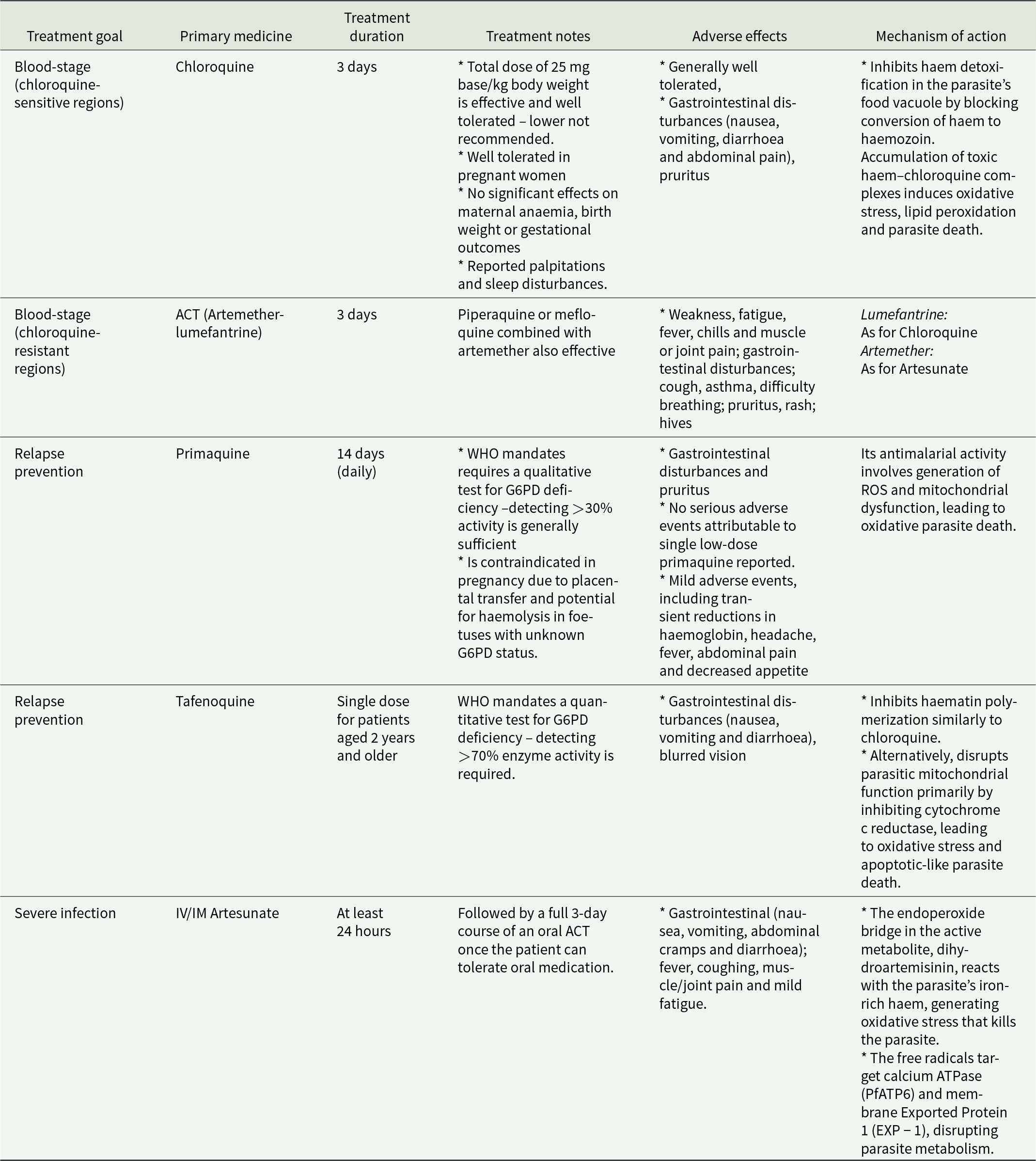
The pharmacological management of P. vivax targets both erythrocytic and hepatic stages of infection (Baird et al. Reference Baird, Maguire and Price2012, Reference Baird, Valecha, Duparc, White and Price2016). The current gold standard is radical cure, which aims to treat both the active blood-stage infection and the dormant liver-stage parasites (hypnozoites) that cause relapses (Table 1) (WHO, 2025b). Recurrent parasitaemia may result from reinfection, relapse from hypnozoites or recrudescence due to parasite resistance (Markus, Reference Markus2015). The latter phenomenon is often attributed to the presence of dormant liver-stage parasites (hypnozoites) in the case of P. vivax and P. ovale infections or inadequate therapy (Crutcher and Hoffman, Reference Crutcher, Hoffman and Baron1996; Markus, Reference Markus2015). Most antimalarials are potent blood schizonticides but lack activity against hypnozoites. 8-Aminoquinolines, such as primaquine and tafenoquine, are a class of drugs with known activity against hypnozoites, making them essential for preventing relapse in P. vivax infections. These drugs target the dormant liver-stage parasites, preventing their reactivation and subsequent recurrence of malaria symptoms (Chu and White, Reference Chu and White2021; Markus, Reference Markus2023).
The pharmacological profiles of the antimalarial agents used in treatment of chloroquine-sensitive and -resistant P. vivax infections (Villegas et al. Reference Villegas, McGready, Htway, Paw, Pimanpanarak, Arunjerdja, Viladpai-nguen, Greenwood, White and Nosten2007; Carvalho et al. Reference Carvalho, Luque-ortega, Manzano, Castanys, Rivas and Gamarro2010; Combrinck et al. Reference Combrinck, Mabotha, Ncokazi, Ambele, Taylor, Smith, Hoppe and Egan2013; Braga et al. Reference Braga, Martins, Cayotopa, Klein, Schlosser, da Silva, de Souza, Andrade, Filgueira-júnior, Pinto and Da silva-nunes2015; Olafson et al. Reference Olafson, Ketchum, Rimer and Vekilov2015; Bastiaens et al. Reference Bastiaens, Tiono, Okebe, Pett, Coulibaly, Gonçalves, Affara, Ouédraogo, Bougouma, Sanou, Nébié, Bradley, Lanke, Niemi, Sirima, D’alessandro, Bousema and Drakeley2018; Dicko et al. Reference Dicko, Roh, Diawara, Mahamar, Soumare, Lanke, Bradley, Sanogo, Kone, Diarra, Keita, Issiaka, Traore, McCulloch, Stone, Hwang, Müller, Brown, Srinivasan, Bousema, Gosling, Chen and Bousema2018; Frampton, Reference Frampton2018; Camarda et al. Reference Camarda, Jirawatcharadech, Priestley, Saif, March, Wong, Leung, Miller, Baker, Alano, Paine, Bhatia, O’neill, Ward and Biagini2019; Raman et al. Reference Raman, Allen, Workman, Mabuza, Swanepoel, Malatje, Frean, Wiesner and Barnes2019; Rossiter, Reference Rossiter2022; Stone et al. Reference Stone, Mahamar, Sanogo, Sinaba, Niambele, Sacko, Keita, Youssouf, Diallo, Soumare, Kaur, Lanke, ter Heine, Bradley, Issiaka, Diawara, Traore, Bousema, Drakeley and Dicko2022; Kane, Reference Kane, Pratt, Scott and Pirmohamed2023; Lee et al. Reference Lee, Massih, Abdullah, Rimer, Sullivan and Vekilov2025; WHO, 2025b)

Table 1 Long description
Columns list treatment goal, primary medicine, treatment duration, treatment notes, adverse effects, and mechanism of action. For blood stage infection in chloroquine-sensitive regions, chloroquine is given for 3 days; notes include a total dose of 25 mg base per kg body weight, use in pregnant women, and reported palpitations and sleep disturbances; adverse effects include gastrointestinal disturbances and pruritus; mechanism is inhibition of haem detoxification by blocking conversion of haem to haemozoin, with toxic haem chloroquine complexes causing oxidative stress and parasite death. For blood stage infection in chloroquine resistant regions, the primary medicine is a ACT, such as artemether-lumefantrine for 3 days; notes say piperaquine or mefloquine combined with artemether is also effective; adverse effects listed include weakness, fatigue, fever, chills, muscle or joint pain, gastrointestinal disturbances, cough, asthma, difficulty breathing, pruritus, rash, and hives; mechanism notes lumefantrine as for chloroquine and artemether as for artesunate. For relapse prevention, primaquine is taken daily for 14 days; notes require a qualitative test for G6PD deficiency detecting more than 30 percent activity and state it is contraindicated in pregnancy due to placental transfer and potential haemolysis in foetuses with unknown G6PD status; adverse effects include gastrointestinal disturbances and pruritus, plus mild events such as transient reductions in haemoglobin, headache, fever, abdominal pain, and decreased appetite; mechanism involves generation of reactive oxygen species and mitochondrial dysfunction leading to oxidative parasite death. For relapse prevention, tafenoquine is a single dose for patients aged 2 years and older; notes require a quantitative G6PD test detecting more than 70 percent enzyme activity; adverse effects include gastrointestinal disturbances and blurred vision; mechanisms listed are inhibition of haematin polymerisation similarly to chloroquine or disruption of mitochondrial function by inhibiting cytochrome c reductase leading to oxidative stress and apoptotic like parasite death. For severe infection, IV or IM artesunate is given for at least 24 hours and is followed by a full 3-day course of an oral ACT once oral medication is tolerated; adverse effects include gastrointestinal symptoms, fever, coughing, muscle or joint pain, and mild fatigue; mechanism describes the endoperoxide bridge in dihydroartemisinin reacting with iron rich haem to generate oxidative stress, with free radicals targeting calcium ATPase and membrane exported protein 1 to disrupt parasite metabolism.
Because primaquine possesses both hypnozoitocidal and schizontocidal activity, early administration can accelerate parasite clearance and obscure early signs of reduced schizontocidal efficacy. Antirelapse therapy with primaquine is often co-administered with schizonticidal agents, like chloroquine (Galappaththy et al. Reference Galappaththy, Tharyan and Kirubakaran2013; Markus, Reference Markus2023). These combination therapies provide synergistic effects, enhancing treatment efficacy and reducing the risk of drug resistance. Additionally, the inclusion of 8-aminoquinolines in combination therapies may shorten the duration of treatment and improve patient adherence (Milligan et al. Reference Milligan, Daher and Graves2019; Markus, Reference Markus2022, Reference Markus2023; Asfaw et al. Reference Asfaw, Bekele, Geshere, Simma, Deressa and Ketema2024; Liaan, Reference Liaan2024).
Clinical and therapeutic considerations in P. vivax management
Current WHO (2026) guidelines recommend that uncomplicated P. vivax malaria be treated according to regional chloroquine susceptibility patterns (Table 1). In areas with chloroquine-sensitive infections, chloroquine combined with primaquine remains the treatment of choice. In contrast, in regions with confirmed or suspected chloroquine-resistant P. vivax, artemisinin-based combination therapies, particularly those containing long half-life partner drugs (dihydroartemisinin-piperaquine, artemether-lumefantrine and artesunate-mefloquine), are recommended (Eastman and Fidock, Reference Eastman and Fidock2009; WHO, 2025a, 2026). Focal chloroquine resistance is documented in several Southeast Asian countries, including Cambodia, Indonesia, Myanmar, Thailand and Vietnam (WHO, 2020, 2025a). Radical cure of P. vivax malaria requires the additional administration of a 14-day course of primaquine or another 8-aminoquinoline to eliminate dormant liver hypnozoites and prevent relapse (WHO, 2025b, 2026). However, the use of these agents requires prior glucose-6-phosphate dehydrogenase (G6PD) testing due to the risk of drug-induced haemolysis in G6PD-deficient individuals (WHO, 2012; Raman et al. Reference Raman, Allen, Workman, Mabuza, Swanepoel, Malatje, Frean, Wiesner and Barnes2019).
Despite the effectiveness of primaquine-based radical cure, adherence to the standard 14-day regimen remains a major clinical challenge, particularly in resource-limited and highly endemic settings, where incomplete treatment may contribute to recurrent infection and ongoing transmission (Win et al. Reference Win, Aung, Linn, Ring, Kyaw, Nguitragool, Cui, Sattabongkot and Lawpoolsri2025; Viswan et al. Reference Viswan, Thiruvengadam, Sharma, Perumalsamy, Arumugam, Srirama, Rahul and Rahi2026). Treatment failure in children has been addressed with dispersible flavoured tablets tailored for paediatric use and have been prequalified by the WHO (Unitaid, 2025). The dispersible formulation is easier to administer over the recommended 7–14 days of treatment and should support improved adherence in children weighing over 5 kg.
Although tafenoquine offers the practical advantage of single-dose administration, its implementation remains limited in many countries because of restricted availability, higher cost, regulatory constraints and the requirement for quantitative G6PD testing prior to use (Santos et al. Reference Santos, Brito, Oliveira, Dávila, Gama, Silva, Amazonas, Balieiro, Rufatto, Grewal Daumerie, Peterka, Batista Pereira, Lacerda and Murta2024). Nevertheless, emerging evidence suggests that tafenoquine-based radical cure strategies may be economically feasible in certain endemic settings. A recent study conducted in Brazil reported that prescribing tafenoquine to individuals identified as G6PD normal using semi-quantitative testing represented a cost-effective strategy for the radical cure of P. vivax malaria (Price et al. Reference Price, Nekkab, Monteiro, Villela, Simpson, Lacerda, White and Devine2024; Peixoto et al. Reference Peixoto, Bastos Gottin, Brito-sousa, Sampaio, Daumerie, Jambert, Monteiro, Lacerda and Devine2025). These findings highlight the potential for context-specific implementation approaches to improve access to tafenoquine in endemic regions.
These therapeutic and logistical considerations are important when interpreting the neuropharmacological and safety profiles of antimalarial agents, as treatment decisions are influenced not only by efficacy and toxicity, but also by adherence, accessibility and healthcare system capacity across diverse endemic settings.
Primaquine
Primaquine is an 8-aminoquinoline antimalarial agent for preventing relapse of P. vivax and P. ovale infections (WHO, 2012, 2015; Chotsiri et al. Reference Chotsiri, Mahamar, Hoglund, Koita, Sanogo, Diawara, Dicko, Simpson, Bousema, White, Brown, Gosling, Chen and Tarning2022). It acts as a prodrug that undergoes hepatic bioactivation primarily via cytochrome P450 2D6 (CYP2D6) (Popovici et al. Reference Popovici, Tebben, Witkowski and Serre2021; Markus, Reference Markus2023). Camarda et al. (Reference Camarda, Jirawatcharadech, Priestley, Saif, March, Wong, Leung, Miller, Baker, Alano, Paine, Bhatia, O’neill, Ward and Biagini2019) demonstrated a two-step activation pathway involving CYP2D6- and cytochrome P450 NADPH:oxidoreductase (CPR)-mediated conversion to hydroxylated metabolites (e.g., 5-hydroxyprimaquine), followed by spontaneous oxidation to quinoneimines with concomitant hydrogen peroxide release (Table 1) (Vásquez-Vivar and Augusto, Reference Vásquez-Vivar and Augusto1992; Vale et al. Reference Vale, Moreira and Gomes2009; Pybus et al. Reference Pybus, Marcsisin, Jin, Deye, Sousa, Li, Caridha, Zeng, Reichard, Ockenhouse, Bennett, Walker, Ohrt and Melendez2013; Camarda et al. Reference Camarda, Jirawatcharadech, Priestley, Saif, March, Wong, Leung, Miller, Baker, Alano, Paine, Bhatia, O’neill, Ward and Biagini2019; Awasthi et al. Reference Awasthi, Yadav and Kumar2022).
Genetic polymorphisms that reduce CYP2D6 activity can impair primaquine bioactivation and result in therapeutic failure. There is substantial geographic and inter-ethnic variability in CYP2D6 metabolizer phenotypes, with a high prevalence of impaired metabolizers in P. vivax-endemic regions, which may significantly impact the effectiveness of primaquine in P. vivax elimination efforts (Baird et al. Reference Baird, Louisa, Noviyanti, Ekawati, Elyazar, Subekti, Chand, Gayatri, Instiaty Soebianto, Crenna-darusallam, Djoko, Hasto, Meriyenes, Wesche, Nelwan, Sutanto, Sudoyo and Setiabudy2018)
Screening for G6PD deficiency is essential before initiating radical cure for P. vivax or P. ovale malaria, especially if primaquine is to be prescribed (Bolchoz et al. Reference Bolchoz, Gelasco, Jollow and McMillan2002; Rossiter, Reference Rossiter2022). The risk of haemolysis in G6PD-deficient individuals remains the principal barrier to the widespread use of primaquine and other 8-aminoquinolines for radical cure. To reduce onward P. falciparum malaria transmission, the WHO recommends adding a single low-dose primaquine to artemisinin-based combination treatment in low transmission areas, such as the pre-elimination areas in South Africa. A study undertaken in South African districts with low-intensity residual transmission indicated safety, tolerability and the CYP2D6 and G6PD variant data supported the deployment of the WHO-recommended single low-dose primaquine without G6PD testing (WHO, 2012; Raman et al. Reference Raman, Allen, Workman, Mabuza, Swanepoel, Malatje, Frean, Wiesner and Barnes2019). Similar studies need to be undertaken before including primaquine in a country-wide management programme.
Neuropharmacological profile of primaquine
The neuropharmacological profile of primaquine remains poorly characterized. Among the randomized controlled trials evaluating safety, no serious adverse events attributable to single low-dose primaquine were reported (Table 2) (Bastiaens et al. Reference Bastiaens, Tiono, Okebe, Pett, Coulibaly, Gonçalves, Affara, Ouédraogo, Bougouma, Sanou, Nébié, Bradley, Lanke, Niemi, Sirima, D’alessandro, Bousema and Drakeley2018; Dicko et al. Reference Dicko, Roh, Diawara, Mahamar, Soumare, Lanke, Bradley, Sanogo, Kone, Diarra, Keita, Issiaka, Traore, McCulloch, Stone, Hwang, Müller, Brown, Srinivasan, Bousema, Gosling, Chen and Bousema2018; Raman et al. Reference Raman, Allen, Workman, Mabuza, Swanepoel, Malatje, Frean, Wiesner and Barnes2019; Stone et al. Reference Stone, Mahamar, Sanogo, Sinaba, Niambele, Sacko, Keita, Youssouf, Diallo, Soumare, Kaur, Lanke, ter Heine, Bradley, Issiaka, Diawara, Traore, Bousema, Drakeley and Dicko2022). In preclinical studies, primaquine and its metabolites have been shown to induce oxidative stress and mitochondrial dysfunction, leading to cellular injury and apoptosis in neural tissue, particularly at higher doses (Giovanella et al. Reference Giovanella, Ferreira, de Prá, Carvalho-silva, Gomes, Scaini, Gonçalves, Michels, Galant, Longaretti, Dajori, Andrade, Dal-pizzol, Streck and de Souza2015; Rabiablok et al. Reference Rabiablok, Hanboonkunupakarn, Tuentam, Fongsodsri, Kanjanapruthipong and Ampawong2023). Primaquine-associated haemolytic anaemia in individuals with G6PD deficiency may further exacerbate oxidative stress and indirectly contribute to systemic toxicity (Bowman et al. Reference Bowman, Oatis, Whelan, Jollow and McMillan2004). Although pre-clinical and clinical findings suggest potential neuroactive properties of primaquine and its metabolites, clinical evidence for significant direct neurotoxicity in humans remains limited. Furthermore, primaquine does not have any specific contraindication for pre-existing major psychiatric disorders (Rossiter, Reference Rossiter2022).
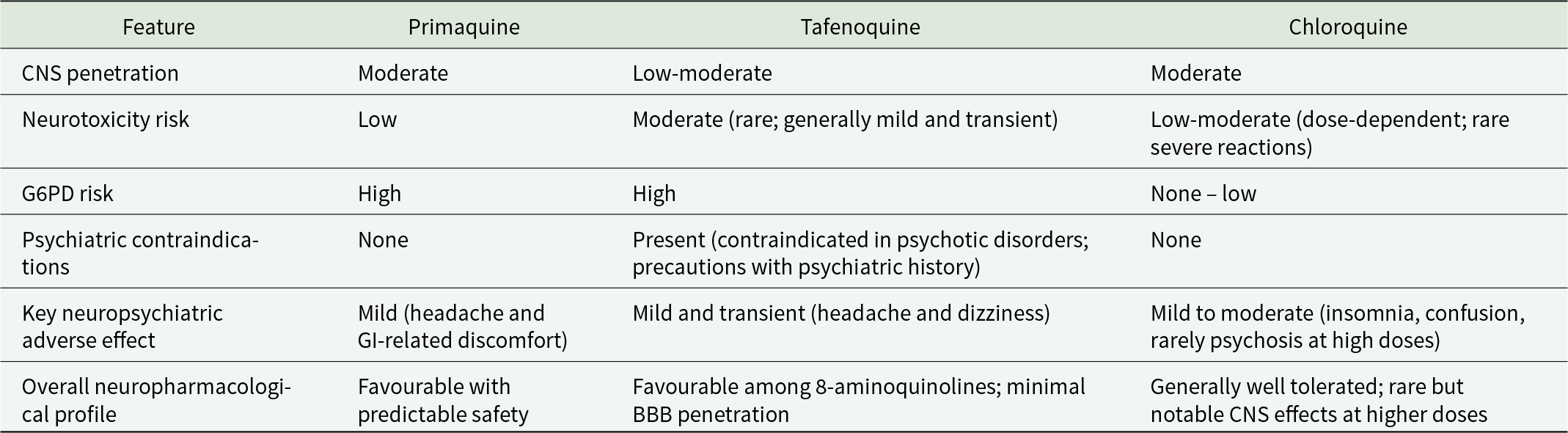
Comparative neuropharmacological and safety profiles of primaquine, tafenoquine, chloroquine and key metabolites (Bolchoz et al. Reference Bolchoz, Gelasco, Jollow and McMillan2002; Biswas et al. Reference Biswas, Sen and Majumdar2014; Dow et al. Reference Dow, Brown, Reid, Smith and Toovey2017; Fukuda et al. Reference Fukuda, Krudsood, Mohamed, Green, Warrasak, Noedl, Euswas, Ittiverakul, Buathong, Sriwichai, Miller and Ohrt2017; Duparc et al. Reference Duparc, Chalon, Miller, Richardson and Toovey2020; Rossiter, Reference Rossiter2022)

Table 2 Long description
Features compared across primaquine, tafenoquine, and chloroquine are CNS penetration, neurotoxicity risk, G6PD risk, psychiatric contraindications, key neuropsychiatric adverse effect, and overall neuropharmacological profile. For CNS penetration, primaquine is moderate, tafenoquine is low to moderate, and chloroquine is moderate. For neurotoxicity risk, primaquine is low, tafenoquine is moderate with rare events that are generally mild and transient, and chloroquine is low to moderate with dose dependent risk and rare severe reactions. For G6PD risk, primaquine is high, tafenoquine is high, and chloroquine is none to low. For psychiatric contraindications, primaquine lists none, tafenoquine lists present with contraindication in psychotic disorders and precautions with psychiatric history, and chloroquine lists none. For key neuropsychiatric adverse effect, primaquine lists mild headache and GI-related discomfort, tafenoquine lists mild transient headache and dizziness, and chloroquine lists mild to moderate insomnia and confusion with rarely psychosis at high doses. For overall neuropharmacological profile, primaquine is described as favourable with predictable safety, tafenoquine as favourable among 8 aminoquinolines with minimal BBB penetration, and chloroquine as generally well tolerated with rare but notable CNS effects at higher doses.
Overall, primaquine’s neuropharmacological profile suggests dose-dependent CNS effects mediated by oxidative and mitochondrial mechanisms, warranting further investigation to clarify its neurotoxic potential and guide safer therapeutic use.
Tafenoquine
Tafenoquine is a long-acting 8-aminoquinoline antimalarial approved for both the radical cure of P. vivax malaria and malaria prophylaxis (Haston et al. Reference Haston, Hwang and Tan2019). It exhibits activity against pre-erythrocytic, erythrocytic and gametocyte stages of P. vivax and P. falciparum. The hypnozoiticidal activity of tafenoquine is critical for preventing P. vivax relapse (Watson et al. Reference Watson, Commons, Tarning, Simpson, Llanos Cuentas, Lacerda, Green, Koh, Chu, Nosten, Price, Day and White2022).
Neuropharmacological profile of tafenoquine
The neuropharmacological profile of tafenoquine appears comparatively favourable among the 8-aminoquinolines, with clinical trials generally reporting a low incidence of severe neuropsychiatric adverse events at therapeutic doses (Table 2) (Duparc et al. Reference Duparc, Chalon, Miller, Richardson and Toovey2020). In a systematic review comparing primaquine to tafenoquine, primaquine was associated with a significantly higher risk of any reported neurologic symptom; RR 2.35 (95% CI 1.15–4.80) (Chu and Hwang, Reference Chu and Hwang2021). However, regulatory safety communications and post-marketing observations highlighted potential psychiatric and neurological adverse effects in susceptible individuals, including insomnia, anxiety, abnormal dreams and mood-related symptoms (GlaxoSmithKline, 2018). Consequently, caution is recommended in patients with a history of psychiatric disorders, and continued pharmacovigilance remains important for further characterizing the CNS safety profile of tafenoquine (GlaxoSmithKline, 2018; Duparc et al. Reference Duparc, Chalon, Miller, Richardson and Toovey2020). This safety is attributed to its chemical structure, which reduces neurotoxic potential, and its limited penetration across the BBB. Reported neuropsychiatric effects are typically mild, transient and dose-dependent. In clinical trials for P. vivax relapse prevention, reported nervous system-related adverse events primarily included headache and dizziness in 11.4% of patients receiving tafenoquine (Llanos-Cuentas et al. Reference Llanos-Cuentas, Lacerda, Rueangweerayut, Krudsood, Gupta, Kochar, Arthur, Chuenchom, Möhrle, Duparc, Ugwuegbulam, Kleim, Carter, Green and Kellam2014; Fukuda et al. Reference Fukuda, Krudsood, Mohamed, Green, Warrasak, Noedl, Euswas, Ittiverakul, Buathong, Sriwichai, Miller and Ohrt2017; Duparc et al. Reference Duparc, Chalon, Miller, Richardson and Toovey2020). Additional CNS-related adverse effects to be reported include insomnia and vision changes (Fukuda et al. Reference Fukuda, Krudsood, Mohamed, Green, Warrasak, Noedl, Euswas, Ittiverakul, Buathong, Sriwichai, Miller and Ohrt2017; Duparc et al. Reference Duparc, Chalon, Miller, Richardson and Toovey2020). Tafenoquine is contraindicated in individuals with a history of psychotic disorders or active psychotic symptoms (e.g., hallucinations, delusions and disorganized behaviour) when prescribed for malaria prophylaxis. For relapse prevention, a history of psychiatric illness is considered a precaution, requiring careful assessment of risks versus benefits (Styka and Savitz, Reference Styka and Savitz2020). Regulatory safety information for tafenoquine further indicates that serious psychiatric adverse reactions have been reported, particularly in individuals with pre-existing psychiatric conditions and in contexts of supra-therapeutic exposure (GlaxoSmithKline, 2018). These warnings highlight the need for careful patient selection and clinical monitoring, especially in vulnerable populations. Overall, while tafenoquine demonstrates a generally acceptable neuropsychiatric safety profile in clinical trial settings, real-world regulatory and post-marketing data underscore the importance of cautious use in patients with psychiatric risk factors.
Chloroquine
Chloroquine, a 4-aminoquinoline, has been used for over 70 years as a cost-effective first-line treatment for malaria, including chloroquine-sensitive P. vivax, P. ovale, P. malariae and P. knowlesi infections (Abd-Rahman et al. Reference Abd-Rahman, Marquart, Gobeau, Kümmel, Simpson, Chalon, Möhrle and McCarthy2020).
Neuropharmacological profile of chloroquine
Data on the neuropharmacology and CNS effects of chloroquine in the management of P. vivax malaria remain limited. In a mouse model of cerebral malaria, chloroquine alone was associated with increased production of proinflammatory cytokines and CNS damage (Val et al. Reference Val, Brant, Miranda, Rodrigues, Oliveira, Santos, Assis, Esper, Silva, Rachid, Tanowitz, Teixeira, Teixeira, Régis and Machado2015). At higher doses, chloroquine can induce psychiatric disturbances, including mood alterations, irritability, hallucinations and derealization experiences (Table 2) (Biswas et al. Reference Biswas, Sen and Majumdar2014; Bogaczewicz and Sobów, Reference Bogaczewicz and Sobów2017). Reported symptoms such as confusion, disorientation, agitation and violent outbursts typically resolve within days to weeks after drug discontinuation (Bogaczewicz and Sobów, Reference Bogaczewicz and Sobów2017). Although neuropsychiatric adverse effects are uncommon, they may include psychosis, delirium, hallucinations and depression, with higher risk in patients with pre-existing psychiatric conditions (Hamm and Rosenthal, Reference Hamm and Rosenthal2020; Sato et al. Reference Sato, Mano, Iwata and Toda2020). Compared with other antimalarials, chloroquine has a more favourable neuropsychiatric safety profile; for example, mefloquine is associated with markedly higher neuropsychiatric toxicity (AlKadi, Reference AlKadi2007; Nevin, Reference Nevin2014). Nonetheless, chloroquine may still cause mild CNS symptoms such as insomnia, headache and blurred vision (Duparc et al. Reference Duparc, Chalon, Miller, Richardson and Toovey2020).
Pharmacological management of P. vivax
The comparative profiles of primaquine, tafenoquine and chloroquine highlight clinically meaningful differences relevant to their safety and use (Table 2). Primaquine and tafenoquine both pose a high risk of haemolysis in individuals with G6PD deficiency, necessitating screening prior to radical cure (Bolchoz et al. Reference Bolchoz, Gelasco, Jollow and McMillan2002; Duparc et al. Reference Duparc, Chalon, Miller, Richardson and Toovey2020). Tafenoquine offers operational advantages through single-dose administration compared with the 14-day primaquine regimen (Brito et al. Reference Brito, Rufatto, Brito-Sousa, Murta, Sampaio, Balieiro, Baía-silva, Castro, Alves, Alencar, Duparc, Grewal, Borghini-fuhrer, Jambert, Peterka, Edilson Lima, Carvalho, Lucena, Maciele, Vasconcelos and Lacerda2024), although its use is limited by specific psychiatric contraindications associated with the prophylaxis indication (Duparc et al. Reference Duparc, Chalon, Miller, Richardson and Toovey2020). Tafenoquine also demonstrates low-moderate CNS penetration and a low incidence of neuropsychiatric events (Dow et al. Reference Dow, Brown, Reid, Smith and Toovey2017; Fukuda et al. Reference Fukuda, Krudsood, Mohamed, Green, Warrasak, Noedl, Euswas, Ittiverakul, Buathong, Sriwichai, Miller and Ohrt2017; Duparc et al. Reference Duparc, Chalon, Miller, Richardson and Toovey2020). In contrast, chloroquine has none to a low G6PD-related safety concern compared to primaquine, but it is still associated with potential, though often mild haemolysis in G6PD-deficient individuals (Gammal et al. Reference Gammal, Pirmohamed, Somogyi, Morris, Formea, Elchynski, Oshikoya, McLeod, Haidar, Whirl-carrillo, Klein, Caudle and Relling2023). Chloroquine is administered over a shorter 3-day course, though it exhibits moderate CNS penetration and a low-moderate risk of neuropsychiatric effects, particularly at high doses (Biswas et al. Reference Biswas, Sen and Majumdar2014; Braga et al. Reference Braga, Martins, Cayotopa, Klein, Schlosser, da Silva, de Souza, Andrade, Filgueira-júnior, Pinto and Da silva-nunes2015; Bogaczewicz and Sobów, Reference Bogaczewicz and Sobów2017). Collectively, these differences underscore the importance of individualized antimalarial selection based on patient comorbidities, neuropsychiatric history and feasibility of adherence.
In silico pharmacokinetic predictions
In silico predictions for primaquine, tafenoquine, chloroquine and key metabolites provide mechanistic insights that complement existing pharmacological and safety data. Swiss Target Prediction (https://www.swisstargetprediction.ch/) and Swiss-ADME (https://www.swissadme.ch/) were used to identify putative molecular targets in the human host and estimate BBB permeability for the parent drugs and major metabolites. ProTox 3.0 (https://tox.charite.de/protox3/) was used to assess predicted organ toxicity and BBB end-point toxicity.
Primaquine and its redox-active metabolites demonstrated predicted interactions with several CNS-relevant targets including the serotonin transporter (SERT), monoamine oxidase (MAO) isoforms, muscarinic receptors and quinone reductase 2 (QR2) along with evidence of BBB penetration (Table 3). These findings align with the known bioactivation pathway in which CYP2D6- and CPR-mediated hydroxylation yields unstable hydroxylated intermediates that undergo redox cycling and produce reactive oxygen species (Camarda et al. Reference Camarda, Jirawatcharadech, Priestley, Saif, March, Wong, Leung, Miller, Baker, Alano, Paine, Bhatia, O’neill, Ward and Biagini2019). The predicted QR2 engagement and BBB-related toxicity signals derived from in silico models may be conceptually aligned with findings from animal studies reporting mitochondrial dysfunction and oxidative brain injury after high-dose or prolonged primaquine exposure (Giovanella et al. Reference Giovanella, Ferreira, de Prá, Carvalho-silva, Gomes, Scaini, Gonçalves, Michels, Galant, Longaretti, Dajori, Andrade, Dal-pizzol, Streck and de Souza2015; Rabiablok et al. Reference Rabiablok, Hanboonkunupakarn, Tuentam, Fongsodsri, Kanjanapruthipong and Ampawong2023). Together, these data suggest the possibility that both direct receptor interactions and redox-mediated mechanisms may contribute to primaquines’ CNS effects. Importantly, these proposed relationships remain speculative and require experimental validation, particularly in individuals with metabolic variants influencing CYP2D6-dependent bioactivation (de Pina-costa et al. Reference de Pina-costa, Silvino, Dos Santos, Pedro, Moreira, Umana, da Silva, da Rosa Santos, de Deus Henriques, Daniel-ribeiro, Brasil, Sousa and Siqueira2021). Predicted SERT/MAO and muscarinic interactions for some primaquine metabolites may further explain serotonergic and cholinergic-like behavioural signals observed in rodent derivative studies (Kedzierska et al. Reference Kedzierska, Orzelska, Perković, Knežević, Fidecka, Kaiser and Zorc2016).
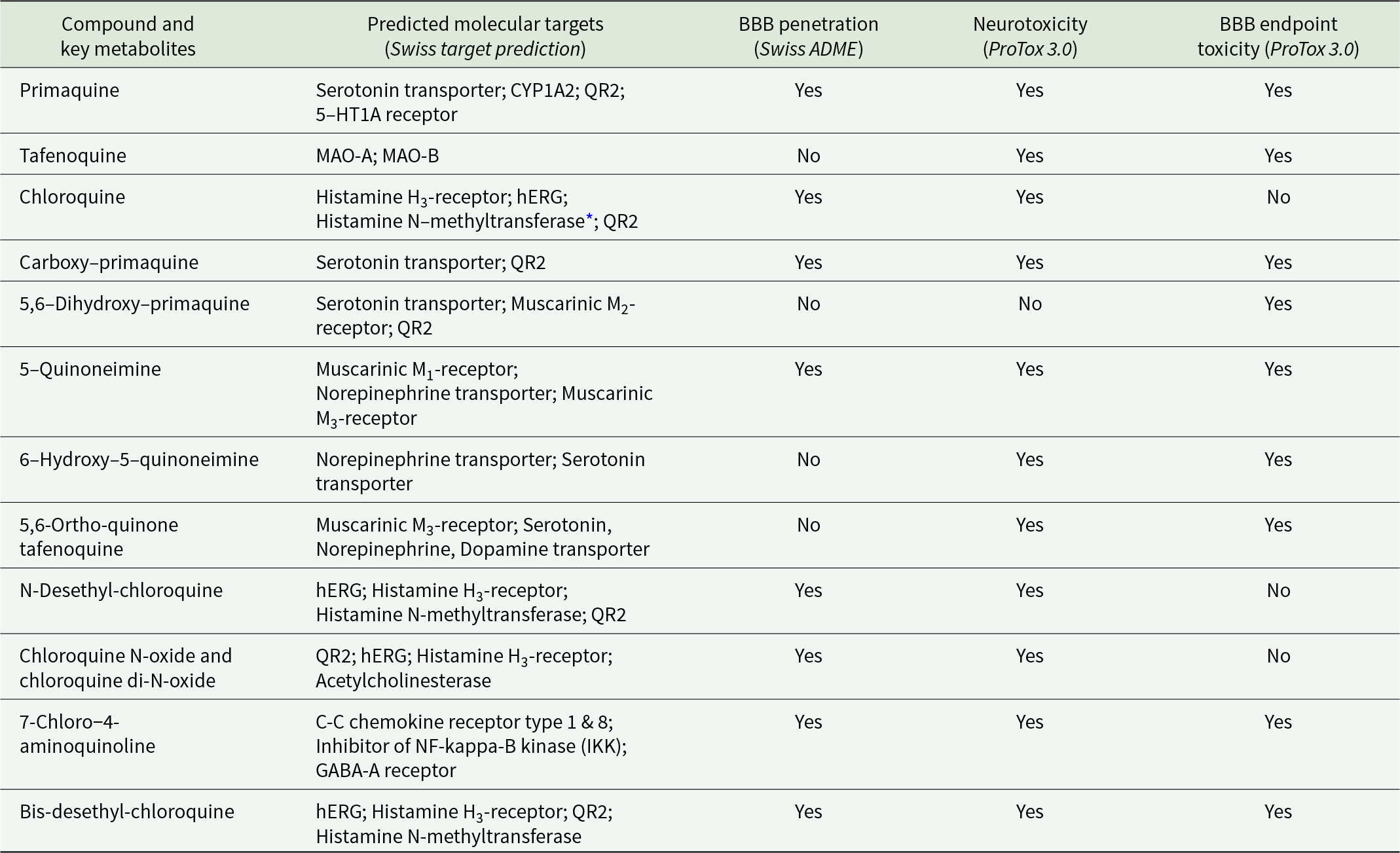
In silico predicted molecular targets and toxicity characteristics of antimalarial drugs (primaquine, tafenoquine and chloroquine) and primaquine metabolites (in silico analyses)

Table 3 Long description
Compounds and key metabolites are listed with predicted molecular targets, BBB penetration, neuro toxicity, and BBB endpoint toxicity. Primaquine has targets Serotonin transporter, CYP1A2, QR2, and 5 HT1A receptor, with BBB penetration Yes, neuro toxicity Yes, and BBB endpoint toxicity Yes. Tafenoquine targets MAO A and MAO B, with BBB penetration No, neuro toxicity Yes, and BBB endpoint toxicity Yes. Chloroquine targets Histamine H3 receptor, hERG, Histamine N methyltransferase with an asterisk marker, and QR2, with BBB penetration Yes, neuro toxicity Yes, and BBB endpoint toxicity No. Carboxy primaquine targets Serotonin transporter and QR2, with BBB penetration Yes, neuro toxicity Yes, and BBB endpoint toxicity Yes. 5,6 Dihydroxy primaquine targets Serotonin transporter, Muscarinic M2 receptor, and QR2, with BBB penetration No, neuro toxicity No, and BBB endpoint toxicity Yes. 5 Quinoneimine targets Muscarinic M1 receptor, Norepinephrine transporter, and Muscarinic M3 receptor, with BBB penetration Yes, neuro toxicity Yes, and BBB endpoint toxicity Yes. 6 Hydroxy 5 quinoneimine targets Norepinephrine transporter and Serotonin transporter, with BBB penetration No, neuro toxicity Yes, and BBB endpoint toxicity Yes. 5,6 Ortho quinone tafenoquine targets Muscarinic M3 receptor and Serotonin, Norepinephrine, Dopamine transporter, with BBB penetration No, neuro toxicity Yes, and BBB endpoint toxicity Yes. N Desethyl chloroquine targets hERG, Histamine H3 receptor, Histamine N methyltransferase, and QR2, with BBB penetration Yes, neuro toxicity Yes, and BBB endpoint toxicity No. Chloroquine N oxide and chloroquine di N oxide target QR2, hERG, Histamine H3 receptor, and Acetylcholinesterase, with BBB penetration Yes, neuro toxicity Yes, and BBB endpoint toxicity No. 7 Chloro 4 aminoquinoline targets C C chemokine receptor type 1 and 8, Inhibitor of NF kappa B kinase, and GABA A receptor, with BBB penetration Yes, neuro toxicity Yes, and BBB endpoint toxicity Yes. Bis desethyl chloroquine targets hERG, Histamine H3 receptor, QR2, and Histamine N methyltransferase, with BBB penetration Yes, neuro toxicity Yes, and BBB endpoint toxicity Yes.
* Histamine N-methyltransferase predicted based on homology.
5-HT1a, Serotonin 1a; QR2, Quinone reductase 2.
Tafenoquine and its ortho-quinone metabolite were associated with monoamine oxidases (MAO-A and MAO-B) and neurotransmitter transporters, respectively. However, both tafenoquine and its metabolite were predicted to have limited BBB penetration based on SwissADME predictions (Table 3). These predictions may be broadly consistent with clinical and preclinical reports describing a relatively low neuropsychiatric risk and limited CNS side effects (Dow et al. Reference Dow, Brown, Reid, Smith and Toovey2017; Berman et al. Reference Berman, Brown, Dow and Toovey2018; Duparc et al. Reference Duparc, Chalon, Miller, Richardson and Toovey2020). Although ProTox indicated systemic and BBB toxicity alerts, these findings likely reflect intrinsic 8-aminoquinoline redox properties rather than robust CNS liability, given the drug’s restricted access to neural tissue.
Chloroquine, by contrast, showed predicted BBB penetration and interactions with CYP1A2, MAO-B and human ether-a-go-go-related gene (hERG) potassium channels. These predicted interactions may be broadly consistent with the drugs’ known dose-dependent neuropsychiatric and cardiotoxic potential (Biswas et al. Reference Biswas, Sen and Majumdar2014; Bogaczewicz and Sobów, Reference Bogaczewicz and Sobów2017; Szendrey et al. Reference Szendrey, Guo, Li, Yang and Zhang2021). The predicted hERG signal, in particular, may be relevant in the context of established risks of QT prolongation (Szendrey et al. Reference Szendrey, Guo, Li, Yang and Zhang2021) and underscores the relevance of integrating computational screening with empirical pharmacovigilance. N-Desethyl-chloroquine displayed a comparable target profile, including hERG, histamine H3 receptor, histamine N-methyltransferase and QR2, with predicted BBB penetration and neurotoxicity (Table 3). Additional metabolites, including chloroquine N-oxide, chloroquine di-N-oxide, 7-chloro-4-aminoquinoline and bis-desethyl-chloroquine, were predicted to interact with combinations of QR2, hERG, histamine receptors, acetylcholinesterase, GABA-A receptors and inflammatory signalling components such as IKK (Table 3). Several of these metabolites were also associated with predicted BBB penetration and neurotoxicity alerts, suggesting potential contributions to CNS-related adverse effects seen with high-dose chloroquine use (Biswas et al. Reference Biswas, Sen and Majumdar2014; Bogaczewicz and Sobów, Reference Bogaczewicz and Sobów2017). However, the extent to which these predicted interactions translate into clinically relevant CNS effects remains uncertain and requires clinical validation.
This in silico analysis supports the broader pharmacological pattern in which primaquine exhibits the greatest diversity of potential CNS interactions, tafenoquine demonstrates limited central engagement and chloroquine retains identifiable neuropsychiatric and cardiac effects. Importantly, these observations reflect computational modelling outputs rather than validated biological effects. Collectively, the data highlight recurring predicted interactions with monoaminergic, cholinergic and cardiac ion channel targets, alongside frequent neurotoxicity alerts among quinoline-based antimalarials and their reactive metabolites, providing a framework for future hypothesis-driven investigation.
Clinical implications and recommendations
The pharmacological and neuropharmacological profiles of primaquine, tafenoquine, chloroquine and their metabolites highlight the need for careful patient evaluation and risk mitigation in the management of P. vivax malaria. Given the haemolytic risk associated with primaquine and tafenoquine, screening for G6PD deficiency remains essential prior to initiating radical cure (Bolchoz et al. Reference Bolchoz, Gelasco, Jollow and McMillan2002; Rossiter, Reference Rossiter2022; WHO, 2025b). This is critical to prevent severe haemolysis, particularly in populations with high prevalence of G6PD deficiency. Available literature suggests broadly comparable neuropsychiatric safety profiles between tafenoquine and primaquine at therapeutic doses, although tafenoquine includes additional regulatory precautions relating to psychiatric adverse effects in susceptible individuals (Berman et al. Reference Berman, Brown, Dow and Toovey2018; Duparc et al. Reference Duparc, Chalon, Miller, Richardson and Toovey2020). Therefore, a pre-treatment psychiatric assessment should be performed to identify patients at risk of neuropsychiatric adverse events. Although primaquine, tafenoquine and chloroquine generally exhibit low-to-moderate CNS toxicity, patients especially those on high-dose or prolonged regimens should be monitored for neuropsychiatric symptoms, including headache, dizziness, insomnia, mood changes and, rarely, psychotic manifestations. Early recognition allows prompt management and discontinuation if necessary. Drug selection and dosing should consider individual risk factors, including CYP2D6 metabolizer status, comorbidities, age, pregnancy status and G6PD deficiency. In regions with high prevalence of CYP2D6 poor metabolizers, primaquine efficacy may be compromised, requiring alternative strategies or careful monitoring.
Future directions
Emerging insights into the pharmacology and neuropharmacology of primaquine, tafenoquine, chloroquine and their metabolites underscore several priorities for future research. First, neuroimaging and biomarker studies are needed to better define CNS effects, elucidate mechanisms of neurotoxicity and identify early indicators of drug-induced neural injury. Second, there is a pressing need for the development of safer hypnozoiticidal agents that retain efficacy against P. vivax liver stages while minimizing oxidative stress, haemolytic risk in G6PD-deficient patients and CNS side effects. Finally, personalized medicine approaches, including pharmacogenetic profiling of CYP2D6 and other relevant metabolic pathways, as well as assessment of individual neuropsychiatric risk factors, could guide tailored therapy, optimize efficacy and enhance patient safety in radical cure and prophylactic strategies.
Conclusion
Plasmodium vivax malaria, traditionally considered less severe than P. falciparum, can impact the CNS more significantly than previously recognized. The antimalarial drugs used for radical cure and prophylaxis, primaquine, tafenoquine and chloroquine, exhibit distinct neuropharmacological profiles, influenced by factors such as CNS penetration, redox activity and pharmacogenetic variability. Safe and effective treatment requires careful drug selection, appropriate screening for G6PD deficiency and psychiatric conditions and monitoring for neuropsychiatric and haematologic adverse effects. Integrating these strategies into clinical practice can optimize therapeutic outcomes while minimizing risks, particularly in vulnerable populations and high-transmission settings.
Acknowledgements
The authors declare use of AI, Copilot and ChatGPT, to identify missing neuropathologies induced by P. vivax (17 September 2025). After using this tool/service, the authors reviewed the information and added the missing neuropathologies to the text.
Author contributions
Conceptualization: J.S.M. and R.L.v.Z.; Methodology: J.S.M.; Investigation: J.S.M. and R.L.v.Z.; Resources: J.S.M. and R.L.v.Z.; Writing original draft preparation: J.S.M. and R.L.v.Z.; Writing review and editing: J.S.M. and R.L.v.Z.
Financial support
This research received no specific grant from any funding agency, commercial or not-for-profit sectors.
Competing interests
The authors declare there are no conflicts of interest.
Ethical standards
Not applicable.

 Open access

