Introduction
Lignocellulosic biomass is a promising resource for the production of fuels, chemicals, and energy products. It is a cost-effective, environmentally friendly, and renewable resource, as well as being the best alternative to fossil fuels (Wang et al., Reference Wang, Ren, Lu and Huang2016). Cellulose is the main component of lignocellulosic biomass, and depolymerization of cellulose leads to simple C6 sugar monomers (glucose), which are suitable for subsequent upgrading to platform chemicals (Kumar et al., Reference Kumar, Chauhan, Shaifali and Das2021; Li et al., Reference Li, Xu, Wang, Shen, Wang and Zhou2021). Hydroxymethylfurfural (HMF) is one of the most attractive cellulose-derived biochemicals. HMF can be synthesized by acid-catalyzed dehydration of fructose, glucose, sucrose, or cellulose. The conversion of cellulose to HMF is challenging due to its chemical structure, which makes the polymer insoluble in many conventional solvents and depends on a favorable catalyst that acts synergistically with a suitable reaction medium (Wu et al., Reference Wu, Huang, Chen, Ma and Zhou2020; Yu & Tsang, Reference Yu and Tsang2017).Numerous studies in the literature have focused on the conversion of lignocellulosic biomass and cellulose in the presence of homogeneous acid catalysts or enzymes. However, these two types of catalysts have certain disadvantages. Enzymatic reactions are slower and the cost of enzymes is high. Homogeneous acid catalysts are effective for biomass conversion, but they tend to corrode and are difficult to separate from the reaction mixture for reuse (Xue et al., Reference Xue, Ma, Li and Mu2016). Solid acid catalysts are an attractive alternative to homogeneous acids, as they are safer and more environmentally friendly according to green chemistry principles (Wu et al., Reference Wu, Yao, Jiang, Ji, Gu, Deng and Ouyang2022). The use of various solid acid catalysts for cellulose conversion was investigated in several studies. Among these heterogeneous catalysts, metal oxides are most commonly used due to their property-tunable solid acids (Lanzafame et al., Reference Lanzafame, Temi, Perathoner, Spadaro and Centi2012; Shao et al., Reference Shao, Ding, Dai, Long and Hu2021). In one report, the maximum 5-HMF yield was obtained over the catalyst Al-SBA-15 (Santa Barbara Amorphous mesoporous silica sieve) (Shirai et al., Reference Shirai, Ikeda and Qian2017). Several solid acid catalysts, such as zeolites (H-BEA, H-MOR) and sulfated zirconia on SBA-15, have also been investigated for the conversion of cellulose (Lanzafame et al., Reference Lanzafame, Temi, Perathoner, Spadaro and Centi2012). Among these, microporous zeolite showed the greatest catalytic activity for the formation of glucose and 5-HMF from cellulose, which is attributed to the presence of shape selectivity effects that limit the polymerization of glucose to humin species. In the conversion of cellulose, Brønsted acid sites are known to promote the hydrolysis of cellulose to sugars, while Lewis acid sites are essential for the conversion of carbohydrates to 5-HMF (Yu et al., Reference Yu, Wang, Wang, Zhou and Wang2018). The strong Brønsted and Lewis acid sites of the catalyst could efficiently increase the hydrolysis reaction rate, which would also promote further reactions, such as the conversion of glucose to 5-HMF. Therefore, bifunctional catalysts (Lewis acid/Brønsted acid ratio balanced) are ideal for the production of HMF from cellulose (Kassaye et al., Reference Kassaye, Pagar, Pant, Jain and Gupta2016).
A number of studies have reported the production of HMF and furfural using various forms of metal-exchanged montmorillonite (Mnt) as the catalyst (Fang et al., Reference Fang, Liu, Luo, Ren and Zhang2014; Li et al., Reference Li, Ren, Zhong, Sun and Liang2015). Using Sn-Mnt, Li et al. (Reference Li, Ren, Zhong, Sun and Liang2015) converted xylose and corncob hydrolysate into furfural with a maximum yield of 76.79%, with conversion efficiency of 93.13% and furfural selectivity of 82.45%. The reaction was carried out at 180ºC for 30 min (Li et al., Reference Li, Ren, Zhong, Sun and Liang2015). Al-, Cr-, Zn-, Cu-, and Fe-exchanged K-10 montmorillonite systems have also been studied, and the Cr-Mnt proved to be the best catalyst for the conversion of glucose to 5-HMF (done at 120ºC after 2 h using the solvent system [BMIM]Cl-DMSO), yielding 56.3% (Fang et al., Reference Fang, Liu, Luo, Ren and Zhang2014). Cr-Bentonite and Cr-Mnt catalysts were investigated for glucose conversion to 5-HMF using DMSO and ionic liquid media (Aylak et al., Reference Aylak, Akmaz and Koc2020). None of the previous studies, however, investigated metal-Mnt solid catalysts for the conversion of cellulose to HMF. As soon as polyvalent metal cations are replaced by monovalent cations in Mnt, the clay becomes acidic and can be used in various acid-catalyzed dehydration reactions (Wei & Wu, Reference Wei and Wu2016). The use of organic solvents or ionic liquids as solvents is both expensive and unsuitable because of environmental pollution. The conversion of a solid acid catalyst and cellulose in hot water seems to be the most attractive option for one-step catalytic glucose and 5-HMF production without the formation of intermediates (Gromov et al., Reference Gromov, Taran, Semeykina, Danilova, Pestunov, Parkhomchuk and Parmon2017).
Based on these works, the purpose of the present study was to improve and maximize the yield of 5-HMF from cellulose in water by using a Cr3+-, Cu2+-, Fe3+-, or Zn2+-Mnt clay catalyst, and to determine the effects of various reaction parameters on cellulose conversion and product distribution.
Materials and Methods
Materials
Microcrystalline cellulose, glucose (%99.5), and formic acid were obtained from Merck (Darmstadt, Germany), furfural (%98) from Merck (Modderfontein, South Africa), xylose (%99) and 5-HMF (99%) from Sigma-Aldrich (Shanghai, China), levulinic acid and K-10 Mnt from Sigma-Aldrich (Darmstadt, Germany), Cr(NO3)3-9H2O (%99) and Cu(NO3)2-3H2O (%98) from Sigma-Aldrich (Madrid, Spain), and Fe(NO3)39H2O (98%) and Zn(NO3)2.6H2O (%98) from Himedia (Mumbai, India). An Aminex HPX 87H column was purchased from Bio-Rad Laboratories (Hercules, California, USA). All of the chemicals used were of analytical grade.
Catalyst Preparation
The doped Mnt catalysts were prepared by impregnation with metal nitrates (10 wt.%). The nitrate salts of metals were dissolved in an ethanol–water mixture (50–50% v:v) and Mnt was added to the solution and mixed for 24 h. The clay was collected by centrifuge (Eppendorf Centrifuge 5702, Hamburg, Germany) at 3000 rpm (1400 g) and washed with deionized water dried under vacuum at 40°C, and then calcined at 400°C for 4 h. 5Cr-Mnt, 10Cr-Mnt, and 15Cr-Mnt were prepared by the same method by adding 5, 10, and 15 wt.% of chromium (5, 10, and 15 wt.%).
Characterization
The X-ray Diffraction (XRD) patterns of the catalysts were determined using a Rigaku Ultima II diffractometer (Tokyo, Japan) in the range 5–80°2θ. The accelerating voltage and applied current were 40 kV and 15 mA, respectively. Measurement of the Brunauer–Emmett–Teller (BET) surface area, average pore width, and pore volume was performed using a Micromeritics Tristar II (Norcross, Georgia, USA) Surface Area and Porosity Instrument model. The pore-size distributions and pore volumes of the samples were calculated using the Barrett-Joyner-Halenda (BJH) method. Before analysis, all of the samples were degassed at 573 K for 24 h under vacuum. NH3-TPD (temperature programmed desorption) was performed using a Micromeritics chemisorption instrument model 2720 (Norcross, Georgia, USA) equipped with a TCD detector. The Bronsted and Lewis acid sites of the synthesized catalyst were determined by the FTIR spectra (ThermoFisher Scientific Nicolet IS10, Madison, Wisconsin, USA) of the adsorbed pyridine (Yu et al., Reference Yu, Wang, Wang, Zhou and Wang2018). The ratio of Bronsted and Lewis acidity was calculated from the area under the peaks of the Bronsted (1540 cm–1) and Lewis sites (1450 cm–1).
Catalytic Conversion of Cellulose
The catalyst screening experiments were carried out in a 140 mL stainless-steel high-pressure reactor (Parr, Moline, Illinois, USA) at a temperature of 180°C and for 2 h. 5 g of cellulose was added to the reactor containing 500 mg of solid acid catalyst in 50 mL of water. The suspension was kept liquid under an N2 atmosphere. At the end of the treatment, the treated slurry was collected and filtered through Whatman filter paper (black ribbon) to separate the solid and liquid fractions for further analysis. Parametric studies with Cr-Mnt catalysts were carried out in a 500 mL stainless steel reactor (Parr, Moline, Illinois, USA). The desired amount of cellulose, distilled water, and catalyst was added to the reactor. The reactions were carried out at 160–220°C. Liquid samples were taken at various time intervals. The composition of the liquid products was determined by high-performance liquid chromatography (HPLC, Agilent, Wilmington, Delaware, USA), which was equipped with a Bio-Rad Aminex HPX-87H column (300 mm × 7.8 mm) and a refractive index detector. The analytical column was operated at 60°C with 0.2 μm filtered 0.005 M H2SO4 solution as the mobile phase. The flow rate of the mobile phase was 0.6 mL/min (Sluiter et al., Reference Sluiter, Hames, Ruiz, Scarlata, Sluiter and Templeton2008). The molar product yields were calculated using the initial mole content of cellulose.


Results and Discussion
Characterization of the Catalyst
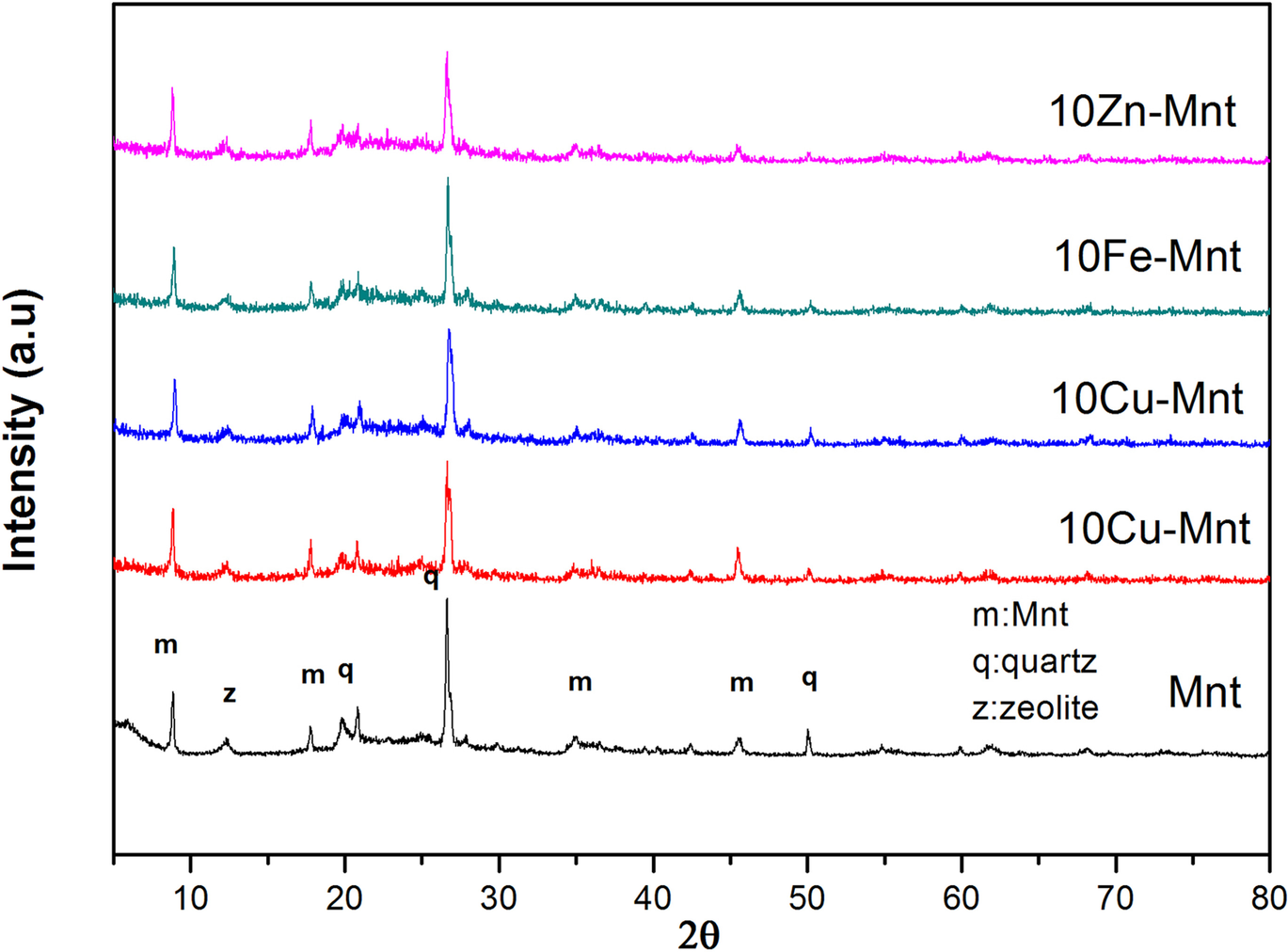
XRD patterns of the doped and pristine Mnt catalysts (Fig. 1) have three main diffraction peaks (2θ) at 9, 19, and 35 (reference code: 98–008-4802) (Garade et al., Reference Garade, Kshirsagar, Jha and Rode2010; Husin et al., Reference Husin, Harun, Jumal and Othman2015). The intense peaks (2θ) at 27 and 12.37 (reference code: 98–007-9711) were attributed to quartz and tetragonal zeolite (reference code: 98–004-2211), respectively. XRD analysis showed that the metals were well dispersed over the Mnt surfaces and did not penetrate into the Mnt structure. Similar XRD patterns were observed for all of the catalysts.
XRD patterns of Mnt, 10Cr-Mnt, 10Cu-Mnt, 10Zn-Mnt, and 10Fe-Mnt catalysts

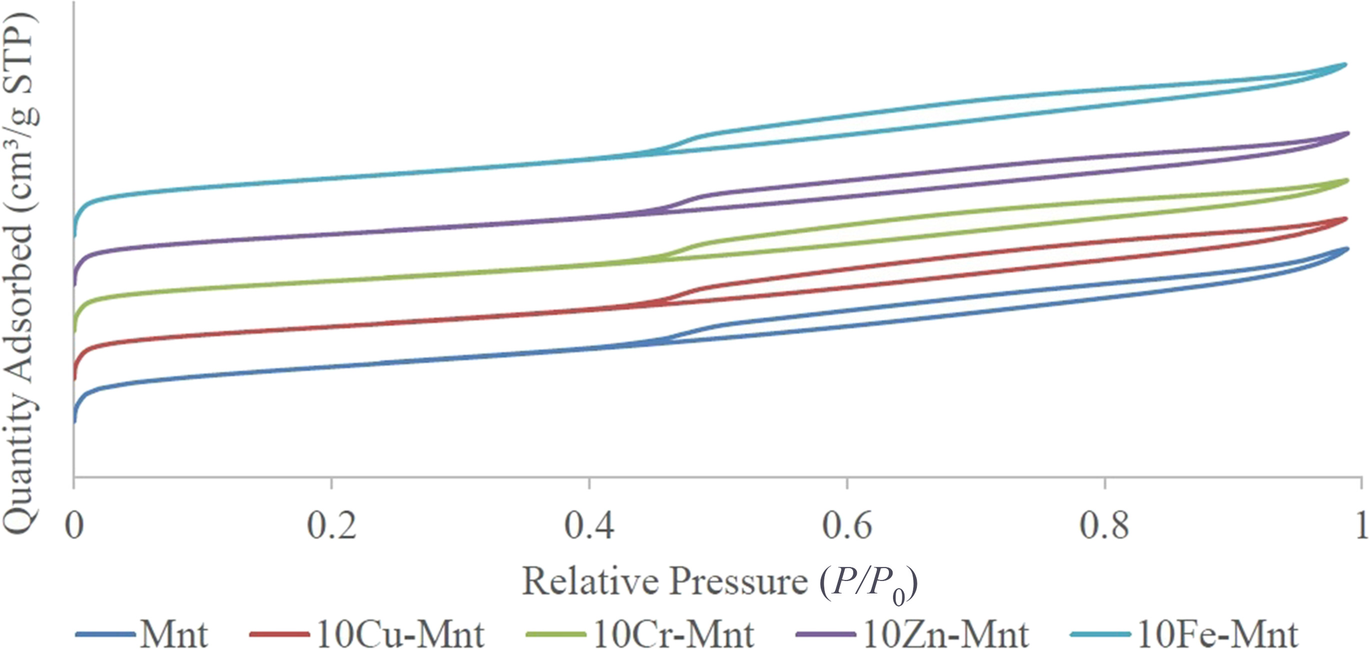
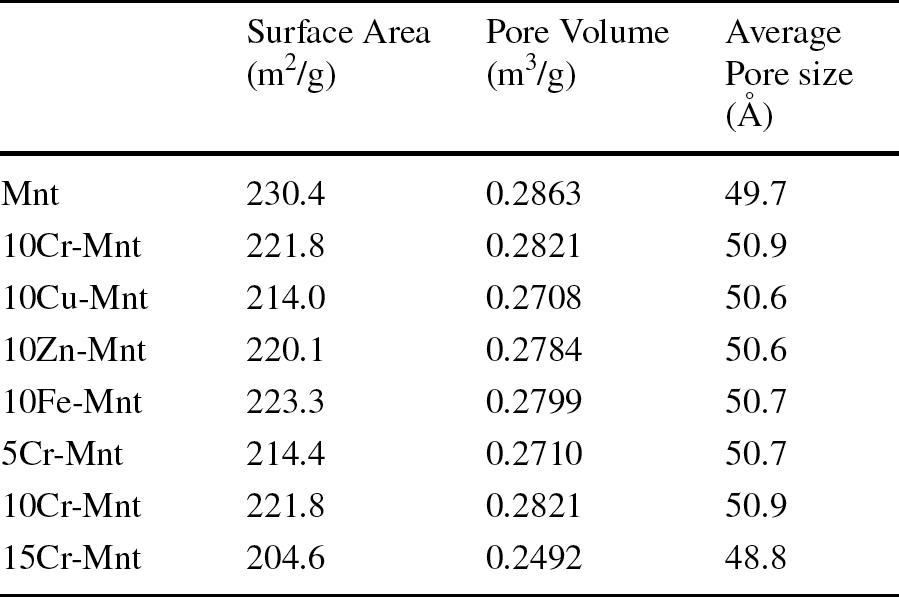
The N2 adsorption/desorption isotherms were used to analyze the porosity of the catalysts. Following the IUPAC classification, all catalysts were of type IV with H3 hysteresis, indicating a typical mesoporous structure (Fig. 2). All of the catalysts exhibited a maximum pore volume of ~50 Å diameter. The BET surface area of Mnt was 230.4 m2/g. After the impregnation process, the surface area of the catalysts decreased due to the deposition of species, while the pore volume and pore diameter did not change significantly up to 10% Cr (Table 1).
N2 adsorption/desorption isotherms of the Mnt catalyst

Textural properties of Mnt, 10Cr-Mnt, 10Cu-Mnt, 10Zn-Mnt, and 10Fe-Mnt catalysts

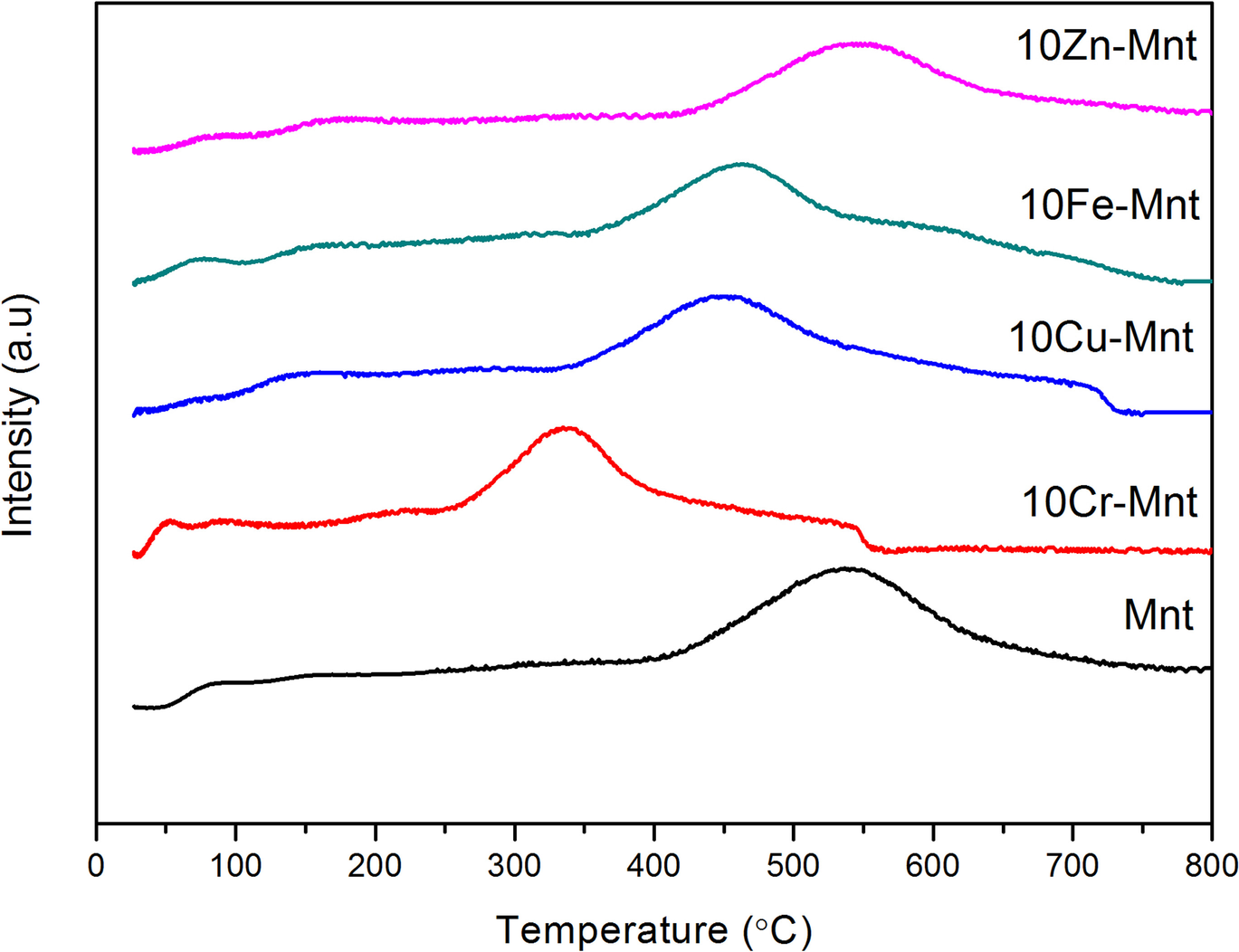
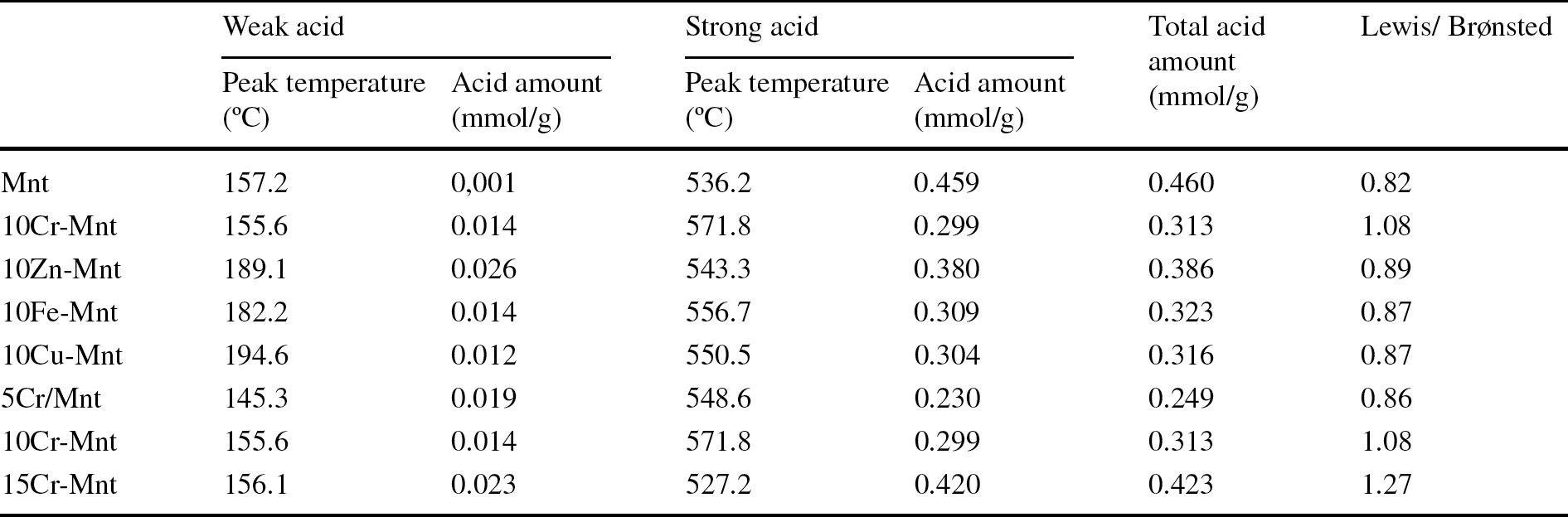
The NH3-TPD profiles of Mnt, 10Cu-Mnt, 10Cr-Mnt, 10Zn-Mnt, and 10Fe-Mnt catalysts were given information about the acidity of catalysts (Fig. 3). Although this method is not able to distinguish between Brønsted and Lewis acids, it does provide valuable information about the total number and strength of acid sites. In the area under the TPD curve, two distinct desorption peaks which divided them into two acidic regions, namely weak and strong acidity in the ranges of 100 to 200ºC and 350 to 600ºC, respectively (Liu et al., Reference Liu, Yuan, Liu, Cai, Tan, He, Zhu and Chen2013; Putluru et al., Reference Putluru, Schill, Godiksen, Poreddy, Mossin, Jensen and Fehrmann2016). The total acidity of the catalysts, as measured by the amount of ammonia desorbed, ranged from 0.249 to 0.460 mmol/g (Table 2). Compared to Mnt, impregnation with metals decreased the total acidity of the catalysts (Table 2), which could be due to the metal species replacing or covering the acidic sites (He et al., Reference He, Chen, Liu, Fang, Chen and Ji2019). However, the intensity of these two (weak and strong acid) peaks increased with increasing Cr content, indicating that a larger number of acid sites was formed.
NH3-TPD patterns of Mnt catalysts

Acid content and NH3-TPD peak temperatures of Mnt catalysts

Brønsted and Lewis acid sites were evaluated by the pyridine adsorption method to determine the relationship between the acid type and the catalytic activity of the prepared catalysts (Yu et al., Reference Yu, Wang, Wang, Zhou and Wang2018). Brønsted acid sites were observed in the FTIR spectra with an absorption peak at 1540 cm–1, while the absorption peak of Lewis acid sites occurred at 1450 cm–1. The Lewis/Brønsted ratio (L/B) was calculated based on the area under the corresponding peaks (Cao et al., Reference Cao, Fan, Chen, Li, Shen, Zhu and Ying2019). The L/B ratio was greatest for the Cr-Mnt catalyst (Table 2).
Comparison of the Performance of the Catalysts under Constant Reaction Conditions
The conversion of cellulose under hydrothermal conditions in the presence of Mnt doped with transition metals as a solid acid catalyst was investigated. First, the performances of the various transition metal-Mnt catalysts (Cr, Cu, Zn, Fe) were evaluated under constant conditions, at 180ºC for 2 h in water as the reaction medium. To understand the role of the catalyst in the conversion of cellulose, a reference measurement was obtained by treating cellulose with water in the absence of catalyst.
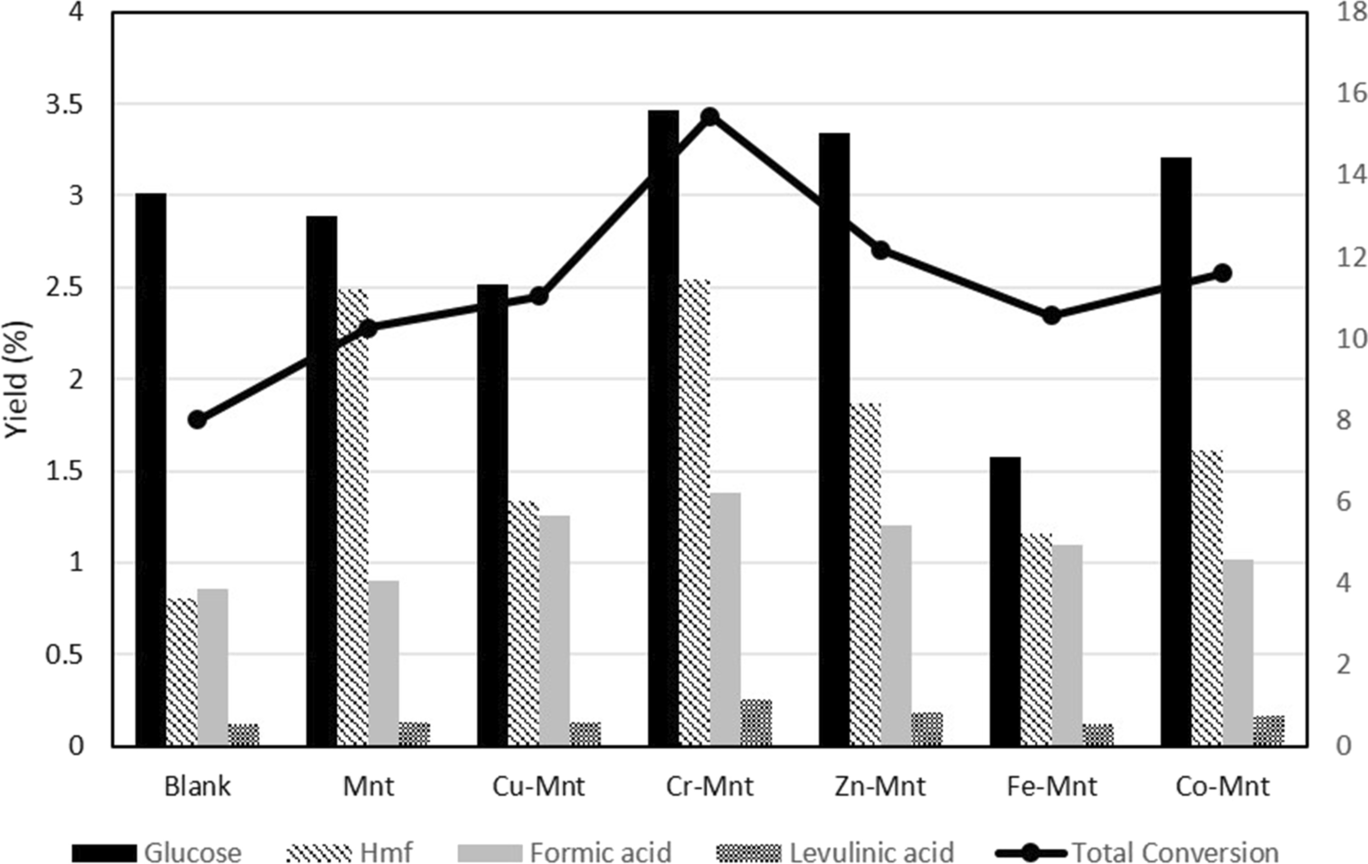
The process of HMF synthesis from cellulose involved the steps of hydrolysis, isomerization, and dehydration. During the process, levulinic acid and formic acid were formed from HMF. Further hydration of HMF to levulinic acid and polymerization of HMF by itself to form humins have been the bottlenecks in selective production of HMF from biomass conversion (He et al., Reference He, Chen, Liu, Fang, Chen and Ji2019; Rout et al., Reference Rout, Nannaware, Prakash, Kalra and Rajasekharan2016). In the blank sample, the HMF yield was only 0.8%, with a low cellulose conversion of 8% (Fig. 4). However, after the addition of the catalysts, cellulose conversion of up to 15.4% was achieved, with the highest HMF yield (2.5%). The highest cellulose conversion and HMF yield were observed with 10Cr-Mnt, followed by 10Zn-Mnt, 10Cu-Mnt, and 10Fe-Mnt. 5-HMF was further rehydrated to levulinic acid and formic acid. The maximum selectivity achieved using a Cr loaded Mnt catalyst was 16.5%, followed by 10Zn-Mnt 15.2%, 10Cu-Mnt 12.4%, 10Fe-Mnt 10.9%, and blank 10.1%. These results are similar to a study reported by Zhou et al. (Reference Zhou, Tang, Jiang, Jiang, Shao, Han and Xu2016), who prepared a metal-loaded bentonite catalyst with various types of metals and tested them for 5-HMF production from glucose. Among the metals studied, Cr showed the greatest catalytic activity (Zhou et al., Reference Zhou, Tang, Jiang, Jiang, Shao, Han and Xu2016). Both the 5-HMF yield and selectivity were affected by the Lewis/ Brønsted acid ratio. In the present study, the highest HMF yield (2.56%) and selectivity (16.7%) at 180°C for 2 h were obtained with the catalyst 10Cr-Mnt, which had the lowest total acidity and highest Lewis/Brønsted acid ratio (Table 2). Generally, the isomerization of glucose into fructose is completed in an alkaline reaction system (Binder & Raines, Reference Binder and Raines2009; Su et al., Reference Su, Qiu, Shen and Qi2018), and the dehydration of fructose to HMF requires an acidic environment (Nie et al., Reference Nie, Hou, Bai, Qian, Bai and Ju2020).
Cellulose conversion yield over 10Cr-Mnt, 10Cu-Mnt, 10Zn-Mnt, and 10Fe-Mnt catalysts (reaction conditions: 180°C, 2 h, 5 g of cellulose, 50 mL of water, 0.5 g of catalyst, 200 rpm)

Because the 10Cr-Mnt catalyst showed the greatest cellulose conversion and 5-HMF yield and selectivity, the effects of various reaction parameters, including Cr loading, reaction time, reaction temperature, and catalyst amount on the conversion of cellulose to 5-HMF were investigated further.
The Effect of Cr Loading
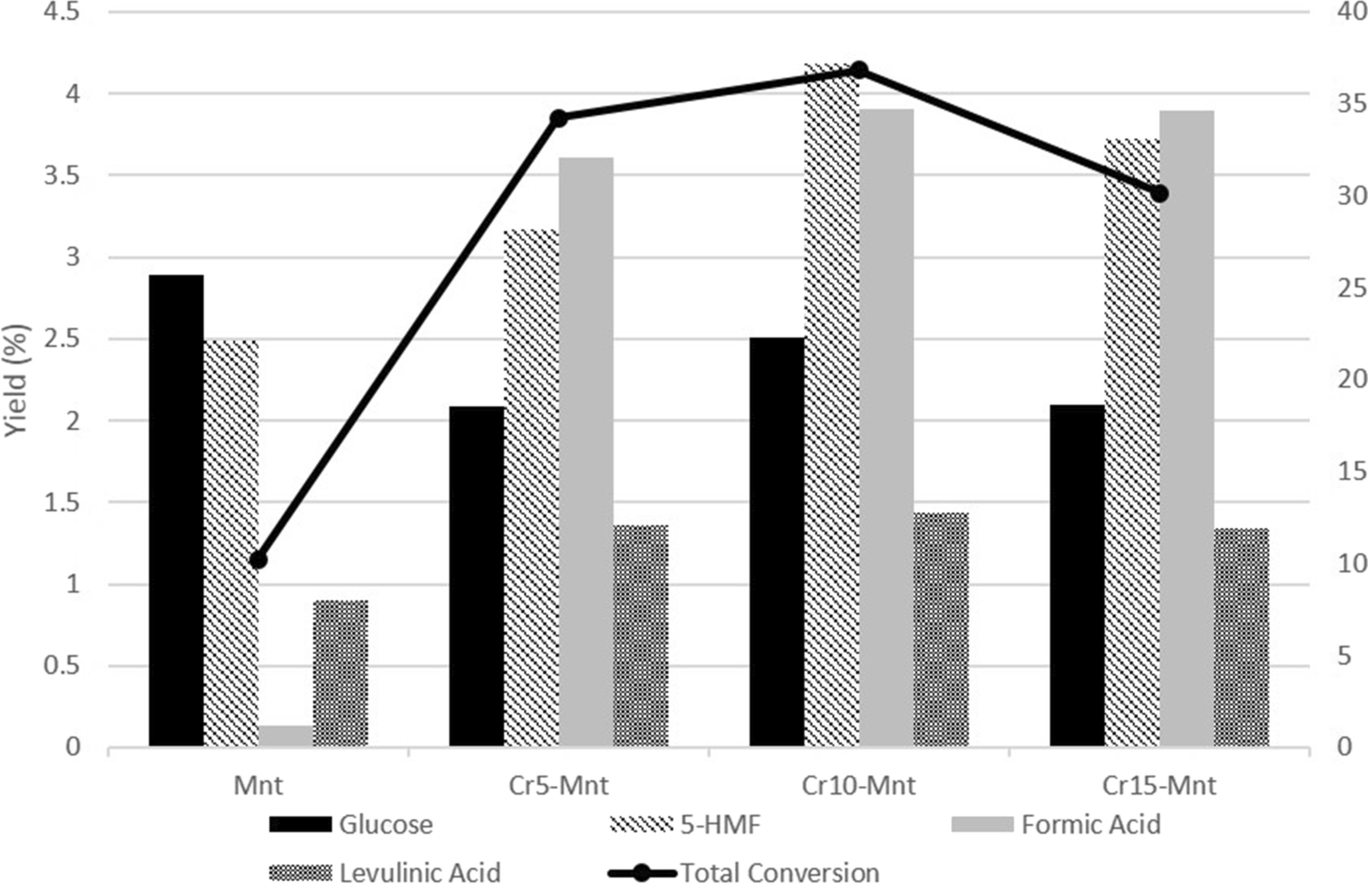
The amount of catalyst played an important role in the kinetics of production and needed to be optimized to achieve maximum selectivity for the desired product. Experiments were carried out varying the catalyst loading in the range 5–15 wt.%. All of the reactions were carried out at 180°C for 6 h using a 1:2 catalyst:substrate ratio in water. The cellulose conversion increased from 30.86 to 36.81% by increasing the amount of Cr from 0 to 10% (Fig. 5). When the amount of Cr was further increased to 15%, the cellulose conversion decreased to 30.15%. The yield of the 5-HMF production increased for all the synthesized catalysts with the increase in reaction time from 30 to 360 min. The maximum 5-HMF yield (4.19%) was obtained at 360 min using 10Cr-Mnt catalyst. However, when the amount of Cr was further increased from 10 to 15%, the 5-HMF yield decreased.
Effect of catalyst loading on the conversion of cellulose and 5-HMF yield (1/50 solid to liquid ratio, 2.5 g of 10Cr-Mnt, 6 h, 180°C)

Although water was used as the reaction medium in this study, the yield of 4.19% for 5-HMF is compatible with the literature. For example, Kassaye et al (Reference Kassaye, Pagar, Pant, Jain and Gupta2016) reported a 5.1% 5-HMF yield at 180ºC using sulfated zirconia catalyst and ionic liquid from cellulose (Kassaye et al., Reference Kassaye, Pagar, Pant, Jain and Gupta2016).
The increase in Cr content from 5 to 10% resulted in an increase of all products (glucose, 5-HMF, levulinic acid, formic acid). However, the yield of the products decreased slightly when Cr loading was increased to 15% (Fig. 5). A similar trend was also observed in cellulose conversion. This could be due to the decrease in surface area and pore volume of the catalyst when Cr loading was increased from 10 to 15%.
Effect of the Reaction Temperature and Reaction Time
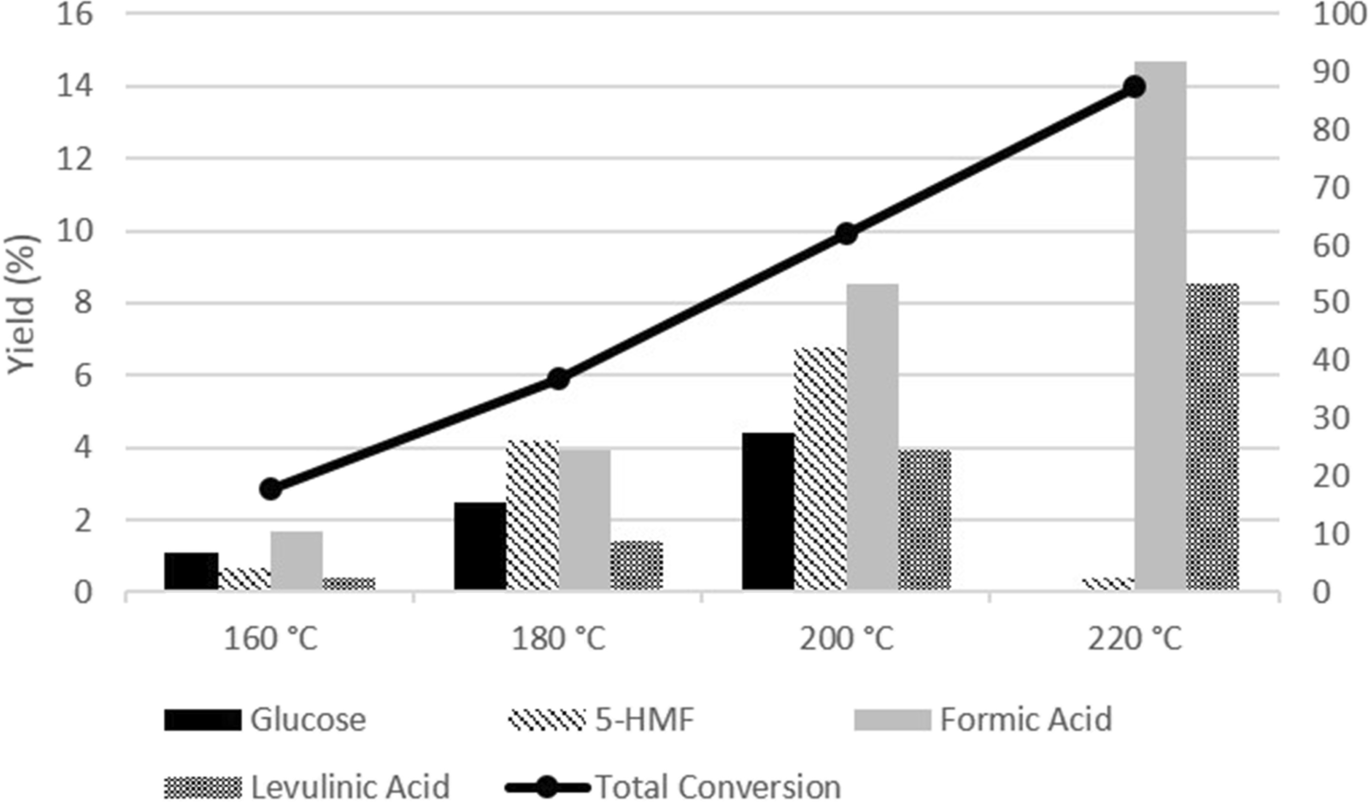
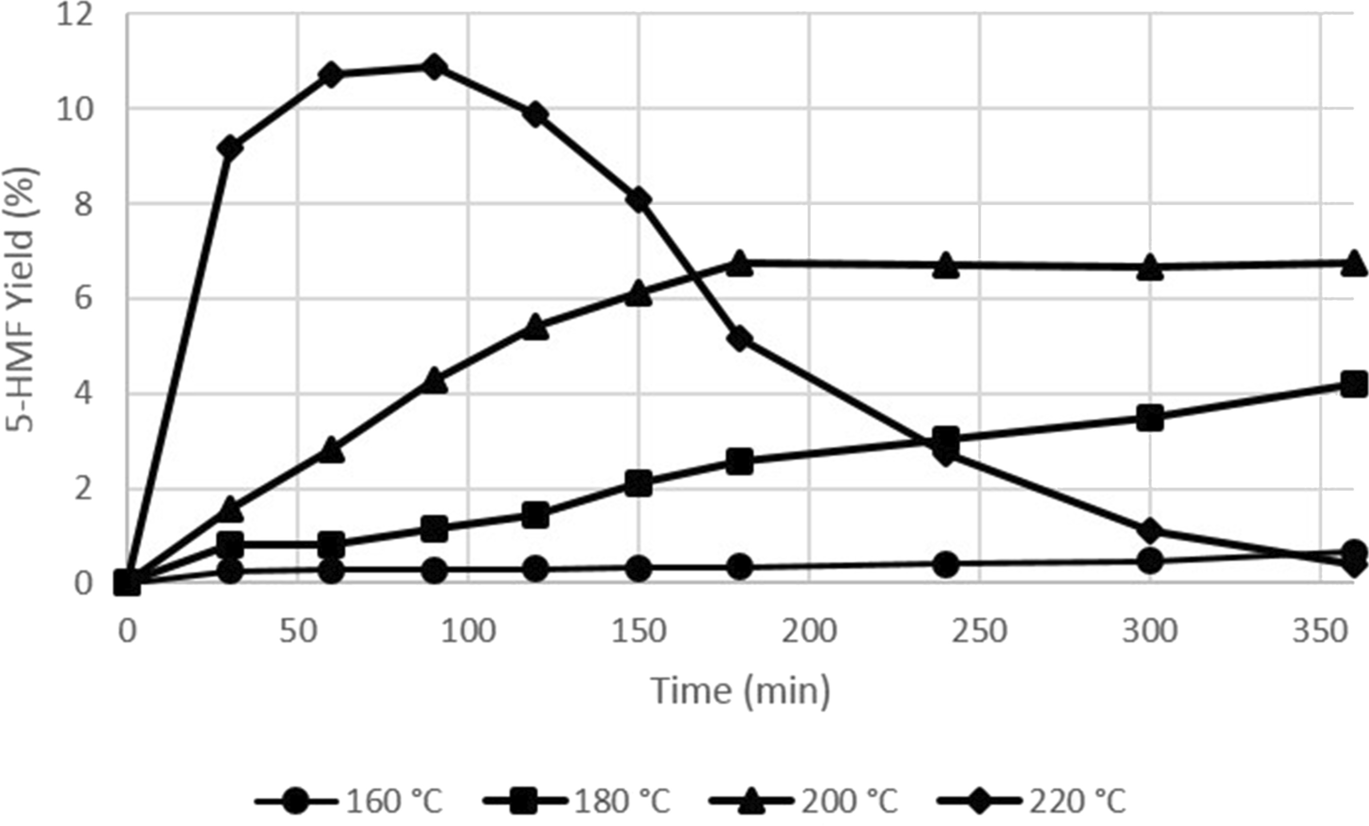
Reaction temperature and reaction time are two factors which affect the dehydration of glucose greatly. To evaluate how the reaction temperature affected the production of HMF, the treatments were performed keeping all other parameters constant. Increasing the reaction temperature from 160 to 220°C over 6 h increased the cellulose conversion sharply from 17.85 to 87.32% (Fig. 6). The 5-HMF yield increased from 0.65 to 4.41% as the temperature increased from 160 to 200°C. With a further increase in the temperature to 220°C, however, the HMF yield and selectivity first increased to the maximum values of 10.88 and 11.51%, respectively, and then decreased with an increase in reaction time (Fig. 7). The reason for this phenomenon might be explained as the side reactions (i.e. rehydration) increasing with the reaction time at high temperatures, which led to the generation of soluble polymers and insoluble humin (Nandiwale et al., Reference Nandiwale, Galande, Thakur, Sawant, Zambre and Bokade2014; Zi et al., Reference Zi, Yan, Wang, Chen, Guo, Yuan, Gao, Wang and Wang2015). At 220ºC, longer reaction times resulted in the generation of more levulinic acid and formic acid. At lower reaction temperatures (200°C), the HMF yield was as high as 6.74%, with a 4.95% levulinic acid yield and an 8.51% formic acid yield after 6 h.
Effect of reaction temperature on the reaction products and cellulose conversion (2.5 g of 10Cr-Mnt, 6 h)

Effect of reaction temperature and reaction time on the 5-HMF yield (2.5 g of 10Cr-Mnt, 6 h)

Effect of Initial Cellulose Loading
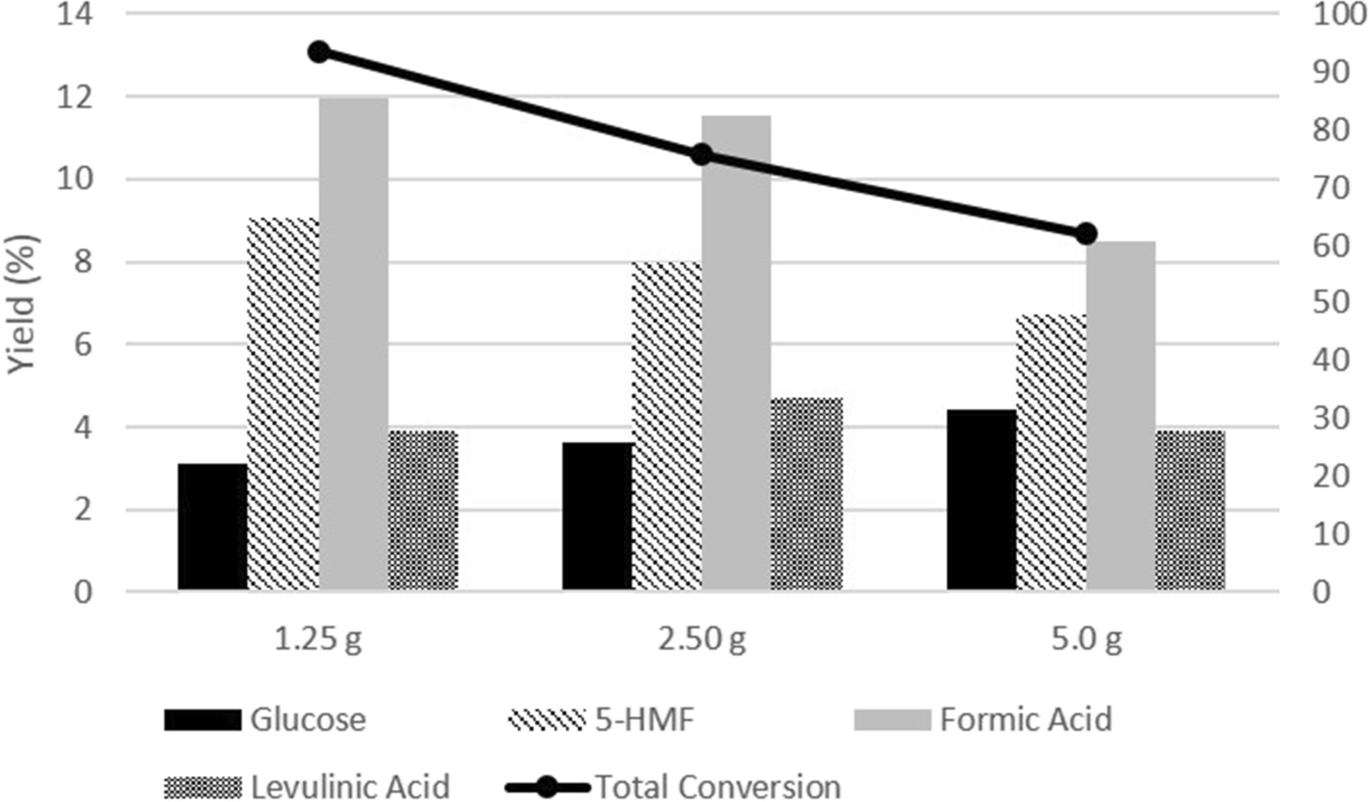
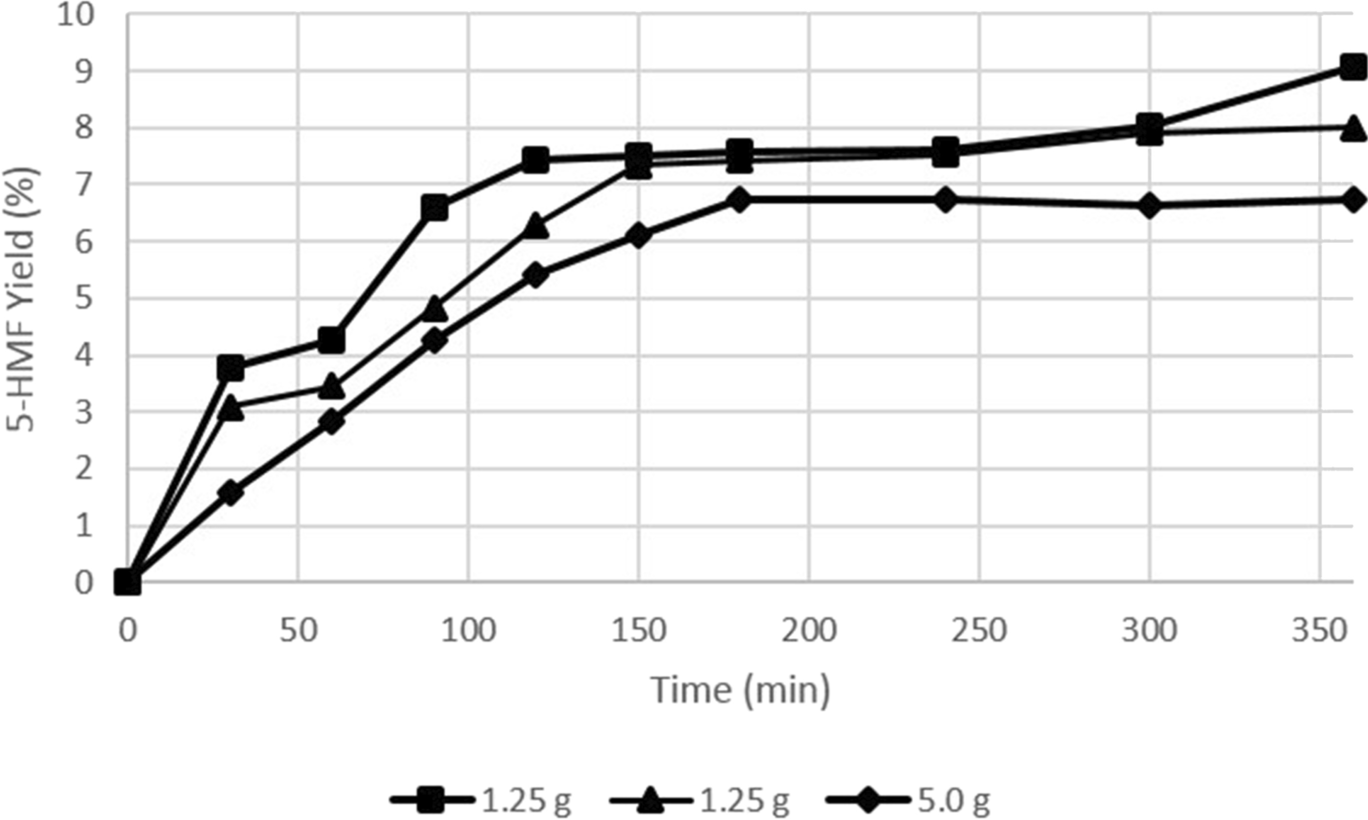
The ratio of cellulose to catalyst is a critical parameter for high cellulose conversion due to the solid–solid interaction between catalyst and cellulose. Adding an excess amount of catalyst to the cellulose conversion system can increase glucose conversion. Many reasons for these interactions might be given, such as chemical and van der Waal interactions between the cellulose and the catalyst or the outer surface of the catalyst, and the morphology of the catalyst (Lanzafame et al., Reference Lanzafame, Temi, Perathoner, Spadaro and Centi2012). For the above reasons, optimization of the ratio of cellulose to catalyst was investigated in this study. The effect of initial cellulose loading on 5-HMF production was studied by varying the amount of cellulose in the range 1.25–5.0 g with 2.5 g of catalyst at a temperature of 200ºC for 6 h. An increase in the initial amount of cellulose resulted in a decrease in the catalyst/substrate ratio (Fig. 8). A smaller initial amount of cellulose (1.25 g) increased the initial formation rate of 5-HMF at 120 min. After 2 h, no significant change in the 5-HMF yield with 2.5 and 1.25 g of initial cellulose was observed (Fig. 9). However, a significant difference in 5-HMF yield was observed when the initial amount of cellulose was increased to 5 g. Similar results were found by Su et al. (Reference Su, Qiu, Shen and Qi2018). When they decreased the ratio of catalyst to cellulose, their product yields decreased as much as results found in the present study, and they explained the reason for this situation as insufficient catalytically active sites formed between the solid acid catalyst and the substrate as a result of mass transfer resistance (Su et al., Reference Su, Qiu, Shen and Qi2018). On the other hand, although the cellulose conversion was as high as 93.47%, only 30% of the reaction products were identified. These products in the solution could be soluble polymers and humic substances derived from the decomposition or self-polymerization of glucose (Qi et al., Reference Qi, Watanabe, Aida and Smith2011).
Effect of the cellulose loading on reaction products and cellulose conversion (2.5 g of 10Cr-Mnt, 200°C, 6 h)

Effect of the cellulose loading on the 5-HMF yield (2.5 g of catalyst 10Cr-Mnt, 200°C, 6 h)

Conclusions
10Cr-Mnt was the most effective catalyst among the other metal-Mnt catalysts (10Cu-Mnt, 10Fe-Mnt, and 10Zn-Mnt) investigated in this study. 10Cr-Mnt catalyzed effectively the conversion of cellulose to 5-HMF in the water media. Reaction temperature and reaction time had a great impact on the conversion of the cellulose and 5-HMF yield. Maximum conversion of cellulose, as high as 93.47%, was obtained when reacting 1.25 g of cellulose, 2.5 g of catalyst 10Cr-Mnt, and 50 mL of water at 200°C for 6 h. Under these conditions, the 5-HMF yield was 9.07%. Moreover, the 5-HMF yield was dependent on the total acid, and the ratio of the Lewis/Brønsted acid sites. The greatest 5-HMF yield and selectivity were obtained with the 10Cr-Mnt, which has the lowest total acidity and the greatest Lewis/Brønsted acid ratio among the metal-Mnt catalysts (10Cu-Mnt, 10Fe-Mnt, 10Zn-Mnt, and 10Cr-Mnt). Although the results showed that a 10Cr-Mnt catalyst is effective for the conversion of cellulose into the 5-HMF in a water media, reaction efficiency and selectivity still need to be improved.
Acknowledgements
This study was supported by Anadolu University Scientific Research Projects Commission under the grant no: 1502F080
Funding
Funding sources are as stated in the Acknowledgements.
Data Availability
Data sets generated during the current study are available upon request from the corresponding author.
Declarations
Conflicts of interest
The authors report no declarations of interest.