Introduction
Some invertebrate species have been harvested for centuries (Lotze et al., Reference Lotze, Lenihan, Bourque, Bradbury, Cooke, Kay, Kidwell, Kirby, Peterson and Jackson2006), while others started being exploited only a few decades ago (Berkes et al., Reference Berkes, Hughes, Steneck, Wilson, Bellwood, Crona, Folke, Gunderson, Leslie, Norberg, Nyström, Olsson, Österblom, Scheffer and Worm2006; Anderson et al., Reference Anderson, Lotze and Shackell2008). Even with the increasing socio-economic importance of invertebrate fisheries, the scientific knowledge on the biology of several harvested and commercially valuable species is frequently scarce (Anderson et al., Reference Anderson, Mills Flemming, Watson and Lotze2011). In addition, despite the key ecological importance of invertebrates, their fisheries often occur without regulation, monitoring and assessment (Berkes et al., Reference Berkes, Hughes, Steneck, Wilson, Bellwood, Crona, Folke, Gunderson, Leslie, Norberg, Nyström, Olsson, Österblom, Scheffer and Worm2006; Anderson et al., Reference Anderson, Lotze and Shackell2008; FAO, 2009). In particular, commercial and recreational bivalve fisheries, especially those targeting venerid species due to their diversity and commercial value, constitute a cultural, social and economic resource for numerous coastal communities worldwide (Gaspar et al., Reference Gaspar, Barracha, Carvalho, Vasconcelos and Costa2013). For this reason, the development of bivalve fisheries and harvesting activities has prompted the need for further research on the reproductive cycle of commercially exploited species, in order to implement management measures aiming to promote the sustainable exploitation of the resources (e.g. Gaspar & Monteiro, Reference Gaspar and Monteiro1998; Tirado et al., Reference Tirado, Rodríguez, Bruzón, López, Salas and Márquez2002; Moura et al., Reference Moura, Gaspar and Monteiro2008).
The golden carpet shell (Polititapes aureus Gmelin, 1791) is a venerid bivalve distributed from the Norwegian Sea to the Iberian Peninsula, along the North of Africa, into the Mediterranean Sea and Black Sea, as well as in the archipelagos of Canaries and Azores (Tebble, Reference Tebble1966; Poppe & Goto, Reference Poppe and Goto1993; Borges et al., Reference Borges, Costa, Cunha, Gabriel, Gonçalves, Martins, Melo, Parente, Raposeiro, Rodrigues, Santos, Silva, Vieira and Vieira2010; Carpenter & De Angelis, Reference Carpenter and De Angelis2016; Morton & Leung, Reference Morton and Leung2018). Despite being an endemic species from the Mediterranean Sea, P. aureus was first recorded in the Suez Canal in 1905 and then colonized Lake Timsah in Egypt (Fouda & Abou Zied, Reference Fouda and Abou-Zied1990). This species has commercial value mainly in Portugal, Spain, France, Italy and Tunisia (François et al., Reference François, Dalègre, Gilbert and Stora1999; Pereira, Reference Pereira2011; Di Bella et al., Reference Di Bella, Turco, Potortì, Rando, Licata and Dugo2013; Costa, Reference Costa2018; Derbali & Jarboui, Reference Derbali and Jarboui2021). Nevertheless, after its introduction and successful establishment (Fouda & Abou-Zied, Reference Fouda and Abou-Zied1990), P. aureus is also commercially exploited in Egypt (Kandeel, Reference Kandeel2008, Reference Kandeel2013, Reference Kandeel2017a, Reference Kandeel2018).
Despite its economic importance, the knowledge currently available on the biology of P. aureus, namely on the reproductive cycle, is still very limited and quite dispersed (Costa, Reference Costa2018). The species’ gametogenic cycle was studied in Thau lagoon (France) by Gallois (Reference Gallois1977) and in Galicia (Spain) by Fariña (Reference Fariña2005). The potential of larval, post-larval, seed and juvenile production in captivity was assessed in S. Jorge Island (Azores, Portugal) by Pereira (Reference Pereira2011) and in Galicia (Spain) by Costa (Reference Costa2018). Histopathological analyses to detect parasites responsible for pathologies in the golden carpet shell were performed in Spain (Navas et al., Reference Navas, Castillo, Vera and Ruíz-Rico1992; Iglesias et al., Reference Iglesias, Carballal and Villalba2007; Carballal et al., Reference Carballal, Iglesias, Díaz and Villalba2013). In the Gulf of Gabès (Tunisia) a study analysed the population structure, size structure and other biological parameters (Derbali & Jarboui, Reference Derbali and Jarboui2021), whereas in the Suez Canal (Egypt) diverse works were carried out on reproduction and recruitment (Kandeel, Reference Kandeel2006, Reference Kandeel2013, Reference Kandeel2017b), length-weight relationships and condition indices (Kandeel, Reference Kandeel2008), age, growth, mortality and exploitation rates (Yassien et al., Reference Yassien, El-Ganainy and Sallam2009; Mohammad et al., Reference Mohammad, Belal and Hassan2014; Kandeel, Reference Kandeel2018).
Considering the limited information on the reproductive biology of the golden carpet shell in Portugal, the present study aimed to describe the gametogenic cycle and assess the pattern of energy storage and utilization throughout the reproductive dynamics of P. aureus from the Ria Formosa lagoon (southern Portugal). The influence of some environmental parameters on the species’ spawning season was also assessed, in order to obtain suitable information to propose fishery management measures for promoting the sustainable harvesting of this locally important shellfish resource.
Materials and methods
Study area and environmental parameters
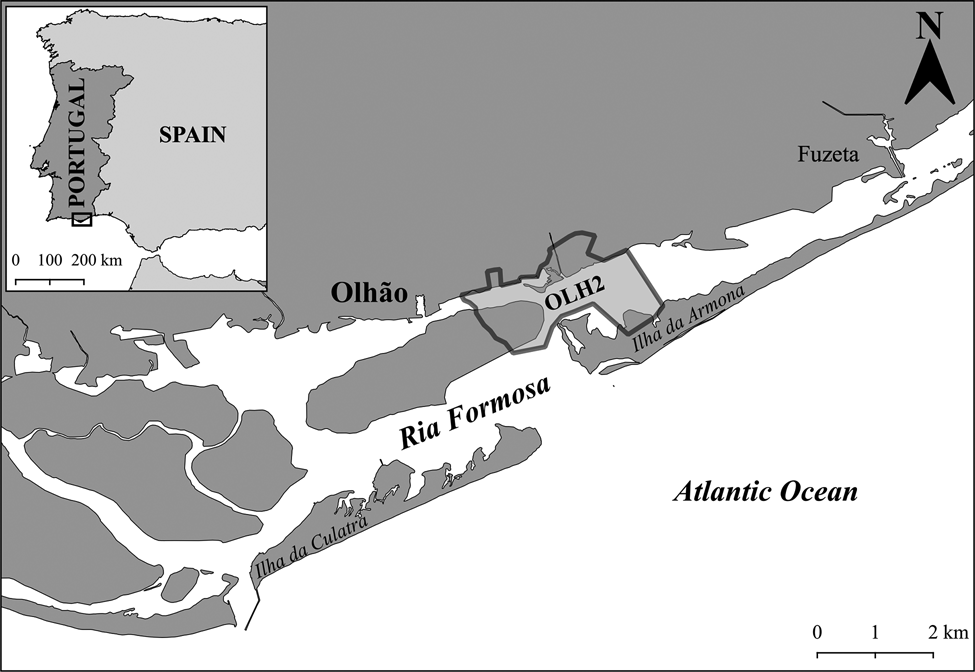
Individuals were caught monthly for two years (March 2016–February 2018) by professional bivalve harvesters in the area locally known as Fortaleza, nearby the Culatra barrier island located in front of Olhão (Ria Formosa lagoon – southern Portugal) (Figure 1). After the field sampling, specimens were transported to the laboratory and kept in an aquarium with filtered seawater (0.5 μm) at 20°C during 24 h to eliminate their stomach contents. This procedure allows preventing technical issues during soft tissues sectioning for histology purposes, but does not interfere with the condition index assessment and biochemical composition analyses (Howard et al., Reference Howard, Lewis, Keller and Smith2004). During this short period in the aquarium, optimal conditions of seawater temperature, salinity, oxygenation and pH were guaranteed in order to avoid stressing the individuals.
Map highlighting the collecting site of Polititapes aureus in the Ria Formosa lagoon (Algarve coast, southern Portugal).

Data on seawater temperature and chlorophyll a during the study period were gathered in order to assess eventual relationships between these environmental parameters and the reproductive dynamics of P. aureus. Information on the sea surface temperature (SST daily multiple records) was provided by the Portuguese Hydrographic Institute (IH, 2020) from data acquired at the closest oceanographic buoy (Faro buoy: 36°54.3′N 07°53.9′W). Information on the concentration of chlorophyll a (Chl a) in seawater was derived from satellite observations of ocean colour data (1 km resolution daily records) downloaded from the GIS web portal of Ocean Colour CCI (https://www. oceancolour.org/portal/) (Sathyendranath et al., Reference Sathyendranath, Brewin, Brockmann, Brotas, Calton, Chuprin, Cipollini, Couto, Dingle, Doerffer, Donlon, Dowell, Farman, Grant, Groom, Horseman, Jackson, Krasemann, Lavender, Martinez-Vicente, Mazeran, Mélin, Moore, Müller, Regner, Roy, Steele, Steinmetz, Swinton, Taberner, Thompson, Valente, Zühlke, Brando, Feng, Feldman, Franz, Frouin, Gould, Hooker, Kahru, Kratzer, Mitchell, Muller-Karger, Sosik, Voss, Werdell and Platt2019).
Gonad histology, mean gonadal index and condition index
Histological sections of the gonads were obtained from 20 individuals per monthly sample in order to identify the gender and describe the gametogenic cycle. Specimens were dissected and the visceral mass was fixed in Davidson solution for 24 h. Afterwards, samples were dehydrated, infiltrated and embedded in paraffin wax. Gonadal sections (7 μm thick) were cut using an automated microtome and then stained with haematoxylin and eosin (H&E). Sex and gonad maturity stages were assigned after examining the histological slides under an optical microscope (magnifications of 40×, 100× and 200×).
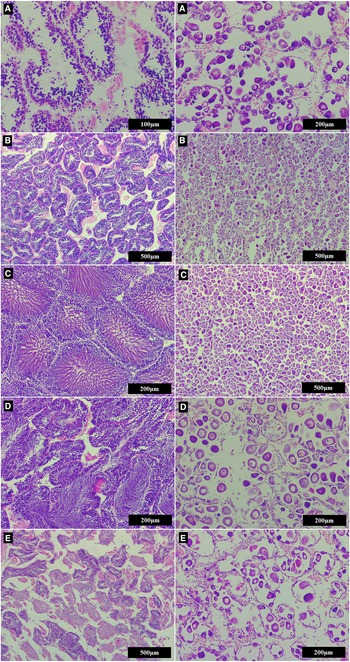
The gametogenic stages were identified employing the microscopic maturation scale previously described by Gaspar & Monteiro (Reference Gaspar and Monteiro1998) and briefly illustrated in Figure 2: inactive (stage 0), early active (stage I), late active (stage II), ripe (stage III), partially spawned (stage IV) and spent (stage V). Subsequently, a numerical ranking was assigned to each maturity stage (inactive = 0; early active = 2; late active = 4; ripe = 5; partially spawned = 3; spent = 1), in order to estimate the mean gonadal index (GI) following the equation proposed by Seed (Reference Seed and Bayne1976):

Histological sections displaying the stages of gonad development in males (left) and females (right) of Polititapes aureus from Ria Formosa: (A) Early active; (B) Late active; (C) Ripe; (D) Partially spawned; (E) Spent.

The reproductive activity of P. aureus was also analysed monthly through the body condition index proposed by Walne & Mann (Reference Walne, Mann and Barnes1975). For this purpose, the soft tissues and shells of 10 specimens were oven-dried at 80°C for 24 h and then the tissues were turned into ashes in a muffle furnace at 450°C. The condition index (CI), reflecting the percentage of organic matter in the bivalve body, was calculated through the ratio between the tissues ash free dry weight (AFDW, g) and the shell dry weight (SDW, g) using the following equation:

The soft tissues of 10 specimens per monthly sample were homogenized separately and stored at −20°C for biochemical analyses. Proteins were determined following the modified method of Lowry (Shakir et al., Reference Shakir, Audilet, Drake and Shakir1994) and the glycogen content was estimated from dried homogenate (80°C for 24 h) using the anthrone reagent (Viles & Silverman, Reference Viles and Silverman1949). Total lipids were extracted from fresh homogenized material in chloroform/methanol (Folch et al., Reference Folch, Less and Stanley1957) and estimated spectrophotometrically after charring with concentrated sulphuric acid (Marsh & Weinstein, Reference Marsh and Weinstein1966). The biochemical composition, expressed as μg mg−1 AFDW, corresponded to average values from duplicate samples. The total energy of each compound, expressed as kJ mg−1 AFDW, was calculated using the following energy equivalents: 17.9 kJ g−1 for proteins (Beukema & De Bruin, Reference Beukema and De Bruin1979), 33 kJ g−1 for total lipids (Beninger & Lucas, Reference Beninger and Lucas1984) and 17.2 kJ g−1 for glycogen (Paine, Reference Paine1971).
Statistical analyses
The sex ratio in each monthly sample and in the pooled samples (two years), expressed as the proportion of males per female (F:M), was compared with parity (1:1) using the Chi-square test for expected frequencies in the samples (χ2 test).
Temporal variation among months and sampling periods (March 2016–February 2017 and March 2017–February 2018) in environmental variables (SST and Chl a), reproductive parameters (GI and CI) and biochemical composition (proteins, glycogen, lipids and total energy) during the study period was assessed through analysis of variance (ANOVA). Whenever ANOVA assumptions (normality of data and homogeneity of variances) were not achieved, the non-parametric Kruskal–Wallis test (ANOVA on ranks) was performed. Subsequently, multiple pairwise comparisons were performed using post-hoc parametric (Tukey) or non-parametric (Dunn) tests, in order to discern those samples responsible for temporal significant differences.
A correlation matrix was performed to analyse the eventual dependence between multiple variables (SST, Chl a, GI, CI and biochemical composition). The normality of each parameter was previously assessed using the Shapiro–Wilk test and the degree of association between parameters was assessed through the correlation coefficient of Pearson (r) or Spearman (ρ), whenever data were normally or non-normally distributed, respectively.
Statistical analyses were performed using the SIGMAPLOT 12.5 statistical package, with statistical significance level considered for P < 0.05.
Results
Environmental parameters
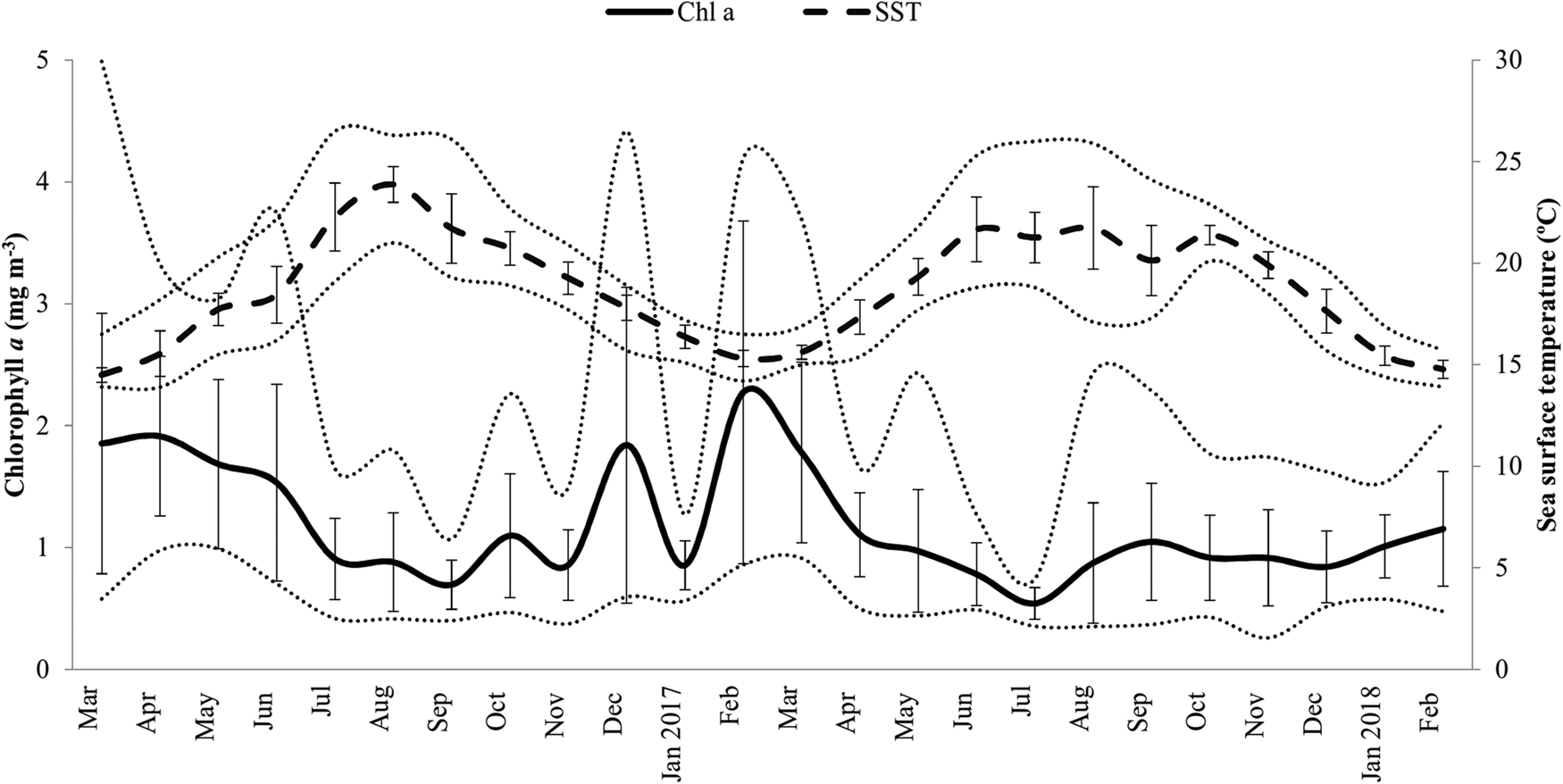
During the study period, lowest mean seawater temperatures were registered in March 2016 (14.5°C ± 0.4) and February 2017 (15.3°C ± 0.4), whereas highest mean values were invariably recorded in August, being considerably higher in 2016 (23.9°C ± 0.9) compared with 2017 (21.7°C ± 2.0). Overall, SST was abnormally lower and remained roughly constant during a much longer period (~June–November) in 2017 than in 2016. Indeed, SST displayed highly significant differences (H = 55.689, P < 0.001) between the first (March 2016–February 2017) and second periods (March 2017–February 2018), presenting inter-annual variation in all monthly samples except December (Q = 0.939, P > 0.05).
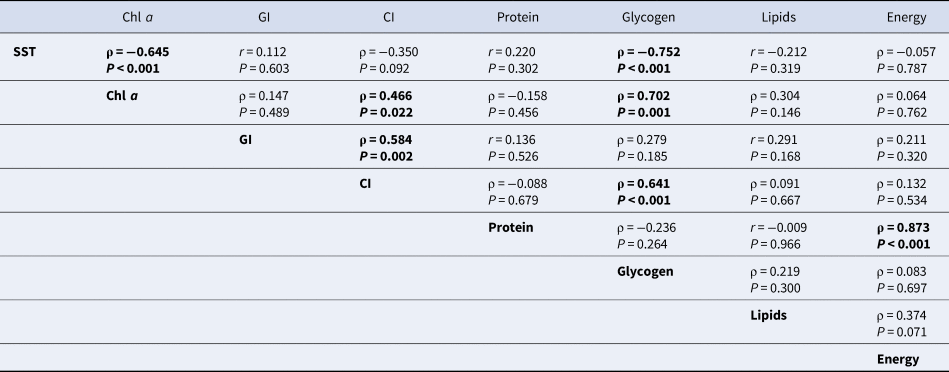
Concentrations of Chl a in seawater ranged from 0.7 ± 0.2 (September) to 1.9 ± 0.7 mg m−3 (April) in 2016 and from 0.5 ± 0.1 (July) to 2.3 ± 1.4 mg m−3 (February) in 2017. This environmental parameter presented significant temporal differences throughout the study period (H = 10.880, P < 0.001) and registered typical peak values during spring in the two-year sampling period. As expected, SST and Chl a were strongly inter-dependent and negatively correlated (ρ = −0.645, P < 0.001), confirming an opposite trend between these environmental variables (Table 1 and Figure 3).
Temporal variation in the concentration of chlorophyll a (Chl a) and sea surface temperature (SST) during the study period (March 2016–February 2018). SST is presented as mean and range (dashed and dotted lines, respectively). Chl a and SST presented as mean ± SD and range (filled and dotted lines, respectively).

Pearson (r) or Spearman (ρ) correlations established between environmental variables, reproductive parameters and biochemical composition of Polititapes aureus from Ria Formosa

Statistically significant correlations (P < 0.05) are highlighted in bold.
Gonad histology, mean gonadal index and condition index
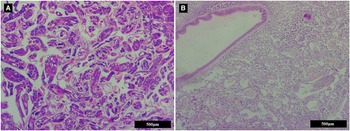
A total of 450 individuals of P. aureus were analysed from March 2016 to February 2018. Among these, 22 specimens with gonads severely affected by the presence of parasites and pathologies were excluded from further analytical procedures. Trematode infestations and haemocytic neoplasia were the main pathologies detected in those specimens (Figure 4).
Histological sections showing infections of Polititapes aureus from Ria Formosa: (A) massive infestation of the tissues by a digenetic trematode, with sporocysts containing different forms of the evolutionary phases; (B) haemocytic neoplasia affecting clam tissues.

Overall, 428 individuals of P. aureus comprised 157 females (36.7%), 126 males (29.4%) and 145 sexually indeterminate specimens (33.9%). During the two-year sampling period, the sex ratio in the pooled samples was statistically balanced between sexes (1F:0.8 M, χ2 = 3.180, P > 0.05). Only two monthly samples presented significant deviations from parity (1:1), both with female-biased sex-ratios, namely September 2016 (1F:0.3 M, χ2 = 4.050, P < 0.05) and August 2017 (1F:0.2 M, χ2 = 5.882, P < 0.05).
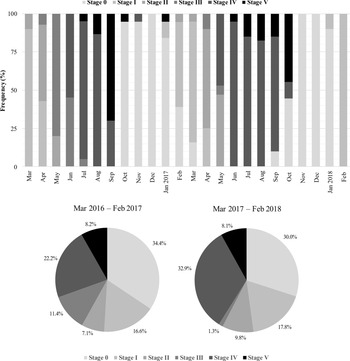
Males and females displayed highly synchronized gonadal development, maturation and ripening throughout the study period, therefore the reproductive cycle was analysed for sexes combined. The monthly variation of gonad maturity stages of P. aureus from the Ria Formosa lagoon is presented in Figure 5. In general, the gametogenesis (stages I and II) started around February–March and extended until May. In May 2016, around 80% of the individuals presented ripe gonads (stage III), whereas in May 2017 only a few specimens were ripe (~6%) and 47% of the population had already spawned (stage IV). In 2016, spawning (stage IV) occurred mainly between June and September, whereas in 2017 spawning started one month earlier (May) and ended one month later (October). After gamete emission, the individuals presented inactive gonads (stage 0) mainly between October and January. Due to these differences in the species gametogenic cycle between sampling years (March 2016–February 2017 vs March 2017–February 2018), pie charts with mean annual proportions of the maturity stages are presented separately for each period (Figure 5). Overall, the main difference observed between these sampling periods is the almost lack of ripe individuals in 2017 (stage III = 1.3%) compared with 2016 (stage III = 11.4%).
Bar chart of monthly variation and pie charts representing the mean annual proportion of each gonad maturity stage in Polititapes aureus from Ria Formosa during the study period (March 2016–February 2018).

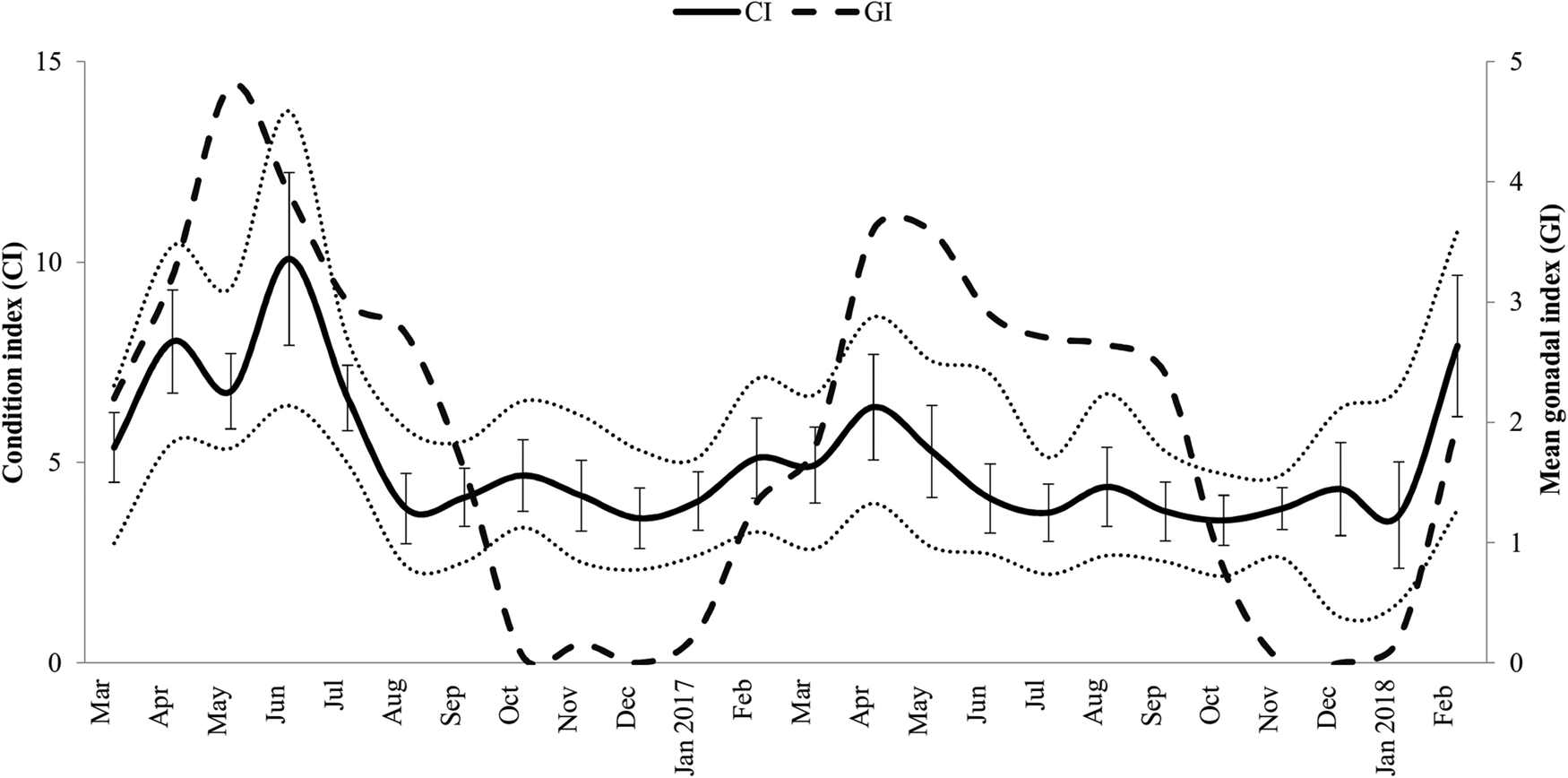
Accordingly, the mean gonadal index (GI) also displayed obvious monthly oscillations throughout the study period, reflecting the species’ reproductive cycle (Figure 6). However, despite the absence of significant differences (F = 0.008, P > 0.05) between sampling years (March 2016–February 2017 vs March 2017–February 2018), higher GI values were reached in 2016, with a maximum in May (GI = 4.8), considerably larger than those attained in 2017, with a maximum in April (GI = 3.6). In general, highest GI's preceded the peaks in SST (Figure 3) and reflected gonadal ripening (Figure 5). The declines recorded in June–September 2016 and May–October 2017 corresponded to spawning events, whereas the lower GI's registered between October and January coincided with the resting period (Figure 5).
Temporal variation in the condition index (CI) and mean gonadal index (GI) of Polititapes aureus from the Ria Formosa during the study period (March 2016–February 2018). CI presented as mean ± SD and range (filled and dotted lines, respectively).

The body condition index exhibited highly significant temporal variation throughout the study, namely between the first and second sampling years (H = 29.721, P < 0.001), mainly due to inter-annual differences in the monthly samples of February (Q = 3.811, P < 0.05), June (Q = 8.057, P < 0.05) and July (Q = 6.775, P < 0.05). The highest CI was reached in June 2016 (10.1 ± 2.2) and then decreased sharply until August (reflecting spawning), remaining low throughout autumn and winter (Figure 6). Subsequently, CI increased again between January and April 2017, when it reached the maximum value (6.4 ± 1.3) highlighting the onset of gametogenesis. In practice, the highest CI was attained slightly earlier in 2017 but with a considerably lower value compared with 2016. On the opposite, lowest CI's were recorded in December 2016 (3.6 ± 0.8) and October 2017 (3.6 ± 0.6), fairly matching the resting period (stage 0) between October and January previously observed in gonad histology and further supported by the GI (Figure 6). A positive correlation was recorded between CI and GI (ρ = 0.584, P < 0.01), further confirming that improved physiological condition (>CI's) also contributed for strengthening the reproductive investment and effort of P. aureus (>GI's) (Table 1 and Figure 6). The CI was positively correlated with chlorophyll a (ρ = 0.466, P < 0.05), denoting the higher CI's recorded during spring and early summer (Figures 3 and 6).
The distinct fluctuations in both GI and CI between sampling years, together with the previous remark of virtually lacking ripe individuals in 2017, probably reflect the atypical pattern in SST during this year (Figure 3). Overall, these findings suggest that spawning (stage IV) of P. aureus in 2017 occurred mostly through partial spawning episodes, i.e. without reaching the greatest gonadal maturation and before attaining full ripening (stage III).
Biochemical composition
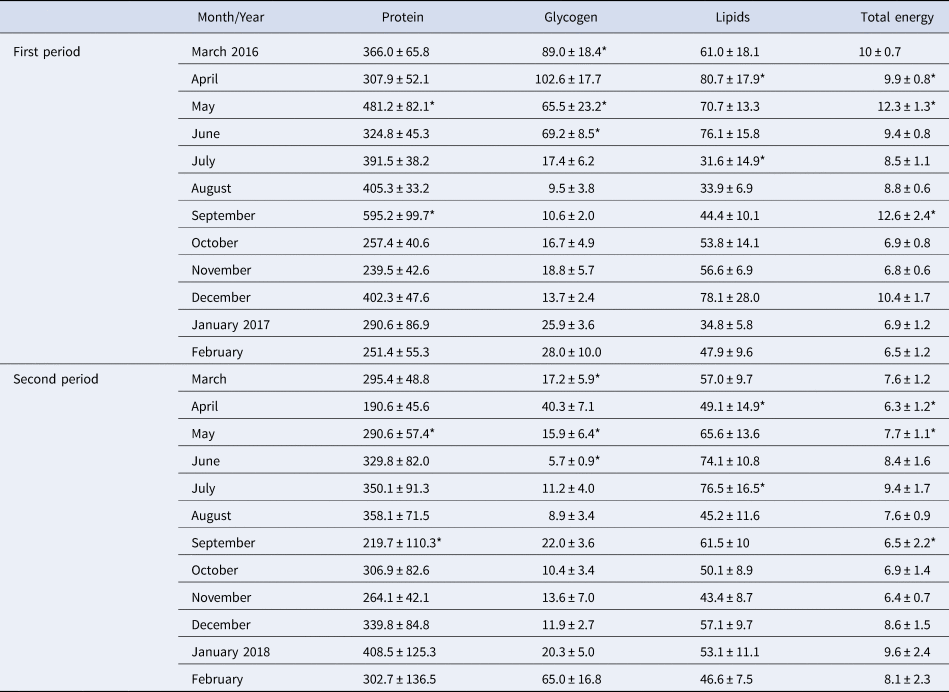
Following the species’ reproductive dynamics, all biochemical components displayed statistically significant differences among monthly samples that were reflected in inter-annual variation between the first and second study periods (Table 2). Proteins ranged from 190.6 ± 45.6 (April 2017) to 595.2 ± 99.7 μg mg−1 (September 2016), with significant differences between study periods (H = 26.470, P < 0.001) mainly due to inter-annual differences in May (Q = 5.011, P < 0.05) and September (Q = 8.232, P < 0.05). The lowest and highest glycogen values were recorded in June 2017 (5.7 ± 0.9 μg mg−1) and April 2016 (102.6 ± 17.7 μg mg−1), respectively. Significant differences were observed between the first and second periods (H = 37.542, P < 0.001) owing to inter-annual variation in March (Q = 4.761, P < 0.05), May (Q = 4.540, P < 0.05) and June (Q = 7.856, P < 0.05). Although the minimum and maximum values of total lipids were both observed in 2016 (July = 31.6 ± 14.9 μg mg−1; April = 80.7 ± 17.9 μg mg−1), significant inter-annual differences were recorded in April (Q = 4.543, P < 0.05) and July (Q = 6.782, P < 0.05). Overall, total energy ranged from 6.3 ± 1.2 (April 2017) to 12.6 ± 2.4 KJ mg−1 (September 2016), with significant differences between the first and second periods (H = 23.533, P < 0.001) due to inter-annual fluctuation in the monthly samples of April (Q = 4.843, P < 0.05), May (Q = 5.061, P < 0.05) and September (Q = 6.061, P < 0.05) (Table 2).
Mean values ± SD of proteins, glycogen, lipids (μg mg−1 AFDW) and total energy (kJ g−1 AFDW) in Polititapes aureus from the Ria Formosa during the study period (March 2016–February 2018)

Asterisks (*) denote statistically significant inter-annual differences between monthly samples (K–W, Dunn test, P < 0.05).
Regarding the significant relationships obtained in the correlation matrix established between all variables throughout the study period, proteins were positively correlated with total energy (ρ = 0.873, P < 0.01) (Table 1). Glycogen was negatively correlated with SST (ρ = −0.752, P < 0.01) and accordingly was positively correlated with Chl a (ρ = 0.702, P < 0.01), confirming higher glycogen accumulation and energy storage by P. aureus during the periods with greater availability of phytoplankton in seawater. Overall, the CI revealed a direct relationship and close dependence of the glycogen level (ρ = 0.641, P < 0.01) (Table 1) and followed a similar temporal trend, i.e. presenting maximum values in the spring coincident with the periods of higher physiological condition and gonadal maturation.
Discussion
Unfortunately, studies on the reproduction of the golden carpet shell are very scarce and for this reason the present results can only be compared with populations of P. aureus from Thau lagoon, France (Gallois, Reference Gallois1977), Timsah Lake, Egypt (Kandeel, Reference Kandeel1992; Mohammad et al., Reference Mohammad, Belal and Hassan2014) and Galicia, Spain (Fariña, Reference Fariña2005). A balanced sex ratio was recorded in the present study (1F:0.8 M), just like in populations from France and Egypt (Gallois, Reference Gallois1977; Kandeel, Reference Kandeel1992; Mohammad et al., Reference Mohammad, Belal and Hassan2014), whereas a female-biased sex ratio (1.26F:1M) was reported for P. aureus from the Gulf of Gabès, Tunisia (Derbali & Jarboui, Reference Derbali and Jarboui2021).
In the Ria Formosa lagoon, P. aureus showed inactive gonads in autumn and winter, starting gametogenesis in late winter and spawning mainly between June and September in 2016 and between May and October in 2017. A quite similar timing of gametogenic development, with a resting period from November until March and a spawning season between May and October was also reported by Fariña (Reference Fariña2005). Gallois (Reference Gallois1977) and Kandeel (Reference Kandeel2006) stated that sexual resting in populations of this species from France and Egypt was unclear, since the gonads always presented signs of continuous gametogenesis. In Lake Timsah, histological studies revealed that gonad development of P. aureus remained in a poorly defined pattern throughout the year, suggesting that spawning was partial with several emissions (Kandeel, Reference Kandeel2006). In Thau lagoon, the population showed two or three spawning events, apparently separated by stages of gonadal restoration (Gallois, Reference Gallois1977). In contrast to French and Egyptian populations, both the present study and that performed in Galicia did not discern gonadal restoration. Moreover, the well-defined resting period recorded in the present study, further confirms clear differences in the reproductive dynamics between these populations and those studied by Gallois (Reference Gallois1977) and Kandeel (Reference Kandeel2006).
Depending on latitude, bivalve spawning can be annual, semi-annual or continuous throughout the year (Oyarzú et al., Reference Oyarzún, Toro, Garcés-Vargas, Alvarado, Guiñez, Jaramillo, Briones and Campos2018). Apparently, species living at medium (30–60°) and high (>60°) latitudes display annual reproductive cycles with just one spawning (mainly in spring–summer), while those inhabiting at low latitudes (<30°) have several spawning periods, which can be semi-annual or continuous (Rand, Reference Rand1973; Clarke, Reference Clarke1987). Indeed, the population of Timsah Lake, located at lower latitudes (30°N), exhibited several gametic emissions (Kandeel, Reference Kandeel2006), while those from Ria Formosa and Galicia (Fariña, Reference Fariña2005), both situated at medium latitudes (37 and 42°N, respectively), displayed a single spawning event. However, P. aureus from Thau lagoon, also situated at medium latitudes (43°N) presented multiple spawning events (Gallois, Reference Gallois1977).
Obviously, latitude and seawater temperature are not the only variables influencing reproduction, which follows a dynamic interaction of several exogenous factors (e.g. temperature, photoperiod, tides, food, age and pathology) coupled with endogenous factors (genetic and hormonal activity) (Sastry, Reference Sastry, Giese and Pearse1979). However, the quantity and quality of available food and seawater temperature seem the most significant influences (Gabbott, Reference Gabbott and Bayne1976; Bayne & Newell, Reference Bayne, Newell, Salenium and Wilbur1983; Pérez-Camacho et al., Reference Pérez-Camacho, Delgado, Fernández-Reiriz and Labarta2003; Serdar & Lök, Reference Serdar and Lök2009; Joaquim et al., Reference Joaquim, Matias, Matias, Moura, Arnold, Chícharo and Gaspar2011; Pereira, Reference Pereira2011). Furthermore, several studies confirmed dissimilar reproductive performance and biochemical composition depending on the geographic location of bivalve populations, even for those inhabiting similar latitudes (Shafee & Daoudi, Reference Shafee and Daoudi1991; Trigui El Menif et al., Reference Trigui El Menif, Le Pennec and Maamouri1995; Iglesias et al., Reference Iglesias, Camacho, Navarro, Labarta, Beiras, Hawkins and Widdows1996; Avendaño & Le Pennec, Reference Avendaño and Le Pennec1997; Matias et al., Reference Matias, Joaquim, Matias, Moura, Teixeira de Sousa, Sobral and Leitão2013).
Kandeel (Reference Kandeel2006) stated that continuous gamete production in P. aureus in Lake Timsah might relate to suitable seawater temperature for gametogenesis and availability of nutrients throughout the year, since multiple spawning was also recorded in other bivalve species from this location (Kandeel, Reference Kandeel2002; Mohammad, Reference Mohammad2002). Similarly, the golden carpet shell and some sympatric bivalve species exhibited multiple spawning events in the more stable environment of Thau lagoon (Gallois, Reference Gallois1977), whereas these species’ gametogenic cycle in the Atlantic coast depends more on local prevailing conditions in both seawater temperature and phytoplankton that induce seasonality in their reproductive cycle (Ubertini et al., Reference Ubertini, Lagarde, Mortreux, Le Gall, Chiantella, Fiandrino, Bernard, Pouvreau and d'Orbcastel2017). In the present study, seawater temperature range (14.5–23.9°C) was broader than in Thau lagoon and Lake Timsah, which probably contributes to the Ria Formosa population exhibiting a well-defined reproductive pattern throughout the year, displaying an initial phase gametogenic development, followed by a spawning season of 4–6 months and a final stage with inactive gonads. The present research evidenced once more how the reproduction of bivalve species can be strongly influenced by fluctuations in both SST and Chl a, as reflected through the temporal variation in the gonadal cycle, condition index and biochemical composition of P. aureus. In fact, compared with 2016, the lower GI, near absence of ripe individuals and longer spawning period with partial events of gamete release in 2017, were probably due to distinct fluctuation in SST and Chl a between sampling years.
The condition index reflected the main dynamics and activity throughout the reproductive cycle of P. aureus. The positive correlation recorded between CI and GI has been previously reported for several bivalve species from the Portuguese coast (e.g. Gaspar & Monteiro, Reference Gaspar and Monteiro1998; Moura et al., Reference Moura, Gaspar and Monteiro2008; Joaquim et al., Reference Joaquim, Matias, Matias, Moura, Arnold, Chícharo and Gaspar2011; Matias et al., Reference Matias, Joaquim, Matias, Moura, Teixeira de Sousa, Sobral and Leitão2013). In addition, the present study further confirmed that gonadal development closely depends on food availability, with the onset of gamete production occurring in late winter coupled with the phytoplankton bloom. Moreover, glycogen was assimilated and immediately used during late winter and spring for the synthesis of lipids during gamete production, which is typical in opportunistic bivalve species in terms of energetic reserves storage and utilization strategy during the reproductive cycle (da Costa et al., Reference da Costa, Aranda-Burgos, Cerviño-Otero, Fernández-Pardo, Louzán, Nóvoa, Ojea, Martínez-Patiño and da Costa2012).
Previous studies on bivalve species from Portugal revealed that the reproductive cycle of venerids is characterized by a seasonal pattern influenced by seawater temperature and food availability. Populations of Ruditapes decussatus from Ria de Aveiro and Ria Formosa lagoons (Matias et al., Reference Matias, Joaquim, Matias, Moura, Teixeira de Sousa, Sobral and Leitão2013) and Óbidos lagoon (Machado et al., Reference Machado, Baptista, Joaquim, Anjos, Mendes, Matias and Matias2018), as well as Chamelea gallina in the Algarve coast (Joaquim et al., Reference Joaquim, Matias, Matias, Moura, Roque, Chícharo and Gaspar2014), displayed a gametogenic cycle beginning with the initial stages of gametogenesis, followed by gonadal maturation and a spawning period culminating in a resting phase during winter. The population of Venerupis corrugata from Ria de Aveiro presented an extensive spawning season (Maia et al., Reference Maia, Sobral and Gaspar2006), with a short inactive period and gonads with signs of simultaneous gamete emission and recovery (Joaquim et al., Reference Joaquim, Matias, Matias, Moura, Arnold, Chícharo and Gaspar2011). In contrast, the population of Callista chione from the Arrábida coast exhibited a seasonal reproductive cycle with three spawning peaks and without sexual resting period (Moura et al., Reference Moura, Gaspar and Monteiro2008).
Overall, the present study provided the first data available on the reproductive biology of the golden carpet shell in Portugal. Similarly to most venerid bivalve species from the Portuguese coast, the reproductive cycle of P. aureus was characterized by a well-defined seasonality, comprising periods of storage, gametogenesis, spawning and resting. This information is valuable to propose scientifically based management measures for promoting the sustainable harvesting of this commercially exploited bivalve species and locally important shellfish resource. Finally, the fact that this species’ reproductive cycle displayed a dynamic response to atypical fluctuations in seawater temperature and phytoplankton, further reinforces the importance of implementing adaptive fishery management strategies to cope with global climate change.
Data
The data that support the findings of this study are available from the corresponding author, upon reasonable request.
Acknowledgements
The authors are grateful to the Portuguese Hydrographic Institute (IH) for kindly providing data on SST and to the website Ocean Colour CCI for the freely available data on Chl a. Sincere thanks are also due to Dr Francisco Ruano for his kind assistance and supervision during the identification of bivalve pathologies. Authors also acknowledge Dr Michael Arvedlund (Editor) and two anonymous reviewers for their constructive comments and useful suggestions to improve the article.
Author contributions
P. Moura: Conceptualization, Investigation, Methodology, Data curation, Formal analysis, Writing, review & editing. A.M. Matias: Conceptualization, Investigation, Methodology, Data curation, Formal analysis. P. Vasconcelos: Conceptualization, Formal analysis, Writing, review & editing. C. Roque: Conceptualization, Methodology, Data curation. S. Joaquim: Conceptualization, Methodology, Formal analysis, Writing, review & editing. D. Matias: Conceptualization, Funding acquisition, Formal analysis. M.B. Gaspar: Conceptualization, Funding acquisition, Supervision.
Financial support
The present study was supported by the research projects ‘Contributo para a Gestão Sustentada da Pequena Pesca e da Apanha (PESCAPANHA)’, ‘Gestão das Zonas de Produção de Moluscos Bivalves da Região Algarvia – Sistema Nacional Monitorização de Moluscos Bivalves (SNMB-SUL II)’ and ‘Inovação e Valorização da Aquacultura de Invertebrados Marinhos (AIM)’, funded by the Operational Programme (MAR 2020) and co-financed by the European Maritime and Fisheries Fund (EMFF 2014–2020).
Conflict of interest
The authors declare no conflict of interests.
Ethical standards
Not applicable.