




No CrossRef data available.
Extract
APSA celebrates its 100th Annual Meeting in 2004, returning toChicago, site of the first Association gathering. Be sure to join usfor this exciting meeting taking place September 2–5, 2004, andheadquartered at the Hilton Chicago and Palmer House Hiltonhotels.
Information
- Type
- Association News
- Information
- Copyright
- © 2004 by the American Political Science Association
APSA celebrates its 100th Annual Meeting in 2004, returning to Chicago, site of the first Association gathering. Be sure to join us for this exciting meeting taking place September 2–5, 2004, and headquartered at the Hilton Chicago and Palmer House Hilton hotels.
Program co-chairs Atul Kohli, Princeton University, and Anne Norton, University of Pennsylvania, along with representatives from 47 program divisions, have developed a rich program that explores the broad theme of “Global Inequalities,” as well as the latest political science research in all fields. Attention to the theme will be drawn through 18 special theme panels addressing such topics as “The Evolution of Global Income Inequality” and “Global Cities, Local Inequalities.” A handful of plenary sessions featuring addresses by George Soros, Mary Robinson, Joseph Sitglitz, and Fernando Henrique Cardoso provide broader commentary and perspective. These sessions renew political science's committment to pursuing the causes and consequences of global inequalities, and to interrogating the relation of power to knowledge in their production and maintenance.
Over three and a half days nearly 700 sessions will be sponsored by APSA and related groups. Chicago 2004 promises something for all political scientists, whether participating on a panel, using the job service, making new contacts, or simply catching up with old friends. We'll see you in the Windy City.
NEW PANEL TIMESLOTS
Panels will be held at the Hilton Chicago and Palmer House Hilton. To accomodate the use of shuttle buses among the hotels, the 2004 Annual Meeting will feature modified panel times. As in 2003, panels will begin at 8:00 AM—45 minutes earlier than the traditional start time. The four time slots will follow this schedule:8:00 to 9:45a.m.; 10:15 to 12:00 p.m.; 2:00 to 3:45p.m.; and 4:15 to 6:00p.m. Special programming will be scheduled during the 12:00 to 2:00pm time slot.
100th MEETING RECEPTION
In celebration of the APSA's 100th gathering, be sure to join us for a Chicago-inspired reception on Thursday evening. The event will take place from 9:30 to 11:30 pm, following Susanne Rudolph's presidential address, in the Grand Ballroom of the Hilton Chicago and will feature food, drink, and music with a Chicago flair. The event draws on the hospitality and goodwill of the Association's first annual meeting hosts—the University of Chicago and Northwestern University—and is sponsored by these two local institutions.
A Fitting Location for 100th Meeting
On December 28, 1904, members of the American Political Science Association gathered for the opening session of the Association's first Annual Meeting. Held in Chicago at the invitation of the University of Chicago and Northwestern University, the event took place in coordination with the meetings of the American Historical and American Economic Associations.
Five sessions were held over the span of three days. The opening session, held jointly with AHA, featured APSA President Frank J. Goodnow's address. Goodnow introduced the work of the new Association and framed topics and fields of study in need of attention from political scientists.
Other sessions developed around topics such as International Law, Government of Colonies and Dependencies, and State and Local Government. In all, 13 papers were delivered. Among the authors were four future APSA presidents. While precise numbers on attendance are unable, the young Association already comprised 214 members in the first year. By the 1905 meeting, this number jumped to 308.
The Executive Council of the Association first met on December 29, 1904. Among its actions was the creation of the first “Sections,” precursors to today's Organized Sections. In defining the Association, the founding members sought to do more than simply hold a meeting, but to develop an organization “that can take the scientific lead in all matters of political interest, encouraging research… and in general, advance the scientific study of politics in the U.S.” From this lofty goal developed nine sections, with focuses on topics as distinct as Comparative Legislation, International Law and Diplomacy, and Instruction in Political Science.
It is only fitting that APSA return to Chicago for its 100th meeting. And while the event now features over 700 sessions and 6,000 attendees, the meeting will again feature the hospitality of the University of Chicago and Northwestern, as they graciously soponsor the Opening Reception on Thursday evening.

Gathering Spots. Mandel Hall on the University of Chicago campus (top) and the downtown Northwestern University Building(above) held sessions of the 1904 APSA meeting. Photos courtesy of the University of Chicago and Northwestern University.

Plenary Sessions and Special Events
Throughout the meeting a number of major speakers will take the stage to build on the theme of “Global Inequalities.” The meeting also includes major award lectures and the annual presidential address. These events are open to all registrants and we encourage you to attend.
AN EVENING WITH GEORGE SOROS. Philanthropist and investor George Soros provides his unique perspective on globalization and growing economic inequalities. This special event, hosted by Lawrence Jcobs of the University of Minnesota, includes Theda Skocpol of Harvard University and Benjamin Barber of the University of Maryland as discussants. The session is sponsored by the APSA Task Force on Inequality and American Democracy. (Friday/7:00pm)

AN EVENING WITH GEORGE SOROS
GLOBALIZATION AND HUMAN RIGHTS WITH MARY ROBINSON. A leading voice in the fight for global human rights, former President of Ireland and United Nations High Commissioner for Human Rights Mary Robinson discusses initatives to integrate concepts of human rights, gender sensitivity, and enhanced accountability into efforts to address global challenges and govermance shortcomings. (Saturday/12:30pm)

GLOBALIZATION AND HUMAN RIGHTS WITH MARY ROBINSON
DECADE OF BEHAVIOR LECTURE. Noble Laurete economist Joseph Stiglitz of Columbia University provides an interdisciplinary persepective on the global economy and the failure of world-wide economic policies to consistently help developing countries. The Decade of Behavior Lecture is made possible by the Decade of Behavior Initiative which seeks to increase awareness about the importance of behvioral and social science research in addressing societal concerns and issues. (Saturday/7:00pm)

DECADE OF BEHAVIOR LECTURE
NEW POLITICAL SCIENCE PLENARY. Former head of the voting rights project at the NAACP Legal Defense Fund and 1993 nominee to head the Civil Rights Division of the Department of Justice, Harvard Law Professor Lani Guinier addresses “Reconstructing Brown's Faded Legacy: A New Paradigm for Race, Class and Equality.” With this year's fiftieth anniversary of Brown, discussion of the decision's impact on the American social landscape has seldom been more poignant. (Saturday/8:30pm)

NEW POLITICAL SCIENCE PLENARY
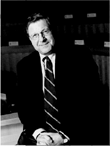
HUMAN RIGHTS PLENARY. Former Prime Minister of Canada and Nobel peace Prize Nominee Lloyd Axworthy speaks on “Multilateralism in the Age of Empire.” As former director of the Liu Centre for the Study of Global Issues and president of the University of Winnipeg. Axworthy guides development of research, policies, and partnership aimed at solving the most pressing global issues, such as governance, environmental change, sustainability and human security. (Saturday/8:30pm)

HUMAN RIGHTS PLENARY
Castells and Ingraham to Deliver Award Lectures
The 2004 Annual Meeting in Chicago will feature award addresses by two major scholars, sociologist Manuel Castells of the University of Southern California and Patricia Ingraham of Syracuse University.
Manuel Castells has been named winner of the 2004 Ithiel de Sola Pool Award and will deliver the fourth Pool Lecture on Saturday, September 4, at 12:30pm. Viewed as one of the leading analysis of the current age, Castells' trilogy, The Information Age: Economy, Society, and Culture, has been compared to the work of Karl Marx and Max Weber. The book, reprinted in 18 languages, explores his concept of ‘the network society,’ which has influenced research across the social sciences. A prolific writer, with more than 20 titles to his name, he has published widely on technology and innovation.
Currently, Castells holds the Wallis Annenberg Chair in Communication Technology and Society at the Annenberg School for Communication, University of Southern California. He is also Research Professor at the Open University of Catalonia in Barcelona.
The Pool Award is given triennially to a scholar who explores the implications of politics in a global society, evoking the broad range of scholarship pursued by Ithiel de Sola Pool. Previous recipients have included Robert Putnam and W. Lance Bennett.
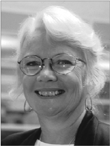
Patricia Wallace Ingraham, Distinguished University Professor of Public Administration and Political Science at the Maxwell School of Citizenship and Public Affairs at Syracuse University, has been selected as the 2004 John Gaus Lecturer. She will deliver the 19th annual Gaus Lecture on Friday, September 3, at 5:30pm.

Patricia Wallace Ingraham
Ingraham is a leading contributor in the field of public administration. Her research explores issues of human resource management, administrative reform, and, most recently, the linking of management to performance in public organizations. She has authored or edited nine books on public management, including The Foundation of Merit and Government Performance: Why Management Matters.
At Syracuse she is a founding director of the Alan K. Campbell Public Affairs Institute and the first director of the Government Performance Project, a multi-year analysis of management capacity at the state, local, and federal levels.
Castells and Ingraham will be honored at the Association's Awards Ceremony on Thursday, September 2, at 12:30pm.
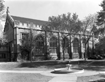
Gathering Spots. Mandel Hall on the University of Chicago campus (top) and the downtown Northwestern University Building(above) held sessions of the 1904 APSA meeting. Photos courtesy of the University of Chicago and Northwestern University.

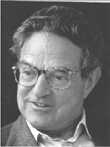
AN EVENING WITH GEORGE SOROS
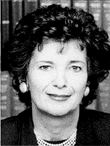
GLOBALIZATION AND HUMAN RIGHTS WITH MARY ROBINSON
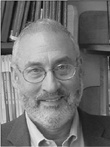
DECADE OF BEHAVIOR LECTURE

NEW POLITICAL SCIENCE PLENARY
HUMAN RIGHTS PLENARY
Patricia Wallace Ingraham
 You have Access