Over the past twenty-five years, the ‘global turn’ has been a key development within historical studies. Indeed, in 2004, Bayly opined that ‘All historians are world historians now, though many have not realized it.’Footnote 1 He did not mean that all historians were or should be world or global historians, but that even ‘local, national, or regional histories must, in important ways…be global histories’, sensitive to the widest connections and comparisons.Footnote 2 Voices in support of global history, its near relations (comparative, imperial, international, oceanic, transnational, and world history), and wider implications are now heard loud, clear, and often.Footnote 3 Indeed, to Hunt, global preoccupations are the latest new major cutting edge to historical practice to have been forged since 1945, succeeding Marxist assumptions and preoccupations, concerns with modernization, the Annales school, and, most recently, the challenges of cultural theories.Footnote 4 To Hunt, those powerful cultural theories ‘helped blow apart the consensus of the utility of history but failed to offer a compelling alternative to the earlier social theories. Globalization is that kind of compelling alternative.’Footnote 5
That global history has significantly enriched historical studies is undeniable. And if a common aim has been to transcend some of the limitations of national history, global history has also frequently positively influenced those histories. In the case of Britain in the reign of George III (1760–1820), the subject of this article, its influence has been broad and deep, including: a major expansion of the nature of imperial history; the refreshment of studies of the industrial revolution by considering the ‘great divergence’ and the ‘world of goods’; greater attention to the transnational and international aspects of intellectual developments; and a heightened emphasis on environmental considerations.
Such developments have been highly significant. But this article argues that the importance of global factors to British history should not be exaggerated. Critically, a preoccupation with globalization risks studying Britons in the period unduly in terms of our not their priorities. If the benefits to that have understandably been stressed, the costs also deserve some attention. Moreover, given the huge variety of practitioners, sources, methods, subjects, and purposes of historical studies, Hunt's identification of five main post-1945 developments is clearly highly schematic – in the major fields of economic and intellectual history, for example, they have often exerted less influence than other imperatives, especially methodological ones (quantification and contextualization). As Bell has noted, there can even be something a bit imperial about emphasizing the over-riding importance of this and then that ‘turn’.Footnote 6
A central consideration in what follows is the question of place, of how we locate geographically the people in the past we are interested in and what the importance of place was to them: as Hobbes observed, ‘No man…can conceive anything, but he must conceive it in some place.’Footnote 7 This poses two challenges: how ‘place’ is defined and studied and how the engagement of people in the past with ‘place’ is captured. Recently, the first of those has often been approached by exploring the ‘glocal’ and ‘glocalization’, of the study of the mutual interplay, connections, and comparisons between multiple localities significantly distant one from another, often bypassing the national frame.Footnote 8 As to the place of people, it has been complained that contributions to global history can give undue attention to abstractions and concepts, too little to historical actors and agency: to Bell, the absence of individuals can make some global history ‘difficult to read’.Footnote 9 One reaction has been to compose micro-narratives, usually of individuals or of families, often with an emphasis on connections across borders and seas.Footnote 10 If such studies aim at making evident the differences and contingencies that are smoothed in more structural approaches, to Latour it is by following actors from the bottom up that networks, often a key element of global history, can be best approached.Footnote 11
It is with regard to these considerations of place and biography that this article considers some of the activities of Sir Joseph Banks, a leading botanist of his age whose global concerns and connections have rightly attracted much attention. Indeed, Banks is very largely seen in global terms, of someone who frequently acted in the service of Britain and its empire. This article, however, looks at him in his provincial context, from his main estates in Lincolnshire, raising broader issues as to how we judge the significance of historical figures and their locales. Critically, the importance of the global in the eighteenth century should not be exaggerated. In establishing this, it is further argued that in Banks's case, the nation-state was pivotal to both the local and the global, but a de-centred nation-state rid of the anachronistic baggage it is often lumbered with. Before turning to the substance of the article – a discussion of portrayals of Banks, his provincial activities and their causes, and the broader implications of those activities – it is worth setting the scene in terms of the main developments in his lifetime that global historians have recently emphasized.
Banks undoubtedly lived in momentous times, notably of the American, French, and industrial revolutions, of radical economic, political, scientific, and social thought, of the climacteric of the Atlantic slave trade, of the European colonization of Australia, and more. Many of these have been said to have been part of a ‘world crisis’, an ‘Age of Revolution…in which the local and the global were rearticulated in radical ways’.Footnote 12 The period saw, in Bayly's original conception, the early phases of the birth of the modern world, while to some economic historians it was in the early nineteenth century that a truly global economy was established (measured in terms of price convergence across global commodity markets).Footnote 13 More recently, Bayly concluded that the most telling consequence of the revolutionary age was, even acknowledging the importance of new concepts of the self, citizen, and rights, ‘the internal rather than the external expansion of the state’; the state was ‘the great winner’.Footnote 14 How provincializing Joseph Banks bears upon such arguments will be considered in the conclusion.
I
Joseph Banks certainly embodies some of the key transnational and global developments of his age, especially the mixing of science, political economy, and empire.Footnote 15 As a young botanist, he circumnavigated the globe with James Cook on the Endeavour from 1768 to 1771 – and either side of that explored Newfoundland, Labrador, Iceland, and the Dutch Republic. By such efforts and embracing the latest ideas of the Swede Carl Linnaeus, he attained some scientific eminence, leading to his election as president of the Royal Society in 1778, a post he held for life. Throughout, this required him to communicate with leading scientists, wherever they might be and, so far as possible, irrespective of the vicissitudes of war and peace. In the process, he was honoured by memberships of many scientific societies in Europe and America. Within Britain, he won the confidence of George III and his government, becoming effectively their chief scientific officer and in 1797 a privy councillor. This led him to be at the forefront of efforts to move flora and fauna around the globe for the benefit of Britain and its empire, including tea, breadfruit, convicts, and sheep. Similarly, he was a crucial figure in the development of Kew gardens as well as botanical gardens in Calcutta. In many other areas too, such as coinage and weights and measures, he looked carefully at developments abroad to provide evidence with which to influence policy within Britain. And he tirelessly encouraged others to explore the world, including Mungo Park in Africa. It is little wonder then that he was told in 1793 that ‘wide as the world is, traces of you are to be found in every corner of it’.Footnote 16
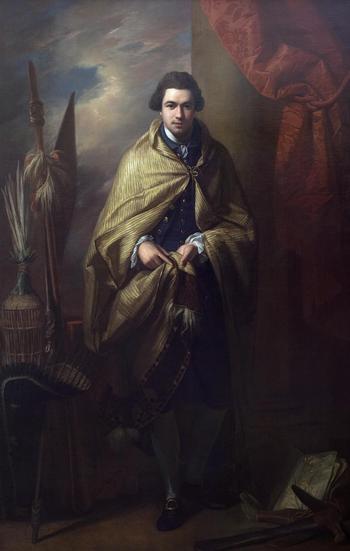
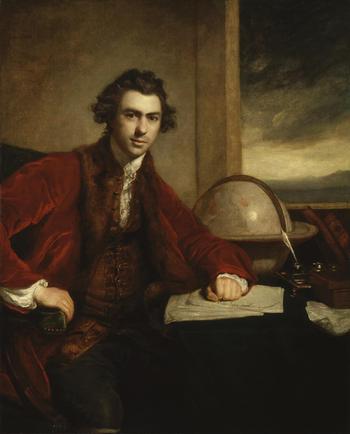
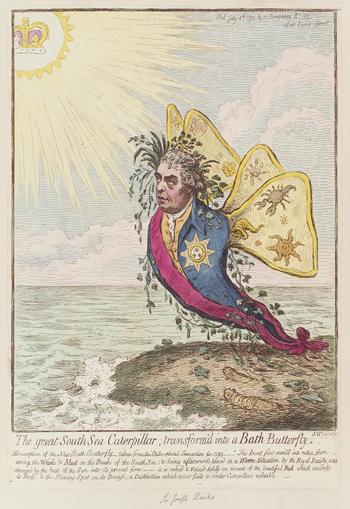
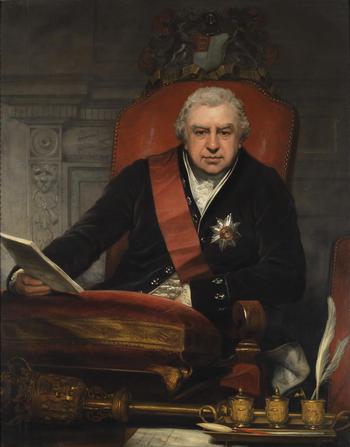
Initially at least, contemporary visualizations of Banks emphasized his globalism. In 1771, Benjamin West, having recently painted the death of General Wolfe on the Heights of Abraham at Quebec in 1759, began his striking portrait of Banks draped in a Maori flax cloak, besides Tahitian artefacts (Fig. 1). At much the same time, Joshua Reynolds portrayed Banks sitting confidently before a globe (Fig. 2). Then there was John Hamilton Mortimer's group painting of Banks, Cook, the earl of Sandwich, and others. A few years later, William Parry painted Banks alongside Omai (Mai), a Pacific islander who visited Britain 1774–6, and Solander, a disciple of Linnaeus and Banks's aide. There quickly followed Reynold's group painting of the Society of Dilettanti, containing Banks. In 1795, these types of representation were mocked by the great cartoonist James Gilray depicting Banks as a ‘The great South Sea caterpillar transform'd into a Bath butterfly’ on the occasion of his appointment to the Order of the Bath (having been made a baronet in 1781) (Fig. 3). But by then, as Gilray was also suggesting, more conventional portraits of Banks had become common, reaching an apogee in 1809 in Thomas Phillips's view of Banks as the imposing president of the Royal Society (Fig. 4).Footnote 17
Joseph Banks, by Benjamin West, c. 1772. Copyright, The Collection: Art and Archaeology in Lincolnshire (Usher Gallery, Lincoln).

Joseph Banks, by Joshua Reynolds, 1771–3. Copyright, National Portrait Gallery.

‘The great South Sea caterpillar transform'd into a Bath butterfly’, by James Gilray, 1795. Copyright, National Portrait Gallery.

Sir Joseph Banks, president of the Royal Society, by Thomas Phillips, 1809. Copyright, Royal Society.

While that narrative arc, of Banks's youthful and restless energy evolving into a rather overbearing figure of the ‘establishment’, has largely been followed by biographers and historians, they usually emphasize his lifelong global interests, connections, and influences. In such accounts, his life's course was established on the Endeavour voyage: from that great leap, much else in Banks's life followed.Footnote 18 This gradually allowed him to accumulate power and influence, managed after 1777 from his office, library, storehouse, and home in Soho Square, London. From there, he gazed and acted on the rest of the world: ‘territoriality, geopolitics, circulation, and networks’, the very stuff of global history, were his stock in trade.Footnote 19 One recently launched project states that ‘After the [Endeavour] voyage, Banks spent the remainder of his career supporting expeditions and forging networks that spanned the Indian and Pacific Oceans’; seemingly, there was little else to the last two-thirds of his life.Footnote 20
Yet while many historians have emphasized the range, in both senses, and continuity of Banks's interests, some recognize that this depended heavily upon his landed wealth.Footnote 21 It was revenues from his estates which provided the £10,000 he spent voyaging with Cook, which funded his research centre in Soho Square, and much else that he did. With his father dying when he was only eighteen, Banks was financially independent when he attained his majority in 1764 – indeed he was then among the richest 250 or so landowners in England.Footnote 22 Yet if the importance of his estates, Revesby Abbey in Lincolnshire especially, has been widely noted, along with his enthusiasm for the wider county, they have generally been represented as separate and, considering his historical significance, subsidiary themes in his life. Local historians have demurred, but it is telling that the two most detailed studies of Banks's activities in Lincolnshire are unpublished doctoral theses.Footnote 23 John Gascoigne's two fine books on Banks are alert to his local activities, but the focus is on national and imperial considerations, especially within the context of contemporary enthusiasm for ‘improvement’ to enhance domestic prosperity for the benefit of an imperial nation.Footnote 24 In his rich and important study, Drayton has developed this, utilizing Bayly's conception of a vibrant ‘agrarian patriotism’ in the period, putting significant interpretive weight on Banks's landowning as foundational to his wider role, though without delving far into his provincial activities.Footnote 25 This article seeks to add to these perspectives by emphasizing further Banks's provincial interests and activities. In particular, the argument here is that while Banks did indeed have a lifelong interest in his estates, these were not a constant. Early on, he was little concerned with estate matters, or agriculture more generally.Footnote 26 But from around 1780, that changed markedly. In the last four decades of his life, Banks spent increasing amounts of time, effort, and money on the improvement – economic, social, and political – of Lincolnshire as a whole and his fenland estates and their hinterlands particularly. Even for a person of his enormous capacity for work, this perhaps meant he spent less time on his other interests. Why did he do that, and how does that affect our understanding both of Banks's importance and the relation of the local and the global at the time?
To argue that in the second half of his life Banks became more involved in his estates, the fens, and Lincolnshire is to make a quantitative claim that cannot possibly be proved statistically. While the records do not allow meaningful counts to be made of how much time Banks spent on this or that, the problem is, nonetheless, exacerbated by the scale and scattered nature of his archive.Footnote 27 Conclusions must be based on impressions drawn from bits and pieces. This is done in the next section by sketching some of Banks's interventions in local life. Why he made those moves is then speculated upon. Finally, the broader lessons of this biographical case-study will be explored in terms of the importance historians attach to local and global concerns and the relations between the two, including the nature and role of the nation-state.
II
It was Banks's grandfather who placed the family's financial centre of gravity in Lincolnshire, by purchasing over 6,000 acres in the county, including Revesby Abbey. Gradually these were added to, so that by the 1790s Banks held over 9,000 acres, mainly in the south of the county.Footnote 28 He held land elsewhere, notably through the inheritance in 1792 of the Overton estate in Derbyshire, but his core holdings were in and around the Lincolnshire fens, centring on Revesby, 12 miles north of Boston and 7 miles south of Horncastle.Footnote 29 He spent seven years there as a child from the age of two. Harrow, Eton, and Oxford then took him away, and thereafter he spent only short periods at Revesby, from 1779 usually going there each September and October.
Despite the prolonged absences from the county, Banks developed a deep interest in and knowledge of Lincolnshire, though not of the other counties where he had estates. Here, he was following a tradition of gentlemanly inquiry into the history and antiquities of localities, counties especially, that had been developing since the sixteenth century.Footnote 30 Such chorographical studies were an important aspect of the creation and perpetuation of local elite identities. As many Fellows of the Royal Society were, Banks was also a Fellow of the Society of Antiquaries, and amassed a major collection of Lincolnshire's ancient artefacts, publishing several articles on findings.Footnote 31 That he did this for a collective good (and perhaps personal status) is suggested by the fact that he gifted the collection to Lincoln cathedral library in his lifetime.Footnote 32 Little wonder that he lamented the demolition (on structural grounds) of the cathedral's spires in 1807 in a privately circulated elegy he had written. Another of his significant initiatives was visually to capture scenes of Lincolnshire, paying Jean Claude Nattes £709 between 1789 and 1797 to produce over 500 drawings and watercolours of churches, houses, and other features of the county.Footnote 33 His archive also contains many maps, pamphlets, and books relevant to the county's history and he became a member of the nearby Spalding Gentleman's Society in 1768.
Banks's regard for Lincolnshire's past was matched by his involvement in its present. One aspect of that was that he was prepared, as was expected of a great landowner, to take his turn in local administration, acting as a JP, high sheriff of the county in 1794, and Recorder of Boston from 1808 (having been given the freedom of the town in 1771). In the 1790s, Banks became much more active in Lincolnshire's politics. From 1792 to 1803, he chaired eight of the annual county meetings held to discuss its affairs. While high sheriff, he wrote and published a pamphlet about local defence planning against a possible French invasion (war had been declared in 1793), and subscribed £300 to the local volunteers.Footnote 34 During his annual visit to Revesby in 1796, rioting broke out in the county over militia lists, including at Horncastle where he had a town house, leading him to ride unarmed to trouble spots to cool spirits.
Antiquarianism and local administration both, therefore, drew Banks into Lincolnshire life, but they pale in significance to the importance of economic matters. Fundamental here was Banks's views of his estates and their prospects, within the context of the surrounding region.
If Banks was largely an absentee landlord, he was not an uninterested one. Together, he and his stewards constructed a remarkable administrative mechanism to oversee his holdings, even from London; the estate office at Revesby impressed Arthur Young, a leading agriculturalist, with its informational reach and power, a type of bureaucratic panopticon.Footnote 35 Yet, if the grasp he had of his estates was strong, much that Banks did was conventional. For example, in something of the fashion of the times, from the early 1770s he was involved in the parliamentary enclosure – a forced redistribution of property rights – of some of his estates.Footnote 36 Even when he began his annual autumn sojourns to Revesby in 1779, some of what he did was customary or routine, such as providing ample food and drink for local people at the Revesby feast, a sort of secular harvest festival. Further, during their annual stay at Revesby he, his wife, and sister naturally attended the races at Lincoln and balls at its assembly rooms. And Banks was prepared to act as a figurehead – if rarely an entirely sleeping one – on occasions, including president of the Dispensary established at Horncastle in 1789 and patron of the county Benevolent Medical Society.
Banks, however, was not constrained by customary expectations as to his local roles and chose to act in ways that made a highly significant mark on Lincolnshire. Negatively, he rebuffed encouragements to stand for election to parliament – his father and grandfather had both been MPs – because of his dim view of politics and most politicians. Positively, as he did at the national level, he valued his independence and chose to act distinctively in relation to the economy of his estate and the region.Footnote 37 He did so both with regard to national measures which affected those localities and to local initiatives at improvement. The first of those focused heavily on the issue of wool exports, the second on measures to drain and enclose the fens and to improve the region's infrastructure, especially its navigations.
Banks became involved in the wool question in 1781 following a meeting of landowners in the county to consider falls in its price.Footnote 38 The meeting decided to press to lift a statutory ban on the export of raw wool from Britain that had been in place since 1660 and to garner the support needed to get parliament to pass the necessary legislation.Footnote 39 Banks agreed to this approach and quickly threw his energy, expertise, connections, and money behind the venture, including circulating at his expense copies of a recent pamphlet calling for the end of the export ban written by Sir John Dalrymple, a Scot well versed in the ideas of Adam Smith.Footnote 40 Characteristically, he also sought out detailed information, including in January 1782 sending a researcher on a 2,000 mile tour to collect evidence about the quality, demand, and prices of English wool in the Low Countries and northern Germany.Footnote 41 A thick web of correspondence quickly linked Dalrymple, Banks, and the Lincolnshire landowners. More meetings were held, including in London of Lincolnshire landowners, and Banks helped write a long pamphlet seeking to sway legislators. He attempted to establish quantitatively the damage the ban caused and whether smuggling was as rife as was commonly asserted by the manufacturers keen on maintaining the ban.Footnote 42 The speed with which he did all of this, given his other commitments, was impressive.
Unsurprisingly, these attacks on the ban on the export of raw wool provoked the manufacturers into counter-action. They held meetings across the country, but a crucial confrontation came between the two sides at a meeting outside parliament in London on 2 February 1782.Footnote 43 About 200 attended, including 50 MPs, making ‘many able Speaches’.Footnote 44 But, as Banks reported, ‘Lincolnshire stood alone’, in small numbers, and were inadequately prepared. ‘The Manufacturers on the other hand attended in a well arrang'd body of members of the house of Commons headed by several good Business men who well [k]new how to arrange the Ideas of the whole proceeding.’Footnote 45 Outmanoeuvred and out argued, the Lincolnshire contingent stormed out and the attempt to repeal the ban collapsed.
Banks's involvement in the wool export controversy was prompted by others, but he contributed actively and considerably. Nor was this a flash in the pan. In 1787–8, the manufacturers brought to a head concerns that had grown over several years that the ban was being circumvented. Banks and others argued loud and long against attempts to tighten it, contributing to a significant fighting fund and striking up a close relationship with the vociferous Arthur Young, with both giving evidence to parliament. As earlier in the decade, Banks became a key nodal point for the exchange of information and ideas between interested parties, including gathering information from contacts with officials in Paris on the scale of smuggling, communicating with like-minded leading landowners elsewhere, such as the earl of Sheffield in Sussex, and lobbying the president of the Board of Trade (Charles Jenkinson, Lord Hawkesbury) to amend the bill, albeit only slightly.Footnote 46 Together with the first stage of the wool export controversy, he compiled an impressive brief, gathering together cuttings of dozens of notifications of relevant meetings in newspapers, many pamphlets, and some of the correspondence he was involved in, taking the unusual step for his archive of binding them together in three thick volumes.Footnote 47 He wrote a 10,000 word survey of the English woollen trade, though the published version was heavily edited.Footnote 48
The wool export controversy drew Banks deep into active politics, of interest groups rather than parties, melding local and national spheres of action, within an understanding of European markets for sheep and wool. It made Banks aware of the power of manufacturers vis-à-vis landowners and the weakness of landowners as political actors, lambasting them as disorganized ‘Bablers’ after the crucial meeting in 1782.Footnote 49 By implication, and by future actions, Banks thought he could do better; the wool export controversy was crucial to his provincial turn. Finally, Banks's analysis of the problems of the Lincolnshire wool trade prompted him to look at other, non-legislative, changes that might help. He supported local efforts to improve wool spinning and knitting by subscribing to a local society founded in 1783 that established a woollen mill and offered premiums to skilled workers.Footnote 50 He, his wife, and sister also supported the ‘Stuff ball’ instituted in 1785 in the county, where those attending wore clothing made entirely from wool – symbolically rejecting the growing fashion for textiles made from imported cotton and silk. And, most importantly, Banks turned his mind to the issue of the quality of Lincolnshire raw wool, stimulating him to try to improve it by introducing Merino sheep. He obtained the first from France in 1785, beginning a development that led directly to George III's famous flock of Spanish Merinos and, more importantly, a revolution in Australia's economy from the early nineteenth century.Footnote 51
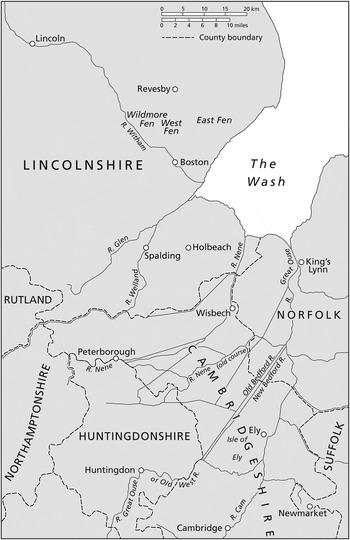
The second economic area of activity that Banks turned to in Lincolnshire was the promotion of drainage, navigation, turnpike road, and enclosure schemes – sometimes separately, sometimes bound together – though for reasons of space, attention will focus on the first of these. Importantly, he concerned himself not only with his own estates, but the catchment areas of the rivers, navigations, and drainage channels that affected them, even pretty indirectly. In practice, this meant much of the wider fen region of eastern England, the basin around the Wash, including significant parts of Cambridgeshire, Huntingdonshire, and Lincolnshire, where four major rivers struggled to find an outfall to sea. Revesby Abbey was at its northern edge, though a spur of the fens followed the River Witham almost to Lincoln, and Banks was also concerned with improvements on and near his estates at Holbeach (Figure 5).
The fen region. Based on the map in Hoppit, Britain's political economies, p. 181.

Attempts at managing flows of water in the fens so as to increase agricultural output and productivity date back at least to Roman times, but were catalysed by the dissolution of the monasteries in the late 1530s.Footnote 52 There was a marked surge of activity in the middle of the seventeenth century, when Dutch engineers were employed to help drain over 300,000 acres. Such initiatives were, however, controversial, because they rested on crown grants (and so were bound up with the wider constitutional battles of the period), involved complex and interwoven property rights, and threatened the ways of life of fishermen, fowlers, and cutters of peat, reed, and willow.Footnote 53 In Lincolnshire, violent resistance brought attempts at drainage to an abrupt halt in the middle of the seventeenth century. Although following the Restoration of the monarchy in 1660 there were applications to legislate for further fen drainage in Lincolnshire, these came to nothing. It was to be a century before new efforts bore fruit, even then often in the face of considerable opposition.Footnote 54
Banks's father had been interested in fen drainage and soon after his death Banks subscribed to a major scheme to improve the River Witham between Lincoln and Boston, including a large amount of adjacent land.Footnote 55 This was a project central to the drainage of much of low-lying south Lincolnshire and so close to Banks's heart and interests, to the extent that he became involved in the administration of it in his area, chairing the local commissioners from 1776.Footnote 56 Around that time, wider efforts at drainage in south Lincolnshire began to be made, but it was not until the late 1780s, more or less at the end of the wool export controversy, that Banks became actively involved. In particular, he became central to the proposal and implementation of two massive drainage schemes: one of the South Holland district (27,000 acres), the other for the East, West, and Wildmore fens (60,000 acres).Footnote 57 In these and other smaller cases, statutory authority was required, with Banks again playing an important role in linking local interests to parliament. He corresponded widely with local administrators, clergy, landowners, surveyors, and lawyers, read deeply into the history of fen drainage, collected pamphlets dating back to the mid-seventeenth century, attended and sometimes chaired key meetings in Lincolnshire and in London, and forged strong connections with leading civil engineers such as John Rennie as well as buying the archive of another, John Grundy. His was a thoroughgoing immersion in the subject. Further, he continued to be actively involved in these projects long after the initial legislation was obtained.
It is difficult to give a sense of the scale of Banks's involvement in such drainage schemes. The core archive contains nearly 1,000 items, of correspondence, memos, notifications, land auction catalogues, newspaper clippings, petitions, and pamphlets.Footnote 58 In 1799, his wife wrote to a friend about the number of public meetings and volume of business about the fens that Banks was involved in. In September 1804, he noted that ‘all my time is occupied with fen inclosures’.Footnote 59 Such involvement drew him deep into local disagreements about how best to proceed, and on some occasions into bitter and long-lived rows over costs, property rights, and engineering considerations. One was with George Maxwell, agent to Lord Eardley but also a landowner in his own right who was one of the three commissioners appointed to implement the 1793 South Holland drainage act.Footnote 60 Banks soon criticized his ‘careless conduct’ which drove up costs (to which he had to contribute), caused delays, and led to less effective drainage, telling him that ‘I may without presumption believe myself capable of examining points of civil engineering.’Footnote 61 He plainly saw Maxwell as a rude and injudicious sinecurist.Footnote 62 While Banks badgered Maxwell privately by letter (disliking ‘public correspondence’), he also chaired and organized meetings of like-minded landowners in the district, locally, and in London in an effort to rein in Maxwell and his fellow commissioners.Footnote 63 This was a controversy that kept rearing its head, not least because Maxwell stood his ground, publishing his own account of it in 1811, including copies of letters between himself and Banks.Footnote 64 Another controversy, with the Reverend Edward Walls (formerly Codd), was equally long and bitter, leading Banks in 1807 to pen two verse satires.Footnote 65 (There was, in fact, a strain of anti-clericalism in Banks's general thinking, including a dislike of tithes.Footnote 66)
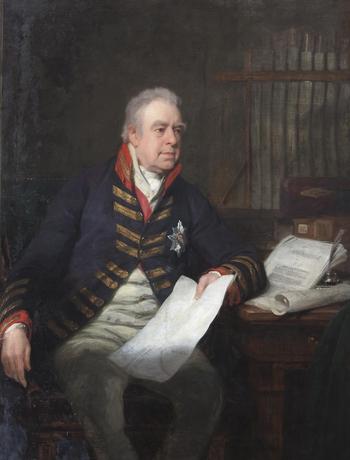
As these controversies show, there is no doubt that Banks was heavily and very personally involved in fen drainage matters in the last thirty years of his life. These were huge, complex, costly, and fraught undertakings, requiring the mobilization of considerable political, social, financial, and emotional capital. Despite this, Banks impressed his friend Arthur Young with his energy and grasp, both of the benefits that would accrue, and of the detail to get things done: he was highly attentive, investing not only time, money, and expertise, but also some sense of self-worth.Footnote 67 In doing so, Banks gained a rich understanding of region's landscape and property rights, requiring him to build interests, though also bringing him into conflict with some. Scientist that he was, the accumulation of accurate information was central to that effort, including hydrology and agronomy. But, much as he might have wished, disputes could not be resolved only by following Bacon's dictum that ‘knowledge is power’. For all of Banks's abilities as an accumulator and dispenser of relevant facts, compromise and cajoling were central to his interventions. In the main, he did so within the framework of interest group politics, of politics that bridged his specific sites of interest and London, framed by parliament's legislative authority. Indeed, while Banks was dismissive of politics as the quest for office and position, even claiming in 1808 that he ‘never med[d]led in Politics’, the needs of Revesby and Lincolnshire made him politically highly active.Footnote 68 This was well captured in the final major painting of Banks in 1814, again by Thomas Phillips (Figure 6). Here is the benign and beneficent Recorder of Boston, surrounded by plans and papers relating to drainages, enclosures, and navigations nearby, the culmination of Banks's provincial turn. Why though was that turn made?
Sir Joseph Banks as Recorder of Boston, by Thomas Phillips. Copyright, Boston District Council.

III
Banks rarely reflected aloud on why he acted as he did or on his view of the wider imperatives at work. For a man so wedded to science, he surely did think through where the facts he knew seemed to lead and the utility of his broader frames of reference, but these appear very rarely to have left his head.Footnote 69 The emotions and feelings that stirred him are almost completely absent from his correspondence. Explaining his provincial turn depends then on placing his actions in their context, especially the personal, economic, and political.
The beginning of Banks's annual visits to Revesby in 1779 preceded by only two years his being drawn into the wool export controversy. That this was a pivotal moment in his life is clear. He had acquired his Soho Square house in 1777, been made president of the Royal Society in 1778, married in March 1779, and leased Spring Grove in Middlesex later that year, as a retreat from London and providing greater proximity to George III at Kew and Windsor. But the sense that Banks's early adulthood was being left behind may also have been heightened by the death of Cook in 1779 and of Solander in 1782. Clearly, his life was taking new directions in that period, with autumn sojourns to Revesby an essential part. How far those visits were due to Banks, how far to his mother, wife, and sister (they usually lived together), is unknown, but the consequence was that living at Revesby for up to two months each year likely heightened its financial and emotional significance to him, as well as a greater sense of its problems and opportunities.
As a botanist and major landowner, it is hardly surprising that Banks developed an interest in agriculture. Initially, however, Banks was cautious about some of the supposed benefits of changes, enclosure in particular.Footnote 70 He was struck by popular opposition to such ‘improvements’, leading Arthur Young to report as late as 1799 that locally Banks had a reputation as a ‘great bull at Revesby’, ready to fight ill-founded drainage proposals.Footnote 71 Moreover, driven by a sense of ‘moral responsibility’, rents on Banks's estates were often below market rates and, unlike other improving landlords, he rarely used formal leases as a means of encouraging his farmers to improve.Footnote 72 That is to say, explaining Banks's provincial turn also requires understanding why he shifted towards embracing change. Two broad factors were critical.
The first is the general contextual one of wider efforts at agricultural improvement underway in the period, especially of enclosure, new crop rotations, and selective breeding – or what some call the ‘agricultural revolution’.Footnote 73 More specifically, Banks came into close contact with leading agriculturalists of the age: Arthur Young, Sir John Sinclair, Robert Bakewell, the 5th duke of Bedford, Coke of Norfolk (the 1st earl of Leicester), and Lord Sheffield.Footnote 74 That he was impressed by such efforts to experiment and improve knowledge is clear, both through his work with Merino sheep and publishing in Young's Annals of agriculture from 1788 to 1804.Footnote 75 But two caveats must be noted. First, Banks's involvement in the ‘agricultural revolution’ was limited. He was unenthusiastic about Sinclair's semi-official Board of Agriculture, instituted in 1793, and as has been noted did relatively little directly to improve the practices of his tenant farmers: Banks could have squeezed his estates harder. Secondly, it was contact with Young that drew Banks into the wider culture of agricultural improvement, and that in turn was a product of Young joining Banks in the wool export controversy in 1787. It is especially important therefore to understand why Banks participated in that battle.
Banks began his autumn visits to Revesby in the middle of the American war (1775–83). Its domestic impact was especially severe as the Thirteen Colonies had been Britain's fastest-growing export market over the previous half century, with Lincolnshire feeling the effects, if indirectly, through falls in the export of woollen goods, of woollens manufactured in the West Riding of Yorkshire (where most of the county's wool was sent), and especially of raw wool prices.Footnote 76 The latter hit the ability of tenant farmers to pay their rents, in the context of recent heavy capital expenditure on enclosure by some landlords. Given that, landowners unsurprisingly wondered if the ban on the export of their wool was reasonable. The campaign for its easing or lifting began and a now annually resident Banks was soon involved. It must be stressed, however, that while the American war was economically disruptive to Lincolnshire, it did so within the context of longer-term trends, especially rising consumer demand for lighter non-woollen textiles, cottons especially, and a steady deterioration in the quality of raw wool in the county.Footnote 77
Short-term market signals in the American war became long-term ones in the wars of 1793–1815, both because conflict was so prolonged and because they coincided with a huge surge in Britain's population that had been gathering since the 1750s: England's population grew by 46 per cent from 1750 to 1801, and Lincolnshire's by 33 per cent.Footnote 78 Rising demand for food, occasionally coinciding with harvest failures, provided both the incentives to bring more land within Britain under intensive cultivation and, in the context of very heavy taxes and some government ‘crowding out’ of private capital markets, the income to make heavy investment projects viable – in 1795, Banks wrote of the ‘heavy calamities with which England is at this moment threatened’, and in 1814, that ‘the mistaken Policy of Bonaparte’ led directly to the ‘Great improvement’ of extensive fen drainage.Footnote 79 Banks knew that prices had been rising markedly since around 1760s and gave careful consideration to the finances of the schemes he became involved in, of which the draining of the East, West, and Wildmore fens was much the most expensive. His estimate of its total costs was hopelessly optimistic (£200,000 against a final bill of well over £500,000), but his faith that drowned lands would become much more productive and valuable after draining was not.Footnote 80 Arthur Young, using figures for actual costs and benefits for 43,000 acres of land drained and enclosed in Lincolnshire in the half century to 1813, calculated that their average value increased seven fold.Footnote 81
Perhaps Banks's involvement in drainage, navigations, and enclosure was exceptional in terms of the energy, expertise, and leadership he brought to Lincolnshire. But, as with the wool export controversy, he worked with many other landowners in Lincolnshire. Bayly and Drayton are also right to emphasize that during the Revolutionary and Napoleonic wars, with blockades threatened, the national need was great, leading to an ‘agrarian patriotism’ among many of the landed and political elite. Banks's greater activism in local administration in the 1790s was similarly of a piece with the counter-revolutionary activities across the country.Footnote 82 But Banks clearly believed in the superior leadership he could provide compared to other large landowners nearby. This appears to have been a major consideration in his provincial turn, first becoming evident in 1782, then rearing its head occasionally thereafter, especially during the 1790s.
In his report to the Home Office about the 1796 riots, Banks described Lincolnshire's lord lieutenant, the 5th duke of Ancaster, as a ‘Fool’ whose actions and inactions had significantly contributed to their cause and progress. Banks contrasted this with the much better organized landowners in neighbouring Norfolk.Footnote 83 In Lincolnshire, the problem was exacerbated by the presence locally of the political reformer Major John Cartwright, who had purchased an estate in south Lincolnshire in 1788. Before war broke out, a correspondent at Horncastle warned Banks that while Paineites there were few in number, ‘their audacity wants curbing’, encouraged as they were by Cartwright.Footnote 84 In fact, Banks knew Cartwright well (and his brother George even better). They had almost certainly met in Newfoundland in 1766 when Cartwright had been in the Royal Navy, and Banks approved of Cartwright's zeal to improve his estate, giving him a prized ewe and welcoming him for a time on his annual fishing expeditions on the River Witham.Footnote 85 But the French Revolution enhanced the potency of Cartwright's already settled political principles, making more important the fundamental political differences between him and the royalist and anti-levelling Banks. Anxious as he was to maintain order within Lincolnshire, Banks came to see the nearby presence of Cartwright as seriously destabilizing, including in the electoral politics of Boston.Footnote 86 By the autumn of 1799, he had broken with Cartwright and though Cartwright moved to London in 1805, he stood unsuccessfully for election as Boston's MP in 1806 and 1807.Footnote 87
IV
Banks was by no means the only active landowner in Lincolnshire and the fens. Indeed, aside from the draining of the East, West, and Wildmore fens, he was rarely the prime mover in schemes, almost always working with others, conscious as he was that many fellow landowners were his social equal while, because he was ‘so little in the country’, there was only so much that he could do.Footnote 88 Nonetheless, others felt that Banks was especially well qualified to provide vital leadership to parishes which were ‘like a body without a head’.Footnote 89 And this was both because of his money and abilities and because he was ‘so deeply interested in almost every improvement that may be made in the levels in Lincolnshire’.Footnote 90 That interest was such that he added a codicil to his will in the last year of his life ordering the destruction of all of his handwritten papers save for those ‘as have reference to any part of my estate or to the County of Lincoln’.Footnote 91 At the end, it was those aspects of his life that he sought to preserve, reflecting the shift he had made in middle age towards attending to and improving his estates, Lincolnshire, and the fens. What, though, are the wider implications of this?
Selectivity is unavoidable in historical research, but is especially so in Banks's case because of the range of his interests and the scale and scattering of his archive. Even so, this raises obvious enough questions about what weight to give to particular aspects of rich lives. While this is tied up with irresolvable psychological questions of the extent to which people have a central essence, in many cases, including Banks's, it also relates to perceptions of the importance of spheres of action that may have been connected, but often only loosely.Footnote 92 It may well be that there is ‘an understandable fascination with voyagers upon the seas’ which draws attention to the first half of Banks's career, but the relationship of fascination to importance depends on the question being addressed.Footnote 93 It is somewhat troubling, therefore, when it is further claimed that ‘The leitmotiv of Banks's activities’ was the discovery and transplantation of useful plants within ‘a mercantilist framework’. As this article has tried to show, this ignores Banks's growing and varied activities at the local level, where protectionism was rejected in one important instant, and irrelevant in many others.Footnote 94 From another perspective, the richness of Banks's local connections and actions is as striking as his international and global ones.Footnote 95
If one consequence of considering Banks's provincial turn is to make plain the selectivity behind the common emphasis on his global importance, another is that it helps with judging the direction and strength of ‘glocal’ connections. General approaches to such connections have sometimes tended to look first and foremost from the global to the local, rather than vice versa,Footnote 96 and the American and French Revolutions (and their attendant wars), along with rising demand for imported cottons and silks, were clearly important influences on Banks in Lincolnshire. But attention also needs to be paid to more endogenous factors in Banks's Lincolnshire: of advances in agricultural productivity stretching back to at least the seventeenth century, growing population, the cultural dynamics of the provincial gentry, and the practice of politics, all within the critically important environment of the lie of the land, flows of water, and complex property rights. It is also important to note that sometimes causal connections began provincially. It was the attempt to improve the quality of Lincolnshire's sheep that led to Banks alighting on the importance of Merinos, which then became, even in his lifetime, so important to the history of Australia. Judges in Lincolnshire, of whom Banks was one, also sent convicts to the Thirteen Colonies and then Australia.Footnote 97 And Lincolnshire origins and connections were important to Banks's relations with at least three other sojourners born in the county: Thomas Pownall, one-time governor of Massachusetts, Matthew Flinders, the circumnavigator and cartographer of Australia, and John Franklin, the polar explorer.
European and imperial factors played a part in the problems and opportunities that Banks dealt with in Lincolnshire, but fairly indirectly and alongside other largely non-global factors. One important facet of this is the need to stress multi-causality in which the particularities of place, near and far, are given their due. Rather too many recent discussions of the Britain during Banks's lifetime are inclined not to do so. Take, for example, a recent claim that ‘Britain's “Great Divergence” from the 1760s was less about the availability of cheap coal and Enlightened labour than about a state-sponsored military-industrial complex and the creation of a mercantilist imperial economy that, of course, had slavery at its centre.’Footnote 98 Some caution is required here, evidentially and interpretatively. From 1760 to 1820, Britain's central government spent just 16 per cent of GDP on the military and war debts, while under 3 per cent of Britain's shipping tonnage was involved in the slave trade in the peak year of 1792.Footnote 99 Further, slavery was one of at least half a dozen important and inter-related elements (domestic and not) to Britain's economic fortunes, such that isolating any one, as Wrigley concluded, ‘is seldom possible to establish with certainty that it is demonstrable’.Footnote 100 It should not be assumed that global factors are more important than local ones because seemingly more general. A better starting place is to assume that the introduction or heightening of global factors stimulated multi-causality; more complex networks of variables were created, with each element proportionally smaller, if vital to the functioning of the whole.
It must also be noted that globalization can be a part of localization. To Banks and his fellow Lincolnshire landowners, the impact of factors such as the American and French Revolutions increased their regard for their locales and county: globalization can indeed amplify rather than ‘flatten out’ local differences.Footnote 101 This can be seen in Ricardian terms as the greater exploitation of the comparative economic advantage of locales or regions, or in Langton's terms as the production of regions.Footnote 102 Consequently, if ‘the history of globalization is as much a history of the perception that the world is “shrinking” as it is a history of increasing economic interdependence’, attention also needs to be paid to the ways perceptions of locales might be heightened in the process.Footnote 103 In the late eighteenth and early nineteenth centuries, propertied society within Lincolnshire and the fens looked in on itself to a degree not seen since the troubles of the 1640s and 1650s.Footnote 104 But they did so by both changing and conserving their locales, not by asserting some fixed geographical identity or personality.Footnote 105
A key part of Banks's provincial turn was that while he was often concerned with economic improvement, action often took place with regard to the sovereign power of parliamentary legislation. It was acts of parliament that were at issue in the wool export controversy and it was acts of parliament that authorized the draining of fens, the improvement of rivers, the digging of canals, the enclosing of land, and the building of turnpikes. In both his global and local roles, therefore, it makes no sense in Banks's case to move from to local to the global or back again without doing so via the multi-national British state. This obviously relates to the issue raised earlier of how one consequence of the age of revolutions was the strengthening of the internal power of the state.
In the British case, the state has usually been seen in terms of the mobilization of resources for war, including measures such as the introduction of the income tax in 1799 and census in 1801. These were very important, but in Banks's lifetime Britain's central government was tiny and much less ambitious than it is now, even in relative terms.Footnote 106 Periodic surges of smuggling, exhortations that liberty would be eroded by a general excise, American independence, and widespread violence and disorder in Ireland, illustrate some of the limits to the power of Britain's central government. Secondly, the British state was both polycentric and felt very differently in some parts of the island to others. Critically here, individuals and locales could use the centre for their own ends.Footnote 107 For example, in the last forty years of the eighteenth century, parliament passed around thirty-six acts a year affecting economic life that were general in scope, but ninety-four that were local.Footnote 108 Banks contributed mightily to the development of British public policy within an imperial framework, but as has been seen he was also much concerned with what the poet John Clare, writing on the edge of the fens as they were being drained and enclosed, called the ‘parish state’, where self-interest, personality clashes, and principled differences created such heats.Footnote 109 Such local horizons were vital to power relations within many parts of British society as they were lived and felt.Footnote 110 There was indeed an immediacy to Banks's efforts here, exerting a direct influence over other people's lives. As an advisor to central government, his influence spread more widely, but the effects on everyday lives was more indirect.
There is a constant tension in historical research between emphasizing those aspects of the past of most interest to the present and those that were of most interest to those being studied. Placing too much weight upon one or the other invariably leads to excessive anachronism or irrelevance. But it behoves us to remember that even in a society heavily involved in global developments such as late eighteenth-century Britain, most of its people were touched by those developments only to a degree and often only indirectly. The impact of the global was perhaps more marked in Britain than in France, but this should not be exaggerated.Footnote 111 Banks is a specific example that bears out Conrad's important wider observation that the ‘global perspective makes the eighteenth century appear more global than it was’.Footnote 112 This article has, therefore, sought to make clearer a negative consequence of a teleological preoccupation with the global. But it has also spoken to the danger when seeking originality of side-lining once valued historical practices – of local and regional history in this case. More positively, what the case of Banks has shown is that global developments helped intensify local developments, but worked alongside non-global factors, especially regarding the landscape, environment, and law. This was rooted in historical perceptions, but also in future prospects: it would be wrong to conclude that Banks and fellow landowners nostalgically viewed their locale only in internal and essential terms.Footnote 113 Further, Banks's provincial turn has to be understood in relation to the importance of key institutions of the nation-state, parliament pre-eminently, but often as used by local propertied society. The current enthusiasm for transcending the limitations of national history has its merits, but this article has taken further Gascoigne's and Drayton's emphasis on the importance of the state to Banks's life by looking at it in a provincial context, adding layers and textures which deserve more weight.