Introduction
According to average estimates, the human population is going to reach approximately 9 billion by 2050 and chickens continue to deliver the majority of the world's animal protein for human consumption. Hence, the production of the primary poultry products (meat and eggs) has been rising rapidly, worldwide. The world poultry industry continues to face many diseases, which are all hurdles to its progress, due to issues with flock morbidity and mortality. Parasitic diseases are called ‘hidden enemies’ because they lowly and gradually lead to chronic losses without any external marked indications.
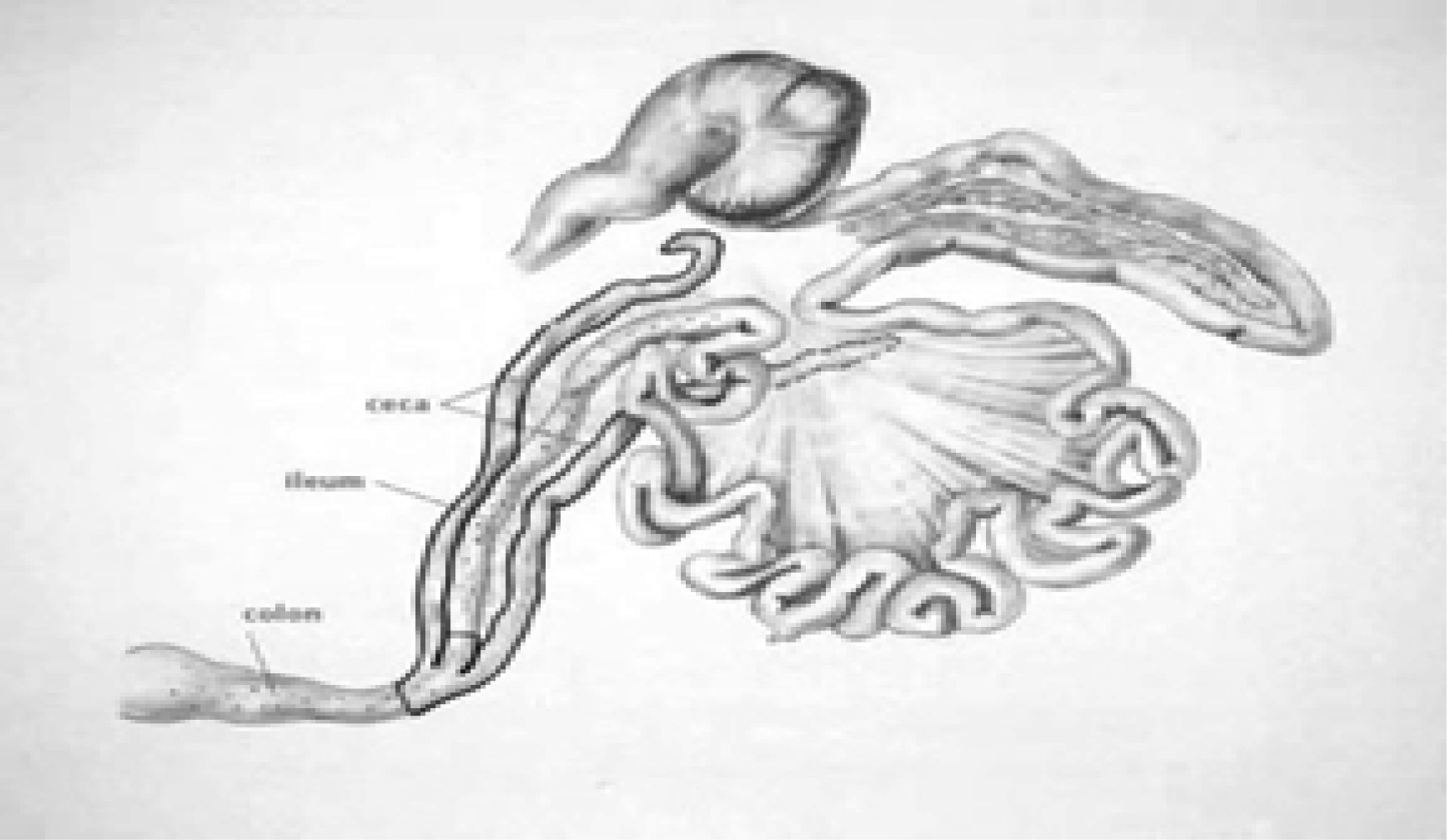
One of the most important parasitic diseases in chicken is coccidiosis, which is caused by protozoa of the genus Eimeria residing in various sites of chicken intestines depending upon the species. For instance, E. tenella porozoites parasitise in lower part of intestine, the caecum (Figure 1).
E. tenella sporozoites parasitise the lower part of intestine, the caecum.
(courtesy by Merck Veterinary Manual).

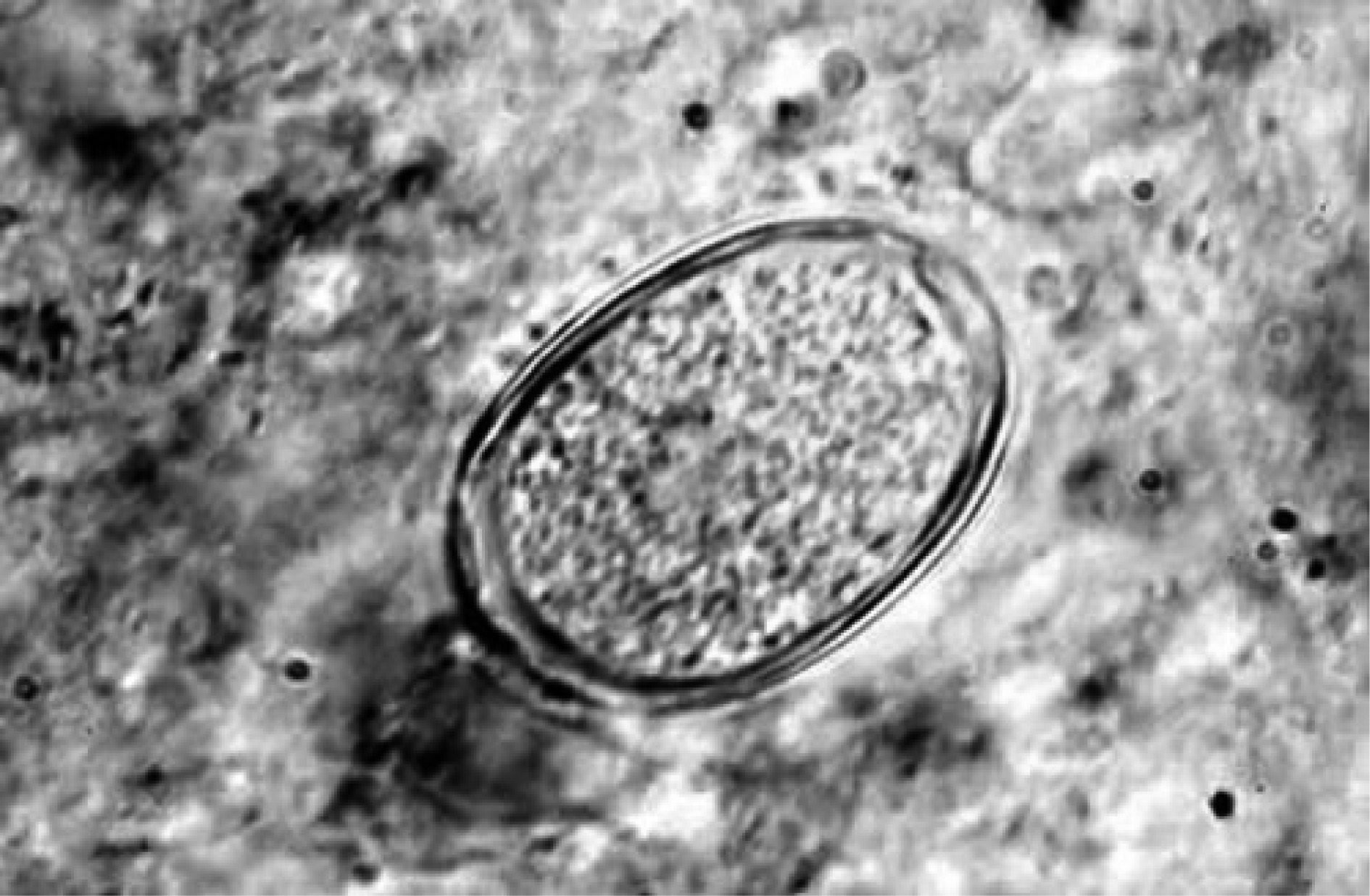
Seven species of Eimeria namely E. tenella, E. necatrix, E. acervulina, E. maxima, E. brunette, E. mitis and E. praecoxare, are commonly accepted to be the causative agents of chicken coccidiosis. These Eimeria have been assigned species status on the basis of characteristic differences in their biology such as site of growth; physical appearance of immature parasites during their life cycle; and pre-patent and patent periods (Shah, Reference SHAH2013; Ali et al., Reference ALI, ALI, SAQIB, AZEEM, SHAH and UMAR2014). For instance, the oocysts and gametocytes, produced by E. maxima, are distinctly large and therefore, it is considered most complex of all the seven species (Figure 2).
The ooycst produced by E. maximum, the largest of seven species of Eimeria
(courtesy by Merck Veterinary Manual).
Its two strains are antigenically different to each other and have to incorporate separately in the live vaccines to produce sufficient immune responses. Therefore, there need to be a vaccine which would be able to produce sufficient immune responses against most of the subject species. In this review, discuss different prophylactic measures; treatments with special reference to DNA vaccination; and future measures which can help in control of coccidiosis are discussed.
Current control measures of chicken coccidiosis
Control of chicken coccidiosis is dependent upon a number of factors including the invading Eimeria species and severity of infection in hosts as well as other environmental, management and nutritional aspects. This issue may differ in relative importance with the age and type of host (Shirley, Reference SHIRLEY1992).
Chemotherapy as a control measure
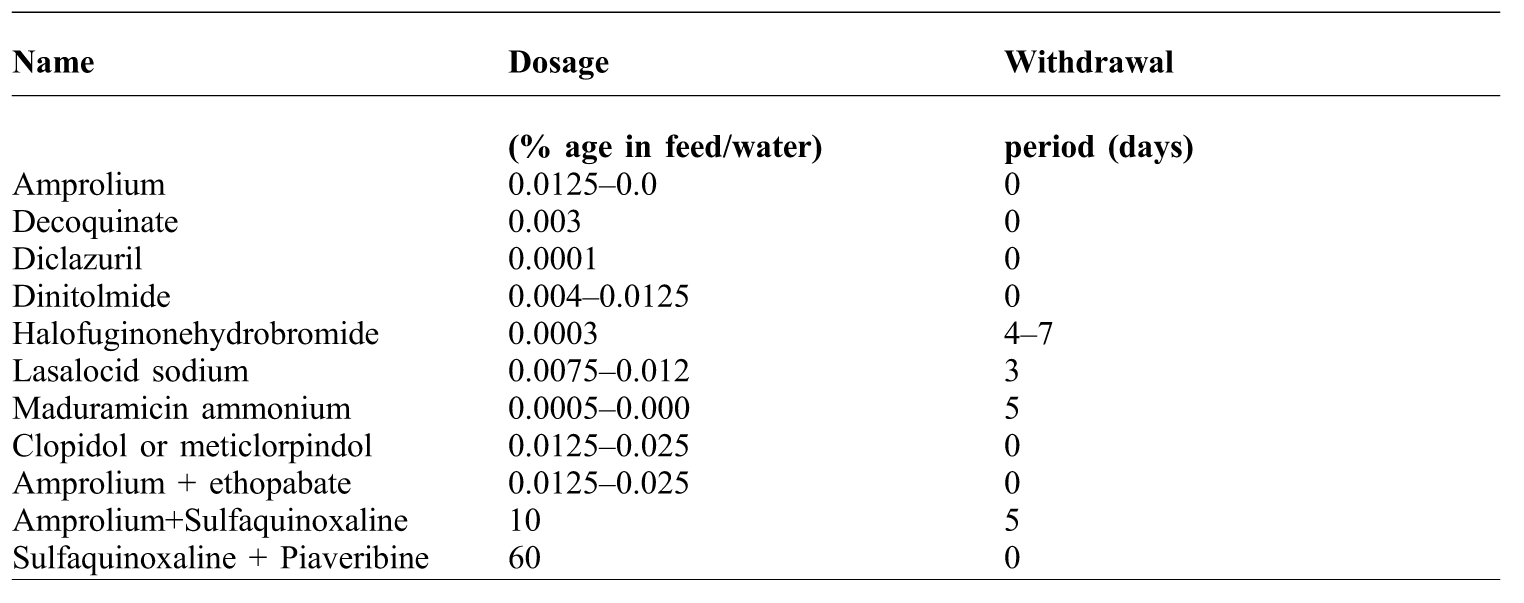
There are a large number of anticoccidial drugs being used in the market; these anticoccidial agents must be mixed in feed to prevent the disease as well as to control subclinical coccidiosis (Table 1).
Commonly used drugs for prevention and treatment of poultry coccidiosis.
Until recently, anti-coccidial compounds have been derived from 17 independent chemical groups (Shirley et al., Reference SHIRLEY, SMITH and BLAKE2007). The use of ionophore products has dominated since the early 1970s although resistance to, and cross-resistance between these compounds by coccidia from broiler and breeder flocks is at a peak (Shirley, Reference SHIRLEY1992). Some non-ionophore products are also available. However, drawbacks for these include drug resistance, drug residues and increasing regulation and bans on the use of anti-coccidial drugs limit their use (Allen and Fetterer, Reference ALLEN and FETTERER2002). Drug resistance was discovered just after the introduction of these drugs, and is becoming increasingly common. As a consequence, there is a race between the discovery of new coccidiostats and development of resistance by the parasites against the older drugs.
According to some reports, resistance of coccidia developed toward all anticoccidial drugs a few years ago (Abbas et al., Reference ABBAS, IQBAL, BLAKE, KHAN and SALEEMI2011; Jie and Liu, Reference JIE and LIU2011). However, some ‘shuttle and rotation’ programs are used for the purpose to combat this resistance. These programs consist of a starter medication, incorporating one particular anticoccidial in the feed, usually for the first three weeks after birth, followed by a change to another drug in the grower feed. For the finishing period, anticoccidials are usually withdrawn from the feed to allow excretion of drug residues before slaughter (Peek and Landman, Reference PEEK and LANDMAN2011).The other concern of chemotherapy is excretion of drug residue before slaughter in poultry products (Shirley et al., Reference SHIRLEY, SMITH and BLAKE2007).
Vaccination as a control measure
Over the last century vaccination has been the most efficient and flexible control measure; moreover, advancement in genomics opens new and exciting ways to achieve this target. There is evidence that when chickens receive low numbers of Eimeria parasites, birds become immune after two to three repeated infections which demonstrates that vaccination is a reliable method to control coccidiosis(Vermeulen et al., Reference VERMEULEN, SCHAAP and SCHETTERS2001).
Live vaccines
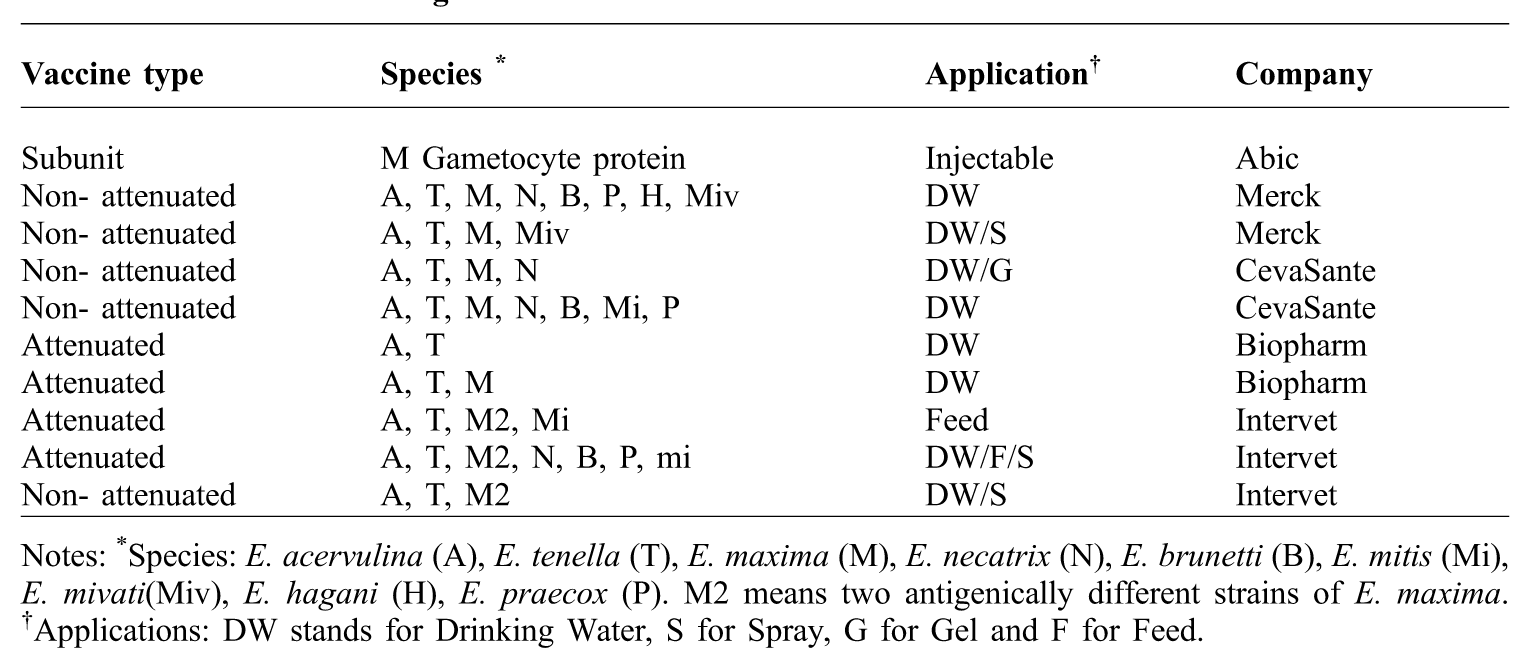
Immunisation with live vaccines is the leading substitute to chemotherapeutic control and it depends upon immunity produced by various live or attenuated species of Eimeria. Several vaccines are currently used, including subunit vaccines (Table 2). The first vaccine against Eimeria was introduced in 1952 and contained live, wild-type, oocysts of E. tenella alone. Three additional species were later on added and the vaccine was available in the United States and in Europe under various names. New products based on live oocysts of different strains and numbers are available (Williams, Reference WILLIAMS2002). A key thought in the application of risky wild type vaccines is that optimal vaccination is achieved by an even, low-level exposure across the vaccinated group because any inconsistent exposure significantly elevates the risk of impaired performance and disease. Thus the delivery of vaccines has been extensively studied; furthermore, dosing strategies now include the addition of oocysts to feed or water; preparation as gel-blocks; and direct use via sprays to the hatched birds or injections to the embryo (Shirley et al., Reference SHIRLEY, SMITH and BLAKE2007).
Available vaccines against chicken coccidiosis.
Notes: *Species: E. acervulina (A), E. tenella (T), E. maxima (M), E. necatrix (N), E. brunetti (B), E. mitis (Mi), E. mivati(Miv), E. hagani (H), E. praecox (P). M2 means two antigenically different strains of E. maxima. †Applications: DW stands for Drinking Water, S for Spray, G for Gel and F for Feed.
The use of attenuated parasites offers an appreciably safer approach to immunisation and attenuation through the selection of ‘precocious’ parasites that are characterised by a reduced reproductive capacity. This minimises the risk of clinical disease immunogenicity compared with the wild-type parent. Attenuation by serial passage of parasites in the chorioallantoic membranes of embryonating eggs has been used for E. tenella protection, while an egg-adapted line has been included in the Livacox vaccines (Shirley and Bedrnik, Reference SHIRLEY and BEDRNIK1997). The formulations used eight and four species/strains to suit the breeder/layer sector, five and three species/strains to suit the broiler sector. The inclusion of two E. maxima strains in the Paracox series addresses the distinguishing antigenic diversity of this species. In short, vaccines which comprise as many as eight lines of live oocysts are highly successful and some offer further novel industrial scale methods of administration, such as in ovo approaches. There are some more points that should be emphasised, including stability, quality control, cost-effectiveness, and efficacy against the vast array of field strains likely to be encountered in different geographical areas. Hence, effective and more economically viable vaccines for controlling the Eimeria species are still required (Tomley et al., Reference TOMLEY, BUMSTEAD, BILLINGTON and DUNN1996; Shirley et al., Reference SHIRLEY, SMITH and BLAKE2007).
Recombinant/subunit vaccines
Proteins are key components in the developmental cycle of parasites involved in the process of invasion of the host cell by the extracellular parasite. These components possibly bind to receptors on the host cell. Blockage of this process could be a target of the protective immune response. A number of interesting new proteins discovered are already considered good targets for such a vaccine, for example the microneme-associated, thrombospondin-related protein of E. tenella, designated as Etmic-1, Etmic-2. Proteins associated with invading mechanisms are given special importance for vaccination e.g. micronemes, rhoptries (Tomley, Reference TOMLEY1994) and refractile bodies (Vermeulen et al., Reference VERMEULEN, KOK, VAN DEN BOOGAART, DIJKEMA and CLAESSENS1993).
Research has defined the immune mechanisms activated by infection with parasites. Experimentation on mouse and chicken models has given a better insight toward the involvement of CD4 and CD8 type T cells (Vermeulen, Reference VERMEULEN1998). Recently, Sharman et al. (Reference SHARMAN, SMITH, WALLACH and KATRIB2010) described a transmission-blocking vaccine. The vaccine is composed of affinity-purified antigens from the wall-forming bodies of macrogametocytes of Eimeria maxima and is now available in the market in the injectable form. Several antigens have been investigated on the basis of T-cell stimulation and cytokine assays for vaccine production. Salmonella typhimurium can induce partial protection as a carrier for Ea1A and EaSC2 antigens of Eimeria. These expected results are supported by recent advances in transfection of related parasites such as Plasmodium and Toxoplasma gondii, and by the progress in genomic information becoming more available every day, the impact of which cannot even be estimated. These new technologies will allow us to solve the complex problems that were created by previous interventions (Vermeulen, Reference VERMEULEN1998; Sharman et al., Reference SHARMAN, SMITH, WALLACH and KATRIB2010).
DNA vaccines
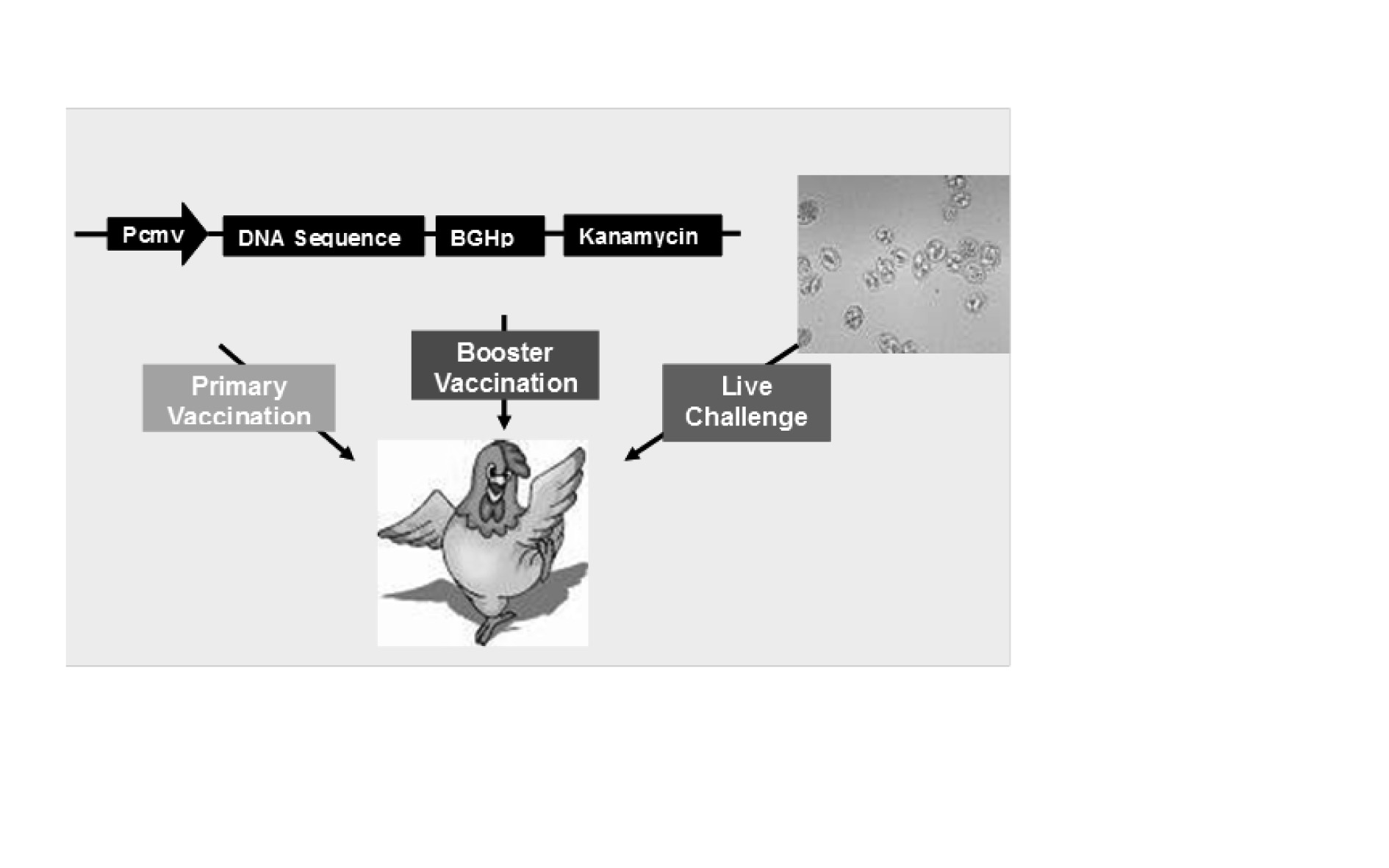
The DNA vaccine, also called the ‘third generation vaccine’ is a novel approach to vaccination, and is regarded as the turning point of immunology (Watts and Kennedy, Reference WATTS and KENNEDY1999). The principle is very simple, the gene encoding the immunogenic protein(s) is inserted into an appropriate eukaryotic expression plasmid that can be replicated in bacteria, purified and then directly inoculated by various methods into the animal to be vaccinated (Figure 3).
Coccidiosis DNA vaccination in chickens.
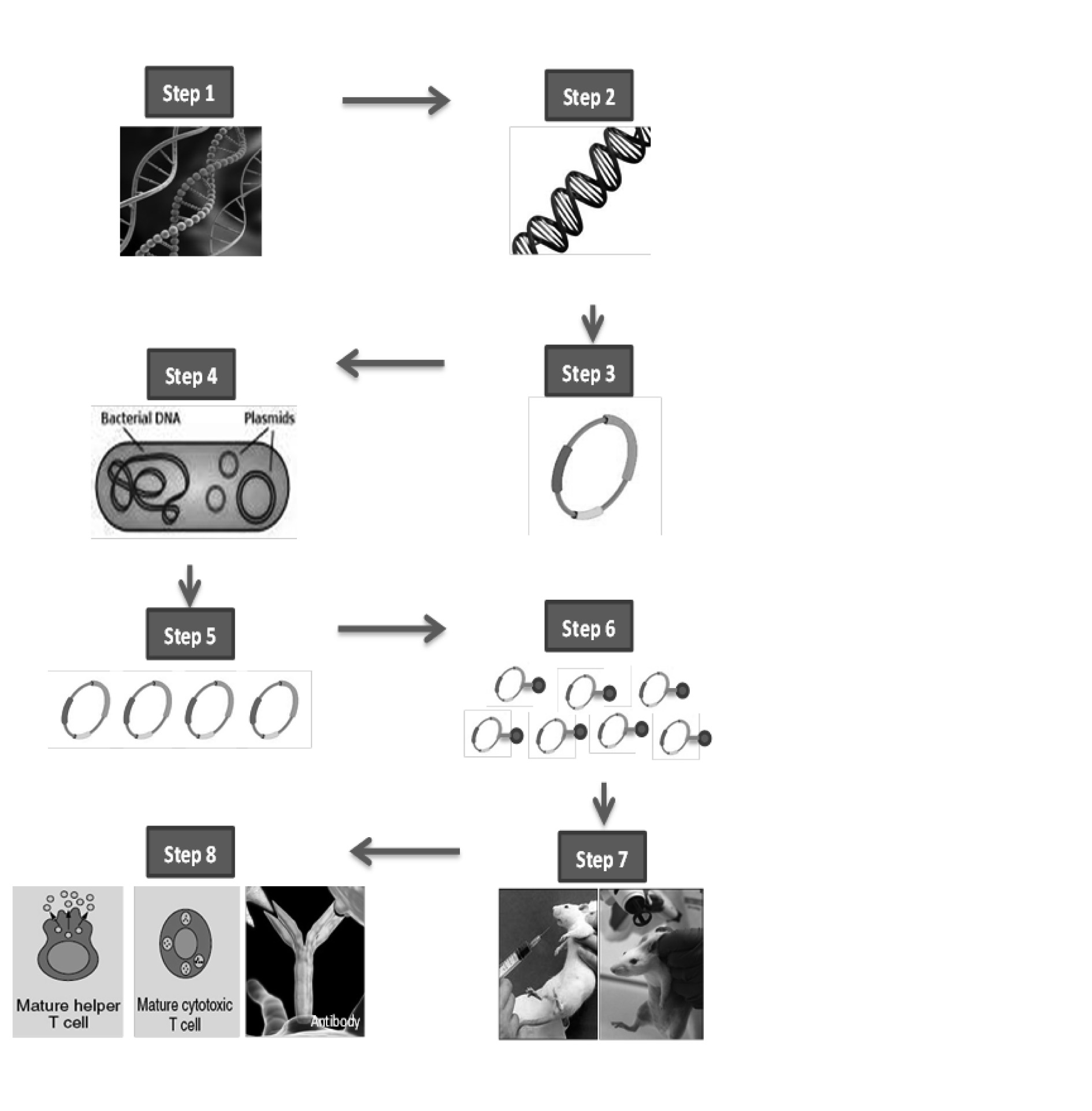
DNA vaccines have several significant advantages over conventional vaccines. First of all DNA vaccines can easily manufactured by using standard molecular biology techniques available in most scientific laboratories (Figure 4).
Steps involved in preparation and application of DNA Vaccine.
Step 1; Selection of antigen sequence, Step 2; Isolation of selected antigen, Step 3; Cloning of vaccine antigen in plasmid, Step 4; Transformation and culture, Step 5; Plasmid purification, Step 6; Formulations with adjuvants , Step 7; Vaccination/ Animal Experiments, Step 8; Measurement of immune responses.
They imitate the effects of modified live virus (MLV) vaccines in their ability to induce major histocompatibility complex restricted CD8+ T-cell responses, yet decrease the concerns of ‘reversion back to virulence’ associated with MLV vaccines. They may overcome inherent indifference in neonatal animals, and they can work in the face of maternally derived immunity. DNA vaccines are easily generated, marked, changed, manufactured in a relatively cost-effective manner and stored with relative ease, eliminating the need for a cold storage. DNA vaccines are more thermo-stable because of their structural and chemical characteristics compared to traditional vaccines consisting of live, fully virulent organisms and live attenuated vaccines. For example, in one report, anticoccidial indices of all experimental groups immunised with stored vaccines were more than or near 170, demonstrating that all the storage methods are suitable. The immune activity showed little decrease with the extension of storage time, suggesting that the DNA vaccine was stable, even stored at room temperature, for 6 months (Song et al., Reference SONG, XU, YAN, HUANG, SHAH and LI2009).
How can one single injection of a plasmid encoding foreign genes provoke a broad spectrum of protective responses? The response might be due to the immune-enhancing properties of the DNA itself (i.e. CpG motifs) and/r the type of antigen presenting cell (APC) transfected (Gurunathan et al., Reference GURUNATHAN, KLINMAN and SEDER2000). Studies have indicated that the skin contains potent Langerhans cells and dendritic APCs which can induce MHC class II immune responses and induce strong CD4+ T-cell responses. There are some discrete and unique lymphatic organs (e.g. the Bursa of Fabricus and Harderian gland) in birds that are not found in the mammal and conversely there is a lack of a well-developed lymphatic system. Therefore, the type and location of some of the early immune responses to DNA vaccination in birds may be different than that in the mammal. In mammals, plasmid and consequent protein production has been tracked to draining lymph nodes after DNA vaccination. In birds, the allocation of plasmid and the sites of protein production are less well defined (Oshop et al., Reference OSHOP, ELANKUMARAN and HECKERT2002).
DNA vaccines have been licensed for veterinary use for West Nile virus in horses (Redding and Weiner, Reference REDDING and WEINER2009) and have shown promise against a wide variety of viruses (Coombes and Crawford, Reference COOMBES and CRAWFORD1996; Shinoda et al., Reference SHINODA, XIN, JOUNAI, KOJIMA, TAMURA, OKADA, KAWAMOTO, OKUDA, KLINMAN and OKUDA2004; Khan et al., Reference KHAN, SABRI, MANSOOR and HUSSAIN2005; Lowenthal et al., Reference LOWENTHAL, JOHNSON, TYACK, HILTON and BEAN2005; Burgers et al., Reference BURGERS, VAN HARMELEN, SHEPHARD, ADAMS, MGWEBI, BOURN, HANKE, WILLIAMSON and WILLIAMSON2006; Ullah et al., Reference ULLAH, RIAZ, UMAR and SHAH2013), bacteria (Huygen et al., Reference HUYGEN, CONTENT, DENIS, MONTGOMERY, YAWMAN, DECK, DEWITT, ORME, BALDWIN, D'SOUZA, DROWART, LOZES, VANDENBUSSCHE, VAN VOOREN, LIU and ULMER1996) and protozoa (Ugen et al., Reference UGEN, NYLAND, BOYER, VIDAL, LERA, RASHEID, CHATTERGOON, BAGARAZZI, CICCARELLI, HIGGINS, BAINE, GINSBERG, MACGREGOR and WEINER1998; Xu et al., Reference XU, SONG, XU, YAN, SHAH and LI2008; Song et al., Reference SONG, XU, YAN, HUANG, SHAH and LI2009; Reference SONG, YAN, XU, SONG, SHAH, ZHU and LI2010; Shah et al., Reference SHAH, SONG, XU, YAN, SONG, RUIRUI, CHENGYU and LI2010a; Reference SHAH, XU, YAN, SONG and LI2010b; Reference SHAH, YAN, XU, SONG and LI2010c; Reference SHAH, SONG, XU, YAN and LI2011).
Delivery of DNA vaccine; route, dose and regime in chicken coccidiosis
Many factors, such as structure of the plasmid backbone, amount of plasmid delivered, route and times of vaccination, and age of animals determine the success of DNA immunisation. The most important factor among these is the dose of vaccination. Generally more vaccine correlates with a stronger response, but this is not necessarily linear, especially in the case of DNA vaccine. When the dosage of DNA plasmid pc DNA-TA4-IL-2 was optimised in a trial using 25 μg, 50 μg, 100 μg and 100 μg doses, it was found that 25 μg gave the highest protection followed by 50 μg and 100 μg, with 200 μg being the lowest (Song et al., Reference SONG, XU, YAN, HUANG, SHAH and LI2009).
Intramuscular route of inoculation provided better results than others. Oral vaccination provided an ACI higher than 180, indicating this route might be effective for inducing anti-coccidiosis immunity (Song et al., Reference SONG, XU, YAN, HUANG, SHAH and LI2009). IM injection is still the most common DNA vaccination method in the chicken mainly because of its simplicity and efficacy. In the studies using IM as a route of inoculation of plasmids, DNA is most commonly formulated without any further adjuvant or enhancer.
The procedure of vaccine delivery and the age of the animal being vaccinated are important. DNA vaccines are administered in birds less than one week of age (primary immunisation) with at least one or two secondary immunisations. Many reports have shown good results only after the second dose DNA vaccine (either immunity or protection).The reasons for the failure of primary immunisation are still unclear, although the immature immune systems of young birds may be one reason for it. Primary immunisation at a young age has noticeable effects on the efficacy of intramuscular injection, because the immature muscle cells of the young animal are more responsive to transformation. It has been reported that primary immunisation at seven days old induces better immune protection against an E. tenella infection than to primary immunisation at 14 days old (Song et al., Reference SONG, XU, YAN, HUANG, SHAH and LI2009).
Role of cytokines as an adjuvant in DNA vaccines
Cytokines control the type and degree of protective responses following infection or immunisation and represent efficacious, naturally occurring therapeutics. It is possible that cytokines may replace the need for conventional, oil-based adjuvants which, sooner or later, provoke adverse site reactions, which lead to a decrease in meat quality. Studies have confirmed that administration of these cytokines may augment host immune responses induced by DNA vaccines to E. tenella. Administering them via a DNA or bacterial vector provide a more practical method (Song et al., Reference SONG, LILLEHOJ, CHOI, YUN, PARCELLS, HUYNH and HAN2000; Xu et al., Reference XU, SONG, XU, YAN, SHAH and LI2008; Shah et al., Reference SHAH, SONG, XU, YAN, SONG, RUIRUI, CHENGYU and LI2010a; Reference SHAH, XU, YAN, SONG and LI2010b; Reference SHAH, YAN, XU, SONG and LI2010c; Reference SHAH, SONG, XU, YAN and LI2011).
The rapid clearance in vivo is characteristic of many cytokines, including mammalian IL-2. Despite of this fact, ChIL-2 treated birds resulted in an increase in both T helper cells and cytotoxic T cells in peripheral blood within 48 hours. DNA vaccines can overcome this problem and provide a more practical method for treating large flocks. For example, a recombinant protein (3-1E) from E. acervulina merozoites, which is also found in E. tenella sporozoites and merozoites, stimulated IFN production in chicken spleen lymphocytes. Direct injection of 3-1E cDNA provokes protective responses against an E. acervulina infection, and simultaneous injection of cDNA encoding chicken IFN further enhanced immunity (Lillehoj et al., Reference LILLEHOJ, CHOI, JENKINS, VAKHARIA, SONG, HAN and LILLEHOJ2000).
Recent developments in recombinant DNA Vaccination
Recently, a number of researchers have studied different combination of DNA antigens to provide the immunological solutions for chicken coccidiosis. Some have used the full sequence of DNA for a particular gene from a specific species of Eimeria e.g. cSZ-2 and pEtk2 antigens from E. acervulina and E. tenella, respectively(Xu et al., Reference XU, SONG, XU, YAN, SHAH and LI2008), or a combination of this antigen with interleukins (Shah et al., Reference SHAH, SONG, XU, YAN, SONG, RUIRUI, CHENGYU and LI2010a; Reference SHAH, XU, YAN, SONG and LI2010b; Reference SHAH, YAN, XU, SONG and LI2010c). Similarly, some antigens at different developmental stages of their lifecycle have been studied e.g. the sporozoites, merozoites, or gametocytes stage (Wu et al., Reference WU, WANG, LIU, ZHU, SUO and JIANG2004; Lillehoj et al., Reference LILLEHOJ, DING, QUIROZ, BEVENSEE and LILLEHOJ2005; Klotz et al., Reference KLOTZ, GEHRE, LUCIUS and POGONKA2007; Shah et al., Reference SHAH, SONG, XU, YAN, SONG, RUIRUI, CHENGYU and LI2010a; Reference SHAH, XU, YAN, SONG and LI2010b; Reference SHAH, YAN, XU, SONG and LI2010c). For the developmental stages, the sporozoite stage is most studied and considered more immunogenic than the merozoites or gametocytes. Because this is the invading stage of the parasite; it can be the most appropriate as the vaccine candidate against Eimeria (Shah et al., Reference SHAH, SONG, XU, YAN and LI2011). Many of these genes are similar to sequences already present in databases, but their function is not yet well understood. Shah et al. (Reference SHAH, SONG, XU, YAN and LI2011) demonstrated the efficacy of sporozoite antigens from E. acervulina co-administered with chicken IL-2 (chIL-2) and interferon-c (chIFN-c) to determine their efficacies against challenging a homologue antigen (Shah et al., Reference SHAH, SONG, XU, YAN and LI2011).
Similarly, Xue et al. (2008) demonstrated the efficacy of the sporozoite antigen from E. tenella co-administered with chicken IL-2 to determine its efficacy against homologue infection. In both experiments, it was observed that DNA vaccination, with or without adjuvants, produced sufficient immune responses against homologous species (Xu et al., Reference XU, SONG, XU, YAN, SHAH and LI2008; Shah et al., Reference SHAH, SONG, XU, YAN and LI2011). The DNA fragment taken from all the four important species: E. tenella, E. necatrix, E. maxima and E. acervulina, was able to provoke appropriate immune responses against infection with a homologous species. However, most of them were not fully protective against heterologous infection (Song et al., Reference SONG, XU, YAN, HUANG, SHAH and LI2009; Shah et al., Reference SHAH, XU, YAN, SONG and LI2010b). Some DNA vaccines, along with adjuvants, were able to produce an immune response against heterologous species (Shah et al., Reference SHAH, SONG, XU, YAN, SONG, RUIRUI, CHENGYU and LI2010a; Reference SHAH, XU, YAN, SONG and LI2010b; Reference SHAH, YAN, XU, SONG and LI2010c). In some studies, the immunogenicity of an E. acervulina sporozoite antigen with or without chicken IL-2 and interferon gamma was evaluated against live E. tenella infection, and resulted in partial protection, possibly due to a DNA sequence similarity present in both of these species (Shah et al., Reference SHAH, SONG, XU, YAN, SONG, RUIRUI, CHENGYU and LI2010a; Reference SHAH, XU, YAN, SONG and LI2010b; Reference SHAH, YAN, XU, SONG and LI2010c). Comprehensive cross protection experiments were carried out with chimeric DNA vaccine pVAX1-cSZ2-IL-2 to determine its efficacy against the four main Eimeria species (Shah et al., Reference SHAH, XU, YAN, SONG and LI2010b). It was observed from the results that recombinant plasmid vaccines can induce host immune responses by reducing intestinal lesions, body weight loss and a number of oocysts, as well as imparting good protection against E. tenella and E. acervulina, medium protection against E. necatrix, but little effect against E. maxima (Shah et al., Reference SHAH, XU, YAN, SONG and LI2010b).
Most of these vaccines were able to protect chickens partially by reducing oocyte output, lesion score and weight loss. The reasons for the partial protection of these antigens are not clear; however, it may be due to a problem in the delivery system e.g. for fowl pox virus, direct DNA injection are needed to elicit proper immune response (Jenkins, Reference JENKINS1998). It may be due to antigens used as vaccine candidates, because many of the functions of these sequences are not well elaborated and the antigen used may not be a primary target for immunity. Whatever the reason may be, this necessitates the need for investigation of some DNA sequences capable of replacing the therapeutics available in the market.
Future prospects
In live vaccines, it is routine to use mixed species of Eimeria to produce an immune response against many species with one vaccine. There is a possibility that the same principle can be applied to DNA vaccines by producing epitope vaccines against Eimeria infections. Arnon et al. (Reference ARNON, TARRAB-HAZDAI and STEWARD2000) stated that DNA epitope vaccines could be planned to accentuate the immunogenic fundamentals that may be hidden in the native antigen, and they can be used to direct the immune response to cellular protection by selection of specific T-cell epitopes (Arnon et al., Reference ARNON, TARRAB-HAZDAI and STEWARD2000). Similarly, Tian et al. (Reference TIAN, WANG, LU, ZHANG, WANG and KANG2008) showed that a multi-epitope DNA vaccination led to a dramatic augmentation of humoral and cellular responses, and provided up to an 80% immune protection against infectious bronchitis virus (IBV) (Tian et al., Reference TIAN, WANG, LU, ZHANG, WANG and KANG2008). Scorza et al. (Reference SCORZA, GRUBB, SMOOKER, RAINCZUK, PROLL and SPITHILL2005) described a multi-epitope malaria vaccine and showed that the vaccine conferred protection against a heterologous parasite infection in BALB/c mice studies (Scorza et al., Reference SCORZA, GRUBB, SMOOKER, RAINCZUK, PROLL and SPITHILL2005).
It is possible to produce multi epitope vaccines with more secure, potent and all-around protection than traditional DNA vaccines, eliminating the negative impacts to expression in vivo and increasing the ability to stimulate immune responses to other sequences. DNA multi-epitope can resolve the problem whereby one antigen cannot stimulate the immune system, as a whole coccidium with an integral life cycle can hold a few antigen genes by selecting fragments with dense T cell epitopes from different genes encoding protective antigens in different stages and cloning them the into one vector (Cong et al., Reference CONG, GU, YIN, WANG, ZHAO, ZHOU, LI and ZHANG2008).
The ideal living vector for vaccination against coccidiosis may be an attenuated recombinant line of Eimeria expressing protective antigens of all species (Shirley et al., Reference SHIRLEY, SMITH and TOMLEY2005). The first step for vaccine preparation is to identify the antigens of the parasite recognised by the host as vital to the protective immune response (McDonald and Shirley, Reference MCDONALD and SHIRLEY2009).The basic problem in identifying antigens for vaccination is that Eimeria spp. are antigenically complex and it is unclear which antigens induce protective immunity during natural infection. (Shah et al., Reference SHAH, XU, YAN, SONG and LI2010b; Shah et al., Reference SHAH, SONG, XU, YAN, SONG, RUIRUI, CHENGYU and LI2010a). Talebi and Mulcahy (Reference TALEBI and MULCAHY2005) suggested that the ideal coccidiosis vaccine may require combination of several immunogens or conserved epitopes from immunogenic antigens of pathogenic Eimeria species. Such future coccidiosis DNA vaccines may be in the form of conserved DNA able to produce immunity against a vast array of Eimeria species or a multi-epitope vaccine comprising of DNA sequences from these species (Talebi and Mulcahy, Reference TALEBI and MULCAHY2005)
Another direction may be in ovo immunisation of DNA vaccines to protect against Eimeria infections. Ding et al. (Reference DING, LILLEHOJ, DALLOUL, MIN, SATO, YASUDA and LILLEHOJ2005) vaccinated E. tenella mireconeme recombinant protein EtMIC2 genes in ovo and observed that the vaccine induces protective immunity against coccidiosis (Ding et al., Reference DING, LILLEHOJ, DALLOUL, MIN, SATO, YASUDA and LILLEHOJ2005). Similarly, Lillehoj et al. (Reference LILLEHOJ, DING, QUIROZ, BEVENSEE and LILLEHOJ2005) cloned two Eimeria sp. genes (EtMIC2 and 3-1E) and their encoded proteins were evaluated for in ovo immunisation to protect against coccidiosis. Their results indicated that in ovo vaccination with the EtMIC2 protein plus cytokine/chemokine genes may be an effective method of control (Lillehoj et al., Reference LILLEHOJ, DING, QUIROZ, BEVENSEE and LILLEHOJ2005).
DNA transport through the cell membrane is an essential requirement for efficient DNA vaccination although the mechanisms of these processes are not clear. There is evidence that the barrier of the membrane transport of DNA can be overcome by properly structuring nano-sized particles (nanoparticles) that may avoid DNA degradation and facilitate targeted delivery to antigen presenting cells. Therefore, there may be a possibility that a coccidiosis DNA vaccine in combination with nano-particles could be capable of overcoming the barrier to cell membrane transport. A similar trend is being investigated for other infectious diseases (Khatri et al., Reference KHATRI, GOYAL and VYAS2008).
Conclusions
DNA vaccination is a novel method for generating antigen specific antibody and cell mediated immunity. Recent studies have enhanced our understanding of how DNA vaccines can be used to prevent coccidiosis and attained required immune responses. These studies provide a benchmark for the preparation of future DNA vaccines, involving novel adjuvants as an effective antigen delivery system. However, there are numerous aspects still to be determined; especially control measures against all seven species of Eimeria with one injection.
Acknowledgments
We are thankful to our colleagues Jonathan Louis and Joshua Kendall for critically checking the language. This study was financially supported by the National Key Program for Developing Basic Research of China (2010CB933903), the National Key Special Program of Science and Technology Infrastructure Program (2013ZX10004103-002), NSFC (61271056), Hunan Science and Technology Projects (2013TP4062, 2012SK3105 and 2010SK2003), the Natural Science Foundation of Hunan Province, China (NO. 12JJ6060), the key Research Foundation of Education Bureau of Hunan Province, China (NO. 11A030), the China Postdoctoral Science Foundation (NO. 2013M531253).