Preventive interventions in the first 5 years of life have been identified as essential both to improving the lives of children and families and to benefiting society more broadly (Doyle, Harmon, Heckman, & Tremblay, Reference Doyle, Harmon, Heckman and Tremblay2009). However, funding and providers for early interventions that enhance parenting are limited, making it important to ensure that resources are used for effective interventions. Attachment and Biobehavioral Catch-up (ABC), an early parenting intervention for young children exposed to adversity, has been examined extensively in efficacy studies, providing empirical support for its positive influence on parent and child outcomes. A critical next step is replicating these positive results beyond the lab. Thus, the present study evaluated the effectiveness of ABC when implemented by community providers in a community setting.
Parenting Interventions and Programs
A variety of treatment programs and preventive interventions targeting children at risk for neglect or maltreatment in early childhood have received empirical support. For example, Child–Parent Psychotherapy, a relationship-based treatment for mothers and children ages 0–5 who have experienced traumas, adversities, or harmful parenting practices, has been shown to improve parental mental health symptoms, child traumatic stress symptoms, child behavior problems, attachment security, and subsequent positive peer relations, among other positive outcomes (Guild, Toth, Handley, Rogosch, & Cicchetti, Reference Guild, Toth, Handley, Rogosch and Cicchetti2017; Lieberman, Ippen, & Van Horn, Reference Lieberman, Ippen and Van Horn2006; Lieberman, Van Horn, & Ippen, Reference Lieberman, Van Horn and Ippen2005). In addition, Parent–Child Interaction Therapy, which provides in vivo coaching to help parents learn positive interaction and behavioral management strategies, has been found to improve maternal sensitivity, maternal stress, child abuse potential, and child behavior among mother–child dyads with a history of or high risk for child maltreatment (Thomas & Zimmer-Gembeck, Reference Thomas and Zimmer-Gembeck2011). On a broader community level, the Positive Parenting Program, a multi-level preventive intervention targeting social and emotional competence in children, has been associated with reduced child maltreatment, child maltreatment injuries, and child out-of-home placements (Prinz, Sanders, Shapiro, Whitaker, & Lutzker, Reference Prinz, Sanders, Shapiro, Whitaker and Lutzker2009). Finally, prenatal and postpartum home visits by a nurse through the Nurse Family Partnership program have been associated with a reduced number of substantiated reports of maltreatment (Eckenrode et al., Reference Eckenrode, Campa, Morris, Henderson, Bolger, Kitzman and Olds2017). These provide only a few examples of successful parenting programs and interventions (see Petersen, Joseph, & Feit (Reference Petersen, Joseph and Feit2014) for a more thorough review). Although each of these programs has demonstrated success in reducing risk for maltreatment or neglect, many families at risk currently do not receive adequate services (Petersen et al., Reference Petersen, Joseph and Feit2014). As a result, continued evaluation of prevention programs is necessary with the goal of identifying programs that can be sustainably and effectively implemented in the community.
ABC Intervention
One program that shows promise for decreasing the gap between the need and availability of community preventive services is ABC. The ABC intervention is a 10-session home-visiting program designed to support infants in contexts of neglectful or problematic parenting (Dozier & Bernard, Reference Dozier and Bernard2017, Reference Dozier and Bernard2019). The intervention was initially developed for caregivers of infants in foster care and has since been expanded for use with parents with child protective services involvement, parents of toddlers with child welfare involvement, and parents of internationally adopted children (Dozier, Roben, Caron, Hoye, & Bernard, Reference Dozier, Roben, Caron, Hoye and Bernard2018). The intervention targets three specific parent behaviors to promote secure attachment and healthy biological regulation in children: (a) nurturance, or responsiveness to the child's distress; (b) following the child's lead, or responsiveness to the child when not distressed; and (c) reducing frightening behaviors.
The ABC intervention promotes these parenting behaviors through information provided to parents addressing each target and “in-the-moment” comments delivered by parent coaches during home visits. In-the-moment comments seek to describe the parent's behavior, link the behavior to an intervention target, and indicate the long-term effects of that behavior. Parent coaches’ in-the-moment comments have been identified as an active ingredient promoting parental behavior change in ABC (Caron, Bernard, & Dozier, Reference Caron, Bernard and Dozier2018). Consistent with meta-analytic findings (Bakermans-Kranenburg, van IJzendoorn, & Juffer, Reference Bakermans-Kranenburg, van IJzendoorn and Juffer2003), other important features of ABC that may contribute to its effectiveness include its short duration, targeted focus on changing parenting behavior, and implementation in the typical home environment (Dozier & Bernard, Reference Dozier and Bernard2017).
ABC Intervention Efficacy
Substantial evidence from randomized clinical trials supports the efficacy of ABC in increasing positive parenting behaviors. For example, foster mothers who received ABC intervention showed greater increases from preintervention to postintervention in observed sensitivity toward their infant than foster mothers who received a control intervention matched for duration and structure (Bick & Dozier, Reference Bick and Dozier2013). Similarly, mothers from low income communities who received ABC showed greater increases in sensitivity and greater decreases in intrusiveness from preintervention to postintervention than mothers who received a control intervention (Yarger, Hoye, & Dozier, Reference Yarger, Hoye and Dozier2016). In addition, parents of internationally adopted children who received ABC demonstrated greater postintervention sensitivity and positive regard than adoptive parents who received a control intervention, with differences remaining 1.5–2.5 years postintervention (Yarger, Bernard, Caron, Wallin, & Dozier, Reference Yarger, Bernard, Caron, Wallin and Dozier2019). Therefore, a strong evidence base supports ABC as an intervention for increasing parental sensitivity.
The benefits of ABC extend beyond parent behavior changes to a wide range of child outcomes. Among foster children, ABC as compared with a control intervention has been associated with higher rates of attachment security (Dozier et al., Reference Dozier, Lindhiem, Lewis, Bick, Bernard and Peloso2009), more typical diurnal cortisol patterns (Dozier et al., Reference Dozier, Peloso, Lindhiem, Gordon, Manni, Sepulveda and Levine2006), higher receptive vocabulary (Bernard, Lee, & Dozier, Reference Bernard, Lee and Dozier2017), and greater executive functioning (Lewis-Morrarty, Dozier, Bernard, Terracciano, & Moore, Reference Lewis-Morrarty, Dozier, Bernard, Terracciano and Moore2012). Similarly, foster children who received the ABC version for toddlers (ABC-T) as compared with a control intervention displayed higher postintervention receptive vocabulary (Raby, Freedman, Yarger, Lind, & Dozier, Reference Raby, Freedman, Yarger, Lind and Dozier2019) and executive functioning (Lind, Raby, Caron, Roben, & Dozier, Reference Lind, Raby, Caron, Roben and Dozier2017). Among children of parents who are involved with child protective services, receiving ABC was associated with higher rates of attachment security (Bernard et al., Reference Bernard, Dozier, Bick, Lewis-Morrarty, Lindhiem and Carlson2012), more typical diurnal cortisol patterns (Bernard, Dozier, Bick, & Gordon, Reference Bernard, Dozier, Bick and Gordon2015; Bernard, Hostinar, & Dozier, Reference Bernard, Hostinar and Dozier2015), greater child compliance (Lind, Bernard, Yarger, & Dozier, Reference Lind, Bernard, Yarger and Dozier2019), and less child negative affect during a challenge (Lind, Bernard, Ross, & Dozier, Reference Lind, Bernard, Ross and Dozier2014) than receiving a control intervention was. Follow-up studies have also shown effects on respiratory sinus arrhythmia, heart rate, and more normative patterns of brain activity in middle childhood (Bick, Palmwood, Zajac, Simons, & Dozier, Reference Bick, Palmwood, Zajac, Simons and Dozier2019; Tabachnick, Raby, Goldstein, Zajac, & Dozier, Reference Tabachnick, Raby, Goldstein, Zajac and Dozier2019). Taken together, these studies support the efficacy of ABC in improving both parent and child outcomes.
ABC Intervention Effectiveness
Given the strong evidence of ABC's efficacy, a crucial next step is examining ABC's effectiveness when implemented in community-based settings. Intervention efficacy within a research context does not always guarantee parallel effectiveness in applied practice (Glasgow, Lichtenstein, & Marcus, Reference Glasgow, Lichtenstein and Marcus2003; Weisz, Weiss, & Donenberg, Reference Weisz, Weiss and Donenberg1992). The National Institute of Mental Health has therefore called for increased efforts to conduct effectiveness studies testing interventions beyond the laboratory (Hoagwood & Olin, Reference Hoagwood and Olin2002). Important current issues within effectiveness research include dissemination of interventions to diverse populations and identification of mediators and moderators of treatment success (La Greca, Silverman, & Lochman, Reference La Greca, Silverman and Lochman2009), each of which are relevant to the further development of ABC.
To date, a few studies have examined the effectiveness of implementing ABC in community-based settings using pre-post designs. In one of the earliest examples, ABC was disseminated in a diverse Hawaiian community through a variety of organizations, with steps taken to ensure parent coach commitment and fidelity to the model while also allowing for relevant cultural modification (Caron, Weston-Lee, Haggerty, & Dozier, Reference Caron, Weston-Lee, Haggerty and Dozier2016). Caregivers who completed ABC in this sample demonstrated significant pre- to postintervention increases in observed sensitivity (i.e., following the child's lead) and delight and decreases in observed intrusiveness.
The effectiveness of ABC is further supported by an examination of ABC dissemination across five community sites from July 2013 to May 2016 when implemented by 23 coaches with varying levels of educational training and diverse professional backgrounds (Roben, Dozier, Caron, & Bernard, Reference Roben, Dozier, Caron and Bernard2017). Replicating the previous study, families who completed ABC demonstrated a significant increase in observed sensitivity from pre- to postintervention with a large effect size. It is important to note that both of these studies reflect intraindividual changes, rather than interindividual differences between treatment and control groups. Nonetheless, the findings support ABC's effectiveness in diverse community settings.
In addition, ABC has been disseminated outside its lab of origin. For example, Berlin, Shanahan, and Appleyard Carmody (Reference Berlin, Shanahan and Appleyard Carmody2014) implemented ABC within a residential substance-abuse treatment program for mothers. Compared with mothers receiving a control “book-of-the-week” program, mothers receiving ABC demonstrated increased postintervention sensitive parenting behavior with a medium effect size. In addition, Berlin, Martoccio, and Jones Harden (Reference Berlin, Martoccio and Jones Harden2018) tested community implementation of ABC in a randomized controlled trial comparing Early Head Start (EHS) programs including ABC or a control book-of-the-week program. The results indicated that ABC was associated with greater postintervention sensitivity, lower intrusiveness, and greater positive regard. Furthermore, infants whose mothers received ABC displayed more rapid postintervention cortisol recovery to a mild stressor than those who received the book-of-the-week program (Berlin, Martoccio, Bryce, & Harden, Reference Berlin, Martoccio, Bryce and Harden2019). These results offer evidence for ABC's effectiveness in a predominantly Latino population and among low-income families that were not recruited for additional risk indicators, highlighting a preventive context. Taken together, these studies provide preliminary evidence for the effectiveness of ABC as it is disseminated in community settings. At the same time, additional effectiveness trials are necessary to replicate the current successes in more diverse community settings, particularly by using randomized clinical trials (RCTs).
Additional work is necessary to understand outcomes, mechanisms, and moderators of ABC. Although extensive research has supported ABC's effects on parental behavior targets and child outcomes, fewer studies have investigated additional parent outcomes. Studies also have yet to examine possible mechanisms of ABC's effectiveness. In-the-moment commenting has been identified as one active ingredient of ABC that promotes changes in parental sensitivity and intrusiveness (Caron et al., Reference Caron, Bernard and Dozier2018); however, it is likely that there are other mechanisms of change occurring within the parent and parent–child dyad. Finally, few moderators that elucidate for whom ABC is most effective have been identified. When ABC was implemented along with Head Start in a population of low-income mothers, greater preintervention intrusiveness and maternal secure or anxious (rather than avoidant) attachment style predicted improved parent outcomes, highlighting the possibility that parent characteristics may moderate ABC outcomes (Berlin et al., Reference Berlin, Martoccio and Jones Harden2018). Understanding additional parent outcomes, mediators, and moderators will help maximize the positive effects of ABC as the intervention moves from efficacy studies to effectiveness trials and dissemination efforts.
Identifying Mechanisms of Change in Sensitivity: The Role of Parental Depression
Sensitivity, or responding contingently to children's cues (Ainsworth, Bell, & Stayton, Reference Ainsworth, Bell, Stayton and Richard1974), is an important predictor of developmental outcomes, including child attachment (De Wolff & van IJzendoorn, Reference De Wolff and van IJzendoorn1997; Zeegers, Colonnesi, Stams, & Meins, Reference Zeegers, Colonnesi, Stams and Meins2017), physiological reactivity (Albers, Riksen-Walraven, Sweep, & de Weerth, Reference Albers, Riksen-Walraven, Sweep and de Weerth2008), socioemotional development (Leerkes, Blankson, & O'Brien, Reference Leerkes, Blankson and O'Brien2009), executive functioning (Valcan, Davis, & Pino-Pasternak, Reference Valcan, Davis and Pino-Pasternak2018), language development (Barnett, Gustafsson, Deng, Mills-Koonce, & Cox, Reference Barnett, Gustafsson, Deng, Mills-Koonce and Cox2012), and symptoms of psychopathology (Haltigan, Roisman, & Fraley, Reference Haltigan, Roisman and Fraley2013). Moreover, the association between sensitivity and positive child outcomes holds in diverse populations, including among ethnic minority families (Mesman, van IJzendoorn, & Bakermans-Kranenburg, Reference Mesman, van IJzendoorn and Bakermans-Kranenburg2012). As described above, increased parental sensitivity is a consistent outcome of ABC intervention, but less is known about whether changes in other parent outcomes may mediate these effects.
Current literature consistently supports an association between parental depression and sensitivity. In a meta-analysis of 46 observational studies from 1974 to 1996, maternal depression had a moderate association with increased disengaged and negative/hostile behavior toward children as well as a small association with fewer positive social interaction behaviors (Lovejoy, Graczyk, O'Hare, & Neuman, Reference Lovejoy, Graczyk, O'Hare and Neuman2000). Similarly, in a review of studies over the following 10 years, Field (Reference Field2010) found that depressed mothers show decreased sensitivity across cultures and socioeconomic statuses. More recently in a meta-analysis examining the first year of life, maternal depression was significantly associated with a small effect on observed maternal sensitivity (Bernard, Nissim, Vaccaro, Harris, & Lindhiem, Reference Bernard, Nissim, Vaccaro, Harris and Lindhiem2018). Furthermore, paternal depression has also been associated with withdrawn paternal behavior in father–infant interactions at 3 months (Sethna, Murray, Netsi, Psychogiou, & Ramchandani, Reference Sethna, Murray, Netsi, Psychogiou and Ramchandani2015).
The association between depression and sensitivity affords the possibility that changes in these variables may be related. Many studies have provided preliminary evidence that interventions with depressed caregivers do indeed promote changes in parental sensitivity.
A meta-analysis examining the effect of psychotherapy for depressed mothers indicated intervention results in decreased levels of maternal depression, improved mother–child interactions, and improved child mental health (Cuijpers, Weitz, Karyotaki, Garber, & Andersson, Reference Cuijpers, Weitz, Karyotaki, Garber and Andersson2015). Similarly, in a review of RCTs assessing the effects of postnatal depression treatments, interventions were found generally to improve the quality of interaction between parent and child (Poobalan et al., Reference Poobalan, Aucott, Ross, Smith, Helms and Williams2007). Finally, a meta-analysis of preventive interventions for depressed mothers found a small-to-medium effect size on sensitivity, with interventions including baby massage or support groups being more effective than those with individual therapy (Kersten-Alvarez, Hosman, Riksen-Walraven, van Doesum, & Hoefnagels, Reference Kersten-Alvarez, Hosman, Riksen-Walraven, van Doesum and Hoefnagels2011). It is noteworthy that interventions with a behavioral or support-based component had larger effects on parental sensitivity, both of which may be provided by ABC.
Given that interventions targeting mothers with postnatal depression frequently produce changes in sensitivity, changes in maternal depression may be one mechanism through which interventions promote improved sensitivity. Additionally, improving caregiver well-being has been identified as central to promoting positive outcomes in both caregivers and children, with the caregiver's ability to self-regulate highlighted as essential to responding effectively to challenging situations (Luthar & Eisenberg, Reference Luthar and Eisenberg2017). If ABC does produce improvements in caregivers’ depressive symptoms, changes in caregiver depression may serve as a mediator through which ABC improves caregiver sensitivity.
Examining Moderators of ABC Effectiveness
Cumulative risk
In considering moderators that predict for whom ABC intervention is most successful, one potential variable is cumulative risk, or the additive effects of exposure to multiple risk factors. Cumulative risk has consistently been associated with less sensitive parenting (e.g., Lengua, Honorado, & Bush, Reference Lengua, Honorado and Bush2007; Trentacosta et al., Reference Trentacosta, Hyde, Shaw, Dishion, Gardner and Wilson2008), a primary outcome of ABC. However, the effects of cumulative risk on interventions targeting parenting is not known as current literature provides mixed results. Among families of young children with developmental delay receiving Parent–Child Interaction Therapy, cumulative risk predicted dropout and diminished treatment effects (Bagner & Graziano, Reference Bagner and Graziano2013), suggesting that risk may interfere with intervention success. In contrast, cumulative risk was associated with greater treatment effectiveness in families receiving high-intensity Parent Management Training (Tømmerås & Kjøbli, Reference Tømmerås and Kjøbli2017), offering the possibility that families with higher risk have greater potential for change. Finally, cumulative risk did not predict differences in parenting outcomes for an intervention that was directed at positive parenting of toddlers and a family-focused preventive intervention for parents of adolescents (Spoth et al., Reference Spoth, Redmond, Shin, Lepper, Haggerty and Wall1998; Stolk et al., Reference Stolk, Mesman, van Zeijl, Alink, Bakermans-Kranenburg, van IJzendoorn and Koot2008). Given these varying findings, additional studies are necessary to elucidate the role of cumulative risk as a moderator of parenting intervention outcomes.
Caregiver adverse childhood experiences
Another risk factor that may moderate intervention effectiveness is the caregiver's level of adverse childhood experiences (ACEs). Childhood maltreatment, one category of ACEs, has been associated with less sensitivity, greater hostility, and greater child abuse potential in mothers (Bailey, DeOliveira, Wolfe, Evans, & Hartwick, Reference Bailey, DeOliveira, Wolfe, Evans and Hartwick2012; Bert, Guner, Lanzi, & Centers for Prevention of Child Neglect, Reference Bert, Guner and Lanzi2009; Pereira et al., Reference Pereira, Vickers, Atkinson, Gonzalez, Wekerle and Levitan2012). Similarly, greater ACEs have been associated with greater likelihood of lifetime depressive disorders (Chapman et al., Reference Chapman, Whitfield, Felitti, Dube, Edwards and Anda2004), which in turn has been associated with parental sensitivity as described above. However, the influence of ACEs on intervention effectiveness has not been examined. Parents with ACEs may stand to benefit the most from intervention given the association between ACEs and decreased sensitivity. At the same time, caregivers’ ACEs may interfere with their ability to benefit from intervention. Examining cumulative risk and parental ACEs as potential moderators of ABC's influence on parent outcomes will provide insight into which parents are most likely to benefit from ABC.
The Present Study
Using an RCT in a community setting, the present study attempted to replicate previous findings that ABC increases sensitive parental behavior. In addition, we examined changes in parental depression as a potential mechanism for increased sensitivity and measures of risk as potential moderators of intervention effectiveness. We hypothesized that parents who received ABC through the community implementation would show greater improvements in parental sensitivity than parents in a waitlist control condition. In addition, we expected that ABC would reduce parents’ depressive symptoms, which would serve as a mechanism through which ABC improves parental sensitivity. Finally, given that cumulative risk and parental ACEs have the potential to interfere with intervention effectiveness or to provide greater opportunities for intervention-promoted change, we conducted exploratory analyses to examine these variables as potential moderators of intervention effectiveness on parent outcomes.
Method
Implementation of ABC
The current study was conducted in collaboration with Power of Two, a nonprofit organization in Brooklyn, New York. Power of Two was founded in 2015 to scale the dissemination of ABC to families living in poverty and involved in the child welfare system in New York City. The RCT reported here results from an evaluation of the effectiveness of implementing ABC through Power of Two. Across the study period, ABC was provided by 24 parent coaches who varied in their racial/ethnic, professional, and educational backgrounds. Six (25%) of the coaches were Caribbean, 6 (25%) were Hispanic or Latin, 5 (20.83%) were African American, 3 (12.5%) were Caucasian, 2 (8.3%) were biracial/multiethnic, and 2 (8.3%) identified as other. In terms of education, 4 (16.7%) of the coaches had a high school degree, 1 (4.2%) had completed some college, 12 (50%) had a bachelor's degree, and 7 (29.2%) had a master's degree. Twenty-three (95.8%) had previous experience working with families or children, 12 (50%) had previous social work experience, and 7 (29.2%) had previous clinical work experience.
Suitability to be a parent coach was determined regardless of professional and educational background and based on selection criteria defined by the model developer: (a) evidence of valuing attachment/openness (as assessed via an abbreviated attachment interview) and (b) initial skill in delivering in-the-moment feedback on parent–child interactions (as assessed via a video vignette-based role-play; Caron, Roben, Yarger, & Dozier, Reference Caron, Roben, Yarger and Dozier2018). Parent coaches participated in a 2-day training followed by a year of weekly supervision provided by the model developer's team. Weekly supervision included 1 hr of clinical group supervision focused on case conceptualization and 30 min of individual fidelity-focused supervision (for a description of the standardized training and supervision practices, see Caron et al., Reference Caron, Weston-Lee, Haggerty and Dozier2016). Fidelity was monitored by having the parent coach and a reliable ABC fidelity coder randomly code selected 5-min segments of the coach's sessions for on-target parental behaviors and the coach's rate and accuracy of commenting on such behaviors. The parent coach and fidelity coder met weekly to discuss the accuracy of coding as well as the parent coach's frequency and content of in-the-moment comments (for more details on fidelity monitoring and related outcomes, see Caron & Dozier, Reference Caron and Dozier2019).
Participants
The participants were 200 primary caregivers (referred to as parents throughout text) and children from a large urban area on the east coast. A power analysis conducted using G*Power 3.1.7 demonstrated that a sample size of 134 would afford 90% power to detect an effect size between small and medium (f 2 = .08) by using linear multiple regression with baseline sensitivity as a covariate. Estimating approximately 30% attrition based on similar studies, we planned to recruit 200 participants in total. At the initial intake visit, children ranged in age from 5.64 to 21.48 months (M = 11.82, SD = 4.36). Ninety-eight (49.0%) of the children were male. One hundred twenty-three (61.5%) of the children were African American, 32 (16.0%) were biracial/multi-ethnic, 28 (14.0%) were Hispanic or Latin, 8 (4.0%) were Caribbean, 2 (1.0%) were American Indian or Alaska Native, 1 (0.5%) was Caucasian, 5 (2.5%) identified as other, and 1 (0.5%) did not report race/ethnicity information.
At the initial intake visit, parents ranged in age from 17.04 to 64.89 years (M = 29.85, SD = 7.32). Eight (4.0%) of the parents were male. One hundred eighty-three (91.5%) of the parents in this study were the child's birth parent. Of parents who provided their household composition, 65.8% lived without a partner and 40.8% lived alone or only with their children/grandchildren. The majority of the sample experienced high housing risk, with 35.9% of parents providing housing information reporting living in a shelter and 25.5% reporting living in public housing developments. One hundred twenty-nine (64.5%) of the parents were African American, 30 (15.0%) were Hispanic or Latin, 17 (8.5%) were biracial/multi-ethnic, 10 (5.0%) were Caribbean, 2 (1.0%) were American Indian or Alaska Native, 1 (0.5%) was Asian, 3 (1.5%) were Caucasian, 5 (2.5%) identified as other, and 3 (1.5%) did not report race/ethnicity information. The majority (83.0%) of parents who responded to a question about monthly income reported an income level below the poverty threshold for the number of children and adults in their household.
Procedure
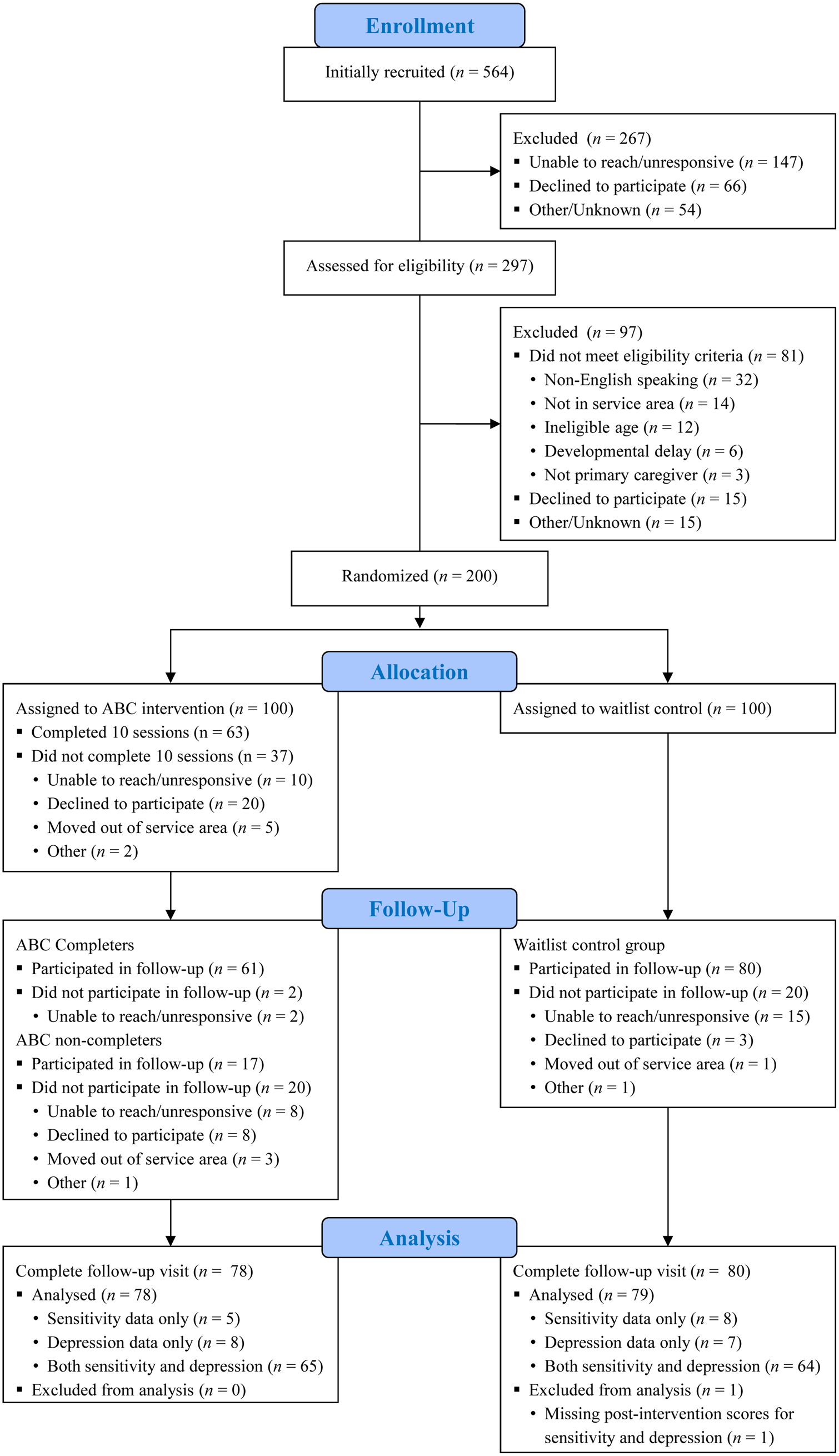
Power of Two outreach staff recruited parents and children from the community to participate in the study through partnerships with community-based organizations (e.g., family-based homeless shelters, community fairs, health service providers) and by talking directly with parents in the neighborhood (e.g., on the street, in public housing developments). Participants were recruited between January 2016 and November 2018 and were drawn from the population served by Power of Two. Upon contacting parents interested in receiving ABC, Power of Two staff asked about interest in participating in a research study. If the parent expressed interest, they were contacted by the research coordinator, who provided additional information about the study and screened for eligibility. Inclusion criteria for the parent included being at least 16 years old and having custody of a child between 6 and 20 months of age. Exclusion criteria included significant child medical or developmental delay, not living in the service area, and not speaking English. See the CONSORT diagram in Figure 1 for the number of potential dyads considered at each stage.
Participant flow diagram for this randomized clinical trial of the ABC intervention.

The research coordinator attended the initial intake appointment of eligible dyads to describe the study in detail, answer questions, and ensure parental understanding. If the parent was 18 years of age or older, the research coordinator obtained informed consent from the parent. If the parent was under 18 years of age, consent was obtained from both the parent and the parent's legal guardian. All dyads then completed the initial intake typically provided as part of Power of Two's services, which included completion of questionnaires and a video-recorded parent–child interaction.
After providing informed consent, dyads were randomly assigned to the ABC or the waitlist control condition by the principal investigator using a randomly generated number sequence, allowing the research staff to remain masked to condition prior to randomization. Given that research staff within Power of Two were responsible for coordinating between parents and parent coaches, they were aware of random assignment thereafter. Those assigned to ABC began the intervention immediately, with home visits scheduled at approximately weekly intervals. Among dyads that completed all 10 sessions of ABC, the average number of weeks to completion was 14.39 (SD = 3.84). Dyads assigned to the waitlist condition did not receive any intervention during a waiting period. After the intervention or waiting period, dyads completed a follow-up visit at the Power of Two office in Central Brooklyn between June 2016 and September 2018. The average time between baseline and follow-up visits was 7.19 months (SD = 2.85). An attempt was made to conduct a follow-up assessment for all dyads. During the follow-up visit, the parent completed questionnaires and repeated the video-recorded parent–child interaction. The parent received $50 for participating in the follow-up research visit. Dyads assigned to the waitlist control were then provided the opportunity to complete ABC.
ABC Intervention
The ABC intervention consists of 10 weekly home visits (for a detailed description of the intervention, see Dozier & Bernard, Reference Dozier and Bernard2017). In these sessions, the parent coach discusses the rationale and evidence supporting each ABC target: nurturance (sessions 1 and 2), following the lead (3 and 4), and reducing frightening behaviors (5 and 6). In later sessions, the parent coach helps the parent consider how their own upbringing and/or current situation may interfere with providing sensitive care (sessions 7 and 8). In the final two sessions (9 and 10), the parent coach reviews previous content and celebrates progress. Across all sessions, the parent coach makes frequent in-the-moment comments on parent–child interactions promoting the behavior targets during both spontaneous interactions and structured activities with the child. Video feedback is also used to further reinforce the parent's progress and highlight successes.
Measures
Parental behavior
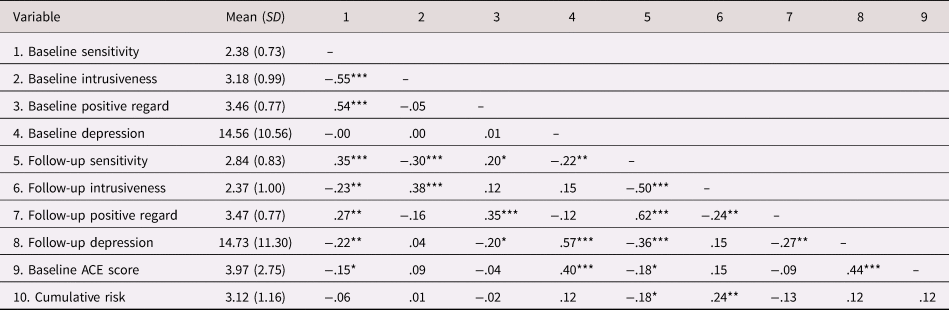
Parental behavior was assessed through a semistructured, video-recorded play interaction in which the child was placed in an infant seat and provided with developmentally appropriate toys. The parent was instructed to interact with their child as they normally would, first from a distance without touching the child or toys for 2 min and then as close as they would like for 7 min. Parental behavior was coded on 5-point scales adapted from the Qualitative Scales of the Observational Record of the Caregiving Environment (National Institute of Child Health and Human Development Early Child Care Research Network, 1999, 2003) for “sensitivity” (following the child's lead), which reflected the parent's ability to respond contingently to the child's cues and behaviors; “intrusiveness,” which reflected the parent's tendency to direct or overstimulate the child; and “positive regard,” which reflected the parent's expression of enjoyment of the child. These scales have been used previously to assess parental behavior in samples with a similar age range and demographic diversity (e.g., Lind et al., Reference Lind, Bernard, Yarger and Dozier2019). Each play interaction was double-coded by trained coders who were masked to the dyad's assigned condition. Raters showed good reliability, with baseline and follow-up one-way average measures intraclass correlation coefficients of .62 and .79 for sensitivity, .79 and .84 for intrusiveness, and .75 and .74 for positive regard. See Table 1 for means and standard deviations.
Means, standard deviations, and bivariate correlations of primary variables

Note: *p < .05 **p < .01. ***p < .001.
Parental depression
Parental depression was assessed with the Center for Epidemiological Studies Depression Scale (CES-D; Radloff, Reference Radloff1977). This 20-item self-report scale assesses frequency of depression symptoms (e.g., “I felt lonely” and “I had crying spells”) over the previous week on a 4-point scale ranging from 0 = “rarely or none of the time (less than 1 day)” to 3 = “most or all of the time (5–7 days).” The CES-D has been found to have strong psychometric properties across diverse adult populations with reliabilities ranging from .85 to .87 in different racial/ethnic groups (Radloff, Reference Radloff1977; Roberts, Reference Roberts1980). Scores ranged from 0 to 53 at baseline and from 0 to 46 at follow-up, with 36.9% and 38.8% of parents scoring at or above the clinical cutoff of 16 at baseline and follow-up, respectively. The Cronbach coefficient alphas for baseline and follow-up CES-D in the present study were .75 and .79, respectively. See Table 1 for means and standard deviations.
Adverse childhood experiences
ACEs were assessed with the ACE questionnaire, which asks whether the parent experienced each of the following adverse events during childhood: emotional abuse, physical abuse, sexual abuse, emotional neglect, physical neglect, single-parent home, witnessing domestic violence, substance-abusing parent, incarcerated parent, or parent with psychopathology (Felitti et al., Reference Felitti, Anda, Nordenberg, Williamson, Spitz, Edwards and Marks1998). Retrospective reports of ACE scores by adults have been shown to have good test-retest reliability with kappa of .64 and low rates of discordance (Dube, Williamson, Thompson, Felitti, & Anda, Reference Dube, Williamson, Thompson, Felitti and Anda2004). Scores at intake ranged from 0 to 10 in the present sample (M = 3.97, SD = 2.75), with 51.3% of parents reporting a score of 4 or more.
Cumulative risk
On questionnaires, parents were asked to report on demographic factors used to assess risk. A cumulative risk score was formed based on the following risk factors: single parent (63.2%), housing risk (living in a shelter; 33.8%), young parent (age 21 or younger at child's birth; 16.0%), parental involvement with the child welfare system (40.4%), and low parental education (less than high school or equivalent degree; 31.6%). Two risk factors were not included in our cumulative risk score because they were present in almost all dyads: financial risk (receiving some form of assistance such as food stamps or having a household income that falls below the poverty threshold; 99.4%) and child racial/ethnic minority status (99.5%). Dyads received one point for each risk indicator present. Missing scores on individual risk items were replaced with the mean for that risk item. Cumulative risk scores ranged from 0.99 to 6.0 (M = 3.12, SD = 1.16).
Analyses
As a preliminary analysis, we conducted a randomization check using t tests and chi-square tests to determine whether there were any baseline differences in demographic, risk, or primary outcome variables between participants assigned to the ABC and waitlist control conditions. We conducted the same comparison analyses within the ABC group to determine whether there were any differences between those who did and did not complete all 10 sessions of the intervention.
For our principal analyses, we analyzed the data by using structural equation modeling with robust maximum likelihood estimation in Mplus 8 Version 1.5 (Muthén & Muthén, Reference Muthén and Muthén2012–2017). We conducted cross-lagged analyses to examine whether participation in ABC as opposed to the waitlist control predicted follow-up parental behavior and depression scores accounting for baseline scores and child and parent ages. Initial more conservative analyses included all participants and used all available scores. Additional analyses were conducted excluding dyads assigned to the ABC group who had dropped out of the intervention before completing all 10 sessions. In addition, we conducted a mediation analysis within this cross-lagged model to examine whether follow-up depression served as a mechanism through which ABC influenced follow-up sensitivity. Finally, we conducted a series of exploratory moderation analyses in PROCESS 2.13 (Hayes, Reference Hayes2014) to examine whether risk variables (ACE and cumulative risk scores) served as moderators of the association between the ABC intervention and significant follow-up variables.
Results
Preliminary Analyses
Means, standard deviations, and bivariate correlations between primary variables are found in Table 1.
Randomization check
There were no significant differences between the ABC and waitlist control groups on demographic variables including child gender, child or parent racial/ethnic minority status, parent or child age at intake, and whether the parent was the child's birth parent. In addition, the groups did not significantly differ on risk variables including baseline ACE and cumulative risk. Finally, the groups did not significantly differ on baseline levels of the primary variables examined in analyses including parental sensitivity, intrusiveness, positive regard, and depression symptoms.
Dropout analyses
Of the 100 dyads randomly assigned to receive ABC, 37 (37%) did not complete all 10 sessions of the intervention, with 15 completing no sessions, 7 completing 1 session, 4 completing 2 sessions, 1 completing 3 sessions, 5 completing 4 sessions, 4 completing 7 sessions, and 1 completing 8 sessions (see Supplementary Table 1 for descriptive information). Dyads who did or did not complete all 10 sessions of ABC did not differ on the demographic variables of child gender, child or parent racial/ethnic minority status, parent or child age at intake, and whether the parent was the child's birth parent. Parents who did not complete all 10 sessions had lower baseline scores for sensitivity than parents who completed all 10 sessions, t (89) = −2.02, p = .047, but did not differ in baseline intrusiveness, positive regard, or depression scores. Parents who did not complete all 10 sessions also had significantly higher cumulative risk scores, t (98) = 2.86, p = .005, but did not differ in ACE score.
Changes in Parental Behavior and Depression Symptoms
Full sample analysis
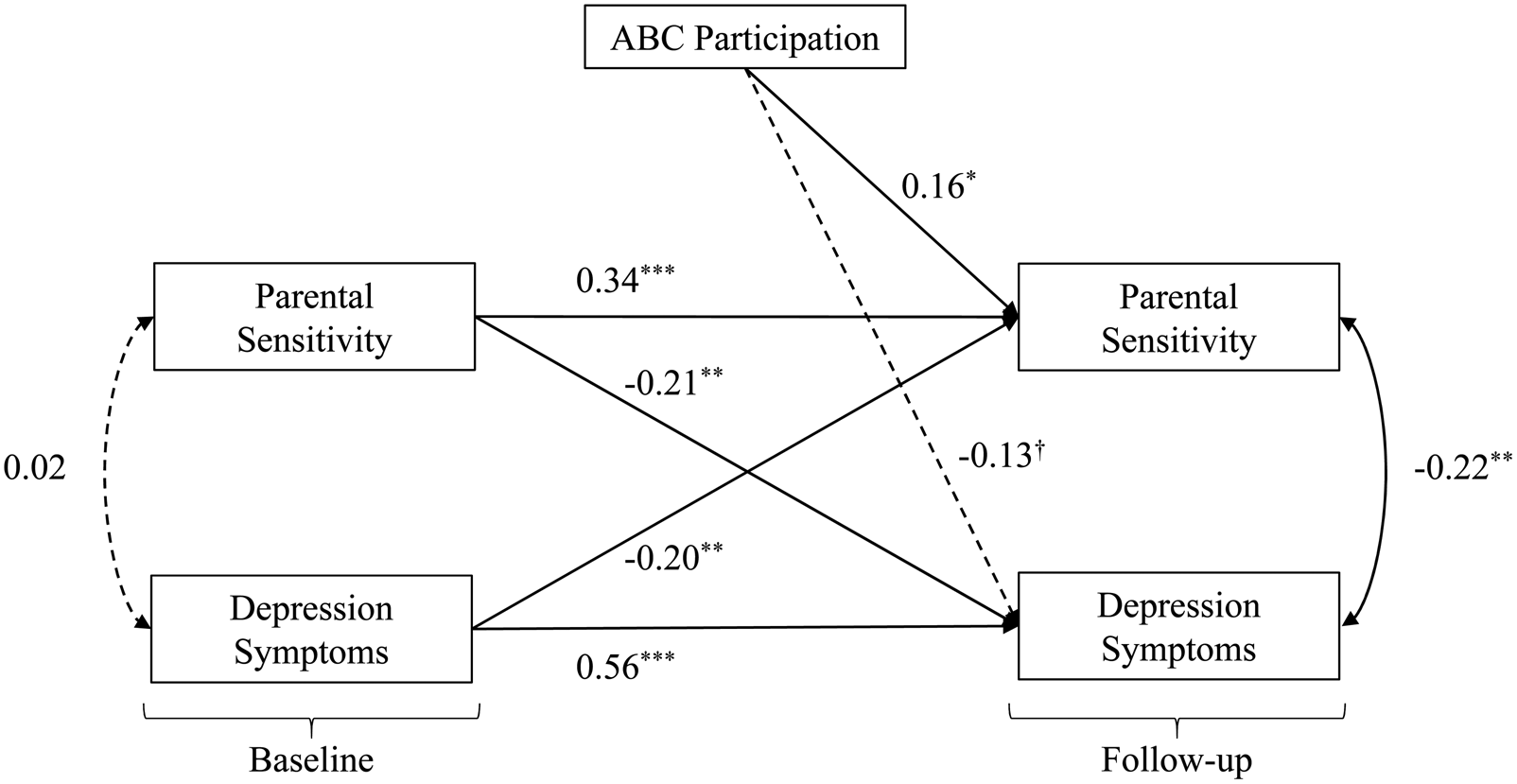
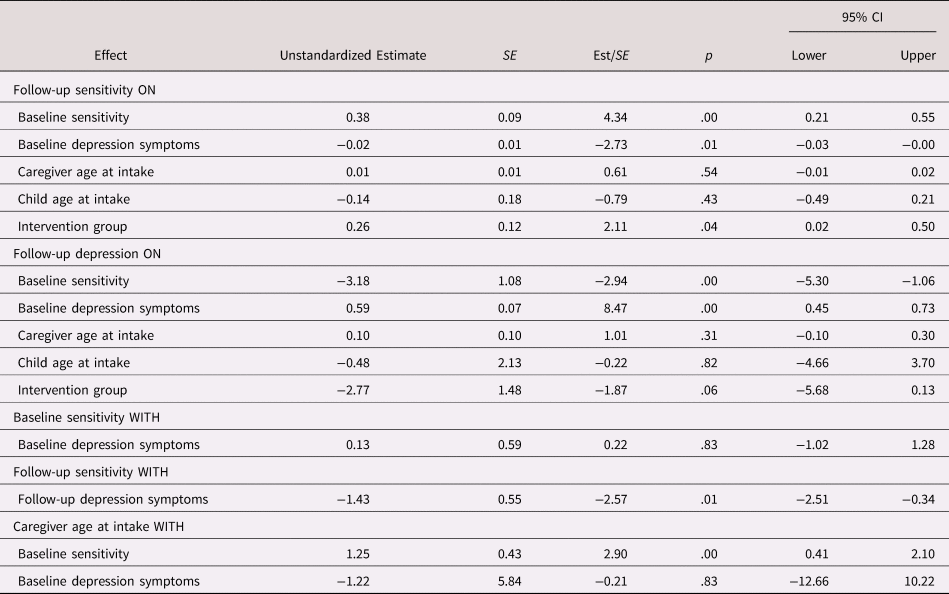
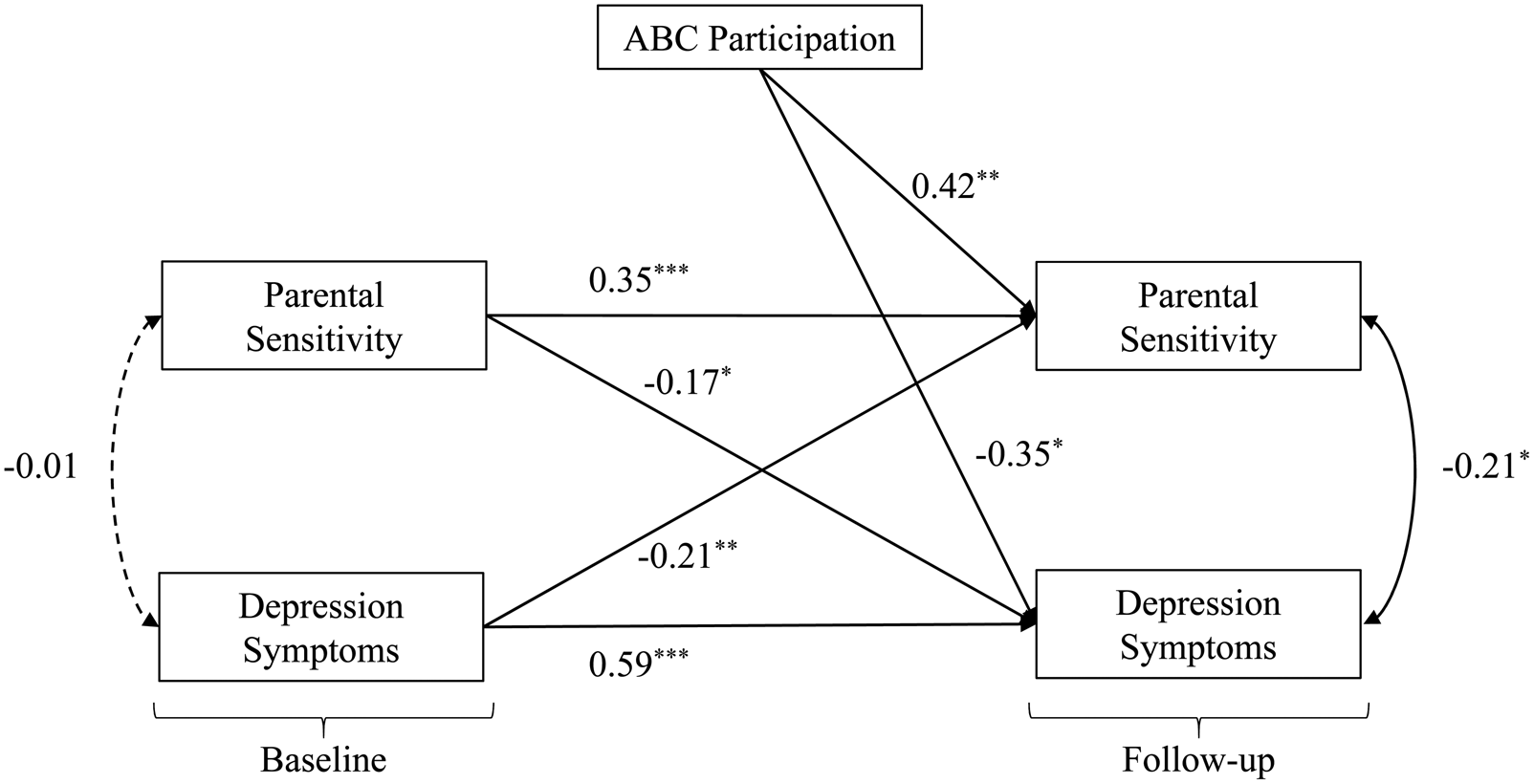
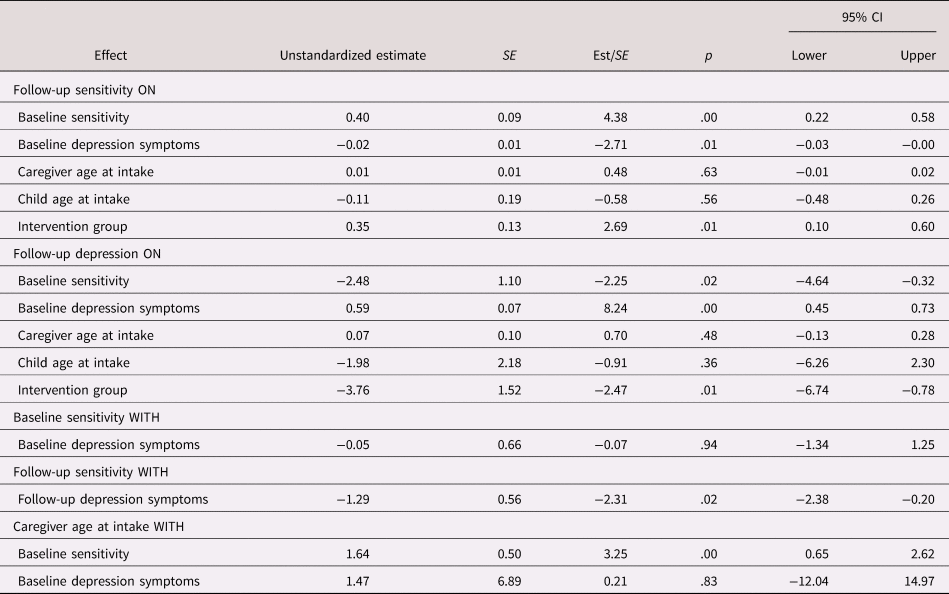
First, we examined whether dyads randomly assigned to participation in ABC displayed greater follow-up observed parental behavior and lower depression symptoms than the waitlist control group by using a cross-lagged structural equation model that accounted for baseline parental behavior, baseline parental depression symptoms, and child and caretaker age at intake. A separate model was run for each parental behavior. Figure 2 shows the cross-lagged model examining ABC's influence on parental sensitivity and depression symptoms, with unstandardized coefficients and significance levels. The model fit statistics, root mean square error of approximation (RMSEA) = 0.00, comparative fit index (CFI) = 1.00, and Tucker–Lewis index (TLI) = 1.02, were within the range recommended for good model fit: RMSEA ≤ 0.06 and CFI/TLI ≥ 0.95 (Hu & Bentler, Reference Hu and Bentler1999). The model indicated that assignment to the ABC group was associated higher follow-up sensitivity, b = 0.26, p = .035 (see Table 2 and Figure 2). Although not significant, assignment to the ABC group was associated with lower follow-up depression symptoms, b = −2.77, p = .062. Using a last observation carried forward approach, on average parents who were assigned to the intervention condition had a greater increase in sensitivity (M = 0.41, SD = 0.83) than parents who were assigned to the waitlist group (M = 0.24, SD = 0.80). The effect size for these mean differences was small, Cohen d = 0.21, 95% CI [-0.08, 0.50]. In contrast, ABC did not have a significant effect on follow-up levels of intrusiveness and positive regard in the cross-lagged model corresponding to each.
Path diagram with standardized coefficients for structural equation cross-lagged model of parental sensitivity and parental depression symptoms for full sample. Model fit statistics indicated good fit: RMSEA = .00, CFI = 1.00, and TLI = 1.02. Nonsignificant covariances between age covariates and baseline and follow-up variables not depicted for simplicity. †p < .10. *p < .05. **p < .01. ***p < .001.

Model estimated parameters for the full-sample structural cross-lagged model
ABC intervention completers
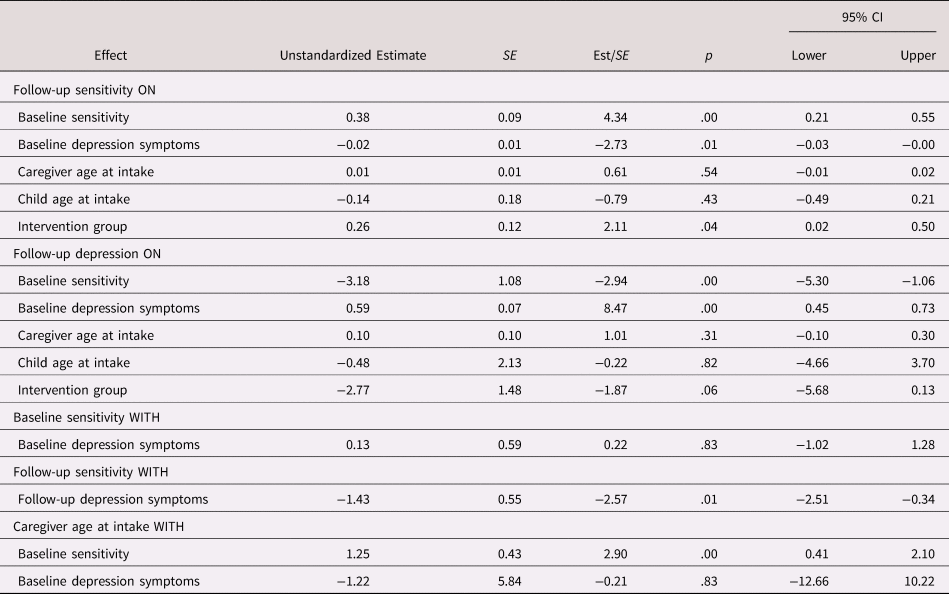
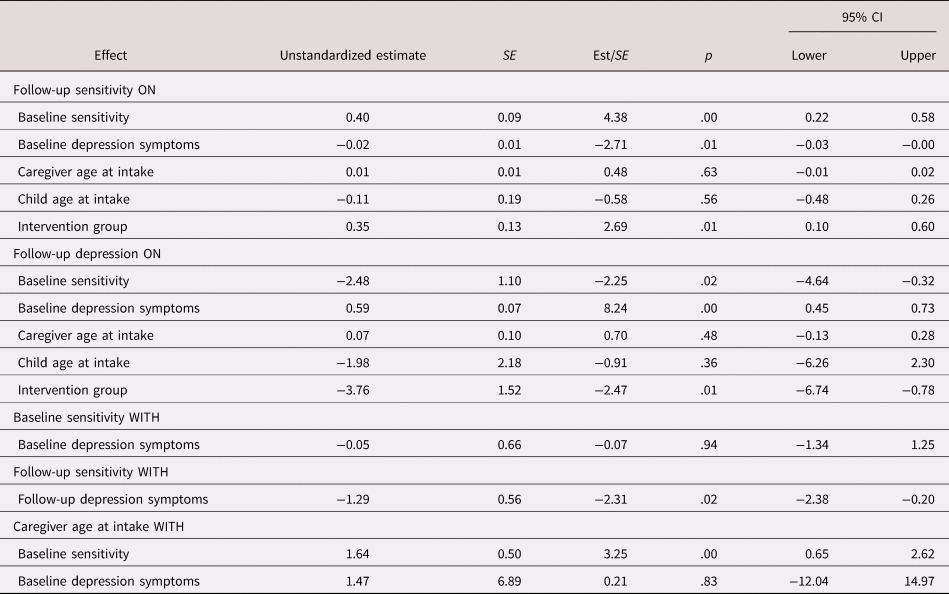
When the cross-lagged models were repeated comparing only dyads who completed all 10 sessions of ABC and the waitlist group, a similar pattern of results emerged. Figure 3 shows the cross-lagged model examining ABC's influence on parental sensitivity and depression symptoms with unstandardized coefficients and significance levels. The model fit statistics indicated good model fit, RMSEA = 0.05, CFI = 0.98, and TLI = 0.96. The model indicated that assignment to the ABC group was associated with higher follow-up sensitivity, b = 0.35, p = .007, and lower follow-up depression symptoms, b = −3.76, p = .013 (see Table 3 and Figure 3). Using a last observation carried forward approach, on average parents who completed ABC displayed greater increases in sensitivity (M = 0.60, SD = 0.88) and greater decreases in depression symptoms (M = −1.65, SD = 7.65) than parents assigned to the waitlist condition (M = 0.24, SD = 0.80 for sensitivity; M = 0.46, SD = 9.28 for depression symptoms). The effect sizes corresponding to these mean differences were small-to-moderate for parental sensitivity, Cohen d = 0.43, 95% CI [0.10, 0.76], and small for parental depression symptoms, Cohen d = 0.24, 95% CI [0.08, 0.56]. However, completion of ABC did not significantly affect follow-up levels of intrusiveness and positive regard.
Path diagram with standardized coefficients for structural equation cross-lagged model of parental sensitivity and parental depression symptoms for completers. Nonsignificant covariances between age covariates and baseline and follow-up variables not depicted for simplicity. Model fit statistics indicated good fit: RMSEA = .05, CFI = .98, and TLI = .96. *p < .05. **p < .01. ***p < .001.

Model estimated parameters for the completer-only structural cross-lagged model
Parental Depression Mediating ABC Effects on Parental Sensitivity
Given the direct effects reported above, we next examined whether follow-up parental depression symptoms mediated ABC effects on parenting behavior, focusing specifically on parental sensitivity for ABC completers versus waitlist participants. Mediation analyses were conducted in MPlus within the cross-lagged model reported above. The model fit statistics indicated good fit, RMSEA = 0.05, CFI = 0.98, and TLI = 0.96. The total indirect effect, although in the expected direction, was not significant, b = 0.07, p = .084 (see Supplementary Table 2).
As an additional follow-up analysis to examine the directionality of any potential mediation effect, we repeated the same analysis with parental depression symptoms as the outcome and parental sensitivity as the mediator. The model fit statistics indicated good fit, RMSEA = 0.05, CFI = 0.98, and TLI = 0.96. The total indirect effect was not significant, b = −0.82, p = .074 (see Supplementary Table 3).
Exploratory Analyses
Finally, given the significant regression models of ABC intervention predicting follow-up levels of sensitivity and parental depression symptoms for ABC completers versus waitlist participants, we conducted a series of exploratory analyses examining potential moderators of these effects. We first attempted to conduct these analyses within the cross-lagged model of completers; however, given the poor fit of the model, all analyses were conducted using PROCESS 2.13 (Hayes, Reference Hayes2014) and pairwise deletion. The results of all of the moderation analyses were consistent between the cross-lagged model and PROCESS.
Moderators of intervention effects on sensitivity
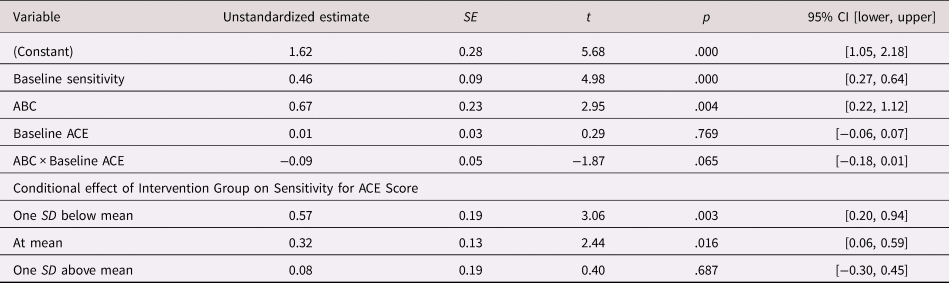
First, we examined potential moderators with ABC intervention group as the predictor, follow-up parental sensitivity as the outcome, and baseline sensitivity as a covariate. The addition of an ACE score interaction term to the model did not result in a significant increase in R 2, ΔR 2 = .02; F (1, 121) = 3.48, p = .065. Although the moderation was not significant, examining the trend indicated that as baseline ACE score decreased, the effect of intervention on sensitivity increased. Given the nonsignificant moderation effect, these results should be interpreted with caution but suggest that the intervention was most effective in increasing sensitivity for those low in baseline ACE scores (see Table 4). The addition of a cumulative risk interaction term to the model did not produce a significant change in R 2, indicating that cumulative risk was not a significant moderator of the association between ABC and sensitivity, ΔR 2 = .00; F (1, 125) = 0.49, p = .486.
Regression analysis testing the interaction of intervention group and ACE Score on sensitivity

Note: N = 126
Moderators of intervention effects on depression
Next, we examined potential moderators with ABC intervention group as the predictor, follow-up parental depression as the outcome, and baseline parental depression as a covariate. The addition of a baseline ACE score interaction term to the model did not produce a significant change in R 2, ΔR 2 = .00; F (1, 119) = 1.03, p = .313. Similarly, the addition of a cumulative risk interaction term did not produce a significant change in R 2, ΔR 2 = .00, F (1, 122) = 0.69, p = .409. Thus, neither baseline ACE score nor cumulative risk were significant moderators.
Discussion
The present study replicates and extends previous studies of ABC's effectiveness in contexts of community implementation. Consistent with previous ABC studies reporting improvements in parental sensitivity, ABC participation predicted greater increases in parental sensitivity (i.e., following the child's lead) from baseline to follow-up than assignment to the waitlist control condition. However, ABC did not predict significant baseline to follow-up changes in intrusiveness or positive regard. In addition, parents who completed ABC had greater decreases in baseline to follow-up parental depression symptoms than parents assigned to a waitlist condition. The effect of ABC on parental sensitivity was not mediated by changes in depression (or vice versa). Finally, exploratory analyses indicated that neither cumulative risk nor parental ACEs significantly moderated ABC-related changes in parental sensitivity or depression symptoms.
Although the present study replicates previous findings that ABC is associated with improved parental sensitivity, the lack of changes in intrusiveness and positive regard differ from previous results (Caron et al., Reference Caron, Weston-Lee, Haggerty and Dozier2016; Yarger et al., Reference Yarger, Hoye and Dozier2016; Yarger et al., Reference Yarger, Bernard, Caron, Wallin and Dozier2019). One prior study examining community implementation of ABC found that in-the-moment feedback from parent coaches was not associated with changes in parental positive regard and suggested that positive regard may be a more difficult intervention target to change than sensitivity and intrusiveness (Caron et al., Reference Caron, Bernard and Dozier2018). Future studies should examine possible explanations for different findings for specific types of parental behavior, such as aspects of ABC implementation (e.g., parent coaches’ focus on particular behavior targets) or characteristics of the population receiving ABC.
The influence of ABC on parental depression represents a novel finding. It is possible that weekly visits from parent coaches and receiving positive feedback about their parenting increased parents’ feelings of support and competence, thus promoting improvements in depression symptoms, as multiple studies have found evidence that social support is associated with lower depression symptoms in parents (e.g., Bost, Cox, Burchinal, & Payne, Reference Bost, Cox, Burchinal and Payne2002; Leahy-Warren, McCarthy, & Corcoran, Reference Leahy-Warren, McCarthy and Corcoran2012). In addition, it is possible that changes in parental depression symptoms and sensitivity have bidirectional effects on each other. Although neither parental depression symptoms nor sensitivity were significant mediators, both indirect effects approached statistical significance, suggesting that changes in these parental outcome variables may influence each other. Increased sensitivity may improve parent–child interactions and increase parental self-efficacy, which has been associated with lower parental depression symptoms (Jones & Prinz, Reference Jones and Prinz2005). In turn, improvements in depression symptoms may reflect improvements in well-being that allow parents to be more responsive to their children, as previous research indicates that parents’ well-being is critical to their ability to support their children effectively (Luthar & Eisenberg, Reference Luthar and Eisenberg2017). Future longitudinal studies that measure parental sensitivity and depression at multiple points following ABC will elucidate the directionality of these potential effects.
Implications for ABC's Effectiveness
These findings provide continued support for ABC's effectiveness in community-based settings. Of particular note, these effects were found in a community organization that implements ABC through the efforts of parent coaches and staff hired primarily from the community being served, highlighting the potential for successful and sustainable dissemination of ABC beyond research-based settings. Furthermore, the lack of significant moderation findings suggests ABC's effectiveness may not be limited to particular subgroups of the population and thus can be applied broadly among community populations. Early intervention has been identified as having a substantial influence on child outcomes as well as the greatest rate of return for resources invested in intervention (Doyle et al., Reference Doyle, Harmon, Heckman and Tremblay2009), underlining the importance of continued efforts to disseminate ABC broadly in community settings for improvements both in individual and broader societal outcomes.
The influence of ABC on parental depression symptoms provides additional support for the strength of this intervention. Parental depression is an important early intervention target, given that it is associated with increased distress for the caregiver and a broad range of negative developmental outcomes in the child. For example, having a depressed caregiver in infancy is associated with lower cognitive development (Azak, Reference Azak2012), higher cortisol levels (Khoury et al., Reference Khoury, Gonzalez, Levitan, Masellis, Basile and Atkinson2016), lower rates of secure attachment (Martins & Gaffan, Reference Martins and Gaffan2000), and lower social and emotional regulation (Feldman et al., Reference Feldman, Granat, Pariente, Kanety, Kuint and Gilboa-Schechtman2009). In early and late childhood, parental depression is further associated with greater psychopathology and emotion regulation difficulties (Goodman et al., Reference Goodman, Rouse, Connell, Broth, Hall and Heyward2011), lower social competence and school adjustment (Kersten-Alvarez et al., Reference Kersten-Alvarez, Hosman, Riksen-Walraven, van Doesum, Smeekens and Hoefnagels2012), reduced emotion regulation (Feng et al., Reference Feng, Shaw, Kovacs, Lane, O'Rourke and Alarcon2008), and emotion and behavior difficulties (van der Waerden et al., Reference van der Waerden, Galéra, Larroque, Saurel-Cubizolles, Sutter-Dallay and Melchior2015). Thus, ABC may promote positive outcomes for children not only through changes in parental sensitivity but also through changes in parental depression.
Limitations
The design of this study as an RCT was a significant strength relative to previous dissemination studies of ABC that have used pre-post designs. However, these findings were limited by comparison with a waitlist control group rather than with a control intervention. This design was used to ensure that all families would eventually receive ABC, consistent with Power of Two's goal of disseminating ABC to the community. Waitlist control research designs are common in community-based intervention effectiveness studies (e.g., Caserta et al., Reference Caserta, Fabiano, Hulme, Pyle, Isaacs and Jerome2018; Singla, Kumbakumba, & Aboud, Reference Singla, Kumbakumba and Aboud2015). Nonetheless, future studies should examine ABC efficacy as compared with other evidence-supported parenting interventions, such as Child–Parent Psychotherapy, Parent–Child Interaction Therapy, the Positive Parenting Program, or the Nurse Family Partnership. Identifying shared core components and differences among programs may allow us to match individual families to interventions from which they are most likely to benefit, maximizing effectiveness. Such an approach is consistent with recent moves toward precision home-visiting, in which interventions are tailored to meet families’ needs while maintaining fidelity to core active ingredients (Haroz et al., Reference Haroz, Ingalls, Kee, Goklish, Neault, Begay and Barlow2019).
A further consideration when interpreting results of the study is attrition both in research participation and intervention completion. Of the 200 dyads initially enrolled in the study, 158 (79%) completed the research follow-up visit. Additionally, of the 100 dyads randomly assigned to receive ABC, 37 (37%) did not complete all 10 sessions of the intervention. This rate of attrition is comparable to those found in other home-based interventions, which often have attrition rates of 20% to 67% (Gomby, Reference Gomby1999). To address this limitation, we conducted both full sample and intervention completer analyses, finding that some effects held across both approaches (i.e., changes in parental sensitivity) and others only for completer analyses (i.e., changes in parental depression).
Finally, an additional limitation was potential variability across staff and participants in attempts to contact participants who cancelled or did not show up for scheduled intervention visits. Consistent with an effectiveness trial, the program's procedures for attempting to reach families receiving the intervention were followed for all participants in the treatment group. Although attempts were made to contact all families after a no show or cancellation, consistent records were not kept, so we were unable to account for this potential variability.
Future Directions
The results of this study suggest many future directions. Examination of these outcomes, particularly the novel depression finding, in diverse populations is critical to ensure consistent effectiveness of ABC as it is implemented in different community settings. The current sample reflected a population with high racial and ethnic minority status, low income, and high levels of risk factors. As a result, future studies will need to examine whether these effectiveness findings generalize to other populations.
Similarly, future studies should continue to examine potential moderators of ABC effectiveness within different populations. Additional suggested moderators include parent characteristics such as substance use, life stressors, psychopathology, and attachment; child characteristics, such as temperament, behavior problems, or prenatal risk; and the interaction between parent and child characteristics (Bernard et al., Reference Bernard, Dozier, Bick, Lewis-Morrarty, Lindhiem and Carlson2012). Given the associations of parental ACEs and childhood cumulative risk with adverse child outcomes in previous studies (e.g., Evans, Li, & Whipple, Reference Evans, Li and Whipple2013; Schickedanz, Halfon, Sastry, & Chung, Reference Schickedanz, Halfon, Sastry and Chung2018; Stepleton et al., Reference Stepleton, Bosk, Duron, Greenfield, Ocasio and MacKenzie2018), moderators should also be examined in relation to ABC's influence on child outcomes. Identifying moderators would allow organizations to identify parents who are likely to benefit from ABC or who may require additional support.
In addition, future studies should continue to examine mechanisms of treatment effectiveness, including whether parent outcomes such as decreases in depression and improvements in sensitivity mediate ABC's influence on child outcomes. Previous studies have shown that changes in parental sensitivity may be mediators of ABC's effect on child compliance at 36 months of age (Lind et al., Reference Lind, Bernard, Yarger and Dozier2019) and ABC-T's effect on children's receptive vocabulary at 36 to 60 months of age (Raby et al., Reference Raby, Freedman, Yarger, Lind and Dozier2019). Additional mediation pathways for ABC's influence on parent and child outcomes are likely to be discovered with further research, revealing mechanisms to target during intervention and increasing our empirical knowledge of ABC's effectiveness. In particular, examining such mediation models within the context of RCTs provides a unique opportunity to expand our knowledge of developmental psychology. Random assignment to ABC or waitlist control produces a manipulation of parenting that allows us to test causal pathways between parent and child outcomes in an experimental design. Thus, future studies examining mechanisms of ABC treatment effectiveness have the potential to inform both basic developmental science and applied intervention research.
Given that the present study corroborates the strong empirical basis for ABC's efficacy and effectiveness in promoting positive parent outcomes, an essential future direction is to examine factors that contribute to successful dissemination of ABC, and its developers have identified key components of successful ABC dissemination including selection of sites with the commitment and resources to support ABC fully, screening of potential parent coaches, training on in-the-moment commenting and coding, and supervision that includes both clinical consultation and fidelity monitoring (Dozier & Bernard, Reference Dozier and Bernard2019). Findings from previous studies support the importance of screening measures for selecting parent coaches who are likely to display strong fidelity to in-the-moment commenting (Caron, Roben, et al., Reference Caron, Roben, Yarger and Dozier2018) and of fidelity-focused consultation during implementation for improving coaches’ in-the-moment commenting (Caron & Dozier, Reference Caron and Dozier2019). Future research can expand on these findings by examining additional variables that contribute to treatment fidelity and successful dissemination. Such variables may include the structure of community organizations; sources of support for dissemination efforts; community engagement; and characteristics of coaches, trainers, and supervisors. Identifying which factors predict successful dissemination is essential to supporting ABC's effectiveness as it is scaled in community settings.
Finally, given the attrition rates, future studies should examine preintervention characteristics that predict likelihood of intervention drop-out (such as baseline parental sensitivity and cumulative risk in the present study) to help identify dyads who may benefit from additional support throughout the intervention. Future studies should also consider what supports may be necessary to facilitate completion of the ABC intervention following enrollment. Previous studies have found that strategies such as engaging community stakeholders, providing additional support to the family, enhancing the program, and training home visitors in motivational interviewing techniques have increased retention in home visiting programs (Biggs, Sprague-Jones, Garstka, & Richardson, Reference Biggs, Sprague-Jones, Garstka and Richardson2018; Folger et al., Reference Folger, Brentley, Goyal, Hall, Sa, Peugh and Ammerman2016). Power of Two has begun to incorporate a variety of engagement techniques such as holding community events and connecting families to sources of instrumental assistance. An important future direction will be to test the effectiveness of such efforts empirically.
Overall, this study provides support for ABC's effectiveness and feasibility when implemented as a community-based intervention. These results are promising in supporting ABC as an intervention that may reach underserved families in need, especially given its relatively brief duration and its success in employing interventionists of various backgrounds from within the community. Continued efforts to disseminate ABC on a broad community scale have potential to yield positive outcomes for parents and children alike.
Supplementary material
The supplementary material for this article can be found at https://doi.org/10.1017/S0954579420000310.
Acknowledgments
We are grateful for the research-practice partnership with Power of Two, specifically with Executive Directors Anne Heller (former) and Erasma Monticciolo (current). We thank the members of the outreach staff and parent coaches at Power of Two who facilitated recruitment and delivered the intervention as well as the participating families.
Financial Support
This work was supported by a grant from the Fund for the City of New York to K. Bernard via funding awarded to Power of Two for their ongoing implementation and evaluation of ABC. Direct sources of funding to Power of Two during the evaluation period included: Viola W. Bernard Foundation, Kenworth-Swift Foundation, Marks Family Foundation, Arbor Brothers, The Sirus Fund, Tiger Foundation, Propel Capital, Draper Richards Kaplan, Altman Foundation, Stella & Charles Guttman Foundation, Flom Foundation, Edith Glick Shoolman Children's Foundation, Help for Children/Hedge Funds Care, Brooklyn Branches, ALLINBKLYN, and support from anonymous donors.