Introduction
Between 1999 and 2014, the US suicide rate increased 24%, with the highest increases among adults recorded for women (from 6.0 to 9.8 per 100,000 population) and men (from 20.8 to 29.7) in the 45–64 age group (Centers for Disease Control and Prevention [CDC], 2015a; Curtin et al., Reference Curtin, Warner and Hedegaard2016). Increases among the 65–74 age group were also notable: from 4.1 to 5.9 for women and from 24.7 to 26.6 for men. Suicide death rates are lower among women than men in all age groups. However, given that suicide deaths among women aged 45–64 and 65–74 increased by 63% and 44%, respectively, and that the 45–64 age group had the highest suicide rates among all women, suicide among women in the second half of life is a serious public health problem that calls for more effective prevention strategies.
Contributors to late-life suicidal behaviors among both genders include mental disorders (especially depression), substance abuse, intimate partner and/or family relationship problems, physical health problems, and a host of other precipitating circumstances (Roscoe et al., Reference Roscoe, Malphurs, Dragovic and Cohen2003; Runyan et al., Reference Runyan, Moracco, Dulli and Butts2003; Karch, Reference Karch2011; Choi et al., Reference Choi, DiNitto, Marti, Kaplan and Conwell2017). However, among older decedents (aged 60 years and over), females reportedly have significantly higher rates of mental health problems, previous suicide attempts, substance abuse (other than alcohol), current and previous mental health/substance abuse treatment, and positive toxicologies for antidepressants and opiates, but lower rates of physical health problems, job-related problems, and any crisis in the preceding two weeks (Karch, Reference Karch2011).
Female decedents’ higher rates of positive toxicologies for antidepressants and opiates are likely because women use drug overdose as a suicide means far more often than men. An analysis of 2005–2014 National Violent Death Reporting System (NVDRS) data showed that among suicide decedents, 40.8% of females aged 50–64 and 33.4% aged 65 years and over compared to 10.7% of males aged 50–64 and 4.1% aged 65 years and over, used drug overdose (Choi et al., Reference Choi, DiNitto, Marti, Kaplan and Conwell2017). High rates of mental health problems and current mental health treatment (including pharmacotherapy) among women suggest that they had easy access to psychotropic medications. Women may also choose drug overdose as a less violent means than firearms or other methods. According to the three-step ideation-to-action theory of suicide (3ST; Klonsky and May, Reference Klonsky and May2015), suicidal behaviors (suicide attempts) result from a combination of pain (psychological/physical) and hopelessness, lack of connectedness, and the capacity to attempt suicide. The 3ST further posits that the capacity to carry out suicidal behaviors can be derived from dispositional factors (e.g. genetic predisposition to pain sensitivity), acquired factors (habituation to experiences associated with pain, injury, and death), and practical factors (e.g. knowledge of and access to lethal means such as firearms or sufficient quantities of pharmaceuticals that can cause death).
While drug overdose is the most frequently used suicide means among women aged 50–64, studies have also found that a larger proportion of female suicide decedents aged 65 years and over used firearms than drug overdose (Adamek and Kaplan, Reference Adamek and Kaplan1996; Kaplan et al., Reference Kaplan, Adamek, Geling and Calderon1997; Choi et al., Reference Choi, DiNitto, Marti, Kaplan and Conwell2017). Further, among female decedents aged 50–64, hanging/suffocation steadily increased between 2005 and 2014, with 20.3% of female decedents in this age group in the 2014 NVDRS using these means (Choi et al., Reference Choi, DiNitto, Marti, Kaplan and Conwell2017). Researchers have also found that women who died by other suicide means may have faced different risk/precipitating factors. For example, in addition to older age, women who used firearms rather than other means were more likely to have been married, had lower education, and to have lived in non-metropolitan areas and in the South (Kaplan et al., Reference Kaplan, Adamek, Geling and Calderon1997, Reference Kaplan, McFarland and Huguet2009; Choi et al., Reference Choi, DiNitto, Marti, Kaplan and Conwell2017). Compared to all other means, older women who overdosed were also more likely to have had mental health, substance abuse, and physical health problems and prior suicide attempts and to have lived in the Northeast (Choi et al., Reference Choi, DiNitto, Marti, Kaplan and Conwell2017).
In sum, these studies show that while a majority of older men choose firearms as suicide means, older women choose drug overdose, firearms, hanging/suffocation, and other means in approximately equal proportions. In addition, women's choice of means may be related to their differing characteristics. In the face of increasing suicide rates among older women, more research is needed to examine risk/precipitating factors associated with their choice of suicide means to help develop more targeted prevention efforts. This study, using 2005–2015 NVDRS data on female suicide decedents aged 50 years and over, examined potential differences in (1) sociodemographic characteristics, mental disorders, and other risk/precipitating factors among women who chose drug overdose versus firearms, hanging/suffocation, and other means; and (2) postmortem toxicology results by suicide means. Based on previous study findings, the study hypotheses were: Those who used drug overdose rather than other suicide means will have (H1) been younger and not married; (H2) had higher rates of mental disorders, prior suicide attempts, alcohol/substance abuse problems, and physical health problems; and (H3) had lower rates of interpersonal problems and other precipitating factors (e.g. job/financing problems, criminal/legal problems).
Methods
Data source
Since 2003, the NVDRS, an incident-based violent death reporting system, has provided detailed data on all individual victims and/or suspects of suicides, homicides, deaths from legal intervention (victims killed by law enforcement officers acting in their official capacity), deaths of undetermined intent, and unintentional firearm deaths in participating states (CDC, 2015b; Blair et al., Reference Blair, Fowler, Jack and Crosby2016). In 2003 and 2004, 7 and 13 states, respectively, participated in the NVDRS. From 2005 through 2014, 16 states (Alaska, Colorado, Georgia, Kentucky, Maryland, Massachusetts, New Jersey, New Mexico, North Carolina, Oklahoma, Oregon, Rhode Island, South Carolina, Utah, Virginia, and Wisconsin) participated; Ohio joined in 2011; Michigan in 2014; and Arizona, Connecticut, Hawaii, Kansas, Maine, Minnesota, New Hampshire, New York, and Vermont in 2015 (CDC, 2015b).
NVDRS links data from death certificates and coroner/medical examiner and law enforcement reports that are based on the injury/death scene, ongoing investigations, or family/friend accounts and when available, crime lab and toxicology reports. The NVDRS also includes variables on the circumstances of death as “calculated” (“Yes/Present” or “No/Not Present/Unknown) from the multiple original data sources (CDC, 2015b). Some variables (e.g. physical health problem, relationship problem) are coded “Yes” only when they were believed or appeared to have caused/led to death (i.e. precipitants), while others (e.g. mental health problem, depressed mood, alcohol/substance problem, and job/financial/housing problem) are coded “Yes” regardless of whether there is any direct indication that they contributed to the death (i.e. were risk/precipitating factors) (CDC, 2015b).
To minimize potential state by time confounding effects, we excluded data from 2003 to 2004. We first examined data on all suicide decedents aged 50 years and over (N = 56,118 after excluding suicides that followed multiple homicides and those with missing gender data) and then, the 12,401 female decedents aged 50 years and over.
Measures
Suicide means Based on the NVDRS ICD-10 codes for underlying cause of death, we identified the following means: alcohol/drug/medicine overdose (drug overdose hereafter), firearms, hanging/suffocation (including helium inhalation), gas (e.g. carbon monoxide, nitrogen) poisoning, laceration/sharp instruments, blunt injury from jumping from heights, contact with moving objects (train/other vehicles) and other blunt forces, drowning, and other (fire, hypothermia, electrocution, starvation, not adhering to or refusing medical care, and undetermined causes). We combined means other than drug overdose, firearms, and hanging/suffocation into “other” due to a small proportion for each.
Incident year is the year (2005–2015) in which the decedent died of suicide.
Sociodemographic variables include chronological age (and age group: 50–64, 65–74, 75–84, and 85 years and over) at the time of death; gender; race/ethnicity; marital status; education; and Census region of injury (South, West, Northeast, and Midwest). Because a large proportion (more than 40%) of education data was missing in the 2005–2014 NVDRS, we estimated education level (college degree vs. no college degree) from occupation and industry data for these years.
Risk/precipitating factors were: (1) current diagnosed mental disorders/syndromes (based on the Diagnostic and Statistical Manual of Mental Disorders (American Psychiatric Association, 2000, 2013); (2) alcohol dependence or alcohol problems (perceived by self or others to have a problem with, or to be addicted to, alcohol); (3) other substance abuse problems; (4) a history of suicide attempt and/or explicit/indirect disclosure of suicide intent within a month (or recently) before suicide (since suicide attempt and suicide intent disclosure within the preceding month were not independent of each other in the NVDRS, we used a combined variable); (5) current and past mental health/substance abuse treatment including pharmacotherapy and counseling (which is a protective factor but also a proxy for mental/substance use disorder); (6) any interpersonal relationship problems (intimate partner, family, and/or friend/other); (7) physical health problems (e.g. terminal disease, debilitating condition, and chronic pain) noted as having contributed to the death (CDC, 2015b); (8) job/finance/housing problems; (9) criminal/other legal problems; (10) recent suicides or other deaths of family/friends; and (11) any crisis within the preceding two weeks. Response categories for each were “Yes/Present” or “No/Not Present/Unknown.”
Postmortem toxicology (available for 89.7% of all female decedents aged 50 years and over) included blood alcohol content (BAC), recorded in the NVDRS as a continuous measure of weight by volume. We coded the continuous measure as positive (BAC > 0.0 g/dL) versus negative (BAC = 0), and further dichotomized those with any BAC (BAC > 0.0) as either < 0.08 g/dL or ≥ 0.08 g/dL (generally considered prima facie evidence of intoxication in the US). We also included toxicology results for antidepressants, opiates, amphetamines, marijuana, cocaine, carbon monoxide, anticonvulsants, antipsychotics, barbiturates, benzodiazepines, and muscle relaxants. Since data on anticonvulsants, antipsychotics, barbiturates, benzodiazepines, and muscle relaxants were added in August 2013, we examined the 2014–2015 data for these pharmaceuticals and 2005–2015 data for antidepressants, opiates, marijuana, cocaine, and amphetamines. We excluded carbon monoxide testing as it was done with < 6% of decedents.
Statistical methods
All statistical analyses were performed using Stata/MP 15. First, using t-and χ 2-tests, we compared female and male decedents on mean age, age group distributions, suicide attempt history, mental disorders, current/previous mental health/substance abuse treatment, and suicide means. Second, one-way ANOVA (for chronological age) and omnibus χ 2 tests were used to examine sociodemographic characteristics, mental disorders, and other precipitating/risk factors by suicide means for female decedents. Third, to test the study hypotheses, we used three logistic regression models, with overdose versus firearms, overdose versus hanging/suffocation, and overdose versus “other” means as the dependent variables. Incident year (linear and quadratic) was added as a covariate to examine potential changes in suicide means over time. Since quadratic effects were non-significant for any model, we report only linear effects. Logistic regression results are reported as adjusted odds ratios (AOR) with 95% confidence intervals (CI). Significance was set at p < 0.05. Variance inflation factor diagnostics, using a cut-off of 2.50 (Allison, Reference Allison2012), indicated that multicollinearity among covariates was not a concern. Finally, omnibus χ2 tests (with standard error) were used to examine any differences in positive toxicology rates for pharmaceuticals and illicit drugs by suicide means.
Results
Characteristics of female decedents compared to male decedents
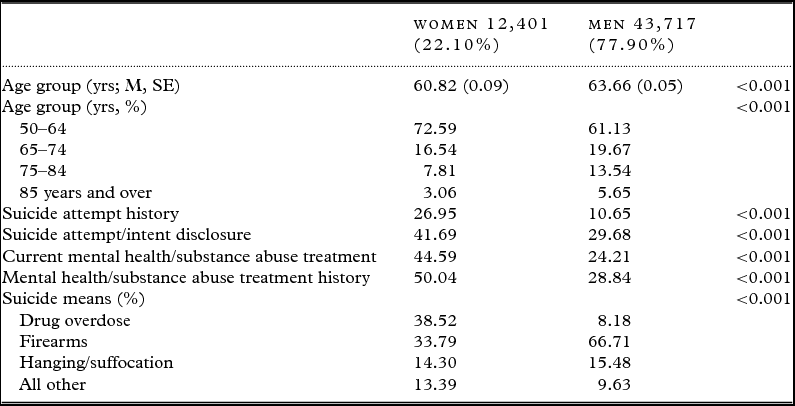
Table 1 shows that women were 22.1% of all NVDRS suicide decedents aged 50 years and over. Women were, on average, about three years younger than men, with 72.6% of women compared to 61.1% of men aged 50–64, and 10.9% of women compared to 19.2% of men aged 75 years and over at the time of their suicide. A history of suicide attempt was reported for nearly 27% of women and 10.6% of men. When suicide attempt history and/or recent suicide intent disclosure were included, the proportions were 41.7% for women and 29.7% for men, and 50.0% of women compared to 28.8% of men had a history of mental health/substance abuse treatment. Drug overdose was used by 38.5% of women and 8.2% of men; firearms by 33.8% of women and 66.7% of men; hanging/suffocation by 14.3% of women and 15.5% of men; and “other” means by 13.4% of women and 9.6% of men.
Suicide decedents aged 50 years and over by gender

Characteristics of female decedents by suicide means
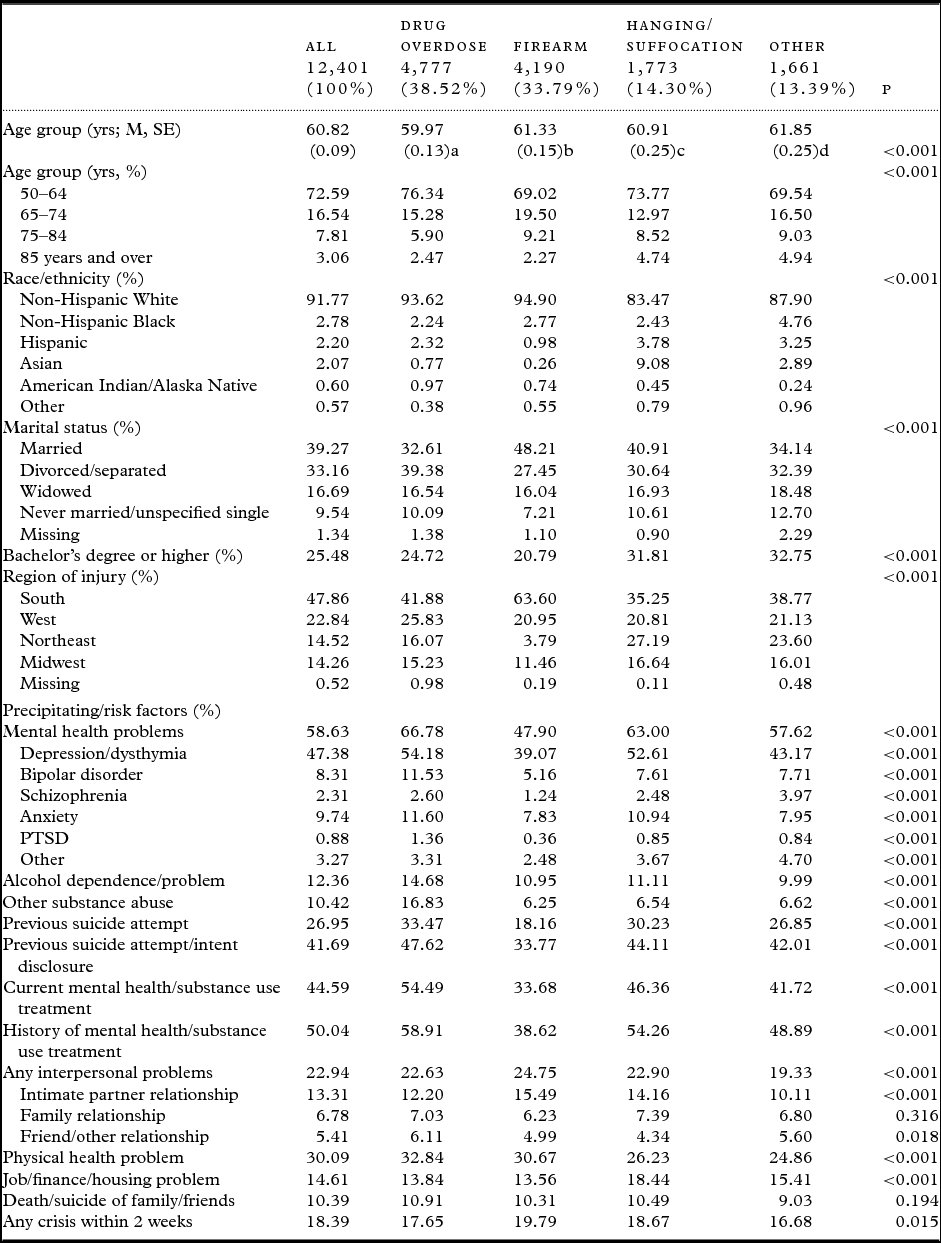
Table 2 shows that women who used overdose were younger than women who used other means. Almost 92% of female decedents were non-Hispanic White, and those who used overdose or firearms were even more likely to be non-Hispanic White. Hispanic and Asian women were overrepresented among those who used hanging/suffocation. Compared to firearms and hanging/suffocation, those who used overdose and “other” methods had lower proportions of married individuals and higher proportions of divorced/separated individuals. Those who used overdose and firearms also had smaller proportions of college graduates than those who used hanging/suffocation and “other” methods. Firearm users were overrepresented in the South.
Characteristics of female decedents aged 50 years and over by suicide means, 2005–2015

Note: Probability values for chronological age were calculated using one-way ANOVA: F = 23.06, a < b, c, d; b=c; b, c < d. Probability values for categorical variables were calculated using omnibus χ 2 tests and denote differences among those who used different suicide means.
Overdose users had the highest proportion of those with mental disorders, alcohol and other substance abuse problems, previous suicide attempts/intent disclosures, mental health/substance abuse treatment, and physical health problems. Firearms and hanging/suffocation users had the highest proportions of those who had a crisis within two weeks of their suicide. Firearm users had the lowest proportion of previous suicide attempters but the highest proportion of those with relationship problems. Hanging/suffocation users had the highest proportion of those with job/finance/housing problems.
Association of decedents’ characteristics with suicide means: Multivariable analysis results
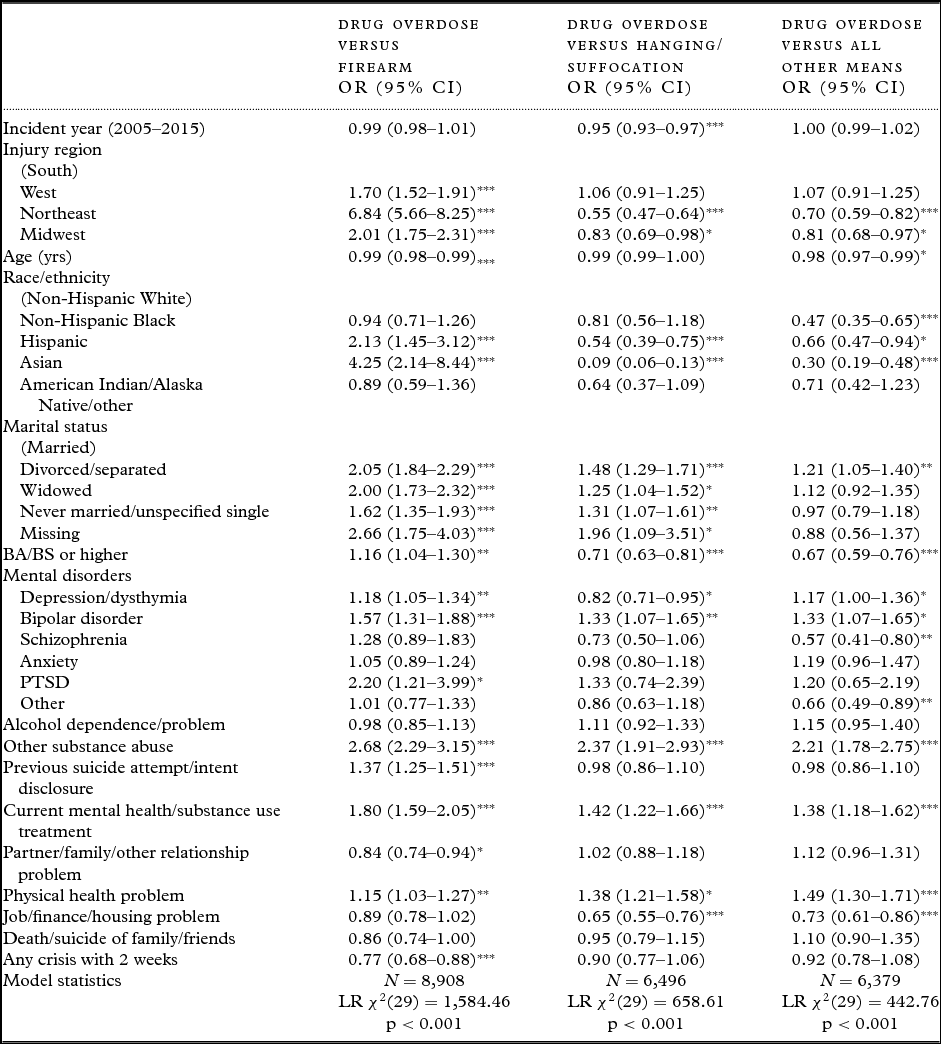
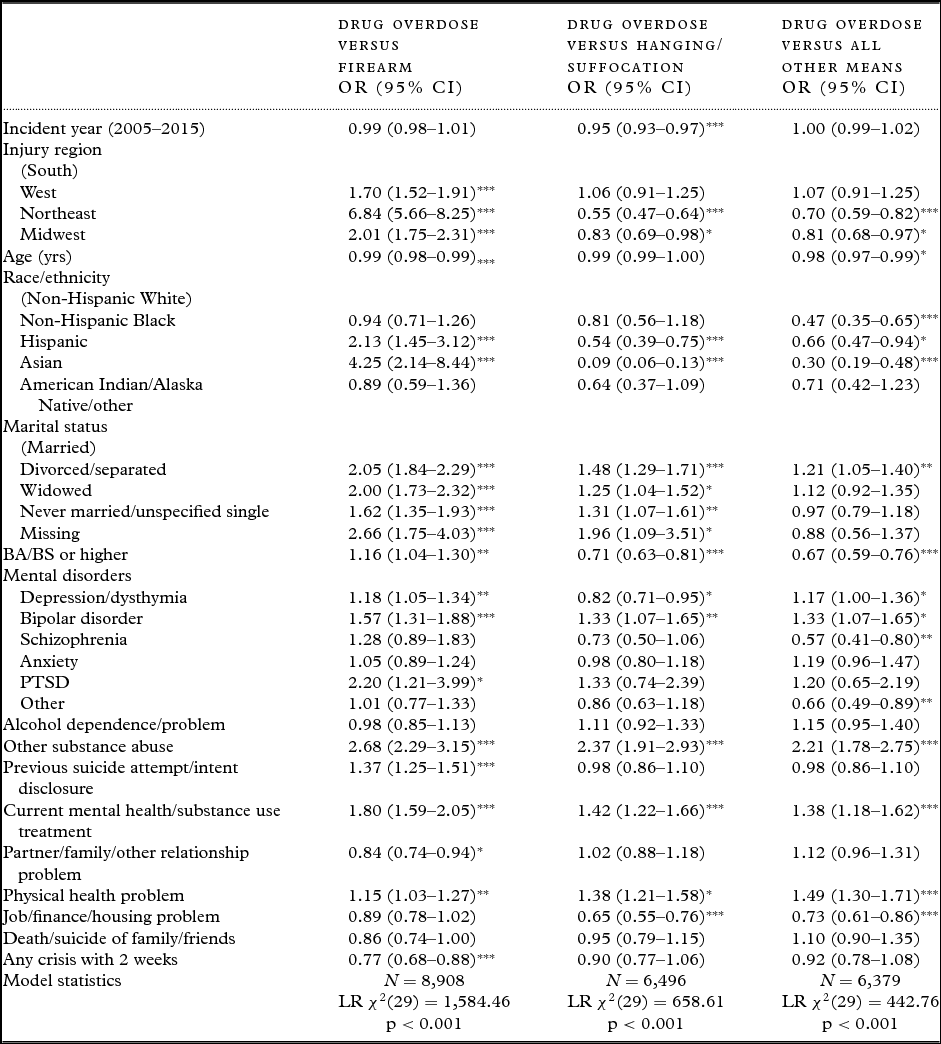
The second column of Table 3 shows that compared to firearm use, overdose was significantly higher for those in the West, Midwest, and especially in the Northeast (than in the South); among Hispanics and Asians, those not married, and college graduates. Overdose users also had higher odds of having had depression/dysthymia (AOR = 1.18, 95% CI = 1.05–1.34), bipolar disorder (AOR = 1.57, 95% CI = 1.31–1.88), PTSD (AOR = 2.20, 95% CI = 1.21–3.99), other substance abuse (AOR = 2.68, 95% CI = 2.29–3.15), previous suicide attempt (AOR = 1.37, 95% CI = 1.25–1.51), mental health/substance abuse treatment (AOR = 1.80, 95% CI = 1.59–2.05), and physical health problems (AOR = 1.15, 95% CI = 1.03–1.27), but lower odds of relationship problems (AOR = 0.84, 95% CI = 0.74–0.94) and any crisis (AOR = 0.77, 95% CI = 0.68–0.88).
Association of decedents’ characteristics with drug overdose compared to other suicide means
*p < 0.05.
**p < 0.01.
***p < 0.001.
The third column of Table 3 shows that compared to hanging/suffocation, overdose declined (AOR = 0.95, 95% CI = 0.93–0.97) during the study period and was less prevalent among Hispanics and Asians (compared to non-Hispanic Whites) and those with job/finance/housing problems, but more prevalent among those who were not married and those with bipolar disorder, other substance abuse, mental health/substance abuse treatment, and physical health problems.
The fourth column of Table 3 shows that compared to those who used “other” means, overdose was less prevalent in the Northeast and Midwest than in the South and among Blacks (AOR = 0.47, 95% CI = 0.35–0.65), Hispanics, and Asians, those with schizophrenia, and those with job/finance/housing problems, but more prevalent among divorced/separated women than married women, those with depression/dysthymia, bipolar disorder, other substance abuse, mental health/substance abuse treatment, and physical health problems.
Toxicology results
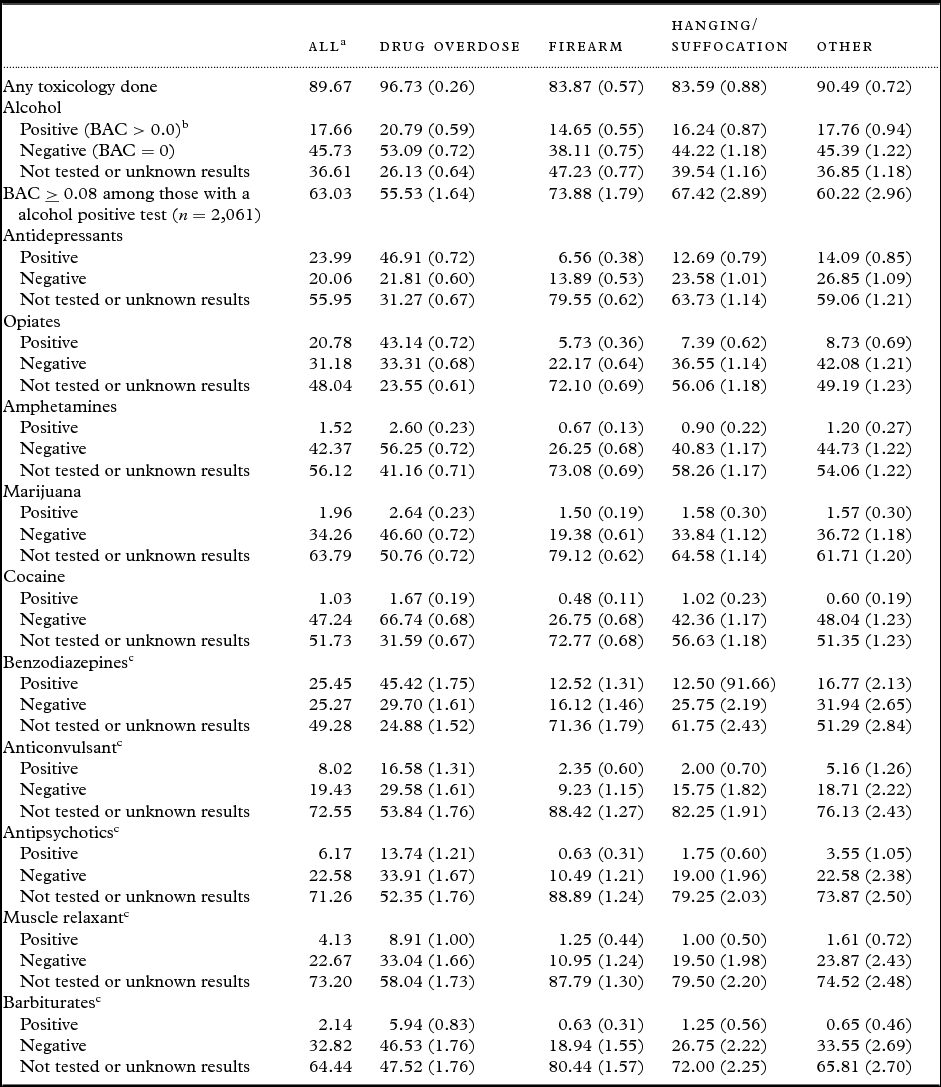
Table 4 shows that higher proportions of overdose users than users of any other means had a positive toxicology for each substance tested, including alcohol and prescription and illicit drugs, but the proportion of those with a BAC ≥ 0.08 g/dL was lower than firearm and hanging/suffocation users (due possibly to a longer time for alcohol metabolism in some overdose deaths than deaths by other means). Of overdose users, 46.9%, 43.1%, and 45.4% were antidepressant, opiate, and benzodiazepine positive, respectively, and 13.7% were positive for antipsychotic drugs. These rates were many times higher than among those who used other means. Compared to those who used other means, firearm users were the least likely to have positive toxicologies for antidepressants.
Toxicology results by suicide means (%)

Note: Values in parentheses indicate standard error. All group differences from omnibus χ 2 tests were significant at p < 0.001.
a N = 12,401 for alcohol, antidepressants, opiates, amphetamines, marijuana, and cocaine; N = 2,157 for benzodiazepines, anticonvulsant, antipsychotics, muscle relaxant, and barbiturates.
b Blood alcohol content.
c The results are for decedents who died in 2014 or 2015 only because NVDRS began adding data on these substances in August 2013.
Discussion
Suicide among older women has increased significantly over the past decade but has received less research attention than suicide among older men, due probably to women's lower suicide rates. This study shows that older women suicide decedents were largely non-Hispanic White and aged 50–64. As expected, the prevalence (58.63%) of mental disorders, particularly depression/dysthymia, was high among these women but similar to the 56% found among reproductive age (15–54 year old) female suicide decedents in the 2003–2007 NVDRS (Gold et al., Reference Gold, Singh, Marcus and Palladino2012). However, rates of alcohol/substance abuse problems and intimate partner problems found in this study were lower than those (28% each) among younger female decedents (Gold et al., Reference Gold, Singh, Marcus and Palladino2012). More than a quarter of older female decedents had a history of suicide attempt. When both previous suicide attempt and suicide intent disclosure were included, 42% of older female decedents exhibited warning signs before their fatal acts. Nearly one-third also had physical health problems that were reported to have directly contributed to their suicide. The overall high rate of positive opioid toxicologies suggest that pain from physical conditions may have been a significant suicide precipitant.
Our study also shows that, as hypothesized, overdose users were the most disadvantaged in terms of mental and physical health statuses. Firearm users had the lowest rates of mental health problems and suicide attempt history, but they had higher rates of relationship problems and crisis than overdose users, suggesting that some may have reacted impulsively to an acute stress that may have been caused by interpersonal conflicts and other circumstances. The significantly higher firearm use rate in the South also suggests that easy access to firearms may have been a factor. A 2017 Pew Research Center survey found that household firearm ownership was greatest (36%) in the South, followed by 32%, 31%, and 16% in the Midwest, West, and Northeast (Parker et al., Reference Parker, Horowitz, Igielnik, Oliphant and Brown2017). Previous studies show that firearm access is associated with more than three times the risk of completed suicide (Conwell et al., Reference Conwell, Duberstein, Connor, Eberly, Cox and Caine2002; Anglemyer et al., Reference Anglemyer, Horvath and Rutherford2014).
Overdose users’ higher rates of positive toxicologies are not surprising given their higher rates of mental and physical health problems but raises questions about why those with substance abuse problems and a history of suicide attempt and/or intent disclosures had access to large quantities of prescription pharmaceuticals. The high prevalence of positive prescription drug toxicologies suggests that decedents likely had frequent/recent contact with healthcare providers. Austin et al. (Reference Austin, Proescholdbell, Creppage and Asbun2017) found that intentional overdose victims had more contact with healthcare providers than unintentional overdose victims.
Although the NVDRS is the richest information source on US suicide decedents, it has limitations. First, as only half of the states provided data during the study period, the findings may not be generalizable to all suicide decedents. Second, as data on psychiatric disorders and other precipitating circumstances were collected mostly from family and friends, the validity of this proxy-derived data is a concern. In addition, missing data (for those without family/friends or those whose informal support system did not provide data) were coded as not present. Third, toxicology tests were not uniformly done in each state and the basis for testing versus not testing is unknown.
Clinical and policy implications of the findings are as follows: First, since more than 40% of decedents exhibited warning signs (e.g. suicide attempt/intent disclosure), more emphasis may need to be placed on training members of formal (e.g. healthcare) and informal (e.g. family) support systems to monitor warning signs based on individual risk factors. To prevent overdose, healthcare providers should carefully screen for suicide risk and employ risk reduction strategies including drug monitoring and prescribing in quantities that limit overdose potential. In preventing opioid overdose, provider education on pain management and addiction treatment and emergency department policies limiting opioid dispensing has shown modest immediate reductions in patient mortality (Alexandridis et al., Reference Alexandridis2017). Electronic medication dispensing devices may also help to prevent easy (and impulsive) access to large quantities of medications (Stip et al., Reference Stip, Vincent, Sablier, Guevremont, Zhornitsky and Tranulis2013), although it may not prevent those intent on suicide from accumulating dispensed drugs.
Second, access to suicide means in addition to prescription drugs should also be restricted. Restricting access to firearms and toxic pesticides in rural areas, detoxification of domestic and motor vehicle gas, and barriers at jumping and hanging sites have led to lower suicide rates in the USA and other countries (Sarchiapone et al., Reference Sarchiapone, Mandelli, Iosue, Andrisasano and Roy2011; Yip et al., Reference Yip, Caine, Yousuf, Chang, Wu and Chen2012). Given dim prospects for meaningful gun-control legislation, restricted access to firearms must rely on voluntary cooperation from gun owners, and healthcare and social service providers must work with those at risk of suicide and their family and friends to restrict their access to firearms. Some gun retailers and law enforcement agencies also provide temporary gun storage for family members of those at risk of suicide (Runyan et al., Reference Runyan2017).
Third, although rates of mental health and substance abuse treatment were high, pharmacotherapy seems to be the primary treatment modality. It is not clear how many received psychotherapy along with pharmacotherapy. Psychotherapy should be more available and accessible. Psychotherapy can also be used to help those at risk develop safety plans and improve self-management of chronic conditions and pain. Addressing interpersonal problems through marital/family counseling/therapy may also be a route to reducing suicide. Healthcare providers should also refer those suffering from uncontrolled pain to palliative care for physical comfort and to improve psychological and spiritual quality of life (Alexander et al., Reference Alexander, Goldberg and Korc-Grodzicki2016).
Fourth, increasing US suicide rates point not only to the need to encourage formal and informal support systems to employ strategies that are effective in stemming suicide, but also to the need for more research to identify effective prevention approaches. Given that non-Hispanic Whites are overrepresented among older women (and men) suicide decedents, racial/ethnic and cultural attitudes toward ending one's own life and using means such as overdoes are areas for further exploration.
Conflict of interest
The authors have no conflict of interest to report.
Description of authors’ roles
All four authors conceptualized the study. NGC conducted statistical analysis and drafted the paper; CNM provided statistical consultation; and DMD and AOS reviewed and edited it.
Acknowledgments and disclaimer
The Centers for Disease Control and Prevention (CDC) administers the NVDRS in conjunction with participating NVDRS states. The CDC made the NVDRS Restricted Access Data used in this study available to the authors. This study's findings and conclusions are those of the authors alone and do not necessarily represent the official position of the CDC or of the participating NVDRS states.