Introduction
This study is a contribution to the knowledge of field research stations, and to the study of scientific institutions as households. Science is a family affair, sometimes literally and at other times figuratively, by invoking loyalty through the socially cohesive idea of family. The empirical case is the small marine research station at Kristineberg, founded in 1877 on the Swedish west coast. The concept of scientific households is compellingly explored both in regards to laboratory institutions (Bergwik Reference Bergwik2014; Bosstraeten Reference van Bosstraeten2011; Widmalm Reference Widmalm2001) and field research stations (de Bont Reference de Bont2015, 205; Eigen Reference Eigen, Picon and Ponte2003, 73). What this study offers to further the discussion of the scientific household and collective culture is a reply to a pertinent attendant question about the marine research station as a scientific household: who is the scientific family matriarch and what does she do? With the support of a rich and unusual source material I argue that the role of station matriarch at the marine field station at Kristineberg was fulfilled by station housekeeper Sofia Kristensson (1826–1889) from 1877 until her death. This was not only due to her actual matronly duties at the station, but also a result of religiously motivated local gender identities enabling a woman of humble social background to chisel out a place of assertiveness and relative influence within a collective household culture of marine sciences. The analysis takes into account gender and class by comparing Sofia Kristensson's station functions and work to that of her brother and station caretaker Anton Kristensson (1833-unknown), employed 1885–1902. Delving into the roles of the Kristensson siblings, my second argument is that their knowledge and skills as station employees was primarily valued not from an intellectual scientific perspective, but rather for their social skills. Anton Kristensson was respected for his ability to get along with scientists and fishermen alike. Sofia Kristensson was, on the other hand, a brusque and at times abrasive gatekeeper, essential for her ability to go head-to-head with local competitors for land and sea access.
Studies of field assistants typically focus on those who have worked their way up in the scientific hierarchy (Kohler Reference Kohler2008; McCook Reference McCook1996). Alternatively, they lean towards being told from the perspective of the scientist, further emphasizing power asymmetries in narratives of scientific work (Barrow Reference Barrow and Vetter2011; Camerini Reference Camerini1996; McCook Reference McCook1996; Vetter Reference Vetter2008). Of those who, so to speak, stuck to their lasts but nonetheless remained essential for scientific work we know less, at least regarding their own views. As Steven Shapin reasoned in his studies of laboratory assistants, the lack of scholarly attention to assistants is not necessarily due to a lack of interest, but stems from insufficient source material. There may very well be a will but not a credible method to undertake such research (Shapin Reference Shapin1989, 556). Similarly, Patricia Fara called attention to persistent problems within scholarly research about the gendered history of science. While turning the eye away from the traditional story of scientific men's stories of prowess, historians of women in science nevertheless tend to stick to the better-known success stories. Assuredly, this broadened the way we study history of science and where we expect to find its key figures, but blind spots remain which does not further our insight into day-to-day scientific work (Fara Reference Fara2004, 20–21).
The history of Kristineberg contributes to an understanding of integral roles of local employees without scientific background or ambition, and more importantly, of women at field research stations. What makes Kristineberg Zoological Station remarkable from a historical perspective is its quite unusual source material. During its first years, the station was a seasonal affair, which made letters the sole means of communication between the locally employed and the station director during the long off-season. In addition, the station director, chronically ill and frequently sought after in other professional functions, was often unable to visit the station for more than a few weeks every other summer, which increased the volume of written accounts and reports. The source material from the marine research station at Kristineberg offers first-person narratives of the everyday work of employed locals without scientific background, more specifically some 150 letters from the housekeeper to the manager, and approximately a hundred from the station caretaker. The letters range from shorter accounts to lengthy personal accounts of everyday life as a local station employee, ranging from the practical to the emotional. The present analysis is mainly based on these sources. In addition, I use letters and relevant autobiographical material from the community of naturalists and students who visited Kristineberg during the period that was studied.
The Scientific Household at Kristineberg
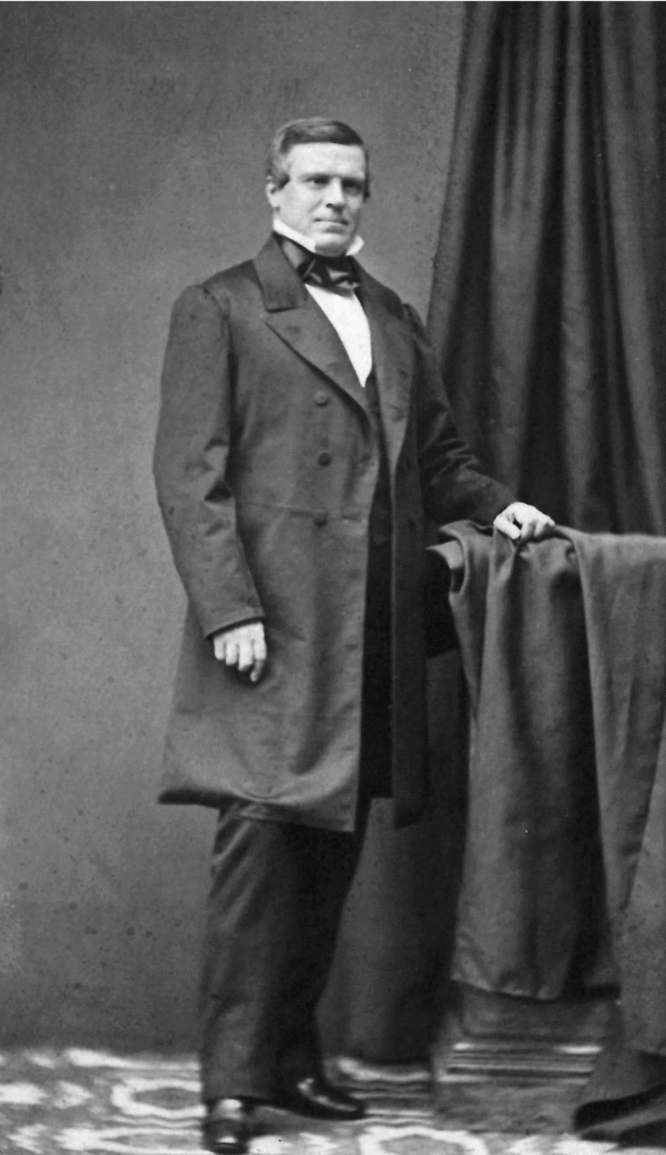
Kristineberg Zoological Station was founded in 1877 at the outlet of Gullmar Fjord, in the province of Bohuslän on the Swedish west coast. Its founder was zoologist Sven Lovén (1809–1895), member of the Royal Swedish Academy of Sciences and curator at the National Museum of Natural History's department of lower invertebrates (fig. 1).Footnote 1 Marine research stations were typically founded at established genteel summer resorts, popular among the urban wealthy classes escaping the sweltering heat, odour, and dirt of the industrialized cities. This was no coincidence. Scientists belonged to the social category of urban visitors who longed for relaxed and healthful vacations at coastal resorts, especially if they could be combined with scientific endeavors (Maienschein Reference Maienschein1989, 19; Pauly Reference Pauly, Rainger, Benson and Maienschein1991, 122–125). In addition, naturalists could also take advantage of infrastructure – communications, lodgings, etc. – intended for tourism (de Bont Reference de Bont2015, 25; Kohler Reference Kohler2002, 52–53). Stations were financed with private fortunes, state funds, or private donations (de Bont Reference de Bont2009, 204). Field research interests often coincided with popular tourism trends (Aubin Reference Aubin2009, 374; cf. Rozwadowski Reference Rozwadowski1996, 421–422). Kristineberg Zoological Station was no exception. The small homestead of Kristineberg was (and is) an administrative part of the village of Fiskebäckskil, a naval port then economically burgeoning across the fjord from the exclusive summer resort of Lysekil. When the station was founded Kristineberg consisted of seven houses, one being Sofia Kristensson's cabin (Théel Reference Théel1928, 32–33).
Sven Lovén (1809–1895), founder of Kristineberg Zoological Station. (Fotografier: KZS/CVH).

The repeal of legal restrictions on naval shipping, which had limited the economic expansion in shipping at fishing and naval ports, had from 1832 onwards opened the door to more lucrative employment in the region as a whole. Villages like Fiskebäckskil and Kristineberg expanded their economic bases from relying mainly on fishing to encompass freight shipping (Hasslöf [1949] 1985, 424). In 1867 author Emilie Flygare Carlén, born in the area and whose father had a train oil factory close to Kristineberg in the late eighteenth and early nineteenth centuries, described Kristineberg and Fiskebäckskil as an alternative, lower-cost summer resort than neighboring Lysekil. Accommodations were roomier and pretensions lower for those in search of relative solitude. Simple fishermen family cabins had largely been replaced with a stately bath-house, and prosperity was visible in beautiful houses and lush gardens (Carlén Reference Hasslöf1869, 35–36). Tourism upswing aside, the province of Bohuslän as a whole was at the same time affected by crisis in the herring fishery. In terms of culture and religion, Kristineberg, and the Bohuslän coast, were heavily influenced by Schartauanism, a strict form of evangelical Lutheranism with a great egalitarian emphasis on focus on work ethics (Lewis Reference Lewis and Keinänen2010, 82–83). Due to men's extended periods at sea or early death, women played central roles in local production, preparing fish, managing small homestead farms, and renting out rooms to summer tourists (Hasslöf [1949] 1985, 432; Lewis Reference Hasslöf2010, 81–82).
Although the economic benefits brought by tourism were appreciated, the tourists themselves – traveling to Bohuslän to entertain habits perceived as frivolous and sinful – generally did not comply with local religious ideals of humble industriousness, resulting in a persistent rift between locals and summer tourists (Lewis Reference Lewis and Keinänen2010, 90). One could speculate whether visiting natural historians were more welcome in this context, as their purpose for and professional interest in visiting might have been perceived as creditable. Lovén first visited Kristineberg in 1839, on personal invitation from zoologist Bengt Fredric Fries (Eliasson Reference Eliasson1999, 237, 239). Lovén concluded that Kristineberg was an especially appropriate location for marine zoological research. This was partly due to his predecessor Fries' established networks with locals, whom Lovén claimed possessed a scientifically beneficial innate curiosity for specimens.Footnote 2 Lovén's evaluations of the locals illustrate the perceived importance from the scientists' perspective of finding local help, not only with appropriate physical capacity (le Gars and Aubin Reference le Gars and Aubin2009, 519), but also with a propensity for a more scientific and middle-class intellectual mindset (Withers and Finnegan Reference Withers and Finnegan2003, 343). Thereafter, Lovén visited Kristineberg during several summers in the 1840s and 1850s, as curator of the National Museum of Natural History's department of lower invertebrates.Footnote 3 Inspired by the development of marine research stations abroad, Lovén considered the possibility of founding a Swedish equivalent on the west coast:
I have spent many summers in Bohuslän, always struggling against death raging in my most inadequate little acquaria, and with a quantity of difficulties, which abort or completely defeat the course of investigation – and the thought, awoken in me before it was clear overseas, is now that we must have a station, and this at Christineberg.Footnote 4
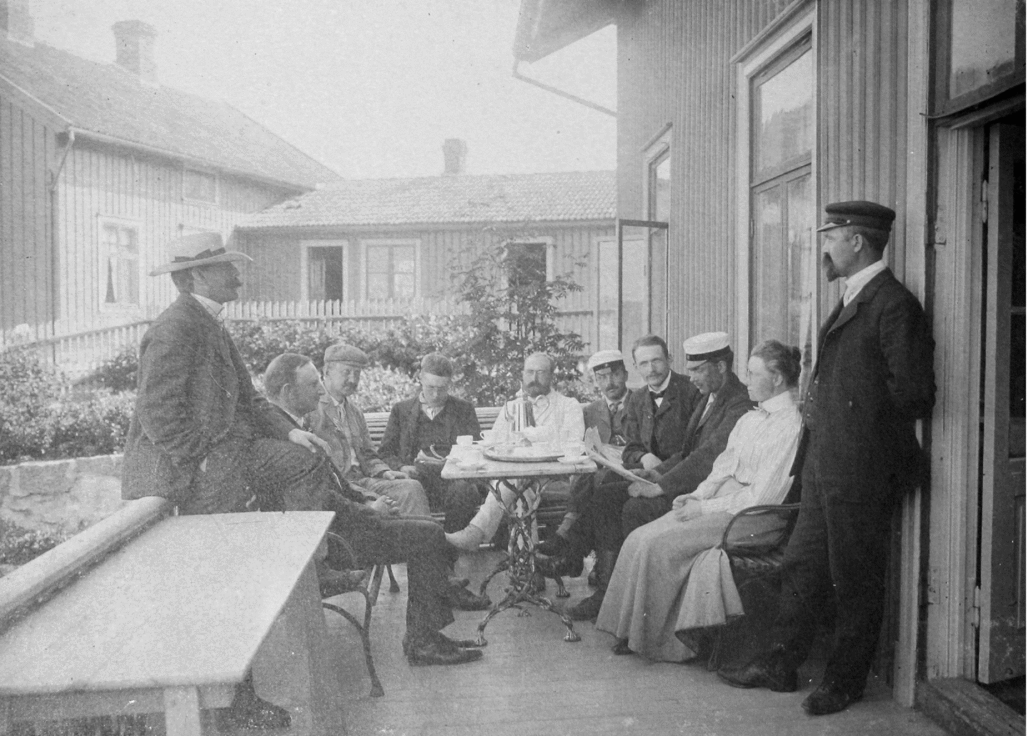
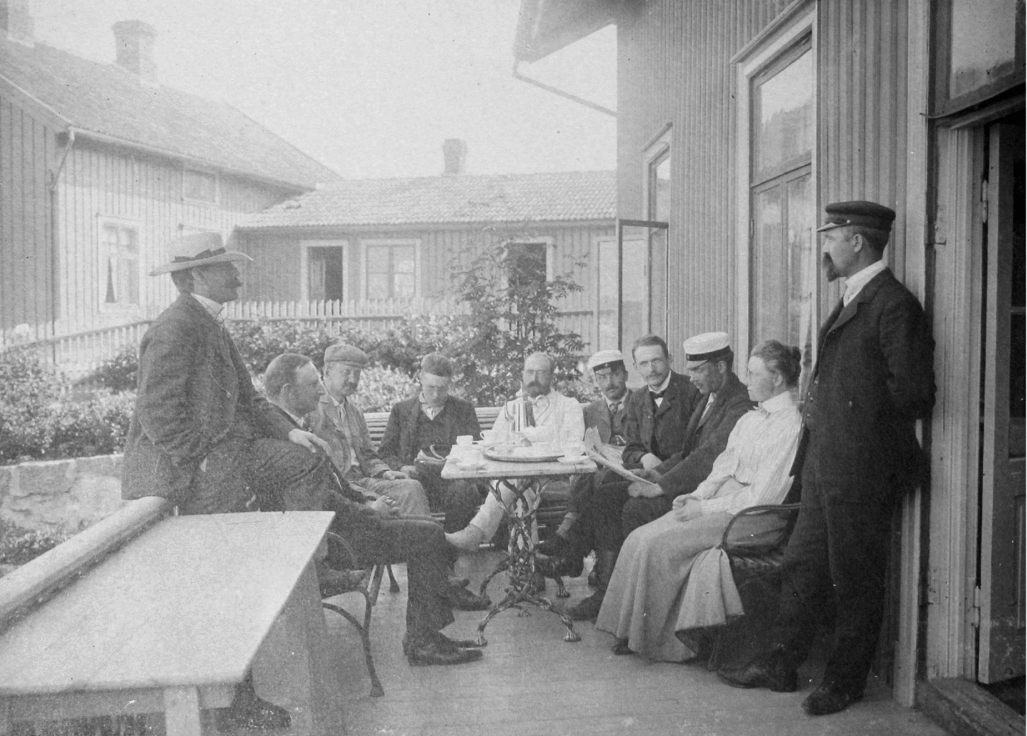
One advantage of Kristineberg was that its house prices had not increased as dramatically as in surrounding villages along the increasingly exploited west coast,Footnote 5 while it was still served by steam ship traffic and other essential communications (Théel Reference Théel1908). Completed – according to Lovén's definition not until 1885 – the station would offer full accommodations, including cleaning and food, work rooms including all equipment except microscopes, boat and dredging staff access, etc.Footnote 6 As fig. 2 illustrates, the station was of humble character during its first years.
Gathering on the station veranda. Early group portraits from Kristineberg Zoological Station emphasize the importance of leisure and communal station life (Fotografier: KZS/CVH).
Few as they may seem, visiting scientists at Kristineberg were prominent within Swedish natural science. Hjalmar Théel, who later became the station director and gained an influential position within the Royal Swedish Academy of Sciences, conducted morphological studies of annelids. Annelids, specifically their circulatory systems and digestion, were also studied by Axel Wirén, professor of anatomy at Uppsala University and Academy member in 1902. Associate professor in zoology at Uppsala University, Carl Aurivillius, visited Kristineberg to conduct morphological studies of crustaceans. As the examples above hint, scientific focus was overwhelmingly directed towards morphological and anatomical studies of mainly invertebrates.
Lovén, himself studying octopi and sea urchins, emphasized that the station needed to be a scientific safe haven without demands for economic applicability. Naturalists and students were directed to use simpler equipment in their bedrooms. Kristineberg's purpose and function was to bring scientists closer to their objects of study, while functioning as a center for collecting specimens for museums, schools, and universities nationally. As an annex of the National Museum of Natural History in Stockholm, the station aimed to expand the museum's collections of marine life forms,Footnote 7 advancing the museum's administrative function of scientifically mapping national natural resources (Beckman Reference Beckman1999, 58–59, 96–99). Lovén's and his wife's descriptions of his research summers at Kristineberg before the station was established furthermore emphasized marine field research as the introverted work of a solitary man, accompanied only by his microscope.Footnote 8 This narrative, typical as it was of its time (Eliasson Reference Eliasson1999, 236; Nyhart Reference Nyhart2009, 145), stands out as the opposite of the collective practices and ideals of summer research at Kristineberg. Scientific work was interspersed with informal and at times alcohol-fueled networking across and within academic generations during relaxed social events in the station garden or on excursions.Footnote 9 The importance of field research stations as relaxed places for making scientific friendships and professional connections is not to be underrated (Maienschein Reference Maienschein1989, 42; Pauly Reference Pauly, Rainger, Benson and Maienschein1991, 131, 137). Although often closely associated single persons, their founders, research stations have made field studies a collective affair, organizationally and as station researchers' own narratives of their fieldwork (de Bont Reference de Bont2009, 204).
In this socially relaxed scientific household Sven Lovén took upon himself the role of patriarch, exerting absolute power.Footnote 10 He also expressed a strong emotional attachment to the station, occasionally referring to it as his “child.”Footnote 11 In actuality, his leadership during most summers was exerted via letters from Stockholm, about 450 kilometers away, enforced by onsite student deputies also present during summer only (Théel Reference Théel1908, 23). It was Lovén who decided which young naturalists would be awarded the opportunity to conduct summer studies and research at Kristineberg, much to the dismay of those rejected. Others complained of being ordered to conduct remote excursions on the basis of Lovén's personal research interests, and of the discomfort they had to endure as a result.Footnote 12 Lovén's leadership, although exerted at a distance, displays similarities to Alfred Giard's at Wimereux, as described by de Bont. Whereas Dohrn had founded a station of such grand scale that he could not influence its scientific work to any notable extent, Lovén and Giard directed smaller organizational structures and had fewer administrative chores, giving them more time to spend instructing young naturalists in the methods of collecting and preserving specimens (ibid., 214, 216). Lovén's directions for student excursions also provide further empirical evidence supporting Kohler's conclusion that the scientific work at marine research stations was often actively organized in academic generations, the excursions providing schooling for younger naturalists whilst reputable scholars preferred the comfort and status of the laboratory (Kohler Reference Kohler2002, 43; see also Pauly Reference Pauly, Rainger, Benson and Maienschein1991, 126).
Organization and Division of Labor
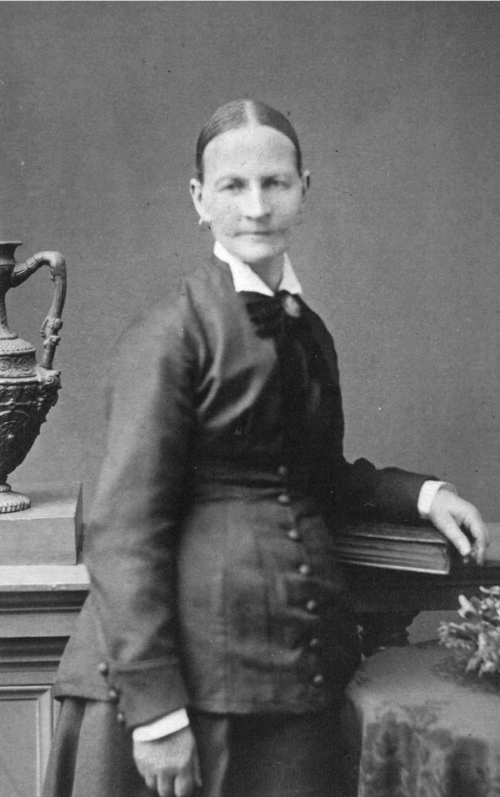
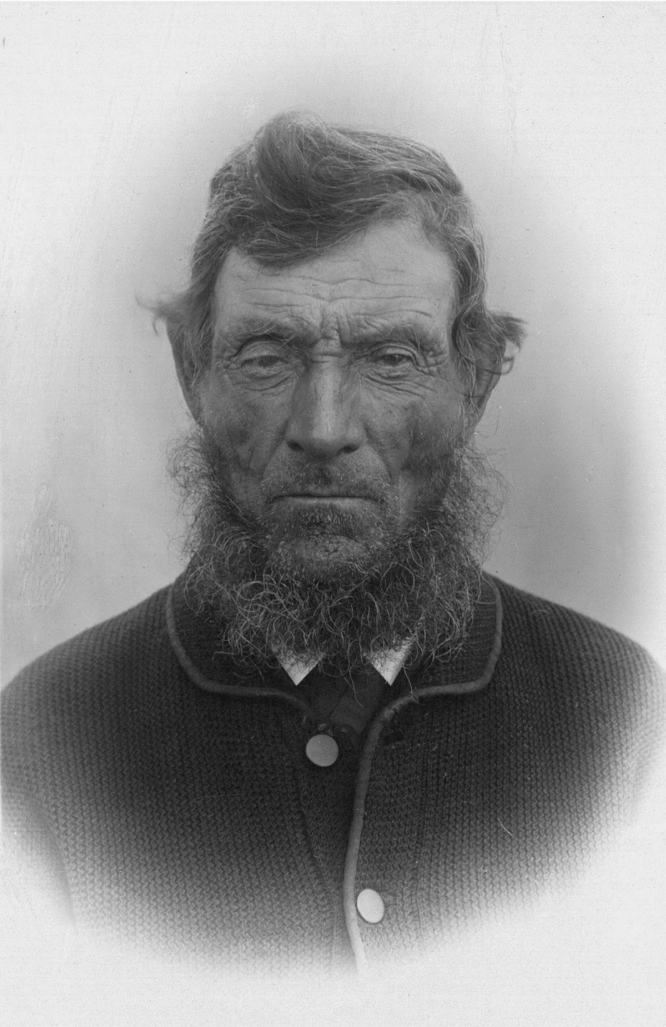
Over the long winter, from late September to May, the station was left in the hands of the two siblings, housekeeper and matron Sofia Kristensson (fig. 3) and caretaker Anton Kristensson (fig. 4). The Kristenssons were one of the three main interrelated families inhabiting Kristineberg when the station was opened. Sofia Kristensson lived at Kristineberg, and had legal rights to local jetties.Footnote 13 She was unmarried, and in her early 50s when hired on a verbal agreement in 1877. She worked at the station until her death in 1889. She was the only Kristensson daughter surviving into adulthood, and remained in the family home. Both her parents had passed away by 1877. Anton Kristensson was eight years younger, one of five sons in the Kristensson family.Footnote 14 Anton owned a ship and was informally referred to as a captain, but lacked a formal captain's degree. He married in 1861, and thereafter fathered five daughters and two sons between 1862 and 1878, all of whom survived into adulthood. He was hired on his sister's recommendation in 1885 but was unable to start until 1886.
Sofia Kristensson, station housekeeper (Fotografier: KZS/CVH).
Anton Kristensson, station caretaker (Fotografier: KZS/CVH).
The Kristensson sibling's father had previously been trained and employed on a day-to-day basis as a dredger by Lovén in the 1840s and 1850s.Footnote 15 The Kristensson children were born into times of opportunity for socioeconomic advancement. Coming from humble fishing backgrounds, the Kristensson sons used their father's connections to borrow money from Lovén to become ship's masters or qualified shipmates.Footnote 16 Lovén had thus played the part of local patron at Kristineberg well before he opened his station.
During summer, Sofia was in charge of bed and board, while Anton was responsible for the upkeep of boats and other equipment, and for leading the dredging expeditions (Théel Reference Théel1895, 28). Lovén did not intend to equip the Kristineberg station for winter research, which, in combination with extensive construction scheduled in the winter, meant that the season for scientific work at the station extended from May through September (Théel Reference Théel1908, 2). Though Sven Lovén may have been the enthusiastic founder and director of the station, displaced leadership can threaten the success of any endeavor. Under Lovén's management, the station accommodated only summer research, with a few notable exceptions. However, as Lovén was often absent during the peak season, scientific leadership was delegated to student deputies and onsite colleagues (ibid., 23). From late September to May, the station needed supervision, and this was mainly Sofia Kristensson's responsibility.Footnote 17 She lived on the premises and spent the winter months seeing to such station business as sewing bed sheets and other household linens, frequenting furniture auctions, and paying land taxes. She reprimanded builders for delaying construction tasks, which she reported to Lovén, and expressed disgruntlement to Lovén when construction staff took her orders lightly.Footnote 18
One side of Sofia Kristensson's work pertained to financial functions, such as paying land taxes, paying carpenters, and making household purchases necessary to equip the station's accommodation to appropriate standards.Footnote 19 Being responsible for a portion of the station budget, she expressed worries about her own work performance. Proposing new purchases made her agonize over being perceived as wasteful, and she was initially ill prepared for the procedures for submitting receipts. Deputies and other onsite naturalists, however, readily vouched for her sound judgment on station purchases.Footnote 20 Earning respect from displaced station management depended on her credibility being established within Lovén's circle of trusted naturalists. In other words, her credibility was confirmed by credible sources. Her tasks also included accommodating builders on site and reporting back on ongoing construction on a general level. Reports to Stockholm also included updates on occasional damage to station property following winter storms, and consultations with her brothers about suitable alternatives for reconstruction.Footnote 21 After the position of caretaker was created, the preferred work distribution at Kristineberg coincided with gendered work division ideals in scientific settings (with the exception of botany): men conducting practical work in the field, women performing scientific tasks indoors (Nordlund Reference Nordlund2007, 137). The employment of Sofia Kristensson's brother meant that the station as a space became more gender divided, even when naturalists were absent during the winter months.
In addition to overseeing the grounds and structures, Sofia Kristensson took orders for specific specimens from naturalists and passed them on the local fishermen, who would deliver any such findings to the station for further distribution to Lovén in Stockholm or to other zoologists at various locations.Footnote 22 Trade in specimens came about in two ways, or rather, as part of two different initiatives. Zoologists' requests were forwarded via Kristensson to local fishermen, who responded by looking out for the requested specimens either as unwanted catch in their nets or as additional targets to be caught separately for cash payment. This is how Lovén himself acquired specimens of octopi for his own research.Footnote 23 Fishermen occasionally denied these requests due to seasonal access reasons, which Sofia Kristensson in a round-about manner had to communicate through Lovén: “[Dr. Forsstrand] asks me to acquire some sharks. Yesterday I had a boy to Grundsund to ask for some. From the fishermen I learned that they are not able to catch any sharks at this time, if they catch any, they are very large.”Footnote 24
On many occasions fishermen spontaneously delivered anything of assumed scientific interest. It was then up to Sofia Kristensson to send the specimens forward, which she did indiscriminately: “Today I send Mister Professor a little box with a Höfre [old local vernacular for king crab Lithodes Maja], I do not know if it is suitable, but to not displease the fisherman I accepted it and promised to send it, if it is worth anything I will pay later on.”Footnote 25
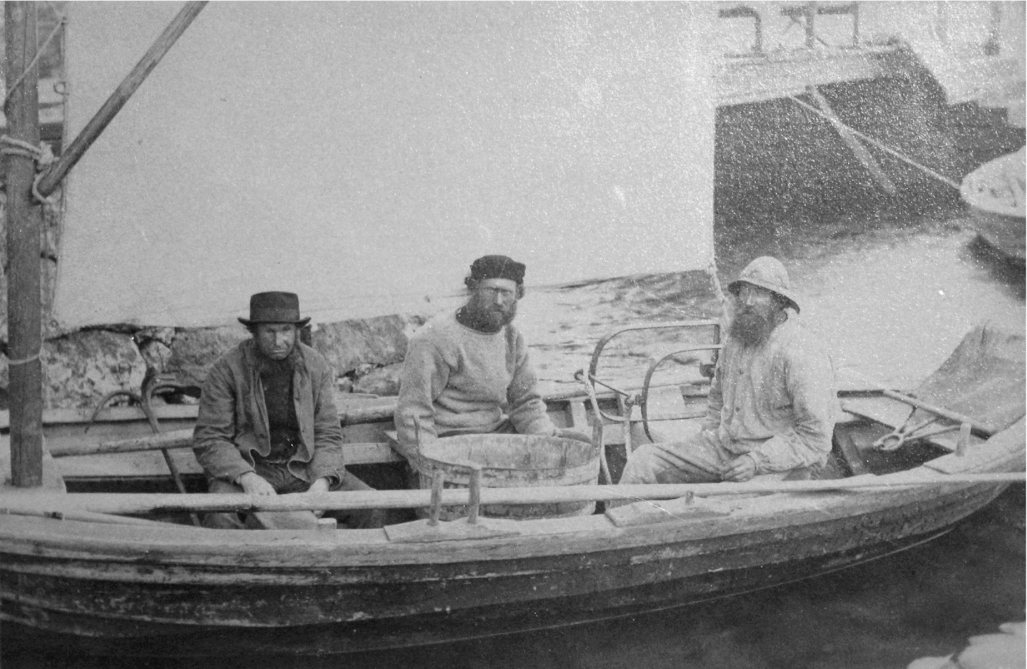
When the caretaker position became available in 1884, some of Sofia Kristensson's tasks – mainly preserving and distributing specimens – were transferred to or shared with her brother, whose other tasks included outdoor maintenance of grounds, ships, and buildings, instrument and equipment maintenance, and supervising dredging excursions. Kristineberg Zoological Station employed two dredgers, Olof Andersson and Martin Andreasson (fig. 5); unlike the Kristenssons, they were employed only on an hourly basis, much to Lovén's disappointment.
Dredgers Martin Andreasson, Olof Andersson, and later employed Anders Johansson, working for Kristineberg Zoological Station. (Fotografier: KZS/CVH.)
This arrangement was dictated by the realities of a tight budget, but Lovén repeatedly argued that the dredgers' employment should be permanent and full-time to give the dredgers ample opportunity to acquaint themselves with the seafloor. In turn, this would offer naturalists more laboratory time, as Lovén's wish was that “the eager naturalist must be freed from the time consuming task of acquiring specimens themselves.”Footnote 26 One aspect of this concern was a class-based division between physical and intellectual labor (Théel Reference Théel1928, 25; see also Eliasson Reference Eliasson1999, 236). As we shall see in the next section there was also an epistemological rift strategically built into the Kristineberg station work order, separating the naturalists' intimate knowledge of the anatomical structure of various species from the dredger's extensive knowledge of species in their natural environments and of the zoogeography of the seafloor.
Knowledge and Skills
Being locals, the Kristenssons had a potential advantage over distant management. They had the upper hand by their sheer physical presence, due to the station being intentionally organized for summer research alone. The smooth running of scientific work at the station in the summer depended on the station's general upkeep and its local reputation throughout the year, which from late September to May became the Kristenssons' responsibility. Reliability was an essential quality. Other necessary qualities, used by Lovén to describe his employees to other naturalists and to funders, included in Sofia Kristensson's case being unmarried (a requirement for being an employable woman), of a suitable age, and, for both sister and brother, that they should be reliable in an overall sense, occasionally specified and emphasized as temperate in regard to alcohol.Footnote 27
One obstacle to overcome was the conflicting perspectives on the species studied. The scientific focus at Kristineberg coincided with contemporary scientific trends: molluscs, crustaceans, echinoidea, and other less-marketable sea creatures. As Rozwadowski has stated in her study of science on board naval vessels, zoological definitions and terminology were not easily translatable when scientists and naval professionals met. Where scientists saw a specific and defined species of jellyfish, sailors just saw jellyfish as a generic whole. Likewise, scientists tended to use “landlubber” vocabulary when speaking of other naval matters, causing impatience among the seafarers (Rozwadowski Reference Rozwadowski1996, 426). At Kristineberg, the challenge was to find a common terminology, which for the naturalists meant making up descriptive names, for example, referring to sea lilies of the Antedon family (then Comatula) as “umbrellas,” to the sea shell Trivia Arctica as “coffee beans,” and to “white shells” when speaking of Terebratulina.Footnote 28 Instead of taking on the role of scientific mentor, teaching local employees Linnaean terminology (cf. Kohler Reference Kohler2008, 33), Lovén sought and instructed other naturalists to seek common ground in the commonplace. This was likely due to divergent interests, in accordance with Rozwadowski's conclusions, and not necessarily out of class-generated contempt for the dredgers' ability to learn. The scientific focus on invertebrates did, however, have benefits. For local fishermen, it was no great sacrifice to remove additional sea creatures of little economic value from the nets for the Kristineberg station, instead of throwing them back into the ocean. There was also small but nonetheless welcome financial compensation for their trouble. The sum was never really disputed. Sofia Kristensson stated regarding the fishermen's understanding of octopi, they did not in any case “see the purpose of such fish.”Footnote 29 Lack of competition for scientifically sought after species combined with small economic compensation, could prove not only neutral, but beneficial for all parties involved, fishermen and naturalists alike.
Sofia Kristensson's work title was housekeeper, but her actual workload included tasks that required some knowledge of scientific method, mainly for preserving specimens during the winter months. She requested further instruction from Lovén on preservation methods and she wanted to be educated about scientifically relevant species, in order to make informed decisions when selecting which specimens to send to Lovén in Stockholm.Footnote 30 There are no indications that her request was granted, possibly due to gendered assumptions about scientific work and knowledge. Many of her tasks concerning specimens were shared with her brother when the position of caretaker was created in 1885,Footnote 31 although she never seems to have complained about these work tasks as such. Her complaints instead concerned feeling out of her element, having insufficient education to sort out less-interesting species, and not knowing how to properly preserve the specimens. She was informed of her mistakes only after the fact, rather than being taught not to make them to begin with. She was left guessing whether any naturalists would be interested in specific specimens that fishermen dropped off at the station, and accepted any such findings so as not to disgruntle the fishermen.Footnote 32 Her request for education was more likely an expression of the desire to perform well in accordance with what her job entailed, rather than an expression of scholarly interest in natural history as such. The request does indicate that being the housekeeper at a remote research station entailed involvement in scientific work on a practical level. While Sofia Kristensson's letters express great humility regarding her selection ability and concern not to shower Lovén with potentially unremarkable specimens, Anton Kristensson's approach was more casual. He was more independently experimental when it came to packing the specimens, testing boric acid–alcohol solutions for preservation, or just sending live lobsters – which he argued would be beautiful to look at regardless if they survived the 440-kilometre-long journey or perished in their way to Stockholm.Footnote 33
As indicated by his response to the prospective election of mathematician Sonya [Sofia] Kovalevskaya to the Royal Swedish Academy of Sciences, Lovén did not believe women to have innate abilities for scientific work.Footnote 34 He was likely more comfortable directing any educational efforts towards Anton, and made him perform the tasks more directly related to scientific work. During Anton Kristensson's employment under Lovén's direction, several complaints were made about his job performance. The complaints were not about his actual ability to perform his duties skillfully; instead, it was his dedication that was questioned.Footnote 35 A year after Anton Kristensson's employment commenced, one of the more regular naturalists sent Lovén several letters saying that Kristensson seemed to view his employment more as a sinecure, only performing minimal work for a few hours a day, handing over the lion's share of his work tasks to the dredgers, who were not only paid less but – as mentioned – were engaged on a day-to-day basis. He did not perform his maintenance tasks properly and was furthermore uninterested in the scientific methodological aspects of his work. Most of his working day was spent earning extra income by fishing for mackerel and ferrying tourists for tips.Footnote 36 Lovén did not confront Anton Kristensson with this in writing until four years later, when he harshly threatened to replace him if he did not take his employment seriously.Footnote 37 Anton Kristensson remained working at the station for several more years, which could indicate that Lovén's threats were not taken seriously. Aside from the direct consequences of the poor work performance – i.e., that necessary maintenance tasks and dredging excursions were not properly executed – the local reputation of the station was at stake. If word got out that the station could afford to pay people a full-time salary for doing minimal work, it would be difficult to find appropriate employees later on. Employing locals at a station at which the naturalists themselves were only physically present in the summer required considerable trust and loyalty, and trust was something to be earned.
Social Skills
Why did Lovén not find another caretaker? Indeed, there were willing candidates for the position. One option was suggested by Axel Wirén, one of the most regular station naturalists, who concluded that the dredging staff was competent and ambitious enough to increase their working hours by formally taking on the caretaker's tasks. One reason for Lovén's reluctance to follow this suggestion may have been the risk of making local enemies, which could compromise the efficiency of scientific work at the station further down the line: “Among the local people, there is a widely spread notion that the Station is rich and gladly pays for anything. If captain Kristensson's idleness stems from such an opinion I naturally do not know, but rest assured that his presence strongly contributes to it taking roots in others.”Footnote 38
Another explanation can be found in the earlier hiring of Anton Kristensson's brother Henrik Kristensson, who substituted during the first year. He was considered a harder worker than his younger brother, well liked among the researchers and equally competent to Anton in necessary seafaring skills; he was also interested in keeping the position. However, Henrik Kristensson was not well liked among the dredgers, who found him arrogant and condescending. In contrast, Anton Kristensson was considered socially agreeable by locals and naturalists alike.Footnote 39 Thus, it was not Anton Kristensson's practical expertise that kept him on staff and delaying reprimands, but his ability to get along with the naturalists and other locals.
As Daniel W. Schneider points out, not only local knowledge in practical skills or more theoretical knowledge was required from sought-after locals; in addition, there were required social skills, namely, getting along with the scientists (Schneider Reference Schneider2000, 693). This was true for Anton Kristensson, but it is also worth noting the importance of his popularity among fishermen as well. The opposite can be said of Sofia Kristensson, who was less easygoing. Even so, she was the one who came to be most integral to the more informal social network of the station, which reveals other dimensions of Schneider's observation about social skills. Anton Kristensson was reprimanded for his lack of dedication and loyalty but praised for his good nature. Sofia Kristensson was, as we later will see, at times perceived or misunderstood as abrasive, but praised for her competence and excellence.Footnote 40 Her temper was an important asset for the conditions under which scientific work could be conducted at Kristineberg.
Gatekeeping
Maintaining social boundaries is an enduring problem associated with field studies, especially compared with the physically closed laboratory. The field is usually a more or less accessible milieu, without walls to maintain the space exclusively for science, which consequently demands social interaction between the scientific collective and outsiders (Becker Reference Becker2009, 489–490; Kuklick and Kohler Reference Kuklick and Kohler1996, 2–4; Vetter Reference Vetter2011, 10–11). Because neither Lovén nor other scientists were on location in the winter months, other difficulties and concerns remained. Regardless of the status and authoritative autonomy the station had on the political level and in the eyes of the genteel on summer holiday, the station's resident neighbors, i.e. locals with long family ties to the region and the confidence that comes with being born and bred insiders, could potentially act on competing social or economic interests. The accumulation of onsite resources such as houses and equipment raised the stakes, economically speaking, actualizing the threat posed by thieves or vandals. Lovén wanted someone to stay at the station year round, the station then only being in operation from May to September. This was one of Lovén's expressed reasons for employing Sofia Kristensson. She was hired not only as a housekeeper but also as a watchperson, to deter thieves and vandals and to keep an eye on the neighbors, keeping them from overstepping their boundaries or embarking on projects that would limit land and sea access for the station.Footnote 41
The most troubling case was that of a retired sailor, Jacobsson, whose expansive plans to build a herring curing house near the station would not only prove detrimental to near-shore scientific fieldwork but also block the station's view of the fashionable public bathhouse across the bay. The conflict with this particular neighbor was protracted and cost Lovén both patience and peace of mind regarding the station's future. Sofia Kristensson provided Lovén with local insider information about Jacobsson's actual practical ability to follow through with his plans. She kept an eye out for any signs of initiated construction, and when begun, she intervened and directly confronted Jacobsson, causing a delay that opened opportunities for Lovén to undertake legal action.Footnote 42 Her loyalty in this case clearly lay with station and management interests rather than with the local community. We cannot determine whether there were additional conflicts, unrelated to station affairs, fueling her aversion to the Jacobsson family.
Keeping peace in the local setting was not a one-way street. To run operations at the station smoothly, Lovén also needed to make sure there were no incidents that could be interpreted as arrogance or aggression on the part of the station. For example, the station guard dog Hyas' aggressive barking and tendency to enter neighbors' homes to steal hats and galoshes was enabled by Sofia Kristensson's unwillingness to keep him on a leash. She argued that leashing Hyas would be heartless and unfair since the neighbors' cattle wandered all over station land, depositing dirt on the stone steps. Eventually she caved in to Lovén's insistence to keep peace with the neighbors by restricting Hyas' opportunities for mischief, but she did not comply without stating her reluctance to leashing her beloved canine companion.Footnote 43 Anton Kristensson's approach to safeguarding station land and authority was less direct than his sister's and served to maintain his own status and authority at the station. The only example found in the source material is Anton Kristensson's advising Lovén not to allow the son of the widow Christina Bengtsson, owner of the second house purchased by the station, to stay on as an occupant of that house during a transitional period. Kristensson's concern was that Bengtsson, given the opportunity, would aspire to act as “lord of it all.”Footnote 44
Family Affairs: The Station as a Household
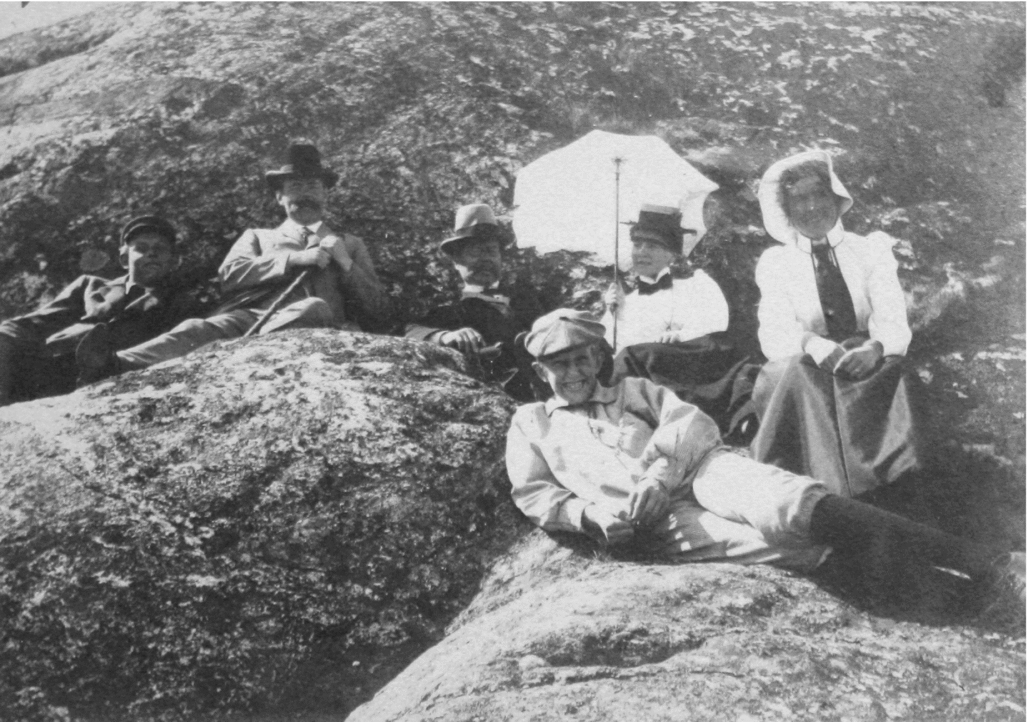
Despite habitual displacement, Lovén's role at Kristineberg was that of a household patriarch, occasionally solving disputes by letter and easing hurt feelings among the dredgers,Footnote 45 lending money and equipment so they could earn extra income by catching and selling sea urchins to beach tourists,Footnote 46 and bending the rules and regulations of the Royal Swedish Academy of Sciences, using the station budget to illicitly buy oilskin coats for the dredgers.Footnote 47 Although the station was accessible to the occasional curious visitor, scientific work and leisure at the station were closed affairs. The relationships between the naturalists, dredgers, and Anton Kristensson were professional, and seemed to be agreeable aside from the complaints about his work performance. Sofia Kristensson, on the other hand, was more included in the private affairs of visiting naturalists. This could partly be because the role of housekeeper had matriarchal overtones and partly due to the more recreational or casual aspects of her station work, such as dining. As Jane Maienschein has stated in her research into the Woods Hole marine biological laboratory, the role of housekeeper or matron entailed being in charge of the dining hall – a primary forum for professional networking, however leisurely it may seem (Maienschein Reference Maienschein1989, 44). As fleetingly mentioned in letters, but omitted from official accounts of the station's history, visiting naturalists and students were accompanied by wives, fiancées, and young or adult children (fig. 6). Due to limited sleeping quarters during the very first years, family members stayed in other rented rooms in or around Kristineberg, but joined in social evening events. Tentatively, being a woman might have been an advantage for Sofia. Being in charge of the more relaxed aspects of station life, caring for the station's land and living quarters, and having closer contact with accompanying wives and children gave her an entrée into station life.
Zoologists Carl Aurivillius and Hjalmar Théel with family members at Kristineberg (Fotografier: KZS/CVH).
In comparison, Anton Kristensson possibly did not make sufficient effort to create as socially intricate a place for himself as his sister did, but instead attended to family members and local friends. Compared with work at sea, with long stretches away from home and imminent dangers, employment at the station was attractive, exemplified not least by Henrik Kristensson's attempts to insert himself into the position of station caretaker in his brother's place.Footnote 48 It was in fact Sofia Kristensson who determined who should be her closest co-worker, as well as her own successor. Station employment displayed dynastic tendencies: she strongly recommended Anton Kristensson as caretaker,Footnote 49 and exacted a promise from Lovén that, after her death, she would be succeeded by her brother Bernhard's daughter, Elise Kristensson, who was employed at the station until 1900.Footnote 50 One important aspect was trust, and knowing who she could cooperate with on an everyday basis, at least when it came to Anton Kristensson's employment. Choosing her own successor was not practically relevant to her work, but stands out as a way of offering an opportunity to a close and loved female relative, already taught the trade by her aunt. There were several applicants for the position of housekeeper, some being housekeepers to visiting naturalists. Family loyalty was another aspect: regardless of the reasons, the practical outcome of Sofia's personnel efforts was that the Kristensson family formed important ties to the station, and vice versa. At this point, it was no longer a matter of just being local, as neither Anton nor Elise lived on the grounds as Sofia did at the time of the station founding.
Sofia Kristensson's correspondence with Lovén often ventured into the personal: their own and family members' health, Sofia's emotional state, fears, and loneliness during the stormy winters at the station, and deaths in the family. After five years of employment she even felt confident enough to invite herself for a holiday at the Lovén residence in Stockholm. The letters do not indicate that a weeklong visit was offered by Lovén or his wife before the request. She humbly declared that she planned to visit the Lovén family at their home in Stockholm in two weeks' time, and that if this was inconvenient he should let her know.Footnote 51 Not only was she kindly welcomed, Lovén also arranged for her to visit other naturalists in Stockholm and Uppsala.Footnote 52 Other demands and requests included higher wages, a complimentary morning paper subscription, private letters to herself from Lovén's wife and daughter, and two bottles of fine wine to her sickbed with reference to doctor's orders.Footnote 53
Sofia Kristensson's status differed between younger and senior naturalists, returning scientists at the station siding with her when less experienced visiting naturalists made complaints on the what they perceived was too much fish on the station menu:
Mister Professor wishes to know which gentlemen complained about the food. None of them uttered any complaints to me about the food, but I do understand a little myself. Once Dr Aurivillus [senior naturalist and one of Lovén's more trusted associates] asked me how I fared with so many. I answered that it indeed is strenuous, but as long as the gentlemen are happy it will make do. He then told me this was not the case with some of them. He said I should not pay attention to this, because it is not possible to please so many. I was upset and said that the gentlemen who were not pleased here should go to the restaurant and there choose what they wish.Footnote 54
The admission of hurt feelings aside, the complaint demonstrates assertiveness in her professional role. It also reveals certain displeasure with a new type of scientific visitor, more oriented towards the leisure aspects of station work and without the proper discipline, self-sacrifice, and respect for station protocol. This gives some credence to the question of the naturalists' more respected standing in the local context than that of tourists. That is, those who went to Kristineberg for scientific work better fit local culture than did those expecting a bed and board standard like that of tourism establishments – hence Kristensson's reference to the restaurant. Remarkably, she also asked Lovén to allow fewer live-in naturalists, when she felt that the station was becoming overcrowded, and to deny residency to specific naturalists who annoyed her by disparaging her cooking skills and disrespecting her schedules.Footnote 55 Her appeal to Lovén coincided with Lovén's worries about station finances. Lovén suggested limiting the number of visitors to senior station naturalist and Lovén's successor Hjalmar Théel, along with expressing concern that Sofia Kristensson could resign should her workload not ease.Footnote 56 Overall, Sofia Kristensson's letters display a balance between appropriate subservience in phrasing, and requests and demands that could seem likely to be breaches of appropriate rules of conduct, or at least peculiar in their nature, for a woman of humble background.
Local Religion and the Status of Work
Sofia Kristensson's social role at the station raises the question of the nature of relationships between household employees and their higher-social-strata employers, as well as the question of her role within the station. Though her position of housekeeper did not initially essentially differ from that of a housekeeper in a private household, the organizational structure of a field research station for visiting naturalists offered her an opportunity to define her employment in accordance with her ambitions. True, her pay was lower than her brother's and she was not always successful in her demands. However, she did have relative autonomy, administrative and economic responsibilities, earned recognition for her competence, and was embraced within the social structure of the more influential regularly visiting naturalists at the station.
To make sense of this, we must take into account the kind of person Sofia Kristensson was and the cultural context in which her skills and work identity were shaped. Local beliefs were dominated by the preaching of Evangelican-Lutheran Henric Shartau (1757–1825). Being part of the Church of Sweden, Schartauanism was not an independent religious movement, but offered a stricter religious practice emphasizing the individual's religious and moral awareness. Schartauanism won ground in a Bohuslän affected by diminished herring fisheries and subsequent famine and poverty. Work was praised not only as a means to achieve religious enlightenment but as a goal in itself. This included women, who were traditionally integral to the local production system, preserving fish and working on the small homestead farms while the men worked at sea. In a study of religion and work among Schartauan women in the late nineteenth and early twentieth centuries, ethnologist Katarina Lewis has discussed how local religious beliefs constituted a cultural framework in which a woman dedicated herself to lifelong service to God on a spiritual level, and in household service in a worldly capacity was a revered embodiment of the Schartauan way of life. In an overall poor county such as Bohuslän, Schartauanism offered dignity, a sense of social equality, and a firmly rooted work ethic and self-respect. Those who worked hard and were devoted to their vocations, regardless of how poor or far down the social hierarchy they were, were not to bow down to any human being. The local culture, in which Sofia Kristensson grew up, celebrated self-reliance, honesty, and industrious strength in women (Lewis Reference Lewis and Keinänen2010, 80–82, 85, 90). Although we cannot with certainty know about Sofia Kristensson's religious beliefs, Lewis' study reveals a local gender identity, confirmed by the preachings of Schartauanism. Lewis has demonstrated that the local ideals of work ethic and female industriousness – derived not only from religion but from practical necessities in a socioeconomic production system in which women's work was essential for everyday survival when the men were at sea – could grant housekeepers high respect and relative equality with employers (ibid. 85, 90). As an unmarried woman Sofia Kristensson was also in a legal and social sense fairly autonomous. Her worldly service was not to husband and children, but to her employer.
In the summer of 1889, a few months before Sofias's death, a summer tourist published in the local paper a written story about his sightseeing. In passing, he referred to Sofia as a rude maid who turned him away until the naturalists were to return from their excursion.Footnote 57 This upset the regulars at the station, one of whom informed Lovén by letter of the public insult of Sofia Kristensson. Lovén's agitated response to the news was to request a copy of the article in question and to send a message to Sofia telling her not to pay attention to the frequent lies of newspapers. His words of encouragement were concluded with a quotation of striking significance, declaring Sofia Kristensson's inclusion within the scientific family loyally united against the hardships of upholding a household for science in the field: “by union the smallest states thrive, by discord the greatest are destroyed.”Footnote 58
Conclusion
Sofia Kristensson's successful attempts to recruit select close relatives for positions at the Kristineberg station indicates that while there are scientific dynasties (see for example Coen Reference Coen2006), there might be similar patterns of local employment at field science institutions. In the 1850s Lovén employed Sofia and Anton Kristensson's father for dredging. Before her passing, Sofia made sure her position was reserved for her niece. A study following local employment at a field station like Kristineberg over time could give insights into how field science institutions interrelate with generations of local families. When scientific work in time became an option for people outside the intellectual middle class, were there further opportunities for descendants of the Kristensson family?
The analysis of the Kristineberg station through the concept of scientific households supports conclusions previously reached by Robert E. Kohler: a social and organizational division was upheld between scientific generations, the more seasoned residing in the more prestigious laboratory and the younger laboring in the field (Kohler Reference Kohler2002, 43). By viewing the administrative side of station work social sides to the generational divide is visible. The younger naturalists saw themselves lectured by Sofia Kristensson when not following the social rituals at the station by ignoring the dinner schedules. As housekeeper and station matriarch, she was partly responsible for the social training of younger scientific generations and students of zoology into the cohesive practices of station work and way of life.
Sofia Kristensson's letters are unusual source material. And, letters providing as detailed accounts of housekeeping chores might not in any case have been saved and catalogued as thoroughly as they did at Kristineberg. By following Truus van Bosstraeten's example and use institute photo albums one can circumvent the lack of written sources to access those whose names are not heralded in official accounts of scientific work. With a focus on the work, the Kristineberg case raises questions of how tasks were distributed during the early years, how they subsequently have been divided and bundled together in varying professional titles, and in the changing nature of work and professional status at scientific field stations.
Archive Abbreviations
- CVH:
Center for History of Science, Royal Swedish Academy of Sciences.
- KZS/CVH:
Kristineberg Zoological Station, Center for History of Science.
- RA:
National Archives, Stockholm.
- UUB:
Uppsala University Library.
Acknowledgments
I would like to extend my gratitude to Christer Nordlund and Erland Mårald at Umeå University, and Maria Asp at the Centre for History of Science at The Royal Swedish Academy of Sciences for their readings and generous comments on my article manuscripts. The anonymous reviewers offered very good advice on making this article the best it could be. The research is generously funded by Göran Gustafssons Stiftelse.