Recent scholarship has cautioned us that censorship does not require a censor, nor can it be described merely as the repression of information by power. Censorship can be discursively productive, and historically it has worn many guises.Footnote 1 This article treats a case in which state censorship practices were unstable, their execution uncertain, and their target cunning, if ultimately open to compromise. Sparked by an antiaristocratic short story in Ernst Keil's Gartenlaube (arbor, bower), the most widely read German periodical of the era, the Amazon affair involved not only its namesake ship—the Prussian S.M.S. Amazon (Amazone), a wooden corvette that sank in a storm off the coast of Holland in 1861—but an extraordinary confrontation between the conservative Prussian state and the liberal popular press.Footnote 2 From the misstep of a weekly family magazine arose a multiyear press ban and a struggle over liberal-democratic public opinion in Germany. If no clear winner emerged from the Amazon affair, the episode nonetheless speaks to the malleability of German political culture at a moment of profound transition, as well as to the ability of the state to shape it.
An oppositional editor and publisher since the late 1830s, Keil founded the Gartenlaube in Leipzig following his 1852 release from a Saxon prison, where he had served a nine-month sentence for press infractions during the reaction that swept Germany after the Revolution of 1848. The Gartenlaube stood at the vanguard of the Familienblätter, or “family papers,” that blossomed in the 1850s and 1860s. Like other popular print forms in the industrializing world, the German family paper testified to the expansion of the nineteenth-century print market.Footnote 3 What distinguished the family paper from penny creations in Great Britain, France, and the United States were the aims of its creators, namely postrevolutionary liberals who believed that reading could pick up where direct political action had left off. By bringing a subtle mixture of education and entertainment into the home, as well as a goodly portion of wood-engraved illustration, the liberal pioneers of the family paper hoped to politicize civil society at its putative core and so resume the work of the abortive revolution. In this way Keil sought to mold the politics of German readers without getting into trouble.Footnote 4 Harnessing the popular press to a wary liberal-democratic nationalism, his Gartenlaube might reach Germans in a way the Frankfurt National Assembly had been unable to do.Footnote 5
Authors, publishers, and editors had ample reason to tread lightly after 1848. To be sure, the Frankfurt parliamentarians had done away with the hated censor's office once and for all, and with it the regime of precensorship instituted in 1819.Footnote 6 Given that those member states of the German Confederation without a constitution in 1848 had now obtained and retained one, Austria excepted, the architects of the reaction found themselves compelled to conform to a framework of at least modest legalism. Paradoxically, however, the precensorship of the Restoration gave way in the 1850s to a system both more transparent and more draconian, a set of codified penal mechanisms designed to discourage subversion.Footnote 7 These included personal financial liability and legal culpability, revocation of an establishment's trade license, forfeiture of a compulsory deposit (frequently in the bank-breaking amount of several thousand talers), and confiscation.Footnote 8 Such measures ruthlessly tightened the screws on the capitalist print market and made survival difficult for small or struggling publications, even if they never broke the law. Additionally, stipulated procedure was often loosely observed by confederal state police organizations.Footnote 9
Though it would come apart with the German Confederation, in the void left by a “preventive” censorial regime arose a comprehensive “system of repressive justice” that burdened the German press after 1848.Footnote 10 Rather than exact vengeance upon the printed word itself, the system undermined its purveyors.Footnote 11 On the other hand, only a jaundiced eye could disregard what simultaneously represented an advance for the Rechtsstaat, or state observant of the rule of law, in Germany.Footnote 12 The new press controls owed their ingenuity to the ever more perceptible tug of constitutionalism, but they would prove unworkable within the frame of a maturing Rechtsstaat. Because the courts were now responsible for their application and frequently contradicted one another, leading to delays, said controls also opened a wider window for dissent than ever before.Footnote 13 Officials learned how difficult it could be to implement such tools while upholding due process in the courts, which routinely overturned administrative fiat.Footnote 14 They learned, and they drew realistic conclusions. We must take seriously the ideological flexibility of German bureaucrats, especially in Prussia. The conservatism typical (or required) of them after 1848 was not monochromatic or even without its liberal strains, and their general commitment to the rule of law had not waned with the reaction.Footnote 15
Yet the postrevolutionary system of censorship, alongside state propaganda efforts, exercised great influence on the press while it survived.Footnote 16 Keil's liberal-democratic family paper was too distant and too big to subdue outright, but Prussia succeeded in wresting major concessions from the Gartenlaube through “lawful” exploitation of the capitalist print market. Rather than risk his considerable readership in Prussia, and well before the outbreak of war put his entire enterprise in danger, Keil changed his tune. My findings suggest that Prussia moved the Gartenlaube to decouple democratic criticism from liberal-nationalist advocacy. This partial capitulation was not single-handedly achieved by Otto von Bismarck or his government, nor did it simply mirror political developments in the world outside the text. The decoupling depended, too, on the cooperation of Keil, the nature of the family paper, and the nature of the prohibitive measures to which it was subjected. No matter how ably he could flout Prussia's ban, Keil had never intended his family paper as contraband. He complied for the sake of continued success. The ramifications for German print culture—and political culture—should give us pause.Footnote 17
Prussia, for its part, had long exhibited a conflicted attitude toward nationalism. On the one hand, in what follows we can still palpably sense the “trauma” and fear of revolutionary upheaval that had guided Prussian policy in the wake of Napoleon and hardly abated after 1848, when officials considered the press more dangerous than ever.Footnote 18 But with new circumstances arose new questions: on what conditions could opposition be tolerated, both in parliament and in print? What constituted a threat to the existing order? What was compatible with Berlin's interests? Restless in a restless Europe, and particularly once Bismarck came to the helm, Prussia was casting about for a stable power base, both abroad and at home. What was Prussia—or better, what were its statesmen, bureaucrats, police—thinking? The Amazon affair demonstrates that they were not always so certain themselves. Their confusion was warranted, for the political situation was bewilderingly fluid in the 1850s and 1860s. One thing was certain: in an already tense atmosphere, Ernst Keil's Gartenlaube visited itself upon the Prussian administration like an apple of discord. A family paper subscribed to by nearly 200,000 (and likely known to more than a million) had turned sensitive state concerns into a potent piece of liberal-democratic propaganda.
Stormy Seas for the Ship of State
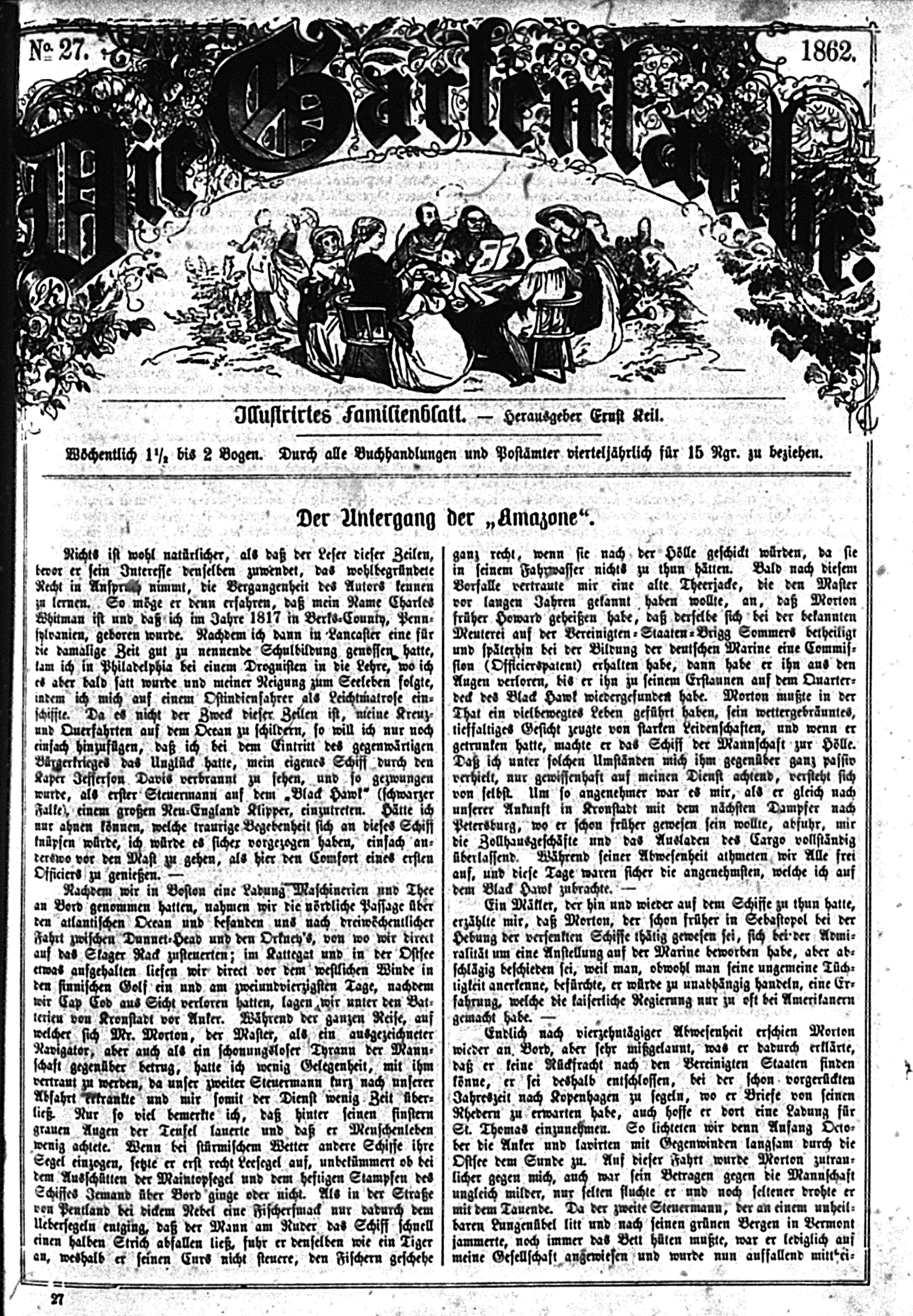
In July 1862, an item with the title “The Sinking of the Amazon” appeared on the front page of the Gartenlaube.Footnote 19 The short story amounted to a bitter assault on the Junkers, the noble East Elbian estate owners who formed a pillar of the Prussian monarchy, along with the army they dominated. Free of illustration or any marker of its fictional status, the text purported to relate the testimony of one Charles Whitman, born in 1817 in Berks County, Pennsylvania (Fig. 1). The narrator Whitman, fluent in German, claims to have witnessed treasonous activity in connection with the loss of the Amazon in November 1861. His tale begins on a provocative note. Brought across the Atlantic to Copenhagen as a hand on the Black Hawk, Whitman chats over beer and tobacco with Danish sailors, who pillory Prussia as a traitor to the German Confederation and question the competence of this “scribe-people in Danzig,” captive to a “stupid Junker mentality,” to build a navy. The sailors express blunt political sentiments about the inherent democracy of the navy and the consequent naval phobia of the Junkers. Because sea power occupied a prominent place in the German liberal imagination, this was an explosive symbolic mixture.Footnote 20
From Anonymous, “Der Untergang der Amazone” (“The Sinking of the Amazon”), Gartenlaube 10 (1862): 417–20, here 417.

Back onboard the Black Hawk, Whitman overhears two Junker agents in conversation, one of whom he nicknames Rasper, on account of his harsh dialect, and the other Melter, due to his unctuous demeanor. Both have assumed that Whitman understands no German. Rasper reminds Melter of how “the new creation of the navy is [. . .] a maneuver of democracy to plunge good old feudal Prussia into the swindle of revolution,” which one might as well “nip [. . .] in the bud.” Melter concurs, for it has become hard enough to “outvote the bourgeois elements in the army” without the addition of a navy to the state equation. The two conspirators are joined by one Mr. Morton, whom Whitman already knows as the gruff and mysterious shipmaster of the Black Hawk. In a pidgin of German and English, Morton recommends that their sabotage operation be carried out during “right stormy weather” to deter suspicion. The three saboteurs drink a toast to their scheme, and the first half of the narrative ends with the Black Hawk anchored in the Danish city of Helsingør, prepared to set sail under glowering skies.
The conclusion to “Sinking” appeared in the following week's Gartenlaube.Footnote 21 In a sequence framed by a supernaturally violent thunderstorm, followed by an eerie calm and then a fierce tempest, the Black Hawk nears the aging ship, disparaged to the last as a casualty of Prussian neglect. Whitman learns more about Morton: on the run after his involvement in a mutiny on an American ship, he had seen his hopes of starting afresh in a pan-German navy dashed after 1848.Footnote 22 Finally the vindictive Junker reaction had pursued Morton all the way to England, where he and his wife had taken refuge. On orders from Berlin, the police had stormed into her accommodations in search of her absent husband's papers, an invasion so traumatic that she died with her unborn child. Despite his earlier “sympathy for the German people,” Morton reveals that these events have led him to hate everything Prussian: “After what happened to me in Germany, I would like to sail all ships carrying that blasted black-and-white flag into the ground.” This is what he does, in a fashion. At the height of the tempest, the expert navigator Morton sends the prow of the Black Hawk crashing into the decrepit hull of the Amazon, which shatters piteously upon the towering waves.
As though Keil knew in advance the shockwaves that “Sinking” would generate, the conclusion was accompanied by an editorial footnote that disavowed responsibility for the tale but vouched for its plausibility, as rumor surrounded the demise of the Amazon. But in Berlin a different sort of damage had already been done. The royal administration interpreted “Sinking” as an attack on Junkerdom—accused of treason and murder—and thus on the monarchy itself. Count Leopold zur Lippe, the reactionary new justice minister, initiated proceedings against the Gartenlaube on July 22, 1862. Citing infringement of §100 of the Prussian criminal code, which prohibited “endangerment of public peace,” Lippe called for the seizure and inspection of issues 27 and 28 in accordance with the Press Law of May 12, 1851. This was a preparatory step, as §50 of the Press Law authorized the destruction of paper copies adjudged culpable.Footnote 23
Two weeks later the Interior Ministry, then under Gustav von Jagow, received word from the Berlin police presidency that twenty-eight copies of the incriminated issues had been confiscated there. Meanwhile, the author of “Sinking” had been identified, a Brunswick medical doctor by the name of Tosche (whose archival trail unfortunately vanishes).Footnote 24 The police recommended a ban of the Gartenlaube within Prussian territory, attaching a venomous memorandum that described Keil as “one of the reddest republicans” of 1848, now a wealthy patron of exile propagandists in London. Because Keil's papers have not survived, such accusations must go unanswered; nearer to the mark was their depiction of a wily innovator of cheap reading material for the family.Footnote 25 Adducing the unprecedented subscription figures of the Gartenlaube, the police memorandum saw the roots of Keil's success in his alleged talent for translating political “propaganda” into an outwardly apolitical vehicle that “does not number among the political papers and so as a family journal remains further removed from the notice of the authorities.” The memorandum described the Gartenlaube as a “democratic central organ” and voiced regret that it had attracted little attention from the administration. It propagandized in the family by extracting from patriotic or historical themes “the most extreme democratic tendencies; politically it never advances directly into the foreground but spreads its political aims and views like a poison within hundreds of thousands of families in the bourgeois and laboring orders, in Prussia in particular, in which state alone it sells 50,000 copies.” Officials reported broad approval for such tactics among so-called revolutionary “party leaders,” who supposedly believed that the Gartenlaube was as effective as twenty political newspapers, for it commanded as many readers put together and could better “penetrate” families. Without a ban, other publications ostensibly devoted to entertainment would follow the sinister example set by the Gartenlaube. “Now is the time to put an end to this nuisance,” the memorandum declared.Footnote 26
Reprisals against the Gartenlaube were approved at the second judicial instance only in July 1863.Footnote 27 Concerned that a ban was imminent, Ernst Keil distanced himself from “Sinking,” explaining to the Interior Ministry that he had been away from Leipzig when the decision to proceed with publication had been made.Footnote 28 Keil pointed out that he had not only run a retraction but taken the expensive step of reprinting the remaining batch of issues 27 and 28 with “Sinking” excised. He concluded by appealing to the “humanity” of the Prussian state, which had never before banned a magazine on the basis of a single infraction. As such he was compelled to surmise that something else lay behind the move, namely the “overall stance” of his family paper, which was
partly of an entertaining and partly of a didactic-instructive nature and indeed consistently pays homage, in the arts and sciences, to the liberal persuasion [. . .]. Granted that the execution of this tendency, where form is concerned, is occasionally not entirely approved of by the Prussian government, nevertheless His Majesty's Ministry will not wish universally to condemn, on the basis of its social and political stance, a press organ disseminated throughout the whole of Germany and all the lands of the earth; instead it will surely consider only whether a specific Prussian state interest is thereby threatened.
Keil furnished his credentials: he was a Prussian by birth, he had volunteered for a year in the Prussian army, and he was “attached with every fiber of his being to his dear native land.” Only through Prussia could German unity be realized, he enthused, a conviction that led him to privilege Prussian themes in the Gartenlaube, he claimed, even at the risk of alienating south German readers. For though “actual political articles” appeared in the Gartenlaube precisely “never,” when it did wax critical, this was directed only at “an external party also uncomfortable to the royal government” (i.e., odious Junkerdom). Action against the Gartenlaube would mean not only the expropriation of an industrious man but also the rejection of his “ardent” patriotism and advocacy for Prussia. He leavened all of this with bourgeois confidence, even defiance. The authorities might ban the Gartenlaube, but the rail link between Berlin and Leipzig, a city graced by “unhindered press freedom” (an exaggeration) and host to three annual book expositions, would make this unfeasible.Footnote 29 Most importantly, in the age of the steam-powered printing press, one confronted sheer mass: any magazine with 160,000 subscribers “represents a power that must not be underestimated.”Footnote 30
But what qualified for Berlin as a state interest? In his letter Keil attempted to divide Prussian domestic interests, to force it publicly to choose a side. While official grievances with “The Sinking of the Amazon” emanated from the aristocratic circles vilified in the story, Keil appealed instead to the Prussia of liberal-nationalist fervor—a role with which it had flirted more than once—not the Junker stronghold but the rational Rechtsstaat, the Prussia of good Bürger, as well as, arguably, the most credible German player on the European stage. Keil believed that distance, technology, and prestige would give him the upper hand in any confrontation with Prussia. To the extent that his letter amounted to a threat, it would not prove an idle one.
The Politics of the Gartenlaube during the Constitutional Crisis
A liberal-democratic front had coalesced in the lower chamber of the Prussian Landtag (state diet) since 1858, when the regency of William I stoked hopes of change. With this “New Era” came greater latitude for the press and the more forceful self-assertion of bourgeois notables across the German states.Footnote 31 In Prussia, however, the luster of the New Era quickly faded. William acceded to the throne in 1861, and the match with Prussian liberals turned out to look better on paper. William's lifelong bond with the army informed his conviction that control of the armed forces was the purview of the monarch. Calls for their reform led to a bitter constitutional conflict, above all because William and his advisers sought to weaken the bourgeois-favored provincial militia, or Landwehr, while extending mandatory army service to three years. Liberal factions, led by the newly formed Progressive Party, obstructed state finances in response. William dissolved the Landtag repeatedly, yet with each election the lower chamber returned more liberal than before. His abdication could be averted only with the late 1862 recall of Bismarck from a diplomatic post in Paris. The king named him minister-president and foreign minister, by far the most consequential appointment after the demise of the New Era cabinet.Footnote 32 Invoking a legal “gap theory” of an implicit royal prerogative to act, Bismarck began to rule on an unconstitutional basis, forcing the stalled budgetary gears of the state back into motion. He intimidated parliamentarians, targeted bureaucrats whose conservatism stood under suspicion, and intensified repression of the oppositional press, an action that met with the objections of many court judges. Bismarck answered with the Press Edict of 1863, which permitted the authorities to ban (after two warnings) any publication deemed “harmful” to the public welfare. The Press Edict was toppled by the lower chamber of the Prussian Landtag in November 1863.Footnote 33
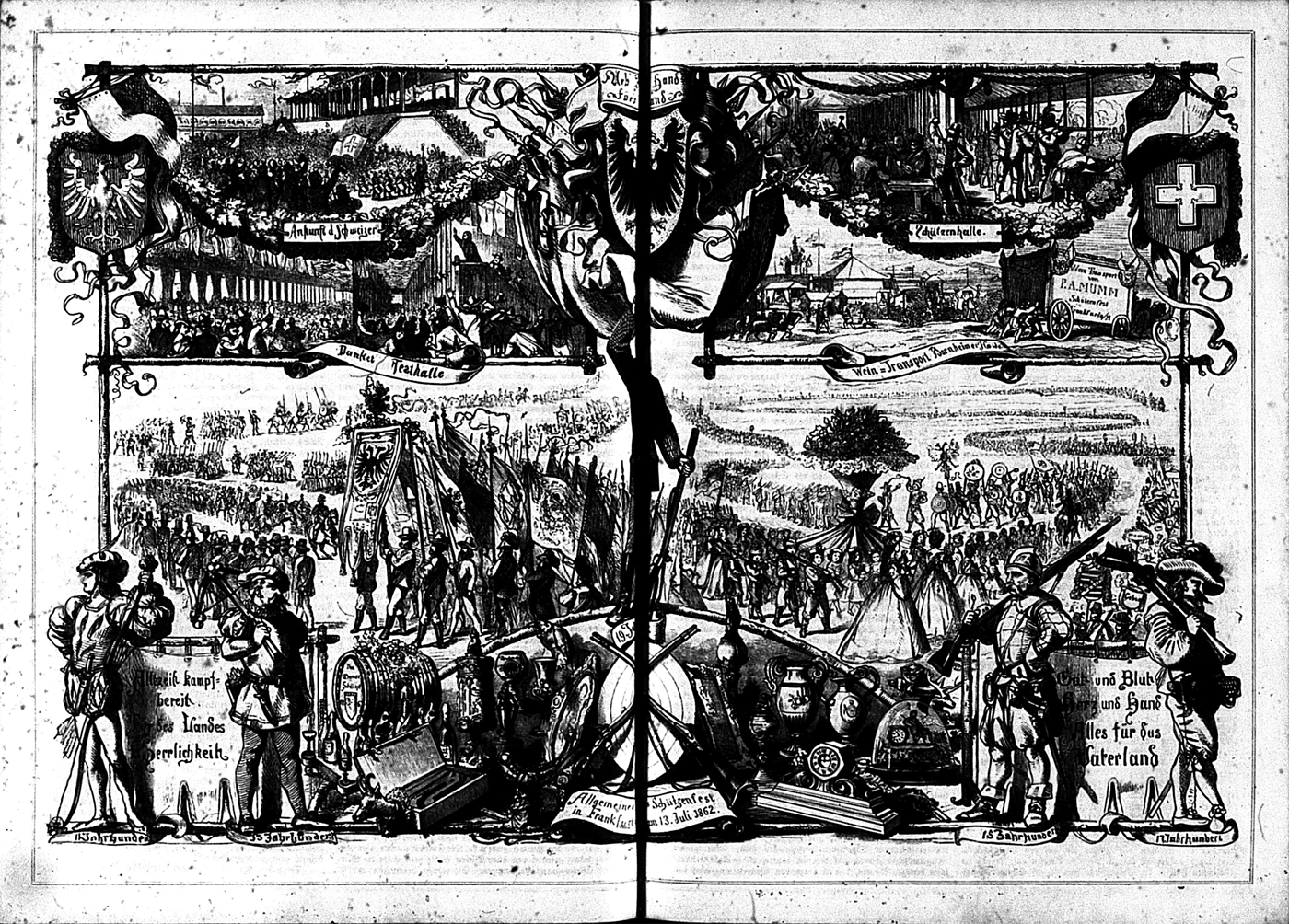
Bismarck's ruthless debut marked a temporary dip in the fortunes of the Prussian Rechtsstaat, but the Amazon affair would have been unimaginable without it.Footnote 34 The situation in which Ernst Keil found himself was tremendously charged and rife with hostility toward the press, which prompts one to question whether he truly believed that a Berlin official could have construed his family paper as innocuous. Broadsides against throne and altar found no place in the Gartenlaube, but there was plenty of political note. Aspirations and bogeymen near and dear to liberal-democratic nationalism had been turning up more regularly. In 1862, an inspector might have alighted upon “Three Days in the Patriarchal State,” which told of the disappointment surrounding the first German constitution issued under the Confederal Treaty of 1815; the story of a baron's betrayal of Frederick the Great, an idol of nineteenth-century liberals; an ode to the “high national consecration” of two Thuringian fortresses; or an account of a Hohenzollern victory over “rebellious nobles” in the Mark Brandenburg.Footnote 35 Most striking was the four-part series on the first German Confederation shooting festival in Frankfurt, which presented a literal and figurative panorama of bourgeois self-confidence, moral rectitude, and affluence (Fig. 2). The series emphasized national fraternity as a form of democratic egalitarianism; reckonings of beer, wine, bread, and sausage consumed projected wealth, worthiness, and success. Author Karl Wagner knew what was at stake: “It was without doubt a political festival that we celebrated. Let but the consciousness of this tight solidarity between all parts of the German people become properly vital, among thousands upon thousands, and it, too, shall bear its practical fruits.”Footnote 36
From Karl Wagner, “Das erste deutsche Bundesschießen in Frankfurt a. M. 3: Die ersten Festtage” (“The First German Confederal Shooting Festival in Frankfurt am Main: 3: The First Festival Days”), Gartenlaube 10 (1862): 521–28, here 524–25.
Wagner's boldness reflected the optimism of the New Era, but the most glaring expression of a more openly liberal-democratic spirit in the Gartenlaube, apart from “The Sinking of the Amazon,” was its coverage of the constitutional crisis. The series “Silhouettes from the Prussian Landtag” poked fun at the fact that in post-1848 Europe only the Prussian lower chamber was situated away from the thoroughfares of the capital, a testament to “pseudo-constitutionalism.” One can guess the reaction of a bureaucrat to the line “old witches' kitchen of the bureaucracy, the [pre-1848] High Censorial Court,” or a description of aristocratic obstinacy in the upper chamber as “factionalist terrorism.” Similar sentiments came to the fore in a profile of scientific trailblazer and Progressive Party luminary Rudolf Virchow. The author acclaimed the steadfast courage of the liberal opposition and its honorable struggle on behalf of the people. “Like [medicine],” the article concluded, “democracy directs itself against the rotten conditions of feudalism and the comfortable privilege of absolutism.”Footnote 37
Despite Keil's awareness of the proceedings against him, the Gartenlaube's political tone moderated little in 1863, if at all. Moritz Hartmann wrote mournfully of the fatal “execution” of the 1849 rump parliament in Stuttgart, while an author with the initials H. B. complained of Prussian high-handedness in the German navy question and praised bourgeois efforts to finance its construction.Footnote 38 Nor did princes escape mockery. The grand duke of Mecklenburg-Schwerin, a notoriously hidebound part of Germany, shocked precisely because of how unmonstrous he seemed: “Mecklenburg, the land of the Ur-Junkers and Lutheran Holy Josefs, the belauded land of emigration agents, the land in which every fourth child is born out of wedlock, this agglomeration of traditional privileges and subjects without rights, this medieval wreck of a state [. . .] [from here] one would in no way have ever imagined such a normal human being.”Footnote 39
There can be little doubt of how Prussian officials read such content. Here was a clever, understated vehicle for liberal-democratic agitation. The positions of the Gartenlaube were clear all the same: against hereditary privilege, against moribund and self-serving traditionalism, for the egalitarian nation as a union of meritorious Bürger, for the rule of law and a government responsible to its citizens, for constitutionalism and progress. From the standpoint of a state obligated to protect the reputation of its social elite and hesitant to cooperate with liberalism, the Gartenlaube could only have posed a threat. With the Amazon affair came a unique opportunity to save face and assert control.
A Press Ban and its Complications
In late July 1863, Lippe communicated to Count Friedrich zu Eulenburg, the new interior minister, that Keil's legal representative in Prussia had lodged a court appeal of the charges against the Gartenlaube. In late autumn the appeal was rejected. As this already bode the destruction of issues 27 and 28 of the 1862 Gartenlaube, General Albrecht von Roon joined the police in urging for a full ban in Prussian territory. War minister since 1859 and from 1861 minister of the admiralty, Roon had an obvious stake in the Amazon affair.Footnote 40 Prompted by Roon and the courts, Eulenburg moved quickly. On December 14 he promulgated the following proclamation: “With the court judgment against the [. . .] Gartenlaube in favor of destruction, in accordance with §50 of the Press Law of May 12, 1851, the further circulation of this magazine in the Prussian state is hereby forbidden, in accordance with §52 of the same law and with advertence to the penalties threatened in said place at §53.”Footnote 41
The proclamation of the ban had two immediate effects. The first was to draw the protest of Prussian booksellers concerned about the loss of revenue from their best-selling magazine. Not only were subscribers refusing to pay for future issues that they would no longer receive, but those who had paid ahead of time demanded a refund. Furthermore, because Keil customarily released copies of the Gartenlaube only with advance payment from distributors, and as the final issue for 1863 had already been printed, booksellers faced the prospect of a total loss that would be difficult to recoup in the Saxon courts.Footnote 42 Another sore spot were unsold copies published prior to the ban. The bookseller Morgenstern in Breslau pointed out in a letter to Eulenburg that §52 of the Press Law spoke of the further circulation of an affected publication, rather than the earlier circulation of the same. Morgenstern, also the proprietor of a journal-lending library, had been informed by local officials that the ban applied to back issues as well. If this were indeed the case, “I would be substantially infringed upon in my property rights and would have to sustain damages which Your Excellency cannot have intended.” Penalties for the continued circulation of back issues by booksellers would constitute an intolerable burden. The official rejection of Morgenstern's request nonetheless interpreted “further circulation” to mean any issue of the Gartenlaube past, present, or future. His recourse to property rights was dismissed as nugatory.Footnote 43
From the perspective of the Interior Ministry, the second post-ban development was more ominous: Keil's counterattack had begun. In early January 1864, Eulenburg received his announcement and prospectus for Volksgarten (People's Garden), to be printed in Berlin in the quantity of 4,800 copies for Gartenlaube subscribers affected by the ban, featuring the same authors and illustrators. The Interior Ministry apprised Bismarck that Volksgarten was most likely a Gartenlaube reprint for Prussia, certainty pending examination of subsequent issues, which the Foreign Ministry was asked to procure via the Prussian delegation in Dresden.Footnote 44 From the Berlin police presidency came word that a local publisher, Lemke, had sought clearance for Volksgarten. The police moved to confiscate copies to confirm identity with the Gartenlaube on the basis of typesetting. On January 9 this measure was approved by the Berlin municipal court, and the state prosecutor called for the seizure of all subsequent issues. The name of Keil's publishing firm appeared in the third issue, which surfaced outside the capital. Twenty-five thousand copies of issue four of Volksgarten were printed in Berlin in February, but allegedly by the local Fickert brothers, with the author Max Ring named as editor and Lemke as publisher. The fourth issue's content was “not identical” with recent numbers of the Gartenlaube. This combination of factors forestalled rapid renewal of the confiscation order.Footnote 45 To confuse matters further, Keil was working to transport the remaining two December issues to Prussian subscribers in secret, while for those who preferred the bound monthly editions of the Gartenlaube he had produced thinly disguised replacements. The police were stymied, “because at stake is a print item that one has attempted to give at least the semblance of not being identical with the forbidden item,” precluding the absolute certainty required by law. The Berlin police presidency would defer to the state prosecutor before destroying this latest Keil creation, which would again have to be checked against recent issues of the Gartenlaube.Footnote 46
These initial sorties slowed and disoriented the authorities, revealing a troubling fact: in the post-1848 absence of a centralized censorial body, protocol between the Interior Ministry, the police, the courts, and the state prosecutor's offices—all hamstrung by their own waxing commitment to constitutionalism and due process—was ill-suited to extinguish the multiple fires burning around the Amazon affair.Footnote 47 This applied even to the task of basic communication, which Eulenburg recognized. To his entreaty that the Berlin state prosecutor's office keep its counterparts across Prussia abreast of the situation came the reply that the office did not consider itself authorized “according to relations of administrative jurisdiction” to assume such a responsibility, which must be sought at a higher level. On March 7, 1864, Eulenburg took up his case for tighter cooperation between the state prosecutor's offices with Lippe, but he was grasping for an ad hoc way to redress blind spots in the Press Law, as well as the structural deficiencies of the Prussian reaction.Footnote 48 Berlin was patently unprepared to adapt its Rechtsstaat-oriented practices of censorship to the sophisticated challenge of an Ernst Keil.
Eulenburg struck at Volksgarten in mid-March. He instructed an official in Minden to proceed with the seizure of copies found in postal circulation, a measure he had begun to arrange with Heinrich Friedrich von Itzenplitz, the minister of trade, industry, and public works.Footnote 49 Legally, however, Eulenburg was on shaky ground: Itzenplitz denied his request, reminding him that only the first three issues of Volksgarten were judicially subject to confiscation. For this reason, the Berlin police presidency intervened to halt the directive. Police President Otto von Bernuth cautioned that nothing about Volksgarten had fundamentally altered in the meantime. Though its printer continued to change, Volksgarten still differed from the Gartenlaube to a degree that prevented application of the Press Law.Footnote 50 Within the Interior Ministry, potential justifications for a ban of Volksgarten began to stretch the limits of plausibility. Eulenburg received the suggestion that the inclusion of a dash in the colophon of the latest issue might constitute a violation of the Press Law, which required unabridged publisher, editor, and printer information for newspapers and magazines appearing in Prussia.Footnote 51 In June 1864, meanwhile, the Berlin municipal court confirmed the identity of the first three issues of Volksgarten with the Gartenlaube and approved their destruction, condemning Lemke to a fine of more than 1,000 talers or eight weeks in prison. Otherwise, the Volksgarten endeavor had “fizzled” to the extent that the magazine seemed to have split from the Gartenlaube. If Bernuth could still pick out bits of borrowed text or image, these furnished scant grounds for suppression.Footnote 52
Keil was stepping up his offensive, and word of a more authentic Gartenlaube surrogate had already reached the Interior Ministry. Bearing the title Family Album: Illustrated Pamphlet for Entertainment and Instruction, purportedly published by Friedrich Hentze and printed by Alexander Wiede, both in Leipzig, the magazine matched the Gartenlaube in text as well as type, and at eighty bound pages it corresponded exactly to five issues of the Gartenlaube. The Berlin municipal court raced to order confiscation, even as a follow-up called At the Warm Oven, containing an additional four issues with continuous pagination, was on the way; it would meet a fate similar to that of Family Album in the spring.Footnote 53
More was en route to Prussia from Leipzig. In view of the common lot of Family Album and At the Warm Oven, however, Keil now eschewed direct transport to Berlin for smuggling to other locations. Bernuth reported that Keil had advised weekly subscribers to switch to the bound monthly edition of the Gartenlaube—reserved en masse normally only for distant destinations or those with a stamp tax on weekly publications—with the assurance that, in lieu of an amenable bookseller in a neighboring border town, they could turn to one of several Leipzig affiliates. Booksellers in Prussia would supply the illegal wares “only to completely safe customers,” noted Bernuth, and would avoid the word Gartenlaube on invoices. He reckoned that Keil could not hope to achieve more than a quarter of pre-ban sales in Prussia under such constraints.Footnote 54 By June, amid ongoing prosecutions of individual booksellers for circulation of the banned item, the ruse was apparent. Bernuth explained that Family Album had served in Prussia as the January installment of the Gartenlaube; in February had followed At the Warm Oven, in March a plain yellow volume, in April At Home, and for the month of May Ivy Tendrils. The June volume, a Rosebloom wrapped in brown-red paper, proved more elusive.Footnote 55
On the one hand, court-confirmed actions against the first three issues of Volksgarten and Lemke, if they failed to stop either, had set a precedent helpful to the royal administration, for they demonstrated that publications whose identity with a banned article was incontestable were subject to confiscation and destruction without court mediation. Eulenburg emphasized this fact in a government notice on July 7.Footnote 56 Even certainty was no failproof criterion, however. Officials had justified confiscation of Family Album on the basis of incomplete publishing documentation as well as likeness to the Gartenlaube. After all, the Press Law required declaration of places of residence for publisher, printer, and responsible editor in deposit-liable (kautionspflichtig) press organs. In this case, however, not only had the Elbing district court disputed the applicability of the requirement to foreign (non-Prussian) publications, which were not obligated to pay a deposit, but it found the task of proving identity with the Gartenlaube impossible. The confiscation of Family Album had been overturned, which prompted an appeal from the Elbing state prosecutor's office. The appeals court at Marienwerder ruled in favor of the district court in December. Similar uncertainties hampered efforts in Pomerania.Footnote 57
Keil was not to be delayed in the interim, and the sequence of repackaged monthly Gartenlaube volumes, all with charmingly cozy names, continued into 1865.Footnote 58 The bound monthly format allowed him to streamline his trafficking and aided camouflage. As before, only minor alterations, for example the omission of the title vignette or falsification of publishing information, distinguished these loosely covert editions from the Gartenlaube outside Prussia, which the Interior Ministry continued to obtain via a subscription managed by the royal delegation in Dresden. Unable to enforce the Gartenlaube ban with much success, the Prussian state had become this family paper's most high-profile subscriber.
Thwarted Reconciliation, Official Doubts, and a Deus Ex Machina
In the midst of his bold maneuvers, Keil wrote to Eulenburg in March 1865. He reiterated his commitment to Prussian “greatness” and deep regrets over the Amazon story, as well as the countermeasures he had taken in the wake of publication. The ban of the Gartenlaube in Prussia had brought him “very heavy losses,” yet far from lessening his commitment to his native land, Keil assured the interior minister, if anything the experience had heightened his enthusiasm, for it had caused him to sharpen his focus on Prussia. This trend would continue “insofar as the occasion presents itself in a family paper more devoted to entertainment.” Two years prior, of course, Keil had described his Gartenlaube as “partly of an entertaining and partly of a didactic-instructive nature,” and so with the more obsequious tone of this later letter came a trivialization of the enterprise. This marked a retreat, if a tactical one, for Keil proceeded to request that the ban of the Gartenlaube in Prussian territory be rescinded. He did so “in due consideration of how [. . .] I have suffered such a harsh punishment that the offense attributed to me might surely be regarded as expiated.” Eulenburg's rejection included the curt observation “that the assurances of your loyalty stand in contradiction to your continued efforts to obtain entry into Prussia for [the Gartenlaube] through circumvention of the ban.”Footnote 59 These were anything but peace gestures in the Amazon affair.
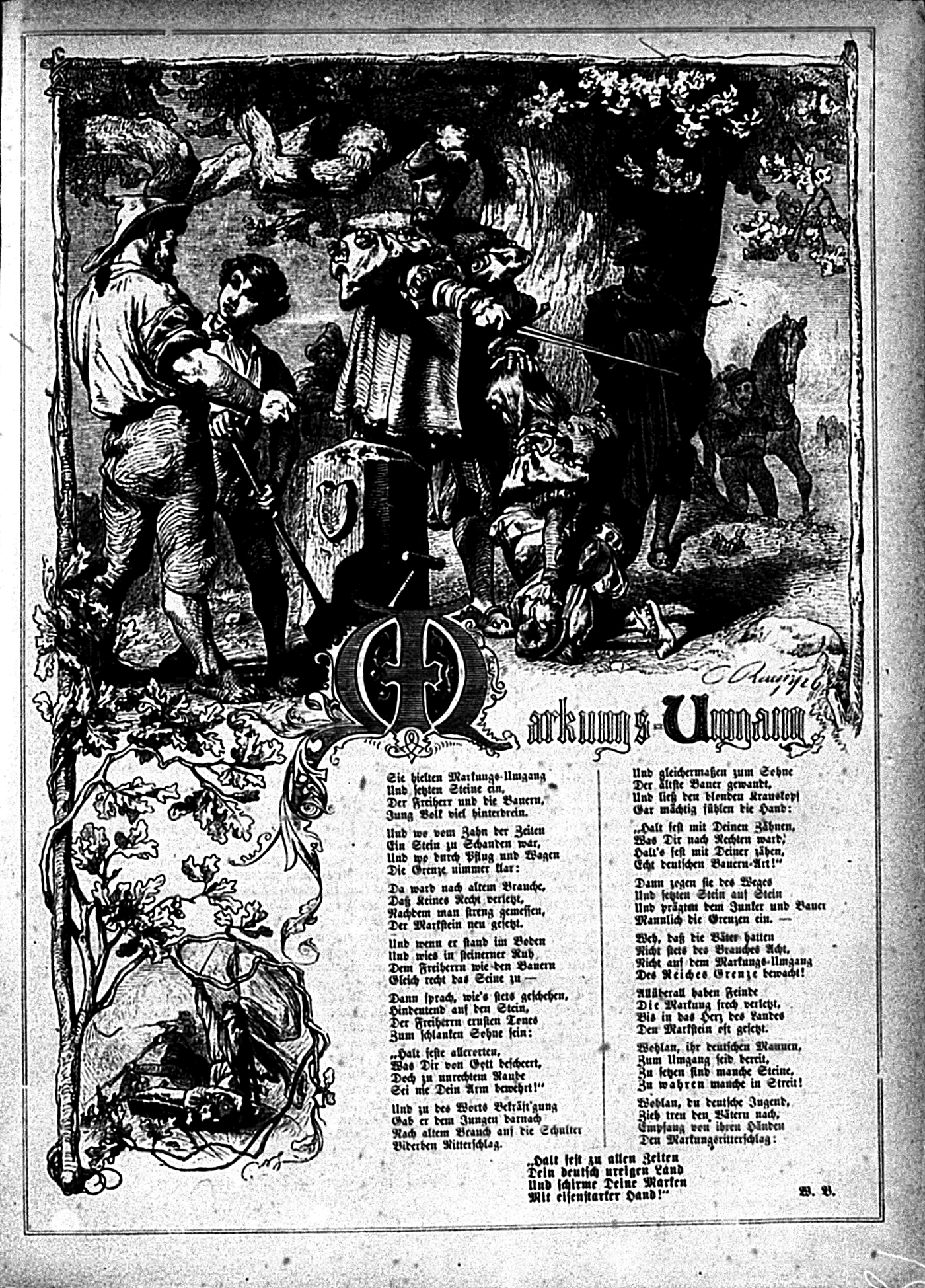
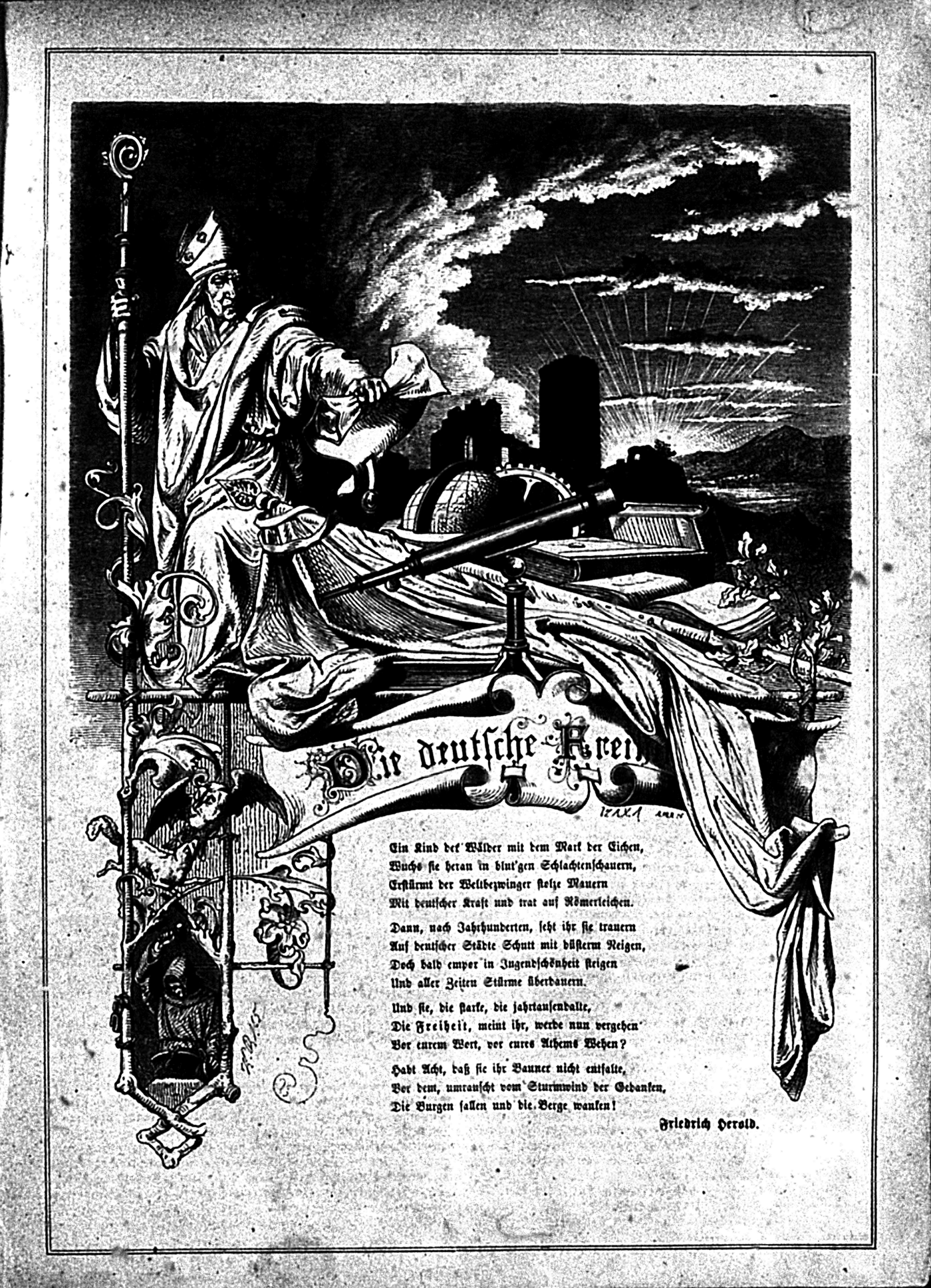
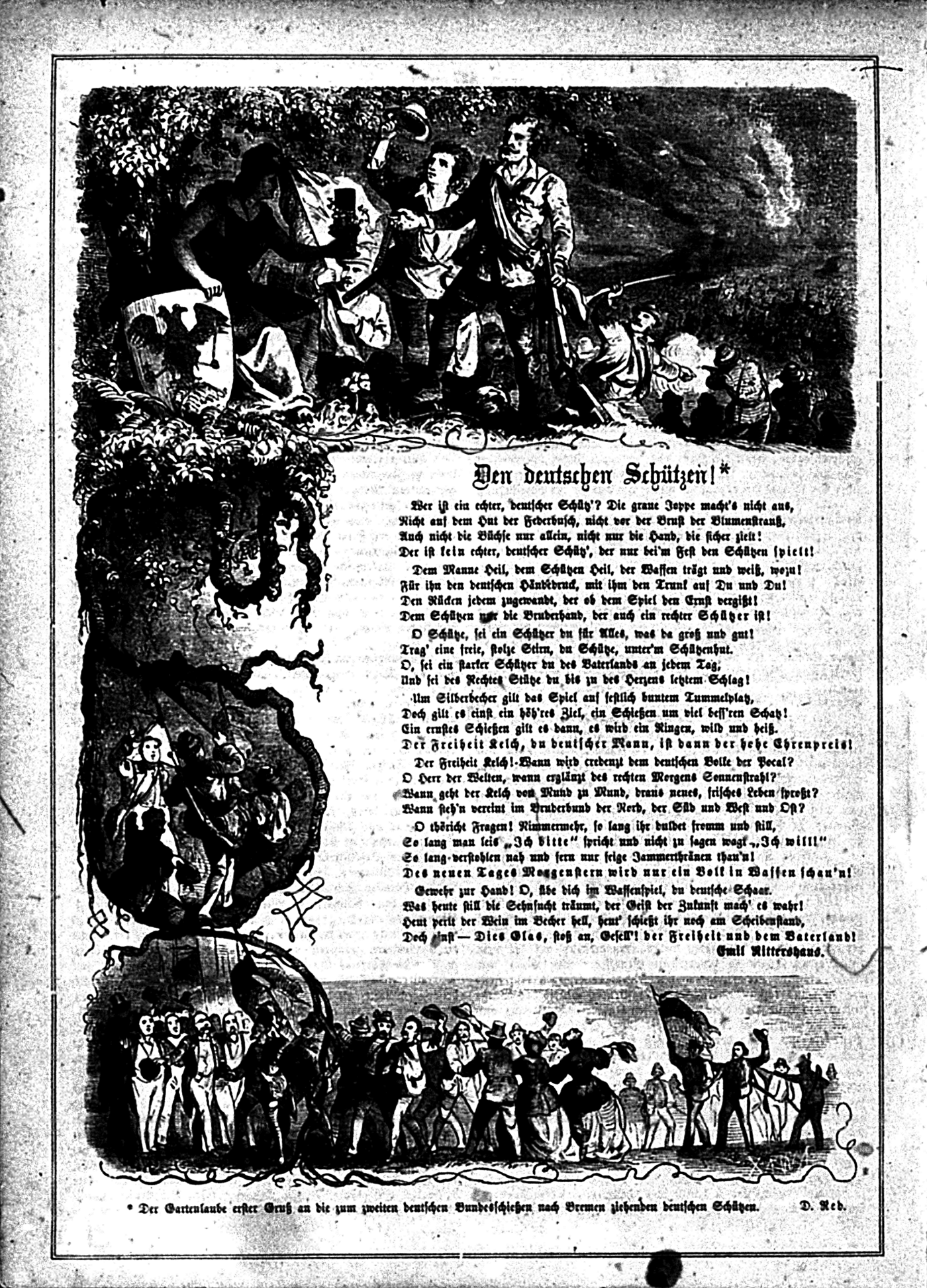
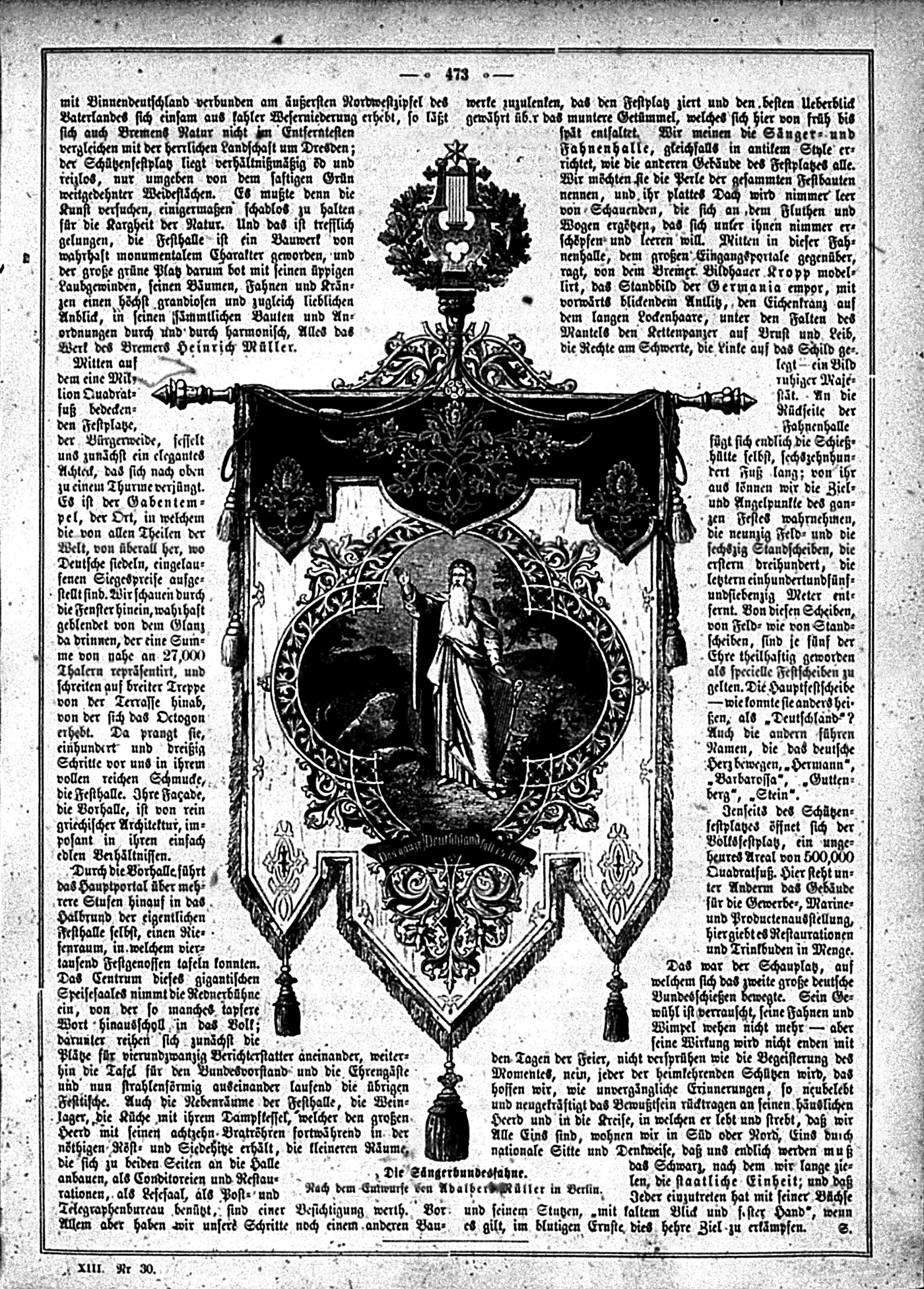
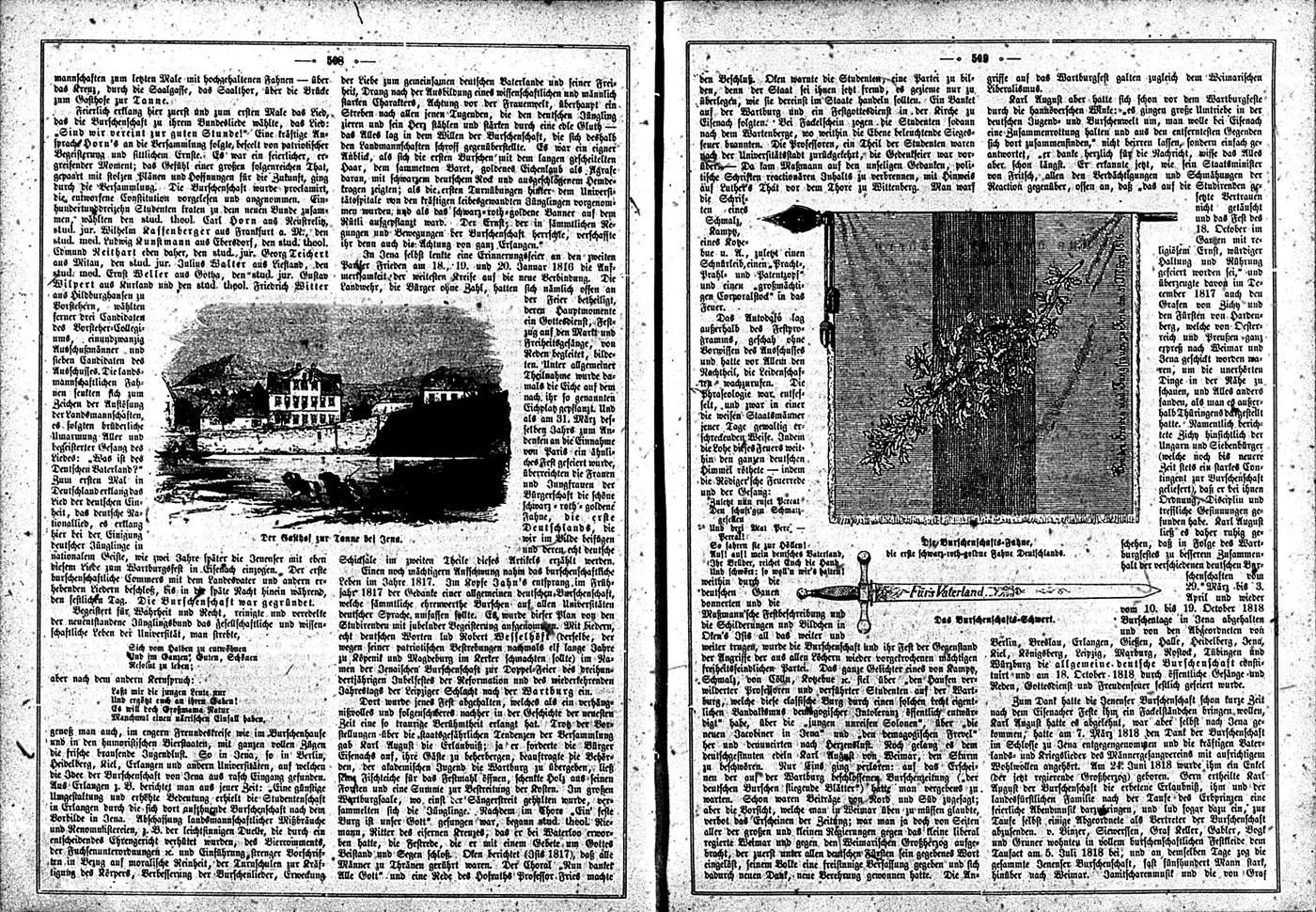
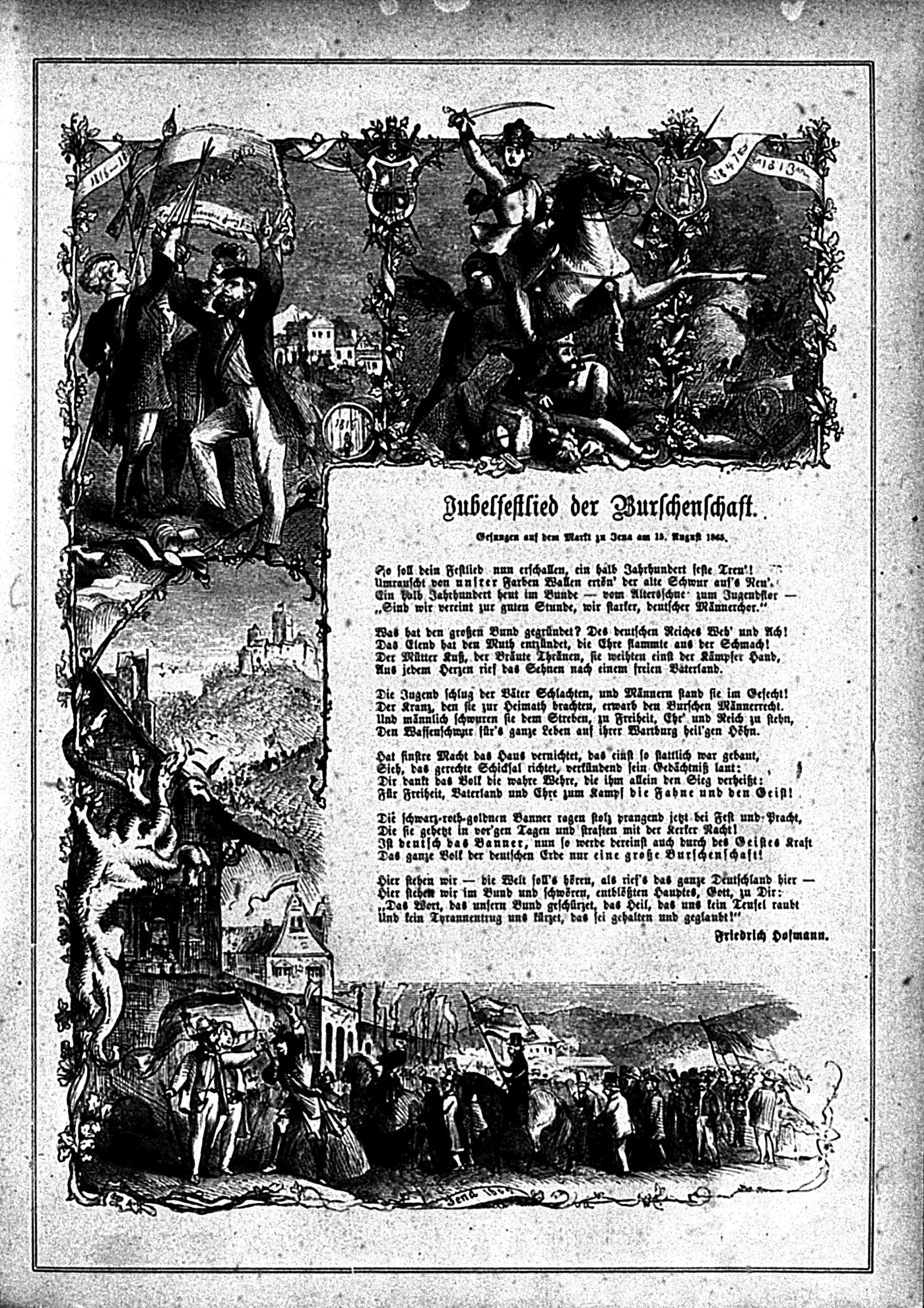
Since the previous year, the Gartenlaube had continued to invoke Prussia, as well as the Prussian bureaucracy and nobility, but not always in a complimentary fashion. An anonymous author lamented Berlin's neglect of its navy and the needless casualties this had caused in both wars with Denmark since 1848; in a related vein, Friedrich Hofmann warned of French advancements in submarine technology and chided Prussia for its slowness to harness the energies of its Bürger to compete. Wilhelm Zimmermann reminisced about a “Junkerdom under the [Holy Roman] Emperor's Fist,” while an anonymous contributor lampooned the “Junker by the Grace of God,” albeit in Mecklenburg rather than Prussia.Footnote 60 If he read it, Roon presumably took little pleasure in the implications of a biographical sketch of the liberal-reformist General Ernst von Pfuel, who briefly headed the War Ministry in 1848, titled “A War Minister Loyal to the Constitution.”Footnote 61 Prussia figured favorably only with regard to the goal of German unification. During the mid-1860s the Gartenlaube was bursting with eager nationalism, both in retrospective pieces and those occasioned by current events, above all bourgeois festivals. Such coverage yielded a particularly evocative batch of illustrations and illuminated poems, which often followed longer articles with a complementary theme (Figs. 3–8).Footnote 62 Once again, Keil's assurances could only have annoyed a conscientious servant of the Prussian state.
W. B., “Markungs-Umgang” (“How to Mark Boundaries”), Gartenlaube 12 (1864): 549.
Friedrich Herold, “Die deutsche Freiheit” (“German Freedom”), Gartenlaube 13 (1865): 101.
Emil Rittershaus, “Den deutschen Schützen!” (“For the German Riflemen!”), Gartenlaube 13 (1865): 428.
From S., “Zwei deutsche Nationalfeste” (“Two German National Festivals”), Gartenlaube 13 (1865): 471–73, here 473.
From Robert Keil, “Zum Jubelfest des schwarz-roth-goldnen Banners” (“On the Anniversary of the Black-Red-Gold Banner”), Gartenlaube 13 (1865): 506–10, 518–21, here 508–9.
Friedrich Hofmann, “Jubelfestlied der Burschenschaft. Gesungen auf dem Markt zu Jena am 15. August 1865” (“Anniversary Song of the Student Fraternity: Sung in the Jena Town Square on August 15, 1865”), Gartenlaube 13 (1865): 517.
But Prussia's handling of the ban had grown artless as well. Officials in the provinces were now harrying publications with even the slightest connection to the Gartenlaube, such as the Stargarder Zeitung in Pomerania, which had printed an advertisement for Volkshalle, an inexpensive illustrated weekly and suspected Gartenlaube clone. Ultimately this was determined to be a continuation of Volksgarten and exonerated.Footnote 63 And there were the charges brought against booksellers found in possession of the monthly Gartenlaube facsimiles, a matter that often foundered on the question of awareness and intent. In October the bookseller Rüdiger in Magdeburg, having obtained numerous such volumes from Hentze in Leipzig for resale, was absolved by the district court. The latter reasoned that Rüdiger could not have known of their status and had no obligation to find out, not least because the original Gartenlaube was unavailable for comparison. Next to this passage Eulenburg made a single notation: an exclamation point.Footnote 64 In March 1866 the judgment was temporarily reversed and a minor penalty handed down by the appeals court in Magdeburg. But the coup de grâce came in June, when the Berlin superior court rejected the appeal against Rüdiger on the grounds that the penalty specified in §53 of the Press Law could apply only to “commercial distributors of the forbidden newspaper [sic],” not the tradespeople who sold or displayed them. To recognize the charges against Rüdiger would have criminalized every sale by a bookseller while classing private distribution as a misdemeanor, which would discriminate against merchants.Footnote 65 In short, the only culpable individuals in the Amazon affair could be the publisher, printer, and editor of the Gartenlaube. Yet the man who united all three roles in his person, Ernst Keil, sat safe and sound in Leipzig.
Bernuth put the situation plainly. Not only had Keil's tactics rendered the ban “completely illusory,” but the monthly public notices made on its behalf had turned into a form of unwitting advertisement for the Gartenlaube. This had become a running joke in official circles, which perhaps had something to do with the fact that Keil had newly begun to funnel unaltered monthly editions of the Gartenlaube into Prussia virtually unopposed. Transported somehow by rail or post, conveyed by booksellers and newspaper carriers, these passed from Leipzig into the homes of subscribers before authorities could react. Here Eulenburg wrote mistrustfully in the margin that “the authorities must be closing their eyes to this.” Surely the thought had occurred to Bernuth, who wondered “whether it might not be altogether more advisable to lift the ban conditionally, on terms to which Keil might agree, and thereby to win some influence over the future stance of this universally admired publication, one in no way to be underestimated as a medium for popular education.”Footnote 66
Rebuffed by Eulenburg, Keil had taken up his case with Bismarck, himself only months away from reaching a modus vivendi with Prussian liberals. In the first letter, sent in December 1865, Keil reemphasized his pro-Prussian credentials and sterling behavior since 1863, brazenly adding that the Gartenlaube had surpassed its pre-ban circulation. “I know,” wrote Keil, “that Count von Bismarck respects every independent character and will not demand from me a political statement of faith contrary to my creed.”Footnote 67 The second letter, sent the following February, is astonishing in its audacity (Eulenburg left no fewer than four exclamation points in the margins of his copy). The details are unclear, but Keil referred to an attempt made by Bismarck in Leipzig to prevent the publication of further Gartenlaube compendia for Prussia. Keil declared teasingly that he had suspended the January release “in consideration of the current workload faced by the [Foreign] Ministry [due to diplomatic tensions],” but only temporarily, as the “massive number of new orders” since the start of the new year would brook no further delay. Keil voiced his “strong conviction” that Bismarck would “soon give me occasion to put an end to this unedifying smuggler's trade,” as he termed it.Footnote 68 Keil wrote to Eulenburg in May that such an act would earn him not only the gratitude of Prussians but the “liveliest sympathies” of all Germans.Footnote 69
Momentous events, however, overtook everyone. The onset of the Austro-Prussian War in June 1866 broke the Amazon stalemate in stunning fashion, and with initially dire prospects for the Gartenlaube. With the uncontested Prussian advance into Saxony, Keil found his publishing firm suddenly at the mercy of his antagonists. To his relief, the Gartenlaube was banned in Saxony only briefly by the Prussian military government. None other than the king—possibly after consultation on the battlefield at Königgrätz with Bismarck, who seems to have acted at the request of Eulenburg—had intervened with a telegram from military headquarters during the night of July 9 to overturn the separate Saxon ban, six days after the pivotal Prussian victory against Austria at Königgrätz. At this an elated Keil promised that upcoming coverage of Prussian combat operations in the Gartenlaube would “document repeatedly whether and to what extent my magazine follows leanings friendly to Prussia.” He would halt production of the disguised monthly volumes. Eulenburg charged Bernuth with the task of watching to determine whether Keil was sincere. Meanwhile, the Gartenlaube barely missed a beat: issue 31, production of which had been interrupted by the occupation and temporary stop, appeared together with issue 32.Footnote 70
Sensing fresh momentum on his side, Keil grew relentless in his entreaties and profession of liberal ardor for Prussia:
From the first day of its appearance to the present, the character of the Gartenlaube [. . .] has been a German-national one, hence akin to the course now followed by the Prussian crown in concord with the overwhelming majority of the German people [. . .]. I most respectfully beseech the honored, lofty Ministry, on account of the fundamentally altered circumstances and in gracious consideration of the special importance currently held for my magazine by the present situation and by the political reorganization of Germany, most mercifully to rescind its ban in the Kingdom of Prussia.
Eulenburg forwarded the letter to Bismarck and signaled his newfound support for an end to the ban of the Gartenlaube, but he preferred to wait first for a nod from Roon, “who up to this point has been [Keil's] most outspoken opponent.”Footnote 71 Bismarck concurred: “Because the stance of the Gartenlaube—as far as I have gathered—has come rather to correspond to domestic interests, so I should believe that it would be expedient right now, under the current political circumstances, to lift the ban.”Footnote 72
Thus there remained only Roon to convince, and in a twist indicative of the realignment that had taken place, the responsibility fell to Eulenburg as well as Keil. On August 22, a month after the end of Austro-Prussian hostilities and one day before the Peace of Prague, Keil repeated to Roon his regret over the Amazon incident and his devotion to the Prussian cause, enclosing several recent issues of the Gartenlaube as proof; he referred once more to the editorial oversight allegedly occasioned by his absence, as well as to the firm belief that he had atoned for his transgressions. At first Roon balked, writing to Eulenburg in early September that nothing would prevent Keil from resuming his former habits at a later date. Yet Roon came around in personal conference. Eulenburg rescinded the ban of the Gartenlaube on September 24, 1866. Two days later he relayed the news to Keil, along with his “hope that you, good sir, will fulfill the concessions granted to me in regard to the future stance of the paper, and that you will justify the trust I prove to you by lifting the ban.”Footnote 73
Prussian Embarrassment or Liberal Accommodationism?
Can we speak of a victor in the Amazon affair? Certainly not Eulenburg, who lost a war of attrition against the steam-powered printing press. Nor were Roon and Junkerdom able to exact lasting revenge for their humiliation in the most widely read periodical in the German language. And after a promising start, the Prussian police proved incapable of dominating the situation, weighty testimony to the growing strength of the courts. Possible winners, then? Without question the rule of law after 1848, which not only forced the now constitutional Prussian state to censor like a Rechtsstaat, in observance of due process, but worked to curb the institutional practicability of censorship; Keil the publisher, who outwitted one of the most capable bureaucracies in history with the help of modern technology; and by the same token capitalist entrepreneurship, which flexed its muscles against conservative state repression to great effect.Footnote 74
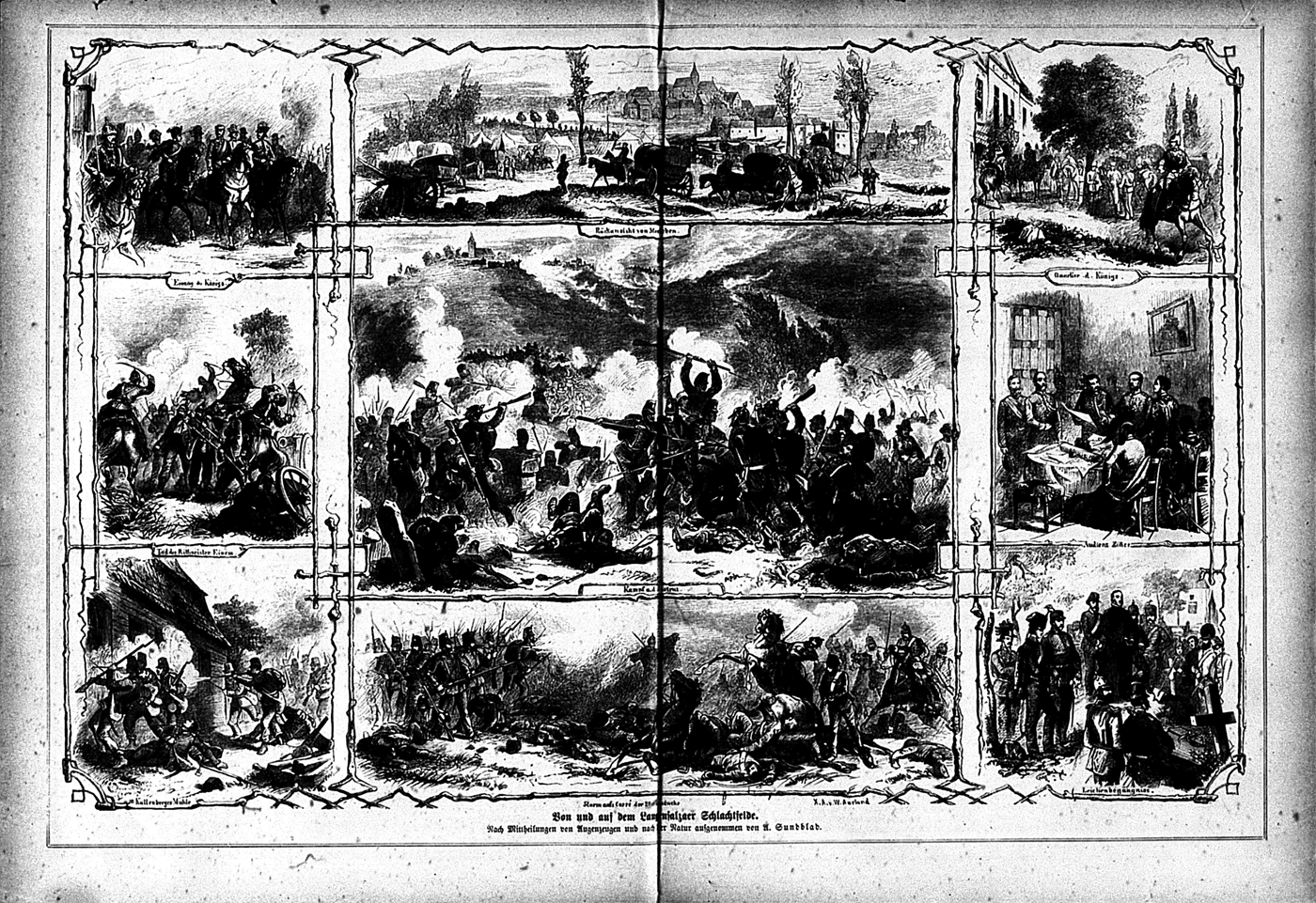
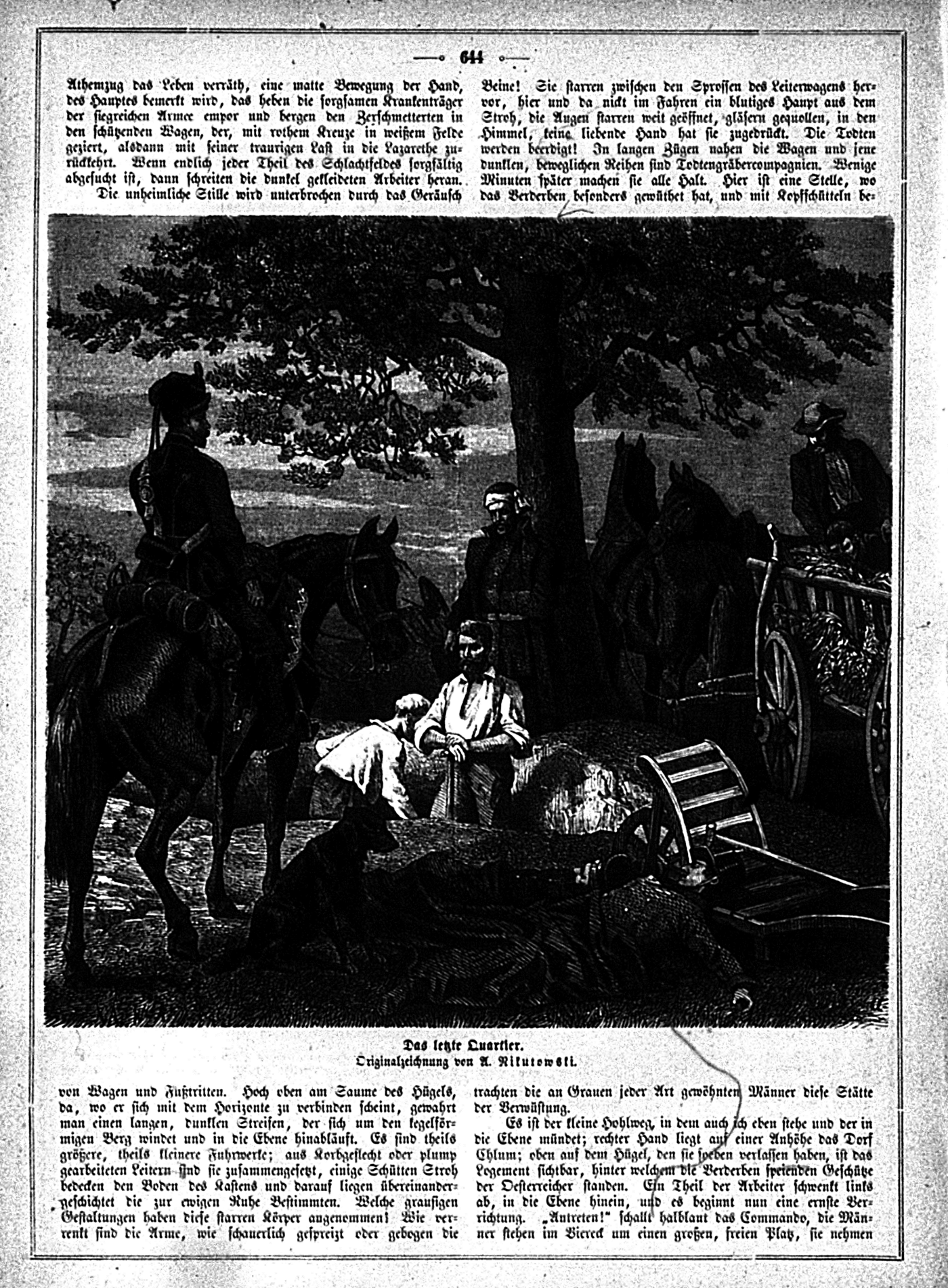
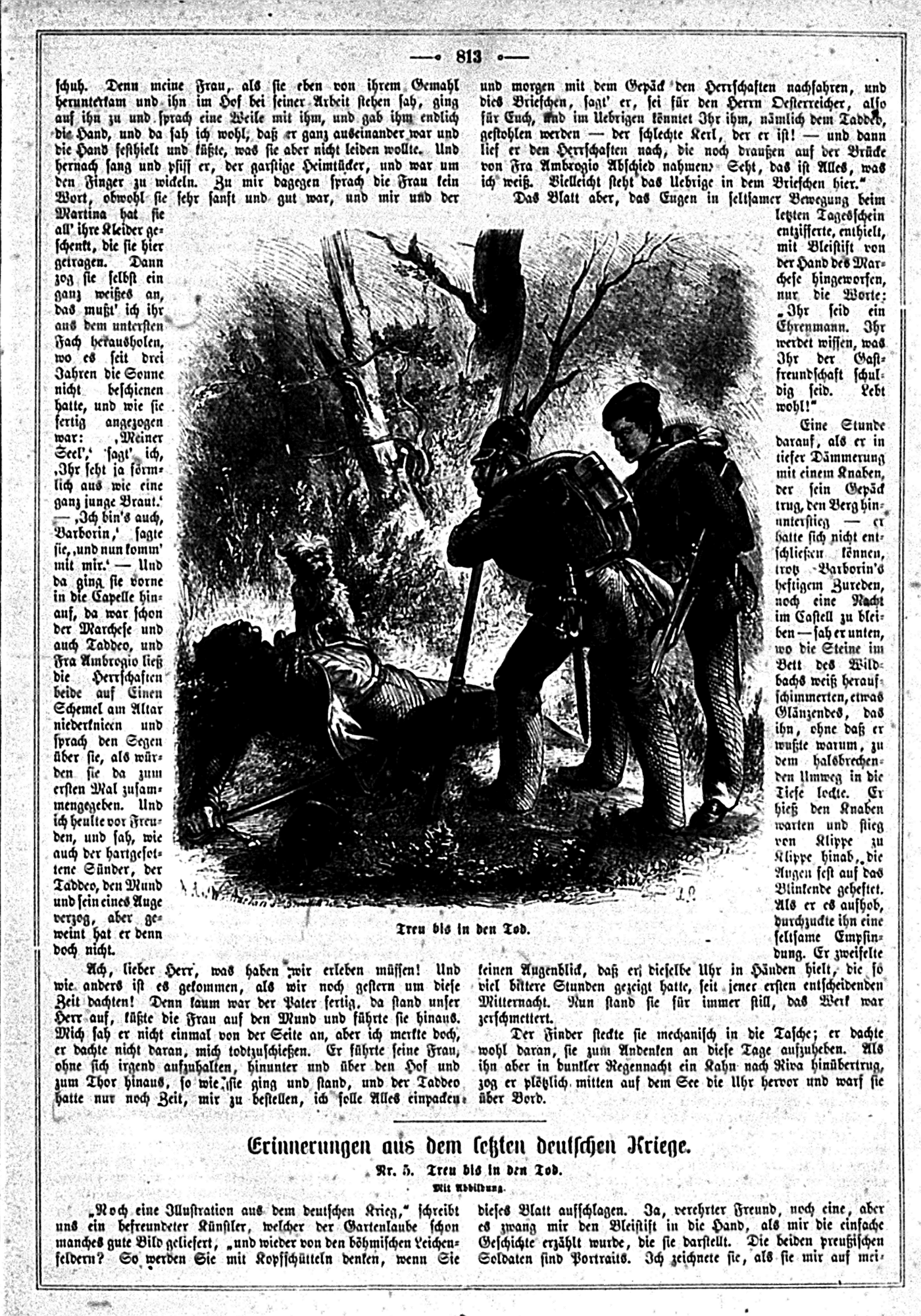
But for Keil the democrat, the balance sheet looks more equivocal in retrospect. Although the Gartenlaube was permitted to continue in its partisanship for the liberal-nationalist cause, gone was its trenchant criticism of the undemocratic foundations of German politics.Footnote 75 It was simmering scorn for the aristocracy that had made “The Sinking of the Amazon” so bold, not to mention the many other frank pieces that appeared in the publication during the early 1860s. Such content had enunciated claims not merely to representation of the German nation but also to full participation in the state. With the exception of “A Victim of Princely German Arbitrariness,” or a nostalgic nod to 1848, or perhaps a series that toyed with Bismarck's name and derided him as “Count Annexation,” Keil ran nothing remotely incendiary in 1866.Footnote 76 And why should he have, when his efforts to reenter Berlin's good graces had reached a critical juncture? On the contrary, rather than subject the Junkers to naval ridicule, now the Gartenlaube praised the national import of an association founded to save shipwrecked Germans.Footnote 77 It enthralled readers with accounts of the Austro-Prussian War. These were illustrated with images exuding energy, sacrifice, and resolve, tokens of a faith that national unity lay just beyond the smoke of the battlefield (Figs. 9–11).Footnote 78 Absent, again, was democratic hostility toward the conservative political forces that had until recently shunned such aspirations.
From Heinrich Schwerdt, “Noch einmal vom Langensalzaer Schlachtfelde” (“More about the Battlefield at Langensalza”), Gartenlaube 14 (1866): 499–503, here 500–501.
From Georg Hiltl, “Erinnerungen aus dem deutschen Kriege des Jahres 1866” (“Memories from the German War of 1866”), Gartenlaube 14 (1866): 626–28, 643–45, here 644.
From Anonymous, “Erinnerungen aus dem letzten deutschen Kriege” (“Memories from the Recent German War”), Gartenlaube 14 (1866): 672–74, 766–68, 813–14, here 813. “Faithful unto death,” reads the caption, referring to the dog at the side of his slain master.
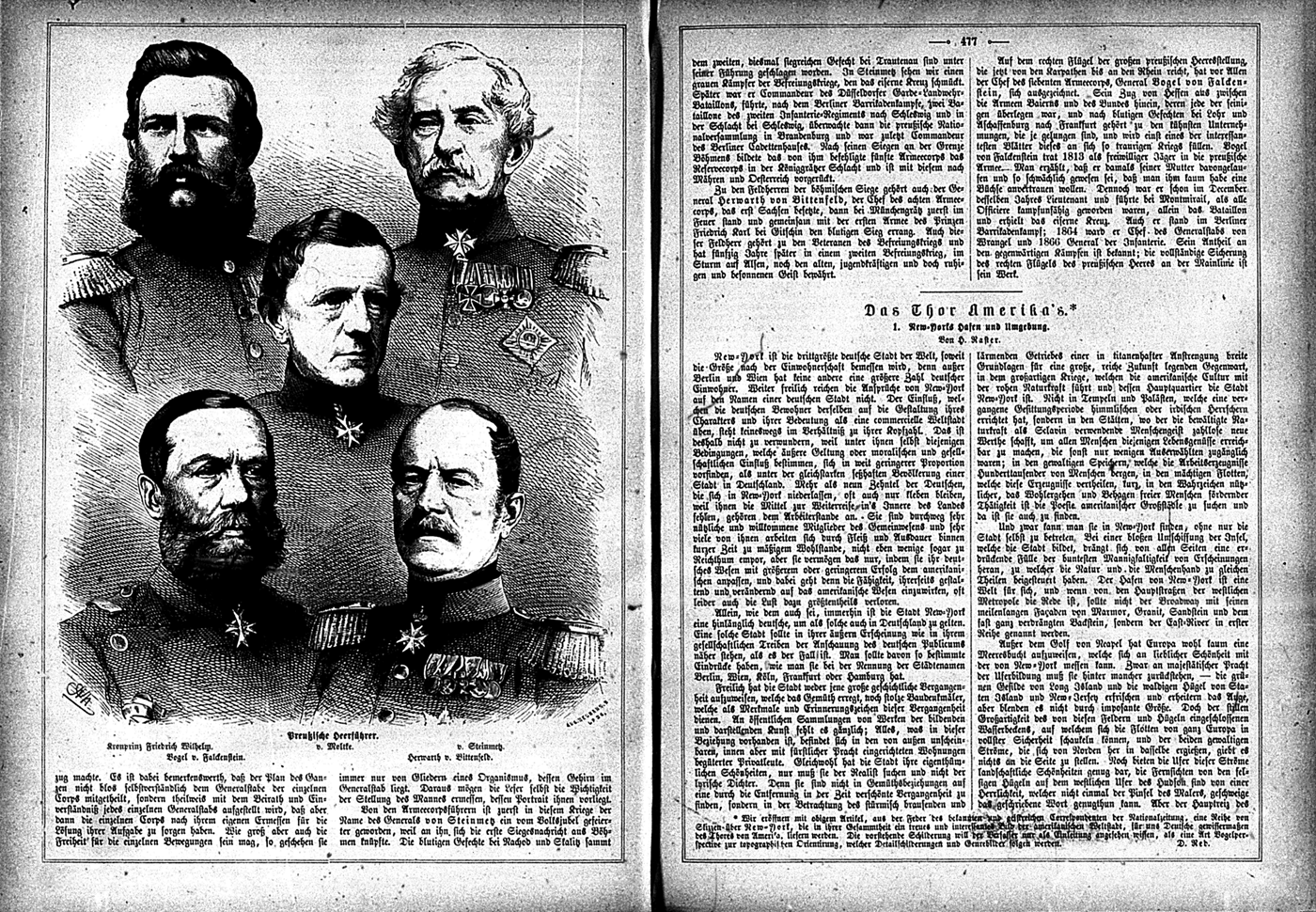
Keil could now plausibly maintain that his family paper pursued a course favorable to Prussia, the most likely agent of German unification. His Gartenlaube spoke for itself: in Nikolaus von Dreyse, inventor of the needle rifle, Prussia had given to the world a “military Luther,” crowed one article; even the Prussian Central Bank won an encomium.Footnote 79 Most remarkable, however, was “Five Prussian Commanders,” which featured stately busts of Crown Prince Frederick William and General Vogel von Falckenstein, as well as General Field Marshals Moltke, Steinmetz, and Herwarth von Bittenfeld (Fig. 12). If the article's accolades for the “Bürger spirit” and “influence of cultivation and intelligence represented in this army like no other” evoked the budgetary showdown in Berlin, such remarks also laid bare the truth that the Landwehr was dispensable.Footnote 80 But no matter: Prussia was ingenious, heroic, and bürgerlich, at least in spirit. For under Bismarck Prussia had come around, prepared to instrumentalize a nationalist interpretation of its own interests. And provided that it could tolerate a family paper stripped of democratic claims against traditional authority, the Prussian state no longer faced in the Gartenlaube a popular challenge. The push for nationhood continued in the magazine, while the New Era cry for a wide-ranging reform of the German political process became more muted.
From Anonymous, “Fünf preußische Feldherren” (“Five Prussian Commanders”), Gartenlaube 14 (1866): 475–77, here 476–77.
The year 1866 marked a caesura for the Gartenlaube and German liberalism alike.Footnote 81 The arc of Bismarck's power was taut. Since 1862 he had subdued a parliamentary resurgence at home, driven the Danes from Schleswig-Holstein, humiliated Austria, demolished the German Confederation, and pressed forward with plans to unite the German states above the Main River into a Prussian-led North German Confederation. Though many in the south German states remained mistrustful, Catholics in particular, liberal public opinion suffered divisive whiplash. Bismarck was a conservative statist, not a friend of nationalism, but he held a finger to the wind, and in the name of raison d'état he had done more to realize a central ambition of 1848 than anyone before him.Footnote 82 Certainly, by the late 1850s liberals of all stripes anticipated unification under a Prussian rather than an Austrian aegis, mending a major rift of the revolution. Yet not solely Prussian might but also its credentials as a Rechtsstaat had attracted liberals. This reputation for lawfulness had withstood the Revolution of 1848, indeed had found firmer footing in the judicial functions enshrined in the constitution of 1850.Footnote 83 This explains the depth of liberal indignation toward Bismarck, as well as the shrewdness of the Indemnity Bill, which secured retroactive authorization—three weeks before the end of the Gartenlaube ban—for the effective dictatorship of the previous four years.Footnote 84 But Bismarck's triumph went further: as conservatives began to register gains in the lower chamber, his liberal supporters broke away from the Progressive Party to form the National Liberal Party. This ended the liberal-democratic alliance in Prussia and portended the fragmentation that would plague German liberalism into the twentieth century.Footnote 85
But we deal here with parallels, not seamless overlap. If his letters to Berlin reveal a man whose trepidation over the ban had turned to delight by autumn 1866, Keil's compromise in the Amazon affair did not hinge purely on the nationalist zeal of a liberal reconciled to Prussia under Bismarck. It hinged, too, on the family papers as they were. Keil and his colleagues in the genre, educator-evangelists of liberalism and purveyors of light entertainment withal, had left behind the limited circulations and tenuous print runs of the Vormärz for the reach, visibility, and lucrativeness of an expanding popular press. Yet the Amazon affair shows not that the family papers and the middlebrow print culture they helped to establish innately lacked political vigor, but rather that both were vulnerable to repressive measures that worked through the capitalist print market, the very terrain where the family papers had staked a claim to public influence. Keil personally remained a democrat, but the Gartenlaube could not make do with the furtive existence of a banned publication. It had to operate in the light of day, and Keil had to keep an eye on his bottom line. These were pronounced weaknesses, but they were the price of popularity and political effectiveness as understood by the doyen of the family papers. With mass came profit and prestige, but Keil also seems to have trusted in the potentially revolutionary might of numbers, and in the end that meant following a less confrontational national-liberal course in print.
The Prussian state could not simply steer the press as it wished, but it could set the boundaries for commercial success.Footnote 86 With size and power on the scale of what the Gartenlaube commanded came the imperative to remain viable, which is why the steerage that did finally result from the Amazon affair arose as a mutual agreement between Keil and Prussia. Their compromise stood at the end of a skein of contingencies. Practices and processes, technology and capitalism, war and the rule of law patterned this struggle over liberal-democratic public opinion in Germany after 1848. In such a mutable time, little was written in stone.