INTRODUCTION
Coral reefs are complex ecosystems of great ecological importance (Dight & Sherl, Reference Dight and Scherl1997) and high productivity (Birkeland, Reference Birkeland1997; Osborne, Reference Osborne2000), with exceptional and very concentrated biodiversity (Connell, Reference Connell1978; Moberg & Folke, Reference Moberg and Folke1999). Studies of reef environments have revealed the importance of corals and other suspensivorous organisms as energy transformation links between the pelagic and benthic domains (Lasker, Reference Lasker, Ginsburg and Taylor1976; Smetacek, Reference Smetacek and Fashman1984; Lira et al., Reference Lira, Naud, Gomes, Santos and Perez2009; Gomes et al., Reference Gomes, Lira, Naud, Santos and Pérez2012). As they are commonly preyed upon by reef fish, these organisms pass the biomass fixed by plankton on to higher levels of the food chain (Cole et al., Reference Cole, Pratchett and Jones2008; Rotjan & Lewis, Reference Rotjan and Lewis2008; Francini-Filho & Moura, Reference Francini-Filho and Moura2010) and are fundamental to energy fluxes and marine trophic webs. However, it is quite probable that generalizations derived from studies of other reefs around the world will not apply to their Brazilian counterparts.
The Brazilian reefs are the only coral reefs in the south-western Atlantic and they have features distinct from other reef formations, such as those found in the Caribbean region. Brazilian reefs have only small numbers of coral constructors (19 species as compared with 60 in the Caribbean region), high degrees of endemism (42%), a lack of Caribbean genera (e.g. Acropora, Diploria, Colpophyllia, Solenastrea, Dendrogyra, Mussa, Mycetophyllia and others), show few branching forms, and have low coral cover (less than 50%, or even 25%, in shallow-water coastal reefs), making them unique and important ecosystems (Ferreira & Maida, Reference Ferreira and Maida2006).
Macroalgae dominate reef surfaces in Brazilian waters (Ferreira & Maida, Reference Ferreira and Maida2006; Barradas et al., Reference Barradas, Amaral, Hernández, Flores-Montes and Steiner2010; Bruce et al., Reference Bruce, Meireles, Garcia, Paranhos, Rezende, Moura, Francini-Filho, Coni, Vasconcelos, Amado-Filho, Hatay, Schmieder, Edwards, Dinsdale and Thompson2012), although there is also high coverage by zoanthids (Oigman-Pszczol et al., Reference Oigman-Pszczol, Figueiredo and Creed2004; Barradas et al., Reference Barradas, Amaral, Hernández, Flores-Montes and Steiner2010; Francini-Filho et al., Reference Francini-Filho, Coni, Meirelles, Amado-Filho, Thompson, Pereira-Filho, Bastos, Abrantes, Ferreira, Gibran, Guth, Sumida, Oliveira, Kaufman, Minte-Vera and Moura2013). Some zoanthids can occupy up to 50% of the reef surface area, with significantly superior coverage than scleractinian corals (Acosta & Gonzalez, Reference Acosta and Gonzalez2007). It is therefore possible that the contributions of zoanthids to energy transfer in reef ecosystems is underestimated, and examining their roles in that trophic web will be important to our understanding of the functioning of Brazilian reefs.
Palythoa caribaeorum (Duchassaing & Michelotti, 1860) (Figure 1) is quite abundant on most coastal reefs in north-eastern Brazil and is responsible for up to 50% of the coverage on the Abrolhos Reef, off the coast of Bahia State (Villaça & Pitombo, Reference Villaça and Pitombo1997). This species hosts zooxanthellae, symbiotic dinoflagellates (Symbiodinium), in their gastrodermal tissues that provide the zoanthids with nutrition through translocation photosynthetic products (Costa et al., Reference Costa, Sassi, Gorlach-Lira, LaJeunesse and Fitt2013). Then, besides the heterotrophic source, P. caribaeorum also obtains photosynthetically fixed carbon from their symbiotic algae, but the real contribution of each source is still unknown. A preliminary study of feeding in this species indicated its suspensivorous nature (Sebens, Reference Sebens, Ginsburg and Taylor1977), although the small numbers of prey encountered (N = 34 in 610 polyps) indicated the necessity of more detailed studies.
Detail of a Palythoa caribaeorum (Duchassaing & Michelotti, 1860) colony. Scale bar: 8 mm.

This zoanthid species has been reported as a food item for the Bearded fireworm Hermodice carunculata (Pallas, 1766) (Suchanek & Green, Reference Suchanek, Green, Gomez, Birkeland, Buddemeier, Johannes, Marsh and Tsuda1981; Sebens, Reference Sebens1982), the hawksbill turtle Eretmochelys imbricata (Linnaeus, 1766) (Stampar et al., Reference Stampar, Silva and Luiz2007), the banded butterfly fish Chaetodon striatus Linnaeus, 1758 (Bonaldo et al., Reference Bonaldo, Krajewski and Sazima2005) and other diverse Caribbean reef fish (Suchanek & Green, Reference Suchanek, Green, Gomez, Birkeland, Buddemeier, Johannes, Marsh and Tsuda1981). Francini-Filho & Moura (Reference Francini-Filho and Moura2010) suggested that P. caribaeorum was the principal food of four reef species that are, in turn, prey for large fish of commercial interest in Brazil.
Palythoa caribaeorum appears to be a key species in the functioning of coral reefs in north-eastern Brazil, acting as an energy transfer link and having roles similar to those of scleractinian corals in other reefs around the world. If this is true, we expect to find that the species is a generalist and not selective, preying on a wide variety and abundance of planktonic species throughout the year. To verify this, the present work analysed its diet, the spatial and temporal variations of its prey items, and its feeding selectivity.
MATERIALS AND METHODS
Study site
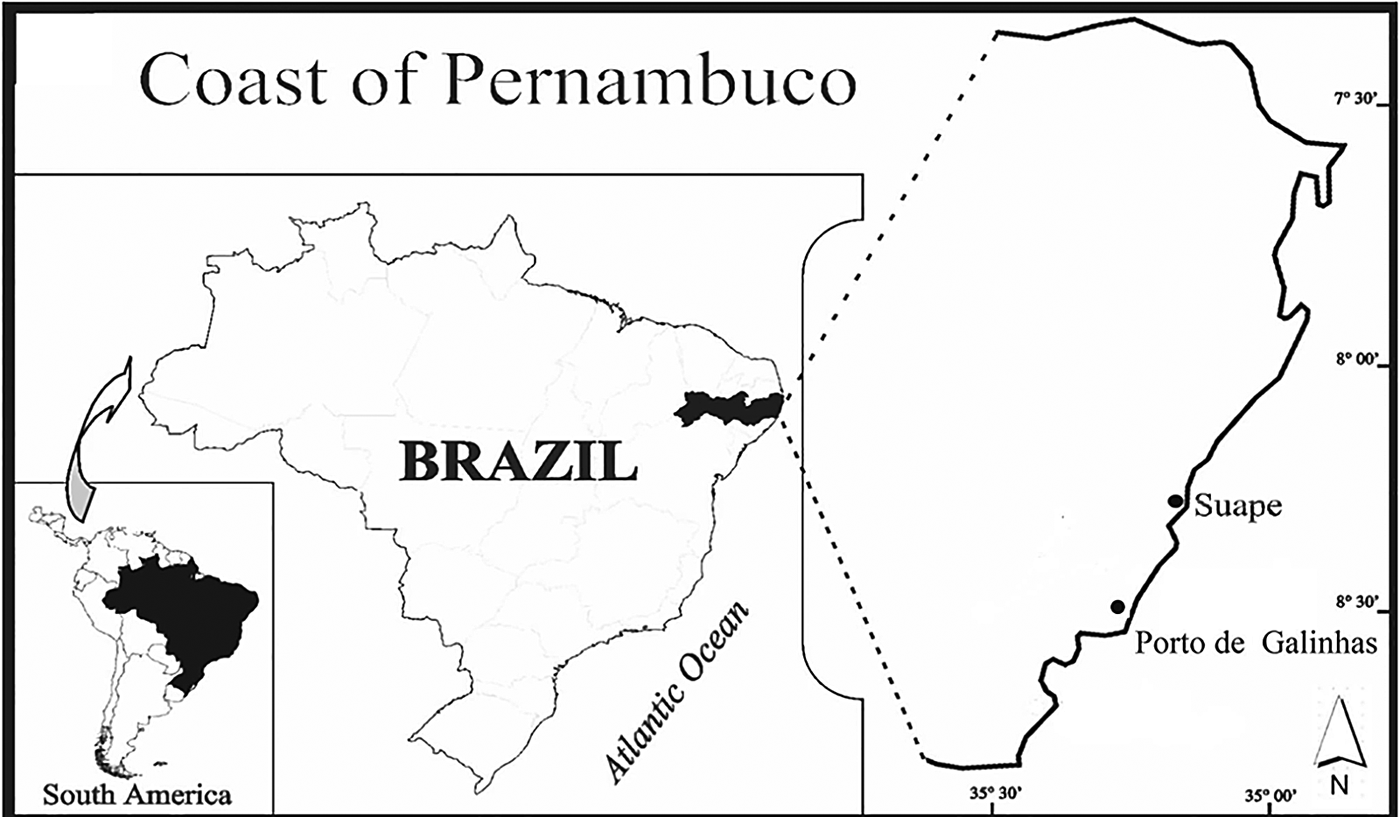
The present study was undertaken in the infralittoral region of tropical reefs at Porto de Galinhas (8°33′00″–8°33′33″S 35°00′27″–34°59′00″W) and Suape (8°21′45″–8°23′27″S 34°56′44″–34°57′30″W) beaches in Pernambuco State in north-eastern Brazil (Figure 2). These two beaches have similar environmental conditions and were used to increase the power of inference of the results. The climate of the study sites is tropical humid, with a mean annual temperature of 25°C and little temperature variation throughout the year (<5°C). There is, however, a marked difference in the distribution of rainfall throughout the year, with distinct dry and rainy seasons. The total mean annual rainfall is approximately 2000 mm, with the dry season (<100 mm year−1) extending from September to February and the rainy season (1850–2364 mm year−1) from March to August (Medeiros et al., Reference Medeiros, Macedo, Feitosa and Koening1999). During the study period, water temperatures varied between 28 and 32°C, and salinity between 36 and 38‰.
Location of the Suape and Porto de Galinhas beaches along the coast of Pernambuco State, in north-eastern Brazil.
Diet
We collected four random surface samples (10 cm2) from different colonies of Palythoa caribaeorum along the infralittoral region at back reefs of both beaches with repeated collections during the months of February, April, August, October and December 2008. To ensure that different colonies were being collected, we selected colonies at least 2 m apart that had no contact along their edges. To avoid any possible intracolonial variations in polyp morphologies, the samples were always collected from the most central zones of the colonies. Collections were undertaken between 09:00 and 12:00 h to avoid variations in gastrovascular contents associated with circadian rhythms (Rossi et al., Reference Rossi, Ribes, Coma and Gili2004), and the collected specimens were fixed in 10% formaldehyde in the field. The stomach contents of nine polyps from each sample were analysed, totalling 180 polyps per beach during the year. Each prey item encountered was counted, measured and identified to the lowest possible taxonomic level (depending on the degree of digestion) to calculate the numbers of individuals per taxa (relative abundance), total numbers of individuals (absolute abundance), richness (number of species) and frequency of occurrence per polyp gastric cavity.
Prey items were classified into higher taxonomic groups and assigned to six categories according to their frequency of occurrence: very common (present in more than 70% of the total samples); common (in 30–69% of the samples); present (in 10–29% of the samples); scarce (in 5–9% of the samples); rare (in 1–4% of the samples); and unusual (in less than 1% of the samples) (Lira et al., Reference Lira, Naud, Gomes, Santos and Perez2009).
The GLM two-way ANOVA 2 × 2 test, followed by Tukey's test (Hill & Lewicki, Reference Hill and Lewicki2006), were used to test the null hypothesis that there were no differences in richness or abundance of prey between the two beaches or between the dry and rainy seasons. Due to the lack of homogeneity of the variances, the data were log transformed (Log + 1). All analyses were undertaken using Programa Statistica v. 7.0 software (StatSoft, Tulsa, OK, USA) (α = 0.05).
In order to more precisely estimate the relative contributions of the different taxonomic groups to the prey biomasses (Smayda, Reference Smayda and Sournia1978), the biovolumes of the most abundant prey and the largest items were estimated using meristic values, assuming geometric forms that were most similar to their natural shapes (Hillebrand et al., Reference Hillebrand, Dürselen, Kirschtel, Pollingher and Zohary1999; Ribes et al., Reference Ribes, Coma and Rossi2003; López-Fuerte et al., Reference López-Fuerte, Beltrones and Aguero2007; Rossa et al., Reference Rossa, Bonecker and Fulone2007). Using this information, we then estimated the fresh weights of the items, assuming a specific weight of 1.025 g cm−3 (Hall et al., Reference Hall, Weimer and Fred Lee1970). The dry weights were estimated as being 13% of the fresh weight (Beers, Reference Beers1966) and the organic carbon content as 50% of the dry weight (Coma et al., Reference Coma, Gili, Zabala and Riera1994, Reference Coma, Gili and Zabala1995, Reference Coma, Ribes, Orejas and Gili1999).
To estimate the in vivo contribution of each potential food item, we estimated their weighted biovolumes (WBV) (López-Fuerte et al., Reference López-Fuerte, Beltrones and Aguero2007). WBV are expressed as percentages and calculated using the following formula:
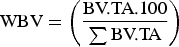 $$\hbox{WBV} = \left({\hbox{BV.TA.100} \over \sum \hbox{BV.TA}} \right)$$
where BV, biovolume; TA, total abundance.
Feeding selectivity
In February (dry season) and August (rainy season) of 2010 we collected samples (10 cm2) from four random colonies of Palythoa caribaeorum growing on the infralittoral reef at Porto de Galinhas Beach to examine possible feeding selectivity in that zoanthid. The collecting procedure was the same as that of the collections for dietary analyses.
Qualitative samples of the plankton were simultaneously collected using a 20 cm diameter net (64 µm mesh), sweeping 1 m from the harvested P. caribaeorum colonies. These phytoplankton samples were fixed in the field in 4% formaldehyde.
We randomly analysed nine polyps from each sample, totalling 36 polyps and 3 ml samples of the plankton during each season. The individuals were counted, measured and identified. The lengths and diameters of the polyps were determined to calculate their volumes (based on the volume of a cylinder). Spearman's correlation coefficient was used to determine if there were significant relationships between polyp sizes (volumes) and the sizes of the prey items ingested.
To determine if there was selectivity in relation to their prey, the sizes of the food items encountered in the polyps were compared with the sizes of the organisms available in the plankton in both the rainy and dry seasons, using the Mann–Whitney non-parametric test. Spearman's correlation coefficient was used to determine if there was any selectivity based on prey abundance in the plankton. These statistical tests were performed using Programa Statistica v. 7.0 software (StatSoft, Tulsa, OK, USA) (α = 0.05).
RESULTS
Diet
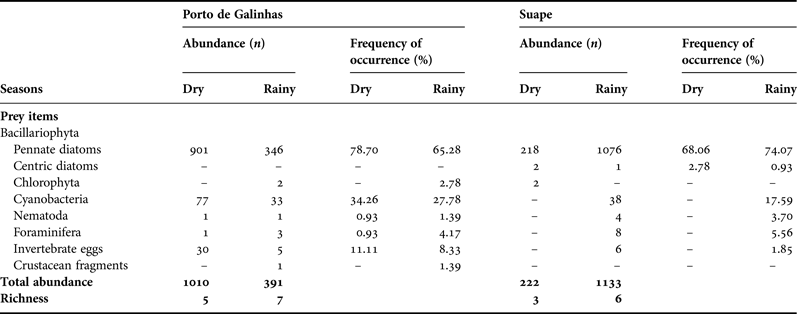
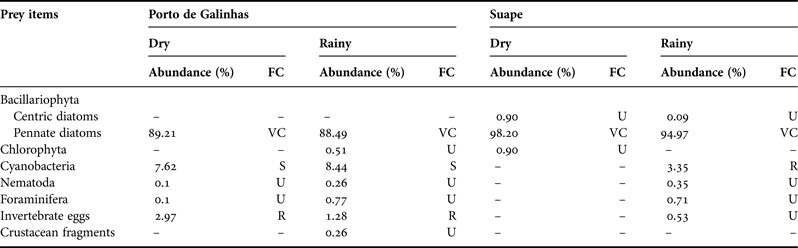
We encountered 13 phytoplankton taxa and five zooplankton taxa as well as particulate organic material (POM) within the gastric cavities of the polyps analysed (Table 1). The particulate organic material included prey items in advanced stages of digestion as well as organic detritus. Due to the difficulties encountered in attributing numerical values to this particulate material, it was not included in our comparative analyses. Bacillariophyta was the most abundant and frequent prey taxon in the two beach areas examined, especially in terms of pennate diatoms (Table 1); invertebrate eggs were the most abundant among the zooplankton. We also encountered spicules from sponges, but these were not included in the comparisons as they were not considered food items.
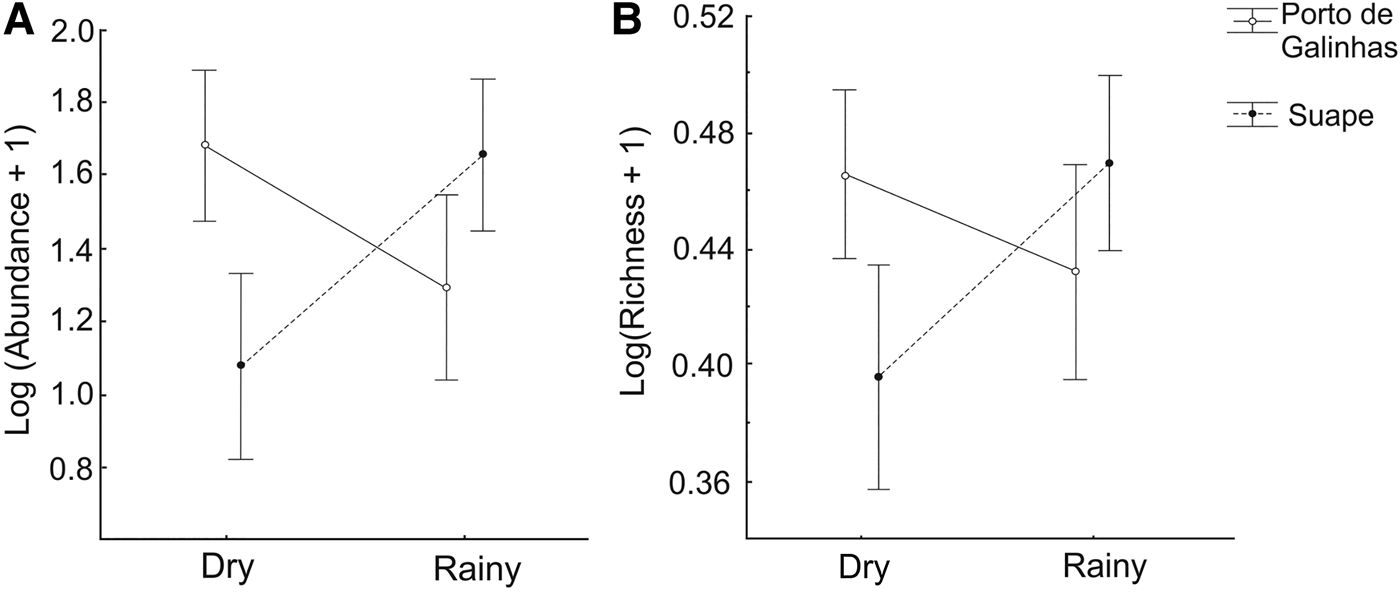
First-order interactions of absolute abundance (A) and richness (B) of the prey items encountered in the gastric cavities of Palythoa caribaeorum, during the dry and rainy seasons at the Porto de Galinhas and Suape beaches in north-eastern Brazil. The vertical bar represents the 95% confidence interval.
Taxonomic list of the abundances and frequencies of prey items encountered in the gastric cavities of Palythoa caribaeorum polyps during both the dry and rainy seasons at Porto de Galinhas and Suape beaches, in north-eastern Brazil.
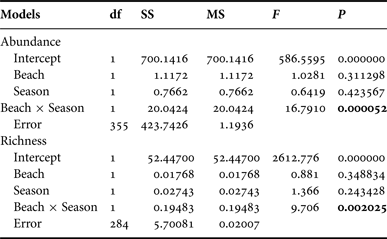
Prey abundance and richness did not significantly differ between the two beaches or during different times of the year, however, first-order interactions were observed between these factors (Table 2). Abundance values were significantly greater at the Suape site during the rainy season (Tukey's HSD post-hoc test P = 0.0030) as was richness (Tukey's HSD post-hoc test P = 0.015), while no seasonal differences were observed at Porto de Galinhas Beach (P > 0.05) (Figure 3).
Breakdown of the dependent factors of abundance and richness of prey items found in Palythoa caribaeorum polyps according to GLM (two-way 2 × 2 ANOVA) analyses. Beaches: Porto de Galinhas and Suape (north-eastern Brazil); Period: Dry and Rainy and Beach × Period: interactions between these factors.
Pennate diatoms were the most abundant prey items found in P. caribaeorum polyps on the two reefs during the study period (Table 3). The prey items varied from small cyanobacteria (6 µm) to particulate organic material (980 µm) (X = 29.6 µm and S = 63.6) in Porto de Galinhas, and from cyanobacteria (6 µm) to Nematoda (2.18 mm) (X = 28 µm and S = 71.4) at Suape Beach. Approximately 60% of the prey items were smaller than 20 µm on both reefs.
Relative abundance (%) and Frequency classification (FC) of the prey items encountered in the gastric cavity of Palythoa caribaeorum polyps at the Porto de Galinhas and Suape beaches (north-eastern Brazil) during the dry and rainy seasons.
VC, very common; C, common; P, present; S, scarce; R, rare; U, unusual.
The mean number of prey items per polyp in Porto de Galinhas was 9.67 ± 15.41 (mean ± SD) during the dry season and 5.78 ± 9.38 during the rainy season. At Suape, the mean number of prey items per polyp was 3.35 ± 3.48 during the dry season and 11.37 ± 17.24 during the rainy season. The high standard deviations were due to large variations in the abundance of prey items in individual polyps.
Diatoms and cyanobacteria were the prey items with the smallest biovolumes and organic carbon contents per individual. Foraminifera and fragments of crustaceans had the greatest biovolumes and greatest organic carbon values. The weighted estimates of the biovolumes of each prey most precisely represented their biomasses, with invertebrate eggs being responsible for the greatest contributions (35%) to the total diet of P. caribaeorum, even though they were the least represented prey in numerical terms; pennate diatoms represented 30.28% of their diet (Table 4).
Prey items ingested by Palythoa caribaeorum polyps at Porto de Galinhas Beach (north-eastern Brazil). Conversion of biometric measurements into biovolumes (BV = mm3×10−3), fresh weight (FW: μg; specific weight 1.025 g cm−3), dry weight (DW: μg, 13% of fresh weight), and organic carbon (C: μg, 50% of fresh weight). WBV, weighted biovolume (BV.AT/∑BV.AT).100. The total prey numbers (TP) and the sizes of the food items captured during the annual cycle are also indicated.

Feeding selectivity
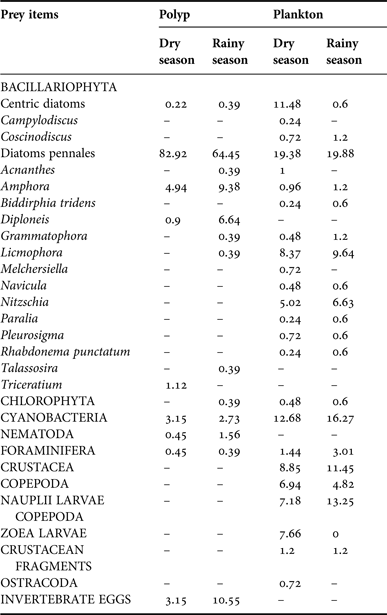
The selectivity analyses indicated that diatoms were the numerically predominant items in the gastric cavities of Palythoa caribaeorum, as they were in the plankton. Other prey items were also observed, such as invertebrate eggs, nematodes and foraminifera. High abundances of other organisms were encountered in the plankton, but were not found in the polyps (Table 5).
Relative abundances of the prey items encountered in the gastric cavities of Palythoa caribaeorum polyps and the organisms encountered in the plankton at Porto de Galinhas Beach (north-eastern Brazil), during both the dry and rainy seasons.
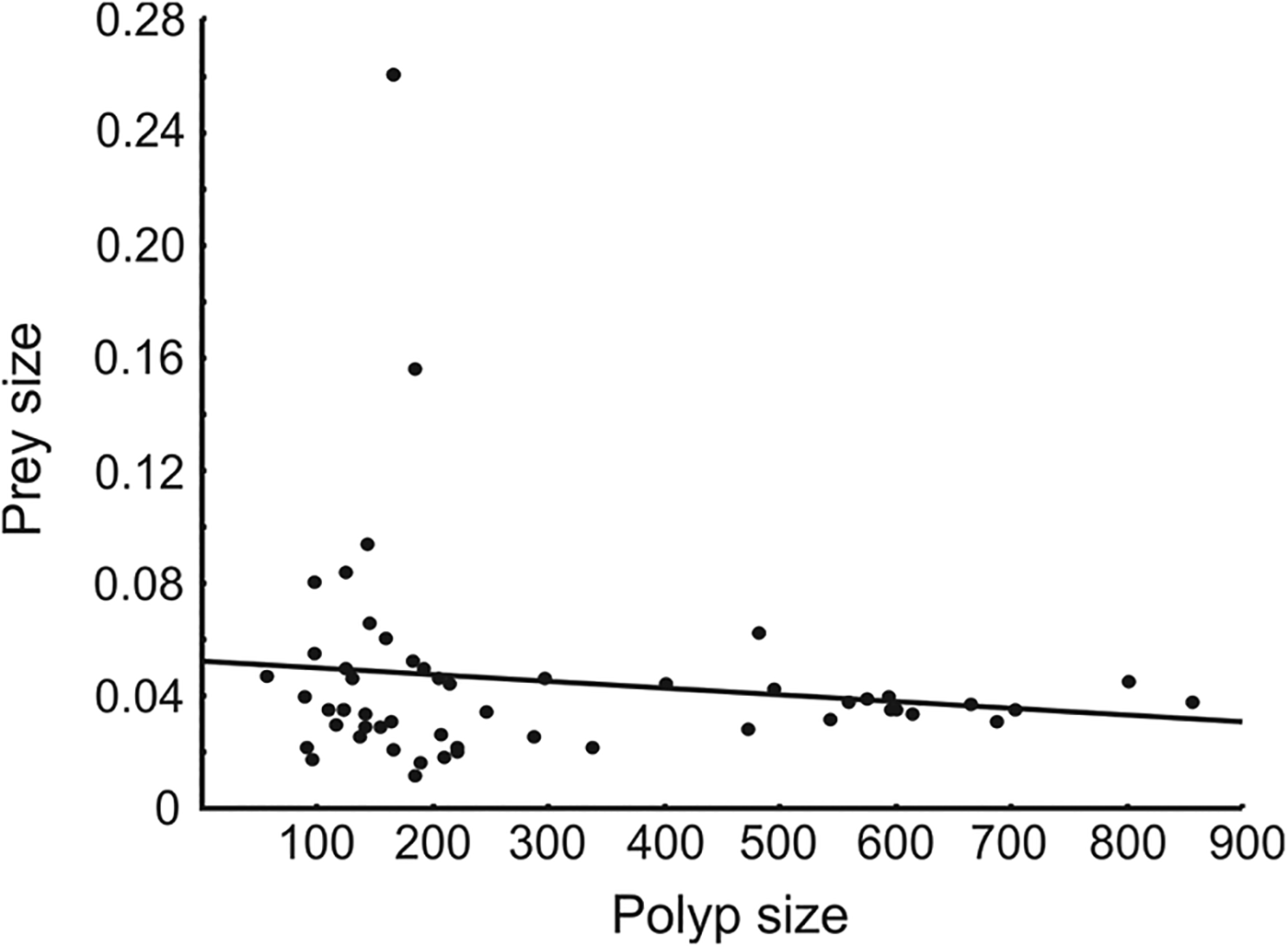
There was no significant correlation between the abundances of potential prey items in the plankton and their abundances as ingested prey items during the dry or rainy seasons (r = 0.0621, P = 0.07442 and r = 0.0990, P = 0.6025, respectively) (Figure 4). As such, this zoanthid species did not ingest prey items according to their abundance in the plankton.
Spearman's correlation between the abundance of the potential prey items in the plankton and the abundance of prey items encountered in Palythoa caribaeorum polyps, during both the rainy and dry seasons at Porto de Galinhas Beach, north-eastern Brazil.
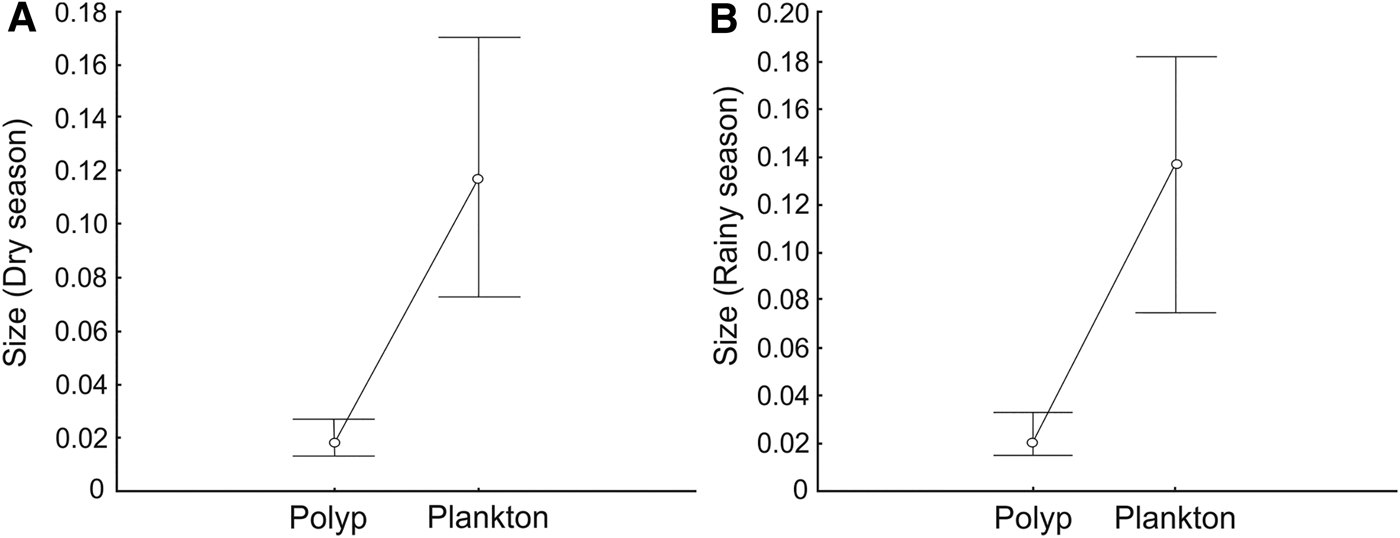
The mean sizes of the prey items found in the polyps (24.57 ± 25.12 µm) were smaller than in the plankton (173.3 ± 205.63 µm), and these differences were significant during both the rainy season (U = 3059.5; P = 0.00) and the dry season (U = 3236.5; P = 0.00) (Figure 5). The extreme values in the amplitudes of plankton sizes corresponded to the zooplankton elements that had sizes greater than the prey items found in the polyps. No significant correlation was found between polyp size and the sizes of the ingested prey (r = −0.1067; P = 0.4423).
Mean size of the prey items encountered in the gastric cavities of Palythoa caribaeorum and the size amplitudes of planktonic components (lengths in mm) during the dry (A) and rainy (B) seasons at Porto de Galinhas Beach, in north-eastern Brazil. The vertical bar represents the 95% confidence interval.
DISCUSSION
The diet of Palythoa caribaeorum was found to be varied, with representatives of both phyto- and zooplankton, although with a clear predominance of diatoms that were both abundant and frequent in the plankton throughout the year in the study area (Ferreira et al., Reference Ferreira, Cunha, Koening, Feitosa, Santiago and Muniz2010). This high availability of diatoms is common in the surf zone of sandy beaches between 40°N and 40°S latitude, where they constitute the bases of many food chains (Brown & Mclachlan, Reference Brown, McLachlan, Brown and McLachlan1990).
Most previous studies have identified zooplankton as the principal food item of suspensivorous cnidarians such as corals (Porter, Reference Porter, Cameron, Campbell, Cribb, Endean, Jell, Jones, Mather and Talbot1974; Lasker, Reference Lasker, Ginsburg and Taylor1976), hydroids (Barangé, Reference Barangé1988; Coma et al., Reference Coma, Ribes, Orejas and Gili1999; Orejas et al., Reference Orejas, Gili, López-González and Arntz2001) and octocorals (Sebens & Koehl, Reference Sebens and Koehl1984; Coma et al., Reference Coma, Gili, Zabala and Riera1994, Reference Coma, Gili and Zabala1995; Ribes et al., Reference Ribes, Coma and Gili1998; Orejas et al., Reference Orejas, Gili, López-González and Arntz2001; Rossi et al., Reference Rossi, Ribes, Coma and Gili2004; Tsounis et al., Reference Tsounis, Rossi, Laudien, Bramanti, Fernández, Gili and Arntz2006). Most of the studies, however, were undertaken in temperate regions, while tropical coral reef ecosystems have distinct dynamics and high productivity even in oligotrophic waters (Lewis, Reference Lewis1977; Rougerie et al., Reference Rougerie, Fagerstrom and Andrie1992), with the reef fauna rapidly removing planktonic biomass (Erez, Reference Erez and Dubinsky1990). Studies investigating the diets of benthic cnidarians in these environments have demonstrated the great importance of phytoplanktonic prey (Coma et al, Reference Coma, Ribes, Orejas and Gili1999; Lira et al., Reference Lira, Naud, Gomes, Santos and Perez2009, Gomes et al., Reference Gomes, Lira, Naud, Santos and Pérez2012) with a pattern different from temperate species and similar to the diet of P. caribaeorum in north-eastern Brazil.
The diet of P. caribaeorum seems to be similar in the two beaches studied, without significant variations in their richness or abundance between the dry and rainy seasons. It probably reflects the fact that this species uses the same abundant prey group during the entire year. It was, however, noted that prey abundance and richness were greater during the rainy period at Suape; no seasonal differences were observed at Porto de Galinhas. Increasing rainfall commonly results in greater nutrient availability as well as resuspension, favouring phytoplanktonic growth (Eskinazi- Leça et al., Reference Eskinazi-Leça, Silva-Cunha, Koening, Macedo and Costa1997) and thus increasing the resource availability for suspensivorous organisms. While Porto de Galinhas did not appear to be affected by this seasonality in the present study, other workers have reported seasonal patterns at Porto de Galinhas, in relation to other nearby beaches, associated with regular visits by tourists and boats throughout the year (Pérez et al., Reference Pérez, Vila-Nova and Santos2005). This activity could result in the constant resuspension of material and the maintenance of more or less constant conditions, nullifying possible natural seasonal variations.
Sebens (Reference Sebens, Ginsburg and Taylor1977) reported the presence of zooplankton in the gastrovascular cavities of P. caribaeorum polyps, although our results do not corroborate this observation, with more than 90% of the prey items being identified as phytoplankton. The absence of representatives of this latter group indicate a possible failure of the methodology used by Sebens (Reference Sebens, Ginsburg and Taylor1977), as it only allowed the recognition of larger items (zooplankton) in smaller numbers.
Palythoa caribaeorum colonies have many associated invertebrates (Pérez et al., Reference Pérez, Vila-Nova and Santos2005), although these animals were not encountered among their prey items. Unlike many species of hydroids that are known to consume organisms associated with their colonies (Svoboda, Reference Svoboda1979; Piraino et al., Reference Piraino, Bouillon and Boero1992), P. caribaeorum can be considered a suspensivorous animal that only exploits food resources directly in the water column, not being predatory on benthic organisms associated with its polyps. However, zoanthids, as well as corals, are plankton feeders and may have an important role in larval predation of benthic organisms. The Pacific zoanthid Palythoa tuberculosa (Esper, 1791) showed high predation rates of coral larvae under experimental conditions (Fabricius & Metzner, Reference Fabricius and Metzner2004).
The prey items we found varied greatly in size, which is common in suspensivorous organisms that feed on many different prey and had been reported in studies of hydroids and octocorals (Coma et al., Reference Coma, Ribes, Orejas and Gili1999; Ribes et al., Reference Ribes, Coma and Rossi2003; Genzano, Reference Genzano2005). In spite of the variations observed, the mean size of the prey items was low, and similar to reports for other cnidarians (Coma et al., Reference Coma, Gili and Zabala1995; Tsounis et al., Reference Tsounis, Rossi, Laudien, Bramanti, Fernández, Gili and Arntz2006) – although the mean number of prey items per gastric cavity was higher than recorded for other species (Ribes et al., Reference Ribes, Coma and Gili1998). This result may be due to the large sizes of P. caribaeorum polyps as compared with hydroids and octocorals.
The mean size of the prey items encountered in the polyps was significantly smaller than that of the plankton, demonstrating that P. caribaeorum selected its prey by size (or was at least limited in terms of the sizes of the items it could ingest). The large number of prey items smaller than 60 µm encountered in the gastric cavities of P. caribaeorum was in agreement with the data published by Machado (Reference Machado2009), who observed that the size class smaller than 20 µm most contributed to the phytoplanktonic biomasses encountered in the Porto de Galinhas ecosystem.
Palythoa caribaeorum demonstrated preference for diatoms and also smaller items. In spite of the fact that this size class is quite abundant in the plankton, other abundant but physically larger groups were not ingested by this cnidarian. However, the predominance of diatoms in the gastric cavity of this species may not represent a clear preference but the sum of the encounter rate and physical limitations. Many factors may affect the encounter rate, such as current velocity, prey concentration and behaviour (Sebens et al., Reference Sebens, Vandersall, Savina and Graham1996). The format of the prey can influence the sinking time and therefore the time that it remains available in the plankton (Padisák et al., Reference Padisák, Soróczki-Pintér and Rezner2003), facilitating their ingestion by flat colonies such as P. caribaeorum (Abelson et al., Reference Abelson, Miloh and Loya1993).
Pennate diatoms were the most abundant prey items found in P. caribaeorum at Porto de Galinhas, and likewise one of the greatest sources of organic material in its diet. Another prey item from the zooplankton, invertebrate eggs, provided similar energetic contributions even though they were less abundant in the gastric cavities of this species (probably due to their significantly larger sizes). As such, the principal energy sources for this cnidarian were derived from the plankton. Lira et al. (Reference Lira, Naud, Gomes, Santos and Perez2009) reported similar results in their study of the octocoral Carijoa riisei in the same locality, noting equal contributions of biomasses from phyto- and zooplankton, in spite of the numerical superiority of the former.
According to Mendonça-Neto (Reference Mendonça-Neto, Ferreira, Chaves and Pereira2008), the areas where P. caribaeorum colonies were most abundant demonstrated greater diversity and abundance of associated reef fish than areas without zoanthid dominance. These results suggest that this cnidarian plays an important role in defining and structuring benthic communities. Francini-Filho & Moura (Reference Francini-Filho and Moura2010) reported four reef fishes feeding on P. caribaeorum colonies at the Abrolhos Reef, particularly Abudefduf saxatilis. This fish was very abundant on the reefs in both study areas and is probably also predatory on P. caribaeorum at those sites. Stampar et al. (Reference Stampar, Silva and Luiz2007) first reported evidence of the sea turtle Eretmochelys imbricata as a predator of P. caribaeorum while examining colonies on coastal reefs in south-eastern Brazil. These same sea turtles nest along the coast of Pernambuco State (Louro et al., Reference Louro, Pereira and Costa2006) and are probably predators of the reefs at Porto de Galinhas. Souza et al. (Reference Souza, Rodrigues, Neves and Pérez2007) likewise reported predation on cnidarians at Porto de Galinhas by the polychaete Hermodice carunculata (Pallas, 1766), which had previously been cited as a predator of this zoanthid (Suchanek & Green, Reference Suchanek, Green, Gomez, Birkeland, Buddemeier, Johannes, Marsh and Tsuda1981).
The present work demonstrated the importance of P. caribaeorum to the ecology of Brazilian tropical reefs as an energy transfer link between the planktonic environment and the nektonic and benthic spheres, and its important role as a primary suspensivorous consumer. As such, zoanthids appear to exercise roles similar to those of scleractinian corals in terms of energy flux in tropical reefs. This fact becomes even more important when taking into account that some species of zoanthids, such as P. caribaeorum, have associations with zooxanthellae, obtaining organic material from this autotrophic source while maintaining its heterotrophic feeding – as do reef-forming scleractinian corals. Additional studies will be needed, however, to examine this phenomenon in other tropical zoanthid species.
ACKNOWLEDGEMENTS
The authors would like to thank the members of the GPA group (Grupo de Pesquisa em Antozoários) of the Universidade Federal Rural de Pernambuco and the Universidade Federal de Pernambuco who participated in the fieldwork at Porto de Galinhas and Suape; the ‘jangadeiros’ boatmen at those beaches; and especially Mr Roy Funch for reviewing the text.
FINANCIAL SUPPORT
CAPES – Coordenação de Aperfeiçoamento de Pessoal de Nível Superior awarded a Masters grant to E.F.C. Santana. This work was financed by the Fundação de Apoio a Ciência e Tecnologia do Estado de Pernambuco-FACEPE (APQ-0796-2.05/10) and the Conselho Nacional de Desenvolvimento Científico e Tecnológico-CNPq (Edital/Chamada: Portugal – CNPq/FCT, 490642/2010-1 and Edital Universal processo 480478/2008-2).