‘Is there a Hijra diaspora?’ This one question sums up the problems I, as a South Asian scholar, encounter when grappling with contemporary discourse on sexuality, race and class. It is ironic then, that the word Hijra can etymologically be traced back to the Arabic root hjr, meaning ‘leaving one's tribe’.Footnote 1 It is also remarkable to realize that under British Rule, as well as the notorious Section 377 (introduced in 1864, criminalizing consensual sex ‘against the order of nature’), in 1871 Hijras were included as dangerous outlaws in the Criminal Tribes Act, stemming from a belief that they were involved in kidnapping and castrating children, and that they dressed like women in order to sing and dance in public places. The punishment for such activities was up to two years’ imprisonment, a fine or both. Hijras were thus banned from ‘migrating’ to any other place and ended up creating colonies of their own wherever they stayed, following complex structures of community guidelines and hierarchies, still not identified within the ‘legal’ structure of India (like many other ‘deviant’ communities). Following Shannon Woodcock,Footnote 2 I contend that India has a diverse, complex and elaborate spectrum of same-sex sexual cultures in which sexual minorities have performed their identities in a variety of ways, in a variety of social spaces and without the political rhetoric of the West.
Hijra has traditionally been translated into English as ‘eunuch’ or ‘hermaphrodite’, where ‘the irregularity of the male genitalia is central to the definition’.Footnote 3 However, in general Hijras are born with typically male physiology, only a few having been born with male intersex variations.Footnote 4 Some Hijras undergo an initiation rite into the Hijra community called nirwaan (or chhidna), which refers to the removal of the penis, testicles and scrotum.Footnote 5 With several, sometimes contradictory, definitions of what makes one a Hijra, I contest that the Hijra identity does not exist in the ‘body’, but in the ‘performance culture’, which is a coming together of rituals, community structures, traditions and performative markers of the Hijra identity. Here it is important to introduce some of these markers: Hijras worship a mother goddess called Bahuchara Mata. A Hijra household usually comprises a guru (teacher) and several celas (students). The guru is the matriarch of the household and the students have to abide by her rules. She holds the rights to punish them if she is displeased, and in some cases even sell them to another guru if she gets the right price. Many Hijra rituals take place around the figure of the guru, including childbirth when a new cela is initiated and widowhood at the death of the guru. The Hijras learn from their guru music (especially ghazal gayaki Footnote 6) and a secret language called Hijra Farsi (which has a vocabulary of around a thousand words). Although this tradition is in steep decline now, almost all the gurus that I have interviewed,Footnote 7 and some ‘nayak’ celas,Footnote 8 were well versed in this genre. There are three kinds of work that Hijras traditionally perform – performing at ceremonies (toli), begging (dheengna) or sex work (raarha). Although usually dressed like women, Hijras mark their presence by a double clap along with the words haye haye (‘O my, O my’), signifying a marked performed difference to normative female identity, and as a symbol of their distinctive expression of their own identity.
Central to the question around Hijra identity is the notion of a ‘discourse’ around human sexuality and the ‘truth’ and ‘power’ that were produced through such discourses in post-industrial, capitalistic societies of the West. Sexual and gender plurality, sexual preference, sexual identity and ‘coming out’ thus became important indicators of a so-called ‘developed’ society. Traditional societies that could not capture these modern notions of sexual identity were considered ‘inferior’, ‘sexually repressed’ and hence in need of being ‘developed’ and ‘freed’ from an external intervention. Any resistance to these efforts of liberation was considered as ‘homophobia’ and all traditional, non-modern societies thus came to be known as ‘homophobic’ societies in which sexual minorities required liberation. The Western project of liberating the ‘sexually repressed’ communities of the East attempts to contain these dynamic and diverse sexual cultures by baptizing traditional sexual minorities to enter into a globalized, universal, and totalizing LGBT identity category. I look at the Hijra community to investigate this further and study their performance cultures – which are not just intertwined with their rituals, but also their everyday life – to explore questions of identity. Their relationships with society, law and language are expressed through complex mediations into identity expressions which then can or may get translated into performance.
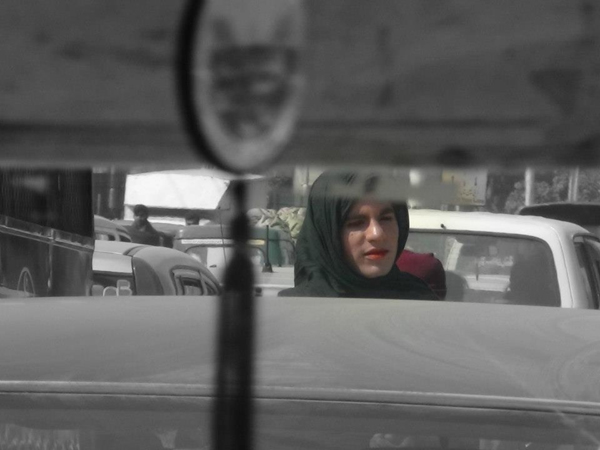
(Colour online) A Hijra walking on the streets of Lahore, Pakistan, 2011, possibly begging (dheengna). Photograph by Ankush Gupta.

How do you, then, come out as a Hijra? How do you come out as an effeminized male, a condition constituted precisely by an a priori visibility, something possible due to the gendered social attitudes about how bodies should look and behave visually? Is Hijra starting to work here like sexual identity, something that can be hidden and revealed, closeted and outed, something that is thought to be a factor of the self, its permanent aspect constant through secrecy or disclosure? Is it possible to look at one's self-identification as Hijra to mark a clear break in one's life's narrative; a turning point, akin to that popular conceit of breakage in ‘coming out’, the iconic watershed moment milked in much ‘gay’ and ‘lesbian’ literature and liberal politics. It is easy to argue that this proximity of idioms, this nearness of registers, has a long historical legacy in India.
I propose that the everyday usage of sexual identity is always a double gesture, and will always remain so. That this expression always leaves room for other idioms of desire to be at work, ones that are not identitarian, ones that are not even autobiographical in their drive. That if we are serious about studying the practical deployment of sexuality in people's everyday lives, we will have to read it into the structural definition of sexual identity, into the very way we fundamentally conceptualize it. We will have to understand sexual identity as a temporal double game, as impossible to exhaust, as always stopping short of being able to completely determine a person, as not always working in the same way or in the same direction, as always already qualified, as lending itself to disaggregation, and to being shown its place in the scheme of things.
Let me explain this with another argument, that there is a distinction between sexuality and sexualness, as elaborated by Akshay Khanna, a distinction that becomes untenable once we step out of the sublimity of the encounter with law and epidemiology and into the field of everydayness, even into the very everydayness of that encounter. I use sexuality as something very specific: as a ‘historically peculiar formulation, most strongly articulated a mere century back, where bio-medicine ascribed itself the authority to speak the “truth” about sex and desire’.Footnote 9 I work out this meaning of sexuality, as predominantly referring to an aspect of personhood, as making a person into one or the other kind, homo or hetero, based on who they desire or fuck. This is sexuality understood as having an ontological dimension, as having something central to do with what one is, easily lending itself to formulations such as I am …
Khanna uses the term ‘sexualness’ to ‘mark exactly its distinction from “sexuality”.Footnote 10 By this he means something wider, a kind of eroticism that even as it is lived out in many specific idioms has crucially not staked a strong ontological claim like ‘sexuality’ has. In his experience of India – of growing up there, and in his fieldwork and the chosen stories he analyses – he says ‘the erotic and the sexual need not speak to the sense of self or the definition of the self at all – for instance, men have sex with other men, or are erotic with other men without thinking of themselves as any “different”’.Footnote 11 Akshay is proposing a reading of several sexual situations as not always arranged under the major sign of the psychological–political sexual subjecthood, but as predominantly within the complex debates around specific modern idioms of launda naach (boy dance), masti (fun), meyeli chhele (girlish boy) or maitri-karaar (similar in form to marriage, within the same sex), among others; these relate to the debates on the political or psychological sexual subject, but are not wholly consumed by it. Sexuality becomes, then, as it is in my own work, only one of the idioms among many, only one of the processes of modernity. ‘There is, in other words, a “sexualness” that escapes the frame of sexuality—a sexualness that flows through subjects without constituting them’.Footnote 12 Khanna makes this concept the bedrock of his thesis, and uses it in exactly the same way as we use the more erratic and old phrase ‘desire’ in many works around sexuality in India (usually prefixed with ‘same-sex’ wherever situationally relevant).
Hijras are often read as ‘trans’ but many of them do not identify as such, and yet are constantly pushed to do so in order to avail themselves of basic health care and other privileges that come with the term, losing something in the process. The NALSA judgement identifying Hijras as the ‘third gender’ underlines ‘visibility’ as an important factor of this identification, and with the reading down of Section 377 by the Supreme Court of India on 6 September 2018, the discourse of sexuality and gender has gone in new directions, and yet it is important to read Hijra culture as standing at a crossroads between past and present. I look at their performance culture as the site of their political, social and cultural identity, and am interested in exploring their complex relationship with the legal system as well as the queer movement. In a famous Pakistani film, Chuppan Chupai (Hide and Seek) (2013) one of the subjects dismisses khwaja sera (the word used in Pakistan for communities similar to Hijras) as being low-class, and claims to be ‘transgender’ instead. This makes us rethink whether the rhetoric of gender is also a rhetoric of class and privilege, where certain gender identities are looked at as higher than certain others – how are these hierarchies formed? Does any ‘Western’ word or concept become ‘higher’ by default for people in the ‘Third World’ or is it more nuanced than that? Going back to my initial question, ‘Is there a Hijra diaspora?’, the politics of access and migration seem to be intertwined with questions of class. Moving from a small city in north India to the metropolitan city of Delhi and later to Berlin has made me access identity, politics and community in different ways, and I have experienced the idioms of my sexual identity change with every such interaction. In my work I look at transitioning as a ‘process’ and try to understand political movements as a performance of this process.