Introduction
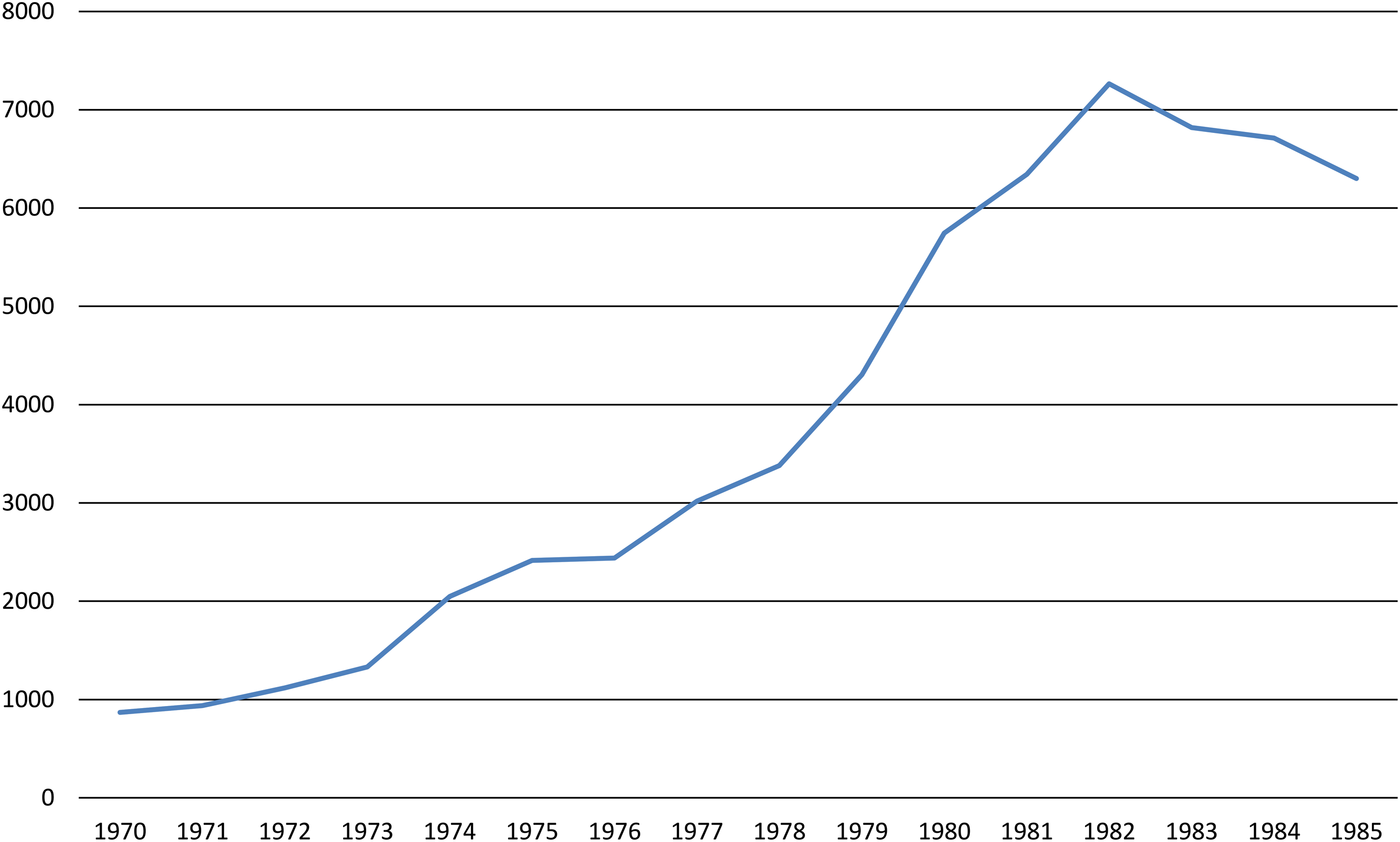
This article explores the roots of democratically negotiated state-interventionist industrialization in Trinidad and Tobago between 1973 and 1984. Trinidad and Tobago (also abbreviated T&T), an oil wealthy formerly colonized democratic state in the Caribbean, was historically dependent upon plantation slavery and exploitation of oil and sugar commodities for export. The British colonial state’s role in the economy, while certainly exploitative and extractive, was largely enabling, leaving investment in and management of industry to private enterprise and multinational corporations. Even after achieving independence in 1962, the postcolonial state maintained a facilitative role. However, beginning in 1970, the state took on a more active and interventionist role in the economy, leading to the creation of whole new industries accompanied by rapid economic growth and expansion (see Fig. 1 below). While the economy suffered in the 1980s debt crisis, overall, the country has moved up the economic ladder and now ranks as a “high-income economy”Footnote 1 (World Bank 2019). This article explores what drove this industrial strategy in Trinidad and Tobago.
GDP per capita (current US$) Trinidad and Tobago (1970 to 1985).
Source: World Bank Development Indicators databank.worldbank.org.

Decades of scholarship have highlighted the state as an autonomous actor that advances industrialization. Early developmental state theory (or DST) critiqued mainstream development theories that focused exclusively on either markets or on society as drivers of economic development, instead emphasizing the state as the primary catalyst for development (Johnson Reference Johnson1982; Haggard Reference Haggard1990; Wade Reference Wade1990, Reference Wade2014; Amsden Reference Amsden1992, Reference Amsden, Serra and Stiglitz2008; Woo-Cumings Reference Woo-Cumings1999; Evans Reference Evans2012). DST contributed enormously to our understanding of states and development, but in centering analyses primarily on how state actors shape societies through economic interventions rather than vice versa. It offered little explanation of the social relations and internal political dynamics that propelled the state to act in more interventionist, politicially repressive and yet developmental ways (Chang Reference Chang, Fine, Tavasci and Saraswati2013; Fine Reference Fine, Fine, Saraswati and Tavasci2013). Over the last 20 years, attention has shifted to the critical roles played by nonstate activities – popular protests, labor agitation, land reform movements, ethnic-based demands – in stimulating the development of higher-value economic activities and impressive economic growth (Doner et al. Reference Doner, Ritchie and Slater2005; Doner Reference Doner2009; Evans and Heller Reference Evans, Heller and Leibfried2015; Kalinowski Reference Kalinowski2015; Haggard Reference Haggard2018). The role of social forces, especially labor and social movements, is now recognized as central to shaping the state, industrial policy, and triggering the administrative capacity and institutional changes to pursue a national development vision.
However, this recent turn linking social movements and state policy has yet to contend with two factors that have historically been central to global capitalist development – imperialism and racialized labor exploitation. Similar to early DST, the corrective social movements-focused DST continues to overwhelmingly focus on the same contexts – East, Southeast, and South Asia and “failed” Latin American countries – to offer explanations for the role for social movements in spurring institutional capacity building and industrial policy shifts (Vu Reference Vu2007; Doner Reference Doner2009; Slater Reference Slater2010; Kuhonta Reference Kuhonta2011). Yet, Asian countries during industrial transformation were unique in many ways. For one, they had privileged geopolitical locations and access to US markets and considerable US capital propelled by US militarism and Cold War interests; factors which favored rapid capitalist development (Cumings Reference Cumings1987; Woo-Cumings Reference Woo-Cumings1999; Stubbs Reference Stubbs2005; Yeung Reference Yeung2017; Haggard Reference Haggard2018). Most other countries emerging from European colonial rule did not experience this confluence of conditions (see for example, Mbembe Reference Mbembe2001). Second, beyond the recognition of early DST’s silence (and/or implicit acceptance) on development/accumulation strategies that are predicated upon repressive labor practices and the restriction of political and civil liberties (Deyo Reference Deyo1989; Sen Reference Sen1999; Chang Reference Chang, Fine, Tavasci and Saraswati2013; Fine and Pollen Reference Fine, Pollen, Fagan and Munck2018; Fishwick Reference Fishwick2018), this paper goes further by drawing attention to the fact that labor repression has long been racialized (Cox Reference Cox1948; Du Bois Reference Du Bois2008 [1903] ; Williams Reference Williams2021 [1944]). Social movements in many countries have targeted state policies that integrate with the imperial and racist architecture of the global political economy, thereby constraining industrialization strategies available to the state to a greater extent than in authoritarian contexts that repressed organized labor. Yet, analyses of the anti-racist, anti-imperial articulations of such movements and their impacts upon state policy remain undertheorized.
This article seeks to build upon this literature linking social movements to industrial policy by attending to race and imperialism. Using a content analysis of archival materials, policy documents, newspaper articles, government reports, and speeches, this article traces Trinidad and Tobago’s 1973–1984 interventionist industrial policy to a powerful mass movement in the 1960s, which became known as the Black Power Movement (BPM) – a radical, anti-racist, anti-imperialist movement pushing for economic and social transformation. In a wave of protests, strikes, and demonstrations in the late 1960s peaking in 1970, the BPM forced the state to shift its approach to adopt more interventionist industrial policies and a redistributive development agenda. This article, therefore, shows the centrality of this movement to shaping the post-independent industrial strategies deployed by the Trinidad and Tobago state.
Our focus on Trinidad and Tobago helps excavate lessons about state intervention and the formulation of industrial policy within the context of a vibrant anti-imperial resistance and relatively less privileged access to US markets and capital (see Perry Reference Perry2022). It takes an expanded view of the DST as a sine qua non of late industrialization focusing on state-society relations, in particular, the catalytic role of social movements, in a natural resource rich country. It suggests a closer examination of domestic politics and the configuration of power considering especially how historically excluded and exploited groups can shape industrial policy and resource-driven investments towards long-term developmental pursuits. In addition, it draws attention to the goals, strategies, and claims of the movement, as well as its anticolonial, anti-imperial, and racial justice orientation. The effects of development policies are therefore dependent on the structure of relationships between the state and society and the ability of collective actors to mobilize and create opportunities for change.
The next section reviews literature on state-led development and social movements. Subsequently, the paper presents the empirical context that gave rise to the Black Power movement, and specific evidence about its strength, organizational strategies, and influence on industrial policy and broader social changes. The nature of industrial policy and implementation is then discussed. The article concludes with an assessment of the model of industrialization and its implications.
Literature review
Interventionist industrial policy: origins and questions
Early DST scholarship on the East Asian “miracle” economies of the 1980s has established the indispensability of active interventionist industrial policy for economic transformation. These states provided the “directional thrust” for industrial capital through devising and implementing policies geared toward forestalling critical market failures, expanding productive frontiers and exports, as well as coordinating investments and mobilizing resource toward economies of scale (Johnson Reference Johnson1982; Haggard Reference Haggard1990, Reference Haggard2018; Wade Reference Wade1990, Reference Wade2014; Amsden Reference Amsden1992, Reference Amsden, Serra and Stiglitz2008; Woo-Cumings Reference Woo-Cumings1999; Evans Reference Evans2012). Such interventions successfully promote industrialization when states have the bureaucratic capacity to develop and implement these policies, and to discipline the private sector by attaching stringent performance standards to subsidies and market protection measures (Johnson Reference Johnson1982; Amsden Reference Amsden, Serra and Stiglitz2008; Evans Reference Evans2012; Andreoni and Chang Reference Andreoni and Chang2018). The origins of developmental state structures have been traced to the form of colonial rule imposed upon a colonized territory (Kohli Reference Kohli2004; see also Lange Reference Lange2009; Mahoney Reference Mahoney2010). However, in other cases, including Trinidad and Tobago, industrial policies and state structures in the postcolonial period departed to some degree from those of the colonial state (Vu Reference Vu2007; Edwards Reference Edwards2017, Reference Edwards2018). In these cases, mass-based movements and organizations that challenged imperial, colonial, and racial domination have been central to altering the state’s involvement in the economy. The “developmental state” concept has been applied to other empirical contexts, such as in Latin America, Sub-Saharan Africa, and Southeast Asia as a means of understanding other growth-oriented experiences (Massi and Singh Reference Massi and Nem Singh2018; Singh and Chen Reference Singh and Chen2018; Singh and Ovadia Reference Singh and Ovadia2018; Weiss and Thurbon Reference Weiss and Thurbon2020: 3). That industrial transformation requires interventionist state-directed industrial policy is now almost taken for granted in development studies.
However, some problematic underlying theoretical assumptions in early DST prompted corrections and expansions. First, early DST scholars focused heavily on the relationship between the state and capitalist class and underemphasized the authoritarian and labor repressive character of the East Asian tigers throughout periods of rapid growth. Repressive measures included labor control and wage suppression, poor working conditions, and restrictions on civil freedoms like collective bargaining and mobilization (Sen Reference Sen1999; Woo-Cumings Reference Woo-Cumings1999; Chang Reference Chang, Fine, Tavasci and Saraswati2013). Often supported by the economic elite, labor repression was central to the ability of these states to transform the economy and expand into competitive high-technology manufacturing sectors (Anner Reference Anner2003; Gore Reference Gore2014; Fishwick Reference Fishwick2018; Bam and Bruyne Reference Bam and De Bruyne2019; Weiss and Thurbon Reference Weiss and Thurbon2020). These states’ democratic transition came only after industrial transformation unfolded. Countries that attempted to deploy industrial policy instruments under more democratic political systems and marketized labor regimes, such as Brazil, India, and South Africa, were not as successful as these East Asian countries in achieving rapid economic transformation (Anner Reference Anner2003; Chibber Reference Chibber2003; Massi and Singh Reference Massi and Nem Singh2018). Still, cases outside of this region are presented as either empirical anomalies relative to the “ideal-type” state or outright failures for not meeting these institutional standards (Dargent et al. Reference Dargent, Feldmann and Pablo Luna2017; Naqvi Reference Naqvi2018). In doing so, these formulations tend to reproduce colonialist, teleological, and idealized conceptions of the state.
Amartya Sen (Reference Sen1999) and others, therefore, argued for a conceptualization of development that went beyond capital accumulation and growth indicators to encompass political and civil liberties and the expansion of human capabilities (see also Fishwick Reference Fishwick2018; Stewart et al. Reference Stewart, Ranis and Samman2018). Coalitions between the state and the wider society provide critical feedback and intelligence on investment and other development issues that help improve governance arrangements, accountability, and policy implementation (Vu Reference Vu2007; Kuhonta Reference Kuhonta2011; Hsu Reference Hsu2018; Karagiannis et al. Reference Karagiannis, Cherikh and Elsner2021). The incorporation of wider societal actors and classes outside of the capitalist class is, therefore, crucial to achieving broad-based development.
Second, early DST sidestepped racial and ethnic relations, arguing that the East Asian tigers were more racially and ethnically homogenous (Woo-Cumings Reference Woo-Cumings1999), which is supposedly more favorable to economic development than diverse groups, because of less competition between racial and ethnic groups for control of state resources (see also Kohli Reference Kohli2004; Chandra and Wilkinson Reference Chandra and Wilkinson2008).
Third, early DST was critiqued for ignoring the specific geopolitical environment in which the East Asian states advanced industrial strategies. US Cold War geopolitical interests against the spread of communism in Asia during this period provided considerable resources that favored East Asian industrial transformation: those that aligned with US interests had privileged, albeit intermittently disrupted, access to US markets, large amounts of US capital, and US military and economic aid (Cumings Reference Cumings1987; Woo-Cummings Reference Woo-Cumings1999; Stubbs Reference Stubbs2005; Haggard Reference Haggard2018). Most other countries emerging from European colonial rule did not experience this confluence of conditions (see for example, Mbembe Reference Mbembe2001).
State policy and social movements
In answering the call to address these weaknesses, more recent scholarship looks beyond the relationship between political elites and the capitalist class and shows that the relationship between political elites and the masses has been consequential to state structures and policies. Working class movements (Edwards Reference Edwards2017, Reference Edwards2018; Perry Reference Perry2018, Reference Perry2022; Teichman Reference Teichman2019) and “restive popular sectors” (Doner et al. Reference Doner, Ritchie and Slater2005) have pushed state elites to alter industrial policy and construct more developmental institutions. How elites respond to each other (such as alliances or fragmentation) and to challenges from mass movements also determines the degree of state cohesion (Vu Reference Vu2010) and durability of authoritarian regimes (Slater Reference Slater2010). Likewise, Kuhonta (Reference Kuhonta2011) argues that ruling political elites in Malaysia altered their approaches to governance and economic policies in response to violent ethnic conflicts that targeted, not directly the state per se, but the dominant ethnic elite. Thus, actors and organizations acting outside the state can catalyze the creation, alteration, and implementation of developmental policy. These findings are consistent with the social movements literature, which asserts that social movements Footnote 2 shape state structures and policies, including pensions, social welfare, civil rights, women’s rights, and more (Morris Reference Morris1984; Amenta et al. Reference Amenta, Dunleavy and Bernstein1994; Tilly Reference Tilly, Giugni, McAdam and Tilly1999; Amenta and Halfmann Reference Amenta and Halfmann2000; McAdam et al. Reference McAdam, Tarrow and Tilly2001; Burstein and Linton Reference Burstein and Linton2002; Soule and Olzak Reference Soule and Olzak2004; Bloom Reference Bloom2014).
Still, the heavy focus on elite responses in the recent DST literature leaves undertheorized the goals, actions, and mechanics of the movements themselves. Social movements researchers assert that while deprivation and exclusion may be widespread, the grievances that stem from these conditions are not sufficient to stimulate or determine the success of collective action (McCarthy and Zald Reference McCarthy and Zald1977). To understand how social movements arise and what impacts they may have, it is necessary “to combine [analyses of] political opportunities (contextual factors), mobilizing structures (organizational resources), and framing processes (discursive resources)” (Koopmans and Statham Reference Koopmans and Statham1999: 203). The contextual factors increase our understanding of the political conditions under which protests may be constrained or successful (McAdam Reference McAdam[1999] 1982; Diani and McAdam Reference Diani and McAdam2003). Analyzing the mobilizing systems sheds light on the movement’s organizational structure and mobilizational practices that may enhance or inhibit its success (Piven and Cloward Reference Piven and Cloward1977; Edwards and McCarthy Reference Edwards, McCarthy, Snow, Soule and Kreisi2004). Examining how movements craft and frame their goals also increases our understanding of how they encourage participation and adherence (Benford and Snow Reference Benford and Snow2000). This analytical approach enables us to specify the meso-level drivers by which movements influence state policy.
This recent social movements-DST research has also not yet addressed how social movements have contended with imperial or geopolitical interests and race. Doner et al. (Reference Doner, Ritchie and Slater2005) attempt to bring together an analysis of geopolitical conditions with domestic politics, and assert that interventionist states emerge out of having to balance the two. Still, how movements themselves conceptualize and frame the state’s relationship to imperial powers and foreign capital, and how this might shape the range of possible state efforts remains understudied. With respect to race, Slater (Reference Slater2010), for example, has approached this issue largely through analyzing the impact of colonial rule on racial and ethnic conflicts and competition to control the state. Yet, as described below, anti-imperialism, social and racial justice have been central to mass movements challenging the state’s economic policies. It is therefore crucial to understand how these movements shape state policy.
Imperialism, race, and social movements
This paper advances the literature on mass movements and so-called developmental states by highlighting the role of capitalist imperialism and racialized class oppression in shaping the movements themselves and their impacts upon industrial policy. Labor repression was not only a crucial, yet overlooked, component of rapid industrialization; the world capitalist system has historically and contemporarily relied upon racialized labor repression. As Du Bois so famously highlighted in 1903, “the problem of the twentieth century is the problem of the color line – the relation of the darker to the lighter races of men in Asia and Africa, in America and the islands of the sea.” Through imperialism, European capitalists and states expanded geographically, conscripting territories and people in the logic of endless capital accumulation (Rodney Reference Rodney1972; Amin Reference Amin1976; Arrighi Reference Arrighi1978; Frank Reference Frank1978; Wallerstein Reference Wallerstein1984). The division of labor according to racial classifications and extractive core–periphery relations underpinned labor super-exploitation for capital accumulation in the core (Cox Reference Cox1948; Du Bois Reference Du Bois2008 [1903]; Rodney Reference Rodney1972; Williams Reference Williams2021 [1944]). Therefore, movements against exploitative industrialization involved articulated resistance to imperial and racialized economic domination. Peronism in Argentina, the New Jewel Movement in Grenada, and working class anti-imperial movements in Chile, Uruguay, Brazil, Mozambique are but a few examples of such movements between the 1960s and 1980s. This article extends the DST industrial policy literature by considering these conjoined dynamics as a driving force behind the organization of peripheralized economies. This study situates industrial policy and movements that stimulated more interventionist approaches within the overarching global history and infrastructure of racism and imperial domination.
This paper draws on the experience of Trinidad and Tobago to understand what stimulates interventionist industrial policy. T&T is a “resource-dependent” economy (sugar, oil, gas, and later petrochemicals), which, according to Auty (Reference Auty2017), Auty and Gelb (Reference Auty and Gelb1986) and Karl (Reference Karl1997), makes it prone to passive rent collection, inefficient economic interventions, weak political institutions, and corruption. Its multiracial population also, theoretically, weakens its potential for economic success. Around its independence, the population was 43 percent of African descent, 36 percent Indian descent, 16 percent “Mixed,” and others who had European, Middle Eastern (Syria, Lebanon), and Chinese heritage (Harewood Reference Harewood1971: 267). This ethnic diversity supposedly predisposes countries in the Global South to “weak state” status incapable of coordinating development, and worse, ethnic conflicts, and civil wars (Alesina et al. Reference Alesina, Baqir and Easterly1999; Chandra and Wilkinson Reference Chandra and Wilkinson2008; Cederman et al. Reference Cederman, Wimmer and Min2010). In addition, Trinidad and Tobago was not privy to the Cold War geopolitical machinations from which the East Asian tigers benefited, namely through large inflows of financial resources and special access to US and European markets to jumpstart industrial transformation (Arrighi Reference Arrighi1996; Chang and Grabel Reference Chang and Grabel2014). Despite these supposed disadvantages, Trinidad and Tobago nevertheless achieved impressive industrial transformation and economic growth (see Fig. 1 below).
Indeed, this analysis finds that developmental industrial policies of the Trinidad and Tobago state in the post-1970 era were not simply the result of state or elite “will” or state-led initiatives, as emphasized in the early DST literature. Rather, they were spurred by the strong collective action of a broad coalition of actors and organizations known as the Black Power Movement (BPM), which included organized labor unions, cultural groups, civic leaders, and grassroots mass-based organizations led by youth and marginalized groups that engaged in strikes, protests, demonstrations, civil disobedience, and open rebellion. Footnote 3 This paper highlights how this movement articulated a vision of industrial development that was anticolonial and centered racial, economic and social justice. It pushed the state to alter its economic trajectory to develop new interventionist industrial policies that were in line with certain movement demands. In contrast to the politics of interethnic competition, this antiracist labor and social movement in a racially hierarchical society had a dialectical relationship to transforming inherited, unequal productive structures, heretofore underplayed in DST.
Industrialization and the Black Power movement
Rich in oil and asphalt, and a long history of sugar production and exports, TrinbagoniansFootnote 4 were optimistic about political independence and rapid economic and social development. Moreover, under the political leadership of the anticolonial nationalist Dr. Eric Williams who emerged in the mid-1950s as the People’s National Movement (PMN) political leader, Trinbagonians envisioned an end to colonial domination and a system where racism determined life chances.
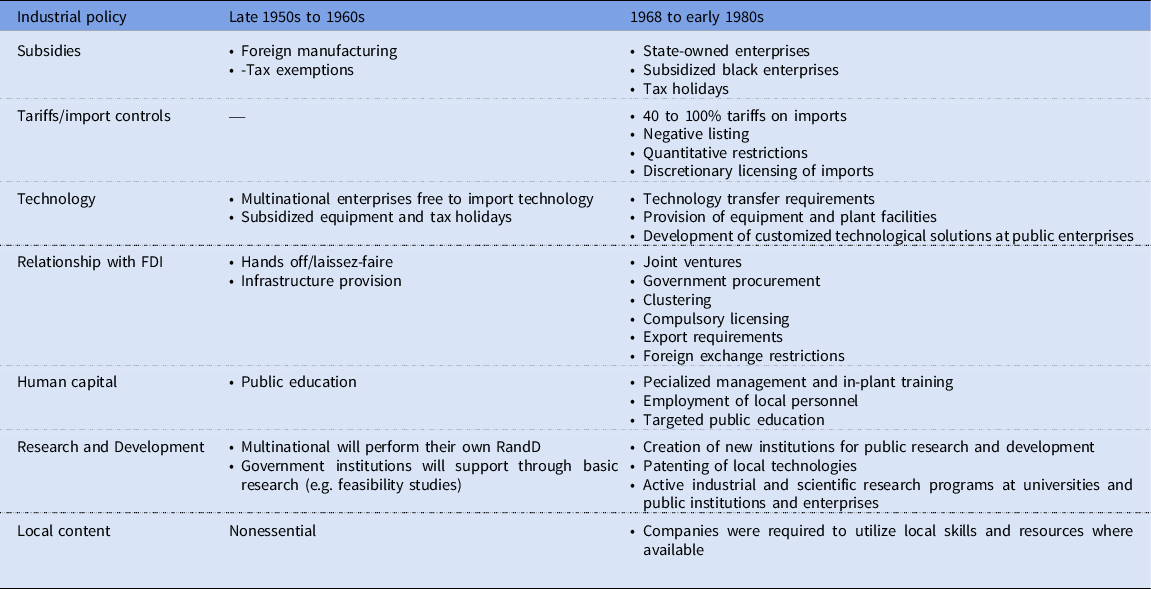
However, by the end of the 1960s, the masses had become frustrated with the preservation of many of the structural ills that pervaded the erstwhile colonial economy and society. Foreign companies dominated the commanding heights of the economy – Texaco, British Petroleum, and Shell in oil, Tate and Lyle in sugar, and Canadian and British companies in the financial sector. Except for minor shifts in the roles and delivery of rudimentary public services, the bureaucratic state was largely uncoordinated, conservative, and technically deficient (Ryan Reference Ryan1972; Hope Reference Hope1983). It lacked the ability to mobilize the productive forces towards large industrial projects and operated as a center for personalized power for newly elevated post-colonial politicians. Furthermore, between 1958 and the late 1960s, the first government pursued colonial-era economic policies that continued to disproportionately benefit foreign interests over the national community. Specifically, the Williams government extended the 1957 “industrialization by invitation” program, partly based on the work of Dr. Arthur Lewis, into the post-colonial period (Mottley Reference Mottley2008; Best Reference Best2012). Industrial policy under this program involved: 1) aggressively welcoming foreign capitalists from more industrialized countries to address limited capital, technology, and expertise by providing infrastructure, market incentives, export facilities, 2) establishing labor-intensive manufacturing premised upon the availability of cheap labor, and 3) exporting raw materials and light manufactures to North American and European markets (also see Barclay Reference Barclay2004) (See Table 1). Some incentives to attract foreign investors included up to 10-year tax holidays, 5-year exemptions from customs duties on imports of factory equipment, and accelerated depreciation allowances (Best Reference Best2012).
Summary of main industrial policy instruments from the late 1950s to 1980s

Source: Authors’ summation.
Moreover, a ready supply of cheap, docile labor was central to this industrialization strategy and comprised inducements to lure foreign investors. This industrialization strategy generated impressive economic growth rates and enormous profits for the foreign companies but failed to improve the standard of living of the masses. Foreign investment from the USA, for instance, increased from US$350 in 1965 to US$500 million in 1970 (Palmer Reference Palmer2006: 284). The oil industry rapidly expanded, with the number of oil-producing wells increasing by 49% and oil production rising by 69% between 1957 and 1969 (Holton Reference Holton1994: 160). GNI increased from approximately US$5.6 billion in 1962 to US$7.86 billion in 1970, and GDP growth averaged 3.8 percent over the period 1962 to 1970 (World Bank 2019). Footnote 5 These economic growth figures seemed remarkable.
However, these favorable growth rates masked an economy plagued with high unemployment, underemployment, low wages, and severe inequality among the majority African- and Indian-descended workers (Braithwaite Reference Braithwaite1953). Between 1963 and 1973 unemployment rates averaged 14.1%, peaking at 16.7% in 1967 (Farrell Reference Farrell2012: 108). Foreign investment largely targeted the oil sector, which was capital intensive and enclave in nature with too few linkages with the rest of the economy (Barclay Reference Barclay2004; Best Reference Best2012) (see Fig. 4). Likewise, increasing automation and agglomeration in sugar led to more worker retrenchment. The expansion of manufacturing was modest, with only 40 additional factories and 2255 jobs. The effective wage barely improved for a growing labor force nearing 100,000 workers between 1950 and 1963, in addition to job losses in the sugar and oil sectors of about 3800 (Carrington Reference Carrington, Girvan and Jefferson1977: 37–43).
These economic deficiencies were coupled with entrenched racialized disparities that persisted from the colonial period, where whites held the highest social status, powerful economic positions, highest paid occupations, and greater rights and privileges than darker-skinned Afro- and Indo-descended Trinbagonians (James Reference James1933; Camejo Reference Camejo1971; Harewood Reference Harewood1971). Camejo’s (Reference Camejo1971: 300) study of the racial composition of the executive and managerial staff of private firms found that, in 1969, whites constituted 53% of the business elite, “nearly-whites” Footnote 6 15%, mixed race 15%, Chinese 9%, Indians 9%, and Africans 4%. Whites with low education credentials were favored for top and middle-management positions over similarly qualified Indians and Africans. They also dominated public service (Ryan Reference Ryan1972). Even as tellers or clerks in commercial banks, Africans and Indians “as an unstated rule” were by-passed in favor of white and lighter-skinned job candidates (Pantin Reference Pantin, Ryan and Stewart1995: 24). This was the case, even though Africans and Indians comprised 42.8% and 40.1% of the population, respectively, while whites only constituted 1.2% (Central Statistical Office 1970). Furthermore, in 1960, white men and women earned a median monthly income of over $500 and $176.39 respectively, compared with $104.03/$38.45 for African men/women and $76.98/$41.99 for IndiansFootnote 7 (Harewood Reference Harewood1971: 278). Independence did not remedy these persistent inequalities, from which even a local brown and Black middle class had benefitted (Quinn Reference Quinn and Quinn2014; Rodney Reference Rodney2019 [1969]).
Out of these conditions, and facilitated by certain contextual factors discussed below, emerged what came to be called the Black Power Movement (henceforth referred to as BPM). At the helm of the movement was a coalition organization called the National Joint Action Committee (NJAC). Established in 1969, NJAC comprised radical university students, Black urban and unemployed youth, major labor unions such as the Oilfields Workers” Trade Union (OWTU) and the Transport and Industrial Workers (TIWU), leftist academics and intellectuals, and several African-centric grassroots cultural organizations (Kambon Reference Kambon, Ryan and Stewart1995: 215–7). This broad coalition increased NJAC’s mobilization resources, resources that are important for recruiting more participants, garnering necessary resources, and coordinating collective action (McAdam (Reference McAdam1999 [1982]).
The BPM demanded economic, political, and social transformation, specifically greater local ownership and control of the economy in addition to “black dignity, black consciousness, and black economic power” (Samaroo Reference Samaroo and Quinn2014: 169). This was a direct lineage of anticolonial revolutionary framing and activity during the colonial era that had persisted into the post-independence era (Edwards Reference Edwards2017). The revolutionary forces of the BPM peaked between February and April 1970 during the year’s local Carnival celebrations, culminating in a state of emergency declared by Prime Minister Williams. A group of soldiers in the Trinidad Defense Force mutinied in solidarity with the BPM, bringing the state to the brink of a coup. The officers and the movement, although eventually contained by the state and due to internal disagreement, nevertheless spurred the state to alter its approach to the economy and undertake a new industrial policy.
Movement tactics and strength
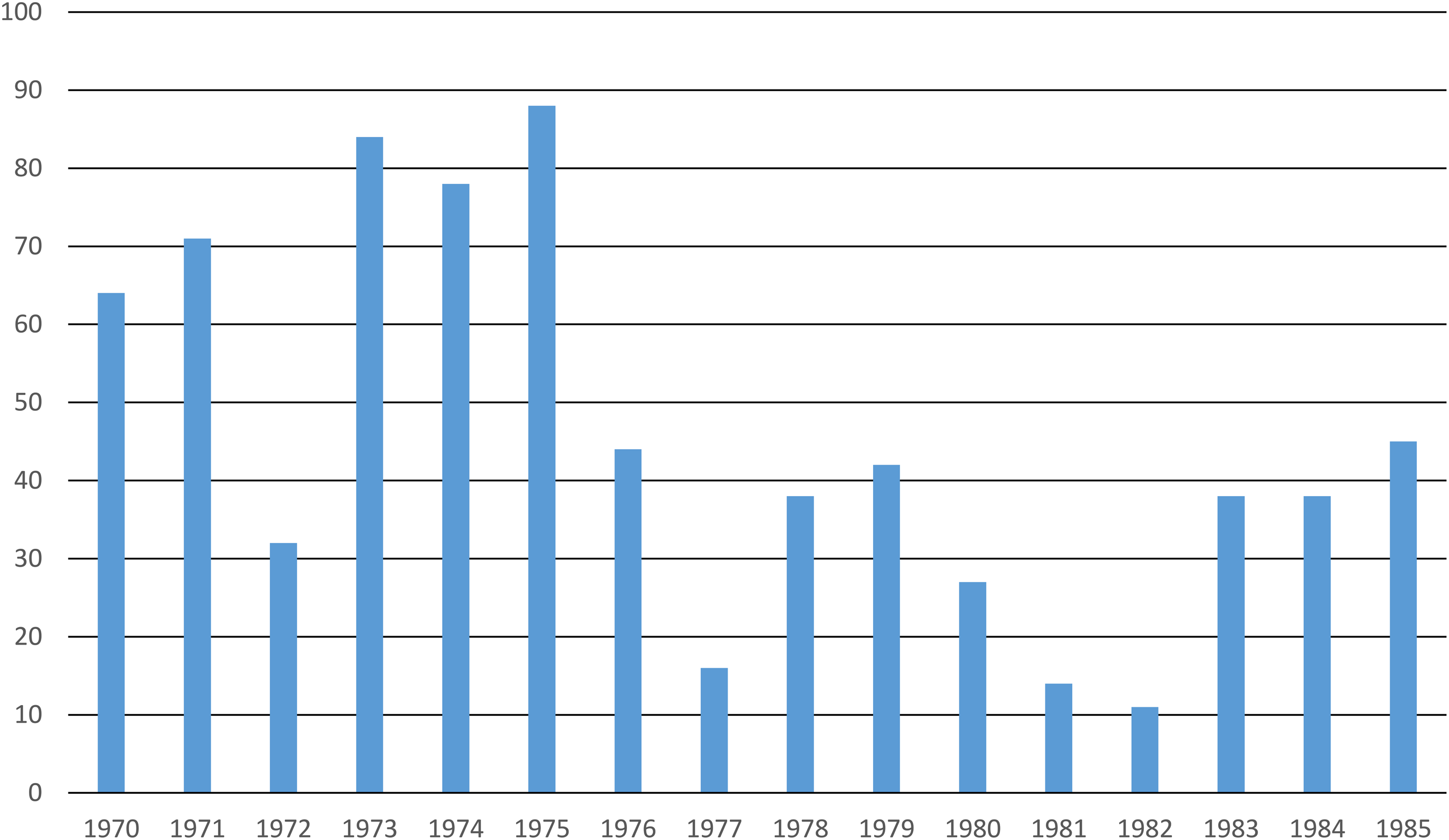
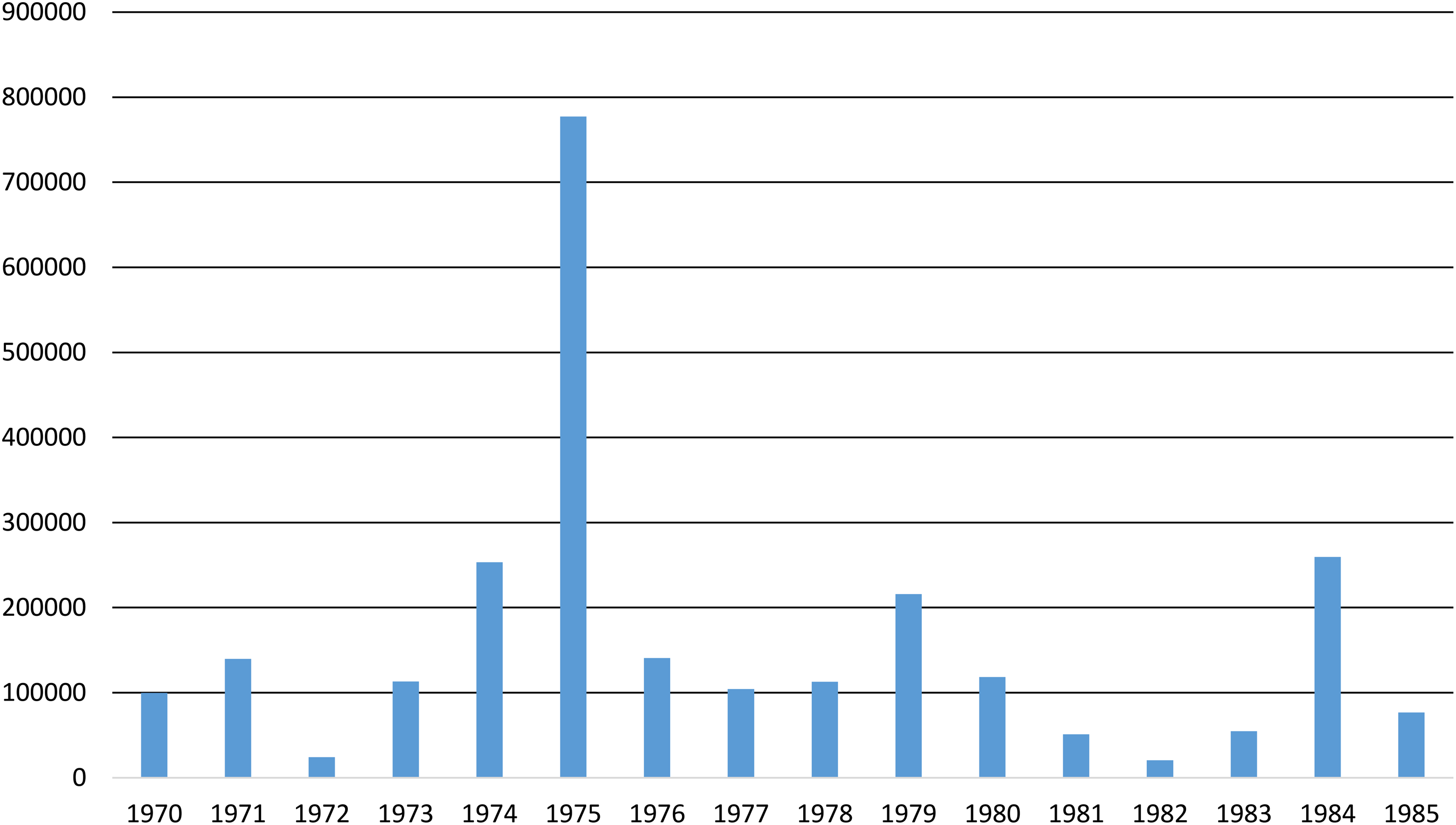
Tactics play a key role in the growth of collective action and must be congruent with the cultural framework of the challenging community (Morris Reference Morris1981; Rodney Reference Rodney2019 [1969]). Through NJAC’s strategies, the BPM movement grew rapidly after it emerged on the political landscape (See Figs. 2 and 3). With shouts and placards that read “Power! Power to the People!”, NJAC’s rallies increased from some 250–300 demonstrators (mostly university students) in its first march around Port of Spain on February 26, 1970 (Trinidad and Tobago Guardian 1970, 1), to more than 10,000 people on March 4, 1970 (Express 1970a: 1), to 20,000 two days later (Express 1970b: 1). NJAC demonstrators marched across the capital city and towns in the East-West Corridor and south Trinidad (Ibid: 18). These demonstrations culminated in “The Long March to Caroni”, where NJAC supporters and marginalized sugar workers marched from Port-of-Spain to the central regions of Trinidad under the banner “Indians and Africans Unite Now” in show of interracial solidarity (Vanguard 1970a: 8; ibid 1970b: 3).
Number of strikes and lockout (total economic sectors).
Source: International Labour Organisation, www.ilo.org/ilostat/www.ilo.org/ilostat/.

Days not worked due to strikes and lockouts (total economic sectors).
Source: International Labour Organisation, www.ilo.org/ilostat/.

Several labor union leaders were also NJAC members and worked to build the BPM, thereby increasing the potency of the movement. The number of strikes in the country ranged from 48 industrial disputes involving 17,799 workers in 1963 – the year after independence – to 64 disputes involving 11,280 workers in 1970 (ILO 1970: 826; ILO 1973: 793). In 1968, five of the country’s major unions came together for a March of Resistance numbering approximately 10,000 workers (Kambon Reference Kambon, Ryan and Stewart1995: 215). Workers threatened to shut down the entire nation, which prompted the government to declare a public state of emergency to empower the state to arrest Black power leaders and contain the uprising.
Demands: overturning foreign domination, racial justice, and support for locals
Strategically, the BPM demanded three main areas of change in industrial policy: the end of a foreign-dominated economy through greater local ownership and control, an end to racist employment practices, and greater state support for small (Black) enterprises. The BPM decidedly and vociferously espoused an anti-imperialist, anticolonial economic position to attaining economic justice. Black youth who had previously been among Williams’ most ardent supporters spoke out against a foreign-dominated economy. NJAC organizer Khafra Kambon (then named Dave Darbeau), for example, explained:
“The resources of society are almost completely controlled from abroad. Canada controls our banking system; the United States controls our minerals and Britain controls a lot of our export agriculture. So that almost the whole economy of Trinidad and Tobago is in foreign hands…” (cited in Meeks Reference Meeks1996: 18).
Trade unions agreed. George Weeks, then President of the OWTU also voiced this concern:
“Today we are in the firm grip of the United States and US-dominated agencies…Oil and Sugar…are both owned by foreign interests. The program of industrialization has had to depend almost entirely on the influx of foreign capital. This means that profits which are made flow out” (Vanguard 1968a: 2).
Moreover, these movement leaders asserted that the alliance between the Trinidad and Tobago state and foreign multinational corporations continued to exploit and oppress the country’s workers and the masses. Organizers did not think the answer laid with the already fragmented state and elites, especially one that had close clientelist associations with the former European planter and merchant classes (Brereton Reference Brereton1981). For example, Weekes proclaimed: “Instead of foreign exploitation supported by a white minority (in government), they now have foreign exploitation supported by a local Negro Minority” (cited in Kambon Reference Kambon1988: 135–6). Thus, they viewed nationalization of the major oil and sugar industries as a necessary foundation for true national economic independence, higher wages, improved working conditions, more jobs, and a more equitable and dignified standard of living. Footnote 8 “We must break the power of the foreign capitalist,” proclaimed Weekes, which meant, “taking the bold and courageous step of taking over our country’s resources… If this is done,” Weekes continued, “the profits that now flow out will remain in for reinvestment and will create employment” (Trinidad Express 1970c: 27). In 1963 and 1967, the OWTU submitted two memoranda to the government documenting the negative impacts of oil multinationals on the country, advocating for a national oil company (OWTU 1987: 52). The OWTU pressed:
“Our view is that EVERY DROP OF OIL MUST BE PRODUCED, EVERY MAN IN BP MUST KEEP HIS JOB…we the OWTU and the oil-workers of Trinidad believe WE CAN DO IT, we the Government and people can maintain production for EMPLOYMENT AND GOVERNMENT REVENUE. We can do it with a national oil company” and proposed that the government acquire BP assets “upon reasonable compensation to BP” (caps and bold in original) (OWTU 1967: 1–10).
This position challenged Williams’ initial industrialization strategy.
The BPM also wanted the government to correct historical injustices against the racialized masses, particularly with respect to employment. They pressed for jobs for nationals in the personnel and leadership positions, which was reflected in certain state committees and companies (Express 1970d: 13; Tapia 1971: 9–10). In addition, the BPM demanded changes to the colonial educational curricula, including specific amendments to the secondary schooling, the inclusion of local and regional histories and experiences, cultural and mass political education (Rodney Reference Rodney2019 [1969]; Campbell Reference Campbell1997). This encompassed access to life skills programs, agricultural studies at secondary school and technical vocational institutes to help enhance the youth’s employment prospects, the Special Works program to mobilize low-skilled workers in construction, among other activities.
Contextual factors
Political opportunities, or important contextual factors occurring outside the movement itself, can foster or inhibit prospects for mobilization and the extent to which movements might succeed or fail in their efforts (McAdam Reference McAdam1999 [1982]; Diani and McAdam, Reference Diani and McAdam2003). Several exogenous factors allowed the BPM to expand and shape its success during this period. The first was a weak local capitalist class. Although T&T’s colonial economy had been based on plantation slavery and indentured labor for sugar and commodity production, most small sugar estate plantations had been abandoned, amalgamated, and/or acquired by large multinational corporations after sugar prices collapsed (Beachey Reference Beachey1957: 122–3). Likewise, the oil industries had been owned and operated by foreign corporations up until the 1970s (Mulchansingh Reference Mulchansingh1971). Thus, the local capitalist class in early postcolonial T&T, largely comprised of local whites and lighter-skinned people, was small in number and dependent on the state’s largess (Hintzen Reference Hintzen, Goldberg and Solomos2008). In addition, in a representative democracy with majority- Afro- and Indo-descended society, who did not hold direct control of the state apparatus, the local capitalist elite largely turned to securing state patronage regardless of the political party in power (ibid).
Second, state repression is a key factor shaping movement success (Tilly Reference Tilly1978; Tarrow Reference Tarrow1998). In Trinidad and Tobago, the weak repressive capacity of the state created space for the growth and flourishing of the BPM movement. Data on military spending as a proportion of GDP in Trinidad and Tobago was only 0.754% in 1970, compared with 2.088% average for Latin America and the Caribbean and in neighboring Chile (4.45%) and Bolivia (1.612%) that also experienced mass mobilizations during the same period (World Bank 2019). This is not to suggest that the state did not attempt to repress the movement. Through the Industrialization Stabilization Act of 1965, for example, local police forces targeted and detained the more radical movement leaders, searched premises, restricted movements, and so on. In addition, when the group of local army officers mutinied in solidarity with the BPM, local forces were able to arrest those officers and prevent a coup. Further, conservative trade union elements conspired with certain government officials to maintain the status quo and protect elite interests, especially the newly wealth Syrian/Arab groups (Pantin Reference Pantin, Ryan and Stewart1995; Samaroo Reference Samaroo and Quinn2014). Still, the overall strength of the force was not enough to completely squash the movement.
Relatedly, political elites themselves while rhetorically espousing strong anticolonial, Black nationalist sentiments, exhibited contradictory notions around external intervention. Then Prime Minister Eric Williams requested external assistance from five countries. Jamaica and Guyana denied Williams’ request for troops for fear of agitating Black Power advocates at home. The UK, USA, and Venezuela provided warships which lay in waiting in Trinidad and Tobago waters as well as weapons and ammunition (for purchase). However, the USA and UK denied the request for troops. In addition, Williams himself was sensitive to both the optics and dangers of inviting imperial and external intervention. In fact, Williams had specified that the troops not be white soldiers, but rather soldiers from Nigeria, Tanzania, or Zambia (Palmer Reference Palmer2006: 299–302). This configuration of power – a strong movement and a weak state – ultimately compelled the state to concede to movement demands to ensure their political survival. Unlike in many Latin American countries, where vibrant working-class movements spurred alliances between the military and business elites, the consolidation of bureaucratic authoritarian states (with middle class consent) for industrialization (O’Donnell Reference O’Donnell1973), in Trinidad and Tobago, the absence of a comparably powerful local capitalist class and a weak military facilitated the expansion of the BPM and state concession to many of its demands.
Third, Trinidad and Tobago had a rich, deep, long history of multiracial anticolonial anti-imperial organizing, which provided further resources for the growth and success of the movement (Rennie Reference Rennie1974; Reddock Reference Reddock1994; Teelucksingh Reference Teelucksingh2015; Edwards Reference Edwards2017, Reference Edwards2018). Several Trinbagonians were at the forefront of Black internationalism and global Black liberation movements in the 1960s and 1970s, such as C.L.R. James and Darcus Howe. One of the revolutionaries who coined the rallying cry “Black Power” was Trinbagonian Kwame Ture (formerly, Stokely Carmichael), a leading organizer in the US Student Nonviolent Coordinating Committee, Black Panther Party, and All-African People’s Revolutionary Party. The transnational circulation of ideas, tools, and strategies of resistance undoubtedly shaped the local BPM as much as local Trinbagonians were involved in and leading movements abroad (e.g., James and Woodsworth Reference James and Woodsworth1998). In addition, the surge of anticolonial and pro-democracy mass movements in the Caribbean and worldwide during this period undoubtedly gave legitimacy to the local movement in Trinidad and Tobago (Meeks Reference Meeks and Quinn2014).
Finally, oil resources provided an escape route for a state under threat. Had it not been for the 1973 boom period oil revenues, T&T may have charted a very different path. The oil windfalls entered a long history of already built-up patterns of state-society relations dating back to the colonial period where vibrant labor mobilizations forced state concessions (Edwards Reference Edwards2017, Reference Edwards2018). The surge in oil revenues enabled the state to meet the demands of the BPM and maintain legitimacy in the eyes of the masses.
Industrial policy measures and outcomes
The BPM thus propelled new state action. The government’s third five-year development plan 1969–1973 attested to this shift: “…the economy has been acted upon, with the local Government and people playing a passive dependent role in the process [of development],” and asserted that this dependence needed to be “modified as a result of the nationalist movement” (GOTT 1970: 7–8). The government announced its new approach to development, which now aligned with some of the BPM demands:
“The Plan envisages the building of a more independent national economy which will still have extensive relationships with the outside world, but on a more equal footing than currently obtains. Emphasis is placed on the development and utilization of local resources of trained manpower, trained management, entrepreneurship, raw materials and capital – and on more local scientific and technological research. In particular, the strategy if one of increasing the proportion of local ownership and participation in the economy and of encouraging the people, particularly the Youth and Trade Unions, to start up their own co-operative and other forms of enterprise” (GOTT 1970: 25).
It was not until the 1973 and 1978 upswing in oil prices, that the Trinidad and Tobago government was able to enact democratic social changes. The country experienced large oil revenues during these high-price periods relative to other oil-exporters – 39% of the non-mining GDP – and oil taxes to the government increased from 20% to 60% of government revenues (Auty and Gelb Reference Auty and Gelb1986: 1163). The Black Power social unrest shaped how the government invested the oil windfalls, as the public sector took on a more active interventionist role in economic management and development. The major BPM-inspired changes in industrial policy that began in 1969, and extended after these boom periods, spanned four main areas: (1) nationalization, state-owned enterprises, and joint ventures; (2) targeted clustering; (3) human skills development; and (4) technology acquisition.
Nationalization, state-owned enterprises, and joint ventures
The BPM forced the government to change industrial policy and increase state participation in the economy through nationalization, state-owned enterprises, and majority-owned joint ventures. Consequently, where the government controlled just eight enterprises between 1956 and 1970, by 1972, the government held shareholdings in 32 companies, and 66 companies by the end of 1985 (Sergeant and Forde Reference Sergeant and Forde1992: 177–8). Through this increased involvement, the state directly capitulated to the BPM demands to reduce foreign ties and forge greater local ownership and economic control.
First, the BPM forced the government to nationalize key oil, sugar, media, travel, and finance corporations. The government initially rejected OWTU’s 1967 proposal to acquire BP assets and establish a national oil company. Citing technical and financial difficulties and future uncertainties, Minister of Petroleum and Mines John O’Halloran stated, “The area [BP assets] now under discussion is not the area for a National Oil Company” (Vanguard 1968b: 8). However, after 15 months of pressure from the unions, in 1968, Williams announced the government’s decision to acquire and use BP assets to establish a National Petroleum Company, which ultimately was renamed Petrotrin. In addition, the government prohibited all further retrenchment in the oil industry unless approved by Cabinet, and in an (unsuccessful) effort to placate further unrest, offered the directorship of the new company to OWTU President George Weekes (Vanguard 1968c: 3). Footnote 9
Although the government did not follow the exact recommendations in the OWTU’s 1967 memorandum “Oil in Turmoil” regarding methods to purchase BPs assets, and rejected the OWTU’s offer of a financial contribution, it nevertheless abandoned its original position due to the persistent pressure by the OWTU. Weekes expressed satisfaction with these decisions, noting that the OWTU considered them “the first blossoms of the struggle we initiated by strike action against retrenchment at British Petroleum (Trinidad) Limited, in February 1963 and followed up during the exercises of the Mostofi Oil Commission of August that year when we pioneered the proposal for a National Oil Company” (Vanguard 1968c: 3). Footnote 10
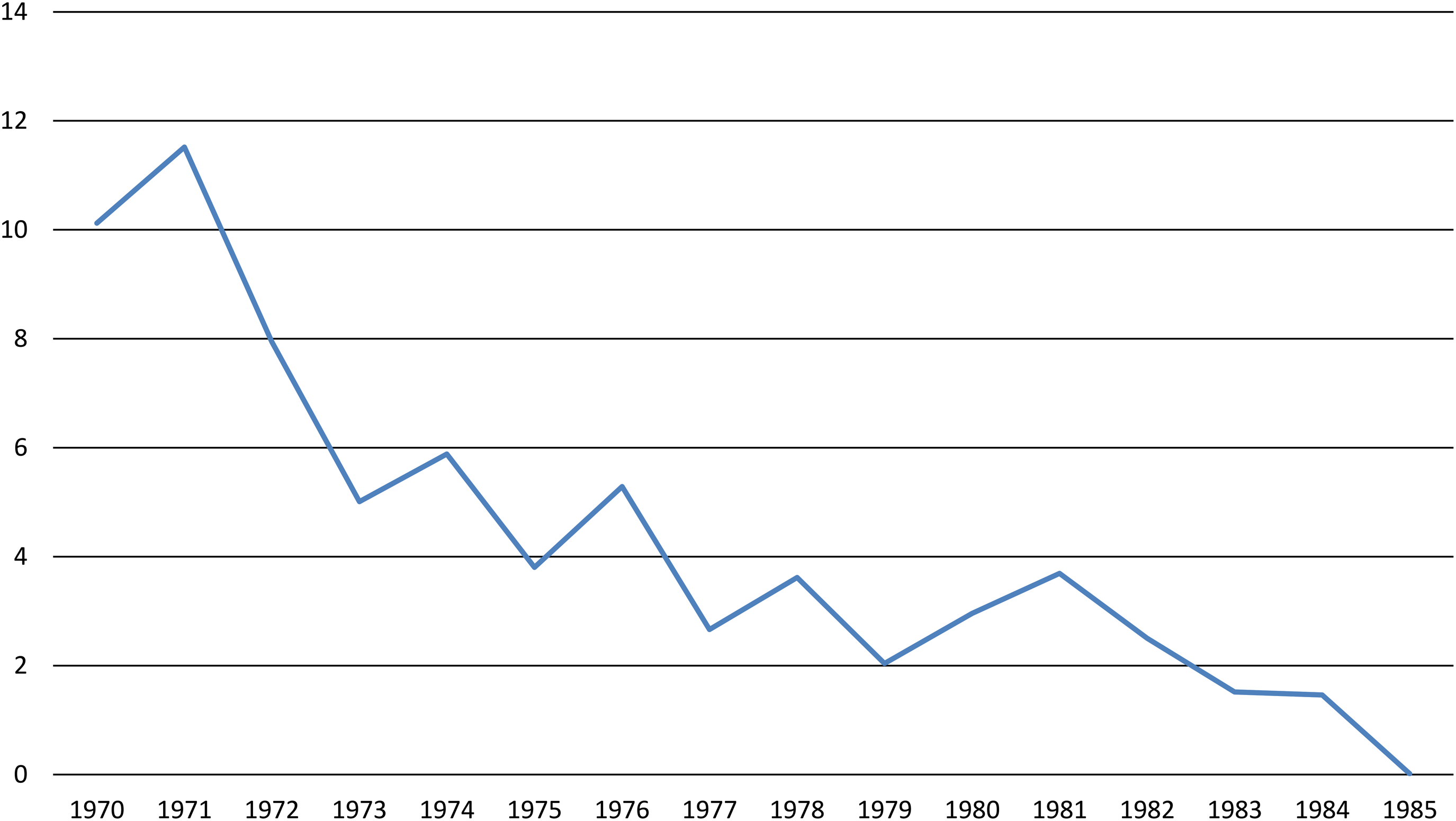
A similar volte-face occurred in the sugar sector. After initially rejecting repeated calls to nationalize Caroni (Figueira Reference Figueira2003: 173–233), in 1970, the government first purchased 51% of shares of Caroni from Tate and Lyle, then acquired it outright to create Caroni (1975) Limited. This initiative aimed to stave off job losses and further mass mobilization. Figure 4 shows the significant decreases in foreign capital as a contribution to GDP over time in the economy, from as high as 11.5% in 1971 to 3% in 1980 to 1.5% in 1983. The BPM spurred a reduction in certain forms of foreign economic domination.
Second, the government also used oil revenues to establish its own new state-owned enterprises in energy and other industries. These included companies engaged in direct production, such as plants producing methanol (Trinidad and Tobago Methanol Company, established 1984), urea (Trinidad and Tobago Urea Company, established 1983), and iron and steel (Iron and Steel Company of Trinidad and Tobago, established 1975). It equally involved a continued provision of fiscal support and infrastructure to existing and new companies willing to follow its new development vision, though enforcement remained a challenge. For instance, the Small Business Division of the Industrial Development Corporation (IDC) supported 73 manufacturing enterprises in 1976 to the tune of TT$955,433.
Foreign Direct Investment, net inflows (% of GDP).
Source: World Bank Development Indicators databank.worldbank.org.

Third, the government also expanded its industrial participation through joint ventures. These included partnerships with American oil company Tesoro in 1985 and acquiring 51 percent shareholdings with two ammonia producing companies to form TRINGEN (established 1977) with W.R. Grace and FERTRIN (established 1981) with Amoco. In the financial sector, several foreign-owned banks and insurance companies divested shareholdings to Trinidad and Tobago nationals: The Bank of Nova Scotia became Scotiabank, Barclays became Republic Bank, and Royal Bank of Canada became the Royal Bank of Trinidad and Tobago (Farrell Reference Farrell2012, 128). By the 1980s, the banking industry became almost entirely locally owned.
Increasing government ownership and activity in the form of nationalizations, new SOEs, and joint ventures were not originally government policy. The government resisted this increased engagement even up to March 1970, when Williams cautioned that, with respect to “greater public participation in the exploitation of the country’s principal resources… we need to be very careful not to cut off our nose to spite our face” (Express 1970e: 23). If not for the directives and expediency generated by the social unrest of the BPM, and public pressure to play a greater industrial role, the Trinidad and Tobago government may have never ventured into these areas.
Targeted industrial clustering
Another significant BPM-inspired government undertaking was the promotion of targeted clustering in energy-intensive sectors, namely natural gas and petrochemicals. This aspect of its industrial strategy was premised on “increasing the level of structural interdependence” and utilizing new natural gas finds to start new industrial projects (GOTT 1976). Flush with oil revenues, the government began in the mid-1970s to channel economic surpluses toward the establishment and operations of the Point Lisas Industrial Estate (originally opposed by the business interests in the South Trinidad Chamber of Commerce). The investments in new natural gas and downstream industries (methanol, urea, iron and steel, and exponentially increasing ammonia production) created linkages with the petroleum sector. These backward linkages between natural gas supplies and these new petrochemical and energy-intensive industries resulted in one of the most competitive oil and gas sectors. To support this industrial estate, the government invested in electricity, ports and roads, gas pipelines, and water production (GOTT 1970, 1980, 1984). As of 2005, Trinidad and Tobago ranked as the world’s largest exporter of ammonia, second largest exporter of methanol (a position it lost to Russia in 2018) (Williams Reference Williams2018), and ranked in the top ten largest exporters of liquefied natural gas Footnote 11 (Espinasa and Humpert Reference Espinasa and Humpert2016).
Human skills development
The state sought to address the BPM demand for increased local decision-making, reduced unemployment, and greater effectiveness of public sector projects through increased government shareholdings in major corporations as well as investments in upgrading skills. The government acknowledged that “the building of a country requires a variety of skills not normally acquired in a [traditional school] system [adopted from the colonial era]… the policy has moved in the direction of comprehensive education and technical and vocational training” (GOTT 1976). Another noteworthy impact of BPM-inspired state ownership and increased economic participation was that it allowed for the hiring of more local workers. Industrial policy, therefore, paid attention to both the demand and supply side to simultaneously increase the pool of skills as well as new employment (Girvan Reference Girvan1983; Andreoni and Chang Reference Andreoni and Chang2017).
State investments in training and expanding education through scholarships also increased. In 1974, a total of $2 million was provided for scholarships, in 1976, TT$121,636,000 was supplied for the education fund (initial outlay TT$500 million), and additional TT$67 million estimated for the following year (GOTT 1977: 12). By 1980, TT$363,178,752 had been spent in the education fund. Training programs at the Metal Industries Company were initiated in 1975 with technical support of the United Nations to provide skills in tool and dye making. In 1976 alone, 18 plant-level and management trainings were undertaken through the IDC. By the early 1980s, two-thirds of employment was consequently in the public sector. More Black employees were hired in managerial and decision-making positions in the major enterprises (Kambon Reference Kambon, Ryan and Stewart1995: 215). In material terms, wages from 1970 to 1974 increased by 10%, and in 1975 alone by 20% in several sectors including building construction, sugar and mining and refining activities (GOTT 1976).
The government also invested in developing expertise for managing the oil industry by establishing a Petroleum Institute Fund in 1974 and the National Training Fund in 1976 (Barclay Reference Barclay2004). Both schemes were merged in 1979 and expanded to include a Scholarship Fund and Students’ Revolving Loan Fund (GOTT 1980: 7). In addition, considerable investments in technology and skills in agriculture, telecommunications, and steel manufacturing were made through state institutions and direct subsidies. Boopsingh and McGuire (Reference Boopsingh, McGuire, Boopsingh and McGuire2014) also note that graduate and undergraduate programs in engineering and energy industries at the University of the West Indies and the Energy Institute was a primary reason for the high-level technical competency of Trinidad and Tobago nationals in the oil and gas sector which is now widely sought after internationally. Skills were further developed through in-house training, retraining programs and on-the-job experience among workers who had migrated from other sub-areas of the energy sector. These new measures illustrate the government’s attempt to meet BPM demands to address unemployment and historical racial imbalances in the economy.
Technology acquisition and capability expansion
The success of the new industrial policy required sophisticated technologies. The firms and plants, particularly those producing ammonia, urea, methanol, iron, and steel, as well as in the sugar industry and telecommunications required a high level of technical competency (Long Reference Long1987; Perry Reference Perry2018). Cutting-edge technologies, for the most part, had to be imported from abroad or acquired through licensing arrangements from providers and turnkey contracting. For instance, the MIDREX arc furnace technology that supported small-scale manufacturing of iron products at the steel company came from the United States and a range of technological inputs from Western Europe and Japan. The Exchange Control Act of 1973 also set out strict rules for the acquisition of new foreign technologies for use in the local industry.
During this period, public firms increased their participation in technological activity from 6.5 to 60% of the total value of imported technologies (Long Reference Long1983) (see Fig. 4). Firms needed to apply to the Central Bank for approval of technology licensing agreements and a compendium of these licenses were held at the IDC. Notable innovations produced through local efforts included a coconut de-husker, Footnote 12 a truck scale management system for weighing sugarcane (both done through an industrial partnership with the state-established Caribbean Industrial Research Institute (CARIRI), 1970), and an industry-grade microprocessor-based test system built at the telephone company and exported to the Bahamas and Barbados. Footnote 13 Two of these devices gained international patents. This was even in the face of widespread restrictions that technology providers created for technology contracts (Long Reference Long1983). In addition, CARIRI, which acted as an advisory body for public and private organizations on local technical skills, was able to promote new industrial research in agriculture, petroleum, and assembly-related industries (Girvan Reference Girvan1983).
Conclusion: summary, assessment, and implications of the model of industrialization
In sum, this paper highlights the critical role of organized anti-imperialist and antiracist social movements in shifting the state’s industrial policy. This contribution thus advances the DST literature on the drivers of active interventionist industrial policy. Contrary to early DST formulations that the impulse to intervene in the economy came from state officials within the state bureaucracy (Evans Reference Evans2012), the findings of this paper are more consistent with later revisions to DST that emphasize the role of social movements in stimulating the state to change its orientation to industrialization (Vu Reference Vu2007; Doner Reference Doner2009; Slater Reference Slater2010; Kuhonta Reference Kuhonta2011). Still, broadening the focus beyond the extensively researched Asian region, and stretching the analytical frame further than elite responses to movements, both of which have characterized the social movement-focused DST scholarship, this paper homes in on the movement itself – its characteristics, strategies, demands, and impacts – as the primary site in need of analytical attention, with special attention to the roles of imperialism and racialized labor exploitation as structures of oppression and targets of movement resistance. The article shows that the BPM in Trinidad and Tobago, which emerged within a favorable political opportunity context, challenged the foreign-dominated economic structure, neocolonial oppression, and their racist manifestations, and forced the state to alter its non-interventionist approach to industrial policy. State concessions and industrialization, under these pressures, did not proceed according to East Asian models, which relied on labor repression, dense imperial ties, and foreign concessions. Greater nationalization and state investment, targeted industrial clustering, building human skills base, and improving technological capabilities proceeded along democratically negotiated lines. This analysis sheds light on the mechanisms of industrial change, attempts to reconfigure social relations, and the political context for broad-based industrialization.
Evident challenges have arisen over time in industrial policies. The retreat of foreign capital and reduced access to US markets rendered public firms unable to grow in metropolitan markets and generate increasing returns from public capital (Barclay Reference Barclay2004; Perry Reference Perry2022). With some success, certain manufacturing and sectoral interests grew and later undermined government action. The shift in industrial policy provoked a backlash from incumbent elites, transnational corporations, foreign governments, conservative labor and civic decision-makers, embroiled political leaders, and merchant enterprises already embedded in the social structure who opposed state intervention that promoted a more equitable resource redistribution (Hintzen Reference Hintzen1989). Concomitantly, while demand factors were considered in many aspects of industrial policy, overall demand-side policies were weaker. Domestic market deepening did not occur in a sustained manner and forward linkages to export markets were not well established or undermined. Constraints increased further with the global turn toward neoliberalism, and many low-productivity manufacturing firms were able to draw significant state subsidies and influence policy (Hintzen Reference Hintzen1989; Barclay Reference Barclay2005).
In terms of the movement itself, many labor leaders were co-opted through government appointments to public sector roles, and the more radical trade union leaders, marginalized groups, and civic actors were largely excluded from decision-making across the private and public sectors. Labor’s bargaining power has since weakened considerably in the neoliberal era in response to pro-capital, anti-worker intervention and macroeconomic, and international conditions. Thus, the legacy of the BPM has been largely reversed under neoliberalism. Nevertheless, this article opens up a broader research agenda on the role and organization of anti-imperialist antiracist social movements in shaping industrial policy and states in the global South. More broadly, dynamic analysis of heterogeneous embedded and fractured interests influencing state policy and offers a window into possible different pathways toward industrialization than the well-known “developmental states”. Even as more egalitarian structural change and human development are achieved, this analysis shows nevertheless such possibilities are constrained by capitalist development.
Acknowledgments
We are grateful for the helpful feedback from the editors, three anonymous reviewers, and organizers and attendees of the 2019 Caribbean Workers’ Forum at the Cipriani College of Labor and Co-operative Studies in Trinidad and Tobago where an earlier version of this paper was presented. We also thank Orly Clergé and Trina Vithayathil for their critical feedback and useful suggestions.