Schizophrenia as a Disorder of Sense of Self
Schizophrenia has been conceived by researchers and clinicians from diverse orientations as being heterogeneous with a common feature of disturbance of the self. Disturbed self-experience was included in the diagnostic criteria for schizophrenia as recently as DSM-III (APA, 1980), and has been understood using psychodynamic, humanistic and postmodern theories of self (Lysaker & Lysaker, Reference Lysaker and Lysaker2010; Sass & Parnas, Reference Sass and Parnas2001). A disturbance in sense of self has been described as an enduring source of agony and is experienced independently from other clinical symptoms in people diagnosed with schizophrenia (Lysaker & Lysaker, Reference Lysaker and Lysaker2002). As such pharmacological treatments which commonly target symptoms are not sufficient to facilitate recovery (Henderson, Reference Henderson2013) and the role of individual psychotherapy has emerged as increasingly important in facilitating recovery from schizophrenia (Davenport, Hobson, & Margison, Reference Davenport, Hobson and Margison2000; Lysaker & Buck, Reference Lysaker, Buck, Dimaggio and Lysaker2010). While medication can reduce symptom severity it fails to address other elements that are important in the recovery process such as ease and skill in relating to others and understanding the meaning of one's experiences (Dickerson & Lehman, Reference Dickerson and Lehman2011; Lysaker & Buck, Reference Lysaker, Buck, Dimaggio and Lysaker2010).
Metacognitive Narrative Psychotherapy for People with Schizophrenia
One psychological approach with a growing evidence base is dialogically-informed, metacognition-oriented individual psychotherapy (Bargenquast & Schweitzer, Reference Bargenquast and Schweitzer2012; Buck & Lysaker, Reference Buck and Lysaker2009; Lysaker, Buck, & Ringer, Reference Lysaker, Buck and Ringer2007; Lysaker, Davis, et al., Reference Lysaker, Davis, Eckert, Strasburger, Hunter and Buck2005; Salvatore et al., Reference Salvatore, Procacci, Popolo, Nicolo, Carcione, Semerari and Dimaggio2009). Semerari is credited with being the first to suggest that metacognition should be the target of interventions in people presenting with psychotic symptoms (Semerari, Reference Semerari1999). The integrative metacognition-oriented approach has recently been developed into a manual which draws on both narrative theory (Angus & McLeod, Reference Angus, McLeod, Hermans and Dimaggio2004; Salvatore et al., Reference Salvatore, Lysaker, Gumley, Popolo, Procacci, Mari and Dimaggio2012) and the seminal work of Lysaker and colleagues (Lysaker, Buck et al., Reference Lysaker, Buck, Carcione, Procacci, Salvatore, Nicolo and Dimaggio2011). Manualised Metacognitive Narrative Psychotherapy aims to enhance self-experience and recovery in people diagnosed with schizophrenia by addressing deficits in metacognition and by facilitating the development of richer and more coherent personal narratives (Bargenquast & Schweitzer, Reference Bargenquast and Schweitzer2012). A recent study based on the manualised version of Metacognitive Narrative Psychotherapy has demonstrated both case study and group improvements in self-experience and subjective recovery (Bargenquast & Schweitzer, Reference Bargenquast and Schweitzer2013). This approach is influenced by a view of recovery as comprising both objective and subjective components (Anthony, Reference Anthony1993; Corrigan & Ralph, Reference Corrigan, Ralph, Corrigan and Ralph2005). The subjective component of recovery allows for the possibility that a meaningful life can be lived, including the attainment of life goals, despite experiencing clinical symptoms of mental illness (Corrigan & Ralph, Reference Corrigan, Ralph, Corrigan and Ralph2005).
The Dialogical Self and Metacognition
Lysaker and colleagues were the first to draw a link between deficits in metacognition and disturbed self-experience (Lysaker & Buck, Reference Lysaker and Buck2009; Lysaker & Lysaker, Reference Lysaker and Lysaker2011) and between enhanced metacognitive capacity and higher self-perceived recovery (Kukla, Lysaker, & Salyers, Reference Kukla, Lysaker and Salyers2013) in people diagnosed with schizophrenia. In conceptualizing the experience of people diagnosed with schizophrenia, Lysaker and colleagues draw upon a dialogical conception of human functioning in which one's sense of self is understood as arising from intra- and inter-personal dialogues between different parts of one's mind, referred to as self-positions (Hermans & Dimaggio, Reference Hermans and Dimaggio2004; Lysaker & Lysaker, Reference Lysaker and Lysaker2011). People diagnosed with schizophrenia are purported to experience an impaired ability to engage in a fluid, reflexive and sustained dialogue between different self-positions. Deficits in metacognition impact upon a person's capacity to reflect meaningfully on the minds of self and other, and to make meaning of such reflections. As such these deficits are thought to underlie the limited dialogical capacities of many people diagnosed with schizophrenia and the resultant experience of self-disturbance which is reflected in disrupted narratives (Lysaker & Lysaker, Reference Lysaker and Lysaker2001, Reference Lysaker and Lysaker2002, Reference Lysaker and Lysaker2011).
Narrative Reflexivity
A metacognitive narrative therapeutic approach can be envisaged as a process of conversing with facets of oneself and others in a way that allows for meaningful connections to be made between both internal and interpersonal experiences (Vromans, Reference Vromans2007). This process is operationalised in the current study in terms of narrative reflexivity. In the current paper the term narrative reflexivity will be used synonymously with metacognition to refer to a synthetic meaning-making process.
The Narrative Processes Model of Psychotherapy
Narrative reflexivity has been operationalised in previous studies which have focused on psychotherapy process using the framework of the Narrative Processes model. Narrative reflexivity involves making meaning of mental states and experience by processing mental states within the context of one's experience of oneself including thoughts, emotions, beliefs, memories and desires (Adler, Skalina, & McAdams, Reference Adler, Skalina and McAdams2008; Vromans, Reference Vromans2007). According to the Narrative Processes model, successful therapy has three goals: the remembrance and description of past and current events; an exploration of perceptions, sensations, emotions and thoughts around the remembered events; and the reflexive analysis of events which allow new understandings to emerge about self and others (Angus et al., Reference Angus, Levitt and Hardtke1999). According to this model therapy is viewed as consisting of conversations that shift between three domains: external, internal and reflexive modes of language (Angus et al., Reference Angus, Levitt and Hardtke1999). All three narrative sequence modes are regarded as essential components of successful therapy (Angus et al., Reference Angus, Levitt and Hardtke1999). Angus and colleagues developed the Narrative Processes Coding System (NPCS) as a method for systematically categorising all narratives in psychotherapy transcripts as operating in one of these three modes, providing a measure of the proportion of narrative sequence modes used across each transcript (Angus et al., Reference Angus, Levitt and Hardtke1999).
An association between enhanced therapeutic outcome and narrative reflexivity has emerged from previous studies (Angus & Hardtke, Reference Angus and Hardtke1994; Levitt & Angus, Reference Levitt and Angus1999; Vromans, Reference Vromans2007). Several studies of psychotherapy process and outcome using the NPCS have found that in successful client-therapist dyads there was an increase in the proportion of reflexive sequences over time (Angus & Hardtke, Reference Angus and Hardtke1994; Levitt & Angus, Reference Levitt and Angus1999; Vromans, Reference Vromans2007). These findings suggest that enhanced reflexivity, as a process of making meaning from experience, is associated with improved therapeutic outcome.
While there is growing evidence for the effectiveness of Metacognitive Narrative Psychotherapy, the mechanisms which underpin this approach are yet to be explored (Bargenquast & Schweitzer, Reference Bargenquast and Schweitzer2013). To address this gap, the current study operationalises metacognition in terms of narrative reflexivity, and explores narrative reflexivity as a potential mechanism of change.
Aim and Hypotheses
This study aimed to explore mechanisms of therapeutic change in psychotherapy with people diagnosed with schizophrenia by examining the association between changes in narrative reflexivity and subjective recovery. Improved narrative reflexivity was expected to be associated with increased recovery over the course of psychotherapy.
Method
Design
This study was situated within a broader process-outcome trial of Metacognitive Narrative Psychotherapy for people with schizophrenia (Bargenquast & Schweitzer, Reference Bargenquast and Schweitzer2013). This exploratory study utilised an intensive, repeated measures, case study design with data reported descriptively. This method is in accord with the descriptive methodology used by Angus and Hardtke (Reference Angus and Hardtke1994) in their exploratory study of brief dynamic therapy for non-psychotic patients using the NPCS.
Participants
Participants were clients and therapists who met the inclusion criteria for the study. Clients were recruited through community agencies within the non-governmental sector and therapists were completing postgraduate studies in clinical psychology at Queensland University of Technology.
Clients
Clients were nine adults (8 male, 1 female) aged between 25–65 years (M = 44, SD = 12.76). Inclusion criteria were a diagnosis of schizophrenia consistent with DSM-IV criteria, medication not being altered for one month, no hospitalisations for the one month preceding the study, and ability to provide informed consent. Exclusion criteria were intellectual disability and high risk of suicide or harming others.
Therapists
Therapists were seven provisional psychologists in a postgraduate clinical psychology program. Therapists were female, aged between 25–29 years (M = 26.8 years, SD = 1.47 years), and had between 1.5–3 years of professional experience. Therapists received training in Metacognitive Narrative Psychotherapy, over a period of two days, to achieve fidelity. They attended fortnightly supervision with supervisors who had experience in the Metacognitive Narrative approach (Bargenquast & Schweitzer, Reference Bargenquast and Schweitzer2012).
Materials
Treatment intervention
Therapist-client dyads engaged in 38–50 sessions (M = 46, SD = 4.5) of individual Metacognitive Narrative Psychotherapy over the course of 12–18 months (M = 13.8, SD = 2.1 months). Therefore, the time between measurement points varied depending on the length of the therapy. Each therapy session was 20–50 minutes in duration (M = 47.8, SD = 6.7 minutes). The therapy was based on a manual (Bargenquast & Schweitzer, Reference Bargenquast and Schweitzer2012) which draws upon the work of Lysaker and colleagues (Lysaker, Buck et al., Reference Lysaker, Buck, Carcione, Procacci, Salvatore, Nicolo and Dimaggio2011).
Narrative Processes Coding System (NPCS)
The NPCS provides a method for systematically categorising all narratives in psychotherapy transcripts as operating in one of three narrative process modes: external, internal and reflexive modes of language (Angus, Levitt, & Hardtke, Reference Angus, Levitt and Hardtke1999). External narrative sequences involve description of events; internal narrative sequences consist of description of emotions, bodily feelings, and how one feels in relation to self or other; while reflexive narrative sequences occur when the individual attempts to interpret or understand events or subjective experiences as they relate to self, other, or events (Angus et al., Reference Angus, Levitt and Hardtke1999). The NPCS was used to quantify the proportion of reflexive language used within each therapy session.
When clients’ verbal expression was notably impacted by schizophrenia-related symptoms resulting in narratives that could not be coded, the code “other” was included. In the current study training of raters continued until adequate inter-rater agreement was achieved. Adequate levels of inter-rater agreement were achieved for topic segments (70–88%) and for narrative sequence modes (82–89%) and were comparable to previous research (Angus et al., Reference Angus, Levitt and Hardtke1999).
Recovery Assessment Scale (RAS)
The RAS was used to determine change in recovery of clients by comparing scores at start-, mid-, and end-treatment. The RAS is a 41-item, self-report questionnaire measuring various subjective elements of recovery using a 5-point Likert scale from 1 (strongly disagree) to 5 (strongly agree) (Corrigan, Salzer, Ralph, Sangster, & Keck, Reference Corrigan, Salzer, Ralph, Sangster and Keck2004). Items include, “I can handle what happens in my life”; “I have goals in life that I want to reach” and “My symptoms interfere less and less with my life.” The maximum possible score on the RAS is 204 and higher scores indicate a higher degree of recovery. Internal reliability for the RAS in the current study was adequate (Cronbach α range = 0.91–0.95) and comparable to that found in previous research (McNaught, Caputi, Oades, & Deane, Reference McNaught, Caputi, Oades and Deane2007).
Procedure
Following ethical approval from the University Ethics Committee (Approval no. 1000000584) and clients’ informed consent, all sessions were videotaped. For each of the nine clients, three therapy sessions – the second, middle and second last sessions – were transcribed and de-identified by replacing client names with pseudonyms. First and last therapy sessions were excluded as they were not thought to be typical of the therapy approach.
The RAS was administered at the start, middle and end of treatment, to all clients, by a therapist who was blind to the NPCS results. The transcripts were then coded using the NPCS. The NPCS coder was blind to the RAS scores. Each narrative sequence mode was calculated as a proportion of total sequences, for each therapy session. Inter-rater reliability for the NPCS was calculated for 10% of the transcripts.
Data Collection and Analysis
Data for narrative reflexivity were obtained by calculating the proportion of narrative reflexive sequences in three therapy sessions (first, middle and last) for each client relative to the remaining external and internal narrative sequences. Recovery data were obtained by calculating the total score on the RAS scale for each client at the start, middle and end of treatment. These scores have been published in a previous study (Bargenquast & Schweitzer, Reference Bargenquast and Schweitzer2013).
Descriptive data are presented using proportions for narrative reflexive sequences and total score on the RAS for recovery. Data were analyzed by qualitatively comparing the proportion of reflexive narrative sequences in the therapy dialogue at the start, middle and end of treatment. To examine the relationship between narrative reflexivity and recovery, recovery scores and proportion of reflexive narrative sequences were compared over time.
Results
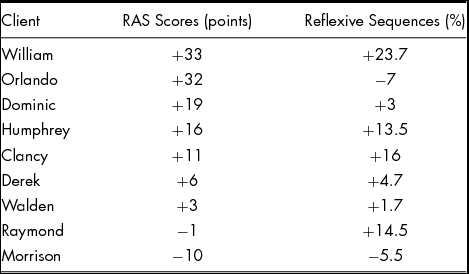
Narrative reflexivity, defined as the ability to make meaning of mental states and experience by processing mental states within the context of one's experience of oneself, was assessed at three time points – the start, middle and end of therapy. The majority of clients (n = 7) demonstrated an increase in narrative reflexivity from start- to end-treatment (see Table 1). The majority of clients (n = 7) also demonstrated an increase in recovery from start- to end-treatment (see Table 1). The recovery measure comprised a total score which reflects a specific number of domains related to the recovery process. These domains comprise the following: Personal confidence and hope which reflects internal factors such as confidence and determination, willingness to ask for help and reliance on others which both reflect external factors related to the ability to seek support from others, goal and success orientation reflecting a person's desire to succeed and perceived ability to attain goals and lack of domination by symptoms which means that although psychiatric symptoms may still occur they are not the focus of the person's life (Corrigan et al., Reference Corrigan, Salzer, Ralph, Sangster and Keck2004). For six clients an increase in narrative reflexivity was associated with an increase in recovery (see Table 1).
Changes in outcome measure scores for entire cohort from start- to end-treatment.
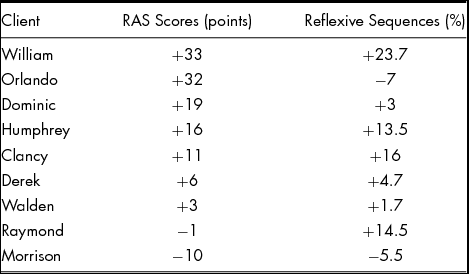
Note. RAS = Recovery Assessment Scale.
The recovery data has been reported in a study which included the current cohort and reported significantly increased RAS scores with a large effect size for the overall sample, F(2, 20) = 6.75, p = .006 (Bargenquast & Schweitzer, Reference Bargenquast and Schweitzer2013).
We present case vignettes for three of the nine cases, with the three cases being representative of patterns of narrative reflexivity and recovery for the client group.
William: Increase in Recovery and Narrative Reflexivity
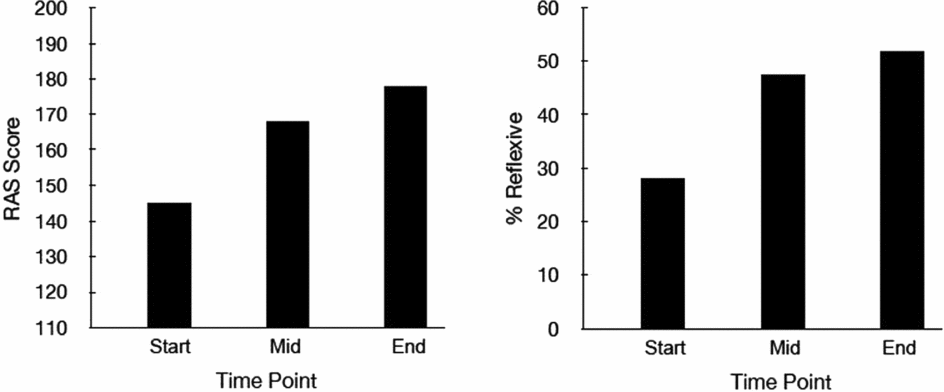
William was a 37-year-old male who had lived with a diagnosis of schizophrenia for over 20 years. He participated in a total of 41 therapy sessions over a period of 12.3 months. William demonstrated a remarkable improvement in recovery which was accompanied by an increase in narrative reflexivity (see Figure 1). William expressed a wish to complete therapy early as he believed that the world was going to end around the time he was due to finish the therapy trial. Despite his desire to end therapy early, William spoke very highly of the therapy, “I think I’ve definitely made progress over the time we’ve been talking so I feel a lot better in myself too you know, I haven't had any delusional thoughts for a while or heard voices or anything like that. Most of it was the medication but definitely the therapy's been helping as well.” In session 41, William recognised several specific gains he had made over the course of therapy including learning to express and deal with his emotions, increasing his capacity to have control over himself and his thoughts, and improving his ability to “make sense and hold a normal conversation with people.”
William: Recovery scores and percentage of reflexive sequences in each transcript at start, mid-, and end-treatment.

Orlando: Increase in Recovery and Decreased Reflexivity
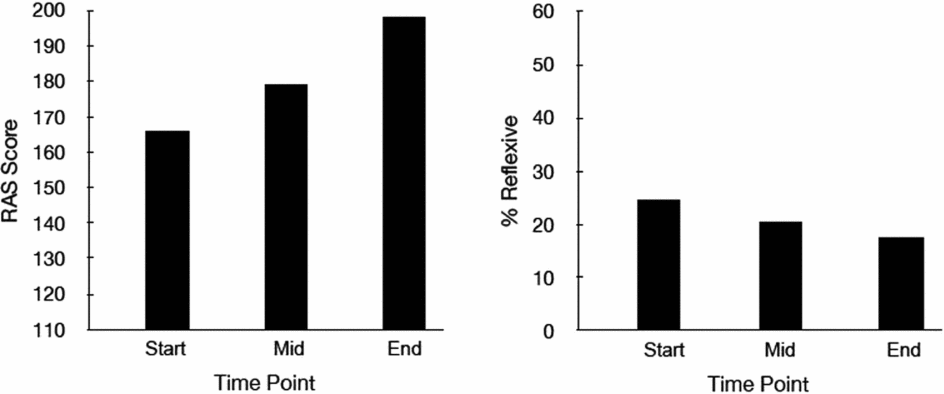
Orlando was a 36-year-old male who had lived with diagnosis of schizophrenia for less than five years. Orlando was completing a bachelor degree. He participated in a total of 50 therapy sessions over a period of 12.6 months. Orlando demonstrated a progressive increase in recovery from start- to end- treatment and a small and progressive decline in narrative reflexivity (see Figure 2). It was noted that Orlando had difficulty connecting with his therapist and was often experienced by his therapist as aloof and cold. During therapy sessions, he tended to narrate long and detailed stories, in the external narrative mode, during which the therapist felt it was not possible for her to interrupt or offer her own thoughts. The therapist who interviewed Orlando, to obtain his recovery scores, observed that he tended to rely more on the external narrative mode in response to anxiety or confrontation.
Orlando: Recovery scores and percentage of reflexive sequences in each transcript at start, mid-, and end-treatment.
Morrison: Decrease in Recovery and Narrative Reflexivity
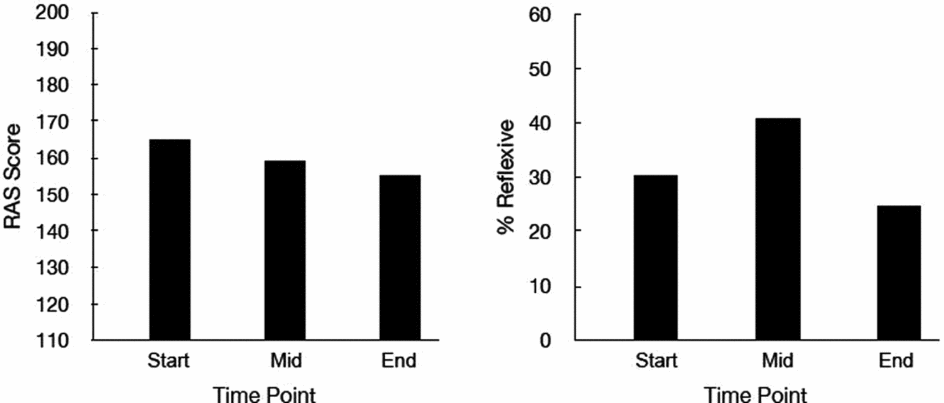
Morrison was a 57-year-old male who had lived with a diagnosis of schizophrenia for over 20 years. He participated in a total of 43 therapy sessions over a period of 15.2 months. Morrison demonstrated a progressive decrease in recovery from start- to end-treatment (Figure 3). Narrative reflexivity also decreased overall with an initial increase from start- to mid-treatment followed by a decrease from mid- to start-treatment (see Figure 3). Further, at end-treatment 4.5% of Morrison's therapy transcript was coded “other” compared with 0% at start- and mid-treatment.
Morrison: Recovery scores and percentage of reflexive sequences in each transcript at start, mid-, and end-treatment.
Morrison's therapy was complicated by transference issues. He reportedly developed romantic feelings towards his therapist, which may have indicated an erotic transference, as evidenced in an excerpt from session 22, “I’m angry at myself because I have wanted you to be so much more that I know you could never be and that's upsetting to me.” He also was hospitalised towards the end of treatment due to a psychotic episode, and experienced particular difficulty with termination.
Discussion
An overall increase in narrative reflexivity was associated with enhanced therapeutic outcomes for the majority of clients. This finding provides preliminary support for narrative reflexivity as a potential mechanism of therapeutic change underlying the demonstrated effectiveness of Metacognitive Narrative Psychotherapy (Bargenquast & Schweitzer, Reference Bargenquast and Schweitzer2013). Although there was an overall association between narrative reflexivity and recovery for six of the nine clients from start- to end-treatment, the two measures did not always directly track one another. The results of a previous case study (Lysaker et al., Reference Lysaker, Buck and Ringer2007) suggest that in some cases metacognitive ability may increase before change is reflected on other outcome measures, which may partially explain the lack of a direct association between narrative reflexivity and recovery in some cases.
The association reported between narrative reflexivity and recovery is theoretically consistent with the suggestion that deficits in metacognition may underlie the social, vocational and personal difficulties that are commonly experienced by people diagnosed with schizophrenia (Lysaker, Erickson et al., Reference Lysaker, Erickson, Buck, Buck, Olesek, Grant and Dimaggio2011). Deficits in metacognition have been linked with several barriers to recovery including a reduced ability to solve problems, to engage in relationships with others, to regulate emotions and to maintain a coherent sense of self (Lysaker et al., Reference Lysaker, Buck and Ringer2007). It is theorised that Metacognitive Narrative Psychotherapy serves to facilitate enhanced recovery by providing a space in which clients can practice metacognitive capacities (Lysaker & Buck, Reference Lysaker, Buck, Dimaggio and Lysaker2010). It is expected that by practicing within the therapeutic relationship, clients will then be able to apply their developing metacognitive skills, in their wider lives, leading to improved quality of life (Lysaker & Buck, Reference Lysaker, Buck, Dimaggio and Lysaker2010).
Improvements in narrative reflexivity were not linear which is consistent with previous studies of metacognition and narrative reflexivity (Buck & Lysaker, Reference Buck and Lysaker2009; Levitt & Angus, Reference Levitt and Angus1999). For the majority of clients an overall increase in narrative reflexivity from start- to end-treatment involved an initial increase in narrative reflexivity from start- to mid-treatment followed by a decrease towards termination. This pattern points to potential negative effects of anticipating termination on therapeutic gains. A good therapeutic alliance provides a safe space in which the therapist can challenge the client to extend their skills into often difficult territory such as identifying emotions or thinking about the possibility that one's thoughts are fallible (Lysaker & Buck, Reference Lysaker, Buck, Dimaggio and Lysaker2010). Impending termination may reduce some clients’ perception of safety within the therapeutic relationship, leading clients to rely more on the external narrative mode to manage negative affect aroused in response to ending the therapeutic relationship (Lysaker & Buck, Reference Lysaker, Buck, Dimaggio and Lysaker2010). Alternatively, the pattern of an increase in narrative reflexivity followed by a decrease may be part of a larger pattern consistent with findings from previous case studies where significant gains in metacognition were often followed by losses (Lysaker et al., Reference Lysaker, Buck and Ringer2007; Lysaker, Davis et al., Reference Lysaker, Davis, Eckert, Strasburger, Hunter and Buck2005).
While the majority of clients demonstrated increases in narrative reflexivity and recovery, Orlando and Morrison deteriorated in one or both of these measures over the course of therapy. Orlando gained benefit from the therapy sessions without a related increase in narrative reflexivity. Morrison demonstrated a decrease in both recovery and narrative reflexivity. The complexity of the trajectories suggests that narrative reflexivity is unlikely to be the only mechanism of change underlying the therapeutic approach.
Outcomes may be interpreted in the context of the experience of intersubjectivity as threat in people diagnosed with schizophrenia (Lysaker, Johannesen, & Lysaker, Reference Lysaker, Johannesen and Lysaker2005). This refers to the experience of interpersonal interactions as not only deeply frightening but also as posing a threat to one's sense of self (Lysaker, Johannesen et al., Reference Lysaker, Johannesen and Lysaker2005). Successful interpersonal interactions require flexible movement between the diverse self-positions that are evoked. As such, limited dialogical capacity is thought to contribute to the experience of intersubjectivity as threatening and overwhelming for many people diagnosed with schizophrenia. For example Orlando tended to relay detailed stories in-session utilising the external narrative mode which left little space for the mind of the therapist. This inhibited the possibility of genuine interpersonal exchange where the therapist might have had the opportunity to offer interventions aimed at enhancing narrative reflexivity. The romantic feelings that Morrison reportedly developed towards his therapist may indicate an erotic transference which represents a particular form of intersubjective distress. Erotic transference can prevent the deepening of the therapeutic relationship (Gabbard, Reference Gabbard2005). While Metacognitive Narrative Psychotherapy aims to facilitate dialogue between different self-positions, potentially leading to an enriched experience of self and enhanced recovery, the current findings suggest that special consideration needs to be paid to the individual needs and capacities of the client and the therapeutic approach modified accordingly (Bargenquast & Schweitzer, Reference Bargenquast and Schweitzer2013). To better understand factors that influence client deterioration during psychotherapy, more thorough investigation of clients that do not achieve therapeutic gains is necessary.
Limitations
Analyses were descriptive and therefore no causal links can be drawn between narrative reflexivity and recovery. It is possible that factors external to the Metacognitive Narrative Psychotherapy intervention may have contributed to the observed changes in narrative reflexivity and recovery. Recovery scores should be interpreted with caution as there are a range of variables that can impact scores including clients’ level of insight. Over the long-term, an increase in self-awareness can be viewed as a positive gain from therapy; however, over the short-term such insight may result in a decrease in RAS scores.
The relatively small sample size limits the generalisability of the results, especially given the heterogeneous nature of schizophrenia and the fact that the current sample contained predominantly men. Future research, with larger and more variable sample sizes is warranted. It would be of benefit to supplement case studies of client outcomes with larger-scale empirical studies to assess change in narrative reflexivity and recovery over time.
Conclusion
Metacognitive Narrative Psychotherapy is a new and innovative therapy for people with schizophrenia, pioneered by Lysaker and colleagues (Lysaker & Buck, Reference Lysaker, Buck, Dimaggio and Lysaker2010). The current research provides an exploration of the process of recovery for nine people who participated in a manualised treatment program. Results suggest that enhancement of narrative reflexivity may be a potential mechanism of therapeutic change underpinning this treatment modality.
Findings have implications for research and clinical practice. At the research level it will be important to extend the study by utilising larger sample sizes and a variety of measures directly related to the theory which underpins the study. At the clinical level, these findings lend support to the plasticity of functioning in clients with a diagnosis of schizophrenia. Results also point to the importance of the therapist creating an environment in which patients are able to reflect upon their experience and, with the assistance of a skilled therapist, develop their capacity for meaning-making and integration of experience across time. These findings are consistent with the theoretical propositions advanced by Lysaker and colleagues (Lysaker & Lysaker, Reference Lysaker and Lysaker2011) and provide preliminary support for the purported mechanisms underlying Metacognitive Narrative Psychotherapy.
Future directions
Further research is needed to confirm the efficacy of Metacognitive Narrative Therapy in the treatment of people with psychotic disorders. The next stage in the development and evaluation of the model will require the implementation of one or more randomised controlled trials, possibly comparing Metacognitive Narrative Therapy to other psychological interventions that are gaining support. There are both mainstream interventions, such as cognitive behaviour therapy for psychosis (CBTp; Wykes, Steel, Everitt, & Tarrier, Reference Wykes, Steel, Everitt and Tarrier2008), and some more innovative approaches such as the Open Dialogue (OD) approach (Seikkula, Alakare, & Aaltonen, Reference Seikkula, Alakare and Aaltonen2011; Seikkula et al., Reference Seikkula, Alakare, Aaltonen, Holma, Rasinkangas and Lehtinen2003), which have shown evidence for enhancing outcomes for people with schizophrenia. Research with people in the earlier stages of the disorder is also warranted. While the current study focused on people with long-term symptoms of psychosis, it is feasible that the intervention described may be effective with persons earlier in their illness trajectory and as such counteract progression to chronic disability, which is often associated with schizophrenia. Finally, further analysis of therapy session transcripts may aid the ongoing refinement of the approach, our understanding of what works for whom, and improved assessment of patient appropriateness for treatment.
Acknowledgements
Thank you to Lyn Vromans for her invaluable assistance in understanding and applying the Narrative Processes Coding System. Thank you also to James Banham for acting as the independent NPCS rater.